According to Stephanie Rothman, Roger Corman started this film by having James Gordon White write it, but he didn’t like the results. She, her husband Charles S. Swartz and Frances Doel plotted the idea and had Don Spencer write the actual script. Corman wanted her to direct it, but she turned it down. Enter Jack Hill and enter the Philippines, where John Ashley and his partners put up a chunk of the money, leading to this movie getting its unique look.
Collier (Judy Brown, The Manhandlers) is the new girl in prison, there for murdering her old man. That’s Pam Grier singing as we meet the girls on the block: tough lesbian Grear (yeah, Grier), her dominated girl Harrad (Brooke Mills, The Student Teachers), blonde badass Alcott (Roberta Collins, who dominated the screen in Caged Heat, Death Race 2000, Wonder Women and Unholy Rollers), Ferina (Gina Stuart) and her cat, and political dissident Bodine (Pat Woodell, a long way from Petticoat Junction). They’re all under the watchful and brutal eye of Miss Dietrich (Christiane Schmitdmer, The Giant Spider Invasion) and head girl in charge Lucian (Kathryn Loder, an out of control lunatic in this; she was the daughter of a theologian and nearly died of undiagnosed diabetes during the filming of the movie; she’s also in Foxy Brown).
Nearly everything the women in prison genre is known for comes from this movie and the Caged Heat. This also throws in Sid Haig — more movies could use him — and Roberta Collins assaulting a man, snarling “You’ll either get it up or I’ll cut it off!” in a scene that had to titillate as much as it terrified men more than fifty years ago. She also has a movie stealing mud fight with Grier and then you also have Woodell double firing submachine guns and realism be damned, it looks incredible.
When this was cast, Grier was working as the receptionist at the American-International Pictures front desk. Can you imagine coming in for a meeting and Pam Grier is just sitting there? Two years later and she’d be perhaps the biggest non-major studio actress of the 70s. While many of the actresses in this film had to be convinced to do nude scenes, she asked for them. She’d later tell Rolling Stone, “I call it the Brown Nipple Revolution. We weren’t the epitome of sexual attraction for the male audience, in movies, magazines, anything. We were told our brown nipples weren’t attractive. I was trying to break that line of what was acceptable in society.”
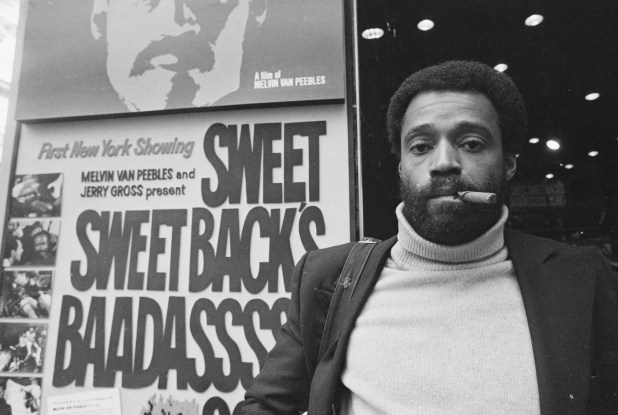
Sweet Sweetback’s Baadasssss Song is incendiary, 51 years after it was made, so I have no idea what it was like when it played theaters in 1971. Melvin Van Peebles started making it as part of his three-picture deal with Columbia Pictures, but at the end of the day, no studio would finance this.
Van Peebles did it all himself, directing, raising the money, writing, scoring, starring, doing his own stunts and even had unsimulated sex that led to this movie being “rated X by an all-white jury” and if that’s not a tagline, tell me a better one.
Not only did he do the stunts, he jumped off a bridge nine times to get the perfect shot. And he got gonorrhea shooting all the sex scenes, then got workers’ comp from the Directors Guild for getting hurt while working, using the money to finish this movie.
He came up with the idea by driving his car into the Mojave desert and driving off the highay and then sitting and staring at the sun, which gave him a revelation. He was going to make a movie “about a brother getting the Man’s foot out of his ass.”
Sweetback grew up in a brothel, learned how to have sex when he was just a kid (that’s Mario Van Peebles, Melvin’s son, between a sex workers thighs in the opening) and has taken his lovemaking skills and big cock to the professional arena, performing every night in the live sex show in the house where he grew up.
His boss Beetle agrees to a deal from two cops. Sweetback looks like a killer they’re looking for and to keep the white public happy, they’re going to arrest him and then release him a day or so later. But then they handcuff him to Mu-Mu, a Black Panther, and when the cops beat the man into oblivion in the middle of nowhere, Sweetback turns his handcuffs into weapons, imposing his will on the Man.
On the run, no one will help our hero. A woman just wants sex for taking off his chains. His boss doesn’t want any trouble. A preacher just wants to keep things as they’ve always been. His episodic journey to freedom leads to drinking water in the desert, using his sex as his greatest weapon and hiding amongst others as dogs are turned on him and black men are attacked by the fuzz at every turn.
It’s mind numbing with quick cuts that seem of today and not older than I am. It was required viewing for members of the Black Panther Party. It was a movie that some black writers thought was as false as blacksploitation. But Spike Lee would one day say, “Sweet Sweetback’s Baadasssss Song gave us all the answers we needed. This was an example of how to make a film a real movie, distribute it yourself, and most important, get paid. Without Sweetback who knows if there could have been a She’s Gotta Have It, Hollywood Shuffle or House Party?”
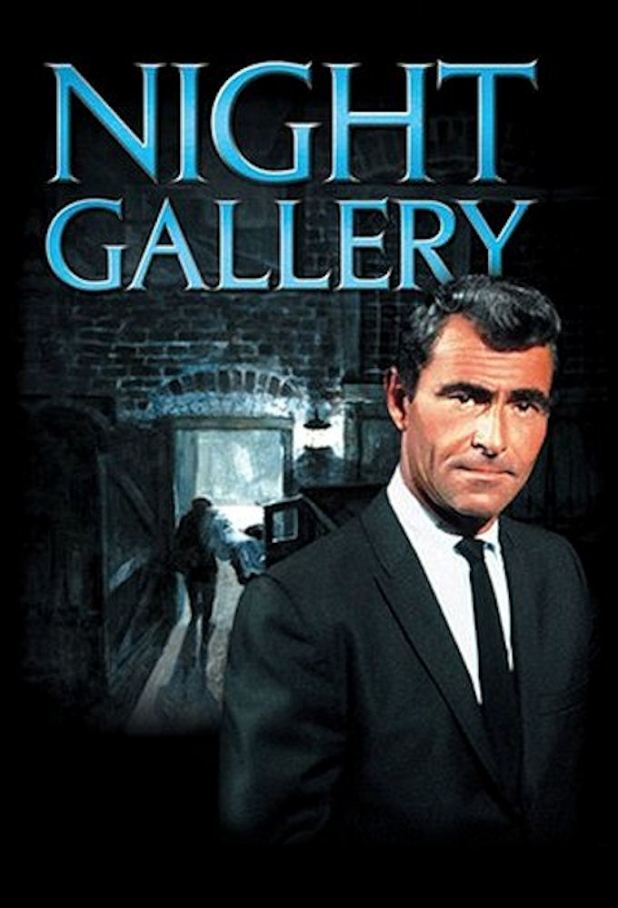
When I see four stories on a Night Gallery, I get worried. It means that Jack Laird is messing up the dark doom that Rod Serling is bringing and I despise that.
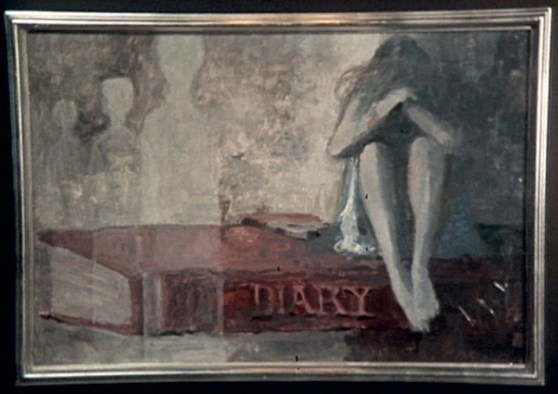
In “The Diary,” Holly Schaeffer (Patty Duke, who was pregnant with Sean Astin during filming) brutalizes an aging and disgraced Hollywood legend named Carrie Crane (Virginia Mayo). Before she dies, Crane gives her a diary where everything comes true. It’s simple, yet it works. Director William Hale and writer Serling create a short and sweet story here; it also has some of the most amazing early 70s furniture — and a Lindsay Wagner cameo — that makes it even more watchable.
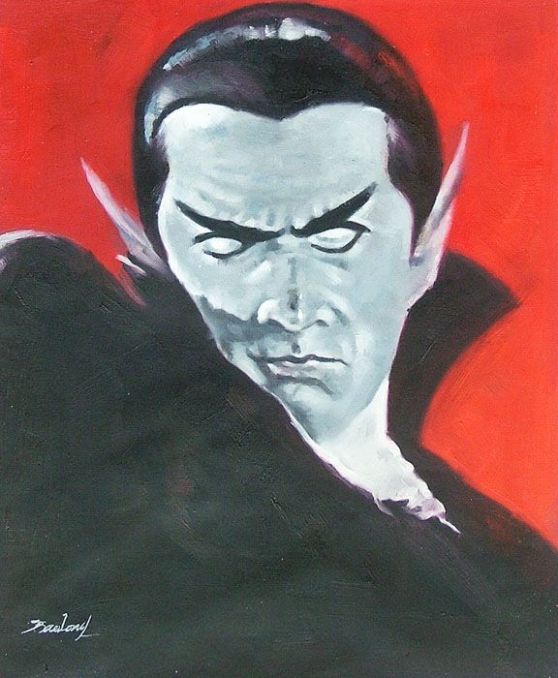
“A Matter of Semantics” is Laird directing from a Gene R. Kearney script. Count Dracula (Cesar Romero) goes to a blood bank. Another one note Laird joke that ruins the momentum of the show.
“Big Surprise” has Chris (Vincent Van Patten), Jason (Marc Vahanian) and Dan (Eric Chase) seeking whatever Mr. Hawkins (John Carradine) has buried. Again, it’s simple and quick, but this time effective. Then again, I’m someone that Carradine always works for. Director Jeannot Szwarc does a good job on the Richard Matheson script, which is just the right level of strange.
“Professor Peabody’s Last Lecture” may be silly and over the top, but this Jerrold Freedman-directed (he also was the man who made Victims, The Boy Who Drank Too Much, A Cold Night’s Death and Kansas City Bomber) effort from a Laird script is the first time that many may have heard the name H.P. Lovecraft. Professor Peabody (Carl Reiner) makes light of primitive cultures without realizing that those that live beyond the wall of the endless are always listening.
It mentions writers associated with Lovecraft as well, like Robert Bloch and August Derleth, who added Catholicism’s views of right and wrong to Lovecraft’s mythos, which take them away from their never to be understood cosmic horrors and turn Cthulu into more space kaiju, which I feel mean saying sounds like something right in the perfect headspace for Jack Laird. While this segment has a dumb ending, it has a great race toward doom.
All in all, even with Laird creating more on this episode, there’s enough that’s on the good side for once. If you can make it through his segments, there’s plenty to like here.
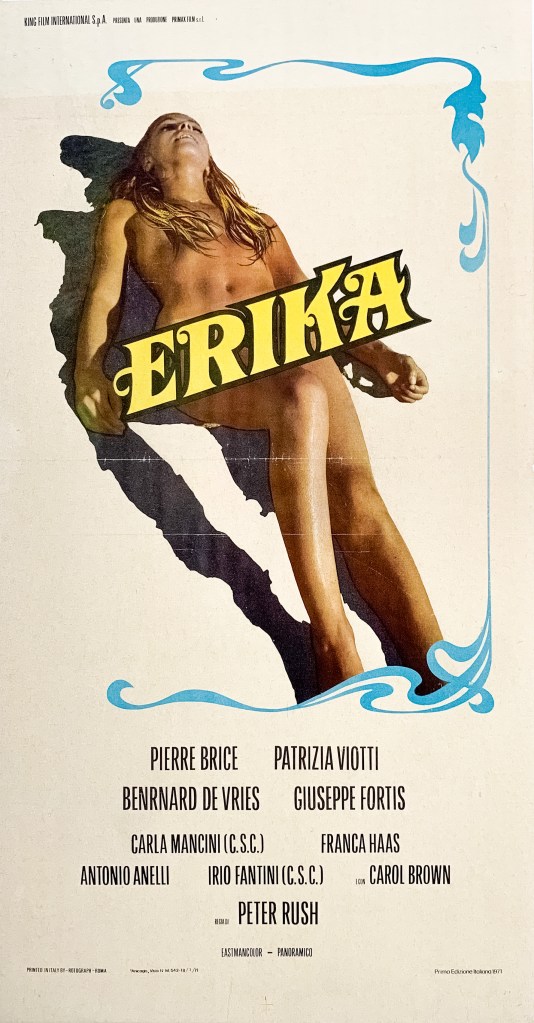
Filippo Walter Ratti made some classy movies in his life. There’s the biographical Eleonora Duse, the Zorro ripoff The Black Mask (which made over a hundred million lire), the Christmas Carol remix It’s Never Too Late and a story of the 1944 Ardeatine massacre titled Ten Italians for One German. In 1966, he made Operation White Shark, a Eurospy film and then didn’t make anything for five years.
Then he made Erika.
Ratti used the name Peter Rush for this and his next three movies, the last of his career. Night of the Damned has a witch killing people to stay young. Mondo Erotico is, you know, a mondo. Crazy Desires of a Murdereris a giallo by way of gothic castles and eyeballs being torn out of the heads of gorgeous women.
Then there’s Erika.
I can’t believe that Erika played the U.S. and even more, I can’t believe that a hardcore version was supposed played Cannes in 1971.
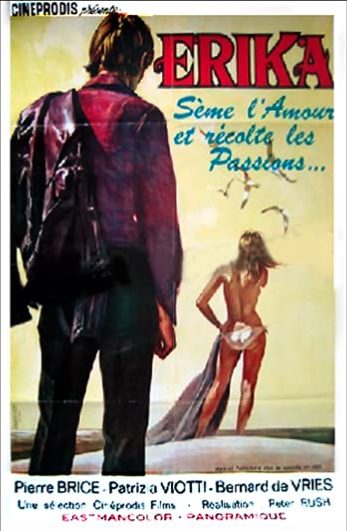
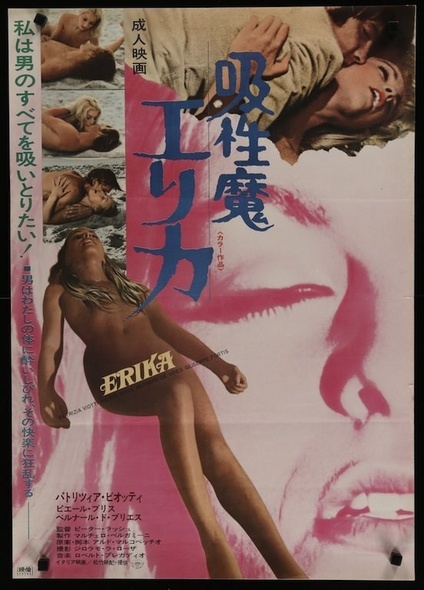
It feels more like a movie that Joe D’Amato would have made — well, did make — with Patrizia Votti (Amuck, La morte scende leggera) as the twenty-year-old Erika who makes her way from Germany to the home of her mother’s acquaintance Baron Giovanni Laurana (Giuseppe Fortis, War of the Planets). Dropped a gorgeous young blonde into a house full of Italian men is a bad idea, as you can guess, as she instantly hooks up with the Baron’s son Renato (Pierre Brice, who is also in Ratti’s Night of the Damned, as is much of the cast, which makes me think both of these movies were shot at the same time*), despite the fact that he’s due to be married to Concettina (Carla Mancini, who was chained up in The Girl In Room 2A). There’s also the younger brother Luca (Bernard De Vries), who Erika also falls for, and the film gradually goes from frothy sex comedy to near gothic tragedy by the end. Erika is gorgeous and seems unattainable, yet she destroys everyone she touches.
Erika supposedly made 300 million lire but was banned for how sexy it all is. This seems kind of ridiculous, as it’s nowhere near as dirty as Italian movies can be. But who knows, 1971 was sort of early. It has a really provocative soundtrack by Roberto Pregadio, too. He also did the scores for Smile Before Death, Death Carries a Cane, SS Experiment Camp and The Last House on the Beach.
*They even share the same screenwriter, Aldo Marcovecchio, and that film also had an adult version — Night of the Sexual Demons — that screened in Cannes. They were both made at Elios Studios in Rome, so I think this has gone from theory to close enough to truth. To be fair, everything from Phenomena to Play Motel, Keoma and Shanghai Joe were made there. Also, not that it’s infallible, but Wikipedia says that both films were made one after the other on the same sets.
EDITOR’S NOTE: This was originally on the site on January 17, 2020.
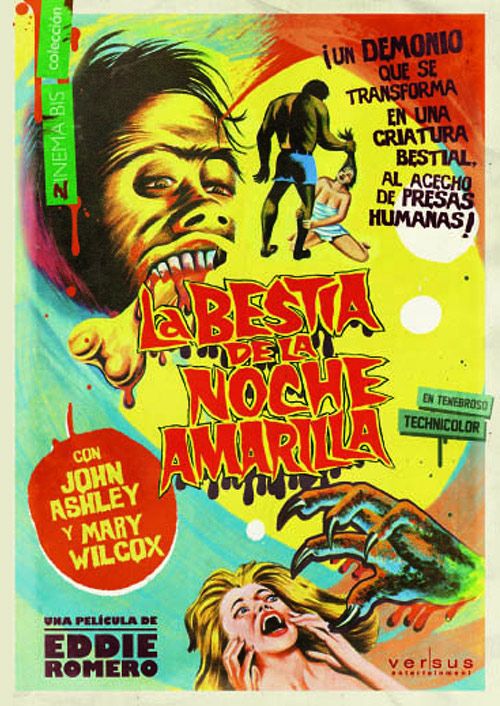
Eddie Romero directing and John Ashley starring? That was all I really needed to know. Man, anything remotely connected with these two — like the Blood Island films — and I’m ready to go.
This was also the first release for Roger Corman’s distribution company New World Pictures. After successfully distributing Beast of Blood in 1970, Kane W. Lynn’s Hemisphere Pictures tried to get the distribution rights to this, but got cut out of the deal.
Ashley’s new company, Four Associates Ltd. went on to produce The Twilight People, The Woman Hunt and Ebony, Ivory & Jade. As for Lynn, he worked with Sam Sherman to make Brain of Blood. Me? I’m happy all around at whatever these maniacs decided to make.
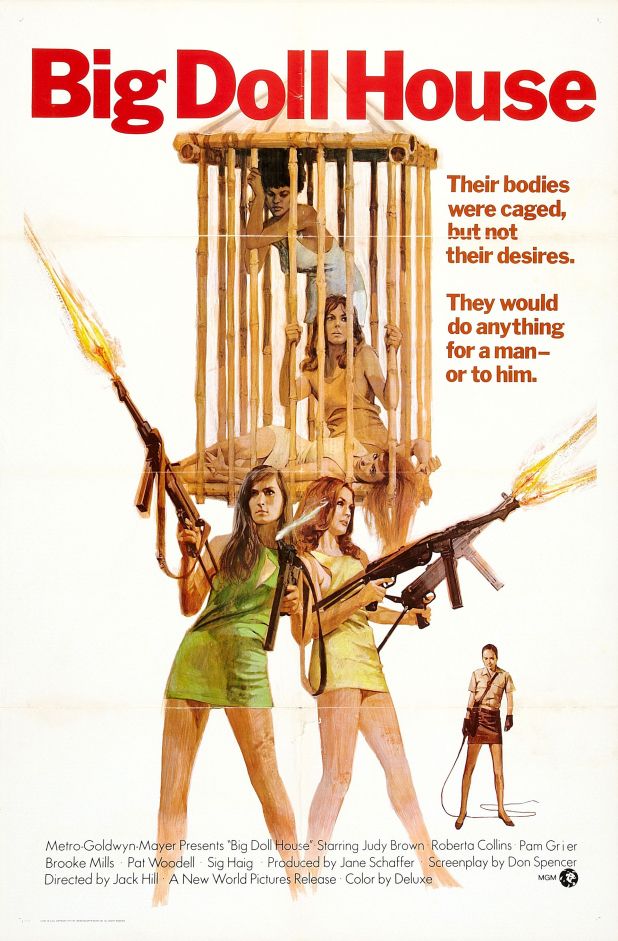
While Ashley would say that this was the most cerebral of the Philippines-based horror movies he made — and its success led to Corman making more movies there like The Big Doll House — Eddie Romero would say, “We really tried for quality. I don’t think it did very well. They prefer out and out gore.”
As World War II ends, Satan himself — Vic Diaz from Night of the Cobra Woman — spares Joseph Landgon’s (Ashley) life if he becomes his disciple. So over the next 25 years, Langdon possessed people and forces them to do the bidding of his dark master.
However, he wants to free himself from the Lord of the Flies, but instead becomes a hairy monster who could pretty much be a werewolf. He’s in the body of Phillip Rogers now and that man’s wife tries to save him. An old blind bandit named Sabasas finally saves him, asking him to pray for his soul just as an inspector catches up to him and shoots our — well, I guess he isn’t the hero — turning him into an ancient corpse.
Mary Charlotte Wilcox, who plays the wife, is also in the absolutely bonkers film, Love Me Deadly, which I love me dearly. She also shows up in Psychic Killer, Black Oak Conspiracy, Strange Brew and was a cast member of SCTV and Maniac Mansion.
Once he moved back to America, Ashley produced The A-Team. In one episode, he plays a movie producer trying to get a movie made. That movie? Beast of the Yellow Night.
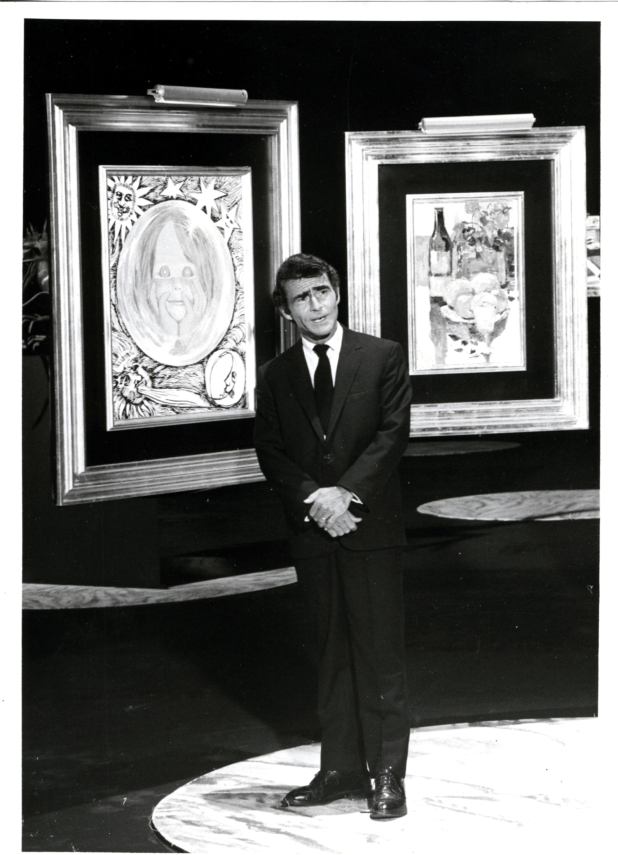
Rod Serling is back in this episode and not just hosting as he contributes an experimental story that might not completely work, but offers something beyond the expected and the everyday.
“Midnight Never Ends” has Ruth Asquith (Susan Strasberg, Scream of Fear) and hitchhiking marine Vincent Riley (Robert F. Lyons, 10 to Midnight) returning again and again to a diner where owner Jim Emsden (Robert Hogan) and Sheriff Lewis (Robert Karnes) confront them, all as they hear the faint sounds of clicking. They’ve all been there before and yet, they have no idea why. You’ll be able to decipher what this is all about relatively quickly, yet the blackened setting and strange air make this work. This is the second Jeannot Szwarc Night Gallery story that tries this approach.
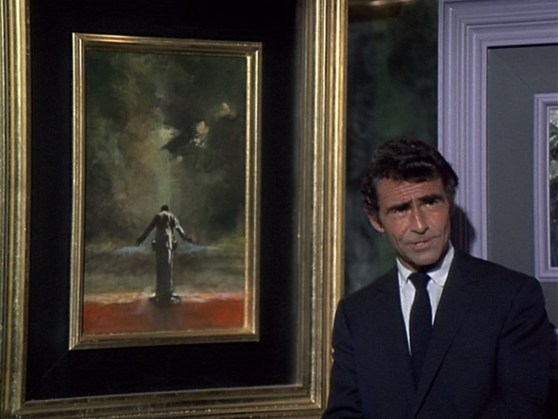
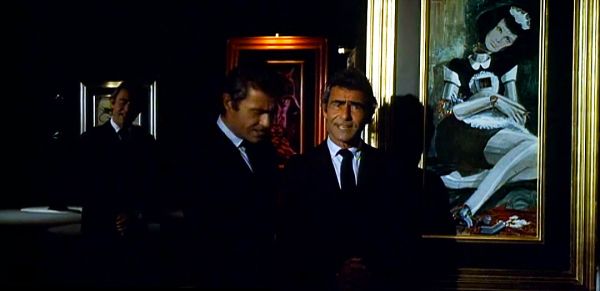
This is the only story that has a painting of Serling, which is appropriate, as it is very much about how. a writer tries to bring his story to life.
“Brenda” (Laurie Prange) is a weird and often mean little girl, knocking over sand castles and treating her friends horribly. The one friend she bonds with and understands comes from the sea and is a monster feared by everyone in the summer vacation town she’s spending a few months enjoying with her parents.
Directed by Allen Reisner, whose TV career had work on every show from The Twilight Zone and Playhouse 90 to Hardcastle and McCormick, and written by Douglas Heyes, who created the mini-series North and South from a short story by Margaret St. Clair, this has an odd monster, a strange little girl and an interesting friendship between them.
Not the greatest of episodes but definitely it’s nice to have Serling back writing one story and Laird’s influence isn’t as strong.
There are only two stories in this visit to Night Gallery and it’s the first episode where Rod Serling had nothing to do with the stories other than hosting. The first tale is decent but the second is expected.
In “A Question of Fear,” mercenary Colonel Dennis Malloy (Leslie Nielsen) laughs when Dr. Mazi (Fritz Weaver) discusses how dangerous a haunted house is. Mazi challenges him to stay overnight to make $10,000, which the eyepatched military man believes is easy money. The ending, however, with its discussion of transforming men into earthworms, elevates this from a basic scare to inspired weirdness. It’s also helped by Nielsen and Weaver’s performances.
It’s directed by Jack Laird and there, I actually said something kind about something that he did on Night Gallery. The script is by Theodore J. Flicker, the creator of Barney Miller and director of Jacob Two-Two Meets the Hooded Fang. He based it on a story by Bryan Lewis.
If the exterior of the haunted house is familiar, it should be. It’s the Psycho house in Universal Studios.
“The Devil Is Not Mocked” finds SS General von Grunn (Helmut Dantine) meeting the owner of an Eastern European castle, a mysterious count (Francis Lederer) who may say that he’s the leader of a small resistance group but you know, doesn’t show up in mirrors.
Lederer played Dracula in The Return of Dracula, so it’s pretty much assumed he is who he is when you first meet him. There are no surprises, but this is fine. It’s not Rod Serling Night Gallery pitch blackness, however.
This was directed and written by Gene R. Kearney. It was based on a story by Manly Wade Wellman, whose story “Still Valley” was an episode of The Twilight Zone, “Rouse Him Not” on Monsters and the movie The Legend of Hillbilly John, which came from his book Who Fears the Devil?
Here’s hoping for Serling to make a return next week.
Night Gallery works best when it’s longer stories and not — am I a broken record yet? — the excruciating black out shorts. This episode also has a more experimental first story and I love when the show tries to break new ground.
“The Phantom Farmhouse” is about a sanitarium that allows its patients to roam outside for therapy. When one of them is killed another patient named Gideon (David Carradine) claims that a girl who lives nearby named Mildred Squire (Linda Marsh, Freebie and the Bean, The Dark Secret of Harvest Home) is the murderer. Doctor Joel Winter (David McCallum, three years removed from The Man from U.N.C.L.E.) refuses to believe that this could be true once he glimpses how gorgeous she is.
Directed by Jeannot Szwarc, written by Halsted Welles and based on a short story by Seabury Quinn, this is shot in a surreal style and Carradine is perfect as a character who feels like the antagonist but stay with it. I also read this referred to as a pre-80s werewolf story, as special effects made a leap in 1981, the year of the werewolf movie, but this still works for me.
Conrad Aiken’s best-known short story, “Silent Snow, Secret Snow,” was originally filmed as a 17-minute short movie produced by Gene Kearney. Kearney directed this story for Night Gallery and it’s a haunting tale of a boy who chooses the world of dreams and snow to the dirty real place that reality offers. It’s made even better because Orson Welles is the perfect narrator.
Paul Hasleman (Radames Pera) withdraws from our world when he starts to care about just one thing: the snow. Much like other Serling presentations that used fantasy or science fiction to explain issues of racism, this is an incredibly stirring tale of a boy with developmental issues that is failed by everyone. Kearney also wrote the teleplay for this and this is perhaps his finest work and amongst the best of Night Gallery.
This whole episode is what I want this show to be. My frustration when it isn’t aside, being able to enjoy this near-perfect journey into the Night Gallery is why I continue to champion this classic show.
I’ve gone on record saying that I hold Sergio Martino in the same esteem as Dario Argento and feel that his giallo films are if not as good, often really close to being better. In fact, I’d compare his five-picture run from The Strange Vice of Mrs. Wardhto Torso to any giallo creator there ever is, was or will be.
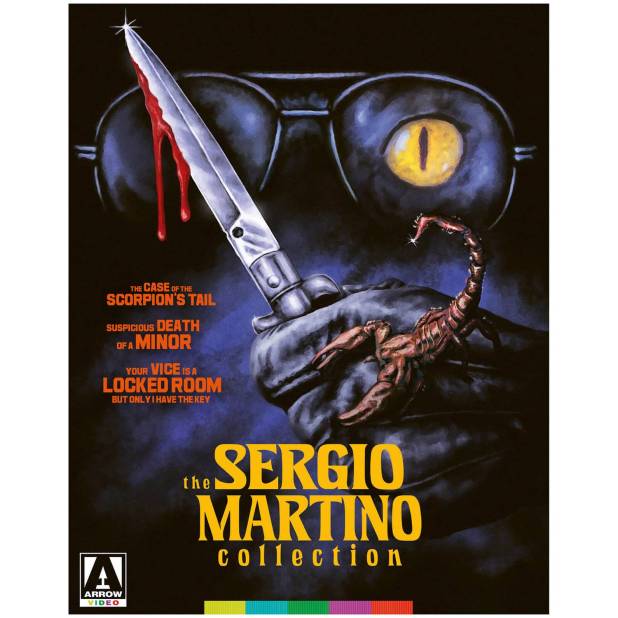
Arrow Video has brought together three of his giallo in one impressive looking box set.
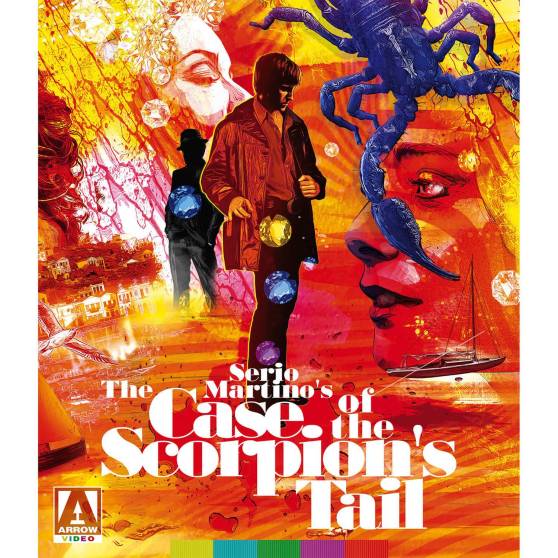
The Case of the Scorpion’s Tail (1971): While she makes love to someone else, Lisa’s husband dies in a jet crash. She stands to inherit all of his money, despite them being basically separated. An ex-lover has a confrontation with her, threatening her with blackmail. She pays up — some money now, then some when she gets the letter where she wished that her husband was dead. But a gloved hand finds the letter and kills the ex-lover!
Lisa has to go to Athens to collect the money, but runs into one of her husband’s ex-lovers, Lara Florakis (Janine Reynaud, Succubus) and a knife-wielding maniac. Peter Lynch (George Hilton from All the Colors of the Dark) saves her and takes her to the hotel. She asks for all of the money in cash, despite warnings to how dangerous that is.
That same maniac tries to kill Peter, then comes back to kill Lisa, sharp jazz wails staccato punctuating each stab of the knife, each rip across her body. Jump cuts and flashes and the room is covered by the police, who question him.
An INTERPOL agent, Inspector Stavros (Luigi Pistilli, The Good, the Bad and The Ugly, Your Vice is a Locked Door and Only I Have the Key), offers to help Peter with the case and the moment he goes to talk to Lara, he’s attacked by the gloved man.
That brings in Cléo Dupont(Anita Strindberg, Who Saw Her Die?), a journalist who pretty much instantly falls in love with our hero. They go up to his room, but it’s been turned over by the police, with even the bed sliced open looking for the million dollars that went missing when Lisa was killed.
Turns out the gloved man wasn’t on Lara’s side — he or she slits her throat, then runs up a spiral staircase as a guard gives chase. This reveals a room full of one-eyed baby dolls and a strange oil painting. Between the woman’s face against the glass with blood spraying everywhere and these reveals, this film is really tipping its hat toward Argento.
The bodyguard chases after the killer, but is knocked off the roof. One slash across the fingers and we have another dead body. It’s 45 minutes in…and most of the IMDB cast is already dead!
That said — there’s a stewardess that gets the gift of scorpion earrings from an unseen lover. So there’s that.
Meanwhile, Peter and Cléo make love on an orange shag couch while a peeping tom watches from the window. You know how Bruce Banner always has on purple slacks and you wonder, “Who wears purple slacks?” Peter does.
The peeping tom wants him to move his car, which is blocking the garage. That said — he’s awfully creepy about it. Peter moves the car and then gets back to business time. PS — if you’re into late 60’s/early 70’s patterns and fashions, you may fall in love with this movie.
While George was out, the killer snuck in. Good thing he forgot his keys! He stumbles in at the last second, but Cléo has already been sliced up. The cops suspect Peter — but they also find a scorpion cufflink that looks just like the earrings we saw earlier.
Oh yeah — about that stewartress’s boyfriend? Yeah fights the killer, only to get his eye hacked out. Somewhere, Fulci was smiling.
Cléo is out swimming off Peter’s yacht and finds the money buried in a cave. Like a Republic serial villain, he reveals his entire plot. He worked for years to make money and saw rich people just throw it away. He put everyone against one another and even had a partner who would do the killings while he was in the room. It’s all rather simple as the police find and kill him before he can hurt her.
The Arrow Video release of this movie has an audio commentary with writer Ernesto Gastaldi, moderated by filmmaker Federico Caddeo (in Italian with English subtitles); interviews with Hilton and Martino; an analysis of Martino’s films by Mikel J. Koven, author of La Dolce Morte: Vernacular Cinema and the Italian Giallo Film; a video essay by Troy Howarth, author of So Deadly, So Perverse: 50 Years of Italian Giallo Films; a trailer; an image gallery and a reversible sleeve featuring original and newly commissioned artwork by Chris Malbon.
Your Vice Is a Locked Room and Only I Have the Key (1972): Has a movie ever had a better title? Nope. Sergio Martino’s fourth entry into the giallo genre, following The Strange Vice of Mrs. Wardh,The Case of the Scorpion’s Tail and the previously reviewed All the Colors of the Dark, it refers to the note that the killer leaves to Edwige Fenech’s character in Mrs. Wardh. And the title is way better than the alternate ones this film has — Gently Before She Dies,Eye of the Black Cat and Excite Me!
Martino wastes no time at all getting into the crazy in this one — Oliviero Rouvigny (Luigi Pistilli from A Bay of Blood, Iguana with the Tongue of Fire, Death Rides a Horse) is a dark, sinister man, a failed writer and alcoholic who lives in a mansion that’s falling apart (If this all feels like a modernized version of a Poe story like The Fall of the House of Usher, it’s no accident. There’s even an acknowledgment that the film is inspired by The Black Cat in the opening credits.). His wife, Irina (Anita Strindberg from A Lizard in a Woman’s Skin and Who Saw Her Die?), suffers his abuses, but never more so than when he gathers hippies together for confrontational parties. He makes everyone pour all of their wine into a bowl and forces her to drink it, then humiliates their black servant Brenda until one of the partygoers starts singing and everyone joins in, then gets naked. This scene is beyond strange and must be experienced.
The only person that Oliviero seems to love is Satan, the cat that belonged to his dead mother. A black cat that talks throughout every scene he’s in, his constant meows led to my cats communicating with the TV. God only knows what a 1970s giallo cat said, but it seems like his words spoke directly to their hearts.
One of Oliviero’s mistresses is found dead near the house, but he hides her body. The police suspect him, as does his wife. Adding to the tension is the fact that Irina hates Satan, who only seems to care about messing with her beloved birds.
Remember that servant? Well, she’s dead now, but not before she walks around half-naked in Oliviero’s mother’s dress while he watches from the other room. She barely makes it to Irina’s room before she collapses, covered in blood. Blood that Satan the cat has no problem walking through! He refuses to call the police, as he doesn’t want any more suspicion. He asks his wife to help him get rid of the body.
Oliviero’s niece Floriana (Edwige Fenech, pretty much the queen of the giallo) is in town for a visit, learning how Oliviero hasn’t been able to write one sentence over and over again for three years, stuck in writer’s block (and predating The Shining by 5 years in book form and 8 years away from Kubrick’s film). Unlike everyone else who tolerates Oliviero’s behavior or ignores it, Floriana sees right through the bullshit. The writer is used to seducing every woman he meets and she initially rebuffs him, even asking if it’s true that Oliviero used to sleep with his mother. He angrily asks if it’s true that she’s a two-bit whore. “Those would be two bits worth spending,” is her caustic reply.
Irina confides all of her pain to Floriana as the two become lovers. And another girl gets murdered — perhaps by Oliviero. Then, a dirt bike racer comes to drop off milk and hit on Floriana. Whew — I was wondering when this film would get hard to follow and start piling on the red herrings!
After being questioned by the police, Oliviero comes home to choke his wife. He stops at the last second…then we’re off to the races! The motorbike races! The milkman loses when his bike breaks down, but he’s the real winner — taking Floriana back to the abandoned house that he lives in. And oh look — there’s creepy Oliviero watching the action.
Meanwhile, Satan has gotten into the coop and chowed down on several of the birds. Irina catches him and they have quite the battle. He scratches her numerous times before she stabs him in the eye with a pair of scissors. An old woman watches and is chased away by Irina’s yelling.
She’s afraid that her husband will kill her once he learns that she killed Satan. And Oliviero keeps wondering where the cat is, especially after he buys the cat his favorite meal from the store — sheep eyes. That said — Satan might not be so dead, as we can hear his screaming and see him with a missing eye.
Floriana puts on Oliviero’s mother’s dress, asking if this is what the maid looked like before she died. Whether it’s the dress or the forbidden family love or just her beauty, he rips off her dress — at her urging, mind you — and begins making love to his niece. We cut to Idrina, caressing her pet birds, when Oliviero confronts her with scissors and questions about Satan. He almost stabs her before he ends up raping her inside the coop, while Floriana looks on. She playing them off the other, even telling Idrina that she’s slept with her husband. She also tells her that Oliviero wants to kill her, so she should kill him first.
Idrina wakes up to the sound of Satan, but can’t find him anywhere. What she does find is her husband in bed with Floriana, who is belittling him. With every sinister meow, there’s a zoom of the cat’s damaged eye. Finally, Oliviero attacks her for spying on him, slapping her around before he leaves to write. She walks the grounds of the mansion, seeing the motorcycle rider make a date with Floriana and catching sight of Satan, who runs from her. In the basement, she finds scissors and the hidden bodies of her husband’s lover and the murdered maid. In a moment of clarity — or madness — she stabs her husband while he sleeps. The sequence is breathtaking — a giallo POV shot of the murder weapon intercut with the same sentence being typed over and over interspersed with all of the abuses that Oliviero had wrought upon her. She stabs again and again before Floriana interrupts, asking her if it was easy. The sentence that the author had written again and again was him claiming that he would kill her and there was a space in the wall for her, so obviously, she had to kill him.
As for Floriana, all she wanted was the family jewels, which were hidden in the house. They seal Oliviero’s corpse within the wall while Walter watches from afar. He’s played by Ivan Rassimov, who does creeping staring dudes better than anyone else — witness his work in All the Colors of the Dark. And it turns out that he’s the real killer! He’s been typing “vendetta” over and over again. Floriana asks if Idrina was planning to kill her before she runs off into the night, then Walter appears to kiss Idrina. Turns out they were working together all along — she tells him where to find Floriana the next morning. Holy shit — Idrina reveals her whole plot, revealing how she drove her husband crazy, making him believe that he could have been a murderer! She wishes that there was an afterlife so Oliviero’s mother — who she killed! — could tell him how great her revenge was. She ends by wishing that her husband was still alive so that he could suffer for eternity.
Walter sets up an accident that takes out Floriana and her boyfriend, as their motorcycle crashes, sending blood across the white heart of a billboard and out of her lips. He tosses a match on the gasoline-soaked highway, burning both of their corpses. He collects the jewelry and gives it to Idrina, who responds by shoving him off a cliff!
When she returns to the mansion, the police are there, as there were alerted to her stabbing Satan by the old woman. They come inside the house to write a statement, but hear the sound of Satan’s meows. Following the sound, they find him inside a wall — with the corpse of her husband!
Your Vice is a Locked Room and Only I Have the Key is superb. An intriguing story — only a few derailing giallo moments (like the killing of the girl in the room with the dolls and the B roll motocross scenes) — with great acting, eye-catching camerawork and some genuine surprises, it’s well worth seeking out and savoring.
The Arrow Video blu ray of this movie has an interview with Martino; a making of with interviews with Martino, Fenech and Gastaldi; a visual essay by Michael Mackenzie exploring Martino’s contributions to the giallo genre; a feature by film historian Justin Harries on Fenech’s career; Eli Roth speaking on the film and a reversible sleeve featuring original and newly commissioned artwork by Matthew Griffin.
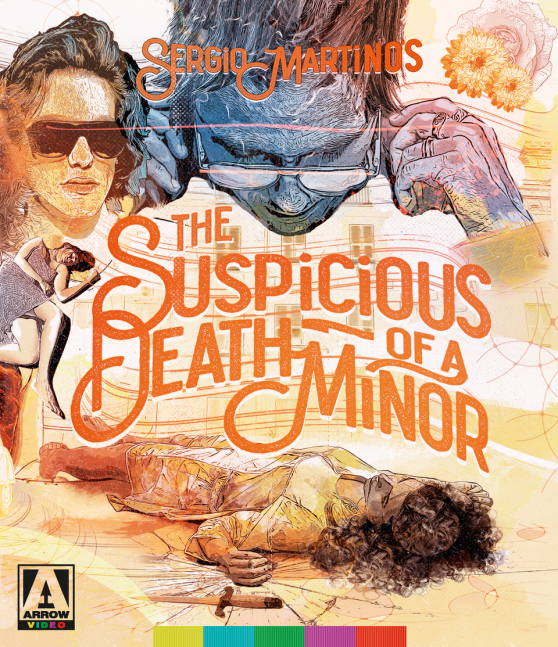
This is the last of Martino’s giallo and doesn’t feature his usual cast, like Edwige Fenech or Ivan Rassimov. It does, however, have Claudio Cassinelli, who was in Murder Rock and What Have They Done to Your Daughters?
Cassinelli plays police detective Paolo Germi, who meets a girl named Marisa (Patrizia Castaldi, in her only acting role before becoming a costume designer) who is soon murdered. She was a prostitute and now, Germi is haunted by her death and wants to find the killers. Unfortunately, Marisa was in way over her head and getting the answers won’t be simple. After all, there’s a man with mirrored shades killing everyone that gets close to the truth.
While this film doesn’t reach the lunatic heights of Martino’s finest works, it’s still a gleaming example of how great 1970’s Italian genre film can be.
The Arrow Video release of this film also has extras like audio commentary by Troy Howarth, author of So Deadly, So Perverse: 50 Years of Italian Giallo Films; an interview with Martino and a reversible sleeve featuring original and newly commissioned artwork by Chris Malbon.
You can purchase this Arrow Video box set from MVD.
Arrow Video continues its exploration of giallo with its fourth box set after the Black, Red and Yellow editions of Giallo Essentials.
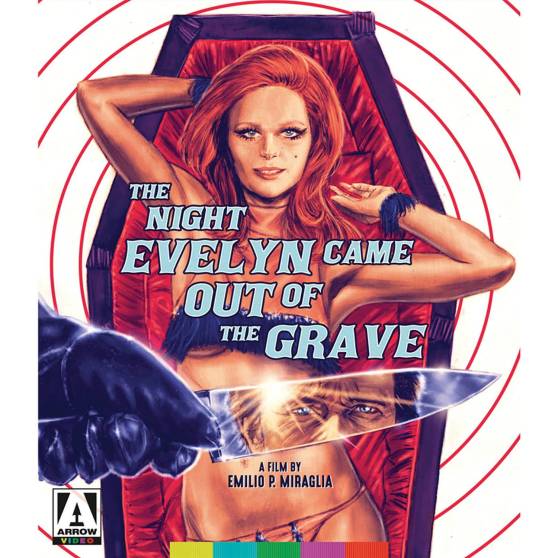
The Night Evelyn Came Out of the Grave (1971): Emilio Paolo Miraglia created two giallo — this film and The Red Queen Kills Seven Times. This one goes more into the horror realm than the typical themes of the genre.
Lord Alan Cunningham starts this movie off by running away from an insane asylum, a place he’s been since the death of his redheaded wife, Evelyn, who he caught having sex with another man. To deal with his grief, Alan does what any of us would do — pick up redhead prostitutes and strippers, tie them up, then kill them.
A seance freaks Alan out so badly he passes out, so his cousin — and only living heir — Farley moves in to take care of him, which basically means going to strip clubs and playing with foxes. Alan nearly kills another stripper before Farley gives him some advice — to get over Evelyn, he should marry someone that looks just like her. Alan selects Gladys (Marina Malfatti, All the Colors of the Dark) as his new wife and comes back home.
Sure, you meet someone one night and marry them the next. But nothing could compare Gladys for the weirdness of living in an ancient mansion, along with a staff of identical waitresses, Evelyn’s brother and Alan’s wheelchair-bound aunt. Our heroine is convinced that Evelyn is not dead. And the other family members get killed off — Albert with a snake and Agatha is eaten by foxes!
Gladys even looks at the body in the tomb before Alan catches her and slaps the shit out of her, as he is going crazier and crazier. Finally, Evelyn rises from her grave, which sends him back to a mental institution.
The big reveal? Gladys and Farley were in on it all along. But wait, there’s more! Susan, the stripper who survived Alan’s attack, was the one who was really Evelyn and Gladys has been poisoned! Before she dies, the lady who we thought was our heroine wipes out the stripper and Farley gets away with the perfect crime.
But wait! There’s more! Alan had faked his breakdown and did it all so that he could learn that it was Farley who was making love to his wife and killed her when she refused to run away with him. A fight breaks out and Farley gets burned by acid. He’s arrested and Alan — who up until now was pretty much the villain of this movie — gets away with all of his crimes!
This is a decent thriller, but it really feels padded in parts and tends to crawl. That said, it has some great music, incredibly decorated sets and some twists. Not my favorite giallo, but well worth a Saturday afternoon watch. There are some moments of sheer beauty here, such as the rainstorm where Alan sees Evelyn’s ghost rise.
The Arrow Video blu ray release of this movie has commentary by Troy Howarth, an exclusive introduction by Erika Blanc, an interview with critic Stephen Thrower, two interviews with Blanc and one with production designer Lorenzo Baraldi and a trailer.
The Iguana With the Tongue of Fire (1971): Other than The Ghost, I hadn’t seen many Riccardo Freda films before, only really knowing him from not finishing both I Vampiri and Caltiki – The Immortal Monster, films which Mario Bava took to completion. After The Bird with the Crystal Plumage made giallo into a box office success, Freda decided to try his hand at the form.
While the film’s credits say that this is based on the book A Room Without a Door by Richard Mann, that was probably an invention of the filmmakers. Freda ended up being unhappy with the movie, wanting Roger Moore for the lead.
The first thing you may notice about this film is that it’s made in Ireland, so the typical giallo set pieces aren’t there. There’s one gorgeous shot of the hills and rocks high above the water later in the movie that is completely breathtaking. And the accents in the film mark this as nowhere near Italy.
Starting with the first murder, where a girl has acid thrown in her face and her throat slashed, the film sets the tone that this is a lurid, scummy affair. But unlike most giallo, the murders appear at odds with the story. They just happen — there’s rarely any lead or tension to them and we often only see the final results, unlike the movies of Argento that wallow in both the set-up and execution of the murders, often at the expense of the story itself.
Once the corpse is found inside a limo — one that belongs to Swiss Ambassador Sobiesky — that suspect claims diplomatic immunity. So the police pull an end around, bringing in tough ex-cop John Norton (Luigi Pistilli, A Bay of Blood, Enter the Devil, Your Vice Is a Locked Room and Only I Have the Key) to get close to the family and discover the real killer.
He gets close in the biblical sense with the ambassador’s daughter Helen (Dagmar Lassander, The House by the Cemetery, Hatchet for the Honeymoon)and caught up in the blackmail and sheer lunacy of the entire clan. Valentina Cortese (The Girl Who Knew Too Much, The Possessed) really stands out as the mother, who is always smoking long cigarettes and showing up way overdressed for any situation.
This is the kind of movie where every single individual — even the grandmother and daughter — can be the killer. It also has a completely pointless scene where the family cat is decapitated and left in the icebox. There’s no real hero here, just a lot of bad people and people who are worse than them. By the end of the film, you’ll have an entire living room filled with red herrings, trust me.
Arrow Video has released the ultimate version of this film, using a new 2K restoration from the original 35mm camera negative, along with the original English and Italian soundtracks, titles and credits (with newly translated English subtitles for the Italian soundtrack).
There’s also audio commentary by giallo connoisseurs Adrian J. Smith and David Flint; Of Chameleons and Iguanas, a newly filmed video appreciation by the cultural critic and academic Richard Dyer; Considering Cipriani, a new appreciation of the composer Stelvio Cipriani and this film’s score by DJ and soundtrack collector Lovely Jon; The Cutting Game, a new interview with Iguana’s assistant editor Bruno Micheli; The Red Queen of Hearts, which is an essential and thorough interview with actress Dagmar Lassander; the original Italian and international theatrical trailers; an image gallery; a reversible sleeve featuring original and newly commissioned artwork by Graham Humphreys and a collector’s booklet featuring new writing on the film by Andreas Ehrenreich.
This is the last of Martino’s giallo and doesn’t feature his usual cast, like Edwige Fenech or Ivan Rassimov. It does, however, have Claudio Cassinelli, who was in Murder Rock and What Have They Done to Your Daughters?
Cassinelli plays police detective Paolo Germi, who meets a girl named Marisa (Patrizia Castaldi, in her only acting role before becoming a costume designer) who is soon murdered. She was a prostitute and now, Germi is haunted by her death and wants to find the killers. Unfortunately, Marisa was in way over her head and getting the answers won’t be simple. After all, there’s a man with mirrored shades killing everyone that gets close to the truth.
While this film doesn’t reach the lunatic heights of Martino’s finest works, it’s still a gleaming example of how great 1970’s Italian genre film can be.
The Arrow Video release of this film also has extras like audio commentary by Troy Howarth, author of So Deadly, So Perverse: 50 Years of Italian Giallo Films; an interview with Martino and a reversible sleeve featuring original and newly commissioned artwork by Chris Malbon.
This limited edition Arrow Video box set comes in rigid packaging with the original poster artwork in a windowed Giallo Essentials Collection slipcover. You’ll enjoy 2K restorations from the original camera negative for all three films as well as reversible sleeves for each film featuring original and newly commissioned artwork by Gilles Vranckx, Graham Humphreys and Chris Malbon.











 B&S About Movies
You must be logged in to post a comment.