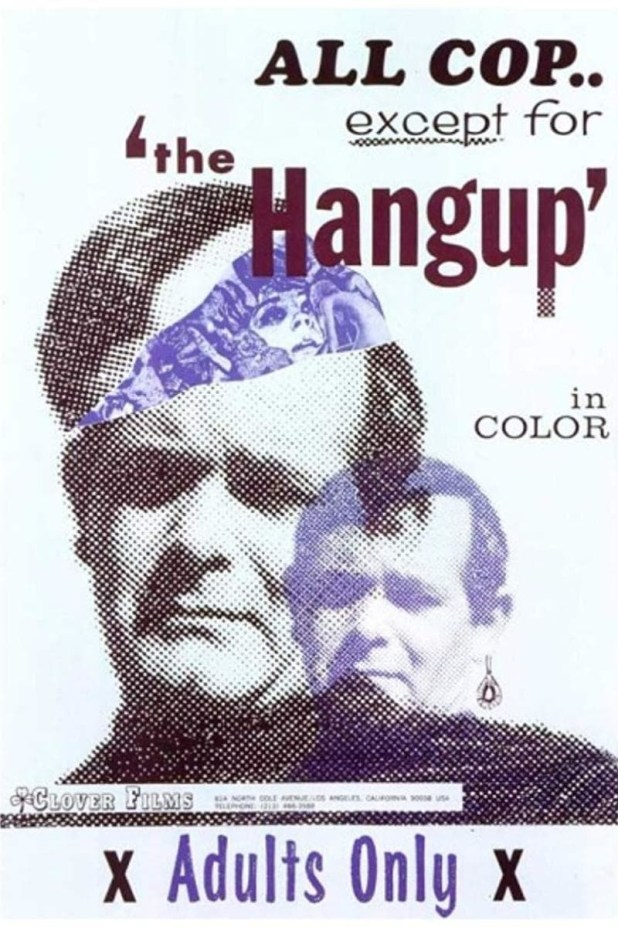
Directed and written by John Hayes (End of the World, Dream No Evil, Garden of the Dead, Grave of the Vampire, Jailbait Babysitter, and so many more; he also made adult films like Baby Rosemary, Hot Lunch and Pleasure Zone as Harold J. Perkins), The Hang-Up is all about vice cop Sgt. Robert Walsh (Tony Vorno), who the force uses as an undercover transvestite despite him looking nothing like a woman. He spends his nights dressed as the very degenerates he spends his days arresting with a vitriolic, borderline obsessive hatred. And even when he has his landlady throw herself at him, he can’t get it up. Other than that, his life is horrible as he just sits at home, alone, drinking Coors Light in bed.
Then he meets sex worker Angel (Sharon Matt) and falls in love. And that’s when things get worse for him. He falls in love with her, and we get the idea by the end that she’s just playing with him, luring him into the underworld that he was so intent on destroying.
I was pretty much astounded by this. Sure, it’s exploitation and has so much rawness in the way people talk and act toward one another, but it somehow aspires to be so much more. The Hang-Up is a fascinating relic of the roughie era. It’s a film that exists at the intersection of hard-boiled detective noir and the raw, unwashed spirit of the sexual revolution.
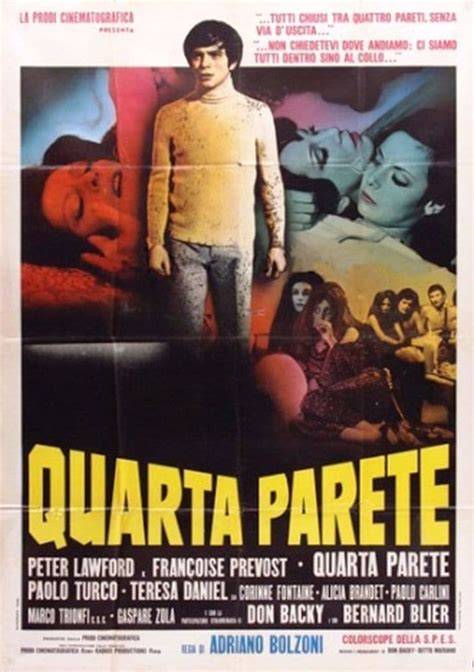
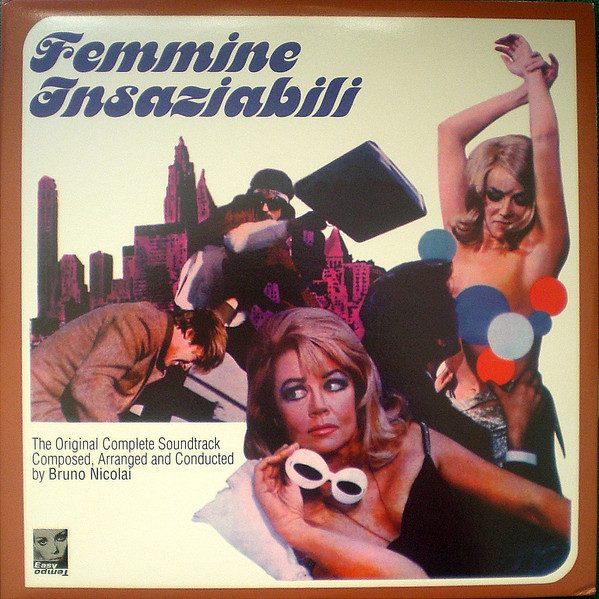
Marco (Paolo Turco), the son of a plastics manufacturer, has just returned from four years away studying in England. Upon his comeback to Italy, he finds nothing but aimlessness. The upper class is disconnected, andthe youth are in revolt. For this he spent a night in a prison cell after protesting?
Directed by Adriano Bolzoni (who wrote The Humanoid, Your Vice Is a Locked Room and Only I Have the Key and A Fistful of Dollars; he also directed Nudo, crudo e…), who wrote the script with Giustino Caporale, Marco Masi and Guy Pérol, this has some star power from Peter Lawford, one of the Rat Pack. Yes, the people who made the world want J&B, or as Difford’s Guide says, “…they partied on whiskey — specifically, J&B Rare Whiskey.”
Everyone has changed. His sister Marzia (Trey Hare) has photos of herself — nude — all over her room. His mother (Françoise Prévost) is distant. And while free love is happening all over, he’s disillusioned. Maybe The Graduate-style soundtrack is here to tell us that he’s someone trapped between the rich, the left, the poor, and the right. It’s the kind of movie that talks down on lesbians but has no trouble showing us lots of Sapphic scenes. The cake, the eating it as well…
It’s kind of a mod giallo, but you’ll hate the main character and wonder what’s happening.
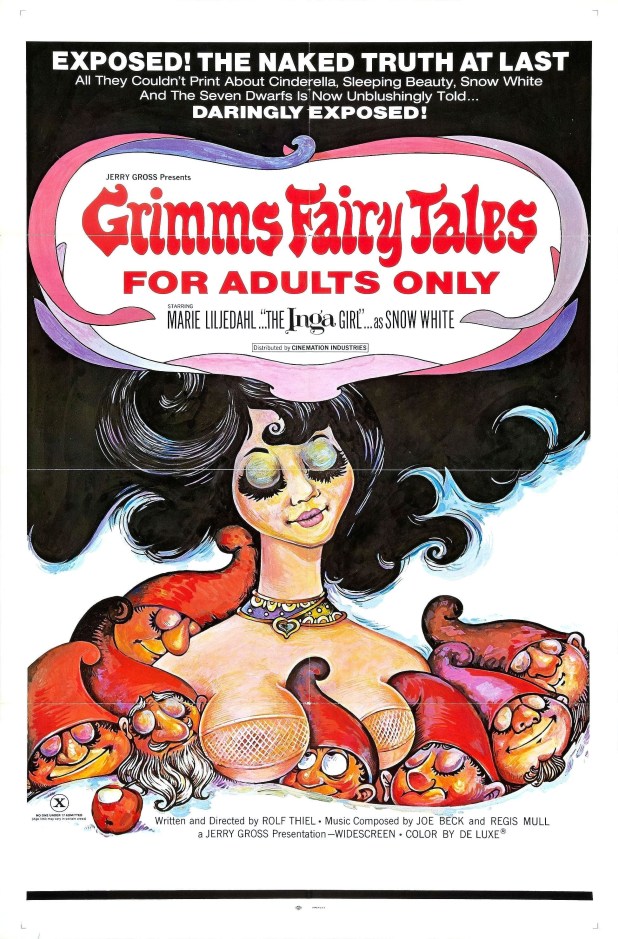
Also known as The New Adventures of Snow White, this sex farce is part of Rolf Thiele’s downward career trajectory, who had once been a mainstream director but increasingly found himself making lower-budget sex comedies. It’s all about Snow White (Marie Liljedahl, who was Eugenie in Eugenie…The Story of Her Journey into Perversion), Cinderella (Eva Rueber-Staier, who was General Gogol’s assistant Rublevitch in the films The Spy Who Loved Me,For Your Eyes Only and Octopussy) and Sleeping Beauty having a series of adult adventures.
There’s also a dude in a bear suit.
As for the evil queen, she’s played by Ingrid van Bergen, who famously shot her lover dead in 1977 and was released five years later to continue being a star. She was also in the Edgar Wallace adaptation The Avenger and The Vampire Happening.
A section 3 video nasty, this is a pretty tame film, aside from the scene where one of Cinderella’s wicked stepsisters literally slices off her heel to fit it into the glass slipper. Wow. That even took me a second to get over. Well done, silly sex comedy from 1969.
That said, Letícia Román, Dante DiPaolo and Roberto Calvi are in both movies.
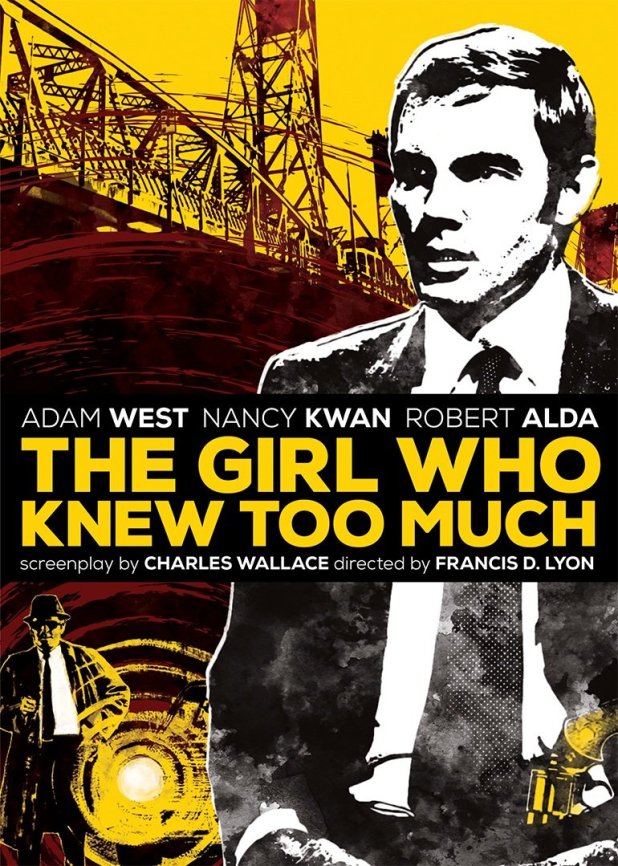
This The Girl Who Knew Too Much stars Adam West as Johnny Cain, nightclub owner and adventurer. Directed by Francis D. Lyon, this was his chance to escape the typecasting of Batman, and no, that didn’t go down. But what does is murder, baby, the murder of Tony Grinaldi (Steve Peck) in Johnny Cain’s joint that brings him back into dealing with the Syndicate.
Working with his piano player, Lucky (Buddy Greco), Cain helps the CIA to defeat the Communists and the underworld at the same time. Maybe he picked the wrong side, who can say? Then, he gets all messed up with his old love, Revel Drue (Nancy Kwan).
Revel Drue!
There’s some plot about a dead gangster who was after some priceless art and blackmail against Cain, but really, this is all about watching Adam West — or his obvious stunt double — get beaten up for nearly the entire running time, then tossed through a glass window. Meanwhile, he’s all laconic whenever he speaks, like the coolest guy in the room, if the coolest guy in the room got his ass kicked every two minutes.
EDITOR’S NOTE: Cinematic Void will be playing this tomorrow at 7:00 p.m. at the Music Box Theater in Chicago (tickets here). For more information, visit Cinematic Void.
Umberto Lenzi, come on down! We’re eager for you to shock us, titillate us, and perhaps even thrill us a bit. Oh, and you’ve brought Carroll Baker with you! Please, show us the tale you’ve crafted!
Released in Italy as Orgasmo, this was released as one of the first X-rated movies in the U.S., which was definitely played up in all of the ads especially because it had Baker in the movie. She had left America a single mother with two children and her prospects weren’t great in Hollywood. In Italy, despite making movies that she said “What they think is wonderful is not what we might,” she found a career. Later, she would admit that it showed her an entirely different world and brought her back to feeling alive again.
What’s confusing is that Lenzi’s next movie was released as Paranoia in Italy and A Quiet Place to Kill in America.
I love this interview that she did with Tank Magazine, answering if she ever did any avant-garde projects: “Some of the films in Europe, of course, but a lot of them I haven’t even seen. The one I’m curious about is called Baba Yaga; it was a really far out, wild, cartoonish sort of thing. I play the title character, a 1,500-year-old witch, and all my sisters were witches, too. I didn’t have to be completely naked, but in every Italian film, there was a scene where you had to show your breasts. Usually, I was talking on the telephone or reading a book. One day they announced a nude scene – I couldn’t believe it. But the make-up artist and hairdresser were already there, dying the other girls’ pubic hair to match the hair on their heads.”
In this story, Kathryn West (played by Baker) is a glamorous American widow who moves to Italy just weeks after her wealthy older husband’s death. She settles into a huge villa, but her life feels lonely and boring until Peter enters the picture. His free-spirited nature shakes her out of her rut, and soon he moves in with his sister, Eva. However, things aren’t what they seem—they are not actually siblings, and their relationship evolves into a complicated love triangle. When Kathryn tries to break free from this arrangement, Peter and Eva keep her prisoner, constantly keeping her under the influence of drugs and alcohol while playing the same haunting song on repeat, driving her to the brink of insanity and suicidal thoughts. That’s what happens when you get gaslit and everyone is feeding you pills. Don’t worry — everyone pays for their sins by the end.
If you appreciate melodramatic twists, layered narratives, and visually striking sex scenes, then it’s time to indulge in this film. If you can’t make it to the Music Box, you can find it as part of The Complete Lenzi/Baker Giallo Collection set from Severin, which also has So Sweet…So Peverse, A Quiet Place to Kill and Knife of Ice.
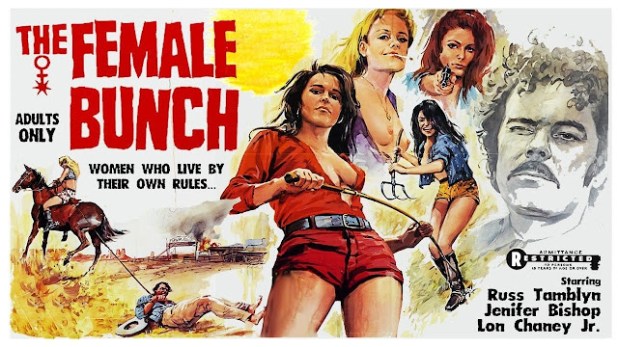
Shot in the summer of 1969 at Spahn Ranch, which was the home of the Manson Family at the time, The Female Bunch also has moments filmed at Hanksville and Capitol Reef in Utah as well as Las Vegas, Nevada. Adamson loved shooting outside. He must have loved every second of this movie.
All the bad men she’s dealt with leaves Sandy (Nesa Renet) wanting to end it all. Her friend Libby (Regina Carrol) takes her into the desert to meet Grace (Jennifer Bishop), who leads a gang of women that run drugs and use men.
This is the last movie of Lon Chaney Jr., filmed after Dracula vs. Frankenstein. His voice sounds painful, the result of throat cancer radiation treatments. He plays Monti, an old Hollywood cowboy who is loyal to Grace. Kim Newman, who writes some great film reviews, wrote a short story about this movie, “Another Fish Story.” In this tale, Charles Manson is trying to using one of the Ancient Ones to destroy the world while Lon Chaney Jr. is given a mission in the desert that will keep The Family from bothering Adamson and crew.
To join this gang of women, you have to be buried alive in a coffin. I don’t know if I’d go that far, but if I got to hang out with Chaney and Russ Tamblyn, I may let you throw some dirt on my grave.
I first encountered this movie halfway through a showing in the middle of the night and had no idea what it was. That’s something that people that stream movies miss out on — the total confusion and need to know that arises when you discover a completely deranged movie in the middle of its running time in the small hours of the night.
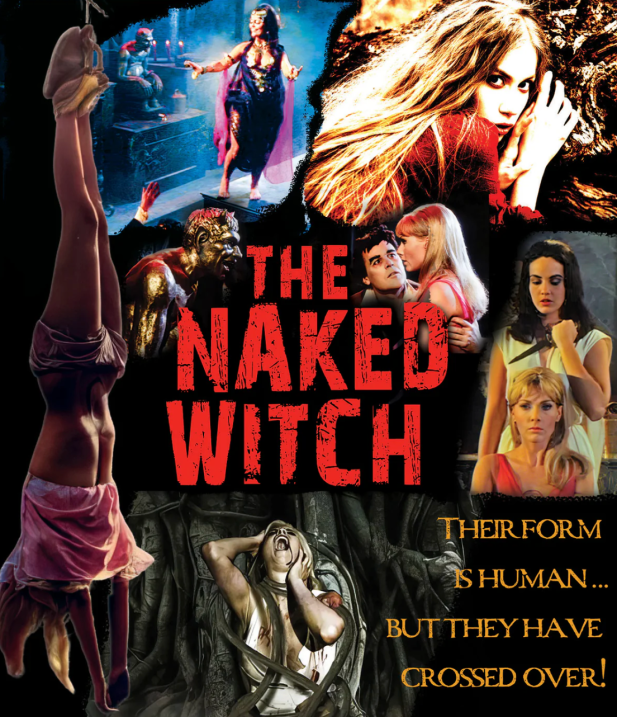
William O. Brown only made one other movie, One Way Wahine. That’s a shame because I totally love what he had happening here in The Witchmaker. It’s just plain strange in the very best of ways.
Somewhere in the swamps of Louisiana, young women are being killed and drained of their plasma by Luther the Berserk, who is part of a coven of witches that has drawn Dr. Hayes (Alvy Moore, Hank Kimball from Green Acres) and his group of psychic investigators.
The coven’s leader Jessie — who appears in young and old forms — wants a member of Dr. Hayes’ group named Anastasia (Thordis Brandt, who played an Amazon in In Like Flint), who has supernatural ancestors, to join them.
There’s an interesting and probably unintended theme running through this movie, where the straight-laced older male scientists want to save the buxom blonde Anastasia and the witches and warlock just want to free her (and you know, make her a wanton woman. Can the patriarchy win out?
Six years later, this movie was re-released under the title The Naked Witch with footage that earns it that title. This is not the Larry Buchanan movie of the same name.
The VCI Blu-ray of The Naked Witch has a commentary track by Robert Kelly, artist, reviewer and film buff extraodinaire; a poster gallery of other notable horror films of the 1960’s and restored original trailers and a radio ad. You can get it from MVD.
Each October, the Unsung Horrors podcast does a month of themed movies. This year, they will once again be setting up a fundraiser to benefit Best Friends, which works to save the lives of cats and dogs across America, giving pets second chances and providing them with happy homes.
ABOUT THE AUTHOR: Adam Hursey is a pharmacist specializing in health informatics by day, but his true passion is cinema. His current favorite films are Back to the Future, Stop Making Sense, and In the Mood for Love. He has written articles for Film Eastand The Physical Media Advocate, primarily examining older films through the lens of contemporary perspectives. He is usually found on Letterboxd, where he mainly writes about horror and exploitation films. You can follow him on Letterboxd or Instagram at ashursey.
Stop the press!
I originally had a different film in this slot—Night Angel, which I ended up moving to a different category. The J&B element was not very strong in Night Angel. Just a scene where you can see a bottle on a shelf behind a bar. I realized that, somehow, I did not have a single Italian film on my list this year. When I reviewed a Letterboxd list that so kindly compiled films that feature the iconic Scotch whiskey, I discovered a film I somehow missed when I dove into Alberto De Martino’s filmography last year. Carnal Circuit, a film most definitely worthy of inclusion in any forgotten giallo set.
Alberto De Martino is probably my favorite Italian director not named Fulci. It is a hill I’m willing to die upon. He is probably best known for rip-offs of more successful films. The Antichrist is a rip-off of The Exorcist. Holocaust 2000 is a rip-off of The Omen. I guess you could say Pumaman is a Superman rip-off. Maybe his reputation for knock-offs lessens his cache among cinephiles. If so, it’s their loss. If they take it, toss it, and leave it, as Sir Mix-a-Lot so wisely said, I’ll pull up quick to retrieve it.
Carnal Circuit is an early example of the giallo. No black glove clad killer to be found here. But we do get the trope of a “common” man (not affiliated with the police) entering his sleuthing era, trying to get to the bottom of a murder mystery. In this film, Paolo (Robert Hoffman) is a newspaper reporter who gets caught up in the mystery thanks to a friend from his past, Giulio (Roger Fritz). Thugs are out for Giulio, the current face of an advertising campaign for the International Chemical corporation. But why would anyone want to rough up such a beautiful mug? Turns out that Giulio has made some enemies on his way to the top, as one does. But now Giulio has turned up dead, killed in a vehicle accident. Or was it an accident? Seems as if everyone on the International Chemical board had a reason for revenge against Giulio. But enough to kill? Perhaps his diaries give an answer, and it is up to Paolo to find them on his quest for the truth.
I do have a soft spot in my heart for these giallo films that were made before Dario Argento put his stamp on the subgenre, forever changing the way they are perceived. Carnal Circuit is similar to Fulci’s Perversion Story (or One on Top of the Other). Both films bring their story to California, although Fulci is more interested in framing his tale through the lens of Vertigo. De Martino’s film spends a good deal of its running time slowly revealing the change in Giulio (and seeing how much female flesh he can expose along the way—really putting the carnal in Carnal Circuit).
Unfortunately, the J&B component in this film was no different from Night Angel. Simply a scene where the former spokesperson for International Chemical makes a drunken display at a company party. He stands in front of a bottle of J&B before plummeting to his death out of a window (a missed opportunity for a dummy drop).
At any rate, this film has been one of my favorite watches of the month, and another piece of ammunition in my battle to champion Alberto De Martino.
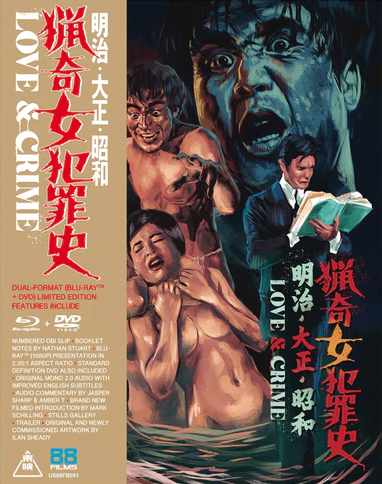
“King of Cult” Teruo Ishii (Horrors of Malformed Men, Shogun’s Joy of Torture) shares four stories of real-life crimes of passion involving women throughout Japan’s history, including the Hotel Nihonkaku Murders; Oden Takahash, the poison wife and last woman to be executed by beheading in Japan; serial killer Yoshio Kodaira and Sada Abe, whose story was also told in Nagisa Oshima’s In the Realm of the Senses.
This is one of seven movies that Ishii made in 1969 (Horrors of Malformed Men, Yakuza Law, Inferno of Torture, Rising Dragon’s Iron Flesh, Shameless: Abnormal and Abusive Love and Orgies of Edo are the others), yet he doesn’t feel tired. If anything, this is a fully formed and intense mission statement on the nature of female evil.
Forensics examiner Dr. Murase (Teruo Yoshida) is shocked that the next body he is to perform an autopsy on is his wife, Yukiko, who had sex with another man before taking her own life. As he ponders this, he reflects on four true crime stories.
Toyokaku Inn Case is based on a 1961 incident. Chiyu Saito (Mitsuko Aoi) and her husband Kosuke (Kenjirô Ishiyama) may own a hotel together, yet she sees him so infrequently that she assumes that he’s having an affair. She’s right, as it’s the very same woman, Kinue Munakata (Rika Fujie), whom she has been confiding in. She and Kosuke conspire to murder Chiyu, along with Kinue’s faithful lover, Shibuya (Takashi Fujiki). Now the owner of the hotel, she makes it successful, but not without many more killings.
You probably know the Sada Abe story, which happened in 1936, as she was found wandering the streets covered in blood, clutching the genitals of her dead lover. What you may not know is how horrible her life was to that point. Played by Yukie Kagawa, we see how her childhood and teen years led her to, well, cutting off a man’s dick. We also meet several other women who’ve done the same, as well as Dr. Murase — in a moment of meta madness — meeting the actual Sada Abe, who disappeared soon after this. She tells him that we only truly love one person in our lives and that her lover asked to be killed.
Taking a break from women, the third story is about serial killer Yoshio Kodaira (Asao Koike). Shot in black and white, this gets grimy, as we see him set up, assault, kill and maybe even assault after death several women. This is all so the doctor can ask if women make men crazy. Come on, 1969 exploitation Japanese violence movie, be more faithful to our 2025 values.
Takahashi Oden (Teruko Yumi) doesn’t want to marry the man she’s been picked to be the wife of, Naminosuke (Shin’ichirô Hayashi). In just ten minutes or so, he gets leprosy, keeps making love to her, she gets a criminal lover, they kill the husband, and then she’s sold into sexual slavery before being beheaded. Wow.
Obviously, this won’t be a movie for everyone, but if you want to see how far ahead Japan was, both in depicting true crime and lusty tales of sex, murder and violence, this is here for you.
Released for the very first time outside Japan by 88 Films, this has audio commentary by Jasper Sharp and Amber T., a new introduction by Mark Schilling, a stills gallery, a trailer and original and new artwork by Ilan Sheady. There’s also a limited edition numbered OBI strip and booklet. You can order it from MVD.
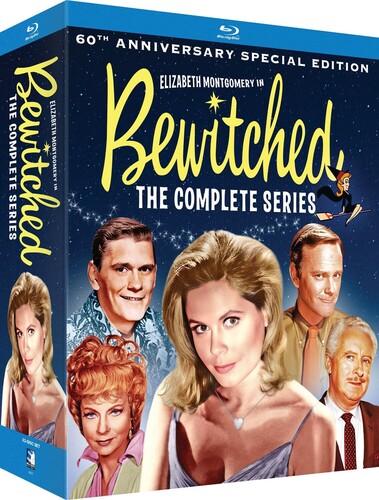
Bewitched aired throughout the most tumultuous time in modern history — hyperbole, that could also be today, but true, as rehearsals for this show’s first episode were on the day Kennedy was shot and the episode “I Confess” was interuppted by Martin Luther King Jr.’s death — from September 17, 1964, to March 25, 1972. The #2 show in the country for its first season and remaining in the top ten until its fifth season, it presents a sanitized and fictional world that at the time may have seemed contrary and fake to the simmering 60s, but today feels like the balm I need and an escape.
Within the home on 1164 Morning Glory Circle, Samantha (Elizabeth Montgomery) and Darrin Stephens (Dick York, later Dick Sargent) have just had a whirlwind romance and ended up as husband and wife. At some point, she had to tell him that she was a witch, a fact that he disapproved of, and that she should be a normal housewife instead of using her powers. Yet she often must solve their problems — usually caused by her family, such as her mother Endora (Agnes Moorehead) — with a twitch of her nose.
Creator Sol Saks was inspired by I Married a Witch and Bell, Book and Candle, which luckily were owned by Columbia, the same studio that owned Screen Gems, which produced this show. You could use either of those movies as a prologue for this, which starts in media res — I like that I can use such a highbrow term to talk of sitcoms — with our loving couple already settling into the suburbs.
Author Walter Metz claims in his book Bewitched that the first episode, narrated by José Ferrer, is about “the occult destabilization of the conformist life of an upwardly mobile advertising man.” As someone who has spent most of his life in marketing, maybe I should look deeply into the TV I watched as a child. Bewitched was there all the time in my life, wallpaper that I perhaps never considered.
Head writer Danny Arnold, who led the show for its first season, considered the show about a mixed marriage. Gradually, as director and producer William Asher (also Montgomery’s husband at the time) took more control of the show, the magical elements became more prevalent. What I also find intriguing is that with the length of this show’s run, it had to deal with the deaths of its actors and York’s increasing back issues, which finally forced him to leave the show and another Dick, Dick Sargent, stepping in as Darren, a fact that we were to just accept.
That long run, the end of Montgomery and Asher’s marriage and slipping ratings led to the end of the show, despite ABC saying they would do two more seasons. Instead, Asher produced The Paul Lynde Show, using the sets and much of the supporting cast of this show. He also produced Temperatures Rising, which was the last show on his ABC contract, which ended in 1974.
Feminist Betty Friedan’s two-part essay “Television and the Feminine Mystique” for TV Guide asked why so many sitcoms presented insecure women as the heads of households. None of this has changed much, as the majority of sitcoms typically feature attractive women and funny but large husbands, a theme created by The Honeymooners, and the battles between spouses. I always think of I Dream of Jeannie, a show where a powerful magical being is subservient to, well, a jerk. At least on Bewitched, Samantha is a powerful, in-control woman with a mother who critiques the housewife paradigm.
Plus, unlike so many other couples on TV at the time, they slept in the same bed.
Bewitched‘s influence stretched beyond the movie remake. The show has had local versions in Japan, Russia, India, Argentina and the UK, while daughter Tabitha had a spin-off. There was even a Flintstones crossover episode!
Plus, WandaVision takes its central conceit — a witch hiding in the suburbs — from this show. And Dr. Bombay was on Passions!
This is the kind of show that has always been — and will always be — in our lives. Despite my dislike of Darren’s wedding vows of no magic, there’s still, well, some magic in this show. Just look at how late in its run it went on location to Salem for a multi-episode arc, something unthought of in other sitcoms.
You can watch this just for the show itself, to see the differences between the two Darrens and when Dick York had to film episodes in special chairs because of his back pain, when the show did tricks like have Montgomery (using the name Pandora Spocks) playing Samantha’s cousin Serena to do episodes without York or just imagine that the world was changing outside. Yet, magic and laughter were always there on the show, throughout the lives, divorces and deaths of its principals and supporting cast.
The Mill Creek box set is an excellent, high-quality way to just sit back, twitch your nose and get away from it all. This 22-disc set has everything you’d want on Bewitched, including extras like Bewitched: Behind the Magic, an all-new documentary about the making of Bewitched, featuring special guest appearances by actor David Mandel (Adam Stephens), Steve Olim (who worked in the make-up department at Columbia), Bewitched historian Herbie J Pilato, film and television historian Robert S. Ray, Bewitched guest star Eric Scott (later of The Waltons) and Chris York, son of D. York (the first Darrin). There are also sixteen new episodic audio commentaries, moderated by Herbie J Pilato that include behind-the-scenes conversations with Peter Ackerman (son of Bewitched executive producer Harry Ackerman), David Mandel, Bewitched guest star Janee Michelle (from “Sisters at Heart”), Steve Olim, Robert S. Ray, former child TV actors and Bewitched guest stars Ricky Powell (The Smith Family), Eric Scott (The Waltons), and Johnny Whitaker (Family Affair and Sigmund and the Sea Monsters) and Chris York (son of D. York). There’s also an exclusive 36-page booklet featuring pieces by Bewitched historian Herbie J. Pilato, as well as an episode guide. You can order it from Deep Discount.

 B&S About Movies