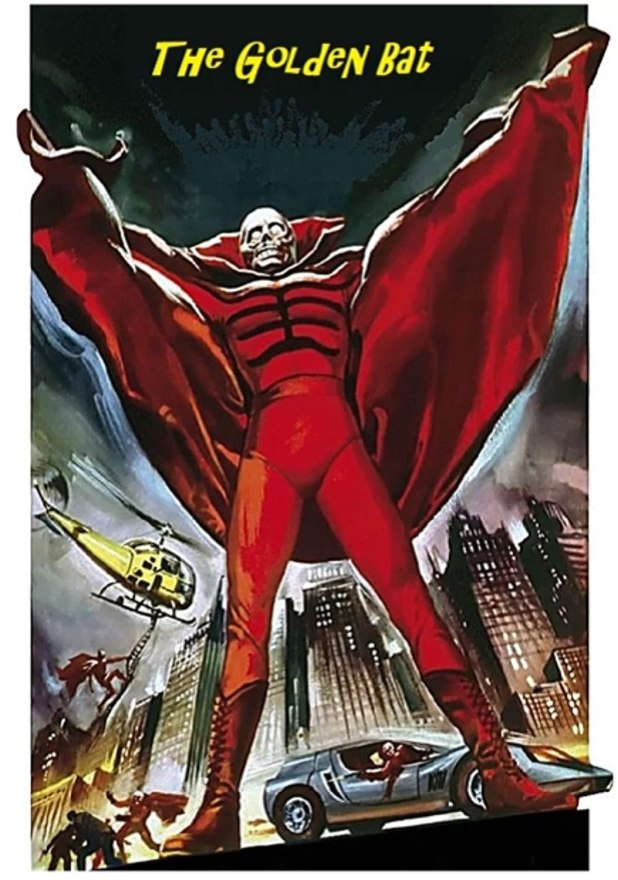
The Golden Bat (1966)

AUTHOR’S NOTE: This article originally ran in Drive-In Asylum issue 20. You can get it right now on the Etsy store.

While many of us would consider the first superheroes to be Superman or Batman, the truth is that The Golden Bat (Ogon Batto) predates both of them by nearly a decade and is considered the world’s first comic book superhero. 

The character was created by sixteen-year-old Takeo Nagamatsu and twenty-five year-old Suzuki Ichiro in 1931. They were inspired by, of all things, Golden Bat cigarettes and the mythology department of Tokyo’s Ueno Royal Museum. However, they sought to create a hero based on science rather than magic. 

The Golden Bat made his debut in a traveling storytelling show known as kamishibai, which means paper play. He was so popular that after World War II, his adventures continued in both manga comics (including work by Osamu “The Father of Maga” Tezuka), anime and film.

I know you didn’t crack open this issue of DIA to read about obscure comics. So let me get to the reason why I’ve picked Ogon Batto to spotlight. The first live-action film starring this character was made by Toei — yes, the same studio that brought you The Green Slime, Female Prisoner 701: Scorpion and Message from Space — in 1966. 

While made in the same year that the Batmania craze was spreading like wildfire, this film is a strange mix of movie serial and Eurospy with a watchful eye toward the sentai shows that would dominate Japanese kids TV by the late 70’s. 

Professor Yamatone (Sonny Chiba, eight years before he’d make The Street Fighter for this very same studio) and his family have taken a visit to Egypt. While exploring the tomb of a legendary god of justice — you guessed it, Ogon Bat — the agents of Dr. Erich Nazo take Yamatone captive. This has something to do with Nazo’s home planet Icarus being drawn toward Earth to destroy it and a giant robot that he keeps under the sea.

As his daughter Mari begins to wail and plead for her father’s life, her tears fall into the Golden Bat’s tomb and bring him 10,000 years forward into our time from his native land of Atlantis.

This would be a strange origin story to start with, but it’s the design of Golden Bat that makes it sublime. He’s literally an aurum-armored warrior with a face like, well, a skull. He looks like the villain of the piece, more Kriminal than Superman. He pretty much invented the bat-signal, casting a giant gold bat and his laughter before each battle, before a large golden skull appears as he does. Most fights between Golden Bat and his adversaries end with most of them dead, which is strange for a hero who fights for small children.

He’s also incredibly similar to Fantomas, a fact not lost on Italian and Brazilian audiences, which renamed him as Fantaman and Fantomas respectively. Even cooler, this movie was released in Italy as Il ritorno di Diavolik or The Return of Diavolik. Deep deep down, indeed.

This is probably the point in which I should explain that the insidious Dr. Nazo looks like a giant stuffed bear with four eyes and a giant mechanical claw for a hand. His agents all have burned up faces, deploy tricks like gigantic hypno-wheels and have no compunctions menacing young children and old people.

Director Hajime Satô was also behind the senses-shattering Goke, Body Snatcher from Hell. Just imagine the weirdness of that movie, but instead harnessing it to create a superhero movie for kids. Now you have a good idea of what to expect here.

Keep an eye out for Andrew Hughes, a Turkish-born import/export businessman who inexplicably became a Japanese movie star. He was on speed dial — yes, Japanese directors had that way before we knew what it was — for anyone who wanted a Western-looking face in their film, showing up in everything from King Kong Escapes and Destroy All Monsters to Crazy Adventure, where he played Adolf Hitler. 

Sure, Golden Bat has every superpower ever — and then some — but this movie flies, making you never even realize that seventy-plus minutes of aliens, lighting-blasting staffs and skullman versus robot fisticuffs have battered your brain into jelly. 

Of course, Golden Bat’s story — not in this film, mind you — ends like every Japanese hero story ever, with both the protagonist and his arch-nemesis dead. There’s something in the Japanese culture that demands that each of its monster heroes must pay the price for their daring-do in blood. 

But The Golden Bat will return. Even death can’t hold him in her grasp when a young girl’s tears call from beyond, after all.

You can watch this movie on YouTube.

Knives of the Avenger (1966)

You can’t really judge Mario Bava’s work on this film, as he entered a troubled production and rewrote and reshot it in just six days.

After the apparent death of her husband King Arald (Giacomo Rossi Stuart, The Crimes of the Black Cat, here called Frank Stewart), Karin (Elissa Pichelli, using the Americanized name Lisa Wagner) has run from the murderous Hagen (Fausto Tozzi, billed as Frank Ross). Now, Rurik, a knife-throwing stranger (Cameron Mitchell, using the name…well…Cameron Mitchell) has rode into town like a Roman Shane and is defending her and her son Moki. Of course, Moki may also have been his son and he could very well have assaulyed Karin in the past, but I guess him learning how to throw knives — and aiming them at the right people — is some kind of redemption?

This is much closer to a western than a peblum, but when you think that Bava pretty much fixed this movie — or at least got it done — in less than a week, you have to admire his talent. That said, this is not one of his best.

This played on double bills with Gamera the Invincible, which seems like a pairing I’d never put together. It’s on Tubi, but fair warning, the print is horrible.

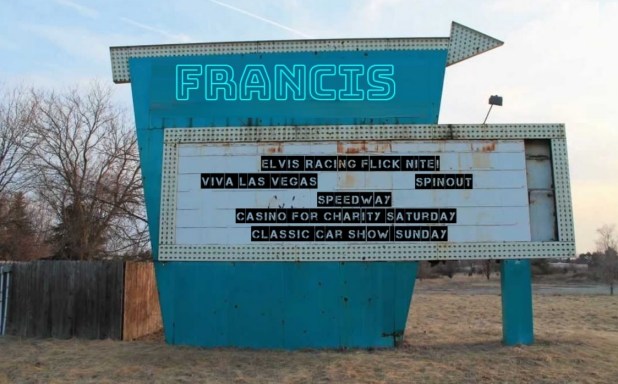
Drive-In Friday: Elvis Racing Nite!

Hopefully you joined us — and enjoyed — our “Fast and Furious Week” tribute during the first week of August as we honored the Universal franchise, along with its ripoffs and knockoffs, and the obscure and off-beat, rubber-burning drive-in epics from the ’50s through the ’80s that influenced the those films.

And guess what?

That 40-plus film blowout still wasn’t enough . . . as one car flick skidded into another, then another . . . and before we knew it, we had another 40-plus reviews. So, to get you ready for our second “Fast and Furious Week Redux” to run from Sunday, December 6, to Saturday, December 12, we’re rollin’ out Elvis’s car racing trilogy.

Facts are facts: Elvis flicks served us heaping helpings of cheesy camp starring “The King of Rock ‘n’ Roll” in a wide array of professions. He was a convict, a boxer, a cowboy, a riverboat captain, a helicopter pilot, and a cowboy — who always found the time to sway his hips and sing his latest hits for a bevy of skintight, carpi-panted ladies. And road racing, be it stock cars, Grand Prix or road rally racers, was a hot sport in the ’60s. So why not place Elvis in a flame retardant suit, strap on a helmet, and slip him into a cockpit?

Viva Las Vegas (1964)

The best and most popular of Elvis’s race excursions was his role as Lucky Jackson. He’s a down-and-out waiter and aspiring racer who dreams, schemes, and parties with Rusty Martin (Ann-Margret) as he gathers up the cash to buy a new engine for his cherished Elva Mk VI Maserati so he can enter the First Annual Las Vegas Grand Prix. His man competition is mean ol’ Count Elmo Mancini and his Ferrari 250 GT. And Yep. That’s good ‘ol Uncle Charlie (William Demarest) from the iconic ’60s TV series My Three Sons as Ann’s pop.

And get this: the music and dance scenes were choreographed by David Winters . . . yes, the very same David Winters who gave us — wow, it’s not even a Star Wars dropping — the Battlestar Galatica pile that is 1988’s Space Mutiny.

Only on B&S About Movies, baby.

Spinout (1966)

Poor Elvis. Col. Tom Parker never let The King rest. But in Col. Tom’s defense: he was a master at keeping Elvis in the spotlight while he was overseas serving in the military. After Viva Las Vegas, we got seven more films within a two year period: Kissin’ Cousins, Roustabout, Girl Happy, Tickle Me, Harum Scarum, Frankie and Johnny, and Paradise, Hawaiian Style.

This time out, El is Mike McCoy, a band leader moonlighting as a race car driver who must decide between breaking up with Cynthia Foxhugh (Shelley Fabares) or lose her father’s sponsorship for the big race. This time, El’s trades out his Elva Mk VI for a Cobra 427. And keep your eyes peeled for the eye pleasing ski n’ snow bunnies that are Diane McBain — who’s determined to steal Mike from Cindy — and crushed on by his band’s female drummer, played Deborah Walley.

Speedway (1968)

MGM went all out for El’s third and final race flick, casting NASCAR stars Richard Petty, Buddy Baker, Tiny Lund, and Cale Yarbrough in cameos — to help us forget we’re watching a film comprised of stock footage with El process-shot onto the race track. This time out, El is Steve Grayson, a stock racer who only has eyes for IRS Agent Susan Jacks (Nancy Sinatra) and sees his career going up in smoke thanks to bad bookkeeping courtesy of his manager’s gambling addiction. And keep your eyes open for Bill Bixby and ’60s drive-in warhorse Ross Hagan in support roles.

“We gotta win this race, Elvis!”

We’ll see you bright and early, 9 AM, on Monday, December 6th as we roll out a week of over 40 more road rippin’ and rubber burnin’ flicks, as well as a “Drive-In Friday” tribute to Drag Racing documentaries, as part of our “Fast and Furious Week” round up of reviews.

Flicks not starring Elvis . . . but about Elvis.

About the Author: You can learn more about the writings of R.D Francis on Facebook. He also writes for B&S About Movies.

WILLIAM GREFE WEEK: The Devil’s Sisters (1966, finished in 2012)

William Grefe’s roughie The Devil’s Sisters was lost for some time, but luckily, we can all watch it (and know how it ends, as eight minutes of the last reel are missing and not even Gréfe can find one of the 34 other prints that were made of the film, other than the one he got from a German collector).

Teresa leaves behind her cop boyfriend who only cares about the carnal and heads to Tijuana for a job as a maid, which of course means that she ends up locked up on the bedroom of the evil Rita, serving her male customers and shedding her virginal past. How poetic — or horrid — is it when her man shows up and he calls her a whore instead of trying to save her?

Now that the law knows that she’s been taken, our heroine is taken to The Ranch, a place where pregnant streetwalkers are kept behind bars and the barbed wire Royal Marriage Bed is used to punish those foolhardy enough to try and escape.

Also known as Sisters of the Devil, this film has some real-life ties. It’s loosely based on the story of Las Poquianchis, in which Delfina and María de Jesús González used help wanted ads to find young women, got them hooked on drugs and then tricked them out.

I really enjoyed hearing Gréfe talk over the storyboards and wish the whole film had been done this way!

Sisters of the Devil is available on Arrow Video’s He Came from the Swamp box set. Diabolik DVD should have it in stock.

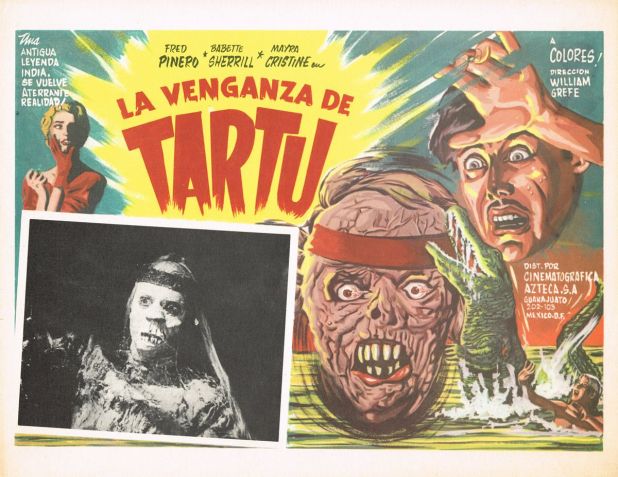
WILLIAM GREFE WEEK: Death Curse of Tartu (1966)

If you didn’t have enough of teenagers in the Everglades screwing with forces they didn’t quite comprehend in Grefe’s Sting of Death — which was the other part of a double bill with this film — then good news! Four students on an archaeology assignment decide that it would be a great idea to have a shindig on the grave of Tartu, an ancient Native American medicine man.

Frank Weed, who played Sam in this, owned all of the animals that Tartu comes back from beyond within. He did not own the stock footage that was also used for some of these animals, nor his own voice, as he was dubbed for this movie.

Somehow, Tartu has the power set of your average mummy villain, except you know, he turns into animals. One of those animals is a “lake shark,” which I had to look up, and learned that true freshwater sharks can be found in fresh water in Asia and Australia, as well as bull sharks, which can swim in both salt and fresh water and are mostly found in tropical rivers. Actually, bull sharks have been found as far north as Illinois. Yet another reason why the Everglades are totally terrifying.

Why Tartu’s weakness is mud — when he makes his home in the Florida swamps — is beyond me. Man, who knows? This is kind of a nature film, you know, except for all the killing of teens after they dance. It’s got a great name. an awesome poster and really, isn’t that all it needs?

If you want to see it for yourself, you can find this movie on the new Arrow Video He Came from the Swamp set that you can grab from Diabolik DVD.

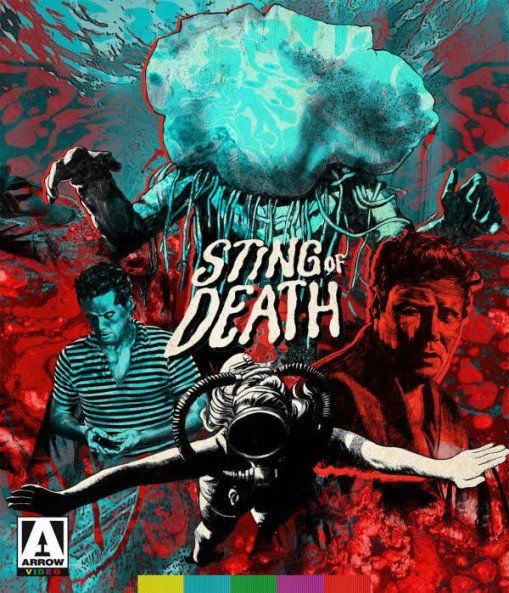
WILLIAM GREFE WEEK: Sting of Death (1966)

Sold as a double bill with William Grefé’s Death Curse of Tartu, this is Florida regional drive-in exploitation at its absolute best. I mean, sure there are plenty of movies where sea creatures rise to the beach to menace near-nude girls, but do any of them have Neil Sedaka* belting out “Do the Jellyfish?”

Shot on the very same Rainbow Springs that were once attacked by the Creature from the Black Lagoon, this starts off hot, with a hand reaching up from the depths of the ocean to murder an innocent young girl who just wants to listen to her radio.

A bunch of college kids — well, one of them is a doctor and his assistant, but come on, this is basically a slasher in the swamps — just want to drink orange drink and make fun of Egon, their host’s helper with the scary face. Why, it’s enough for a man to turn himself into a half-human, half-jellyfish maniac who knows how to use an axe when he isn’t sending an entire armada of Portuguese Man O’ War jellyfish to kill everyone.

And yeah, he does have a giant jellyfish in a tank and a head shaped like one. This is that kind of movie. That kind of awesome movie where the killer has obviously flippers on and a giant inflatable head.

You can get this on the He Came from the Swamp set that Arrow Video just released. It’s available at Diabolik DVD.

*They may have advertised special singing star Neil Sedaka, but they never promised you he’d show up, did they?

Gunman Called Nebraska (1966)

One of the joys of the deep dives that I do into film genres is when they cross over. It’s like I’m reuniting with an old friend when a director or actor appears in more than one category.

That means that I’m overjoyed to say hello again to Ken Clark, who played Secret Agent Dick Mallory in Agent 077: Mission Bloody Mary, Agent 077: From the Orient with Fury and Special Mission Lady Chaplin, as well as appearing in Tiffany Memorandum and Attack of the Giant Leeches.

As Ringo del Nebraska, this but one of thirty movies or more that use the name Ringo, in the hopes that you will think that it’s a sequel to either A Pistol for Ringo and The Return of Ringo. It’s also known as Savage Gringo.

Spanish director Antonio Román started the film and producer Fulvio Lucisano claims that he fired him before he could finish, replacing him with Mario Bava. Lamberto Bava and actor Howard Ross (who is in the Fulci films Warriors of the Year 2072 and The New York Ripper as well as many more movies) claim that Mario was not there and only did the matte paintings. That said, Lamberto is listed as an assistant director, so the idea that this movie was shot all in Spain can’t be true.

This movie also has the title Prepare to Die, Ringo From Nebraska – I Am Sartana, which ties it into yet another Italian Western series! It was sold to American-International Pictures Television, which is where the Savage Gringo title comes in.

If you’re wondering — why has Sam been discussing the titles of the film and who directed it more than the actual film — well, once you watch it, you’ll figure that out for yourself.

You can watch this on YouTube.

Massacre Time (1966)

Massacre Time was originally supposed to be an Italian-Spanish co-production with Ringo co-star George Martin playing Tom Corbett. According to Troy Howarth’s book Splintered Visions: Lucio Fulci and His Films, the Spanish side withdrew their involvement and funding after Fulci refused to tone down the script’s violence.

Fulci instead cast Nero at the suggestion of his assistant director, Giovanni Fago, based on his look from the production stills of the recently completed Django. George Hilton was cast in the other lead and had difficulty dealing with Fulci as a director.

This was written by Fernando Di Leo, who co-wrote A Fistful of Dollars, For a Few Dollars More, A Pistol for Ringo and The Return of Ringo, with the title taken from Franco Enna’s book Tempo di Massacaro.

Speaking of the violence in this film, Fulci would later claim that he pushed Di Leo to make the film as violent as possible, which Di Leo refuted, stating “I don’t know anything about Fulci’s claims that he insisted that I write a very violent movie. Fulci only directed well what was already on the page. The script was good and ready and he liked it the way it was, otherwise I’d have complied to his demand if there had been any”.

Nero and Hilton play the Corbett brothers, with Tom (Nero) coming back to their hometown to find it under the iron rule of Mr. Scott (Giuseppe Addobbati, billed as John MacDouglas for American audiences; he’s also in Nightmare Castle) and his son, Junior Scott (Nino Castelnuovo, Strip Nude for Your Killer).

Linda Sini is also in this. She also is in Fulci’s Don’t Torture A Duckling as Bruno’s mother.

Although an English-language version was made, AIP made their own dub of the film and released it as The Brute and the Beast, making it one of only two Italian Westerns released in the U.S. by the studio (the other is God Forgives… I Don’t!). In the UK, this is known as Colt Concert and in Denmark and West Germany, it was released as Djangos seksløber er lov (Django’s Six-Runner Is Legal) and Django – Sein Gesangbuch war der Colt (Django – His Hymnbook was the Colt). My favorite alternate title has to be what it was called in Hong Kong, Ghost Gun God Whip, and Spain, Las Pistolas Cantaron su Muerte (y fue Tiempo de Matanza) (The Pistols Sang His Death (and it was Time for the Killing).

You can watch this on YouTube.

The Las Vegas Hillbillys (1966)

I love Hillybillys In a Haunted House, but I had no idea that this film came out before it. It features Ferlin Husky as Woody Wetherby and Mamie Van Doren (!) as Boots Malone (Joi Lansing would play the role in the sequel).

Woody is a Tennessee wood hauler — feels like a song coming on — who inherits a Las Vegas casino only to discover that he’s also been gifted with a $38,000 debt from some shady sources. How shady? They have Richard “Jaws” Kiel as their enforcer.

Luckily, his Aunt Clementine (Billie Bird, Mrs. Feldman from Police Academy 4: Citizens on Patrol) has an idea to save the day.

Don Bowman plays Woody’s friend Jeepers in both films. You know who is only in this one? Jayne Mansfield, playing Miss Tawny Dawn, a singer who decides to help our hero in his bid to fix up the gambling joint that he was just awarded. This would be her next to last film, which still makes me sad.

You can also listen to plenty of musical numbers from Sonny James, Roy Drusky, Del Reeves, Bill Anderson, Connie Smith, Wilma Burgess, Duke of Paducah, Jr. Carolina Cloggers and The Jordanaires.

This movie is about as cheap as it gets, all mostly shot in a static shot in one room. Even the “Vegas casino” is an obvious set.

Director Arthur C. Pierce is better known for the movies he wrote, including The Human DuplicatorsThe Navy vs. the Night Monsters and The Astral Factor.

Sadly, Jayne and Mamie never appear on screen together. I think that’s because the world would have stopped spinning and we would have all died screaming from that much volcanic energy in the same area. They were doing their duty staying that far apart from one another.

Bonus points for the stock footage of Vegas. Old Vegas is the best, the kind of cigarette smoke stale, beer smelling, dead bodies in Lake Mead den of sin that I always dreamed that it would be.

BONUS: Along with The Terror of Tiny TownDoctor of DoomSki FeverSanta Claus Conquers the MartiansRobot MonsterThe Crawling Hand, Untamed WomenThey Saved Hitler’s BrainBride of the MonsterProject MoonbaseRocket Attack U.S.A. and The Slime People, this was one of the 13 films featured on the Larraine Newman-starring and Dr. Pepper-sponsored syndicated series The Canned Film Festival.

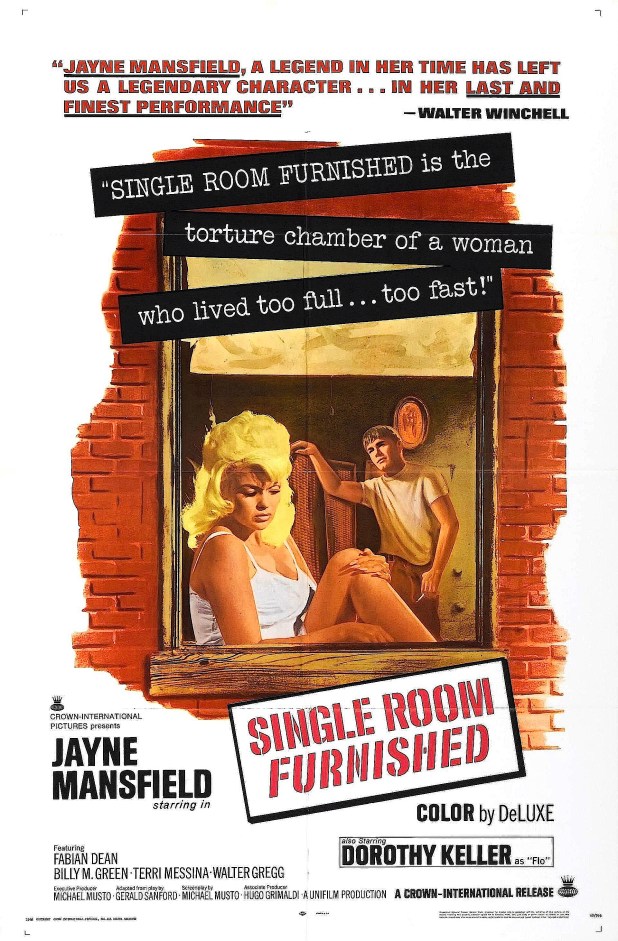
Single Room Furnished (1966)

Italian directors used to change their name to Americanized names so that people wouldn’t think their movies were Italian. Matt Cimber? He used the name Matteo Ottaviano when he directed this.

This was Jayne Mansfield’s final filmed starring role, shot by Cimber, her thrid and final husband. It briefly came out in 1966, but was pulled from theaters and re-released a year after she died. The only other film that she technically did after this was a cameo role in A Guide for the Married Man.

Mansfield shines here, despite the darkness of the story, as she plays three roles of three women who may closer than you’d think. It starts with innocence and ends with prostitution, all within one rundown New York City tenement.

I love that this movie begins with a speech from Walter Winchell, packed with hyperbole, as he describes how this is the gift that Jayne left behind for us. Between the Crown International Pictures title card and this soliloquy, I was already in love with this movie before it even began.

You can watch this on Daily Motion.