11. ⬆⬆⬇⬇⬅➡⬅➡🅱🅰: Select and start a movie based on a video game.
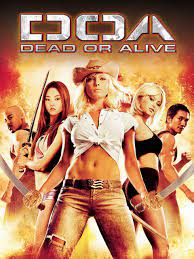
Look, I want to say something like, “Dead or Alive series depicts a collection of skilled martial artists in a worldwide competition that’s sponsored by the DOATEC (Dead or Alive Tournament Executive Committee), a massive corporation with unknown motives,” but really the video game series is Street Fighter with breasts and butts. I mean, the spin-off Dead or Alive Xtreme Beach Volleyball had a mode where you got girls to perform tasks for you and then take photos of them while they posed.
It was created by Team Ninja and Tomonobu Itagaki. Itagaki has said that “violence and eroticism were needed for true entertainment.”
I’m not decrying exploitation.
I’m just telling you this is a different video game experience.
How amazing is it that the movie based on the game is so good? That’s probably because of the cast and the director. Corey Yuen directed this! The same director who made Dragons Forever, No Retreat, No Surrender and the action scenes for Lethal Weapon 4, Romeo Must Die, Kiss of the Dragon, The One, Cradle 2 the Grave, War and The Expendables.
If you’ve played the game, you know the fighters, but let me get into them for those who may not know anything about all of these bikini ladies and ninjas.
Tina Armstrong is a pro wrestler who made it to the finals of the first DOA tournament, won the second, became a supermodel, a rock star and a politician. She’s played by Jaime Pressly and her father, Bass, the pro wrestler who raised her as a single dad, is Kevin Nash.
Kasumi is played by Devon Aoki, daughter of the man who brought Benihana to America. She’s a ninja princess of the Mugen Tenshin Ninja Clan. She’s the main character of the series and also appears in the Ninja Gaidan games.
Christie Allen is a master thief and killer who is way meaner in the games than she is in the movie. She’s played by Holly Valance.
Helena Douglas is the daughter of DOATEC’s founder, who has recently died, and is running the tournament along with Donovan (Eric Roberts). She’s played by Sarah Carter.
Natassia Malthe is Ayane, a ninja assassin who is trying to kill Kasumi, who is being protected by Ryu Hayabusa, the star of Ninja Gaidan, who is played by the son of the man who introduced ninjas to America. Yes, that’s Kane Kosugi. They’re also looking for her brother Hayate (Collin Chou).
Plus, there’s Christie’s partner Max (Matthew Marsden), Zack (Brian J. White) who eventually runs the island that Dead or Alive Xtreme is on, Russian soldier Bayman (Derek Boyer), Robin Shou as a pirate, Brad Wong (Song Lin), Lei Fang (Ying Wang), Hitomi (Hung Lin) and Gen Fu (Fang Liu).
This movie was a lot of work with the actresses all training for three months and Yuen having two crews working 17 hours a day, getting four hours of sleep and then waking up to shoot.
The plot is, well, every single martial arts tournament movie you’ve ever seen, but it’s also a movie as relentlessly devoted to gorgeous women kicking people in the face, smiling right into the camera and then a butt, crotch or breast is seen before more fighting. It’s absolutely shameless and yet, isn’t that what we want from a video game movie? I love how reviewers expected something more, like this was great literature. I’ve played all the games, I won’t lie and they’re relentless and brutal fighters that are a lot of fun. But they also have volleyball mini-games and all of the girls have multiple outfits that are all very revealing. Sometimes, you need to shut off your brain and enjoy things.
Each October, the Unsung Horrors podcast does a month of themed movies. This year they will once again be setting up a fundraiser to benefit Best Friends, which is working to save the lives of cats and dogs all across America, giving pets second chances and happy homes.
Today’s theme: Ghosts
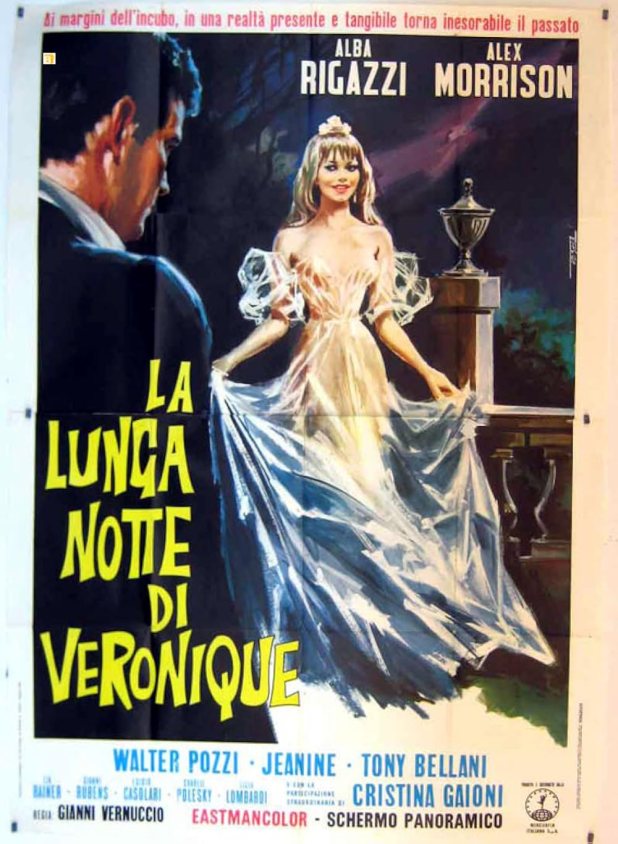
Released in the UK as But You Were Dead, La lunga notte di Veroniqueis about Giovanni Bernardi (Alba Rigazzi) losing his parents in an automobile crash and then coming to stay with his grandfather Count Marco Anselmi (Walter Pozzi). There, his love for his girlfriend (Anna Maria Aveta) is in doubt once he becomes obsessed with Veronique (Cristina Gaioni), the spectral woman that he sees every night.
Director Gianni Vernuccio is barely mentioned by fans of Italian genre cinema. He made the 1964 proto giallo L’uomo che bruciò il suo cadavere, a peplum named Desert Warrior and another by the title Desert Desparados that stars Ruth Roman. He also wrote this with Enzo Ferrari, who IMDB lists as the same man that started the car company. There’s no way that that can be true, right? Because this writer used the name Enzo Ferraris and also wrote movies that were all directed by Vernuccio.
This has a slow pace and wants to be in the gothic Italian tradition of Bava and Margheriti. It doesn’t have their abilities behind the camera, but I still am a sucker for any time an Italian woman in a white dress dances through fog.
EDITOR’S NOTE: The Wasp Woman was first on Chiller Theater on Saturday, April 24, 1964 at 4 p.m. It also was on the show on February 20, 1965.
Produced and directed by Roger Corman, this movie was originally a double feature with Beast from Haunted Cave. When it was released to TV two years later, a new prologue was added by director Jack Hill to add to its running time.
The musical score from this film may seem familiar, because it’s the same music from Corman’s A Bucket of Blood. It was written by Fred Katz, who sold Corman the same score was used for a total of seven films, including The Little Shop of Horrors and Creature from the Haunted Sea.
Janice Starlin is the founder and owner of a large cosmetics company, (Susan Cabot). She starts losing money when the public begins to see that she is aging, so her scientists reverse the aging process by using the royal jelly of the queen wasp. It doesn’t work fast enough, so she breaks into her own company’s lab and injects herself multiple times.
So she gets twenty years younger over the weekend, but occasionally transforms into a wasp woman who kills people. At the end, when acid is thrown in her face, that scene was more real than it should have been. Someone had filled the breakaway bottle with water and it was so heavy that when hit her, she thought that her teeth had been knocked out. To make matters worse, the fake smoke used to simulate the acid also choked her. So after she fell through the window, she found herself unable to breathe. To save herself, she tore off her makeup as well as a good chunk of skin around her neck.
Things didn’t get much better in life for Susan Cabot. This was her last film and at the end of her life, she suffered from depression and suicidal thoughts. The psychologist that she was seeing felt that she was so troubled that he could no longer see her and her home was filled with trash and rotting food.
After her mental health continued to worsen, Cabot’s 25-year-old son, Timothy Scott Roman, beat her to death with a weightlifting bar. While he would initially claim that a man in a ninja mask was the killer — thinking that no one would believe her struggles with mental illness — the truth was that she woke him screaming and attacked him with both a scalpel and the barbell. His defense attorneys claimed his aggressive reaction to his mother’s attack was due to the drugs he took to counteract his dwarfism and pituitary gland problems.
Prosecutors changed the charge to voluntary manslaughter at the end of the trial, as no evidence had been presented to support the premeditation required for a murder conviction. Roman, who had already spent two-and-a-half years in jail, was sentenced to three years’ probation.
Corman remade this with director Jim Wynorski for his Roger Corman Presents series on Showtime.
You can watch this on Tubi. You can also watch it with the Cinematic Titanic crew riffing on it on Tubi.
EDITOR’S NOTE: Bela Lugosi Meets a Brooklyn Gorilla was first on Chiller Theater on Saturday, July 12, 1980 at 1 a.m.
Sometimes, a movie connects stars on the rise and stars on the fall and other times, it captures stars that continue to burn no matter their trajectory.
So consider this six-day wonder, this public domain piece of nothing, as both the most important movie some people ever made, a forgotten piece of nothing made for money on hard times or as another fast film to get through and on to the next one.
Or, as Mitch Hedberg would say, “People either love me or hate me, or they think I’m just okay.”
“This is the jungle. The vast wilderness of giant lush foliage of tropical birds and fierce animal life, the killer tiger, the cunning hyena, the deadly python that can crush a giant elk, the proud lion, a fierce lioness, stalking a prey to feed her young. and the buzzards, the scavengers of the jungle soaring lower, ever lower eager to devour the dead or the dying. Kill or be killed, this is the law of the jungle — and here — what have we here? Who are these men? What can they possibly be doing in this cruel tropical wilderness?”
Tim Ryan, who wrote the screenplay along with dialogue by Leo “Ukie” Sherin and Edmond G. Seward, must have been shooting for the moon here and trying to get in a little bit of poetry before the eventual fall. Sherman was a radio comic who wrote for Crosby and Hope, who was now dead center in the ten-year break between the famous duo’s Road to movies (Road to Bali in 1952 and The Road to Hong Kong in 1962; Road to the Fountain of Youthwas planned in 1977 with the two playing older versions and new actors coming in when they found Ponce de Leon’s goal, but Crosby’s death that year canceled this movie) and would have been the right guy to write buddy dialogue. Seward made this his last script after a stint that didn’t go well in Australia (Thoroughbred, for example, has an ending taken from the film Broadway Bill) and time writing for the Bowery Boys. As for Ryan, he also wrote plenty of Bowery Boys films — and other ones at Monogram and Colombia — while adding up 157 acting credits. If his last name sounds familiar, well, his ex-wife and one-time comedy partner Irene kept it and ended up being an overnight success (actually, she’d been working in vaudeville, movies, radio and TV since she was 11 years old) as Granny on The Beverly Hillbillies.
So, basically, their stars were not on the rise.
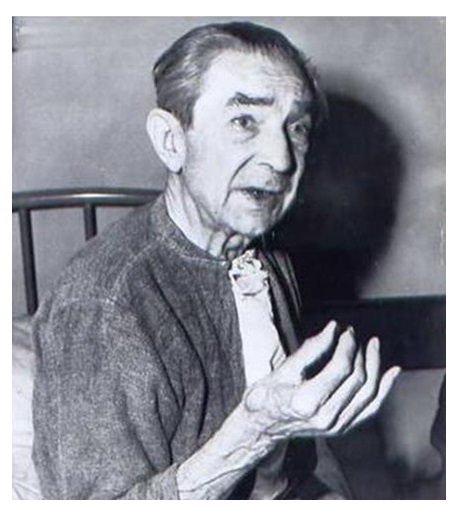
Nor was Bela Lugosi’s. Despite the Universal films becoming famous again as they were reissued in theaters and began playing TV, Lugosi wasn’t seeing much personal success, traveling the U.S. — and even England — playing summer stock, spook shows and live appearances. He was nearing the end of his fourth marriage — to 29 years his junior Lillian Arch, who would leave him for the man Bela was sure she was making time with, her boss and film noir actor Brian Donlevy — and addicted to doctor-prescribed morphine and methadone, as well as alcohol.
One of those traveling shows took to the UK, playing Dracula on stage for six months (ironic, as the British ban on horror movies in the 30s is what started his career decline at Universal), a time in which he made a comedy called Mother Riley Meets the Vampire. Despite sadly remarking in an interview that he was condemned to always be the boogie man, he yearned for more comedy.
Producer Jack Broder was listening. His Realart Pictures Inc. had re-released the Universal horror — gaining a ten-year lease on these movies — and theaters across the country enjoyed making great money on these reissues, which often brought in more crowds than newly released movies.
Broder had a relationship now with theater owners and saw an opportunity. Why not make new movies? He hired Herman Cohen as a new vice-president and formed Jack Broder Productions and made movies like, well, Bela Lugosi Meets a Brooklyn Gorilla (the title comes from Broder’s ten-year-old son and the fact that Cohen thought that it was dumb to not put Bela’s name right up in front; its a much better title than White Woman of the Lost Jungle).
But who to star with Bela?
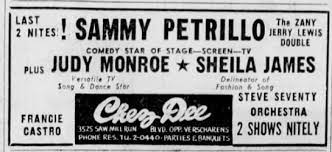
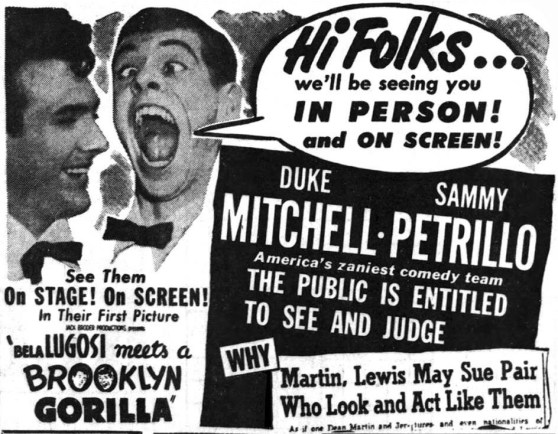
Comedian Sammy Petrillo had made a career out of imitating America’s hottest comic, Jerry Lewis. They looked alike and hey, even sounded the same. Petrillo even worked for Lewis once on The Colgate Comedy Hour and got signed to the same talent agency as Lewis, even as a minor, but was released from his contract when he believed that Lewis was intentionally holding him back.
He would later tell Before the Big Break, “Jerry said a couple of derogatory things to me. He said something to the effect of, “Don’t sign any checks and tell people you’re Jerry Lewis!” He wasn’t being funny. He was being serious.”
A few years later, Petrillo went on to form a musical comedy team with singer Duke Mitchell. With Mitchell as Dean and Sammy as Jerry, the duo played big stages, like the Paramount Theatre and the Copacabana in New York, as well as the Flamingo Hotel in Las Vegas. You have to imagine the Rat Pack was not pleased to have the two doing this act on their turf.
In fact, Lewis threatened to boycott anyone who booked them. One such instance was on another The Colgate Comedy Hour appearance, hosted by Abbott and Costello (who should have been just as peeved as Lewis, if you think about it, as this movie apes — sorry for the pun — their more successful Abbott and Costello Meet Frankenstein).
Petrillo told Psychotronic Video, “There was one of Jerry’s cronies — one of the guys that worked for him — at the rehearsal. And he looked at us, and he walked out of the room. I turned to Duke and I said, “That guy just went to call Jerry. We’re off the show.” And then Lou Costello walked over to us and he says, “Fellas, I hate to tell you this: NBC will not allow us to put you on the show, but we’re gonna pay you anyway.” He said Jerry Lewis did it. That really happened, and then it happened in nightclubs. We were blackballed here and there.”
The hate was so intense that the man who would make The Day the Clown Cried and his son would remember Sammy until he died, even telling The New York Times on the day of his death, “When Sammy and the other guy played in that gorilla movie, I remember my dad and Dean saying, “We got to sue these guys — this is no good.” Whenever there was any mention of Sammy Petrillo, it was a tense moment.”
As for that gorilla movie…
Maurice Duke, who managed the team, had been pitching a movie starring them to several studios. Jack Broder thought they were hilarious. Cohen thought they stunk. But Realart was ready to go into the business of making Mitchell and Petrillo films.
Re-enter The King of Comedy.
Lewis, who knew Broder through the Friars Club of Beverly Hills, showed up at the Realart offices, starting a screaming match with the producer. So Paramount Pictures producer Hal B. Wallis, who then had Martin and Lewis under contract and also was acquainted with Broder through the Friars Club, stepped in.
He threatened to sue Broder for releasing a film that featured a duo that closely resembled Martin and Lewis. There was also a backdoor deal with he’d pay Broder to destroy the film for a fee, but since they couldn’t agree on a price, Broder put the movie out and the two never spoke again.
We begin in the jungles of Kola Kola, a place where two long-haired and bearded men dressed in frayed tuxedos are found after months — years? — of living off wild berries and raw fish. Rescued by the tribe of Chief Rakos (Al Kikume in his last role; a Hawaiian actor who often appeared in jungle movies) and his daughter Nona (Charlita, which sounds way more exotic than Clara DeFreitas from Massachusetts).
This being a Martin and Lewis remake, remix and ripoff, Duke and Sammy go by their real names and before you know it, Duke’s making eyes at Nona and singing “Deed I Do” while Sammy is running from the amorous aims of Nona’s sister Saloma (Muriel Landers, whose career is filled with big girl roles; she even played Curly Joe Besser’s sister Tiny in a 1953 Three Stooges short). It turns out that Nona is college-educated, as she’s going to be queen, and that she knows a man who can get them off the island, Dr. Zabor (Lugosi).
As soon as Sammy sees the mad scientist, he makes a judgment call, as he brays, “Ain’t this the fellow that goes around with the hand and the faces, biting people on the neck and wearing capes?”
Speaking of the Stooges, Dr. Zabor’s assistant Chula is played by former boxer Mickey Simpson, who was pro wrestler Rocky Dugan in their short Gents in a Jam, as well as a frequent actor in John Ford films. He would play Sarge, the diner owner in Giant, a year after this movie, which goes back to my earlier thoughts of how movies can have stars on the rise and fall.
Anyways, this movie…
Before you know it, the doctor is turning Duke into a gorilla because he wants the girl for himself and Sammy spending lots of quality time with Ramona, who was the latest Cheetah in the Tarzan movies or so the urban legend goes. Also, Pancho from the early Cisco Kid movies, Martin Garralaga, shows up as Pepe Bordo, the only man on the island with a radio.
Spoiler warning for a near-seventy-year-old movie: this all ends like The Wizard of Oz.
After Sammy dies protecting the gorilla who was once Duke from the rifle of Dr. Zabor, everyone wakes up in the dressing room of The Jungle Hut nightclub in Passaic, New Jersey.
Nona is really a gorilla trainer working with her dad in a fur suit, while Bordo is a waiter, Chula is working backstage, Saloma is a dancer and Dr. Zabor runs the club.
Hey, it cost $12,000.
Petrillo and Mitchell broke up — on a much friendlier basis — around the same time as Martin and Lewis. Sammy worked for Randall’s Network Film Corporation, recorded novelty records, working with Doris Wishman on Keyholes Are for Peeping(Sammy and Chesty Morgan had the same agent) and eventually settled down in — of all places — Pittsburgh, where he had a dual life of running The Nut House comedy club, did a couples act with his girlfriend Suzie Fiore and was an MC at local gentlemen’s clubs.
Duke Mitchell, well…
The King of Palm Springs invented brunches in that town, was the singing voice of Fred Flintstone and made two auteur projects, Massacre Mafia Style and Gone with the Pope that Grindhouse Releasing helped find an audience years after his death.
As for Bela, his career sadly continued its decline. While Boris Karloff would make films — of varying quality, but he could command his own TV show and worked everywhere — Lugosi made films for Ed Wood (I’m not looking down on this, but in the grand scheme of career success, the rest of the world would) and had to take jobs like standing in front of the Paramount Theatre before the midnight premiere of House of Wax, holding a man dressed as an ape on a leash while people who were once his peers like Broderick Crawford, Gracie Allen and Judy Garland walked the red carpet.
Two moments at the end of Bela’s life strike me as poignant.
After making Bride of the Monster for Wood, he went to rehab — something few did in 1955 — and the premiere of the movie paid for his medical bills. When Frank Sinatra heard of his issues, he sent a $100 check to help pay for it or around $1,000 in today’s money. He even visited Lugosi, who had never met him before. Keep in mind that Sinatra was beyond A-list at this point. And when Bela died, he paid for his funeral in full, despite not knowing him.
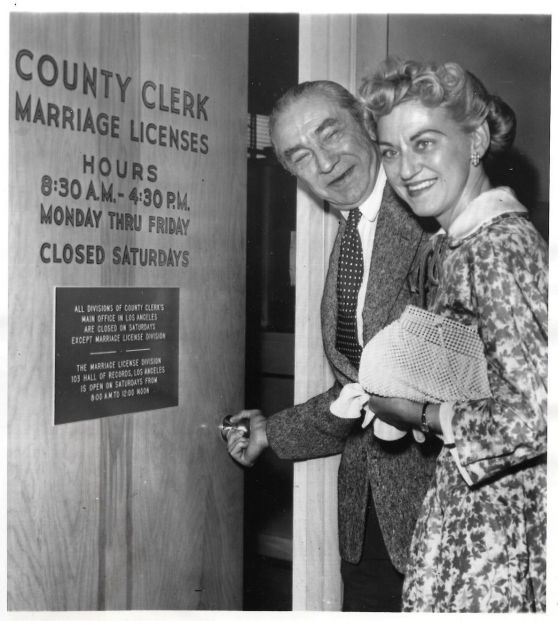
Second, he met his final wife Hope Lininger after rehab. She wrote him letters, signed “with a dash of Hope” and may have been 37 years younger than him, but she was with him for the last year of his life. After his death, she never remarried and left for Hawaii where she worked as a nurse for a leper’s colony.
Finally, the son of Bela, Bela Lugosi Jr. may have believed that Wood was taking advantage of his father’s fame, despite evidence that Wood was there for Bela in his darkest moments. That said, Lugosi’s son became an executive at Comedy III Productions, which helped heirs of celebrities to license and control likenesses.
He told the Mansfield News Journal, “It all started in law school in 1963 when someone brought to my attention that all this movie merchandise was coming onto the market with dad’s name and likeness on the products. I had never authorized Universal to use his name and likeness, so when they refused to stop using it, I filed a lawsuit claiming that the right to the commercial use and likeness survives the death of a celebrity. That ultimately went to the California legislature and the Celebrity Rights Act became law.”
By all means, watch Bela Lugosi Meets a Brooklyn Gorilla and imagine. You are at the nexus of a series of stars, of lives, of history.
EDITOR’S NOTE: All Monsters Attack was on Chiller Theater on Saturday, September 19, 1970. It also aired on May 22, 1971; July 22, 1972 and April 14, 1973.
As a kid, I hated All Monsters Attack as much as I loved kaiju movies.
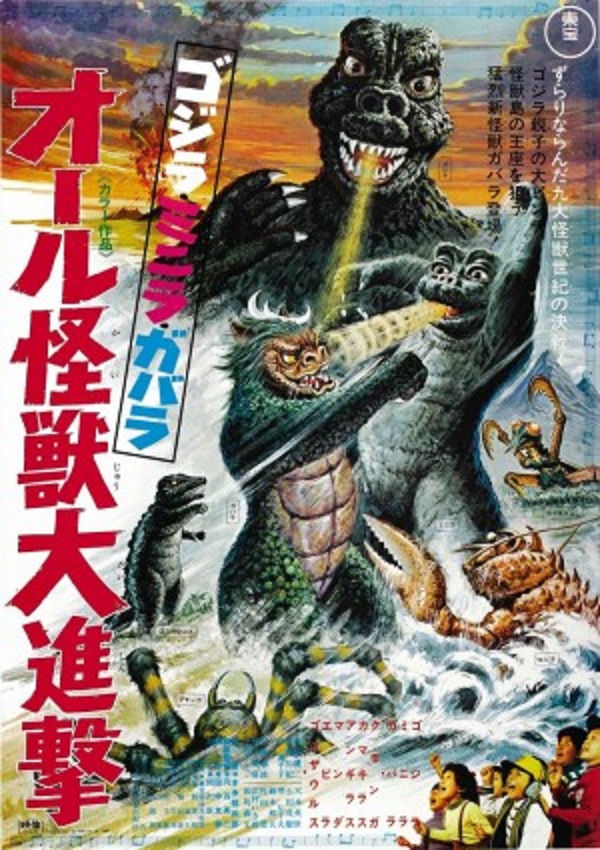
Gojira Minira Gabara Ōru Kaijū Dai-shingeki was released as Godzilla’s Revenge as a double feature with Night of the Big Heat. It was nearly named Minya, Son of Godzilla.
In Japan, it was released as part of Toho Champion Matsuri, a festival-style program that included shorts and feature films. Honda came to say that it was one of his favorite movies in the Godzilla films. So why did I hate it, like most people?
It’s not really about Godzilla.
Ichiro Miki is a latchkey kid growing up in a filthy town, bullied near-constantly and with hardly any friends. Perhaps as a kid the same age when I first saw this, I saw so much of myself that I just couldn’t like what I was watching. Because as an adult, I find it so wonderful that Ichiro Miki dreams of Monster Island and that even though Minilla is the son of the king of the monsters, he still has a bully by the title of Gabara. Now, he must give his friend on Monster Island courage and find it in himself.
I wish I could tell young Sam that everything would be OK and that he would grow up to not be so nervous that he doesn’t sleep for days at a time, but that has never gone away. But both of us still love monsters.
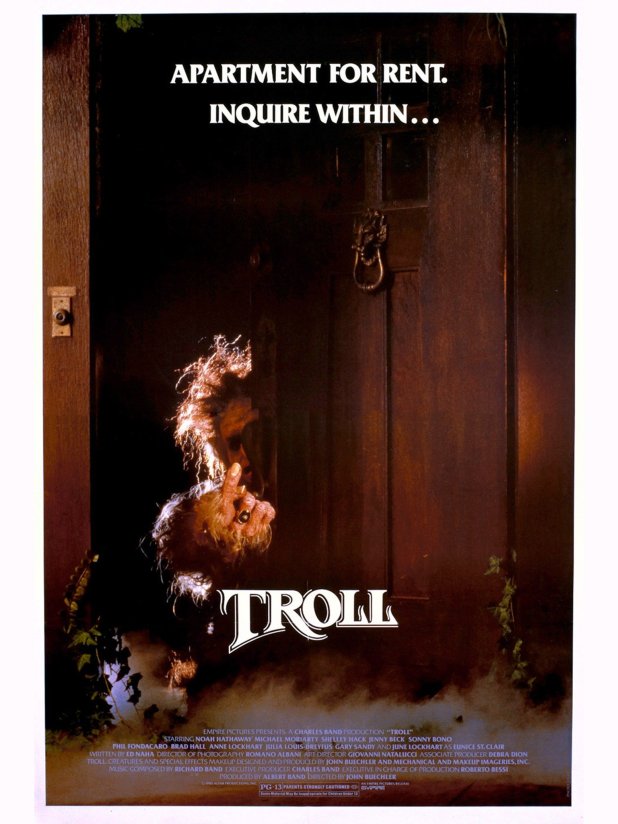
Harry Potter (Michael Moriarty) has moved his family — his wife Anne (Shelley Hack), son Harry (Noah Hathaway) and daughter Wendy (Jenny Beck) — into a new place in San Francisco. As they get their stuff unloaded, a troll takes his daughter and begins to show up disguised as her, turning the building into a fairy tale.
Harry starts hanging out with Eunice St. Clair (June Lockhart), a witch who once dated Torok, the wizard who led the fairies to take over from humans and was turned into a troll. Torok is doing this all over again, using the apartment building — he’s destroying Sonny Bono — to fight the world once again.
Directed by John Carl Buechler, who also did the creature design, this was shot at the same time as TerrorVision in Italy’s Stabilimenti Cinematografici Pontini studios near Rome. The same team worked on both productions, like Romano Albani (Inferno) as the cinematographer and Richard Band writing the music.
You may have noticed that a character is named Harry Potter.
Producer Charles Band spoke to MJ Simpson and stated, “I’ve heard that JK Rowling has acknowledged that maybe she saw this low-budget movie and perhaps it inspired her. Who knows what the story is? Life’s too short for a fight as far as I’m concerned but, having said that, there are certain scenes in that movie, not to mention the name of the main character, and this of course predates the Harry Potter books by many, many years. So there’s that strange connection.” John Buechler’s partner in a planned remake Peter Davy, which had to deal with legal issues over the name, would also claim: “In John’s opinion, he created the first Harry Potter. J.K. Rowling says the idea just came to her. John doesn’t think so. There are a lot of similarities between the theme of her books and the original Troll. John was shocked when she came out with Harry Potter.”
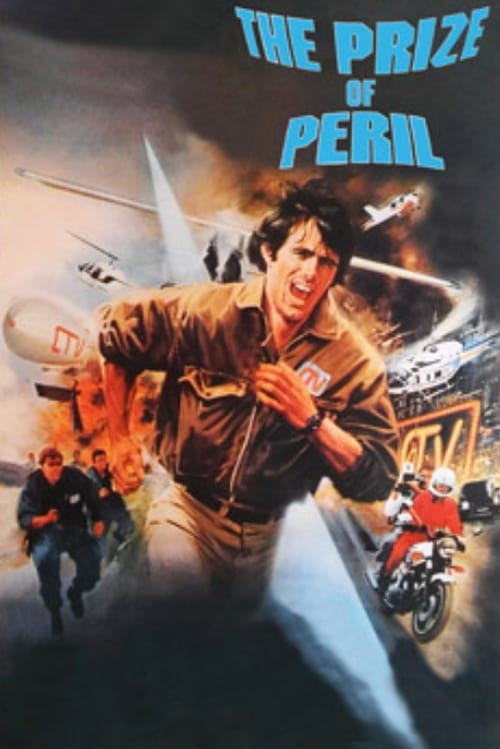
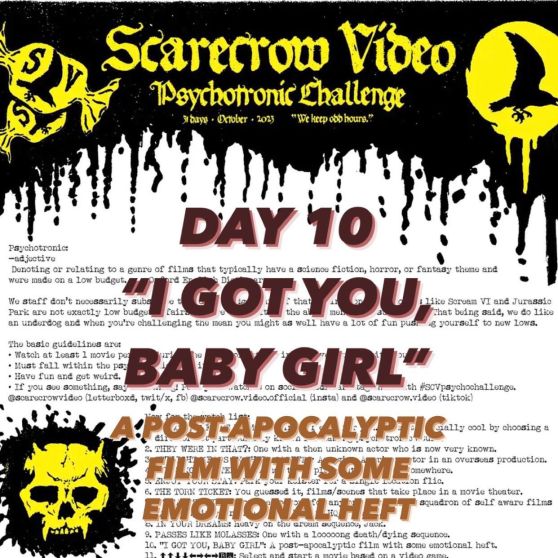
10. “I GOT YOU, BABY GIRL”: A post-apocalyptic film with some emotional heft.
The Prize Of Peril is a game show that everyone in France is crazy about. The rules are pretty simple. A helicopter takes contestants a mile away from the studio and they’re given four hours to get back. If they do, they win a million. But ah, the show also has five hunters who can kill the contestants. No one has ever won. Frederick Jacquemard (Gerard Lanvin) thinks he can do it.
Based on a story by Robert Sheckley and not Richard Bachman AKA U of M graduate Steve King, whose The Running Man came out only one year before, Le Prix du Danger is the second adaption of the story after the German made for TV film Das Millionenspiel.
Directed by Yves Boisset, The Prize of Peril has a great host in the middle of all of this craziness, Frédéric Mallaire (Michel Piccoli), which is also something that, you know it, shows up in The Running Man.
What the Arnold movie does much better is explain the rules of the game show. And have characters who have meaning and that you care about. Frederick seems like someone we shouldn’t like, the journalist character seems like she’s going to stop the show and the other contestants barely register.
But Yves Boisset thought that this movie and Twentieth Century Fox’s films were real close. Too close. He thought the screenplay was the same one, in fact. He sued and IMDB claims that the paperwork for the case was lost in a plane crash in the New York bay, which yes, is IMDBS.But nonetheless, it may have taken eleven years, but Boisset won.
Maybe because the novel The Running Man is nothing like the film.
Each October, the Unsung Horrors podcast does a month of themed movies. This year they will once again be setting up a fundraiser to benefit Best Friends, which is working to save the lives of cats and dogs all across America, giving pets second chances and happy homes.
Today’s theme: Carla Mancini
If you asked me — I don’t know how it would come up, but just go with this — who I would pick to adapt Voltaire’s 1759 novel Candide, I would never think to ask Gualtiero Jacopetti and Franco Prosperi.
It was the critical and commercial failure of that last movie that convinced the Jacopetti and Prosperi that maybe they should stop making mondo movies — well, Goodbye Uncle Tom does have them go back in time to the age of slavery in a magical helicopter, but it’s shot with the real slaves of Papa Doc Duvalier, losing the plot before it even starts — and creating an actual narrative one.*
I wondered, as I watched what unfolded before me, if in their travels across the world, did Jacopetti and Prosperi check out not just people being brutalized and animals being destroyed, but also the midnight showings of films by Ken Russell and Alejandro Jodorowsky? Or at the very least, Federico Fellini.
Because that’s the only way that this all makes sense.
Joined by screenwriter Claudio Quarantotto, film critic of Il Borghese, the idea and story came from Jacopetti. He believed in this film so much, but he just wasn’t great with actors. That’s where Prosperi came in, as he believed in Jacopetti.
Sadly, this movie would finally end their partnership.
Candido (Christopher Brown, who went from this to an episode of Bigfoot and Wildboy) lives in some unspecified time and is being raised in some unknown land by the Baron (Gianfranco D’Angelo, Io Zombo, Tu Zombi, Lei Zomba) in his castle Thunder-ten-Tronckh.
Beyond non-stop eating, drinking and partying — there’s even a three-breasted woman years before Total Recall — he studies the philosophy of Dr. Pangloss (Jacques Herlin, Slap the Monster On Page One). All he has learned is optimism and that everything has a purpose, so his worldview is rosy at best.
Life is pretty good and then he gets caught facedown between the thighs of the Baron’s daughter Cunegonda (Michelle Miller, who went from the Broadway stage to this movie and then to being one of the vampires in Leif Jonker’s Darkness).
Exiled from the life of pleasure, Candido is drafted into an army that seems ill-equipped for a world that’s much more modern on the outside than the first part of this movie has led us to believe. They put helmets on their heads and batter their way through stone walls, but that doesn’t help them against a modern army equipped with machine guns and flamethrowers. Our protagonist barely escapes with his life. Unlike the army he’s been conscripted into, he has no intention of dying just for an ideal.
At this point, Candido descends into a journey filled with multiple horrors, including Salvatore Baccaro** as an ogre who is trying to assault a dead girl; an army takes the Baron’s castle and Cunegonda’s virginity; Dr. Pangloss is hung by the Inquisition for not believing in original sin and he must rescue the slave Cocambo (Richard Domphe) by pretending to be his owner.
This all makes him doubt the cheery worldview of his now lynched mentor, as Candido opines, “This is not the best of all possible worlds,” an inverse of the core message he once learned.
That’s when he finally meets Cunegonda again, no longer pure after having at least 127 lovers — she can’t remember right now — as well as two owners and four current boyfriends. She now loves violence for pleasure and is far from the ideal woman who has kept Candido’s spirits alive through his endless quest.
Everybody decides to get on a ship bound for the New World, a place much better than wherever we are. Christopher Columbus, Amerigo Vespucci, Abraham Lincoln, Al Capone and Marylin Monroe are all here and alive. No, really. And so is Dr. Pangloss, alive and forgetting psychology, now making TV commericals and shouting, “Thank you for the new world which is certainly the best of all possible worlds.”
In this unexplored place, is Cunegonda a porn star, a saint or both? Well, who can tell, because children are blowing themselves up with grenades in the hope of killing soldiers. We go from Northern Ireland to the Arab–Israeli conflict to a field of poppies made up of mutually assured destruction. It all ends just in time for young people to throw the symbols of the past — the cross, the hammer and sickle, the swastika — into a river.
Somehow, in all this insanity, it looks and sounds beautiful. Credit goes to cinematographer Giuseppe Ruzzolini, who also shot The Last Match, Firestarter, Treasure of the Four Crowns, My Name Is Nobody and Short Night of Glass Dolls, and Riz Ortolani, the only man who could make the excesses of Jacopetti and Prosperi sound like symphonies, who can create a song called “Crucified Woman” that is a balm for the soul.
I’ve always said that there’s a thin line between the arthouse and the grindhouse. This movie reminds me of this, a film full of sound and fury and big ideas and bigger images, all united by the message behind everything Jacopetti and Prosperi made together: the world is shit.
Nobody else could make this.
It reminds me of a story about my wife. She saw Super Mario Brothers the movie before she experiencing the video game, so when she got to play it, she wondered why Dennis Hopper wasn’t in it.
I’ve never read Voltaire, so I’m probably going to negatively compare the book to the movie.
Somewhere in all this, Carla Mancini appears.
*Prosperi would make one more non-mondo movie, the absolute punch in the face that is The Wild Beasts. Jacopetti made two more movies, Operazione ricchezza and Un’idea della pace.
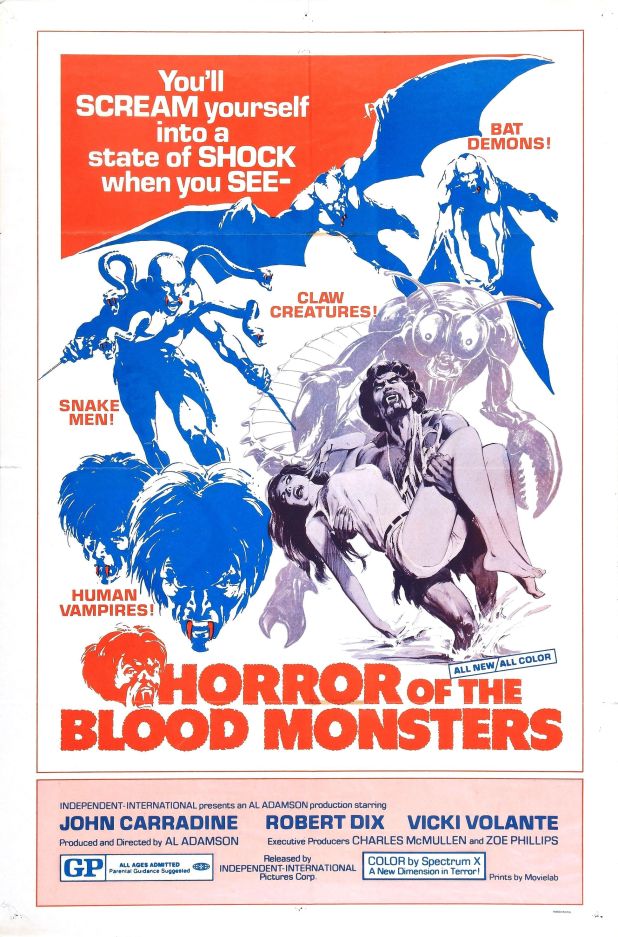
EDITOR’S NOTE: Horror of the Blood Monsters was on Chiller Theater on Saturday, July 16, 1977 at 11:30 p.m. It had the TV title Vampire Men of the Lost Planet.
Al Adamson was remixing movies back in 1970. Invasion of the Blood Monsters has footage from Robot Monster, Unknown Island, One Million B.C., the Filipino movie Tagani and The Wizard of Mars. By the time it was ready for drive-ins and theaters, that black and white footage looked old. Adamson used a process called Spectrum X that made everything a single color. It’s really strange when mixed with full color footage yet I kind of enjoy it.
Exploitation heroes like Gary Graver and Adamson play vampires in the beginning as we listen to Brother Theodore tell us what has happened to our home world and why a rocket must go into space and John Carradine will lead humans in their quest to save Earth.
Jennifer Bishop is the beautiful girl who will help them fight snake men, lobster people and more vampires — hey, Bud Cardos — and oh yeah, bat people! Sam Sherman produced this and it was originally started in 1966 with reshoots in 1970. It was getting renamed all the way up until it was a Star Wars clone — well, in title only — under the AKA Space Mission of the Lost Planet.
I just read a bad review of this movie and it made me dislike the person who dare say anything mean about this film. From the moment the Independent International logo shows up, I was happy. Like, deliriously joyous. How can you not love a movie like this? What’s next, people don’t like Brain of Blood?
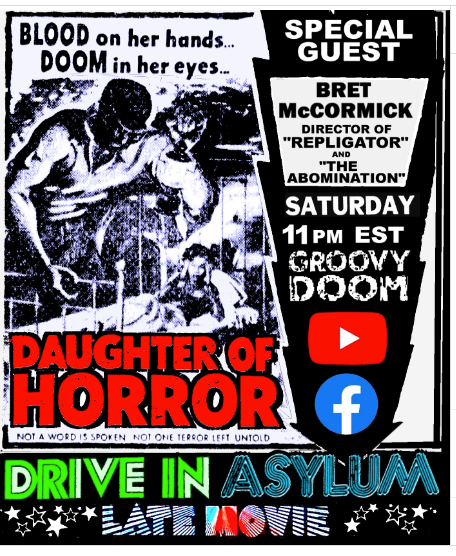
We’ll be talking about his career, the Texas independent moviemaking scene, and of course our film for the night, bizzaro 1956 psychological freakout Daughter of Horror.





 B&S About Movies
You must be logged in to post a comment.