Die Hölle (2017)

Directed by Stefan Ruzowitzky and written by Martin Ambrosch and Claudia Kolland, Cold Hell is about a cab driver named Özge Dogruol (Violetta Schurawlow), who deals with the worst in humanity as she drives the of Vienna every day. She comes across a crime scene and thinks that she’s been spotted by the killer but the police think she hasn’t found anything and is in no danger.

Özge is a character that is anything but a stereotype. She’s Muslim, she’s a Muay Thai fighter in training and she has no problem either knocking men out who are abusive to her or running after the killer to try and catch whoever they are.

Her cousin Ranya (Verena Altenberger) is dating, even though she’s married to Özge’s boss Samir (Robert Palfrader) and depends on Özge to cover up her affairs. She also borrows the Muay Thai championship jacket that our heroine wears, which has the killer come after her and snuff her out, which adds a layer of guilt to the reasons why Özge need to find that smiling knife murderer who is also a radical religion believer who is killing Muslim sex workers based on how the Koran speaks of Hell.

Not only is Özge an outsider in this new country, she is in her family as well. They’ve never believed that her father molester her and now that Ranya’s young daughter will be raised in their house, she takes her away even though she’s been trailed by a giallo-style killer. To protect herself, she moves herself in to the home of a burned out cop, Christian Steiner (Tobias Moretti), who is taking care of his father Karl (Friedrich von Thun) who has dementia.

I really enjoyed Cold Hell — it refers to the icy netherworld of Islamic religion — and how it was never an expected story or had a lead you can easily pin down.

Squillo (1996)

Several years ago, Eva (Bianca Koedam) left Poland to become an interpreter, which has paid off well. But when her sister Maria (Jennifer Driver, who shows up in the Guns N’ Roses video for “Since I Don’t Have You” as she was dating Axl Rose at the time; she’s also in the movies Apri gli occhi e… sogna and Fairway – una strada lunga un sogno) visits Milan, she arrives just in time to see her sister once before she is killed after one of her many evenings as a call girl.

After her sister’s friend — another call girl — is killed giallo-style by being thrown off a building and through a glass rooftop, Inspector Tony Messina (Raz Degan, an Israeli-born model to actor) takes Maria seriously. Their plan? She starts answering her sister’s phone and goes to meet her clients, hoping to find who murdered her, all while carrying a baby monitor so Tony can listen and keep her safe.

Director and co-writer Carlo Vanzina — with Enrico Vanzina (the brothers are the sons of famous Italian director Steno) and Franco Ferrini — made two other giallo before this, the odd Mystere and, of course, Nothing Underneath. He would go on to make the third film in that latter film’s unconnected life, Sotto il vestito niente – L’ultima sfilata. Like all of his films, this is quite slick and with the quality of its dubbing, you may even think that it’s an American movie.

This definitely has a crew that knows giallo, as the cinematographer is Luigi Kuveiller (The New York RipperDeep Red) and the score is by Pino Donaggio. There’s never any danger, however, nor do we even get to see a black glove or gleaming blade. In fact, Eva is killed by accident. That said, it looks slick and moves quickly, even if Tony ends up being a jerk and Maria is never sure if she wants to go all in on acting as a call girl or constantly covering herself up.

You can watch this on YouTube.

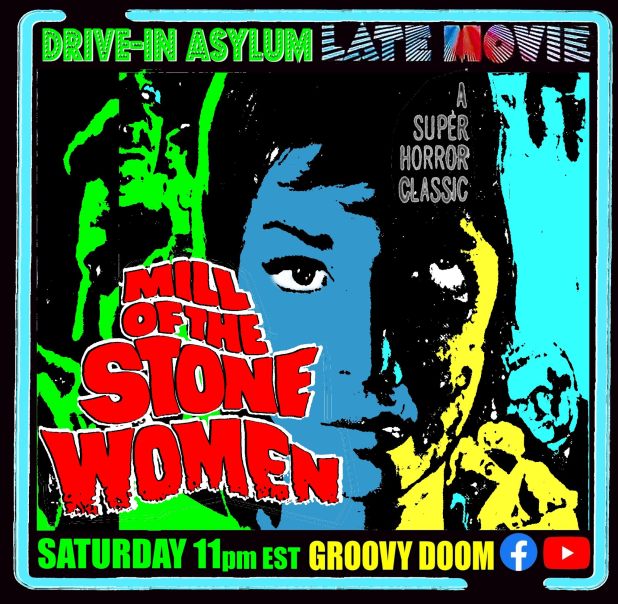
DARE YOU ENTER THE MILL OF THE STONE WOMEN ON THE DIA LATE MOVIE?

This Saturday at 11 PM ET, join Bill and me on the Groovy Doom Facebook and YouTube pages. We’ll be watching the 1960 Italian gothic masterwork, Mill of the Stone Women. You can watch it on YouTube or get the great Arrow Video blu ray from MVD or Diabolik DVD.

Every week, we talk movies with our awesome chat group, show the ad campaign and have a drink that goes with each movie. Here’s this week’s film. Apologies to Sean Mitus, who gave me a bottle of Cacique and it took me this long to make a drink with it.

Elfie

  • 1 oz. Malibu rum
  • 1 oz. Cacique
  • 1 oz. tequila
  • .5 oz. amaretto
  • 2 oz. Coco Real
  • 6 oz. coconut water
  • 1.5 oz. lime juice
  • Lime slices
  1. Blend all ingredients except the amaretto and lime slices with ice in a blender for a few seconds.
  2. Pour into a glass. top with amaretto and garnish with lime slices.

See you Saturday!

Necrophobia 3D (2014)

After the death of his twin brother, Dante (Luis Machín) starts to become fearful of death, unable to deal with the thought of it, which comes up quite often, seeing as how his wife Beatriz (Julieta Cardinali) also dies. That’s when he starts having hallucinations and starts to experience multiple versions of himself. As Dante is a tailor, there are a lot of mannequins as well, which allows this to be painted with the yellow tones of a giallo brush, helped by the masked and gloved killer who keeps murdering everyone around our protagonist.

Director and writer Daniel de la Vega has nearly too many ideas here with multiple duplicates and even time travel and scenes we’ve seen before repeated later and then shown how they impact the film. Sometimes when you shoot for the moon, you explode on the launchpad.

The good parts: the visuals look great, the Claudio Simonetti score helps and the 3D technique is more about depth than throwing things at you. It’s also nice to see a good budget for a horror film from Argentina.

The bad: Near the end — massive spoiler — Dante must choose between sawing off his own hand to escape or dying. He chooses to hack himself to bits except, you know, he’s in a wood chair. I’m all for giallo asking a lot and making you make narrative leaps, but sometimes, a bridge can be too far. Also: Dante has necrophobia, a fear of being around dead bodies. Isn’t nearly everyone?

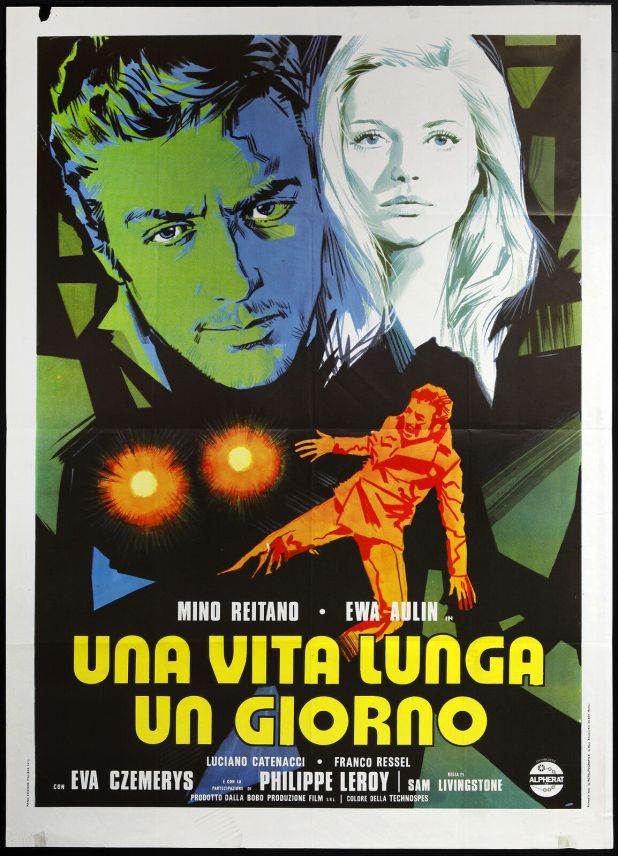
Una vita lunga un giorno (1973)

I read a great article, “A Genealogy of Italian Popular Cinema: the Filone,” on Offscreen in which Donato Totaro explained that the filone is not easily categorized. We can see the term to mean not just a genre, but if you will, a body of water that flows into other streams. To quote the article, “…the filone is more flexible than genre or subgenre, taking in the idea of cycles, trends, currents, and traditions.”

It also breaks down the main years of the Giallo as 1962-1982 and the Poliziottesco as 1968-1978. Of course, movies in these filone were made after — if not before — and there are different versions of both.

This is all to explain that 1973’s Long Lasting Days fits into the time periods of both of the above genre and can have a little of both, a combo plate, if you will.

Andrea Rispoli (Mino Reitano, whose bands with his family, Benjamin & His Brothers, played the Star-Club in Hamburg with The Beatles) has fallen in love with a woman he’s met at the boarding house where they both live named Anna Andersson (Ewa Aulin, Miss Teen Sweden 1965 and Miss Teen International 1966, who turned that early fame into an acting career which found her appearing in Col cuore in golaLa morte ha fatto l’uovoThe Legend of Blood CastleDeath Smiles on a Murderer and the movie she made with her husband John Shadow, Microscopic Liquid Subway to Oblivion; this is the last movie she made before going to college and becoming a school teacher). She has a heart condition that could end her life at any time — and learns this after being assaulted and surviving by jumping through a glass window in case you wondered if this was an Italian movie — so Andrea decides to put his life on the line by allowing a group of rich people — led by Philippe (Philippe Leroy) and his wife (Eva Czemerys) — to hunt him. If he survives, he will make enough money to potentially save Anna.

Directed and written by Ferdinando Baldi (Texas AdiosComing at Ya!), this pits a poor man enraptured by love against a group of bored rich society types who want to hunt the wold’s most dangerous game. They will be allowed to attack Andrea five times as he tries to get through the entire city, using a knife, a rifle, a vehicle, fire and brass knuckles which hang over a dance floor at a wild party that can only exist in Italian exploitation movies.

For someone known as a singer, Mino Reitano is pretty good in this, a man forced to abandon his dispassionate sailor ways to be in love and care for someone. Does he become too trusting too fast? That’s for you to find out.

You can watch this on YouTube.

Tuno Negro (2001)

Black Serenade sits at the center of what is a slasher and what is giallo. It’s also the name of the masked killer in this film, who has embraced the legend of the Black Tuno, a monstrous being that punishes the stupid. Whoever they are, they have taken that even further and are killing students that cheat or don’t belong in some of Spain’s most well-known colleges.

Thanks to the Villains wiki, I learned that the Tuna is a Spanish fraternity that started when poor students couldn’t afford an education. To get in, they sang and played songs, which made them famous. Soon, rich students who could afford to get in were joining just to be popular and were taking money from people who really deserved it. The Black Tunos killed every one of these false Tunos and as a result were hunted by the Spanish Inquisition. They escaped by creating a secret passageway at the University of Salamanca’s Chapel of Students.

Whoever this killer is, they look incredible, like a giallo villain designed by a Japanese manga artist. They also have a strict code of honor, respecting those they believe are as intelligent as they are, but being brutal to anyone they feel are mentally inferior.

Directed and written by Pedro L. Barbero and Vicente J. Martín, this feels like a Spanish cover of Urban Legend but I didn’t see that as a bad thing. Álex (Silke Hornillos), Trucha (Patxi Freytez), Edu (Jorge Sanz) and Michelle (Rebeca Cobos) are four students who are trying to learn who the killer — also known as the Dark Minstrel — could be and eventually getting threatening text messages from them. Meanwhile, as new murders happen one year after another series of killings, Detective Victor (Fele Martínez) takes on the case.

There are some wild scenes in here, like a drug dealing thinking his blood has become animated as the drugs kick in and he bleeds to death and a series of carvings that point to how the original Black Tuna escaped, symbols that start showing up everywhere the killer appears. There’s also a scene where a cop kills a whole bunch of people in similar costumes to the killer, proving that the giallo police in every country should be defunded and the way that Dr. Loomis wildly shot up Haddonfield have been studied by slasher police departments all over the world.

Las flores del vicio (1975)

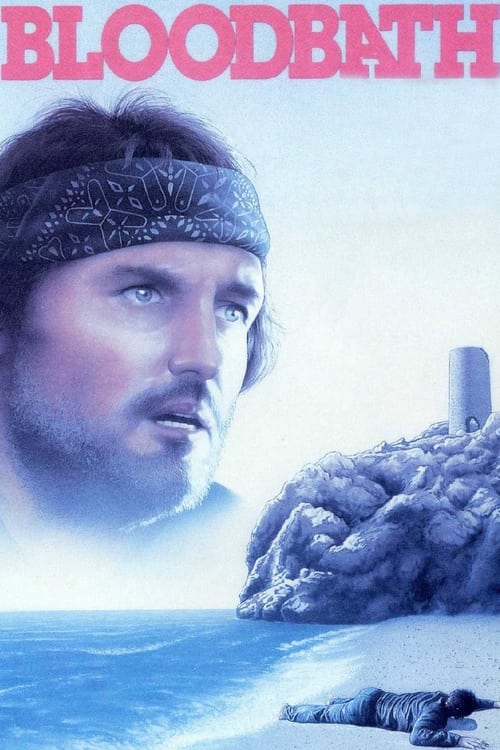
The Flowers of Vice is also known as Bloodbath and The Sky Is Falling. It reunited Dennis Hopper and Carroll Baker 18 years after Giant. He plays a drugged out of his mind painter and poet named Chicken and she’s a washed up alcoholic actress who people call Treasure who have both come to a small Spanish town. There’s also a retired British Air Corps captain called Terence (Richard Todd) and his constantly drunk wife Heather (Faith Brook) and a gay man who has seen it all, Allen (Wim Wells, the director’s long-time partner).

Filmed in Mojacar, Almeria, Spain — a small seaside village of Spaniards, British and American expatriates — this movie is filled with menace from the beginning. The town just seems strange, Hopper and his friends feel more dead than alive and there’s a group of hippies that may be gorgeous but who worship the killings of the Manson Family. It’s not like the village was any less strange what with all the animal sacrifices — this may as well be Italian — taking place on Easter weekend. Soon, the foreigners begin to die, one by one, killed by the young people who seemingly will replace them. Maybe, who can say, because this movie feels as if it doesn’t want to tell you any answers and I feel as if I am trying to explain it all by what I have written. It may destroy your patience but I am a huge Hopper and Baker fan, so I was excited to see a movie they did that for so long was impossible to get.

Directed by Silvio Narizzano (Die! Die! My Darling!) and written by Gonzalo Suárez, this ends with — spoiler warning — the villagers trampling a small boy to death. He was the son of Americans who lived in the village. They ran El Saloon and had grown close to the director and crew, so they got their son a role getting killed at the end of an art film.

You can get this as part of the Vinegar Syndrome Villages of the Damned set or watch it on Tubi.

Al calar della sera (1992)

Submission of a Woman was directed and written by Alessandro Lucidi, who directed two comedies, La maestra di sci and Il marito in vacanza but mostly was an editor. He’s the son of Maurizio Lucidi (It Can Be Done, AmigoThe Designated Victim).

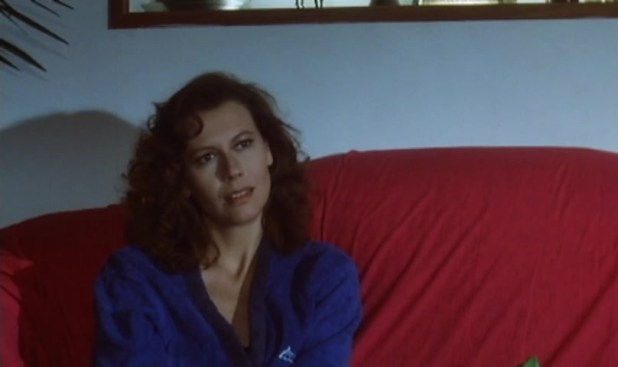
Luisa (Daniela Poggi. The Gestapo’s Last Orgy) is an actress who wants to move past the sexual roles she keeps getting hired for and instead spend more time with her husband Giorgio (Gianluca Favilla) and their child Francesca. She’s also getting calls from someone (Paolo Lorimer) who has already killed one woman and has selected Luisa for his second victim. Then, the killer attacks, easily stopping her husband before she locks herself and her baby inside the home, a place where the man who wants her dead has already cut the phone line.

This movie starts by stealing the vampire beginning of Body Double and then has a theme song that songs like “Laura’s Theme” from Twin Peaks. But for some reason, I stuck with this and while rape revenge is one of my least favorite genres, this ends up being watchable. That’s more than you can say for a lot of gialli made in the 90s.

You can watch this on YouTube.

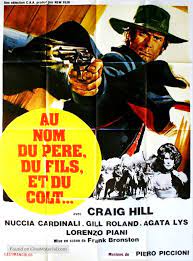
In nome del padre, del figlio e della Colt (1971)

In the Name of the Father, the Son and the Colt is a much better title than the American one, The Masked Thief. It’s an Italian Western with giallo moments directed by one of my favorite scumbags Mario Bianchi using the name Frank Bronston.

Sheriff Bill Nolan (Craig Hill) is investigating a masked killer who kills with a long knife. When Toni Pickford (Agata Lys) survives being assaulted by a similar masked man and his gang of criminals, she remembers his face and claims that Bill is behind the crime. Years later, another man is killed by the gang and claims that it’s Bill. The truth? Nolan has an outlaw twin brother, Mace Casidy (also played by Craig Hill).

The giallo portions feel added at the last moment, like the POV opening and the masked killer. That said, the idea of a giallo knife maniac in the Italian West is a good one, as is the idea that people in town aren’t sure if they can trust the man who is the law any more. None of these thoughts really play out as this movie flies through 77 minutes of running time.

Bianchi would make another giallo-ish Western, Creeping Death, as well as a truly aberrant run of movies. Seriously, if you want to wallow in the darkest muck of Italian exploitation, seek out his movies like La bimba di SatanaStrip Nude for Your Killer, Nightmare In Venice and The Murder Secret before using the names Martin White, David Bird, Nicholas Moore and Tony Wanker in the adult world.

You can watch this on Tubi.

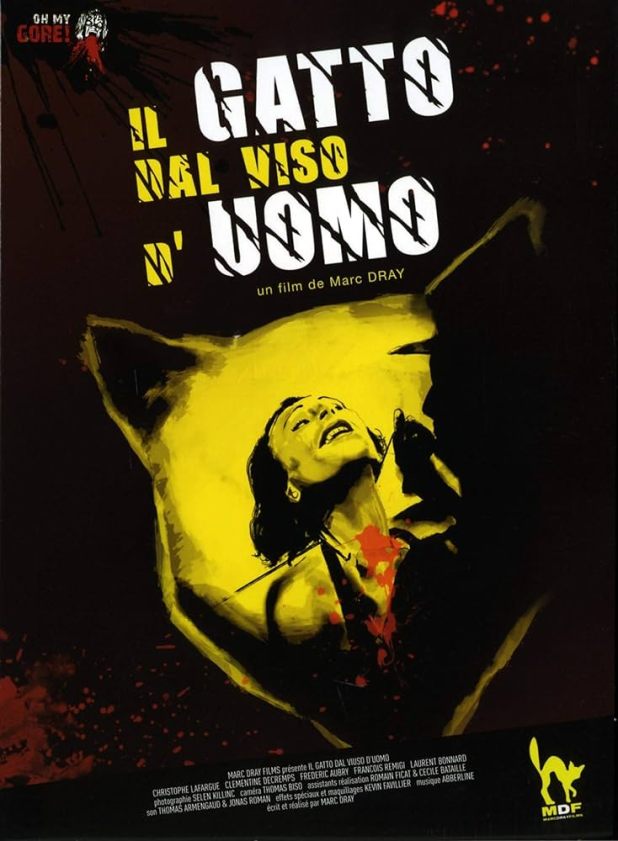
l gatto dal viso d’uomo (2009)

I’ve read two translations for this movie’s title, The Man In the Cat’s Eye and The Cat with a Man’s Face. Either one is great. It’s a 2009 short that has its bloody heart filled with all that is giallo along with a stated influence from David Lynch’s Lost Highway.

Directed and written by Marc Dray (who is also from France, which so much modern gialli like Blackaria and Knife+Heart have come from), I Gatto dal Viso D’uomo starts with a man named Octavien (Jean-Philippe Lafargue) stopping to pick up a female hitchhiker and from there on, everything is hard to define between what is real and what is inside his mind. There’s also a murderer by the name of Il Gatto (François Remigi) who is on the loose, breaking into the homes of lonely women and killing them.

Of course, you’ll spot how much Argento is all over this movie, as several of the murders take directly from The Bird With the Crystal Plumage and Deep Red. What I liked in this is that the film is more about the mind of the killer and less a police procedural. Also, Dray understands the language and form of the giallo and doesn’t feel like he’s either making a slavish remake of the past or an art project like Amer that goes nowhere.

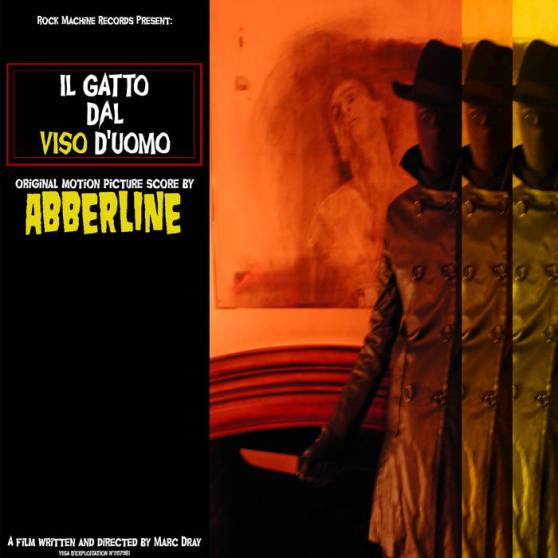
You can get the soundtrack to this movie by Abberline here. It’s really wonderful.