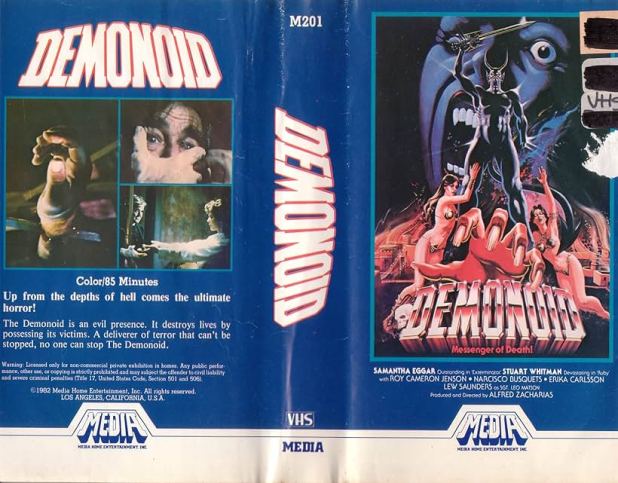
Bill van Ryn and I were on Making Tarantino to discuss Demonoid.
You can listen here or anywhere you find podcasts.
J-Horror gets its start in the Japanese horror films of the 1980s. There were definitely Japanese horror films before, but the country seemed to find some unique influences from this point on that influenced other nations — particularly America — to be influenced by them instead of the other way around. As J-Horror pushed the horror form away from gore, it created atmospheric films of dread.
These haunted house-style films can be traced to several places. Certainly, Hausu is an early take on the haunted house genre, as is Sweet Home, which went on to form the basis of the Resident Evil video games.
In Colette Balmain’s Introduction to Japanese Horror Film, the idea of the family being destroyed is horrifying. That’s why so many of these films explore the breakup of the family unit and mothers often become monstrous specters of metaphysical death and destruction.
To get the whole story of J-Horror, I turned to someone who knows way more about it than me, Jennifer Upton, the author of Japanese Cult Cinema: Films From the Second Golden Age Selected Essays & Review. You can get it an Amazon.
Here’s what she had to say:
Although the first Japanese horror film is widely acknowledged as Onibaba, the term J-Horror did not become popular until the ‘90s and aughts when films like Ringu and Ju-On The Grudge became international sensations.
Unlike a Universal monster film or an ‘80s slasher, when you watch a J-Horror movie, you are watching Japan’s history going back all the way to the Edo Period unfold before your eyes. The stories are often thematically similar or an outright re-telling of ancient tales featuring ghosts, yokai or oni, originally made popular in the Noh and Kabuki plays of Japan’s past.
Like their theatrical forefathers, these films offer a slower pace than western audiences are accustomed to, relying instead on quietly disturbing sequences dripping with atmosphere achieved through lighting and sound design.
The major difference between western horror and J-Horror is in the films’ sense of sadness, loss and inevitability. In J-Horror, even a happy ending isn’t really all that happy. Although a ghost or vengeful spirit may be temporarily sated, the trauma left behind is almost always intergenerational and self-perpetuating. It’s precisely because the films in this set didn’t enjoy the global success of its contemporaries that we J-horror fans must gorge upon it like fresh sushi. To the rarely seen Noroi in particular, I say, “Get in my belly!”
Thanks Jenn!
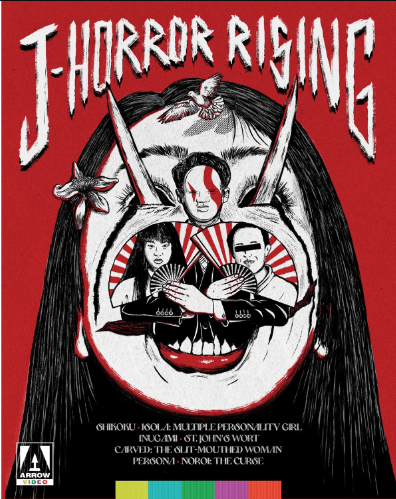
Now, Arrow Video has released a box set of seven movies that are example of this the horror films that emerged in Japan at the turn of the millennium.
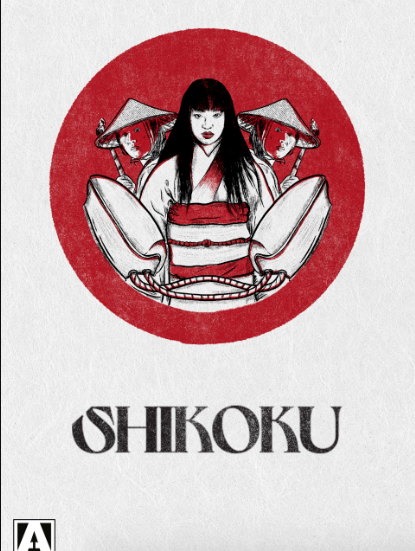
Shikoku: A young woman returns after many years to her rural birthplace, only to find her best friend from childhood has died by drowning when just sixteen. The dead girl’s mother, the local Shintoist priestess, has embarked on the region’s famous pilgrimage – but why is she walking backwards?

Isola: Multiple Personality Girl: The aftermath of the devastating Kobe Earthquake of 1995 creates fissures in the already fractured mind of a high-school girl, allowing an unwelcome intruder to set up home in her head and leaving a volunteer worker with psychic powers to determine which of her personas is the fake one.
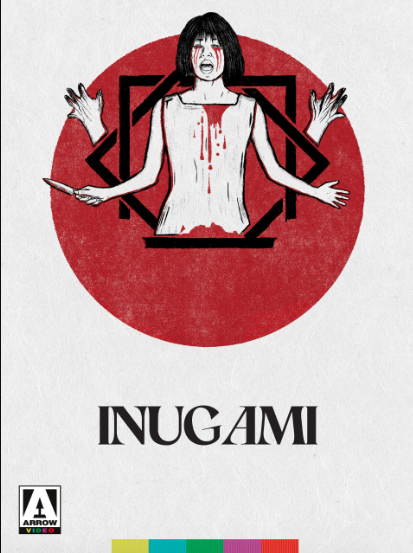
Inugami: A teacher from Tokyo finds himself drawn to a local papermaker, only to find himself the subject of some hostility from her extended family, who have long ties to the region and are rumored to be the descendants of the guardians of ancient evil canine spirits.
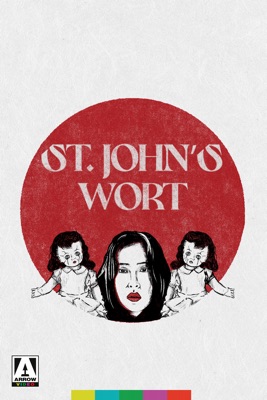
St. John’s Wort: The art designer for a horror-themed videogame is forced to confront her childhood traumas when her colleagues ask her to gather visual materials from the creepy gothic mansion she has inherited from her estranged artist father.
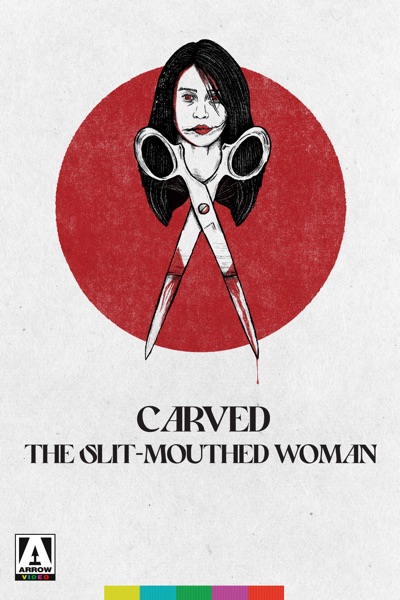
Carved: The Slit-Mouthed Woman: Home isn’t the safest place for the potential child victims of the slit-mouthed mother and killer in this disturbing supernatural horror.

Persona: A new craze for wearing ceramic masks sweeps the students of a high school, unleashing a wave of anonymous juvenile delinquency.
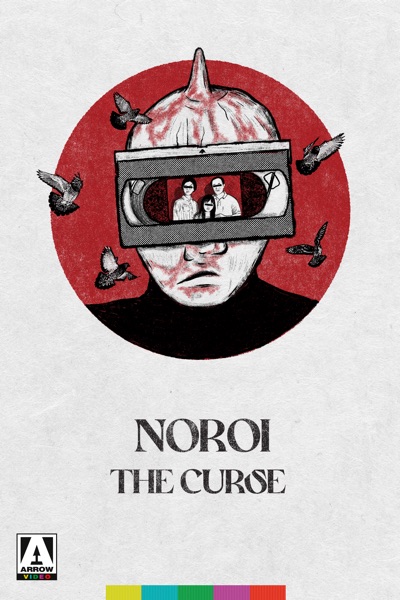
Noroi: The Curse: An investigative reporter into paranormal phenomena is forced to confront horrors beyond his wildest imagination after learning about an ancient folkloric demon.

This set includes an illustrated collector’s booklet featuring new writing by Eugene Thacker, Jasper Sharp, Anton Bitel, Amber T., Mark Player, Jim Harper and Sarah Appleton; a double-sided foldout poster featuring newly commissioned artwork by John Conlon and packaging with newly commissioned artwork by John Conlon.
You can get it from MVD.

Andy (David Paymer) and Emma (Traci Lords) are having the same dinner and the same conversation about work and finally, Emma has enough and tells her husband she wants passion, so she’s running away. He chokes her and as she tries to fight back, he stabs her, leaving her for dead.
“I tell you, ladies and germs, that ghoul-friend of mine makes me so crazy. She told me she thought she’d look good in something long and flowing, so I threw her in the Mississippi! Hmm. And how about that Ernest Hemingway, always shooting his mouth Oh. Hello? Anybody? I know you’re out there, folks. I can hear you bleeding! Is this on? Hmm. I know what this crowd wants. A little slay on words! Maybe a couple of nasty fright gags? Something along the lines of tonight’s nasty nugget? It’s a little tale about marriage, or if you prefer, about wife and death. I call it: “Two for the Show.””
He’s soon being questioned by Officer Fine (Vincent Spano) about what has happened to Emma. Afterward, as he loads a box with her body in it on a train for Chicago, Andy has to get on board, as Office Fine asks what’s in the trunk. He says that he’s going to meet his wife, which means he must take the train and sit next to the cop, who keeps asking him about killing his wife. After all, Fine has a wife he’d like to murder.
What would the odds be if their wives were having an affair with one another?
Directed by Kevin Hooks (Passenger 57) and written by Gilbert Adler and AL Katz, this has some good twists and turns. And you knew I’d like it just because Traci Lords is in the cast.

“Two for the Show” is based on a story in Crime SuspenStories #17 that was written by Al Feldstein and William Gaines and drawn by Jack Kamen. Actually, that story works alongside another story in the same issue, “One for the Money,” as the corpse in that story pays off this one.

Otogirisō wasn’t marketed as a video game but instead a sound novel, today called a visual novel. Koichi Nakamura conceived the title after showing his work on the Dragon Quest games to a girl he was dating. She didn’t understand the game or why people would want to play it, so he decided to make a video game “for people who haven’t played games before.”
Obviously, his work was inspired by another video game that led to a series of better-known games (and movies), Sweet Home. Nakamura said, “The thing that was really interesting about Sweet Home was that it so scary that you didn’t want to continue playing. I wanted to create an experience where the user would be too afraid to press the button to continue the story, too.”
It’s less of a game and more of a Choose Your Own Adventure novel where you make choices at different point as you and your girlfriend Nami survive a car accident and arrive at a mansion. Nobody answers when they ring the bell, so of course they go inside.
If you play emulated games, you can try it out here in English.
Nami Kaizawa (Megumi Okina) has inherited her family’s money and gigantic home, which holds bad memories as her father, who abandoned her. Deciding that she should explore it, she takes her ex-boyfriend Kohei Matsudaira (Yoichiro Saito), who is a fan of her father’s sinister paintings. He has already decided that the house would be perfect for a new video game that he is working on with Nami, so he brings a web camera and sends back footage to his friends and fellow designers Toko Ozeki (Reiko Matsuo) and Soichi Kaizawa (Reiko Matsuo).
The film is not just a video game movie, but literally like a Twitch channel, as we see the designers drawing maps of the house as Nami and Kohei make their way through the secret rooms and keys that you would expect to look for in a game just like this.
Directed by Shimoyama Ten, this has strange multihued visuals that are very 2001, but that’s the joy of it to me. It plays with the idea of what is real and what is the game — like eXistenZ — and has creepy dolls, a frightening caretaker, a heroine with memory lapses and plenty of gore. As I got into other reviews, I couldn’t believe so many people didn’t like it as much as me. Maybe I watching other people enjoy games?
St. John’s Wort is one of the films on Arrow’s new J-Horror Rising set. It has extras including commentary by Japanese cinema expert Amber T.; a making of feature; interviews with actors Megumi Okina, Koichiro Saito, Reiko Matsuo and Koji Okura; trailers; TV commercials and an image gallery.
You can buy it from MVD.
Man, you’d think I’d learn better. No. Enjoy a sequel that took so long to come out! Basic Instinct 2: Risk Addiction.
You can listen to the show on Spotify.
The show is also available on Apple Podcasts, I Heart Radio, Amazon Podcasts, Podchaser and Google Podcasts.

Akira Nutahara (Atsuro Watabe) has arrived on Shikoku island to be a schoolteacher. He has fallen in love with Miki (Yûki Amami), an older woman and paper maker who cares for an urn that is said to carry Inugami, a forest wolf spirit. Her family is set to commemorate the 900 Year Rites in which they will celebrate the forest and their past connection to it, as well as the fact that they still own much of the land.
Miki’s family has also guarded these spirits and kept the village safe from nightmares, but with the arrival of Akira, supernatural events have been occurring. After she and Akira have a romantic cave moment, she begins to grow younger and tells the spirit of her mother that she no longer wants the responsibility of keeping the spirits and wants to leave the island with Akira.
It also turns out that due to the curse placed upon the family, they have become intermarried or have to find men that have no idea of what the family must endure. No woman can leave the island and even if they try, they always return. The family patriarch Takanao (Kazuhiro Yamaji) keeps TV and radio away from his family and he is the only person connected to the outside world.
The rest of the village grows angry that there have been several accidents and deaths, which they blame on the family, and prepare to kill them, starting by destroying the studio in which Miki creates her intricate art.
Director Masato Harada has created a gorgeous movie that may not always be horror, but looks at how Japan’s past and superstitions still exist, as well as how family secrets never seem to go away. It’s a slow moving film that demands that you stay with it, but when you get to the scenes where the family goes into the forest and it becomes black and white, your patience will be rewarded.
Inugami is one of the films on Arrow’s new J-Horror Rising set. It has extras including audio commentary by Japanese cinema expert Jonathan Clements, an interview with director Masato Harada and an image gallery.
You can buy it from MVD.
As he worked on a documentary he called The Curse, paranormal expert Masafumi Kobayashi (Jin Muraki) disappeared, leaving behind his burned home and his dead wife Keiko (Miyako Hanai). All that is left is the movie he was making.
The Curse concerns Junko Ishii (Tomono Kuga), a woman whose apartment created sounds of crying children. After she moves, Kobayashi and his cameraman break in to find dead birds just as the neighbor and her daughter die in a car crash. Another person has gone missing, a psychic girl by the name of Kana Yano (Rio Kanno) who was taken away by electroplasmic worms, according to another psychic, Mitsuo Hori (Satoru Jitsunashi).
The truth is that Ishii was the daughter of a priest who performed a ritual in 1978 to rid a village of a demon named Kagutaba. Ishii was possessed and has been stealing babies and performing abortions in the years since, as the demon infiltrates the minds of people like actress Marika Matsumoto and making people hang themselves.
If that’s not enough, Ishii tries to take the psychic girl and feed her abortions to summon the demon, which ends up with her hung, the girl dead and Ishii’s son alive. He’s adopted by Kobayashi but we learn — spoilers — in the end credits scene that Hori has escaped from an institution and beats the boy with a rock, believing that he is the demon. Kana’s ghost arrives and Kobayashi’s wife sets herself on fire and the apartment burns as the videotape ends.
I usually hate found footage, but director and writer Koji Shiraishi has such a talent that he makes it work for this film. I loved his movie A Slit-Mouthed Woman and the weirdness of this feels real, like going through the channels late at night and ending up on something that keeps you awake for the entire night.
Noroi: The Curse is one of the films on Arrow’s new J-Horror Rising set. It has extras including new audio commentary by film critic Julian Singleton, new interviews with director Koji Shiraishi and producer Taka Ichise, video essays by Japanese horror specialist Lindsay Nelson and Japanese cinema expert Amber T, and featurettes including How to Protect Yourself Against Curses and the Urgent report! Pursuing the Truth about Kagutaba!! TV Special. You also get half an hour of deleted scenes, trailers, TV ads and an image gallery.
You can buy it from MVD.

Directed by Takashi Komatsu and written by Hiroshi Hashimoto based on the book by Osamu Sôda, Persona starts when a student named Danda comes back to school after weeks away. Bullying has kept him from class but now his face hides behind a mask. Soon, many of his fellow oppressed students start to cover their faces, finding freedom in the new identity it gives them, like Tonomura, whose birthday party is a debaucherous orgy of masked teenagers.
Psychiatrist Yuichiro Jonouchi (Ren Osugi) believes that the masks are a change in the way Japanese students will now face the world, while other more cynical voices believe that it’s a way for fashion designer Ken Diamon (Akaji Maro) to sell something beyond clothing, a new look for the Japanese youth market as well as push his masked daughter Hiroko into idol status.
Yuki (Maya Kurosu) and her best friend Ashihara (Yuma Ishigaki) start to investigate this trend and start asking why people feel the need to cover their faces. They even meet the creator of these white face obscuring fashion items, Akira (Tatsuya Fujwara). Their work is noticed by a scandal writer named Yaba (Ikkei Watanabe) who wants to find out why masked teens are being murdered.
Fujiwara and Chiaki Kuriyama, who plays Yuki’s sister Reika, would both be in Battle Royale ain 2000, another film that tries to figure out the Japanese school system and why it’s so filled with bullying and suicide. As for Persona, it feels like part Lynch by way of Japanese by way of teen drama as well as fashion giallo. It’s really fascinating.
Persona is one of the films on Arrow’s new J-Horror Rising set. It has extras including an interview with director Takashi Komatsu and an image gallery.
You can buy it from MVD.
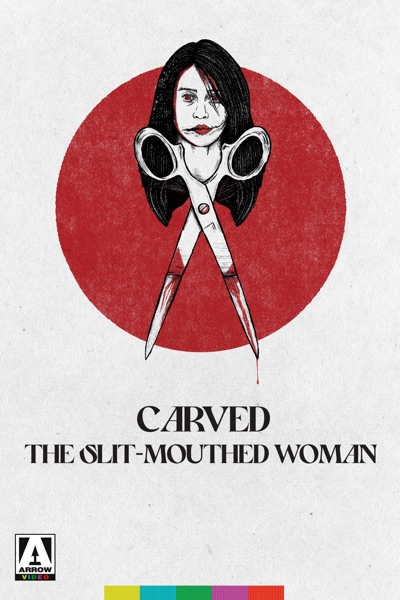
This is based on the Japanese urban legend known as Kuchisake-onna. She was a woman who missed her samurai husband while he was away at war and began to sleep with other men. When he returned and learned of how she was stepping beyond the bounds of their marriage, he sliced her face. She came back from the dead as an onryo who covered her face and appeared to people, asking if she was beautiful. If they answered no, they died. If they said yes, she removed her mask and asked again. Now, if they say no, they will die. If they say yes? They will be given a face like hers.
This legend dates back to Japan’s Edo period but came back in the late 1970s, when rumors of her reappearance led to children needing to be walked home by parents from school.
In this movie, rumors of Kuchisake-onna have spread through a small town. School teacher Noboru Matsuzaki (Haruhiko Kato) hears a voice asking “Am I pretty?” while students begin to disappear. One of the students, Mika (Rie Kuwana) doesn’t want to go home to her abusive mother (Chiharu Kawai). The teacher she tells this to, Kyoko Yamashita (Eriko Sato) has lost her daughter to her ex-husband. She hesitates in dealing with Mika and the girls runs away, meeting Kuchisake-onna.
Noboru and Kyoko start to look for the missing children and learn that Kuchisake-onna can possess other women. That’s when Noboru reveals that a woman in a photograph who may be the evil demon is actually his mother Taeko Matsuzaki. She used to abuse him until one day she disappeared. Later, she came to him and asked him to kill her. He slit his mother’s mouth and stabbed her, then dressed her body up in a coat and mask, and hid it in the closet. He thought that would stop the demon but it has only led to decades of possession and torment for women and children.
Directed by Kōji Shiraishi, who wrote the movie with Naoyuki Yokota, this followed his movie Noroi: The Curse.
Carved: The Slit-Mouthed Woman is one of the films on Arrow’s new J-Horror Rising set. It has extras including commentary by Japanese folklore expert Zack Davisson, a new interview with director Koji Shiraishi, a video essay by Japanese horror specialist Lindsay Nelson and an image gallery.
You can buy it from MVD.
Hinako Myoujin (Yui Natsukawa) has come back to her island home of Shikoku from Tokyo. There, she discovers that her friend Sayori Hiura (Chiaki Kuriyama, Gogo Yubari!) has died and that the girl’s mother, Shinto priestess Teruko (Toshie Negishi), has become lost in her grief.
Sayori’s high school boyfriend Fumiya (Michitaka Tsutsui) has always felt her near him ever since she drowned in a lake. As Fumiya and Hinako find they have a connection, a series of desecrations of the Shinto shrines starts to happen.
It turns out that Sayori’s mother is making the pilgrimage of the 88 Shinto shrines in reverse order, which will weaken the barrier between the living and the dead. This is more of a Japanese folk horror than J-Horror, however, and several mention that not much happens in this movie. I kind of liked its look and pace myself.
Shikoku is one of the films on Arrow’s new J-Horror Rising set. It has extras including commentary by Japanese cinema expert Tom Mes, an interview with director Shunichi Nagasaki and actors Chiaki Kuriyama and Yui Natsukawa, making of footage, original trailers, TV ads and an image gallery.
You can buy it from MVD.
 B&S About Movies
You must be logged in to post a comment.