USA UP ALL NIGHT: 10 (1979)

EDITOR’S NOTE: 10 was on USA Up All Night on October 19, 1990 and January 11, 1992.

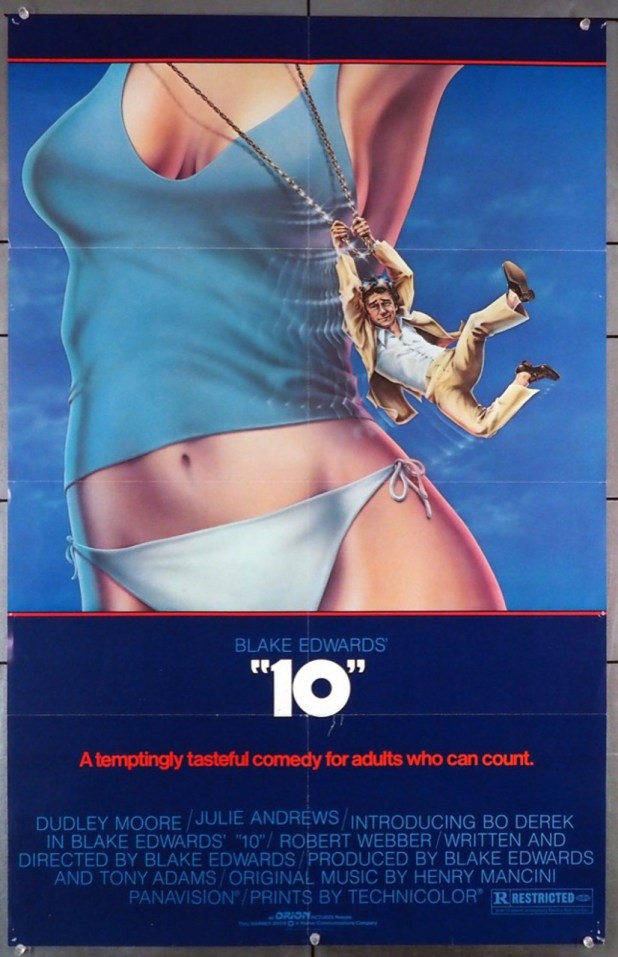
During his 42nd birthday party, composer George Webber (Dudley Moore) learns that he’s not aging well. Despite the love of his girlfriend Samantha Taylor (Julie Andrews), he’s more obsessed with youth and beauty, whether he sees it through a telescope or at the wedding, he follows the whole way to the church.

The object of his affection is the impossibly beautiful — well, in his eyes — Jenny Hanley, played by Bo Derek. She’s just married David Hanley (Sam J. Jones) and they’ve gone on their honeymoon to Hawaii, where George follows. He beds an old frien,d Mary (Dee Wallace), but his heart isn’t into their fling. Again, all he can think of is the unattainable perfection of Jenny, a woman whom he doesn’t even know. Well, he does get to know her — near biblically — when he saves her husband from drowning and she rewards him with lovemaking. Yet in the middle of his fantasy reality, her husband calls and is casually OK with what’s happening. Their relationship, unlike the one that George has with Samantha, means nothing.

Directed and written by Blake Edwards, 10 broke new ground and was quite a big deal when released in 1979. Bo Derek’s cornrow hairstyle was a major fashion happening, and she turned this movie’s fame into, well, Bolero. The less said — pleasure! — the better.

It also led to Moore becoming a star as a solo act. But he almost wasn’t in this movie. George Segal was cast as George, but allegedly walked off the set shortly after filming began — he did shoot some scenes in Mexico — at the MGM Studios. Segal had learned that Blake Edwards had inserted a television musical commercial sequence for his wife, Andrews, so that she would have a chance to sing and dance. He was upset that Edwards was using his movie to revive her career. Moore would also replace Segal in Arthur, while Segal would replace him in The Mirror Has Two Faces.

As for the adult stars in this movie, during the orgy scene that George tries to be part of — and Samatha catches on the telescope — you can see Annette Haven, Serena, Jon Martin, David Morris, John Seeman, Phaedra Grant, Desiree West, Candida Royale, Constance Money, Bonnie Holiday, Jamie Gillis, Jesse Adams, Blair Harris, Milton Ingley and Dorothy LeMay amongst the party guests.

Of the scene, Julie Andrews told Ellen DeGeneres, “There was one party that was actually manufactured for the movie 10. I think my character in 10 had to look through a telescope and see that my boyfriend, the sweet Dudley Moore, was, in fact, invading a neighbor’s house where they were having an orgy. There was a day when Blake was shooting the orgy, and he said, “Julie, you just got to come on over here. It is an unbelievable sight.” So I went dashing over, of course, I did. I walked in and everyone was stark naked and lying around, very happily and casually, treating it totally normally. And there was sweet Dudley in the middle of it all, and he wasn’t very, very tall. Blake put him between two enormously statuesque ladies, and so he was completely naked, and these two ladies were naked, but their bums were up here, and little Dudley‘s was down there. So sweet. It was more adorable than anything else because Dudley was so adorable.”

10 feels dated today — it was made in 1979 — and its gender politics are obviously skewed. Yet Brian Dennehy is great as the hotel bartender, and it all ends well. I remember what a big deal this was when it was on HBO; even if I was only seven when it came out, it was still a naughty secret even in elementary school.

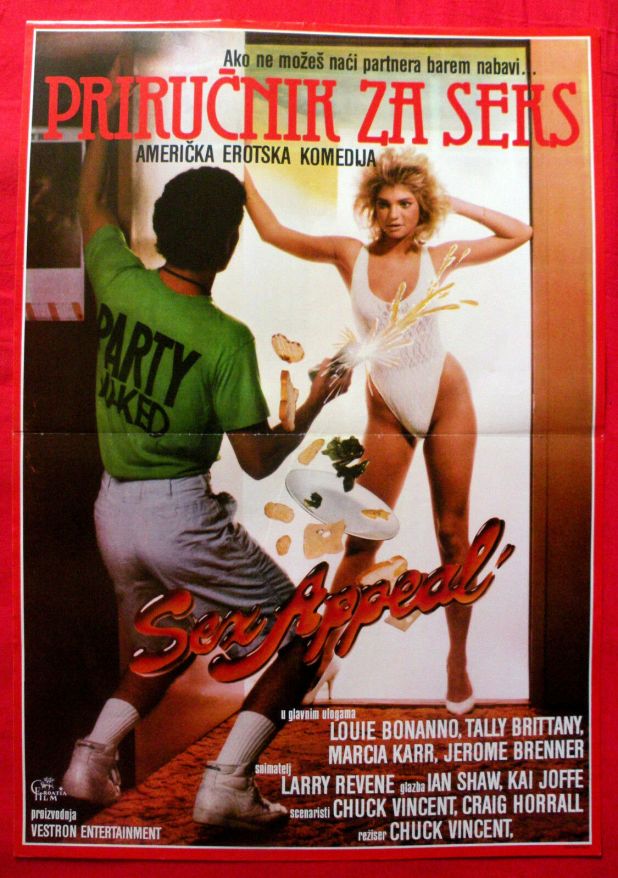
Sizzlin’ Summer of Side-Splitters 2025: Sex Appeal (1986)

Sept 22-28 Chuck Vincent Week: No one did it like Chuck! He’s the unsung king of Up All Night comedy, a queer director making the straightest romcoms but throwing in muscle studs and drag queens. His films explore the concept of romance from almost every angle – he loved love!

Tony Cannelloni (Louie Bonanno) just wants to get out of his mom’s (Marie Sawyer) house and get laid. If you were watching this on USA Up All Night, you get it. He gets a book, Sex Appeal, and tries to become a sexual dynamo. He doesn’t, but his landlord (Jeffrey Hurst) writes about him as the New Jersey Casanova, which becomes some kind of fame (and the source of a heart attack for his mother).

Tony is in love with Corrine (Tally Chanel), but the thing viewers will probably enjoy — well, me — is that this is packed with mid 80s adult stars, like Gloria Leonard as a newscaster, Veronica Hart as a woman so sensitive that her fingers are erogenous zones, Merle Michaels as a nerdy girl who ticks all my boxes and ends up flipped into a Murphy bed and Taija Rae and Samantha Fox as two tough girls who truss up Tony and have their way with him. And Candida Royalle as a sex worker!

I get that this is a dumb sex comedy with no budget, but it caught me on an afternoon where I had doom scrolled the end of the world and was in sheer panic mode. I was feeling like no one wanted to listen to me or help me feel better and here’s Chuck Vincent, forty years in the past, giving me the hug that I needed.

As for the lead actor in this, “In February of 1992, following a string of miraculous events, and in answer to his prayers for Divine guidance, Louix had an encounter with four Ascended Masters. Soon thereafter, he renounced the material world and began training in earnest with the Masters in The Ancient Mystery School, fulfilling one of the prophecies spoken to him by Jesus at the age of five.” Thanks to theironcupcake on Letterboxd for this.

You can watch this on Tubi.

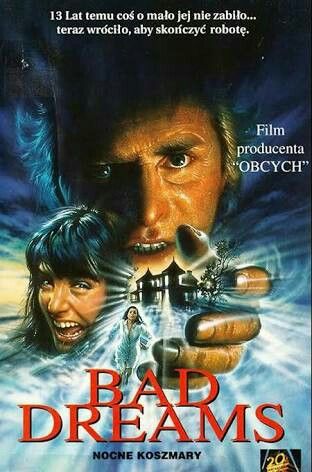
USA UP ALL NIGHT: Bad Dreams (1988)

EDITOR’S NOTE: Bad Dreams was on USA Up All Night on April 8, 1994; March 9, 1996; May 16 and August 16, 1997.
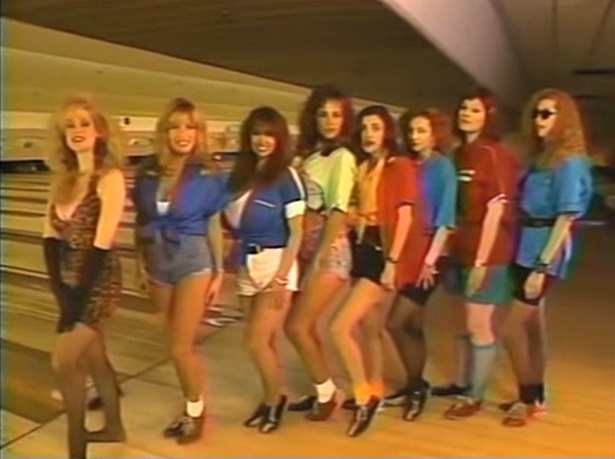
Everyone likes to proclaim that the world is so much worse today than it ever has been. If you feel that way and weren’t alive in the 1970s, allow me to dispel this notion. The “Me Decade” was full of random violence, the fuel crisis, Three Mile Island, Watergate, Son of Sam, the end of Manson, Zodiac and religious orders that some would proclaim as cults, from the Process Church and the Moonies to Jonestown. We don’t really have a modern analogue for these fringe groups that would spring up from time to time because it seems like the Hale-Bopp comet wiped the last of these off the planet.

That’s the world in which Bad Dreams takes place. In 1975, the Unity Fields cult decides to commit mass suicide by setting themselves on fire under the command of their leader, Franklin Harris (Richard Lynch of Invasion U.S.A., The Sword and the Sorcerer, Rob Zombie’s Halloween and God Told Me To). Only one person survives, Cynthia (Jennifer Rubin, Nightmare on Elm Street 3: Dream Warriors), who was still a kid when Harris set everyone on fire. She’s been in a coma for over 13 years before she awakens to flashbacks of Harris being interviewed on a TV program. The final thing she sees is his face telling her that she belongs to him and he’d be coming back to take her life. This entire sequence is really well edited, showing how the cult’s teachings had been accepted by every member, intercut with Cynthia being wheeled through a hospital as doctors struggle to save her life, all to the ominous strains of The Electric Prunes’ “I Had Too Much to Dream Last Night.”

After awakening, Cynthia attends experimental group therapy sessions for borderline personality disorder, led by Dr. Alex Karmen (Bruce Abbott, the Re-Animator films). As she becomes more aware, she begins to remember more and more — including the thirty other people who died from dousing themselves in gasoline. Worse, she sees a burned and scarred Harris when she’s trapped in an elevator, who reminds her that she is his property.

What follows is an insane scene that shows the parallels between group therapy and cult behavior, as the discussion room becomes Unity Fields and Cynthia watches everyone ladle gasoline onto one another. Again, another hint is dropped that Cynthia is a “love child,” as her mother is also part of the cult. One by one, the members walk to the front of the room and are baptized with gasoline, before Harris takes handfuls of the fuel and coats himself before lighting the room on fire. What starts as a peaceful embrace of death quickly turns into horror, as entire families go up in a blaze of pain, flames, and screams. Finally, Harris reappears to tell Cynthia that she and she alone screwed up and that her entire family is waiting for her, as they cannot move on without her death.

Every waking moment is caught between reality and flashback, as even a simple shower brings back the violent baptism that got Cynthia into Unity Fields. Directly after, another patient, one who wanted to know more about Unity’s age, drowns herself in the pool. Another patient (the only one who has been nice to Cynthia) named Miriam attempts to escape the hospital. Helping her to an elevator, Cynthia waves goodbye, only to see Harris smiling and waving back. She gives chase, only to find Miriam’s purse left behind…as Miriam jumps from a window, sending blood and glass all over the pavement.

Harris has taken up residence at Cynthia’s bedside, berating her for staying alive when everyone else who followed him has given their lives to him. As soon as Cynthia’s doctor, Dr. Kamel, flips on the light, he disappears. While Kamel yells at her about her not taking the therapy seriously, she notices Connie and Ed, two other members of her discussion group, sneaking away to have sex, only to be followed by Harris. The lights go out in the whole hospital as patients wander the halls. Turns out that amorous couple got caught up in the blades of a giant industrial fan, as a hapless custodian discovers when blood — and a severed hand — pour down all over him. Harris then appears in the ceiling grate, telling Cynthia that Connie and Ed belong to him now. She screams at the ceiling as even more blood begins spraying out of the hospital’s sprinkler system. Yep — institutionalized folks are running up and down a dark hallway, covered in gore. It’s a shocking surprise and one that made this movie really stand out to me.

All of the other discussion group patients now believe that Harris is behind all of the suicides, even if the doctors refuse to listen. Ralph, a patient who has a crush on Cynthia, asks why they’re all still in the hospital and in this therapy if people keep dying. That’s a great point. I love it when movies take a plot hole and have someone call it out as if simply calling out bullshit makes the bullshit go away. No, instead, it just makes you focus on the plot hole as if you were continually pulling and yanking on it until the hole is now a gaping maw. It’s situations like this that make me hate modern horror movies, as they think that being self-referential excuses them from being poorly constructed films. Scream, I blame you.

After a junk food date, Ralph — a jokester, you see, because he has a rubber chicken on his wall — begins stabbing himself in the hand to the strains of Mamby Pamby & The Smooth Putters covering “My Way,” a la the Sex Pistols. Everyone is on suicide watch, so he knocks out the cop following him, takes Cynthia to the basement and stabs himself to death. What a first date!

Ralph is an example of a character who either works or doesn’t in a movie. The loveable prankster who hates authority, when played by Bill Murray in Ghostbusters, becomes someone you want to be, a joy-infused burst of anarchy in an otherwise mundane world. Or you get someone who saw Murray and wants to be like him, but comes across as insufferable and cloying. Ralph is that person, and I’d imagine most audiences will cheer his demise. Look — not every darling is worth saving.

Dr. Berrisford, Kamel’s boss, demands that Cynthiabes be placed under sedation and that Kamel has grown too close to her. As they argue in the hallway, Cynthia tells him goodbye, walking with two nurses down the hallway, which becomes Unity Fields. For a movie made before the CGI era, the transitions between reality and dreams are virtually seamless, giving this film an unworldly feel. It’s not an art film, mind you, it’s still very much an American studio release, yet it aspires to be more.

Kamel believes that the best treatment for Cynthia is human contact and that putting her directly into what amounts to a second coma will undo any of the progress that she has made. I’m not taking a side in what psychological school makes the most sense, but the inclusion that Unity Fields preached, the need to become a family that protects individuals from the world’s pain, is a key way that cults destroy minds and reap souls. By sublimating the individual and making the leader the sole person with a valid identity, the cult member feels a sense of belonging and is no longer concerned about making mistakes. Gradually, they don’t even care when their innate human rights are trampled, as it is for the good of the group. Interestingly, groups like the Process Church came directly from Scientology and many other groups are rooted in self-help or betterment programs. It was a slippery slope that took the People’s Temple from preaching racial understanding in Indianapolis to ingesting poison in Guyana, after all. Religion — just like psychology — often preys on those who cannot save themselves and need help. There’s no judgment here, as many people do need such assistance, and it’s not a black mark on them for asking and receiving it. It’s only when the guru or doctor becomes a Svengali and demands complete devotion and subservience that we enter into places like Unity Fields. It also calls to mind the battle between psychology and Scientology — two groups that want to heal the mind.

But I digress. The police believe that Cynthia is behind the murders of the patients — and perhaps everyone at Unity Fields. That’s why isolation seems to be the best choice. That said, she isn’t alone. Harris appears to tell her that she is his love child and demands that she commit suicide. That’s when Hattie visits her, informing Cynthia that she doesn’t plan on being alive for long, but that Cynthia can survive if she really wants to. This leads to Harris following Hattie, as he has with every other patient. “I knew you’d come, but you’re too late. I told her what she had to do. You won’t get to her. You won’t get to me,” she says as she drinks formaldehyde and dies. The bottle hits the floor and conveniently has smoke coming out of it, assuring us that yes, it is deadly.

The next scene feels disconnected at first. But upon review, it totally makes sense. Dr. Karmel is upset that he’s lost all of his patients and is walking out of the hospital, dejected. He tries one of their pills while having a breakdown. Getting in his car, he sees his boss, Berrisford, walking and on a whim, decides to hit him multiple times with his car. Sitting in the blood-strewn vehicle, he just stares into space as it explodes — except it was all a dream. So why is this scene so incongruous? It’s the director’s way of letting us know that Berrisford has decided to play with the therapy group, lacing their drugs with a hallucinogen so that they’d kill themselves and prove that his research is the one that’s actually true. Whew!

Tell that to Cynthia! She asks Harris why he keeps coming after her, why he doesn’t just kill her and confesses that she’s exhausted and ready to give up. He informs her that “She must do it herself” as he hands her a syringe. Karmel pulls an emergency alarm and busts into Cynthia’s room, but she won’t listen to him. She knows that Harris is coming for her, but the person she sees as Harris is really Berrisford. Or is it?

They go to the roof, where she’s urged to kill herself by leaping off the roof. As she does, she awakens back at Unity Fields, where Harris asks her to walk into his arms, telling her that she is his forever. She awakens to Karmel catching her and asking her to open her eyes and live. She keeps yelling that she has nothing left in the real world as Berrisford tells her that death is eternal bliss, that friends are waiting for her. She finally sees that it isn’t Harris at all and begins to climb up…only to have Berrisford push Karmel off too, stabbing him repeatedly in his hand. The cops and hospital security arrive only to have Berrisford drop a big load of BS, playing Karmel for the whole thing, even pulling a gun before Cynthia shoves him off the roof. One more jump shot, and here comes the credits, which feature Guns N’ Roses’ “Sweet Child O’ Mine.” There were even plans for a Bad Dreams clip video of the song.

The original ending has Berrisford simply killing himself, then Cynthia and Kamel going back to the house at Unity Fields. She has a vision of all the cult members as they welcome her back, but at the last moment, she stabs Harris with a dagger. They drive away from the house, but not before the “big Carrie scare” of a skeletal hand grabbing the dagger. This ending, however, more explicitly reveals that Cynthia is Harris’ daughter and has her stab, slash and kill every other cult member. It doesn’t seem as dramatic as it should, but the ending isn’t color corrected or scored, so that would have added more gravitas.

Bad Dreams is the directorial debut of Andrew Fleming, director of Nancy Drew, Dick and The Craft, perhaps his best-known film and was produced by Gale Ann Hurd (Terminator, Aliens, The Abyss). It owes an awful lot to the Nightmare on Elm Street films, obviously, and perhaps would have benefitted from a more downer ending — but that could be because I have been watching way too many 70s occult movies.

My armchair psychoanalysis of this film? It’s OK to fall in love with a hot cult survivor, as long as you don’t drug her and make her see visions because, in the movie world, no law protects the patient from amorous analysts. And you can just shove evil doctors to their doom and get away with it, as long as it seems like you have a good reason. Ah, movie world, where decisions are made so much simpler.

Is psychology worse or better than a cult? Is free will possible? Are drugs that shape moods just as harmful as people who tell us how to feel? None of these questions really gets raised here, but just imagine if they did! Maybe it’s time to bring Unity Fields back for the sequel nobody wants, cares about or needs!
USA UP ALL NIGHT: Waitress! (1981)

EDITOR’S NOTE: Waitress! was on USA Up All Night on February 4 (twice), May 13 and October 27, 1989; March 10, October 5 and 6, November 10 and December 21, 1990.

After Squeeze Play!, this was an early Troma film that follows an actress working as, well, look at the title.

Directed by Lloyd Kaufman and Michael Herz and written by Charles Kaufman and Michael Stone, Waitress! was shot on location in a restaurant called Marty’s in Manhattan. The staff wouldn’t allow filming to start during work hours, so the cast and crew had to wait until the restaurant closed and worked from midnight to 10 A.M.

This is the debut of Chris Noth, Scott Valentine and Elizabeth Kaitan. And Calvert DeForest is in it, who you may know as Larry “Bud” Melman.

As for the movie itself, it’s horrible. Andrea (Carol Drake) wants to play Joan of Arc. This involves her bringing a horse into the restaurant, which seems like something that would’t be a good idea. There are two other girls,  Jennifer (Carol Bevar) and Lindsey (Renata Hickey), and the place is managed by Andrea’s boyfriend  Jerry (Jim Harris), and it’s owned by Lindsey’s father (Ed Fenton), who has her working there to learn the value of money. It’s everything you expect and it feels like it goes on forever.

You can watch this on Tubi.

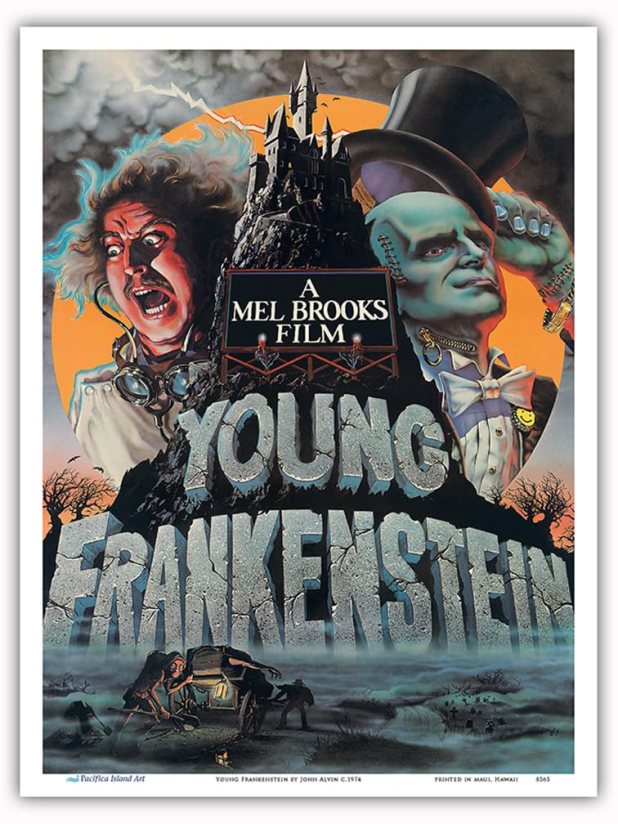
USA UP ALL NIGHT: Young Frankenstein (1974)

EDITOR’S NOTE: Young Frankenstein was on USA Up All Night on October 31, 1992.

I was two years old, and my parents went to see this on a date together, and I remember being sad that I couldn’t go. Even at that young age, I loved monsters. As I’ve grown up, this movie has become a regular part of my family. We would often talk about it and watch it every time it was on TV. When I got my parents a DVD player, this was one of the movies I bought with it for them.

Directed by Mel Brooks, who co-wrote it with star Gene Wilder, this is the kind of movie that requires little introduction. But wow, you have Wilder, Peter Boyle as the monster, a perfect Marty Feldman as Igor, Cloris Leachman in charge of the castle, Teri Garr, Madelaine Kahn and Brooks himself. It’s, well, perfect.

Brooks said, “I was in the middle of shooting the last few weeks of Blazing Saddles somewhere in the Antelope Valley, and Gene Wilder and I were having a cup of coffee, and he said, ‘I have this idea that there could be another Frankenstein.” I said, “Not another! We’ve had the son of, the cousin of, the brother-in-law. We don’t need another Frankenstein.” His idea was straightforward: “What if the grandson of Dr. Frankenstein wanted nothing to do with the family whatsoever? “He was ashamed of those wackos. I said, “That’s funny.””

It’s great because even if you don’t know the monster movies to the level that geeks like me do, it’s still funny. But if you do, there’s so much more.

USA UP ALL NIGHT: Uncle Buck (1989)

EDITOR’S NOTE: Uncle Buck was on USA Up All Night on January 2, 1998.

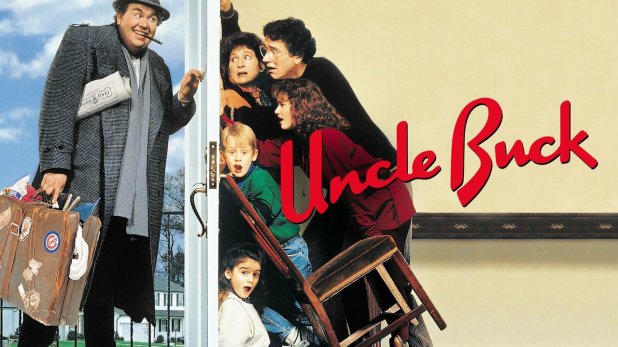
Directed and written by John Hughes, the first film of his deal with Universal, this has Bob and Cindy Russell (Garrett M. Brown and Elaine Bromka) called away by a medical emergency and Bob’s brother Buck (John Candy) being placed in charge of their kids, Tia (Jean Louisa Kelly), Maizy (Gaby Hoffman) and Miles (Macaulay Culkin). They’re worried, because all Buck really does is smoke, drink and gamble. Yet as you can imagine, he learns about why family is important while improving their lives (and fixing his relationship with Chanice (Amy Madigan)).

But really, it’s a whole movie to remind you why you loved John Candy so much.

Culkin remembered and told People Magazine, “I think he always had that really great instinct. I think he saw. Listen, even before the wave crested and the Home Alone stuff was happening, it was not hard to see how difficult my father was. It was no secret. He was already a monster.

Candy would ask, “Is everything alright over there? Are you doing well? Good day? Everything’s alright? Everything good at home?”

It’s important that I remember that. I remember John caring when not a lot of people did.”

Sometimes, I get a bit choked up thinking about him, and I never really knew him. I know it’s weird, but that’s how it is.

USA UP NIGHT: Major League (1989)

EDITOR’S NOTE: Major League was on USA Up All Night on January 9, 1998.

David S. Ward wrote The Sting and Sleepless In Seattle, which makes me rethink that this is just a silly movie and made by people who maybe loved the game. He also directed King RalphDown Periscope and the sequel to this.

Rachel Phelps (Margaret Whitton) is a Vegas showgirl who came to Cleveland with the rich man she married. He dies, she’s stuck here with the team, but if they play poorly, she can move them anywhere. So she makes the Indians the worst team in baseball, yet one that comes together to become winners.

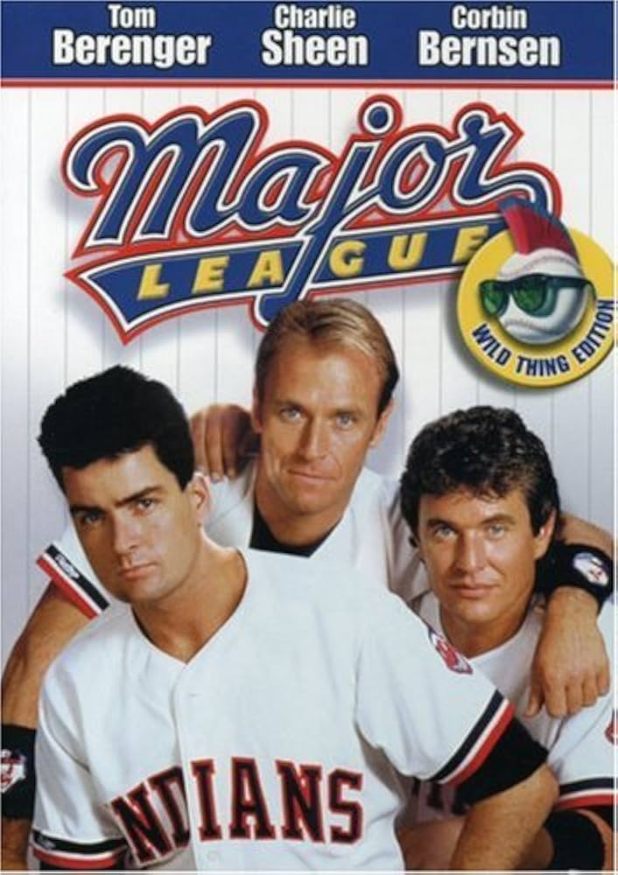
A few years ago, I wrote “Ten players on my movie All-Star team (yes, including the DH)” and pitcher Ricky Vaughn (Charlie Sheen), third baseman Roger Dorn (Corbin Bernsen), Center Fielder Willie “Mays” Hayes (Wesley Snipes), Manager Lou Brown (James Gammon), Clu Haywood (real life pitcher Pete Vuckovich), Right Fielder Pedro Cerrano (Dennis Haysbert, before he was the President) and Catcher Jake Taylor (Tom Berenger) all made the team.

I can’t believe I got this far before saying that the general manager of the team, Charlie Donovan, is Charles Cyphers, Sheriff Lee Brackett. And hey, Rene Russo is in it too.

Ward grew up in the Cleveland suburb of South Euclid, Ohio and said, “I figured I would never see the Indians win anything unless I wrote a movie where they did. That was the real genesis behind the movie.” But then the movie was shot in Milwaukee.

Throughout the movie, each win gets a piece of paper with a nude image of Phelps. However, in the original cut, she picked thewhole  team and was really on their side. Test audiences liked her better as a bad girl.

Could anyone really play? Well, Sheen pitched in high school and did steroids for two months, which gave him an 88 MPH fastball. And yeah, Bob Uecker really played. His line, “Just a bit outside,” has entered the words of nearly every baseball announcer.

Major League was made into and released as a video game, developed by Lenar and published by Irem, exclusively in Japan. That’s crazy!

Sizzlin’ Summer of Side-Splitters 2025: Warrior Queen (1987)

Sept 22-28 Chuck Vincent Week: No one did it like Chuck! He’s the unsung king of Up All Night comedy, a queer director making the straightest romcoms but throwing in muscle studs and drag queens. His films explore the concept of romance from almost every angle – he loved love!

A Chuck Vincent-directed barbarian movie — written by that maniac Harry Alan Towers (using the name Peter Welbeck), Rick Marx (Doom AsylumGor II, Tenement, so much adult) and S.C. Darcy — starring Donald Pleasence, Sybil Danning, adult star Samantha Fox (not the singer, but the one who went by Stasia Micula), J. J. Jones (ChristineLove CirclesBlack Venus), David Brandon (Stagefright) and Tally Chanel (Hollywood Hot. Tubs 2: Educating Crystal) and I haven’t seen it?

And it’s shot by Gianlorenzo Battaglia, the cinematographer of Demons?

And it’s associate produced by Joe D’Amato?!?

The man who protected Haddonfield by sending cop cars into teenagers is Clodius Flaucus — not Claudius — the emperor of this porno peplum Rome, one that ends with a volcano killing almost everyone. But that’s not an effect, that’s footage stolen from Last Days of Pompeii, which D’Amato also ripped off for Diary of a Roman Virgin, and Bruno Mattei lifted in his movie Nerone e Poppea. Yet this is a film that begins with Berenice (Danning) killing a bunch of dudes with a sword, so if you aren’t into that, go look in the mirror and see if you have a soul or not.

Dudes armwrestle to the death as if this were the movie that my grade school fellow movie maniacs described as Caligula, but on a Joe D’Amato budget. Joe was probably like, “I already made this movie when it was called Caligula: The Untold Story in 1982.”

A gladiator who goes by Goliath (Marco Tullio Cau, the evil deity in Specters) wants to assault new female slave — and virgin — Vespa (Chanel), who is being inducted into the art of lovemaking by Chloe (Jones). Berenice protects her, but she’d better be ready, because this is one bad guy who doesn’t know the meaning of no. It almost happens again, one day later, but Marcus (Hill) saves her. She pledges her virginity to him, which is good, because he straight up murders Goliath in the gladiator battles just in time for the volcano to destroy Pompeii and kill everyone evil.

So basically, Sybil Danning and the Deathstalker (well, one of them, you know how that goes) team up, orgies happen all over the place, an insane Pleasence chases doves, a frisbee gets thrown into the audience and kills someone, slaves are hung upside down and stripped…yes, Vincent may have started in porn. Still, now he has Aristide Massaccesi and Harry Alan Towers on his side, which is seriously like being around The Avengers of sleaze.

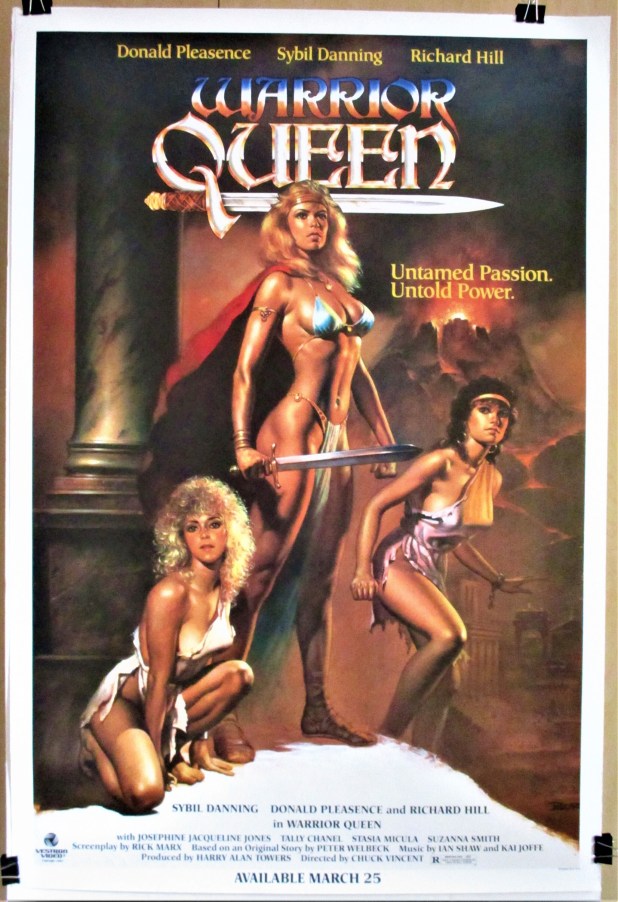
And a Boris Vallejo poster?

Where was Laura Gemser in all this? Seriously, if she showed up, I probably could have died happy, never watching another movie, secure in this scum.

You can watch this on Tubi.

USA UP NIGHT: Footloose (1984)

EDITOR’S NOTE: Footloose was on USA Up All Night on September 15 and December 23, 1995.

Herbert Ross (The Owl and the PussycatSteel Magnolias) is directing, Dean Pitchford (the co-writer of “You Should Hear How She Talks About You”) is writing, and America is loving it. Imagine — a town where no music is allowed. How can it be! How could a lack of the First Amendment ever happen in our country?

Ren McCormack (Kevin Bacon) and his mother Ethel (Frances Lee McCain) have come from Chicago to Bomont, Utah. Here, Reverend Shaw Moore (John Lithgow) runs the town, keeping kids like Willard (Chris Penn), Rusty (Sarah Jessica Parker), Woody (John Laughlin), Lulu (Lynne Marta) and his own daughter Ariel (Lori Singer) from dancing.

Ariel’s brother died after a night of drinking and dancing, which is how we got here. So can this city kid come to town and change it all? Of course.

This was almost a Michael Cimino movie, but even after Heaven’s Gate, he had considerable demands. There’s also a world where Tom Cruise or Christopher Atkins was the lead, while Madonna, Haviland Morris, Valerie Bertinelli or Jennifer Jason Leigh would be the love interest.

This is loosely based on a real-life movie story. The town of Elmore City, Oklahoma, had no dancing since its founding. Rev. F. R. Johnson said, “No good has ever come from a dance. If you have a dance, somebody will crash it, and they’ll be looking for only two things — women and booze. When boys and girls hold each other, they get sexually aroused. You can believe what you want, but one thing leads to another.” In 1980, the students of Elmore City’s high school made national news when they requested permission to hold a junior prom. The school board was tied at 2–2 when President Raymond Lee said, “Let ’em dance.”

If you were alive when this came out — I was 12 — you know the songs: “Footloose” by Kenny Loggins, “Let’s Hear It for the Boy” by Deniece Williams, “Almost Paradise” by Heart’s Ann Wilson and Loverboy’s Mike Reno, “Holding Out for a Hero” by Bonnie Tyler, and so many more. Writer Dean Pitchford did more than the script. He also co-wrote the songs.

Murder, She Wrote S2 E12: Murder by Appointment Only (1986)

A former student of Jessica’s becomes involved in a love triangle that ends in murder.

Season 2, Episode 12: Murder by Appointment Only (January 5, 1986)

Tonight on Murder, She Wrote

Everyone Jessica knows gets killed. You know how it goes. This time, a former student finds love, drama and death. Does Grady show up? No! Not Grady!

Who’s in it, outside of Angela Lansbury?

Lila Lee Amberson is Jayne Meadows, Billy Crystal’s mom in City Slickers. She’s the older sister of Audrey Meadows.

Fiona Keeler is Christine Belford, who was in Christine.

Norman Amberson? Robert Culp! Am I going to make the joke about his dick again? Yes.

Roger Adiano is played by Robert Desiderio.

Elizabeth Gordon is Ann Dusenberry from Jaws 2.

Herb Edelman — Stan Zbornak — is Lieutenant Varick!

Grady Fletcher is in this. Yes, he’s played by Michael Horton again.

Leigh McCloskey from Inferno! He’s Todd Amberson.

Millie Perkins — yes, Anne Frank — is Glenda Vandevere. She was also in The Witch Who Came from the Sea.

In minor roles, Robert Stoneman is a photographer, Fred Ponzlov is Mr. Hillsdale, Catherine Battistone and Cathy McAuley are actresses, and Sam Nickens plays a guest.

What happens?

While in New York City, Jessica runs into an old student, Elizabeth Gordon, who has become the fiancée of Lila Lee cosmetics tycoon Norman Amberson. As good as her life sounds, she reveals that it is pretty rough. So when she shows up dead — even students of Jessica aren’t safe from her death energy, which is like Dim Mak, the punch of death — JB promises to get justice.

At one point, Lila Lee even shows up and thinks that Cabbot Cove is Cabbage Cove, so you can understand why Jessica feels weird about her.

Jessica’s student was a sex worker before she hooked up with the rich guy. But let’s not shame. Elizabeth’s portrait is painted with lipstick after her death, a lipstick whose color — Tangerine Twist — has been taken out of the catalogue. Somehow, though, Elizabeth was literally a hooker with a heart of gold and gave most of the money she made to charity.

But what if she starts seeing an old client? Will all the rumors of her being a gold digger cause her death? I mean, we’re watching Murder, She Wrote.

Who did it?

Norman, who was jealous and worried about his wife’s past.

Who made it?

This episode was directed by Arthur Allan Seidelman and written by TV vet Jerry Ross.

Does Jessica get some?

No. Come on!

Does Jessica dress up and act stupid?

She does, dressing up like she’s a make-up saleswoman for Lila Lee!

Was it any good?

Yeah.

Any trivia?

Herb Edleman would come back as Lieutenant Artie Gelber.

Christine Belford appeared in four episodes as different characters. When she was a kid, she lived at the Amityville Horror house from ages 11-16. Then, her parents sold it to the DeFoes.

Give me a reasonable quote:

Lila Lee Amberson: Mrs. Fletcher! You should have told me you weren’t a Lila Lee lady. I just assumed you were one of us because you ARE absolutely perfect. My dear, it gives me great pleasure to offer you the entire Lila Lee franchise for all of Cabbage Cove.

What’s next?

It’s a bad day for the jury when Jessica is the foreperson hearing the case of a man claiming self-defense in the death of an enraged husband.