MILL CREEK THE SWINGIN’ SEVENTIES: Maybe I’ll Come Home in the Spring (1971)

Denise Miller (Sally Field) has come home after a year of living with hippies. Her younger sister Susie (Lane Bradbury) is about to do the same thing. As for Denise, her boyfriend Flack (David Carradine) is driving across the country to save her from her family. And her parents Ed (Jackie Cooper) and Claire (Eleanor Parker) wonder where they went wrong.

Directed by Joseph Sargent (The Taking of Pelham One Two Three, Jaws: The Revenge) and written by Bruce Feldman, this reunites Field and Parker, as they played sisters in Home for the Holidays. If you think it’s odd that she’s her mother in this, well, Bradbury is her younger sister but is really eight years older than her.

This also has a Linda Ronstadt soundtrack, if that makes you want to watch.

Don’t have the box set? You can watch this on Tubi.

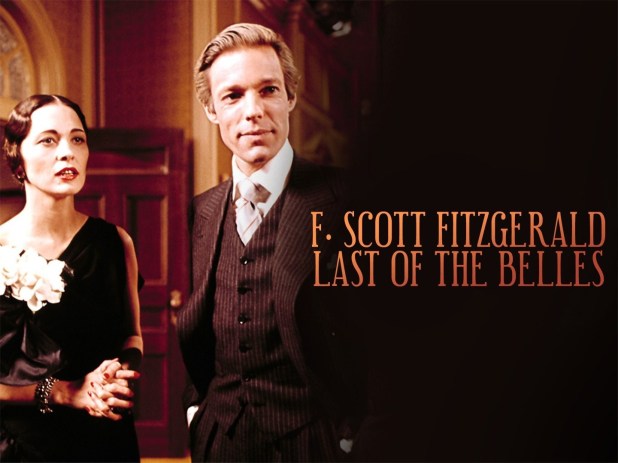
MILL CREEK THE SWINGIN’ SEVENTIES: F. Scott Fitzgerald and The Last of the Belles (1974)

Directed by George Schaefer and written by James Costigan, this has a pretty fun cast. There’s Richard Chamberlain as F. Scott Fitzgerald, Blythe Danner as Zelda Fitzgerald, Susan Sarandon (a year before The Great Waldo Pepper and The Rocky Horror Picture Show) as Ailie Calhoun, David Huffman (who died way too young as he was stabbed by a criminal while outside the Old Globe Theater in San Francisco) as Andy McKennam, Ernest Thompson (the writer of On Golden Pond) as Earl Shoen, Richard Hatch (Battlestar Galactica) as Bill Knowles and Planet of the Apes TV show cast member James Naughton as Captain John Haines. And Brooke Adams!

This is the story of how Fitzgerlad met his wife. I worked with Blythe Danner a bunch on health care commercials and I always got her after she’d been through twelve other agencies, so she was exhausted and would turn a :30 second commercial into a :90. I purposefully watched the time she hosted SNL and told her. After nearly years of us barely interacting, she sparkled and said, “Was I any good?” It wasn’t a great episode, the kind of one that aired in 1982 when the show was finding its way back. It was the kind of SNL where the music guest — Rickie Lee Jones — did three songs instead of two. But I told her, “Your monologue was perfect.”

Don’t have the box set? You can watch this on YouTube.

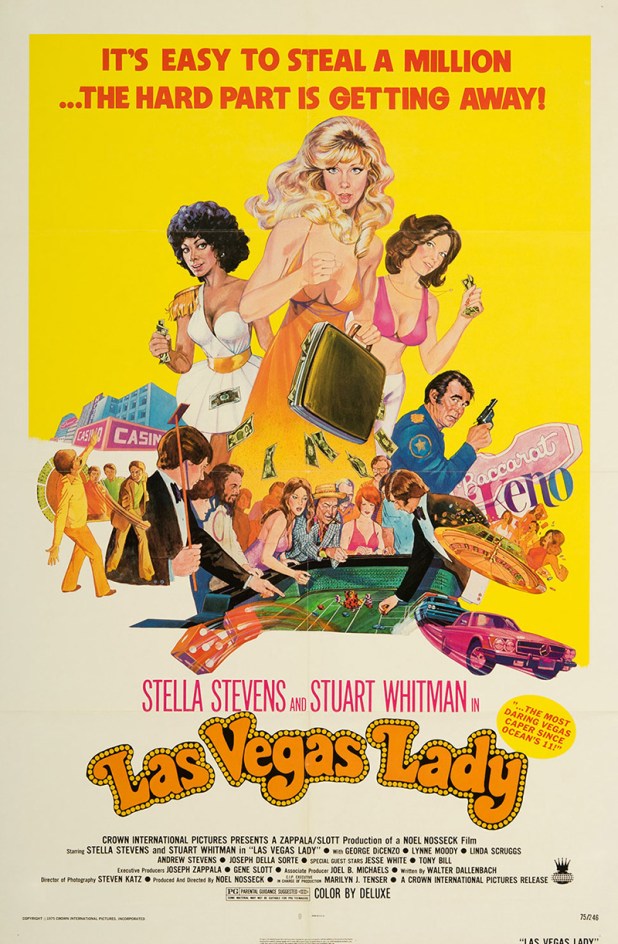
MILL CREEK THE SWINGIN’ SEVENTIES: Las Vegas Lady (1975)

Crown International Pictures serving up that sweet, sweet movie sugar that I love so much, with Stella Stevens (The Silencers) and Stuart Whitman (Demonoid) as a Vegas couple looking to get out by pulling a scam.

Stevens is Lucky, who is being ordered by a man in the shadows to use two of her friends, Carol (Lynne Moody, Nightmare in Badham County), who is in debt, and Lisa (Linda Scruggs), a trapeze artist with vertigo, to rob Circus Circus of $500,000.

Frank Bonner (Herb Tarlek!) is in this, as is George DiCenzo, who was the voice of Hordak.

You know who else got a role? Stella’s son* Andrew, who may have failed to win the role of Luke Skywalker, but got to simulate arrdvarking Shannon Tweed in four movies. Of course, those would be the seminal Night Eyes II, Night Eyes Three, Scorned and Illicit Dreams.

This was directed by Noel Nosseck and is not the first movie I’ve watched from him. Yes, he also directed Best Friends and No One Would Tell — where Candance Cameron is trying to love a steroid addicted Fred Savage! — amongst many more efforts.

My favorite part of this movie is when Stella’s character sings “Happy Birthday” — did they pay for the rights? — to Whitman’s and he answers, “Is it February 1st?” That’s his real birthday. Obviously — as you can tell by reading the above deep dive into all things Las Vegas Lady — I know way too much about these movies.

*Stella and Andrew also appeared together in Down the DrainThe Terror Within II and Illicit Dreams.

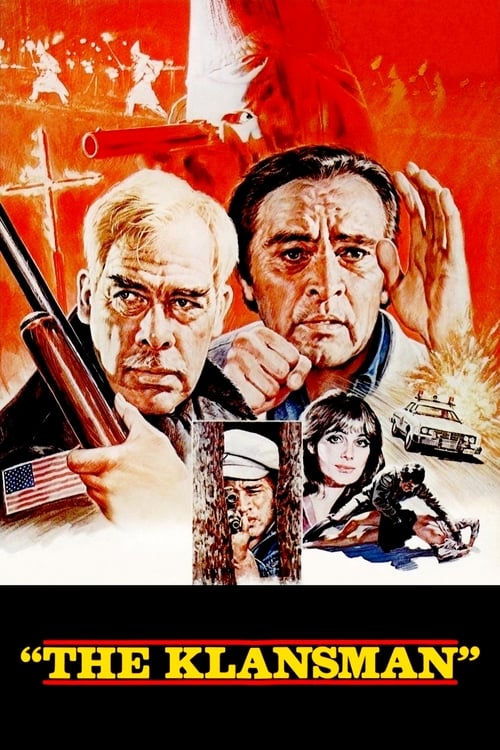
MILL CREEK THE SWINGIN’ SEVENTIES: The Klansman (1974)

Directed by Terence Young and written by Millard Kaufman and Samuel Fuller, The Klansman had its film rights bought by black film producer William D. Alexander who spent a year putting the movie together. The movie was put together by Bill Schiffrin, Fuller’s agent, and he said the movie was a mess from when Terence Young was hired. Young was picked because of the European investors — the same mysterious people who demand worm sex in Roger Corman movies — and that’s why Luciana Paluzzi plays Southern girl Trixie with Joanna Moore speaking her lines. Yes, Fiona Volpe being voiced by Tatum O’Neal’s mother.

You know who probably didn’t want to be there? Richard Burton, who despite being paid $40,000 a week for ten weeks plus a percentage did most of his scenes lying down because he was so drunk. Years later, he claimed that he didn’t even remember meeting Lee Marvin before when they drank together at a party. Later than that, he did say “I wouldn’t have survived without Marvin.” He was drinking hard, the kind of drinking you do when you’ve lost everything.

When Burton was filming his death scene, Young was happy with the work the make-up artist had done, only for the artist to remark that he had not done anything. Young brought a doctor in to examine Burton and it was determined that he was dying. He was rushed to St. John’s Hospital in Santa Monica with a temperature of 104 degrees. Both kidneys were collapsing and he had influenza and tracheo-bronchitis. It would take six weeks in the hospital — where it was announced that he and Liz Taylor were divorcing — for him to get better.

After all that, one of the investors failed to come up with the money so Marvin and Burton were not paid their full salary.

Sheriff Track Bascomb (Marvin) has broken up white men assaulting a black woman. He arrests no one. Part of that is racism. Part of that is just keeping the peace.

Despite the fact that he’s part of the system and Breck Stencill (Burton) is a rich liberal who wants to change the South, the two remain friends. But when white Nancy Poteet (Linda Evans) gets assaulted by a black man, the Klan — which includes Deputy Butt Cutt Cates (Cameron Mitchell, somehow not the drunkest person in this movie with Marvin and Burton) — are trying to find the man who attacked her.

The Klan goes into a black bar and attacks a man, castrating him and then shooting him. His friend Garth (O.J. Simpson) gets away and goes to war with anyone who sides with the KKK. They deserve it. One of the things they do is capture Loretta Sykes (Lola Falana) and rape her, leaving her near death from bleeding. Mitchell was so upset by this scene that he burst into tears and brought roses and a letter of apology the next day.

It’s not that good but hey, I enjoyed seeing Burton try to get his lines out.

Don’t have the box set? You can watch this on Tubi.

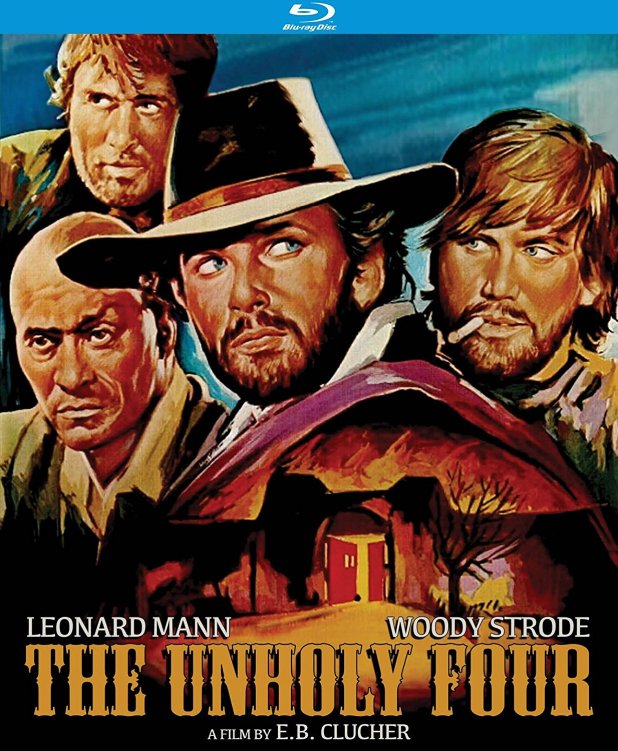
Spagvemberfest 2023: The Unholy Four (1970)

Ciakmull L’uomo della vendetta (Ciakmull the Vengeful Man) was directed by Enzo Barboni, the director of They Call Me TrinityTrinity Is Still My Name and Even Angels Eat Beans. He replaced Ferdinando Baldi, who was fired by the producer Manolo Bolognini because they fought over Baldi wanting Annabella Incontrera to play Sheila, the role that went to Ida Galli, who is also known as Evelyn Stewart.

Chuck Mool (Leonard Mann, Night SchoolFlowers In the Attic) escapes the institution he’s been in thanks to three men, Woody (Woody Strode), Silver (Pietro Martellanza) and Hondo (George Eastman). Chuck has no idea who he is and the men decide to ride with him in the hopes that he can get his memory back. He makes it to a town where he was supposedly the best gunfighter and is being counted on to choose sides in a war between the Caldwells, whose leader John (Helmuth Schneider) might be Chuck’s father and the Udos, whose leader tries to convince Chuck that he’s really his father. Turns out that Chuck’s half-brother Tom Udo (Lucio Rosato) has always hated him for being illegitimate and he was supposed to stay out of the way.

Pietro Martellanza and George Eastman were Barberi’s original picks to play Trinity and Bambino. There are hints of that movie here as some of the fights are comical and in the way that Hondo can shuffle cards, not to mention a bean eating sequence.

By the end, this movie finally remembers to have some action, but it’s helped along by the cast and a sparkling Riz Orlotani jazz score. It’s great!

The AKA for this is The Bastard of Dodge City which spoils one of the movie’s reveals.

You can watch this on Tubi.

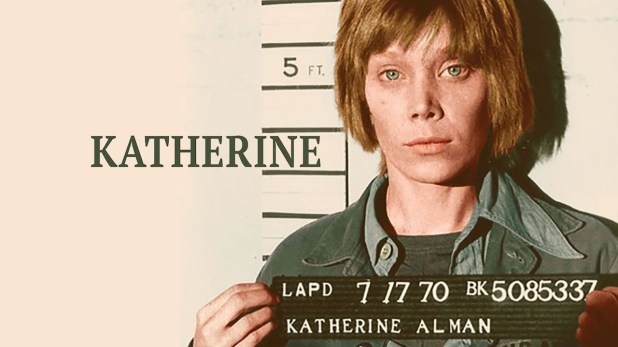
MILL CREEK THE SWINGIN’ SEVENTIES: Katherine (1975)

Katherine is based on Diana Oughton of the Weather Underground, a radical who died in 1970 when a bomb she was building accidentally exploded and Patty Hearst, who was kidnapped by and then joined the Symbionese Liberation Army the same year this movie aired on ABC.

Director and writer Jeremy Kagan also made Conspiracy: The Trial of the Chicago 8, The Journey of Natty Gann and Big Man on Campus. He also directed Roswell: The UFO Conspiracy, a TV movie about the people that were near the crash.

Katherine is filled with actors who weren’t stars yet. Sissy Spacek was a year away from Carrie, Henry Winkler was not yet the Fonz and Julie Kavner was years from being Marge Simpson (although she was on Rhoda).

Katherine (Spacek) falls in love with Bob Kline (Winkler) and runs from the upper class life her parents Emily (Jane Wyatt) and Thornton (Art Carney) live in and becomes part of the Weathermen wing of Students for a Democratic Society. So much of the story is told by Katherine facing the camera and talking directly to the camera. It’s pretty interesting how that makes you feel for her as this movie never makes her seem misguided which is a pretty brave idea for a TV movie in 1975 much less something made these days.

Don’t have the box set? You can watch this on Tubi.
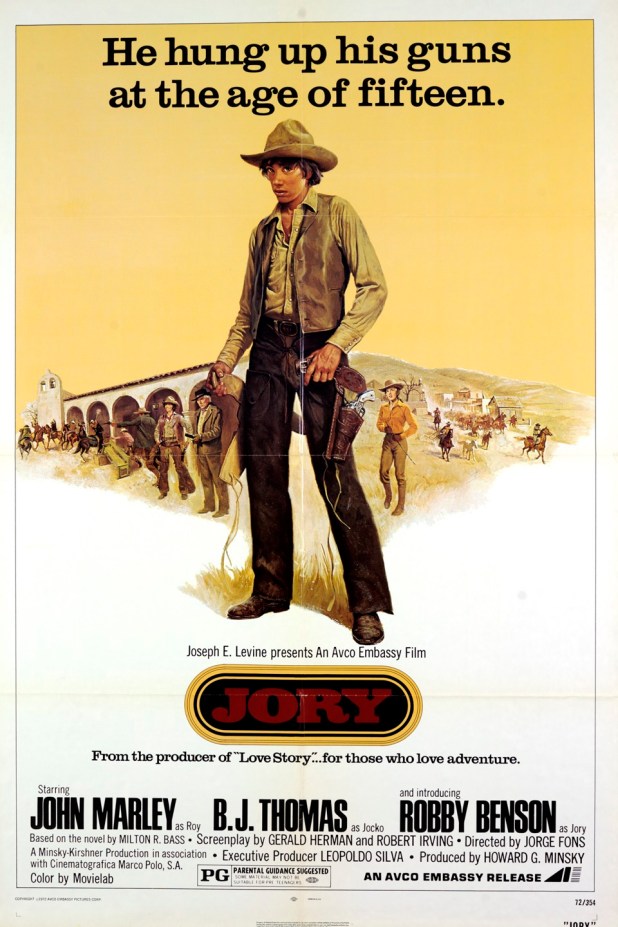
MILL CREEK THE SWINGIN’ SEVENTIES: Jory (1973)

Robby Benson is Jory in a movie about a kid in the West. Yes, he’s a fifteen-year-old boy who joins a horse drive after his father Ethan (Claudio Brook) is killed by a drunk who is killed by Jory. What a happy little film!

The young man gets hired by Roy Starr (John Marley), has a bad influence in Jocko (B.J. Thomas), becomes friends with saloon girl Dora (Anne Lockhart) and falls in love with Amy (Linda Purl). Did the get B.J. Thomas in this because he sang “Raindrops Keep Fallin’ on My Head” in the soundtrack for Butch Cassidy and the Sundance Kid? And hey — Howard Hesseman is in this very quickly as a bartender.

Based on the book by Milton R. Bass, this was directed by Jorge Fons, who would go on to make Red Dawn. The 1990 one, not the one you’ve seen! It was written by Gerald Helman and Robert Irving.

Don’t have the box set? You can watch this on Tubi.
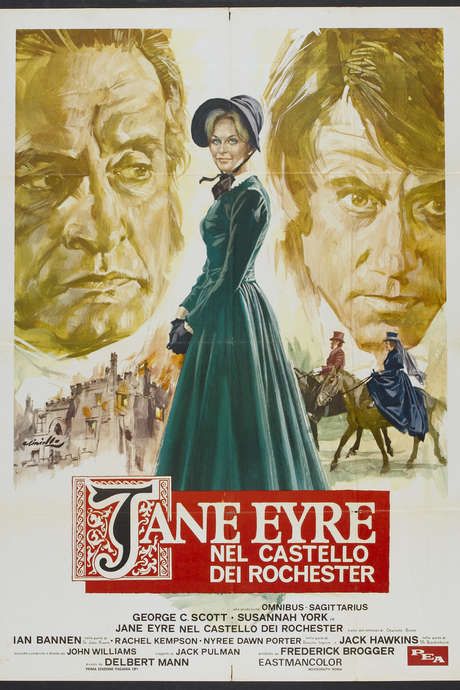
MILL CREEK THE SWINGIN’ SEVENTIES: Jane Eyre (1970)

This movie had its theatrical debut in the United Kingdom in 1970 and was released on television in the United States in 1971 where it won John Williams an Emmy for Outstanding Achievement in Music Composition.

Jane Eyre (Susannah York) is the kind of classic heroine you read about in high school whose best friend had a cough and was forced to sleep in the rain and died the next day and you wonder, “Why are they making us read this book?” Well, she’s also in love with her boss Edward Rochester (George C. Scott), who is much older than her and he’s the father of Adele, the girl she’s raising. But oh the foggy secrets of Thornfield Hall.

Based on the Charlotte Bronte book, this was directed by Delbert Mann, who had directed MartyShe Waits and David Copperfield. The script was from Jack Pulman, who had worked with Mann on the aforementioned David Copperfield and also wrote Kiss the Girls and Make Them Die and The Executioner.

Don’t have the box set? You can watch this on Tubi.
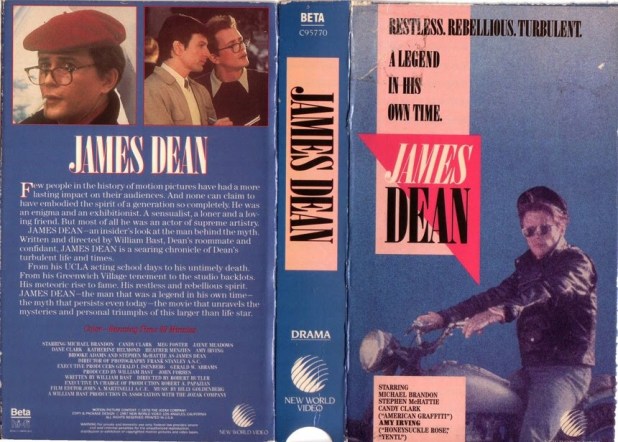
MILL CREEK THE SWINGIN’ SEVENTIES: James Dean (1976)

This movie was directed by Robert Butler, who also directed the pilots for Star Trek, Hogan’s Heroes, Batman and Hill Street Blues as well as four Kurt Russell Disney movies — Guns in the Heather, The Computer Wore Tennis Shoes, The Barefoot Executive and Now You See Him, Now You Don’t — and also Night of the Juggler and Turbulence. What a career!

It was written by William Bast, who had already written about his five-year relationship with James Dean in his book James Dean: a Biography and The Myth Makers, a drama about what Bast saw as the publicity-mad funeral of Dean and the damage it did to his family and hometown of Fairmount, Indiana. It was a TV movie in England and an episode of NBC’s Dupont Show of the Month as The Movie Star. He also wrote The Legend of Lizzie BordenThe Valley of Gwangi and The Betsy as well as creating The Colbys.

Bast is played by Michael Brandon in this movie. Strangely enough, in the 50s, Butler worked at CBS Television in charge of the studio audience ushers. James Dean got a job there through Bast but was soon fired by Butler. The movie also has someone else who knew Dean. Christine White, who plays a secretary, met Dean when she was his agent’s typist. She was his girlfriend from 1951 to 1954 and the two successfully auditioned for the Actors Studio. In the movie itself, White is played by Candy Clark.

There’s an interesting cast here. Amy Irving is a young Marilyn Monroe, Meg Foster plays another of Dean’s rumored lovers, Dizzy Sheridan (who went on to write Dizzy & Jimmy: My Life with James Dean: A Love Story, play next door neighbor Raquel on ALF and Jerry’s mom on Seinfeld) and strangely in the way that movies are, she was married to Stephen McHattie at the time, the actor who plays Dean.

Plus you get Jayne Meadows as Reva Randall, Katherine Helmond as Dean’s agent Claire Forger, Brooke Adams as Beverly and Julian Burton as Ray.

Don’t have the box set? You can watch this on Tubi.
Spagvemberfest 2023: Shango (1970)

Anthony Steffen, born Antonio Luiz de Teffé von Hoonholtz and also known as Antonio Luigi de Teff, was born at the Brazilian embassy in Rome in what is known as the Pamphilj Palace. His noble family came from Prussia, with his great-grandfather being the Great Baron of Teffé and his father Manoel being a Formula One racer and a Brazilian ambassador. His grandaunt, Nair de Teffé von Hoonholtz, was the first female caricaturist of Brazil and wife of Brazilian President Hermes Fonseca. And yet his teen years were filled with war, as he and his family worked with Italian resistance fighters against the Nazis.

From 1965 to 1972, Steffen became the Italian Clint Eastwood, showing up in 27 Italian Westerns like Django the BastardArizona Colt ReturnsA Few Dollars for Django and Viva! Django as well as giallo movies such as Crimes of the Black CatThe Killers Are Our Guests and Play Motel. He retired to a jet set life based out of Brazil.

He also wrote this movie along with director Edoard Mulargia, who also made Don’t Wait, Django… Shoot!Tropic of Cancer and Escape from Hell, which is part of the two movies that make up Savage Island.

Shango (Anthony Steffen) has been framed for the death of a telegraph operator. That man just happens to be the only person that can inform a small Mexican town that the American Civil War is over, which allows Major Droster (Eduardo Fajardo) to keep the war going and lording over the people. Shango hangs from a wooden cage until Fernandez (Attilio Dottesio), his daughter Consuelo (Barbara Nelli) and son Pedrito (Giusva Fioravanti) help him to escape. Droster allows his henchman Martinez (Maurice Poli) to attack the people of this small Mexican barrio and this won’t stand. Shango must get his revenge and somehow goes from PTSD POV to avenging killing machine in moments. And it all ends in fire and self-sacrifice.

Giusva Fioravanti went from being a child star to — along with Francesca Mambro — becoming a leading figure in a far-right terrorist group, Nuclei Armati Rivoluzionari. His brother Cristiano had joined a far right youth section at the age of 13 and Giusva joined as well to protect him. But even a year in the U.S. didn’t make him any less violent or devoted to the cause. Along with his girlfriend Francesca Mambro, they had no real ideology but still caused plenty of mayhem, including potentially being behind the Bologna Massacre in 1980 that killed 85 people. Today, Fioravanti is a writer for Il Riformista focusing on human rights and the criminal justice system in Iran and the U.S.

You can watch this on Tubi.