CANNON MONTH 3: The Bandits (1967)

EDITOR’S NOTE: As the journey through Cannon continues, this week we’re exploring the films of 21st Century Film Corporation, which would be the company that Menahem Golan would take over after Cannon. Formed by Tom Ward and Art Schweitzer in 1971 (or 1976, there are some disputed expert opinions), 21st Century had a great logo and released some wild stuff.

Robert Conrad co-wrote and co-directed this movie with director Alfredo Zacarías (Demonoid) and writer Edward Di Lorenzo (Lady Frankenstein). Yes, that’s an odd group to make a movie, but Conrad had already been to Mexico once before to make a musical with Zacarías, Ven a cantar conmigo (Come, Sing With Me).

Chris Barrett (Conrad), Josh Racker (Roy Jenson) and Taye Brown (Jan-Michael Vincent, making his movie debut) are set to hang in Texas when they’re rescued by a Mexican rancher named Valdez (Manuel López Ochoa). He wants them to help him find gold that belongs to France in the middle of his country finally fighting back against their rulers.

What emerges is a movie that wants to be an Italian Western made by Americans and Mexicans. It was released in Italy as Non c’è scampo per chi tradiscei (There Is No Escape for Those Who Cheat) which pretty much gives away the shock ending, as — spoiler — Conrad gets blown away, Vincent does too before Roy Jenson says “Goodbye, Mexicans” before they all get shoved out a window with nooses around their necks. All because they had a moment of weakness and allowed a French general to survive.

Shot in Mexico in 1966 during a hiatus from star Conrad’s series The Wild Wild WestThe Bandits used a lot of the crew from that program, including cinematographer Ted Voigtlander (who also shot The Changeling), co-editor Grant K. Smith, producers James M. George and Harry Harvey Jr., and stunt director Whitey Hughes. It would go unreleased until 1979 when Lone Star Films got it into theaters in 1979. It was also re-released by Flora Releasing and 21st Century.

You can watch this on the Cave of Forgotten Films.

CANNON MONTH 3: Seeds of Evil (1973)

EDITOR’S NOTE: As the journey through Cannon continues, this week we’re exploring the films of 21st Century Film Corporation, which would be the company that Menahem Golan would take over after Cannon. Formed by Tom Ward and Art Schweitzer in 1971 (or 1976, there are some disputed expert opinions), 21st Century had a great logo and released some wild stuff.

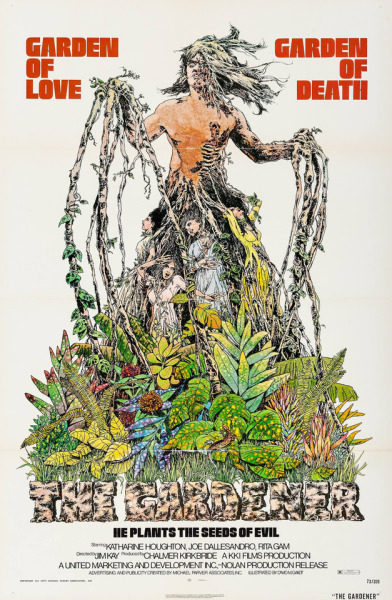
Ellen Bennett (Katharine Houghton, who brought Sidney Poitier to a supper in Guess Who’s Coming to Dinner) is a bored, rich white woman living in Puerto Rico. Her husband John (James Congdon) is barely around and even when he is, he’s a drunken lout. She’s always looking for things to do, like gossip with fellow elites like Helena (Rita Gam) and admire the lawns of other people in her caste. When one of them dies, her gardener Carl (Joe Dallesandro) becomes available.

Seriously, every time Carl appears, it’s like a magical woman in a beer commercial. Ladies just lose their minds, unable to speak. Maybe it’s because Carl is able to grow flowers that no one else can and faster than anyone else. It’s also because he never wears a shirt.

The only film directed and written by James H. Kay, this starts as an erotic thriller and becomes something wonderfully insane because — spoiler — Carl is really a tree person. Yes, it’s the best use of Joe Dallesandro there can be, just taking off his clothes and speaking in a — pardon this — wooden tone which for once matches the needs of the role.

Imagine a film where lush music plays as Little Joe leads affluent women to their doom, sometimes even turning them into plants. Sometimes, this is a soap opera. Other times, Carl is planting spy flowers all over the house and making party dresses that have thorns that strike bad husbands. It’s also a sex movie that is incredibly chaste, other than seeing Carl swim nude and then later become a plant himself. It has a mood, though, and for some reason, on a Tuesday late afternoon, I became enraptured by the idea of all these society affairs and champagne breakfasts at noon being ruined by a man who, for some reason, just showed up out of the leaves to manicure their hedges. And then they die.

This also turns into a detective giallo at one point and man, I think I love the idea of what this movie could be in place of what it is. I’m being charitable by saying this is a flawed movie. That doesn’t mean that I wasn’t wildly entertained by my experience with it. This is the kind of film that I’ll think about and try to work into conversation for years to come. It now joins my garden of film delights about killer foliage that contains The FreakmakerThe Woman Eater, From Hell It Came, The Crawlers and The Kirlian Witness.

Someday, Severin will do a boxed set of these movies that will come with seeds appropriate to plant for each movie, a branded pot and one of those 1970s plant biofeedback machines that allows you to communicate with your houseplant. It will cost too much for me to be able to convince my wife that I need it.

Filmed in 1973 and originally released by KKI Films in 1974 as The Gardener and then Seeds of Evil, this had several re-releases, including a 1977 Flora Releasing and 1981 New American films distributed run. It also played as Garden of Death. 21st Century also had this in theaters.

The Sizzlin’ Something Weird Summer Challenge 2024: Nightmare Castle (1965)

69 EsSINtial SWV Titles (September 15 – 21): Klon, who came up with this list, said “This isn’t the 69 BEST SWV movies, it isn’t my 69 FAVORITE SWV movies, my goal was to highlight 69 of the MOST SWV movies.” You can see the whole list here, including some of the ones I’ve already posted.

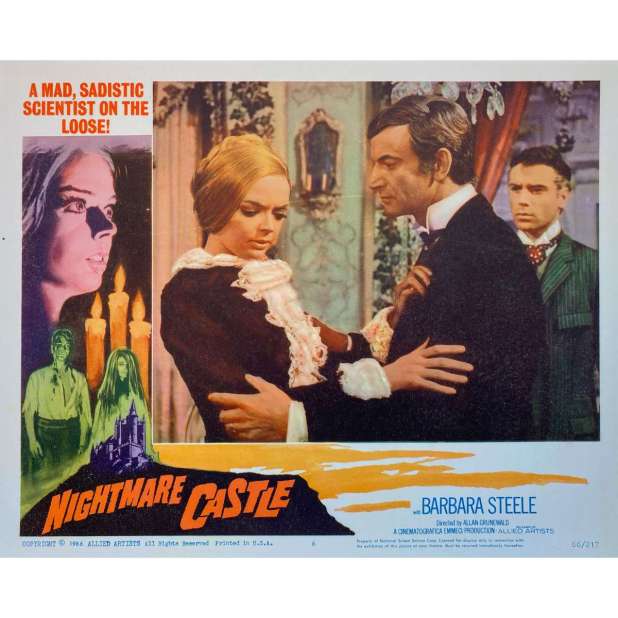
A couple of months ago, I was doing my usual weekend of looking at used DVD stores when I noticed an older man staring at the stacks of used movies. He stopped and asked, “Do you mind if I ask you what movies I should get?” It turns out that his wife had recently died and he missed watching horror movies with her and wanted to bring back some memories. He had no idea how streaming worked and had just gotten a DVD player, so as we continued talking, it turned out that he really liked Barbara Steele in movies and was surprised that he could own this film. It made me feel really great that I could help someone out like this as well as realize that Ms. Steele has been bewitching men of all ages all around the world for decades.

Mario Caiano has made movies across nearly every genre that an Italian director can work in, from peplum like Ulysses Against the Son of Hercules to westerns such as A Coffin for the Sheriff, giallo like Eye in the Labyrinth and berserk freakouts like Love Camp 7, The Fighting Fists of Shanghai Joe and the kinda giallo Ombre Roventi.

This is the kind of gothic madness that I love so much, starting with Stephen Arrowsmith (Paul Muller, Malenka) discovering his wife Muriel (Steele) having the gardener plant some seeds inside her. He shoves a hot poker in the man’s face, burns her with acid and then electrocutes both of them before removing their hearts and giving their blood to de-age his servant Solange (Helga Liné!). And then he finds out that he isn’t the heir to the castle — it turns out that Muriel has an identical sister named Jenny (also Steele) who is mentally deranged but will become his new bride.

I’m in. All in.

Stephen and Solange begin to gaslight Jenny but she has the ghosts of the dead lovers on her side, as well as Dr. Derek Joyce (Marino Masé, The Red Queen Kills Seven Times). This movie looks beyond beautiful and really allows Steele to showcase her acting skills (and her piercing eyes).

“If you’re gonna scream, scream with me,” sang Glenn Danzig in the Misfits’ “Hybrid Moments,” which was inspired by this movie. Nightmare Castle is everything great about black and white gothic melodrama and I just want to live within every frame of this film. It’s also the first horror score that Ennio Morricone would write.

You have so many choices to see this. For the easy way, just stream it on Tubi. Or you can do what I did and buy the Severin blu ray, which has commentary by Steele, an interview with Caiano and Castle of Blood and Terror Creatures from the Grave included.

The Sizzlin’ Something Weird Summer Challenge 2024: Asylum of Satan (1972)

69 EsSINtial SWV Titles (September 15 – 21): Klon, who came up with this list, said “This isn’t the 69 BEST SWV movies, it isn’t my 69 FAVORITE SWV movies, my goal was to highlight 69 of the MOST SWV movies.” You can see the whole list here, including some of the ones I’ve already posted.

William Girdler was born on October 22, 1947 in Jefferson County, KY and this was his first of nine movies in six years, ending only when he died while scouting locations in the Philippines for his next film.

After he finished with the Air Force, Girlder formed Studio One with best friend and brother-in-law J. Patrick Kelly. Initially focused on TV commercials, Studio One eventually took on movies with this film. It later became Mid-America Pictures when Girdler’s films began making money.

According to the official William Girdler site, his “make ’em fast and cheap” directorial style was the result of a premonition that he’d die by the age of 30. Well, he made it to thirty, at least. Some say that Girdler was so obsessed with his own death that he said that he was in a race against time.

Filmed in Louisville in late 1971 for around $50,000, this is the story of concert pianist Lucina Martin (Carla Borelli) who has been abducted by Dr. Jason Specter (Charles Kissinger) and taken to his Pleasant Hill Hospital for treatment. It’s a sanitarium that she swears that she doesn’t belong in and who would want to be in a place where the doctor kills people to add to his Satanic majesty and immortality? And is Specter also the evil sorceress Martine? Because Kissinger is definitely playing both parts. He was also a horror host in Louisville known as the Fearmonger on WDRB.

It all leads up to a virgin sacrifice with our lovely piano player as the victim and Martine saying things like the fact that she “calls upon the gates of the dark realm to crash asunder” and invokes “blazing angles of the shining trapezoid.” What’s that? Oh, you know, the Order of the Trapezoid which later became the governing body of the Church of Satan.

More of that in a bit.

This being the early 70s, the ending is ambiguous, the rubber bugs and snakes countless and a Satan that looks like someone wearing a costume from a party store. You know, it might sound like I’m laughing at this movie, but I’m not. Asylum of Satan pleases me to an incredible degree, a movie made by someone who knew he was born to make movies and yet trying all he could to learn right there on the screen.

Girlder told the Louisville Times, “Other people learned how to make movies in film schools. I learned by doing it. Nobody saw Billy Friedkin’s or Steven Spielberg’s mistakes, but all my mistakes were right up there on the screen for everybody to see.”

The film was made with the assistance of local investors but the movie didn’t make enough to return their investment. Shortly before his too soon death, Girdler signed over the rights to this movie and Three On a Meathook to those original investors so that they could make back their money.

The Girdler site also has an amazing interview with Don Wrege, who clapped the clapboard for this movie. I loved every word, especially when he explains how the Church of Satan got involved being technical consultants.

“A bunch of high school girls (some daughters of investors) were dressed in virginal white, given candles and positioned in a circle around Borelli who was roped to the alter. A guy in a rubber suit. (Girdler said the suit/mask was from Rosemary’s Baby but wasn’t shown in the film, thus it was affordable and available and, of course, cool.)

There was a lot of motion involved. I think the guy in the rubber suit was on an apple box with wheels. The Asmans were on the largest crane we used the whole time, if I remember correctly. Multiple takes were done, all the time Kissinger (I think) was reciting the invocations that had been written by the satanic guy who was standing in the wings watching all of this take place. The incantation, if that’s the right word, was repeated any number of times with as much sincerity as Charlie Kissinger could muster, as multiple takes were filmed.

During one take, and at some very convenient point in the “prayer,” like “…if you’re present, show yourself…” or something like that, one of the white-draped high school daughters of an investor passed out and hit the floor. Everyone was horrified. The two people from the Black Church without hesitation ran to the girl’s limp body and began saying all sorts of weird shit, speaking in some unidentifiable tongue. The girl’s mother, who was there, TOTALLY freaked out, running to her daughter’s side screaming “You leave her alone…get away!” to the two Satanists.

The daughter came to in a few moments, and was excused for the day. Everything was really tense for a couple of hours after that. I think some folks started to wonder what the hell we were messing with. I made a mental note to try to keep track of that girl who fainted, but I haven’t had the nerve. I really don’t want to know.”

Well, that advisor was Michael Aquino, the actual writer of a lot of the rituals in the Satanic Bible and he told the Girdler site that he didn’t remember anyone passing out. Aquino later broke away from the Church of Satan and formed the Temple of Set.

After receiving his PhD in political science from the University of California, Santa Barbara, Aquino worked as an adjunct professor at Golden Gate University until 1986. The whole time, he was serving as an Active Guard Reserve officer of the United States Army stationed at the Presidio of San Francisco.

As the 80s went on, Aquino became intrigued by the connections between Nazis and the occult. At one point, he performed a solitary rite at Walhalla beneath the Wewelsburg castle which was an infamous ceremonial space used by the Schutzstaffel’s Ahnenerbe group.

He then formed the Order of the Trapezoid, which was a chivalric order influenced by a mix of Satanism, Pagan heathery and even the application of runes within magic. Aquino was often challenged in the Satanic Panic of many crimes, as well as in conspiracy circles for numerous acts of evil as he started his career in PsyOps. He even welcomed LaVey’s daughter Zeena and her husband Nikolas Schreck into the group before the inevitable break.

But I digress, as I always say.

Girdler would do so much more — again, in such a short time — but the basics of his career are here. The 70s were prime time for Satanic movies and he took advantage of it just as he would of all manner of subjects that he thought would make box office.

He was even kind of William Castle in a way here, as the press book mentions ordering “Sign of Satan Soul Protectors” to protect theatergoers from the “Evil Stare of the Devil.” That’s also Girdler’s Porsche in this and his sister Lynne Kelly in the pool with the snakes, because Sherry Steiner refused.

Here’s a drink for this movie.

Snake in the Swimming Pool

  • 2 oz. Southern Comfort
  • 4 oz. cranberry juice
  • 1 oz. lime juice
  1. Build over ice, starting with the SoCo, then followed by the cranberry and lemon.

The Sizzlin’ Something Weird Summer Challenge 2024: The Lash of the Penitentes (1936)

69 EsSINtial SWV Titles (September 15 – 21): Klon, who came up with this list, said “This isn’t the 69 BEST SWV movies, it isn’t my 69 FAVORITE SWV movies, my goal was to highlight 69 of the MOST SWV movies.” You can see the whole list here, including some of the ones I’ve already posted.

Released as Forbidden Fruit: The Golden Age of Exploitation Pictures, Vol. 9 as part of the Something Weird/Kino Classics line, The Lash of the Penitentes is an astounding bit of before your grandparents exploitation sleaze, a report on a murder within the hidden non-English speaking New Mexican cult of Catholic masochists known as Los Hermanos Penitentes.

Hey, happy easter a few days late, because these guys and ladies went absolutely wild during Lent, basically whipping the sin out of themselves before crucifying for real one of the lucky ones of their close-knit group.

Somehow, cinematographer Roland Price (Marihuana: Weed With Roots in Hell as well as early censor-baiting titles like How to Take a Bath and How to Undress in Front of Your Husband) was able to film the rituals and worked with Harry Revier (the maker of Child Bride) to make a murder mystery film that could go all over the country as an exploitation film, whether in a censored 35-minute version of a fully berserk 48-minute epic of Catholicism mixed with ecstatic devotion.

The Sizzlin’ Something Weird Summer Challenge 2024: Vapors (1965)

69 EsSINtial SWV Titles (September 15 – 21): Klon, who came up with this list, said “This isn’t the 69 BEST SWV movies, it isn’t my 69 FAVORITE SWV movies, my goal was to highlight 69 of the MOST SWV movies.” You can see the whole list here, including some of the ones I’ve already posted.

Vapors was Andy Milligan’s first official film. It was first released as an underground gay film in selected art houses in 1965 and to the general public in 1967. Today, it could really play anywhere, not in adults only theaters.

Directed by Milligan and written by Hope Stansbury, all of the interior shots were filmed in a vacant apartment floor on 199 Prince Street in Manhattan, the same apartment building where Milligan lived. The clerk scene was shot in a candy store and the opening exterior shot of the bathhouse was filmed outside the actual St. Marks Bathhouse on 6 St. Marks Place in the East Village, a location famous at the time for hookups when gay sex was illegal in New York City. Keep in mind this was just over fifty years ago.

The entire movie takes place inside the St. Marks Baths, as a young man named Thomas sits on a bed and observes the other men and their personalities. He’s joined by an older man named Mr. Jaffe  They get pasty their opening lies — Thomas is not a frequent visitor, Jaffe is not a first-timer — and begin to discuss their lives. Jaffe has been married for 19 years and wants nothing to do with his wife any longer. Sixteen years ago, their son drowned and life has never been the same. He sees something of his son in Thomas and has to leave, but promises to send him a gift. The loudness of the baths continues as a paper sunflower arrives for Thomas, who cries upon Mr. Thomas leaving, but is soon greeted by another man who disrobes for anonymous sex with the young man.

This movie feels like a place that I am invading and not just because I am a heterosexual. It’s because Milligan has so completely created a privacy between these two men that only they should share and we’re just as bad as that peeping tom looking through a hole in the wall. It’s fascinating to see this movie, one free from murder and the supernatural, and see where Milligan’s movies went after this.

You can watch this on YouTube.

CANNON MONTH 3: Revengful Swordswoman (1978)

EDITOR’S NOTE: As the journey through Cannon continues, this week we’re exploring the films of 21st Century Film Corporation, which would be the company that Menahem Golan would take over after Cannon. Formed by Tom Ward and Art Schweitzer in 1971 (or 1976, there are some disputed expert opinions), 21st Century had a great logo and released some wild stuff.

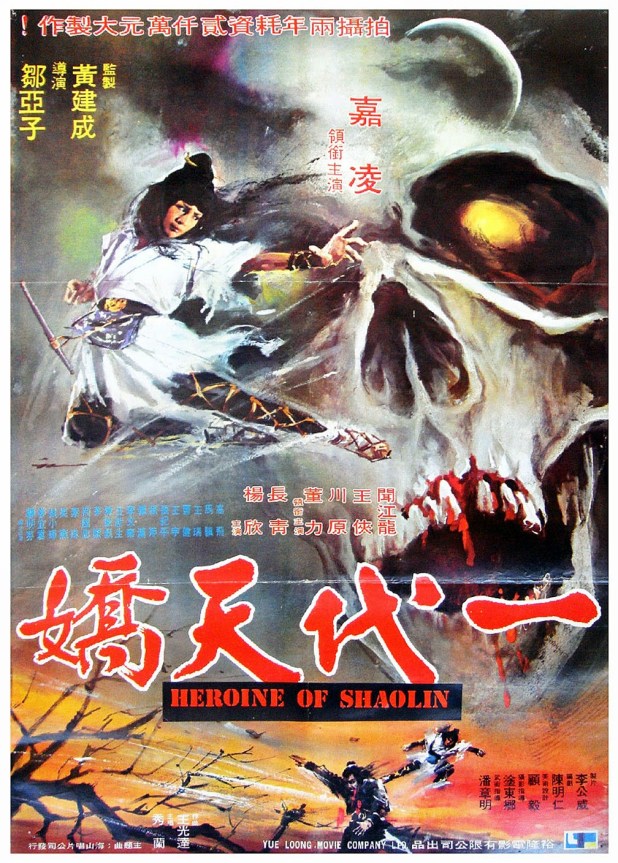
Hsiang Ying (Chia Ling) has been betrayed by her master, who tells her that he killed her father before tossing her off a cliff and when she survives that and a battle with wolves, he locks her inside a cage. She’s saved by Ku (Chiang-Lung Wen) but it turns out that the real killer is his uncle, a maniac who has two skulls that sit on his shoulders and, when called upon, can fly around and bite people.

Now known as the Heartless Woman, she goes on episodic adventures that have her battling ripoffs of other martial arts movies, such as a one armed boxer (Phillip Ko!) and a monkey king. Like many kung fu films from Taiwan, the budget is low and the imagination is high. I wish it spent all the time with its heroine instead of going into comedy, but I still had a blast watching it. Seriously, the final bad guy may have the most amazing weaponry ever.

Also known as Flying Masters of Kung Fu, this was released by 21st Century.

You can watch this on Tubi. You can also get it on blu ray from Gold Ninja Video.

CANNON MONTH 3: Shaolin Kung Fu Mystagogue (1977)

EDITOR’S NOTE: As the journey through Cannon continues, this week we’re exploring the films of 21st Century Film Corporation, which would be the company that Menahem Golan would take over after Cannon. Formed by Tom Ward and Art Schweitzer in 1971 (or 1976, there are some disputed expert opinions), 21st Century had a great logo and released some wild stuff.

What is a mystagogue? According to Wikipedia, it’s “A mystagogue is a person who initiates others into mystic beliefs, and an educator or person who has knowledge of the sacred mysteries of a belief system.”

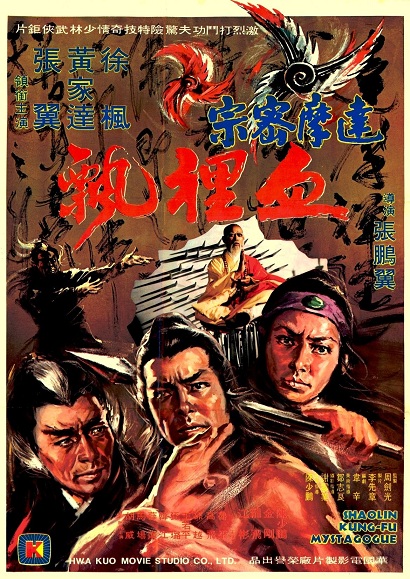
Fang Shao Ching (Carter Wong) has one of those mystagogues. His blind teacher refuses to reveal the 18th secret move to him as he’s too impatient. That said, if a martial artist uses the 18th strike, it doesn’t just kill their opponent. They die as a result of the blow as well. So maybe the teacher is right to not share this strike.

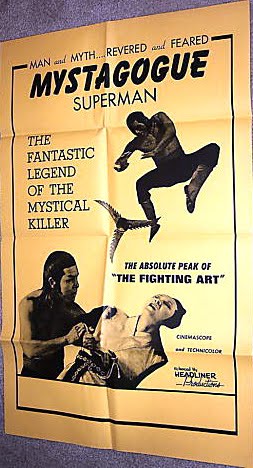
Soon, Fang Shao Ching and his sister Fang Ping (Feng Hsu) must protect a prince from the Ching government, which has taken over. They’ve sent many killers to murder him, including Yeun Ming (Chang Yi), who has perhaps the greatest weapon since the flying guillotine. He has these magnetic knives called the Bloody Birds that can either be knives, spinning blades, boomerangs, bombs or even drills that go right through flesh.

Sure, the fighting isn’t the best, but the main bad guy has skin that can’t be pierced and a throne that shoots bullets. Plus, you get rooms full of traps and I love when kung fu meets dungeon crawling. It’s no Shaw Brothers but is still pretty fun.

According to Temple of Schlock, this was originally called Da Mo Mi Zong and first played in 1976. It was first released in the U.S. by Headliner Productions as Mystagogue Superman and it as played as Killer Fists and 18 Shaolin Disciples.

You can watch this on YouTube.

CANNON MONTH 3: Rock ‘n’ Roll Revue (1955)

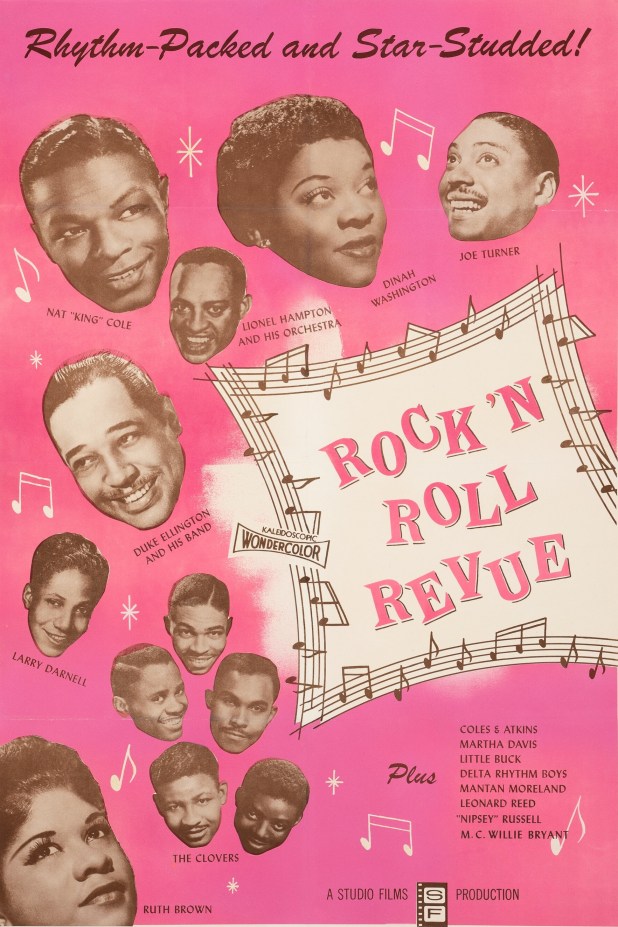
Directed by Joseph Kohn, who specialized in these music films, this was put together from several TV shorts and host segments with Willie Bryan were added. Bryan was the “Mayor of Harlem,” famous for being the host of the original Showtime at the Apollo, a 13-episode TV show that is where many of these songs originated.

This was an opportunity for white kids across the country to see and hear bands they may not get the chance to at the time. Well, if they wanted to go to all black movie houses. That said, it has a great mix of songs from this era, including Duke Ellington and His Orchestra playing “The Mooche,””Your Cash Ain’t Nothin’ But Trash” by The Clovers, “Only a Moment Ago” by Dinah Washington, Big Joe Turner playing “Okimoshebop,” Larry Darnell performing”What More Do You Want Me to Do,” “Only a Moment Ago” by Dinah Washington and Nat “King” Cole singing “The Trouble With Me Is You.”

Somehow, 21st Century ended up with the rights to this. Consider it your chance to see what rock and roll was in its nascent embryonic stage. There’s also another similar film that 21st Century also ended up owning, Rhythm and Blues Revue.

You can watch this on Tubi.

CANNON MONTH 3: Group Marriage (1972)

EDITOR’S NOTE: As the journey through Cannon continues, this week we’re exploring the films of 21st Century Film Corporation, which would be the company that Menahem Golan would take over after Cannon. Formed by Tom Ward and Art Schweitzer in 1971 (or 1976, there are some disputed expert opinions), 21st Century had a great logo and released some wild stuff.

After pretty much creating the nurse cycle for Corman with The Student Nurses and then directing The Velvet Vampire, Stephanie Rothman and her husband Charles Swartz left New World for Larry Woolner’s new Dimension Films. It was still exploitation and she didn’t have much creative control, but it was more money and the opportunity to own some of the movies that she was making.

Rothman directed this movie, Terminal Island and The Working Girls, as well as writing the script for Beyond Atlantis, offering some creative ideas to Sweet Sugar and re-editing The Sin of Adam and Eve. After stops and starts, as well as writing Starhops and taking her name off it when the film didn’t reflect what she wrote, she eventually left movies.

We’re all the worse for this, as her films are progressive in 2024 and had to be incendiary in the 1970s.

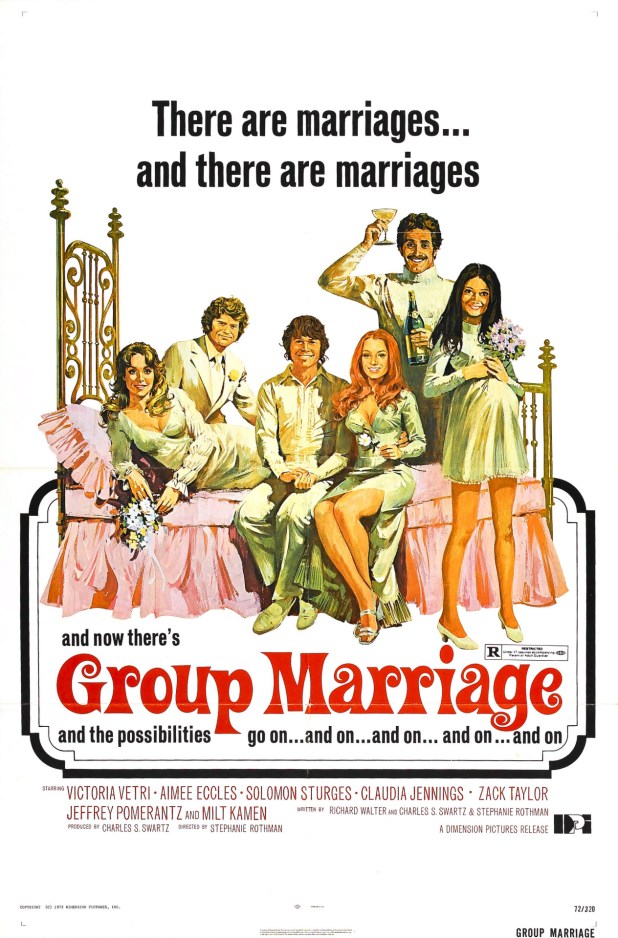
This starts in a rental car office, where we meet Chris (Aimée Eccles, Ulzana’s RaidParadise Alley) and Judy (Jayne Kennedy!). Well, Judy isn’t in this, but Jayne Kennedy is always a welcome actress in any film. Chris has issues with her boyfriend Sandor (Solomon Sturges, son of Preston, who is also in The Working Girls), who pretty much berates her at any opportunity and is only concerned with writing acerbic bumper stickers. He flips out that he doesn’t have a working car, so she has to hurry home and fix it — the women in this movie don’t just have agency, they’re all more capable than the men — and that’s when she rides in the same taxi as Dennis (Jeff Pomerantz). This leads to Dennis trying to get them to stop fighting, staying overnight, having his girlfriend Jan (Victoria Vetri, Playboy Playmate of the Month for September 1967 and 1968 Playmate of the Year; she’s also Rosemary’s Baby, playing Terry Gionoffrio, and in Invasion of the Bee Girls) break up with him and sleeping with Chris.

Before you know it, Dennis is introducing Jan to the couple and all four are in an intertwined relationship. That soon becomes five when the women — who are just as in charge of their sexuality as the men — fall for a lifeguard named Phil Kirby (Zack Taylor, The Young Nurses). Yet he feels a little lonely and starts looking for someone else. At this point, I was marveling at how beautiful everyone in this movie is. And that’s when Phil’s partner is introduced: Elaine (Claudia Jennings). Sure, she’s a lawyer representing his ex-wife in the divorce, but she wants him.

Everyone decides to get married but Jan doesn’t want commitment, even if they have the opportunity to be with different people within their poly group. But then people start showing up trying to be part of the group and some go wild and try to firebomb their house. Dennis even loses his job. Elaine decides to figure out how to make group marriage legal, which leads to all five getting married. And wow, I lied before, because Judy ended up with Dennis, so now there are six. I mean seven! Chris is pregnant.

How progressive is the California of Stephanie Rothman? Not only can these people all create their own marriage, but their gay neighbors Randy (John McMurtry) and Rodney (Bill Striglos) are also able to be husband and husband, 22 years before the first legal same sex marriage in America.

Other than the John Sebastian song  “Darling Companion” and the stereotypical mincing gay couple, there’s a lot to celebrate here. It’s erotic, sure, but never feels filthy or even exploitative. This is at once a humorous but thoughtful take on the good and bad of being married to six people. As always, Rothman’s work is nearly current today and many of her movies were released before I was born.

This was re-released by 21st Century as a double feature with The Muthers.