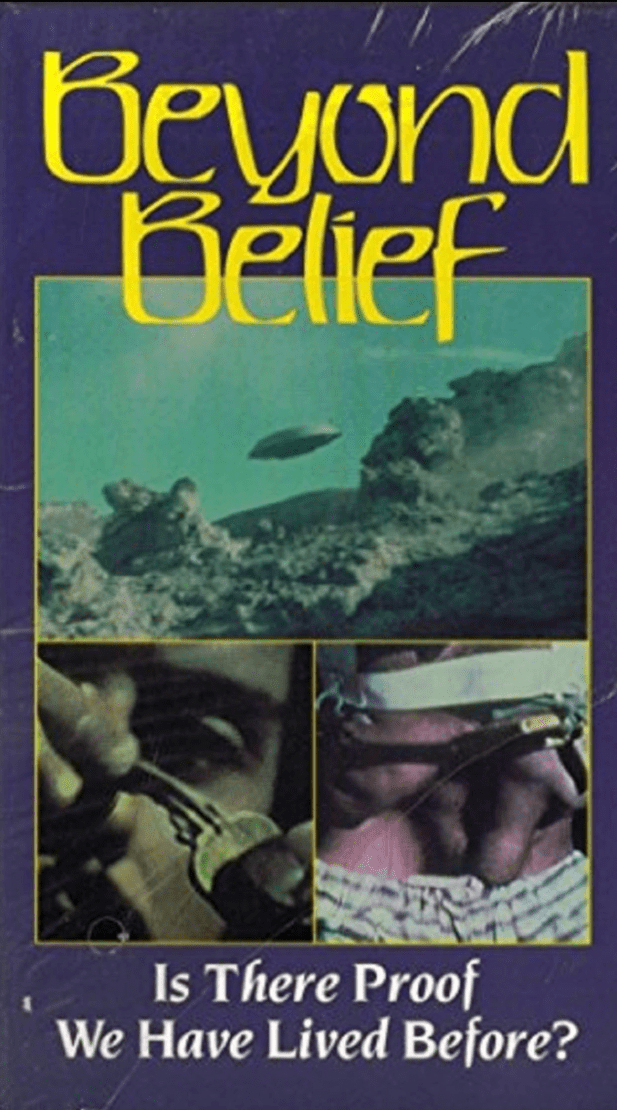
Beyond Belief (1976)

This is like a mixtape of other 70s paranormal documentaries, Journey Into the Beyond, Mysteries from Beyond Earth, The Amazing World of Psychic Phenomena, The Force Beyond, Unknown Powers and Death Is Not the End.

Because this film acts as a massive clip show, it required a small army of producers to clear the rights and wrangle the reels. Here is the expanded roster of the players behind the curtain and the madness they put on screen. The credits for Beyond Belief read like a “Who’s Who” of independent hustle:

Alan Baker: Wearing two hats as both producer and director, Baker had the unenviable task of editing these disparate paranormal threads into a cohesive (and creepy) 90-minute experience.

Ron Libert: CEO of Libert Films International from 1973 to 1976, as well as Apollo Productions. He also worked with producer, writer and director Robert J. Emery as part of American Pictures Corporation. He produced eleven other movies, including Roy Colt & Winchester JackThe Devil with Seven FacesEncounter With the UnknownAngelaWilly & ScratchMy Brother Has Bad Dreams, Alan Ormsby’s The Great MasqueradeCharlie Rich: The Silver Fox In Concert, the aforementioned Death Is Not the End and Never Too Young to Rock.

Hal Lipman: Known almost exclusively for NFL documentaries, Lipman is the true wildcard here. Seeing his name next to automatic writing and alien abductions is the cinematic equivalent of a linebacker doing a tarot reading.

Malcolm Pierce Rosenberg and David S. Wiggins: One and done producers.

Charles E. Sellier Jr.: Before the internet told you what to watch, Sellier was out there four-walling. For the uninitiated: he’d rent out the whole theater, keep 100% of the ticket sales and bypass the studio middleman. According to his IMDb bio, he had a 52% success rate in the domestic market. Compare that to the big Hollywood studios, which were lucky to break even on one out of every seven movies. That’s because Sellier didn’t guess; he tested. He marketed movies like they were bars of soap, pre-testing everything to make sure the audience was already hooked before the first frame even rolled. Even Orson Welles told the guy, “Young man, you are light-years ahead of the rest of the industry.” And he didn’t just stop at theaters. He took his “what does the audience actually want?” data to NBC and made The Life and Times of Grizzly Adams. In 1981, Variety listed the top independent champs, and Sellier’s name was all over it with movies like In Search of Noah’s ArkThe Boogens and Hangar 18.  Let me pile on some more facts: Sellier wasn’t just a producer; he was a best-selling author. He spent 22 weeks on The New York Times Best Sellers list with The Lincoln Conspiracy. Whether he was investigating the Bible or hunting for Bigfoot, the guy knew how to tell stories people needed to see through his Sunn Classics company.

You can tell this isn’t a Sunn movie because it’s hosted by Richard Mathews, not Brad Crandall. But you do get to learn about telepathy, hypnotic regression and past lives (that would be the Death Is Not the End footage), psychokinesis, ghosts (always ghosts), UFOs and alien abductions, automatic writing, and so much more.

The film kicks off with the legendary Cleve Backster, a polygraph expert who claimed that plants and even yogurt have feelings. You get to see distressed yogurt reacting to remote stimuli under an EEG. From there, it jumps to Sister M. Justa Smith, a nun and biologist, proving that faith healers can actually repair damaged enzymes in a lab setting.

One of the most wince-inducing segments features Jack Schwarz, a man who claimed total control over his involuntary systems. He pushes a 5-inch sailmaker’s needle through his bicep on camera, pulls it out, and then, through sheer non-attachment, stops the bleeding instantly.

Then, a group of researchers in Toronto creates a ghost. They invented a fictional 17th-century aristocrat named Philip, gave him a fake backstory, and held a seance. To their shock, the fictional Philip started rapping on tables and sliding furniture across the room. Is this any stranger than the story of Matthew Manning, a British teenager whose home was plagued by teleporting objects and automatic writing? You’ll be amazed to see the walls of his room covered in hundreds of signatures from spirits, including one from a man named Robert Webb, who supposedly lived in the house in 1733.

This wouldn’t be a 70s weirdness documentary without aliens. Get ready for the harrowing testimony of Charles Hickson, the Mississippi shipyard worker who claims he was kidnapped by creatures with lobster-claw hands in 1973. This is bolstered by interviews with nuclear physicist Stanton Friedman and astronaut James McDivitt, who recounts his own unidentified sighting during the Gemini 4 mission.

Beyond Belief is a time capsule of an era where science and the supernatural were having a very public, very weird first date. They broke up soon after.

You can watch this on YouTube.
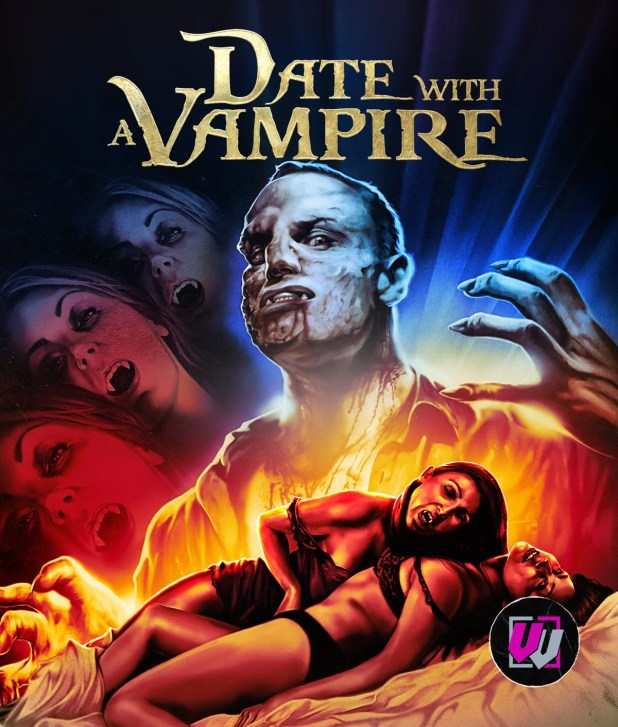
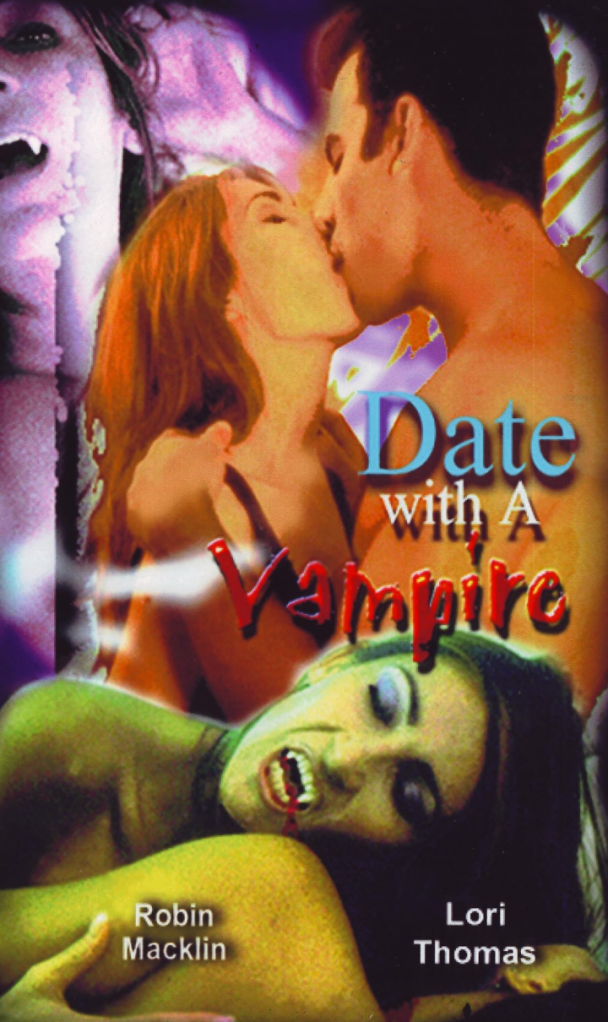
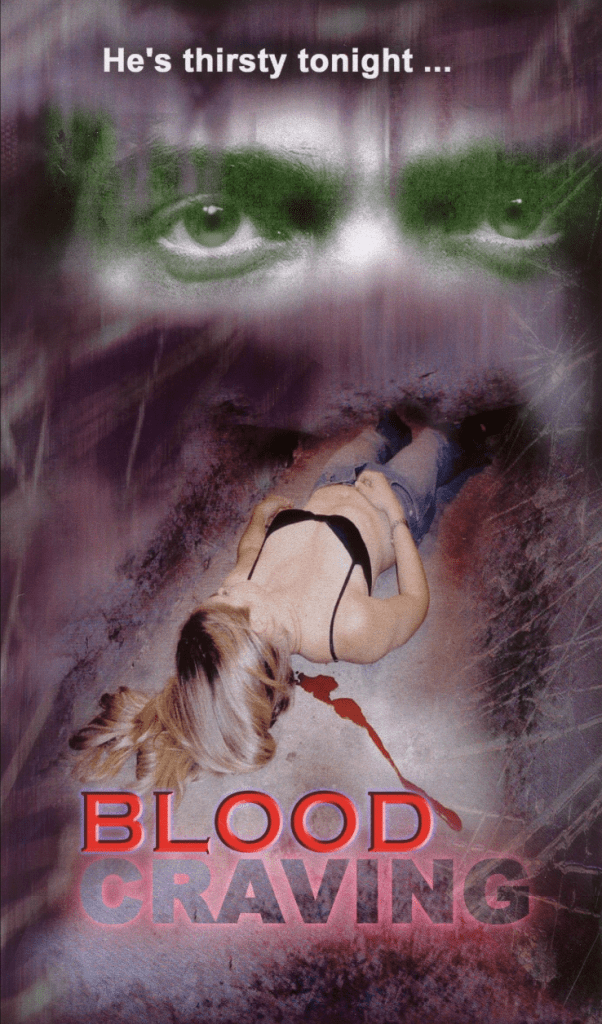
VISUAL VENGEANCE BLU RAY RELEASE: Date With a Vampire/Blood Craving (2001, 2002)

Date With a Vampire (2001): If you spent any time wandering the aisles of a mom-and-pop video store, you know the vibe of SOV (shot-on-video) movies, produced during a time when digital cameras were making everyone with a tripod think they were the next Jean Rollina, and many of them are!

Date with a Vampire mixes softcore erotica with horror. Directed by Jeffrey Arsenault, written by Kevin J. Lindenmuth and featuring an appearance by cult East Coast horror actor Joe Zaso, this is Violet (Lori Thomas), a vampire who brings men home for both pleasure and someone to drink.

We follow Violet (Lori Thomas), a vampire who operates with a very specific business model: bring guys home, give them a little hospitality and then turn them into a liquid lunch. It’s a simple life, really.

Enter Chuck (Robin Macklin). Violet gives him a love bite so potent it triggers a psychotropic hallucination involving a sapphic encounter with Rebecca (Cynthia Polakovich). Poor Rebecca doesn’t last long, though. She ends up as a snack for a basement-dwelling creature played by East Coast indie legend Joe Zaso (5 Dead on the Crimson Canvas).

Somehow, this film’s hour-long runtime still seems much longer. Perhaps that could be the fault of a movie all in one or two rooms, with long dialogue and multiple extended softcore scenes. That said, I would have totally rented this in 2001 if my local store had a better selection than what we got. And I applaud the lo-fi feel of this!

Blood Craving (2002): Director and writer Jeffrey Arsenault kind of owned the SOV-era erotic vampire shelf, if there was one in your video store, if not through sheer force of will than through how many of these movies he made: Crimson NightsCrimson KissesCrimson DesiresVampire Playmates 2, Date With a Vampire and this film.

Originally a sequel to his movie Night Owl, this has a short run time. The most jarring and, frankly, delightful part of the experience is that a massive chunk of that runtime is dedicated to an interview with the legendary Caroline Munro. Yes, that Caroline Munro, the Bond girl and Hammer Horror icon. Finding her in the middle of a grainy, ultra-low-budget SOV vampire flick is like finding a vintage Bordeaux inside a juice box. Consider me shocked, pleased and slightly confused as to how she ended up here, but I’m certainly not complaining.

Inspired by Joe D’Amato’s Emanuelle and Françoise, this stars Tiffany Helland as Jillian, who is really great in it. As I said at the top of this, some filmmakers in this era may have aspired to Jean Rollin-style movies. This one gets close, and with a bit more story, it could overtake the lead film in the Visual Vengeance set, Date With a Vampire.

\

This Visual Veneance release features an SD master from original tape elements, commentary with director Jeffrey Arsenault; interviews with Arsenault, Kevin J. Lindenmuth, Cynthia Polakovich and Joe Zaso; location videos; an image gallery; an original trailer; commentary and interview on Blood Craving with Jeffrey Arsenault; an After Midnight Entertainment: trailer reel; Visual Vengeance trailers; a reversible sleeve featuring new Blood Craving art; a folded mini-poster and a limited edition O-Card by Rick Melton. Get it from MVD.

The Early 70’s Horror Trailer (1999)

I want to meet Damon Packard, but I’d also be a little freaked out about it. The Early ‘70s Horror Trailer is so inside my brain and filled with the imagery I love most about, well, early 70s horror, without anything like a plot to get in the way.

Why is everyone running? Why is there so much blood? Who drowned that girl? Make your own movie inside your head with this, as these are, but moments in a reality we will never experience except in these split seconds. The layered, distorted audio that sounds like a cassette tape melting in a hot car, something else we may never hear again. Packard doesn’t make a movie influenced by the past here. Instead, he captures the way we remember old movies in a fragmented, terrifying and disconnected-from-reality manner.

I hope no one ever remakes Let’s Scare Jessica to Death, but if someone does, let’s kill them and have Packard be the director instead.

You can watch this on YouTube.

CULT EPICS BLU RAY RELEASE: School In the Crosshairs (1981)

Released months before lead Hiroko Yakushimaru’s Sailor Suit and Machine Gun, Nobuhiko Obayashi’s first groundbreaking teenage idol picture is a dazzling mix of special effects and blue-screen artifice, much like the film most know him for, House. Yuka (Yakushimaru) is a schoolgirl who discovers that she has psychic powers, just in time for the freethinkers of her school to come under attack by fascist mind-controlled Venusian kids led by the icy, telepathic Michiru. They enforce a New Order under the guise of academic excellence and discipline that may be the start of the planet going all bodysnatchers. 

It should come as no surprise, given who made this, that this movie goes all candy-coated, what with animation and art intruding into our reality whenever they want to. This was adapted from a novel by Taku Myamura, and it has no problems putting its emotions and politics right in the open. But this isn’t an art film; it’s a crowd-pleaser starring a woman who would become one of Japan’s biggest idols quite shortly.

The film is aggressive in its use of blue-screen composites that don’t strive for realism. Instead, they create a paper doll aesthetic where Hiroko Yakushimaru feels like she’s drifting through a living manga. Expect synthesized skies, hand-drawn lightning crackling over school hallways and dream sequences that bleed into the real world without warning. It’s a film where the background is just as likely to start moving as the actors.

Speaking of the house, in Koji’s home, check out the framed photograph of Yôko Minamida, the actress who played the aunt.

The Cult Epics Blu-ray of this film has a 2K transfer and restoration, and extras like audio commentary by film critic Max Robinson, a visual essay by Phillip Jeffries, an Obayashi poster gallery, trailers, a new slipcase art design by Sam Smith, a reversible sleeve with original Japanese poster art and a repro 24-page Japanese booklet. You can get it from MVD.

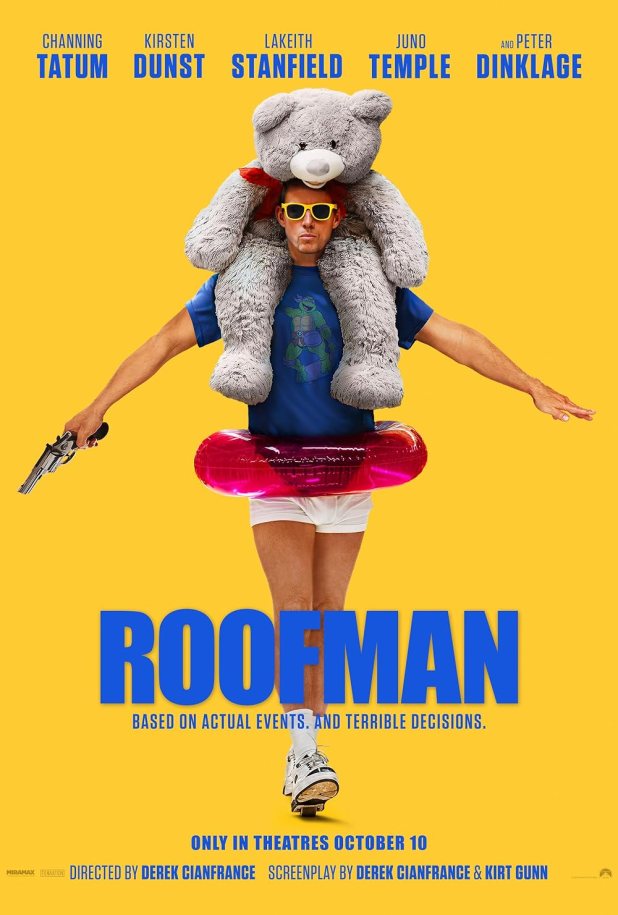
PARAMOUNT 4K UHD RELEASE: Roofman (2025)

Jeffrey Manchester (Channing Tatum) is a divorced U.S. Army veteran living in North Carolina who decides to rob McDonald’s to pay for his kids’ welfare. He knows how to break in at night and be ready for the next morning. He treats people well and uses his powers of observation, but is still a criminal. When the police catch on, he’s arrested at his daughter’s birthday party. That doesn’t stop him, as he escapes from jail and lives inside a Toys ‘R Us before starting to rebuild his life with his widow, Leigh Wainscott (Kirsten Dunst).

Directed by Derek Cianfrance, this is an incredibly sweet movie that may just humanize the real Manchester, who really did commit these crimes and then escaped from prison twice more. In an article in The Charlotte Observer, Elaine Snyder, who worked at one of the restaurants that Manchester robbed, said, “I just don’t understand why they would want to praise him and give him all this recognition for something very devastating to some people. I’m not sure that I agree with that.” In the same article, the real-life Leigh Wainscott said,I just hold onto the good stuff. I just know what a kind, sensitive, caring person he is.”

Corrections 1, a website devoted to law enforcement that states that it isthe leading online community and resource for corrections worldwide”, saidThe film wants audiences to like Tatum’s Manchester despite overwhelming evidence they shouldn’t. It attempts balance but misses the mark entirely, divorced from the reality corrections professionals cannot escape: charm is often predation, circumstances are context, not justification, and every crime has material consequences the camera never captures.”

As nice as Tatum seems, I couldn’t help thinking about the people that the protagonist charmed and how he would soon let them down. Maybe I watched this in the wrong mood, but I came away thinking he was the villain, not the dashing Robin Hood. 

The Paramount 4K UHD of this movie has featurettes, deleted scenes and alternate scenes. You can get it from Deep Discount.

UFO: Exclusive (1978)

1 hour and 45 minutes of absolute malarky. Yes, Wheeler Dixon and Sidney Paul are back, making another video that could be interchangeable with the others they made, but I don’t care. I’ve watched them all.

While they also dropped UFO: Top Secret and Attack from Outer Space the same year, this one leans much harder into the science of space travel. It features an extensive, purely theoretical sequence about a manned mission to Mars, detailing the terrifying risks of retro-rocket failure and the math required to keep a tiny ship from being swallowed by the sun’s gravity. There’s also a surprisingly detailed look at the then-new Space Shuttle program, framed as the practical future of reusable space travel.

The film spends a significant amount of time showcasing archival footage from the U.S. Air Force, including the 1959 Corpus Christi sighting and the famous Tremonton Film of 1952, which depicts a cluster of five glowing discs moving at speeds estimated at over 3,000 mph. Each of these is called out by case number, like Project Blue Book, which we have at hand whenever we watch 70s alien documentaries.

This time around, there’s less about aliens wanting to eat us and more fuzzed-out space rock. Sure, there’s plenty of rambling, but I just love the feedback and rocking breakdowns in these songs. And man, that rambling. The narrator suggests that life might not be limited to little green men but could exist as crystalline formations or even as entities that live within the sun’s solid, cool core. 

One of the most convincing clips they show is a 1967 snippet from a Western movie set in Camarillo, California (there are also rumors that you can see a UFO during Rio Grande). While filming a close-up of an actor, a humming, white dot drifts across the background, performing erratic maneuvers that the crew can’t explain. 

Yet, unlike the rest of their movies, this has a rare moment of skepticism when it’s pointed out that some famous saucer photos bear a striking resemblance to the underside of a standard infrared chicken brooder.

You can watch this on YouTube.

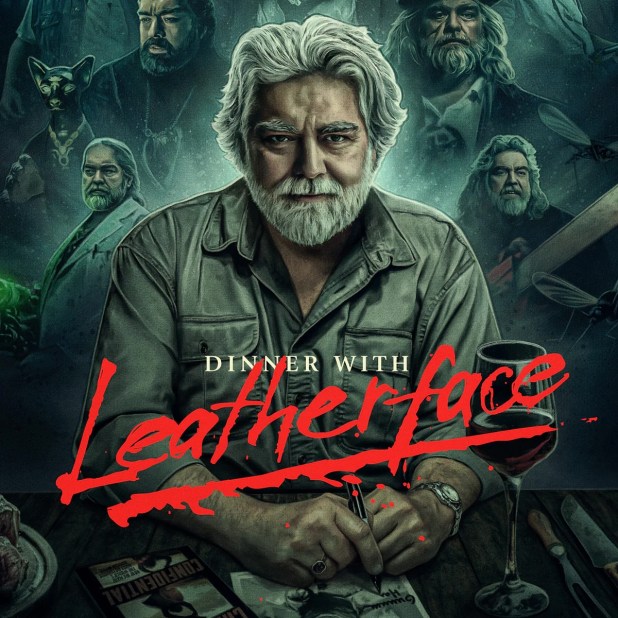
ANCHOR BAY BLU-RAY AND DVD RELEASE: Dinner With Leatherface (2024)

In this doicumentary on Gunnar Hansen, you get to hear from some real luminaries: Bruce Campbell, Danielle Harris, Barbara Crampton, Gunnar Hansen, Edwin Neal, R.A. Mihailoff, Kane Hodder, Dave Sheridan, Felissa Rose, Michelle Bauer, Tiffany Shepis, Brian O’Halloran, Debbie Rochon, Fred Olen Ray, Brett Wagner, Betsy Baker, Allen Danziger, Kim Henkel, Daniel Pearl, Joe R. Lansdale, Jeff Burr, Tony Timpone, Michael Sonye, Del Howison and Bret McCormick, all discussing how they not only worked with the actor, but got to know him.

This isn’t just a list of credits. Instead, it feels like a collection of people who genuinely loved the man. They move past the surface-level trivia to discuss what it was like to share a meal or a long conversation with Hansen, proving he was the kind of person you’d want to have dinner with rather than an unapproachable celebrity.

You also get to see clips and hear stories about the films Hansen was in beyond his role as Leatherface, including Mosquito, Repligator, Hatred of a Minute, Witchunter, Rachel’s Attic, The Business, The Deepening, Swarm of the Snakehead, Brutal Massacre: A Comedy, and Gimme Skelter.

While many horror retrospectives feel like dry, insular vanity projects, this documentary breaks the mold by focusing on the man, not just the mask. It paints a portrait of Gunnar Hansen not as a scream king icon, but as a poet, author, and deeply kind soul who just happened to wield one of cinema’s most terrifying weapons.

In so many of these docs, it feels so insular and even pretentious. This film isn’t. It presents a man that you would like to meet and have dinner with, not an unapproachable actor who would look down on you. That means it’s a winner.

Extras include an audio commentary with director and writer Michael Kallio and editor John Wagner; extended interviews with Jeff Burr and Michael Feisener; a chat with Danielle Harris; a trailer and a featurette on more stories of the actor that didn’t make it into the final edit. You can get it from MVD on Blu-ray or DVD.

Amazing World of Ghosts (1978)

I’m sad that I only have a few Wheeler Dixon and Sidney Paul paranormal docs left, but instead of being upset that it’s over, I will be happy that I had the experience.

The film begins with a classic Dixon/Paul flourish: A young boy walking down a city street at night. The narration immediately pivots to the jugular: Will he be attacked by a ghost? Will he, as all Dixon/Paul films eventually ask, be eaten by an alien? What walking horror from the realms of nightmares will bring him the endless embrace of death? It’s a lot of pressure for a kid just trying to get home, but the film insists that the lights of the city are not a comfort that can dispel the aura of gloom.

The narration also informs us that photos of ghosts are hard to come by, so this starts to ramble into UFOs and Bigfoot. It’s not what I signed up for, but here I am, fully buckled in. In the same way this film cannibalizes a hundred stock photos and library films, music supervisor Jim Cookman dives into a sonic fever dream. We get fuzzy blues rock, synth dibble-dabbles, somber piano plinking and sound effects that sound like they were rejected from a sub-Outer Limits TV show.

This has it all and by all, I mean ectoplasm coming out of the mouths of 1920s Spiritualists (which the film tells us is a very dangerous procedure), the red eye of Jupiter, the Abdominable Snowman, ghost towns created by Manifest Destiny, so many goats, a ghost pony that haunts an English churchyard and moments where the stock footage, voiceover and music don’t line up, but I kind of love these films for that. So many people refer to them with terms like bad, boring, inept and incoherent. 

That’s so wrong. Where else would we learn about a train haunted by a phantom so horrible that passengers were routinely beheaded? Who would let this train keep operating? Or the claim that earthquake survivors work tirelessly to limitghost activityafter a disaster? Did you even comprehend that? I didn’t. This leaves me, as all of Wheeler Dixon’s work does, with a thousand questions and zero answers.

I also adore that someone on IMDb presented the following factual errors:

  • Rasputin was notkilled by the Palace Guardas the narration states, but rather by Prince Felix Yusupov. The prince shot Rasputin in the yard of the Yusupov palace and not inan abandoned wing of the palaceas the film states.
  • H.G. Wells and Orson Welles were not contemporaries and did no collaborative work.
  • Mary, Queen of Scots, was not known asBloody Mary.That was Mary I of England.
  • A frame from the Patterson-Gimlin film, shot in Northern California and purportedly showing Bigfoot, is shown in black-and-white and described by the narrator as a photo of Bigfootstriding across the icy tundra of the Himalayan mountains.”

Keep in mind, this is a movie that asks whether UFOs are flown by ghosts or whether ghosts are really the living dead from outer space. Facts are in short supply.

Bonus points for the appearance of the Mesopotamian demon Pazuzu, who is apparently responsible for destroying crops with desert winds.

You can watch this on YouTube.

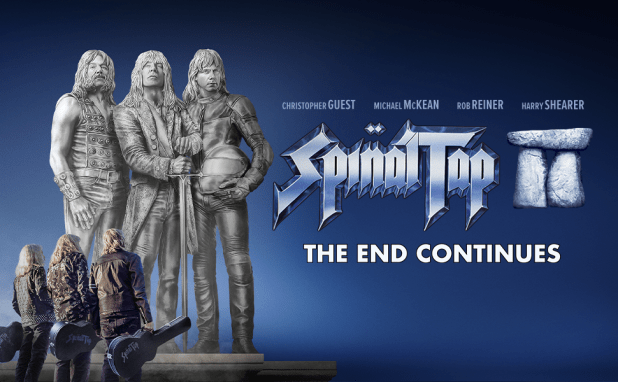
Spin̈al Tap II: The End Continues (2025)

Is Spinal Tap II strictly for the devotees who can recite the exact dimensions of a Stonehenge prop? Probably. But as a card-carrying member of the Tap-heads, I couldn’t care less. Getting eighty more minutes with Nigel Tufnel, David St. Hubbins, and Derek Smalls feels less like a movie and more like a family reunion where everyone is slightly more deaf and significantly more delusional.

The plot kicks off with a brilliant piece of continuity: Hope Faith (a pitch-perfect Kerry Godliman), the daughter of the band’s legendary, cricket-bat-wielding manager Ian Faith. She’s inherited the band’s contract, which is a legal albatross that forces the trio into one final show.

The problem is that Nigel and David won’t speak to each other. They may not even know why. At this point, Nigel owns a cheese-and-guitar shop; David is making music for true-crime podcasts and on-hold messages; and Derek is still into rock operas like Hell Toupee and running a glue museum.

Despite struggling to find a drummer — no one wants to die of misadventure or choking on someone else’s vomit — Didi Crockett (Valerie Franco, whose girlfriend Annie Gordenier also shows up in the movie as her parner) joins up and adds the positivity the band needs as they nevigate growing old, advice from Paul McCartney and nearly murdering Elton John during a performance of “Stonehenge.”

Sadly, live concert footage was filmed at Stonehenge, Wiltshire, for the concert Spinal Tap at Stonehenge: The Final Finale. The project was delayed indefinitely after Rob Reiner, who directed and played director Marty DiBergi, and his wife Michele Singer Reiner were killed.

Seeing Paul Shaffer’s Artie Fufkin still looking for a kick in the ass, Fran Drescher’s Bobbi Flekman still holding it together as a Buddhist and June Chadwick’s Jeanine Pettibone trading her zodiac charts for a nun’s habit made me smile.

I didn’t think too deeply about any of this. I just wanted to laugh and, as always, Tap provides.

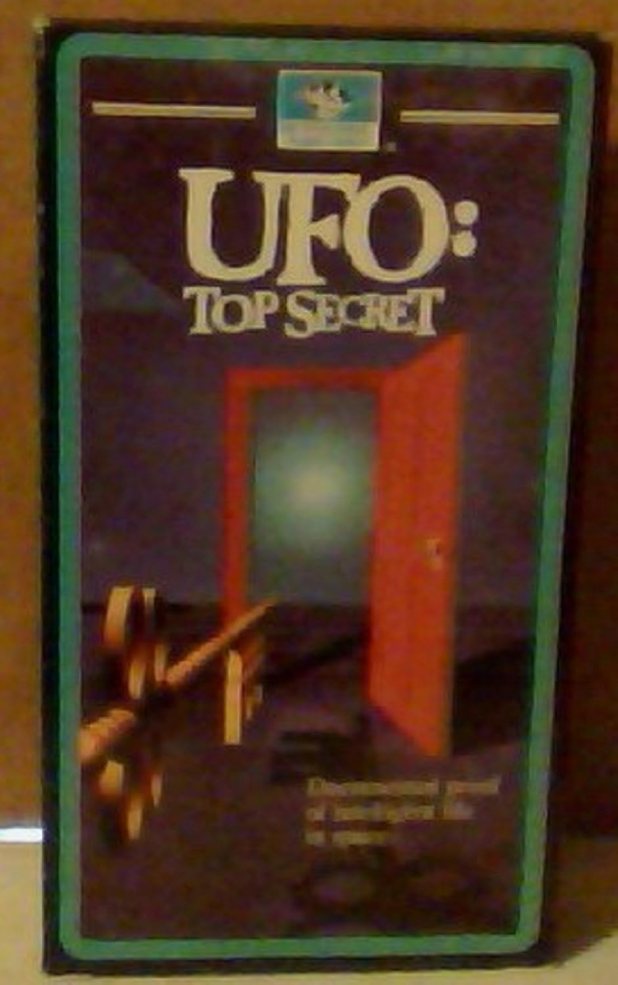
UFO: Top Secret (1978)

Wheeler Dixon and Sidney Paul made so many of these movies, and you may get confused because they all seem so similar. Yet you must go down this corridor and expose yourself to each of their films.

What connects these films? The fact that they continually remind us that aliens want to eat us. How do they know this? They’re so sure of it. They even say that alien civilizations might view Earth as “nothing but a slaughterhouse, an alien food breeding ground.” Paul calmly asks frightening queries, like “What will save us then?” and “Are we being watched by creatures from outer space?”

This movie is washed out; it has wild folk music mixed with library sound effects, and a rambling narration that seems to ask you questions every few moments, and I always find myself having a conversation with it. Yet this is the kind of thing that totally speaks to me, a nearly lost film that has never come out on DVD, even, one that’s hiding on YouTube and feels way stranger than any of the Ancient Aliens shows that litter cable.

There are a hundred or more ideas in here. If one of them were true, it would destroy your mind. Do aliens live inside the sun? Are ancient cave drawings and burial tombs in Greece and Peru blueprints for fuel thrust systems and a pressurization chamber? And, as always, when are extraterrestrials going to treat Earth as if it were Golden Corral?

It exists in a strange limbo, too psychedelic to be a serious documentary and too earnest to be pure fiction. Because this film relies heavily on public-domain NASA footage, military archives, and stock science clips, it feels like a dream of 20th-century progress reinterpreted through a lens of impending doom.

You can watch this on YouTube.