Canadian studio Emmeritus Productions may not have had much money, but they made some interesting movies, including porn-based detective story Blue Murder, Death In Hollywood, horror anthology Shock Chamber, post-apocalyptic Survival Earth, Diamon In the Rough, Body Count, Satanic conspiracy thriller Mark of the Beast, The Borrower, The Bounty Hunter, Lady Bear, Last Chance, The Hijacking of Studio 4, Niagra Strip, SOV history film The Chronicle of 1812, Fly With the Hawk, Virgin Paradise, Commando Games, Marked for Death, Price of Vengeance, Race to Midnight and The Edge.
Also, they made The Tower.
Directed and written by Jim Makichuk, the same man who created Ghostkeeper, this is a Canadian science fiction tale of the Sandawn Building, a high rise of tomorrow that has a computer running it named LOLA and man, avoid all futuristic buildings in the North-West Territory that have shopping and living amenities because I am convinced you’re either going to contract a disease that makes a sex organ grow in your armpit or you will be killed by a supercomputer.
None of this is obvious to the man who created her, Watson, who sees humans the same way she does: as sources of heat energy. So on the Friday night that LOLA loses its mind, the inhabitants of an ad agency — nuke these people from orbit — as well as Old Man Sandawn, his wife, his mistress, some criminals and a security guard and his way out of his league girlfriend who is just there to swim — all get trapped and menaced by a building.
For some reason, there’s also an exotic dancer who can barely dance who wants to sleep with Watson, but you know, it’s so cold in Canada that even their movies have padding.
This movie is worth watching not only for the worst depiction of an ad agency in a film — those marker renderings are trash — but also for an old woman who knows that a computer is trying to kill her and decides to go try on feather boas and have a mall makeover instead.
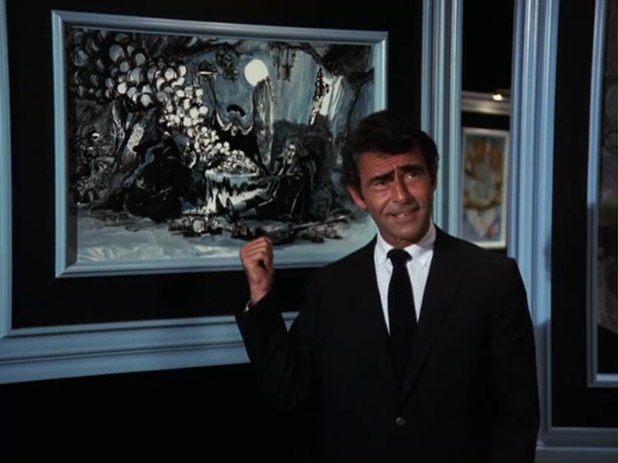
As I started discussing last week, the second season of Night Gallery is all about the split between Rod Serling and Jack Laird and their two visions for the show. This episode speaks to that and is the first to not have a story written by Serling.
“Since Aunt Ada Came to Stay” is a very 1970s occult story, as Professor Craig Lowell (James Farentino, Dead and Buried) comes to believe that his wife Joanna’s (Michele Lee, Karen from Knots Landing) elderly Aunt Ada (Jeanette Nolan) is not related at all but instead an incredibly powerful and quite evil magical being.
Directed by William Hale, written by Alvin Sapinsley and taken from “The Witch” by A.E. van Vogt, this story is also blessed by a small role for Jonathan Harris as a true occult believer of a teacher.
This totally could be an entire episode — and I wish it was — but it moves quickly and is a blast.
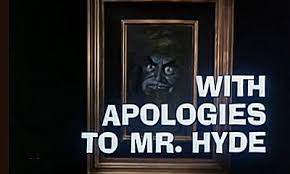
“With Apologies to Mr. Hyde” is another Jeannot Szwarc and Jack Laird quick story, this time with Adam West as the literary villain. Laird is in this as a hunchback as well, just to confirm that when people want to be known for being creators in the wrong way, they show up in their own material.
“The Flip-Side of Satan” has J.J. Wilson (Arte Johnson) as a DJ who soon learns that he is in Hell and on the air for the last time. This story worked so well that Tales from the Darkside also did a version with Jerry Stiller transforming into a monster as he takes calls for all of his eternal punishment in a story written by George A. Romero and directed by Michael Gornick.
This story is written by Jerrold Freedman, whose last directing job was as the Alan Smithee who made The O.J. Simpson Story, as well as much better TV movie work like A Cold Night’s Death, The Boy Who Drank Too Much, Victims and the theatrical Racquel Welch roller derby movie Kansas City Bomber, and written by Malcolm Marmorstein (who somehow both wrote Mary Mary Bloody Mary and Pete’s Dragon) and Gerald Sanford from a story by Hal Dresner (Sssssss, Zorro the Gay Blade), this is a welcome return to form after that quick Laird story.
If you can skip that moment of Adam West overacting, well, you just may like this episode.
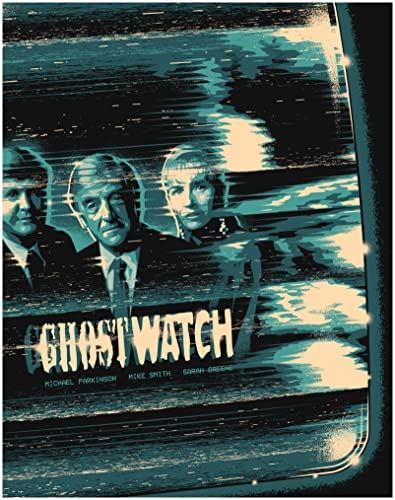
Thirty years ago, the BBC seemed to be doing another one of their “Watch” shows, as four presenters — Michael Parkinson (host of the talk show Parkinson for twenty five years), presenter Sarah Greene (who had worked on several of the “Watch” shows like Airportwatch), her real-life husband Mike Smith (a co-host of the BBC’s Breakfast Time and was a presenter on Top of the Pops) and Craig Charles (who worked as a presenter before playing Dave Lister on Red Dwarf, hosting Robot Wars and narrating Takeshi’s Castle) — and a camera crew descended on the most haunted house in Britain on Halloween night.
Pamela Early (Brid Brennan) and her daughters Suzanne (Michelle Wesson) and Kim (Cherise Wesson) have been dealing with Mr. Pipes, a poltergeist who possesses and harms Suzanne and lives in the basement of their home. Dr. Lin Pascoe (Gillian Bevan), a psychologist studying the phenomena, supports Pamela and the children as Sarah reports from inside the home with her husband Mike interviews the man on the street and Craig makes with the jokes.
As the program (programme!) unravels, it turns out that maybe this isn’t all a hoax. Several calls from listeners help construct the true story, as the story of the murderous Mother Seddons is retold, as is the case of Raymond Tunstall, who hung himself in the basement of the Early home and was eaten by cats. By the end, the beast known as Mr. Pipes has transformed the live broadcast into a seance circle and attempts to use the show to possess all of England.
For American viewers, it’s all rather well made but one wonders how people could have been so upset by this show. Well, for those in Britain, this movie seemed like anything but.
The crew making it took great pains to make it seem real, even if it was part of the BBC anthology series Screen One. It was shot in Studio D of BBC Elstree Studios, a place where many news shows had been aired from. The 081 811 8181 is an actual BBC call-in number, adding to the realism. In fact, the show was nearly canceled because the network didn’t want a War of the Worlds panic to happen. They demanded opening credits be added including the writer’s name, in addition to a Screen One title sequence.
No one noticed that.
The documentary style of Ghostwatch led to 30,000 phone calls from frightened viewers, including Parkinson’s elderly mother! In the days to follow, tabloids went to town criticizing the BBC — who never reaired Ghostwatch — which only increased when eighteen-year-old factory worker Martin Denham became obsessed by the show and upon hearing noises in his parent’s home much like the show would take his own life. The Broadcast Standards Commission rebuked the BBC, saying “The BBC had a duty to do more than simply hint at the deception it was practicing on the audience. In Ghostwatch there was a deliberate attempt to cultivate a sense of menace. The presence in the program of presenters familiar from children’s programs took some parents off-guard in deciding whether their children could continue to view.”
Considering that children and elderly people reported PTSD after watching this, you can see why Greene appeared on the following Monday’s Children’s BBC to reassure younger viewers that the show was not real.
Except that it kind of is.
The story is based on the Enfield poltergeist, a story that had been debated in the tabloids as well, which adds even more of a layer of truth to this story. Peggy Hodgson reported poltergeist activities in her home and voices that would emerge from her daughter Janet. The BBC had reported several times on this story, so Ghostwatch probably felt like a Halloween ratings sweeps stunt.
Writer Stephen Volk (Gothic, The Guardian) had seen this as a mini-series but producers thought that the final live segment, inspired by Nigel Keale’s The Stone Tape, would have more impact.
While this show destroyed minds and reaped souls in England, over here it’s been an influence on so many found footage films like Host and The Blair Witch Project, as well as the near-perfect UHF TV era U.S. remix WNUF Halloween Special.
I love that this is shot on video, not for the need to save money, but for the need to appear real. SOV continues to be a format that offers so many hallways to explore.
Volk wrote a sequel in the short story 31/10, in which he vists the sealed-off BBC studio space where the original show was made along with a group of people whose lives were somehow impacted by Ghostwatch. You can read it here.
In Britain, there are national seances every year to watch this and even a great website called Behind the Curtains that tells so many of the stories of this movie.
If you want to see it for yourself, the 101 Films blu ray release of Ghostwatch is perfect. In addition to the movie, you also get a 30th anniversary feature-length documentary, two sets of commentary — one with film historians Dr. Shellie McMurdo and Dr. Stella Gaynor and the other with Volk, producer Ruth Baumgarten and director Lesley Manning — as well as a Shooting Reality feature with Manning, a 32-page book and a first edition slipcase. You can get it from MVD.
As the second season of Night Gallery goes in two directions — the Serling side growing in dark energy and the Laird side being inane pablum — this episode has three of four stories directed by Jeannot Szwarc, who directed the TV movies Night of Terror, The Devil’s Daughter and You’ll Never See Me Again as well as Bug, Jaws 2, Somewhere In Time and, well, Supergirl and Santa Claus: The Movie. Let’s focus on the good like this episode.
“Death In the Family” was written by Rod Serling from a story by Miriam Allen DeFord. This is one of the segments on this show that could be a whole film. Doran (Desi Arnaz Jr., House of Long Shadows) is a prisoner on the run that hides in the funeral home — and home — of Jared Soames (E.G. Marshall), a man who has a secret of his own. The end of this episode is so perfectly dark and yet filled with love, another wonderful trip to Serling’s imagination.
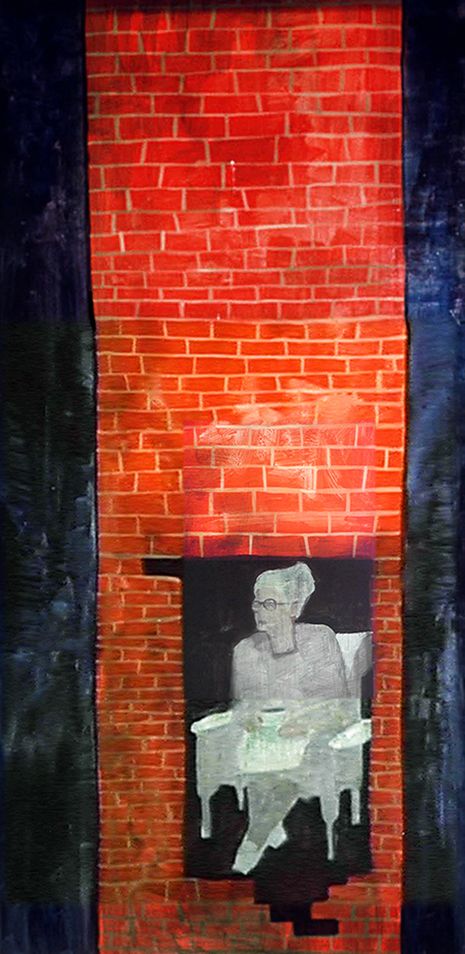
“The Merciful” is another Jack Laird-written chapter, based on a Charles L. Sweeney Jr. story. A man (King Donovan) is kept away from his wife (Imogene Coca) by a brick wall in another sketch that takes from a classic story is over in minutes.
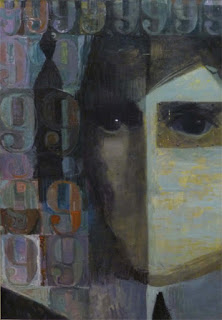
“Class of ’99” works so well not just because of the tight script by Serling, but also because Vincent Price is able to be so sinister — and perfect — in his role of a teacher instruction the students of tomorrow in the violent ways of the past. Classism and racism are explored as he gives his class a final oral test and finds them all lacking. I just read a site that claims that this segment suffered from Serling’s “heavy-handed moralizing and misanthropic undertones.” That’s why I watch Night Gallery.
“Witches’ Feast” comes from director Jerrold Freedman and written by Gene Kearney. The cast is fine — Agnes Moorehead, Ruth Buzzi, Fran Ryan and Allison McKay — yet this is the very epitome of pointless, particularly in the same show that had two classic segments by Serling.
This Pop Matters article sums up the issue of Night Gallery so well: “Laird hated Serling’s downbeat, moralistic material. As a populist, he appreciated the clear cut over the complicated. He didn’t mind the dread or the depression, but there had to be a happy ending — or at least a little light at the end of the tunnel — before the final credits rolled.”
Some think Serling would check out by the end of this season. We’ll see.
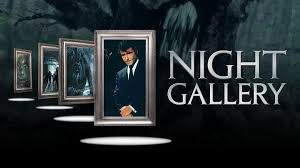
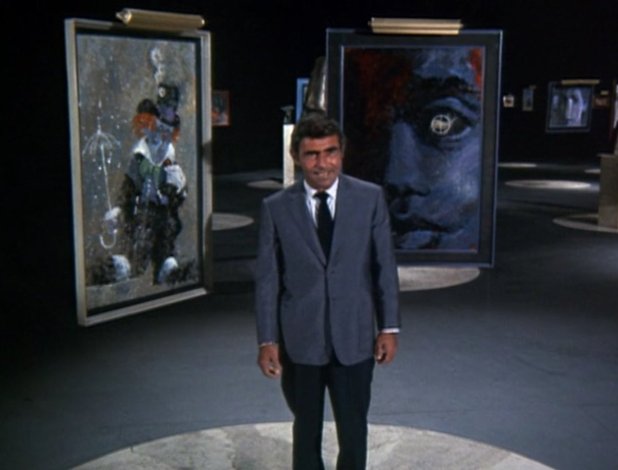
As Night Gallery moved into its second season, it would start becoming schizophrenic, caught between the darkness and the light of pained comedy or more to the point, creator Rod Serling versus producer Jack Laird. Yet when it works, well, man does it work.
I think about “The Boy That Predicted Earthquakes” so often. Directed by John Badham, years before he’d make Saturday Night Fever, it was written by Rod Serling from a Margaret St. Clair story. Clint Howard is astounding as Herbie Bittman, a young boy who simply talks like a real little kid going on and on about telescopes before dropping apocalyptic knowledge on TV audiences. What kid could hopefully deliver a message of hope when he knows that the world will end horribly the very next day? What a Satanic moment in a series known for so many, a child delivering the burnt out worldview of Serling to the masses. A near-perfect segment worth endlessly rewatching.
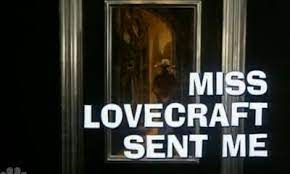
Less can be said about “Miss Lovecraft Sent Me,” the first of too many “black out” gags which has Joseph Campanella as a vampire and Sue Lyon as a babysitter. Director Gene R. Kearney wrote Night of the Lepus and would go on to contribute to the beloved 1979 series Cliffhangers, but the fact that he was involved in Laird putting his insipid fingerprints all over a masterwork is a strike against him. At. least Lyon is gorgeous; she did better work in Lolita and Murder In a Blue World.
“The Hand of Borgus Weems” has that most horrific and hoary of horror tropes: the haunted human hand. Peter Lacland (George Maharis) claims that his hand is possessed and demands that Doctor Archibald Ravadon (Ray Milland) amputate it. It’s simple and effective, with assured direction by John Meredyth Lucas, a producer on Star Trek and the director of several episodes of the Planet of the Apes TV series. Its writer, Alvin Sapinsley, also wrote Moon of the Wolf.
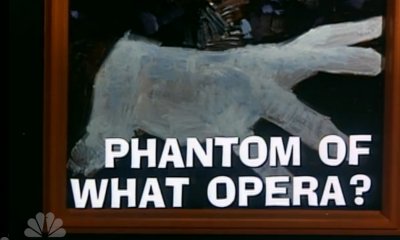
Sadly, “Phantom of What Opera?” is another gag with Leslie Neilsen as the Phantom and Mary Ann Beck as his victim. Directed and written by Kearney, it’s exactly the kind of two-minute silliness that would continue to mar this show all season long.
What do you think of this episode? Which story is your favorite? Let me know in the comments.
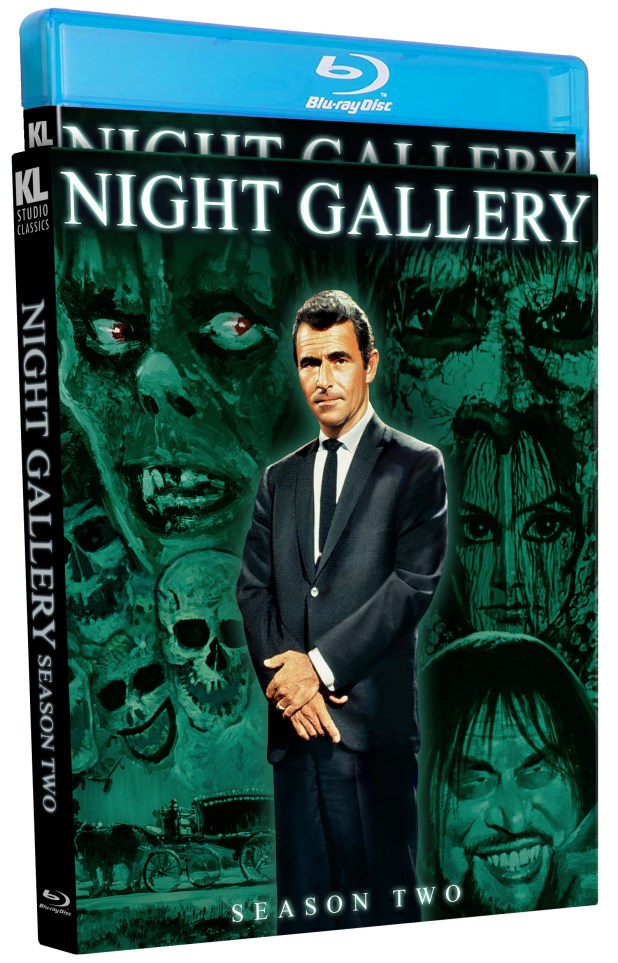
You can buy the second season of Night Gallery on blu ray from Kino Lorber.
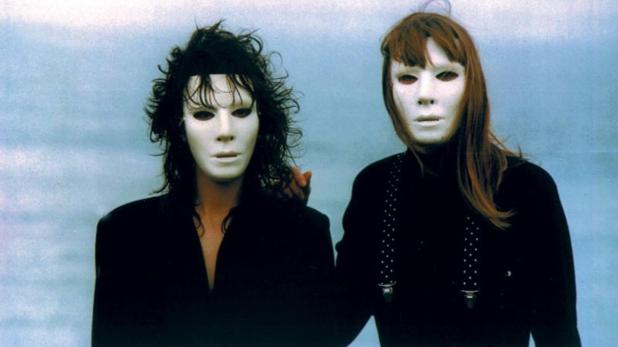
Two girls find a magical wooden device called a Moon Goddess — which looks like something Lina Romay would dig up in a Franco movie — and it transforms them into adults — or were they old women transformed into kids all over again? — in this under an hour made for TV ultra personal Jean Rollin film, which kind of feels like a greatest hits of his most striking moments.
This movie feels like the kind of fast forward nostalgia I had as a kid when I was made emotional by love songs I had no understanding of at the time.
Years later, Clams Casino would release a music video with footage of this film, which has been attributed to people struggling with depression and the video itself helping them.
In the same way that childhood ends and I am confronted by feelings within it to this day, this movie makes me feels things that I understand more with each watch. It is ghost-like. It is etheral. It is magic.
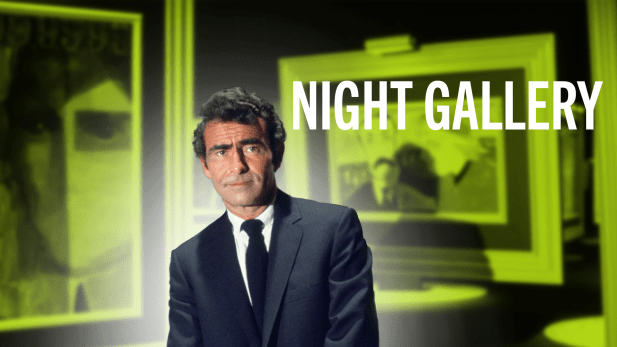
First airing on January 20, 1971, this episode of Night Gallery fully embraces the darkness of the world, as a man grows old and the world changes around him in the first story, one I have gone back to watch again and again.
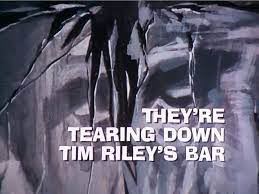
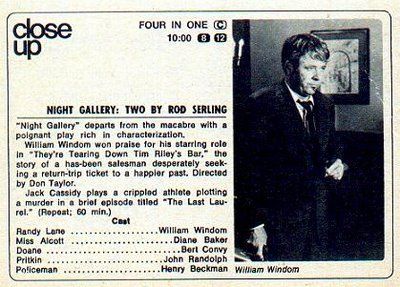
“They’re Tearing Down Tim Riley’s Bar” is directed by Don Taylor (Damien: Omen II, The Final Countdown, Escape from the Planet of the Apes) and written by host Rod Serling is the story of Randy Lane (William Windom), who returned home from the war, had a party at Riley’s, got married and found a great job in plastics. But that was 25 years ago and now, his wife is dead, the job is a dead end and they’re tearing down Tim Riley’s Bar.
His boss (John Randolph) has forgotten him. His assistant (Bert Convey!) is after his job. The only person who seems to care is his secretary (Diane Baker) but he’s blinded by grief and can’t see it. All he can do is drink himself into oblivion and wander the old places of his life and bear witness to the ghosts of the past, much better spirits than he sees every day.
Not really horror, not even scary, this is one of the best segments of the show and was nominated for an Emmy. The older I get, the more it upsets me, but that’s why when Serling is good, there’s no one better, even if the ending is way too simple.
“The Last Laurel” was directed by Daryl Duke, who would go on to make The Silent Partner and The Thorn Birds. Written by Serling from a story by David Grubb, it suffers by comparison to the first half of this episode. Jack Cassidy plays Marius Davis, a man dying and unable to stop his gorgeous wife Susan (Martine Beswick) from sleeping with the man treating him in his last moments, Doctor Armstrong (Martin E. Brooks). Of course, there’s revenge by astral projection.
This ends the first season of Night Gallery yet it feels like things are just getting started.
Originally appearing on January 13, 1971, the fifth episode of Night Gallery has at least two solid tales to deliver.
“Pamela’s Voice” pits Jonathan (John Astin) against his wife Pamela (Phyllis Diller), ending with him killing her because he’s sick of hearing her voice. Yet even death can’t stop her from haranguing him in this story directed by Richard Benedict, who started as an actor and became a director, and written by Rod Serling. While most comedy episodes of this show don’t work for me, there’s a lot of talent here.
“Lone Survivor” is directed by Gene Levitt, the creator of Fantasy Island, and written by Serling. Th crew of the Lusitania find a man in a dress, lost at sea, claiming that he dressed as a woman to escape the sinking of the Titanic years ago. This would be impossible except, well, this show allows the fantastic to become true. That ghost of a man is played by John Colicos in a fine role.
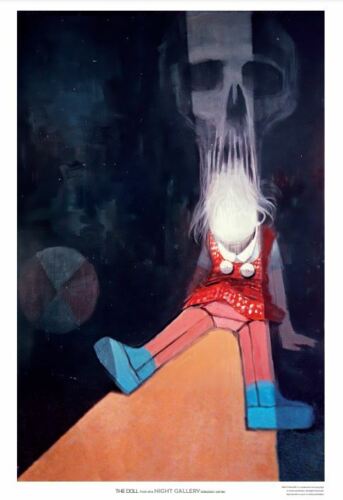
“The Doll” starts with Serling intoning, “This little collector’s item here dates back a few hundred years to the British-Indian Colonial period, proving only that sometimes the least likely objects can be filled with the most likely horror. Our painting is called “The Doll,” and this one you’d best not play with.”
This episode was directed by Rudi Dorn and written by Serling. Based on “The Doll and One Other” by Algernon Blackwood, this is all about a doll given to Col. Hymber Masters’ (John Williams) niece (Jewel Branch) as he returns from India. I have no idea who would be good with such a frightening doll in their home, but yet she loves it, even when it causes chaos. Blame Pandit Chola (Henry Silva), who has sent it to get revenge for the death of his brother.
With this episode, Night Gallery affirms the promise that it had with the pilot. Guillermo del Toro has claimed that so many of his shots come directly from “The Doll” and that it remains an influence on him even today.
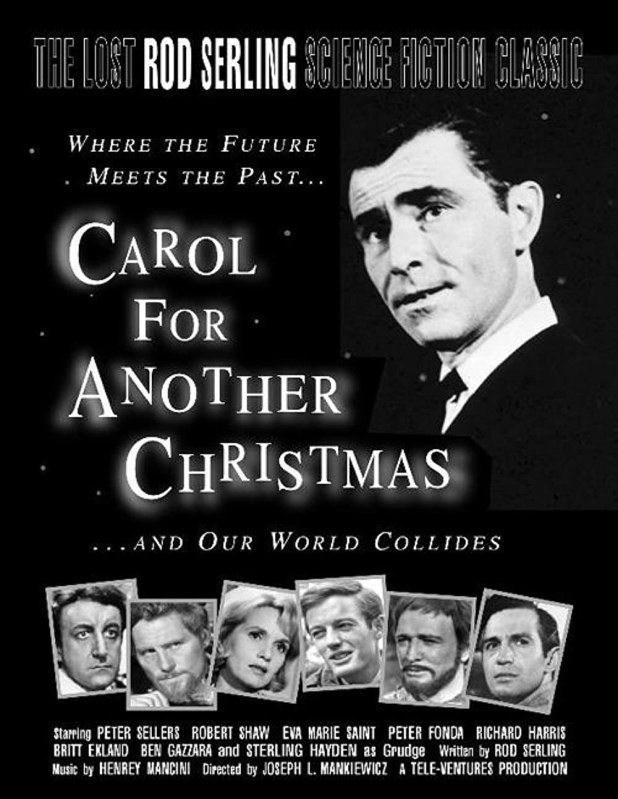
Originally televised on ABC on December 28, 1964 and was the first in a planned series of television specials developed to promote the United Nations and educate viewers about its mission — Who Has Seen the Wind?, Once Upon a Tractorand The Poppy Is Also a Flower are the others.
It sure has a great pedigree, as it was written by Rod Serling and is the only TV work by director Joseph L. Mankiewicz. It also marked the return to acting after Peter Sellers’ heart attack and has his wife at the time, Britt Eklund, in the cast.
On Christmas Eve, rich industrialist Daniel Grudge (Sterling Hayden) is alone in a dark room listening to “Don’t Sit Under the Apple Tree (with Anyone Else but Me)” by The Andrews Sisters. His nephew Fred (Ben Gazzara) comes to ask for help with a United Nations program at his college, but Daniel remarks that he’s tired of the U.S. being the world’s policeman. After all, his son Marley died twenty years ago to the day and he’s never gotten past it.
As you can imagine, three ghosts — Past (Steve Lawrence), Present (Pat Hingle) and Future (Robert Shaw) — take him through the world of isolationism and also introduces the despotic Imperial Me (Sellers) who demands that everyone left on the planet after a nuclear war kill one another until no one is left.
Serling biographer Gordon F. Sander wrote that this movie is unlike a lot of the author’s social change stories, as it ends on a down note. That may be because of the assassination of John F. Kennedy and the war in Vietnam taking more American lives. This film is very heavy handed — it also led to a right wing boycott, which yes was already happening in 1964 — and didn’t play again until nealry fifty years after it first aired.
EDITOR’S NOTE: This holiday giallo was first on the site many years ago, all the way back on December 16, 2017.
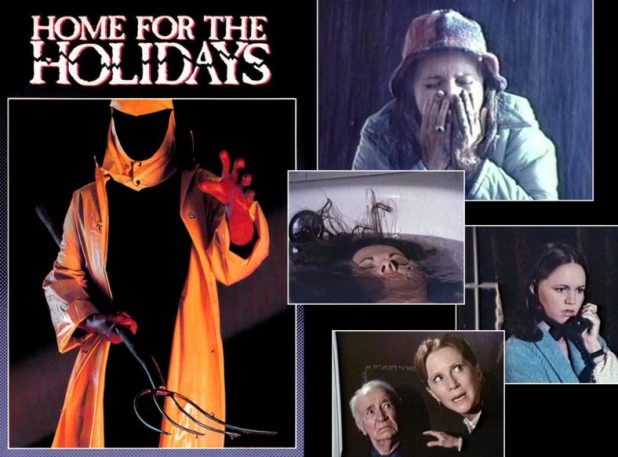
Originally airing on November 28, 1972, this ABC-TV movie was produced by Aaron Spelling and debuted on VHS in 1986. It’s packed with future talent and is at the center of what we love most here: TV movies, Christmas movies and horror.
Benjamin Morgan (Walter Brennan, Rio Bravo) is rich and dying and suspects his wife, Elizabeth (Julie Harris, one of America’s most famous stage actresses), of poisoning him. He sends his oldest daughter, Alex (Eleanor Parker, Eye of the Cat) to find her three sisters and bring them home — the first time they’ve been back since their mother’s suicide.
The three sisters are Freddie (Jessica Walter, Arrested Development), Joanna (Jill Haworth, The Brides of Dracula) and Christine (Sally Field, Steel Magnolias). Their father tells them that they must kill their stepmother before she kills them. At dinner that night, Joanna harangues her stepmother with questions about how her first husband died, while Freddie screams in her room about how their father’s affairs led to their mother killing herself.
This is obviously the holiday get-together everyone hoped for.
Soon after, Joanna tries to leave but is killed by a pitchfork-wielding person in a yellow raincoat. That same killer also drowns Freddie in the bathtub while Elizabeth keeps offering everyone warmed milk and honey. Soon, the phone line gets cut and everyone is trapped with a killer. But who is it?
There are plenty of twists and turns here, as the love between a father and daughter and the love between husband and wife is contested. It’s bloodless, as it’s a TV movie, but it’s also pretty dark, because the 1970’s were the end of the world and the movies made then reflected it. You also get a cast packed with Oscar winners and nominees, all acting within basically one or two rooms, so there’s plenty of emotion and suspense.







 B&S About Movies
You must be logged in to post a comment.