UNSUNG HORRORS HORROR GIVES BACK 2025: The Last House On the Left (1972)

Each October, the Unsung Horrors podcast does a month of themed movies. This year, they will once again be setting up a fundraiser to benefit Best Friends, which works to save the lives of cats and dogs across America, giving pets second chances and happy homes.

Today’s theme: 1970s

Sure, my pick for today’s 1970s theme isn’t groundbreaking. But it’s a blind spot.

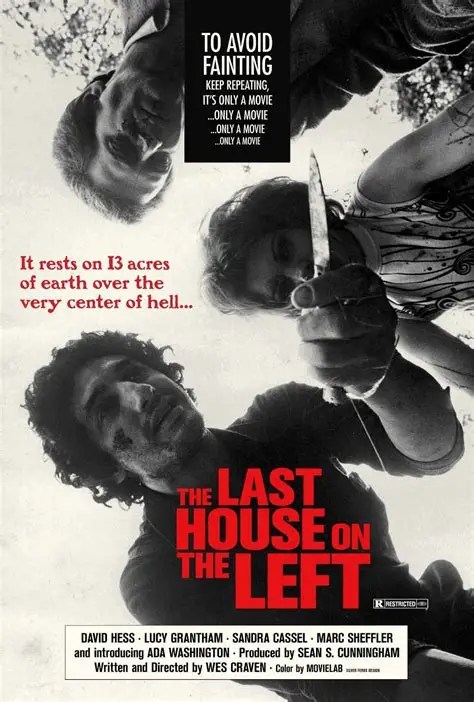
Sure, I’ve seen every movie that stole its poster design from this film. I’m wearing a The House That Vanished shirt as I write this. I love that Bay of Blood is also called Last House on the Left – Part IILast House – Part II and New House on the Left.

I’ve seen the movies inspired by it: Last Stop on the Night Train, House On the Edge of the ParkLast House On Dead End Street, The House by the Lake, Hitch-HikeThe Last House On the BeachMadness…I have seen all of them.

I even watched the remake!

There’s no explanation why I have this huge blind spot. So let’s fix that.

Maybe it’s because I am ambivalent, at best, about Wes Craven. But I’ve tried to separate those feelings and experience this as a new movie. And you know what? I get it.

Even the parts people hate, like the wacky music and the goofy cops. It’s ramshackle and kind of all over the place, but it just plain works. When it gets into its meanness —which was unexpected at the time, but now he’s in it today, making you just wait for it— it goes for it in a way that few movies do.

Sean Cunningham made his directorial debut with The Art of Marriage, which came to the attention of Hallmark Releasing. His next film, Together, was an improved take on his first. Wes Craven worked on the film, and he and Cunningham had the opportunity to discuss making movies. They were given a bigger budget to make this, and it was intended to be a hardcore roughie of sorts. Before filming, it was decided to abandon that idea and just make a movie that could play in regular theaters.

We think of elevated horror as a new thing, but Craven wanted to base this on the Swedish ballad “Töres döttrar i Wänge,” which inspired Ingmar Bergman’s The Virgin Spring. This sounds good for the press, you know?

Other than Eleanor Shaw and Sandra Peabody, no one was a professional actor. Well, Fred Lincoln did adult. But maybe that also worked in this film’s favor. Peabody said, “I was upset because I’m an emotional person, and I reacted to what was going on as if it were real. I had a tough time with some of the scenes because I had come out of American Playhouse, where it was all about preparation, and everything had to be real. I ended up doing a horrible job in the film. I was distraught, and I felt like I should have channeled that, but I couldn’t… I was a young actress, and I was still learning to balance any emotions I had from outside of the film into my scene work.” Like a real-life Effects, Peabody was convinced that David Hess was an actual maniac.

As for Hess, he was a musician who also wrote most of the music for this movie with Stephen Chapin. Yes, the man who is Krug — named for a bully of Craven’s, just like Freddy Krueger — wrote music, including “All Shook Up” for Elvis, “Your Hand, Your Heart, Your Love” for Andy Williams and “Speedy Gonzales” for Pat Boone. And then you see him in this, and he’s an absolute lunatic.

Mari Collingwood (Sandra Peabody, who went from movies like this and Massage Parlor Murders! to producing children’s television) and Phyllis Stone (Lucy Grantham) go to a concert and try to score; Junior (Marc Sheffler) brings them back to meet his father Krug (Hess), Sadie (Jeramie Rain, who claimed that she was once picked up by Manson and Tex Watson) and Fred “Weasel” Podowski (Lincoln). While Mari’s parents set up a surprise party, Krug and his family annihilate them, first forcing Phyliss to urinate all over herself (supposedly objectivel) and make love to one another before stabbing them, ending with Krug carving his name into Mari’s chest, raping her and shooting her as she staggers into a lake.

They make the biggest mistake ever by heading to Mari’s parents’ house, where the parents soon realize who they are. The suburban married couple can be just as vicious as Krug, as mom (Eleanor Shaw) bites off Weasel’s cock, Krug gets chainsawed, Junior kills himself, and Sadie is killed in the pool, just as the police arrive.

Newspaper ads screamed, “You will hate the people who perpetrate these outrages—and you should! But if a movie—and it is only a movie—can arouse you to such extreme emotion, then the film director has succeeded … The movie makes a plea for an end to all the senseless violence and inhuman cruelty that has become so much a part of the times in which we live.” It became a video nasty ten years after it was made; there were cuts made by the filmmakers that would have made things much worse, such as more of the forced lesbian sex, Sadie raping Mari, and Mari living long enough for her parents to find her.

Siskell said “My objection to The Last House on the Left is not an objection to the graphic representations of violence per se, but to the fact that the movie celebrates violent acts, particularly adult male abuse of young women … I felt a professional obligation to stick around to see if there was any socially redeeming value in the remainder of the movie and found none.” Ebert, on the other hand, said that it was “about four times as good as you’d expect.”

Watching it for the first time, I was struck by how brutal this film is from the first few moments, as even a kind mailman comments on Mari’s sexuality when we expect that he’s just a nice old man. Everything from then on is a trap; we know that Mari and Phyliss are trapped in a death march, endlessly repeating their demise as this is watched repeatedly. Other than Junior, Krug and his family see them as just something to do, something to throw away, something to destroy. There’s no pressure release like most slashers — well, the cops — but instead, a reminder that to everyone but the parents, these two girls are just as meaningless as they are to the killers.
UNSUNG HORRORS HORROR GIVES BACK 2025: The Body Beneath (1970)

Each October, the Unsung Horrors podcast does a month of themed movies. This year, they will once again be setting up a fundraiser to benefit Best Friends, which works to save the lives of cats and dogs across America, giving pets second chances and happy homes.

ABOUT THE AUTHOR: Adam Hursey is a pharmacist specializing in health informatics by day, but his true passion is cinema. His current favorite films are Back to the FutureStop Making Sense, and In the Mood for Love. He has written articles for Film East and The Physical Media Advocate, primarily examining older films through the lens of contemporary perspectives. He is usually found on Letterboxd, where he mainly writes about horror and exploitation films. You can follow him on Letterboxd or Instagram at ashursey.

Today’s theme: 1970s

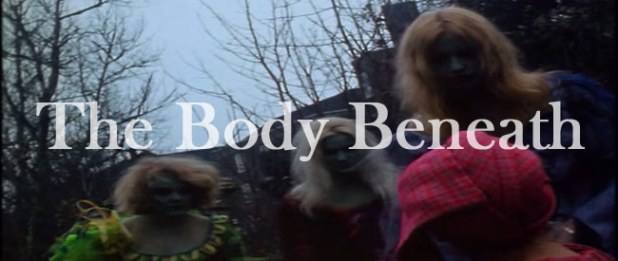
Diving back into the Andy Milligan box set from Severin Films with The Body Beneath, another one of Milligan’s horror films made during his London period. If you’ve ever watched an Andy Milligan film, you know that your mileage may vary.

Too much inbreeding has caused a degradation in the bloodline of a family of vampires. Led by the Reverend Alexander Ford (Gavin Reed), the brood sets out to gather some fresh blood, namely, relative Susan Ford (Jackie Skarvellis), who has recently disclosed to her boyfriend Paul (Richmond Ross) that she is expecting. After the Reverend takes over Carfax Abbey (obviously an allusion to Count Dracula’s London estate—you could never accuse Milligan of subtlety), he begins a reign of terror, kidnapping Susan for her offspring and others for their blood supply while punishing his hunchbacked servant (there always has to be a character with a hunchback in a Milligan movie). Can Paul rescue Susan before it is too late? 

No one could accuse Milligan about properly pacing a movie either. Fortunately for me, I’m never in any rush to get through one of his films. I never really expected to embrace his films like I have, but there is just something about the bad acting, low production values, and magnificent costumes that keeps me coming back for more. I’m not sure what I will do when I run out of new films to watch in this box set. I mean, I guess I’ll just start over. And I’m perfectly okay with that option. Although Severin did discover a couple of previously lost Milligan films recently. So that release will be something to look forward to. Hopefully soon.

UNSUNG HORRORS HORROR GIVES BACK 2025: Basket Case 3: The Progeny (1991)

Each October, the Unsung Horrors podcast does a month of themed movies. This year, they will once again be setting up a fundraiser to benefit Best Friends, which works to save the lives of cats and dogs across America, giving pets second chances and providing them with happy homes.

Today’s theme: The Sweetest Taboo!

“…Belial suffers through his brother’s neurosis, his girlfriend’s death, and the death of one of his children when the sheriff’s daughter drops it.”

Poor Belial. Three movies in, and he’s still trying to adequately express his emotions.

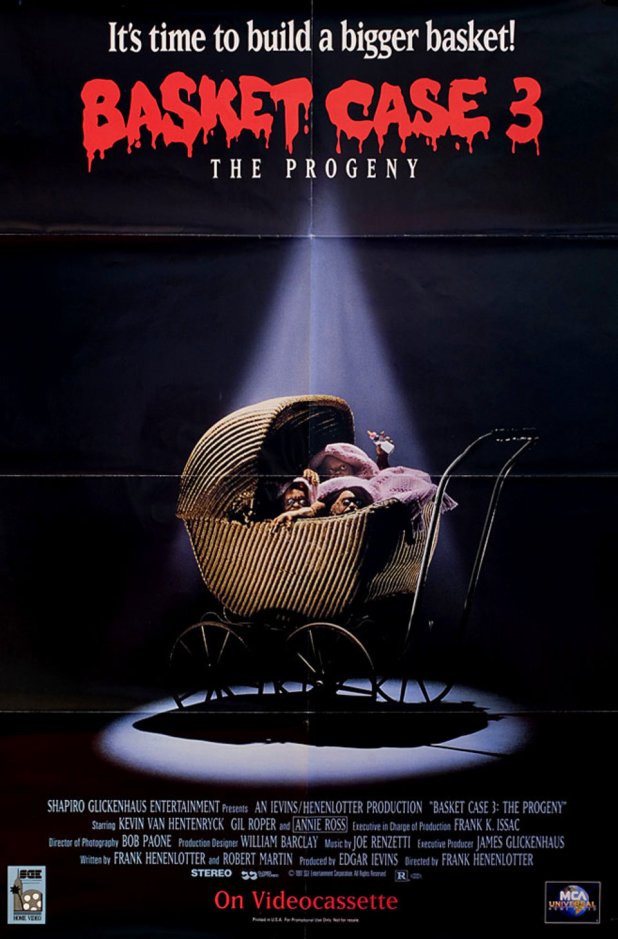
Last time, his brother Duane (Kevin Van Hentenryck) was trying to sew him back on. Now, Duane’s being held by Granny Ruth (Annie Ross), but allowed to go on the bus trip to see his ex, Doctor Hal Rockwell (Dan Biggers), so that Belial’s children with his girlfriend, Eve, can be born. They’ll also see her son, Little Hal (Jim O’Doherty), a multi-armed blob who can also practice health care.

There’s also a bigoted sheriff (Gil Roper) and his bad girl daughter, Opal (Tina Louise Hilbert), to deal with; the cops bust in at one point, guns blazing — realistic — and murder Eve. Then, they take Belial’s children as if they’re a practice run for late-child-stealing government operations. To fight back, Belial has an exoskeleton built that allows him to kill even more people and cause the sheriff to kill his own daughter. Then, they arrived at Renaldo, where they killed the host, and Granny says that freaks will no longer hide in the shadows.

This is a Frank Henenlotter film, and if you know what that means, you’re either going to love or hate this. I loved it, perhaps even more than the last one, because it just gives in and lets go.

As for the song “Personality”, being in this, “the owner reportedly gave them the rights for a dollar after he found out that Annie Ross would be singing it.” I want IMDbs to be true.

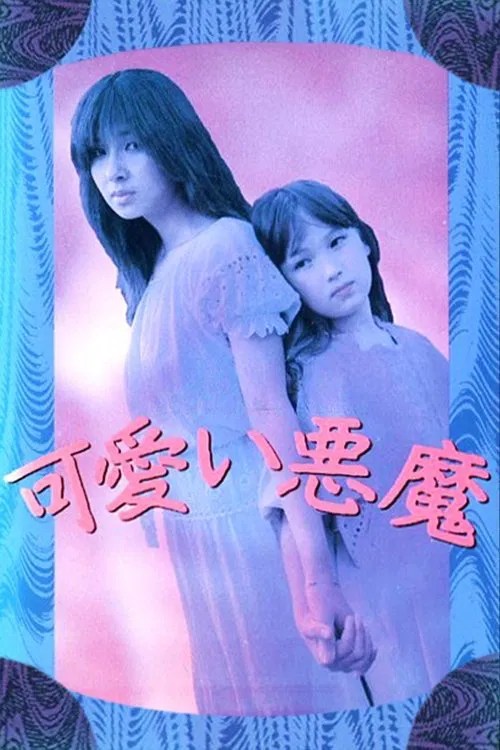
UNSUNG HORRORS HORROR GIVES BACK 2025: Cute Devil (1982)

Each October, the Unsung Horrors podcast does a month of themed movies. This year, they will once again be setting up a fundraiser to benefit Best Friends, which works to save the lives of cats and dogs across America, giving pets second chances and providing them with happy homes.

ABOUT THE AUTHOR: Adam Hursey is a pharmacist specializing in health informatics by day, but his true passion is cinema. His current favorite films are Back to the FutureStop Making Sense, and In the Mood for Love. He has written articles for Film East and The Physical Media Advocate, primarily examining older films through the lens of contemporary perspectives. He is usually found on Letterboxd, where he mainly writes about horror and exploitation films. You can follow him on Letterboxd or Instagram at ashursey.

Today’s theme: The Sweetest Taboo!

Hold onto your penmanship medals! Nobuhiko Obayashi (Hausu) brings us a version of The Bad Seed, with a child perhaps even more devious than Rhoda Penmark.

I would say that The Bad Seed was a gateway horror film for me, but I was born in the 1970s. The idea of gateway horror had not been invented. Or even considered. One of my earliest memories is watching Carrie on our little television in the trailer we were living in. The pig’s blood dropped and I ran out of the room. Carrie was aired on CBS in 1978. Sure, they made a few edits, but a 3-year-old me would not have been able to notice. The real question is why would my parents let me watch it in the first place?

Sort of the blessing and the curse of being Generation X. I wouldn’t trade it for anything. My mom loved Alfred Hitchcock and she would often tape his films or television show any chance she got, and we would watch it on the weekends (along with a week’s worth of All My Children). But the film I most fondly remember is The Bad Seed. Taped off of WGN, complete with commercials for K-Tel records and Empire carpet (588-23 hundred Empiiiiire), we would watch it all of the time. Oh, how I wish I still had that old VHS tape! The Bad Seed had so many aspects that fascinated me. I was too young to understand the concept of translating a stage play to film. We do not see the evil Rhoda commits. We just hear about it. It might have made the idea of such an evil child more effective. Also, I’m still not sure what excelsior is exactly. But apparently, it is highly flammable.

As much as I love The Bad Seed, it is possible that Obayashi’s version is superior in many ways. He totally cuts out the psychological mumbo jumbo that drags down a significant portion of the original film. Our child killer here, Alice, is just a sociopath from the beginning. Is it possible that the suicide of her father is the root cause? Who cares? It doesn’t matter. We are just here to watch Alice bludgeon her teacher to death in order to get a prized doll. 

Obayashi also deviates from the original story by bringing in an aunt as the main protagonist. Ryoko ends up in a mental institution after believing she has caused her boyfriend’s death. I mean, she did wish death upon him as he was walking out the door, only to be struck down by a car. On that same day, Ryoko’s sister Fuyoko is getting married (why Ryoko isn’t there is not explained, other than she is studying music in Vienna). After Alice asks Fuyoko if she can have her veil when she dies, Fuyoko says yes, not expecting to be violently tossed out of a window minutes later. Years pass, and eventually Ryoko is convinced she was not responsible for the death of her boyfriend. Her brother-in-law (I guess—he was only legally married to her sister for mere minutes—talk about early release) asks Ryoko if she would come and be governess to Alice, sweet Alice. She does, but quickly begins to believe that Alice is responsible for the mysterious deaths happening around the family.

We do not approach the insanity that is Hausu of course, but Obayashi does have plenty of tricks up his sleeve. He foreshadows this glass vase so hard that you know something is going to happen with it. But I could have never expected what actually does happen. I thought “there it is”, immediately thinking that it is something that would have easily happened to one of the girls in Hausu.

The Leroy character, the guy who knows the truth but would have difficulty proving it, is even scummier than the guy in The Bad Seed. And Alice does not need to rely on him sleeping on a bed of excelsior to ignite those flames. 

All around, a great companion piece to both Hausu and The Bad Seed. I could watch both of those films back-to-back right now. Similar to other remakes of The Bad Seed in the United States, Cute Devil was made for television. I seem to be stacking up MFTV movies this month. A seemingly endless fount of goodness that unfortunately does not seem to exist anymore. 

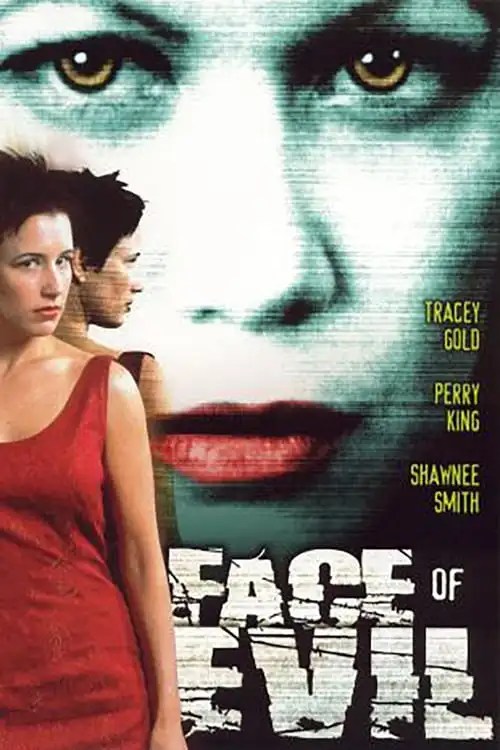
UNSUNG HORRORS HORROR GIVES BACK 2025: Face of Evil (1996)

Each October, the Unsung Horrors podcast does a month of themed movies. This year, they will once again be setting up a fundraiser to benefit Best Friends, which works to save the lives of cats and dogs across America, giving pets second chances and providing them with happy homes.

Today’s theme: Made for TV Movie

Ah man, Tracy Gold was always a good girl until this movie. She plays Darcy Palmer, an artist who loses her mind, leaves her man at the altar, takes all his money, heads to New York City and kills a college student named Brianne Dwyer (Mireille Enos). Then, she starts life all over again as a college student in New Hampshire.

She soon becomes friends with Jeanelle Polk (Shawnee Smith) and goes home to meet her father, Russell (Perry King). Before you know it, she has him fooled, and she’s cutting his ponytail off in the shower.

Directed by Mary Lambert and written by Gregory Goodell (lots of TV movies, but also the director and writer of the video nasty Human Experiments), this has the lovely daughter of TV’s Growing Pains stuffing dead bodies into her suitcase, ruining eyes with acid eyedrops and even trying to stab our good girl with scissors. She’s killed ten people in six cities and keeps changing who she is, somehow staying ahead of cops. If this were a Giallo, they’d be amongst the dumbest of all movie police, as a festering suitcase filled with a dead body can stay in a dorm for days and then at a construction site for months and no one notices.

Perry King also wears a jaunty scarf for the scene where Gold bites him and screams, “I’m an artist!”

Also: Total square up reel of all her crimes while Perry King is like, “I guess we were lucky.” And yet, he slept with her. I’m sure it was amazing.

You can watch this on Tubi.

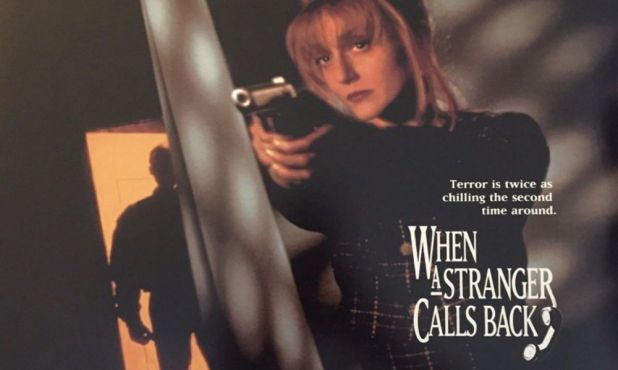
UNSUNG HORRORS HORROR GIVES BACK 2025: When a Stranger Calls Back (1993)

Each October, the Unsung Horrors podcast does a month of themed movies. This year, they will once again be setting up a fundraiser to benefit Best Friends, which works to save the lives of cats and dogs across America, giving pets second chances and providing them with happy homes.

ABOUT THE AUTHOR: Adam Hursey is a pharmacist specializing in health informatics by day, but his true passion is cinema. His current favorite films are Back to the FutureStop Making Sense, and In the Mood for Love. He has written articles for Film East and The Physical Media Advocate, primarily examining older films through the lens of contemporary perspectives. He is usually found on Letterboxd, where he mainly writes about horror and exploitation films. You can follow him on Letterboxd or Instagram at ashursey.

Today’s theme: Made for TV Movie!

“And maybe for the college boys, the truest mirror is the toilet bowl staring back at them in the morning after a toga party.”

This insightful line of dialogue is “uttered” by a faceless ventriloquist’s dummy during a set at a strip club in When a Stranger Calls Back, a copy/paste sequel produced by Showtime in 1993.

Starting with a revival of Cat on a Hot Tin Roof in 1984, Showtime produced many original films during a run that lasted until around 2007. Never reaching the acclaim of HBO Films, and never reaching the depths of Cinemax Friday After Dark programming, Showtime was able to carve out an interesting middle ground, particularly in the horror genre. The first film that comes to my mind when I think about Showtime is John Carpenter’s Body Bags. But Showtime was also the home of films such as Psycho IV: The Beginning, The Birds II: Land’s End, as well as Jim Wynorski’s remake of The Wasp Woman. Pursuing the list of films now, I feel the need to find some of these potential hidden gems. Once this month is over, I might have to seek out The Tiger Woods Story, a 1998 film directed by LeVar Burton, starring Keith David as Tiger Woods’ dad. 

When a Stranger Calls Back gets the gang from the first film back together. Carol Kane as Jill, the babysitter who was tormented in the original movie, but she has since turned her trauma into a career as a counselor, while finding time to take self-defense classes on the side. Charles Durning as Detective John Clifford, using his skills to track down men who harass babysitters (a very niche skill set). And director Fred Walton. Not much to say about Walton other than he also directed April Fool’s Day, followed by a string of made-for-TV films, including a remake of William Castle’s I Saw What You Did.

Not only did the director and main stars come back, but the basic template from the first film returns. The most often heard complaint about When a Stranger Calls is that the film loses steam after that iconic opening sequence. But what film could possibly match the energy and suspense crafted in that first 20 minutes? People rarely talk about how great the last 15 minutes are as well. Truly scary.

While the bookends of When a Stranger Calls Back does not match the intensity of the original, it makes a decent effort. We get a legendary scream queen as the tormented babysitter (Jill Schoeien), and a killer who is creepier than the one in the first film. Kind of a Francis Dolarhyde meets Peeta from The Hunger Games. And I think that the second act here is more interesting than the one in the first film. Of course having more Carol Kane is always a good idea in my book. Watching Carol Kane’s stunt double do a jumping scissors kick against her attacker? Peak cinema. 

UNSUNG HORRORS HORROR GIVES BACK 2025: Blue Sunshine (1977)

Each October, the Unsung Horrors podcast does a month of themed movies. This year, they will once again be setting up a fundraiser to benefit Best Friends, which works to save the lives of cats and dogs across America, giving pets second chances and providing them with happy homes.

ABOUT THE AUTHOR: Adam Hursey is a pharmacist specializing in health informatics by day, but his true passion is cinema. His current favorite films are Back to the FutureStop Making Sense, and In the Mood for Love. He has written articles for Film East and The Physical Media Advocate, primarily examining older films through the lens of contemporary perspectives. He is usually found on Letterboxd, where he mainly writes about horror and exploitation films. You can follow him on Letterboxd or Instagram at ashursey.

Today’s theme: Physical Media

We want Dr. Pepper! We want Dr. Pepper! We want Dr. Pepper!

Obnoxious, relentless children are enough to make you literally snatch your wig, grab the longest knife you can find, and chase them around the room. Whether you are feeling some very delayed side effects from some LSD you dropped 10 years ago or not.

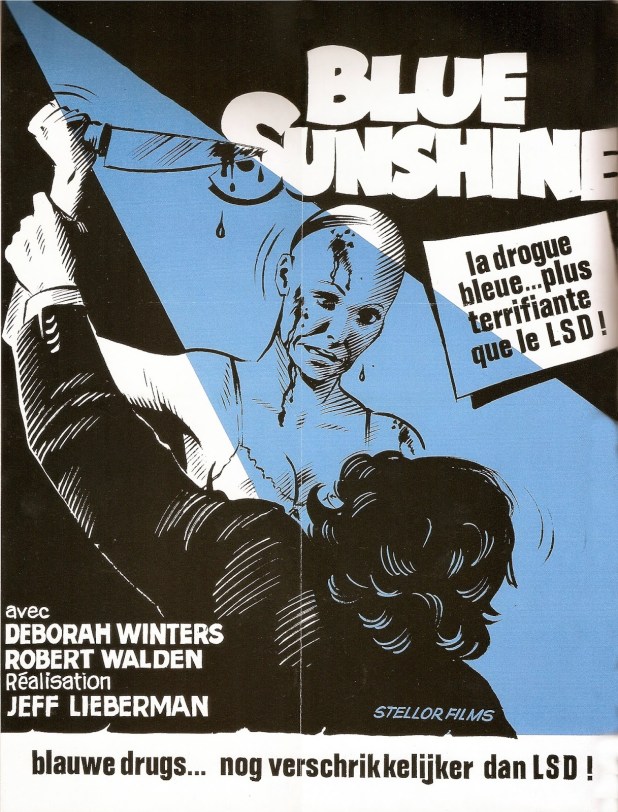
Blue Sunshine has been floating around on my watchlist for a while now. I really had no idea what the plot of this film was though. I only knew the film from the poster—the bald-headed lady standing in front of what appears to be a blue moon. Really no clues are given as to what happens in the film. 

As it turns out, Blue Sunshine is closer to a political paranoia conspiracy thriller like Three Days of the Condor than a traditional horror film. A small group of seemingly unrelated people are experiencing hair loss followed by severe homicidal tendencies. Jerry Zipkin (Zalman King—we’ll circle back to him) witnesses an attack by a friend inflicted with this seemingly acute psychosis, but becoming the accused murderer in the process. Out to solve the mystery and prove his own innocence, Jerry discovers that the cause may be linked to an LSD variant named Blue Sunshine that was distributed at Stanford a decade prior.

I cannot say that I’ve ever seen a Zalman King performance before. I definitely know the name for the Red Shoe Diaries series on Showtime back in the 1990s. I cannot say that I watched much of that show (or at least you won’t get me to admit it), but when I saw King’s name appear during the opening credit sequence of Blue Sunshine, I immediately checked my phone to make sure this was the same person. 

King has a cinematic presence. He most definitely has cinematic hair. But I cannot think of anyone else like him. Well, I actually did read someone’s review on Letterboxd that compared him to the recurring Red Shoe Diaries actor David Duchovny. That tracks. 

Again, Blue Sunshine is not your typical horror film, although there are some horrific things that happen. It feels political due to a main character who is running for Congress, but I did not make any connection to Edward Flemming’s (Mark Goddard) ambitions and his past of LSD hippie. I kind of expected more of a link to his past, but I don’t think he knew what was going on. Honestly, that lack of awareness would suit him well for politics. 

There are a couple of aspects of the film that I could not help but comment upon. There is a low-speed car chase involving a Ford Bronco. And, at the end of the film, Flemming is making a campaign speech promising to “Make America Good Again”. He’s going to need to up his game to greatness if he is going to truly succeed. Or maybe just put that Blue Sunshine in the water supply and see what happens.

I watched this one on the Synapse 4K release. Synapse always does a spectacular job in their restorations and releases. They do not release films very often these days, but when they do, I almost always pick them up.

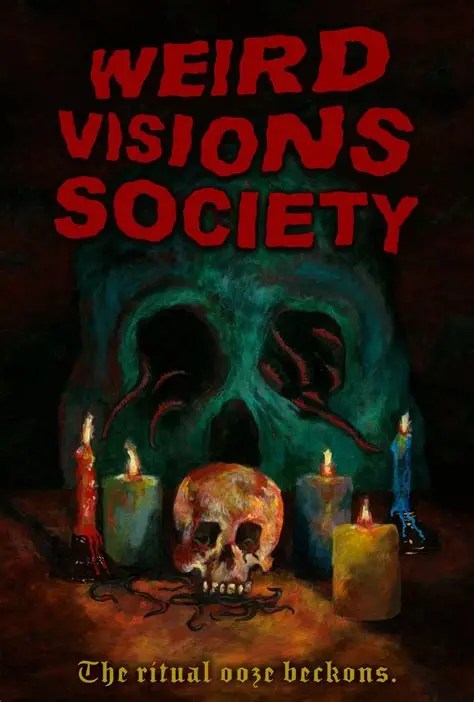
UNSUNG HORRORS HORROR GIVES BACK 2025: Weird Visions Society (2024)

Each October, the Unsung Horrors podcast does a month of themed movies. This year, they will once again be setting up a fundraiser to benefit Best Friends, which works to save the lives of cats and dogs across America, giving pets second chances and providing them with happy homes.

Today’s theme: Physical Media

I know, I know, microbudget anthology films are all over microbudget films and streaming horror. But what if someone did it right?

Director Ryan Petrillo and his co-writer Dan Lisowski got it right.

This is a movie made by people who actually care more than just to tell people that they’re filmmakers. The colors are intentional. The music and sound design absorb you. And there are wild colors, ooze, and so much strangeness, as well as bottles of J&B and post-dubbed sound.

What’s it about?

“Each autumnal equinox, a group of humanoids meets at the nexus of dreams and reality to celebrate the strangest mysteries of the universe: monsters, ghosts, the inexplicable, the outrageous. As they slurp their ceremonial slime and join their minds, they share these stories of horror and fantasy. This is the Weird Visions Society! A post-dubbed, micro-budget, horror-sci-fi anthology consisting of five tales woven together by the hallucinatory mind-melding of ceremonial slime-drinking humanoids from another dimension.”

Those humanoids meet in a room with a gold curtain and what appears to be a picture frame that opens into the universe from The Astrologer. In this sanctum, they pour ooze into bowls and lap it up before tripping out into these stories, then, you know, destroying one of their number. Each story may not have the best pacing, but when does an anthology ever all add up? Instead, the sum is way greater than the whole of the parts, and you’ll be left loving the drone, the neon, the moments that make this feel a lot more like an Italian 80s direct-to-VHS wallow in scuzz than something on Blu-ray from 2024, and that’s the highest compliment I can give.

Also: The ambient extras on the Blu-ray will totally be my new writing meditation soundtrack.

You can get the movie, merch and slime here.


UNSUNG HORRORS HORROR GIVES BACK 2025: Deported Women of the SS Special Section (1976)

Each October, the Unsung Horrors podcast does a month of themed movies. This year, they will once again be setting up a fundraiser to benefit Best Friends, which works to save the lives of cats and dogs across America, giving pets second chances and providing them with happy homes.

Today’s theme: 7. Stelvio Cipriani

Le deportate della sezione speciale SS says that its director is Alex Berger. Still, we all know that that’s Rino Di Silvestro, who IMDB said “…was an Italian writer/director who specialized in extremely raw, graphic and, in the opinion of many critics, offensive low-budget exploitation fare.” He also made Women In Cell Block 7Love AngelsBaby LoveBello di MammaHanna D. – La ragazza del Vondel ParkThe Erotic Dreams of Cleopatra and The Legend of the Wolf Woman.

A group of female prisoners is transported by train to an SS concentration camp and subjected to torture by the camp commandant, Herr Erner (John Steiner) and his guards, which includes Kapo Helga (Erna Schürer, La bambola di Satana), a lesbian Third Reich boss, because every one of these movies needs one of those.

Erner falls for prisoner Tania Nobel (Lina Polito), as if this were a film like Salon Kitty. This starts with forced pubic haircuts and ends with a razor blade castration. This has Stefania D’Amario (Nurse Clara in Zombi), Anna Curti (Bava’s Kidnapped), Sara Sperati (who was in the high end version of this, Salon Kitty), Solvi Stubing (The Sheriff Won’t Shoot), Ofilia Meyer (Caligula’s Hot Nights), Paola D’Egidio (La Commessa), Maria Franco (Emanuelle Around the World), Felicita Fanny (X-Rated Girl) and Anges Galapagos (also in SS Lager 5SS Experiment Love CampAchtung! The Desert Tigers and Von Buttiglione Sturmtruppenführer).

All the interiors for the prison camp were filmed at Bracciano Castle, the exact location where The Inglorious BastardsToby DammitNight of the Devils, Megiddo: The Omega Code 2, and many more films were also shot.

This is the kind of dialogue that waits for you in this movie:

Herr Erner: Tanya. Did you love your Ivan? Hmm? How did he take your virginity away? In the forest, like the animals, or in that dirty bar where they killed him? How did he do it to you, hmm? Standing up against a tree, or lying on the ground among the fleas? What was so special about him?

(Tanya spits in his face)

Herr Erner: You lurid slut! I will have you hanging from a rope, and I myself will tighten the noose about your neck!

Oh yeah! It also has a score by Stelvio Cipriani, who did the music for Piranha II and Tentacles, which is how you rule the undersea world.

UNSUNG HORRORS HORROR GIVES BACK 2025: Ring of Darkness (1979)

Each October, the Unsung Horrors podcast does a month of themed movies. This year, they will once again be setting up a fundraiser to benefit Best Friends, which works to save the lives of cats and dogs across America, giving pets second chances and providing them with happy homes.

Today’s theme: Stelvio Cipriani

ABOUT THE AUTHOR: Adam Hursey is a pharmacist specializing in health informatics by day, but his true passion is cinema. His current favorite films are Back to the Future, Stop Making Sense, and In the Mood for Love. He has written articles for Film East and The Physical Media Advocate, primarily examining older films through the lens of contemporary perspectives. He is usually found on Letterboxd, where he mainly writes about horror and exploitation films. You can follow him on Letterboxd or Instagram at ashursey.

I’m ashamed to admit that the name Stelvio Cipriani did not ring any bells when I first saw this category on the list this year. It is just my ignorance, because Cipriani’s score for Mario Bava’s masterpiece A Bay of Blood (AKA Twitch of the Death Nerve AKA Carnage AKA Blood Bath AKA dozens of other titles) is one of my favorite film scores of all time—across all genres. It has so many different flavors, from the menacing, almost jungle beats of the introduction, to the whimsical finale. It is pretty perfect.

Cipriani’s score here in Ring of Darkness is definitely also scoring. It probably helps that his composition is executed by Goblin, really leaning into the prog rock, almost droning feel. I could not help but think about the score used in Lucio Fulci’s City of the Living Dead and John Carpenter’s Prince of Darkness as comps to the style of the score. I’m also ashamed to admit that I might have fallen asleep halfway through Ring of Darkness. I’ll blame a combination of sleep deprivation and the beats dropped throughout the film that just lulled me to slumber. Now, Ring of Darkness is not a very exciting film, but I was never bored by it.

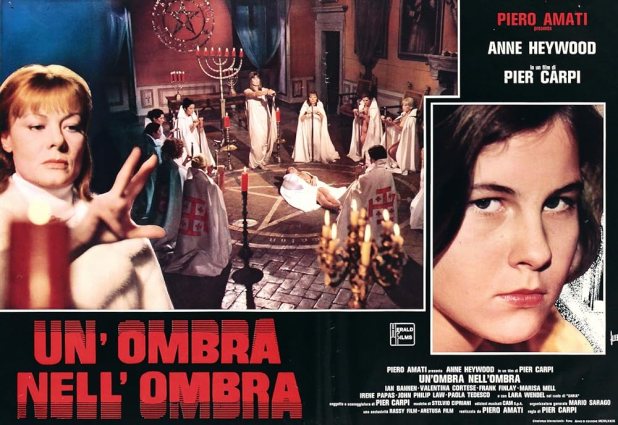
Beginning with an extended opening sequence, we learn that a group of women is bound together by their love of dance and the love of the devil. Years pass, and eventually the daughter of one of the women is having her own sort of spring awakening, suddenly becoming self-aware that her true father is Lucifer himself. 

While Ring of Darkness was accused of being another Italian rip-off of The Exorcist (writer-director Pier Carpi claimed to have written the story prior to William Blatty’s novel), the film really owes more to films such as Rosemary’s Baby and The Omen. Really, all three films form a sort of unholy trinity that, let’s just say, inspired many horror films in the 1970s and 80s. 

No one would confuse Daria (Lara Wendel) with Reagan or Damien in terms of memorable, menacing demonic characters. Is she the spawn of Satan, or has she just hit puberty? She goes around calling her mother “mother” in an annoying way that only a teenage girl could do. She does leave a scorching handprint on the chest of a classmate who wants to try to make the moves on her, an ability I’m sure most girls wish they had to rid themselves of annoying teenage boys.

Eventually, Daria ends up at the Vatican. Why? I guess we will never know, as no sequel was produced, or probably asked for by anyone ever. Still, I was interested in knowing what would happen next. Just like I wanted to know the next chapter in The Omen after Damien turns around and smiles back at the camera as he attends his parents’ funeral.

I watched this one on TUBI under the alternate title Satan’s Wife, which might just be one of the worst titles in cinematic history. There is no wife of Satan here. I’m not sure Satan is down with such long-term commitments. A much better title would have been To the Devil a Daughter, but Hammer had already used that one a few years prior.