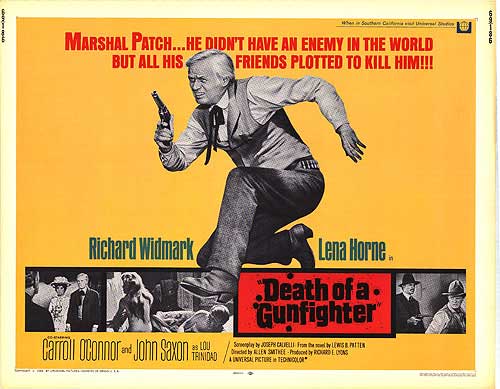
Death of a Gunfighter was originally directed by Robert Totten, who directed the original The Quick and the Dead, as well as plenty of TV like Gunsmoke and Mystery In Dracula’s Castle. Despite a year of work, he couldn’t get along with star Richard Widmark and lost that battle, getting replaced by Don Siegel (Invasion of the Body Snatchers, Dirty Harry and John Wayne’s last movie, The Shootist).
Siegel had been the original choice to direct, but was overworked, according to the Chicago Tribune. However, in Siegel’s memoirs, he wrote that Widmark pushed from day one to get Totten kicked off the film and replaced by the unwilling Siegel. Finally, three and a half weeks into making the movie, Widmark got Universal boss Lew Wasserman to personally get involved.
When Siegel looked at Totten’s footage, he thought it was great and even made sure his own footage matched. In fact, he didn’t reshoot a single scene, only finishing off the film’s opening and closing sequences, as well as some pick-up shots. In the end, he didn’t think he had done enough work to take directing credit.
However, Totten wanted nothing to do with the film. Siegel didn’t want his name on the film, which upset Widmark even more. Finally, an agreement was made with the Directors Guild of America for the pseudonym Alan Smithee to be used.
In fact, this was the first Alan Smithee-directed film.
Here’s where it gets weird: critics loved the film and the new director. The New York Times claimed that it had sharp direction and that Smithee “has an adroit facility for scanning faces and extracting sharp background detail.” Roger Ebert said that it was “an extraordinary western by director Allen Smithee, a name I’m not familiar with, allows his story to unfold naturally.” I wonder if Ebert was aware what was going on and was having fun with his review. I’d like to think so.
Based on Death of a Gunfighter by Lewis B. Patten, this movie feels like Hollywood realizing that some of the better Westerns were coming from other countries, mostly Italy, at this point. Marshall Frank Patch (Widmark) is an Old West-style lawman in Cottonwood Springs, Texas, a town determined to be modern and, as such, conveniently forget its numerous sins and just whitewash the past.
“What would happen,” the mayor says, “if an Eastern businessman came to town and saw old Patch there, wearing that shirt he probably hasn’t washed in a week?”
Patch shoots a drunk in self-defense, which the town leaders use as a way to get him out. Knowing that the town is about to murder him with their own gunfighters — he knows too much — the old lawman settles his affairs, including marrying brothel owner Claire Quintana (Lena Horne), an interracial relationship that is a fact of life, something bold for 1969.
This is a film rich with character actors that I love — Carroll O’Connor, Royal Dano, John Saxon — and a town unlike many other Westerns, one made up of all races, a place where a lone car causes worry, where the trains must get ever closer, where the past — and Patch — must die to move progress ever forward, no matter what.
Created in 1968 and used until it was formally discontinued in 2000, there is no Alan Smithee. Instead, it was the pseudonym used by members of the Directors Guild of America (DGA) when they were dissatisfied with the final product. In order to use the name, it had to be voted on to the satisfaction of a guild panel that they had not been able to exercise creative control over a film. The director was also required by guild rules not to discuss the circumstances leading to the movie or even to acknowledge being the project’s director.
One of the movies that we’ll cover today, Death of a Gunfighter, was the reason why Smithee was invented. Actor Richard Widmark was unhappy with director Robert Totten and wanted him replaced with the director he wanted in the first place, Don Siegel. Siegel believed that he had spent 9 to 10 days filming, while Totten had spent 25 days. Each had roughly an equal amount of footage in the final edit, but Siegel stated that Widmark had effectively been in charge the entire time, so he didn’t want the credit. Totten refused to take credit in his place. The DGA panel agreed that the film did not represent either director’s creative vision — the DGA believes in the auteur theory that the director is the singiular creative voice behind a movie — so the name Alan Smithee took their place.
After a few decades, people started catching on and some directors violated the embargo on discussing their use of the name. In 1997, the An Alan Smithee Film: Burn Hollywood Burn was made, a movie in which Alan Smithee (Eric Idle) can’t take his name off a movie because he will have to still have his name on it. It was directed by Arthur Hiller and ironically, he used the Alan Smithee title because Joe Eszterhas had too heavy of a hand.
April 28: Alan Smithee — IMDB has 115 movies credited to the Alan Smithee pseudonym, which was created by the Directors Guild of America for use when a director doesn’t want their name on a movie.
Here are some movies to get you started:
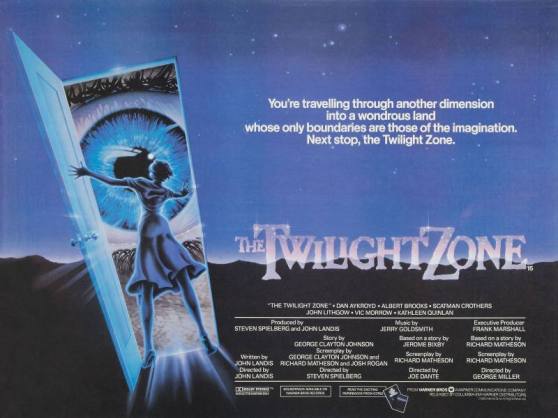
Twilight Zone: The Movie(1983): One of the few times an assistant director is listed as Alan Smithee, due to Anderson House being upset over the death of Vic Morrow and two child actors.
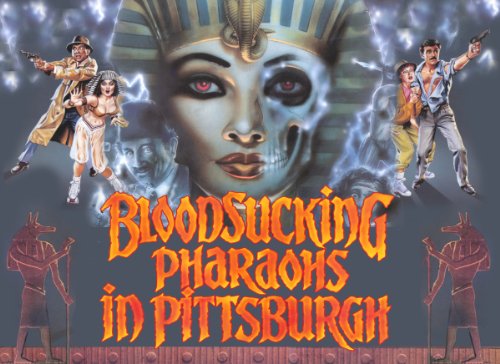
Bloodsucking Pharaohs In Pittsburgh (1991): Director and co-writer Dean Tschetter’s name was listed as Alan Smithee to indicate his dissatisfaction with the final film.
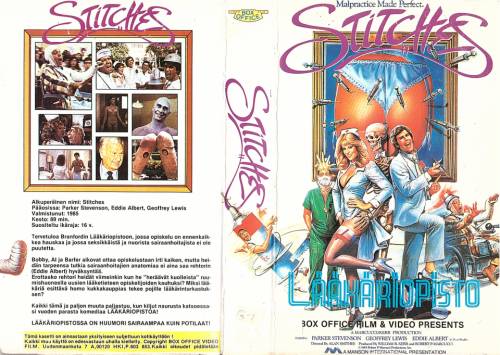
Stitches(1985): Rod Holcomb was unhappy with this and asked for his name to be taken off of it.
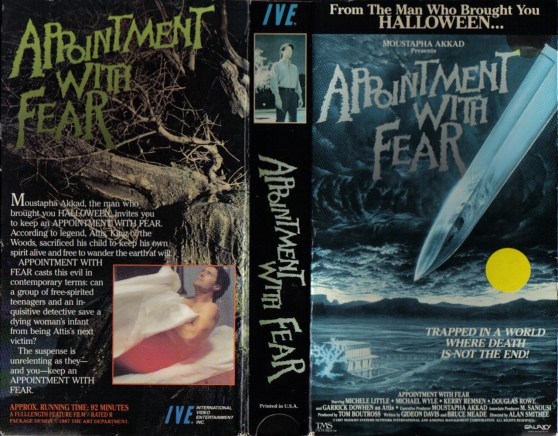
Appointment with Fear (1985): Directed by Ramsey Thomas for Moustapha Akkad — who was the producer behind Halloween— as Deadly Presence. After Akkad saw the director’s cut, he fired director Thomas and re-shot a considerable amount of new footage and re-edited the movie himself. Thomas declined to be credited as director.
The Birds II: Land’s End (1994): This is not the first — or the last — sequel that Rick Rosenthal would make, what with being part of the best Halloween sequel and the worst. He made sure his name was not on this movie, as Alan Smithee is credited.
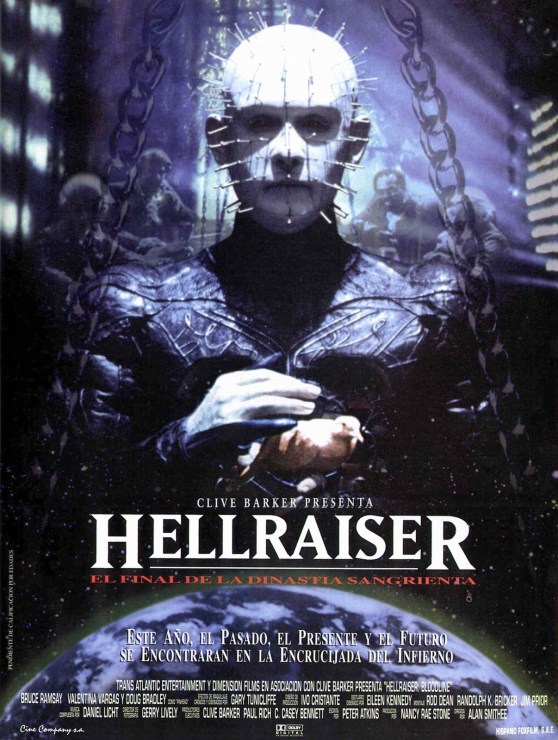
Hellraiser: Bloodline (1986): Kevin Yagher left the production after Miramax demanded new scenes be shot. The new scenes and re-shoots changed several characters’ relationships, gave the film a happy ending, introduced Pinhead earlier and cut 25 minutes of the director’s cut — so many changes that he was able to use the Alan Smithee credit.
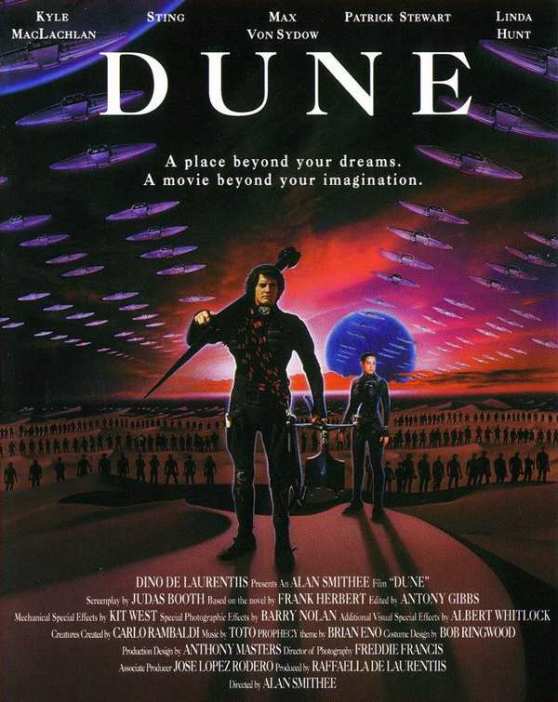
Dune(1984): David Lynch refuses to have anything to do with this movie. A television version was aired in 1988 that replaced the opening monologue with a much longer description of the setting that used concept art stills. Lynch disavowed this version and used Alan Smithee as his credit. For the extended and television versions, Lynch used the credit Judas Booth — a combination of Judas Iscariot and John Wilkes Booth — for his screenwriting credit.
Admission is still only $10 per person each night (children 12 and under free with adult) and overnight camping is available (breakfast included) for an additional $10 per person.
You can buy tickets at the show or use these links:
There is also a limited edition shirt available at the event.
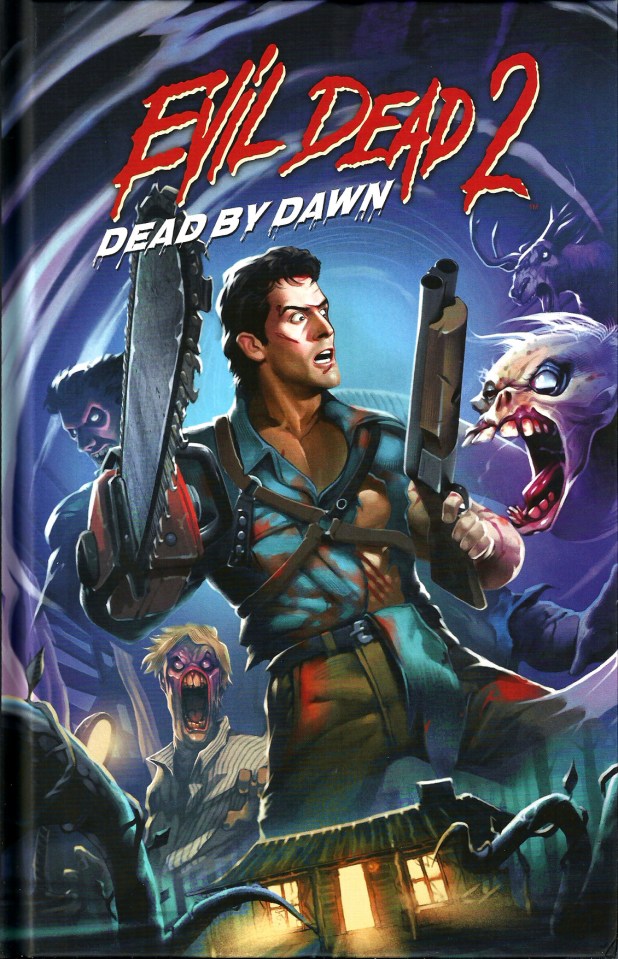
To whoever owned Prime Time Video, I am sorry that I bootlegged this VHS from your store in 1989 or so, because I was renting it so much that I wanted to watch it every single day. It was years until I saw Evil Deadand this movie formed so much of what I wanted out of movies. A camera that flew through walls, actors willing to destroy themselves to entertain you and geysers of bottomless buckets of gore.
Dino De Laurentiis put up the money and asked that the film be similar to its predecessor. Director Sam Raimi and writer Scott Spiegel must have thought, “We’ll show him,” and totally remade the first movie but whereas that one had no budget and felt like some maniacs in the woods near Detroit, this had a budget and felt like, yeah, some maniacs in the woods near Detroit.
This one replays the first one in like five minutes: Ash Williams (the returning Bruce Campbell) and his girlfriend Linda head to a cabin for the weekend, but instead of romance, they find the tapes of archaeologist Raymond Knowby and the words from Necronomicon Ex-Mortis that bring demons to their little lovers’ log cabin. Linda gets possessed, Ash decapitates her with a shovel and then proceeds to go bonkers for most of the movie.
Most of the movie is Campbell battling himself, his own hand — and later body — turning against him. It’s the kind of movie where a man can chainsaw off his on hand and then make a chainsaw appendage, say “Groovy” and it’s somehow — even years and years later — cool.
Spiegel and Raimi wrote most of the film in a house in Silver Lake that they shared with the Coen brothers, Frances McDormand, Kathy Bates and Holly Hunter, who the character of Bobby Jo is inspired by.
I’m looking forward to seeing this at the drive-in this weekend if only to feel the sheer joy I once had watching this. I’ve never seen it surrounded by others and can’t wait to see how others react to it. I know that it’s gone from a small movie to an accepted classic in the years since I watched it every day, but it’s still that movie I copied all those many, many years ago.
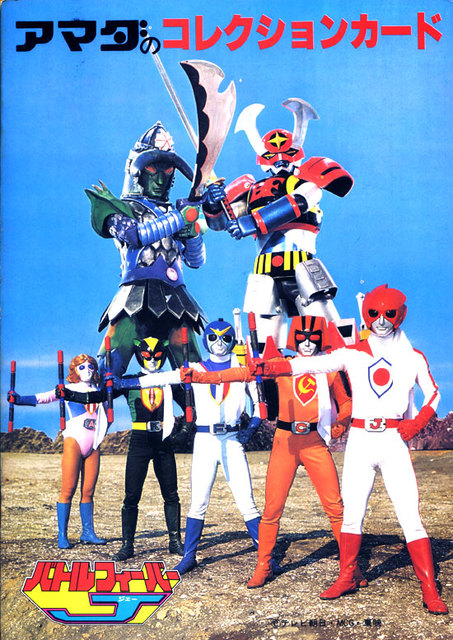
Battle Fever J was a co-production of Toei Company and Marvel Comics, inspired by Captain America and the third series in the Super Sentai series that would eventually come to America as the Power Rangers.
General Kurama has put together four young agents who have traveled the world to be trained. Along with FBI agent Diane Martin, whose father was murdered by the evil Egos, the team becomes Battle Fever J, kind of like a Japanese superhero show version of the Avengers. They are Battle France, Battle Cossack, Battle Kenya, Battle Japan and Miss America, backed up by their secret weapon Battle Fever Robo.
As for Egos, well, he works for a god named Satan Egos and has a series of monsters that he uses against the heroes, such as Death Mask Monster, Umbrella Monster, Psychokinesis Monster, Sports Monster, Anicent Fish Monster and Cicada Killer Monster.
At some point, Diane gets injured by the Dracula Monster and moves back home to the United States and is replaced by María Nagisa, another FBI agent trained by Diane’s father. She becomes Miss America II.
To prove that this is a Japanese show, death is a fact of life. Battle Cossack is killed in battle and replaced by his friend Makoto Jin, a silent cowboy who carries a trumpet into battle that he uses to taunt his enemies.
Across 52 episodes and a movie version of episode 5, the team battled evil and was popular not just in Japan but also in Hawaii. I love that Marvel has this property and doesn’t use it. Kind of like Toei’s Supaidāman show, which comes from a world where motorcycle racer Takuya Yamashiro takes the part of Peter Parker and gets his own flying car, the Spider Machine GP-7, and a giant robot named Leopardon.
I wrote about Bruka: Queen of Evil, which this movie is related to. For example, one of Darna’s villains is her former friend Valentina, who becomes the snake-haired Serpina. That character inspired Bruka.
But who is Darna?
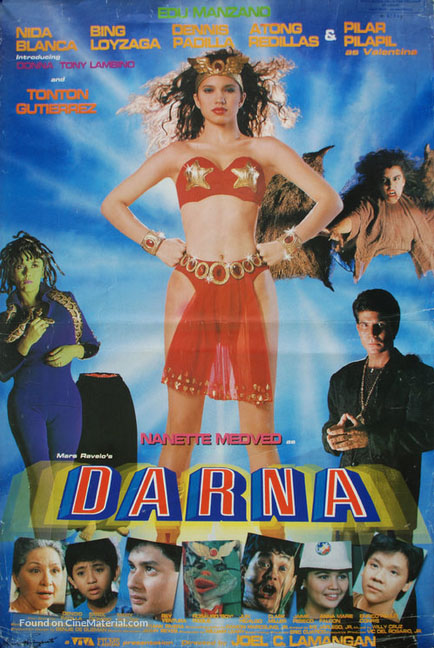
Darna is a Filipino superheroine created by writer Mars Ravelo and artist Nestor Redondo. It’s tempting, with her costume, to call her a Wonder Woman clone. She’s really a deceased extraterrestrial warrior who uses the body of an Earth woman named Narda to rescue those who can’t fend for themselves.
Fourteen different actresses have played her over 21 movies and TV shows, starting with Rosa del Rosario. The character is so famous that she’s even appeared in several ballet performances.
The 1991 version of the character was directed by Joel Lamangan and written by Frank Rivera. Darna is played by Nanette Medved. The origin is changed here so that Narda is granted a magical stone by an angel that can transform her into Darna. The enemy takes the form of a satanic conspiracy created by philanthropist Domino Lipolico and his henchwomen, the aforementioned snake goddess Valentina and the batwoman Impakta.
Where the world looks at Darna and sees Wonder Woman, you may watch this movie and see a lot of the plot of Superman with Narda leaving her small town to become a big city reporter, glasses as a disguise and all.
Valentina is over the top, which is great, as she’s played by Pilar Pilapil and seems to be a high fashion disco villainess with an anthropomorphic snake named Vibora that must be seen to be believed. As for Impakta (Bing Loyzaga), she uses a teddy bear to lure a child to her doom and kills the kid. Filipino superhero action has no idea how to pull a punch.
In How the World Remade Hollywood, author Ed Glaser suggests something pretty incredible: while in the 70s, 80s and 90s Darna looked to Diana Prince for inspiration, our Wonder Woman started to seemingly look to her Filipino sister for costume advice and finally decided to leave behind the invisible plane and learn how to fly on her own.
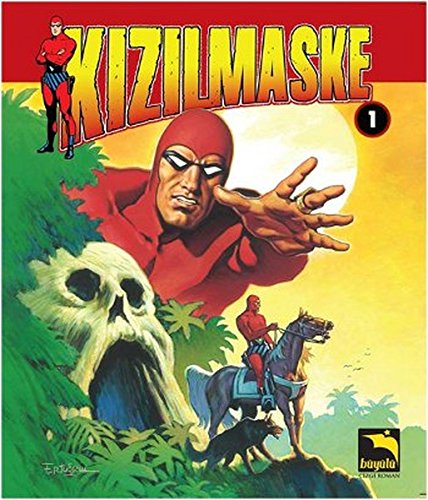
This is not the only remake of Lee Falk’s The Phantom that was made in Turkey. This version is Red Mask, which basically gives you a Street Fighter-style palette swap of the Ghost Who Walks. There’s also another Kizil maske that came out that very same year directed by Çetin Inanç. You can tell the difference because the former movie has a ripoff of the James Bond theme while the latter takes the Secret Agent Man theme. There’s also the 1971 movie Kizil Maske’nin Intikami (The Phantom’s Revenge).
The second Inanç-directed film also has a bad guy who looks like a Klan member with lightning bolts all over his hood and a Phantom that doesn’t even try to disguise that he’s completely taking the look and not caring about intellectual property. Actually, I kid, he has on a rad leather jacket and kind of looks like Dominic Fortune and there you go, that’s a reference that proves why I do a small website and am not shared out by the film Twitter universe just yet.
Also, all of these Turkish films are way better than the Billy Zane movie, which I refer to as Slam Evil! instead of its real title.
According to How the World Remade Hollywoodby Ed Glaser, I learned that the Phantom was a big deal in Turkey. While he’s purple in the U.S., he was originally intended to be grey. To make things somewhat confusing, in other counties, the Ghost Who Walks shows up in different colors: blue in Scandanavia, green in Australia and red in Turkey. Hence the title of this film.
And if you’re wondering where those hooded bad guys come from in the Çetin Inanç-directed movie, Inanç’s former boss was Yilmaz Atadniz, who directed Kilink: Soy ve Oldur. That’s the very footage these characters are cut and pasted from before we get to the movie’s main villains, “Al Capone” Arif and Fu Manchu. An Arabian Fu Manchu at that.
Next week, we’re doing comic book movies. Consider this a preview.
April 27: Lost Comic Book Movies — Forget the MCU. Let’s talk about superhero movies that no one is talking about.
Here are some movies to get you started:
3 Giant Men (1973): Santo and Captain America against a drug-dealing murdering Spider-Man? Yep. All that and so much more, like Spidey putting a woman’s face into an outboard motor.
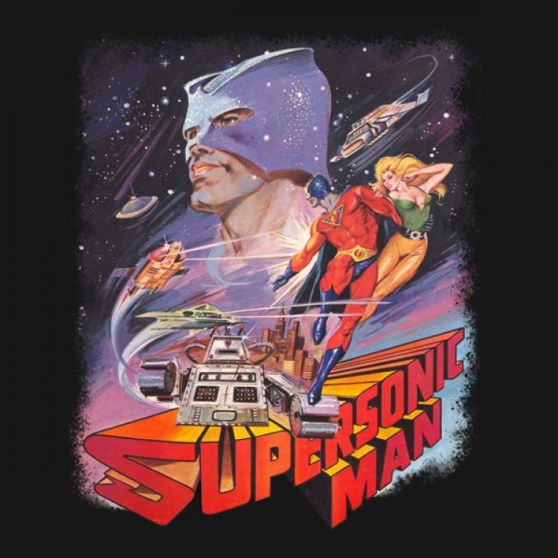
Supersonic Man(1979): A superhero from Juan Piquer Simon, the same man who brought us Pieces and Slugs. Oh man.
Infra-Man (1975): Beyond bionics? More like beyond amazing. If you haven’t seen this, fix that immediately.
As someone from Pittsburgh, it’s kind of amazing that I’ve never watched this movie, perhaps the most famous movie shot here not in the horror or action genre.
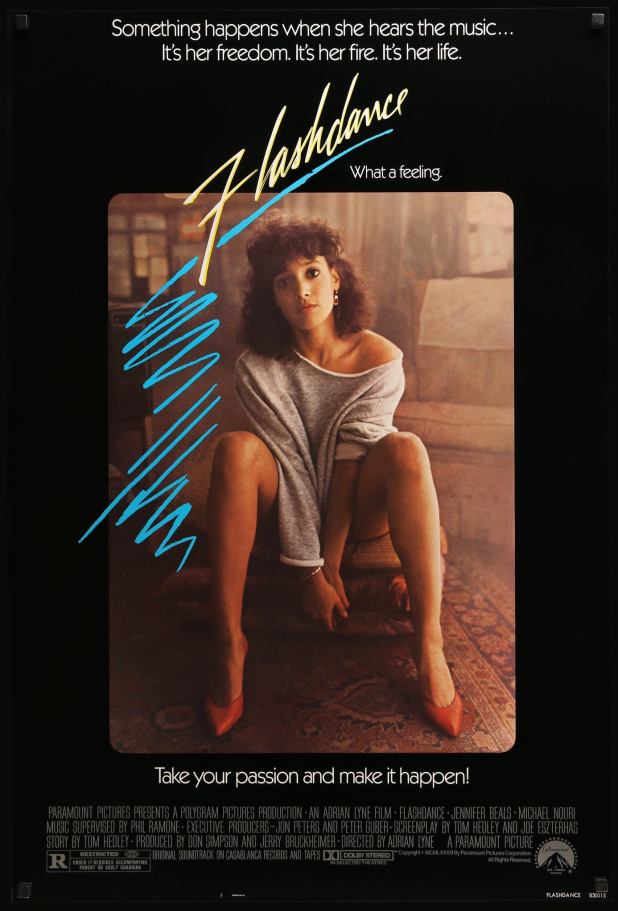
Adrian Lyne was not the first choice to be the director, as both David Cronenberg and Brian De Palma turned it down. But Lyne came from commercials — his ads for Brutus Jeans are pretty much proof of concept for this movie — and he knew the right look for the film.
Paramount was so unsure of the movie’s potential that they sold 25% of the rights before it came out. Joke was on them — it made over $200 million worldwide and was the third highest-grossing film of 1983.
For the lead, there were three front-runners: Jennifer Beals, Demi Moore and Leslie Wing. As this was the first collaboration of producers Don Simpson and Jerry Bruckheimer, they were quite hands-on. Writer Joe Eszterhas* — oh man, I need to do a week of his films — claims that Eisner took a survey from “two hundred of the most macho men on the Paramount lot, Teamsters and gaffers and grips.” He asked one very important question: “I want to know which of these three young women you’d most want to fuck.”
Lyne used dark cinematography and montage music video editing to hide one important fact: that isn’t Beals dancing. Her body double is Marine Jahan and also male dancer Richard “Crazy Legs” Colón, a member of the Rock Steady Crew who is also in Style Wars, Wild Style and Beat Street. Gymnast Sharon Shapiro also doubled during the audition scene.
Alexandra “Alex” Owens (Beals) works as a welder in a steel mill by day — kids, learn a trade because welders are seriously always in demand and Alex is pretty smart to know this — and a dancer at Mawby’s by night. She dreams of being a professional ballet dancer, but dreams are in currency at that establishment, with Jeanie (Sunny Johnson, who sadly died not long after making this from a brain hemorrhage) wants to be a figure skater and her short-order cook boyfriend Richie (Kyle T. Heffner) wants to become a comedian.
Alex is in demand. Her boss Nick (Michael Nouri) is smitten with her while Johnny C. (Lee Ving!) wants her to dance at his strip club Zanzibar. She keeps thinking about applying to the Pittsburgh Conservatory of Dance and Repertory but is too afraid of the tryout. And then, one night, she and Richie are attacked by Johnny C. and one of his henchmen, Cecil (Malcolm Danare). Nick saves the day and they finally fall in love.
Things get tough, though. Richie makes it to Los Angeles, but Jeanie falls twice in her big skating competition and decides that Zanzibar is where her future is. Alex drags her out at the two cry in the rain. And Nick’s ex-wife (Belinda Bauer) complicates the love story for some time, but things work out and Alex nails her audition, using the rough edge of dance she did on stage mixed with the classical form.
Pittsburgh is just as much a character as anyone else in this movie. Alex rides the Duquesne Incline like a good Yinzer, which also doesn’t make sense because her apartment is miles away and near the home of her mentor at 2100 Sidney Street. Kind of like how she rides her bike all through Fineview and somehow ends up on the Smithfield Street Bridge, as close to a “Take Bigelow” moment as Flashdance gets. The Pittsburgh Conservatory of Dance and Repertory is obviously the Carnegie Museum, which is one of my favorite places (the nearby Carnegie Library is gigantic, has a hidden window to check out the dinosaurs in the history museum, is heated with old radiators and has an amazing DVD collection with so many out of print films).
Sadly, Alex’s loft is actually Los Angeles. And Mawby’s was a vacant warehouse on the corner of Boyd Street and Wall Street, even if it looks a lot like Jack’s on East Carson Street. The idea of Mawby’s is wild to me. It’s obviously a working class shot and a beer bar, yet it has dancers on stage who bring their own props and dance some incredibly intricate dancers of sultry near performance art whereas you’d expect gyrations and nudity. There was never a place like this in 1983 Pittsburgh that I know of — to be fair, I was 11 and would have been kicked out of the Edison Lounge, so maybe it was the Moon Township-based Fantasy’s Showbar while Zanzibar is closer to the Edison, Casino Royale or the frankly intimidating Chez Kimberly — but hey just add it to the list of strip club establishments in movies where no one gets naked. That said, Tina Tech (Cynthia Rhodes, who is also in Staying Alive, Runawayand plays Penny in Dirty Dancing) dancing to the song “Manhunt” is pretty incredible.
Zanzibar** is really Star Strip Gentlemen’s Club on 365 North La Cienega Boulevard in West Hollywood — thanks Movie-Locations.com — which is gone.
You can also see a lot of Pittsburgh, like the Southside clock — once owned by Duquesne Brewing — as well as a lot that’s gone, like the mills, the once glitzy world of Station Square which is mostly office space now (I spent years of my life working there and the nightclub Chauncy’s would blast bass into our advertising office while we worked all night, I was a maniac, maniac pasting up ads) and Vic Cianca, a Pittsburgh icon who was a dancing traffic cop who conducted the gridlock of dahntahn like it was a symphony. When he retired, The Pittsburgh Press — also gone — said “A downtown traffic jam without Vic Cianca is a traffic jam with no redeeming qualities.”
Debra Gordon, who was Rita in Effects is a ballet dancer in this. And always, a movie cannot be made in Pittsburgh without Chef Don Brockett being in the cast. Never change, City of Bridges.
The music of Flashdance is the last character we need to discuss.
Bruckheimer had collaborated with Giorgio Moroder on American Gigolo and sent him the script as soon as he had received it to give him a sense of the music they needed. The composer was busy while the movie was being shot and only had time to do a rough version of the theme song. Moroder had not committed to the project by the end of filming, but when he watched the movie, he decided to work on the score.
Moroder wrote the “Love Theme from Flashdance,” “Lady, Lady, Lady” and “Seduce Me Tonight,” as well as the movie’s main theme, “Flashdance… What a Feeling.” Session drummer Keith Forsey was assigned to write the lyrics and had help from Irene Cara after they watched the audition scene. Moroder wanted Joe Esposito to sing the theme, but Paramount wanted a well-known female singer. And after all, Cara had stipulated that if she wrote the lyrics, she would get to sing the song.
So many of the lyrics match how Alex feels about dancing in front of the drunks at Mawby’s. She says, “I never see them. You go out there, and the music starts, and you begin to feel it. And your body just starts to move. I know it sounds really silly. But something inside you just clicks, and you just take off. You’re gone. It’s like you’re somebody else for a second.” This freedom she describes is reflected in the lyrics, “When I hear the music, close my eyes, feel the rhythm wrap around, take ahold of my heart, what a feeling.”
Another song that was a big deal in the movie is “Maniac” by Michael Sembello. It was written with Dennis Matkosky and inspired by a story about a serial killer on the news and had some of its original lyrics written after a viewing of Maniac. Lyne heard a demo and wanted to use the song, saying “One of the tunes I’d heard had a kind of a chime in it, that kind of ‘bing-bong-bing-bong-bing-bong’, like that, and I said, “Let’s use that. Let’s use that as a kind of a motive, as a kind of a driving thing for a dance.””
*Flashdance was inspired by the real-life story of Maureen Marder, a construction worker and welder by day and dancer by night at Gimlets, a Toronto strip club who wanted to be a professional dancer. Tom Hedley wrote the story outline and Marder signed a release giving Paramount Pictures the right to portray her life story on screen for $2,300.
Sadly, her attorney was present for that and despite the movie making so much money, she was not entitled to more when she sued.
Paramount also went to court over the movie as the Jennifer Lopez video “I’m Glad,” which was directed by David LaChapelle, went a bit further on the side of ripoff than tribute. Her label, Sony, agreed to pay a licensing fee for the video.
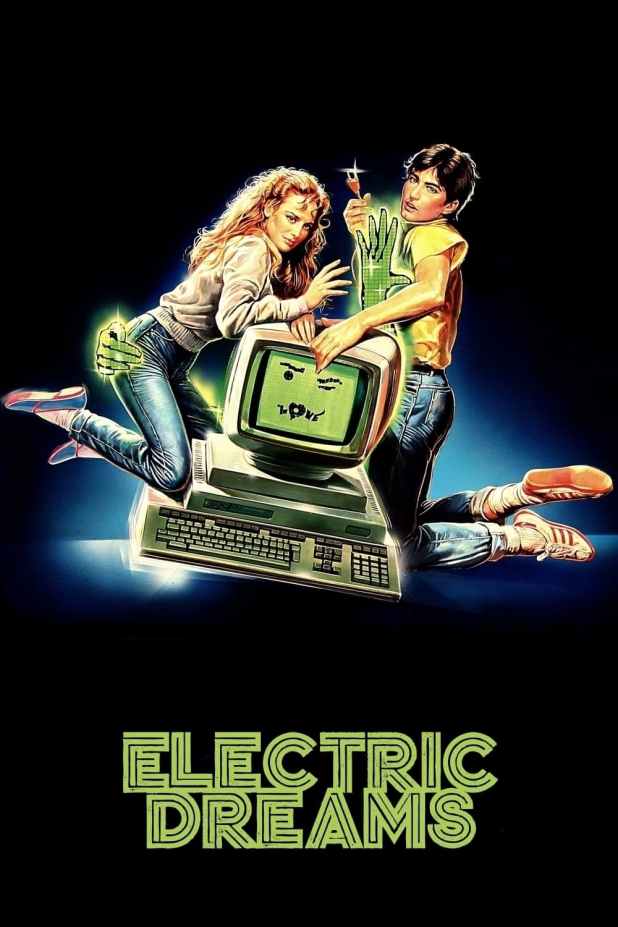
Steve Barron directed some of the most famous videos like “Billie Jean” by Michael Jackson, “Money for Nothing” by Dire Straits, “Electric Avenue” by Eddy Grant, “Don’t You Want Me” by The Human League, “Africa” by Toto and “Take On Me” by A-ha. This was his first film, which was written by Rusty Lemorande, who also was behind Captain EO, Cannon’s Journey to the Center of the Earth and the Patsy Kensit and and Julian Sands-starring The Turn of the Screw.
Barron often shared his music videos with his mother Zelda. Now, that isn’t him being a mama’s boy. She was at the time doing continuity on Yentl with Lemorande — she also directed the movie Shag and Culture Club’s* videos for “I’ll Tumble 4 Ya,” “Miss Me Blind,” “The Medal Song” and “It’s a Miracle” — and showed showed him a video that Barron made for Haysi Fantayzee, which led to this movie.
The film is very much an extended music video and has lots of artists of the era, such as YB40, Jeff Lynne, Phil Collins, Heaven 17 and, most importantly, Giorgio Moroder, who was hired as the composer.
Barron would later say, “(Mordoer) played me a demo track he thought would be good for the movie. It was the tune of “Together in Electric Dreams” but with some temporary lyrics sung by someone who sounded like a cheesy version of Neil Diamond. Giorgio was insisting the song could be a hit so I thought I’d suggest someone to sing who would be as far from a cheesy Neil Diamond as one could possibly go. Phil Oakey**. We then got Phil in who wrote some new lyrics on the back of a (cigarette) packet on the way to the recording studio and did two takes which Giorgio was well pleased with and everybody went home happy.”
Miles Harding (Lenny Von Dohlen, Harold Smith on Twin Peaks) is an architect who wants to build earthquake-proof building, which is why he buys a computer to help him and goes overboard, buying everything he can to allow it to run his house. However, he screws up his own name and it calls him Moles. As the computer downlaods more information and it starts to overheat. Miles pours champagne on it, which is not how to fix a computer and it becomes self-aware, gains the voice of Bud Cort (Barron didn’t want Cort to be seen by the other actors so he did his lines in a padded box on a sound stage) and the name Edgar.
Miles and Edgar are both in love with neighbor Madeline Robistat (Virginia Madsen), with Edgar even playing cello along with her in a duet, a performance that Miles takes credit for. He even asks the computer to write a song for Madeline, but that takes things too far and soon man fights machine.
Yet don’t take this to be a horror movie. It ends up being quite sweet at the end and is a cute romance. You can even see Moroder show up as a record producer. This movie has one of my favorite movie things in it: computers that at once look dated and yet do more than they can today.
*Harold and Maude fan Boy George visited the set of this movie just to meet Bud Cort. George also helped compose the song “Electric Dreams” and contributed his band’s songs “Karma Chameleon,” “Do You Really Want to Hurt Me,” “Love Is Love” and “The Dream” to the soundtrack.
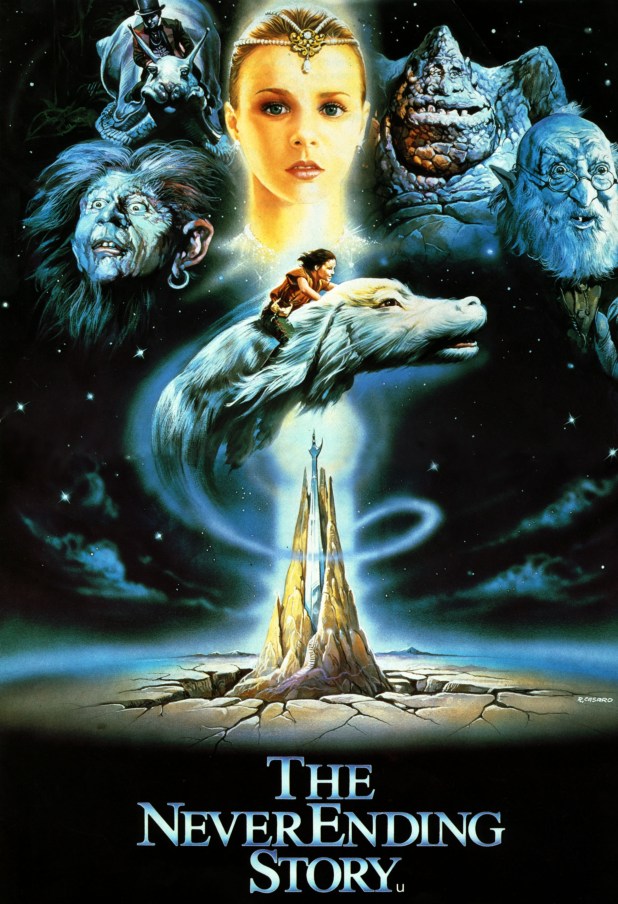
Die Unendliche Geschichte — based on the 1979 novel The Neverending Story by Michael Ende — was, at the time of its production, was the most expensive film produced outside the United States or the Soviet Union.
Ende was happy about his book being turned into a film and worked with director Wolfgang Petersen as a script advisor. He was paid $50,000 for the rights to his book and at the end of the day, he was upset that Petersen rewrote the script without consulting him and he demand that the production either be stopped or the film’s title be changed. He sued and list and called the movie “gigantic melodrama of kitsch, commerce, plush and plastic.”
Guess all those 80s kids were idiots, huh?
Bastian Bux is me at ten. He doesn’t want anything to do with anyone, he’s bullied and all he cares about books. One day, while hiding inside a book store, he’s warned about The Neverending Story by the owner, Carl Conrad Coreander. It’s not a safe book. Yet he steals it and runs.
Inside the book, Fantasia is being eaten alive by “The Nothing” while The Childlike Empress (Tami Stronach) grows ill. Atreyu (Noah Hathaway) is trying to cure her, using the Auryn medal to protect himself from the forces of evil. Well, those forces cause his horse Artax to be lost in the swamp in a scene that scars children for the rest of their lives.
Luckily, he’s saved by the Falkor, a furry dragon of sorts and Atreyu learns from the Southern Oracle that there’s one way to save the Empress: find a human child who lives beyond the boundaries of Fantasia to give her a new name. Someone like Bastian.
And, it turns out, the viewers, who are all part of The NeverEnding Story itself. Also, seeing as how Bastian names The Childish Empress Moonchild at the end, is this also an Aleister Crowley-related movie?
Petersen also directed Das Boot, Enemy Mine, In the Line of Fire, Air Force One, The Perfect Storm, Troy and Poseidon. That’s what we call a solid career.
In Germany, this movie sounds a lot different as it has an orchestral score by Klaus Doldinger of the German jazz group Passport. However, the English language version has a theme song composed by Giorgio Moroder, with lyrics by Keith Forsey and a performance by Christopher “Limahl” Hamill, a former lead singer of Kajagoogoo, and Beth Anderson. It was a big deal — it peaked at No. 17 on the Billboard Hot 100. But along with the techno-pop additions to the soundtrack, none of this plays in the German version.




 B&S About Movies
You must be logged in to post a comment.