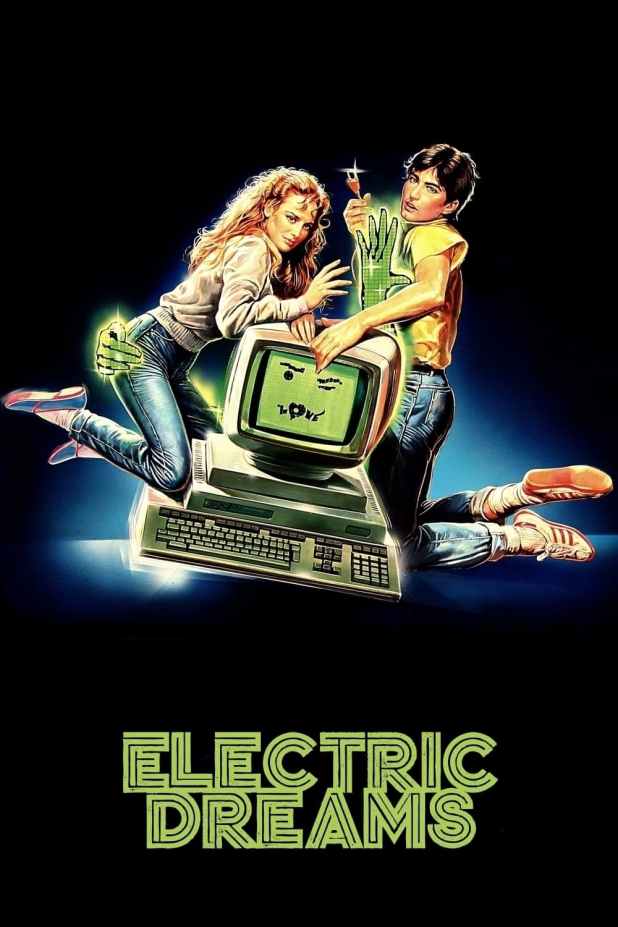
APRIL MOVIE THON DAY 26: Electric Dreams (1984)

Steve Barron directed some of the most famous videos like “Billie Jean” by Michael Jackson, “Money for Nothing” by Dire Straits, “Electric Avenue” by Eddy Grant, “Don’t You Want Me” by The Human League, “Africa” by Toto and “Take On Me” by A-ha. This was his first film, which was written by Rusty Lemorande, who also was behind Captain EO, Cannon’s Journey to the Center of the Earth and the Patsy Kensit and and Julian Sands-starring The Turn of the Screw.

Barron often shared his music videos with his mother Zelda. Now, that isn’t him being a mama’s boy. She was at the time doing continuity on Yentl with Lemorande — she also directed the movie Shag and Culture Club’s* videos for “I’ll Tumble 4 Ya,” “Miss Me Blind,” “The Medal Song” and “It’s a Miracle” — and showed showed him a video that Barron made for Haysi Fantayzee, which led to this movie.

The film is very much an extended music video and has lots of artists of the era, such as YB40, Jeff Lynne, Phil Collins, Heaven 17 and, most importantly, Giorgio Moroder, who was hired as the composer.

Barron would later say, “(Mordoer) played me a demo track he thought would be good for the movie. It was the tune of “Together in Electric Dreams” but with some temporary lyrics sung by someone who sounded like a cheesy version of Neil Diamond. Giorgio was insisting the song could be a hit so I thought I’d suggest someone to sing who would be as far from a cheesy Neil Diamond as one could possibly go. Phil Oakey**. We then got Phil in who wrote some new lyrics on the back of a (cigarette) packet on the way to the recording studio and did two takes which Giorgio was well pleased with and everybody went home happy.”

Miles Harding (Lenny Von Dohlen, Harold Smith on Twin Peaks) is an architect who wants to build earthquake-proof building, which is why he buys a computer to help him and goes overboard, buying everything he can to allow it to run his house. However, he screws up his own name and it calls him Moles. As the computer downlaods more information and it starts to overheat. Miles pours champagne on it, which is not how to fix a computer and it becomes self-aware, gains the voice of Bud Cort (Barron didn’t want Cort to be seen by the other actors so he did his lines in a padded box on a sound stage) and the name Edgar.

Miles and Edgar are both in love with neighbor Madeline Robistat (Virginia Madsen), with Edgar even playing cello along with her in a duet, a performance that Miles takes credit for. He even asks the computer to write a song for Madeline, but that takes things too far and soon man fights machine.

Yet don’t take this to be a horror movie. It ends up being quite sweet at the end and is a cute romance. You can even see Moroder show up as a record producer. This movie has one of my favorite movie things in it: computers that at once look dated and yet do more than they can today.

*Harold and Maude fan Boy George visited the set of this movie just to meet Bud Cort. George also helped compose the song “Electric Dreams” and contributed his band’s songs “Karma Chameleon,” “Do You Really Want to Hurt Me,” “Love Is Love” and “The Dream” to the soundtrack.

**The Human League’s singer.
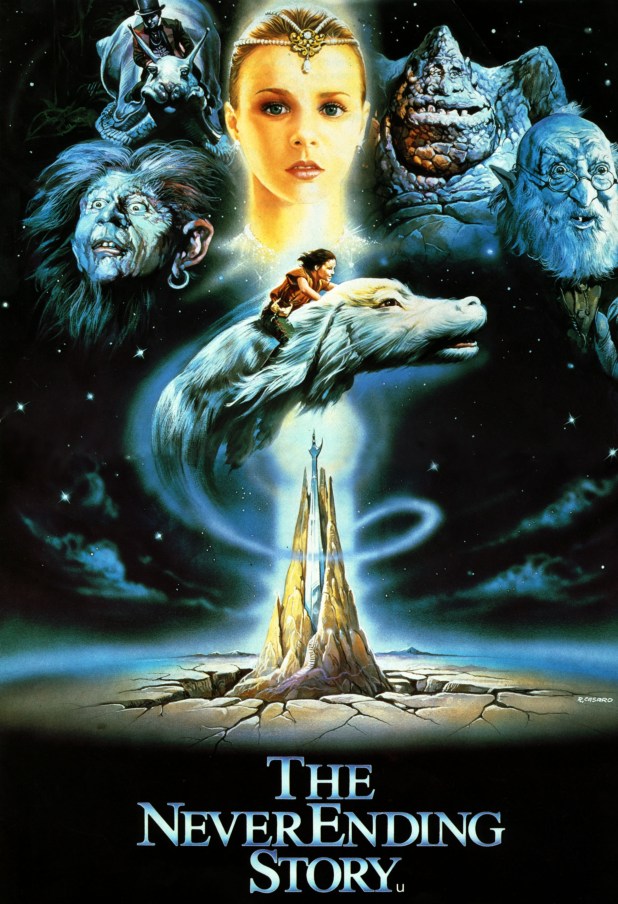
APRIL MOVIE THON DAY 26: The NeverEnding Story (1984)

Die Unendliche Geschichte — based on the 1979 novel The Neverending Story by Michael Ende — was, at the time of its production, was the most expensive film produced outside the United States or the Soviet Union.

Ende was happy about his book being turned into a film and worked with director Wolfgang Petersen as a script advisor. He was paid $50,000 for the rights to his book and at the end of the day, he was upset that Petersen rewrote the script without consulting him and he demand that the production either be stopped or the film’s title be changed. He sued and list and called the movie “gigantic melodrama of kitsch, commerce, plush and plastic.”

Guess all those 80s kids were idiots, huh?

Bastian Bux is me at ten. He doesn’t want anything to do with anyone, he’s bullied and all he cares about books. One day, while hiding inside a book store, he’s warned about The Neverending Story by the owner, Carl Conrad Coreander. It’s not a safe book. Yet he steals it and runs.

Inside the book, Fantasia is being eaten alive by “The Nothing” while The Childlike Empress (Tami Stronach) grows ill. Atreyu (Noah Hathaway) is trying to cure her, using the Auryn medal to protect himself from the forces of evil. Well, those forces cause his horse Artax to be lost in the swamp in a scene that scars children for the rest of their lives.

Luckily, he’s saved by the Falkor, a furry dragon of sorts and Atreyu learns from the Southern Oracle that there’s one way to save the Empress: find a human child who lives beyond the boundaries of Fantasia to give her a new name. Someone like Bastian.

And, it turns out, the viewers, who are all part of The NeverEnding Story itself. Also, seeing as how Bastian names The Childish Empress Moonchild at the end, is this also an Aleister Crowley-related movie?

Petersen also directed Das BootEnemy MineIn the Line of FireAir Force One, The Perfect Storm, Troy and Poseidon. That’s what we call a solid career.

In Germany, this movie sounds a lot different as it has an orchestral score by Klaus Doldinger of the German jazz group Passport. However, the English language version has a theme song composed by Giorgio Moroder, with lyrics by Keith Forsey and a performance by Christopher “Limahl” Hamill, a former lead singer of Kajagoogoo, and Beth Anderson. It was a big deal — it peaked at No. 17 on the Billboard Hot 100. But along with the techno-pop additions to the soundtrack, none of this plays in the German version.

APRIL MOVE THON DAY 26

Giorgio Moroder is more than just the father of disco. He’s contributed to the entire world of synth in music and his film work is vast.

It would take so long to list every amazing song and album Moroder created, but beyond his own work, I’d start with “Bad Girl” and “Last Dance” by Donna Summer, “Call Me” by Blondie, “The Number One Song In Heaven” by Sparks, his work with Daft Punk and, of course, “Body Next to Body” by Falco and Bridgette Nielsen.

His song “Chase” from Midnight Express is just part of the score that won Moroder an Academy Award for Best Original Score and the Golden Globe Award for Best Original Score. It was also used for years by the pro wrestling theme to the point that just the first few notes make most fans get ready to cheer. Moroder also won a Best Song Oscar for “Flashdance…What a Feeling” from Flashdance and “Take My Breath Away” from Top Gun, a song that he claims is his favorite. Other soundtracks include Electric DreamsScarfaceBattlestar GalacticaD.C. Cab and Superman III.

April 26: Oh Giorgio! — Pick a movie with a Giorgio Moroder score. Here’s a list to get you started.

Here are some films we’ve already written about with Moroder songs:

Over the Top (1987): Moroder scored this movie, with probably the Kenny Loggins’ voiced song “Meet Me Halfway” being the most remembed song.

Foxes (1980): The second movie that Moroder scored after American Gigolo, he wrote Donna Summer’s “On the Radio” for this movie.

Cat People (1982): Cat People (Putting Out the Fire)” is the best song from this film. David Bowie wrote the very film-referencing lyric while Moroder composed the music, which is built around only two chord changes. Bowie was unhappy with this version and re-recorded it for his album Let’s Dance with Niles Rogers producing and Stevie Ray Vaughn playing guitar on a much harder version of the song.

What are you watching or listening to?

APRIL MOVIE THON DAY 25: Tilt (1979)

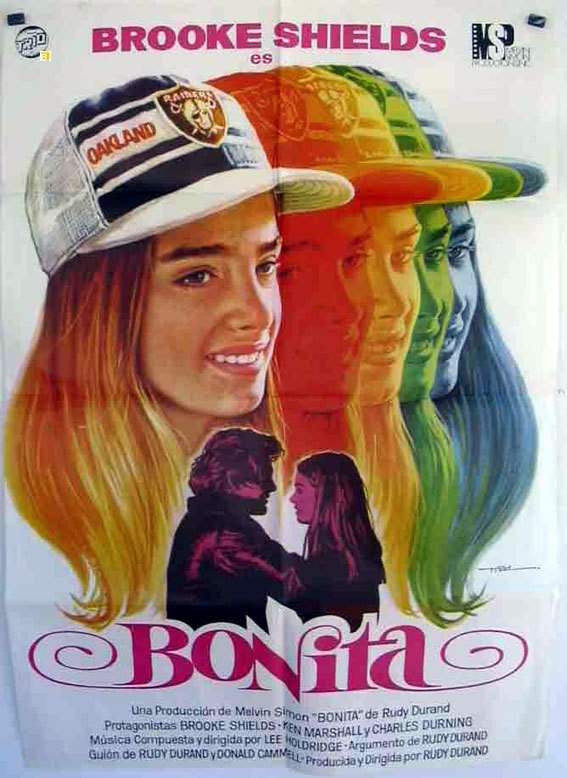
Neil Gallagher (Ken Marshall, Prince Colwyn from Krull) wants to get back at Harold “The Whale” Remmens (Charles Durning), who just might be the best pinball player in the world. After he’s busting cheating, he leaves town and soon discovers 14-year-old pinball player Brenda “Tilt” Davenport (Brooke Shields), who comes from a bad home and has mostly turned to a bartender Mickey (John Crawford) as her father figure. She thinks she’s using her pinball skills to hustle players to fund Neil’s singing career, but it’s all about coming back home to win that big bet and get revenge.

With Lorenzo Lamas, Don Stark and Geoffrey Lewis, who is in a wild scene with Shields where she offends him by telling him that she wants to make love to his life — Shields was 13 at the time this was filmed, the 70s were insanity — this is a movie that makes us think that the economy of 1979 America was based on pinball.

I was wondering why this movie seems so deranged and then I saw the credits. It was co-written by Donald Cammell, who made Performance and it all makes sense. This was directed by Randy Durand, who only made this one film. Cammell left the movie when they wouldn’t hire Jodie Foster as the lead. Durand was the director, a co-writer, the producer, musical director, and in the sound department, was responsible for the pinball machine musical sound effects. He’d wanted to hire Orson Welles to be Durning’s role, but even though he couldn’t do it, he mentioned the movie on The Tonight Show, which helped Durand get some funding.

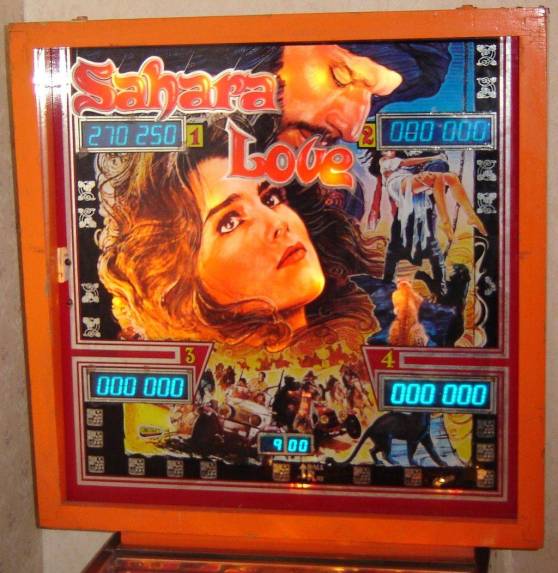
Even wilder, there was a Sahara Love pinball machine based on the Cannon film Sahara that Brooke made years later.

You can watch this on YouTube.

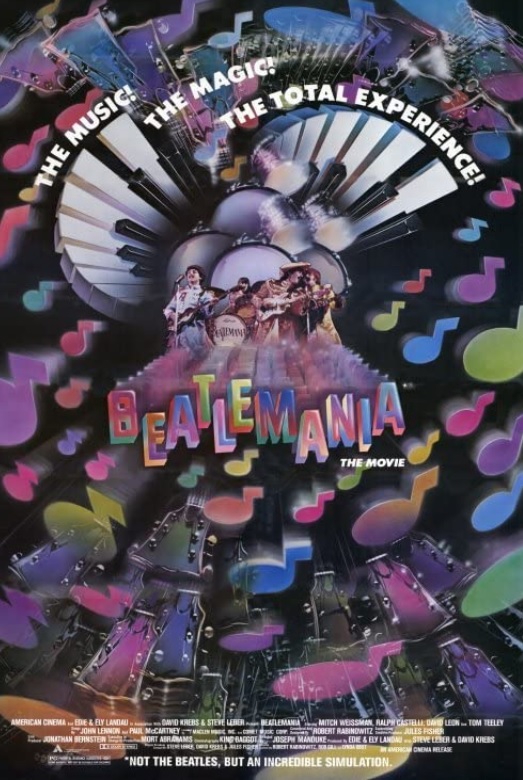
April Movie Thon Day 25: Beatlemania: The Movie (1981)

April 25: Fads — Lambada. Disco. Garbage Pail Kids. What’s your favorite fad-related movie? Click the image for our full list of reviews for the month!

So, the day of April 25 on the B&S About Movies’ announcement for the April Movie Thon so proclaimed today as “Fads” day: Lambada. Disco. Garbage Pail Kids. You could toss superhero movies on the VHS stack. Elvis movies*. Buddy Cop flicks. Gangster movies. Movies starring Melissa McCarthy and Tim Allen.

Oh, but how could we forget including “The Fab Four” — who, through no fault of their own — became “The Fad Four” — across 30-plus films since the late ’60s**. Yes, we are name-dropping the “fad films” Breakin’, Can’t Stop the Music, The Garbage Pail Kids, and Roller Boogie in the same breath as one of the most — if not the most — influential bands of all time.

This “film” — a concept that Ringo went on record as saying he “hated” — is one of those fad flicks of our dismay. And deservingly so, since it is the most blatant marketing cash-in of all Beatles flicks.

A smash Broadway musical-rockumentary advertised as “Not the Beatles, but an incredible simulation” that ran for 1,006 performances from May 1977 to October 1979 is a sure bet for a theatrical film adaptation.

No, it’s not.

The show — a multimedia production consisting of backdrops and projected images of art and video footage from the Beatles-era, as well as numerous clips of the Beatles — consisted of 29, chronologically-played songs, complete with costume changes.

So — with a Broadway hit on their hands — the managerial impresarios behind the production, Steve Lever and David Krebs (known for their handling of the Rolling Stones, Joan Jett, to a lesser extent, Canadian metalers Anvil; chornicled in their document, Anvil! The Story of Anvil, and Aerosmith; remember “Boston’s Bad Boys” appeared in Sgt. Pepper’s Lonely Hearts Club Band), decided that — Apple Corps. lawsuits, be damned — it was time to take on the album charts and the silver screen.

The original cast of Joe Pecorino (rhythm guitar, John), Mitch Weissman (bass guitar, Paul), Les Fradkin (lead guitar, George), and Justin McNeill (drums, Ringo), and the second cast of Randy Clark as John, Reed Kailing as Paul, P.M. Howard as George, and Bobby Taylor as Ringo, headed into the studio for a 1978 Arista Beatlemania: The Album release — which bombed with record buyers as it scrapped into the lowest regions of the Billboard 200.

Seriously? Who wants to buy a Pickwick (Discogs) budget sound-alike of Beatles tunes?

Okay . . . well, maybe a movie would work, better.

Uh, no it won’t. Remember All This and World War II?

Production began in late 1980 — shortly before John Lennon’s December 8 murder — under the tutelage of TV director Joseph Manduke (Harry O, Hawaii Five-O, Barnaby Jones). The cast featured a mix of musicians from the Broadway production and Arista album, with Mitch Weissman back a third time as Paul, David Leon as John, Tom Teeley as George, and Ralph Castelli as Ringo.

Released in the summer of 1981, Beatlemania: The Movie quickly became a critical and box office bomb. Apple Corps, who launched their first legal volleys regarding publicity rights and trademarks in 1979, finally won in damages in 1986.

You can learn more on the making of Beatlemania (the Broadway show) with this Chicago news station-produced TV documentary on You Tube.

* Been there. Done that. Check out our “Exploring: Elvis Fantasy Flicks” round up.

** Editor’s Note: This review previous appeared in August 2021, as part of a three-part “The Beatles: Influence on Film” series.

About the Author: You can read the music and film reviews of R.D Francis on Medium and learn more about his work on Facebook. He also writes for B&S About Movies (links to a truncated teaser-listing of his reviews).

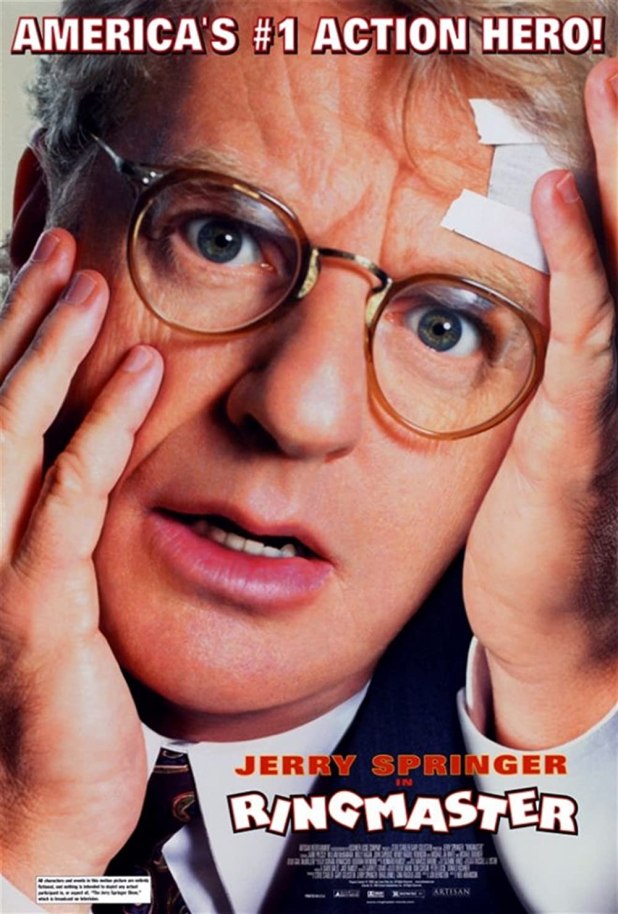
APRIL MOVIE THON DAY 25: Ringmaster (1998)

Despite what that VICE Dark Side of the 90s would have you believe, Jerry Springer didn’t invent his show format. Morton Downey Jr., Geraldo Rivera, Phil Donahue (who he was a clone of at first) and Wally George had all been there and done that, but Springer ended up hitting the cultural zeitgeist at the right time and knew early on that he needed to hire pro-wrestling-connected talent bookers to keep bringing in worked storylines to keep the machine moving.

For some reason, Springer isn’t himself but Jerry Farrelly. Was he embarrassed? After all, this is the one-time mayor of Cincinnati who paid for sexual favors with a personal check. Regardless, his show has three different storylines:

You Did WHAT With Your Stepdaddy?: Angel Zorzak (Jaime Pressly, who deserved and got better) is sleeping with her mother Connie’s (Molly Hagan, Code of SilenceThe DentistSometimes They Come Back… Again) husband Rusty (Michael Dudikoff, so deserves so much more, so go watch American Ninja or Avenging Force and think kind thoughts for him) while she’s sleeping with Angel’s boyfriend Willie.

My Traitor Girlfriends: Demond (Michael Jai White, Spawn) is cheating on Starletta (Wendy Raquel Robinson) with her friends Vonda (Tangie Ambrose) and Leshawnette (Nicki Micheaux).

The third is Jerry himself, who much like Chuck Barris in The Gong Show Movie, is afraid of the career and life that he has made.

Director Neil Abramson and writer Jon Bernstein have a major issue to deal with: any sort of fake real episode of Springer’s show is more interesting than what they could invent. Roger Ebert shared that he heard Springer once said, “I know I’m going to go to hell for doing this show.” I don’t think he will for this movie. It’s too boring for eternal damnation.

You can watch this on Tubi.

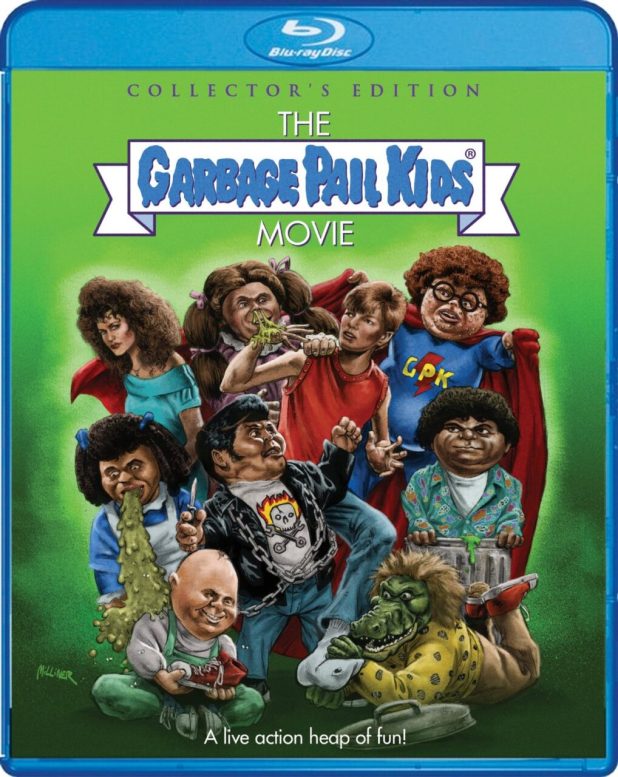
APRIL MOVIE THON DAY 25: The Garbage Pail Kids Movie (1987)

The Garbage Pail Kids came out in 1985 from Topps and were created by Art Spiegelman. Yes, the same cartoonist who made Maus. He and Mark Newgarden worked together as the editors and art directors of the project, with Len Brown — the same person who Wally Wood named T.H.U.N.D.E.R. Agent Dynamo after and one of the creators of Wacky Packages and Mars Attacks — as the manager and art by John Poundart for the first series, then Jay Lynch, Tom Bunk, James Warhola — the nephew of Andy Warhol — and more.

These cards were a huge success and sold worldwide (they’re called Mr. Creepy in Japan, Totally Broken Kids in Germany, The Filthies in France, Snotlings in Italy and The Garbage Gang elsewhere). They were quite controversial and banned in many schools. And then Original Appalachian Artworks — the same Xavier Roberts who stole the look of Martha Nelson Thomas’ soft sculptured dolls that came with a birth certificate — sued and they had to change the logo. But by 1988, the kids were gone. yet they came back in 2003 and never went away. You can even get blockchain backed high-end versions of them now.

Look, I’m someone who doesn’t believe that there’s “so bad it’s good” and has found the light in the darkness within so many so-called bad films. This one challenged my will to live, but there are times during it when the overwhelming badness of the film approaches surrealist art and I laughed so hard that my head began to throb and I was sure this was the stroke that would wipe out my lifelong hard-earned knowledge of Mattei, D’Amato and lesser scumbag directors.

Dodger (Mackenzie Astin) works in the junk store of magician Captain Manzini (Anthony Newley) and is also the target of a gang of toughs led by Juice (Ron MacLachlan) while loving that bad dude’s girl Tangerine (Katie Barberi) from afar.

To break up all that preteen angst, a garbage can falls from the sky containing green ooze and the Garbage Pail Kids: the always snotty Messy Tessie; the Hawaiian shirt-wearing flatulent Windy Winston; the throw up on command Valerie Vomit (played by Debbie Lee Carrington, memorable as the small-statured Martian rebel in Total Recall); the whining baby Foul Phil; the acne-scarred superhero Nat Nerd and the toe eating reptilian hybrid nightmare called Ali Gator.  None of these characters are in any way endearing or cute ugly. They’re borderline upsetting and the more I think about it, the more I love this movie for being so dead and vacant.

After having our protagonist covered with sewage and abused by the gang, only to be saved by the Kids, it still has Dodger in love with Tangerine, who wants to be a fashion designer and puts the GPK into service as pretty much slaves. The kids steal a Pepsi truck — I can’t imagine Pepsi would have loved how they’re presented in this — and then go to a Three Stooges festival which makes them so insane that they drink beer with bikers and Ali Gator gets to eat some toes. Despite being babies and children, the GPK get drunk on beer, which is encouraged by the film, and sing songs so inane that I again started to laugh the kind of frenzied guffaws that only happen when I endure serious physical pain.

Despite the kids being put into the State Home for the Ugly, a place where Gandhi and Santa Claus are executed because this is a movie for children, they escape, ruin a fashion show and refuse to go away, not even following the rules of Mr. Mxyzptlk.

If it seems like Dodger and Tangerine seem on again, off again and ill-matched, well — Astin and Barberi dated and broke up mid-movie. That wasn’t Austin’s only issue. He got the movie without telling his father, John Astin, who tried to get his son out of this film.

Rod Amateau directed and co-wrote this and his career was, well, something. He started his career doing stunts in movies like Rebel Without a Cause and Mighty Joe Young (he was also a stunt driver for Butcher, Baker, Nightmare Maker and Thunder Run after this directing career took off) and then wrote and directed episodes of The Many Loves of Dobie Gillis, produced and directed 78 episodes of The George Burns and Gracie Allen Show, produced and directed The New Phil Silvers Show, directed nearly every episode of My Mother the Car and also made  The Statue, one of the few movies Roger Ebert ever walked out on, as well as High School U.S.A., the movie that convinced Joel Robinson to leave Hollywood, Son of Hitler, a Peter Cushing movie that never played outside of Germany and wrote Sunset, one of the many Blake Edwards films — and mistakes — that a nascent Bruce Willis would make.

I can’t even imagine the horror movie that John Carl Buechler — who did the effects for this as well as TerrorVisionDollsHard Rock ZombiesHalloween 4: The Return of Michael Myers and many, many more, as well as directing Cellar DwellerWatchers 4 and Friday the 13th Part VII: The New Blood — had planned.

The Garbage Pail Kids Movie made just $661,512 during its opening weekend and eventually $1.6 million on a million dollar budget, but was still seen as a major disappointment. Astin told Mental Floss, “The heroes of the entire experience are the seven little people actors in costumes every day in triple-digit heat in the San Fernando Valley. They couldn’t see or hear. There was only so much time they could have the heads on before they ran out of oxygen.”

Effects artist William Butler went even further: “I think it was a stupid idea of a stupid screenplay, with stupid designs, that made for a cacophony of stupidity.”

APRIL MOVIE THON DAY 25

For the twenty-fifth day of the B&S About Movies April Movie Thon, it’s all movies that are based on short lived big deals.

April 25: Fads — Lambada. Disco. Garbage Pail Kids. What’s your favorite fad-related movie?

All April long, we’ll have thirty themes as writing prompts. If you’d like to be part of it, you can just send us an article for that day to bandsaboutmovies@gmail.com or post it on your site and share it out with the hashtag #BSAprilMovieThon.

Here are a few movies to watch today:

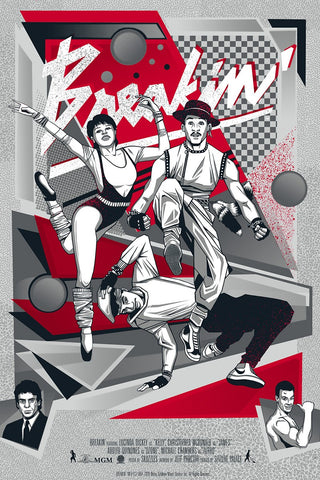
Breakin’ (1984): Cannon usually chased trends. With this movie — and the even stranger Breakin’ 2: Electric Boogaloo — they were ahead of what was hot. When Cannon would break apart, there would be a battle for another dance craze between The Forbidden Dance and Lambada.

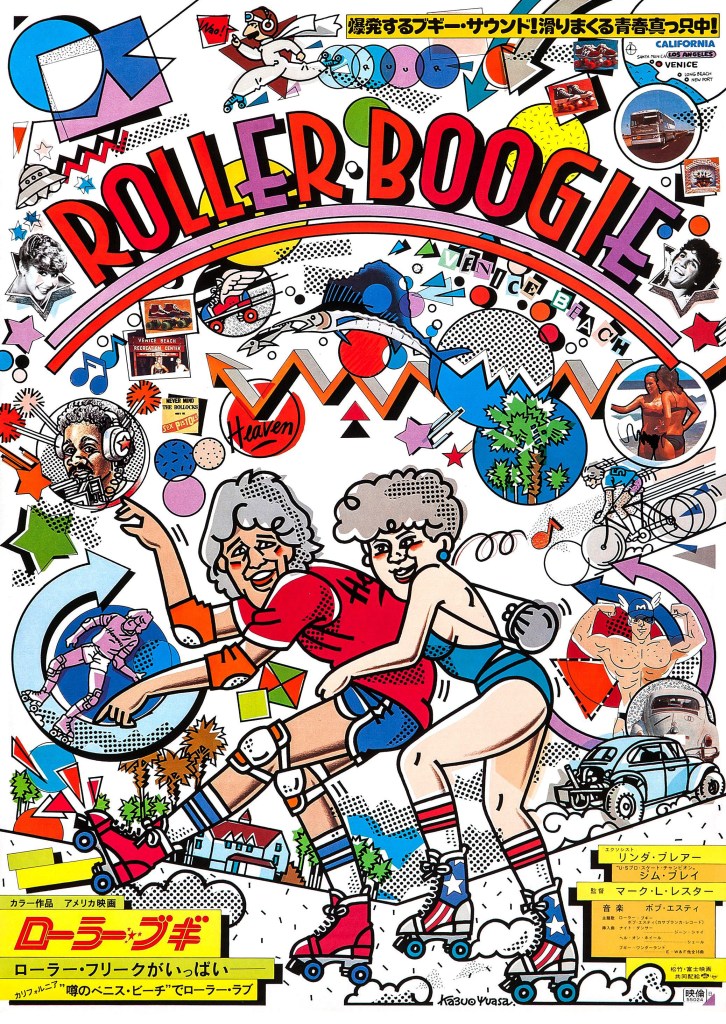
Roller Boogie (1979): I really should start a Letterboxd list of all the roller skate movies that I love, including Skatetown U.S.A.Kansas BomberXanaduUnholy RollersRollerballRoller Blade (and all of its sequels and Rollergator), SolarbabiesAirbourneWhip It and Prayer of the Rollerboys.

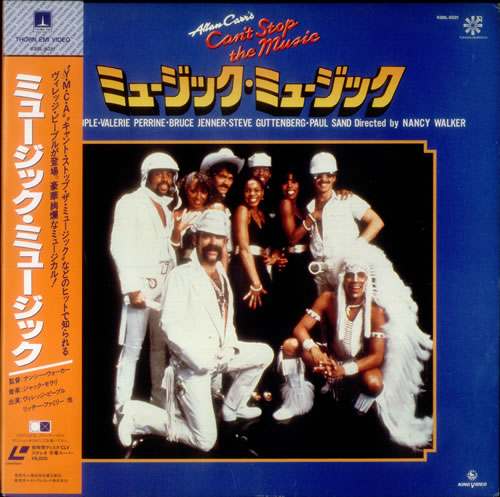
Can’t Stop the Music (1980): There are a lot of disco movies I could mention — Can’t Stop the Music, Disco FeverThe Wiz — but only one was made this late and is also about the fad that was the Village People.

What are you watching?

APRIL MOVIE THON DAY 24: Magadheera (2009)

Director and writer S. S. Rajamouli had a wonderful inspiration for this movie. He told Idlebrain: “My father Vijayendra Prasad prepared a story for a film titled Jagadeka Veerudu with Krishna as hero in the direction of Sagar. They didn’t like that concept and it was turned down. I was working as an assistant to my father at that time. I always wanted to do that story and it required huge budget.

When I was granted big budget from Allu Arvind for Charan’s movie, I picked this subject up. I watched DVDs of Alfred Hitchcock’s TV series before making Magadheera. What intrigued me is that he reveals the entire plot in the beginning and still be able to maintain the suspense by showing how the protagonist does it. It became an eye opener for me. That is the reason why I revealed the story of the movie right on the film’s launch.”

The reincarnation theme is about four people:

Kala Bhairava (Ram Charan), a valiant warrior and bodyguard for the royal family who is reborn as motorcyclist Harsha.

Princess Mithravinda Devi (Kajal Aggarwal), who is in love with Kala, who refuses to admit it, and returns as Indira.

Ranadev Billa (Dev Gill), the leader of the army who lusts for both power and the princess, reborn as Rajasthani monarch Raghuveer.

Emperor Sher Khan (Srihari), who wants to conquer the kingdom, and the fisherman Solomon.

The film may start in 2009, as  Harsha meets and falls in love with Indira. Meanwhile, Raghuveer has also become enraptured by her and is the first to realize that all of their fates are intertwined. It takes a near-death experience — and the murder of his father at the hands of Raghuveer — for Harsha to relive his past, including an epic chariot race and a battle to defeat a hundred of Khan’s soldiers that ends in tragedy before we come back to the present, a place where no one’s fate is set.

Just like Karz, reincarnation is central to this movie. It’s also a film packed with CGI and big ideas. It was so popular that it became the first Telugu film in India to have a blu ray release. Even in the U.S., on just three screens in New Jersey, it made $150,000. It may also feel a lot like Gladiator and 300, but the idea that it’s pushing to look as grandiose as those films left me exhilarated. The battle against the one hundred soldiers is just incredible and must be seen.

You can watch this on YouTube.

APRIL MOVIE THON DAY 24: I Married a Witch (1942)

Thorne Smith died before he could finish The Passionate Witch, which was completed by Norman H. Matson. Smith was a lifelong drinker who still turned out some incredibly popular books, like the first two Topper novels, which is a much sexier story than the movies that were made from it.

Director René Clair was looking for a new project and shared the book with Preston Sturges, who thought that it would be a good vehicle for Veronica Lake. Dalton Trumbo was signed to write the script, but the final film had numerous writers, including Robert Pirosh, Marc Connelly, André Rigaud and Clair.

Frederic March plays numerous members of the Wooley family, all of whom have been cursed by Jennifer (Lake) and her father Daniel (Cecil Kellaway), who were burned at the stake for witchcraft. Before death, Jennifer has cursed the Wooleys to all marry the wrong woman for all time.

Hundreds of years later, lightning splits the tree where their ashes were buried, freeing them to continue to haunt the Wooleys, this time in the form of Wallace, who is running for governor and about to marry the rich and spoiled Estelle Masterson (Susan Hayward). The trouble is that she soon falls in love with Wallace, causing no small matter of scandal, as his would-be father-in-law J.B. Masterson (Robert Warick) is funding his political campaign.

Obviously the inspiration for Bewitched, this movie succeeds because of Lake, who was as charming and hilarious as she was gorgeous. Here’s how weird Hollywood is. During World War II, Lake changed her trademark peek-a-boo hairstyle — which covered one eye —  at the urging of the government, as they wanted to encourage the women working in factories to have safer hairstyles. Her career never recovered to the same level of fame she had before the hairstyle switch.

By 1951, on the verge of a nervous breakdown and bankruptcy, Lake ran away, left her husband and flew alone to New York. In 1969 she told the New York Times, “They said, “She’ll be back in a couple of months.” Well I never returned. Enough was enough already. Did I want to be one of the walking dead or a real person?”

She was arrested more than once for public drunkenness and disorderly conduct while living far from her famous past in the all-women’s Martha Washington Hotel in Manhattan, working as a waitress in a cocktail lounge as Connie de Toth. She lived in the Bahamas, did summer stock, wrote an autobiography — in which she said that she wasn’t a sex symbol but instead a sex zombie — and made Flesh Feast before dying of acute hepatitis and acute kidney injury, the result of years of drinking.

She deserved better. This film is glorious and magical proof.

Leslie Caron, an actress who knew Clair, said that he spoke with affection when remembering Lake, saying “The trouble with her is she didn’t have confidence in herself. Nothing could convince her that she was beautiful. It was a fight every morning to get her to face the camera.”