Drive-In Friday: Movies About Movies Night

Thanks for joining us at “The Francis” last weekend for our “Drive-In Friday: First Time Directors & Actors Night.” Tonight, we continue the theme of that night with four movies about those movies — well, two of them, anyway. And the last two feature Nicolas Cage — and we all know about The Cage’s unorthodox project choices. It’s why we are and always will be, his “bitch” (shameless plug: check out our “Nic Cage Bitch” love fest).

So let’s hook up the speakers, lite the coils, and pop the Orange Crushes!

Uh-oh. The tax bill came . . . and a developer is eye ballin’ my land for an office park. Are we closing?

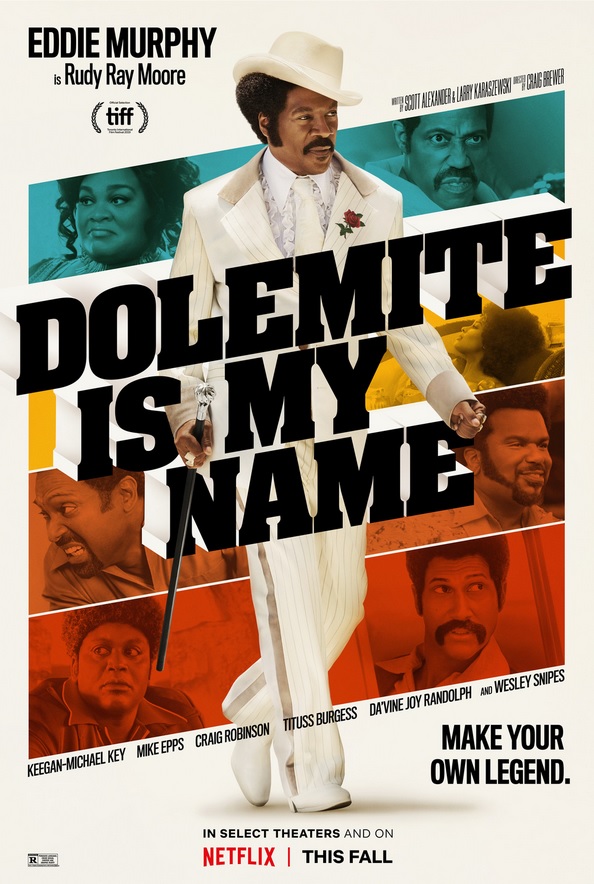
Movie 1: Dolemite Is My Name (2019)

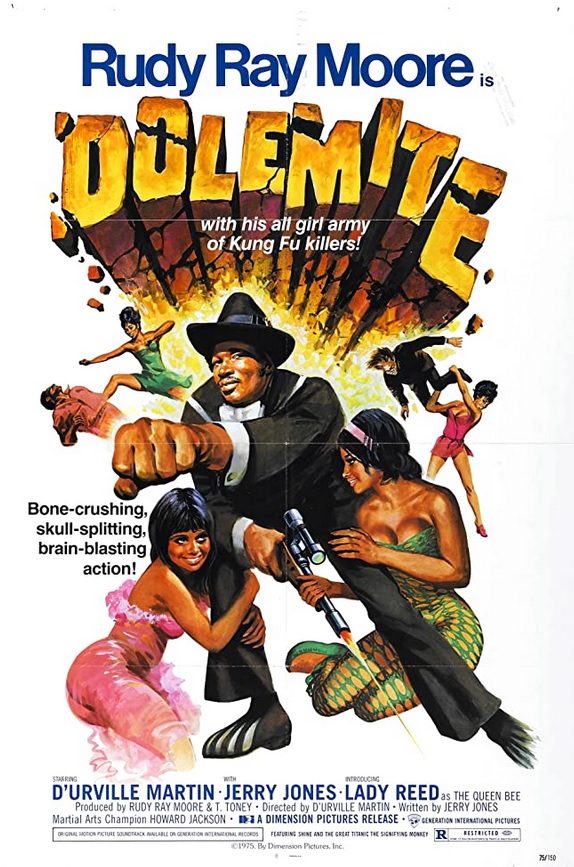
For my previous installment of Drive-In Friday, we started off with Rudy Ray Moore’s feature film debut, Dolemite.

Say what you will about Moore’s celluloid “break” into the movie business, but his $100,000 investment grossed $12 million during the film’s initial release and, for what it’s worth, gave him the film career he always wanted. And he’d go on to repeat the success with his follow up films The Human Tornado, Petey Wheatstraw, and Disco Godfather.

Eddie Murphy, who would eventually become friends with Moore, had long wanted to bring a bio-flick on the ghetto renaissance man to the big screen. And Craig Brewer, who made his mark at Sundance with 2005’s Hustle & Flow, was able to honor a man that, as Snoop Dogg (who appears the film) and Ice T rightfully pointed out, is the “Godfather of today’s rap music.”

The nominations and awards for this Netflix production are too numerous to mention, but the fact that the National Board of Review and Time magazine choose this as one of the “Ten Best Films of the Year” tells you that this film — even if you’re not familiar with Moore’s oeuvre and his Dolemite persona — is worth your time. That and the fact the film was Oscar nominated for “Best Motion Picture” and Murphy for “Best Actor.”

And Dolemite Is My Name leads us to our next film on the schedule, which is, essentially, the blaxploitation-homage version of The Disaster Artist.

You can stream Dolemite Is My Name on Netflix-by-subscription.
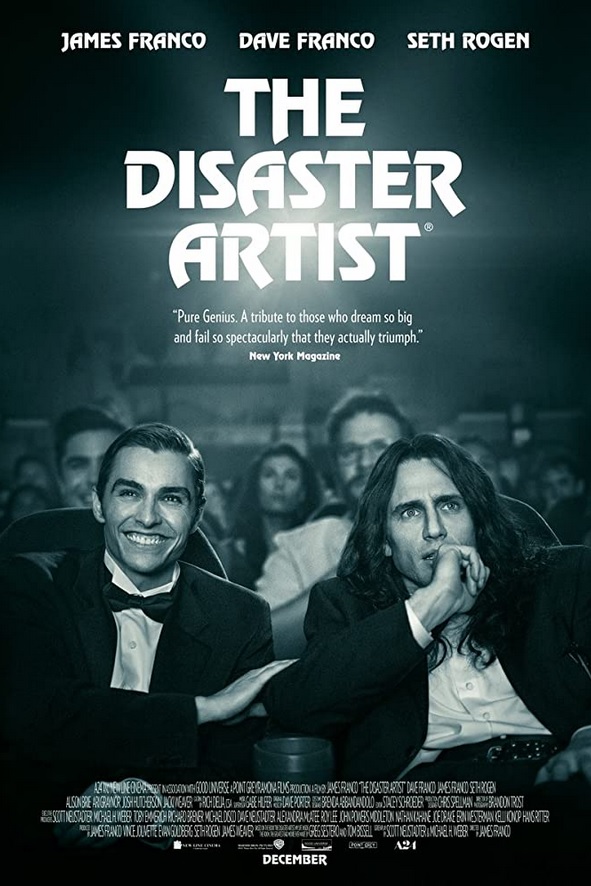
Movie 2: The Disaster Artist (2017)

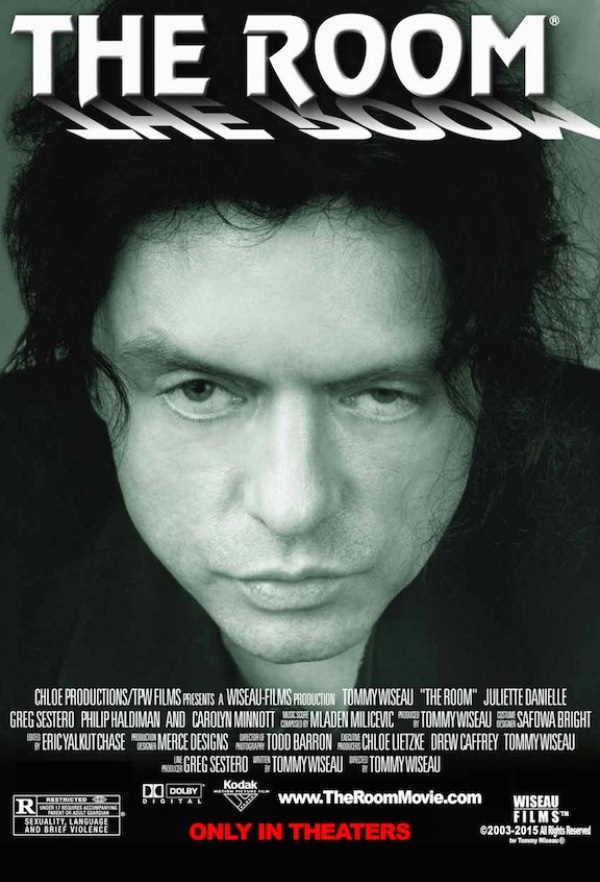
When Tim Burton released Ed Wood, his 1994 bio-flick homage to the man dubbed the world’s worst filmmaker, it opened up a whole new audience to a man that many heard of, but never made the effort to see his movies. And James Franco’s The Disaster Artist inspired the many who heard of The Room, but never saw it, to see it. Today, 20 years after its release, Tommy Wiseau’s passion project is the 21st century version of 1975’s The Rocky Horror Picture Show — and still plays in theatres around the world.

While the ineptitudes of Wood, Moore, and Wiseau are grossly evident, there’s no denying their passion and determination. Tim Burton and Eddie Murphy saw it in their subjects. And James Franco saw that same spark in Tommy Wiseau. So he optioned The Disaster Artist, Greg Sestero’s 2003 best-selling chronicle of his friendship with Wiseau and their making of The Room.

The nominations and awards for the film are too many to mention, but the fact that it’s Oscar nominated for “Best Adapted Screenplay” may — even if you don’t know or have any interest in Tommy Wiseau — pique your interest to watch what is, a really good movie. Bravo, Mr. Franco!

You can stream The Disaster Artist across all digital PPV and VOD platforms, along with a free-with-ads stream on FShareTV.
Intermission!

Back to the Show!

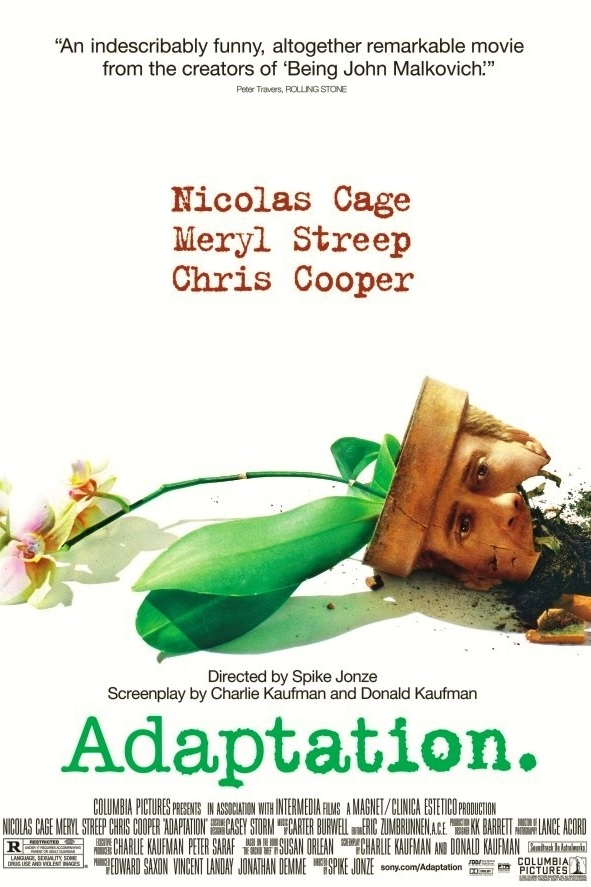
Movie 3: Adaptation (2002)

Did you hear the one where Spike Jonze, Charlie Kaufman, and Nicolas Cage walked into a bar? Can you name a director, writer, and actor more unorthodox? Didn’t think so.

Look at Jonze’s resume: He blew us away with the meta-fest that is Being John Malkovich, Human Nature (which everyone hated, except me, natch), and gave us, count ’em, four Jackass movies — five, if you count the critically reviled Bad Grandpa (yes, which I liked . . . in a Freddy Got Fingered kinda way). Of course, Kaufman was the scribe behind Being John Malkovich and Human Nature, along with the even weirder (again, I pick the most-film inept chicks) Confessions of a Dangerous Mind and Eternal Sunshine of the Spotless Mind (“Why did Jim Carrey do this?” she shrieked). And Cage? We be his “bitch,” remember?

This is freak-fest is pure meta. The screenplay is based both on Susan Orlean’s 1998 non-fiction best seller The Orchid Theif and Charlie Kaufman’s failed screenwriting assignment to adapt the book into a screenplay. Kaufman found the real life tale of the 1994 arrest of South Florida orchid poacher John Laroche “unadaptable,” so he wrote an exaggerated version that incorporated himself — and a fictional twin brother (both played by Cage) — into the screenplay. And the meta gets weirder: John Cusack, Catherine Keener, John Malkovich, and Spike Jonze (along with his cinematographer, Lance Acord) from Being John Malkovich re-create scenes as themselves on the set of Being John Malkovich.

Friggin’ awesome.

Kaufman thought the screenplay would ruin his career. It ended up sweeping the Oscars and the Golden Globes with multiple nominations and awards. And Nicolas Cage? He made us his bitch with this film . . . and the next film-within-a-film freakfest on tonight’s program: as a producer.

You can watch Adaptation as a free-with-ads stream on Crackle.
Movie 4. Shadow of the Vampire (2000)

Long before “meta” became 21st century digital filmmaking de rigueur, there was this film-within-a-film account of German filmmaker F.W Murnau’s unauthorized adaptation of Bram Stroker’s Dracula.

While the vampire Count Orlok of Murnau’s 1922 silent masterpiece, Nosferatu: A Symphony of Horror, was portrayed by German actor Max Schreck, the film plays up Schreck’s unorthodox Method Acting techniques. (By the way, Nicolas Cage produced this: and we all know his unorthodox methods to get into character.) Schreck would only appear amongst the cast and crew in makeup, would only be filmed at night, and would never break character on set. All which led the crew and actors under Murnau’s (John Malkovich) direction to believe Schreck is a real vampire.

No surprise: Willem Dafoe’s portrayal of Schreck as Orlok was nominated for a “Best Supporting Actor” Oscar.

And the meta on this gets even freakier — if you watch this alongside Werner Herzog’s Klaus Kinski-starring remake of Murnau’s film, 1979’s Nosferatu the Vampyre. Then Kinski took it one step further: he played the character one more time in the 1988 Italian-made Nosferatu in Venice, which co-stars Donald Pleasence and Christopher Plummer.

I’ve binged all four of these “Nosferatufilms back-to-back several times over the years — and it does screw with your mind. And it’s a chick repellent. And all four films come highly recommended, chicks be damned. (One day, I’ll meet a woman who can embrace silent film and Double K.)

You can stream Shadow of the Vampire on Shudder.

Hey, if you missed them, be sure to join “The Francis” for our Drive-In Friday: Black & White Night, Drive-In Friday: Heavy Metal Horror Night, Karate Blaxploitation, and Musician Slashers nights.

About the Author: You can read the music and film reviews of R.D Francis on Medium and learn more about his work on Facebook. He also writes for B&S About Movies.
Street Survivors (2020)

This film’s story—my story—is not just about the plane crash but also about my personal relationship with the genius that was Ronnie Van Zant—whom I loved like a brother and still miss to this day.”
Artimus Pyle

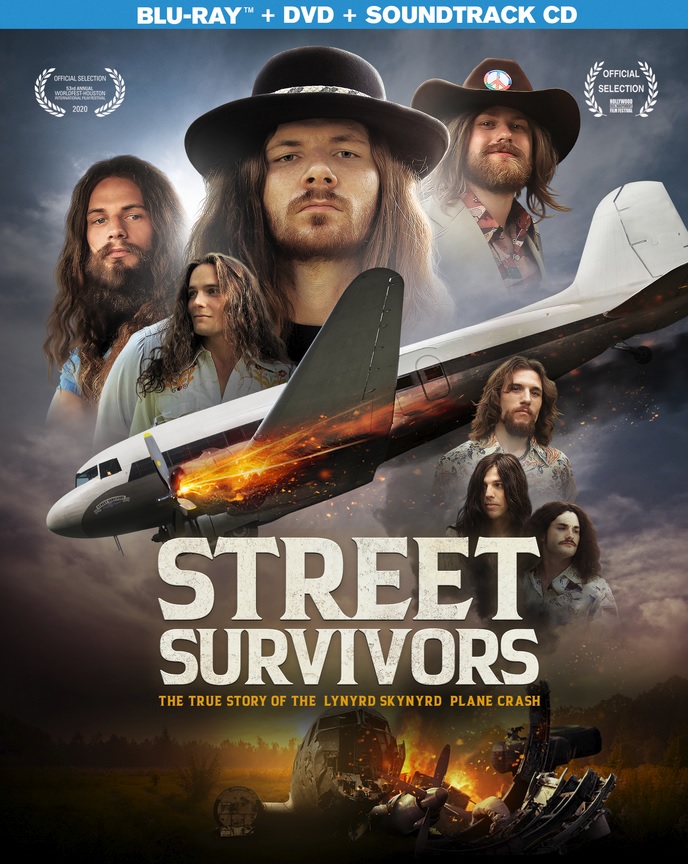
While much has been said about Southern Rock legends Lynyrd Skynyrd over the years through several documentaries, this drama’s period-correct costuming by Lisa Norcia and set design by Eve McCarney—in conjunction with strong performances by its cast of unknown actors—will bring fans something extra beyond those “talking head” chronicles. In fact, being “inside” the plane and seeing it unfold—instead of being told what happened—is an emotionally tough watch (brought to fruition by an extremely well-executed CGI effect).

Ian Michael Shultis, an ex-EFL football player for Germany’s Furstenfeldbruck Razorbacks, shines in his leading man debut: his role as Artimus Pyle is just the beginning of a long career. The multi-talented Taylor Clift as Ronnie Van Zant — who does his own vocals on the classics “Free Bird,” “Call Me The Breeze,” and “Sweet Home Alabama” — also has a bright future ahead of him. And keep your eyes open for ex-Rough Cutt, Quiet Riot, and Dokken bassist Sean McNabb in his small but effective role as ’70s iconic impresario David Krebs (Aerosmith, Ted Nugent, Scorpions); here’s to hoping he scores himself some larger roles as well (he’s been part of FOX-TV’s Sons of Anarchy franchise).

This long-gestating rock bioflick (stymied by lawsuits; see this article at Ultimate Classic Rock) recreates the ill-fated October 20, 1977, crash in the swamps of Mississippi through the eyes of former Lynyrd Skynyrd drummer Artimus Pyle (who narrates the film via vignettes). Following a concert at the Greenville Memorial Auditorium in Greenville, South Carolina, the band boarded a two-prop plane bound for Baton Rouge, Louisiana, where they were scheduled to appear at LSU the following night. (The crash came just three days after the release of their fifth album, Street Survivors.) Pyle not only survived the crash that claimed the life of the band’s founder and frontman Ronnie Van Zant (along with guitarist Steve Gaines and his sister, back-up singer Cassie Gaines), he also physically pulled the remaining survivors out of the wreckage before staggering towards the nearest farmhouse to seek help.

The aftermath of the crash is typical of the rock ‘n’ roll business: Artimus joined the band upon the recording of their third album and wasn’t “under contract” with the record company—thus, Pyle was responsible for his own medical bills. And when the FAA discovered “drugs” (proved to be vials of legal ginseng extract) in Pyle’s recovered luggage, they called in the DEA and threatened to charge Pyle with drug trafficking.

Only in the corporate meat grinder that is the music business.

You can get your copy of Street Survivors on Blu-ray, DVD, and VOD formats on June 30 and pre-order copies though the MVD Entertainment Group. In addition, Cleopatra Records is releasing a standalone official film soundtrack (performed by Artimus and his sons Marshall and Chris). Cleopatra also released Verotika, the feature film writing and directing debut by Glenn Danzig.

Update: August 2021: We’ve since reviewed Cohn’s ventures into the CGI shark-verse with Shark Season (2020) and Swim (2021). Both are fun water romps.

About the Author: You can read the music and film reviews of R.D Francis on Medium and learn more about his work on Facebook. He also writes for B&S About Movies.

The Dinner Party (2020)

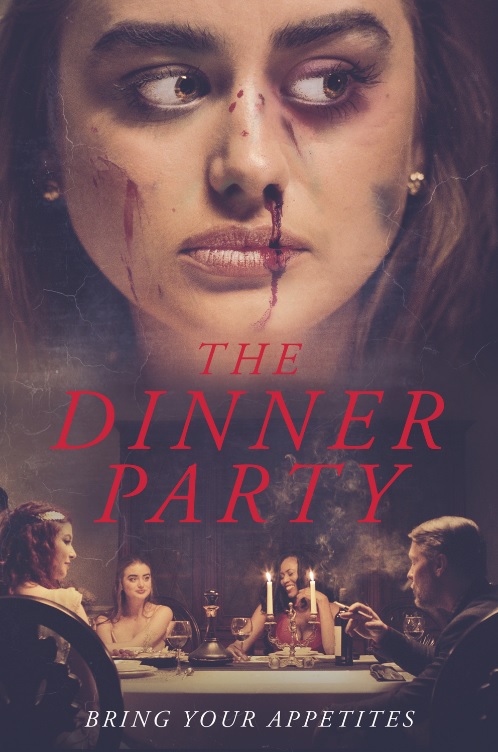
Renowned surgeon and culinary enthusiast Carmine Braun (Bill Sage) invites a struggling playwright, Jeffrey Duncan, and his wife to his semi-annual dinner party with a promise to fund Duncan’s new production. No sooner do the Duncan’s enter the mansion’s foyer, the weirdness begins at the hands of the party’s eccentric, elitist guests. And the weird visions begin, such as Haley washing her hands in bathroom basin and seeing a swimming goldfish. As the weirdness turns to madness, Jeff and his wife come to realize the guests are practitioners of an ancient religion—and they’re the “centerpiece” of the ceremonial dinner.

Writer/director Miles Doleac is an actor who’s worked on a variety of shorts, indie films and web series (TV’s American Horror Story and Banshee the most familiar) who’s expanded into a behind-the-scenes roll—and has shown tremendous growth on this, his fifth feature film (his others are The Historian, The Hollow, Demons, Hallowed Ground).

While you’ll recognize the marquee name of Jeremy London (T.S Quint from Mallrats, TV’s Party of Five and 7th Heaven), the star here is familiar U.S. TV actor Bill Sage from the CSI, NCIS, and Law & Order franchises, along with his recurring roles on cable’s Boardwalk Empire, Nurse Jackie, Orange is the New Black, and Power.

Doleac’s an obviously a student of the Hammer-Amicus Institute of British Psychological Horror; he knows his way around the Southern Gothic corridors of his “secluded, creepy mansion” loaded with off-kilter characters. Think Roman Polanski’s Rosemary’s Baby and a giallo-bent version of Stanley Kubrick’s Eyes Wide Shut with touch of Paul Naschy’s The People Who Own the Dark (without the zombies), and you’ll enjoy your evening at this dinner party.

The Dinner Party will be available via DVD and Digital from Amazon, Google Play, Fandango Now, iTunes, Vudu, and Xbox, as well as Dish Network, Direct TV and local cable providers on June 5 through Uncork’d Entertainment.

Disclaimer: We were provided a screener by the film’s P.R firm. That has no bearing on our review.

About the Author: You can learn more about the writings of R.D Francis on Facebook. He also writes for B&S About Movies.

Earth II (1971) and Plymouth (1991)

From the Editor’s Desk: Both of these “hard science” TV movies were produced, in part, by ABC-TV as weekly series pilots — which the network, passed. Regardless of the twenty-years difference between the films, fans have confused the two films — as result of mistaking Gary Lockwood starred “in a TV movie about miners on the moon.”

So, lets review Earth II . . . and examine the elusive, out-of-print and distribution Plymouth.


You wanna see a movie directed by Uncle Rico’s dad, you know from Napoleon Dynamite . . . well, since we just finished off “James Bond Month,” Lazlo Hollyfeld from Real Genius?

Then this is your movie.

Earth II is directed by Jon Gries’s pop, Tom, whose bat-shite crazy TV series resume lead him to directing Jim Brown and Burt Reynolds in 100 Rifles, Charlton Heston in Will Penny, Charles Bronson in Breakout and Breakheart Pass, along with with the ultimate Charles Manson document, 1976 Helter Skelter. Tom Gries died on January 3, 1977, shortly after — and amazingly, somehow, making Muhammad Ali not look completely incompetent — completing 1977’s The Greatest (but it’s still pretty bad, even with Ernest Borgnine of Marty in it).

But let’s get back to Earth II.

As we all know, 2001: A Space Odyssey was a game changer and everyone wanted back in the sci-fi game. So here we have Gary Lockwood — Frank Poole from Kubrick’s classic — as well as Mariette Hartley from Gene Roddenberry’s endless cycle of post-Star Trek endeavors, mainly Genesis II. Yep, that’ s Anthony Franciosa (Tenebre), Lew Ayres (Battle for the Planet of the Apes), and Hari Rhodes (Malcolm MacDonald from Conquest of the Planet of the Apes) along for the interstellar intrique.

As with most all U.S. TV movies, Earth II was an overseas theatrical feature, known as Killer Satellites, and it pushed its 2001, Apes, and Star Trek connections (Mariette Hartley was in one of that series’ popular episodes as Spock’s love interest) in its marketing materials. And it worked. But the foreign box office was better than the U.S. TV ratings; as result, Earth II wasn’t picked up for a weekly series as intended. But Gary Lockwood didn’t mind; he’s on record as saying he hated working on the production, eschewing it overly complex, sociopolitcal plotting.

Since this is very easily obtained as a still-in-print DVD and VOD stream, the reviews on this (rife with plot spoilers) are many. The basic gist of the story, if you haven’t guessed, is about a “second Earth,” that is, an orbital international space station. When things go amiss in Communist Red China and a nuclear missile comes to threaten the station’s 2000-strong pacifist inhabitants, they search for a way to solve the problem — without violence.

So, is Lockwood right?

Yeah. This is a bit slow to the point of boring. And it is complex, way too much for the young minds sci-fi-on-TV was geared for. And that complexity also resulted in the cancellation of the Planet of the Apes TV series and for Roddenberry’s Genesis II (and its reboots as Planet Earth and Strange New World) not going to series. Natch for Rodenberry’s The Questor Tapes.

But in terms of science accuracy, Earth II is stunning and the special effects are effective — just remember: in 1970 years. One can’t help but wonder if the creators behind TV’s Babylon 5 and the later SyFy Channel Battlestar Galactica reboot pinched from this classic TV movie (and we all know the debates regarding Babylon 5 vs. Star Trek: Deep Space 9). If you enjoy your sci-fi with intelligence, without the Lucasian Flash Gordon trimmings, then this “Before Star Wars” romp is for you.

This one is widely available on DVD and all the usual VOD platforms, but we found a free version — a really clean rip — over on You Tube.

Earth II was one of the many films we didn’t get around to reviewing during our month-long Star Wars ripoffs and galactic droppings month. You can catch up on those films with our Before and After Star Wars explorations. And since there’s a little bit o’ post-apoc in Earth II, be sure to check out our two-part post-apoc blowout with our Atomic Dustbins, Part 1 and Part 2. And since were on the subject of both Star Wars and 2001: A Space Odyssey, be sure to check out our “Exploring (Before “Star Wars”): The Russian Antecedents of 2001: A Space Odyssey” featurette.

Plymouth (1991)

“Remember that TV movie about miners on the moon?”

Did you hear the one about the 8 million dollar TV movie — the most expensive ever made, in part by ABC-TV — that no one watched? Well, they watched, but forgot all about it, soon after. Then they wracked their brains years later trying to remember the film, scouring the Internet to find it?

Well, it wasn’t a tween-teen fever dream. The film is real. And it was made a lot later than you remember, because you’re remembering Earth II (1971), itself another, well-made TV movie pilot (and overseas theatrical) produced by MGM-Warner Bros. for ABC-TV. So, yes, in 1990, you really did read an article about Plymouth’s production in Starlog Magazine — complete with that memory-haunting, (now, easily Googled) black and white production still of miners decked out in Alien (1979)-styled miner-space suits exiting a pressure hatch (also, the lead, here isn’t Gary Lockwood, but the always likable Dale Midkiff).

Plymouth — which debuted on Sunday, May 26, 1991 — was a co-production between ABC-TV, Walt Disney Studios (their Touchstone PIctures arm), and Italy’s Rai uno radiotelevisione. As result of Rai’s involvement, Plymouth played as a theatrical feature (?) in the Eurasian marketplace. It eventually turned up on European television (in the U.K. in July 2001), and as a Spanish-language Argentinian VHS. After its stateside debut on ABC-TV, Plymouth replayed once more as part of ABC-TV’s “The Wonderful World of Disney” that aired on Sunday nights (which ended production in 1997).

Then, Plymouth vanished from stateside television. It’s never been syndicated for UHF-TV nor for the retro-channels, such as the sci-fi-centric Comet. While DVDs are in the market, they’re grey market DVDr, since Plymouth has never officially been issued to VHS or DVD in the United States.

During a 1998 interview regarding the 30th anniversary of 2001: A Space Odyssey (1968), actor Gary Lockwood, who starred in Earth II, said he hated working on the ABC-TV project due to “its complexities.” And that’s the problem with Plymouth: too complex (expensive) for its own good. Lockwood, of course, was referring to Earth II’s plotting — and Plymouth has its plot complexities. So, yeah, this isn’t Gerry Anderson’s Space: 1999 or its predecessor, U.F.O: so no goofy aliens, here. But Plymouth is dangerously close to Battlestar Galactica territory via its plot and character departments.

Sure, Plymouth, like Earth II, is a “hard science fiction” piece that deals with the physical and psychological challenges facing the first moon base colony populated by the citizens of a Northwestern U.S. mining-timber town displaced by a corporation’s Chernobyl-Love Canal-styled disaster. UNIDAC, the company responsible, also operates a financially-failing helium-3 mining operation on the moon. A deal is stuck: the citizens of Plymouth, Oregon, will move to the moon and run the operation.

Plymouth completed production in 1990, remained shelved for year, and then was passed over as a series replacement. ABC-TV declined to purchase the series because, “It just didn’t meet our needs.” (And they probably knew another BSG flop when they saw one.)

While the production values are stellar (Lockheed served as tech advisors), and the writing (from director Lee David Zlotoff of TV’s MacGyver fame) and acting are on equal: this is all too “Battlestar Galactica on the moon,” with little action and too much human yakity-yak drama: e.g., a UNIDAC worker and Plymouth citizen (the town’s female doctor) engage in forbidden love that leads to an outlawed pregnancy, teen-bickering love, a souped-up moon buggy prototype (no, not Brad Pitt’s Ad Astra!), and the mischievous son of the town’s now pregnant doctor as the series’ resident “Boxey,” skirting (weekly, if this went to series) security protocols, as he finds himself (and a young Joseph Gordon-Levitt) trapped in a construction-mining tunnel. Oh, and a solar flair hits the moon, which increases cancer risks. You see where this is going: no space battles, no aliens. But, eventually: juvenile delinquent moon buggy racing.

If Plymouth did go to series — as did NBC-TV’s 1993 to 1996 Voyage to the Bottom of the Sea reimaging, seaQuest DSV (by producer Steven Speilberg and writer Rockne S. O’Bannon) — it would have, in order to survive in the ratings, ditch its “hard science” trappings for aliens, etc. (and SQV brought on a talking dolphin!), which caused Roy Scheider quitting that show. Yeah, Plymouth probably would have gone “Daggit,” too, for the kids, and brought on the eventual human androids kerfuffles.

You can learn more about the production of Plymouth at the “Say, Hello Spaceman” blog in a discussion about the impressive space suits’ creation, as well as the suits’ repurposing in Unearthed (1991), The Outer Limits: The Voyage Home (1995), and Star Command (1996). The “Beamjocky” blog on Live Journals also delves into the suits and the “hard science” of helium-3.


There are more TV movies to be had with our “Week of Made for TV Movies,” “Lost TV Week,” “Son of Made for TV Movie Week” and “Grandson of Made for TV Movie Week” tribute spotlights to those films that, in many cases, are even better than the movies that played in theatres.

About the Author: You can read the music and film reviews of R.D Francis on Medium and learn more about his work on Facebook. He also writes for B&S About Movies.
ABC Afterschool Special: The Amazing Cosmic Awareness of Duffy Moon (1976)

Editor’s Note, January 2023: Lance Kerwin passed away on January 24, 2023, at the age of 62. Lance got his start in acting by way of his mother, who worked as a booking agent, and his father, who worked as an acting coach. Kerwin, who came to prominence for his work in the Michael Landon TV movie The Loneliest Runner (1976), the NBC-TV series James at 16 (1978), and the Stephen King adaptation, Salem’s Lot (1979), left Hollywood in the late ’90s to serve the Lord as a Christian youth minister.

Thank you for the films, Lance. You were loved and you will be missed.


If you read our reviews for the ABC Afterschool Special: Hewitt’s Just Different, along with the CBS Schoolbreak Special: Portrait of a Teenage Shoplifter, and the NBC Special Treat: New York City Too Far from Tampa Blues, then you’re up to speed on the backstory of the “Big Three” network’s competition for a slice of the young adult audience during the late afternoon school days during the ’70s and ’80s. So let’s jump right into the review!

This movie that aired on February 4, 1976, is simply too special to casually mention in passing amid some of the other notable young adult flicks aired during the ABC anthology series, which we pointed out in our review of Hewitt’s Just Different.

Why?

Because during that spring, and into the summer of 1976, anytime we faced a challenge, e.g., scaling a particularly tall tree, a knee-scraping bike stunt, or a dive off the pool house, someone would inevitably say, “You can do it, Duffy Moon!”

Yeah, to hell with J.J, Rerun, The Fonz, and Gary Coleman (please tell me you know your ’70s television characters) and their tired catch phrases. We had Ike Eisenmann fueling our kiddie vernacular.

And besides: How can you pass up a young adult flick starring Jim “Thurston Howell III” Backus and Jerry Van Dyke (Luther Van Dam from ABC-TV’s long-running Coach), and Lance Kerwin? (Yes, the epic Lance Kerwin* from TV’s James at 15, the Robbie Benson-starring TV movie The Death of Richie, the Michael Landon’s biographical The Loneliest Runner, Salem’s Lot with David Soul, and Wolfgang Petersen’s Enemy Mine.)

You don’t.

Ike Eisenmann (Star Trek II: The Wrath of Kahn, Escape to Witch Mountain) is the undersized sixth-grader Duffy, and he’s sick and tired of being called “shrimp” by the other boys in his class. Then, one day, he buys a mysterious, magical book, “Cosmic Awareness,” which enables him to “Think Big,” not just figuratively—but literally. And with the puff of his cheeks, he chants the self-motivational mantra “You Can Do it, Duffy Moon!” in his head and develops powers that enable him to beat life’s challenges.

As with the previously reviewed New York City Too Far from Tampa Blues, everybody check-out this book by Jean Robinson from the school library. Yeah, those were the days. Today, young adults are shilled Twilight and The Hunger Games. And we in the pre-Internet epoch got this. And we became better adults because of it. And that was the whole point of young adult fiction in the ’70s.

They just don’t write ’em like this anymore. To say this carries the B&S About Movies’ “Seal of Nostalgic Approval” is an understatement. Watch it!

“You can do it, Duffy Moon!”


Well, that concludes our fourth and final review of the afternoon anthology movie programming offered by the “Big Three” networks during the ‘70s and ‘80s. You can relive those days with this pretty cool catch-all playlist we found on You Tube that features a mix of the ABC Afterschool Break, CBS Schoolbreak Special, and NBC Special Treat young adult films. Enjoy! You can watch the full episode, here.

* Lance did five ABC Afterschool Specials in all. He also starred in 1974’s Pssst! Hammerman’s After You! and The Bridge of Adam Rush, and 1976’s P.J. and the President’s Son and Me and Dad’s New Wife. Looks like you’re surfin’ You Tube!

About the Author: You can read the music and film reviews of R.D Francis on Medium and learn more about his work on Facebook. He also writes for B&S About Movies.

NBC Special Treat: New York City Too Far from Tampa Blues (1979)

After ABC-TV found late-afternoon, weekday rating success with their Afterschool Special, NBC quickly followed with their weekday Special Treat anthology series that debuted in October 1975 and ran for eleven seasons until its 1986 cancellation.

While not as popular ABC’s trailblazer or CBS-TV’s Schoolbreak Special knockoff, Special Treat had its share of standout episodes.

Sunshine’s on the Way (November 1980; You Tube) starred Amy Wright (The Amityville Horror ’79) as a musician and nursing home volunteer who tries to boost the spirits of a legendary jazz musician portrayed by Scatman Crothers (The Shining).

Another was December 1975’s The Day After Tomorrow, aka Into Infinity, which concerned the interstellar mission of the Altares. Produced by Gerry Anderson between the first and second seasons of Space: 1999, it starred Brian Blessed (Flash Gordon) and Nick Tate from that show, along with Ed Bishop from Anderson’s UFO. (Trailers on You Tube/You Tube.)

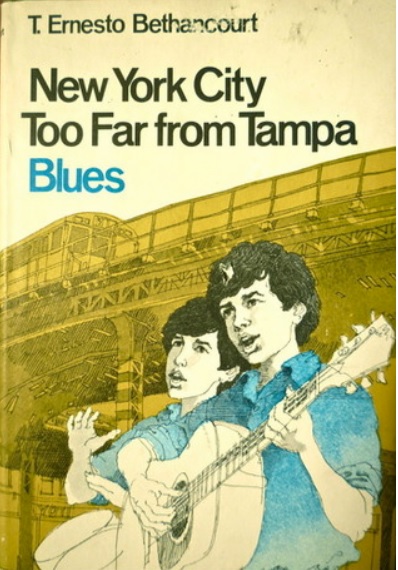
But it’s this musical entry from November 1979 during the fifth season, based on the book by award-winning young adult author T. Ernesto Bethancourt, that’s best remembered by the wee-rockers.

Alex Paez (as an adult, he returned to acting to star on ABC-TV’s NYPD Blue and CBS-TV’s CSI: Miami) stars as Tom, a 14-year-old Puerto Rican kid who moves from Florida to Brooklyn with his family. He finds solace—to the dismay of his hardworking father—in an acoustic guitar he was taught to play by his Uncle Jack. Along with a 12-year-old bongo-playing Italian kid, Aurelio, they become the “Irish” Griffith Brothers. With costumes made by Tom’s mother based on Greg Guiffria’s Angel, they win the local church talent show with their original composition “New York City Too Far from Tampa Blues.”

Everybody checked-out the book from the school library (Kirkus Reviews)—and everybody watched the movie. Then we all went out and bought our first Angel albums. And we were drawing griffins in pastels-on-velvet in art class alongside our portraits of Eddie, Iron Maiden’s mascot. Pair that with our Black Sabbath and Nazareth tee-shirts and long hair . . . to say “Mr. Hand” was a bit concerned is an understatement.

Of course, the full movie is on You Tube.

About the Author: You can read the music and film reviews of R.D Francis on Medium and learn more about his work on Facebook. He also writes for B&S About Movies.
Pray for the Wildcats (1974)

Do you want to see Sheriff Andy Taylor as a sociopath? Do you want to see a spineless, suicidal Captain Kirk? How about Mike Brady as a bastardly dolt of a husband? Or Marjoe Gornter (Starcrash and The Survivalist) with a knocked up girlfriend half his age? How about a movie where they’re bedding and cheating with Angie Dickenson (Dressed to Kill) and Lorraine Grey (Jaws)?

Aired on ABC-TV January 23, 1974/image courtesy of blue-ray.com.

Well, Robert Michael Lewis, who made his network teleplay debut with 1972’s The Astronaut, and cut his teeth with episodes of ABC-TV’s The Mod Squad and McMillan & Wife, answered that question with this, his fifth telefilm. The scribe behind the scenes, Jack Turley, was known for his work on Rawhide (where Clint Eastwood got his start), The Fugitive (starring David Jannsen of Inchon, but the TV Movie Birds of Prey), and the show where he met Lewis: The Mod Squad. The duo also worked together on their next telefilm, 1974’s The Day the Earth Moved (starring Jackie Cooper from The Astronaut).

Andy Griffith (No Time for Sergeants) is Sam Farragut: a businessman who hires William Shanter (Big Bad Mama), Robert Reed (Haunts of the Very Rich), and Marjoe Gortner’s advertising executives for an ad campaign shot in Baja, California. But before he’ll sign on the dotted line, Farragut pressures the trio to take a dirtbike trip though the desert to “search for just the right location.” Desperate for business — and with no camping or dirtbiking experience — they accept, as the deal could save the agency.

Yeah, you guess it.

Farragut is a reckless sociopath and adrenalin junkie that dragged them into the desert for a little “human death sport” of his own making. The “game” goes sideways after a couple of American hippies at a Mexican bar smart mouth Farragut . . . and now the “Wildcats” are not only Farragut’s game pieces, but murderers on the run. The Most Dangerous Game on dirt bikes ? Yep. And it’s awesome.

Oh, check out this very smart, funny send-up trailer for the film. And, are those old Star Trek jerseys?

Surprisingly, unlike most high-rated TV movies, this one actually made it to home video in 1987. The caveat is that the only official DVDs are the 2012 versions issued on the now-out-print 8 Movies for the Man Cave – 4 and the four-movie Andy Griffith Collection: America’s Favorite Actor sets (which features the TV films A Song for the Season, Street Killing, and Daddy & Them). Any single-DVD issues you find are grey market burns, so emptor that caveat when you buy.

This movie is a really fun watch, as we get to see Andy Griffith as we’ve never seen him before, along with the range of the underrated shakespearean trained Robert Reed (Gene Hackman was originally cast as Mike Brady; when Hackman hit pay dirt with The Conversation and The French Connection, it gnawed at Reed until his dying day), and Bill Shatner going way, way out of his comfort zone.

There’s several rips of varying quality on You Tube, but with the way uploads come and go, we’ll give you three to choose from HERE, HERE, and HERE.

There are more TV movies to be had with our “Week of Made for TV Movies,” “Lost TV Week,” “Son of Made for TV Movie Week” and “Grandson of Made for TV Movie Week” tribute spotlights to those films that, in many cases, are even better than the movies that played in theatres.

About the Author: You can read the music and film reviews of R.D Francis on Medium and learn more about his work on Facebook. He also writes for B&S About Movies.

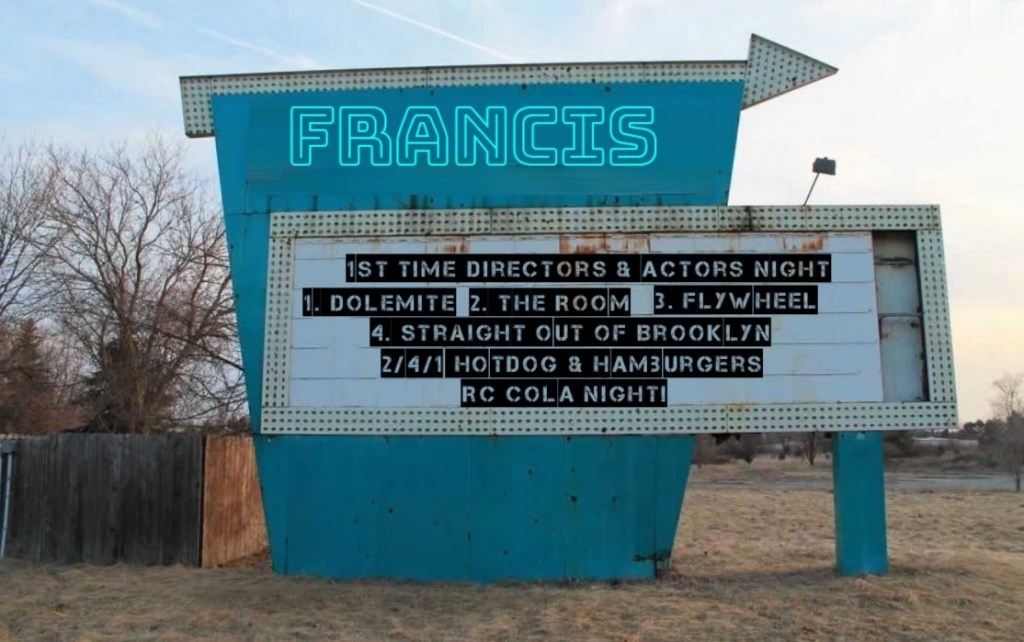
Drive-In Friday: First Time Directors & Actors Night

The criterion for this Friday’s theme night is simple: all of tonight’s films are by first time directors and actors who didn’t attend, or at the very least, complete their studies through, a theatre arts program.

First 50 cars get coupons for a free Eskimo Pie (2 per car only). Darn freezer’s on the fritz and I don’t want to throw them out.

Sure, we could revisit Kevin Smith’s Clerks and Troy Duffy’s Boondock Saints. But we’ve been there and done that with both of those films, and besides: the casts of both films featured formally trained actors. No, Quentin Tarantino doesn’t make the cut with Reservoir Dogs: while he had no formal schooling beyond his obsessive passion for film and working in a video store, he knew more about filmmaking that the four filmmakers we’re honoring this evening. No, Ridley Scott (Alien) doesn’t make the list either: while not a film school student, he graduated from London’s Royal College of Art and worked his way up the creative chain as a set designer for the BBC before making his debut, 1977’s The Duellists.

No, tonight we’re honoring indie filmmakers Rudy Ray Moore, Tommy Wiseau, Alex Kendrick, and Matty Rich — and while a diverse list, they have a lot more in common than you think. Each of them, along with their actors, possessed little to no film knowledge. But each had big dreams and unique purposes behind their respective films.

So hang up those speakers and lite the coils. Let’s get on with the show and enjoy Dolemite, The Room, Flywheel, and Straight Out of Brooklyn.

Movie 1: Dolemite (1975)

Rudy Ray Moore spent years struggling in the business as a musician, eventually finding his voice as a comedian by portraying a character called Dolemite. But his dreams weren’t over. He wanted to become a star of the silver screen. But even with his urban street cred as a comedian, none of the studios producing films in the then hot blaxploitation genre wanted to hire him or adapt his Dolemite character into a film.

Sure, Moore had a gift for a turn of the phase and rapping a prose, but he couldn’t act. And he had a potbelly and couldn’t fight. He’d never be a “Shaft” as he aspired. Oh, and he had no skills as director, writer, or producer. He didn’t know what a DP was or what a key grip or best boy did on a set. No matter. He spent his own money and took all of his non-industry friends along with him to make a movie.

So, taking the character of Dolemite from his Billboard Top 25 comedy album, 1970’s Eat Out More Often, he crafted a film about a pimp and nightclub owner granted an early prison release to work as an uncover agent to bust up a dope and gun-running ring operated by his old partner, Willie Green.

Is it awful? Yes. Is it Ed Wood-meets-Blaxploitation? Yes. Is it a charming picture overflowing with passion? Oh, absolutely. So much so you end up rooting for Rudy. And for his $100,000 investment in himself, he grossed $12 million during the film’s initial release. How loved is the life and oeuvre of Rudy Ray Moore? They made a movie about him starring Eddie Murphy: Dolemite Is My Name.

You can watch Dolemite as a free-with-ads stream on TubiTv. The VOD channel also carries the Dolemite sequel The Human Tornado, along with Rudy’s later films Petey Wheatstraw (be sure to read Sam’s review) and Disco Godfather.


Movie 2: The Room (2003)

Rudy Ray Moore always intended Dolemite to be an extension of his comedy albums and wanted to people to laugh with him. Tommy Wiseau, on the hand, set out — and failed — to emulate the works of A Streetcar Named Desire and Cat on a Hot Tin Roof penned by American playwright Tennessee Williams.

Today, Wiseau claims that his celluloid calling-card to the industry, initially intended to a be a “great American drama about love and betrayal,” was actually an intentional “black comedy.” Opinions vary on that assessment of his successful artistic disaster, and do we care? No. We love Tommy Wiseau’s Rudy Ray Moore-esque heart and tenacity in making his dreams come true.

The true beauty behind The Room is that much to the chagrin of Tommy’s harshest late night, D-List celebrity guests-cum-might Internet Warriors and purveyors of cinematic quality, The Room is still playing in theatres and breaking box office records 17 years after its release.

And, like Rudy, Hollywood made a movie about Tommy: 2017’s The Disaster Artist, which went on to win Golden Globes and Critics Choice Awards, and earned an Oscar nomination. So who’s laughing now, D-Listers? Who’s laughing now?

Surprisingly, none of the online PPV-VOD services offer streams of The Room, not even a free-with-ads stream on Tubi or Vudu. The free streams on You Tube come and go, so watch it while you can. Vudu does, however, carry Tommy’s two-part sophomore effort, 2018’s Best F(r)iends. The clips from the film abound on You Tube, so search and enjoy!

Intermission!

Back to the Show!

Movie 3: Flywheel (2003)

This feature film screenwriting, directing, producing, and acting debut from Alex Kendrick is not only my favorite film of this evening’s films: it is also the most technically adept “first” film of the evening. And, unlike Dolemite and The Room, each which had some assemblage of a semi-pro crew and a couple of trained actors on set, none of the cast and crew on Flywheel ever worked behind or in front of a camera. (Sans one actor: Lisa Arnold, a church member who worked in local theatre and did some local commercial work; she plays a news reporter who exposes the lead character’s dishonest business practices.)

Along with this brother, Stephen, Alex Kendrick oversaw the audio-visual ministry as the Associate Pastor of Sherwood Baptist Church in Albany, Georgia; their duties dealt with the recording and distribution of church sermons and other messages of faith. Not exactly what you would call filmmaking. And it’s a job they just picked up and learned along the way.

Now, while Rudy Ray Moore’s and Tommy Wiseau’s goals against their lack of experience to make their debut films were rooted in an earthly quest for fame, Alex Kendrick never aspired to be a screenwriter, director or actor: his filmmaking goal was purely spiritual. His was a quest to expand the audio-visual ministry of Sherwood Church and reach young people and teenagers. And young people and teens love going to the movies.

So with a Tarantino-inspired self-study tenacity and a budget of $20,000, the Kendrick brothers figured out how to write, produce and direct their own screenplay: a simple tale about Jay Austin (Alex Kendrick), a used car salesman with a crisis of faith. And that spiritual crisis has not only negatively affected his business; it’s damaged his marriage and his relationship with his son. And an acquisition of a classic ‘60s Triumph Roadster with a broken transmission flywheel becomes a catalyst to repair his own “spiritual flywheel.”

Once the Kendrick brothers’ film was completed, they released it “roadhouse” style, going from church to church across the state. And the response was overwhelming. So, to answer the demand, they four-walled two local theatres in Tifton and Columbus, Georgia. And the crowds kept coming. And they grossed $37,000. Then a distributor expressed interest. And the film opened across the country. Then it found distribution on faith-based television networks around the world. And it became one of the top-selling Christian films on DVD of all time, selling 300,000 plus copies. And the Kendrick brothers went on to make several more faith-based films (2006’s Facing the Giants, 2008’s Fireproof, 2011’s Courageous, 2015’s War Room, and 2019’s Overcomer)—each with an improved quality and even greater box-office successes. Their second film, Facing the Giants, was made for $100,000 and grossed over $10 million.

Is Flywheel a little rough in spots? Yes. Since neither Kendrick brother made a movie before, they made the usual rookie mistakes that all first-time filmmakers make—even the ones with formal training (and even the ones who have several other films on their resumes)—they forgot to film pick up shots, to create coverage, and inserts (all of the same mistakes Sam Raimi and Bruce Campbell* made with their little film about demons that everyone hails today in high praise as a “classic”). So, during the course of the Kendrick brothers’ debut film, you’ll notice a couple of scenes where the film quality changes. But make no mistake: Flywheel is not an Ed Woodian production that induces the guffaws of a Rudy Ray Moore or Tommy Wiseau production. It’s a film with well-drawn, complex characters that shine under the amateur thespians who volunteered their time to the production.

Now, if you’re just a movie fan, the faith-based aspect of the film will most likely be a turnoff and you’ll scoff at my praises for Flywheel. However, if you’re a filmmaker or actor and watch with those creative eyes, you’ll understand why this is a special film—probably the greatest first-time film by a group of cinematic novices ever made. Yes—even more so than the Sundance ballyhoo’d final film on this evening’s program.

Flywheel is widely available across all PPV and VOD platforms. But since this a Christian film you probably don’t want to gamble on—and we really want you to watch it—you can sample the film for free in two-parts on Daily Motion: Part 1 and Part 2.

* Bruce Campbell chronicled all of those mistakes in his biography If Chins Could Kill: Confessions of a B-Movie Actor.

Movie 4: Straight Out of Brooklyn

Filmmaker Matty Rich had it all: he had the start of a very promising career in Hollywood as a member of the “New Black Wave” alongside fellow filmmakers Bill Duke, Spike Lee, Mario Van Peebles, and John Singleton.

At the age of 19 Rich took Sundance by storm with Straight Out of Brooklyn, a film that he produced, wrote, directed, shot, edited, and acted in for $450,000 and, like Rudy Ray Moore before him, Rich brought along all of his friends. After winning the 1991 “Special Jury Prize” at the Sundance Film Festival and a 1992 Independent Spirit Award for “Best First Feature,” the film was picked up for distribution by MGM/Samuel Goldwyn Company and grossed over 2.5 million dollars in art-house box office. Rich’s debut was a vibrant, exciting and real story about a young man living in poverty in Brooklyn’s Red Hook housing project who concocts a plan to rob a drug dealer and change the course of his life—and it does: for the worse. It was an absolutely amazing film by a kid one year out of high school that left you feeling that same Kevin Smith-exuberance after watching his independently produced films, Clerks.

Sadly, as in the case with fellow first-filmmakers Troy Duffy (Boondock Saints) and Rob Weiss (Amongst Friends), Matty Rich believed he knew it all and knew it better than everyone else; studio executives couldn’t reason with him. Accepted into New York University’s famed Tisch School of the Arts—from where Spike Lee graduated and previously took Sundance by storm with his debut film, Do the Right Thing—Rich dropped out of the school because of its “racist” policies. And Lee—then the toast of tinsel town—called Rich “ignorant.” Rich countered Lee was a “middle-class third-generation college boy.”

Then the sophomore jinx hit Rich—and it hit hard: Rich’s first major studio-produced film, 1994’s The Inkwell—complete with a professional crew and actors and an $8 million budget—bombed. Chalk up its failure to the studio’s “racism” or Rich’s “ignorance,” but the magic displayed in Straight Out of Brooklyn was gone.

The Inkwell started to go off the rails during its pre-production, with Matty Rich’s university drop out accusing Andover and Stanford University graduate Trey Ellis’s script (based on his best-selling novel optioned by Walt Disney’s Touchstone Pictures) for “not being black enough.” Ellis countered the “screenplay wasn’t stereotypically black enough [for Rich] . . . a Stepin’ Fetchit black minstrel show for white audiences.” (The trials and production tribulations of the production were chronicled in a 1994 article published by Entertainment Weekly.)

And Rich hasn’t made another film since.

While The Inkwell is still widely available as a VOD on all platforms, Straight Out of Brooklyn is not. But we found a 10-part You Tube upload for you to enjoy. It’s a powerful film that, even with its rough edges, is a highly recommended watch.

Hey, if you missed them, be sure to join “The Francis” for our Drive-In Friday: Black & White Night and Drive-In Friday: Heavy Metal Horror Night, along with our Karate Blaxploitation, Musician Slashers, and Movies About Movies nights.

About the Author: You can read the music and film reviews of R.D Francis on Medium and learn more about his work on Facebook. He also writes for B&S About Movies.

NBC Monday Night Movie: Angel Dusted (1981)

As with our yesterday’s review of CBS-TV’s The Killing of Randy Webster, this NBC original movie held a young adult appeal, yet was far too dark for their weekday, Special Treat young programming block that also dealt with the issues of drug abuse — but not like this.

Dick Lowry, best known for his Kenny Rogers song-to-TV movie adaptations and NBC-TV’s In The Line of Duty film series, directs a script by actress Darlene Craviotto (feature film debut in Zoltan: Hound of Dracula, aka Dracula’s Dog) based on the biographical book Angel Dusted: A Family’s Nightmare by Ursula Etons.

Jean Stapleton and Arthur Hill stars as Betty and Michael Etons, while Stapleton’s real life son John Putch stars as the drug addicted Owen. Helen Hunt (Trancers, Twister, As Good As It Gets) appears as his sister, Lizzy. Percy Rodrigues (Primus Isaac Kimbridge from Genesis II, the “voice” of the Loknar in Heavy Metal!) stars as one of the doctors treating Owen.

Okay . . . this is where, as with the mix up of actors in The Killing of Randy Webster, we need to clear up the Helen Hunt-confusion with Angel Dusted.

Helen Hunt, after making this cautionary juvenile delinquency tale in a supporting role, headlined — alongside Diana Scarwid (Mommy Dearest) and the who’s who cast of Tom Atkins, (pick a John Carpenter movie), Sam Bottoms (Open House), Art Hindle (Clint’s Dirty Harry movies), and Diane Ladd (Something Wicked This Way Comes) — the other “Angel Dust” cautionary tale, Desperate Lives, for NBC in 1983 . . . and Desperate Lives is the movie where a drug-crazed Helen Hunt “touches the grass” and jumps out of a high school’s third floor window (clip).

There. Glad that’s settled.

Now back to the other PCP movie with Helen Hunt.

In this tale, John Putch (Sean Brody in Jaws 3-D; now a director banging out American Housewife episodes for ABC; Scrubs for NBC) is a doted-upon son who finds solace from the pressures of excellence from his affluent parents by developing a drug addiction. And he falls into a drug-induced psychosis after smoking pot laced with PCP.

While Putch is stellar in his acting debut, this is clearly mom’s show. For anyone who’s never experienced Jean Stapleton outside of her Edith Bunker character on CBS-TV’s long running All in the Family, they’ll be amazed at this master thespian’s range.

While the doctors just go through the motions — plying Owen with even more drugs-as-antidotes, such as the schizophrenics Haldol and Thorazine — Betty Etons struggles to hold her marriage and family together as she tries to nurse Owen back to a life of normalcy.

You can watch a pretty clean TV-taped VHS rip of Angel Dusted on You Tube. And since it’s owned by Warner Brothers (they provide an official trailer) this one is readily available to purchase for your collection of Jaws ephemera. Warner Bros. also owns Desperate Lives and since released it on VHS and DVD; that is if you’d like a copy for your ’70s juvenile delinquency film collection.

About the Author: You can read the music and film reviews of R.D Francis on Medium and learn more about his work on Facebook. He also writes for B&S About Movies.
CBS Schoolbreak Special: Portrait of a Teenage Shoplifter (1981)

CBS-TV’s young adult programming block first aired in December 1978 as CBS Afternoon Playhouse and went through a revamp during the start of its 1983 season with the “Schoolbreak Special” moniker. After an 18 year run—and like everything else killed off by the multi-channel cable universe and the Internet—it was cancelled in January 1996.

Image screencap by R.D Francis via Timmy Faraday/You Tube

Under the old banner, CBS aired this lesson regarding teen crime on December 1, 1981. The cast stars Katherine Kamhi (later of Sleepaway Camp and Silent Madness), Laura Dean (a two-year stint as “Sophie” on NBC-TV’s Friends), and Maureen Teefy (Alan Parker’s Fame, Grease 2, and Supergirl ’84.)

Teefy is Karen Hughes, a high school ballet dancer and cheerleader dealing with the usual boyfriend problems, a snotty head cheerleader, and nagging parents. To compete with her better well-to-do friends and the popular girls, she develops a shoplifting addiction, gets caught, and jeopardizes her future. Of course, the friend that got her hooked (Laura Dean) leaves her high and dry.

Made during the days when stores relied more on human eyes and not so much the technological eyes of security cameras—she’s almost caught by none other than door guard Joe Spinelli of Rocky and Maniac fame (and yes, he’s a creepy lech). This is one of the darkest-ending young adult anthology movies you’ll ever watch—no happy ending here. This ain’t The Brady Bunch, after all.

Other standout episodes from the CBS series include Year of the Gentle Tiger (1979; starring iconic TV actor Lance DeGault; U.S. Army Colonel Roderick Decker on TV’s The A-Team), and the Dan Curtis-produced I Think I’m Having a Baby starring Jennifer Jason Leigh, Helen Hunt (Trancers, Twister), and Tracy Gold (TV’s Growing Pains). Another adored episode was Welcome Home, Jellybean, which starred Dana Hill (Audrey Griswold from National Lampoon’s Vacation) as a special needs teen that moves back with her family (her put-upon brother is Christopher Collet from the aforementioned Sleepaway Camp, First Born, and The Manhattan Project).

You can watch the CBS Schoolbreak Special episodes mentioned in this review—and more—on a pretty nifty catch-all playlist we found on You Tube.

About the Author: You can read the music and film reviews of R.D Francis on Medium and learn more about his work on Facebook. He also writes for B&S About Movies.