Police Story: A Chance to Live (1978)

Okay. Alright. Settle down, everyone. Yes, we’re reviewing a David Cassidy movie for this latest “TV Week” installment here at B&S About Movies. Sam said it was okay, really. Just be grateful Danny Bonaduce’s role in the 1975 Police Story episode “The Empty Weapon” wasn’t spun off into a series.

Knock “Keith Partridge” if you will for the “Cassidymania” that swept American in the early ‘70s, but how many artists can you name that played to two sellout crowds of 56,000 each at the Houston Astrodome in Texas over one weekend and sold out New York’s Madison Square Garden in one day in 1972? Cassidy was the Beatles. He was Kurt Cobain. But he was also on his way to becoming the Knack.

The turning point in his career — a tragic one — occurred on May 26, 1974. A gate stampede at a show in London’s White City Stadium resulted in the injuries of 800 people in a crush at the front of the stage. Thirty were taken to the hospital, and a 14-year-old girl, Bernadette Whelan, died four days later at London’s Hammersmith Hospital.

The tragedy haunted Cassidy until the day he died, as he blamed himself for Whelan’s death. And he stepped back from music and acting. Then an opportunity to return to the small screen — in an adult role — was offered.

The story begins with NBC-TV’s hit anthology crime drama series Police Story that aired from September 1973 to May 1978 and was developed by East Pittsburgh-born Joseph Wambaugh. Upon his retirement from his fourteen year career with the Los Angeles Police Department, he turned to writing. And when it came to true crime stories in the ‘70s, Wambaugh was the man. His 1971 novel The New Centurions was turned into a 1972 hit film starring George C. Scott, and the rest of his novels became films in quick succession: The Blue Knight (1972/1973), The Choirboys (1975/1977), The Black Marble (1978/1980), The Onion Field, and The Glitter Dome (1981/1984).

Just prior to the cancellation of the series, David Cassidy starred as undercover police officer Dan Shay in “A Chance to Live.” As result of his youthful appearance, Shay was recruited to infiltrate a high-school drug ring as a fellow student. After his typecasting as a teen idol during his four year run on The Partridge Family, the episode was his triumphant return to acting, as he earned an Emmy nomination for “Best Dramatic Actor.” Courtesy of the award nod and the show’s high ratings — as everyone was intrigued to see Cassidy in an adult role — it led to the development of a series: David Cassidy: Man Undercover.

While he was once again praised for his acting, it wasn’t enough to overcome the Partridge albatross: the show was cancelled after 10 episodes. Many believe the decision of having Cassidy record the show’s theme song, in lieu of a traditional instrument theme song (think “The Rockford Files,” “Starsky and Hutch,” or “S.W.A.T“; each which became U.S. Top 40 hits), gave the show a “teeny bopper” feel. Others felt prefixing his name to the show’s title was a mistake. Everyone stayed away. And, as with the White City Stadium tragedy, the failure of the series always gnawed at him — especially when FOX-TV copied the formula with 21 Jump Street and it launched Johnny Depp’s career.

Keen eyes will notice Dee Wallace (Stone), later known for her work in The Hills Have Eyes, The Howling, Cujo, Critters and, of course, E.T: The Extra-Terrestrial, as Cassidy’s wife in the telefilm. She was replaced in the series by Wendy Rastatter, later of another well-regarded TV movie, Midnight Offerings. Keener eyes will notice David’s squad commander is Simon Oakland of Psycho (1960), Bullitt (1969), and TV’s The Night Stalker. Comic book fans of all things Marvel know the telefilm and series writer/producer Larry Brody for his work on the late ’90s animated Spider-Man and Silver Surfer franchises.

Seriously, don’t let the David Cassidy connection deter you from watching. Not only was Police Story a high quality piece of work, Cassidy is excellent throughout. He deserved for it to be a hit. He deserved a hell of a lot more than the hand he was dealt.

You watch the full movie on You Tube and see why.

Oh, since we’re on the subject of teen idol actors and musicians: Be sure to check out our reviews of Lane Caudell (Getaway) in the ’70s Drive-In favorites Goodbye, Franklin High and Hanging on a Star, along with ex-Jeff Beck Group vocalist Kim Milford (Laserblast, Wired to Kill) in the Don Kirshner-produced TV movies Song of the Succubus and Rock-a-Die, Baby.

There are more TV movies to be had with our “Week of Made for TV Movies,” “Lost TV Week,” “Son of Made for TV Movie Week” and “Grandson of Made for TV Movie Week” tribute spotlights to those films that, in many cases, are even better than the movies that played in theatres.

Update, June 2020: Our gratitude to the Official David Cassidy website reaching out to us with the positive vibes and referencing our review on their continued efforts to honor David.

About the Author: You can read the music and film reviews of R.D Francis on Medium and learn more about his work on Facebook. He also writes for B&S About Movies.

A Christmas to Remember (1978)

A Christmas to Remember is a TV movie that aired on the CBS-TV Network on December 20. 1978, starring Jason Robards (A Boy and his Dog, Something Wicked This Way Comes), Eva Marie Saint (Martha Kent in 2006’s Superman Returns), and Joanne Woodward (Mrs. Paul Newman, 1947’s A Double Life). The screenplay was based on the 1977 novel The Melodeon by Glendon Swarthout, whose novels Bless the Beasts and the Children, John Wayne’s The Shootist, and the beach romp Where the Boys Are were turned into films.

The screenplay was adapted by Stewart Stern, who wrote James Dean’s defining film, Rebel Without a Cause, Dennis Hopper’s 1971 directing flop, The Last Movie, a 1973 multiple-Emmy winning adaptation of Tennessee Williams’s The Glass Managerie (Tommy “The Room” Wiseau’s favorite playwright), and the 1963 Marlon Brando vehicle directed by George Englund, The Ugly American (ironically, Wiseau’s favorite actor). The holiday effort also served as the second-to-last directing effort by George Englund, who closed out his directing career with Rock Hudson’s The Vegas Strip War for NBC.

Rusty McCloud (George Parry, who ended his career with 1981’s The Burning; if you’ve seen The Burning, you’ll understand why) is sent by his economically-strapped mother (Joanne Woodward) to live on his grandparents’ farm one winter during the Great Depression. The grandparents, Daniel Larson (Jason Robards) and his wife Emma (Eve Marie Saint), are still grieving the loss of their son in World War I, and Grandap Larson is resentful of his grandson. However, a bond gradually develops as they work to deliver a melodeon (a pump organ) left by the dead son to the local church as a surprise Christmas gift.

Originally filmed in 1976 and intended as a theatrical release, this is an old fashioned Christmas they way they don’t make them anymore, with a stellar cast and comes highly recommended. You can watch a pretty decent taped-from-TV VHS rip for free on You Tube. And it’s the only way to see it, as it was never released on VHS or re-issued on DVD.

There are more TV movies to be had with our “Week of Made for TV Movies,” “Lost TV Week,” “Son of Made for TV Movie Week” and “Grandson of Made for TV Movie Week” tribute spotlights to those films that, in many cases, are even better than the movies that played in theatres.

About the Author: You can read the music and film reviews of R.D Francis on Medium and learn more about his work on Facebook. He also writes for B&S About Movies.

CBS Wednesday Night Movie: The Killing of Randy Webster (1981)

Considering its juvenile delinquency plot and rock soundtrack (like an even bleaker Over the Edge), this was certainly made for young adults, but was far too dark for CBS-TV’s Schoolbreak Special young adult programming block. And it’s one of the greatest TV movies ever made. Yeah, I know we say that a lot about the TV movies we review here. But wow. This friggin’ movie.

Once again proving that all actors have to start somewhere: Sean Penn stars in a support role in his first feature film. Before he gained notice for his supporting Tom Cruise in the military school drama, Taps (1981), and then blew up with his roles as Jeff Spicoli in Fast Times at Ridgemont High (1982) and Bad Boys (1983) as Mick O’Brien, he was the undercard in this cautionary tale based on journalist Tom Curtis’s award-winning article “The Throwdown.”

The teleplay was written by prolific TV scribe Scott Swanton in his feature film debut. Regardless of his ratings successes on TV, Swanton only moved into theatrical features — once — with Racing for Glory (1989), a bike racing flick starring Peter Berg (who you know as an actor from Shocker, but as a director from Hancock and The Losers). But on the small screen? Wow. Swanton brought his A-Game with the Calendar Girl Murders (1984; Tom Skeritt/Sharon Stone) and Nightmare at Bitter Creek (1988; Tom Skeritt/Lindsay Wagner). Great TV movie stuff!

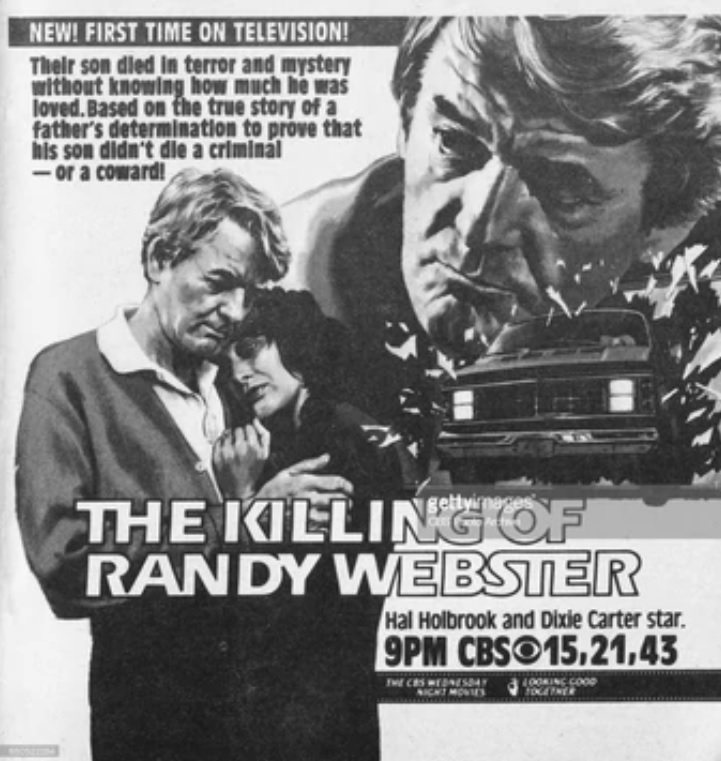
The rest of the cast is a who’s who of ’70 and ’80s films and television. Of course, you recognize the adult leads with the always welcomed Hal Holbrook (Creepshow, Rituals) and Dixie Carter from her wealth of TV series. But you also get Barry Corbin of WarGames (as Holbrook’s work partner) and an early roll for Jennifer Jason Leigh, who just came off her support role in Eyes of a Stranger (1981), and on the way to her breakout roles in Fast Times at Ridgemont High and Easy Money (1983). And there’s Anthony Edwards, also of Fast Times, and on his way to Top Gun (1986) with Tom Cruise.

The rest of the cast is filled with the familiar faces of Chris Mulkey (a cabie witness; Act of Love with Ron Howard), Scott Paulin (portrays writer Tom Curtis; yes, he was Red Skull in Captain America ’90) and Anne Ramsey (a trailer park witness). Uber keen eyes will also notice the familiar John Dennis Johnson (of 48 Hrs. and Kiss Meets the Phantom of the Park) and Nancy Malone (too many TV series to mention), and James Whitmore, Jr. (now a prolific TV director, most recently for the NCIS franchise). And do we really have to go into the acting resume of director Sam Wanamaker? Billy Jack Goes to Washington (1977) and “Luigi Patrovita” in Raw Deal (1986) ringing any bells?

Sorry. I know. Yet again, I get carried with the backstories and casts with these old TV movies. You’d probably like to know the plot now, right?

Courtesy of Getty Images/Made for TV Movie Fandom Wiki.

Randy Webster (Gary McCleery, who vanished from the biz after roles in Baby, It’s You (1983) and Matewan (1987) for John Sayles; he’s oft confused with Paul Clemens of The Beast Within and Michael Kramer of Over the Edge and vise versa: that settles that actor-argument) is a troublesome high school student (his buddies are the nebbish Penn and Edwards) who, after a fight with this mom and dad (Carter and Holbrook) and his girlfriend (Jennifer Jason Leigh) on the same night, decides to let off some steam by breaking into an auto showroom and steal a van — and it ends with his death at the hands of Houston police officers. To cover up the incident, the cops use a “throw down”; Holbrook and Carter are determined to clear their son’s name and prove he was murdered.

Oh, I almost forgot. The soundtrack. Oh-ho-ho, this friggin’ soundtrack!

Since this was a Canadian-made movie and April Wine just released their mainstream breakthrough album, 1981’s Nature of the Beast, half of the album was used in the film, most notably, “Crash and Burn” during the culminating cops vs. van chase.

And now, I go off the rails with April Wine love: No hard rock collection is complete without copies of their ’80s “big three” of Harder . . . Faster, First Glance, and The Nature of the Beast (honorabe mentions to ’75’s Stand Back and ’82’s Powerplay). The ‘Winers made their soundtrack debut with their two best-know hits, “Just Between You and Me” and “Sign of the Gypsy Queen,” in the Canadian comedy Gas (1981; back when Howie Mandell had hair and worked as an actor). One of their later, last and lesser and weaker hits, “Rock Myself to Sleep,” was used in vampire comedy Fright Night (1985) (and became a hit cover for the Jefferson friggin’ Starship; just to show how far the ‘Wine whoosed and slipped off the hard-rock tracks).

Hollywood’s music consultants eventually come to realize the majesty of the ‘Wine, with the Canadian rockers earlier tunes “Say Hello,” “You Could Have Been a Lady” and “Oowatanite” appearing in numerous films. “Roller” from First Glance has appeared in Joe Dirt, Machine Gun Preacher, The Heat, Grown Ups 2, and Game Night, while “I Like to Rock” appeared in Nick Cage’s Drive Angry. Most recently, “Say Hello” turned up in the 2019 Dave Bautista-starring action flick, Stuber. And it looks like I’ll have to music consult a film myself to finally get the epic Brian Greenway-penned tunes “Before the Dawn” and “Right Down To It” on a soundtrack. . . .

Okay. Geeze, R.D. Here’s the friggin’ Charmin. Clean yourself up already.

Anyway, The Killing of Randy Webster is one of the few TV Movies that, during the video ’80s insatiable appetite for shelf product, was issued on VHS — with gaudy, sensationalistic sleeves, natch — and you can easily find a copy on Amazon and eBay. But watch out for those DVDs, as they’re grey market rips. What makes this movie work is that scribe Scott Swanton used the Akira Kurosawa Rashomon approach (like Alex Cox’s recently released Tombstone Rashomon) to investigate what really happened on that Houston highway. Just a beautiful film on all quarters.

There’s two clean VHS rips uploaded to You Tube. One with commercials — the for the full retro-TV experience — and one without commercials. And we found this pretty nifty catch-all playlist featuring a plethora, a virtual analog cornucopia, of the “Big Three” network’s TV movies of the ’70s and ’80s. Enjoy! And rock to the soundtrack of The Killing of Randy Webster, aka April Wine’s The Nature of the Beast.

About the Author: You can read the music and film reviews of R.D Francis on Medium and learn more about his work on Facebook. He also writes for B&S About Movies.

ABC Afterschool Special: Hewitt’s Just Different (1977)

Before NBC and CBS eschewed adult soap opera programming and started programming divisions concentrating on weekday, young adult programming, ABC-TV blazed the trail with their Afterschool Special that ran for 25 years from October 1972 to January 1997. The series topics, which touched on illiteracy, drug abuse, bullying, spousal abuse, and teen pregnancy, earned a record-breaking 51 Daytime Emmys.

The series has far too many standout episodes to mention, but here’s just a few of them, starring actors you know all too well.

Santiago’s Ark (1972), about a 14-year-old Puerto Rican boy who builds a boat to sail around Central Park, co-starred Bill Duke (Predator, Commando; recently in American Satan and Mandy). Child actor René Enríquez would go onto star for several seasons as Lt. Ray Calletano on NBC-TV’s Hill Street Blues.

Other standouts include Me and My Dad’s Wife (1976; Kristie McNichol), Schoolboy Father (1980; Rob Lowe), Stoned (1980; Scott Baio), and Dinky Hocker (1979, the late Wendie Jo Sperber from Back to the Future). Then there’s Rookie of the Year (1973), which starred Jodie Foster (Silence of the Lambs, The Little Girl Who Lives Down the Lane) as an 11-year-old girl who joins her brother’s Little League Team.

Image courtesy of randy rodman/eBay/MeTV.

But it’s this first episode of the sixth season that aired on October 12, 1977, that we loved the most. You’ll recognized Russell “The Professor” Johnson from Gilligan’s Island and a then 16-year-old Perry Lang, later of Alligator, Spring Break, Eight Men Out, and 1941.

Lang is Hewitt Calder, a mentally-challenged teen cared for by his father (Johnson). Hewitt comes to make friends with Willie Arthur (Moosie Drier, later of American Hot Wax, Hollywood Nights). Together, they overcome the school bully, Nully (played by Tom Gulager, the son of Clu, the star of Return of the Living Dead and Hunter’s Blood), and teach the neighborhood kids that “Everybody Matters.”

Image courtesy of coolcanoga/eBay.

Sadly—even with all of the uploads of Afterschool Special episodes—this one’s missing. And that’s a damn shame, because Perry is incredible in his acting debut. He’s long since moved into directing, with credits across all three major TV networks, along with the 2018 Christian-based film, Interview with God.

You can watch the episodes mentioned in this review—and more—on a pretty nifty catch-all playlist we found on You Tube.

About the Author: You can read the music and film reviews of R.D Francis on Medium and learn more about his work on Facebook. He also writes for B&S About Movies.

The Astronaut (1972)

As the credits roll, you’ll notice this production is headed by Harve Bennett and produced by Universal Television for the ABC-TV television network, which aired this as their “Movie of the Week” on January 8, 1972. And if Harve isn’t enough (who creates a quality product in everything he does), this also stars all of the TV/theatrical character actors we love (who bring a quality to all that they do) and care about. And it’s a ’70s TV flick, which, if you’ve spent any length of time at B&S About Movies, is a genre we love and care about with geeky, crazed fanboy fandom.

Of course, we all know the connection between Universal Studios and ABC-TV with 1978’s Battlestar Galactica*. But you’ll also notice several familiar names from Bennett’s next production: The Six Million Dollar Man, which aired as a 1973 TV movie (a great TV flick!) then as a 1973 to 1978 series on ABC (eh, not so great, but had its episode-arc moments). And near the end of both series, Bennett gave us the coolest do-it-yourself astronaut with Harry Broderick in another great TV movie (and ill-fated series, ugh), Salvage 1.

The lead in The Astronaut, Monte Markham, portrayed the Seven Million Dollar Man (as Barney Miller/Hiller in “The Seven Million Dollar Man” and “The Bionic Criminal” episodes). Of course, we remember his co-star, Richard Anderson, as Oscar Goldman in the series. You’ll also recognized several familiar TV and film support players, such as Susan Clark (Colossus: The Forbin Project; ’80s TV’s Webster), Jackie Cooper (the original Perry White in 1978’s Superman), and Robert Lansing who, ironically, starred as General McAllister the 1989 TV movie, Bionic Showdown: The Six Million Dollar Man and the Bionic Woman — but we remember him for the trash classics of 1977’s Scalpel and Empire of the Ants, 1980’s S*H*E and Island Claws, and 1988’s The Nest. (How is it that I watched all of those Lansing movies? I don’t know if that makes me cool, or just very sad.) Keener eyes will pick up on ubiquitous TV actor John Lupton (Airport 1975), along with the he’s-everywhere James B. Sikking (TV’s Hill Street Blues, Outland, the ’80s Star Trek movies) as one of the ill-fated Mars astronauts.

The Astronaut was the film, well, teleplay, writing debut for TV scribes Charlie Kuenstle (who went on to write Airport ’77), Gerald Di Pego (who wrote the 1974 pseudo-giallo W (starring Dirk Benedict from BSG), the beloved 1974 Linda Blair TV romp Born Innocent, and a couple The Incredible Hulk TV movies), and Robert Biheller, who continued with his prolific TV acting career (but also worked as a staff writer on TV’s CHiP’s and Charlie’s Angels). Robert Michael Lewis wrote a slew of TV movies throughout the ’70s and ’80s, most notably: 1974’s highly-rate Prey for the Wildcats (yep, with Andy Griffith from Salvage 1) and The Day the Earth Moved (with Jackie Cooper). (Remember that, at the time, Watergate was the crime of the decade, and you’ll see that conspiracy-cover up concept the frames of the teleplay.)

Monte Markham is Col. Brice Randolph, the first man on Mars (in an Apollo rocket and LEM, just like the later Capricorn One from 1978). As Randolph sets foot on the surface and begins to explore, the TV coverage is abruptly cut off. Officially, the story is that it was a slight communications glitch and the crew is heading home. Unofficially, Mission Control officer Jackie Cooper and a few top-ranking officials (Richard Anderson) know the truth: Randolph died on the surface due to a bacterial infection.

If the news of his death gets out: goodbye space program. So, instead of faking the mission or killing off the astronauts in a cover up (as in Capricorn One), NASA recruits a fellow officer, Eddie Reese, and — with a little surgery and a switcheroo at the splashdown site — passes him off as Randolph. But the plan begins to fall apart when Randolph’s wife (Susan Clarke) starts to realize something’s not quite right about her “husband.” And when the Russians announce they’re going to Mars, will the U.S. warn them of the dangers of the Red Planet?

And if this all sounds a bit like the 1999 did-anybody-actually-see-it Johnny Depp box office bomb, The Astronaut’s Wife, it probably is.


Markham went back to the moon — alongside Ken Foree (Dawn of the Dead, Re-Animator) in the 2016 English-language Serbian-Korean-Slovenia co-production The Rift: The Dark Side of the Moon (not to be confused with the underwater Alien ripoff, The Rift, or the better, other Alien ripoff, The Dark Side of the Moon). The plot concerns a sleeper CIA agent in Belgrade dispatched as part of a multi-national team to secure the remains of a crashed satellite in Eastern Serbia. The team comes to discover the satellite has vanished and they work to discover the truth behind the crash and their ill-fated mission. As you can see by the trailer, the production values and acting are of a high quality. (I liked this one, but opinions vary — to the side of “suck,” so you know how that goes.)

You can watch The Rift: The Darkside of the Moon as a PPV on You Tube and Vudu and purchase DVDs from Cleopatra Entertainment. You can watch the trailer via the official You Tube page of Cleopatra Entertainment.


The VHS and (grey market) DVDs for The Astronaut are out there, if you want a hard copy for your sci-fi collection, but you can watch an okay taped-from-TV VHS rip of The Astronaut for free on You Tube.

And by the way: We reviewed a pretty cool German variant of the Capricorn One concept with 1977’s Operation Ganymed. Put all three together for a night of viewing.

* Be sure to check our our two-part, month-long Star Wars ripoffs and galactic droppings blowout “Exploring: Before and After Star Wars.”

There are more TV movies to be had with our “Week of Made for TV Movies,” “Lost TV Week,” “Son of Made for TV Movie Week” and “Grandson of Made for TV Movie Week” tribute spotlights to those films that, in many cases, are even better than the movies that played in theatres.

About the Author: You can read the music and film reviews of R.D Francis on Medium and learn more about his work on Facebook. He also writes for B&S About Movies.

The Death of Richie (1977)

Editor’s Note, January 2023: Lance Kerwin passed away on January 24, 2023, at the age of 62. Lance got his start in acting by way of his mother, who worked as a booking agent, and his father, who worked as an acting coach. Kerwin, who came to prominence for his work in the Michael Landon TV movie The Loneliest Runner (1976), the NBC-TV series James at 16 (1978), and the Stephen King adaptation, Salem’s Lot (1979), left Hollywood in the late ’90s to serve the Lord as a Christian youth minister.

Thank you for the films, Lance. You were loved and you will be missed.


We’ve talked a lot about the prolific career of director Paul Wendkos at B&S About Movies. While Wendkos got his start directing Jayne Mansfield in the since forgotten rom-com The Burglar (1957) and directed a lot of Gidget movies, he built up pretty cool horror movie oeuvre with the theatrical feature The Mephisto Waltz, and the TV movies Good Against Evil, Haunts of the Very Rich, the 1985 remake of TV remake of The Bad Seed, and the legendary 1975 TV movie The Legend of Lizzie Borden.

In 1976 Wendkos was hired by NBC-TV to direct this, the second of two U.S. TV movies Robby Benson shot at the height of his teen idoldom, just before experiencing his first taste of international fame with his back-to-back theatrical hits of Ode to Billy Joe (1976) and One on One (1977). Benson’s first TV movie was ABC-TV’s Death Be Not Proud (1975).

Here, Benson stars in this true story based on the grim article and non-fiction book by Thomas Thompson regarding a father forced to kill his drug-crazed teenage son who came at him with an ice pick after one of their arguments about his litany of drug-induced troubles and his less-than-desirable friends (Charles Fleischer of A Nightmare on Elm Street and the voice of Roger Rabbit in Who Framed Roger Rabbit and Clint Howard of Ice Cream Man and Tango & Cash fame).

Keen eyes of ‘70s TV will notice “Capt. Nicole Davidoff,” Susan Pratt from the Saturday Morning “Star Wars,” Jason of Star Command, (one of my favorite ‘70s actors) John Friedrich (Thank God It’s Friday, Almost Summer, The Wanderers, and The Final Terror), and Cindy Eilbacher (TV movie Bad Ronald and Slumber Party Massacre II) as Richie’s friends. Lance Kerwin (of the TV movies The Loneliest Runner and James at 15; “Wooster” in Enemy Mine), Ben Gazzara (The Neptune Factor and Inchon; “Brad Wesley” in Road House), and Eileen Brennan (FM) star as Richie’s put-upon family.

Critics have written this off as an Afterschool Special (we’re reviewing a few of those this week) with violence added. I disagree. This is an intense, emotionally sad story; one that, unlike most book-to-film transitions, is very faithful to the book. And even though you know the outcome, you remain gripped to the screen because you wonder just how much worse things will digress.

Since this was a ratings juggernaut that everyone in middle school watched, most of us went out and bought the book ($1.25 new!). Our school’s library even carried it. And we watched the film in civics class more than once. The subsequent VHS release dropped “The Death of” prefix and released this under the book’s original title of Richie—even toning down some of the violence from the original TV print, which is forever lost. Beware of the DVDs marketed as “digitally remastered”; there’s no official DVDs and all are grey market rips of varying quality.

This spins frequency as part of EPIX’s cable catalog (their print is rife with sound and visual issues). While you can also stream it on Amazon Prime, we found two free rips on You Tube HERE and HERE—and those same prints air on EPIX. You can read the scans of Thompson’s Life Magazine article HERE and HERE. Here’s the network TV trailer. You can also watch The Death of Richie as part of Mill Creek’s “The Swingin’ Seventies” 50-film pack box set, which also includes The Young Graduates, itself on Mill Creek’s “B-Movie Blast” 50 film pack.

Join us tomorrow—Wednesday, and Thursday at 9 PM—as we take a look at two more “ripped from the headlines” troubled-teen TV movies with The Killing of Randy Webster and Angel Dusted.

About the Author: You can read the music and film reviews of R.D Francis on Medium and learn more about his work on Facebook. He also writes for B&S About Movies.

The Jericho Mile (1979)

Peter Strauss is bad ass in this Michael Mann production that aired on ABC-TV on March 18, 1979. Like Sam Elliot bad assery. And in what the hell ever happened to scribe Patrick J. Nolan? How is this bad assery of script — which walked away with five awards, including three Emmys, and was the seventh-highest rating show of the week (the six higher ones were TV series; so this was the #1 rated TV movie for the week) — his only feature film writing credit?

More importantly: Why was this a TV movie? The quality across all the film disciplines is so high, this should have been a theatrical feature — and swept the Oscars.

Well, as it turns out, Patrick J. Nolan was a college English professor and the script languished on the shelf, as most optioned screenplays by unknown writers usually do (been there, done that). Then Peter Strauss, then a huge star courtesy of ABC-TV’s Rich Man, Poor Man (and commanding $200,000 per TV movie), was in the market do something “completely different.” And he discovered this script. (And he did the Star Wars-cum-Mad Max romp for Charles Band: Spacehunter: Adventures in the Forbidden Zone. I dig it, but opinions vary.)

ABC-TV brought on a young Michael Mann*, who worked on commercials in England alongside Ridley Scott of Alien fame, and cut his teeth with episodes of the U.S. TV series Hawaii Five-O and Starsky and Hutch. And Mann was already up-to-speed on prison life courtesy of his uncredited re-writes alongside Dustin Hoffman for 1978’s Straight Time (it’s never about the on-screen credit: it’s about the work).

And, with that, Mann “punched up” Nolan’s script about Larry Murphy, a loner convicted of first degree murder serving a life sentence at Folsom Prison (where this was filmed) for shooting his father, which Murphy felt was a justifiable homicide because his father was raping his stepsister.

Now we’ve all seen our share of prison movies (we’ll mention the gold standards Escape from Alcatraz and The Shawshank Redemption) and know how inmates “do their hard time.” But Murphy, that the inmates nickname “Lickity Split,” loses himself by running. All day. Every day. All the time. And the prison psychologist (Geoffrey Lewis!) and warden (Billy Green Bush!) come to realize that Murphy’s obsession has resulted in his running at the Olympic level, thanks to the insights of the state’s award-winning track and field coach (Ed Lauter!).

What makes this all so special is that Nolan and Mann’s script eschews the usual sensationalism of prison movies (e.g., prison rape, riots, thuggery, stabbings, abusive guards, crooked wardens) and is, instead, a psychological study; a study of man at the lowest point in his life finding the strength to carry on, and how the compassion of others, can lift a man back up. It’s also a tale of how others can find their own victories — abet, vicariously — through others in the same predicament, who are not as strong to succeed beyond their surroundings. Success isn’t about money, prestige, power, or promotion: it’s about how you use your spirit and deal with the negativity of others . . . and “win.”

To say anymore would be plot-spoiling (okay, well, the late Brian Dennehy is the “yards” dickhead in this), but we will tell you this is the film that The Rolling Stones allowed Michael Mann to license an instrumental re-arrangement of “Sympathy for the Devil” for the film, which is used as the film’s theme song.

Watch his movie. Period. For it is bas-ass . . . and a bag o’ chips.

There’s several rips of varying quality on You Tube. But with the way uploads come and go, we’ll give you all three to choose from HERE, HERE, and HERE.

* We wax nostalgic over Michael Mann’s work with Tangerine Dream in our “Exploring: 10 Tangerine Dream Film Soundtracks,” where we discuss Mann’s Thief and The Keep.

There are more TV movies to be had with our “Week of Made for TV Movies,” “Lost TV Week,” “Son of Made for TV Movie Week” and “Grandson of Made for TV Movie Week” tribute spotlights to those films that, in many cases, are even better than the movies that played in theatres.

About the Author: You can read the music and film reviews of R.D Francis on Medium and learn more about his work on Facebook. He also writes for B&S About Movies.

The Vegas Strip War (1984)

So, did you hear the one about Police Commissioner Stewart “Mac” McMillan, Darth Vader, Mr. Miyagi, and a future Golden Globe winner who probably doesn’t want anyone to know she got her start in the biz with a role in Police Academy 4: Citizens on Patrol, and the ex-husband of Cloris Leachman (Mel Brooke’s Young Frankenstein and High Anxiety) walking into an NBC-TV gin joint?

Could the VHS sleeve be any cheaper?

Yes, today The Vegas Strip War is remembered as Rock Hudson’s last movie: he died less than a year later (remember when Rock went “sci-fi” with Embryo?). Ah, but we, the TV movie lovin’ dorks of B&S About Movies, remember this as the final film directed by Leachman’s ex and Jack Albertson’s nephew (Grandpa Joe in Willy Wonka and the Chocolate Factory), George Englund — who brought us the world’s first “electric western,” the 1971 counterculture classic (read: dud), Zachariah, starring, off all people: Joe Walsh of the Eagles (then with the James Gang), San Francisco hippy-rockers Country Joe and the Fish, and Don Johnson (A Boy and His Dog).

Englund, who was best buds with Marlon Brando, made his directing and producing debut with Brando as his star in the 1963 political adventure, The Ugly American, which he followed up with one of the lesser known, but well-made film noirs, 1965’s Signpost to Murder (written by Sally Benson of Alfred Hitchcock’s Shadow of a Doubt (1943) fame). After the critical and financial failure of (the previously linked) Zachariah, Englund’s career cooled, but the 1972 snow-based Italian crime caper, Snow Job, was a pretty darn cool UHF-TV movie favorite of yesteryear (not bad for starring an Italian Olympic skier who couldn’t act). Englund ended his career producing the series Blossom and The Golden Girls for NBC-TV and publishing the 2004 memoir about his friendship with Brandon: Marlon Brando: The Way It’s Never Been Done Before.

Ah, I see what you’re doing, there, Mr. Distributor.

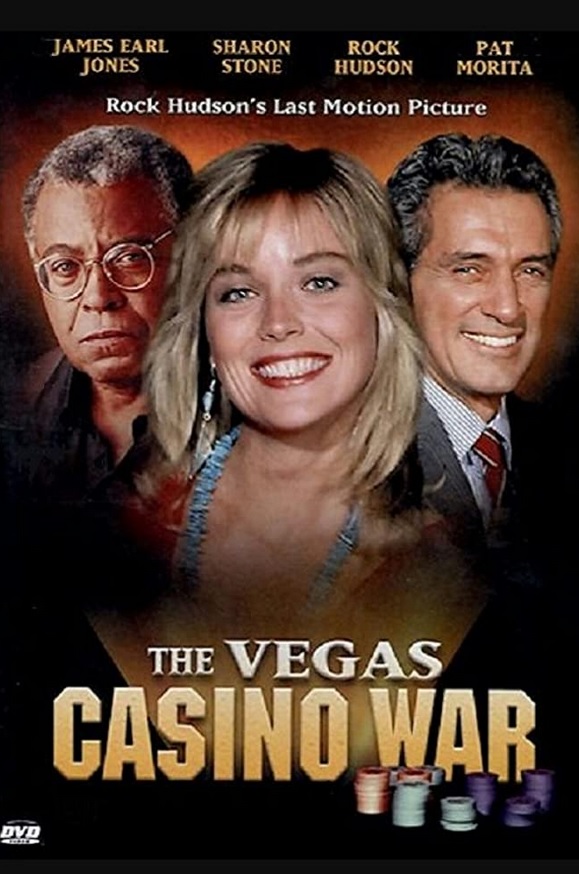
The Vegas Strip War is another one of those films that, even thought it was released on VHS, is hard to find. And it would have been lost forever if not for Martin Scorsese’s back-to-back box-office hits Goodfellas (1990) and Casino (1995). And as you can tell from the original VHS and its DVD reboot, Sharon Stone’s supporting role, which wasn’t even mentioned on the VHS, is front and center on the DVD, which got a title change to tie it to the 1995 Scorsese film.

Rock is Neil Chaine, a character not far removed from Robert DeNiro’s Sam “Ace” Rothstein, who’s fired in a coup d’etat from The Desert Inn, the hotel-casino he operates. In an act of subtle revenge, Chaine purchases a decaying casino next door, The Tropicana, with the goal of crushing his old employer. Helping him along the way are Sarah (Sharon Stone), a casino hostess who uses her “connections” (i.e, she sidelines as a prostitute) to get Chaine a gambling license, and Jack Madrid, a sports promoter (no, that’s not Don King-meta, that’s James Earl Jones in a fright-wig doing Don King!) that’ll set up a prize-winning boxing match at the new hotel.

Of course, Madrid’s got other plans . . . and Chaine’s nefarious short cuts lead him to a stint on Alcatraz — and prison sex with Sharon Stone. Oh, I almost forgot about Pat Morita: He’s the offensively named Yip Tak (hey, it was the ’80s), a high rolling Chinese gambler from the Desert Inn days; he makes a deal with Chaine to bring rich Asian businessman to the Tropicana. Yep, it’s all a double cross as Tak and his friends bankrupt the casino in a gambling scam.

There’s no trailer, but you can watch this clip of the film’s opening credits. And if you like what you see, then you can watch a pretty clean rip of the full movie on You Tube.

Oh, yes! That spinning ITC logo is the same production company behind U.F.O., Space: 1999 and the Kirk Douglas Star Wars dropping, Saturn 3. And if you’ve been, or your parents have been to Vegas (and you saw the pictures), you’ll notice this was all shot on location inside the late-famed The Desert Inn and still standing (but totally revamped) The Tropicana. And after the failure of Saturn 3 and Raise the Titanic, ITC was on verge of bankruptcy and had no choice but to shoot-on-location-on-the-cheap (they went under shortly thereafter). Is this as great as the Scorsese flick? No, but for a TV movie production on a budget, George Englund delivered an entertaining mob flick.

There are more TV movies to be had with our “Week of Made for TV Movies,” “Lost TV Week,” “Son of Made for TV Movie Week” and “Grandson of Made for TV Movie Week” tribute spotlights to those films that, in many cases, are even better than the movies that played in theatres.

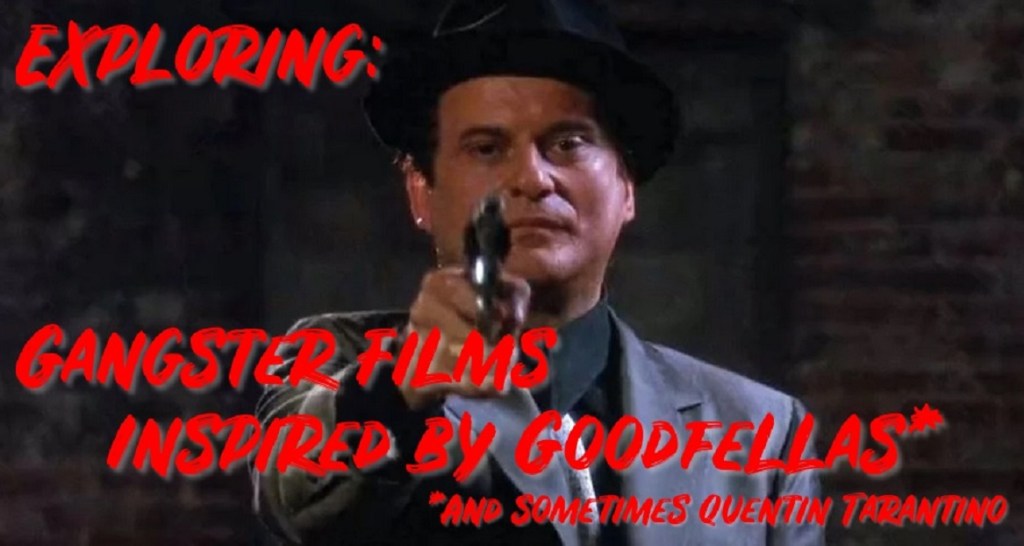
Oh, yeah. More mob flicks!

About the Author: You can read the music and film reviews of R.D Francis on Medium and learn more about his work on Facebook. He also writes for B&S About Movies.

Dead Silence (1991)

Sam and I got to talking about the web traffic at B&S About Movies and we’re astounded by the hits—over 6,300—and not a day passes without at least one hit—for J. David Miles’s disturbing, 2013 true crime documentary Goodnight, Sugar Babe: The Killing of Vera Joe Reigle (Caveat: It’s Rob Zombie’s House of 1000 Corpses . . . in real life.)

Now we tell you this, not to brag, but to bring attention to J. David Miles’s feature film debut as a screenwriter: Dead Silence. No, not the 1997 made-for-HBO thriller starring James Garner (TV’s The Rockford Files) and Marlee Matlin. No, not the 2007 James Wan’s supernatural puppet romp, either. The Dead Silence we’re reviewing comes from the days of the Estevez-Sheen acting dynasty, when not only Emilo and Charlie perpetually appeared on our TV and theatre screens, but their sister, Renée, got the big push to stardom (she’s since retired from the business after a seven-year run on NBC-TV’s The West Wing).

It was that acting-dynasty connection that quickly moved Renée through the ranks from her supporting roles on TV’s Growing Pains (1987), Sleepaway Camp II: Unhappy Campers, Heathers, and Moon 44 (she’s one of the mining executives alongside Roscoe Lee Brown; you’ll notice her) to booking her first leading-lady role as “Zanna Young” in Dead Silence.

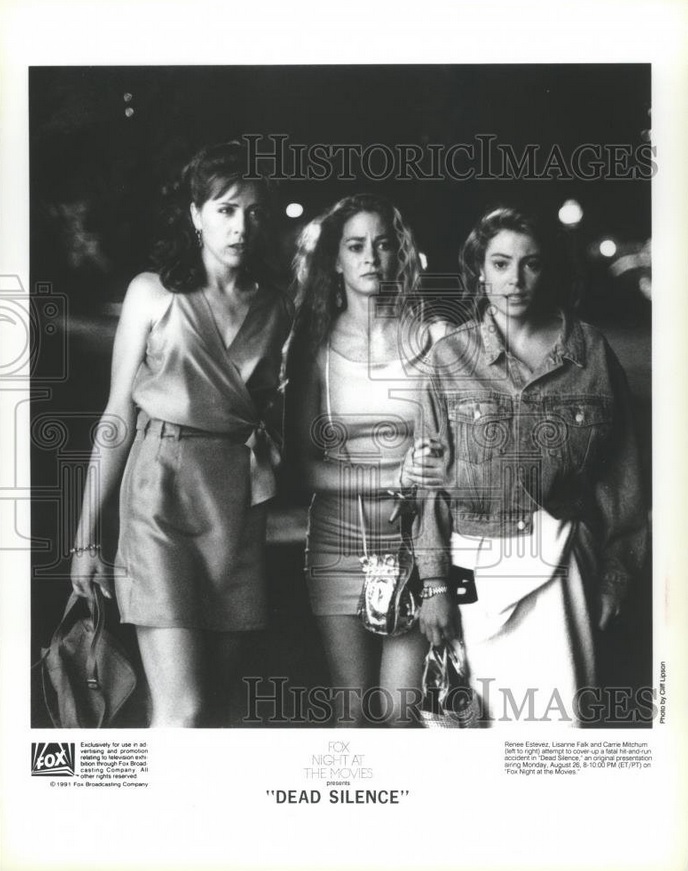
In a plot that recalls 1997’s later-more popular I Know What You Did Last Summer (itself derived from the superior 1965 William Castle chiller I Saw What You Did), Zanna, Joan, and Sunnie (Renée Estevez, Lisanne Falk, Carrie Mitchum) are college seniors on the cusp of graduation. And their holiday turns to horror when they hit-and-run a lonely hitchhiker in the desert during a spring break vaycay in Palm Springs—and they decide to keep the accident a secret.

The three little hotties went to the desert. Renee Estevez, Lisanne Falk, and Carrie Mitchum; courtesy of Historical Images.com.

Miles’s script has a nice meta-noir prologue and epilog touch (before meta-film became cinema-vogue; see our reviews for Greenlight and For Jennifer) with Sunnie as a broadcasting major who’s scored a Palm Springs TV newscaster gig* and is finishing her thesis project: a documentary about the trio’s friendship-college years in their rental home dubbed “The Pink House.”

The ubiquitous night of drinking at their hotel leads to a cute guy inviting them to a desert party—and they accept, as all devil-may-care, bad boy-seeking rich college girls do. As Sunnie loses sight of the cute boy’s car and they’re lost on a desert road, she strikes a roadside hitchhiker.

Initially, they move the “homeless man” to the roadside and agree they’ll call the police. But as Zanna points out: Sunnie already has one DUI on her license and, with alcohol on her breath, she’ll be charged with murder—and goodbye newscaster job. Zanna, the law school-bound ringleader of the deception, starts her career off right: she runs their crime through a car wash. Then, when Zanna and Joan take the car to have the windshield replaced, Zanna cleverly pays cash—then five-fingers the garage’s paperwork. Oh, and Joan’s credit card is missing: she returns to the scene of the crime to find it—and a deputy-on-patrol shows up. Later, the deputy finds the card in the desert sands, while a further investigation uncovers a university logo water bottle.

And who’s sent to cover a breaking news story about the body of a man found in the desert: the-first-day-on-her-job Sunnie. Then Joan cracks under pressure and drowns herself in the hotel’s pool. And the ever cold-and-calculating Zanna decides that’s the “out” for her and Sunnie. Ah, but in the finest film-noir fashion: Zanna, whose nefarious legalese created this mess in the first place, makes a deal in exchange for immunity—and hangs Sunnie out-to-dry in the arid desert sands.

While we’re on the subject of acting-dynasties: Renée’s co-star, Carrie Mitchum, is the granddaughter of Robert Mitchum (Night of the Hunter, Thunder Road) and, oh, and she was married to the ever-reliable direct-to-video star Casper Van Dien (she’s since retired from the industry after a fourteen year run on daytime TV’s The Bold and the Beautiful). Uncle James starred in The Dukes of Hazzard precursor Moonrunners, while her dad, Chris, starred in Aftershock, The Serpent Warriors, and SFX Retaliator.

Ah, you got bamboozled, too: I also assumed that fellow leading lady Lisanne Falk would be related to Peter “Columbo” Falk: nope. But for you classic rock dogs: she was the girl on the cover of Foreigner’s 1979 album Head Games** erasing her phone number from the bathroom wall. And for you movie hounds: she was in Heathers, Less Than Zero, and Night on Earth. (Yep: like Estevez and Mitchum, Falk retired from the business, in the late ‘90s).

And since we’re rattling off actors names in the “Everyone Has to Start Somewhere Department”: Bryan Cranston appears as Professor Harris and Beau Starr as Detective Barron. Do we have to mention Breaking Bad and Halloween 4 and 5 and Goodfellas? Well, we’ll mention that another of Beau’s early roles was the TV-cable radio-noir Dead Air, since that’s an obscurity. (And, since we’re talking about films with the same title: not the 2009 Dead Air, but the 1994 Dead Air.) Oh, and for the Trekkies: Tim “Lt. Tuvok” Russ from Star Trek: Voyager is the deputy on the case.

Directing J. David Miles’s smart writing debut is writer/director/show runner Peter O’Fallon—making his feature film directing debut. Known for his extensive network and cable TV resume, O’Fallon followed the direct-to-video/cable-released Dead Silence with the theatrically released—then de rigueur mafia flick—Suicide Kings (1997) starring Christopher Walken and Dennis Leary (back when the SNL’er made his “feature film” move). Ironically, O’Fallon also worked with a post-Goodfellas Ray Liotta in the drama A Rumor of Angels (2000).

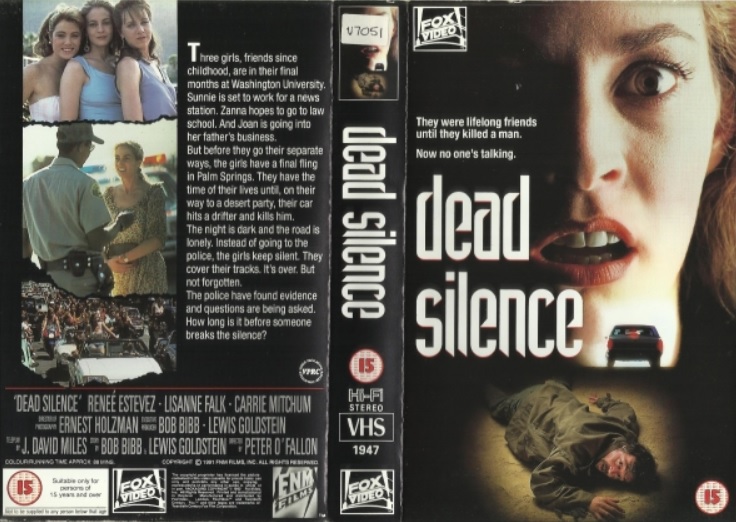
Courtesy of the Video Collector UK.

Dead Silence is one of those oldies that hasn’t run on TV in ages, the VHS tapes have expired to the blue screen of death, and it’s never been released on DVD—and never will be. So our only choice to watch are these two pretty clean VHS rips from its Lifetime Movie Network run on You Tube HERE and HERE. This lone feature film effort from J. David Miles is an under-the-radar TV movie gem where a great script, directing, and acting hum along in perfect harmony. It’s a highly recommended watch in these now silent, viral lockdown days.

About the Author: You can read the music and film reviews of R.D Francis on Medium and learn more about his work on Facebook. He also writes for B&S About Movies.


* If the lead character had been a radio broadcaster instead of a TV newscaster, we would have included Dead Silence in last month’s “Radio Week” of reviews. You can catch up on those reviews with our “Exploring: Radio Stations on Film” featurette.

** Other actors who’ve modeled albums covers: Valentine Monnier of After the Fall of New York and Monster Shark appears on the cover of Chic’s 1977 debut disco album. Al Corley of Incident at Channel Q and Bigger Than the Sky—and a recording artist in his own right—modeled on the cover of Torch, Carly Simon’s 1981 album.

There are more TV movies to be had with our “Week of Made for TV Movies,” “Lost TV Week,” “Son of Made for TV Movie Week” and “Grandson of Made for TV Movie Week” tribute spotlights to those films that, in many cases, are even better than the movies that played in theatres.

Reawakened (2020)

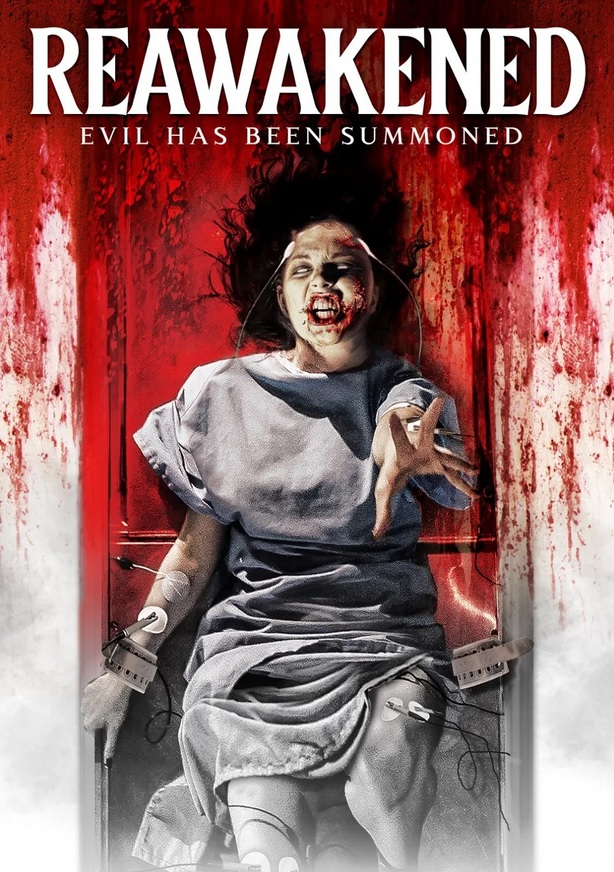
Brooke MacKenzie of the UPN’s and CW’s Everybody Hates Chris and Steffani Brass of HBO’s Six Feet Under are the centerpieces in this direct-to-video tale about a group of 20-somethings’ vacation stay at a remote cabin in the woods gone wrong. Dabier Snell of the CW’s Black Lightning, Charlie Ian of Damien Chazelle’s award-winning Whiplash, and Tina Cole, whose resume stretches back to the ‘60s U.S. TV series My Three Sons (but you know from her recent work in the cabin-in-the-woods horror, The 6th Friend), co-stars.

Watch the trailer.

Of course, in these evil rental-cabin-in-the-wood tales, we meet the lone survivor who’s doped up in a hospital bed and suffering from dreams of spinning wall-mounted crosses and phantom strangulations that doctors believe are hallucinations. And the detective and the M.E on the case don’t buy her story. But the professor well-versed in the legend of Abigail sure does.

The best friend of Michele Chadwick (Steffani Brass), Sophia (Brooke MacKenzie), became enamored with a locket found at the cabin and awakened Abigail, a centuries-dead malevolent witch. The flashbacks of the witch’s persecution begin in quick succession and Sophia starts to kill off her friends — murders in which Michele initially takes the blame. Once released into the custody of her grandmother (Tina Cole), Abigail returns to finish the job.


Based on the fact the producer and co-writer on this is Remy MacKenzie — the producer behind the Drive-In and VHS trash classics Evil Town (1987; actually an unfinished early ’70s film, God Bless, Dr. Shagetz, starring a past-his-prime Dean Jagger) and Evils of the Night (1985; with more past-their-prime ’60s actors) — we’re assuming Brooke is related as a daughter, granddaughter, or niece.

Director Jose Altonaga and MacKenzie previously produced the Fast Times at Ridgemont High knockoff Hot Times at Monclair High (1989; with a down-and-out Troy Donahue from Shock ‘Em Dead) that we, at B&S, still haven’t seen after all these years. But if you were a fan of the USA Networks’ “Up All Night” weekends, you may have seen it; the out-of-print DVDs now sell for upwards of $150.00.

Reawakened is available on demand and on DVD from Wild Eye, who were kind enough to send us a review copy. You can learn more about the movie on its official Facebook page and also watch it on Amazon Prime.

All in all: a good job by all for a low-budget indie streamer that’s worthy of your coin.

About the Author: You can learn more about the writings of R.D Francis on Facebook. He also writes for B&S About Movies.