F THIS MOVIE! Junesploitation 2023!

This is the third year I’ve participated in the F This Movie! month-long event.

Here are the rules, from their intro post:

For those of you new to Junesploitation, here’s how it works: each day of the month has its own theme, and you’re supposed to watch a movie that ties into that theme. How you interpret the connection is entirely up to you, which means if you have no interest in exploitation or genre movies that’s ok and you can still join in!

Here is this year’s schedule, featuring a few new categories and a bunch of returning favorites:

  1. Teenagers!
  2. Monsters!
  3. Poliziotteschi!
  4. Cars!
  5. ‘90s Action!
  6. Free Space!
  7. Slashers!
  8. Cannon!
  9. Fred Williamson!
  10. Kung Fu!
  11. ‘80s Horror!
  12. Westerns!
  13. Animals!
  14. Free Space!
  15. Rip-offs!
  16. Yakuza!
  17. Fulci!
  18. ‘90s Comedy!
  19. Blaxploitation!
  20. Free Space!
  21. Aliens!
  22. Revenge!
  23. Cynthia Rothrock!
  24. ‘80s Action!
  25. Hixploitation!
  26. Italian Horror!
  27. Sammo Hung!
  28. ’80s Comedy!
  29. Free Space!
  30. Sequels!

To see the 2021 recap, click here.

To see the 2022 recap, click here.

VIDEO ARCHIVES WEEK: Rodan (1956)

VIDEO ARCHIVES NOTES: This movie was discussed on the May 9, 2023 episode of the Video Archives podcast and can be found on their site here.

The greatest birthday of my life was when I turned seven in 1979. Sure, I had a roller skating party, but getting a Rodan Shogun Warriors figure that had a wingspan longer than my height was literally my greatest dream come true.

Ken Kuronuma, who wrote the original story for this film, based it on Captain Thomas F. Mantell, a pilot for the Kentucky Air National Guard, who died in a crash while allegedly pursuing a UFO.

This was the most popular of Toho’s movies in the United States for some time. It had a major ad campaign and boasted actors like Keye Luke, George Takei and Paul Frees. Maybe American audiences liked giant birds better than lizards. Or maybe it was because it was shot in color.

Giant bugs known as meganuron have been killing miners in a small town while unidentified flying objects continually attack. It turns out that there are two pteranodons that have been awakened by nuclear bomb tests. The flaps of their wings unleash sonic waves that take out entire cities, but they can’t survive being burned in a volcano.

Once I see this movie as an adult, the end, where they try to escape that fiery doom, makes me tear up. I hate that humanity causes these creatures to be reborn and then spends the entire movie trying to destroy them.

Rodan would, of course, be back. As for seven-year-old me, Rodan destroyed many a city and fought many a robot. I was the kind of kid that would delight in telling you that Rodan’s original Japanese name Radon is derived from Puteranodon, the Japanese word for Pteranodon. There was a soap with that name in the U.S., so the name was changed.

Director Ishiro Honda should be recognized in the same class as so many great filmmakers, but he may never be, as he mainly worked in genre cinema. He worked on nearly every Godzilla movie, as well as The MysteriansMatangoFrankenstein vs. BaragonThe War of the GargantuasKing Kong Escapes and shot second unit on Ran.

Child me was not incorrect. Rodan is the kind of movie that you can watch again and again.

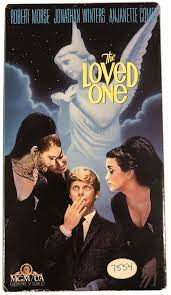
VIDEO ARCHIVES WEEK: The Loved One (1965)

VIDEO ARCHIVES NOTES: This movie was discussed on the December 20, 2022 episode of the Video Archives podcast and can be found on their site here.

Based on The Loved One: An Anglo-American Tragedy — a novella, as Quentin Tarantino would remind us — by Evelyn Waugh and The American Way of Death by Jessica Mitford, this was directed by Tony Richardson from a script by Terry Southern and Christopher Isherwood.

Richardson was coming off Tom Jones, Southern Dr. Strangelove and Isherwood had just written one of his best-regarded novels, A Single Man

This is the point of success where creatives can do anything they want.

What they made is “The motion picture with something to offend everyone!”

Dennis Barlow (Robert Morse)  wins an airline ticket from England to America and decides to visit his uncle, Hollywood production staffer Sir Francis Hinsley (John Gielgud). After thirty years of service, he’s fired by his boss D.J. Jr. (Roddy McDowall) and hangs himself.

This is a comedy.

Dennis spends the inheritance his uncle left him on a fancy funeral at Whispering Glades cemetery, a place where he meets and falls in love with Aimee Thanatogenos (Anjanette Comer, The Baby), a cosmetic mortuary worker who was named for radio revivalist Aimee Semple McPherson and who is also the object of affection from the embalmer known as Mr. Joyboy (Rod Steiger).

Whispering Glades is overwhelming, the kind of place where Tab Hunter and Liberace are your tour guides, taking you through the gravestones. It’s owned by Reverend Wilbur Glenworthy (Jonathan Winters), who puts on a holy act but is really just a man who knows how to make money.

Meanwhile, Dennis works for Happier Hunting Grounds, which is owned by Wilbur’s brother Henry (also Winters). He wants to win over Aimee, but all he knows are stolen poems and he works a job at a place she finds sacrilegious. She also lives in a house in near-constant danger of falling off a cliff.

There’s also boy genius Gunther Fry (Paul Williams), who is sending the corpses of pets into space as his first astronauts. This kind of plan is something the Reverend wants to get in on, as he dreams of making more money running a retirement home and needs to get rid of all the bodies in the ground.

By the end, everything that Aimee believed in is a lie. She hooks herself up to an embalming machine as a result. Not even Dennis, her beloved boss, her guru (Lionel Stander) or Mr. Joyboy give her the solace or the advice that she is looking for. Her body is sent into space as Dennis flies home first class.

Waugh’s book came up when he visited Hollywood in 1947. Metro-Goldwyn-Mayer offered him a six-figure deal for Brideshead Revisited, but he wanted control that the studio wouldn’t give him. While there, he became fascinated by the American funeral industry, which led to him writing an article about Forest Lawn cemetery — where this was filmed — and its founder Dr. Hubert Eaton. Then, he wrote The Loved One.

By all accounts, he hated that this movie was being made. He definitely died before he saw it, as he unexpectedly died three days after its premiere in London, which he did not attend. When this was shown for studio execs, many were so offended that they walked out in the middle.

That was what Richardson wanted.

However, he did not want to offend Waugh.

In his memoirs, Richardson claimed to be a great admirer of the writer and had been upset by how much he hated the movie. He said it was all over a misunderstanding, as he had been quoted as saying the novel was “thin and dated.” He further upset the author by hiring his literary rival Isherwood to work on the script.

I forgot so many more people in this, like Dana Andrews, Milton Berle, James Coburn, Barbara Nichols, Bernie Kopell, Joy Harmon and Jamie Farr. It’s just people upon people, kind of like It’s a Mad, Mad, Mad, Mad World. Sadly, Ruth Gordon and Jayne Mansfield’s parts ended up cut from the film.

And I didn’t even mention Mr. Joyboy’s mother.

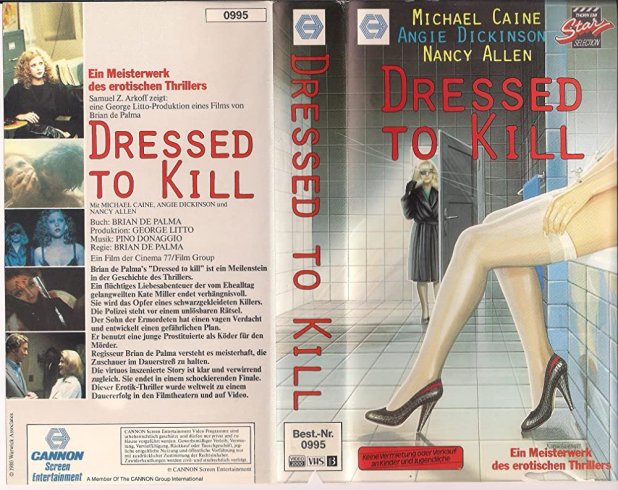
VIDEO ARCHIVES WEEK: Dressed to Kill (1980)

VIDEO ARCHIVES NOTES: This movie was discussed on the October 11, 2022 episode of the Video Archives podcast and can be found on their site here.

Let’s get this out of the way: Brian De Palma, much like Giallo, was heavily influenced by Hitchcock. In fact, when an interviewer asked Hitchcock if he saw the film as an homage, he replied, “You mean fromage.” That said — Hitchcock died three months before the film was released, so that story could be apocryphal (it’s been said that the famous director made this comment to either a reporter or John Landis).

What is true is the interview that De Palma did after Dressed to Kill (Rolling Stone, October 16, 1980).  The director claimed, “My style is very different from Hitchcock’s. I am dealing with surrealistic, erotic imagery. Hitchcock never got into that too much. Psycho is basically about a heist. A girl steals money for her boyfriend so they can get married. Dressed to Kill is about a woman’s secret erotic life. If anything, Dressed to Kill has more of a Buñuel feeling.”

However, I’d argue that this film has more in common with Giallo than anything the “Master of Suspense” directly created. That’s because—to agree with DePalma above—this film does not exist in our reality. Much like Argento’s The Bird with the Crystal Plumage, it exists in its dream reality, where the way we perceive time can shift and change based on the storyteller’s whims.

Yet what of DePalma being dismissive of Argento in interviews, claiming that while he saw the director as having talent, he’d only seen one of his films? Or should we believe his ex-muse/wife Nancy Allen, who claims that when she told DePalma that she was auditioning for Argento’s Inferno, he said, “Oh, he’s goooood.”

Contrast that with this very simple fact (and spoilers ahead, for those of you who worry about that sort of thing, but face facts, this movie is 37 years old): DePalma rips off one of Hitchcock’s best tricks from Psycho: he kills his main character off early in the film, forcing us to suddenly choose who we see as the new lead, placing the killer several steps ahead of not just our protagonists, but the audience itself.

And yet there are so many other giallo staples within this film: fashion is at the forefront, with a fetishistic devotion to gloves, dresses, spiked high heels, and lingerie being displayed and removed and lying in piles all over an apartment or doctor’s office. This is the kind of film that makes you stop and notice an outfit, such as what Kate Miller (Angie Dickinson, Big Bad Mama, TV’s Police Woman) wears to the Metropolitan Museum of Art or the blue coat that Liz Blake (Nancy Allen, CarrieStrange Invaders) wears to meet Dr. Robert Elliot (Michael Caine, how could we pick any movie other than Jaws 4: The Revenge).

Then there are the music cues from Pino Donaggio, who also scored Don’t Look Now, Fulci’s The Black Cat, and Argento’s Do You Like Hitchcock? The film not only looks the part, but it has intense sound, too.

We also have characters trying to prove their innocence, investigating ahead of the police. Or the son of the murder victim who wants to discover why his mother really died. Or her doctor, who has an insane patient named Bobbi who has stolen his straight razor and demands that she give him more time than the rest of her patients. All of them could be the killer. Giallo gives us no assurances that just because we see someone as the protagonist, there’s no reason they couldn’t also be the antagonist.

Let’s toss in a little moral ambiguity here, too. Kate is a woman who is bored with her life. She’s raised a son and seen her marriage lose any hope of sexual frisson. Liz is a prostitute — no slut shaming here, she’s a strong businesswoman more than anything  — but she’s also a practiced liar, as a scene shows her deftly manipulating several people via phone to get the money she needs to buy stock based off an insider tip she receives from a client. Dr. Elliot is obviously attracted to Kate but claims that his marriage prevents him from having sex with her. Yet it seems like he has secrets beyond informing the police of the threats of his obviously unbalanced patient, Bobbi. And then there’s Peter, Kate’s son, who has no issues using his surveillance equipment to spy on the police or Liz. If this character seems the most sympathetic, remember that he is the closest to the heart of DePalma, whose mother once asked him to follow and record his father to prove that he was cheating on her.

Finally, we have the color palette of Bava’s takes on giallo mixed with extreme zooms, split screens and attention to the eyes of our characters. The blood cannot be redder.

The film opens with Kate in the shower. While the producers asked Dickinson to claim that it’s her body, it’s really Victoria Johnson (Grizzly) as a body double. Her husband comes into the shower to make love to her, but she finds it robotic and not the passion she feels she deserves. Directly after, she tells Dr. Elliot that she’s frustrated and attempts to seduce him, but he rejects her.

More depressed than before the appointment started, she heads to the Metropolitan Museum of Art. Despite being surrounded by inspiration, such as the statue of Diana by Saint-Guadens, West Interior by Alex Katz and Reclining Nude by Tom Palmore (a tip of the hat to the amazing I Talk You Bored blog for an insightful take on the film and the research as to what each work of art is), she absentmindedly writes entries in her schedule. Planning the holiday meal gets her through the mindlessness of her life, flowing penmanship reminding her to “pick up turkey” instead of slowing down and appreciating not just the artwork around her but the people. There’s a young couple in lust if not love. There’s a young family. And then, a man with dark glasses catches her eye before brazenly sitting down next to her.

We are used to male characters chasing after female characters who aren’t defined by anything other than being sex objects. Instead, we have Kate pursuing the man, making the first, second, and even third moves until we realize that she was just following the man’s breadcrumbs.

Of note here is that color plays an essential role in the scene, as do expected manners. Kate is a wife and mother. She is who society expects to have virtue, and she is clad in all white, but her intentions are anything but pure. She finally has what she wants—the thrilling sex life that she may have only read about in trashy paperbacks.

This scene is a master class in pacing and movement. Imagine, if you will, the words on the page: Kate follows a mystery man through the museum. And yet, those are just eight words. We get nearly nine minutes of wordless pursuit, yet it never grows dull.

Finally, Kate follows the man out of the museum, but she loses him until she looks up and sees her glove dangled from a taxi. But blink, and you miss death in the background as Bobbi blurs past the camera.

When we catch up with Kate, it’s hours for her but seconds for us because this movie is a dream universe. She wakes up in bed with a stranger. There’s a gorgeous camera move here as DePalma moves the camera backward, an inverse of how a lesser director would have treated this scene. Instead of showing the two lovers tumbling through the apartment and removing clothes at every turn, we see Kate reassembling herself to move from her fantasy world to reality and toward her real world, which will soon become a nightmare. The camera slides slowly backward as she gets dressed, remembering via split-screen and sly smile how she doesn’t even remember where her panties have gone. She’s still wearing white, but under it all, she’s bare, her garments lost in a strange man’s house. A man whose name she doesn’t even know.

So now, as she emerges from realizing her sexual fantasies, she feels that she must make sense of it. She wants to write a note to say goodbye but doesn’t want to overthink it. Maybe she doesn’t even want it to happen again. And then she learns more about the man. It starts with his name and then becomes more than she ever wished to find out: his health report shows that he has multiple STDs.

Kate leaves the apartment and makes her way to the elevator, where she tries to avoid anyone’s eyes. In the background, we see an ominous red light, ala Bava. Bobbi—death and punishment for sin—is coming.

The death scene — I hold fast to my claim that The New York Ripper is close to this film but made by a director who doesn’t have the sense to cut away from violence — DePalma stages his version of the shower scene. But more than Psycho, we’ve come to identify with Kate. She’s a woman fast approaching middle age who wants a thrill, and yet, she’s punished by disease and death. She didn’t deserve this, and her eyes pleaded not to the killer as much as they did to the camera. And to us.

Here’s where we have to wonder aloud about DePalma’s long-discussed misogyny. This film was protested by women’s groups, who stated in this leaflet that “FROM THE INSIDIOUS COMBINATION OF VIOLENCE AND SEXUALITY IN ITS PROMOTIONAL MATERIAL TO SCENE AFTER SCENE OF WOMEN RAPED, KILLED, OR NEARLY KILLED, DRESSED TO KILL IS A MASTER WORK OF MISOGYNY.” Is DePalma guilty of the slasher film trope of “you fuck, and you die?” Maybe. Perhaps if she had remembered her marriage, at best, she wouldn’t be here. At worst, she wouldn’t have forgotten her ring in the stranger’s apartment and would have survived.

The way I see it, the death of Kate allows us to make the transition from past protagonist to new heroine, as the doors open post-murder to reveal a grisly scene to Liz and her john. The older man runs while Liz reaches out to Kate, their eyes meeting and fingers nearly touching. Kate’s white purity has been decimated by the razor slashes of Bobbi, the killer. As their transference is almost complete, Liz notices Bobbi in the mirror. Remember that we’re in a dream state? Time completely stops here, so we get an extreme zoom of both the mirror and Liz’s face. She escapes just in time, grasping the murder weapon and standing in the hallway, blood on her hands as a woman screams in the background, figuring her for the killer.

At this point, the film switches its protagonist. Unlike the films of David Lynch, like Mulholland Drive, this transference is not a changed version of the main character, but her exact opposite. Kate wore white, was older, and had a marriage and child, yet she slowly came to feel like an object to the men in her life. Liz wore black, was young and single, but was wise to the games of sex and power. She isn’t manipulated, turning the tables on men by using their needs for personal gain. Kate may have seen sexual fantasy as her greatest need, but for Liz, it’s just a means to an end.

Kate and Liz are as different as can be. For example, Kate goes to the museum to find inspiration. Liz only sees art as commerce, and she spends plenty of time explaining to Peter how much money she could make by acquiring a painting.

Dr. Elliott discovers a message from Bobbi on his answering machine (these machines and the narrative devices they enable must seem quaint and perhaps even anachronistic to today’s moviegoers). Once, Bobbi was his patient, but he refused to sign the paperwork for their (as the pronoun hasn’t been defined, so I’ll use they/their) sex change. In fact, Dr. Elliot has gone so far as to convince Bobbi’s new doctor that they are a danger to herself and others.

The police, however, have arrested Liz, and Detective Marino (Dennis Franz, TV’s Hill Street Blues and NYPD Blue) doesn’t believe a word she has to say. There’s a great moment here where Liz goes from wide-eyed ingenue to knowing cynic in the face of Marino’s misogynistic tone. Meanwhile, Kate’s son Peter (Keith Gordon, Jaws 2Christine) uses his listening devices in the station to learn more about his mother’s death than the police are willing to let on.

He begins tracking Liz, obsessively noting the times that she comes and goes from her apartment. He’s doing the same to Elliot’s office. But he’s not the only one tracking people. Bobbi has been stalking Liz, including a sequence where our heroine goes from being chased by a gang of black men to talking with an unbelieving police officer to Peter saving her from Bobbi with a spray of mace.

Because Peter has seen Bobbi also emerging from Dr. Elliott’s office, so he joins forces with Liz to discover who she is. That means that Liz uses her chief weapon — sex — to distract the doctor long enough to discover Bobbi’s real name and information. We learn that Liz’s mental sex game is as strong as her physical attributes here — she says that she must be good to be paid as well as she is. She knows precisely the fantasy Dr. Elliott wants to hear. But perhaps she also knows the fantasy that the mainly male slasher/giallo viewer wants: the woman submitting to the killer holding the knife.

Peter watches outside in the rain when a tall blonde pulls him away. Has he been taken by Bobbi? No — Liz returns to have sex with Dr. Elliott; he has been replaced by the killer. Bobbi lifts the razor as Liz helplessly crosses her arms in front of her face for protection. But at the last minute, the blonde who grabbed Peter outside is revealed to be a police officer, as she shoots Bobbi through the glass. That shattered pane also breaks Bobbi’s illusion and mask, revealing that Dr. Elliott is the man under the makeup and clothes.

The killer is arrested and goes into an insane asylum; Dr. Levy explains that while the Bobbi side of his personality wanted to be free, the Dr. Elliott side would not allow them to become a true woman. Therefore, whenever a woman broke through and aroused the male side of the persona, the female side would emerge and kill the offending female.

Inside the mental asylum, a buxom nurse attends to the male patients. The room is bathed in blue light, a cool lighting scheme that echoes Mario Bava’s films. The movie has moved from a dream version of reality to a pure dream sequence. It intrigues me that Carrie and Dressed to Kill both start with a shower scene and end with a dream threat to the surviving secondary heroine.

Within the asylum, Dr. Elliott overcomes the nurse and slowly, methodically, folds her clothing over her nude form. As he begins to either dress in her clothes — or worse, molest her dead body — the camera slowly moves upward as we realize that there is a gallery of other patients all watching and screaming. This scene reminds me of the gallery of residents watching a doctor perform surgery, yet inverted (have you caught this theme yet?) and perverted.

Bobbi emerges once again, and because she is dead, she cannot be stopped. Liz is bare and helpless in the shower, and nothing can protect her from being slashed and sliced and murdered — except that none of this is real. She awakens, screaming in bed, and Peter rushes in to protect her. And for the first time in the film (again, thanks to I Talk You Bored for noticing), she is wearing white.

Many find this a hard movie to stomach due to its misogyny. I’ll see you that and tell you it’s a misanthropic film that presents all of humanity, male and female, negatively. The men in this film are actually treated the way women usually are in films, as either silent sex objects (Warren Lockman), sexless enemies (Kate’s husband), shrill harpies that need to be defeated (Detective Marino) or sexless best friends who provide the hero with the tools they need to save the day (Peter). Seriously, in another film, one would think Peter would have a sexual interest in Liz, but despite her double entendres and come-ons, he remains more concerned with schedules and numbers and evidence.

Bobbi, the combination of male and female, comes across as a puritan punisher of females who benefit from sex, either emotionally or monetarily. Or perhaps they are just destroying the sex objects that they know that the male side of their brain will never allow them to become. Interestingly, Bobbi’s voice doesn’t come from Michael Caine but from De Palma regular William Finley (The Phantom of Phantom of the Paradise).

What else makes this a giallo? The police seem either unwilling to help at best or ineffectual at worst until they tie things up neatly at the end. And the conclusion, when the hand emerges not from the doorway — but the medicine cabinet — to slash Liz echoes the more fantastic films in the genre, such as SuspiriaAll the Colors of the Dark and Stagefright, where reality just ceases to exist. At the end of all three films, the heroine has confronted the fantastic and may never be the same.

In the first, Suzy narrowly escapes from hell on earth and emerges laughing in the rain. Is she happy that she survived? Has she achieved a break from reality? Is she breaking the fourth wall and laughing at how insane the film has become, pleased that the torture is finally over?

In the final scene of All the Colors of the Dark, the fantasy world is all a ruse, yet our heroine, Jane, is now trapped in the dream world. She can tell what will happen before it does; she knows that her husband has both slept with and killed her sister, but he has saved her from a fate worse than death. Yet all she can do is shout, “I’m scared of not being myself anymore. Help me!”

In Stagefright, the final girl walks out of the scene and out of reality as she defeats the killer. She has transcended being an actress to removing herself from fiction.

In all these films, the characters are not unchanged by their experiences with the dream world. In Dressed to Kill, the final dream sequence renders Liz truly frightened for the first time in the film. It’s the only time we see her as vulnerable — even when faced with an entire gang of criminals on the subway, she retains her edge. As Peter reaches out to comfort her — the only sexless male in the film and not just a sublimated one like Dr. Elliott — she recoils from his touch before giving in to his protective embrace.

In the same way, the film changes us. It has thrilled us, made us think, or even made us angry. True cinema—true art, really—makes us confront what we find most uncomfortable. Sure, we can deride and decry many of this film’s choices, but the fact that I’ve devoted days of writing and over three thousand words to it speaks to its potency. Thanks for reading if you’ve made it this far.
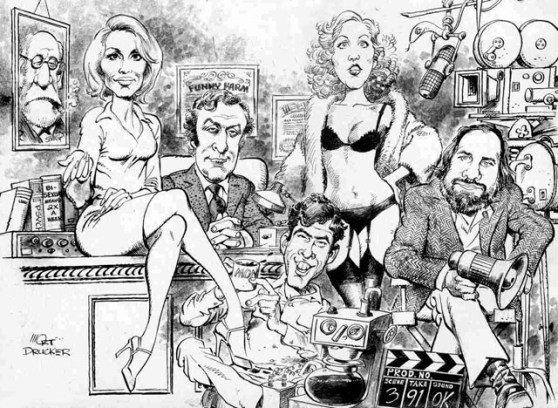
PS—I’ve often discussed—in person and on podcasts—that I experienced so many R-rated movies for the first time via Mad Magazine. I’m delighted I could find the Mort Drucker illustration for his skewering of Dressed to Kill.

VIDEO ARCHIVES WEEK: The In-Laws (1979)

VIDEO ARCHIVES NOTES: This movie was discussed on the December 13, 2022 episode of the Video Archives podcast and can be found on their site here.

Directed by Arthur Hiller (Silver StreakLove StoryThe Out-of-TownersNightwing and See No Evil, Hear No Evil amongst many others) and written by Andrew Bergman (Blazing SaddlesBig TroubleThe Freshman), The In-Laws puts together dentist Sheldon Kornpett (Alan Arkin) and businessman Vince Ricardo (Peter Falk). Kornpett instantly distrusts Ricardo and warns his daughter Barbara (Penny Peyser) not to marry Tommy (Michael Lembeck) as a result.

He was probably right, because Vince is a rogue government agent who sees no problems in getting Sheldon mixed up in a plot to steal printing plates from the U.S. Mint. Before you know it, a trip to Scranton to set things straight ends up in Tijata, where the in-laws are shot at by snipers and almost end up in front of a firing squad thanks to General Garcia (Richard Libertini) and his hand puppet.

This was remade in 2013 with Michael Douglas and Albert Brooks, who are fine, but come on. Are they Arkin and Falk? After that movie came out, Arkin called Falk to congratulate him on all the bad reviews the remake got, as each poison pen diatribe recognized how great they were.

This movie gets a lot right, including the idea that the action has to be action and the comedy has to be comedy. If you’ve seen modern action comedies, you may know what I mean. Also: James Hong should randomly show up in every movie.

Marlon Brando was a huge fan of this movie, able to recall and imitate most of Arkin’s dialogue. That’s one of the reasons why Bergman was able to get him to be in The Freshman.

VIDEO ARCHIVES WEEK: Firefox (1982)

VIDEO ARCHIVES NOTES: This movie was discussed on the August 9, 2022 episode of the Video Archives podcast and can be found on their site here.

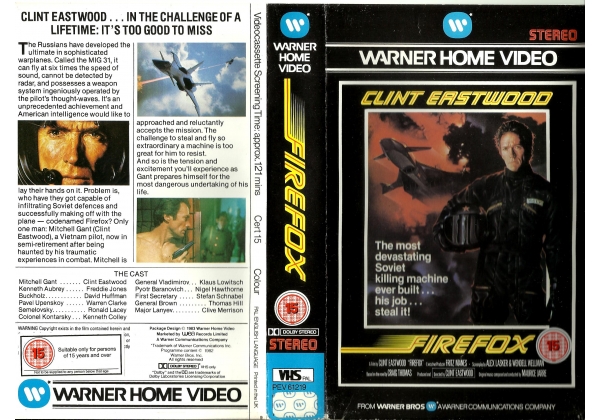
Directed by Clint Eastwood, written by Alex Lasker and Wendell Wellman, and based on the novel by Craig Thomas, Firefox is about a jet that doesn’t exist. The MiG-31 Firefox looks like the SR-71 Blackbird — you know, the one the X-Men flew — but in the book, it was a MiG-25.

How do you make a not-so-real jet look real? You get John Dykstra. He came up with a brand new technique for shooting the plane — which would be against a clear blue sky and not in space like the flying in the Star Wars movies — called reverse blue-screen photography. He coated the plane with phosphorus paint and shot it with harsh light against a black background, then ultraviolet light to create two mattes that would separate the model and the sky.

The Firefox is the kind of plane that could win the Cold War. Radar can’t see it, it goes Mach 6 and the weapons are controlled by the pilot’s brain. The British and Americans decide to steal it, sending former United States Air Force Major Mitchell Gant (Clint Eastwood, who else?) to steal it with help from the three scientists who made the jet.

I never saw Firefox, but I sure played the laserdisc arcade game.

The game came out nearly two years after the movie. Published by Atari, it used almost thirty hours of real footage that came right from the movie. It was pretty awesome to get to hear Eastwood’s voice while you pretended to be flying this incredible stealth war machine.

After making this film, Eastwood never worked with. his longtime editor Ferris Webster again. He never told him why and they had worked together for a decade. Webster had even moved closer to Eastwood to make editing with him easier.  Supposedly, he died heartbroken.

Craig Thomas, on the other hand, loved Eastwood. When he published a sequel book, Firefox Down, he changed the plane to be more like the movie. The book had the dedication “For Clint Eastwood .. pilot of the Firefox.” Several of the characters from those books also appear in Thomas’ novels Winter Hawk and A Different War.

This movie always seemed like Star Wars to me. I may not have been all that off, as two actors from The Empire Strikes Back show up: John Ratzenberger, years before Cheers, played a junior officer in both movies while Kenneth Colley plays Colonel Kontarsky in this and Admiral Piett in both Empire and Return of the Jedi.

As for the Firefox itself, it was painted white and shows up in Chevy Chase movie Deal of the Century.

I felt about this movie probably the same way I would have as a kid. It’s thrilling when the jets battle in the air and the rest of the movie is waiting for the jets.

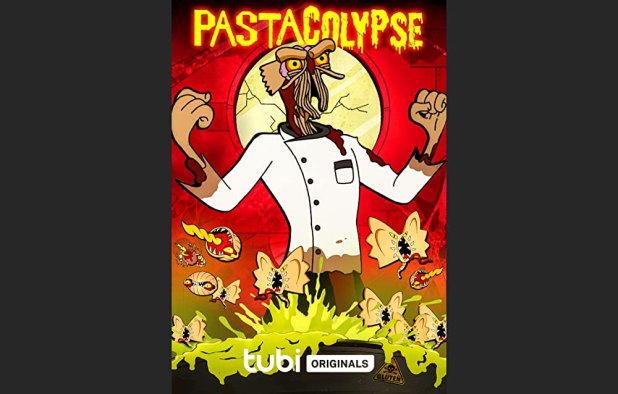
TUBI ORIGINAL: Pastacolypse (2023)

Billionaire celebrity chef Alfredo Manicotti (Dana Snyder, the voice of Master Shake) has had his life ruined when one of the essential ingredients of pasta, gluten, is outlawed. He’s shamed by the powers that be in the culinary world due to his use of an even more dangerous version of the ingredient and eventually goes all the way into transforming himself — and his henchman Bob, who becomes Al Dente Bob (William Sanderson) — into a horrifying human piece of pasta and sending his demonic hordes after everything flesh.

The only person that can save the world is his spoiled daughter Emma (Lauren Holt), who soon finds herself training with a team of post-apocalyptic — sorry post-pastacolptic — warriors like Chub (Lavell Crawford), Halfway (Jess Harnell) and Mary (Mary Spender). But can she get past being daddy’s little girl and start kicking her dad’s forces right in the fregola?

Also: You may watch the beginning of this and remark, “Ah, what cute animals. I bet my kids will like this.” I would advise that unless your children enjoy seeing cute woodland creatures torn to pieces by Italian cuisine that has a ravenous appetite for blood, you should find something else for them to watch. Not every cartoon is for children. Consider this to be very much like a live action zombie movie except, well, with various shaped pastas taking the place of the walking dead.

Directed by Jason Schwartz (who did the animated series The Awesomes) and written by Matt Maiellaro (who has written for Aqua Teen Hunger Force), Pastacolypse moves fast, gets nice and bloody (saucey?) while never forgetting just how goofy of an idea it all is. For an animated movie streaming on a free platform, it looks great and even has some surprising moments of sheer gross out humor. I’d be all for another story in this same universe and I bet you will be too.

You can watch this on Tubi.

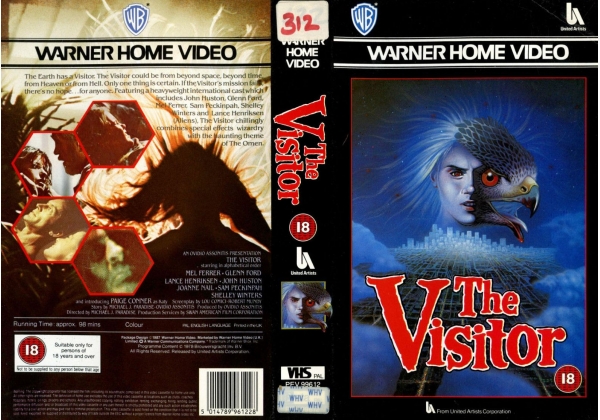
VIDEO ARCHIVES WEEK: The Visitor (1979)

VIDEO ARCHIVES NOTES: This movie was discussed on the April 4, 2023 episode of the Video Archives podcast and can be found on their site here.

In 2013, when the Alamo Drafthouse presented the uncut version of this film for the first time in the United States, they referred to it as an “unforgettable assault on reality.” Those words best describe what is otherwise an indescribable film.

But I’m going to try.

Maybe a recipe will help.

Take Chariots of the Gods, and some of Rosemary’s Mary, then a little bit of The Omen, throw it in a blender and then pour the whole thing down the sink.

No? Maybe a synopsis.

We start in Heaven, or somewhere very much like it, where Franco Nero (the original Django) is one of those space gods that Erich von Däniken wrote about. He tells the bald children who surround him that there was once a war between two aliens, one good and one bad. The bad one — who is either called Sateen or Zathaar — was defeated, but not before he slept with a whole bunch of Earthwomen. Cue the Book of Enoch in the Lost Books of the Bible. Or cue the Scientology myth of Lord Xenu. Or Xemu, because he has two different spellings, too.

Only one child is left — a young girl — and a vast conspiracy wants her mother to have another child — a brother this time — so they can mate. The Christ figure sends John Huston — yes, the director of The Maltese Falcon and The African Queen — and the bald children to a rooftop somewhere in Atlanta to stop this plot. To do that, the children become adult bad men and dance around a lot while Huston walks up and down the stairs to triumphant music. If you think I’m making that last sentence up, you’ve never been blessed with this movie.

Meanwhile, Lance Henriksen (Near DarkAliens) is Ted Turner, pretty much. His name is Raymond Armstead and he owns the Atlanta Rebels basketball team that plays at the Omni and is dating Barbara (Joanne Nail, Switchblade Sisters), who of course is the woman who has the seed of the gods inside her. Her daughter Katy is 8 years old and already using her powers to help the Rebels win their games. But that isn’t all the help Raymond is getting. The rich, powerful and ultra-secretive Zathaar cult control the world and are helping his team become winners. All he has to do is marry Barbara, knock her up and let their kids fuck. Hopefully, they have a boy, or Raymond is gonna have to get in the saddle all over again.

Raymond can’t even do that right and the leader of the bad guys, Mel Ferrer(The Antichrist and Eaten Alive!) is upset and ready to quit on Raymond. Barbara doesn’t want more kids and certainly doesn’t want another child. But who can blame her? Her daughter is one creepy little girl. Her daughter knows all about the conspiracy and begs her mom to get married so she can have a brother (and this is where, in person, I’d throw in “…to have sex with” but I’d use the f word). How creepy is Katy? Well, she kills a bunch of boys with her mental powers because they make fun of her while she ice skates. And then she accidentally shoots her mother at a birthday party. Yep, it’s as if The Bad Seed met Carrie!

Then, as all 70’s occult movies must, the stars of Hollywood’s golden age make appearances!

Glenn Ford, the actor, plays a cop that Katy curses out and uses hawks to make wreck his car!

Shelley Winters plays Barbara’s nurse who once had one of the space babies and killed it, but can’t bring herself to kill Katy! According to interviews, Winters really smacked around Paige Conner, the actress who played Katy!

Sam Peckinpah, the director (!), plays an abortionist who removes one of the space babies from Barbara after the conspiracy pays a bunch of things to artificially inseminate her. Turns out Peckinpah had trouble remembering his lines, which is why we never learn that he’s Barabara’s ex-husband! Then is he Katy’s dad? Who knows! His voice is even Peckinpah’s! They had to ADR all of his dialogue.

In response to the abortion, Katy shoves her mom through a fish tank. She also decides to throw her down the stairs, Whatever Happened to Baby Jane?-style. And by throw her down the steps, I mean do it over and over and over again.

Meanwhile, John Huston is still going up and down the stairs. Finally, they HAVE HAD ENOUGH (I like to emphasize that so you get the gist) and sent their John Woo-ian flock of doves to fight the hawks. And meanwhile, Mel Ferrer and all his men show up dead with black marks on their bodies.

And Katy? Well, as Huston tells us, kids can never be evil. She gets her head shaved and goes to space to meet Instellar Jesus Christ. The title comes up as insane music blares.

Writer/director/insane man Michael J. Paradise (Giulio Paradisi) also was in Fellini’s 8 1/2 and La Dolce Vita. What inspired him to this level of cinematic goofiness? He was helped along by Ovidio G. Assonitis, whose resume includes writing Beyond the DoorMadhouse and Forever Emmanuelle before becoming the major stockholder and CEO of Cannon Pictures in 1990. That may explain some. But not all.

I know I often write things like “I don’t have the words to describe this” when I do these reviews — especially after I write a few hundred words all about said subject. But this is one time that that statement is not pure hyperbole. Just watch the trailer and be prepared to lose your grasp on normalcy!

The Visitor defies the logic of good and bad film. It can only be graded on the is it an absolute film, ala Fulci or Jodorowsky. It is something to be experienced.

You can watch this movie on Tubi.

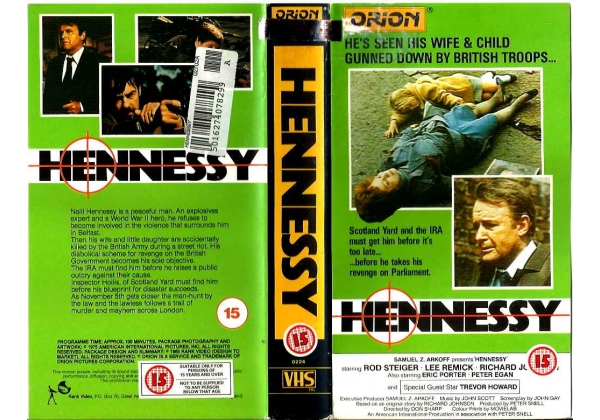
VIDEO ARCHIVES WEEK: Hennessy (1975)

VIDEO ARCHIVES NOTES: This movie was discussed on the February 28, 2023 episode of the Video Archives podcast and can be found on their site here.

Niall Hennessy (Rod Steiger) watched his family die in a Belfast riot. There’s only one thing he can do now. Kill the Royal Family and all of Parliament. As he coldly enacts his plot, both the police and the IRA want to stop him. Steiger is great, as he plays a man who just wants to avoid “the Troubles” — even though his brother is in the IRA — but when he loses those that he loves, he loses his humanity.

John Guillermin was the original director, but he left to make The Towering Inferno. Don Sharp (Psychomania) came on and worked from a script by John Gay. Lee Remick agreed to play her supporting role as it reunited her with Steiger and Gay, as they had just worked on No Way to Treat a Lady.

This was based on a story by Richard Johnson — who played Inspector Hollis — and the movie was accused of making entertainment from terrorism. Samuel Z. Arkoff for American-International Pictures said, “We do not consider this a pro-IRA movie but we are very anxious to avoid public opinion in Britain. I think the film is brilliant. I realize the bombing campaign in Britain must have made people very bitter about the IRA. I ask people to see the film before they make up their minds.”

The British Board of Film Classification refused to classify the film as there was newsreel footage of the Queen altered to appear as if she was reacting to a bomb explosion. Arkoff added a disclaimer stating that the British Royal Family had not participated, but Odeon Cinemas refused to show it and EMI would not distribute it.

It’s wild that this movie came out during such a politically charged time and was either very brave or very exploitative.

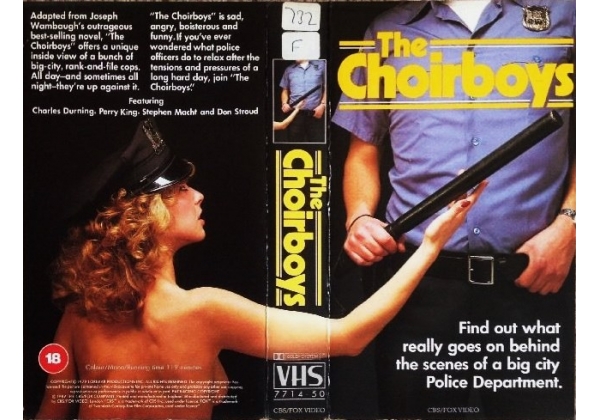
VIDEO ARCHIVES WEEK: The Choirboys (1977)

VIDEO ARCHIVES NOTES: This movie was discussed on the February 28, 2023 episode of the Video Archives podcast and can be found on their site here.

Robert Aldrich had a long and varied career, well beyond being the king of psychobiddy movies thanks to What Ever Happened to Baby Jane? and Hush…Hush, Sweet Charlotte. He also made Westerns like Vera CruzUlzana’s Raid and 4 for Texas; the epic Sodom and Gomorrah; war movies like AttackThe Dirty Dozen and Too Late the Hero; even films as diverse as The Longest YardThe Killing of Sister George and …All the Marbles.

This was the second movie that he’d make for Lorimar Productions, a TV company making features, and it was written by Joseph Wambaugh and Christopher Knopf. Wambaugh had written the book this was based on and did the first draft. He said, “When I turned in my first script they said they loved it. Then there was total silence. I called but they didn’t return my calls.”

Aldrich said to Film Comment, “I think Mr. Wambaugh is going to be very unhappy with this film of his work. I haven’t figured out yet how to correct some of the things that are in the book and still make people who read the book want to see the movie – but I do intend to figure it out.”

The problem that he had with the book was that he couldn’t relate to cops: “I don’t know how to feel sorry for a cop. It’s a volunteer force. You’re not drafted to become a cop. So you’ve got to take some of the heat if you don’t like what people think about you. After all, that’s an extraordinary pension you get in twenty years; nobody else gets it. In fact, I disagree with Wambaugh to such an extent that I don’t think people really like cops.”

He went on to say that the book didn’t go far enough in showing how cops are racists and how they act in Los Angeles, even saying that Wambaugh couldn’t face the issue — the author was the son of a Pittsburgh cop and was on the LAPD from 196o to 1974, rising to the rank of detective sergeant — so it was never in the book.

Wambaugh said, “They’d mutilated my work,” and took out a full-page ad protesting the movie, finally demanding that his name be taken off the movie.

He hadn’t even seen the movie yet.

When he did, he exclaimed that it was a “dreadful, slimy, vile film… a sleazy, insidious film. There was no serious intent to it. It was an insult to me but also to every self-respecting cop in America.” He got a million dollars in a lawsuit with Lorimar and bought back the rights to his books The Onion Field and Black Marble  — which both ended up being directed by Harold Becker — from the studio.

Aldrich said — I got this quote from the magnificent site Hidden Films  — that he “changed the script a maximum of 1-3 percent…he wrote a dirty, tasteless, vulgar book, which I think I’ve managed to capture.”

What Aldrich did get right was his cast.

There’s Charles Durning as aging cop Spermwhale Whalen; Perry King as mild mannered S&M enthusiast Baxter Slate; Clyde Kusatsu as prank-loving Francis Tanaguchi; Tim McIntire as odious Southern redneck Roscoe Rules; Randy Quaid as his partner Dean Proust; Don Stroud as the Vietnam vet on the verge of violence Sam Lyles; James Woods as the nerd cop used to entrap sex workers, Harold Bloomguard; James Woods as Harold Bloomguard; the always dependably scummy Burt Young as Sgt. Scuzzi; Robert Webber as Deputy Chief Riggs; former cowboy actor and future Dallas actor Jim Davis as Capt. Drobeck; George DiCenzo as Lt. Grimsle; Charles Haid as Sgt. Nick Yanov and Vic Tayback as Zoony, a vice cop who literally goes to war with Roscoe.

Louis Gossett Jr. also shows up, as does a collection of actresses that is the dream of exploitation film lovers, including Phyllis Davis (Sweet SugarTerminal IslandBeyond the Valley of the Dolls), Barbara Rhoades (Scream Blacula Scream), Jean Bell (TNT JacksonThe Muthers and the first African-American woman to be on the cover of Playboy) and, most essentially, Cheryl Rainbeaux” Smith (LemoraThe Swinging CheerleadersMassacre at Central High and so many more movies worth watching).

The story revolves around what the cops call choir practice, which is them getting trashed and abusing one another at MacArthur Park. What sums up the way the cops act is when Rules and Proust are called to rescue a suicide jumper. Rules can barely be bothered, bellowing “Go ahead and jump, bitch!”

She does.

There are no heroes in this, the tone goes from horrific racism played for laughs to the cops covering up the death of one of their own and the music seems to be taken from another movie, not punctuating the action as much as it stands in sheer contrast to it.

You know how people say that movies trigger them today? Well, they should probably not watch this.