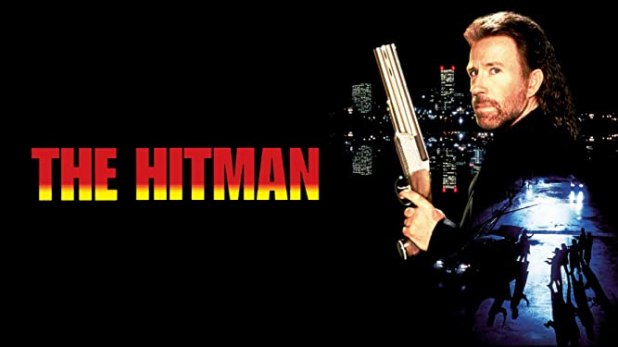
Seattle policeman and mullet enthusiast Cliff Garret (Chuck Norris) is wounded in a drug bust gone sour and the worst part is that it was his corrupt partner Ronny Delany (Michael Parks) who shot him. And then, he dies but comes back on the operating table. The police cover up his death and he gets a new identity, hitman Danny Grogan, and a new job, getting into the crime family of Marco Luganni (Al Waxman).
Grogan was planning to go all Raw Deal on two gangs — Luganni’s and the French Canadian gang led by André LaCombe (Marcel Sabourin) — but then Iranian drug dealers — oh man, doubling up on Chuck’s two worst enemies in one evil package! — start killing everyone. Meanwhile, our hero is mentoring a young black kid named Tim Murphy (Salim Grant) and teaching him to fight racist bullies, but that ends up getting the kid tied to a chair bomb when Delaney shows up working for Luganni and the Iranians at the same time.
Originally intended for Charles Bronson — who would have worked much better in the role, as Norris isn’t really made for being a bad guy — this was directed by Chuck’s brother Aaron and written by Robert Geoffrion (The Surrogate), Don Carmondy (who directed and co-wrote that very same movie) and Galen Thompson, who wrote Sidekicks, Hellbound and Superstition under the name Donald G. Thompson, this is a movie that at one point wants to be a violent mob story and then also wants to be a tender movie where Chuck bonds with a kid. Can it be both? Kinda.
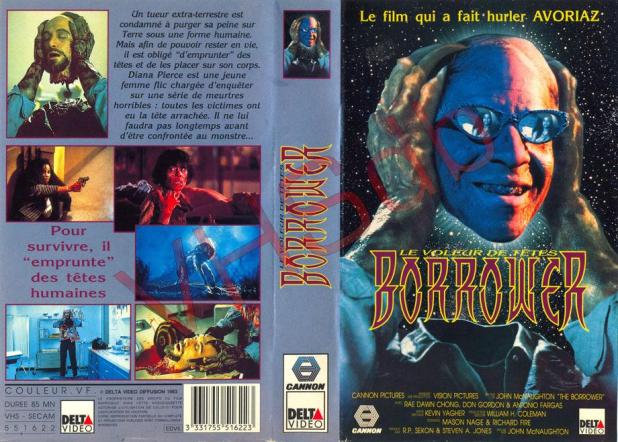
After Henry: Portrait of a Serial Killer, director John McNaughton got tons of horror movie offers until he couldn’t hold out any longer. He told The Flashback Files, “When I got the script for The Borrower I was broke. And I got sent bad script after bad script and then came The Borrower, which in some sense was also a bad script, but the conceit that this creature takes the heads off of people and somehow occupies their lives, to me it was like a metaphor for what actors do. That gave me something to take a hold of, other than just the monster that jumps up from behind a tree to scare you and eat you.”
So yes, this movie also has a serial killer, but this one is an alien murderer sentenced to our pitiful backworld planet. His transformation from alien to human didn’t take, so he must keep borrowing new heads every time the old one explodes, using his crab claws to decapitate folks and start wearing their heads.
Diana Pierce (Rae Dawn Chong) and Charles Krieger (Don Gordon) are the cops that have to track it down. The best known people in the cast are Tom Towles — who was Otis in Henry* — as well as Antonio Fargas and Neil Giuntoli, who played Henry in Henry: Portrait of a Serial Killer, Part II.
Originally made for Vestron, this had an X rating and needed cut, then Atlantic Entertainment Group was going to put it out, but then they closed and the film sat for three years before Cannon put it out in 1991.
*Tracy Arnold also is in it, as well as thirteen crew members from Henry: Ken Hale, Dan Haberkorn, Rick Paul, Cory Coken, Frank Coronado, Robert McNaughton, Jim Moore, Ric Coken, Mic Fabus, Bernd Rantscheff, Richard Fire, Steven A. Jones and Elena Maganini.
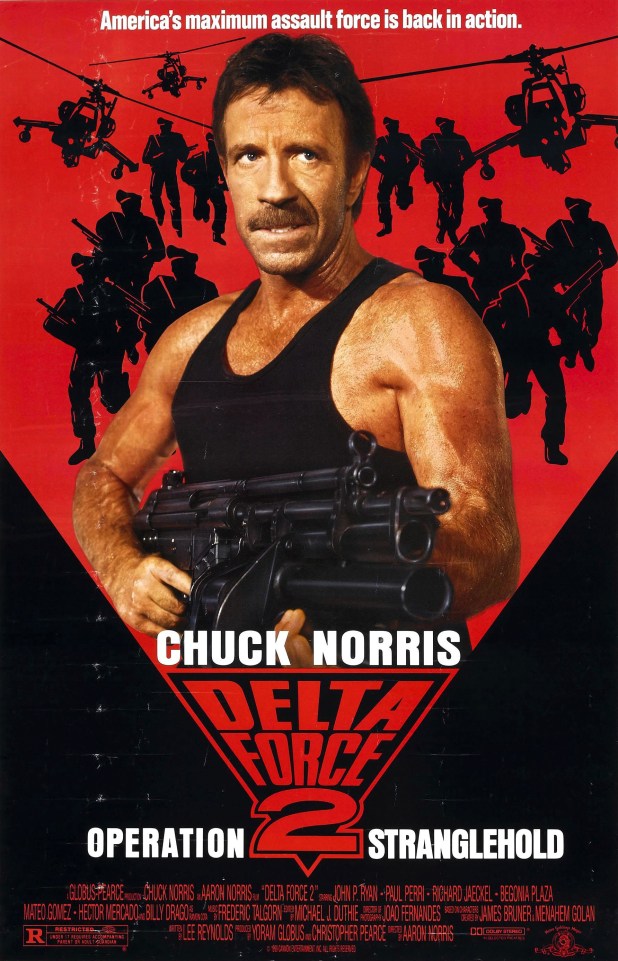
Colonel Scott McCoy (Chuck Norris) and Major Bobby Chavez (Paul Perri) have been issued a new order by General Taylor (John P. Ryan): bring in the man responsible for all of the cocaine in the U.S., drug kingpin Ramon Cota (Billy Drago), in alive for a trial. They succeed, but Cota gets out on bail and after his court case, has Chavez’s pregnant wife and his brother both killed.
Chavez heads out on his own and is captured by Cota’s forces, tortured and killed. The DEA tries to stop Cota as well and they all get captured. San Carlos’s president Alcazar and his corrupt generals all benefit from the drugs and protect Cota, so McCoy has to go in on a stealth operation.
DEA Agent John Page (Richard Jaeckel) helps McCoy get his man, who keeps goading him into killing him, which is hilarious because McCoy just lets nature take its course by the end of the movie.
Chuck said of this, “I researched drug kingpins during the three years we worked to prepare for this movie and much of what I read convinced me that you’re dealing with unconscionable, truly vicious individuals.”
Much of the film was shot at an unfinished hilltop mansion called the People’s Park in the Sky that Imelda Marcos started building in 1983 as a guest house for Ronald Reagan. Chuck said, “It had never been used. When Marcos was booted out, it was just left, an empty shell. We bought it, made $1 million worth of refurbishments, since it wasn’t in good shape, and even built a swimming pool. And then we blew it up.”
Sadly, there was a major tragedy during the making of this movie, as five crew members were killed in a helicopter accident. The film is dedicated to the memory of pilot Jojo Imperiale, stuntman Geoff Brewer, cameraman Gadi Danzig, key grip Mike Graham and gaffer Don Marshall. Chuck and Aaron gave blood at the hospital but there was no saving them. John P. Ryan and stuntman Matthew Gomez survived.
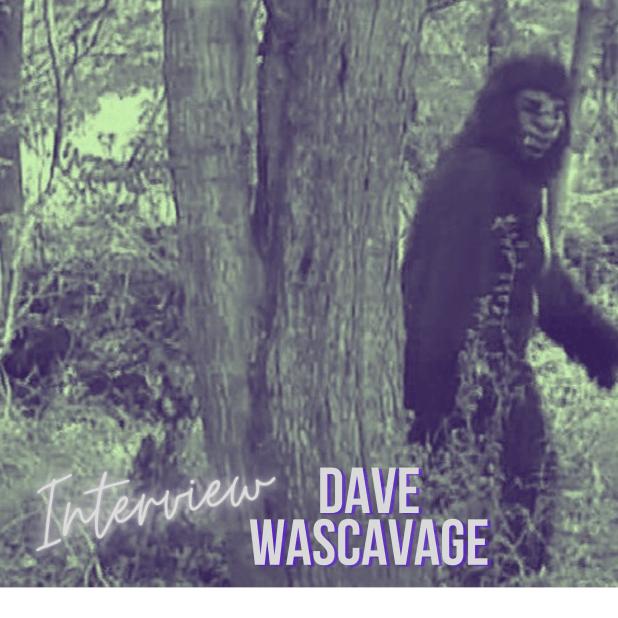
Dave Wascavage has made some wild movies and that’s an understatement.
Working from eastern Pennsylvania, he’s brought mutant mushrooms (Fungicide), zombies on a home improvement show (Zombies By Design), aliens (Tartarus), demonic evil (Malevolent Ascent), reality TV ghost chasers (Adventures of the Haunted Hunted), creatures in the jungle (Infinities Lock) and of course, a bucolic Bigfoot (Suburban Sasquatch) to the screen originally via lo fi CGI and shot on video magic.
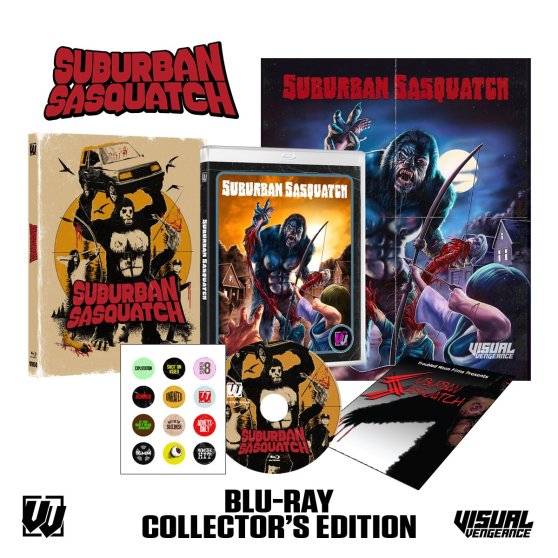
As Visual Vengeance prepares to release a new blu ray of Suburban Sasquatch, I had the incredible opportunity to speak with Dave about his movies, his inspirations and why he keeps on making films.
B&S About Movies: The first time I discovered all of your movies, I watched every single one of them in the same weekend.
Dave Wascavage: You watched them all in one weekend? Man, I’m so sorry. I can’t believe y’all survived.
B&S: When Visual Vengeance announced Suburban Sasquatch, there was a big reaction. There’s a lot of love for that movie.
Dave: It’s great. Actually, I feel almost embarrassed by it. I have recognition, but don’t know how to react (laughs)
It’s wonderful because I love the thought of people watching it, laughing and having a good time. That’s the coolest thing. I just love that I can bring a little bit of brightness to the world and help people have a little bit of fun.
B&S: I think that it’s impossible to watch Fungicide or Suburban Sasquatchand be in a bad mood. They’re just a joy to watch. I really dislike when I read people discuss their budget or effects and wonder, does that matter? In the long run, if you need a movie to have a big budget or perfect effects, maybe you need to reevaluate watching genre movies.
Dave: For some people, maybe it takes you out of the film. Maybe you’re watching this and you feel like it’s too low budget or there wasn’t any real effort behind it. But I think to your point, it’s entertaining to just get caught up in what happens and if something so bonkers happens that you have to pause and laugh at the absurdity of it, that’s cool. Even if it was cheap, it pulled something off. It wasn’t a cardboard cutout, it was a little bit better and maybe we kind of pulled it off. (laughs)
B&S: My theory is that shot on video films are the last bastion of regional filmmaking. A place where movies could be made outside of Hollywood, anywhere by anyone because the equipment brought the ability to create art to anyone. And unlike big budget movies, you’re not getting notes from a producer, there’s no focus group and you’re not having to follow any format. It’s the same reason why I love Italian exploitation movies, because truly anything can happen. And I find that the same things happen in your films, too.
Dave: There’s a freedom that you get and I was very specific about wanting to pursue this my way. I was trying to explain to my daughter, it’s not that I’m a control freak. It’s just that from an artistic perspective, I have a vision. And I don’t want somebody telling me the lighting should be different here and change this line there. I wanted to see what would happen if I created this piece of art.
I love the perspective that the shot on video genre gave complete autonomy to the creator to create a piece of art that wasn’t subjected to anyone else’s vision. It wasn’t necessarily created for the sake of money. None of my films have been created for the sake of money. So I had the freedom to say well, I’m going to put in there what I think this means to me. And there’ll be some people that are entertained or some people that don’t care.
Even from the trailer, I had thought, “How do I make something that really makes you want to learn more, just like the cover of movie that was so well done?” As someone who rented a lot of movies in the 80s and 90s, I would seek out a film that had art that was enticing. There were so many films that would draw me in and I would enjoy watching them wondering how they made this movie on a limited budget. I never felt these low budget movies were lackadaisical or their creators didn’t care. They were obviously trying to bring their idea to fruition.
B&S: Genre films also depend on advertising and packaging so much more than other films.
Dave: There’s the title. There’s the image. And then when you flip it over, and I did all my films, I had to have something that made you go, “Okay, this is funny or this sounds like it’s cool.”
Like there’s going to be more than just what I see on the cover. I don’t want to be bored by the film. And there are so many movies that I go to some and watch on these streaming services that I tune out of in about four minutes. I’ll think to myself, I know exactly what’s going to happen. And it may look pretty and the music, acting and cinematography are amazing, but if if I know what’s going to happen and I don’t feel the emotion from people, it’s not going to be interesting.
B&S: I’m looking for the same high from movies as some people get from drugs. I want them to make me feel good.
Dave: It’s almost like a comfort food. You want to put that film in! Every October I go through my entire catalogue of horror movies and they’re ones — that whether they’re good or bad from anybody’s perspective — it’s a comfort for me to watch them because I know that beats. I know what they’re trying to get across. I know the emotional gravity and you are so connected to it. And you know, that feeling is going to come along and I think like you just said, it’s a serotonin release.
The funny thing was to me that not many people would like the films that I’d want to watch. I would say to somebody, “Wow, Halloween 3 was great.” And they’d be like, “Oh, that was terrible.”
And I think that’s why I’m always the odd one out. I always love the weird and on the fringe. If it was mainstream, it didn’t hit it very well. I loved different pieces of different movies. They always hit with me and they became the comfort ones. Maybe they’re the ones that I want to emulate with something. They’re super dramatic, sometimes overly over the top. Cool! When that happens, the movie resonates with you and it sticks with you. Like I really love Burial Ground.
B&S: What other movies influenced you?
Dave: Most people my age would probably say that they were heavily influenced by Star Wars — and I was greatly — because I do think Lucas does an amazing job with painting with light. I think he has an amazing sense of scale and operatic story. That drove me to make something grand. I thought I always have to make it as grand as possible.
You’ve got John Carpenter. I mean, not only was he an amazing musician, but his directing and his sense of holding and a sense of capability when it came to putting people in these situations and how they respond to it, what always amazed me was his writing.
Then there’s Lucio Fulci and the Italian films, like their zombie movies.
But one of the largest influences was George Romero, not that I was able to emulate anything of his style but a lot of films like Dawn of the Dead, where they are basically a metaphor for something in society but they don’t really hit you over the head with it.
I kind of want to send a message in my films. Or at least people pull a message out of the films, like they did with Suburban Sasquatch, but Tartarus was a little bit more in-depth on that sense. It really got me excited than that you could send that message. Again, art is subjective. Two people can look at the same piece of art coming with different feelings and different perspectives, but also draw a different conclusion.
So those folks really drove me to believe that something like that was possible with moving pictures. Obviously the ability to have a low budget and survive, you know, I go to people like Sam Raimi and Peter Jackson who started off with doing low budget. So I would think if they can start somewhere, I knew I could start with at least some middle amount, get something done and call it a day.
Dave: Well, it’s like most things in life. It’s a confluence of multiple inspirations. First and foremost, I was always inspired and fearful of Bigfoot. So I grew up in the 70s, where TV shows were talking about Bigfoot and it was a frightful thing and you only had books in the library to learn more. There were no movies about it. I mean, if there was a movie with Bigfoot, they just had him scaring people by standing in a window. Nothing where he was violent.
I thought that would be interesting to do this. You know, it’s 2003. And I thought, if I could buy that, I would buy it. But since I can’t buy it, maybe I’ll make it. (laughs)
I was just prepping Fungicide. I thought: “Okay, well, if I’m going to shoot one more movie, and I could put the money towards it, what would it be? And it’s either going to be Bigfoot or zombies.”
So they’ll all go for Bigfoot first. That would be a cool thing to tackle. So I wrote three scripts, you know, from the first script to a sequel then a third movie. I figured that if I ever came back to it, I wouldn’t have to write it. I would get the same momentum, tempo and ideology. And then getting people interested wasn’t hard to do people. They had seen me do Fungicideor heard me talk about it.
By the time the film started shooting, I didn’t turn people away. Everybody wanted to be a part of this because they were all fascinated by the idea of shooting a Bigfoot movie in the neighborhood. And the name just comes from that!
You know what everybody hears Bigfoot but Sasquatch is rarely used and it’s more closely tied to the Native American legend. So had to go into Suburban Sasquatch into areas where you never seen these monsters coming into, because the message of the film was about encroachment on natural areas and how our predatory behaviors are chasing out animals. And then obviously the sasquatch is going to be a defender of that area. So Suburban Sasquatch, there we go.
B&S: How did you get the cast that come together? Was this mostly friends or did you put a call out?
Dave: At the end of Fungicide, all these people had seen it and almost everybody would end up saying, “Oh my gosh, can I be in your next film?” And this was before streaming. So the more people that got to see it, the more I was excited because I thought, “Hey, look at this, what would you do different to try and learn from it?”
I wanted to be a little more serious with some of the actors because I had my friends and family who are willing to be a part of it, but I started putting out casting calls and I wanted to see what happen because I really wanted somebody who was different. Someone who had a different look than what I had seen before. I was actually interviewing a lot of models and actresses and I thought I really want to hit that one on the head as close as possible to what I described and then I just had more and more people coming and wanting to be alone.
For example, tthe role of Steve was played by Juan Fernandez. He came in, interviewed and he actually tried to be cast for different roles but everything was cast. He got the small bit part of a few lines. And after he read, I’m like, “Damn, this guy can act.” And I thought about it and said, “Why don’t you take the role of Steve?” I was going to do it, but it’d be better if you did it because you act better than I would. Plus, it gave me more of a chance to direct instead of being in front of the camera. He nailed it.
So by getting the word of mouth around and when people heard about it, that always helps sell your concept and your idea. I always tell people, “Look, this just may go nowhere. Thirty people may see it, but I will try my best to get it distributed to get recognition. And now here we are, right eighteen years later and we’re still talking about it.”
B&S: Now a whole new audience is about to see it.
Dave: I’ve been fortunate that I’ve gotten several deals over the years where it’s been in different countries and in different formats. It’s had some streaming success, but through Visual Vengrance putting this out, they’ve done an immaculate job on the packaging. They were so amazing to work with on the upscaing and the rescaling and getting the materials together. It’s so phenomenal because a lot of it is technical in nature and the technology has greatly improved since 2004. So in anticipation of my next films, I had to learn a lot more and try and get ready for HD upscaling. But they did an outstanding job and it’s wonderful to think that the audience for it is going to grow.
B&S: Your movies seem like family affairs.
Dave: I would say that I truly believe that my family wants to see me happy. I truly believe my family gets a kick out of being involved but not one of my family members is like, “Oh yes, I really want to be in front of the camera or behind it and get this thing done.” They’re all like, “Yeah, we’ll help you out for a day we’ll have some fun.”
I think they just want to see me be successful. And that’s the most you can ask of anybody, right? I mean, they’re dedicating their time to either be in front of her behind the camera or cooking or logistics. Like my wife Mary, I’ve relied on her for reviewing the screenplays and passing some scenes by her to get her take on things. You really can’t work in a silo. You have to have some kind of input to see if it’s going down a path and someone to challenge your vision because if something’s not clear to them, well then maybe you have to go back to describing it in a different way.
I’ve been blessed with with both family and friends wanting to have fun and be a part of it. And they’ll always want to offer more and I’ll say, “No, no, you’ve done enough!” Like I would love more help, but I feel bad asking you so because it’s been very wonderful having them help out.
Dave: I shot some very short films from 1987 through 1997 which were like two minutes long. And then I always thought to myself, it would always been a lifelong dream to shoot a full-length film. But I started to get into CGI graphics back then — really rudimentary and I’m talking about okay, I’m able to make titles appear on a screen or I’m able to make you know a really badly animated basketball — and I thought, “Well, if I can do this, what if I made a full-length film that didn’t rely on CGI but relied on really, you know, really poorly made products?” Because I can’t make props. (laughs)
So I actually had some time free and I said to Mary, “Why don’t we put like, you know, under $50 down, we’ll buy the equipment for the props. I have an idea for a really dumb film. And the great thing about it is the film concept is it’s so dumb that if Hollywood stole it from us, well, what are we going to lose?”
$150 budget, you know, that was our business model. So I wrote a treatment. Mary came in and she added some lines and modified some things. We got people together for a weekend and shot it. And then when it was done, we added five more minutes and crossed the line for a full-length film. Then you just spend a lot of time in post-production cleaning up and trying to make it look as best you can and getting by with what you could.
The whole idea was, “How can I drag it over the finish line and say it done?”
How can I get enough people can look at it and say, “I just watched the movie.” That was really the goal.
B&S: I don’t know if this is intentional or not, but it seems like you do a funny movie and then you do something really dark like Tartarus.
Dave: This is why I didn’t want to shoot a sequel to Suburban Sasquatch for a long time. I was really going to shoot around 2015, but then I kept thinking I don’t want to fall into a trap where I’m like the costume movie guy. Like it’s always a prop costume. So when the idea of Tartarus came up, I was really intending on making a 15 minute film to send to festivals, but I wanted to test out a brand new camera that had great depth of color. So I said to Juan, who stars in the film, “What about this idea, you know, it’s 15 minutes…” and he was all in.
As he read the the script, he said “This is really cool. I can do a lot with the character. There’s a lot I don’t know about his past and what he’s done here.”
And I said, “I have to hold that thought.”
So a week later, I come back with a fully fleshed script. And I thought that this movie is a good way to go outside of what I’ve done before to show people that I am more than just the costume movie guy and to try some of that with as little dialogue as possible. We gave him a little more of a voice and some more diaogue and it grew from there.
That’s why from Tartarus to Zombies by Design, I wanted to create almost a comical movie thats a throwback to 50s mad scientist movies, punctuated by short blasts of music, that’s almost goofy but also creepy.
I just want to try something new and different. I don’t feel like I want to repeat what’s out there when I do that. I’d become stale or it’s easy to compare my movies against others and see where my shortcomings are. (laughs)
B&S: Zombies by Design has a moment that feels like something right out of Fulci, the cameraman is about to get attacked by the zombies and instead of running, he just stares at them and gets eaten!
Dave: Thank you. That’s actually one of the best compliments I’ve got! I appreciate that because that was in the back of my mind as we were running it. I wanted the cocnept of the zombies — you know at this point, Walking Dead wasn’t on yet — this was a homage to what Romero and the Italian filmmakers did with dhambling zombies. It was just slow. It wasn’t something that was rushing to get you. It wasn’t like 20 Days Later where it was this virus. That was a new trope not to throw shade against it, but it was just wasn’t what I wanted to go for. And I really want to take the time to play this cartoonish end of the spectrum with the bad guys because it keeps the zombies separate. It keeps them as being this thing that’s out there slow and it’s unstoppable, relentless, but it will get there.
B&S: I think you do something really difficult and that’s walk the tightrope between horror and comedy.
Dave: Thank you, I would say — I mean if I look at every film I’ve done, — I try and pull one or two pieces out of it that I would say I’m proud of that, I’m okay with everybody criticized the other end, but the one that would hit two things on Zombies by Design that I did that I feel I would be hurt if people didn’t like the music because I really worked hard on that soundtrack and I was really happy with that. But also on the writing, I thought it was a neat idea. I love the concept and I love the comedy but I have to say I’m a little worried I was too much on the nose of the comedy. As I age, I look at comedy differently. I always like dry humor so I’m not sure if it was too over the top or some of the comedy got missed.
It’s very hard to get comedy right! You have to have good timing , good understanding that the joke and and all these films you have to run fast when it’s a lot of stuff! You have to say okay, it’s good enough, just keep going.
B&S: I think Malevolent Ascentis — and I mean this as a compliment — almost a movie like someone who lives close to you, M. Night Shyamalan, a movie that takes a confined area and a concept and runs with it. It’s a lo-fi version of one of his big concept — and big budget — movies.
Dave: Thank you. It was tough in that it was a very much a big departure from all the other films. There really wasn’t much humor in it. I felt like it was my most darkest because the character that you know ends up being the bad guy in the film, I really felt like it was close to being human in that sense that I don’t like making real human people that do violent acts. I just I like the supernatural type of thing. So that kind of bugged me but I felt like if I could get the story and script right, I felt like I could shoot it. But yeah, certainly nowhere near M. Night’s money-filled pockets. Nor his capability and skill set. (laughs)
It’s another low budget “ket’s see what we can pull off here” movie.
B&S: You said there was a deeper message in it.
Dave: Spoiler warning, if you haven’t seen it yet. There are wo aspects, one which is as we see the character in the beginning who is ultimately going to be the bad guy, he’s just unconscious and I wanted the idea that evil starts out very simple. And it’s not as black and white as someone who’s terrible. This is someone who just basically fell downhill through their life. They had many things going wrong. So I wanted to be sympathetic toward people that fall into that trap and people do need help.
But the other part was that the concept of the film is to always climb. Always be striving, always survive no matter how bad you hear things are on the outside world. In this case, they all thought it was a nuclear attack. And, you know, as they got out, they didn’t know what the outside world was going to look like.
No matter what you must always try to survive and keep going every day. Just make one more day because you do not know what’s on the other side.
I was either going to have an end with, they come out and it really wasn’t nuclear attack, or they came out and they found that everything was fine. But I wanted to leave it ambiguous.
B&S: It goes back to Dawn of the Dead. It doesn’t spell it all out for you. In fact, the zombies could have been caused by anything from a probe from space to a virus to Hell coming to Earth.
Dave: Literally my favorite part of that movie is the first five minutes of it! It starts off in a TV station and there’s chaos and you hear people talking over each other and you as a viewer, you’re trying to figure out what’s actually being said and should I listen? It’s clear that nobody knows what it is and where it came from or even how far it’s been happening. That is as close to real panic and a real world situation as you’re going to get! No matter what people think that their government is going to help them or there’s some authority or people know what’s going on, it’s just chaos and they’re trying to maintain control. And that was so real.
That set the groundwork for that movie being completely frightening.
B&S: It was strange over the last few years with the pandemic and January 6 and war coverage how much of the 24/7 news cycle feels like the beginning of that movie.
Dave: There’s so many perspectives on it. I tend to be a very pragmatic scientific person. So the first thing I always go to is what information evidence do we have to go on? What’s actually taking place and I break things down in a very methodical way.
So that shows itself in the films but you see real world events, right? You can look at what’s happening over in the war in Ukraine now and you wonder what the heck is going on? Where did where did people seem to lose our sense of direction and our connectedness and our togetherness and it feels like we’re bordering right on the edge of chaos so many times. It’s frightening, but I sometimes, I have to ignore that to do things that make people feel good and positive. We have to support and listen and be sympathetic and peaceful as much as possible, despite my films probably showing the opposite, right? (laughs)
B&S: What’s next?
Dave: I think it’s okay to say but Suburban Sasquatch 2 and 3 are written and ready to go. I just need to get the time together and work on more the costumes. This is probably the first I’m mentioning out but Fungicide 2 is also written and that’s ready to shoot. There’s another horror film but I can’t mention the title because the title itself is just amazing. It’s been in gestation since 1998. Probably it’s finally gonna get see the light of day. And the problem I’d say is like the problem with Fungicide 2 is that I had a script last year. But after rereading it, I’m like, “Wow, that’s actually good to throw it away because clearly Fungicideisn’t very good. So I can’t put out something this good. It’s got to be dumbed down quite a bit because we can’t have quality for Fungicide 2. (laughs)
A visual aid for readers too young to have ever seen a blacklight poster.
B&S: I have to tell you, I love your CGI. I referred to it as “70s blacklight posters from Spencers.” I’d rather have what you do than perfect CGI. It sets up the mood of Fungicide so well.
Dave: That’s a huge compliment. The e funny thing is I think people probably look at it and say “My gosh, goodness guy, pay money or have something better done!” Well at the time, that was the best I can do. And I couldn’t reach anybody that could do CGI better but literally, like when you see flames exploding around a mushroom, I literally just learned it that day or the day before so it doesn’t look refined or real because that’s the best I can do. And when you’re making these movies, if I spend 50 hours on making perfect flame effects, that’s 50 hours less on editing, music, cinematography, color and script. There’s so many things that need work, you got to just cut your losses on some of them!
For Fungicide, I was even thinking maybe in the end of the movie, I’ll have some explanation where they’re holograms, which is why they look so fake. Then I said, “To heck with it!” (laughs)
I have a question for you. Let me ask you about in the big fight scene at the end of that ovie. What were your thoughts on that? Did you feel like it was too long? Should it have been different?
B&S: I loved it! I mean, I’m a lover of martial arts movies and fight scenes, so I thought it was a lot of fun.
Dave: Good, I love it too. But so many reviews are like, “The fight at the end is too long.” And I wonder, did you notice how fake the papier-mâché head looked?
B&S: The scene with the balsamic vinaigrette grenade in that movie is the hardest I’ve laughed in so many years.
Dave: That’s all my wife, Mary. When she says, “It’s a hobby,” looking straight ahead, I mean, she just knew how to hit the beat on that line. Now that’s comic timing!
I’m glad that I get to do this. I want to entertain people. If they laugh, and they think this film is stupid, but they had a good time laughing at it, I’m thrilled to death I really am.
I want to make the world just a little bit of a brighter place.
Want to hear even more from me and Bill from Drive-In Asylum?
We’re on the commentary track for the blu ray of Suburban Sasquatch from Visual Vengeance in August!
Select Bonus Features:
New 2021 Commentary by Director David Wascavage
Commentary from Sam Panico of B&S About Movies and Bill Van Ryn of Drive-In Asylum
Includes full RIFFTRAX version of the movie
Archival Behind The Scenes Featurette
Making The CGI for Suburban Sasquatch
From The Director’s POV: Archival Interviews
Limited Edition Slipcover designed by Earl Kessler FIRST PRINTING ONLY
Collectible Mini-poster
“Stick your own” VHS sticker set and more!
For more details on the label and updates on new releases – as well as news on upcoming releases – follow Visual Vengeance on social media – IG, Facebook or twitter
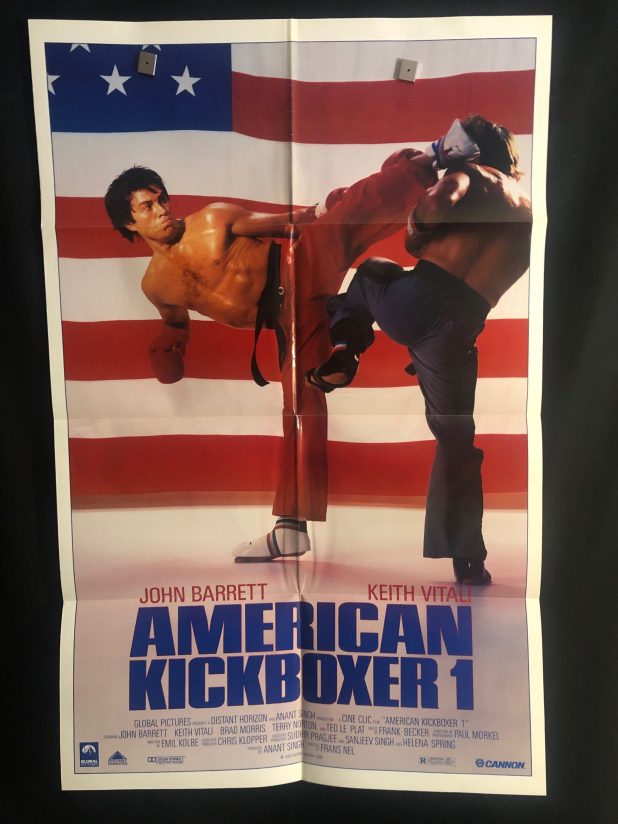
Robert James “B.J.” Quinn (John Barrett) is the current middleweight kickboxing champion of the world and he just got past one of his toughest challengers, Chad Hunter (Keith Vitali), narrowly knocking him out with a spinning back fist and doctor stoppage.
But the real battle is after the fight, as B.J. is angered by another fighter, Jacques Denard (Brad Morris), who hits on his girl Carol (Terry Norton right in front of him. They start brawling and when a partygoer named Ken (Gavin Hood) gets in the middle, he gets accidentally dead. Chad tries to stand up for B.J. in court, but Denard’s testimony puts him in jail.
A year later, Denard has his belt and is a cocky showoff who enjoys hurting his opponents. B.J. can never kickbox again — he’s been barred after his convincton — and Chad asks him to train him for a match against the new champ. B.J. has some demons and basically his training is just him beating up the man who spoke up for him in his trial. After their match — which puts Chad in the hospital — B.J. finds Quinn in a bar and beats him so badly that Carol leaves him.
Chad gives B.J. another chance, letting him teach at his school, and Carol comes around. Yet Denard wants revenge and challenges B.J. to a $100,000 unsanctioned karate fight. Chad trains him now and even Denard’s cornerman Howard (Roger Yuan) comes over to their side.
Shot in South Africa, American Kickboxer has one true sequel, To the Death, and another in name only, American Kickboxer 2. Directed by Frans Nel and written by Emil Kolbe and Pittsburgh’s John Barrett (he did stunts for everything from The Octagon, Silent Rage, Forced Vengeance and Steel Dawn to being the stunt coordinator on Mighty Morphin Power Rangers, this is fun redemption story for those that love people being kicked in the face.
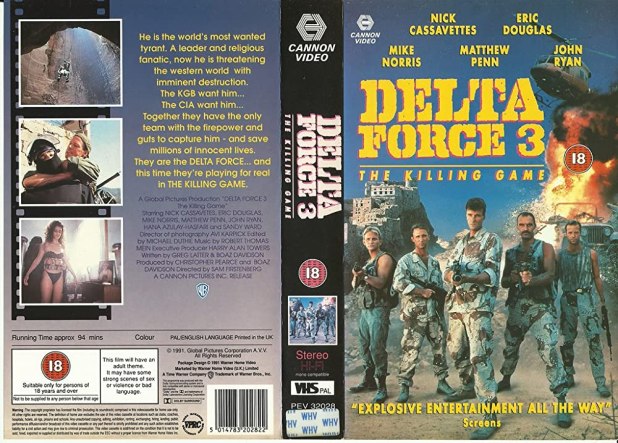
Helmed by perhaps the best action director Cannon had, Sam Firstenberg, and written by the team of Boaz Davidson, Andrew Deutsch and Greg Latter, this Delta Force installment may have no Chuck Norris, but it does have his brother Mike as Greg Lassiter, the Delta Force point man. It’s actually a movie of sons and brothers, as the commander, Major Charlie Stewart, is Nick — son of John — Cassavetes, intelligence officer Lieutenant Richard O’Keefe is Matthew — son of Arthur — Penn and explosives expert Sam is Eric — son of Kirk Douglas.
Terrorist Kahlil Kadal (Jonathan Cherch) wants America out of the Middle East or he’ll wipe Miami off the face of the Earth using suicide bomber Anwar Hussein (Dan Turgeman) who attacks TV producer Wendy Jackson (Candace Brecker) and puts her in a wheelchair, which he later uses to hide his bomb in the hopes of setting it off on national TV.
Meanwhile, Delta Force must team with Russian Spetsnaz commandos and go on a mission to El-Qutar, Sudalia on the hunt for Kadal. Charlie and Captain Sergei Ilyich Leskov (John Ryan), the leader of the Russians, can barely get along and the mission goes bad, so bad that Russian Pietre Ivanovich (Mark Ivanir) and Sam get killed and Greg gets wounded.
Of course, Charlie and Sergei get it together and get so good at killing as a team that one of them knifes the bombers foot to the switch while the other one shoots him right between the eyes live on national TV. God bless America. God bless Delta Force.
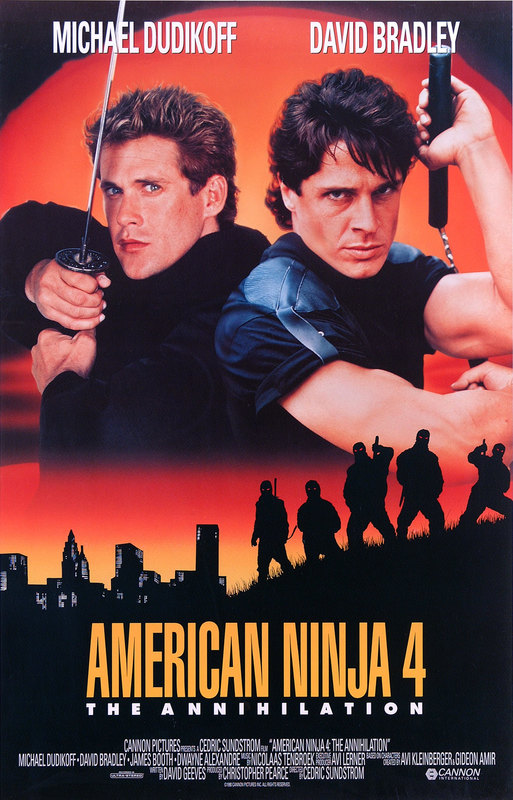
Directed by Cedric Sundstrom and written by James Booth — and produced by Ovidio G. Assonitis! — this movie sees Sean Davidson, the new American Ninja played by David Bradley, battling the ninja army of Colonel Scarf Mulgrew (also Booth, who had already written American Ninja 2: The Confrontation) and Shiekh Ali Maksood (Ron Smerczak), who also plan on dropping a suitcase bomb in New York City.
Working with Carl Brackston (Dwayne Alexandre) — they have to leave his wedding to handle the mission — and a local contact named Freddie (Anthony Fridjhon) and a plucky teen named Pango (Jody Abrahams, they’re looking for a local Peace Corps worker named Dr. Sarah (Robin Stille, The Slumber Party Massacre, Sorority Babes in the Slimeball Bowl-O-Rama) before all hell breaks loose. Freddie is killed, Dr. Sarah is assaulted — and learns that Mulgrew killed her father — and ninjas torture our heroes.
It’s time for another American Ninja.
The call goes out to Peace Corps teacher Joe Armstrong (do I have to even tell you that it’s Michael Dudikoff?) who wants nothing to do with the government. Yet he brings along some rebels from Sulphur Springs, a former penal colony led by Dr. Tamba (Ken Gampu), and kills everyone in his path.
Bradley was not happy at all that after making the series his own in the last film that Dudikoff was back. Sure, he gets to kill the main bad guy, but Dudikoff gets the big battle against the final boss known as Super Ninja (Kely McClung, who is also the first Delta Force member that gets murdered by the ninjas).
It takes 45 minutes for Dudikoff to show up and there’s no Steve James. That makes me really not like this one as much as the others, but then Dudikoff remembers that he loves killing pajama clad martial arts fighters more than teaching reading and starts wiping out karate dudes left and right. That makes things so much better.
L.A. AIDS Jabber is one of the rarest and most sought-after bad taste movies of the shot on video era. It’s the story of Jeff, a mentally unstable young man diagnosed with AIDS who gets revenge on the world by injecting his blood into victims, giving them the same disease that he has.
Visual Vengeance is preparing the first wide release of the movie since it was self-distributed by director Drew Godderis himself and the blu ray will be loaded with newly produced bonus features and commentary from the original creator, Drew Godderis.
I had the true pleasure of getting to speak with Drew, who is as interesting as the movie he made.
B&S About Movies: So how did you decide to make L.A. AIDS Jabber?
Drew Godderis: It’s a project that originally was conceived back during the time when AIDS was a major pandemic. There are some very close correlations between obviously what’s going on now with the COVID because it knows no bounds and will affect anybody, as did AIDS.
I was doing a lot of character acting for five years, starting in the mid-80s and I was working quite steadily, traveling all over the country and making some pretty decent money.
My wife died at age 31. I had a two-year-old boy. I really had no family to look after the boy — he’s in the movie and did pretty well, he’s the detective’s son — but I was bound and determined to be a single parent. I needed him with me at all times because I had heard horror stories of leaving kids with other people.
I decided that I would get out of the acting game but wanted to figure out how could I keep my foot in that industry. So I said to myself, “Well, I’ve been on enough movie sets. I love writing and I’ve got an idea of how scripts were written.”
Now, I needed an idea of something that is going to be somewhat controversial. Something that people might say, “What the heck is this?” And so I was reading through the ideas and all of a sudden AIDS came into my mind. And I’m thinking this might be kind of frightening. A guy with a needle, who finds out that he is positive for HIV and back then there was no cure for it. They didn’t have a cocktail like they do now to take this thing into remission. It was a death sentence.
So the storyline is this kid who was late teens picks up a blood transfusion and probably got AIDS — which was one way to get back in the day — and decided it’s all over for him now. It’s a death sentence. Something works in his brain. And he says, “Look, I’m out of here. I’m going to take a few of those people that I don’t like, as well as some other people.”
Editor’s note: Spoiler warning in case you haven’t watched this movie yet…
At the very end, he has a chance to give himself up and he doesn’t. He rushes the cops with a needle and they shoot him. And then, we learn — after he’s laying on the ground — there was a misdiagnosis.
B&S: Were you worried about causing a controversy?
Drew: I intentionally stayed away from pointing any fingers at people’s sexuality because back then, it was considered to be a gay disease or something that only homosexuals could get. Other people were getting it from blood transfusions and heterosexual people were from having unprotected sex, but the media wouldn’t cover them. So there was this big stigma attached to people who were gay and that was really unfortunate.
I wanted to make sure when I made this movie that I wasn’t going to do that because as far as I’m concerned, people have a right to live their lives.
B&S: What was the budget like?
Drew: I had really no budget to speak of. I had already lost my house, then my son — who was two or three at the time — and I lived in a motel and eventually, even in an office that I was working in. The security guard knew we were living there, but he didn’t say anything.
When I finally finished the script, I did some casting and got a lot of young actors looking for non-union jobs, who weren’t in SAG or AFTRA yet. People — like me — would do a job for a low rate or maybe even a meal. Whatever, I was always willing to work. And they were too, because they’d walk away with footage they could show to other people and maybe get a better job somewhere.
So I was able to put this group of people together and start run and gun shooting. Everything was being done on the weekend.
I started shooting on 16-millimeter film. I had a cameraman from USC, he was looking to build a reel for himself that he could show potential companies, so I had this great 16-millimeter camera. from him. And as we were shooting it, we shot like a hundred feet of film and the thing broke down.
Thank God I was shooting video simultaneously for video feedback which saved money from buying so much film, because we could do video tests and then shoot.
So, ten minutes in, the camera doesn’t work and I just say, “Let’s shoot it on video.”
The cameraman leaves and the video assist guy became — for lack of a better word — the cinematographer. And we went on to shoot this thing on weekends and all throughout L.A.
B&S: Did that make you worry about the commercial prospects?
Drew: I had a decision to make. Am I going to continue shooting on video which limits my possibilities? The only venue I would have had before that would be either HBO or something like a video store. Now that it’s on video, HBO isn’t going to buy it. Actually, with the subject matter, they wouldn’t have bought it.
B&S: What’s it like going back and watching the blu ray?
Drew: It’s kind of like a time warp. In the extras on the blu ray, I went back to L.A. and interviewed everyone that’s still alive.
I also went to the different locations where we shot showing them what they look like now. They have graffiti all over and they’re unrecognizable! The film editor matched those scenes with the original one in the movie and you can really see how much L.A. has changed.
I have some real wild stories about some of those locations. I mean, we shot scenes with actors with real guns chasing a bad guy with no permits or permission and had we been caught…(laughs)
Not only could I have ended up in jail, but who knows what else could have happened!
So we were stealing locations in the sense that like the reporter, she does a scene in front of a police department on the street and another one in front of the local station. I guess we’re past the statute of limitations so I can admit all the places where we shot and didn’t have any permission.
There’s one shot that was done on top of a big skyscraper in downtown L.A. that we convinced the security people that we were CNN and since I had a real professional-looking camera — and a good story, we said that we needed a panoramic shot of LA for our CNN story — they allowed us to actually go up to the top of the roof and get the shot.
B&S: Tell me about the cast.
Drew: We found a great actor in Jason Majik, who played the lead. He brought a real darkness to that thing. He was in a couple of episodes of Beverly Hills 90210 and did some other work and feature films, too.
B&S: How did you get this movie out there?
Drew: I self-distributed it mostly. I also worked with a couple of other tiny companies to get it to video stores, because that’s the only place you could have this.
Back then, to have somebody do something graphically to make a box — in order for me to get this thing put out — that was a big cost. I spent $1,800 to get 1800 boxes, which was the minimum I could order. And then it cost a few hundred bucks to duplicate the VHS tapes. It had a super limited release, but it’s been out there. In fact, as video stores close, I often see copies on Amazon and I buy them to give to friends. They might have a sticker on them from a video store in St. Louis, so I guess it got out there.
B&S: The new release from Visual Vengeance is going to really get it out there. Was it also released as Jabber?
Drew: Yes, that’s because I was still concerned about the political ramifications. So I figured under the name Jabber with a big needle on the front, people would say “What the hell is this?”
It’s to Video Vengeance’s credit that they said, “Release it under the real name.”
B&S: How did the re-release happen?
Drew: It’s funny. It had been sitting on the shelf for 30 years. I wasn’t gonna do anything with it.
Blood Diner, which I was in, was coming out on blu ray and I got interviewed for the behind the scenes footage on the re-release. Somehow, the folks at Visual Vengeance knew the producer of that segment and they were interested in releasing my movie. They have a great team that put this all together, I got to go to L.A. and do the extras and now there’s this cool Collector’s Edition.
Another thing that you should know…you remember watching the movie where the detectives switch in the middle of the movie? I bet you said, “What is going on there? Maybe he didn’t like a movie very much.” The truth is that actor — he was wonderful — had a busy schedule filled with conflicts and I needed to ensure that everyone could be there every weekend we shot. So that character got killed in a drunk driving accident and now we have a new detective who was recommended by the girl playing the reporter.
B&S: What can we learn from this movie?
Drew: You can have no money, but you can write a script. You can find people that want to work and want to act. You can literally bring it to fruition. It doesn’t mean that you won’t be scrounging for money along the way to try to feed everybody or get an editor though!
The editor was a well-known guy in Hollywood. But he did he couldn’t be associated with something like L.A. AIDS Jabber. He not only edited but he composed the soundtrack and we changed his name. He’s gone on to be very successful and I still won’t reveal his name.
Can I ask you a question? What is it nowadays with a lot of the kids and shot on video movies? Do they like rough around the edge stuff?
B&S: Yeah. It’s kind of an obsession with some of us because it’s like the last bastion of movies that had no rules, where everything today has been focus-grouped and producer noted to death. You have no idea what can happen next and can actually get surprised by these movies.
It’s a miracle when movies happen and especially SOV movies are miracles because how did people find them? Where did people find them?
Drew: It’s so interesting to me because when I started acting, I did episodic TV. Then I moved to direct to video movies and you’d get like, fifty bucks a day. I was in Blood Diner and then, I met Fred Olen Ray and did is movie Deep Space.
B&S: You’re also in Jackie Kong’s other movie, The Underachievers.
Drew: I was also in Evil Spawn and Cannibal Hookers for Donald Farmer and he makes my one movie look like nothing, he’s still making movies now.
It’s wild to talk to you about this movie, thirty years after I made it. It’s about the OG pandemic and it’s no Academy Award winner. But we know that and it’s okay. It wasn’t created to be that. And while I shot it on video by necessity, that’s why people are getting ready to see it again.
L.A. AIDS Jabber is coming out in August from Visual Vengeance. It has the following extras:
Commentary Track with Director Drew Godderis
Lethal Injection: The Making of L.A. AIDS JABBER
Bleeding The Pack: An Interview with Lead Actor Jason Majick
L.A. AIDS JABBER – 2021 Locations Visit
Interview with Blood Diner Director Jackie Kong
Actress Joy Yurada Interview
Cast and crew Interviews
Liner notes by Tony Strauss of Weng’s Chop Magazine
Limited Edition Slipcover – FIRST PRINTING ONLY
Reversible BR sleeve featuring original VHS art
Collectible Mini-poster
“Stick your own” VHS sticker set and more
For more details on the label and updates on new releases – as well as news on upcoming releases – follow Visual Vengeance on social media – IG, Facebook or twitter
EDITOR’S NOTE: This originally ran on the site on October 27, 2021.
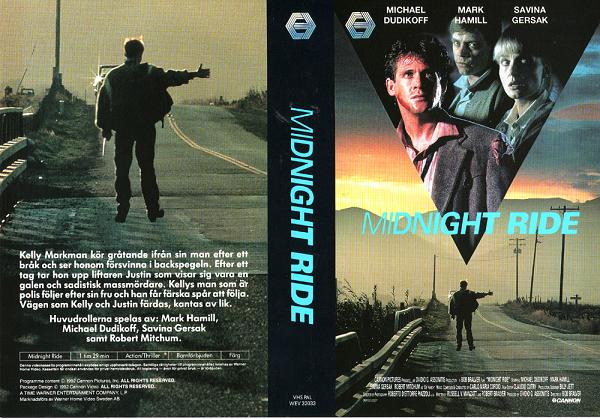
I mean, how could I not watch this movie? It’s got Michael Dudikoff, Mark Hamill and Robert Mitchum improbably together in a riff on The Hitcher or The Vanishing or any other number of hitchhiking maniacs on the road movies.
Dudikoff is a cop who is more married to his job than to his Russian wife Lara, who finally decides to drive off and then make the decision to pick up Justin Mckay (Hamill), who grew up with a mother who parted her sister’s hair with a butcher knife and has passed on the willingness to kill to her son.
Over one brutal evening, Lara must ride with the killer as he destroys everyone he can, ending with him trying to convince Mitchum, playing a doctor, to give her electroshock therapy against her will.
If you’re used to seeing Dudikoff be a ninja — an American Ninja — he barely fights in this. But hey — it’s a Cannon Film, which means that it has some level of strangeness, maybe because it was shot in Italy* instead of America, but has stuntman Bob Bralver directing it, who only made one other full-length movie, Rush Week, which isn’t all that bad. He’s joined by writer Russell V. Manzatt, who also wrote that aforementioned college stalk and slash.
*That’s the claim I keep reading, even if IMDB says that it was made in California. I mean, with all the neons and blue color, this could have been a late Italian direct to video movie.
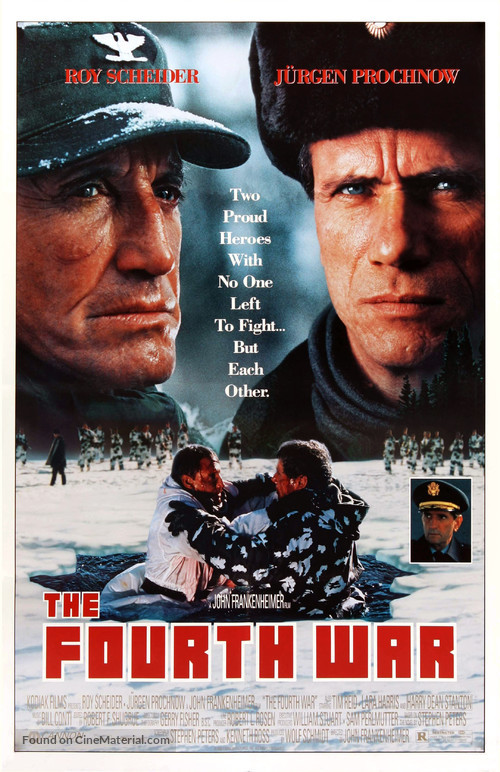
Colonel Jack Knowles (Roy Scheider) is a tough soldier awarded for his bravery in Vietnam.
Colonel Valachev (Jürgen Prochnow) is the same way, but on the other side of the West German-Czechoslovakia border.
These two men are an asset at war but a liability in peacetime.
They may just drag everyone into World War 3.
Based on the Einstein quote, “I know not with what weapons World War III will be fought, but World War IV will be fought with sticks and stones,” this movie finds Knowles butting heads with his superiors Lieutenant Colonel Clark (Tim Reid) and General Hackworth (Harry Dean Stanton) when he isn’t getting blind drunk — on J&B no less and no, this is not a giallo — when he isn’t crossing the border and sabotaging Russian bases.
By the end, the two men battle in hand-to-hand combat on a frozen lake with their countries’ armies on both sides ready to unleash mutually assured destruction. The fight was so realistic that Scheider cracked one of his ribs and Prochnow popped out his knee.
The Fourth War was directed by John Frankenheimer from a script by Kenneth Ross, both of whom were anti-war, and hated the name, as well as other titles like Game of Honor and Face Off.









 B&S About Movies
You must be logged in to post a comment.