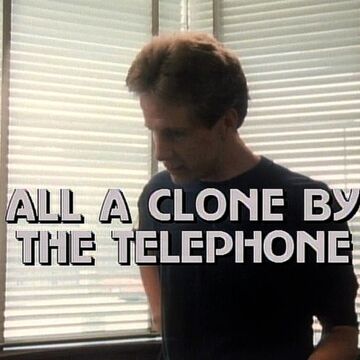
Yes, two Tales from the Darkside episodes in a row have now had a corny pun for a title, but at least this episode presents a truly horrific concept that today’s audience might not understand: TV screenwriter Leon (Harry Anderson) has his life taken from him by the voice of his answering machine.
One of eight episodes directed by Frank De Palma — he also worked on the spiritual sequel series Monsters — and written by Haskell Barkin (who wrote the other punnily titled “Djinn, No Chaser“), this episode starts with that strong premise and then works to a silly conclusion, one of the things outside of budget that holds this series back from being thought of in the same breath as The Twilight Zone or Night Gallery.
That said — this one does have Dick Miller in it, playing Leon’s agent. Marcie Barkin from Fade to Blackand Smokey and the Good Time Outlaws is also in this as Leon’s long-suffering partner.
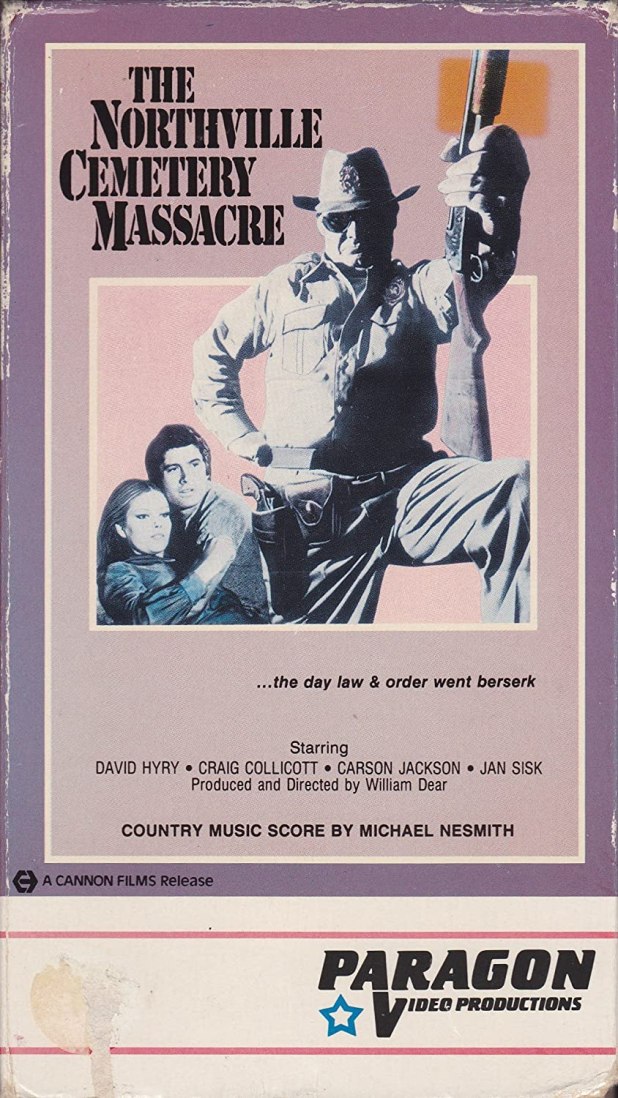
Between an uncredited Nick Nolte doing ADR for the lead and Mike Nesmith doing the film’s music for free, Northville Cemetery Massacre near accidentally has a better pedigree than most biker movies. Directed, written and produced by William Dear (who also made Harry and the Hendersonsand Angels In the Outfield because life is strange) and Thomas Van Dyke — with Jim Pappas, Phil Nyus, Robert H. Dyke and James King contributing to the script — this was shot as an independent film in Michigan under the original title Freedom R.I.P.
The Spirits, an outlaw motorcycle club played by actual outlaw motorcycle club The Scorpions, are at war with the cops after Deputy Putnam (Craig Collicot) attacks their hippie friend Chris (David Hyry) and assaults his lover Lynn (Jan Sisk), blaming them for the crime and sending her father (Herb Sharples) after them with a sniper (Len Speck) on his payroll.
The Spirits are just a bunch of fun loving motorcycle riders — they even held an elderly husband and wife fix their car — but after a helicopter attacks their three coffin biker funeral, well, there’s going to be some payback.
Shot in 1971 and not released by Cannon until 1976, this whole thing has a bloody close that wipes out just about the entire cast, so don’t get too committed to anyone. It’s got a ramshackle quality that I really liked and if only it had come out when it was made, when biker movies were still in fashion, it may be better known.
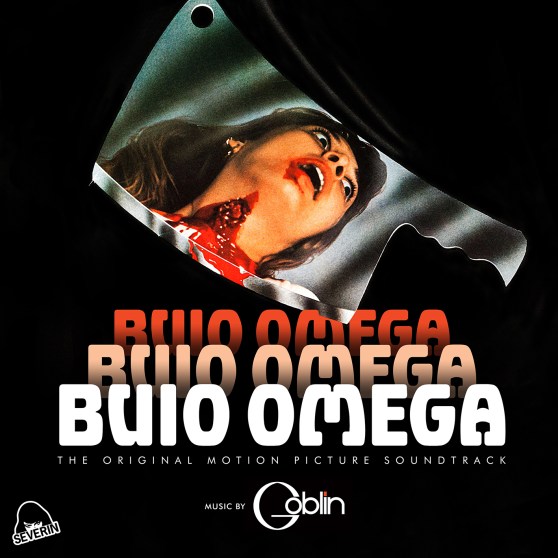
I despise anyone who calls Joe D’Amato a hack. This movie is my evidence. This Goblin soundtrack is my church hymns. All hail the maniac who made this movie.
Fake movie punks — Tina and the Tots! — join a serial killer named The Coroner, Patty Mullen from Frankenhooker and, perhaps strangest of all, Kristen Davis in a slasher no one talks about.
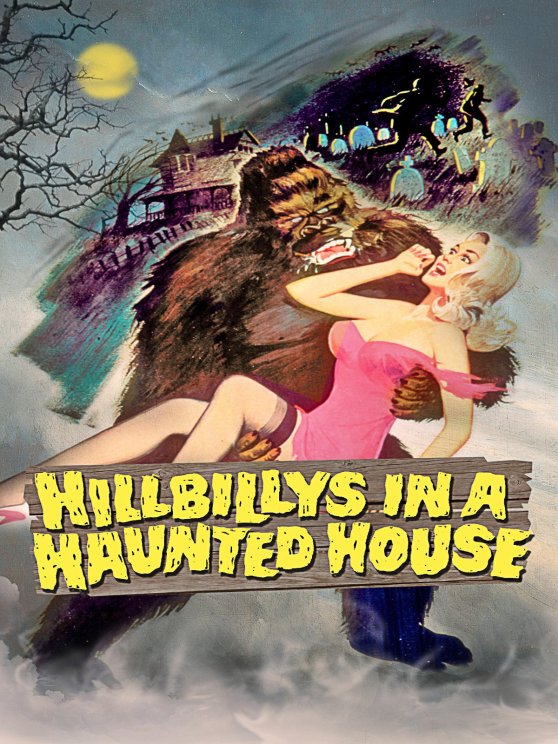
Not to be one of those shippers I read about, but I really hope Ferlin Huskey fucked the shit out of Joi Lansing. There, I said it. I stand behind it. I believe in love.
Speaking of love, Bruno Mattei. That dude. I love that dude. This movie is completely the silliest and perhaps most poorly made zombie movie you’ll see and I will defend it with fists. Such is the way of my heart.
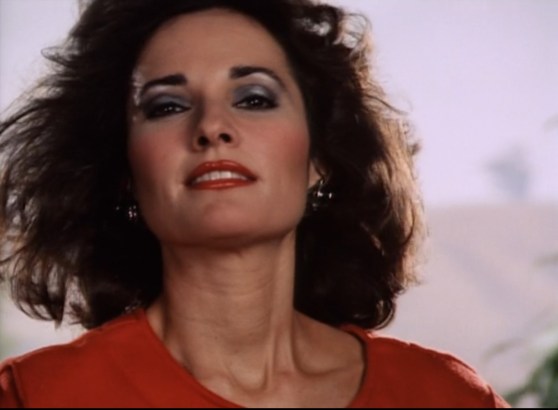
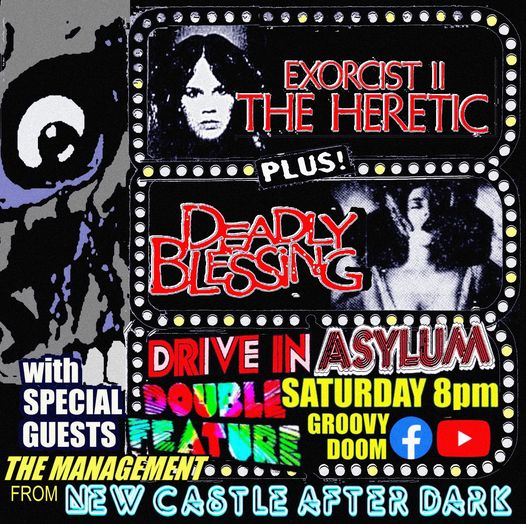
I hate Wes Craven’s movies, his whining about why they never went right and the people that think that Scream means anything. But if he only made TV movies, well, I would have loved him. Because the dude knew that if you combine Satanism, Susan Lucci, Robert Urich and action figure special effects that I will fall for it every single time.
My love for the goofy side of horror is well-documented by myself. Also, my zeal for movies where monsters are all about fucking. I mean, this is a whole movie about a wolf woman who just wants to howl at the moon. Get into it.
Melody (Michelle Daw, a one and done sex symbol) has just got off the bus from Ohio to Manhattan, but she’s no ingenue or doe-eyed innocent. Then again, she refuses to put out after a date and gets assaulted by a man who tells her that she “shouldn’t have eaten the hamburger.”
For those of us who grew up watching Cinemax after 1 AM on a Friday, this film has appearances by Tanya Roberts and Judy Landers.
Director Barry Rosen only made one other movie, but it’s Devil’s Express, and anyone that had the ability to cast Brother Theodore and Warhawk Tanzania knows something. This was written by Philli Levy, his only script, but oddly the man who typed the words to this sex farce would later be in bit parts in Sleepless In Seattle and The Curse of the Jade Scorpion. He was joined in writing this by Robert Jahn, who also wrote The Immoral Three and Bloodrage.
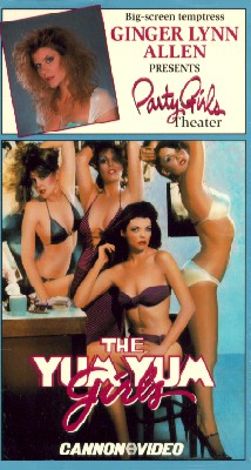
What makes this movie magical is this Ginger Lynn Allen intro, which made this one of her few VHS releases that you didn’t have to walk behind the magical adult section doors to rent and watch.
EDITOR’S NOTE: This film originally was on the site on October 9, 2021 as part of Salem Horror Fest. It’s now streaming on Shudder.
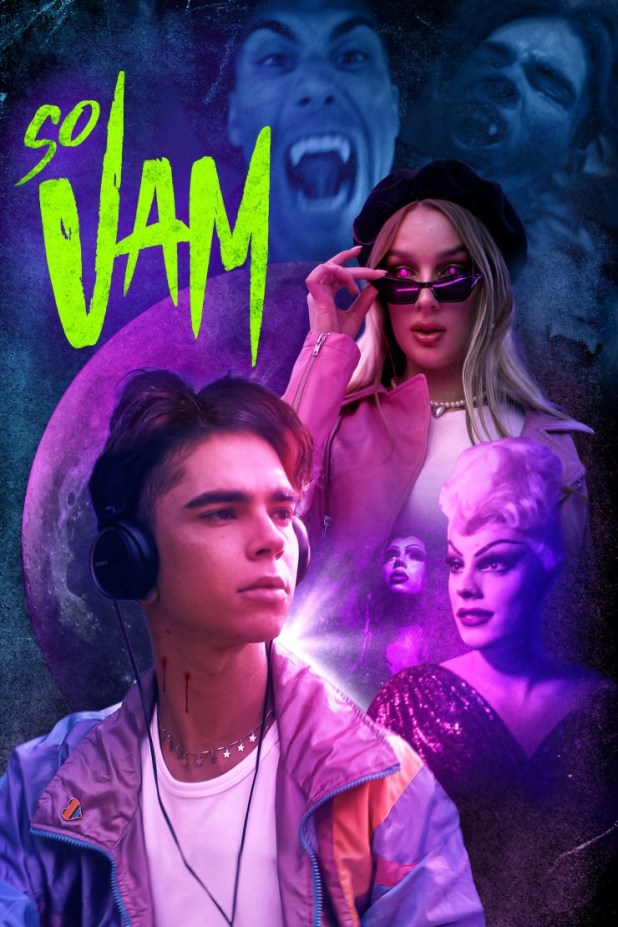
Alice Maio Mackay has been making movies since her teens — she got a Stephen King Dollar Baby film, A Tale of the LaundryGame, at 13 — and this Australian film — made as she turns 16 — is all about Kurt, an outcast in a conservative town who dreams of moving to the city to become a drag queen.
And then one night, he’s killed by a predatory old vampire.
That’s not the end.
He’s saved by a brood of young bloodsuckers and taught the ways of the vampiric world. They may not live forever, but they aren’t bothered by Holy Water. crosses or even sunlight. And they pray upon the people who bully others, like the counselors of a Christian pray away the gay camp.
With a quick run time, some fun musical numbers and plenty of emotional bonding between those young vampires — and some juicy Bram Stoker gossip — So Vam ha sits heart — and plenty of blood — on its sleeve. It’s also a blast.
EDITOR’S NOTE: This was originally on the site on August 10, 2021.
Man, ever since I’ve obsessed over Night Train to Terror, I’ve been searching for a movie that has the same absurdist edge and amateurish energy that feels like a million monkeys had been working a million hours in a million room’s worth of typewriters and this is the alien manuscript that they delivered to us.
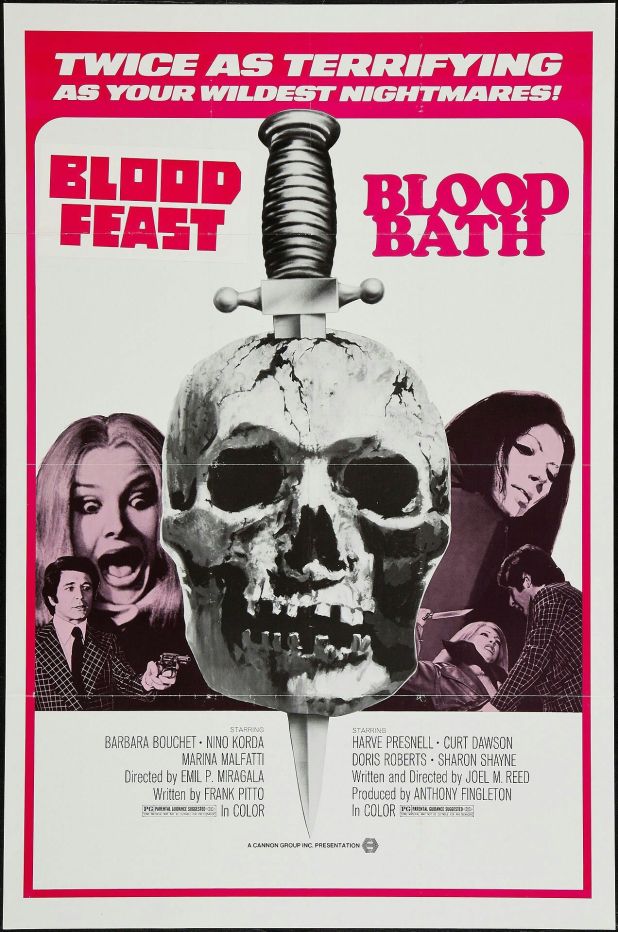
What makes Blood Bath a movie that instantly went to the top of my list was who made it: Joel M. Reed, who may have made only six movies, but one of them was Bloodsucking Freaks*. This film has the same berserk zeal as that film, a movie I rented so many times as a teenager that I really should have been considered for counseling.
Yet unlike that film — which has pretty much full nudity for most of its running time and some of the most aberrant behavior I’ve ever seen — Blood Bath is, well, nearly bloodless. That doesn’t make it any less strange.
Harve Presnell (Wade Gustafson from Fargo) plays Peter Brown, a man who is at once the most Satanic director of all time and also the husband of an actual demon and a New York City cop. The cast of his latest film wants to convince him that the supernatural is real, so they all gather to tell several stories to him that creates the heart of this portmanteau.
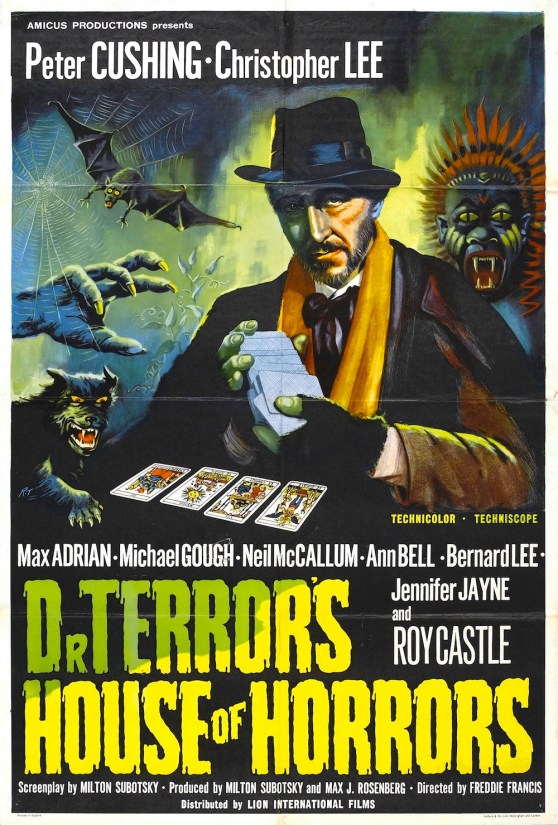
From a killer whose big hit goes wrong to a novelist who escapes the drudgery of marriage into a fantasy that doesn’t live up to his dreams, a businessman locked in a vault with the ghost of a black man that he indirectly killed and a martial artist who steals the most important secret of a secret sect of mystics and sells it as part of his strip mall karate classes, none of the stories are going to set you ablaze (then again, the end of the martial arts story is absolute beyond insane, which is exactly what I want this entire movie to be), the stories all kind of pale to the real weirdness of seeing Raymond’s mom Doris Roberts, Andy Milligan stock player Neil Flanagan, Jerry Lacy — who played Bogart to Woody Allen — and a brunette P.J. Soles tying to get with our director protagonist before his half-demon goat boy son goes off.
The art director of this movie, Ron Sullivan, is probably better known as Henri Pachard, the director of The Devil in Miss Jones Part IIand Taboo American Style. One of the actors in this, Sonny Landham, may be better known as both Billy in Predator and a hardcore conservative political career, but he started things off in movies like this (and also doing adult).
This is the kind of movie that has a newspaper headline that shouts “Kung Fu Master Opens Supermarket!” and karate masters — one has no arms and legs — sitting down to eat egg rolls before they battle to the death.
This movie is not well made and that means that to me, it’s beyond perfect. It’s an absolute mess, shot on stages that feel barely put together with doors literally coming off their hinges. It has the kind of heart that today’s endless streaming horror anthologies are missing. I demand more karate in my horror anthologies and films unafraid to be this incredibly odd.
*He also made the Jamie Gillis-starring Night of the Zombies.
EDITOR’S NOTE: This isn’t the Herschell Gordon Lewis movie. No, instead the Dewey-Friedland Cannon released The Red Queen Kills Seven Times under this title. This originally appeared on the site on August 24, 2017.
Emilio P. Miraglia followed up The Night Evelyn Came Out of Her Grave with this giallo freakout — starring the magnificent Barbara Bouchet (Don’t Torture a Duckling) — that combines gothic horror with the high fashion we’ve come to expect from early 70’s Italian horror.
A curse haunts the Wildenbrück family once every 100 years — two sisters have always become the Red and Black Queen, feuding until one of them dies. Then, the survivor is haunted by sixth deaths, with the final death — the seventh death, referenced in the title, being the surviving sister. Kitty (Bouchet) and Evelyn are the next two sisters to be so cursed, battling even in childhood, stabbing each other’s dolls with daggers.
These catfights have continued for years, ending when Kitty, now a fashion designer, accidentally takes it too far when she battles Evelyn. Third sister Franziska (Marina Malfatti, The Night Evelyn Came Out of Her Grave, All the Colors of the Dark) and her husband hide Evelyn’s body while Kitty pretends that her sister has gone to America.
All is well and good until the Red Queen rises, wearing a red cape and white mask, killing all of Kitty’s co-workers at Springes Fashions with the same dagger that was once used to slice up baby dolls. But is it really Evelyn, back from the dead (Emilio P. Miraglia sure liked Evelyn’s that rose from the dead)? Or something much more down to earth?
Miraglia only directed six films, with this being his last one. There are some moments in here that aspire toward art, like the Red Queen chasing Kitty through her dreams, ending in a long hallway run and her superimposed form attacking like a ghost. And the film flirts between the gothic castle era of Italian horror and the fashionista giallo look — all while containing plenty of deep red gore and plenty of skin, courtesy of a 20-year-old Sybil Danning (Howling II, Battle Beyond the Stars, Young Lady Chatterley 2). It’s not always art, but sometimes, it totally is. There are the requisite twists and turns of the genre, along with some really regrettable moments — like when a character goes from rapist to rescuer across two scenes and an ending where the hero and heroine both need saving.
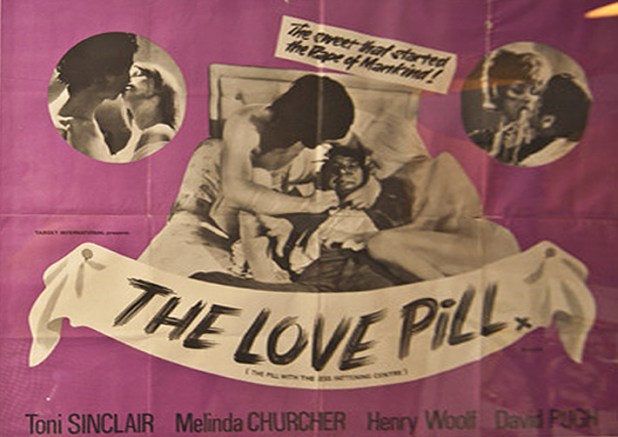
Directed by Ken Turner (who may have been more used to directing the puppets of Joe 90 and Captain Scarlet and the Mysterons) and written by Laurence Barnett (the inventor of the British game show Zodiac Game), Jesnar and hardcore filmmaker John Lindsay, The Love Pill has a man named Libido (his real name Henry Woolf is even better) developing a candy that is both a contraceptive and an aphrodisiac.
Probably the only thing worthwhile in this sex comedy which is neither funny nor sexy is the fact that the Love Pill makes women into the sexual aggressors, which mirrors one of the more frightening realizations of the sexual revolution and one men still can’t wrap their minds around: women may want sexual pleasure more than them.
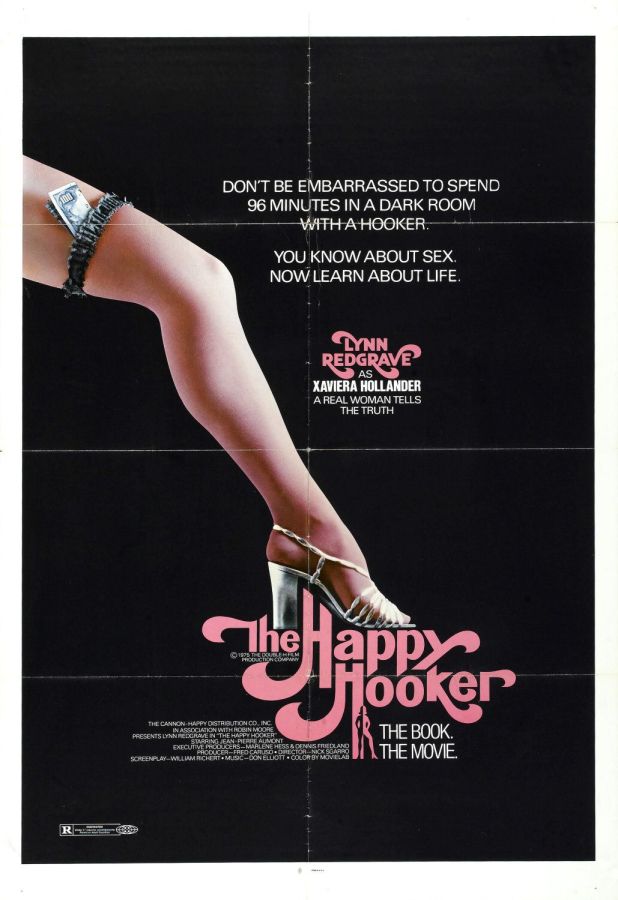
Xaviera de Vries was born in Surabaya in the Japanese-occupied Dutch East Indies to a Dutch Jewish doctor and a mother of French and German descent. She somehow went from growing up in a Japanese-run internment camp to becoming a $1,000 a night call girl ($7,800 in today’s money) in New York City, running the biggest brother in the city the Vertical Whorehouse and being deported after being arrested in 1971.
That year, Robin Moore took Hollander’s dictations, came up with the title The Happy Hooker and Yvonne Dunleavy either transcribed the book or wrote it outright. Whatever the truth is, it sold 20 million copies and led to this movie.
Lynn Redgrave plays Xaviera and we follow her from her marriage to a henpecked man named Carl (Nicholas Pryor) to being the biggest madam in town before a corrupt cop — who once trying to assault her — busts her. And that cop is played by Richard Lynch.
Directed by Nicholas Sgarro (who mainly worked in TV) and written by William Richert (who wrote and directed Winter Kills), this movie has a title that promises shock and never really gets all that sleazy. This movie got beaten to the screen by a movie that does have that, 1974’s The Life and Times of Xaviera Hollander, which has an introduction by Hollander and has Samantha McLaren, Karen Stacy and John Holmes in its cast.
This does, however, have Vincent Schiavelli as a john.






 B&S About Movies
You must be logged in to post a comment.