CANNON MONTH: Braddock: Missing in Action III (1988)

Directed by Chuck’s brother Aaron and this time, Norris is Colonel James Braddock all over again, but we’ve discovered that his wife Lin Tan Cang (Miki Kim) isn’t dead, a fact that Reverend Polanski (Yehuda Efroni, Cannon utility fielder) imparts his way. And there’s another surprise. He has a 12-year-old son, Van Tan Cang (Roland Harrah III).

Don’t get used to having a wife Braddock.

Before you can say “Cannon pictures,” Vietnamese General Quoc (Aki Aleong) kills Lin and has his soldiers take Braddock and Van to be tortured.

The real co-star of this movie is Chuck’s Heckler & Koch G3 with grenade launcher and shooting bayonet. While Chuck used to base his movies on Reader’s Digest, this time he was looking to 20/20 for material.

This was supposed to be directed by Joe Zito, then Jack Smight, but after all the creative differences, it all worked out with Aaron. Chuck told reporters that “It’s probably the best movie I’ve ever done.”

Sadly, a Philipines Air Force helicopter used in this film crashed into Manila Bay, an accident that killed four soldiers and wounded five other people on the same day that the verdict from The Twilight Zone: The Movie case was delivered in Los Angeles Superior Court.

This may not live up to the first two films, but it’s still pretty entertaining. Sadly, Cannon was in so much financial trouble that they couldn’t even afford to publicize it, which nearly caused Norris to sue the company.

For more info on all three Missing In Action movies, get Austin Trunick’s The Cannon Film Guide Volume 1: 1980-1984.

You can listen to The Cannon Canon episode about this film, click here.

REPOST: Schemers (2020)

Editor’s note: We originally shared this movie on May 12, 2021. It’s available on VOD and DVD from Gravitas Ventures. You can learn more about this movie on the official Facebook page.

David wanted to be a football player before an injury. Now he’s in love with a nurse named Shona and the concerts and disco he’s running – with his buddies Scot and John — have all been to impress her. After a few successes, our hero decides to go all in on a hugely ambitious Iron Maiden show. However, to make that happen, he has to throw in with a gangster named Fergie, which means that the biggest show of his life may just be his last one.

This film is based on truth, as the early years of Dave Mclean’s life in the music business really did have him promote a Maiden show at Dundee’s Caird Hall on June 12, 1980. For Maiden fans, they opened with “Sanctuary.”

This is Mclean’s first movie as a writer, director and producer. He brought plenty of American grunge and punk bands to the UK, including Nirvana, Mudhoney, The Smashing Pumpkins and Green Day before managing Placebo.

He’s to be forgiven for making his film look, feel and play a lot like Trainspotting, because both films cover a lot of the same ground. It does have a good soundtrack going for it, including Saxon, Hawkwind, Dead Kennedys, The View, Placebo and, of course, Iron Maiden.

KINO LORBER BLU RAY RELEASE: Back Street (1941)

Adapted from the 1931 Fannie Hurst novel and the 1932 film version — which it follows nearly scene-for-scene — this sympathetic tale of an adulterous couple was pretty unique for 1941, as you wouldn’t think this type of behavior would play well then. It was also remade in 1961 with Susan Hayward and John Gavin in the lead roles.

This take on the story — Hurst also wrote Imitation of Life — stars Margaret Sullavan as Ray Smith, who has her pick of many men, but the one she wants, Walter Louis Saxel (Charles Boyer) gets away by the whim of fate. Years later, they reconnect and she becomes his kept woman, literally at his beck and call while he leads a family life and has her for his pleasure. They’re so connected that she dies moments after listening to him expire on the telephone.

As sad as this ending is, both Sullivan and Boyer would die from overdoses. On a happier note, she wanted Boyer to be in this movie so much that she gave up her normal top billing.

It’s pretty controversial material for Robert Stevenson, who would go on to direct Mary PoppinsThat Darn Cat and Old Yeller. Alfred Hitchcock was the original choice of director, so I can only imagine how he would have made this soap opera of a film.

The Kino Lorber blu ray of Back Street has a new 2K master, commentary by film historian Lee Gambin and costume Historian Elissa Rose, and a newly mastered theatrical trailer.

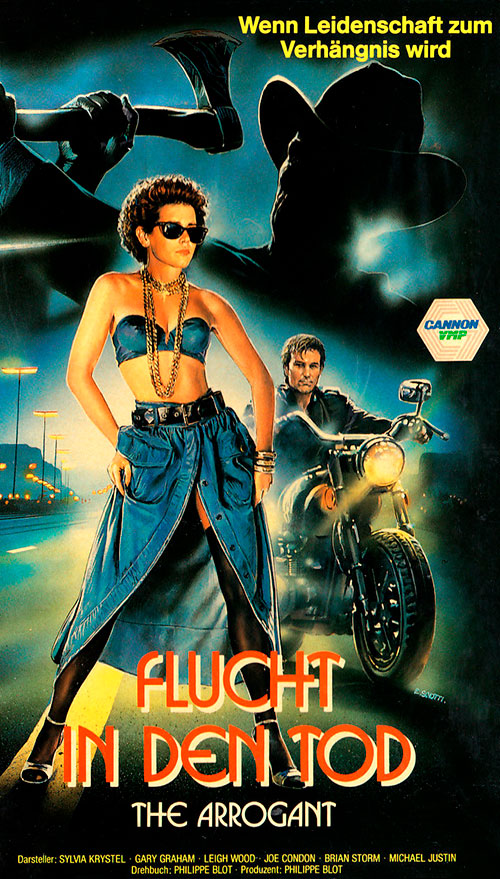
CANNON MONTH: The Arrogant (1988)

Philippe Blot made four movies and three of them, this one, In the Shadow of the Sandcastle and Hot Blood have Sylvia Kristel in them, so of course, I’m going to watch at least three-fourths of his films. I’ll also be jealous the entire time, as he was Kristel’s second husband.

In this movie, she plays Julie, a waitress who has decided to hitch a ride with Giovanni (Gary Graham from the Alien Nation TV show), who we know — and she doesn’t — has just slept with his wife Elvira’s (Leigh Wood, who is also in the strange R-rated Stocks and Blondes edit of Wanda Whips Wall Street) sister and then survived an axe attack by her senator father (Joe Condon, who has the amazing screen credit of doing security for the wrestling dog movie Russell Madness), but he gets the upper hand and murders the man before deciding that he’s God.

As a driverless black Cadillac and Giovanni’s brothers-in-law pursue them, our protagonists have all manner of adventures, like Giovanni being bitten by a snake and going through drug-like dreams as the venom works its way out of his system, three mentally challenged brothers give Julie a sponge bath in a garage, Giovanni keeps cucking men and trying to prove that, yes, he’s (or He’s) God.

He also keeps trying to seduce Julie and you know, it’s Sylvia Kristel. We get it.

Somehow for a movie weird enough to have animator Chuck Jones play a cop, it also ends — spoilers — with Giovanni dying as he crashes his motorcycle into a semi. But you know, he’s finally scored and if you get to enjoy Ms. Kristel, one imagines you can die at any time and not feel like you wasted a moment of your life.

But then the driver of the Cadillac? It’s been him all along.

This is an art film that makes you want to think it’s a sexy movie until you’re watching it and then it’s all about philosophy, the kind that college freshmen discover before the holiday break and come home to tell their parents that there is no God up in the sky. But then, you know, Sylvia Kristel, so I’ve dealt with worse discussion for far less attractive people.

What I’m really saying is that I’m shocked that Vinegar Syndrome hasn’t put this out for $40 with a limited slipcase so people could use the word fever dream in their breathless social posts. Who am I kidding? I have money I’m just fiending to spend on just such a release.

CANNON MONTH: I giorni randagi (1988)

Stray Days was directed by Filippo Ottoni, who directed Detective School Dropouts for Cannon. He co-wrote this with Umberto Marino and it has songs by Enrico Ruggeri.

And that’s it! I can’t find this movie, I can’t find a description of it and no one else has reviewed it. Perhaps we should consider this a placeholder until I eventually find this movie or someone else smartens me up.

Have you seen it?

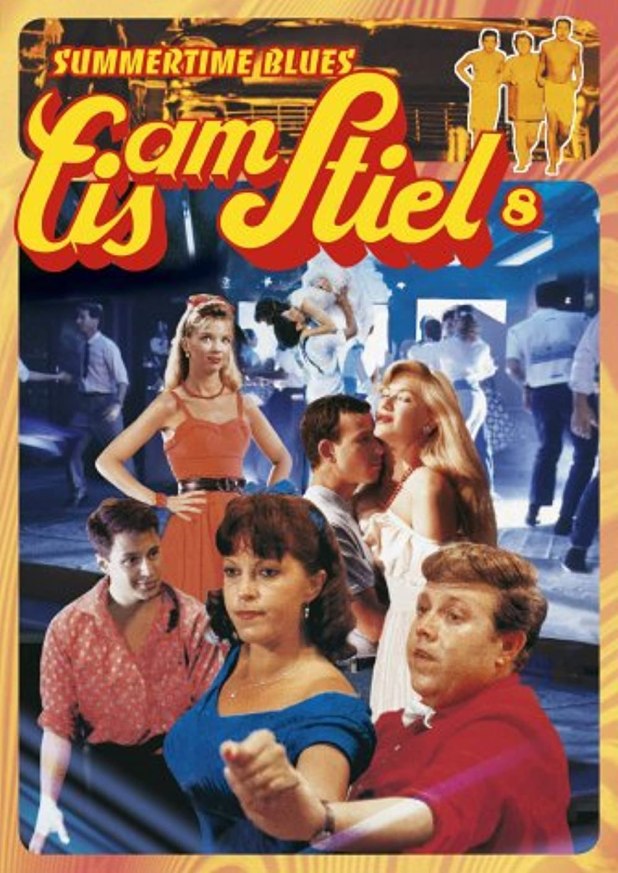
CANNON MONTH: Summetime Blues (1987)

Director Reinhard Schwabenitzky’s 1988’s Summertime Blues: Lemon Popsicle VIII is not director Yaky Yosha’s 1984 movie Summertime Blues, but wow, they’re really close. 50s soundtrack? Goofball jokes? Lots of sex? Yes, Lemon Popsicle movies have somewhat dominated my life over Cannon Month, so I often wonder if they have caused me to lose what’s left of my mind after a month of Jess Franco and now this.

But hey! It’s summer and Hughie (Zachi Noy), Benzi (Yftach Katzur) and Bobby (Jonathan Sagall) want to start their own bar, but they need money. The landlord, however, has a daughter named Polly (Elfi Eschke) who is the kind of girl the boys would never be interested in and yet her affection could cause them to get the party place of their dirtiest dreams, which inevitably include Sibylle Rauch. Are you surprised?

This movie exists in limbo. I’ve finally figured it out, as everyone is in the place between Heaven and Hell, a timeless void where 1950s cars exist alongside mentions of Kennedy and John Travolta.

I only have one of these movies left. I will not be sad when I finish it.

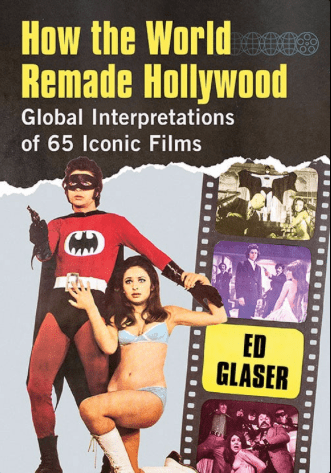
Interview with Ed Glaser, author of How the World Remade Hollywood part 1

As you may have learned from reading our site, I’m obsessed with bootleg films or remakesploitation. From films like 3 Dev Adam (Three Giant Men) and Dünyayı Kurtaran Adam (The Man Who Saves the World) to just about everything that emerged from the 80s Italian horror boom, I’m just so astounded by how movies get culturally remixed. 

According to Ed Glaser, author of How the World Remade Hollywood, “Most of these films were low budget and many were unauthorized, but all of them were fantastic—and lately have begun to resurface thanks to cherry-picked YouTube clips. But why and how were they made in the first place?” 

I had the opportunity to speak with Ed and learn even more about how he discovered these films himself, how they’re often so much more than just a Xerox and how ideas shift as they cross borders.

I can’t thank him enough for the conversation that we had.

B&S ABOUT MOVIES: Should we call these movies remixes or rip-offs or remakesploitation?

Ed Glaser: It’s up you! But I use remakesploitation quite a bit. I picked it up around 2008 from an article by Jason McElreath. I think he coined it and then I just kind of kept using it relentlessly ever since. 

B&S: When did you discover these films?

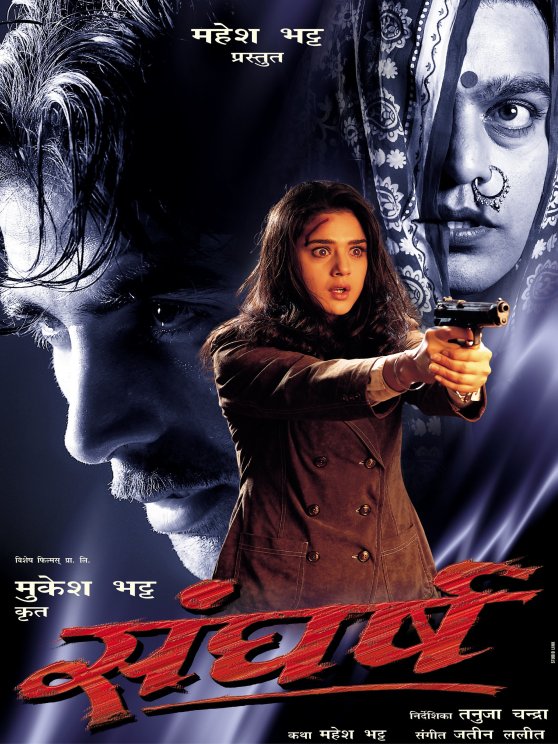
Ed: Around 2002 I was reading Thomas Harris’s Hannibal novels and decided to rewatch the films. I knew there were a couple versions of Red Dragon and I was curious if there were any other alternate versions. I went to IMDb and sure enough, there was a movie called Sangharsh, which is a Bollywood film.

I wasn’t as familiar with Bollywood at the time, though I had been told that its movies always featured singing and dancing. So I was very curious to see how that would translate to Silence of the Lambs. Of course I immediately ordered the DVD and waited anxiously for it to arrive, and then ordered a bunch of pizzas and watched the film with friends — and no subtitles. 

Two hours later, it had changed my life. 

Since then, the film has been released with subtitles – thank goodness – and it’s really a marvelous film. It was just such a unique experience seeing a familiar story told through such an unfamiliar lens.
B&S: How do you go from this life-changing experience to deciding to write a book?

Ed: Very slowly. For a while, it was just a matter of discovering what other remakes, remixes, and rip-offs existed. After I showed Sangharsh to some more friends a few years later, I started wondering what other films like that were out there. 

I went looking and that’s how I discovered Dünyayı Kurtaran Adam (The Man Who Saves the World) or “Turkish Star Wars.” I started buying these films and watching them with friends and that sort of became a regular occurrence. 

The question I always had when watching them was, “How did this get made?” You know, what was the context around it? Because when you see these films sort of plucked from a vacuum on YouTube, you have no idea. It’s like this clip has come from another universe. But of course it didn’t.

The filmmakers made these movies under particular circumstances and for specific reasons. I wanted to hear the stories behind them. So I started digging, learning, and reaching out to people. Eventually, as I learned more, particularly about the Turkish film industry at the time, I discovered some clips from a film called Korkusuz (Rampage), which was sort of the “Turkish Rambo” from the same director as “Turkish Star Wars.” I ended up buying the rights to that film and producing an English language release. Shortly after that, since I had collected dozens and dozens of these films and learned the stories behind so many of them, I started doing a web series called Deja View, where each episode highlighted a single remakesploitation flick. 

I did that for a number of years, and meanwhile several people suggested I write a book on the subject. I’d never written a book before, so thus began another very slow process.

B&S: I think that a lot of people come into these movies looking for something to laugh at. And then some people stick around and understand that these movies give us the opportunity to view a culture through a different lens. So it’s not just a meme or a joke. There’s merit to these movies.

Ed: Absolutely. I get a little tired of the internet snark, when it’s just a case of people showing clips and saying, “Look at this crappy movie.”

I’m not saying all these films are amazing or all high art. Some of them have been roundly trounced by their own film industries and local audiences. So they’re not all great films, but it’s not fair to take them out of context and laugh at them. It’s weird and disingenuous to lump them all into the category of bad movies. And why wouldn’t you be curious where they came from? They may look low budget or rough around the edges because some international film industries in the ‘70s didn’t have the resources of Hollywood. But when you dig deeper, you see that many of these filmmakers were performing miracles.

You can’t just look at the surface.
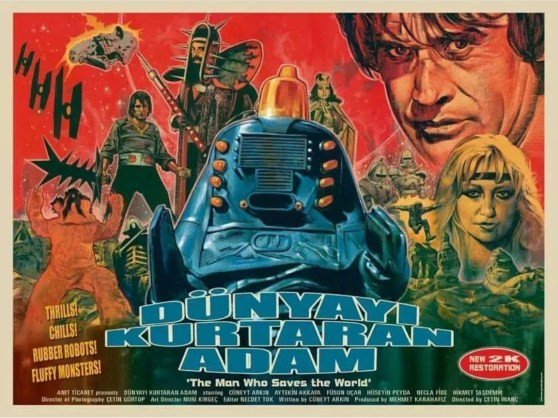
B&S: I’ve always disliked when people call Dünyayı Kurtaran Adam (The Man Who Saves the World) a Star Wars rip-off. After all, isn’t Star Wars itself a cultural remix of Kurosawa and Jack Kirby and Flash Gordon? And The Dam Busters and a million other movies?

Ed: Absolutely. If you look at the film, it’s very much its own thing. It’s got a lot of Star Wars because of the footage that it lifts from that movie, but the story itself is pulled from Flash Gordon, Battlestar Galactica, religious mythology, and just all kinds of places.

B&S: It doesn’t look like it either. 

Ed: Çetin İnanç is such a fascinating director. The way he does action is so wild. He’ll thrust the camera right up into the action at crazy angles and swing it around and it’s so dynamic and unusual. His frequent director of photography Çetin Gürtop, his brother-in-law, the stuff that they did together was just like, you’re not supposed to do that. But I’m so glad they did.

B&S: It’s the next level of how jarring Hong Kong action films can be. 

Ed: Absolutely. I got to spend some time with Çetin İnanç and his wife a few years ago and interviewed him about some of his films. He’s just the nicest person in the world. But it was funny, I took some pictures with him. And then he took some pictures of us and he got my camera and the way he took pictures was just the same way that he must have shot those movies. He was getting in your face and then swinging back and then just like constantly clicking and moving all around and it’s very active and funny. It was a lot of fun.

B&S: Why Turkey? Why do they excel at cultural remixing?

Ed: In its heyday it was a country with a ravenous appetite for films but minimal resources to produce them. The screenwriting talent was also limited. There was basically just Bülent Oran, Erdoğan Tünaş, and Safa Önal who were the big three screenwriters of the Yeşilçam era in Turkey. There were others, of course, but they were the biggies. And they were overworked! You’re producing up to 300 films a year, which Turkey did in 1973, which at the time made it the third most prolific film industry in the world. They did this with none of the infrastructure that Hollywood had. 

They also had no real copyright laws for foreign intellectual property that would prevent them from using stories or other elements from existing media. So you get these remixes where they’re pulling from other sources, in part because they’re doing so many scripts.

B&S: It’s culturally similar to the Italian film industry in the 80s, particularly Bruno Mattei and Joe D’Amato, where it’s nonstop content creation. Filmirage made forty movies in 14 years!

Ed: Filmirage, Flora Film…they had a huge demand to fill. All the companies that Mattei worked with – I mean, he and Claudio Fragasso were there in the Philippines for years just churning out these dudes-in-the-jungle movies for their bosses.

B&S: Mattei takes cultural remixing to another level because he’ll just outright take footage.

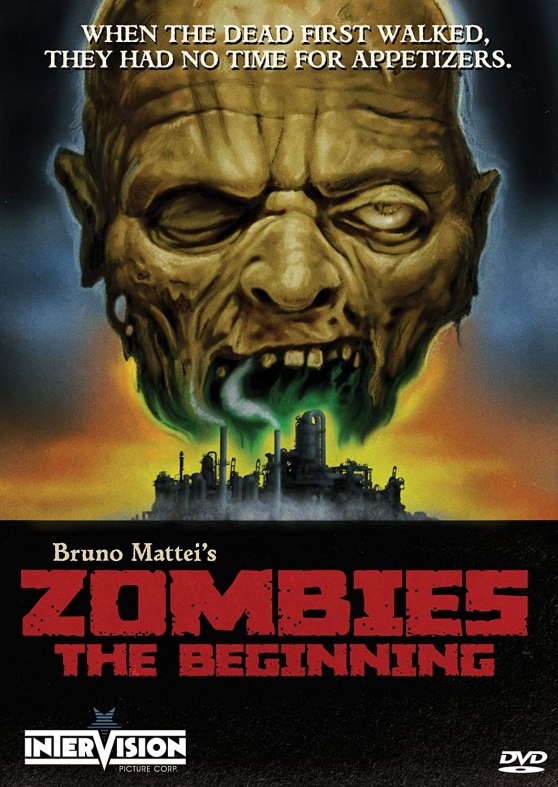
Ed: By the 2000s his budgets were slashed so much and he was shooting on digital video. So the last few movies he made – The Jail: The Women’s Hell, Zombies: The Beginning, The Tomb, In the Land of the Cannibals – it wasn’t even like the old days for him. 

When it comes to Turkish films, during the Yeşilçam period from the ‘50s through the ‘80s, music was something they’d also straight-up lift from elsewhere. How are you going to get composers to write new music and orchestras to record that music for all of the hundreds of films that they had to do that year and for no money? Why not just grab from your personal library of soundtrack LPs and score the film with those? There’s was no law saying you couldn’t.
B&S: I find it really interesting that people look down sometimes on these movies and decry them as rip-offs and unlike in hip hop, where sampling is accepted.

Ed: I couldn’t really venture much of a guess as to why that is beyond the fact that as long as the sampling falls within legal boundaries, you know, we think that that’s okay.

In our next chapter, we’ll get into where Santo fits in amongst world cinema, post-apocalyptic film and how sharks lend themselves to great remake and remix movies.

You can get Ed’s book, How the World Remade Hollywood, from McFarland Books. To see some of these movies and hear from Ed, check out Deja View: Remakes and Rip-Offs of Your Favorite Films.
CANNON MONTH: Under Cover (1987)

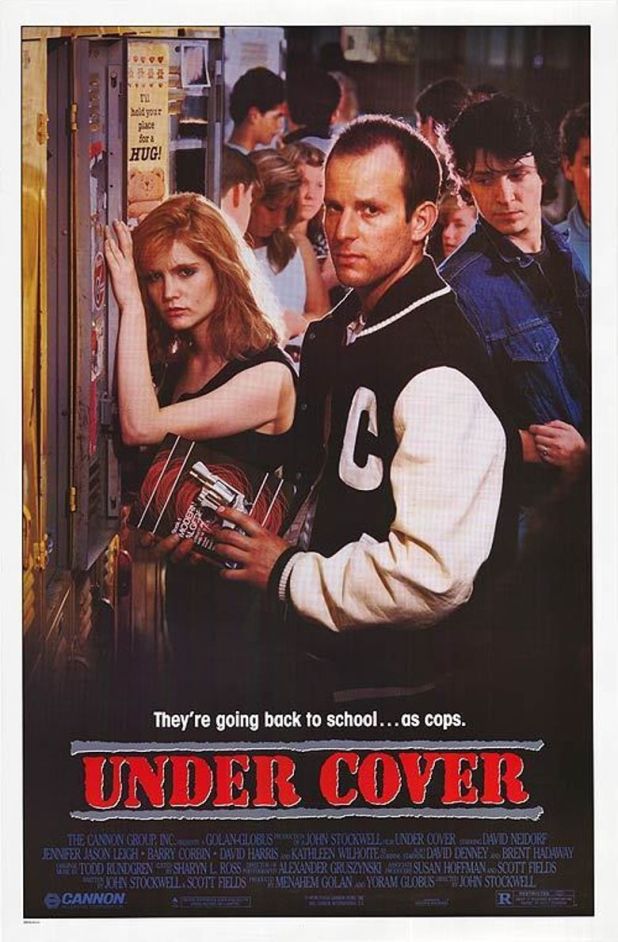
If you wonder, am I watching Dangerously Close, I understand. In a moment of meta deja vu (meta vu?) director and writer John Stockwell can be seen being seen by police protagonist  Sheffield Hauser (David Neidorf), who is watching that movie. And Stockwell co-wrote that one with Scott Fields, who came back for this movie.

Weird, right?

This school is also like some kind of pre-21 Jump Street, as Sgt. Irwin Lee (Barry Corbin) and Tanille Laroux (Jennifer Jason Leigh) are also working undercover to stop the drugs in the classrooms.

I was pretty happy to see Kathleen Willhoite in this. While she doesn’t deploy the stellar vocabulary that she used in Murphy’s Law, she doesn’t make Hauser’s life easy at the police station. There’s also a soundtrack by Albert Lee and Todd Rundgren, so Under Cover has that going for it.

I did learn that cocaine is also called booger juice from this movie.

KINO LORBER BLU RAY RELEASE: The Apartment (1960)

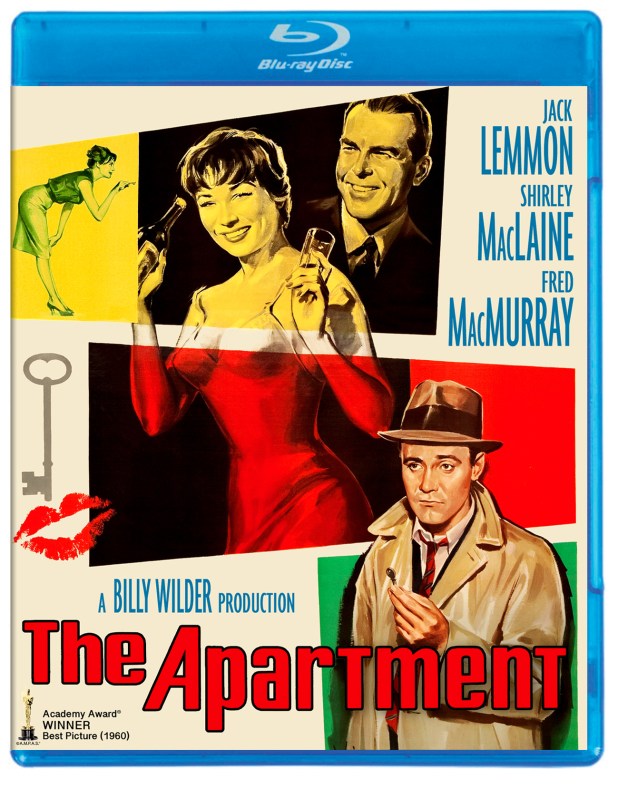
The Apartment is astounding because it makes me consider how we view actors based on where we arrive in reality. For me, Fred McMurray is the kind Steve Douglas from TV’s My Three Sons. For those born before 1960, they probably saw him on that show and wondered how the heel from Double Indemnity and The Caine Mutiny could be trusted around three growing children.

In Billy Wilder’s The Apartment, he’s Jeff Sheldrake, a man who uses everyone he meets, like lonely C.C. “Bud” Baxter (Jack Lemmon) for his apartment and Fran Kubelik (Shirley MacLaine) for her body, uncaring when he pushes both of their to the pit of depression and even a suicide attempt by Fran.

Bud is willing to let the rest of the world see him as the villain, as every executive — Ray Walston is one of them  — uses his home to have dalliances with his secret lovers while he drinks in bars, dreaming of taking home a married woman when all he really wants is the kind of secure love that allows you to sit happily on the couch next to one another and play cards.

There’s also a genuine sadness at the heart of this movie, as Wilder and co-writer I.A.L. Diamond based the film on reality, as high-powered agent Jennings Lang was shot by producer Walter Wanger for having an affair with Wanger’s wife Joan Bennett. Lang had used a low-level employee’s apartment for the affair, just like the film. Diamond also contributed something that had happened to a friend, who returned home after breaking up with his girlfriend to discover that she had committed suicide in his bed.

Back to McMurray. After this was released, women yelled at him in the street, complaining that he had made a filthy movie. One even hit him with her purse. I guess that was the Twitter of 1960.

This may be the best awarded movie we’ve talked about on this site, as it won Best Picture, Best Director, Best Screenplay, Best Art Direction and Best Film Editing at the 1960 Oscars. Jack Lemmon may not have won Best Actor, but when Kevin Spacey won that award in 1999 for American Beauty, he dedicated his Oscar to him, as Sam Mendes had the cast watch this movie for inspiration.

Since then, The Apartment has been remade as a musical (Promises, Promises, which played in 1972 and was revived in 2010) and as two Bollywood movies, Raaste Kaa Patthar and Life in a… Metro.

The amazing thing is that 62 years after this movie was made, it reduced me to tears. It pulled me in and made me care about every single character, even the villain, and the closing scene — and that last line! — absolutely devastated me.

You can get The Apartment from Kino Lorber either on blu ray or 4K UHD. You’ll also get two different audio commentary tracks, one by Joseph McBride, author of Billy Wilder: Dancing on the Edge and the other by film historian Bruce Block. There’s also a documentary about the making of the film and another about the art of Jack Lemmon, plus a trailer.

CANNON MONTH: Death Wish 4: The Crackdown (1987)

EDITOR’S NOTE: We originally wrote about this movie during Death Wish week on November 7, 2018. This article has been updated and added to since then.

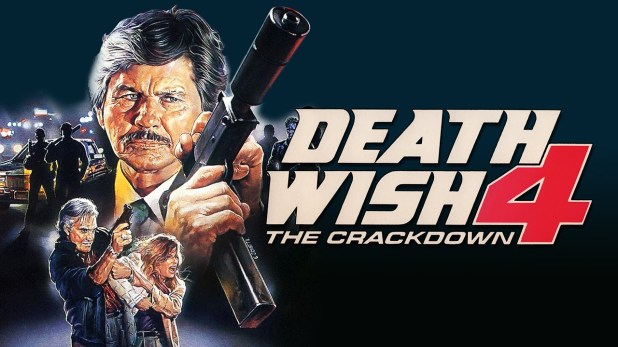
Where do you go after the utter lunacy that is Death Wish 3? Well, you replace Michael Winner with J. Lee Thompson, who was the director for The Guns of Navarone, the original Cape Fear, the slashtastic Happy Birthday to Me and The Reincarnation of Peter Proud amongst many other films. He’d already worked with Bronson on 10 to Midnight, Murphy’s Law and The Evil That Men Do and would also direct Bronson in Messenger of Death and Kinjite: Forbidden Subjects after this movie wrapped. In fact, counting St. Ives, The White Buffalo and Caboblanco, they’d work on seven movies together.

Paul Kersey hasn’t learned anything from the last three movies. He has a new girlfriend, Karen Sheldon (Kay Lenz, The Initiation of SarahHouse) with a teenage daughter named Erica (Dana Barron, the original Audrey from National Lampoon’s Vacation) that you shouldn’t get to know all that well. That’s because — surprise! — she overdoses thanks to her boyfriend and her getting into crack cocaine and doing it an arcade. If you’re shocked that a Death Wish movie would prey upon the worst fears of America’s middle class, then you may have watched the last three films too.

Paul loved that girl like his own daughter, probably because she wanted to be an architect like him and also possibly because he hasn’t yet learned that the moment that he says something like that, tragedy is right around the corner. Honestly, the main message of the Death Wish films is that God hates Paul Kersey, will not allow him to die and will wait until he finds happiness again before visiting upon him great suffering, only for the cycle to repeat.

The night she died, Paul saw Erica smoke a joint with her boyfriend and was already suspecting the young dude, so he follows him back to the arcade the next night. That boyfriend confronts Jojo and Jesse (Tim Russ, Commander Tuvok himself!), two of the dealers who sold them the crack cocaine, and threatens to go to the police. This being a Death Wish film, they kill him pretty much in public. That murder unlocks the ability for Paul to start killing again, so he shoots Jojo and launches his body on to the top of bumper cars, where he’s electrocuted. No one dies in a Death Wish movie without a flourish.

Meanwhile, Paul gets a call from tabloid publisher Nathan White (John P. Ryan from It’s Alive), who knows that he’s the vigilante. His daughter had also become addicted to drugs and died, so he knows what Paul is going through. The storyline becomes pretty much like The Punisher’s first mini-series where The Trust paid for him to wipe out crime, as White funds Paul’s one man war against drugs while his girlfriend starts writing an expose on the two rival gangs in town.

To cut down the budget in this movie, when Paul and Nathan meet in the movie theater, that’s Cannon’s screening room.

One of those gangs is led by Ed Zacharias (Perry Lopez, Creature from the Black Lagoon) and the other is commanded by Jack and Tony Romero. Two LAPD officers, Sid Reiner and Phil Nozaki are also on the case, trying to figure out who killed the drug dealers at the arcade.

This is the first Death Wish film where Paul feels more like an urban James Bond than a fed up war vet. Trust me, he gets even more gadgets in the next one. Here, he uses his skills as a master of disguise — he has none — to dress as a waiter and serve a party at Zacharias’ house. The birthday cake is…man, let me just show you the birthday cake.

After witnessing the drug lord kill one of his guys who stole some cocaine, he’s ordered to help carry out the body. Soon, he’s killing all of that drug dealer’s men, including three guys in an Italian restaurant with a bomb shaped like a wine bottle. Look for a really young Danny Trejo in this scene!

After all that mayhem, Paul also starts wiping out the Romero gang one by one, including breaking onto a drug front and blowing it up with a bomb. Yet Nozaki ends up being on the take for Zacharias and tries to kill our hero and you know how well that works out. Now Paul looks like a cop killer, too.

In the stuntman piece de resistance of this one, the two drug lords are lured into an oil field shootout where Paul kills Zacharius with a high-powered rifle, instigating the fireworks. Nathan comes out to congratulate Paul, but sets him up with a car bomb. It turns out that the Nathan that Paul has met is a third drug lord (!) who set him up to take out all the competition. Then, two fake cops arrest Paul and take him downtown, but they’re really just trying to kill our hero. Again, you know how well that works.

The film ends with Detective Reiner searching for Paul out of revenge for his partner’s murder, the third drug lord kidnapping Paul’s woman and everything coming together in a parking lot and a roller rink where Paul uses an M16 with an equipped M203 grenade launcher to unleash holy hell.

Only the drug lord survives, holding Karen. She tried to escape and gets shot numerous times with a MAC 10 submachine gun. He tries to kill Paul but he’s out of bullets. Paul may be, but he still has a grenade, which he uses to blow the villain up real good.

The film closes with Reiner coming and ordering Paul to surrender and threatening to kill him if he walks away. “Do whatever you have to,” says the old gunfighter as he walks into the sunset.

For all the mayhem and madness throughout this film — keep in mind our hero just used an explosive device to decimate another bad guy just seconds before — this is a poignant ending. But of course, Paul — whether he wanted to use the new last name Kimble he came up with in this film or Kersey — would be back one more time.

Bronson made $4 million for this movie and in my opinion, he should have asked for more.