Jigoku Kôshien (2003)

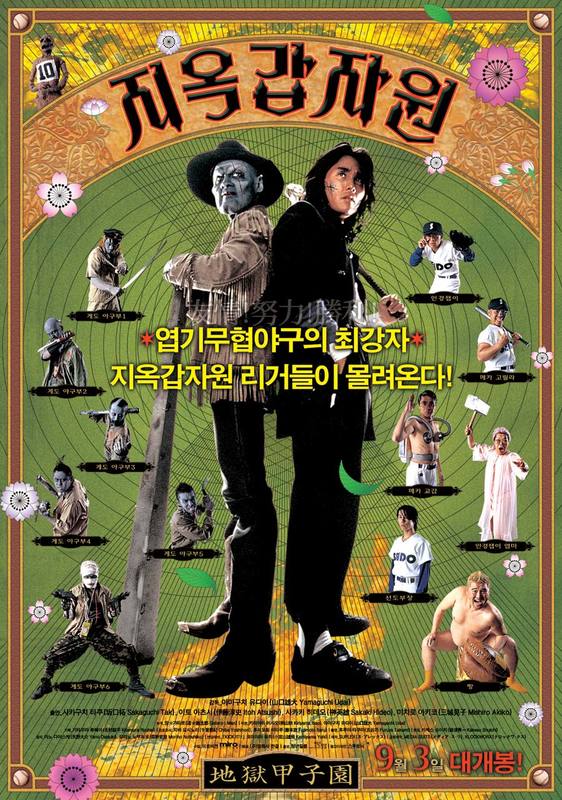
Jigoku Kōshien means Hell Kōshien or as we refer to this movie in America, Battlefield Baseball. It’s based on the manga by Gatarō Man, who also wrote this movie, and it tells the story of Seido High School and their baseball team, which finally has a chance to play in the Koshien Stadium Tournament for the first time in decades.

The only problem is that the Gedo High School stands in their way and their team doesn’t leave the field until they kill everyone on the other side.

The story revolves around Jubeh, a pitcher so dangerous that he killed his father while playing catch and therefore has vowed to never play baseball again. But when he’s killed by an explosion cause by the Gedo team, he goes to Heaven, meets his father and gets the inspiration to come back to Earth and play high school baseball.

Yūdai Yamaguchi would go on to direct plenty other strange movies like Meatball Machine and this film’s spiritual sequel, Deadball, which continues the story of Jubeh Yakyu.

Let me say it now once and for all: baseball would be so much better with cyborgs, senseless violence and people being brought back by the tears of a juvenille delinquent.

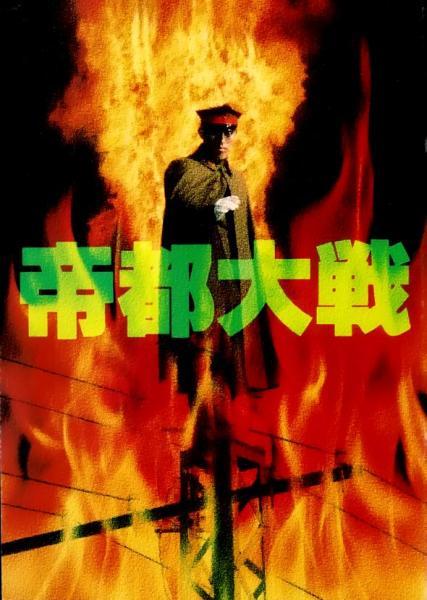
Tokyo: The Last War (1989)

Teito Monogatari (The Tale of the Imperial Capital) was the first novel to popularize onmyōdō — a system of natural science, astronomy, almanac, divination and magic that developed independently in Japan based on the Chinese philosophies of yin, yang and the five elements — and fūsui mythology – Japanese feng shi of the energy flow and exchange both within and external to our bodies — in modern Japanese fiction. It’s also written by natural history researcher and polymath Hiroshi Aramata and re-imagines the 20th century of Tokyo as influenced by the occult. It also has ties to mythology and the story of Taira no Masakado, a 10th-century samurai warlord who has since become something of a demigod thanks to his stand against the central government. However, his malevolent spirit must constantly be looked after and as such, the cities of Edo and Tokyo have felt a debt to keep him happy even a thousand years after his death. His shrine remains well-maintained, even as occupies some of the most expensive land in the world and faces Tokyo’s Imperial Palace.

A sequel to Tokyo: The Last Megalopolis, this is an adaptation of the eleventh book (Great War in the Capital) in the series. In its center, we discoer Yasunori Katō, a mysterious former lieutenant of the Imperial Japanese Army, killed twenty years ago but just like Taira no Masakado he’s become a vengeful oni. Yet he is devoted to the destruction of Tokyo*.

There’s also an anime adaption called Doomed Megalopolis.

In 1945, American forces are unleashing bombs over Japan and to stop this, the Buddhist shaman Kan’nami Kouou has been given the mission of cursing the Allied leaders through magic, but that’s when the innocents killed in the war combine their souls and reincarnate Yasunori Kato, who wants the war to continue and Tokyo to finally be destroyed, and must battle the psychic Yuko Nakamura, who is empowered by the love of a nurse, Yukiko Tatsumiya, who was abused in her youth by Kato.

Obviously, a multi-book epic that draws on centuries of Japanese history is not going to be an easy watch for American audiences. That may be why the second adaption of these stories stays away from the more occult-based magic and sticks to ESP and psychic powers.

And yes, M. Bison from Street Fighter was based on Yasunori Kato, as well as Eagle Cape from Riki-Oh

*The movie is different than the book, where Kato is still alive and never destroyed. The target of his spiritual assassination is not Hitler, but Franklin Roosevelt, who is cursed with polio which allows Truman to become President and drop the bomb on Tokyo.

Onechanbara: The Movie (2008)

Based on the Onechanbara series of fighting games that were part of D3 Publisher’s Simple 2000 series, it’s pretty amazing that this movie transcends the budget origins of the video game that inspired it.

Aya has a katana sword and a bikini and is somehow incredibly gifted when it comes to killing zombies, which have been brought back from the dead by Dr. Sugita and her sister Saki, who is responsible for killing their father. So she brings along her sidekicks Katsuji, and the gunmistress Reiko to stop the undead and kill her sister.

If this was a practical effects movie filled with spraying blood I’d probably like it even more than I do. But the CGI blood and effects wear on you after a while and you start to wonder, how can a movie with a sword-carrying bikini-clad female warrior against the living dead be so boring?

You can watch this on Tubi.

Hentai kazoku niiduma inran zeme (2005)

Hentai Family New Wife Nasty Attack is a great movie title but Semen Demon? That’s the kind of title that gets me watching whatever this is.

Reiko Yamaguchi, who was the star of the Wife Next Door films, has just gotten married and it seems like everyone in her new family is so possessed that they’re acting like Sonny and Patricia in Amityville II: The Possession.

What does it say about me when I do a week of Japanese movies and I could have featured Kurosawa, Imamura or Mizoguchi and instead, I’m writing about Semen Demon?

This movie does have something to say about the futility of war and how Japan’s soldier spirit faltered in the face of nuclear fire, but cursed its children to labor under archaic notions of sexual morals and now, even a simple home is cursed by a demon who demands that every man in the home becomes obsessed to the point of horrifying debauchery. Or maybe it’s just a Japanese AV movie that has a ghost couple doing it — proving the Donald Trump-starring movie Ghosts Can’t Do It incorrect — and has a woman who misses just how pent-up her husband and father-in-law once the problem is solved.

What’s wrong with me?

One Cut of the Dead (2017)

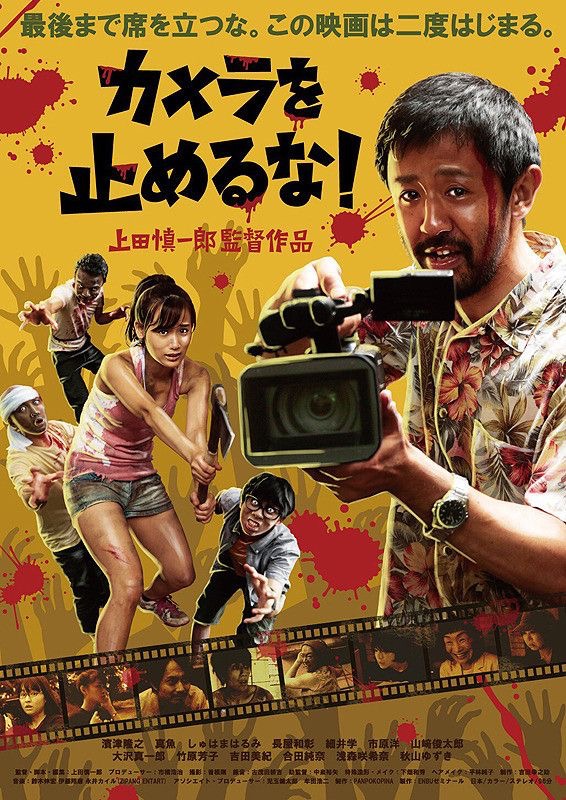
Kamera o Tomeru na! (Don’t Stop the Camera!) features a 37-minute-long continuous shot that took six takes and makes the entire movie. In fact, as boring as zombie movies have become, One Cut of the Dead makes me forget just how bad things have been the last few years.

Like a charming animal-destruction free version of Cannibal Holocaust, the movie has three different ways that the story is told, changing with each new telling of the tale. Higurashi, the director, is losing money and needs to finish his film, but he hates how it kooks. So he makes a blood pentagram that activates real zombies that start biting his crew and actors while he keeps screaming for them to keep shooting, no matter what.

And honestly, if I tell you anything that happens after the actress Chinatsu kills him and stands inside the pentagram in a trance, it will ruin what was one of the best movies I’ve seen in some time.

This small movie went on to earn a thousand times its budget. That’s incredible and if a film is deserving of that success, it’s this one. You can check it out on Shudder.

In the Realm of the Senses (1976)

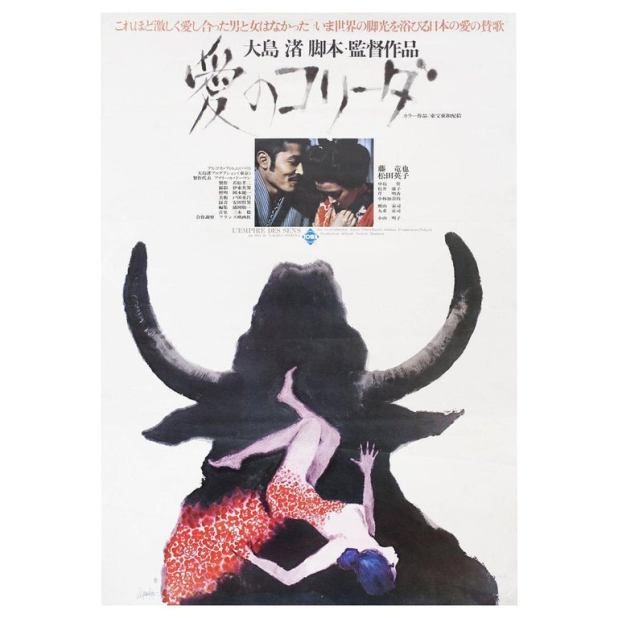
Sada Abe (Eiko Matsuda) is a former prostitute who now works as a maid in a hotel, where she falls for the owner, Kichizo Ishida (Tatsuya Fuji), an affair that starts simply with non-stop sex and continues to become an obsession, as she doesn’t want to share him even with his wife. Soon, their love games include strangling one another during sex and her holding a knife to his manhood, saying that she’s going to take it with her. Well, that’s exactly what happens, as she accidentally kills him while they make love and takes his member with her, walking with it inside her before she’s arrested.

Directed and written by Nagisa Ōshima, who also made Merry Christmas, Mr. Lawrence, this is a rare mainstream film that doesn’t shy from unsimulated sex, made in a culture that even hides the mere glance at female genitals. It was made in France, while in Japan, it was fogged and blurred so that it could appear in theaters.

Eiko Matsuda had worked in sexploitation films but was never treated as harshly by the public as she was when this film was made, finally moving to France and ending her acting career. Society remains unfair, as her male partner in the movie, Tatsuya Fuji, regained his career after two years.

This was based on a true story and Sada Abe did not fade from the world after serving five years of her six-year sentence even though she asked for the death penalty. The police record of her interrogation and confession became a best-selling book. Over the next few years, the public perception of her moved from a pervert to someone who murdered for love. She acted in a traveling show and worked in a bar in downtown Tokyo for twenty years before appearing in Teruo Ishii’s documentary History of Bizarre Crimes by Women in the Meiji, Taishō, and Shōwa Eras. When  Oshima tried to find her before making this movie, he learned that she was in a nunnery, yet most reports claim that she disappeared.

Hoero Tekken (1981)

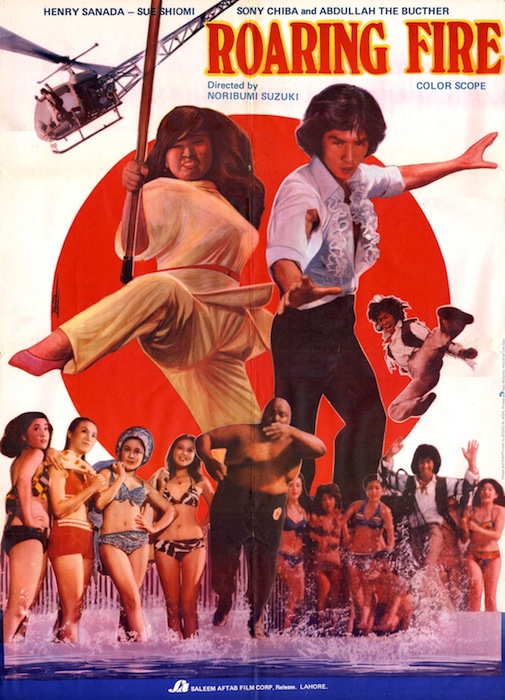
Roaring Fire is everything wonderful and perfect and wild and needed in movies. It truly is the very thing that keeps my brains moving, that makes me keep loving film, that says to me that there will always be something new to discover and I ask you, please start your own search for the movies that will blow your mind and share them with the world.

Director and co-writer Norifumi Suzuki also made School of the Holy Beast, a Japanese nunsploitation movie which makes my mind scream in the most perfect joy sounds that can’t be translated into sound, ten of the Torakku Yarō movies and The Great Chase, which is a lot like this movie in that it’s a delight.

Just as we watch the mob execute Toru Hinoharu (Hiroyuki Sanada) in Hong Kong, we also discover that he has a twin, a Texas cowboy named Joji Hibiki (also played by Sanada), who learns that his father is dying and that he was kidnapped eighteen years ago and must come back to Japan to meet his sister and twin brother, who we just watched get shot.

Joji is in Japan for just a few hours when his monkey Peter — yes, the hero has a pet primate — pulls off a girl’s bikini top and that leads to Joji fighting Spartacus, who is Abdullah the Butcher, and at this point, there’s no way I could dislike this wild film. As these things happen, the battle gives the two some mutual respect and as Joji has just had his wallet stolen, he’s soon off on an adventure to find it.

After his uncle Ikeda Hinokaru (Mikio Narita) finds him, our hero meets his sister Chihiro (Etsuko Shihomi, Sister Street Fighter) who can use sound and wind to fight like Zatoichi. He also meets a ventriloquist named Mr. Magic (Sonny Chiba) who uses his puppet to inform Joji not to trust his uncle who soon proves that he’s evil by sending an American boxer and a staff fighter to smash him after he overhears his plans.

Man, this movie feels like the best video game you never played, with German soldier-dressing evil women with whips sending our hero into gas-filled chambers that drive men insane before being defeated by a well-thrown monkey, ninja gangs, bad guys bad enough to shoot heroic women up with heroin, numerous heroic sacrifices and an ending chase that takes up the entire last third of the movie, with Joji not stopping, walking through gunfire, multiple martial arts experts and end boss after boss before throwing a tomahawk at a helicopter, punching a diamond through a man’s eye and then learning how magic can defeat handcuffs.

New Line Cinema released this movie in the United States in May 1982 and changed Hiroyuki Sanada’s name to Duke Sanada. I wish I had seen this when I was ten years old because I would have literally lost my entire ability to speak, walk and display emotions.

You may never want to watch another movie after you see this. It’s that good.

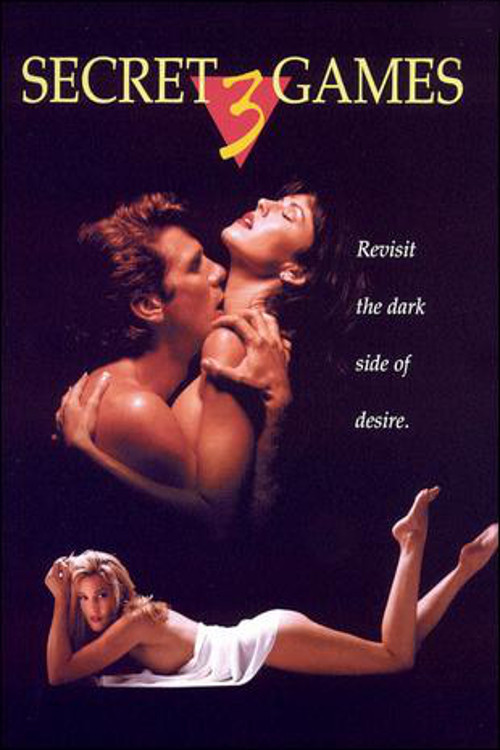
GREGORY DARK WEEK: Secret Games 3 (1994)

A bored housewife feels neglected by her physician husband — yes, I realize that this is the plot of every Gregory Dark movie that I’ve written about this week — and decides to work at a brothel. Rochelle Swanson is pretty decent as the lead, Diana Larson, and her sister Brenda is in this as well. Of course, you know what happens by now. She has a client that won’t let her quit and taking a bite out of that forbidden apple ends up with a worm.

Terrell is the psycho coming after her and it’s a role that Woody Brown also did in Animal Instincts II for the director.

However, here’s what takes me out of the story: what man — Dean Scofield plays the husband and he’s fine, but no heartbreaker — would ignore Rochelle Swanson in favor of his job? I mean, when I was a kid I could never figure out why Al Bundy ignored Peg, who pretty much looked like more an ideal woman to me than any of the girls who strutted out and got the studio audience in whooping fits. This is even more extreme, but that’s Hollywood.

It’s still amazing that Wally Pfister shot this movie before he started working with Christopher Nolan. I mean, you get work where you can and build your resume. He’s got the soft focus thing right on this.

So anyways, here’s a confession: when I first moved to college, my goal was to finally see a Dark Brothers movie after reading about them in Hustler. Luckily, there was a video store close to my off campus housing and one day, I got brave enough to go in back and grab two films: Dark’s New Wave Hookers 2 and John Leslie’s Curse of the Cat Woman. What had helped was that the store was owned by a college student who ran the store in-between classes. I didn’t know that when he did have a class, his grandmother came in to run the store. So I go in, guy my age. Come out, an older distinguished woman who proceeded to lecture me about being a pervert.

You kids and your internet.

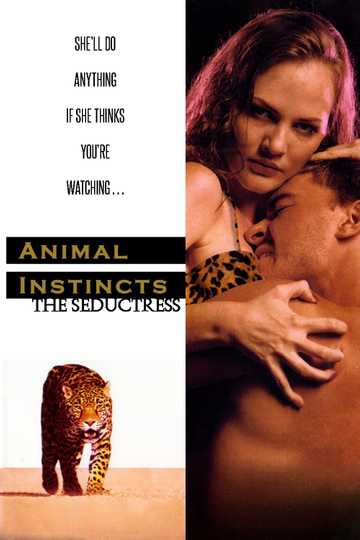
GREGORY DARK WEEK: Animal Instincts III (1996)

When Joanna Coles falls for blind rock promoter Alex Savage she finds the man who satisfies her desire for experimentation, as he’s a voyeur. But he’s also blind. Can I Do It Until I Need Glasses?

Oh yeah. He’s also a blind knifethrower.

There’s also some music industry ridiculousness — director Gregory Dark would know, seeing as how he directed videos for everyone from Sublime to Britney Spears — and lots of the voodoo masks and rituals that made up so much of the look of Dark’s even dirtier films.

But the most charming thing about this movie is that it was written by Selwyn Harris, whose name combines the Selwyn Theater on 229 West 42nd Street and the Harris Theater on 226 West 42nd Street, a man who also wrote The Devil in Miss Jones 5: The Inferno for Dark. And, in case you didn’t know, Selwyn was really Mike McPadden, perhaps the finest writer on not only 42nd Street, but heavy metal movies, teen movies and just life.

Sadly, Mike is no longer with us, but the books and movies and words he wrote are. He was a major inspiration to me, so seeing his other name appear in the credits made me so overjoyed.

Mike told The Daily Grindhouse so much about this movie: “Greg was a nut. He was a dear friend, a terrific talent, a great guy to work with, and, very much, a nut. At the time we started Animal Instincts III, Greg was heavily into hip-hop music and had expanded his intense martial arts regimen to include knife fighting. So his ONLY instructions to me were: “Make sure the movie has hip hop music and knife fighting.”

And thus the plot centered on a record producer who was an expert knife thrower. The fact that he was supposed to be blind, too, plays into the challenge of showcasing new variations on the oldest form of human interaction. When his wife fucks people in front of him while thinking he can’t see, it adds a deeper component to her exhibitionism and his voyeurism — in theory, at least. The finished movie is an apocalypse.

As a porn screenwriter, both hard and softcore, the sex scenes function as the posts from which the whole rest of the movie hangs. Like haiku, you can write whatever you want, as long as it fits into the form’s singularly defined structure.

One of the movies I wrote for Greg, Devil In Miss Jones 5: The Inferno is great. The rest meander from one near miss, Sex Freaks, to a couple of negligible efforts. Animal Instincts III stands alone as gloriously horrendous.”

Thanks for so much Mike. You still make me laugh and still will, long after you have been gone.
7 SHARP (2021)

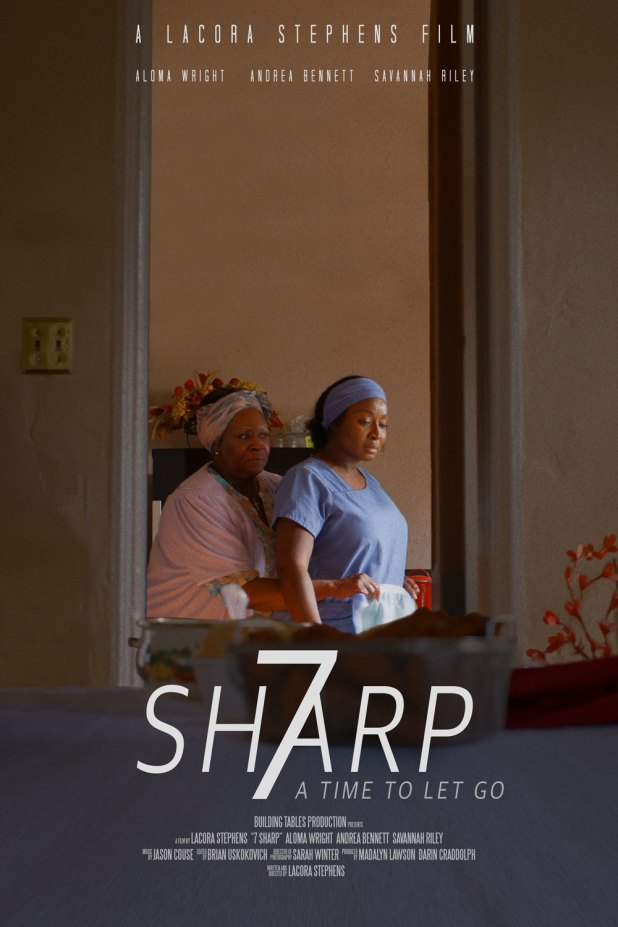
Dark family secrets. The kind that no one wants to discuss, the ones that change and color every holiday from times to make memories to occasions that make one dread every exchange, eggshells strewn amongst the gathering.

Gammy (Aloma Wright, Scrubs) and her daughter Charlene (Andrea Bennett) have one of those secrets to deal with. And this movie gives a unique look into — in the filmmaker’s words — “how the black experience sometimes deals with secrets and trauma.”

So how do you break a cycle? Is it through more violence? More deceit? Subterfuge?

And what does mixing the perfect glass of lemonade have to do with all of this?

Director and writer LaCora Stephens has done what every short should: tell enough of the story to leave you wanting more, hungry for what happens next, interested by where these characters go next.

You can learn more about this movie on the offical site.