Painkiller (2021)

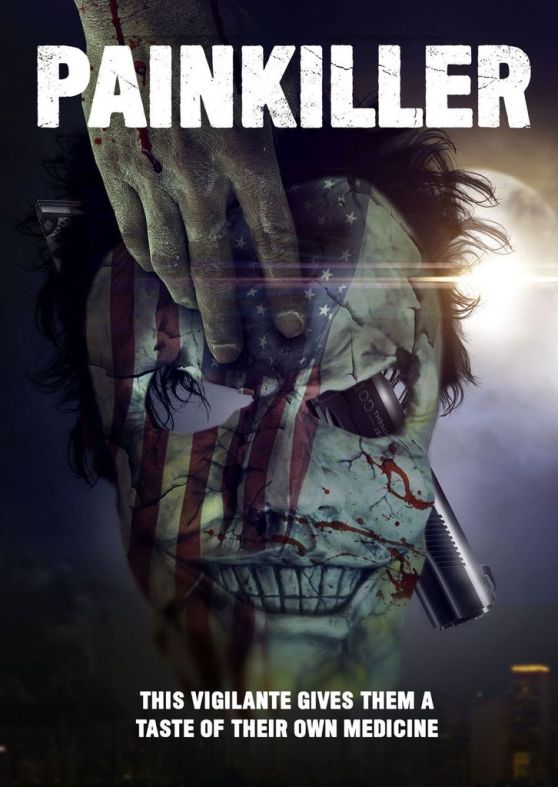
Bill Johnson (Bill Oberst Jr.) has lost his daughter to an opioid overdose and while his podcast about the epidemic helps him deal with the loss, he still feels like he could do more. Perhaps something like wearing a mask and becoming a vigiilante out to violently stop the sale of pills? That seems like a plan.

Director Mark Savage — who co-wrote this with Tom Parnell* — makes a lean and mean Death Wish for today out of this movie. It’s tightly edited and pulses with energy, never outstaying its welcome. Some may be put off by the heavy messaging in the movie, but it definitely believes in its subject matter. That’s because Parnell lost his daughter to a opioid overdose, so you can completely understand his mindset here.

What also helps make this movie better than expectations are its stars. Michael Paré is a long-time favorite and, as always, he brings something extra to his role. And Oberst knows how to play the damaged hero quite well. This could have been simple wish fulfillment, but boh actors add a gravitas to this film that take it a step above.

*They’ve worked together to make the movies Purgatory Road and Stressed to Kill as well, the latter of which features Oberst’s character killing people to keep his blood pressure down. Plus, it has Armand Assante in it! Painkiller was originally called Stressed to Kill: Doctor’s Orders, so it is a spiritual sequel at the very least.

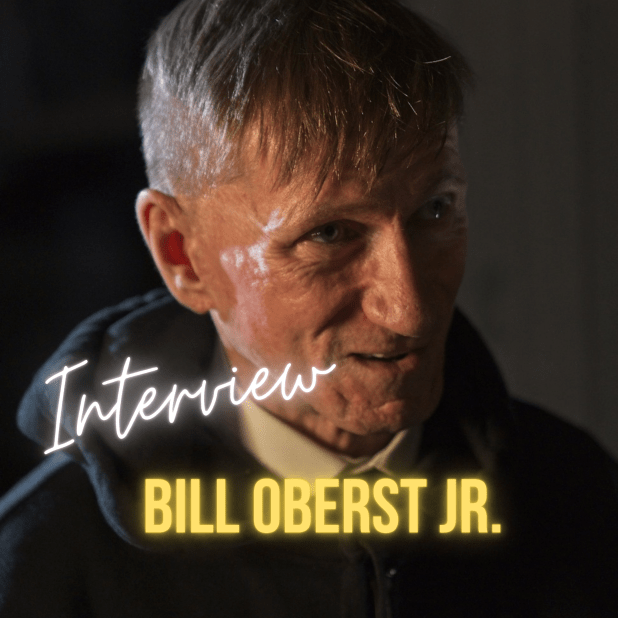
Painkiller is available is available on demand and on DVD from Cinedigm. Look for our interview with Bill Oberst Jr. to learn more. We’ve also reviewed Bill’s work in Devil’s Junction: Handy Dandy’s Revenge (2019) and The Good Things Devil’s Do (2020).

Interview with Bill Oberst Jr. — star of Painkiller!

We had the opportunity to have a few moments with Bill Oberst, Jr., the star of the recent release Painkiller. He has a great resume of theater and film parts, but most know him from his horror appearances in movies like Abraham Lincoln vs. Zombies3 From Hell and Lifechanger. We had a blast connecting with him and came away with even more respect for the man and his acting ability.

B&S ABOUT MOVIES: You’ve played some amazing roles. If you think about it, you’ve pretty much played some of the most important people in history between JFK, Lincoln, Jesus, General Sherman and Lewis Grizzard. What kind of head trip is it to play those major historical roles?

BILL OBERST JR.: It’s pretty tough. What I learned to do to play these people is that some of them still have objects in this world. Their families or their estates will give me shoes or glasses or a notebook or some part of the person. So I look at this stuff and I realized, that’s all we leave behind. Stuff. And, of course, ideas, words and the emotions that move on through the people we love.

These people are really famous and those emotions run through a much larger group of people. The way I approach their struggles is through their words, particularly people like Lincoln and Kennedy and Twain. Even Jesus, without the words that they left behind, it’s just a faint memory.

All of that makes me really careful about the words that I say and what I’m leaving behind. And then, if you have a script, you may have words to say. But when there’s no script and I’m just playing these famous roles, you have to be really careful and really intentional.

And that makes me think about my life. I want to be really intentional about what I say and leave behind!

B&S: Amongst these famous roles, what’s your favorite?

Bill: There are two, one on stage and one on screen. The one on stage is Jesus because of that experience of being in churches of every denomination, and in theaters, where some people who have no religious beliefs and still listen to the words of Jesus, and they say, “Wow. It’s kind of cool.”  It cuts across all those and that was astounding.

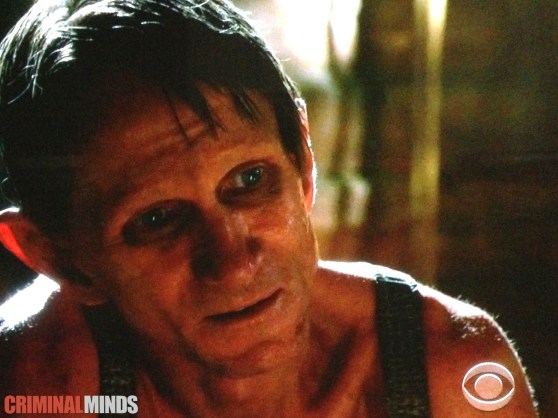
My favorite thing I’ve ever done on screen was Criminal Minds*. Because the makeup artist** had worked with Tarantino and he was even the groom in Kill Bill. And he got it, he said to me, “Let’s make your character something like Lon Chaney Sr. would have played, the wounded monster.” And the director was into it as well, so they let me create this beautiful but dangerous monster who had been made that way by the way people treated him. I had the prosthetics and a hunchback and got to do the character like a classic horror villain. Plus, I got to put barbed wire around Adrienne Barbeau’s neck!
B&S: Every actor has their dream role. What’s yours?

BILL: Phantom of the Opera, but it doesn’t have to be at the opera! The base dynamic of that role and what I like about it so much is that Eric was born that way. I hate it when movies have to have an excuse that his face is that way. Someone threw acid in his face and thats why he’s like this or he was burned. And the point of the novel is, he was born a monster, he was a freak at birth and his father would never look at him. His mother turned her face and they have him a mask before selling him to a traveling carnival. That’s how he became what he was, a magician and an outcast from society.

So I really want to play that role. I keep telling young directors that the story is in the public domain and it doesn’t have to be set at the opera. Just take the dynamic and put it somewhere.

B&S: I mean, they did it in a mall once!

Bill: Exactly! Chaney is the only one who did it with Eric being created that way. And the original ending of the 1925 film had Eric die of a broken heart and they find his skeleton slumped over the pipe organ years later. They played that for audiences and they hated it! You can’t feel sympathy for the monster! So they made the new ending where he acts like he has a grenade and they launch him into the river and everybody’s happy. But that original ending is much closer to what I’d like to do.

B&S: Did you like the Robert Englund take on it? He claims that he didn’t get to do the full vision that he had for the film.

Bill: Yes, I did. And that’s always the case with independent film. You have to make some version of the movie you think you’re gonna make. Because you know, you always run out of money. And you always run out of time. You just do the best you can.
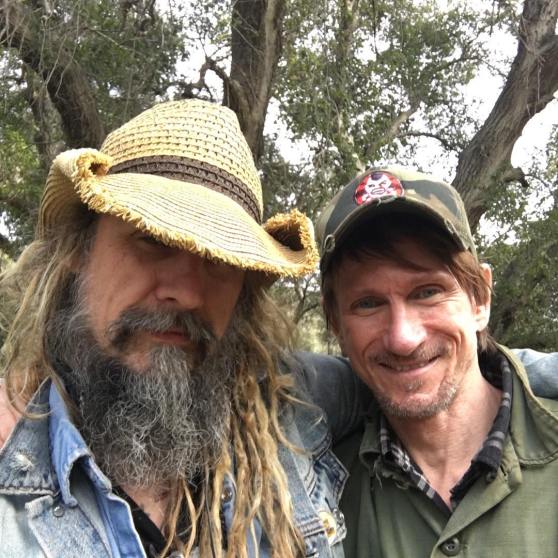
B&S: What’s it like being in a Rob Zombie movie?

Bill: Great. He’s the coolest guy ever because he is really aware of his public persona, but he’s not like that at all. It’s not fake, you know? It’s who he is, but he sets it aside to do his film work.

He was a great director to work with because I wanted to adjust my acting to the way he wanted the role. We were on the way to the set and I asked what he wanted and shared what I thought he was looking for. And he said, “I hired you because I like what you do. I like the wounded animals that you play and that’s what I want you to do. So just take what’s written here and pour it through you. And it’ll be alright.”

I was like, “This guy is brilliant.” He just made me want to please him and give it everything. He’s great with actors.

B&S: Isn’t that why people hire actors? For what they are known for being able to do? It’s like hiring a voiceover artist and making them change their register or read when you hired them for a specific reason.

Bill: I actually started doing animated movie voiceovers during COVID-19, so that’s been fun. And they always want a higher register.

I was talking to my dad and he asked how work was. I said, “Well, yeah, you know, I got this animated thing and I’m a donkey.” He asked me for a bit of it and said, “Well, that was predictable.”

(Laughs) That’s the life of an actor! Everybody tells you what to do. But when it comes from your dad, you need to listen.
B&S: Tell us about Painkiller.

Bill: Painkiller comes from a real-life tragedy. Tom Cornell is the co-writer and executive producer. Plus, he’s one of Florida’s largest accident and insurance attorneys. You can see his face on billboards all over the state. His son was 21 and accidentally overdosed from opioids. So this script comes from trying to work through the pain and it ended up being a revenge fantasy.

It reminds me of Death Wish, the Charles Bronson-type stories, where Bronson does what you would never do but wish you could when you’re angry. Injustice has been done and someone has to pay.

My character has lost a child to accidental opioid death and he’s determined that since the government cannot do anything about it — nobody is doing anything about it — he’s going to do something about it.

It’s a revenge fantasy, just like the other one I’ve done, Stressed to Kill. In that one, the same character is killing people to keep his blood pressure down. If you think about it, when you get upset, you want to kill people and you watch these movies and you’re on the side of the vigilante. And then you think, “This is murder.” But then you get stressed out again and want people to just shut up. So you’re torn. (Laughs)
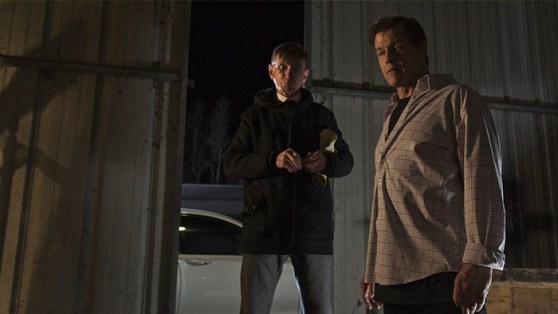
B&S: What was it like to work with Michael Paré?

Bill: Intense! He’s intense! I’m glad I didn’t have a fight scene. He would have beaten the crap out of me. He’s just I mean, he’s got the eyes. He’s got the presence. And he’s so experienced, he even tells the effects guys where to put the squibs on. It was great to work with such a powerful actor.

B&S: It sounds pretty exciting.

Bill: I want to entertain people, but I want to make them think about how long this opioid crisis has been going on and how it started. How did doctors decide to prescribe something that they knew was addictive to kids who had sports injuries? And then they ended up dying, how did we get to this point?

I hope that the movie makes people think about it and talk about it. And you know, think about what we could do to make sure this doesn’t happen again.
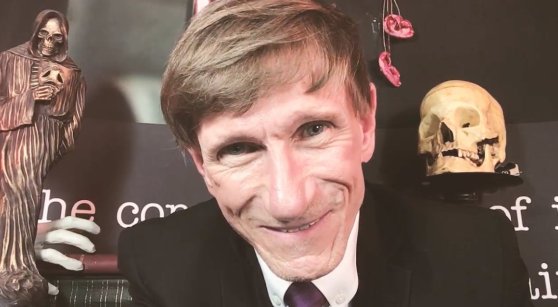
Thanks to Bill for taking time out of his busy schedule to talk to us. You can check him out on Twitter and don’t forget to watch Painkiller.

*Oberst appeared in “Blood Relations,” which was episode 12 of season 9.

**Christopher Allen Nelson
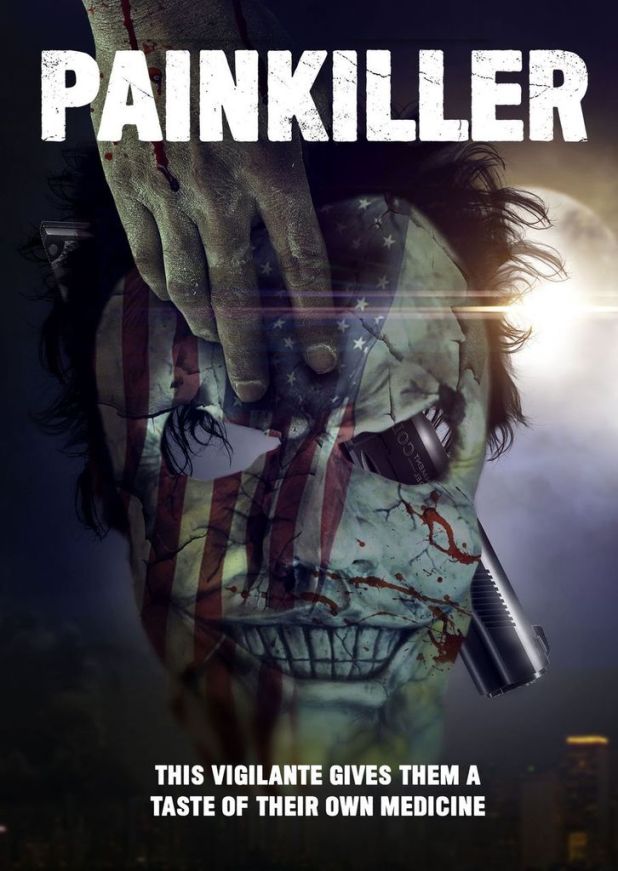
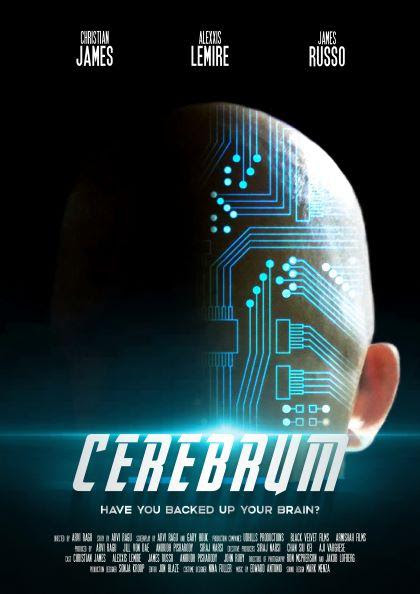
Cerebrum (2021)

Tom (Christian James, Hell Fest) has become a human lab rat to try to make enough money to survive, becoming part of his father’s (James Russo, whose career stretches back to being the robber in Fast Times at Ridgemont High) memory experiment. But when he’s accused of a crime that he can’t recall, he must risk his own sanity to reveal the truth, even if the court has a digital backup of his mind.

Father and son have never gotten along, so one night after an argument, our protagonist wakes up in the yard and, as stated above, suddenly learns that he may have killed his father, who has created a program that can reinstall your memories.

This is the first script that Garry D. Houk has written (he also was part of the film’s art department). It’s also the first full-length movie from director Arvi. And while there are issues with length and the story, it’s not a bad film. It has some great ideas and could have been a bit shorter, but both will be talents to look for in the future.

Cerebrum is available on demand from Glasshouse Distribution. You can learn more on the official website and Facebook page.

Beast Cops (1998)

ABOUT THE AUTHOR: Jennifer Upton is an American (non-werewolf) writer/editor in London. She currently works as a ghostwriter of personal memoirs for Story Terrace London and writes for several blogs on topics as diverse as film history, punk rock, women’s issues, and international politics. For links to her work, please visit https://www.jennuptonwriter.com or send her a Tweet @Jennxldn

Movies like this are the reason I love cinema. Beast Cops is funny, touching, well-acted and perfectly directed.

HK cops Tung (played by Anthony Wong Chau-Sang) and Sam (Sam Lee) are slackers. They are in deep with the triads which basically means they can do whatever they want. The two of them hang out at the clubs and don’t do any real police work at all. Tung has a gambling problem and always seems to be short on cash. Ultra-skinny Sam enjoys womanizing and playing video games while on duty. Life goes on for these two pretty much as it always had until they get a new boss named Mike played by Michael Wong. Mike is part Chinese but was raised in the west and therefore a bit of a greenhorn in the ways of Hong Kong street life. He is also very serious about his job. In the beginning, this causes conflict between Sam, Tung, and Mike but then Tung rents his room out to Mike leading to a cross-pollination of their worlds. The majority of the film chronicles their day to day lives and the progression of the relationship of the three roommates.  Mike gradually gets used to Sam and Tung’s messy ways. He gets caught up with their lifestyle, even going so far as to drop E with them in a nightclub. When Mike meets Madame Yoyo (Kathy Chow), the two fall in love. Unfortunately, she’s the girlfriend of Triad Fai (Roy Cheung) who has fled the country for legal reasons early on. Conversely, Tung and Sam are influenced by Mike’s dedication and become (slightly) better cops.

When Fai returns to Hong Kong, he finds that one of his minions – the aptly named Pushy Pin – has taken over his turf while he was in hiding. When Cheung goes to confront him, the newly ascended Pushy Pin kills him with a really big, scary knife. The fight scenes in Beast Cops are few and far between. The script eschews action for character and relationship development. Fai was very good friends with Tung, who is now obliged to take revenge for him by going after Pushy Pin. To prepare, Tung downs a six-pack of Foster’s Lager and a fistful of pills before embarking on his mission. It is in one of the best “ballistic” performances I’ve ever seen. Of course, Mike and Sam show up to get in on the fun, too. The ending wraps things up so perfectly that it would be a spoiler crime to give it away. Anthony Wong covers a lot of emotional territory in his performance here. His character arc goes from mischievous freeloader to dejected lover to wounded animal all in the span on 90 minutes. He hits every note perfectly. It’s like watching a human symphony playing on screen. Justifiably, Wong won the Best Actor Award in for his performance at that year’s Hong Kong Film Awards.

If my plot synopsis leaves you feeling like this is just another cop film, it’s not. What makes this film so special is all the little moments the characters are given. There are a lot of scenes where the principles just stand around on a street corner talking. They are never boring. Each scene moves the story along and gives the viewer more insight to the lives of these officers. It’s not an action film, so much as a character study with an incredibly violent ending. The first time I saw this movie, I watched again within two days and loved it even more the second time. It is exceptionally rare for an HK cop movie to be this well-written. Every actor is perfectly cast in his or her part. Along with Wong’s award, Beast Cops also won Best Picture, Best Supporting Actor (for Pushy Pin), Best Screenplay, and Best Director (for Gordon Chan and Dante Lam.) It deserved all of them ten times over. Absolute kudos to everyone involved with this wonderful movie!

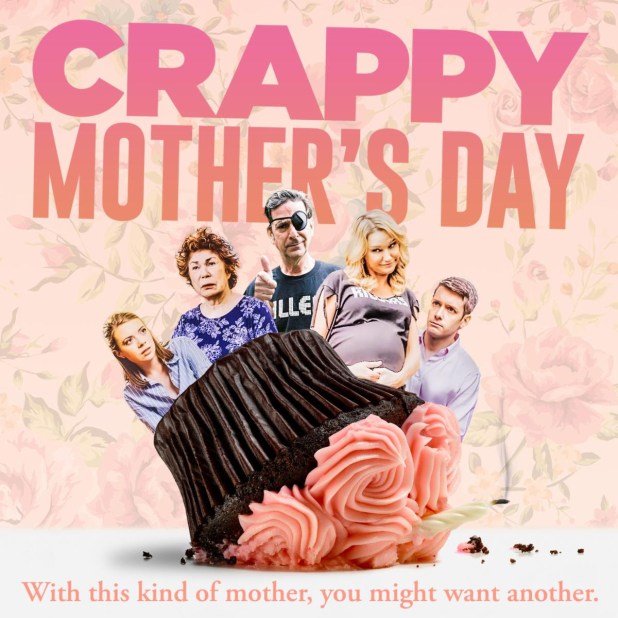
Crappy Mother’s Day (2021)

Sarah and James (Kristen Krak and Addison Anderson) are in love, the kind of love where you start talking about living together. Then, the world that Sarah has built for the two of them falls apart, because her mother, the woman that she’s always told him is dead, just so happens to show up and be completely and utterly alive. Whoops.

Her mother, Totie (Jackie Debatin, who played Elizabeth the Stripper in three episodes of The Office), along with her one-eyed partner Dimpy (Bill Rutkoski, who also wrote this) seem more like children than Sarah. Perhaps even scarier is that Totie is about to have another baby. This reunion brings the entire family — including Grandma (Vivien Landau, Shiva Baby) — for that most matronly of holidays, Mother’s Day.

You can guess from the name of this movie that things don’t go oh so well, right?

Director, producer and editor Dan Karlok is a vet of Law and Order, worked for 22 episodes as a best boy and 44 as a gaffer. He also directed Joan Rivers: Exit Laughing and Sid Caesar: On the Language of Comedy.

Rutkoski brother Mike — who wrote Baby Frankenstein — plays one of the weird uncles, Donny, while another sibling, John, plays yet another uncle named Lenny. This is one out there family, as they’re given to randomly recreating Planet of the Apes as part of their holiday celebration.

We get more horror than comedies sent to us, but if you’re looking for a break from all the mayhem and a funny way to spend the holiday with or without your mom, check out Crappy Mother’s Day, which is available on demand from Uncork’d Entertainment. You can learn more on the official Facebook page.

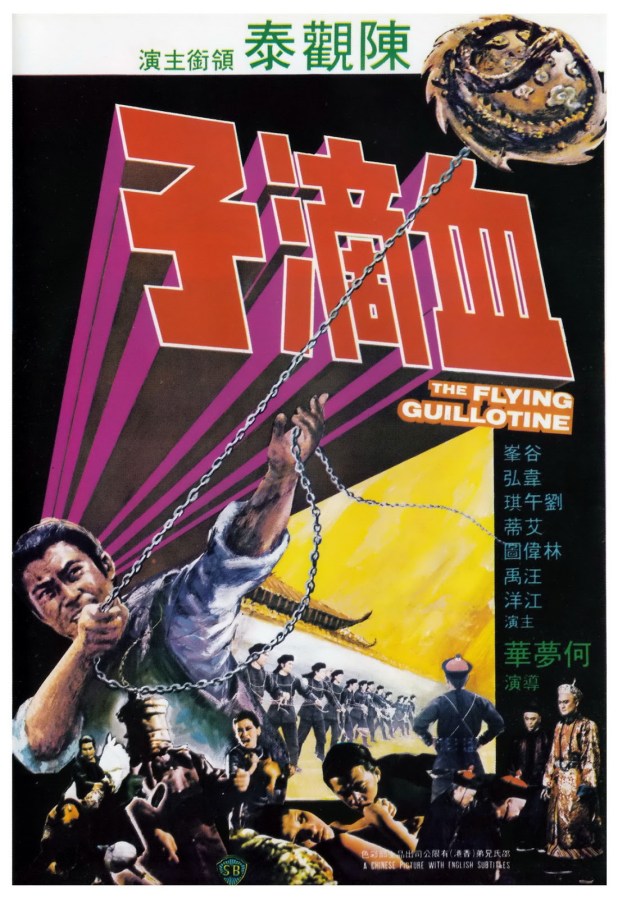
Master of the Flying Guillotine (1976)

You may wonder why this movie is also called One-Armed Boxer 2 and The One Armed Boxer vs. the Flying Guillotine. That’s because it’s pretty much a sequel to One-Armed Boxer, but man, the name Master of the Flying Guillotine was just too awesome not to use.

It’s also one of the few martial arts movies that for some reason has a nearly all Krautrock soundtrack, with “Super” and “Super 16” from Neu!’s second studio album, Neu! 2 played as the opening theme and Master Fung’s theme; “Rubycon, Part One” from Tangerine Dream’s sixth studio album Rubycon used as The One-Armed Boxer’s theme; and three songs from Kraftwerk’s fourth album Autobahn — “Mitternacht,” “Morgenspaziergang” and “Kometenmelodie 2” — appearing.

If you can’t guess already, this movie is straight-out incredible.

Yu Tien Lung, the One-Armed Boxer, is stalked by the blind Fung Sheng Wu Chui who was the master of the two Tibetan lama he killed in the first movie. Unlike those men, this villain has the flying guillotine, a bladed hat on a chain that can take its victim’s head completely off their body.

Before the battle you’ve been waiting for, our protagonist must battle a Thai boxer, a yoga master and a kobojutsu — the martial arts of Okinawa — master. And yes, you get a satisfying battle between the enemies by the end.

With a tagline that claimed, “It’s A Mean Machine – Cuts Your Head Off Clean!” this film lives up to everything you dreamed that it would be. Jimmy Wang Wu wrote, directed and stars in this. He made The Chinese Boxer, a movie that moved martial arts away from weapons and into the bare-handed combat that Bruce Lee and so many others would make into a worldwide phenomenon.

Obviously, so much of Kill Bill — and even the video game Street Fighter — owe a debt to this movie. You should check it out.

You can watch this on YouTube.

The Wages of Sin (1966)

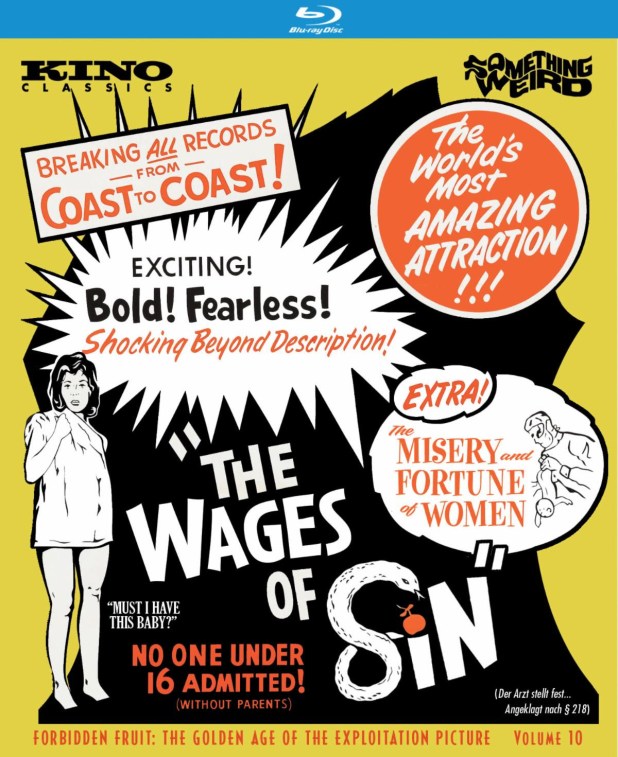
Somehow, this West German movie originally called The Doctor Speaks Out (Der Arzt stellt fest…) played to American audiences as The Wages of Sin and The Price of Sin. Sure, in its native country it was a mediation on abortion, but over here, it was a chance to see a woman fully nude. Never mind that she was having a baby at the time.

Being that this played the grindhouse circuit, it also came complete with a not-real doctor discussing the miracle of birth and then, yes, showing more babies come out into the world in shocking detail.

Those moments are on the Something Weird blu ray re-release that Kino Lorber has just put out. You also get a second movie, The Misery and Fortune of Women, audio commentary by film historian Alexandra Heller-Nicholas a medical lecture and book pitch by Donn Davison, who released this movie in America and two baby birthing films, Life and Its Secrecies and Triplets by Cesarean Section.

What an astounding time for movies. And just think — you can have this on your shelf, just like I do, when someone is at your house and wonders, “You know, I’ve always wanted to see triplets get cut out of a human being.”

Shaolin vs. Evil Dead (2004)

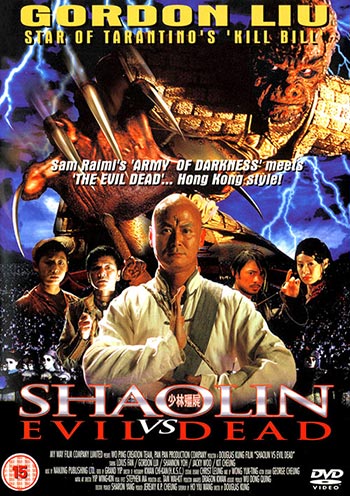
Man, if the Italians found out about this movie*, it would have been a La Casa film for sure. As it is, it references Evil Dead while ripping off the look of the Mr. Vampire films while placing Gordon Liu into a battle between the shaolin monks and the living dead.

Mr. Liu was already a major star before Tarantino tapped him to appear in the Kill Bill films in two roles (Johnny Mo, the leader of the Crazy 88s and Master Pai Mei). His first break happened when he played San “Iron Arms” Te in The 36th Chamber of Shaolin. Sadly, the star had a stroke that gave him a speaking slut and confined him to a wheelchair in 2011. It’s a pretty rough story about his second wife’s family taking much of his money, but luckily today he has entrusted his estate to his friend, actress Amy Fan.

Here, he’s Pak, also known as Brother White, teaming with Siu-Wong Fan (who was, of course, the title character in Riki-Oh: The Story of Riki) as Hak, or Brother Black. They’re up against a vampire king and evil Yat. You know, most of the reviews I’ve read of this hated it, but it has a child eating a magical egg and pooping out a magical shaving cream-covered full-sized kid who keeps calling the other little boy his mommy. Also, it just ends because they wanted to set up a sequel that took three more years to come out.

*It was released as Evil Dead 4 in Pakistan.

You can watch this on YouTube.

Bat Without Wings (1980)

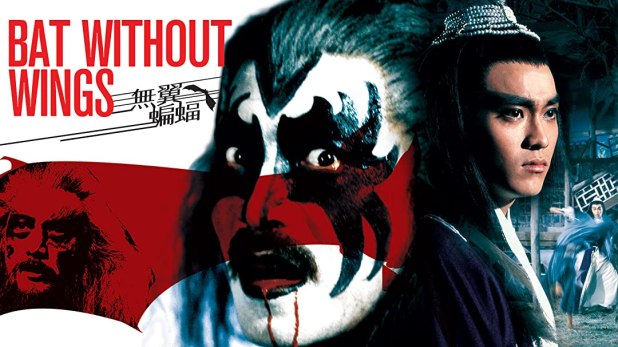
The Bat looks like Gene Simmons and that’s exactly why I chose to watch this. He’s some kind of martial arts supervillain who assaults and murders women and then sends back their body parts one at a time to their husbands. He’s also so strong that he kills twenty-six martial artists before he gets stopped. However, five years later, the killings begin again, despite the original Bat being chained up in a cave, surrounded by the dead bodies of his victims kind of like a Far East Frank Zito.

Oh yeah and the bad guy can fly.

And his real name is Red Baron.

And he has a cave lair filled with traps, like exploding boxes and a pond filled with poison.

Look, this isn’t the best movie you’ve ever seen, but it also has a KISS-looking evil wizard martial artist in an insane cape that can leap hundreds of feet in the air sucking the blood from women and killing men in combat.

If you can’t find a reason to enjoy that, there really is no hope for you.

The Mighty Peking Man (1977)

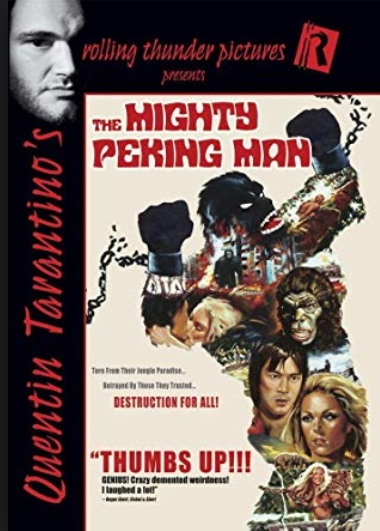
The Mighty Peking Man is a 1977 monster film whose Mandarin title, Xingxing Wang, translates as “Gorilla King” in English (let’s forget the dopey U.S. title of Goliathon). Yep, you guessed it: made to cash in on the 1976 King Kong remake. While Quentin Tarantino’s Rolling Thunder imprint reissued the film in 1998, MPM initially rolled out as a second-biller on the U.S. Drive-In circuit in 1980. It’s the same old story—only told with tongue firmly planted in cheek—featuring greedy explorers who exploit a very large Himalayan Yeti—with a twist: Peking Man raised a beautiful, Tarzaneque woman orphaned in a plane crash who pals around the jungle with a pet leopard. The climax: The Peking Man takes a header off Hong Kong’s Jardine Tower in a hail of helicopter gunfire and jet bombers.

And that Roger Ebert “Thumbs Up!” on the VHS sleeve ain’t no scam: it’s the real deal, as he sites MPM as his “favorite Hong Kong monster film.” And mine too, Rog. Mine, too, as it’s a very well made film. And it should be, as The Mighty Peking Man had a budget of six million Hong Kong dollars under the Shaw Bros. studio (Corpse Mania). The film took over a year to complete—and that time and care shows, in spades—and it was shot in Mysore, India.

While I love it equally, the Shaw Bros. didn’t fair as well with their Hammer Studios co-production of their martial arts vamps going against Peter Cushing’s vamp hunter in The Legend of the Seven Golden Vampires. Their other co-production—the lesser known Shatter—was intended as a weekly TV series, but ended up being a theatrical film dovetailed into the U.S. martial arts drive-in craze of the mid-70s. Oh, and Roger Ebert enjoyed The Mighty Peking Man so much that he re-watched—22 years later and upped on his two and a half star review, for—the Shaw’s 1975 release, Infra-Man. That’s the power of the Q: you gotta love it. And when it comes to Hong Kong cinema, none meets the power of the Shaw Bros.: you gotta love it. As you will this film. Pure awesome.

In a production twist only a B&S Movies reader can love: Koichi Kawaktia, MPM’s assistant director, later worked on Yonggary, the 1999 South Korean remake by Hyung-rae Shims of Yongary, Monster from the Deep (1967). Yonggary ’99’s co-scripter is Marty Poole, who wrote the 1997 Richard Lynch-fronted Rollerball homage, Ground Rules (oh, you gotta watch that film!!).

There’s a lot of online opportunities to watch The Mighty Peking Man, but you know us: we always try to find you the freebie. So watch it on You Tube. It’s campy, it’s whacked, it’s funny and entertaining. Strap on the popcorn bucket and snap the caps off the Dr. Pepper sixer and roll it. It’s the perfect “must watch” of this week’s “Hong Kong Week” tribute of reviews to pencil into your schedule.

Don’t forget that you can learn more about the Q’s Rolling Thunder imprint with our “Exploring: The 8 Films of Quentin Tarantino’s Rolling Thunder Pictures” featurette.


Reissue Update: Here we go with another Delirium, UFO: Target Earth, and Calamity of Snakes surprise, again! In this case we were simple scratching a movie off of our above noted Quentin feature . . . or was it our “Planet of the Apes” tribute week . . . no, wait, it was for our “Kaiju Day Marathon” . . . and months later, a DVD restore was announced for release in December 2021. (Duh, it was for our “Hong Kong Week” of films. Hey, gotta work in the links.)

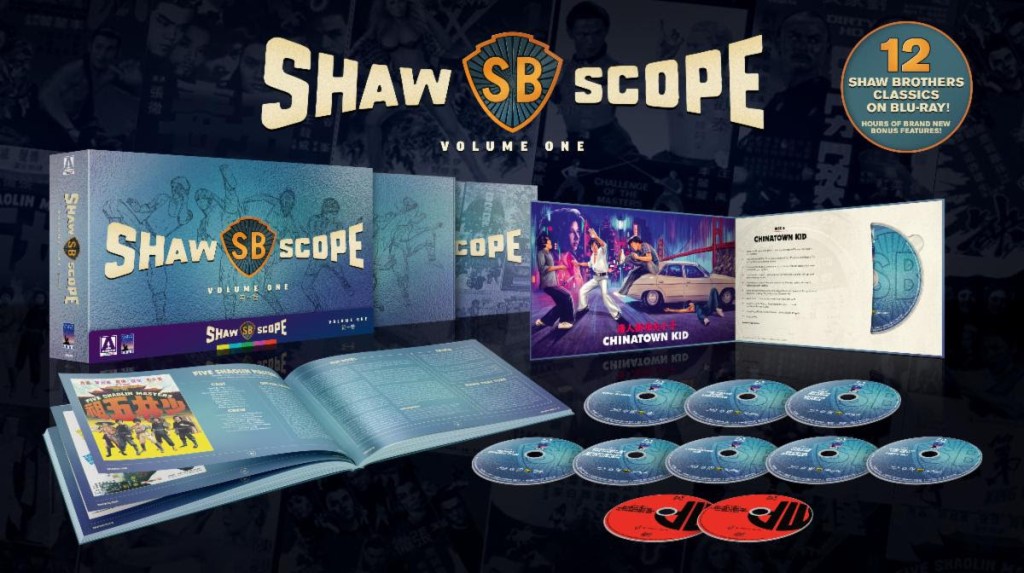
Yes! A reissue of The Might Peking Man is now available as part of Arrow Video’s “Shaw Scope” box set, in this case, Volume One. You don’t want the box set and you’d rather stream it? No worries. It’s also available on the Arrow Player service.

This new Arrow version of The Mighty Peking Man features the film in both uncompressed Mandarin and English original-mono audio, as well as newly translated English subtitles for the Mandarin audio, plus English hard-of-hearing subtitles for the English dub.

The new features also include: A new commentary track by Travis Crawford, a new interview with suit designer Keizo Murase, a 2003 iInterview with director Ho Meng-hua, a 2004 interview with star Ku Feng, a behind-the-scenes vignette of Super 8 footage from the archives of Keizo Murase, an un-restored standard-definition version of the film, alternate opening credits from the U.S.-version of The Mighty Peking Man, known as Goliathon, trailers from the Hong Kong and U.S., German and Dutch versions, as well as the U.S. TV commercial (Oh, boy, I remember seeing that on TV!), and a stills-image gallery.

You can purchase the Shaw sets from MVD.

Streaming online: You can also stream The Might Peking Man by visiting ARROW to start your 30-day free trial. Subscriptions are available for $4.99 monthly or $49.99 yearly. The ARROW Player is available in the U.S. and Canada, the U.K. and Ireland on the following Apps/devices: Roku (all Roku sticks, boxes, devices, etc.), Apple TV and iOS devices, Android TV and mobile devices, Fire TV (all Amazon Fire TV Sticks, boxes, etc.), and on all web browsers at at Arrow Player.com.

About the Author: You can read the music and film reviews of R.D Francis on Medium and learn more about his work on Facebook. He also writes for B&S Movies.