Narayama Bushikô (1983)

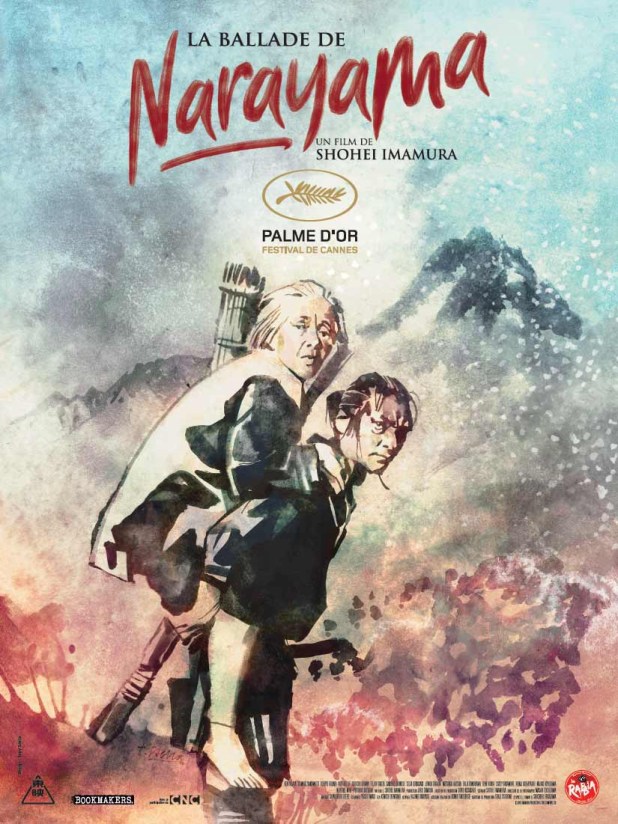
The Ballad of Narayama came late in the career of director Shôhei Imamura who claimed that a viewing of Kurosawa’s Rashomon inspired him to imagine that a new freedom of expression was possible in post-war Japan. Starting as an assistant to Yasujirō Ozu, he soon was dissatisfied, as he wanted to show a different take on how he saw Japan.

He left Shochiku for a better salary at Nikkatsu and became the assistant director to Yuzo Kawashima, who was known for his tragic satire. From his first film as a director, Nusumareta Yokujō (Stolen Desire), he courted controversy, unafraid to show the lower caste of Japan and frank sexuality.

Imamura saw himself as more of a cultural anthropologist than a filmmaker and was all about being an iconoclast, even starting his own studio and pushing for projects that would fail, having to make small films for most of the late 70’s and early 80’s due to Kamigami no Fukaki Yokubō (Profound Desires of the Gods), a deeply personal film that took a year and a half to make and wasn’t seen as a success at the time.

By the 1980’s, Imamura was able to mount larger-scale movies, including this one, a remake of Keisuke Kinoshita’s 1958 The Ballad of Narayama.

A key member of the Japanese New Wave, Imamura is one of the few directors to keep making films through the 21st century and the only director from Japan to win two Palme d’Or awards (for this movie and The Eel).

My grandmother died last month. I’m not telling you that out of a need for sympathy, but to tell you where my head was while watching this movie. It’s about ubasute, which is translated as abandoning an old woman, which was the ancient Japanese practice of carrying an infirm or elderly relative to a mountain or other desolate place and leaving them to die.

You may think that this is a barbaric practice. But in our world of modern medicine that keeps people alive well beyond the time that they should be deceased, I wonder sometimes that we keep people with us for so long that it becomes torture. I don’t have the answers but I’ve tried to keep an open mind as I watched this movie, sometimes overflowing with emotion.

In a small Japanese village in the 19th century, Orin (Sumiko Sakamoto, who Imamura cast in two other of his movies, The Pornographers and Warm Water Under a Red Bridge; she won the Japanese Best Actress from Nihon Academy for her performance in this film, as well as a kiss from Orson Welles) realize that at the age of 69, she is but months from having to go up the mountain to die. She’s of sound mind and body, but doesn’t want to be like the old men who fight every step of the way, screaming that they want to stay alive.

Over the next year, we see her life, whether it’s the negative of young people referring to her as an old witch or the positive, where we see her fix the problems of the village, help her son Tatsuheito (Ken Ogata) to find a wife and set things right before stoically going on to her death in the snow.

As we see the lives of the villagers, we also see nature intrude, whether that’s through the birds in the trees or the snake that is always near, even in moments of incredible joy.

How strongly did Sakamoto believe in this role? She extracted four of her teeth just to play the scene where Orin smashes out all of her teeth to convince her family that she must die.

Beyond Sakamoto’s awards, this movie also won best film at the Japanese Academy Awards numerous best actor awards for Ogata, who played Sakamoto’s son, a best supporting actress award for Mitsuko Baisho, best sound and an excellence in cinematography award.

This is a film of juxtaposition, of the lowest and most base of humanity in contrast with ones that will sacrifice everything. Moments of sheer beauty stand hand in hand with scenes of violence and pain. It’s a heartbreaking film yet one that reaffirmed my belief in life, in the cyclical nature of death and rebirth. And it is by no means an easy watch.

You can find The Ballad of Narayama on the new Survivor Ballads: Three Films By Shohei Imamura set from Arrow Films. This is a must-buy, as each film demands to be part of any film lover’s collection. You can get yours from MVD.
Youkai Tengoku: Ghost Hero (1990)

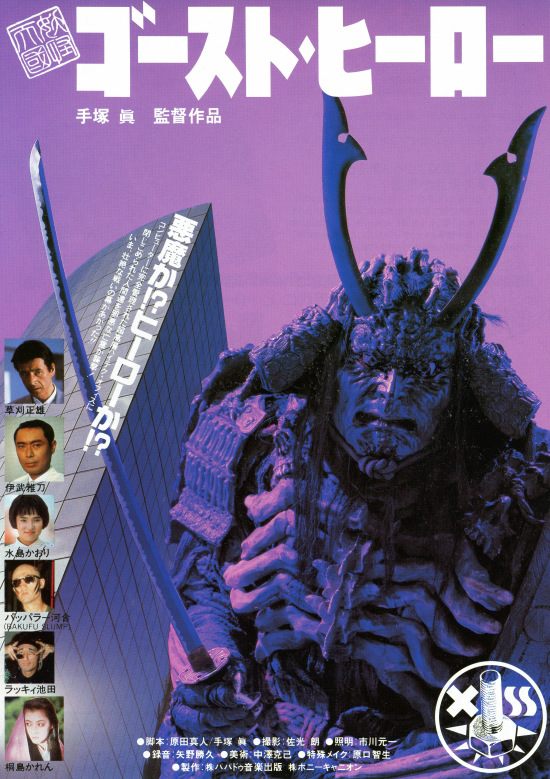
Monster Heaven: Ghost Hero has a lot going on. First off, it’s about a virtual reality company that has learned how to make software that can be physically handled, which means that of course, they’ve already made a sexual application because all technology is sexuality-based (which is why VHS beat beta and streaming video exists). Then it’s about the building that the tech company is in, which sits above an ancient and sacred land, with spirits and monsters that have existed in harmony with the company for decades (what are they, Nintendo and did they once make playing cards?). And then there’s the new owner that could care less when someone tells him that that stone gargoyle up front should never get virgin blood on it.

Oh yeah and there’s also a punk band called Monster Heaven who claim that they are all monsters from Japan’s past, including a human raccoon, a cat girl and a dude with four arms and six eyes.

The company’s fired Operations Manager also comes back, kills a virgin with a sword, gets that blood everywhere and, you knew it, because a gigantic monstrous samurai that can only be defeated by a VR sexy girl.

If you’re wondering, “How can all this insanity be in one movie?” The answer is that it was co-written (along with Masato Harada) and directed by Macoto Tezuka, who made Legend of the Stardust Brothers, one of the oddest and most wonderful movies I’ve ever watched.

This has way too many ideas, which is how I like my movies. Tezuka also made Monster Heaven, an anthology film about yokai, a few years before this. I’ll be hunting that one down now! You can watch it on YouTube.

Tomie: Re-birth (2001)

An artist named Hideo is painting his girlfriend. Just by reading the title of this film, you know that it’s Tomie. He flips out when she tells him that his art isn’t good, so he kills her and two of his friends help him bury the body. And if we know anything else about these movies, you know that this can’t end well.

Everything Tomie can be reborn, from her head, which grows limbs, to even the paint used to make her portrait and outright possession. Even suicide can’t stop Tomie, as one of the girls possessed by her tries to jump off some cliffs and she survives. Basically, Tomie is the mistake that you should have never made, but you can’t stop her once it all begins.

This version of her story was directed by Takashi Shimizu, who would go on to make Ju-on: The Grudge and — rare for American remakes — even get the chance to helm his own Western version with 2004’s Sarah Michelle Gellar-starring movie.

There is one great part in this one: a mother and a son bond while slicing a young girl to bits and hiding her body. Family togetherness. Get it wherever you can.

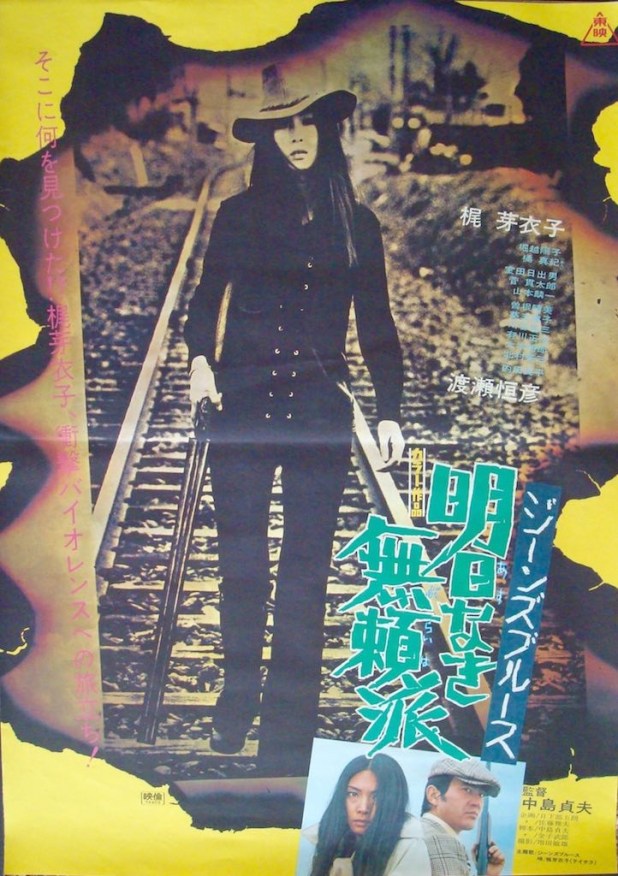
Jînzu Burûsu: Asu Naki Buraiha (1974)

Jeans Blues: No Future is the kind of lurid, violent and downbeat film that I adore. And there’s no better star for these kind of movies than Meiko Kaji, who embodies revenge like no other actress ever, thanks to turns as Lady Snowblood and Female Prison Scorpion.

This time, Meiko plays Hijiriko, a bar girl who has stolen all the money from work and a car that doesn’t belong to her. She literally runs into Jiro, who has done the same thing, ripping money off from his gangster friends. They steal another car and try to get away.

As Serge and Bardot once sang, “De toute façon, ils n’pouvaient plus s’en sortir. La seule solution, c’était mourir.” There’s no way out of this that ends well for anyone, you know?

Meiko has gone on record saying that she was embarrassed by this movie, but I didn’t see much that would make me feel this way. Maybe I give her an eternal pass.

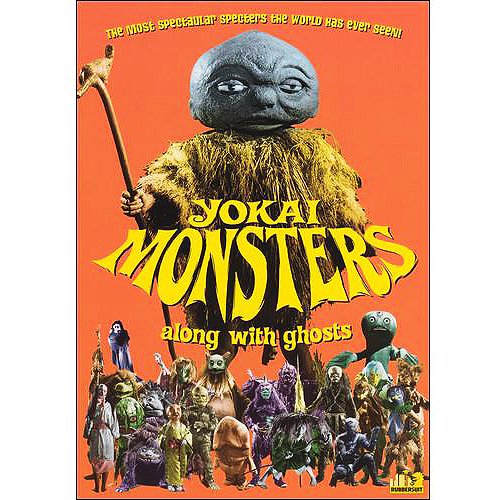
Yokai Monsters: Along with Ghosts (1969)

The third and final Yokai Monsters movie, this time directed by Yoshiyuki Kuroda and Kimiyoshi Yasuda, takes us back to feudal Japan, where Miyo has discovered evidence that could stop the corruption in her town, but when her grandfather is murdered on sacred grounds, she needs the help of the Yokai.

Unlike the second movie — which is everything you want, as it is literally packed with monsters — this is more of a horror film, using the yokai in a more frightening way as they move into becoming the guardians of youth, which seems to be the fate of nearly every Japanese monster once the sequels start adding up.

It’s nice to see all of the monsters when they do show, but after the delirious Yokai Monsters: Spook Warfare, this felt like a step backward. Not a bad step, but still not in the direction I wanted.

That said, the moment Arrow releases these as a boxset, I’m all over it.

You can watch this on YouTube.

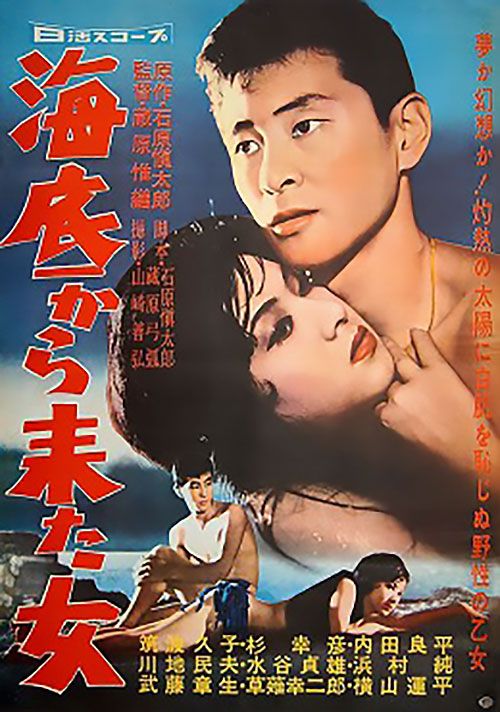
Kaitei Kara Kita Onna (1959)

While on a beach vacation, a young man falls in love with a beautiful woman who tells him that she lives by herself in the sea. That story is backed up by the village’s fishermen, who believe that she is the female partner of a shark that they had killed several years ago, now back for revenge.

This was directed by Koreyoshi Kurahara, who is best known for the film Anarctica, which was remade in America as Eight Below.

Oddly enough, Hisako Tsukuba, who plays the myserious sharkwoman, would do more than appear in several more Japanese films like The Golden Bat. That’s right, after changing her name to Chako van Leeuwen, she would produce Piranha, getting her name in the credits as a producer or executive producer for every sequel and remake. Maybe she really did know something about murder in the ocean.

I’d say that this is in many ways similar to Night Tide and The Witch Who Came from the Sea, but seen through Japanese eyes. It’d be fascinating to watch all three of these movies in a row.

Sacred Cow: The Nutritional, Environmental and Ethical Case for Better Meat (2020)

This film “probes the fundamental moral, environmental and nutritional quandaries we face in raising and eating animals. In this film project, we focus our lens on the largest and perhaps most maligned of farmed animals, the cow.”

Seriously, I never thought that I’d watch or even like a documentary all about why meat production makes sense, but this is well put together.

Yet this film presents an intriguing case study: in the push to create a more heart-healthy — and therefore, more highly-processed — diet, we may be destroying entire ecosystems and even human health thanks to the food that is supposed to make us feel better.

Nick Offerman — who played Ron Swanson on Parks and Recreation, a character who was nearly devoted to the consumption of meat — is the narrator for this story, which takes us from how we got here to how some of America’s farmers are trying to change the narrative by increasing biodiversity, improving soil health and raising high quality, nutrient-dense protein, all while fighting to preserve the family farms of our nation.

Interested in learning more? Or are you someone that subscribes to why being a vegan is healthier? Either way, beginning January 5, the film will be available in the US on iTunes, Vudu, Googleplay, Amazon, DirecTV, Dish Network and iNDEMAND. You can learn more on the film’s official site.

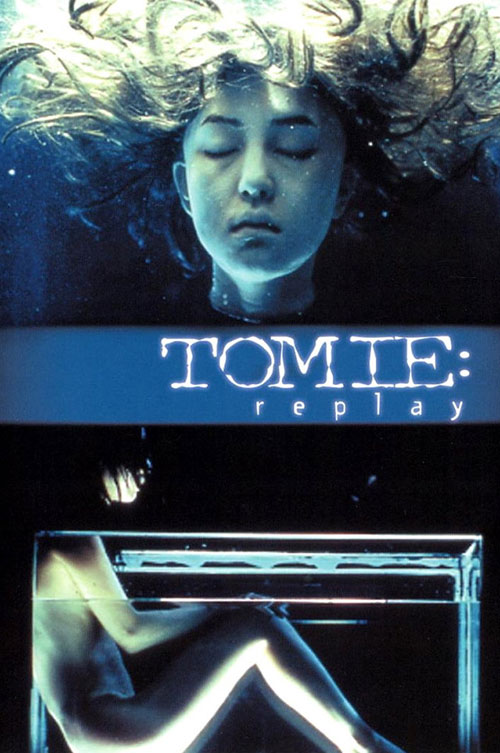
Tomie: Replay (2000)

The second part of Tomie — the first sequel was the TV version called Tomie: Another Face — this story takes its inspiration from the Basement section of the original manga. It was directed by Fujirō Mitsuishi, with this movie as his only IMDB credit.

It was released on a double bill with Uzumaki, another movie adaption of the manga work of Junji Ito.

At the very beginning of the film, a six-year-old girl is taken into a surgical room where the head of Tomie is found — still alive — inside her stomach. It is placed in the basement and everyone in the room disappears, as the head grows into a full Tomie and starts her spell on a boy named Takeshi.

Meanwhile, the disappearance of the doctors is solved as Tomie’s blood has infected theirs and they’ve all gone insane. Speaking of crazy, Takeshi has already decapitated Tomie in an act of jealousy, watched her regrow that head and he is committed to a mental ward.

The daughter of the head of the hospital — who has also been driven to death by Tomie — is called to the hospital by Tomie, who wants another young boy, Fumihito, to kill her. However, at the last moment, he beheads Tomie instead and they burn her body. Has no one learned anything?

This version, however, looks like a proper horror movie and has a better budget. The idea that Tomie isn’t just some kind of monster, but really an infection, is a much deeper idea.

Daikyojū Gappa (1967)

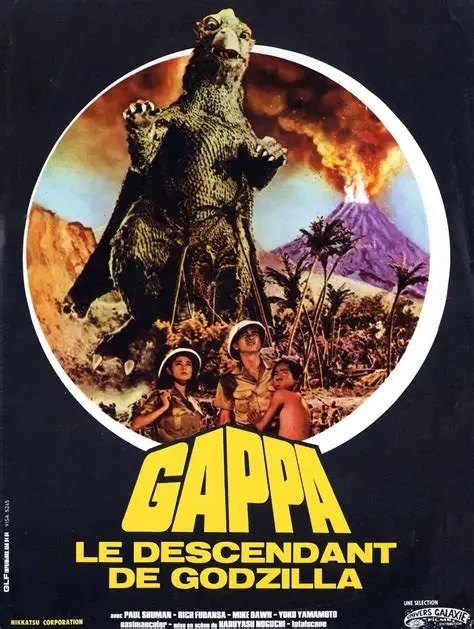
Gappa: The Triphibian Monster, originally released in the U.S. as Monster from a Prehistoric Planet, is pretty much Gorgo with monsters taken from Japanese legend. That’s totally fine with me, because this movie is absolutely gorgeous.

It’s crazy that this was the only giant monster movie that the Nikkatsu studio made. After this, it’s all Roman Porno and pinky violence.

An expedition from Tokyo heads to Obelisk Island — you know, just like Skull Island — where the president of Playmate Magazine, Mr. Funazu, wants to make a resort. The natives welcome them warmly until the forbidden zone is breached and the expedition takes a gappa egg with them. They plead that the egg’s parents will do anything to get it and you know how humans act in Japanese kaiju films. That means that before you know it, we have two giant bird/turtle/lizard monsters going wild all over Japan to get their baby back.

This is a movie that could never be made today, because all of the natives of Obelisk Island are basically Japanese actors painted in blackface. Plus, the actions of the civilized people cause the Gappas to ignite a volcano and destroy every single villager except Saki, a young boy painted brown.

Speaking of racism, there was an urban legend that Nikkatsu’s international English translation had the line, “The monsters are attacking Tokyo. Fortunately they are attacking the Negro section of town.” This is not true.

Akira Watanabe left Toho to work on the special effects for this movie. He’s known for finishing the designs of Baragon and King Ghidora. There must not have been any bad blood, because he came back to be the art director for movies like King Kong EscapesSon of Godzilla and Prophecies of Nostradamus.

You can watch this on Amazon Prime and Tubi.

Yokai Monsters: Spook Warfare (1968)

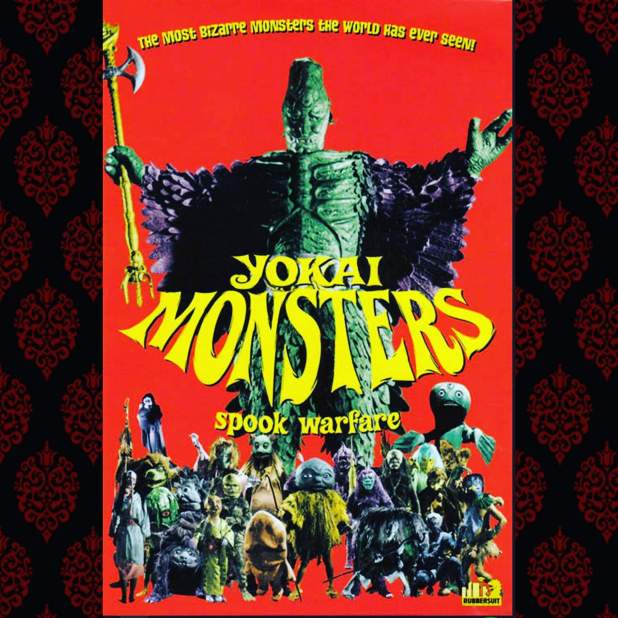
1968 saw the release of Yokai Monsters: 100 Monsters, but just seven months later, director Kuroda Yoshiyuki (Daimajin, several Zatoichi films) made this sequel, which takes the main ideas of presenting Japan’s native monsters, perhaps finds some inspiration from the manga GeGeGe no Kitaro and the story of Momotaro, take a strong shot of national Japanese pride and remembers that no one cares about the humans in the story. We’re here to see monsters. And oh man, are we gonna get them!

In the Babylonian city of Ur, the body of the great monster Daimon lies amongst the ruins. That is, until some treasure hunters rouse him from his dark sleep, which leads to him flying to Japan, vampirically taking over the body of samurai Lord Hyogo Isobe.

As Isobe, Daimon goes wild, burning all the religious altars, killing the family dog and even rousing a kappa — a “river child” turtle creature who loves to wrestle — from his slumber in the river. Hurt in combat with the much stronger Daimon, the kappa begins his quest to unite the yokai and stop the foul beast.

Soon, the kappa meets Kasa-obake (a one-legged umbrella with eyes), Futakuchi-onna (a two-mouthed cursed woman), Rokurokubi (a long-necked woman who often appears in the more adult kaiden stories), Nuppeppo (a clay creature who resembles a blob of meat) and Abura-sumashi (a wise ghost of a human who once stole oil). They tell him that according to coloring books and field guides, no such yokai exists.

Meanwhile, Daimon has stopped his attempted exorcism and responded by killing the parents of several children. As his men hunt for the surviving kids, they hide in the yokai shrine. Soon, the monsters realize the kappa was telling the truth and join him in battle, which ends up involving nearly every single monster from across Japan.

Takashi Miike remade this movie in 2005 as The Great Yokai War, which also features Kitaro creator Mizuki in a cameo.

Seriously, this movie took a bad day and made anything seem possible. This is pure joy on film.

You can watch this on YouTube.