What would make someone who has a quickly growing career in the film industry give up everything to go live in Africa? Ask Katie Taylor, a Hollywood casting director who left a lucrative career to teach filmmaking to an impoverished South African community. Soon, she realizes that her students use their films as a means of self-expression and as art-therapy. The moral? The power of story and film can transcend culture and color.
I love the idea that movies can truly come from anywhere. We have the technology to make it happen. We just need the people ready to help others use it and create something special with it.
The best part of this movie is that it really is about the students and how they explain that while once art was only reserved for the rich, now they have the tools to tell their stories to audiences all over the world.
Film School Africa is available on demand from Global Digital Releasing. You can learn more on the official site.
DISCLAIMER: We were sent this movie by its PR team.
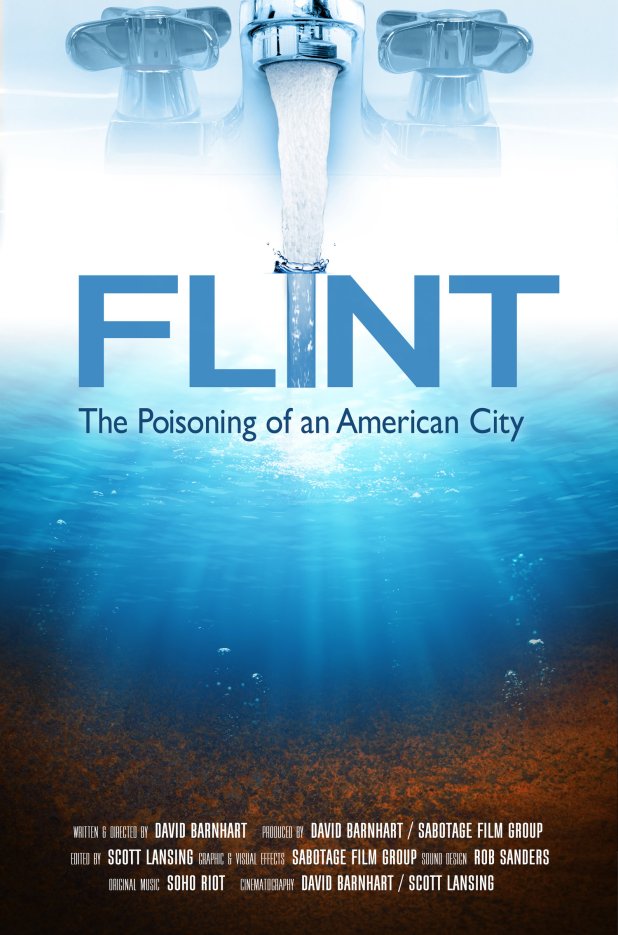
100,000 people have been poisoned by lead, which leads to lifelong health problems, yet this has been swept under the rug in the U.S. Flint: The Poisoning of an American City was made to show the environmental history of the river and how the continued abuse and neglect of city infrastructure and environmental regulations have led to the poisoning of a city.
Director Dave Barnhart also made Trigger: The Ripple Effect of Gun Violence and several short films about environmental issues.
Get this — the drinking water in Pittsburgh — in many places — is even worse than Flint, which has received the lion’s share of media coverage. In a recent report, 5,300 American cities were found to be in violation of federal lead rules and excessive lead was discovered in nearly 2,000 public water systems across all 50 states.
How can this happen here? This film explains it all. It’s not an easy watch, but trust me, it may be the most horrific movie we’ve written about on this site.
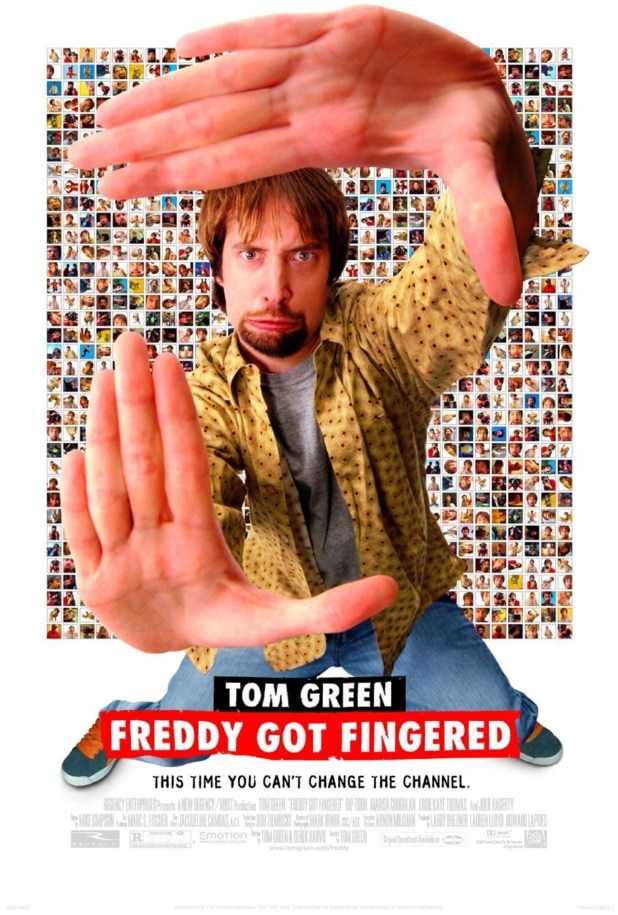
Most of the time when I discuss movies on this site, I share how many Razzies the movie won. The celebrities who win these awards rarely show up and never dignify this honor. But not tom Green. When Freddy Got Fingered won Worst Screenplay, Worst Actor, Worst Film, Worst Director and Worst Screen Couple, Green rolled up on his own red carpet, wearing a tuxedo and riding in a white Cadillac. He said, “When we set out to make this film we wanted to win a Razzie, so this is a dream come true for me”. Then he played the harmonica until security dragged him offstage.
Nathan Rabin’s columns at the AV Club and his book My Year of Flops are a big reason that I began to write about movies. And if you read his review of Freddy Got Fingered, you’ll see some line — I hope — to what I try to accomplish here. There are some movies that got unfavorably mauled. And there are some movies that are just messes. But sometimes, a glorious mess is way more entertaining than a vanilla romcom.
Rabin refers to this movie as “both one of the worst films ever made and a movie so doggedly, singularly bizarre that it’s hard to believe it ever got green-lit. Studios exist precisely to keep films this audacious, original, and transgressive from ever hitting theaters.”
He also referred to it as “less as a conventional comedy than as a borderline Dadaist provocation, a $15 million prank at the studio’s expense.”
Bingo.
There was an NC-17 version of this movie that Green described as “porn with murder,” ending with a child being torn apart by a propeller. There was also a three-minute long PG version, as that’s all that made the cuts.
Yes, this is not a movie for everyone. Also, it’s nearly not a movie for anyone.
28-year-old cartoonist Gordon “Gord” Brody (Green) leaves his parents Jim and Julie (a manic Rip Torn and the always wonderful to see Julie Hagerty) behind to head off to Hollywood, leaving in the Le Baron that they give him and finding a job in a cheese sandwich factory. Literally, this Hollywood dream of being an animator lasts at least five minutes of the film, which is mostly a series of rapid-fire gross outs and go nowhere non sequiturs that redefine the word non sequitur.
Gord convinces the secretary (Drew Barrymore, one-time wife of Green) of animation CEO Dave Davidson (Anthony Michael Hall, now the inverse of his nerd personna) to give him a job. He doesn’t understand anything Gord shows him, like a bag of bloody eyes holding a balloon. In fact, he tells him, “It doesn’t make any sense. It’s fucking stupid. What you need here is elevation. There has to be something happening here that’s actually funny.”
I can only assume that these were actual studio notes on this film turned into some meta commentary on the nature of art.
Gord gives up on life, quits his job and returns to live with his parents. One day, while skating with his friend Darren (Harland Williams, who also made some movies that no one understood either like RocketMan), who breaks his leg while skating. At the hospital, Gord meets his dream girl, Betty (Marisa Coughlan, Super Troopers), a wheelchair-bound scientist nurse who yearns to create a rocket-powered wheelchair when she isn’t begging to have a bamboo cane smashed against her non-working legs and indulging in her love of fellatio. Yes, I just wrote that sentence.
As a result of Gord’s dad insulting Betty in a restaurant and the ensuing brawl, a family therapy session leads to Gord falsely accusing his father of fingering his adult brother Freddy (Eddie Kaye Thomas from the American Pie films). This ends up sending Freddy to a home for abused boys — despite him being in his mid-20’s — and Julie leaving Jim for Shaq.
Still with me?
Somehow, Gord goes back to Hollywood and pitches a show based on his relationship with his father called Zebras In America. It gets picked up after his father bursts into the office and tries to kill our protagonist. The million dollar payday is used to thank Betty with an elaborate romantic gesture — a speech set to “When A Man Loves A Woman” while a helicopter drowns out any noise — and moving his parents to Pakistan, where father and son are kidnapped for over a year.
Despite supposedly ruining Green’s career — cancer took him out of commission soon after the film* and he still does well as a stand-up to this day — this movie wasn’t a commercial failure. It earned $14,254,993 domestically — and $78,259 overseas, which is hilarious to me — and $24,300,000 from DVD sales. Green opined that his under 17 year old audience probably snuck into the film, so the real box office may have been even higher.
That said, the critics absolutely savaged this movie.
Roger Ebert gave the film a zero-star rating, as it was one of his most hated films of all time. He said, “This movie doesn’t scrape the bottom of the barrel. This movie isn’t the bottom of the barrel. This movie isn’t below the bottom of the barrel. This movie doesn’t deserve to be mentioned in the same sentence with barrels.”
But wait — what happened over the next few years to make Ebert reflect and say, “I remember Freddy Got Fingered more than a year later. I refer to it sometimes. It is a milestone. And for all its sins, it was at least an ambitious movie, a go-for-broke attempt to accomplish something. It failed, but it has not left me convinced that Tom Green doesn’t have good work in him. Anyone with his nerve and total lack of taste is sooner or later going to make a movie worth seeing.”
How many movies are you going to see where the lead cuts open roadkill to get inside it as if it were a tauntaun or delivers a baby by twirling it over his head? Not many.
To me, this movie is really an absurdist send-up of 2000’s gross out comedies. It’s a prank — a way to spend $14 million on something completely surreal. I can’t even imagine what the studio thought when they saw this. And yet it predates the Adult Swim and blip viral humor that the world of 2020 enjoys.
I love the names this movie enjoyed around the world, such as Freddy Leaves Home (Chile), I’m Eating Freddy (Hungary), Freddy Realized (Argentina), Fingers Playing (Finland, obviously taken from the “Daddy Do You Want Some Sausages” piano scene), Freddy’s Obscene Relationship (Japan), A Loose Guy (Poland), Freddy In Trouble (Portugal), Freddy You Go! (Russia), Extremely Fat Movie (Serbia), Freddy the Stupid (Spain) and — best of all — France’s Va Te Faire Foutre Freddy! (Go and Fuck Yourself Freddy!). This is only topped by Bulgaria’s Fucked Freddy.
For some reason, I love this movie. Maybe because it’s so bad. Perhaps because it was a middle finger from Green to the entertainment industry that suddenly had embraced him. Who knows — I think it’s because this movie simply was made, despite every reason in the world that it never could or should.
I also just realized that I wrote so many words about this movie and didn’t mention how many animal genitals are touched, fondled and played with in it. It’s gross the first time, repetitive the next few times and then becomes charming, if it can be, after that.
*The surgery Freddy watches is actual footage of Green getting a lymph node taken out due to testicular cancer.
ABOUT THE AUTHOR: Rob Brown is probably the only person to write for our site that has an IMDB page. That alone gives him the credit to tell us all about one of the first Marvel movies to hit the screen.
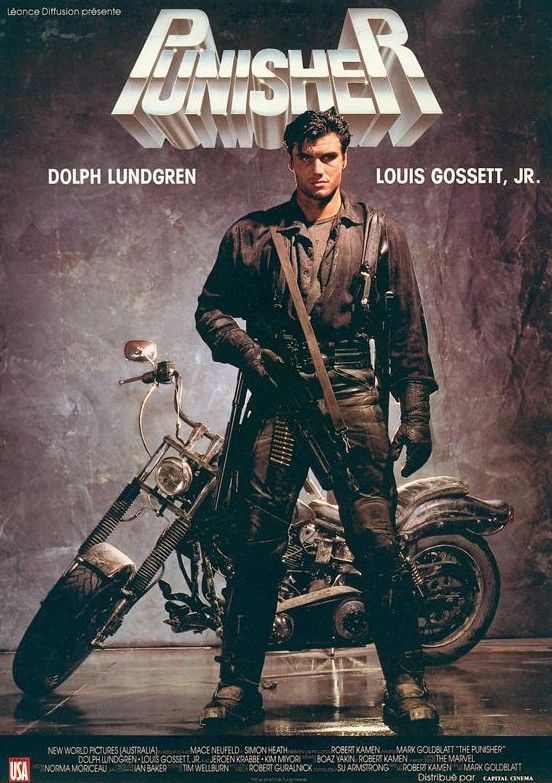
Jake Berkowitz (Louis Gossett, Jr.) is a big city police detective trying to take down the mob while also trying to stop the Punisher, a mysterious vigilante with a body count in the triple digits, who he believes to be Frank Castle (Dolph Lundgren), his former partner that had seemingly died in a car bombing that took the lives of Castle’s entire family.
In an effort to eliminate the Punisher once and for all, Gianni Franco (Jeroen Krabbe), the most powerful organized crime boss in the city, attempts to unite all of the crime families, which draws the attention of not only the Punisher, but the Japanese Yakuza, led by the treacherous Lady Tanaka (Kim Miyori). She offers Franco a deal, which would essentially make HER the top crime boss in the city, which he rejects, leading to the kidnapping of all of the children of Franco and his men.
The Punisher’s mostly successful rescue attempt of the innocent children from the clutches of the Yakuza leads to his capture by the police, which brings him face to face with Berkowitz, confirming the detective’s worst fears, that this scourge of the underworld is a very changed Frank Castle. As he’s being taken to another facility, the police transport is ambushed by Franco’s men, who take Castle and force him into an uneasy partnership with the man responsible for the death of his family to bring back the mobster’s son, Tommy, who had been left behind on the previous raid.
Together, Castle and Franco storm the Yakuza headquarters and defeat Tanaka, saving Tommy in the process. Once again at the top of the criminal food chain, Franco attempts to kill his reluctant partner, the only remaining obstacle in his path, but the critically injured vigilante still manages to get the best of him after a brief struggle, finally avenging the death of his family. The Punisher tells a grieving Tommy to not grow up to be like his father, because he’ll be watching and waiting. With that warning, he disappears just as Berkowitz and his men arrive on the scene.
I loved this movie as a teenager, as it was very similar to many of the shoot-em-ups of the eighties and nineties that I grew up on. It was fun, fast-paced, action-packed, and starred the guy who played Rocky Balboa’s greatest nemesis just a few years earlier, and I feel like it’s actually improved as I’ve gotten older.
In the nearly three decades or so since I first watched this movie, I’ve definitely become more of a fan of the Punisher, having seen him pass through the hands of many creators and become more of a fleshed-out character with some pretty bizarre detours along the way, including becoming a mob hitman himself and a LITERAL angel of death at his lowest point. That’s not to say that he wasn’t a strong character before, but at the time of the movie, he had only just graduated to his own solo book (he’d soon have three) after popping up as a villain of the week or guest star for over a decade in the pages of Spider-Man, Captain America, and Daredevil. There wasn’t too much to go on as far as backstory that didn’t involve other Marvel characters, so they kept it pretty simple in the film with him being a one-man army against organized crime. In fact, he’s almost a side character in his own movie, which actually plays to the strength of the film’s cast.
Academy Award winner Louis Gossett, Jr. (Iron Eagle, HBO’s Watchmen), does much of the dramatic heavy lifting in this film, portraying the grizzled older cop that wants to solve the mystery behind the apparent death of his partner once and for all while also suspecting the worst, that his former friend is just as much of a criminal as the men they once tried to bring to justice. Through him, we also learn much of Castle’s backstory. In an early cut of the film, there was an entire first act that showed the two in better days, but here, we only see a Frank Castle that’s too far gone.
In the title role, Dolph Lundgren is completely believable as a killing machine, which is helped by his real-life background as a champion martial artist (and also his previous roles playing killing machines). He had also earned a Master’s Degree in Chemical Engineering before deciding to pursue modeling and acting as a career. In this film, he mostly only speaks when he has to, when he’s spoken to, or when he’s trying to get information, and even then, it’s mostly to intimidate his prey or to tell his captors to fuck off. He’s a bit wooden, but the character as we see him is meant to be pretty one-note, which breaks a little when we see him reflect on his past life or when he makes the decision to rescue the children of the criminals he’s sworn to kill. At times, we hear his inner monologue, where his craziness and dedication to his mission really comes through. Coincidentally, his illustrated counterpart would soon go on to communicate with readers in a similar way, through the pages of his “war journal”.
The main villain in the story, who soon becomes the lesser of two evils, is Gianni Franco, who is portrayed by Dutch actor Jeroen Krabbe (The Living Daylights, The Fugitive). Like Berkowitz, he also wants to bring an end to the Punisher’s reign of terror, but for completely different reasons. In the comic, Wilson Fisk (aka The Kingpin) had been the chief organized crime figure in the Marvel universe, but Krabbe’s Franco is a fine enough stand-in, even if his accent slips from time to time and he isn’t the least bit believable at being Italian, which is further exacerbated by the over-the-top cartoonish “It’s a-me! Mar-io!” performances of many of his short-lived henchman. He’s a great actor, though, which is one of the ways in which this movie overachieves.
The cast is rounded out by Kim Miyori (The Grudge 2, TV’s St. Elsewhere) as the ruthless Yakuza boss, Lady Tanaka, who always seems to be multiple steps ahead of the competition, Nancy Everhard (Deepstar Six) as Berkowitz’s new partner that also believes his Castle theory, and Barry Otto (Strictly Ballroom, The Howling III) as the perpetually drunk, rhyme-spewing stage actor/informant that gets Punisher his intel.
The movie, originally slated to film in the US, was filmed in Australia for monetary reasons, but still carried a decent enough budget of about nine million dollars. Director Mark Goldblatt had only helmed one film previously, the horror action comedy Dead Heat, and would never direct another feature film. However, he was already well-established behind the scenes as an editor, where he had a hand in putting together some of the most iconic action films of all time, which already included The Terminator, Rambo: First Blood Part II and Commando, and would go on to include Terminator 2: Judgment Day,True Lies, Starship Troopers and Rise of the Planet of the Apes. The film was written by Boaz Yakin, who was just starting out, but would go on to write Prince of Persia and Now You See Me, while also directing such films as Fresh (which he also wrote), Jason Statham’s Safe, and one of Denzel Washington’s biggest hits, Remember the Titans” Robert Mark Kamen, the film’s producer, helped punch up the script and had already established himself on the action scene, having written the Karate Kid films. He would go on to write Lethal Weapon 3, The Fifth Element, The Transporter, Taken and the recent Gerard Butler hit Angel Has Fallen.
The film was shot in 1988, but due to financial difficulties on the part of the production company (Roger Corman’s New World Pictures) and the lack of interest on the part of the new owners, the film languished. It received only a limited theatrical release overseas and screened at some comic conventions before eventually being sold to Live Entertainment (now Lionsgate, who would go on to produce 2004’s The Punisher and 2008’s Punisher: War Zone) and released on home video in the United States in June of 1991. I would probably rent it a good half a dozen times by the end of the year.
“The Punisher” isn’t just a good early representation of the comic book movie genre, but a good late-eighties action film in general that just happened to have an unusually great pedigree for a film with its reputation. I don’t necessarily think it would have been an enormous hit if it was given a fair shake, but it certainly would have done better than Marvel’s other big screen attempt at the time, the live action Captain America, which was a complete miss all around and featured Steve Rogers using the “Can you pull the car over, I think I’m going to be sick” excuse to get out of a jam TWICE. Frank Castle’s origin may have changed in the film, making him an ex-cop instead of a former Marine, but at least he didn’t threaten to shit himself in Ned Beatty’s car.
Jonathan R. Betuel—who made his screenwriting debut with the critical and box office successful The Last Starfighter(1984) and his writing and directing debut with My Science Project(1985) and worked as a supervising producer on the 22-episode run of the syndicated TV Series Freddy’s Nightmares (an anthology sequel to A Nightmare on Elm Street with Robert Englund hosting as Freddy)—struck a deal in with New Line Cinema for his next writing-directing effort: a buddy cop science-fiction family film . . . set in an alternate futuristic society where humans and anthropomorphic dinosaurs co-exist.
Mmm. The buddy cop film 48 Hours (1982) meets The Flintstones (1994). And the Last Starfighter and My Science Project were reasonably decent films. And it has a touch of Alien Nation (1988). This could work.
Uh, no it won’t.
Whoopi Goldberg—who won a Golden Globe for Best Actress in a Motion Picture for 1985’s The Color Purple—was nominated for Worst Actress at the 1996 Golden Raspberry Awards.
And it gets worse: World renowned German actor Armin Mueller-Stahl starred in this—and Shine, for which he was nominated for an Academy Award for Best Supporting Actor—in the same year. And what in the hell is Stephen McHattie from the BBC’s Orphan Black doing here? Richard Roundtree? Dude, you’re our favorite, ’80s ass-kicking Euro-action star of all time! What are you doing here? Why, Richard? Why? Yeah, I know you ended up in Inchon(1982) too, but still. Why?
Don’t worry. We won’t call him Barney. We’ll call him something else.
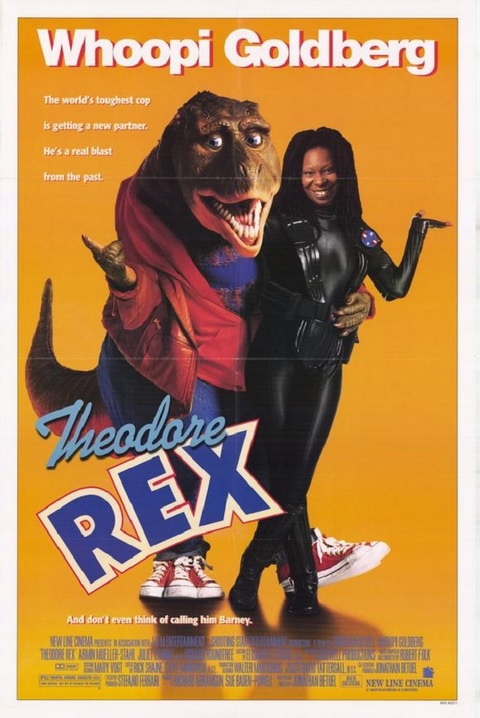
This futuristic comedy concerns the exploits of Katie Coltraine, a hard-ass police detective that’s partnered with a humanesque, upright-walking Tyrannosaurus Rex dinosaur named Theodore Rex (voiced by George Newbern, a series regular on the TV shows Scandal and Law and Order: SVU) to track down a killer of human-dinosaurs. The investigation leads the cop buddies to the lair of an evil billionaire who plans to kill off mankind by plundering the Earth into an Ice Age Armageddon. (And if this all sounds a lot like that 2018 Melissa McCarthy stinkfest The Happytime Murders, only with dinosaurs instead of Sesame Street puppets, then it probably is.)
For reasons unknown, Whoopi Goldberg signed onto the project—via a verbal agreement. Then, in October 1992, she wised up and attempted to back out of the production. And she was hit with a $20 million breach-of-contract lawsuit. When the dust settled, she got her $5 million dollar paycheck bumped up to $7 million. In a 2015 interview with the Brazilian newspaper Folha de S.Paulo, Goldberg stated Theodore Rex was the only film she regretted doing.
Seriously, Whoopi? You have no regrets doing Jumpin’ Jack Flash, Bugular, Fatal Beauty, The Telephone, and Homer and Eddie . . . after earning an Oscar nod and earning a Golden Globe back in 1985?
Remember our joke about “Hell’s Video” in our review of the 2006 “Box Office Failure” Zyzzyx Road? Whoopi’s post-Color Purple and pre-Ghost oeuvre graces those shelves as well—right next to those copies of Breakin’ 2: Electric Boogaloo and Corky Ramono. (Man, I HATE that f’in film, just by Chris Kattan’s mugging smirk on the video box alone. It makes me want to punch Chris in the nuts and make him cry. Double for Pete Davidson. A double nut-punch for vous.)
But hey, don’t cry for Whoopi. She had a pretty good payday for starring in a 33.5 million dollar bomb that holds the distinction as the most expensive direct-to-video flick ever produced and the only direct-to-video movie—in a long list of far worse direct-to-video stinkers—to earn a Razzie nomination.
The studio’s original plans for the film’s roll out was to release it theatrically in the U.S. to coincide with Goldberg’s hosting gig at the 68th Academy Awards that year (1996). Then the film failed in four test screenings in Nevada, Tennessee, Maine, and Rhode Island (in otherwords: they knew they had a stinker on their hands and kept it out of the major test screening markets). Yes, kids—who the film was meant for in the first place—hated it. This wasn’t our beloved Sigmond and the Sea Monsters (sorry, you youngins, for the obscure ’70s TV reference)—not by a longshot. It wasn’t even The Flintstones: Yaba dabba . . . it sucks.
By 1994 the use of CGI filmmaking began to flourish and another dinosaur, well, dragon movie came out in 1996: the Dennis Quaid-starring Dragonheart, which featured Sean Connery as the voice of the dragon. All of the effects for Theodore Rex were shot-in-camera animatronics with puppeteers.
Yep. Theodore Rex was screwed.
Knowing they had a pterodactyl-sized turkey on their hands, it was decided to send the film direct-to-video in the states and Canada. However, not all hope was lost: New Line, as is a typical practice in the film world, was able to pre-sell the film overseas based on Betuel’s track record and Goldberg’s starpower. So if you have friends or family overseas—anywhere but Italy—they went to see Whoopi “walk the dinosaur.”
Uh, no they didn’t.
And you’re better off watching this Was (Not Was) video than Whoopi whoopin’ it up with talking dinosaurs.
If you absolutely must, you can watch the film for free on You Tube. Now, you know me: Any film (outside of Star Wars) that starts off with a text scrawl and/or voice over to cover up a film’s plot issues, it’s an instant pass. I barely made it through the trailer without somehow blaming it on Chris Kattan so I had an excuse to nut punch him. (And Pete Davidson.)
You can learn more about the film’s crazed production snafus with an interview (and transcription) from the How Did this Get Made? podcast featuring director Jonathan R. Betuel and producer Richard Abramson.
Betuel hasn’t made a movie since. And that’s sucks because we love The Last Starfighter and My Science Project here at B&S About Movies.
About the Author: You can read the music and film reviews of R.D Francis on Medium and learn more about his work on Facebook.
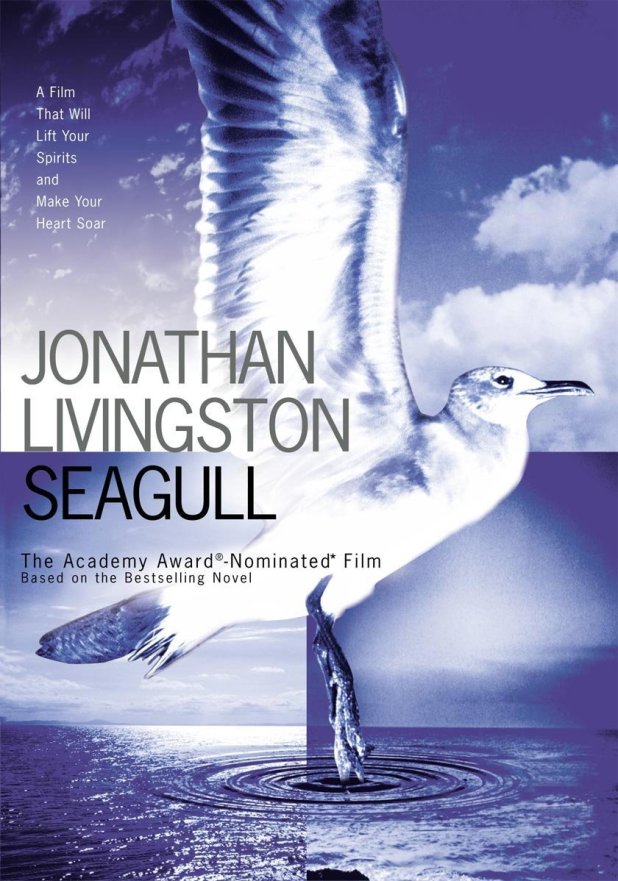
For years, I’ve wanted to see this movie and it’s eluded me. I shop at The Exchange stores often and the one in Monroeville had one of the Warner Archive burn on demand disks. I watched it like, well, a seagull for about a year. It was $12. Surely I wasn’t going to spend so much money on Johnathan Livingston Seagull, long deried as one of the worst movies ever, one of only four movies that Roger Ebert would ever walk out on (the others are Caligula, The Statue and Tru Loved) and a movie I learned about from The Fifty Worst Films of All Time.
Yeah, I like pain. Bring it on, seagull.
Jonathan Livingston Seagull (James Franciscus) is trying to up his speed and break the 60 mile per hour barrier, but the Elders of his flock — hey there, Hal Holbrook’s voice — shame him for even trying while Neil Diamond sings over his efforts.
He is now an outcast, flying alone, when he meets a series of mysterious seagulls who let him know that he is unique and should be proud. Johnathan becomes a mentor to the other birds who have no one to share their gifts with.
Juliet Mills plays Johnathan’s love interest, who is known as The Girl. And Richard Crenna is in here too as our hero’s father.
Director Hall Bartlett discovered the book when he was getting his haircut. Delaring, “I was born to make this movie,” he won the property from author Richard Bach for $100,000 and half the profits, which makes me assume that the Bach’s estate just got $6 from my DVD purchase and yet he still hasn’t made all that much.
Yes, this was directed by the same man who made Zero Hour!
And yet, it barely made back its budget.
Maybe all the lawsuits helped.
Bach sued Paramount Pictures before the film’s release because the movie was different than the book and the judge ordered Bartlett to revise the movie before it could be released. The major issue was a scene where a hawk (voiced by the director) attacks Johnathan.
Then, Neil Diamond sured because five minutes of his songs were cut. He also demanded the credit “Music and songs by Neil Diamond.” Diamond “vowed never to get involved in a movie again unless I had complete control,” then made The Jazz Singer seven years later.
Then director Ovady Julber sued, claiming that the movie stole from his 1936 film La Mer. There was no trial, as cultural use of the film had taken away any common-law copyright the movie had, which seems like a totally BS legal decision, but hey — I write about Spanish horror movies with lots of breasts and blood so the law is way out of my sphere of influence.
The opening credit of this film reads, “To the real Jonathan Livingston Seagull who lives within us all.” I advise that this is the exact moment that you begin whatever substances you plan to get you through this.
As for Richard Bach, he met his second wife Leslie Parrish while making this movie, leaving his first wife — who typed all of his aviation books — and six children, not seeing them for many years. Beyond her production job, Parrish was responsible for the seagulls and had to keep them in her room at the Holiday Inn. When Bach and Bartlett started to fight, she was the mediator between them. Sadly, her credit for the movie was just a researcher, which seems like complete malarky.
Parish would play a major role in Bach’s next two books, The Bridge Across Forever and One, which pwas all about Bach’s concept of soulmates. They divorced in 1997, so maybe his theory wasn’t so perfect. Who can say?
In 2014, there would be another chapter added to the book. Nobody thought to film that.
This is totally going to be the movie that I will use to chase people out of my house from now on. Except that, like all bad movies, I love it. I adore every second of this schmaltzy up with people movie that just had birds staring at the screen while actors try to make magic of the script. I look forward to many, many viewings of this movie along with many, many hangovers to follow.
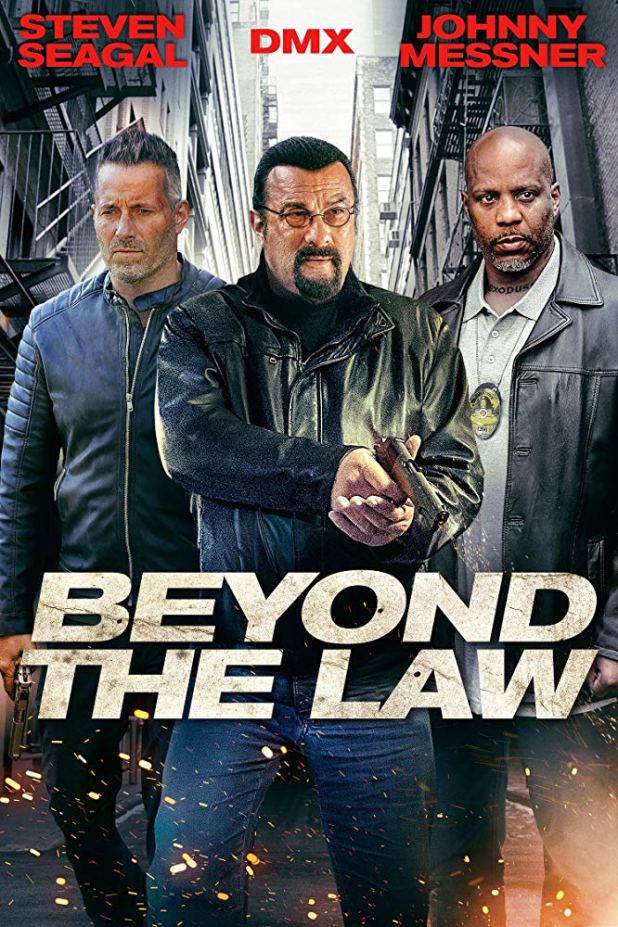
I feel like I finally have made it as a movie reviewer. That’s because I was just sent a Steven Seagal film to review. Seriously, I have been clawing for this pinnacle and here I stand on it. And let me tell you, this sensation is pretty sweet.
First off, two bits of sad news. This is not an Exit Wounds reunion. Second, DMX and Seagal share no screen time.
Seagal plays the villain here, an older mobster whose son Desmond murders a man who he thinks is just a worthless junkie. It turns out that he’s the son of a cop who is now out for revenge.
It’s directed by James Cullen Bressack, who also was behind the movie Blood Craft. I will say, I can’t get enough for DMX swearing, so this movie delivers on that skillset for him.
I have a new goal in life: raise enough money to make a movie with Seagal in it. I’ll just have him sit around and tell stories about when he was a special ops agent, then stand up and break a man’s hand for no reason. Trust me. It’s going to be awesome.
Beyond the Law is now available from Cinedigm.
DISCLAIMER: This movie was sent to us by its PR team.
Covering this movie feels like shooting fish in a barrel, so let me say something mean about myself before I go full-on this film: whenever I let go of a particular powerful burst of flatulence, I like to yell out, “Benjamin Bratt!”
I feel better for telling you.
I love when Oscar winners follow up their critical darlings with absolute dreck. Like Jamie Fox doing Stealth after Ray. Or Cuba Gooding Jr. making movies like Snow Dogs after Jerry Maguire. Or, you know, Halle Berry’s entire post-Monster’s Ball career.
After Michelle Pfeiffer wowed audiences as Catwoman in Batman Returns, a spin-off was announced. It sat in development hell before Warner Brothers canceled Batman vs. Superman and needed a film to take its place.
Audiences today are spoiled by superhero movies. This is what we got in 2004 — even though if you told me this movie was made in 1996, I’d say, “Well, yeah.” Instead of comic referenced and audience-pleasing movies, we got loosely based upon slabs of pure ennui like this caper, which had a costume that didn’t even look like the comics, but instead showed the “sensual awakening of a sexy warrior goddess.”
Pitof, who directed this mess, said, “I checked out some to see how Catwoman is treated in the comics, to make sure that our Catwoman was in the same vein. But I didn’t want to be too influenced by the comic book.”
I’d say that the comic was never cracked open.
Instead of Selina Kyle, Catwoman is Patience Phillips, who works at Laurel Hedare’s (Sharon Stone) cosmetics company. She learns that the company is covering up the dangers of a new cosmetics line, so she’s killed but saved by a bunch of cats. This leads to a game of basketball with Benjamin Bratt, who plays a cop.
This movie cleaned up at the 2005 Golden Raspberry Awards, winning worst picture, worst screenplay, worst director and worst actress, which Berry picked up herself, showing that she has a sense of humor. In her acceptance speech, she said, “I’d like to thank Warner Brothers, for making me do this godawful, piece of shit movie!”
Sadly, someone out there has to develop and maintain the web page for the movie at Warner Brothers. If you think your career is rough, you never had to redesign and keep the web page current for Catwoman.
Is that job any worse than the food artist who had to mold fruit into fake sushi for the date scene between Berry and Bratt? Why did it have to be sushi? Why couldn’t they just use sushi? Why did they even need to see the food? Instead, someone had to spend hours painstakingly making fruit look like sushimi.
It took fourteen writers to make this movie, a story that is supposedly about Catwoman but just rips off The Crow without the emotion. Pure junk on celluloid, this movie is a reminder that at one point, studios paid big money to make comic book movies and never once thought that the source material was worthwhile.
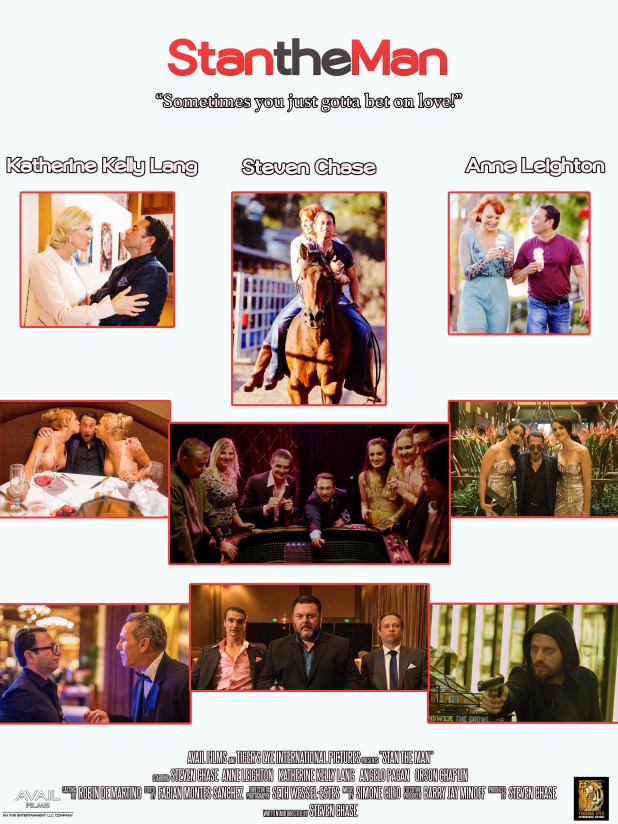
Stan Mann (Steven Chase, who also wrote and directed) is a multi-millionaire whose life is only about ladies, gambling and booze. He lives at a 5-star hotel where the staff tends to his every need. Yet at his heart, he’s a generous man that people seem to love. However, after getting messed up in a gambling scheme, he loses everything with one bet. And then, well, he gets shot.
Stan was planning on drinking himself to death, but now he’s been critically wounded in a liquor store robbery. The bullet he takes was meant for the store clerk, so an angel gives him thirty days to fix his life and find his one true love.
Katherine Kelly Lang, who has been Brooke Logan on The Young and the Restless and The Bold and the Beautiful, is in this. She was also in Skatetown, U.S.A. and Evilspeak.
This movie is available on demand from Avail Films.
DISCLAIMER: We were sent this movie by its PR team.
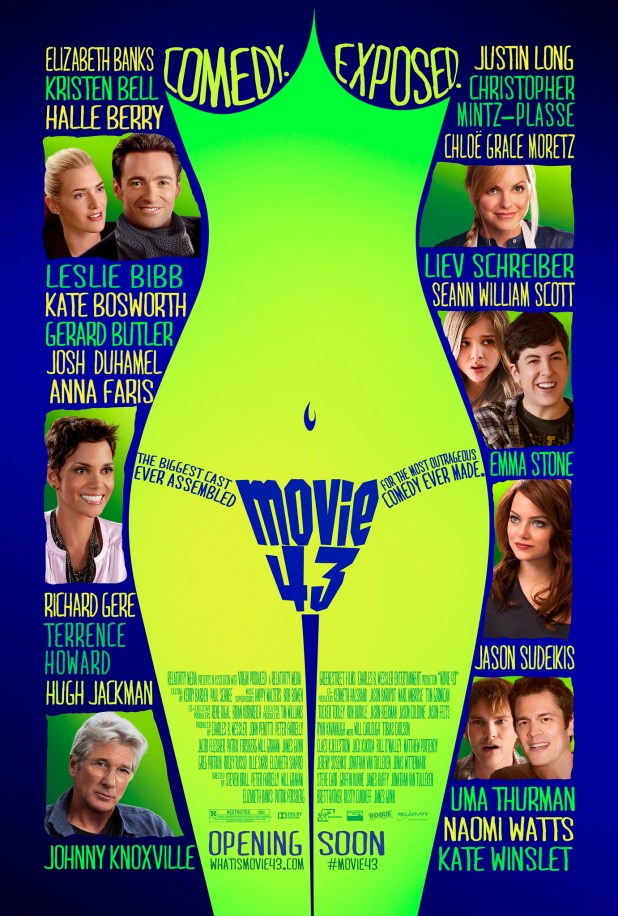
Then there’s Movie 43, a movie that took a decade-long odyssey to get made, as most studios rejected the script. The end result was shot over a several year period and included some actors who refused to appear and others, like Richard Gere, who worked hard to escape the project.
Movie 43 was the brainchild of Charles B. Wessler, whose career goes from starting way down here as a production assistant on the film Can I Do It… ‘Til I Need Glasses? — suddenly this is all making sense — and ends up all the way up here by producing Green Book.
Wessler then recruited three pairs of directors — South Park‘s Trey Parker and Matt Stone, Something About Mary’s Peter and Bobby Farrelly, and Airplane!’s David and Jerry Zucker — to make a third of the movie each. Yet weeks before shooting, writers Parker, Stone and the Zuckers backed out. The film ended up with thirteen directors and nineteen writers.
That said — the movie did make money. $32.4 million on a $6 million dollar budget, yet you have to consider that every single actor was working for scale. Therefore, we can’t even comprehend the true budget of this film.
What we can calculate is the vitriol and hatred that critics heaped on the film, crowned by it winning worst director, worst picture and worst screenplay at the 34th Golden Raspberry Awards.
Peter Farrelly directed the wrap=around story — as seen in the U.S. cut of the film — called The Pitch. Here, a writer not so subtly named Charlie Wessler (Dennis Quaid, and no, I’m not saying “who deserves better” because honestly, everyone involved in this movie deserves better and willingly made this movie) pitches his movie to producer Griffin Schraeder (Greg Kinnear). Somewhere in all of this, Common, Charlie Saxton, Will Sasso and the gigantic dome of Seth MacFarlane all appear.
Movie 43 feels like MAD TV the movie. You remember that show? It was the original home of Keegan-Michael Key and Jordan Peele. And all I remember is that the audience would be reacting to the show as if Jesus himself had walked out on set, yet nothing funny ever really seemed to happen. Seeing Sasso in these segments — he was also on the show before he turned his John Madden impression into an industry — reminds me of just how grating those shows were.
In the U.K. and the Netherlands, another wrap-around called The Thread posits a world where Movie 43 is the most dangerous film ever made and its discovery destroys civilization. We should all be so lucky. Fischer Stevens shows up, thankfully not as a culturally inappropriate character such as the one he played in Short Circuit, but then again, with bad taste being thrown at you for this movie’s entire running time, why they didn’t go this route is beyond me.
Next is The Catch, which was the scene that was filmed to convince other actors to be in the film. There’s one joke: Hugh Jackman has balls on his chin. Somehow, Kate Winslet is in this as well, getting paid around $800 for a role that by all rights would have decimated careers in the past.
In Homeschooled, Liev Schirber and Naomi Watts homeschool their child but take it too far. I wish I could tell you there was another joke, but nope. That’s the joke.
Steve Carr, who fostered such cinematic turds as Dr. Dolittle 2 and Paul Blart: Mall Cop onto screens everywhere as if they were commodes, brings the fecal-obsessed story The Proposition, in which Chris Pratt and Anna Ferris (who were a couple at the time) basically take a dump upon one another.
Some day, I’m going to have a chat with Griffin Dunne about making Practical Magic, a movie that I have suffered through numerous times. I’m also going to discuss Veronica, the next segment, whereupon Kieran Culkin and Emma Stone graphically discuss their sex life in a rundown grocery store.
Steven Brill, who was the hatchet man called in to reshoot the movie Fanboys by Harvey Weinstein, directed the next sequence called iBabe. Yes, the force that made Little Nicky is here to do an overly long sketch about a robot girl (Kate Bosworth) whose internal fans cut off penises. This is probably the most embarrassing thing Richard Gere has ever done, I said, ignorant of the veracity of that urban legend.
Superhero Speed Dating has Justin Long and Jason Sudekis as Batman and Robin, trying to woo Kristen Bell as Supergirl, Uma Thurman as Lois Lane and Leslie Bibb as Wonder Woman. It’s a marvel of restraint and timing compared to the rest of the movie.
Machine Kids is a throwaway about kids who get stuck inside machines.
Elizabeth Banks directed the next part, Middleschool Date, which is a period piece. No, really, it’s a drawn-out tale of menstruation starring Christopher Mintz-Plasse, Chloe Grace Moretz and people who only two names like Jimmy Bennett, Patrick Warburton and Matt Walsh.
Have you ever wanted to watch Johnny Knoxville and Seann William Scott beat up a leprechaun played by Gerard Butler? Then you must be Brett Ratner and you made the next story, Happy Birthday.
Truth or Dare involves, well, truth or dare between Halle Berry and Stephen Merchant. You know, this week of failures has two Halle Berry movies in it. This one somehow beats out Catwoman, which speaks so, so much about this movie.
Victory’s Glory is directed by Rusty Cundieff, who turns in a cute tale of an all black basketball team against a team of all white guys. Terrence Howard makes it work.
Elizabeth Banks and Josh Duhamel are in love, except Josh’s cat won’t have her in the house in the final story, Beezel. It’s animated and James Gunn directed it, but somehow didn’t even get to edit the movie.
There were some scenes cut, like Bob Odenkirk’s Find Our Daughter, which has Tony Shaloub and Julianne Moore as the stars and The Apprentice, a movie in which a mortician has sex with a corpse and brings her back to life. Anton Yelchin, who died before his career could go past the Star Trek films, was in this segment.
Comedy is a touchy subject. Not every joke lands. But man, never have so few jokes landed so never, as they don’t say. I saw this in the theater and while I laughed at some of the incredulous moments, it soon turned into a clock-watching affair. Then again, it was a forced fun team bonding work experience, which never lends toward enjoyment. Subsequent viewings have only made me dislike this movie so much more.


 B&S About Movies
You must be logged in to post a comment.