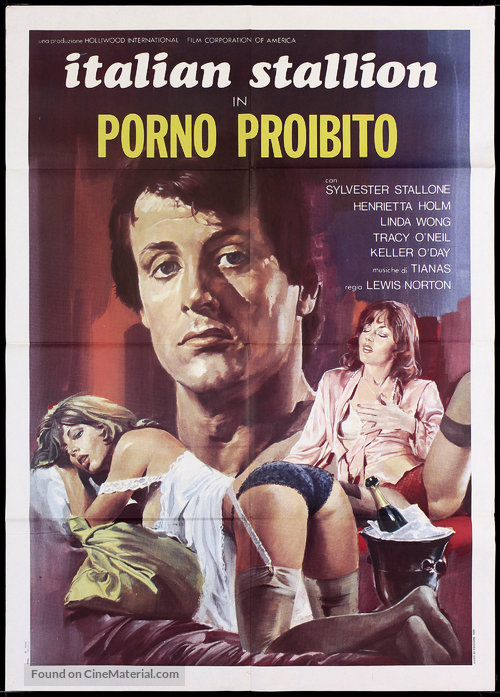
Otherwise known as The Italian Stallion, this movie was a big deal in the mid-1970’s, with its urban legend stretching well into the 1980’s. Basically, it’s a soft core movie with a pre-Rocky Sylvester Stallone in the lead, but there were rumors that it originally had hardcore penetration scenes. That’s since been debunked.
Stallone made this film his debut, but did so out of desperation. He’d been homeless for several days and was sleeping in a New York City bus station in the dead of winter. In the September 1978 issue of Playboy, he said “It was either do that movie or rob someone because I was at the end — at the very end — of my rope. Instead of doing something desperate, I worked two days for $200 and got myself out of the bus station.”
It was directed by Morton Lewis, who was also behind It’s Getting Harder All the Time and the producer of several movies I’ll soon be searching for, like The Girl From Starship Venus and Secret Rites, which rips the lid off British black magic, complete with a rare on-camera appearance by Alex Sanders.
After Stallone made his money, the film, by all accounts, was never shown. Then Rockyhappened. The now hot was extorted for $100,000 to make the film go away, but he refused to pay. And then our old friends the Bryanston Distributing Company got the rights.
I could tell you that this company put out movies like Return of the Dragon, Andy Warhol’s Frankenstein, Coonskin, The Devil’s Rain! and Dark Star. But what they’re really known for is basically stealing The Texas Chainsaw Massacre.
That’s because Bryanstone was owned by the Columbo crime family and run by Anthony “Big Tony” Peraino. And they’re the ones that made all the money on Deep Throat.
The 1976 release of this film, now called Italian Stallion, starts with a prologue with pornography director Gail Palmer, which further fueled the flames of the adult scenes that were supposedly cut from the film.
What is in the film is pretty boring, unless you’ve always yearned to see Stallone’s yam bag. He plays Stud, who lives with Kitty in New York City. If you didn’t guess that from the title…
Stud is pretty much a brutal thug, but he’s good in bed and Kitty likes how he whips her with a belt. Later, they have a party and there’s a big group scene that ends with Stud taking care of every girl without breaking a sweat. “Yo! I didn’t hear no bell,” you may say.
An uncredited Janet Bazet also shows upon here and if you’ve seen enough Michael Findlay and Joe Sarno movies, you’ll know who he is. You’re also a pervert if you perked up at those two names. It’s OK. I understand.
After being released on DVD in the early 2000’s, this movie resurfaced in 2007 when the long-rumored hardcore version showed up. Adult Video News debunked this, however, as what was edited in appeared to be older loops and nothing to do with Stallone.
Bryanston — who resurfaced as a film distribution company — and Metro-Goldwyn-Mayer were in negotiations for the rights to this film, but the worldwide rights ended up being sold on eBay in November of 2010 for around $327,000.
Editor’s Note: This is part of our week-long tribute to the films of Sylvester Stallone. You’ll find links to several more reviews of his films, within. If you don’t see your favorite mentioned, enter the title into the search box to your left; chances are, we reviewed it.
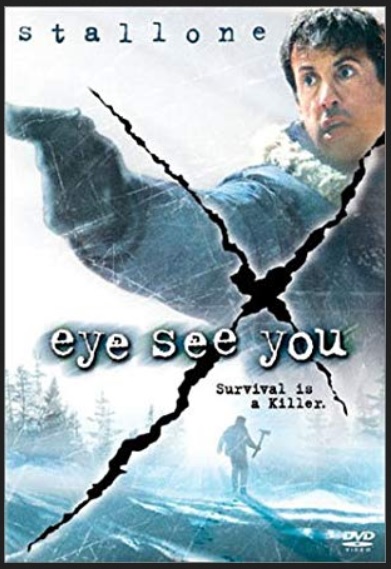
If you had a Blockbuster Video membership during the home video market’s conversion from VHS tapes to DVD discs in the late ‘90s, chances are you saw—and passed over—this psychological-slasher romp starring Sylvester Stallone under its DVD reimaging as Eye See You, distributed exclusively on the nationwide chain’s shelves. If you had an extended cable TV package and channel-surfed the Starz and Showtime cable networks, you also saw the film—and probably passed on it as well. It seems everyone passed on it. I passed on it, eventually watching the film a few years after its release as result of the $1.00 DVD cut out bin at my local Dollar Tree.
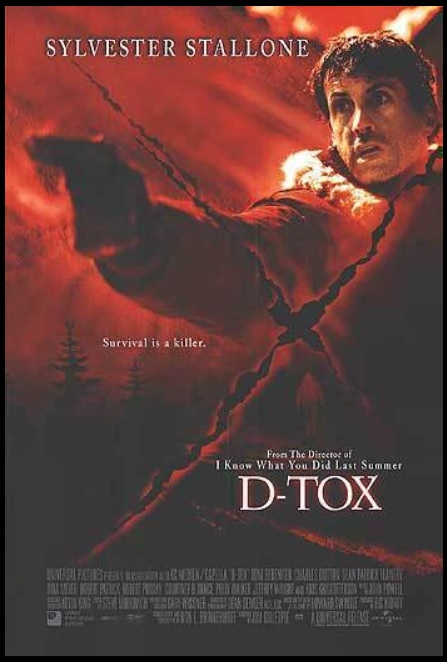
D-Tox is the least known film of the Stallone canons—and it’s completely unknown as part of Ron Howard’s production oeuvre. For me, as with Cobra (1986), the production history behind this failed, joint venture between Universal Pictures and Ron Howard’s Imagine Entertainment is more interesting than the actual film itself. But it’s not as interesting as the off-the rails celluloid madness that is Tango & Cash (1989) . . . now that’s a production tale!
At the time of the newly-founded DEJ Productions acquiring the three years shelved D-Tox from Universal Pictures, DEJ was under the same corporate umbrella as the Viacom-owned (then part of the CBS-TV Network; as of this writing, Viacom and CBS have re-merged) Blockbuster Video, Starz and Showtime networks. DEJ was, in fact, formed by Blockbuster executives for the purpose of acquiring low-budget films for exclusive distribution through Blockbuster Video, so as to take advantage of the home video market’s resurgence via the DVD format. Courtesy of their corporate synergy, DEJ could also sell the films they acquired for exclusive Viacom cable television distribution in the U.S.
However, prior to DEJ acquiring the film, Universal Pictures, in a venture with Paramount Studios under their joint UIP corporate umbrella, unceremonious dumped the film into the overseas’ markets under the title D-Tox, with the hopes the film would find an audience. It ended up grossing less than $7,000 in foreign box office receipts. Ouch.
The film that eventually became known as Eye See You on U.S shores is based on Jitter Joint, an obscure (my local library system doesn’t carry a copy of the book or the DVD) 1999 published-novel written by Dallas Times Herald reporter Howard Swindle. Optioned by Sylvester Stallone with assistance from Ron Howard and Brian Grazer’s Imagine Entertainment for Universal Studios before its publication, the film version—then known under the title Detox—was completed that same year. The end product, shot-on-the-cheap in the economical-advantageous lands of Vancouver, Canada, for $50 million (how much would it have cost if it was shot within U.S borders?), the film failed in its initial test screenings; Universal lost faith in the project and shelved it. As with Stallone’s First Blood using David Morrell’s 1972 novel First Blood and Cobra using Paula Gosling’s 1985 novel Fair Game as its source materials, D-Tox deviates wildly from its source materials and barely resembles the tale of Jeb Quinlan, the Dallas homicide detective in the pages of Jitter Joint solving killings in a rehab center, as this Kirkus book review shows.
A year after the D-Tox overseas failure, Universal authorized a series of rewrites, reshoots, and title changes—there are screener copies of the film that tested as The Outpost in 2000—and it failed, again, in theater test screenings. By that point, with the film’s budget ballooned to $55 million, and with the director and studio still arguing over creative control of the project, Ron Howard stepped in to personally oversee the film in post-production in the hopes of salvaging it. The end result: Universal permanently shelved the film—and it sat in the vaults for three years. Adding insult to injury: Ron Howard had Imagine Entertainment’s name removed from the film, then Universal removed its logos and references from the film. Then, along with DEJ, Blumhouse Productions (Insidious, Happy Death Day, The Purge) hung its production shingle on the film for its unceremonious DVD release. Once you factor in the film’s P&A against its budget, the film hasn’t come close to, and most likely never will, break even.
So how did Sylvester Stallone end up in this mess?
Stallone planned the Jitter Joint project as his follow up to Cop Land (1997), his second attempt to transition out of the boilerplate, action-driven films of his early career and move into more character-driven, insightful works. The film was the first in a three-picture deal between Stallone and Universal in which the studio would pay him $60 million for the three proposed films. When the Jitter Joint–D-Tox project failed and landed on the shelf, Universal pulled out of the deal, gave Stallone his $20 million for services rendered, and set him on his way.
Then, in the wake of the failure of D-Tox in the overseas markets, Stallone’s follow ups of Get Carter (2000) and Driven (2001), both which managed to receive international theatrical distribution, also failed at the box office. The end result was that his next two films—again, character-driven pieces that eschewed his he-man action persona for distraught, tragic heroes—Avenging Angelo (2002) and Shade (2003)—ended up being dumped into the DVD and VOD markets. Nine years after Cop Land, with his valiant six attempts at reinventing his cinematic image deemed a failure (he’s actually very good in all of them), Sly returned with sequels of the films that made him: Rocky Balboa (2006) and Rambo (2008). Then he created his star-studded and action-packed, ‘80s retro-romp The Expendables, which he followed with sequels in 2012 and 2014.
As result of the film’s themes of isolation and its claustrophobic settings, reviews for D-Tox compared the film to Aliens (1986)—with a human killer in lieu of an alien one—crossed with David Fincher’s pseudo-Giallo detective thriller, Seven (1995). As result of D-Tox’s snow-bound setting, other reviewers tipped their hats to John Carpenter’s The Thing. Of course, D-Tox is a murder mystery rather than a sci-fi or action film and, to be honest, doesn’t have any of those film’s unique plot twists or on-the-edge-of-your-seat moments. A more accurate description of D-Tox—courtesy of its murder mystery vibe—is that it plays as out as a graphic version of Agatha Christie’s 1939 novel Ten Little Indians (made into films in 1965, 1974, and 1989). While some critics may disagree, Christie’s novel and John Wood Campbell Jr.’s Who Goes There (1938; source material for The Thing) share a similar master plot—regarding a grouping of paranoid and backbiting protagonists stranded in a remote location perused by an unseen antagonist—and it’s not far removed from the master plotting of David Fincher’s Aliens 3.
Now, if you’re feeling I Know What You Did Last Summer vibe in the frames of D-Tox—where a group of paranoid and backbiting friends are picked off one-by-one by an unseen killer—that’s because Jim Gillespie directed both films. If you’re an older fan of Klaus Kinski (Nosferatu the Vampyre) and a veteran of the video ‘80s, you’ll reference Schizoid (1980), where members of Kinski’s therapy group (without the snowy setting) are murdered by an unknown assailant. Newer film goers might reference Dennis Quaid’s little-seen serial killer romp, Horsemen (2009) with its trouble cop adrift in giallo-inspired, snowy set pieces. Sadly, regardless of its strong giallo-inspired start, D-Tox quickly disintegrates into what many found to be a predictable and pedestrian stalking-slasher pace that, if you removed the gore, you’ll find yourself in an episode of Law and Order: SVU with Olivia Benson being sent to a rehab center and stalked by one of her old collars on a revenge binge.
While D-Tox is not a classic that lends itself to repeat viewings—it has its share of plot gaps, losses of tension, and annoying boilerplate characters doing stupid things (such as looking into door peepholes when a serial killer is on loose and has already killed nine people by drilling out their eyes through door peepholes)—it certainly doesn’t deserve its crushing reviews. Stallone, as he was in Cop Land, is excellent throughout as the alcoholic and failed-suicide attempting F.B.I agent, with his downbeat acting chops matching the film’s mysterious, atmospheric and creepy pace.
Stallone is Jake Malloy, a not-invincible ex-cop who joined the F.B.I as result of his work on a case with a serial killer targeting prostitutes. According to the harassing phone calls made by the serial to authorities to find the bodies, it seems Jack made the serial’s life “difficult” in cleaning up the “prostitution filth” and he cackles: “I see you, but you can’t see me” throughout the film. So, in revenge, the killer changes things up and start targeting cops—and racked up nine kills in six months. Malloy can’t catch him because the serial keeps changing his M.O by picking cops from different precincts with no rhyme or reason. There is, however, one consistent—and very giallo—modus operandi: when he initially claims a victim, the serial rings a victim’s doorbell and, as they look through the door’s peephole, he drills his victim in the eye. Then after drilling out their other eye, he tortures them—he sees them, they can’t see him—and graphically displays their bodies. So, for example, when Malloy’s ex-beat partner ends up with two drill-out sockets, the serial shoves a nightstick down his throat and leaves him swinging in a very Argento-like suspension hogtie from the ceiling for Malloy to see. Then, with the ol’ I’m-calling-you-from-your-house gag, the “Eye Killer” murders Malloy’s just-proposed-to girlfriend—complete with drilled out eye sockets and hanging from the ceiling like a slab of punched up Rocky-meat.
Three months later: Malloy is in an alcoholic tailspin and attempts a slit-wrists suicide with the ol’ if-she-didn’t-meet-me-she’d-still-be-alive, shtick. This leads Malloy’s old F.B.I commander, Chuck Hendricks (Charles Dutton, Aliens 3, natch), to ship him off to a remote rehabilitation clinic “run by ex-police officers for police officers” inside an old Air Force radar outpost that became a military psychiatric hospital before “doctor” Kris Kristofferson bought the abandoned property and turned it into a rehab clinic and named it The Overlook Hotel. Oh, wait, that’s The Shining . . . but let’s cue that freak snowstorm anyway; you know, the one that conveniently downs all the phone lines and strands the ubiquitous, arrogant and paranoid menagerie of double-Y chromosome syndrome-stricken inmates on Fiorina 161 . . . oh, wait, that’s Alien 3 . . . but let’s set loose the unseen killer in the creepy, makeshift military complex anyway; you know, the one that “sees” Malloy’s every move and tracks him to Overlook 161 so, while everyone is detoxing, they start to commit “suicides.” Then Scatman Crothers has a “Shining” moment . . . I mean, Charles Dutton has a “Shining” moment . . . and goes back to the rehab center to see what the hell is going on up there.
At that point, D-Tox degrades into standard chase-action clichés with Malloy running around the underground complex trying to kill the Xenomorph, uh, serial killer, as the bodies pile up (actors Jeffrey Wright, Tom Berenger, Stephen Lang, Robert Prosky, Robert Patrick, Sean Patrick Flanery). It was Malloy’s dispatching crescendo of the killer that was one of the film’s many reshoots; the studio felt the original killing/ending wasn’t a “spectacular enough.” The Eye See You DVD-version of D-Tox includes a bonus vignette package that features eight deleted scenes—but not the original ending. The initial theatrical trailers for D-Tox also include some scenes that were eventually excised from the film’s reimaging as Eye See You.
Regardless of its mix of serial killers and stalk n’ slash plotting missing the John Carpenter Halloween signpost that that it seems the film was going for, if you’re a Stallone fan, you’ll enjoy his work on either version of the film. You can watch the Eye See You trailer from DEJ Productions and the D-Tox trailer from Universal on You Tube—and compare. You can also “see” D-Tox (full movie) on You Tube—with commercials—for free.
All the Italian-made giallo film of the ’60s and ’70s you can handle, with a dive into its literary noir rootsof the ’30s and 40s.
About the Author: You can read the music and film reviews of R.D Francis on Medium and learn more about his work on Facebook. He also writes film reviews for B&S About Movies (the link populates a text-only reference list of his reviews).
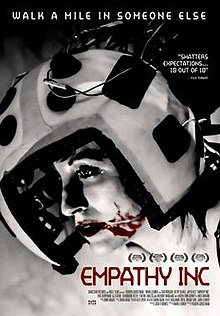
Venture capitalist Joel is dealing with the end of his last company. He’s had to be the scapegoat for the lies that his partner told and his name is known nationwide as a swindler. He and his actress wife Jessica have to start over from the bottom — living with her parents. But when Joel’s life is at his lowest, he discovers that he may be able to reinvent himself.
Written by Mark Leidner and directed by Yedidya Gorsetman, this black and white tale of virtual reality gone wrong surprised me with how deep and brutal it could be.
When Joel meets old friend Nicolaus and his business partner Lester, he learns about Empathy, Inc.’s product – Xtreme Virtual Reality. It takes its users and allows them to be inside the lives of the poor and homeless. But the truth is, they’re actually taking over the lives of real people and the choices they make have deadly results.
The line where one of the villains says, “It’s the best feeling ever to CENSOR yourself?” That’s crazy but brilliant writing. This raises some big ideas and delivers on them. I’ve never seen a body switch movie before where that happens.
Empathy Inc. will be released in theaters on September 13 and VOD September 24.
DISCLAIMER: We were sent this movie by its PR company, but that no bearing on our review.
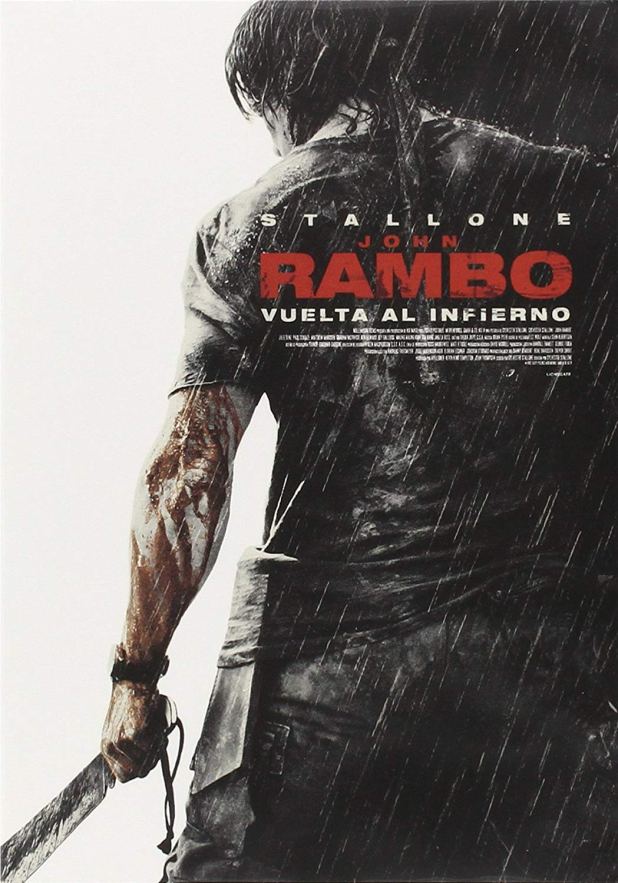
Why did it take twenty years to make another Rambo movie? Stallone claims that it was due to a lack of a compelling story. An early idea had Rambo traveling to Mexico to rescue a young girl, but it lacked the Rambo essence of a lost man wandering and trying to find himself.
There was also a thought that Rambo should be living a quiet life with his wife and child when white supremacists kidnap his family. Another idea saw Rambo trying to stop a hostage situation at the United Nations — where he is strangely working as a diplomat — and battling terrorists (including his adopted son, who I’ll assume is Hamid from Rambo III).
Speaking of the United Nations, that’s where Stallone got the idea to set the film in Burma. In fact, lead villain Maung Maung Khin is a former Karen freedom fighter who accepted the role to bring awareness of the Saffron Revolution to the world.
The film is banned by the Burmese government. It is, however, available there in bootleg versions thanks to the opposition youth group Generation Wave. The Karen National Liberation Army has publically stated that the movie gave them a morale boost and have adopted the “Love for nothing or die for something” line as a rallying cry. “That, to me,” said Sylvester Stallone, “is one of the proudest moments I’ve ever had in film.”
When the film’s original director left, Stallone stepped in. He had no vision for the film until he realized, “What if the film was directed by Rambo?” He had another big idea that totally amped up the film, too. Realizing that the film had a low budget and that gore is cheap, he decided to go all in.
I’m here to tell you that this movie is 100% all in.
The ruthless Major Pa Tee Tint leads an army of men who systematically destroy small villages, killing innocents, drafting teenagers and abducting and assaulting the women. A missionary named Michael Burnett hires Rambo — who makes his living as a snake catcher and boat pilot in Thailand — to use his boat on a humanitarian mission to provide medical aid.
Pirates stop the boat and Rambo is forced to kill them to save Sarah Miller (Pittsburgh’s own Julie Benz), the only woman in the group. Everyone is so upset by how violent Rambo is that they send him away. Within hours, they’re attacked by Tint’s soldiers.
Of note, Benz began working for the U.S. Campaign for Burma after this movie was released, saying “I can’t continue my life without trying to help the situation.”
Father Arthur Marsh (Ken Howard, The White Shadow), the pastor of the missionaries’ church, asks Rambo to take five mercenaries upriver on a rescue effort. Our hero offers further help, but their leader refuses. Luckily for him, Rambo sticks around as the soldiers quickly outnumber the mercenaries.
What follows is an absolute massacre, as Rambo graphically dispatches of everyone in his way, sometimes with whole groups being wiped out by weapons fire and other times hand to hand. If you’re squeamish about gore at all, you should avoid this film, which is packed with graphic displays of death and dismemberment. I’m serious: there is an average of 2.59 killings for every minute of screen time and an overall body count of 466 people.
David Morell, the writer of First Blood spoke highly of the film: “I’m happy to report that overall I’m pleased. The level of violence might not be for everyone, but it has a serious intent. This is the first time that the tone of my novel First Blood has been used in any of the movies. It’s spot-on in terms of how I imagined the character — angry, burned-out, and filled with self-disgust because Rambo hates what he is and yet knows it’s the only thing he does well. … I think some elements could have been done better, [but] I think this film deserves a solid three stars.”
After making Judge Dredd, Sylvester Stallone got interested in the world of auto racing.
He said of the film’s concept, “Racing’s very much like the world of acting. You have your front runners and you have guys that are there for the long race, and you have other guys that block for other people, that are called supporting and character actors. It’s all the same kind of situation. And you realize that you can’t always be number one. You just can’t be the guy in front all the time. So what you can do is lend support to, and help and nourish and encourage someone else. So it’s like your experiences live on in someone else. If you can find some young actor and you can say, “Listen, don’t do this and don’t do that and avoid this and that,” and share your experiences, and he does succeed, you can say, “You know what, I kind of contributed to that.” As an actor did you have to learn you can’t always be number one the hard way. Unfortunately, I did.”
Although this film was a commercial failure, it brought Renny Harlin back after his fiasco Cutthroat Island. He and Stallone had teamed up before for Cliffhanger. It was also a critical failure, nominated for seven Golden Raspberry awards and earning the ire of Jay Leno, who told Richard Roeper that it was the worst car film ever made.
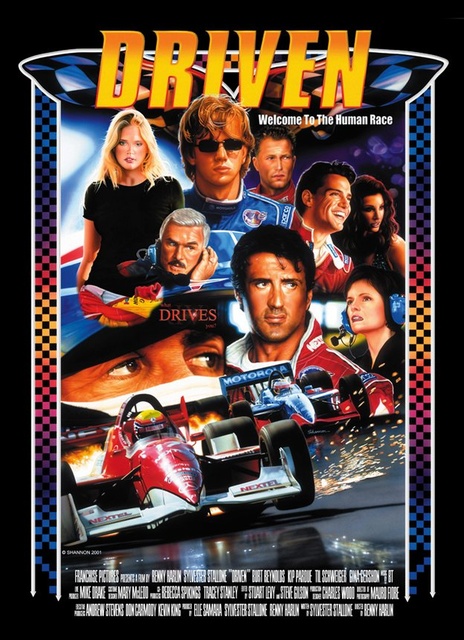
In the middle of the 2000 Champ Car Season, rookie driver Jimmy Bly (Kip Pardue, Remember the Titans) is in the lead with five big wins. But the pressure is getting to him, thanks to his brother and business manager Demille (Robert Sean Leonard, TV’s House). It’s also put him directly in the crosshairs of reigning champ and teammate Beau Brandenburg (Til Schweiger, Inglorious Basterds), who is also dealing with the distraction of his fiancee Sophia (Estella Warren, 2001’s Planet of the Apes).
So Beau decides to dump her and he starts winning again. However, Jimmy has a big crash and needs an older driver to be his mentor, so team owner Carl Henry (Burt Reynolds!) brings back former champion Joe Tanto (Stallone) to replace Memo, another driver who is now married to Joe’s ex-wife Cathy (Gina Gershon). Whew — the drama is already started, but what do you expect from a movie with the tagline “Welcome to the human race.”
Joe’s just supposed to be a blocker, but when he learns that Jimmy is getting with Beau’s ex-fiancee, he tries to use his experience to fix things. It takes a car crash that nearly kills Memo to bring everyone back together and be friends.
Jimmy ends up the champ, with Beau in second and Joe in third. Everyone celebrates and I cheer on the credits, which finally freed me from this film. Stallone’s original script was 220 pages and Harlin’s first cut was four hours long, so while I often want a film to give more time, I was fine with this movie ending when it did.
If you know racing, one would assume you’ll love all the real racers showing up, but I would imagine so many of the details, like Joe throwing coins on the track to touch with his car, are absolutely ridiculous. Then again, this is supposedly a trick that trick real-life Formula One driver Juan Manuel Fangio of Argentina used to perform.
Every creative force has projects that they either turn down or work hard to get made, but ultimately never make it to light. Sylvester Stallone is no different, as there have been several films — some a long time in development — that have never made it to the silver screen. I was inspired by the list on Craig Zablo’s Stallone Zone and decided to do my own research into some of these unrealized movies.
Bartholomew vs. Neff: The July 30, 1990 L.A. Times reported that “Carolco Pictures Chairman Mario Kassar announced today that John Hughes will direct Stallone and Candy in a comedy about feuding neighbors entitled Bartholomew vs. Neff. An original story by Hughes about two neighbors whose friendship disintegrates as they battle to the finish, the film is scheduled to begin production in the summer of 1991, shooting in the Chicago suburbs.”
All that exists of the film is the unproduced script and this board that announced that it would soon be filming. Stallone would move on to appear in another Carolco film, Cliffhanger. Sadly, Candy would pass away in 1994, so we’d never get to see those two stars team up.
The Executioner: This adaption of Don Pendelton’s famous paperback novel hero almost happened, with Stallone starring as Mack Bolan and either Burt Reynolds or William Friedkin directing. The June 23, 1988 issue of the Chicago Tribune reports that Friedkin was delaying the film until May of that year. Over the last few years, this movie has also been rumored to be a Bradley Cooper project. If you can’t wait to see one of Mack’s adventures, you can always watch one of The Punisher comic adaptions or The Exterminator movies, as they pretty much stole the idea whole cloth.
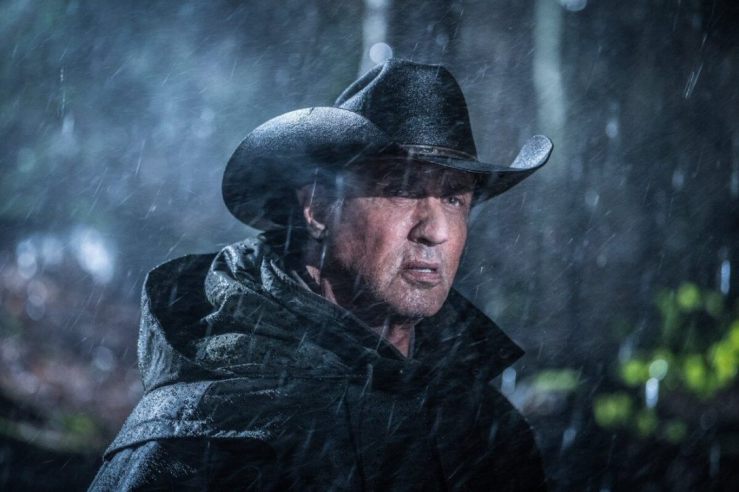
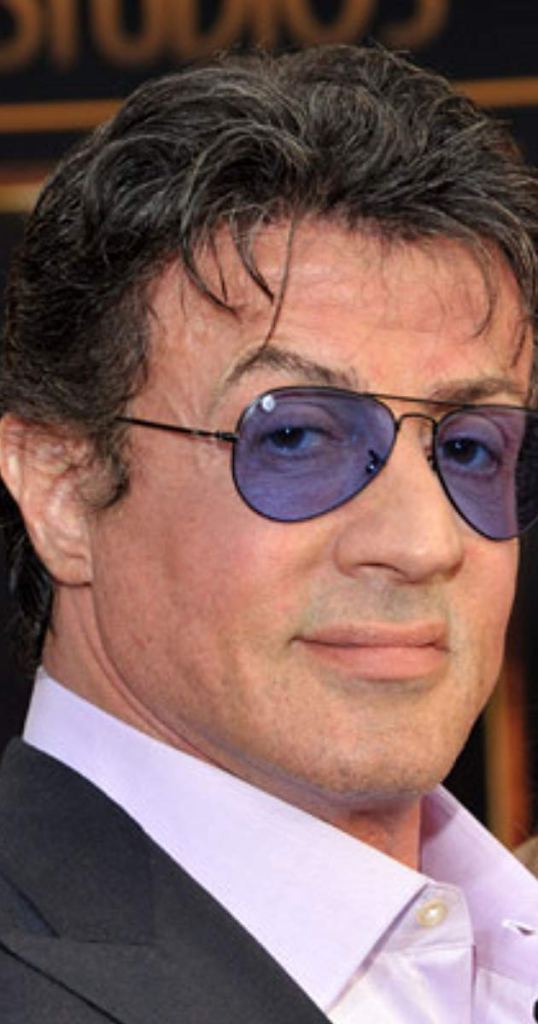
I realize this is from the new Rambo and not Gale Force, but it’s the only photo I could find of Sly in the rain.
Gale Force: Described as Die Hard in a hurricane, this movie was a mess from day one. Made back in the days of Hollywood big spending, the October 4, 1991 Entertainment Weekly article describes the film as the first project where “the new Hollywood austerity has finally hit Carolco.” Renny Harlin spent over $1.75 million dollars on scripts alone and had a $3 million dollar pay or play deal. The studio elected not to play; Harlin would go on to further deplete the coffers of Carolco with Cuthroat Island and Cliffhanger, which required other studios to finally get made. And hey — Joe Eszterhas made a cool half-million just for coming and writing whatever he wanted. Hollywood in the 1990’s was pretty awesome if you liked to get paid.
There are no pictures of this movie, so how about Stallone with some bodyguards?
The Bodyguard: No, not the Kevin Costner/Whitney Houston movie. This unproduced script was written by Stallone in the 1970’s and concerns a bodyguard who fails to protect a millionaire’s wife and child, so he must go after the killers for revenge.
No photos of the following film…you get the idea by now.
The Bogus Kingdom/Till Young Men Exit: Stallone told William Baer in the book Classic American Films: Conversations With the Screenwriters, “I was always the mugger, the intimidator, which actually seemed quite strange to me since I’d never perceived myself in that way. So I wrote a whole pile of scripts…trying, in every case, to create possibilities for myself as an actor.” I’ve seen both of these movies listed on several unmade Stallone ideas and they seem similar: a group of performers who are tired of being passed over kidnap several high-ranking movie execs (or Broadway producers) and use their make-up and acting skills to take over. Much like how Stallone used parts of his real life for other films, you can see him channeling exactly where he was in his life.
Fatalis: Created by Jeff Rovin, who also wrote Stallone! A Hero’s Story, this movie was optioned by Universal, according to the October 23, 1998 edition of Variety. It’s all about saber-toothed tigers — that were frozen in glaciers — coming back to life thanks to climatic shifts of El Nino and making their way to Los Angeles. Stallone would have played Jim Grand, an academic expert who love ancient weapons, yet attempts to stop their attack without making them extinct all over again.
This came from the podcast Screenplay Archaeology.
Dead Reckoning/Isobar: There’s an entire chapter in David Hughes’ Tales from Development Hell about this film, which would have been the first to team Ridley Scott with HR Giger since Alien. Written by Jim Uhls, who would go on to script Fight Club, this movie was all about what happens when “an altered form of life gets loose on a high-speed runaway underground train. The creature was a humanoid with a genetically-altered brain that was intended to be used as the hard drive in an artificial intelligence project.”
Under the working title The Train, Giger went crazy designing all manner of creatures and machinery for Scott, including “bizarre designs for trains, stations, passenger compartments — even a radical new kind of emergency exit in which passengers are ejected into a spontaneous ejaculation of soft foam.” Scott would soon leave the film and Giger would follow, using some of his sketches for Species.
Joel Silver stayed on as producer, renaming the movie Isobar, which means “a line on a map connecting positions having the same atmospheric pressure at a given time, or on average over a given period.” Uhls worked that into his script, renaming the train the Intercontinental Subterranean Oscillo-magnetic Ballistic Aerodynamic Railway.
Steven de Souza even came on board to do some rewrites, but he derided the project as “too much of a picture called It! The Terror from Beyond Space…So with ISOBAR, you had a rip-off of a rip-off.”
Dean Devlin came aboard as well as Roland Emmerich as director. Stallone and Kim Basinger were to star in the movie, too. An astonishingly high $90 million dollars was the budget for ISOBAR or Osobar in 1990 — around $177 million today — and there have been rumors as recently as 2006 that the movie could still be made, according to Den of Geek.
As for Giger, he grew obsessed with the idea of a ghost train and used it in Species, as well as bringing it into the real world, creating a home train that ran from his kitchen to backyard. Yes, really.
Poe: For nearly four decades, Stallone has wanted to make a movie all about Edgar Allan Poe. Again, yes really. “It’s a never-ending journey, and I would hate myself if I don’t continue it at least to the best of my ability and try to see it actually come to fruition,” Stallone said in an Instagram video. “To be able to go out there and say, ‘I accomplished it. It may have taken 45 or 50 years, but it’s done.” That’s what I’m working on. It’s been one of the great challenges of my life, but like Poe used to say, “I promise to take life by the throat and I shall not let go until I succeed.” Yo Poe, keeping punching.”
According to this Huffington Post article, Stallone has intended for this movie to star Robert Downey Jr. And just why does he love Poe so much? “His work was too hip for the room… but he developed the modern mystery story. He was also one of the great cryptologists; there were very few codes he couldn’t crack. He was just an extraordinary guy.”
Sinsilver: All the way back in November 1, 1976, Stallone told The New York Times that if he didn’t star in Superman or make his Poe movie that he’d do this film, about a Hassidic Jew in the Old West, and based on “a reinterpretation of the Communist Manifesto.”
Sad Blues: Stallone also wrote an unproduced script in the 1970’s about a pop singer with a life-threatening condition that requires that he eat bananas every day. And you thought Rhinestone was crazy.
There’s also a big list of films that Stallone was originally intended to star in, but ended up passing on, which includes Beverly Hills Cop, Coming Home, The Cotton Club, Frequency, Inglorious Basterds, Romancing the Stone, Superman and Ballistic: Ecks vs. Sever.
Also of note are two cancelled Stallone toys:
These were originally intended to be 6-inch Judge Dredd figures before the film underperformed. Mattel then released them as part of their Mega Heroes line, but at a much smaller size.
In the encylcopedic G.I. Joe: Order of Battle #2, Joe fans were surprised to see a new member join the team: Rocky Balboa. Coleco had already been having some success with their cartoon tie-in line, Rambo: The Force of Freedom. Yet one issue later, this disclaimer appeared.
So what happened? According to former Hasbro product manager Kirk Bozigian, in this Mental Floss article, “The reason Rocky was dropped from the G.I. Joe line is because his agents got greedy. While we were designing and sculpting Rocky Balboa, a competing toy company, Coleco, was introducing Rambo action figures and vehicles to compete with us. The decision to drop Rocky was an easy one.”
Despite all this, Rocky’s would-be nemesis, Big Boa, did end up joining the Cobra army.
Mock-up of an unproduced Rocky G.I. Joe.
Did I miss anything? Do you know anything about Charming Charlie, another unproduced Stallone script? Or how about the never made Cobra 2? Let me know!
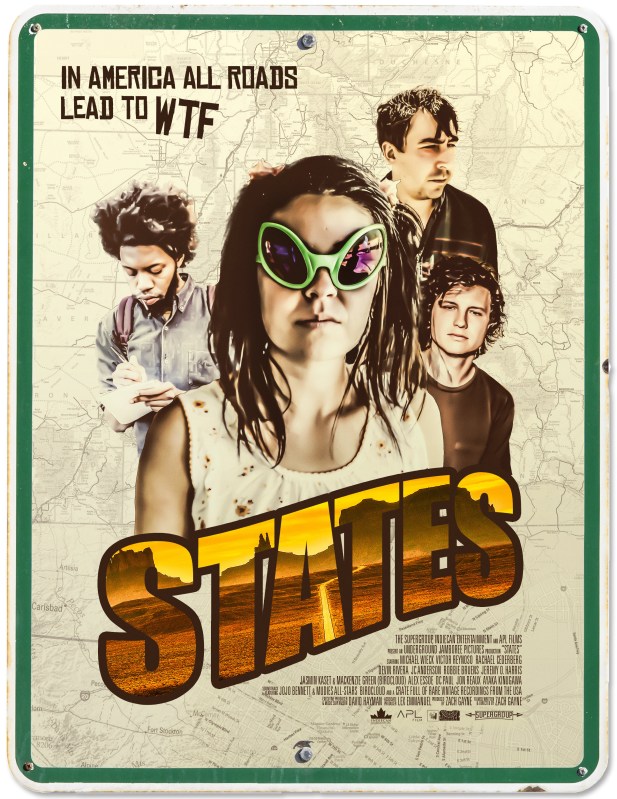
States is the first movie from writer/director Zach Gayne. It’s a “transient road film featuring an array of young drifters wandering throughout the U.S. with varying degrees of purpose, or lack-thereof.”
Obviously, many are going to compare it to Linklater’s Slacker, which is probably the closest film I can think of that captures what this is all about. The press materials refer to it as “an outsider’s love letter to America and the searchers of its endless highways.”
Alex Esso, who was the lead character Sarah in Starry Eyes and will play Wendy Torrence in the upcoming sequel to The Shining, Dr. Sleep, stars. From a trip through the homes of the stars in Hollywood gone wrong to a religious trip in the desert and an Uber driver taken in by an actress, the intertwined tales of this film are all off the beaten path. Your capacity to enjoy them will depend on your ability to enjoy conversations that often meander.
States is playing in theaters now in limited release.
DISCLAIMER: We were sent this movie by its PR team, but that has no bearing on our review.
When I was a kid, I wasn’t allowed to have toy guns and military toys were not allowed in our house. I can remember thinking how strange it was that my grandfather loved war movies so much, hearing him listen to screaming and bullets and explosions in films late into the night when he’d get home from a double shift at the mill. And yet here I am, thirty years later or so, pretty much doing the same thing, watching Stallone movies at 6:12 AM while the rest of the world enjoys their last few minutes of sleep.
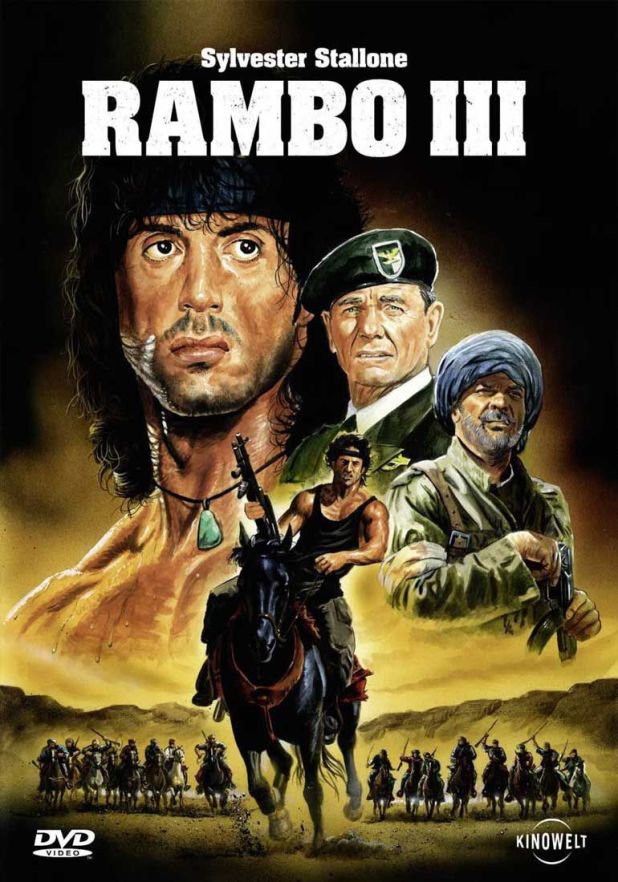
The first time I saw Rambo III was at a friend’s house unbeknownst to my parents. And this kid was obsessed with Rambo, right down to the necklace and knife that had a compass and opened up to hold tools. Yeah, 1988 was the kind of time when kids idolized war movies. We didn’t know that war was a funny thing and that the very Taliban soldiers that we cheered on in this film would one day change sides because global diplomacy is funny that way. It was simpler to just hate and fear Russia back then than it is today, where nothing at all seems sure and everything feels made up.
But I digress. Let’s talk about John Rambo.
Colonel Sam Trautman tracks down Rambo in Thailand, where he’s stick fighting for a monastery. He wants nothing of the war, even when shown how Russian troops in Afghanistan are killing civilians. Trautman goes on the mission and is captured, with all of his men killed. That’s when Rambo tells the man in charge of this op, government suit Robert Griggs, that he’ll rescue Trautman.
That leads me to one of my many rules of movies. This one is simple. Never trust a government spook. And my second rule: never, ever trust Kurtwood Smith.
Rambo soon meets arms dealer Mousa Ghani and asks him to bring him to Khost, where Trautman is being held. The Mujahideen in the village take to Rambo after he plays a game on horseback with them, but after a Russian helicopter attacks them, they refuse to help him. Instead, only Mousa and a young boy named Hamid are willing to help.
Rambo — of course — destroys everyone in his path to save his mentor. He uses everything from his bare hands to explosive arrows and even a tank to kill everyone in his path. And while the Russians almost take them out, the brave Afghani people rise up to rescue our heroes.
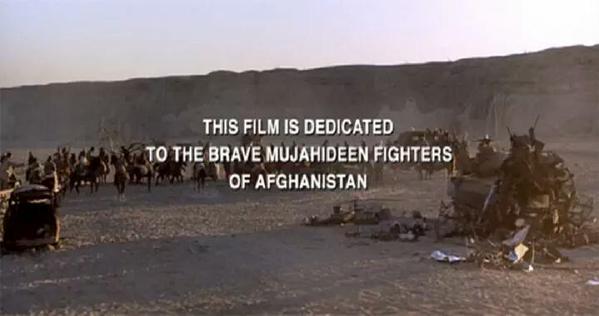
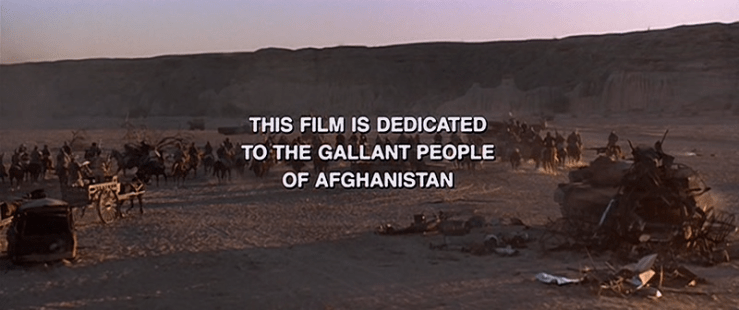
This movie used to end with a dedication to the brave Mujahideen, but now just thanks the gallant people of Afghanistan. That said, Masoud is based on Ahmad Shah Masoud, a real-life Afghan resistance who later became the minister of defense before leading the resistance against the Taliban. And in the original cut, Rambo felt so at home with the freedom fighters that he stayed here versus going back to America.
Up until Back to the Future Part II, this was the most expensive movie ever made. And, like many Stallone films, it was fraught with issues. Just a few weeks into filming, most of the crew including the director of photography and director Russel Mulcahy (Razorback, Highlander) were fired.
Stallone told Ain’t It Cool News that Mulcahy “went to Israel two weeks before me with the task of casting two dozen vicious looking Russian troops. These men were supposed to make your blood run cold. When I arrived on the set, what I saw was two dozen blond, blue-eyed pretty boys that resembled rejects from a surfing contest. Needless to say, Rambo is not afraid of a little competition but being attacked by third rate male models could be an enemy that could overwhelm him. I explained my disappointment to Russell and he totally disagreed, so I asked him and his chiffon army to move on.” Mulcahy was replaced by Peter MacDonald, a veteran second unit director.
The Guinness Book of World Records went on to label this the most violent film ever made, with 221 acts of violence, 70 explosions and over 108 on-screen deaths. They should have held on for the next one in the series, which goes way beyond this. Of course, this won Stallone another Razzie for Worst Actor, but I don’t think he was all that concerned. After all, he got paid a Gulfstream jet to be in this movie.
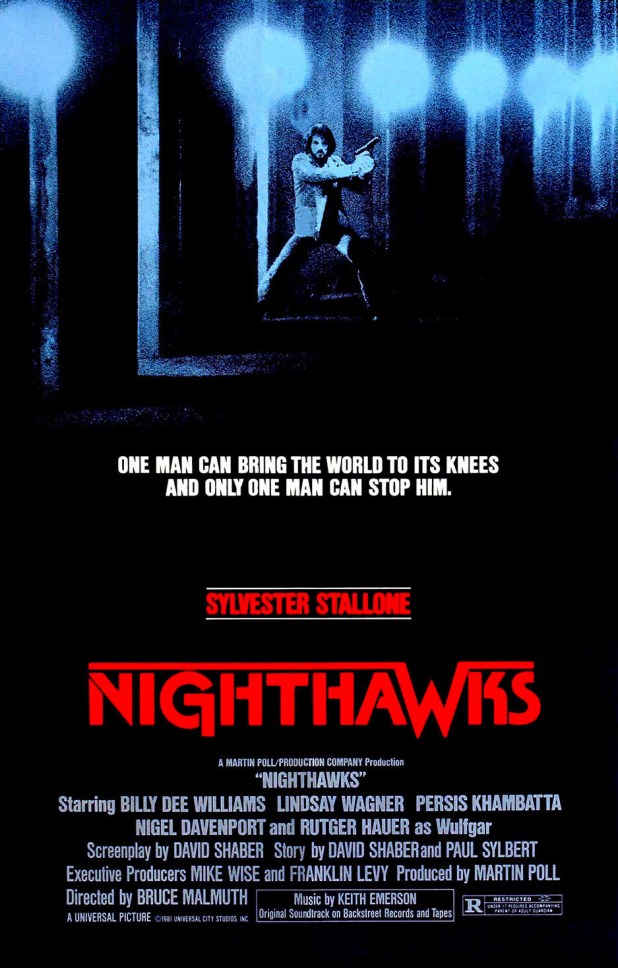
Bruce Malmuth played the ring announcer in The Karate Kid, but he was also a director with this movie, Hard to Kill and The Man Who Wasn’t There on his resume. He replaced Garl Nelson (Freaky Friday, The Black Hole), who was fired within the first week.
The story was originally planned as The French Connection III by screenwriter David Shaber (The Warriors) with Gene Hackman teaming up with Richard Pryor, before being reworked.
Because of post-production issues, the film was heavily re-edited and was released a year after it was finished. Contrary to stories that Stallone hurt the film by being so hands on, Lindsay Wagner told Crave Online: “We started with one director, and all of the sudden there was some problems, and Sylvester ended up having to take over the film and he ended up directing it. So just spontaneously, he just jumped into that role, and after [that] directed [it]. And, it was incredible watching him and his multi-talented self whip that film into shape.”
Co-star Rutger Hauer had to deal with the death of his mother and his best friend during production, as well as being burned and his back being strained in his death scene. When he learned that the cable was pulled too quickly by order of Stallone, the two had a rocky relationship on set. However, Stallone had nothing but praise for the actor: “Rutger Hauer’s performance held it together — he was an excellent villain.”
Hauer plays Heymar “Wulfgar” Reinhardt, a terrorist who has decided to take his war on society to New York City, along with his partner Shakka (Persis Khambatta, MegaForce).
Opposing him is the NYC Anti-Terrorist Action Command, made up of Detective Sergeant Deke DaSilva (Stallone) and Detective Sergeant Matthew Fox (Billy Dee Williams), led by Detective Inspector Peter Hartman (Nigel Davenport, Phase IV). Hartman doesn’t believe that American police can be ruthless enough to battle Wulfgar, who doesn’t care if innocents are killed in the crossfire.
Between gun battles in a disco, knife murders at the Museum of Modern Art and a thrilling cable car hostage sequence, DaSilva attempts to connect to his wife Iris (Wagner). Joe Spinell also shows up as Lieutenant Munafo. This would be the last film he’d work on with Stallone.
The beginning and end of the film bookend this, as Stallone is in drag, getting the jump on three muggers, then is dressed as his wife when Wulgar attempts to kill her. He turns and blows the villain out a window, then sits next to his dead body on the cold streets of New York City.
Stallone would later tell Ain’t It Cool News that Nighthawks “was a very difficult film to make namely because no one believed that urban terrorism would ever happen in New York, and thus felt that the story was far fetched. Nighthawks was an even better film before the studio lost faith in it and cut it to pieces. What was in the missing scenes was extraordinary acting by Rutger Hauer, Lindsay Wagner and the finale was a blood fest that rivaled the finale of Taxi Driver. But it was a blood fest with a purpose.”
I love the Keith Emerson score. He also lent his talents to movies like The Church, Murder Rock and Inferno when he wasn’t being the greatest keyboardist in prog rock history. When asked about the score, he minced no words: “Universal got some old dyke as music editor that had worked on Jaws. She was a minimalist in maximalist clothing and immediately set about stripping everything down apart from my underwear in order for my entire score to reach the big screen as half the man I might have been. Sly, upset about Raging Bull, was already working on another Rocky sequel, and couldn’t be bothered.”
After being thrown out of his home by his wife, Mark finds himself back at a place he knew in his childhood called Dumpling Farm. His old friend Ian, who never left, is possessed by a group demonic, flesh-eating witches, who now want to trap and devour Mark.
The debut feature for the Pickering brothers, this film was originally titled The Witches of Dumpling Farm. If I’ve learned anything from my years of watching movies, it’s don’t do drugs in the woods with witches. I say this, and I’ve put myself in real life situations like the characters in the film. Luckily, I survived to tell you about it.
There’s not a ton of story here or even anyone likable to get behind and the witches have unexplained motivations, other than they like to trap and eat men. There are some decent effects, though and some really nice shots, such as the highway of parked cars that stretches far and wide.
I will say that this feature looks better than most of the streaming horror choices that you’ll find. There’s definitely some talent behind the lens and it will be interesting to see where the Pickerings take their talent next.
After playing theaters in ten cities, Three Witches is now available DVD and on demand.
DISCLAIMER: We were sent this this film by its PR team, but that has no bearing on our review.














 B&S About Movies
You must be logged in to post a comment.