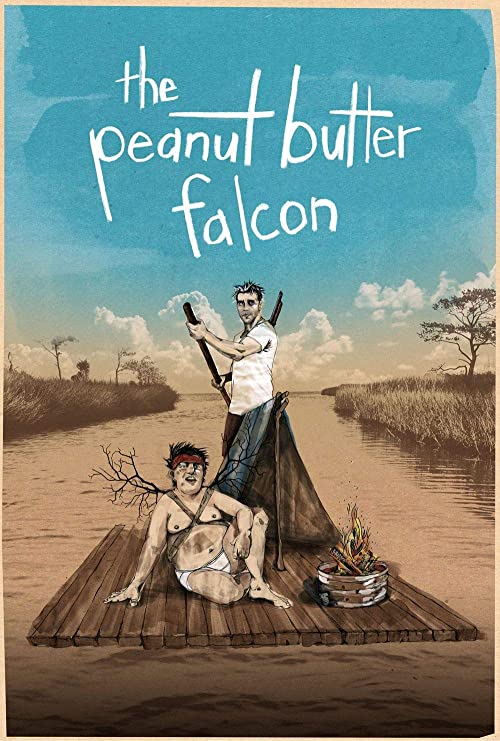
This is the first film written and directed by Tyler Nilson and Michael Schwartz. It’s really special. Yep — I’m going to dispense with that notion that a review has to wait to tell you how it feels about a movie until the end.
It’s all about Zak, a 22-year-old with Down syndrome played by an actor who also has it, Zack Gottsagen. He’s living in an assisted living facility in North Carolina where he keeps escaping, hoping to find the school of his pro wrestling hero, the Salt Water Redneck (Thomas Haden Church).
I love how this movie happened: The directors met Zack at a camp for disabled and non-disabled people and he expressed his desire to be a movie star. They wrote the script around him and his hopes and dreams.
One night, thanks to his roommate Carl (Bruce Dern), Zak escapes and sneaks on to the fishing boat of Tyler (Shia LeBeouf), who has just been denied the ability to sell crab without a license, who he burns everyone else’s boats. This sends Duncan and Ratboy, who is played by music artist Yelawolf, on his trail.
Zak and Tyler become friends after a long and arduous journey as they elude the twosome, get baptized and also stay a step ahead of Zak’s social worker, Eleanor (Dakota Johnson). Wrestling fans will enjoy seeing Jake Roberts and Mick Foley in major roles.
This movie really made me emotional. Hopefully, you’ll feel the same way. As someone who has lived a life in pro wrestling, I really understood Zak’s need to perform. The idea that what exists on an old VHS tape not meaning as much today is something that we, as film fans, feel every day. I love that there was still magic, as Zak still gets a chance to have a match.
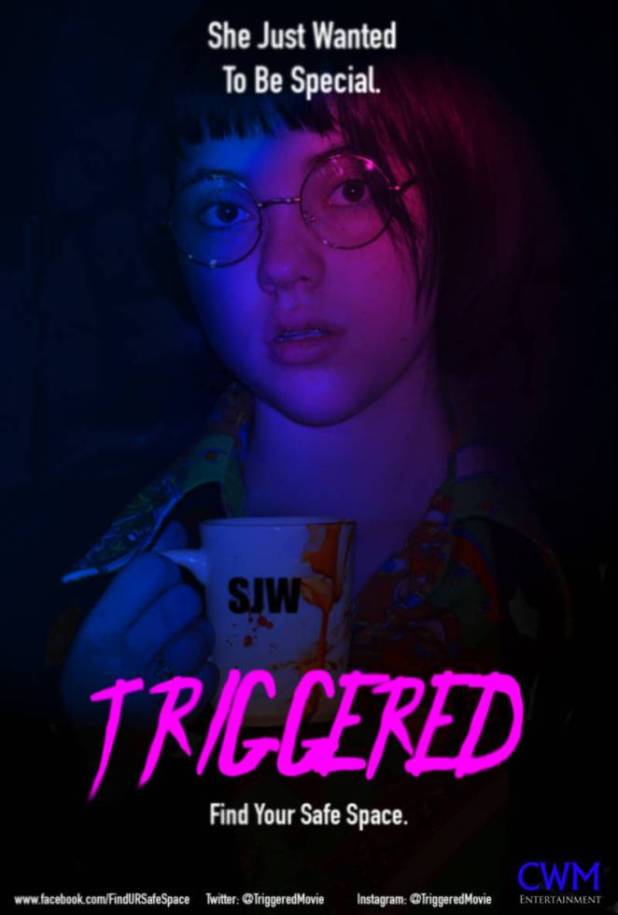
Callee Bishop is a social justice warrior who hates her hometown, which is filled with bigotry and small minds. A killer from the past comes back and starts murdering her classmates and when Callee accidentally kills someone and needs to cover it up, she puts herself in even more danger from the real serial killer. That said — is Callee the real villain?
This film is somewhere between a comedy and a slasher. Major points go to casting Amanda Wyss (Beth from Better Off Dead and Tina from A Nightmare on Elm Street) as the principal, who is still recovering from being attacked by the killer years before.
Triggered seems like the natural next step from Scream, in that it’s a movie that takes modern communication and politics and infuses them into the slasher genre.
Thanks to Wild Eye Releasing for sending us this movie on DVD. It’s also available to rent or buy on Amazon Prime.
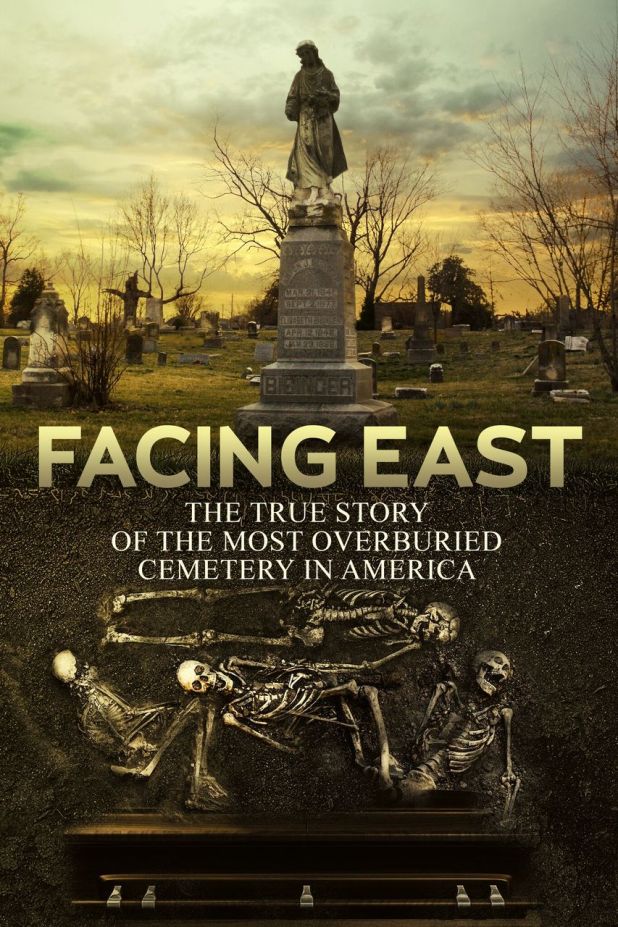
With over 100,000 documented disturbed burials, the owners and operators of Louisville, Kentucky’s Eastern Cemetery reused the same graves over and over, taking advantage of low-income families.
25 years after the cemetery was left abandoned, the Friends of Eastern Cemetery was formed to take care of the graves, so that those buried there would at least have some dignity.
This movie tells their story.
The overburying at Eastern Cemetery began all the way back in 1885. To give an idea of how bad of an issue this was, the cemetery was nearly thirty acres in size. The funeral industry recommends a thousand bodies by buried by acre, but thanks to the mass pauper graves in Eastern, some feel believed that at least 138,000 are buried there. That’s nearly 100,000 more bodies than should be, if you don’t feel like doing the math.
This is director Tommy Baker’s first documentary and he’s picked a fascinating topic. Perhaps not the escape you’re seeking in these dark times, but worth a watch.
Facing East is available on demand from Uncork’d Entertainment.
Sixteen-year-old Sam could not be a bigger fan of Glenn Danzig. I combed my hair in a devilock, despite it being nearly a decade since The Misfits broke up in 1983. I devoured everything Plan 9 released, still love Samhain to this day and listened to the self-titled Danzig album so many times that there was no printed copy on either side of the cassette.
Right around Danzig 4, though, I kind of stopped enjoying his output. By Danzig 5 – blackacidevil — and its flirtations with industrial, the departure of the band’s classic line-up and leaving Rick Rubin’s American Records, I was pretty much done with Glenn’s musical output. Sure, I’d check out his comics and listen to every new release, but there wasn’t much for me to enjoy any longer.
No harm. No foul. People grow up, bands change. But man — I still go back to everything before 1996 and cut Glenn Allen Anzalone a wide berth, even when he defends Trump’s policies or people send around memes of him. Because I remember when I was a kid — like Ragman in Trick or Treat — and Glenn and horror movies provided me with an escape from my small-minded hometown.
That said, after hearing about this movie, I couldn’t wait to get my hands on it. As you may know, I do so adore auteur projects, movies with rock stars and when things go off the rails. This film promised — and delivered — on all three.
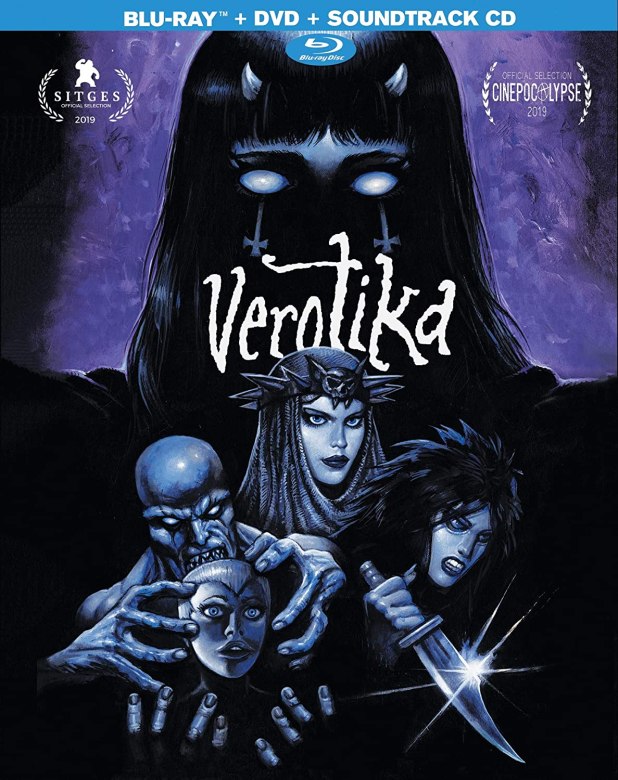
At Chicago’s Cinepocalypse last year, Danzig claimed that he was inspired by Mario Bava’s Black Sabbath and that the movie was his vision alone. No Hollywood suits had gotten in the way of pure, high octane Danzig here.
The funny thing is, on his way to making a Bava film, Glenn ended up making a late period straight to video Jess Franco movie instead.
I leave it up to you and your sense of taste as to whether or not that’s a good or bad thing.
In the first story, The Albino Spider of Dajette, an albino man spider — he got that way when a hooker with eyeballs for nipples named Dajette cried on him — talks dirty to several more prostitutes and then he snaps their necks. That’s it, that’s the tweet as they say. Dajette is played by Ashley Wisdom, who may be better known as adult film star Rachele Richey, who has worked with Rocco Siffredi, speaking of people I have idolized since my teen years.
Scotch Hopkins, who plays the spider-man named, well, The Albino Spider, spent eight hours a day getting into this makeup. Also: everyone in this scene seems to have a French accent.
Yes, for those of you wondering even more, is that Veronica Ricci from Bright Business Girls Learn Hard Bondage Lessons? Yes. It is.
The second story is called Change of Face and it’s all about a mysterious woman who strips several times and then cuts off women’s faces and sticks them to the wall. Does she want your skull? Does she need your skull? Who can say.
Beyond the starring Rachel Alig, this segment features a cameo by pro wrestler Sean “X-Pac” Waltman, along with London May (drummer and bassist from Samhain), adult stars Bobbi Dylan, Felicity Feline, Aaliyah Hadid and Katrina Jade, as well as reality star Courtney Stodden.
I don’t tell you that there are adult film stars in this to shame them or you for enjoying this. No, I’m telling you so that you understand Danzig’s id and the fact that there are three strip club scenes just within this one segment.
Finally, Drukija Contessa of Blood has Alice Haig as, you guessed it, Drukija, who is a contessa who finds young virgins, feeds them to her wolves and eats the rest when she isn’t covering herself in their blood and spending time staring at herself in the mirror.
Amongst the virgins are — yes, adult star — Emma Hix and Caroline Williams — Stretch! — plays a peasant woman.
Doesn’t this sound like Elizabeth Bathory? Yes. Of course it does. It’s as if the box art from a Redemption film was the actual movie. Which is, I guess, exactly what it is.
If you read these accountings and say, well, surely some moments of surprise or pathos happened, no. They don’t. Much like, well, gonzo pornography, each scene exists to give you what you want: blood, beasts and babes. Is it any accident that Kayden Kross is hosting the whole film as Morella, a woman who starts the movie by stabbing out a naked woman’s eyes?
The thing is, there’s promise. Danzig obviously knows who Fulci and Bava are, can recognize a great camera angle and gives horror viewers pretty much what they want, without any of the art or good taste or cutting away from scenes when they end like a normal director would.
Was I entertained? Holy shitballs, yes I was entertained. It was like a Tim Vigil comic come to life and I felt just as weird when he asked me at a convention if I was too big of a pussy to hang a Faust spread of a deadly orgy on my teenage bedroom walls.
Obviously, Glenn doesn’t care what you or I think about this movie. Which is really how it should be. It’s better than the majority of direct to streaming stuff you’ll watch, it’s definitely a singular vision and well, it made me forget the troubles of the world. Isn’t that what movies should do?
You can order this movie directly from the Bandcamp page or get it from MVD. It’s also available on demand from most streaming services.
Thanks to MVD for sending us this movie. Obviously, their generosity had nothing to do with this review.
UPDATE: This is now available on Shudder and you should 100% watch it.
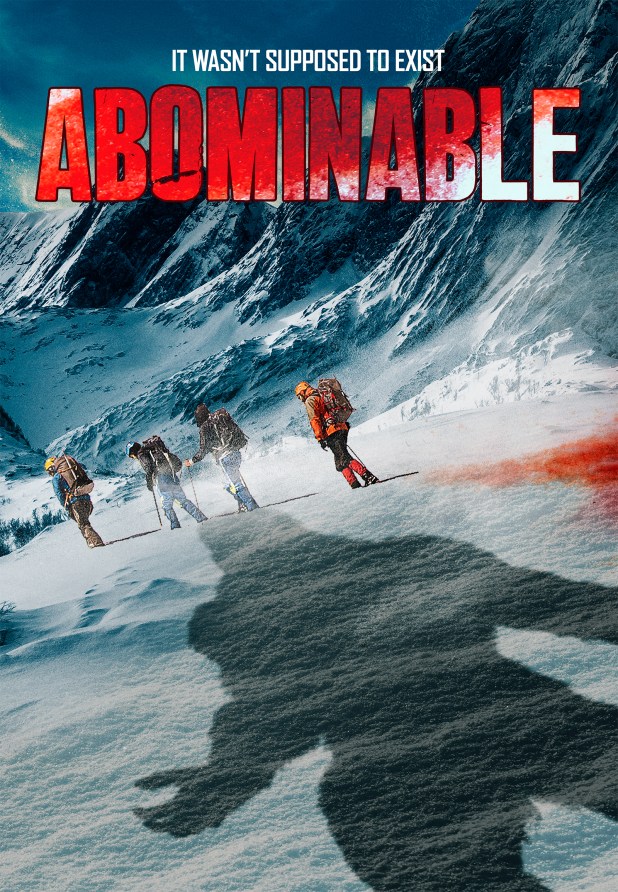
Director Jamaal Burden made the 2018 movie Elves which has nothing to do with the Nazi elf epic Elves. Now he’s made a movie called Abominable that has nothing to do with the cartoon Abominable.
A research team is looking for a special plant that medical research believes can cure almost anything. Of course, much like every movie that influenced by The Thing or Alien, a previous expedition didn’t go so well. Now, the yeti that killed the last team is on its way for these guys, too.
Abominable is available on demand and on DVD April 14 from Uncork’d Entertainment.
DISCLAIMER: We were sent this movie by its PR team.
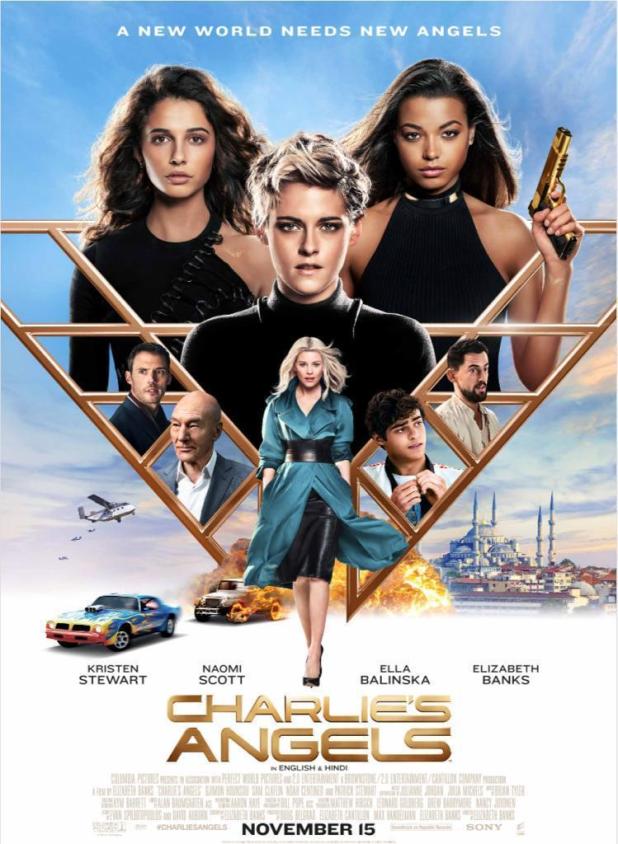
The second reboot of Charlie’s Angels presents a worldwide secret mission force of women, represented in this movie by Elizabeth Banks (who also directed), Kristen Stewart, Naomi Scott, and Ella Balinska.
It didn’t do well at the box office, which was blamed on the fact that so many men have issues with women in power. I’m not qualified to comment on these matters, but for what it’s worth, I liked the movie. It’s nothing groundbreaking, but it’s frothy fun, as they say.
In this universe, the name Bosley is a title given to those that command the agents. One of them, played by Patrick Stewart, has gone rogue and the agents must stop him. If you are wondering, “Isn’t this the same plot as the sequel to the last reboot?” you may not be wrong.
The film does attempt to fit itself in some universe building by showing photos of past Angel teams including the original Angels (Kate Jackson, Jaclyn Smith, Farrah Fawcett and Cheryl Ladd) and the early 2000’s version (Cameron Diaz, Lucy Liu, and Drew Barrymore).
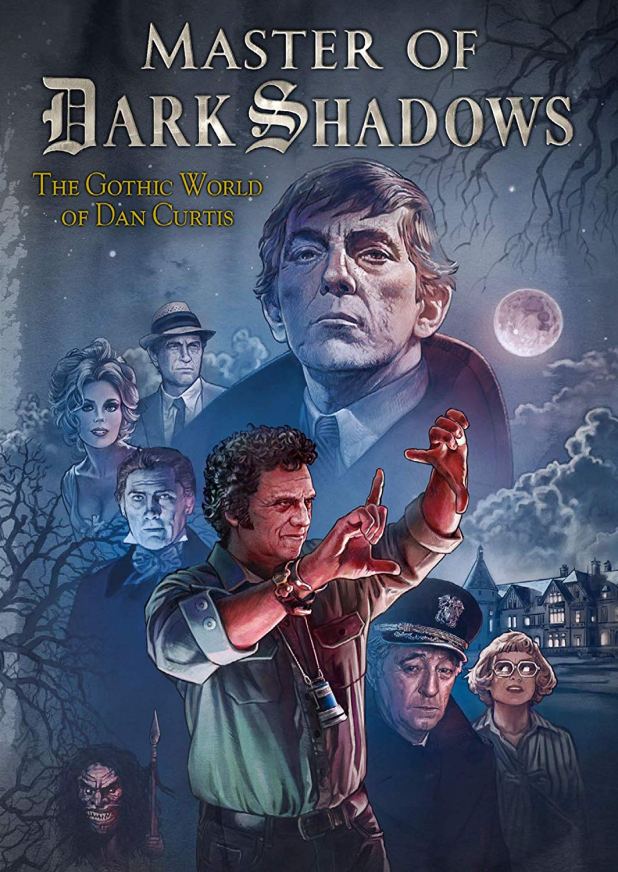
We’ve gone on — and will this entire week — about Dan Curtis and Dark Shadows. Finally, this movie — director by David Gregory, one of the co-founders of Severin Films — is here to tell the story of the creative power that was such a part of American TV horror in the 1970’s. Beyond Dark Shadows, Curtis was known for The Night Stalker, Trilogy of Terror and Burnt Offeringsbefore his two mini-series The Winds of War and War & Remembrance earned rave reviews, won multiple awards and dominated the ratings.
Narrated by Ian McShane, this film has reflections by the late Curtis, along with many of the people who worked with him closest and his family. Look for Dark Shadows stars Jonathan Frid, John Karlen, James Storm, David Selby, Roger Davis, Marie Wallace, Chris Pennock, Kathryn Leigh Scott, Lara Parker, Nancy Barrett and Jerry Lacy, along with Ben Cross from the 1990’s series. And Whoppi Goldberg shows up to share what Dark Shadows meant to her, along with Barbara Steele, who co-produced The Winds of War and War & Remembrance with Curtis.
The DVD, which you can get from MPI Home Video, also has an extra where Jonathan Frid dresses up as Barnabas to attend the White House on Halloween 1969 for Richard Nixon’s daughter!
This is a must-watch and the perfect primer — or review — for all things Curtis.
You can watch Master of Dark Shadows on Amazon Prime.
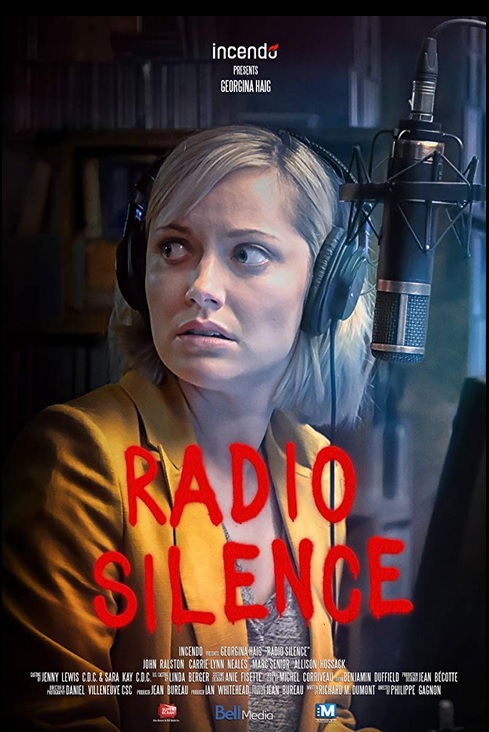
A female radio psychologist taunted by a killer is familiar damsel-in-distress fodder for the Lifetime cable network, which also aired the similarly-plotted The Night Caller (1998), Requiem for Murder (1999), and A Lover’s Revenge (2005).
Dr. Jill Peterman (Canadian actress Georgina Haig, who’s very good), a Minneapolis, Minnesota (aka Toronto), “relationship therapist” who advocates a tough-love approach when counseling her listeners, walks away from the business when a listener, “Alexis,” takes her advice of “end this pathetic life” of allowing a man to cheat on her, literally—and she commits suicide on the air.
A year later, with WRMD 96.5 FM at the bottom of the ratings and ready to change to an automated dance format, her old General Manager persuades her to return to the air—with the guilt trip that she’ll be “saving everyone’s jobs.” As she settles back into her show, the mysterious calls from “Alexis” begin. Then her billboards around the city are vandalized with the words “How Do You Sleep?”—a message that’s repeated on the greeting cards enclosed with the deliveries of black roses.
Let slip the red herrings of noir.
Did Alexis actually kill herself? Is she the one leaving threats? Or is someone else behind them? The police never found a woman who committed suicide matching that name and they believe it was a prank—even a rating-grabbing station stunt that backfired. Could it be the win-at-all-costs station owner, her producer, or her promotion-driven production assistant? Is it the barista at the local coffee house who is Dr. Jill’s #1 fan? Is any of this real and is it all in Jill’s head?
The radio studio is a poorly done build that’s darkly lit to hide the “studios” shortcomings of its ubiquitous equipment-strewn business desks and—not another recording studio mixer being used as an audio board. Ugh. But at least there’s some digital touch screen audio equipment used. And the expositional industry jargon between the station owner and general manager about terrestrial radio competing with podcasting, ratings and format changes give the proceedings a sense of reality.
You can watch this Canadian TV movie—reimaged with the sensationalistic When Murder Calls for its U.S debut—for free on You Tube and You Tube.
About the Author: You can read the music and film reviews of R.D Francis on Medium and learn more about his work on Facebook. He also writes for B&S Movies.
Author’s Note: Due to the controversial nature of this film, please note this is a film review that addresses the creative art of filmmaking only, most importantly, what constitutes a “bad film,” why actors pursue “passion projects” (aka “vanity projects”), and the struggles of unknown actors wanting to a make a mark in Hollywood; it also analogizes similarly-themed films, so as to reach an understanding regarding the creative development of the subject-film and its creator. This review is not a political or racial dissertation intended to incense any reader regarding social or free speech/opinion issues and was written as part of an affectionate “Radio Week” exploration in tribute of movies set inside radio stations.
Thank you for your time and understanding.
Once again, the stars align. It’s a two-in-one! A box office failure and a movie set inside a radio station. And it fits perfectly into our review schedule of rolling out a week of box office failures* and rolling out a week of reviews regarding movies set inside radio stations (“Radio Week” runs March 15 to 21). Oh, the joy. But I must admit that if not for the radio broadcasting angle, I wouldn’t have watched this one at all.
And maybe you shouldn’t either.
Welcome to the most polarizing film of 2019.
This debut film from Jeremy Saville—which has a lot more going on than it just being a radio station-set comedy—has no middle ground. It’s either loved or it’s hated. Over on Amazon Prime it’s pulling a three-out-of-five star review based on 142 users—that either rates it with one star, or ten stars. And over on the IMDb (where users are purposely sabotaging the page with bogus production “trivia” and plot keywords): it earns one star, or ten. How’s that for polarizing? The popular You Tube stop for film buffs, WatchMojo, ranked Loqueesha as the #1 Worst Movie of 2019, #5 on the Worst Movies of the Last Decade, and #7 of the Worst Comedy Movies of the Last Decade. And it has 0% approval rating on Rotten Tomatoes (based on five users).
And while The Hunt (2019)**, Universal Studios’ overtly liberal-slanted take on Richard Connell’s novel The Most Dangerous Game (where the liberal ruling-class kidnaps republican sympathizers, aka Walmart-shopping deplorables, dumps them into a rural game zone, and hunts them for sport) was pulled from release after poor test screenings and an acidic online response that deemed the film’s political content “offensive,” Jeremy Saville decided to press on and “quietly” released Loqueesha as an Amazon Prime stream. The film had, as most films do, a promotional website at one point: now, when you click the Wikipedia link for, or Google that page, it goes to a 404 prompt and advises you the “account is suspended.”
Now, does that “suspension” mean that Saville simply took down the site˟ , or was it removed by the Internet Service provider? The latter seems probable because, as result of the film’s critical backlash and cries of the film being “racist” and “sexist,” Loqueesha was abruptly pulled from a few festival screenings where it was previously accepted—and the festivals issuing apologies stating that they’re “reviewing their screening-entry processes” and that they’ll “try better.”
Okay, so. This is the part of the review, where, after watching the trailer below, you will probably stop reading . . . after I tell you that this is a movie about (and what so many inaccurately critique): a white man pretending to be a black woman. (By “voice” only; he does not don a “blackface” or “tan” his skin, as in a couple of acceptable movies that we’ll discuss later in this review. And, we’ll check out a movie where a black character dons a “white voice,” as well.)
However, the plot is a bit more complex than that: Loqueesha is about a white man who pretends to be a black female talk radio host. Needless to say, even based on that simplistic IMDb logline (which doesn’t accurately describe the film in whole: it’s poorly written; a logline, like any storyline, must have a beginning, middle, and end . . . and that logline has no “ending”) and watching a two-minute trailer—everyone immediately attacked the film. (It’s important to note: When the film reaches the third act, the heartfelt wisdom of Joe’s on-air alter-ego stops a woman from committing suicide and Renee (Mara Hall), who started out as the “fake” Loqueesha, becomes the “real” on-air Loqueesha. Of course, one will have to actually watch the film to know those plot twists.)
How the page’s logline should read: Faced with a financial crisis, Joe, a divorced, quick-witted bartender, applies for a job at a failing Detroit radio station—as a black female disc jockey.
And the page’s search keywords should be: comedy, controversial, bartender, desperation, Detroit, disc-jockey, divorced, education, financial, money, radio, radio station, unemployment, and vanity-project. Clandestine, smart aleck-classifying the Loqueesha as a “horror” film and entering the terms “bloviating,” “fraud,” “patriarchy,” and “psychosis” as keyword searches isn’t helping anyone or proving one’s disagreements with the film.
Hopefully, you’ll heed the words of actor/comedian Dwayne Perkins (who portrays Mason, the radio engineer), one of several black actors in the film. (In a bit of irony for those “offended” by the choice of the film’s title: Perkins does a bit in his stand up act about “made up ethnic names” as well, shown below.) Perkins clarified the film in a May 2019 interview with the BET Channel: “[Louqeesha] is a comedy about a guy who does the wrong thing for the right reasons, and the movie really gets into all of it more than the trailer does. I think you have to withhold judgment until you see the movie.”
Now that’s a familiar plot device. We’ve seen lots of characters do the wrong thing for the right reasons before, on film. And that character always learns a valuable life lesson in the process and finds love (interracial, in the case of Loqueesha’s romantic sub-plot) and a new-found respect for themselves and others—which is how the third act in every story arc ever written, ends.
In the context of Jeremy Saville’s feature film debut: There’s Dustin Hoffman’s out-of-work actor, Michael Dorsey, who needs money to finance his friend’s play, so he becomes “actress” Dorothy Michaels in Tootsie (1982). C. Thomas Howell’s pampered Mark Watson, with the threat of having to drop out college when his family cuts him off, masquerades as an African-American student to apply for the last student loan available in Soul Man (1986). Robin Williams’s Daniel Hillard transforms into the (stereotypical) British nanny, Mrs. Doubtfire, to circumnavigate his wife’s legalese to keep him from his children in Mrs. Doubtfire (1993). Meanwhile, in Louqeesha, the sole-goal of Saville’s Joe is to make enough money to place his gifted child—and his wife constantly puts him down in front of their son—into a private academy; so Joe’s struggle is no different that the Dorsey, Watson, and Hillard characters.
Then there’s Martin Lawrence’s Big Momma’s House franchise, which rolls out the stereotypical tropes of loud, large black women with his FBI Agent Malcolm Turner going undercover as Hattie Mae Pierce to crack a crime ring. And there’s Martin’s exaggerated “ghetto girl” stereotyping of Shenenheh Jenkins from his eponymous 1992 to 1997 Fox series. And there Tyler Perry rolling out the “vindictive, angry black woman” trope as Medea Simmons in a series of eleven films from 2005 to 2019—which Spike Lee criticized in interviews as “coonery buffoonery” and that if a white director made a movie depicting black people in such a manner he would be ostracized.
And Spike was right: for that director’s name is Jeremy Saville—and Saville’s film doesn’t remotely approach the “Lee Level” of Perry’s films.
But is Lee also guilty of his own accusations with 2000’s Bamboozled? It’s another film that has no middle ground: movie goers that hate the film, hate it (and refer to Lee as a “racist”); the ones who love it, defend Lee as “brilliant.” (Personally, I dig Spike’s films (but not your remake of Oldboy, sorry, Spike) and enjoyed Bamboozled; it’s unfortunate it didn’t connected with a mass audience, as there’s a powerful, eye-opening message and unique voice to be had.)
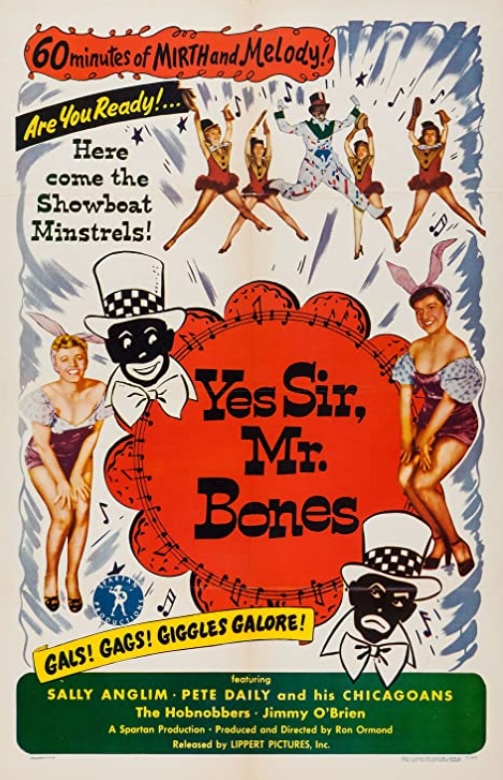
Lee laid a box office bomb (2.5 million against a 10 million budget) with his tale about a black TV executive bullied by an outrageously stereotyped, white-racist boss who denigrates his black employees in black vernacular and can’t make it through a sentence with dropping the N-word. In frustration, the executive creates a modern-day minstrel show that features an all-black cast in blackface—that his boss approves, and it becomes a hit with audiences.
Those who discovered this film—many years after-the-fact on You Tube and Facebook—are quick to denounce this entry on Ron Ormond’s resume. Unfortunately, they don’t know the man behind the lens: hopefully, our review will enhance one’s perspective.
While Lee defended his over-the-top satirical attack against the “white-controlled” media and its misuse of African American images as a modern-day parody on the minstrel shows of old with Bamboozled, critics called him out for misrepresenting those same African American images himself. Ironically, when Saville repeated Lee’s logic, that Loqueesha was a “modern-day satire on the minstrel shows of old,” critics . . . well, you know what the critics think of Saville at this point.
White Chicks and Bamboozled. Both considered as “racist” and “eye-opening social parody.”
And finally: 2004’s White Chicks was referenced more than any of the above mentioned films when reviewing (read: eviscerating) Loqueesha—and was staunchly defended by critics in the same breath as Loqueesha was scorched-earthed. White Chicks takes a page from the Big Momma’s House playbook with Shawn and Marlon Wayans starring as F.B.I agent-brothers Kevin and Marcus Copeland; they don “undercover” whiteface as two (outrageously stereotyped) spoiled, privileged white girls to solve a crime.
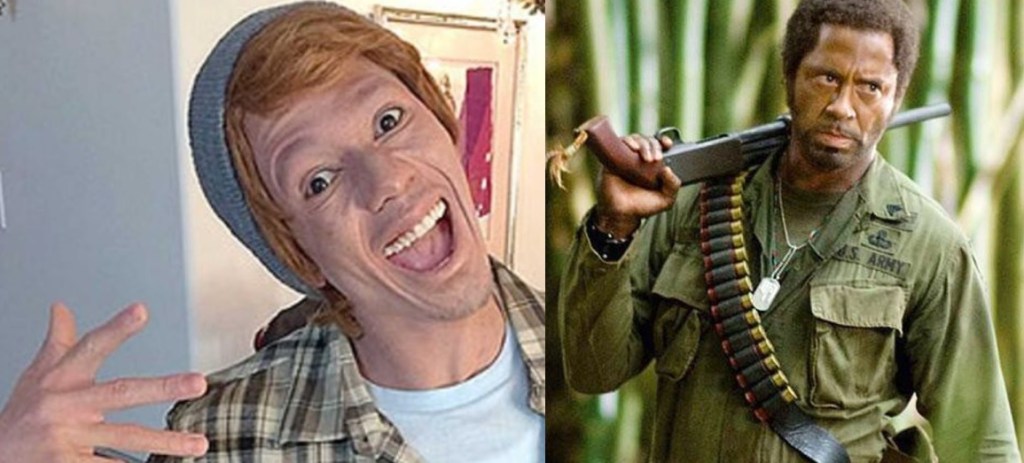
And while we are on the subject of “whiteface”: Back in 2014, comedian and R&B artist Nick Cannon (TV’s America’s Got Talent) donned a self-admitted, purposefully controversial “whiteface” as a “humorous character satire” and “character impression” to promote his then album White People Party Music (then, when called out on the gimmick, Cannon stated that “blackface is racist and whiteface is a mountain snow bank in New York”—which, in itself, is a racist comment).
Now, let’s assume Nick Cannon was the lead actor in a dramedy about a black radio DJ who, as result of his station’s format change from hip-hop to “white” classic rock (based on ratings and ad revenue, not racism) , was laid off. And he can’t find a new gig—without moving across the country. And his ex-wife berates him in front of their son and hounds him about their son’s tuition. He’s desperate. He loves his son. So he does what anyone would do: the wrong thing for the right reasons. So, to get back on the air and stay in town, he dons whiteface and cops a “white voice”—as in Boots Riley’s Sorry to Bother You (2018)—to get back on the air. What would the public response be: Would the film be pulled, like The Hunt, or praised, like Sorry to Bother You? (Watch Danny Glover explain “white voice” to Boots Riley’s co-worker in the clip below.)
Nick Cannon . . . whiteface and white voice. Robert Downey Jr. . . . blackface and blackvoice.Both socially and critically accepted.
And what was the consensus on the portrayal of Staff Sergeant Lincoln Osiris by Robert Downey Jr. in 2008’s Tropic Thunder? It was regarded as a “biting satire” and “subversive humor” and “an unforgettable turn.” The Rotten Tomatoes and Metacritic crowd that hated Loqueesha loved Tropic Thunder. Meanwhile, Entertainment Weekly cited Tropic Thunder on their “25 Great Comedies From the Past 25 Years.” Along with Newsweek magazine, The New York Daily, Premiere magazine, the San Francisco Chronicle, and even author Stephen King, Entertainment Weekly also placed the film on their “Top 10 Films of the Year” lists.
As it turns out, the ensuing social protests and critical backlash against Tropic Thunder’s “social parody” weren’t about the black characterizations of Staff Sergeant Lincoln Osiris by Robert Downey Jr., but about Ben Stiller’s portrayal of his actor/character Tug Speedman’s portrayal of the mentally challenged Simple Jack character.
Sadly, as with Jeremy Saville’s portrayal of the radio host Loqueesha, those shouting the loudest (and didn’t take the time to see Tropic Thunder beyond the trailers or marketing materials) missed the point of Ben Stiller’s and his co-writer, Etan Cohen’s, intentions: they weren’t making fun of handicapped people (nor Saville of black people), but were making fun of the actors who use the material as fodder for acting accolades. (And in an ironic twist: Robert Downey Jr. received a Best Supporting Actor nomination at the 81st Academy Awards.)
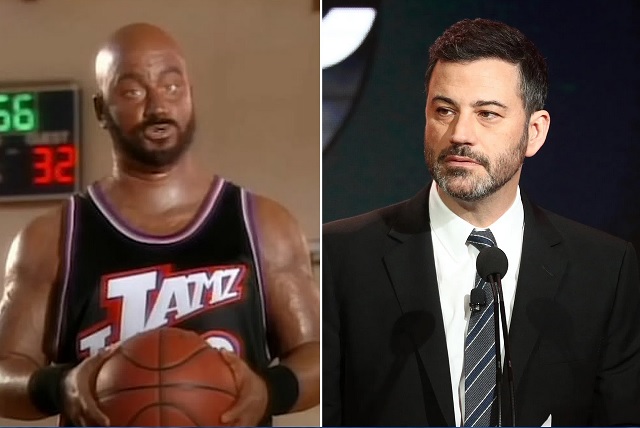
Jimmy Fallon and his recently controversial impression of Chris Rock was acceptable in 2000 and applauded; he apologized twenty years later.
So how did we get here? Why did Jeremy Saville make this film?
Loqueesha is, first and foremost, a vanity project, which are projects that are produced, written, and directed by its lead actor (sometimes, they’ll even serve as the cinematographer). At first, a film fan’s mainstream celluloid indexes will load up copies of Dennis Hooper’s The Last Movie (1971), Sly Stallone’s Paradise Alley (1978), Paul McCartney’s Give My Regards to Broadstreet (1984), Prince’s Under the Cherry Moon (1986), Steven Seagal’s On Deadly Ground (1994), Kevin Costner’s The Postman (1997), and the Tom Green disaster, Freddy Got Fingered (2001) (I liked it; Green’s a nutbag and I dig ’em).
But those mainstream films are more “passion projects” than vanity projects—although they reek of vanity’s stench nonetheless.
The true vanity project is a film reserved for the frustrated and unknown actor; some of them can “act,” most of them can’t; some can work well with directors, while most others can’t take direction (six weeks in a Konstantin Stanislavski method-acting class held in the back of a public library’s conference room, while folding baskets of laundry to “find their inner self,” and suddenly, they’re Oscar ready and don’t need “direction”). So those “actors” craft their own calling cards to the industry. Have you ever taken the time to read the credits on Hallmark, Lifetime, or Up movies? All three channels overflow with those actors on the “can’t” list. And they drag in so many family members, well; they could school Will Smith on the art of nepotism. And let’s not mention the rest of those “Oscar Winners” on TubiTv.
Ah, but when it works—usually with the ones on the “can” list, it breaks the actor into the big time: Billy Bob Thornton’s Sling Blade (1996), Jon Faveau’s Swingers (1996), Matt Damon and Ben Affleck with Good Will Hunting (1997), and Zach Braff with Garden State (2004) are the best case examples.
And while Edward Burns did okay for himself after The Brothers McMullen (1995) and Vincent Gallo forged a career after the tour de forces that are Buffalo ’66 (1998) and The Brown Bunny (2003), on the other side of the reel is Monster’s Ball (2001). Written as a modestly-budgeted drama by Will Rokos and Milo Addica as their “Good Will Hunting” to showcase their acting and writing talents, they didn’t end up starring, plans with Robert DeNiro fell through, and Halle Berry’s Oscar for the role that they wrote didn’t rub off on them. And Miss March (2009) didn’t work out for actors Zach Creggar and Trevor Moore. Neither did Hedwig and the Angry Itch (2001) for John Cameron Mitchell, Just One Time (2001) for Lane Janger, and there’s Fay Ann Lee with Falling for Grace (2006). But Brit Marling seems to be doing alright after Another Earth (2011). And while it was eviscerated by critics, we all know how Tommy Wiseau’s The Room (2003) turned out (it’s still playing in theatres worldwide).
And we could go on and on. The list of unknown actors, who’ve made unheard of films that we’ve channel surfed by many times on our TV’s VOD menus or bypassed on the lower-tier cable channels, like Movieplex, rife with obscure fillers, are many. Even TubiTv needs a digital Drain-O to clean the stream of crappy vanity films clogging our screens before we get to the watchable stuff.
And if not for his debut film’s May 2019 You Tube-posted trailer resulting in a social media backlash for the film’s perceived, overt racism, sexism, stereotyping, and cultural appropriation, we may have never heard of comedian and aspiring actor Jeremy Saville’s calling card to the industry. But make no mistake: Saville did not purposely make an “offensive” film to create controversy and be recognized. He wasn’t out to “get” anyone or “appropriate” their culture.
ComedianLouie C.K.—with the full support of Leslie Jones, who later turned a much-publicized cold shoulder to Louie over his 2017 sexual misconduct allegations—receives audience-acceptable laughter for his skit, “This Is How I Talk”/image courtesy of Saturday Night Live You Tube.
I get it, Jeremy. All of those comedy one-nighters off the circuit, endless rounds of acting auditions that accomplish nothing but draining your gas tank and sapping your will to live, and the ouroboros existence of sending out aircheck after aircheck to radio stations wears you down and pisses you off. So, like many actors before you, you decided to take your destiny into your own hands.
Sadly, Jeremy, while your attempt to raise questions regarding various societal tropes was a noble one (just like Spike Lee), it seems, unlike Billy Bob Thornton before you, Loqueesha had a reserve effect: it killed your career. For we live in a world where Internet Warriors roam in digital wolf packs with keyboard-scorching branding irons, ready to burn scarlet letters into another’s social media account: for our society is a society that loves to kick a man when he’s down. And if they have a chance to kick you before you get up, even the better. The digital wolves drip drool as they sharpen their utensils, readying their “bytes” with a smart phone’s screen-gleam in their eye.
In the initial and many non-reviews of the film, I was expecting a cinematic trainwreck; an ineptitude from Jeremy Saville that made Tommy Wiseau’s The Roomreally look like Orson Wells’s Citizen Kane (and not just the “Citizen Kane” of bad movies). Critics tossing around the terms “worst film of the year,” “worst film of the decade,” ” . . . of all time,” “. . . ever made,” and namedropping Ed Wood and his film Plan Nine from Outerspace. Going on and on about Loqueesha‘s “poor cinematography,” “editing,” “audio,” etc. No film discipline was left uncritiqued as “poor” or “bad.”
Really now, Mr. Critic?
Have you ever seen an Al Adamson film (Carnival Magic is your primer)? Have you ever experienced an Eddie Romero (Mad Doctor of Blood Island is your primer) or Willy Milan (W is War is your primer) or Cirio H. Santiago (The Sisterhood is your primer) Philippines-shot film? Did you ever see Dünyayi Kurtaran Adam (1982) or Alfonso Brescia Italian Star Wars oeuvre? Do you know the filmographies of the Polonia brothers (Empire of the Apes), Brett Piper (Arachnia), or Neal Breen (this “scene” says it all)? Have you ever loaded up a Sergio Martino film (our “Ten Sergio Martino Films” overview is your primer)? Or experienced a Crown International Pictures romp (Point of Terror will get you started)? Perhaps a Fred Olen Ray boobs, blood and babes opus (our review of Alienatorwill serve as your introduction Ray’s oeuvre)? Have you ever experienced the societal tropes of a hicksploitation film˟ from the 1970’s?
Trust me, I’ve seen itall—and then some—and I know a “bad film” when I see one. And Loqueesha doesn’t even rise to the level of these “worst of _______” crtiques. Dwayne Perkins was right: Did anyone that attacked the film look past the trailer? (No, because many reviewers admit they never made it past the trailer.) But alas, the world loves Tommy Wiseau, and Hollywood even made a biographical film about his dreams, The Disaster Artist (2017). Meanwhile, Saville is a marked man with a scarlet “R” on his chest.
Film screencap courtesy of The Best Movie/Saville Productions.
While Loqueesha, admittedly, has its share of flaws, for a first-time, self-produced effort, it’s a commendable start. Does some of the non-racial humor fall flat and illicit groans? Yes. However, some of that humor lands and brings on a chuckle. Sure, Loqueesha is no Slingblade by any means, but it’s not The Room either. It’s obvious Saville (as Joe/Loqueesha) is schooled, somewhat, in the film arts—according to the IMDb, he’s been at it at least since 1997—and knows, to a degree, what he’s doing behind and in front of the camera.
As an actor, he doesn’t suck as badly as the Internet reviews on Loqueesha will lead you to believe. There’s no reason why Saville can’t carry bit parts on a U.S comedy series, like The Connors, or pull off an under five role on a drama like Law and Order: SVU. And while the rest of the lead cast—Susan Diol (Joe’s ex-wife), Tiara Parker (as Rachel, the love interest; yes, she’s black), and Dwayne Perkins (Mason, the engineer)—aren’t award winners, they’re not cardboard-stunned driftwood-line readers. Each come across as natural—and are certainly better at the craft than the strained acting we witnessed in Wiseau’s The Room. And an honorable mention goes out to the scene-stealing Mara Hall as Renee, the “fake” Louqeesha (who’s funny; and not a bit racist). A testament to her talents: she worked her way up from short films to co-starring roles on ABC-TV’s hit Scandal and multiple episodes of ABC-TV Grey’s Anatomy, along with starring roles on Bounce TV’s highest-rated series Saints & Sinners and OWN’s Ambitions.
While there’s no official numbers on Loqueesha‘s production cost and P&A against its box office receipts (which entails the purchase of Amazon streams), it’s a sure bet that Jeremy Saville is drowning in red ink with his debut film.
Sure, you’ve seen better. But you’ve also seen worse. I surely have seen way worse.
Meanwhile, the worldwide gross on White Chicks was $113 million against an almost $40 million budget (not its counting P&A), so it wasn’t exactly a “hit,” either. And it, like Loqueesha, got its share of “worst of” suffixes: White Chicks was nominated for five Razzies, including Worst Picture, Worst Actress (for the Wayans brothers in drag), Worst Director (for their brother, Keenan), Worst Screenplay, and Worst Screen Couple (it lost in all categories). At the 2004 Stinkers Bad Movie Awards, White Chicks received five more nominations for Worst Picture, Worst Actor (Keenan Ivory Wayans), Most Painfully Unfunny Comedy, Worst On-Screen Couple (Shawn and Marlon Wayans), and Least “Special” Special Effects (its only win was for Most Painfully Unfunny Comedy). Film critic Richard Roeper placed the film at #1 on his list of the worst films of 2004, calling out its unconvincing (white) prosthetics and racism. In Roger Ebert’s review he said it took an “act of will” to keep him in the theater. (In a bit of irony: White Chicks 2 is currently in development.) (I’ve watched White Chicks on a free HBO weekend and it was alright; I wasn’t “offended” by it. For me: it was no different than watching a raunchy Judd Aptow comedy: it’s not great, but it’s not awful; it’s competently made. I got a couple chuckles, a few groans and “they didn’t just do that?” moments.)
And there’s Boots Riley’s vanity project, Sorry to Bother You, about a young black telemarketer who adopts a “white accent” to succeed at his sales job. His debut film received across-the-board critical praise for its “concept as an absurdist dark comedy.” It even won a Best First Feature award at the Independent Spirit Awards. Critics waxed Riley’s debut as a “fearless dissection of identity politics,” as a “brilliant satire,” and a “story of a man dealing with social injustice.”
Huh? Isn’t that what Jeremy Saville did with Loqueesha?
Jimmy Kimmel dons blackface and black voice. He’s still on the air at ABC-TV. And everyone with problems over Loqueesha are okay with Kimmel. He also skated on his skit where he asked women to touch his crotch, as well as his most recent “bit” regarding LGBTQ spokesperson Caitlyn Jenner, demeaning the transgendered woman’s right-to-choice as a man wearing a wig.
However, when it comes to the everyday, run-of-the mill movie goers like you and I, as with Saville’s first feature, Riley’s Sorry to Bother You also has no middle ground: reviews who hate it, hate it (the words “dumpster fire” and “racist” are used), and others who love it call out “the haters for hatin’”—without giving any reasons as to why criticizing Riley’s work as “racist” is wrong. But Riley didn’t endure (nor does he deserve) the attacks Saville did—for basically making the same movie. Make Saville’s character a telemarketer and Riley’s an out-of-work DJ and, content wise, you basically have the same “absurdist dark comedy that satires identity politics and socioeconomical injustice.” (I watched Riley’s film and found it relevant and not at all racist. It’s not great, but it’s not awful, either. It’s a commendable first feature and I’ll check out his next film.)
So, does Loqueesha deserve to be the blockbuster of the year? No. Does it deserve to be the box office bust of the year? No. Does it deserve at least the same 15% Rotten Tomatoes rating given to White Chicks? Yes. Does it deserve its current 3.5 out of 5.0 Amazon Prime review? Yes. For a first time, self-produced effort, that rating is perfect. Loqueesha certainly doesn’t deserve a 0% Rotten Tomatoes rating and WatchMojo’s “worst of” ranks.
So, instead of forming judgments of Saville’s film from the trailer alone, take a moment to discover that Loqueesha, while utilizing an admittedly wild and controversial way to get its message across (like Spike Lee’s Bamboozled), is a movie cleverly communicating that, above all else, we each must be true to ourselves and each other (again, like Spike Lee’s Bamboozled).
Jeremy Saville’s taken a hell of beating for giving his best. So do ‘em a solid and try to watch his debut movie, won’t you? After its “quiet” Amazon Prime roll-out, Loqueesha recently debuted in the beginning of 2020—for free, with limited commercial interruptions—on TubiTV, courtesy of Indie Rights Movies.
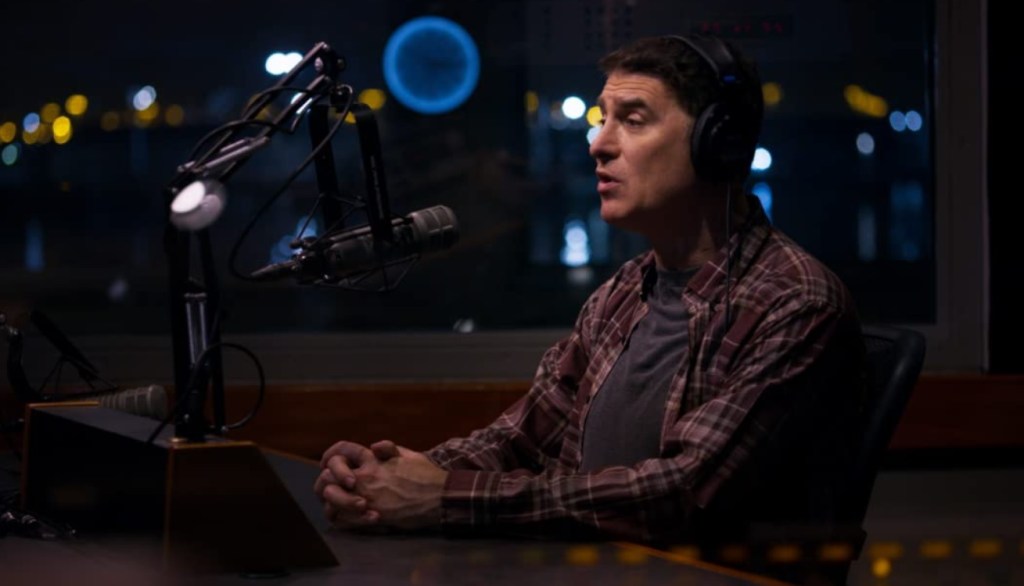
On the air at Detroit’s WCRW 92.1 FM (Screencap courtesy of The Best Movie/Saville Productions).
Ah! Finally! The radio technical stuff! After all: this is a “radio week”film review: Unlike most low-budget films set inside radio stations, the broadcasting jargon—regarding ratings, competing with podcasting and music streaming services, and ad revenue—shared between the father-and-son owner and program director is industry accurate. And while there’s no end credit thanks given, it’s obvious that “WCRW 92.1 Detroit” isn’t some makeshift build: the production rented out the facilities of a real radio station. In addition, Saville knew that, unlike most of the low-budget radio films, radio station frequencies never end in even numbers (always the odds 1, 3, 5, 7, 9) and never use prefix letter other than W or K in the United States. Saville did his research and that attention to detail is appreciated.
— END —
* Join us for our “Box Office Failures” week featuring well-known, big-budgeted studio movies and lesser-known low-budget films. In addition: We also examine Jimmy Saville’s self-made filmmaking brethren with our “Drive-In Friday: First Time Directors & Actors Night” feature. Speaking of “first time”: Our recent reviews for The App by Elisa Fuksas, Allison Powell’s Banging Lanie, Bethany Brooke Anderson’s Burning Kentucky, The Girls of Summer by Tori Titmas, Mindy Bledsoe’s The In-Between, and Joston Theney’s Wanton Want (well, sort of “first”) are more, fine examples of first time writer-director-actor projects.
** As you read this review, The Hunt finally made a theatrical release on March 13, 2020. If you’d like to know more about the creative roots behind the “Human Death Sport” concept of the film, join us in our review of 1965’s The 10th Victim. While we did not review The Hunt, we reviewed its low-budget “mockbuster” variant, American Hunt.
˟˟ Be sure to visit “The Top 70 Good ‘Ol Boys Film List,” which is a roundup of our month-long (September 2019) reviews of hicksploitation films, where we also get into the same societal tropes issues in film—only regarding white “southerners.”
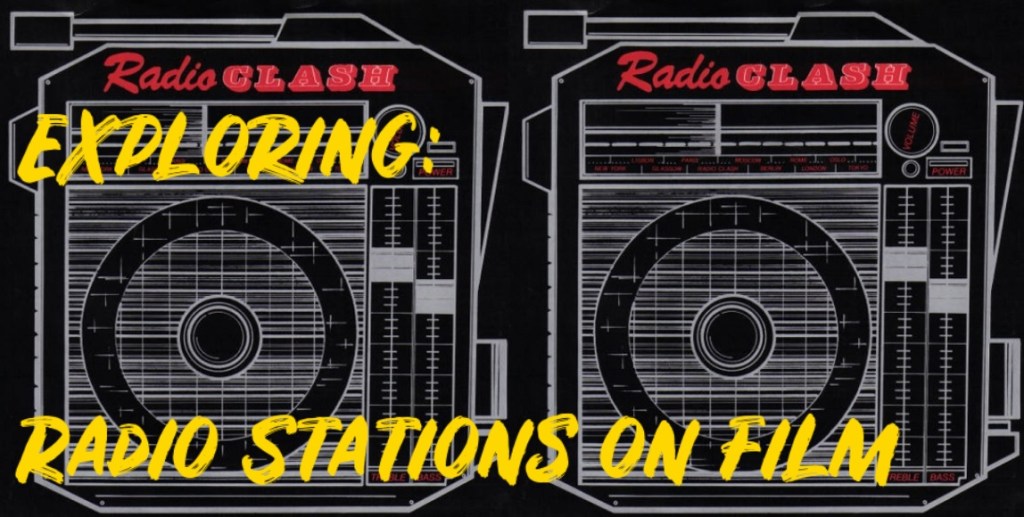
And don’t forget: You can review all of the radio station-based films we reviewed from Sunday, March 15, to Saturday, March 27, with our “Exploring: Radio Stations on Film” featurette.
About the Author: You can read the music and film reviews of R.D Francis on Medium and learn more about his work on Facebook. He also writes for B&S About Movies (links to a truncated teaser-listing of his reviews).
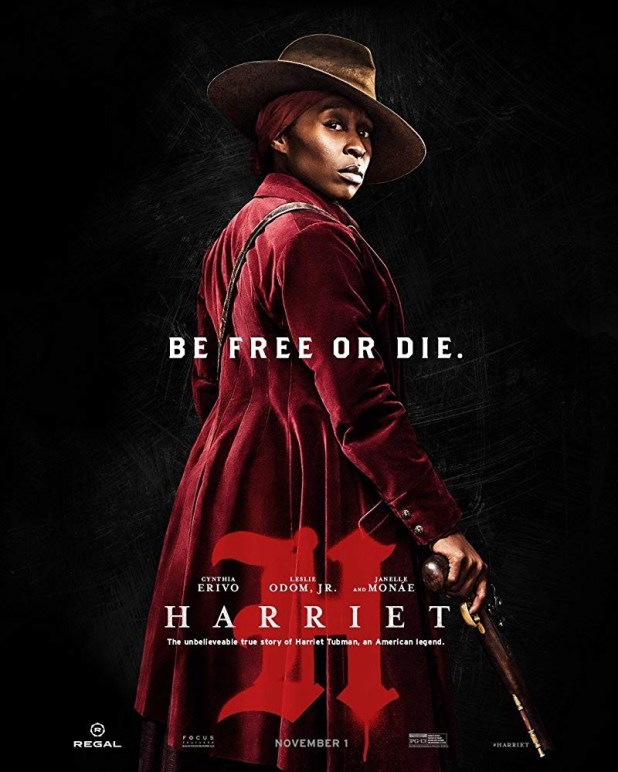
Kasi Lemmons started her entertainment career as an actress — she was Bernie in — before starting to direct. The movie I remember her for most is The Caveman’s Valentine. A film about Harriet Tubman was rumored for years and I’m quite glad she got the job, as this is a movie that moves quickly and imparts plenty of emotion and history without feeling preachy or boring. That’s quite a feat for a historical film.
Cynthia Erivo, who was in the stage revival of The Color Purple and who has been great on The Outsider every week, plays Harriet throughout her life, as she escapes from slavery (choosing to either live free or die) and then continually comes back to help others escape. It’s a harrowing tale filled with twists that history class never taught me, such as the fact that the man who gave her the last name Tubman remarried, as everyone in her family believed that she died after she jumped off a bridge to escape her owner Gideon Brodess.
Leslie Odom Jr., who was the original Aaron Burr in Hamilton, is in this, as is Janelle Monáe, a freewoman whose sophisticated ways are in direct contrast to young Harriet.
I would have never watched this movie if not for a freelance assignment where I’ve been creating teacher guides for biographical films. So in some strange way, the predicament of my occupation has led to me experiencing plenty of new things I would have otherwise never had the opportunity to see, listen, watch or learn.
You don’t need to go through all that to see this. I recommend you watch it at your first opportunity.




 B&S About Movies
You must be logged in to post a comment.