Down on Us (1984) aka Beyond the Doors (1989)

I have great memories of hearing the commercials on my local rock radio station for Down on Us when it played at the—then—behemoth six-plex in the big city as a midnight movie. Our hopes were high. We loved the Doors. We all dog-eared our copies Jerry Hopkins’s No One Here Gets Out Alive. We loved those midnight showings of AC/DC: Let There Be Rock, Led Zeppelin’s The Song Remains the Same, and Sam Raimi’s The Evil Dead. This was going to be an epic night where the classic rock spewed from the speakers, mixing with the waft of nacho cheese congealing over tortilla chips and the sweet flow of Mr. Pibb. . . .

To say we were disappointed at what unfurled across the silver screen would be an understatement. This wasn’t Rock ‘n’ Roll High School. This was Plan 9 from Outer Space: The Rock Musical. Yes, if Ed Wood made a rock ‘n’ roll flick, it would be this Larry Buchanan hot mess of a movie. Where’s Roger Corman and Allan Arkush when you need them?

While we’re on the subject of the Ramones: The modern-day doppelganger for Down on Us is Randall Miller’s muddled bioflick boondoggle, CBGB (2013). Randall Miller, the first film director in history to be convicted in the U.S. for the death of a cast or crew member (during the production of Midnight Rider, his Gregg Allman bioflick), was unable to secure permissions from the estates of Joey and Johnny Ramone, so faux “Ramones” tune were created—and Ramones tunes were absent from the accompanying soundtrack. (A movie about CBGB’s without the Ramones? Why bother making the movie at all?)
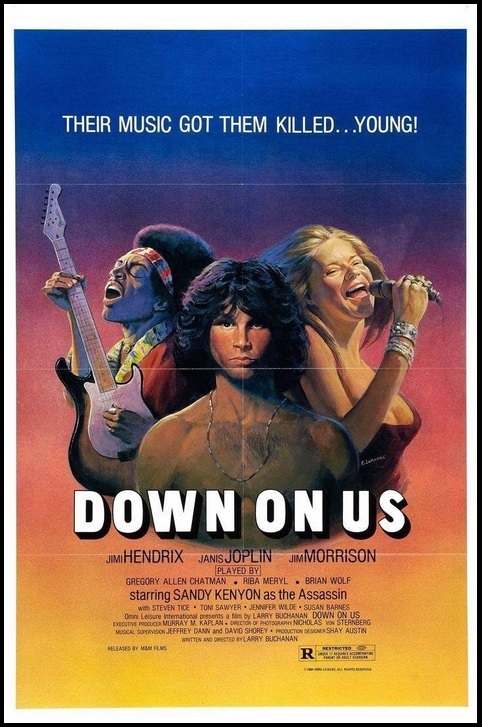
Original 1984 theatrical one-sheet courtesy of IMDb.

As for American exploitation filmmaker Larry Buchanan: He proudly wore his self-professed “schlockmeister” honor on his chest, an award he earned for his beloved (blue-jelled) day-for-night shoots trash-classics of Curse of the Swamp Creature, The Eye Creatures, In the Year 2889, Mars Needs Women, and Zontar: The Thing from Venus (need we say more: he made the Planet of the Apes rip-off Mistress of the Apes). Buchanan’s faux-biographical drama format—mixed with his ubiquitous speculations and conspiracy appendixes—that he utilized in Down on Us dates back to his “exposés” on the Kennedy assassination with The Trail of Lee Harvey Oswald (1964), the gangster chronicles The Other Side of Bonnie and Clyde (1968) and the life Charles “Pretty Boy” Floyd in A Bullet for Pretty Boy (1970), and the “romance” between billionaire Howard Hughes and actress Jean Harlow in Hughes and Harlow: Angels in Hell (1977). Buchanan also twice explored the life of Marilyn Monroe with his same theories-vigor in Goodbye, Norma Jean (1976) and Goodnight, Sweet Marilyn (1989). Not even folklore dinosaurs are immune from the depths of Buchanan’s conspiracies: he made the speculative-drama The Loch Ness Horror (1982).

Courtesy of its chintzy-muddy production values, Down on Us looks like a porn movie—only backed by a cover band sloggin’ through some “originals” they wrote that ersatz-as-tunes for Jimi Hendrix, Janis Joplin, and The Doors. Yikes! This wasn’t Oliver Stone’s The Doors—not by a longshot. This was Ferd and Beverly Sebastian’s Rocktober Blood—only with Jim Morrison instead of Billy Eye Harper (and Nigel Benjamin) fronting Sorcery. And if not for Oliver Stone going into production with his 1991 biography on the Lizard King, even with the home video market’s voracious appetite for analog delights to line their shelves, this Buchanan conspiracy faux-fest would most likely have never made it to video on the cusp of the grunge decade.

Although many critically attacked Buchanan’s film that explores Jim’s paranoia of the government—not so much a theory, but more a cinematic license playing with a “what-if” story line—as rubbish, it seems those critics are not familiar with the legend of Jim Morrison. For Morrison, it was a real, believed threat: American Government agents were after him; that he was marked as “Number 3”—after Hendrix and Joplin. Therefore, Morrison left America for Paris to find shelter and reject the legal controversies of his life. Except, in Buchanan’s bizarro-Jim world, Morrison didn’t die in a Paris bathtub: Jim fled to Spain and took up residence in a monastery.

And speaking of legal controversies: It’s one thing to craft a bogus dramatical document about the psychedlic rock triumvirate of Hendrix, Joplin, and Morrison. It’s another to licensing their music. So Buchanan contracted musicians to forge replicates of those artists for the film. Oscar nominated and award-winning director Gus Van Sant exceptionally and effectively executed this same approach with 2005’s Last Days, his faux-Kurt Cobain docudrama concerning actor Michael Pitt’s eerily portrayed pseudo-grunge rocker, Blake, fronting the film’s scripted Nirvana substitute, Pagoda (featuring stunning Nirvana simulations composed by Pitt; it all goes back to poet William Blake, one of Jim Morrison’s lyrical inspirations. The circle completes). The man Buchanan hired to mimic Jim Morrison was a musician also speculated as one of the possible musicians behind the Phantom mystery of March of 1974; an enigmatic Morrison-ersatz that released the album Phantom’s Divine Comedy: Part 1 on Capitol Records: Richard Bowen.

Richard Bowen’s other musical offering, starring Fabian!

Courtesy of Bowen, it was Buchanan’s film—not Oliver Stone’s The Doors—which offered the first on-screen interpretation of Jim Morrison, as done by actor Brad Wolf, who lip-synced to the music written and performed by Bowen. Bowen construct haunting Doors mimics with “Knock So Hard,” “Sorcery,” “Old Pictures,” “Holding On,” and “Phantom in the Rain”—each sounding like doppelganger leftovers from Phantom’s Divine Comedy: Part 1, or as outtakes from the recording career of Jim Morrison’s alleged son, Cliff Morrison. (Cliff Morrison—in a career-analogous path to Jimi Hendrix’s “son,” Billy Yeager (and to a lesser extent, Frank Marino of Mahogany Rush and his Hendrix-medium myths)—evoked his “dad’s” memory with two, late-nineties albums: Know Peaking and Color of People, fronting his Lizard Son Band.) Not only were the vocal similarities between Morrison, the Phantom, and Bowen contributing to the theory that Bowen could be the Phantom: the songs titles composed by Bowen for Down on Us also fueled the theory. Again, Bowen wrote two songs: “Sorcery” (which is what a “wizard” performs—and ties into the lead track on Phantom DC’s “Tales from a Wizard”), and the second song that appears in the film, “Phantom in the Rain.”

Image of 1989 reissue by Unicorn Video courtesy of Paul Zamarelli/VHS Collector.com and user 112-Video.

The first theory about Morrison’s demise was murder: In the backwash of Oliver Stone’s 1991 document, another film sloshed the brackish tributaries first navigated by Buchanan, a film that played it very fast and very loose with the Morrison-was-murdered theory: the 1992 direct-to-video rock flick Sorority House Party (You Tube). In this case, three hotties thwart a managerial plot to kill Attila, and unpredictable, high maintenance, costly ‘80s rock star, to boost album sales. This murder theory regarding Jim was the direct result of Hendrix and Joplin doing great sales numbers after their deaths. Moreover, with Jim flaking out on the band and a split of the Doors proving costly to both the band and the label, knocking off the Lizard King doesn’t seem like an implausible idea. (Also known as Rock and Roll Fantasy, Sorority House Party served as the directing debut of David Michael Latt, who came to incorporate the successful mockbuster purveyor, Asylum Studios.)

Other movies in the 1980s also tailored the mysterious threads of Jim’s death as cinematic narrative inspiration.

The second theory regarding Jim’s “demise” was a death hoax: Jim, tired of the dealing with the band and his Miami indecency trial ending in a possible jail sentence (like counterculture comedian Lenny Bruce), paid a French doctor to create a phony coroner report and death certificate. The cable movie-rock flick favorite Eddie and the Cruisers played with this myth—no doubt inspired, in part, by the last chapter of No One Here Gets Out Alive, the 1980 best-selling, first biography on Jim, which theorized Jim Morrison may have faked his own death. In Eddie and the Cruisers, a Rimbaud-inspired rocker of the Sixties, distraught over band infighting and record company hassles, bailed out with an elaborate death ruse. In the eventual Eddie sequel, the rocking protagonist, Eddie Wilson, ended up as a construction worker in Canada; not exactly ranking with the romanticized rumors of Jim running away to Africa—then returning to music in 1974 as a mysterious rocker, the Phantom; or as the Circuit Rider (that’s a whole other Jim-tangent that we won’t get into here).

And that brings us to best of the Jim-inspired conspiracy rock films: Down on Us (1984), eventually reissued to video as Beyond the Doors (1989). And we say “the best” because it’s all about the schlock n’ trash at B&S About Movies. (Honorable mention going Michael A. Nickle’s portrayal of the Lizard King in Wayne’s World 2, of course, living out his life as a sage beyond the immaculate perimeters in the desert.)

Larry Buchanan’s film speculated Jim was not murdered, nor did he fake his death: he went underground to avoid assassination. The plot line: President Richard M. Nixon, despondent over the antiwar sentiments agitated by the hippie icons of Hendrix, Joplin, and Morrison, sanctioned the F.B.I to kill the trio. Morrison apparently caught wind of the plot and “got out alive.” And, to complete the final cover up of the plot: the agent (Sandy Kenyon) who carried out the sanction is murdered. When his son discovers his dad’s files, the plot unfolds via flashback, then the son tracks down Morrison in Spain . . . .

While Buchanan’s film doesn’t get into it: The alleged “F.B.I murdered Jim” scheme has been in circulation since Jim’s death in 1971, cobbled in a basket with theories alleging the American government assassinated Dr. Martin Luther King, Malcolm X, and Marilyn Monroe (Hi, Larry!), along with Robert Kennedy and his brother, President John F. Kennedy (Hey, Mr. Buchanan!).

One of the earliest critics of the Warren Commission report regarding President Kennedy’s assassination, Mae Brussell, the late counterculture public radio personality of the Carmel and Monterey, California, radio stations KLRB and KAZU, most likely influenced Buchanan’s screenplay. The former host of the nationally syndicated Dialog: Conspiracy program compiled her government conspiracy theories in an unpublished November 1976 report: From Monterey Pop to Altamont, Operation Chaos: The C.I.A’s War Against the Sixties Counterculture (it was online to read in full; now it’s gone again). This report, along with current Doorsphile conspiracy theorists on social media platforms, contend there was a coordinated effort initiated in 1968 by the F.B.I’s Counter Intelligence Program and the C.I.A’s “Operation Chaos” to undermine the counterculture movement. These theories point out that Jim Morrison knew Charles Manson, through his mutual acquaintanceship of the Beach Boys’ Dennis Wilson and music producer Terry Melcher, and Morrison composed “Riders on the Storm” about Manson’s “murderous” followers.

Additionally, theorists opine the membership list of the 27 Club (with its own outlandish conspiracies; e.g., Courtney Love hired El Duce of the Mentors to murder Kurt Cobain) ties into the military service of the rockers’ parents. In addition to the high-ranking, classified naval service of Jim Morrison’s Admiral father, Lt. Col. Paul James Tate, the father of Manson Family murder victim, actress Sharon Tate, also served in the military. Theorists also point to Lewis Jones, the father of the Rolling Stones’ Brian Jones, a PhD mechanical engineer, who served as a military aeronautical engineer for Bristol Aircraft . . . et cetera, one may read the extended theories online, but the point: the deaths of their famous children were “assassinations.” The “theory” concludes: Charles Manson and his family were either hired as “actors” for the “plot,” or Manson himself was a patsy—like Kennedy assassin Lee Harvey Oswald (Oy! Larry!)—set up to take the fall for the Tate “assassination.”

It all began, according to Brussell, with the 1966 death of anti-establishment comedian Lenny Bruce (1967 memoirs: How to Talk Dirty and Influence People)—the first victim of the “operation.” The critical and financial success of the Monterey Pop celebration in the summer of 1967 simply solidified the government’s resolve to snuff out the counterculture’s icons. Brussell goes onto state that, between 1968 and 1976, many of the most famous names of the counterculture movement, were dead: Mama Cass Elliot of the Mamas and the Papas, Otis Redding, Jimi Hendrix, Brian Jones, and Janis Joplin all participated in or attended the Monterey Pop Festival. The report’s assassination roster also “stars” Duane Allman and Berry Oakley of the Allman Brothers (Hey, Randall?), folkie Tim Buckley, Jimi Hendrix’s manager Michael Jeffrey and the Beatles’ manager Brian Epstein, along with Graham Parsons of the Byrds, Ron “Pigpen” McKernan of the Grateful Dead, blues musician Jimmy Reed, and, of course, Jim Morrison, along with his wife, Pam Courson. All became victims of coordinated mind control tactics via Lysergic Acid Diethylamide (LSD)—a poisoning that altered the icons’ personalities and behaviors, encouraging their accidental “deaths-by-misadventure. . . .”

I know . . . I know . . . tangents and non-sequiturs. Let’s get back to the movie! But wait! There’s one last tangent: what’s this all have to do with Rocktober Blood?

Riba Meryl, who co-wrote the faux-rock epic “Rainbow Eyes” with Sorcery’s Richard Taylor, became an actress and portrayed Janis Joplin in Down on Us. Surprising, Riba, an accomplished singer in her own right, lip-syncs the faux-Joplin tunes “Easy Now” and “No Way” written-performed by Janet Stover (her lone film credit). Riba also repeated her Joplin character in a 1987 episode of the syndicated rock ’n’ roll U.S television series Throb (You Tube). After her lone, non-Janis character acting role in 1987’s Banzai Runner, Meryl concentrated on television and film session work and contributed the song “Brand New Start” to a 1987 cop-murder drama, The Jigsaw Murders (You Tube). Sadly, Riba passed away in 2007 at the age of 52 from breast cancer. (And why didn’t Riba Meryl provide the vocals for the song she wrote for Rocktober Blood? We may never know.)

The studio band who helped create the faux-soundtrack for Down on Us was comprised of the members of the American-New Jersey hardcore punk band Adrenalin O.D (they also as appeared as musicians-background actors). If you’re familiar with the Slickee Boys (their punky-take on Status Quo’s “Pictures of Matchstick Men”) or the Dead Milkmen (remember “Punk Rock Girl”?); AOD are goofy like that. How else can you describe a band who releases an album Crusin’ with Elvis in Bigfoot’s U.F.O that features “Bulimic Food Fight” as a lead single? Formed in 1981, AOD broke up after the failure of their “big rock move” on Restless Records, their fourth album, Ishtar (1990) (they do Queen a hell of a lot better than Metallica; it’s like the Monkees on crack. And they played CBGB’s several times).

And we never heard again from the acting-musician duo behind faux Hendrix: Gregory Allen Chatman mimed to the music written and performed by David Shorey (he also served as the film’s music supervisor): “Today or Tomorrow,” “Looks Like You,” “Crystal Wings,” “Three Day Rain,” “Poet’s Reprise,” “Just My Size,” and “Seriously Shot Down.”

We did, however, hear from two of the film’s lead actors, again: Sandy Kenyon, as government agent Alex Stanley, and Toni Sawyer as his wife; neither let there involvement with Buchanan dissuade their careers. Kenyon continued to work up until his 2010 death, amassing over 130 credits on a wide array of TV series since the 1950s (. . . I’ll never find a copy of the 1974 TV movie Death in Space starring Kenyon and Cameron Mitchell, will I? Nope: The only known surviving English language print is stored at Library of Congress, alongside Kim Milford’s lost TV rock flicks Song of the Succubus and Rock-a-Die Baby). Toni Sawyer’s latest (her 74th project), the family-adventure, When the Moon was Twice as Big (Facebook), is currently in post-production.

Both versions/titles of the movie are exactly the same: so don’t fret over which VHS issues you decide to buy. Although, in all my years, I’ve never seen a post-1984 VHS on the shelves as Down on Us, only the 1989 Beyond the Doors version. And I only found the ’89 VHS, out of six video memberships —once—at a 10,001 Monster Video. The VHS pops up in the online marketplace from time to time, Amazon and eBay in particular. However, beware of those DVDs: they’re all grey market rips-from-the-VHS.

As for online streaming: There’s only two choices to watch this online—via You Tube, natch. There’s a multi-part upload (of 13, 10-minute segments) HERE that was the only choice for many years. However, someone recently uploaded the complete film in one upload HERE.

“Our assignment: neutralize the three pied pipers of rock music.”
— F.B.I Agent Alex Stanley

Indeed. And you “neutralized” the after effects of my cheesy nachos and Mr. Pibb, Agent Stanley. (I miss you, John, my brother. Good times.)

About the Author: You can learn more about the writings of R.D Francis regarding Jim Morrison’s doppelganger, the Phantom of Detroit, on Facebook and Medium. He also writes film reviews for B&S About Movies.


Post Script: Down on Us is a movie that never ceases to keep on giving. Check out Bill Burke’s new, February 2022 take on the film at Horror News.net.
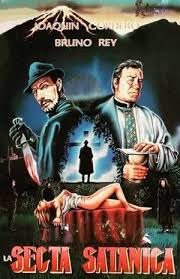
Secta Satanica el Enviado del Senor (1989)

This Arturo Martinez-directed film — he also made Macabre Legends of the Colony and The Mummies of San Angel — is quite literally an all-star team-up of two of Mexico’s most well-known horror actors.

Joaquin Cordero, who played Dr. Satan in two films, as well as appearing in los peliculas de terror like The Book of StoneThe Hell of FrankensteinLa Loba and Vacaciones del Terror 2, is Father Esteban, a Catholic priest who is losing his congregation.

He must deal with German Robles character, who is the dark leader of a Satanic church. Robles is perhaps best known for playing Count Karol de Lavud in El Vampiro and Nostradamus in the serial that gave birth to four different vampire films. He also played Satan in 1970’s El Pistolera Fantasma.

It doesn’t help that Robles’ character can help the blind see and the lame walk. How can the church keep up with that? Well, this being Mexican film, the Satanic priest also starts making his way through the wives and daughters of the village of San Andres, who are left mumbling, “The word of the envoy has penetrated my mind.”

After a Black Mass where Robles eats a girl’s heart and then nearly kills the older priest, there’s only one way to fix everything. Cordero must put on a crown of thrones and carrying a cross through the streets of his city.

My favorite part of this movie that was even after reducing the evil priest to a quivering mass of guts and bones, he keeps laughing. If you ever wanted to see the Mexican version of Needful Things mixed with the right parts of The Devil’s Rain!, this movie is the spicy recipe you’re after.

You can watch this on YouTube.

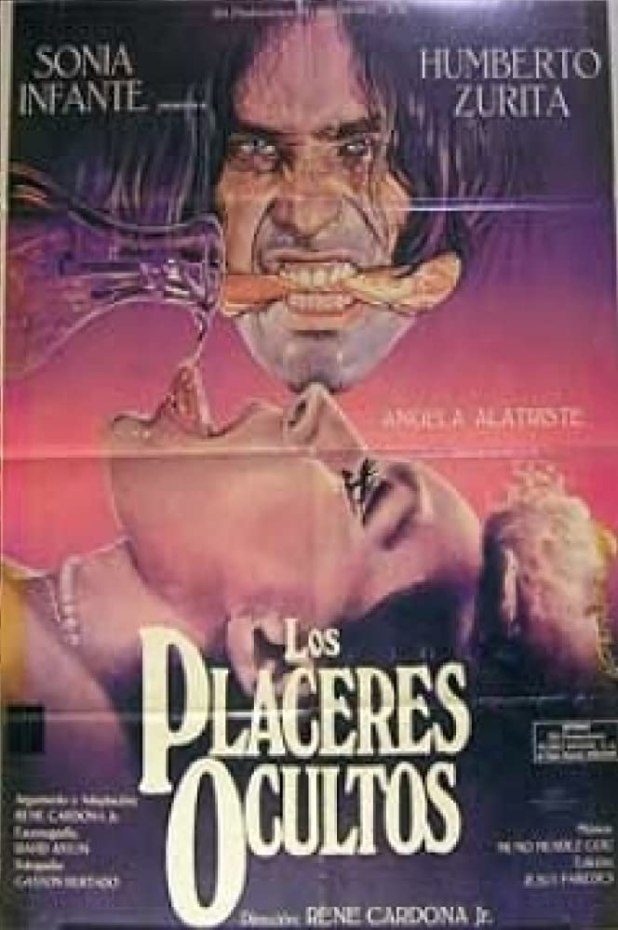
Los Placeres Ocultos (1989)

Psiquiatra is a therapist who is abducted by a masked man one night, who takes her to the woods, where he assaults her and leaves her to die. However — and this is incredibly upsetting — she seems to like it and looks for a former patient of hers, promising him “no holds barred” sex while her husband is away on business. What follows is some 9 and 1/2 Weeks style antics with attempted drowning and her turning the tables on her assailant by beheading his dog and pegging him.

Yeah — this is something else. Honestly, it’s the most repellent and fascinating quasi-giallo I’ve seen in a while, filled with gross people doing gross things.

Humberto Zurita, who plays the villain Violador, is still acting to this day. Sonia Infante, who plays the therapist, is also in Beaks: The Movie. This was released in the U.S. on VHS as Playback, which I’m sure gave no indication how massively screwed up this movie is. I can only hope that people rented this and were destroyed by how sickening it is.

Rene Cardona Jr. is the master of low budget Mexican scumfests, particularly because Violador spends some time sculpting Psiquiatra before sailing the seas of mayonnaise all by himself while staring at his work. Magical.

You can watch this on YouTube.

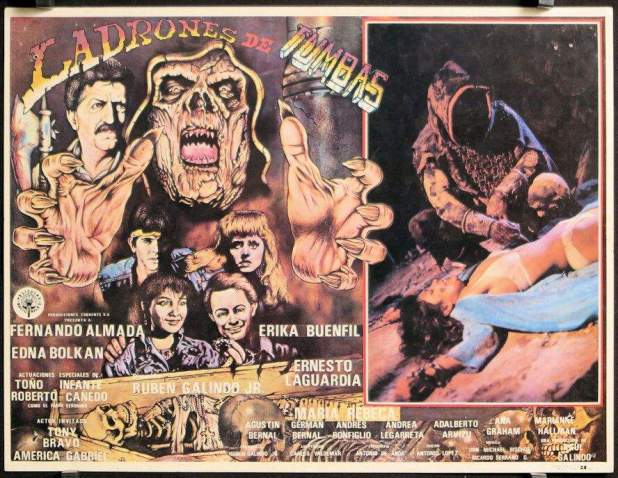
Ladrones de Tumbas (1989)

I am a complete fanboy for Ruben Galindo Jr. who made Don’t Panic and Cemetery of Terror. I’ve never been let down by any of his films so far and I am getting the idea that I may never be disappointed by them after reading the description of this film on IMDB — “Teenagers accidentally resurrect a Satanic killer who targets the local police captain’s daughter to birth the Antichrist.”

It’s like people are making the exact movies I want right now, except they made them in Mexico 31 years ago.

Like all great Satanic movies — I’m looking at you Black Sunday and Evilspeak — this movie starts in the past, as the executioner of the Mexican town of San Ramon throws in with the devil instead of God, assaults a virgin and battles the other monks of his order before he’s stopped with an axe right to the chest. He then says, “Some day someone will come and wrench the ax out. Then I’ll return with more power to father Satan’s son in one of your descendants.”

If you’re not all in, get out.

That descendent is Olivia, the lovely young daughter of Captain Lopez and she is the lone virgin amongst her slasher victim friends. Woe be to them, as they’re camping next to a cemetery that’s beset by — get this — grave robbers. That foursome includes Manolo, his psychic girlfriend Rebeca (trust me, Mexican films are not content to stay within one genre, they’re going to toss in every ingredient) Armando and Diana.

You may wonder if they’re about to find an abandoned church and tear the axe out of the body of the villain, setting this all in motion. Wonder no more. And when the first villagers die, of course the grave robbers are blamed by Olivia’s dad. So he does what any real cop would: he tells them to go find the axe killer themselves. Yes, two people are dead, they’ve been blamed and he asks them to be junior detectives.

I love this movie.

Nearly everyone dies — by axe, by magic, by getting mashed into a pulp, bye bye and adios — until a priest explains that a Satanic idol and the axe itself, not to mention a whole bunch of TNT, are what it takes to kill off the executioner. This being Mexico, the action is intercut with Padre Jeronimo conducting a midnight mass while the cop uses a machine gun to continually blast the undead killer.

This may not be the best movie I’ve ever seen, but it’s edging closer to that space every time I watch it, just by sheer force of will and my belief that if Fulci lived in Mexico, this is the kind of lunacy that he’d have made. As Mexican Nicholas Cage might say, ” Eso es un gran elogio.”

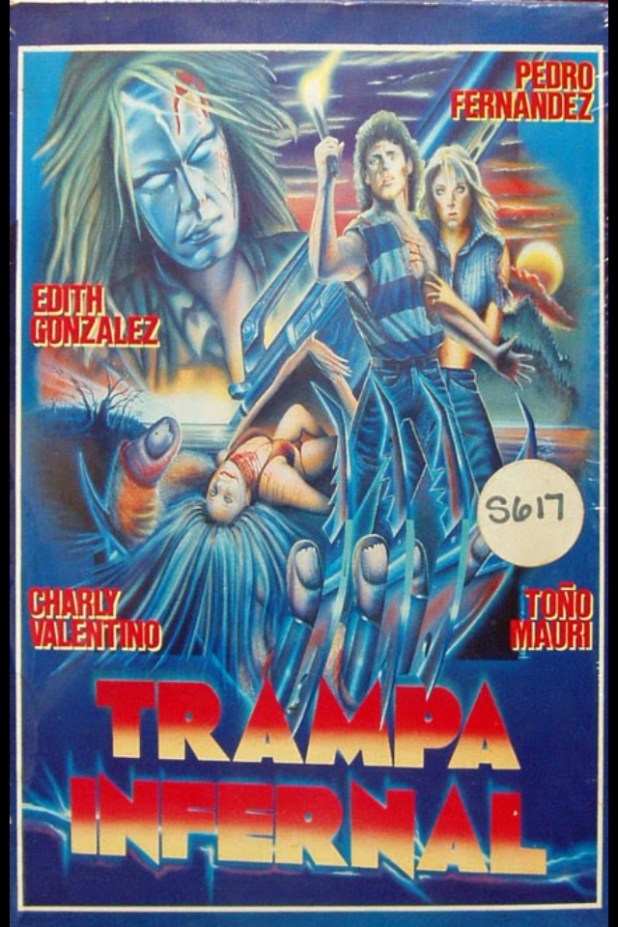
Trampa Infernal (1989)

There’s a reason why Mexican late 80’s horror movies have an edge in my heart. It’s because they’re willing to make you a combo platter of all your favorites. Instead of just giving you Friday the 13th, they say, “What if we gave you a little Rambo: First Blood Part II, threw in some The Final Terror and then gave the bad guy Freddy’s glove and a crazy mask?”

Pedro Galindo III, yes, the same lunatic who made Vacaciones de Terror 2, was behind this movie and he brought its star, Pedro Fernandez, with him. What starts as several teens out to kill a bear — and if you’re asking why, you’re thinking too hard about this movie — ends with a battle for survival against a near-unstoppable menace.

I’ll tell you why. Nacho (Fernandez) and Maurico have had a paintball playing rivalry for some time, so killing a bear feels like the natural conclusion. They bring their friends along but no one told them that these are Jesse’s woods.

Yes, Jesse, the Vietnam vet who hides behind a porcleain mask, who isn’t afraid to fight back with machine guns, tear gas, grenades and when all else fails, a gloved with knived fingers, as if he were a South of the Border Springwood Slasher.

This movie is so 80’s slasher that despite an old townie warning them to stay away, the girls still dance around in swimsuits and the chubby friend still acts the fool and still everyone is positively shocked that bear killing transforms into near ritual sacrifice.

The kids never find that bear. They do, however, find death. Lots and lots of pure death, delivered by a killing machine that keeps going even after you rip his hand clean off. The end of this movie got me so excited, I thought that I was on a coke binge. It’s that kind of manic energy and zeal that only comes from these kind of Mexican VHS masterworks.

This is 77 minutes long. Literally all killer, no filler. Other countries should take note.

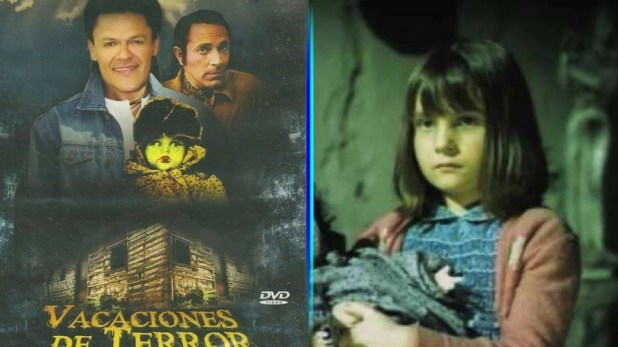
Vacaciones de Terror (1989)

Let’s talk about family tradition. The Cardona family has it. Starting with the senior Rene Cardona, we got films like the brain-melting Santa Claus, Wrestling Women vs. the Aztec Mummy and Night of the Bloody Apes. His son would continue the journey with Night of 1000 CatsGuyana: Crime of the Century and Tintorera.

Starting with this film, Rene Cardona III would put his own spin on horror films. This movie feels like someone stayed up all night mainlining every single Amityville unconnected sequel — trust me, as I have done this — and then decided to make their own cover version before the booze wore off.

Way back in 1889, a witch had taken over a small Mexican town, but an inquisitor was able to use a sacred amulet to force her into the flames and save his village. When he tosses all of her belongings — including a cursed doll — into a well, he never dreamed that a little girl would find it a hundred years later and put her family through hell.

This movie has it all. Bleeding walls, refrigerators teeming with rats and no small amount of snakes and spiders. It also has Julio, the affable teen who hopes to save the family and the babysitter that he is in love with. He’s played by Pedro Fernandez, who is more than an actor, as he’s a TV show host and singer.

This movie has a great scene where the kids play with a toy car — which has possessed their father’s car — and try to push it into the fireplace. These are the reasons why I love movies like this, the small moments that make me realize just how little reality can intrude within.

If this ever came out on blu ray — and it totally should, because the DVD versions are out of print and are prohibitively expensive — I will add my critic byline to it: “If you thought Ghosthouse was completely inane and ridiculous, have I got an awesome movie for you!”

PS: This pairs nicely with Cathy’s Curse so you get a real North/South exploitation exorcism adventure.

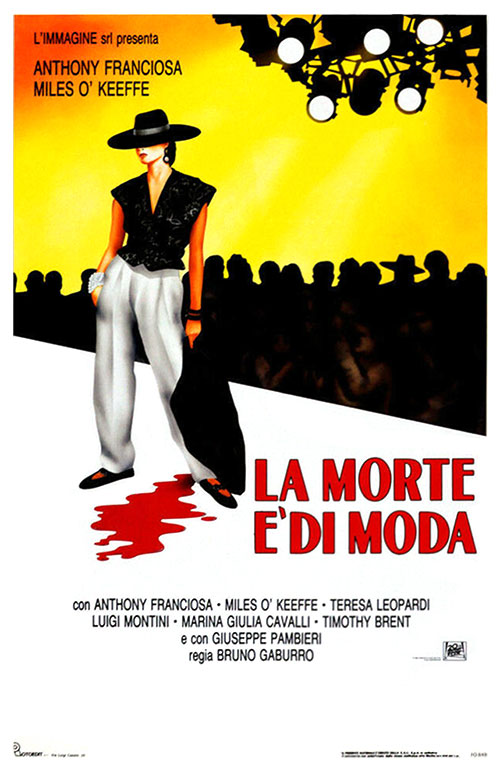
Fashion Crimes (1989)

Anthony Franciosa is a welcome presence at the start of this film, playing a detective who is able to quickly make major leaps in deductive reasoning. However, if you are expecting a film on the level of another he starred in, Argento’s Tenebre, I must sadly tell you that this is not that movie.

If you’re hoping that Fashion Crimes is a modern update of Blood and Black Lace, you’re always going to be disappointed.

Gloria is a fashion model on her way home, but she ends up watching a man kill a woman in an old villa that was once owned by a German countess. However, when the cops come the next morning, it’s been empty for twelve years. So what did she see? Was there a murder? And why is she being targeted, with other models getting killed to try to teach her a lesson?

Perhaps playboy-typed psychiatrist Gianmarco Contini (Miles O’Keeffe) can help. Seeing as how he’s one of the owners of the scene of the crime, I’m going to say that he may also be the killer.

Giancarlo Prete, Scorpion from Warriors of the Wasteland, is in this too. It also uses the music from Joe D’Amato’s Top Model, which is also known as Eleven Days, Eleven Nights, Part 2: The Sequel.

I was kind of hoping that this would be a missing 80’s giallo on the same order as Obsession: A Taste for Fear. Instead, it looks like a 1990’s made for TV movie with no flair or fashion sense.

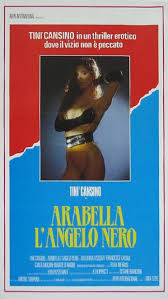
Arabella the Black Angel (1989)

Also known as Angel: Black Angel, this is one of the sleaziest giallo that I’ve come across. Seeing as how I’ve watched Play Motel, Strip Nude for Your KillerGiallo In Venice and own multiple copies of The New York Ripper, that’s saying something.

Director Stelvio Massi was the cinematographer or director of photography for plenty of great movies like The Case of the Bloody IrisSartana’s Here…Trade Your Pistol for a Coffin and Giovannona Long-Thigh. He knows how to make things look gorgeous, particularly in the way he shoots women, which comes in more than handy here.

Arabella is a woman obsessed with the carnal act. Sadly, her husband has been rendered impotent and confined to a wheelchair ever since he wrecked his car while she was dirty facetiming him (he was driving, because the opposite is impossible) on their wedding day. She’s filled his role with trips to brothels, including one that gets raided while she’s assaulted by a cop. She gets back at that officer by inviting him back to her place and while he’s yodeling in the valley, she bops him upside the head with a hammer. Her cucked husband, who has been watching all of this hammer smashed face action go down finally feels the blood flow down below, which means that he has to keep setting up his wife to kill off more and more people. He also finally gets back the urge to write and they start to fall in love again, but of course, he has to keep watching her make love to other people.

Also: lots of genital mutilation.

Ida Galli plays the mother-in-law. You’ll remember her from The Sweet Body of Deborah and Fulci’s The Psychic. Rena Niehaus, who is in the absolutely baffling strange film Damned In Venice, is also on hand.

The problem for our heroine is that everyone she makes loves to dies, including a cowboy who gets his member sliced clean off. The next day, as the cops are gathering evidence, one of them is so upset that he can’t stop eating his sandwich. The world of this movie is insane, because there’s a photo of that mutilated wang on the cover of the next day’s newspaper.

There’s also a scene in the Freak Boy Zone, a place where Arabelle cruises all the gay men and picks one to take home. This entire moment is absolutely insane, as the homosexual side of town feels like it came out of an Enzo G. Castellari post-apocalyptic movie.

This movie looks grubby, makes little to no sense and will offend pretty much everyone that watches it. That means that you’re definitely going to want to watch it.

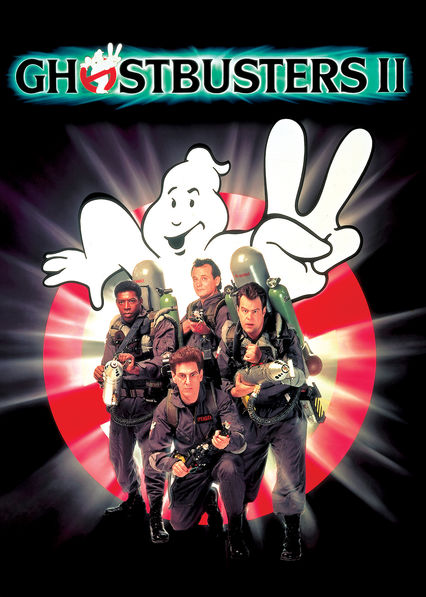
Ghostbusters II (1989)

After the end of the first film, you’d think the Ghostbusters would be heroes for life. However, they’ve been sued out of existence and are barely able to get back together in time to stop a whole new evil, Vigo the Carpathian, who is trapped inside a painting that Dana Barrett (Sigourney Weaver) is restoring along with her boss, Janosz Poha (Peter MacNicol, a bright spot here).

Yes, Dana went from playing the cello at a high level to being an art expert of the same caliber. Obviously, we’re dealing with a Buckaroo Banzai level individual here.

This film never lived up to the original for audience, critics or the people who made it. It took five years of rough gestation to even get to the screen, which needed suits, agents and even a lunch for the stars to decide whether or not they wanted to work together.

Vigo is pretty great though. While his voice comes from Max Von Sydow, he was played by Wilhelm von Homburg, a German boxer, wrestler and weight lifter who also shows up in The Last of the Secret Agents?Die HardThe Wrecking Crew and In the Mouth of Madness. This Deadspin account of his life is pretty astounding, telling the story of a man who lived for excess and may have even fathered his own half-sister.

Remember how I said in a past review that Ghostbusters has no hero’s journey for its characters? Well, they’ve done the third — and hardest — act off-screen, as now Ray (Dan Aykroyd) owns an occult bookstore and works a side job with Winston (Ernie Hudson) doing kid birthday parties, Egon (Harold Ramis) works in a lab and Venkman (Bill Murray) hosts a ridiculous psychic TV show.

Luckily, everything works out despite a river of slime. Rick Moranis returns as Louis Tully and Annie Potts comes back as Janine Melnitz, ready to fall for Egon.

Sure, this is nowhere as good as the first, but that Bobby Brown song sure is catchy. Actually, they could make several of these films and I’d watch them all. I even made it through the toss away the past reimagining.

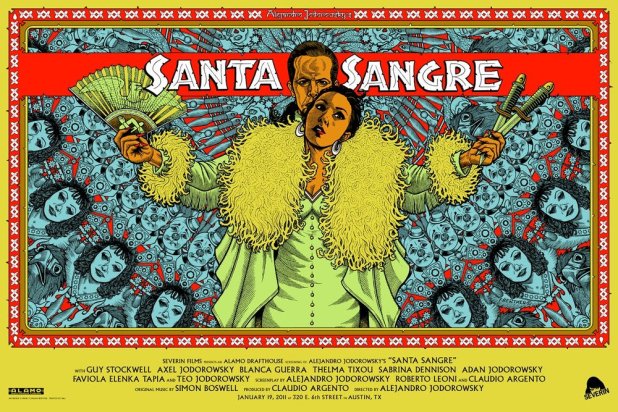
Santa Sangre (1989)

I first encountered Sante Sangre at Prime Time Video in Ellwood City, the video store of my childhood. For some reason, it was stocked in the horror section. I have no idea where I’d put the film myself, but it felt like horror was often the catchall for the films that were not understood. And, of course, as I grew up in a very small town between Pittsburgh and Youngstown, no one was going to rent anything out of a foreign section. As such, amongst the gorehounds of home, Sante Sangre was a film that was too odd, too strange and ultimately not violent enough to appease our needs. I’d never rented it and now, an old man who worships at the foot of The Holy Mountain, I find myself wishing that I could send a message back to my younger self and tell him to seek this film out.

Interestingly enough, this film was written by Roberto Leoni, who had worked in the library of a psychiatric hospital which inspired this film. Leoni also wrote My Dear KillerCasablance Express and one of the oddest movies I’ve ever seen, Sergio Martino’s American Rickshaw.

He brought the script to Claudio Argento, who felt that Alejandro Jodorowsky was the only director who could make this movie. However, after Dune ended due to money issues and Tusk was considered a failure, Jodorowsky had disappeared. The director would only meet Leoni, telling him that the angel of stories had passed over Paris and taken this story to Italy, but it was meant for him to tell.

After all, Jodorowsky had had a chance meeting in the alley outside a bar with Gregorio Cardenas Hernandez, the famed Estrangulador de Tacuba who had emerged after nearly thirty years in prison able to play the piano, write poetry, practice law and with a wife and four children. He was pardoned of his crimes and led a normal, if famous, life until his death in 1999.

Fenix, played at different times by Jodorowsky’s sons Axel and Adan, has grown up in the circus, the child of Orgo the knife-thrower and Concha the trapeze artist. His mother is also the leader of a cult that worships a dead child who was raped and had her arms cut off by two brothers. As the Catholic church and the government destroy their place of worship, Orgo is making love to the tattooed woman who he performs alongside. Concha catches him, but is hynotized and raped as well.

As if that isn’t bad enough, the beloved elephant dies despite Fenix’s prayers. He watches as scavengers tear it apart in the city dump and all his father can do is carve up his chest with a tattoo to try to stop his tears and make him a man.

That night, Concha finally rises up against Orgo, burning his privates with acid. He retaliates by cutting off her arms before slicing his own throat, unable to live without his sexual member. The tattooed woman takes the mute Alma — who Fenix already loves — and runs off into the bloody night.

We move back to the present, where the film began with Fenix in a mental institution. A chance outing reveals to him that the tattooed woman is still alive and trying to introduce Alma to a life of selling her body. That night, a strange woman kills the older inked female, but we can’t see who it is.

We soon learn that Concha is forcing Fenix to be her arms — not just in their knife throwing act, which forces him to become a strange substitute for his father — but in a series of murders. Alma tries to get Fenix to leave this all behind, but his mother demands that he kills the only woman he has ever loved. He responds by stabbing her, yet she does not die.

That’s when we learn the truth. Concha has been dead since the night Orgo took her arms all those years ago and an armless mannequin has been the one that our hero — such as it is — has been listening to. Along with the help of more imaginary friends, Fenix destroys the past and surrenders to the police, amazed that he has regained control of his arms once again.

As the elephant dies in this film, inspiration was born. In Eddie Murphy’s song “Whazupwitu,” everything begins with the words of the clown: “The elephant is dying.” This is not the last time Murphy would mention the director’s work, as he often brought him up while he did press for Dolemite Is My Name.

I am also amused that beyond Argento’s brother producing this — and by osmosis some of the murder scenes feeling as if they are inspired by Dario — Rene Cardona Jr. (yes, the director of Tintorera) was also a producer.

Even after several watches of this film, I am still astounded by its rich palette of colors, the way it synthesizes references from Universal’s Invisible Man to the lucha movies of Mexico’s past and how the hero is the villain while also being pure of heart, despite the many murders he has committed.

Perhaps in my teenage years, I was not yet ready for the psychomagic cocktail that a teacher like Jodorowsky was shaking up with this film. Yet today, I can definitely tell you that it has my highest recommendation. Please watch it. I’d love to discuss it with you.

You can watch this on Tubi.