CANNON MONTH: Invaders from Mars (1986)

EDITOR’S NOTE: We originally wrote about this movie on September 12, 2017 as part of a tribute to Tobe Hooper. It’s one of three movies that he made for Cannon and one of our favorite movies.

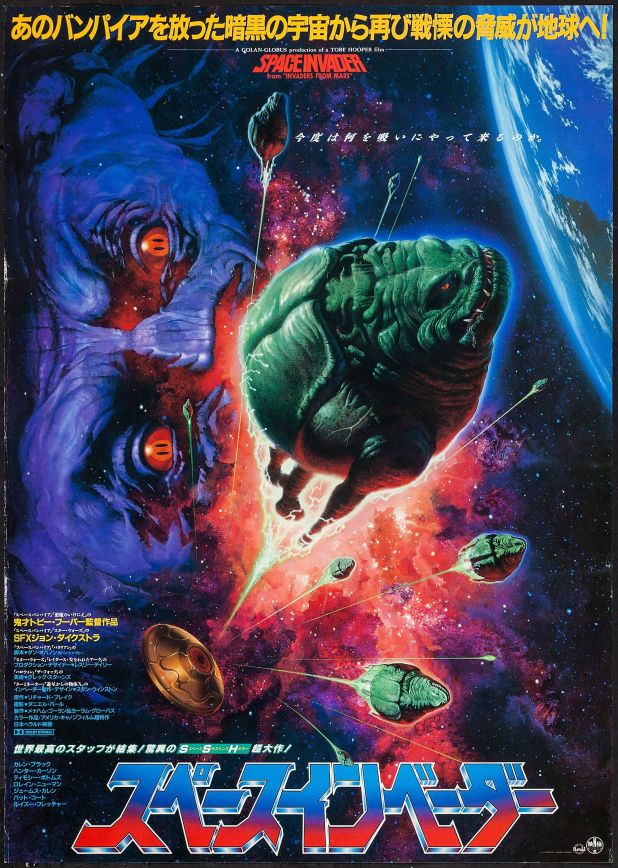
Following the failure of Lifeforce (at least commercially, I’m on the side of it being an interesting affair), Tobe Hooper turned to a remake of 1953’s Invaders from Mars. After several writers took a shot at the script, Dan O’Bannon (the USC film student who famously created Dark Star with John Carpenter, left for Europe in the hopes of making Dune with Alejandro Jodorowsky, then came back to the U.S. to write AlienDead and Buried and Total Recall, write and direct Return of the Living Dead and then die way too young from Crohn’s Disease) and Don Jakoby.

Instead of the adult oriented gore and sex that Lifeforce presented (which shows up here as a movie within a movie, main character David is watching the film and man, he’s super young for that movie), Invaders is a return to the themes of 1950’s science fiction. That said — whereas the originally intended directed Steven Spielberg would have focused on the sweetness with a slight edge, Hooper delivers plenty of edge. In fact, this entire film feels like a nightmare that the main character, David Garden (Hunter Carson, the son of The Texas Chainsaw Massacre 2 writer LM Kit Carson and Karen Black, who we’ll get to in a minute) can’t wake up from. It’s unnerving the sheer torture that this kid goes through!

After watching a meteor shower, David sees a spaceship land behind his house. Throughout the film, the entire town gets taken over by aliens, including his parents (Timothy Bottoms and SNL’s Laraine Newman). It’s true terror — what child doesn’t have the fear that his parents will no longer love him? It’s even worse when they coldly plot your doom.

They’re not the only ones — every teacher is against him, none more than the meanest teacher in school, Mrs. McKeltch. She’s gone from that to something much, much worse — the human face of the alien invasion.

The only person who believes David is the school nurse, Linda Magnuson (Karen Black, The Pyx, Burnt Offerings, Killer Fish and so much more). Together, they rally the Marines, learn how the alien guns work, defeat the Supreme Intelligence and blow up the UFO.

Or do they? Much like its 1953 inspiration, David wakes up and the entire movie is revealed to be a dream. However, this isn’t a William Cameron Menzies film (the director of the original, whose name is given to the elementary school in this film); this is Tobe Hooper, who ends the film just like it began. David sees the UFO land again, runs to his parent’s bedroom and screams as an alien noise is heard. There is no resolution — just the return of abject terror.

This part is particularly interesting to me, as I’ve had the same dream of a UFO showing up outside my window since I was a child. I always wake up screaming, knowing that I’m looking at an object made from pure evil.

Invasion is an odd duck. Horror buffs wanted to see Hooper make another The Texas Chainsaw Massacre (they’d get their wish, but probably not in the way they’d want it within a few weeks). Moviegoers didn’t know who Hooper was enough to be a mainstream draw (Poltergeist was made three years before Hooper got his three picture Cannon deal). And fans of the original probably wouldn’t be pleased with the darker bent of this remake (despite original star Jimmy Hunt making an appearance as the police chief and the original Supreme Intelligence showing up on a warehouse shelf).

That’s not to say it’s a bad film. It’s packed with elaborate practical effects from Stan Winston (who was working on Aliens at the same time) and John Dykstra, including the amazing alien drones. The drones are literally two actors walking independently under a suit, so their movements feel more feel than today’s computerized creatures. The Supreme Intelligence doesn’t look silly; instead it’s a mix of menace and cartoony evil, like a Mars Attacks! trading card brought to life. And the film is replete with references to other films — it takes place in Santa Mira, home to Invasion of the Body Snatchers (and Halloween 3: Season of the Witch) and the house that the Gardners live in was built for 1948’s Mr. Blandings Builds His Dream House.

This movie lost a lot of money — it made $4.8 million on a $12 million dollar budget. You know who did make money on this? Science fiction fan and sometimes writer/producer/director Wade Williams, who bought the original film in 1978. Airing the original film via television, cable and video releases made plenty of money. Add in the rights to this — Williams got a producer credit — and he may have made up to fifty times what he paid for the film. This isn’t the only film in the Wade Williams collection. He also owns the distribution rights to the films of Ed Wood, Robot MonsterThe Killer Shrews, Bava’s Hercules in the Haunted World and a near infinite amount of other films.

Maybe that’s why Menahem Golan and Yoram Globus, those insane masters of moviemaking that made up Cannon, hated the film. They claimed it was nothing like what they were promised. That said — Hooper often spoke favorably of his time with Cannon, comparing it to the old studio system days.

With two films down and his back to the wall, Hooper had to turn back to some old friends and his old neighborhood. Within a few weeks (he made the film in June and it was released in August), he’d make the film everyone wanted to see anyway — The Texas Chainsaw Massacre 2. But that’s a story for another time.

You can listen to The Cannon Canon podcast about this movie here.

CANNON MONTH: Cobra (1986)

EDITOR’S NOTE: You can read another take on this movie from R. D Francis that was originally posted on August 14, 2019.

Crime is the disease. He’s the cure.

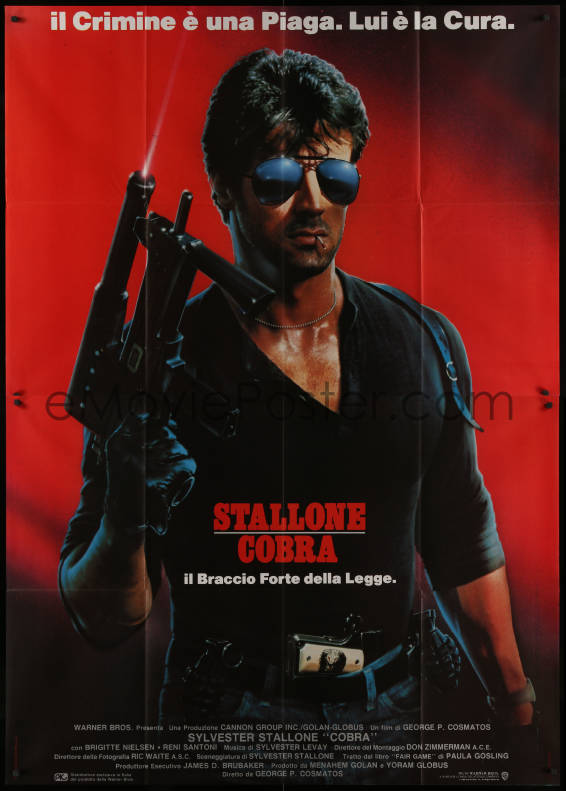
I’ve opined that if we compare the two God-tier action stars — Arnold and Sly — Arnold may have the best overall catalog, but Stallone has the better individual films. One wins the battle, the other wins the war. Or as he’d say, “Don’t push it, or I’ll give you war you won’t believe.”

Somehow Stallone was going to be in Beverly Hills Cop and wanted it to be not so funny, then he wanted to be in an adaption of Fair Game by Paula Gosling — which got made nine years later and the less said the better — and then he ended up making a movie that pretty much is every 80s over the top — no pun intended — action movie cliche all in one film.

And you know what? It’s great.

Like honestly, non-ironically great.

It’s Stallone suddenly deciding what if a slasher movie broke out in the middle of a one cop against the world movie? Zombie Squad cop Marion Cobretti against an entire cult of lunatics called The New World, led by the Night Slasher (Brian Thompson, who had to buy his own ticket to see the film), all to save the life of Ingrid Knudsen (Brigitte Nielsen)? Do you have any idea how many times I watched this movie? Stallone stealing Steve McQueen lines and saying, “This is where the law stops and I start, sucker!” is the kind of thing that made a young me continually watch and rewatch and take notes.

There’s a two-hour plus X-rated — for violence — cut of this movie that I’m dying to see. Throat cuttings, hands sliced clean off, children discovering said hands, David Rasche getting killed with axes and an extended ending — these are the things I want to see! We live in a world of re-releases, so why isn’t this happening? Shout! Factory had a collector’s edition release of this and nope, no footage!

Stallone has talked about making a sequel with Robert Rodriguez — as late as 2019 — but it just seems like cutting the robot out of Rocky IV, Sly sometimes likes to play with my heart.

In case you think George P. Cosmatos’ name is familiar, his son — using the royalties from this movie — would go on to make Mandy and Beyond the Black Rainbow. And I’m not the only fan of this movie, as Nicolas Winding Refn used a toothpick in the hero’s mouth in Drive to show his fandom.

So how is this Cannon? After all, the Cannon logo isn’t anywhere in the movie. Golan and Globus only get a production credit, as it was mostly a Warner Brothers movie, but they got that title in return for voiding a prior agreement the Cannon had with Stallone.

Finally: I am a movie gun nut, so just like another Cannon actor, Charles Bronson, Stallone had his own custom gun made for this movie, a 9mm Colt Gold Cup National Match 1911 that fires Glaser Safety Slugs. This bullet was designed in 1974 in response to the possibility of having to use a handgun on an airplane by the Sky Marshals and having to deal with ricochets on hard surfaces and possible excess penetration. It’s a pre-fragmented bullet that uses a traditional copper jacket, which means that instead of a solid lead core like conventional hollowpoint ammunition, it has a compressed core of lead shot.

It does not shoot through schools.

Finally, action movies are mirrors upon themselves. While Cobra reunites Dirty Harry actors Andrew Robinson and Reni Santoni, Sylvester Levay’s song “The Chase” would end up in trailers for Bloodsport and Marked for Death.

You can listen to The Cannon Canon commentary and watchalong here.

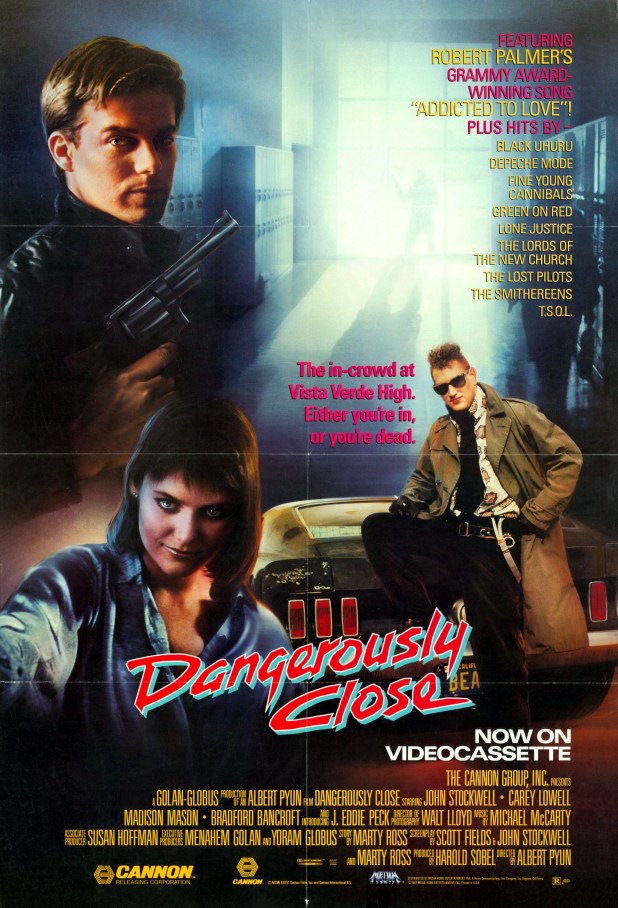
CANNON MONTH: Dangerously Close (1986)

Is it strange how much Dangerously Close feels like the last few years of life? I mean, life is high school, right? And aren’t The Sentinels, the far right student villains of this movie, pretty much anyone that does their own research and demands to know why they can’t have white history month? Man, between this movie and Avenging Force, Cannon was hitting this subject head on while also getting to roll around in the muck, which is how all good exploitation must behave.

Written by Scott Fields (who also wrote Under Cover), John Stockwell (who stars in this and yes, also wrote Under Cover and directed it too) and Marty Ross (who was one of the New Monkees a year later and that fries my brain) and directed by Albert Pyun, who would make CyborgAlien from L.A. and Down Twisted for Cannon, Dangerously Close is the kind of weird movie I get obsessed by.

I mean, Roger Ebert said that the Pyun “devoted a great deal of time and thought to how his movie looked, and almost no time at all to what, or who, it was about.”

That’s my jam.

At the private school Vista Verde — a nightmare for me, as my parents frequently debated sending me to a school just like this — The Sentinels have gone from a student group to a military unit that assaults the undesirables of the student population thanks to the leadership of Randy McDermott (Stockwell).

I’d like to think that I’d have been Donny Lennox (J. Eddie Peck, who was Kevin “Blade” Laird in Lambada), a poor kid who got in because he knew how to write. He and punk rocker Krooger Raines (Branford Bancroft, 3:15Bachelor Party) are just two of the kids who don’t fit in and they’re soon joined by Brian (Thom Matthews, Tommy Jarvis himself), who has left behind the group after they go too far and McDevitt’s ex-girlfriend Julie (Carey Lowell, Law & Order), who splits from the group leader after she screams at him that all he cares about is using her mouth and wow, that language is shocking exploitation dialogue even years after this was made.

Let me tell you, I love this movie. It’s so odd because the town where it takes place is perfect and yet has more fog than any place in California other than the Sunset Strip. It’s got a cast that includes Debra Berger, Angel Tompkins (The Teacher playing a teacher?), Dedee Pfeiffer (making this a mini-The Allnighter cast meet-up with Bancroft, who played Bartender Joe in that Susanna Hoffs vehicle), March 1982 Playboy Playmate of the Month Karen Lorre, Miguel A. Núñez Jr. (making this a Return of the Living Dead reunion with Matthews), Don Michael Paul (who would go on to direct so many direct-to-video sequels like Kindergarten Cop 2Death Race: Beyond AnarchyThe Scorpion King: Book of Souls and Tremors: Shrieker Island) and Gerard Christopher (the syndicated Superboy). Everybody in that group is way too attractive to play high school students and teachers. And it has a wild soundtrack, with everything from T.S.O.L., The Lords of the New Church, Lone Justice, Fine Young Cannibals, Depeche Mode and The Smithereens, whose “Blood and Roses” is nearly the theme song for the film.

Also, the Keanu Reeves and Kiefer Sutherland made-for-TV movie Brotherhood of Justice is strangely the exact same story and also has Don Michael Paul in it.

More people should be talking about this movie.

You can listen to The Cannon Canon podcast about Dangerously Close here.

You can watch this on Tubi.

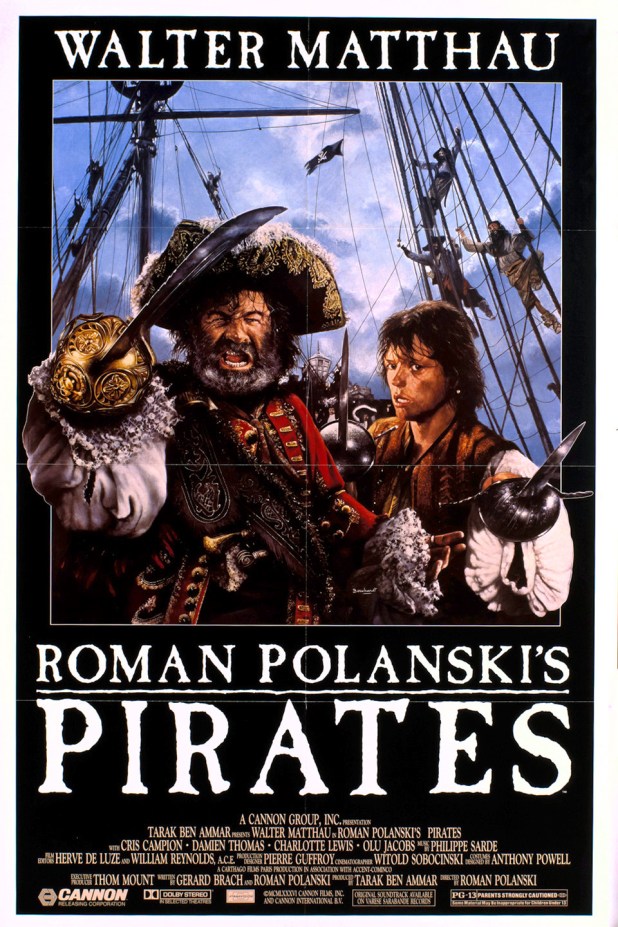
CANNON MONTH: Pirates (1986)

Roman Polanski said to the New York Times, “The people who finance films don’t care what your personal problems are, your image, whatever. They’re interested in figures. They look them up the same way an insurance company does. And they know that if they spend $5 million or $6 million, $10 million on a film by me, their risk is quite limited. But once you have a subject complicated, more ambitious, like Pirates, even if you have a delightful script and great enthusiasm, even if you promise them heaven, they are afraid. That has nothing to do with my legal problems in America. What do they care for it? Do you think that they have a moral streak in them, that they really hesitate?”

Those legal problems?

In 1977, Polanski was arrested at the Beverly Wilshire Hotel for the sexual assault of 13-year-old Samantha Gailey, who had modeled for him the day before at the home of Jack Nicholson. He pled not guilty, Hollywood came to his defense and his attorney set up a plea bargain where five of the six charges would be dropped. The charge that was left would be unlawful sexual intercourse with a minor.

He had to serve 90 days of psychiatric evaluation and his time served ended up being 42 days. Somewhere along the way, the judge on the case told several people that he was going to ignore the plea bargain and make certain Polanski died in jail.

The day before he was to be sentenced, Polanski left the country on a flight to London then Paris. And that’s where he’s stayed, making major movies, a French citizen protected from extradition with all those charges still pending.

In 1988, Gailey sued Polanski for sexual assault, false imprisonment, the seduction of a minor and intentional infliction of emotional distress. Five years later, he settled with her.

In 2009, he was arrested in Switzerland and in jail for two months. The United States were denied extradition and he was a free man again. Strangely, Polanski blamed Harvey Weinstein for the new focus on his sexual abuse case in the 2000s and claimed that the now-disgraced producer brought up the rape accusations again to stop him from winning an Oscar for The Pianist.

As of late, Gailey has said, ” It’s been 40 years. Enough.”

Polanski replied, “She is a double victim: My victim, and a victim of the press.”

Anyways…Pirates.

After Chinatown, Polanski wanted to make a movie that wasn’t loaded with messages and education and with that, I think we can all agree that he succeeded. Polanski intended Jack Nicholson to play Captain Thomas Bartholomew Red and he would pull a page out of The Fearless Vampire Killers and play the sidekick.

The problem? Nicholson wanted paid. When asked how much he wanted, he just said, “I want more.”

It took until 1980 for the film to get to any stage of production. In between, he made The Tenant with Isabelle Adjani, then the arrest happened and then he made Tess with Nastassja Kinski — who he started dating when she was 15.

After that, Filmways and producer Arnon Milchan announced they would finance the movie, to be shot in Tel Aviv at a $24 million dollar budget, which would also include building a new studio and water tank. All the money would go to special effects and there would be no stars.

Then that didn’t happen either.

Carthago Films and producer, Tarak Ben Ammar took over the production and spend $8 million over the next half decade or so as the movie stayed in development. Luckily, just before shooting was to start, Dino de Laurentiis made a deal to release the movie in Europe and in the U.S. with MGM/UA. Ammar got three more banks to put up more money.

Numerous stars were picked for the lead role and finally Walter Matthau came on board. He would say, “”I didn’t like the script. I didn’t understand the script. First it was the ship against the pirates, then the pirates against the ship, then the ship against the pirates. I didn’t think it was funny or adventurous or anything.”

Things had to get better after that, right?

The budget went to $40 million, storms made the shoot pretty much out of control and Ammar kept on a happy face, because they were bringing jobs to Tunisia even if Polanski was, in his words, “disaster prone.” And then he was unhappy with MGM/UA, paid off their investment and brought in Cannon Films.

Things really had to get better after that.

Did they get better after that?

“We make mistakes. Pirates was one of them,” Yoram Globus told the Los Angeles Times.

The movie made s $1.64 million and $6.3 million worldwide on a budget of somewhere above $40 million.

Yes, it failed, even after it opened Cannes, during which the Neptune sailed into the Cannes harbor on the festival’s opening day, with all the cast on deck in their pirate costumes. And then nobody had any idea what to do with that ship, so it sat in the harbor at Cannes or sixteen years, a reminder of just ow much of a failure this movie was.

We should probably get to the movie.

Pirate Thomas Bartholomew Red (Matthau) and his cabin boy Jean-Baptiste (Cris Campion) start the film lost in the middle of the ocean on a raft (not a rat thanks for catching the typo! They do eat a rat later though) when they’re picked up by a Spanish ship known as the Neptune. They’re immediately placed in the brig along with the sip’s cook (Olu Jacobs) who may have tried to kill the ship’s captain (Ferdy Mayne, who made this movie the year after he was in Night Train to Terror, which are both choices and a journey)because there’s Aztec gold inside the ship.

The captain dies and Don Alfonso de la Torré (Damien Thomas) takes charge of the ship. He’s in love with a noblewomen’s daughter, Maria-Dolores (Charlotte Lewis), who Jean-Baptiste has also fallen for. Our protagonists try to enact a mutiny, which leads to a rebellion and a massive fight scene and then Maria-Dolores is nearly assaulted because this is a movie that “young audience will enjoy more than the adults” to quote Polanski.

Shenanigans ensure and this movie ends up feeling like two years instead of two hours. The ship looks great though, right? It makes me wonder why Polanski made this movie look so realistic — I mean, there’s a rat eating scene and everything looks absolutely caked in filth — when everything else in it is a farce.

I’d been warned by how bad this movie was and despite me continually testing my resolve by watching the full filmographies of Bruno Mattei, Joe D’Amato, Jess Franco and way further down the chain of so-called bad movies and you know, this is the very definition of a bad movie. And I don’t believe in the term so bad it’s good. This is bad. From now on, I will compare every bad and boring movie that I watch to Pirates and they will become better by that comparison.

Of course, this movie has accusations of its own. Lewis said that Polanski had forced himself on her while she was auditioning for a role when she was 16 and he was 50. But then again, se claimed at the time that she was the one who pursued him, telling News of the World, “I knew that Roman had done something bad in the United States, but I wanted to be his mistress. I wanted him probably more than he wanted me.”

Obviously, she’s in this movie as María-Dolores de la Jenya de la Calde, appeared arm in arm with Polanski at Cannes a year after the incident and said in an interview, “I’d love to have had a romantic relationship with Polanski and a physical one. You can’t help falling in love with him. But he didn’t want me that way.”

That said, the world has changed a lot since 1986. So I really and honestly have no idea who to believe and the only ones that know are the people directly involved. I can dislike Polanski’s character as much as I want to and so much of watching exploitation film — most film — is to not whitewash what any individual has done. But I can definitely say that Pirates is a horrible movie that I suffered throughout.

You can listen to The Cannon Canon suffer through Pirates here.

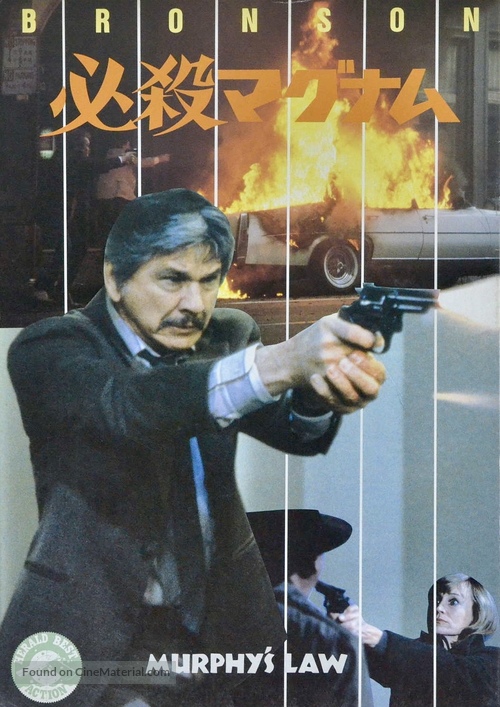
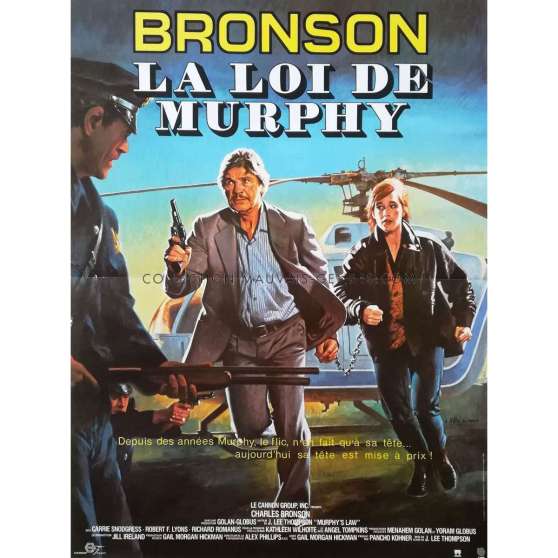
CANNON MONTH: Murphy’s Law (1986)

EDITOR’S NOTE: We just reviewed this as Kino Lorber has put it out on blu ray. That article was on February 13, 2022, but it’s Cannon Month, so let’s get more Bronson!

Lee J. Thompson and Charles Bronson wore together several times. Six, to be exact, with this movie, St. Ives, The White Buffalo, Caboblanco, 10 to Midnight and The Evil That Men Do making up the full list of their collaborations.

Writer Gail Morgan Hickman’s (The Enforcer, Death Wish IV: The Crackdown) script was one that Cannon liked, but at this point, they’d started to overspend, so they weren’t forthcoming with the money the film would need, as producer Pancho Kohner, Thompson and Bronson. The team took the movie to took Hemdale and were immediately given the green light with a much better deal.

Cannon sued for breach of contract and claimed that they had already pre-sold most of the worldwide rights and stated that it would damage their company if someone else made it. After all, Cannon often pre-sold movies based on loglines and pasted together ads well before the movies were made.

A lawsuit was avoided, allowing Cannon to financed and released the movie, with Hemdale getting foreign video rights. As for Bronson, Kohner and Thompson, they got a three-movie deal with Cannon, which ended up being the aforementioned Death Wish 4: The Crackdown, Messenger of Death and Kinjite: Forbidden Subjects.

Bronson plays Jack Murphy and at 65 years old, you really get the sense that just like his character, he’s exhausted. Indeed, he was often frustrated at the delays between takes and would shout, “Let’s shoot! Let’s shoot!” as he wanted to get back to his family. As for Murphy, he has no family, as his ex-wife (Angel Tompkins, who was the titular The Teacher and also was in The Farmer) has started dancing at a men’s club frequented by other cops, making him the target of their jokes. So he drinks away his days and wastes his nights watching the woman he chased away attract other men.

Meanwhile, a woman he put away named Joan Freeman (Carrie Snodgress, who Stallone wanted to be Adrian in Rocky, with Harvey Keitel as Paulie, but money was a major issue; she’s best known for her role in Diary of a Mad Housewife; Neil Young wrote the songs “A Man Needs a Maid,” “Harvest,” “Out on the Weekend” and “Heart of Gold” about her) is out of jail and conspiring to ruin his life, as if it can be further ruined. She begins killing those close to him — mostly cops, as she blames them just as much as him — ending with his ex. Soon Murphy’s headed for jail with many of the criminals he put there.

Somehow, as Murphy is first arrested, he’s handcuffed to Arabella McGee (Kathleen Wilhoite, Road HouseFire In the Sky), a potty mouthed homeless girl that he’d recently arrested. As she repeatedly verbally abuses Murphy with phrases like butt crust, monkey vomit, jizm breath, sperm bank, dildo nose and snot-licking donkey fart, Arabella doesn’t speak like anyone in any movie ever, which is why I find her so endearing and this movie just so delightfully odd. Wilhoite was a method actress and felt that probably her character should have looked more homeless, but she got to keep all of the designer clothes that her character wore, so that probably made wearing it in the film much easier.

Before fiming started, Thompson and Kohner coached Wilhoite all about how to best get along with the tempermental Bronson, which worked, because they got along well according to reports.

She also sang the movie’s theme song!

That said, she wasn’t the first choice for the role. Supposedly, Madonna was up for the role but wanted a million bucks. So was Joan Jett, who had just been in Light of Day. While she didn’t get the part, she ended up growing close to Bronson’s wife Jill Ireland. In a Q&A on her official fan site, Jett answered the question “How did the song, “Don’t Surrender” come about? And who is Jill Ireland?” with the following:

“Jill was Charles Bronson’s wife, also a wonderful actress. We met over the possibility of me co-starring with Charles B. in a movie. We became great friends, she turned me on to crystals, etc. and taught me a lot during our friendship. When she died, I was very upset, but channeled that (what I saw in Jill: strength, honor, dignity) and wrote “Don’t Surrender” with Desmond, inspired by Jill.”

Handcuffed together, the two go on the run, stealing a helicopter and landing on — and crashing through, Demons style — the growhouse of some well-armed marijuana farmers, which gives Murphy the chance to save Arabella from a group assault, making me wonder if Michael Winner directed this movie. You can tell he didn’t because it’s quick, they don’t succeed and the camera doesn’t linger like a lunatic.

Then again, Thompson also made Kinjite

Anyways, the duo ends up getting along better and better, with even the hint of romance by the end. They take up in the home of one of one of his old partners, but the killings move there too.

Of interest to fans of Jason Vorhees, the growhouse is a location from Friday the 13th Part III and his partner’s house is from Friday the 13th: The Final Chapter.

Murphy thinks that the killings are the result of a vendetta between him and mobster Frank Vincenzo (Richard Romanus) before making his way back to the Bradbury Building in Los Angeles, the same place where Freeman was arrested for shooting her boyfriend, a security guard at the building.

The Bradbury is a historic LA building and you may recognize it from noir movies like the original I, the Jury and D.O.A. as well as a more futuristic take on the genre, Blade Runner. The building demanded that no food or drink was permitted on set during filming, but not having craft services was worth it, because the close is tense, with the cops working for Vincenzo gunning for Murphy and Freeman stalking him with a crossbow and then attacking him with an axe.

Murphy’s Law is also filled with roles for plenty of great tough guy actors, like Lawrence Tierney, Robert F. Lyons and Bill Henderson. It’s a movie that both embraces and escapes many of the things you expect from a Bronson movie It’s violent, profane and removed from reality, but I love how it has both a female protagonist and antagonist, lightening the normal testosterone-filled world of Bronson just enough to make things a little different. The dialogue is beyond ridiculous, which made me love this movie even more. It’s beyond quotable, including the line, “Don’t fuck with Jack Murphy!”

You can get the new blu ray release of this film from Kino Lorber. It has some great extras, like commentary by Wilhoite and film historian Nick Redman, an interview with Robert F. Lyons, two radio commercials and a trailer.

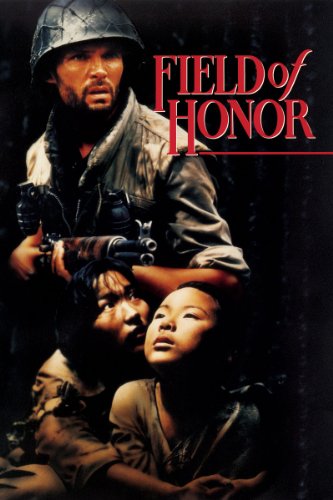
CANNON MONTH: Field of Honor (1986)

Dutch mercenary Sergeant De Koning (Everett McGill) has been left alone in Korea after his platoon, who have been committing numerous war crimes, are attacked. Then the Korean girl he’d pushed into prostitution ends up becoming more important to him and he tries to help her little brother alive. De Koning also makes the journey from the kind of soldier who would get everyone drunk on the front lines — leading to that deadly attack by the Red Chinese — to some level of redemption.

Directed by Hans Scheepmaker and Dae-hie Kim, who co-wrote the script with Henk Bos, Field of Honor was delayed in its native Netherlands for more than a year because of the bad reception it got at the Cannes Film Festival. It’s not as horrible as reviews at the time suggest, but in no way as good as other similar war films of the 80s like Platoon.

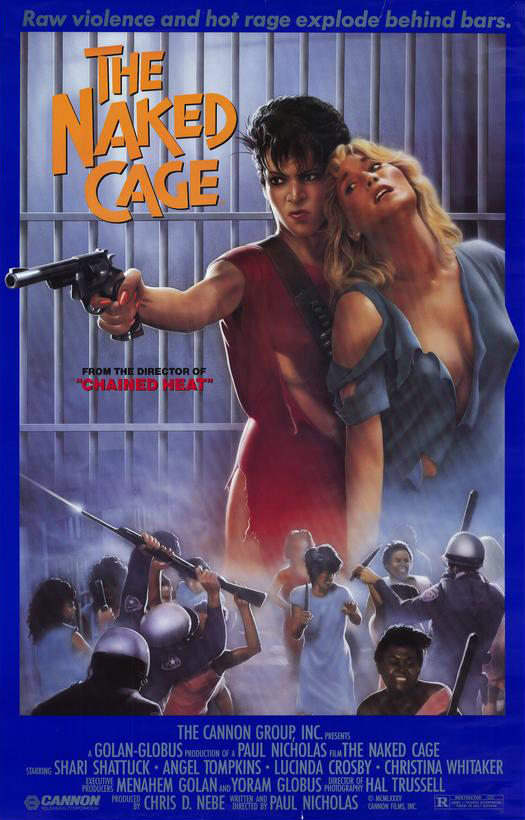
CANNON MONTH: The Naked Cage (1986)

Paul Nicholas directed and wrote Chained Heat — and Julie Darling — so The Naked Cage feels like a ribfest play, going back to play the hits.

Michelle (Shari Shattuck, who shows up in some of the worst — and I mean best — movies of the 80s video horror era like Uninvited and Death Spa) has left the farm for the city to work at a bank just in time for her ex-husband Willy (John Terlesky, the second person to play Deathstalker) and his prison lady Rita (Christina Whitaker) to try to knock it over. They take Michelle hostage, Willy gets shot and somehow, the police take Rita’s word that our heroine was part of the robbery and that’s how we get to, well, The Naked Cage.

Of course, Rita ends up in the same jail, which is a hell hole were all the prisoners wear their own versions of the uniform which doesn’t make it a uniform when you think about it. Angel Tompkins (The Teacher) is the warden who, of course, is corrupt.

Luckily for Michelle, she’s in for bank robbery, which wins her some points with her fellow inmates instead of making her fresh meat. As for me, I’m happy that Lisa London — who was in Guns and Savage Beach — and Leslie Scarborough from Stewardess School are in this, because it reminds me that instead of using my mental acuity for doing something that means something for the world, I can instead instantly recall actresses from movies I saw on Cinemax thirty years ago.

Also: Carole Ita White, who played Trouble, is like a WIP lifer. Se was also Cheeks in The Concrete Jungle, Spider in Chained Heat, Ms. Jenkins in Savage Streets (not WIP but so close) and Nurse Turner in Hellhole.

One has to wonder how the Fabulous Thunderbirds felt about “Tough Enough” being in this movie. I’d like to think they loved WIP films. Right? That song was in every movie that was filmed in 1986, including Gung HoWise GuysThe Money PitHannah and Her SistersRuthless Peopleand Tough Guys.

You can watch this on Tubi.

CANNON MONTH: P.O.W. The Escape (1986)

Also known as Behind Enemy Lines and Attack Force ‘Nam, David Carradine stars as Colonel James Cooper, which is the Chuck Norris role in this movie, as Cannon had gone all in on military movies.

Directed by Gideon Amir, who produced Cannon’s Boy Meets GirlMissing In Action and American Ninja, this movie had three — yes, three — screenwriters: Malcolm Barbour (who would go on to create Cops for Fox), James Bruner (who had already written Missing In Action) and Avi Kleinberger (who wrote American Ninja and three of its four sequels).

During a mission at the end of the war, Cooper gets caught trying to liberate his fellow soldiers and ends up in a North Vietnamese POW camp himself. He’s due for a trial bu the North Vietnamese, but Vinh (Mako), the camp commander, offers him a deal: if he can get Cooper and the troops there to safety, they will help him get to America.

With music from other Cannon movies (The Delta ForceRevenge of the Ninja), you may write this off as just another Vietnam movie, but it literally wraps Carradine in the flag and also has not just Steve James, but Steve James singing “Proud Mary,” and I think it’s worth watching just for that one scene. And because this was made in the Philippines, it legally has to have James Gaines in it.

Also, drink every time Carradine says, “Everybody goes home,” and you’ll die.

You can get this from Ronin Flix.

CANNON MONTH: Link (1986)

Richard Franklin had optioned a short outline of this film, which he said was “a sort of Jaws with chimps.,” but it sat until writer Everett de Roche showed him a National Geographic article in which Jane Goodall discussed violence among chimpanzees, including “the cannibalizing of young chimpanzees by one particular mad female chimp. She observed actual inter-tribal warfare, not unlike the opening of 2001, between two groups of chimps. The whole ’60s idea of man being the only animal to make war against its own kind was suddenly thrown out the window. Since then, they’ve discovered that lions and other animals do it as well, but that, to me, was a really interesting idea for a good thriller.”

As Franklin tried to get financing, he ended up making Psycho II and Cloak and Dagger, which gave him the ability to get this movie made. He compared it to The Birds, but then realize that people may think that he was basically making another Hitchcock sequel.

While the movie was originally going to be released by Universal, Frankin said that the studio’s “…instinct will probably be to release it this summer, which I really hope they don’t do. It’s not a Spielberg movie. It’s quite different and, in a way, I wish Psycho II had been given the chance to make more money by playing fewer theatres for a longer period of time. Link is a very special thriller and should be treated accordingly.”

Then Cannon released it, chopping out eight minutes in the U.S. and five more in England, a process that Franklin said was When the film was horrifying with “each new one chipping a little more away until my wife was moved to liken the plight of my monkey movie to that of the horse in Black Beauty.”

Dr. Steven Phillip (Terence Stamp) is an anthropologist trying to learn more about just how smart chimpanzees are and the link between man and ape by bringing three of them — Link, Imp and Voodoo — to his isolated estate in the English countryside. Jane Chase (Elisabeth Shue) is his assistant and she’s instantly shocked by Link, a former circus chimpanzee who now serves as Phillip’s butler, dressed in a perfect uniform.

After the doctor disappears, Jane remains alone with the test subjects, who become more violent, take over the mansion and begin fighting over territory and Jane.

The Jerry Goldsmith and some of the comedic antics may seem sort of wacky, but it all works, because when things start going wrong, the juxtaposition is startling. I’m all for movies where apes rise up and give humans what they deserve, so I loved Link, even if Franklin’s true vision was cut down.

CANNON MONTH: The Delta Force (1986)

Chuck Norris wasn’t just a movie star by 1986. He wanted to shape foreign policy.

In an interview with the Sun Sentinel, he said, “What we’re facing here is the fact that our passive approach to terrorism is going to instigate much more terrorism throughout the world. I would have sent the Delta Force immediately.” He was responding to the hijacking of TWA Flight 847, which is directly referenced in this movie.

He was even more outspoken in an interview in the Toronto Star, stating: “I’ve been all over the world, and seeing the devastation that terrorism has done in Europe and the Middle East, I know eventually it’s going to come here. It’s just a matter of time. They’re doing all this devastation in Europe now, and the next stepping stone is America and Canada. Being a free country, with the freedom of movement that we have, it’s an open door policy for terrorism. It’s like Khadafy said a few weeks ago. “If Reagan doesn’t back off, I’m going to release my killer squads in America.” And there’s no doubt in my mind that he has them.”

Woah, Chuck.

This was an attempt to make Norris the next Clint Eastwood — according to Cannon’s Menahem Golan — and he was to be teamed with Cannon’s other top star, Charles Bronson. The budget ended up being too high and we got Lee Marvin*, which isn’t the worst substitution. I love that Cannon’s pitch for this told theater owners to “START TO BUILD BIGGER THEATERS!!”

Operation Eagle Claw — a real life Delta Force mission, as well as the one that ruined Snake Eyes’ face — is canceled after a fatal helicopter crash. As the Delta Force evacuates to their C-130 planes, Captain Scott McCoy (Norris) defies orders to rescue Peterson (William Wallace) from the wreckage of a burning copter. Safely on the transport out of Iran, McCoy speaks up, blaming politicians and the military top brass for forcing a mission that could never succeed onto his team and quits.

Five years later, Lebanese terrorists hijack American Travelways Airlines Flight 282, a flight filled with character actors like Bo Svenson, Shelley Winters, Joey Bishop, Martin Balsam, Lainie Kazan, George Kennedy and Kim Delaney. The scenes within the plane are harrowing as the terrorists — led by an Italian American Robert Forester as Abdul Rafai — split up the men from the women and children, as well as the Jewish people from other creeds. I kind of love that when thinking of this situation**, Lee Marvin’s mind went scatological when he spoke to the Philadelphia Inquirer: “… imagine what the bathrooms are like after three or four days.”

Of course, this time we get to win, as the Delta Force is made up of commander Colonel Nick Alexander (Marvin), Bobby (Steve James, moving up to the Cannon A squad!) and some of the finest fighting men that the U.S. government can plausibly deny.

Chuck would tell Newsday, “”I felt better after that film was made. I did, I swear to God. I think it’s a way for other people to release their tensions. I think it’s good therapy.”

Directed by Golan from a script that he co-wrote with James Bruner (Invasion U.S.A.P.O.W. the Escape), this film balances the jingoistic close where the passengers sing “God Bless America” while the Delta Force operatives solemnly mark the passing of several of their own. It’s amazing that a movie in which Chuck Norris launches a missile off of his Suzuki SP600 can have such a moment of quiet reflection.

*Chuck would tell Black Belt, “It was a privilege to work with Lee Marvin. He was an incredible guy, a real macho guy. He was known for criticizing everybody—all his co-stars—and he never said nice things. Then they interviewed him right after we did Delta Force and asked him about me. He said: “I liked him. He was a cool guy.” So I thought, “Thank goodness.””

**It was not a fun movie to make for these character actors. Temperatures went over a hundred degrees Fahrenheit in the plane and Shelly Winters told Golan “I can’t do this, I’ll die.” He replied, “Do it and then die.”