Author’s Note: This review previously posted on September 11, 2017, as part of our “Tobe Hooper Week” to commorate the life and career of the late director who left us on August 26. Thanks to Disney Studios and their release of Star Wars: Episode IX – The Rise of Skywalker, we can remember Tobe once more. Also be sure to visit with Tobe courtesy of his career retrospective.
* * *
We’re here to praise Tobe Hooper, not bury him. But to get there, we have to go through some rough periods.
By 1985, Hooper’s career was in limbo. Sure, he’d tasted box office success with 1982’s Poltergeist, but he’d also be dogged with rumors — or truths — that he’d not really directed the film. Toss in a bad experience on 1981’s Venom, a film that he was replaced on ten days into shooting (Klaus Kinski claimed that the cast and crew ganged up on Hooper in an effort to have him replaced), as well as being replaced as the director of The Dark and a rumored nervous breakdown.
A three-picture deal with Cannon Films and the promise of no interference would be the panacea that would soothe Hooper’s pain. Or so he thought.
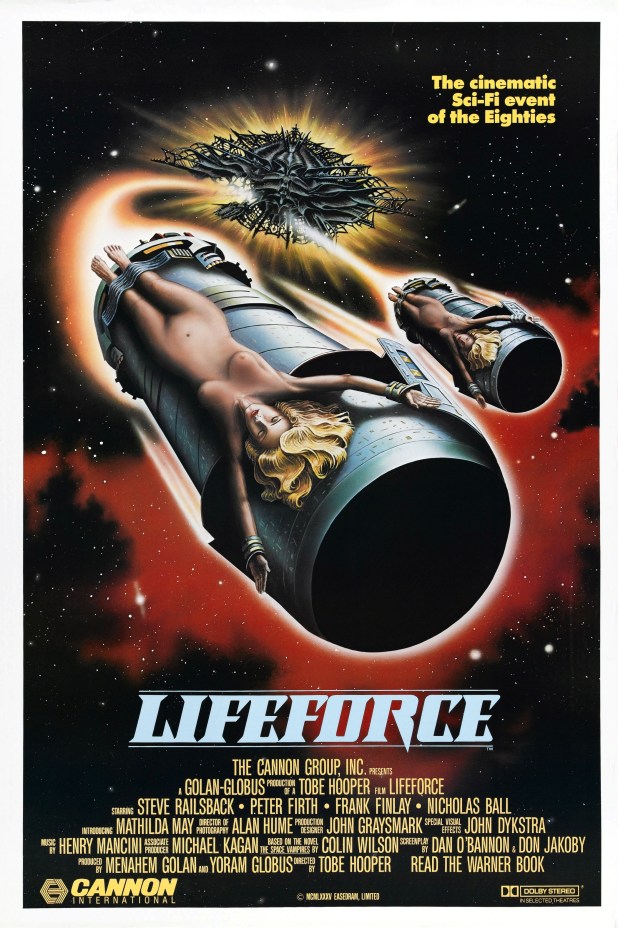
The first film in the three picture deal was Lifeforce. Based on Colin Wilson’s 1976 novel The Space Vampires and scripted by Dan O’Bannon (Alien, Return of the Living Dead) and Don Jakoby, the film was originally going to use the original title. After spending $25 million to make it, Cannon decided that they wanted a blockbuster instead of their normal exploitation films, hence the change to Lifeforce.
Once Hooper had his money and freedom, he was beyond excited, seeing the film as his chance to remake Quatermass and the Pit. In fact, he said, “I thought I’d go back to my roots and make a 70 mm Hammer film.”
Hopper turned in an initial film that was 128 minutes long, starting with 12 minutes of near silence in space aboard a space shuttle. This is 12 minutes longer than the final version which had several scenes cut, most of them taking place on the space shuttle Churchill. Three actors — John Woodnutt, John Forbes-Robertson and Russell Sommers — ended up completely cut from the final film, as was some of Henry Mancini’s score.
Even worse — the film went way over schedule and cost so much that the film was shut down when the studio ran out of money, leaving some of the most important scenes unshot.
Look — it could have been worse. Michael Winner was the original choice to direct.
So what’s it all about? Good question.
The crew of the Churchill discovers a massive spaceship — nearly 150 miles long and shaped like an artichoke (no, really) — inside Halley’s Comey. Hundreds of dead bat creatures surround the ship and inside, two perfect males and one perfect female sleep in suspended animation. They take the aliens and come back to Earth, because there are no protocols or rules about that kind of thing. I mean, I can’t even fly back from Japan with fruit and these dudes take aliens directly to London.
Tragedy strikes — a fire consumes the ship, destroying everything and everyone except for the aliens. The aliens turn out to be vampires that can shapeshift and suck out the life force of everyone they meet.
In Texas, a survivor is found — Colonel Tom Carlsen (Steve Railsback, Manson from Helter Skelter!). He explains how the crew’s life force was taken and why he set the shuttle on fire. He also has a psychic link to the female alien (the constantly naked Mathilda May). Patrick Stewart also shows up as Dr. Armstrong here — who has the female vampire inside him. They take her/him back to London, but the plan backfires when she/he escapes.
London is now filled with zombies, as the two male vampires have turned the entire population and everyone feeds on one another. All of these life forces are sent by the males to the female and then to their spaceship. The lighting looks like Poltergeist by way of Mario Bava. Still with me?
Turns out that leaded iron can kill the vampires. And oh yeah, Carlsen is in love with the female vampire. She keeps calling to him. “CARLSEN. CARLSEN. CARLSEN.”
She’s naked on the altar of St. Paul’s, sending energy to the ship, as she reveals that they are bonded through their psychic link. Carlsen responds by killing the other male (one of the two is Mick Jagger’s brother Chris) and then impaling himself and the female at the same time.
The damage to Carlsen is mortal, but the female is unfazed. She creates a column of energy to her ship and rides it back, taking Carlsen with her. This looks completely sexual, which has to be no accident, as the connected bodies look coital.
The end? The end.
Does this mean that Earth is now a planet of vampires? Did she save him to make a new group of vampires? When did this become a zombie movie?
I don’t have the answers. And now that Tobe is gone, I can’t ask him.
Plain and simple, Lifeforce is a mess. It seems inconceivable that this film and Chainsaw came from the same director. It seems more of a British film. There’s some inventive gore, such as when the female vampire (her name is only listed as Space Girl) comes out of Patrick Stewart’s body as blood.
It has moments of gorgeous shots, like the scene where we flashback to when Space Girl reaches out to Carlsen. And the battle of London is a huge effects piece. But the story is — I don’t even know where to begin. It feels more like Meteor than what you expect from Hooper. Which is, I guess, the point of so much of his Cannon films. They are all unique, all strange and all end up being completely different from the movie you expect them to be.
* * *
Star Wars: Episode IX – The Rise of Skywalker is currently playing in theatres and was theatrically on December 20 in the United States.
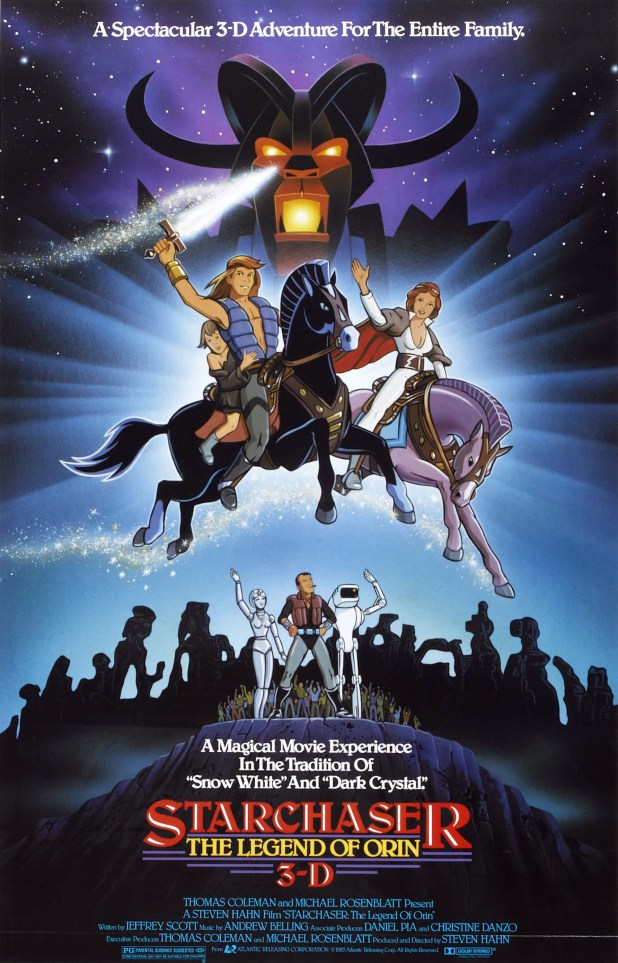
Starchaser: The Legend of Orin was one of the first animated movies to mix traditional and computer animation, as well as one of the first to be released in 3D (although the Australian comedy Abra Cadabra was released first). The New York Times referred to this movie as “such a brazen rip-off of George Lucas’s Star Wars that you might think lawyers would have been called in.”
On the planet Trinia, human slaves have lived underground for thousands of years mining crystals for the god Zygon and his robot soldiers, who in no way are Cylons. Orin, our hero, finds the hilt of a jeweled sword in the rocks, telling him that there is a universe beyond these mines that he must discover.
This leads to adventures through the mines and to the surface of the planet, where Man-Droids attack and the hilt reveals an invisible sword before Dagg Dibrimi — who is basically the Han Solo of this piece — saves our hero.
Thus follows all manner of adventures where Orin boards the Starchaser, the ship of Dagg, and saves his people from the mines and uses his new mystical powers to heal blind people before the spirits inside the sword tell him that he can join them — if he wants — in something in no way related to the Force.
Anthony De Longis (Zygon) would later appear in Masters of the Universe as Blade, Skeletor’s henchman.
The Force in this film is called Kha-Khan, which is actually the name given to a high-honored member of the Church of Scientology, or roughly the equivalent of a saint in the Catholic Church. I’m not certain if this was a sneaky way to get people into being clear or not.
Director Steven Hahn would go on to direct the cartoons for the Dino-Riders toys and writer Jeffrey Scott would write for all manner of animated series like Mega Man, Teenage Mutant Ninja Turtles, Duck Tales, Hulk Hogan’s Rock ‘n’ Wrestling and the TV special Christmas Comes to PacLand.
In 2012, it was announced that Rilean Pictures had acquired the rights to develop this movie into a live-action film. No further news has happened since then.
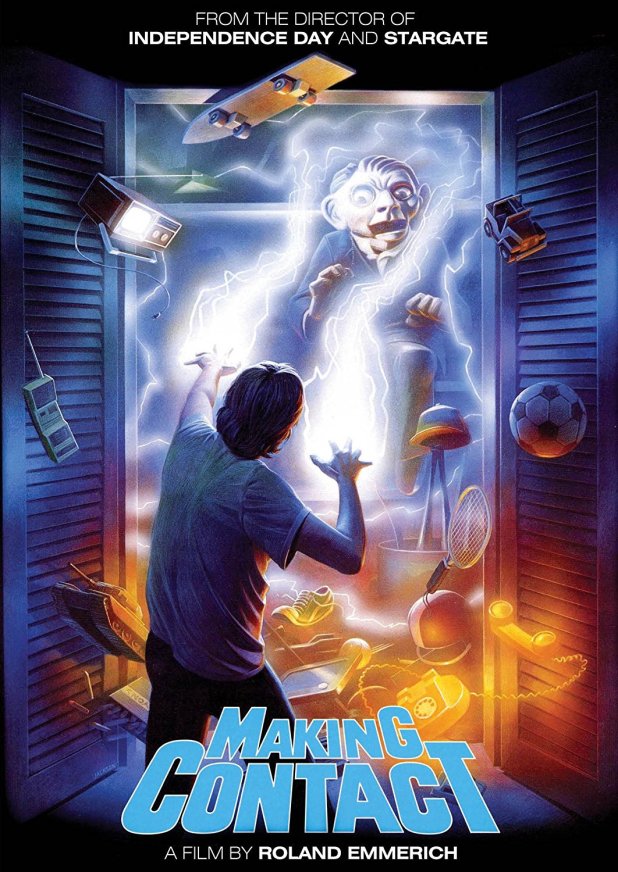
Before Independence Day, Universal Soldier and Stargate, Roland Emmerich made Joey, which was released in edited form in the U.S. as Making Contact. Another of his movies, Hollywood-Monster, was also released here as Ghost Chase.
9-year-old Joey’s father may have died, but he thinks that he can talk to him on his phone. He’s also being attacked by Fletcher, a ventriloquist dummy possessed by a demon that is now calling on an army of demons to take over reality.
Joey must use his telekinesis to go into the spirit world to battle these demons. Luckily, he has a droid-like robot named Charlie and his dog Scooter to help him — even if he must enter the Bates Motel to save his canine best pal. Oh yeah — and there is also a gang of kids who dress like Spider-Man and Darth Vader who use toy tanks to attack Joey, but end up being his friend at the end. There are a lot of moments here where you just have to realize that no one was interested in explaining how to get from story beat to story beat, so they just said screw it and made it was strange as they possible could. I have no issues at all with this choice.
Imagine if you were watching E.T., Poltergeist and The Goonies all at the same time. This movie is a mash-up of influences and completely all over the place. Yet it’s well-made and anything but boring. Isn’t that what you’re looking for in a movie?
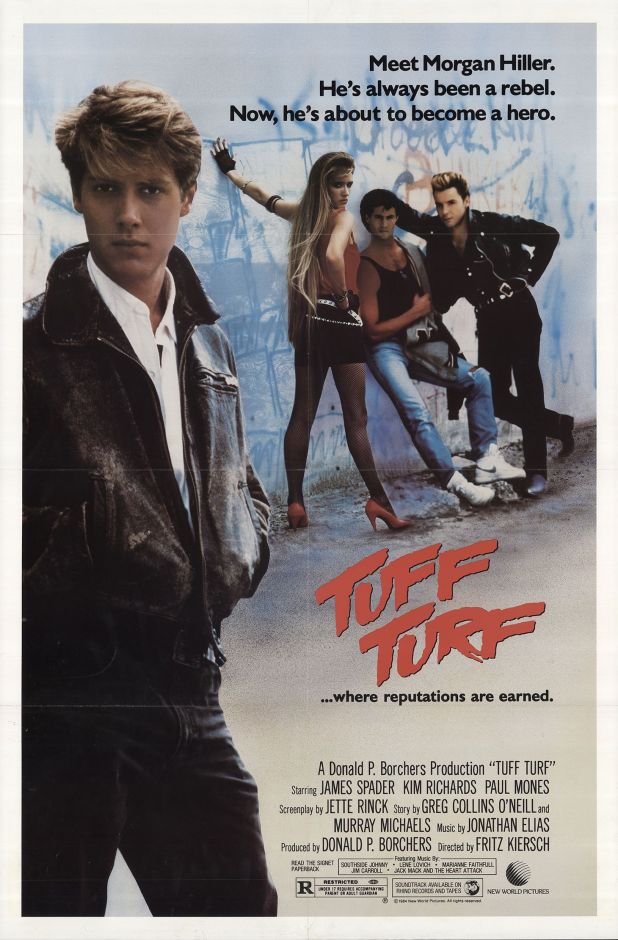
Man, James Spader. Either he’s trying to appeal to you as a hero, which never seems to work or embracing the pure narcissistic evil that we all dream that he’s best at. For me, the James Spader of The New Kids is the Spader I know that he can be. Alpha Spader. Pure Florida cokehead menace.
Even later TV hero versions of Spader — Boston Legal, The Blacklist — have a sadness within either their heroic or antiheroic characters. He’s lived a life. Hell, thanks to the magic of movies, he’s lived plenty of them.
Director Fritz Kiersch has an interesting career, starting with 1984’s Children of the Corn. This movie is the follow up to that, but he’d go on to make 1987’s Gor — yes, the one based on the BDSM male-dominated world of author John Norman — as well as 1992’s jetfighter drama Into the Sun.
In this lifetime, Spader is Morgan Hiller. He used to live in Connecticut, but once his dad’s business fails, he moves to Los Angeles where he struggles to meet friends and not get his ass handed to him on a daily basis.
Of course, he falls for bad girl Frankie (Kim Richards, who would go from Nanny and the Professor to the Witch Mountain movies and being the little girl who gets killed in Assault on Precinct 13 before becoming a reality show star and the aunt of Paris Hilton), which draws the insane attention of her real man, Nick Hauser and his gang. Paul Mones, who plays that crazy kid, would go on to write Double Team and The Quest for Van Damme. Yeah, really.
Keep your eyes on the lookout for a young Catya Sassoon, the daughter of Vidal, the hairdressing dude who bottled his shampoo and became rich and famous. This is also an opportunity to see a young Robert Downey Jr.
The soundtrack is pretty good, too. Pre-Basketball Diaries this has Jim Carroll all over it, as well as Marianne Faithful and Southside Johnny. This feels like a time when America flirted with punk, new wave, the return of the 1950’s and so many more musical genres which all overlapped.
The end of this all seems too happy what with all the father getting gunned down and mental abuse and anguish, as the main characters all play along with the band Jack Mack and the Heart Attack. There’s also a scene where Spader sings to Frankie at a country club, with Paul Carney (Art’s son) providing the singing voice.
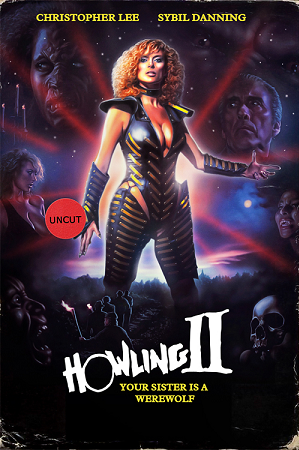
Even though Gary Brandner, author of The Howling novels, co-wrote the screenplay to this movie, it has nothing to do with his 1979 novel The Howling II, much less the original The Howling. It tries, but this movie is just too weird to fully close the loop.
There’s never been another werewolf movie like this one. Whether that is positive or negative all depends on how much you like werewolves having sex.
Ben White (Reb Brown, who is in a little movie called Yor Hunter from the Future that I could tell you about for many days) is dealing with the death of his sister Karen White, who just so happens to be the heroine of the first of these movies. He joins up with Jenny (Annie McEnroe, who was in Snowbeast and Battletruck) and the mysterious Stefan Crosscoe (Christopher Lee, who apologized to Joe Dante for making this movie) to battle werewolves.
This brings them on a journey to Transylvania and a battle against Stirba (Sybil Danning!), the queen of the werewolves, who is joined by Mariana (Marsha Hunt, who the song “Brown Sugar” is about) and Erle (Ferdy Mayne, who is in another film I can discuss for days and days, Night Train to Terror).
What follows is complete lunacy: werewolf witchcraft, lycan orgies, Sybil Danning repeatedly ripping off her top (the same shot repeated again and again to no complaint), dwarves, priests being killed and punk rock from the band Babel.
Director Philippe Mora actually made some pretty good films, like Mad Dog Morgan, The Beast Within and The Return of Captain Invincible. I’m insane and love this movie, so I will include it in my list of his good ones.
Finally, let’s talk about another subject I can hold court on: Christopher Lee. Mora didn’t know that Sir Lee was a war hero in Czechoslovakia, where this was filmed. Actually, no one did, because he wasn’t allowed to talk about his intelligence work during World War II. When he showed up for filming, he was greeted with a hero’s welcome, as he had killed a top Nazi official named Reinhard Heydrich. In fact, before he became an actor, Lee remained a Nazi hunter for several years.
I also love that this movie was sent the wrong costumes by 20th Century Fox. Instead of wolf suits, they were sent the monkey suits from Planet of the Apes. Lee tried to help fix this by ad-libbing, “The process of evolution is reversed.”
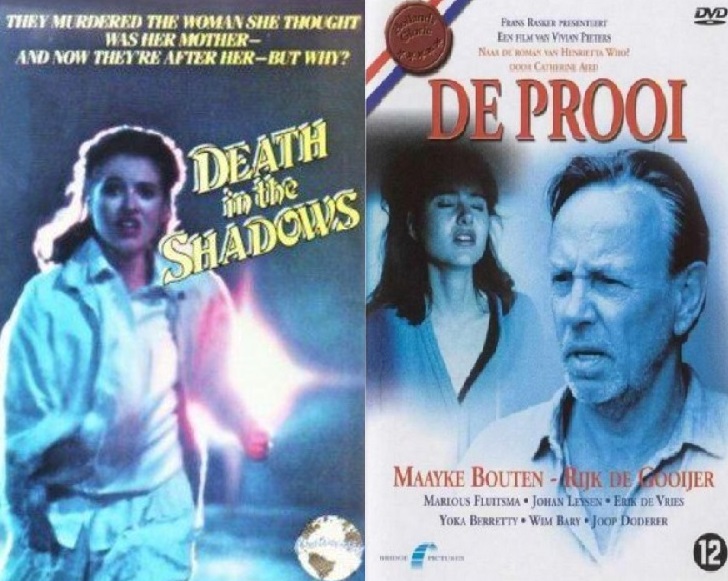
Don’t let the addition of this ‘80s Amsterdam-bred thriller’s inclusion alongside the American, low-brow ‘60s horrors of Night Fright and Night of the Blood Beast in this Mill Creek Pure Terror 50 Movie Pack leave to you believe this movie will be a boring watch. While it doesn’t provide the ‘80s slasher overtones coupled with cliché horror shock-twists in which American audiences are accustomed, those who enjoyed the Dutch art-thrillers The 4th Man (1979) from Paul Verhoeven and The Vanishing (1988) by George Sluizer will be drawn into the film noirish twists of De Prooi (The Proof, aka Death in the Shadows).
As with the previously referenced films, the cinematography of De Prooi is polished; in conjunction with the score, the film maintains a purposefully sullen mood throughout. An added plus: the English dub is excellent. As with any giallo-influenced thriller—regardless of the lack of blood (so we have a film noir here)—red herring characters are afoot and the obligatory “strange things” start happening, i.e., an address book leads to a weird couple who run a garage that want nothing to do with Valerie and say they never heard of her dead mother. Val discovers Ria, her mother’s friend and neighbor—who moonlights as a peep show worker—is suddenly planning a trip to Sri Lanka. When Val finds a regretful long-lost “uncle,” he’s murdered. Then there’s Val’s mother’s red-herring ex-employer, a local lawyer who’s a bit too eager to help Val. And on the night her boyfriend doesn’t pick her up for a party, someone runs Val’s bicycle off the road.
Da. Da. Dun. Another You Tube trailer upload bites the dust.
Written by the husband and wife, editor-and-directing team
of Ton Ruys and Vivian Pieters (she’s the executive producer of the oldest and
longest-running Dutch daytime-series, Goede
tijden, slechte tijden, aka Good Times, Bad Times), De Prooi tells the story of a soon-to-graduate high school student,
Valerie Jaspers, and her mother, Trudy, who live a quiet, middle class life in a
village outside of Amsterdam—with skeletons.
When her mother becomes a victim of what seems to be a
random hit-and run, an autopsy reveals that it wasn’t an “accident”: Trudy was
run over twice. The police investigation reveals that Trudy was never married
and had no children: she’s not Valerie’s mother. So Val sets off to solve the
mystery—of not only who her real mother is, but who murdered the woman she
thought was her mother.
As with any film noir, an Italian Giallo-influenced masked assailant will make sure those skeletons are kept closeted. Remember being disappointed by the forced, homogenized ending tacked onto the 1993 American remake of The Vanishing? As with most Euro-thrillers, there is no warm and fuzzy ending cast in the shadows of this effective, chilling and dreary Dutch thriller.
About the Author: You can read the music and film criticisms of R.D Francis on Medium and learn more about his rock ‘n’ roll biographies, along with horror and sci-fi novellas, on Facebook.
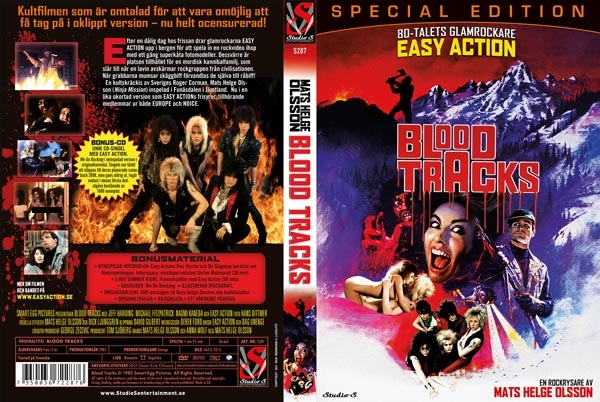
It stars Easy Action, the first Swedish band to ever get a worldwide record deal, which is a fact on their Wikipedia page that kind of smells fishy. Abba?
The band split up in 1986, a year after this effort, when guitarist and band leader Kee Marcello quit the band to join Europe. That band went on to sell 30 million albums, so he did pretty well. Singer Zinny J. Zan went on to join the band Kingpin, which you would know better by their later name, Shotgun Messiah.
American hair band Poison used the chorus of Easy Action’s 1983 single “We Go Rocking” in their song “I Want Action,” which led to a lawsuit that the Swedish band won.
The original lineup just played their hit album That Makes One at the Sweden Rock Festival. That makes me happy.
There’s a whole bunch of mayhem, hairspray and murder in this movie, including people getting their eyes eaten, axes to the head and impalings. It’s pretty grisly, which is great, because it juxtaposes the ridiculous antics of this band and its groupies trying to make a movie in the snow.
The best part of all of this is that Easy Action were all afraid to act, so director Mats Helge Olsson got them drunk. You can tell — they’re destroyed for most of the movie. I advise that you’re in the same condition when you watch this.
We featured Blood Tracks as part of a “Drive-In Friday: Heavy Metal Horror Night” alongside Monster Dog, Rocktober Blood, Terror on Tour, and Hard Rock Zombies. Join in the fun, won’t you?
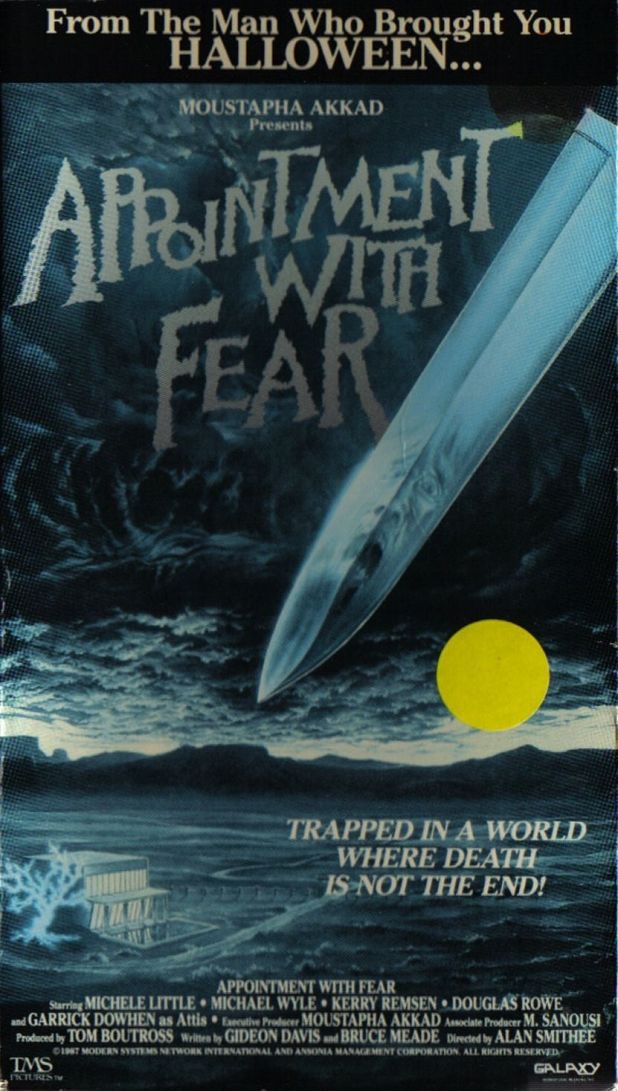
If there’s one adage that watching slasher films teaches you, it’s to never judge a book — or VHS tape — by its cover. Any time you see the words “from the man who brought you” or “from the people behind” you may not be getting the whole story.
Appointment With Fear is “from the man who brought you Halloween…”
Dear reader, if you were anything like me in the video store days — or now, as I grab a movie and try to convince my wife to watch it — you might read that legend on the cover and think, “Well, I never heard of this John Carpenter movie!” That’s when you realize that if you want to watch these kinds of movies, you need to learn what that line means.
Here, the man is really Moustapha Akkad, the producer of every single Halloween film up until 2002’s Halloween: Resurrection. In fact, other than four other films — this would be one of those four — that’s his complete output. So one assumes that if anyone wants to be the “man who brought you” it would be Moustapha.
Before introducing the world to the man with the darkest eyes, he produced and directed the film Mohammad, Messenger of God, a movie that he hoped would bridge the gap between the Western and Muslim worlds. Seeing as how Muslims dislike any image being made of Mohammad, even making this film was near-impossible, necessitating him needing to finish it in Libya, as Muammar Gaddafi allowed him to film the final six months of the picture there. The vilified world leader would also fund Akkad’s 1980 film Lion of the Desert.
Sadly, Akkad died in 2005 along with his daughter, the victim of the 2005 Ammad bombings. Today, he has streets in Syria and downtown Beirut named after him, as well as a school in his hometown of Aleppo.
Appointment With Fear was directed by Alan Smithee, who again if you haven’t learned a lot about movies, you’d think was the worst director ever. But the name was a pseudonym created in 1968 by members of the Directors Guild of America. It was to be used whenever a director, dissatisfied with the final product, proved to the satisfaction of a guild panel that they’d lost creative control of the film. The director was also required by guild rules to never discuss their involvement with the film.
Here are a few examples of Alan Smithee’s filmography:
Student Bodies: This 1981 slasher send-up was directed by Mickey Rose and produced by Michael Ritchie, who used the Alan Smithee name to hide his involvement.
The Twilight Zone: The Movie: Second Assistant Director Anderson House used the pseudonym for the first segment of the film, a rare example of a second unit director taking the name. He was distressed over his involvement in the scene where actor Vic Morrow and two children were killed.
Bloodsucking Pharaohs In Pittsburgh: The Alan Smithee here was Dean Tschetter, who was the art director of The Wraithand has gone on to be an illustrator for Disney films such as Mary Poppin’s Returns and The Sorcerer’s Apprentice.
The Birds II: Land’s End: Even though Rick Rosenthal asked for his name to be stricken from this film, when Showtime put it out on VHS, they left his name on the box art. Whoops. Tippi Hedren was even less lucky, as she was in the film yet doesn’t play anyone connected to her role in the original. She said of the film, “It’s absolutely horrible. It embarrasses me horribly. I’d hate to think what he {Hitchock) would say!”
Hellraiser: Bloodline: After completing his vision of the film, original director Kevin Yagher (yes, the very same special effects expert of movies like Child’s Play and the second through fourth Freddy Krueger films, as well as the TV series) quit the movie after Miramax demanded new scenes, reshoots and a happy ending.
The Alan Smithee behind Appointment With Fear was Ramzi Thomas, who worked with Akkad on several films, including being a script consultant on Lion of the Desert and a producer on Halloween 5: The Revenge of Michael Myers. This film was originally called Deadly Presence, but after Akkad saw the first cut, he fired Thomas, re-shot a considerable amount of new footage and then re-edited the movie himself.
This is the only film Ramzi would ever direct. And strangely, this is a slasher that no one discusses. Well, get ready.
A lot of this movie can be traced back to 1974’s Psychic Killer. Except here, the killer is a comatose man in a hospital bed who has been possessed by the Egyptian tree god Attis. You have to love a movie based on a god who was raised by a he-goat before he was set to marry the daughter of King Midas. As their wedding song was being sung, she became transcendent with power and he was so moved that he cut off his penis. Any priest that follows Attis must do the same and become a eunuch before gaining the title of Galli. And oh yeah — he’s also the Phrygian god of vegetation, as his act of cutting off his John Thomas is seen as a representation of the fruit which dies in winter, only to be reborn in spring. I’m certain he was honored, but seeing as how his disco stick never grew back, I’m not sure exactly how much.
I told you all of that for basically no reason, as none of this mythology figures into this film. But hey — at least we all learned something today.
The film begins with a man getting of his van and stabbing his wife, who gives her baby to Heather (Kerry Remsen, Pumpkinhead and Ghoulies II) a punk rock babysitter with crazy blue Jem and the Holograms makeup. Yes, I realize this movie already makes little to no sense.
Detective Kowalski is on the case, though. He discovers that the man who stabbed his wife (known only as “the man” in the credits and played by Garrick Dowhen, who is also in Land of Doom) is in a mental facility but is able to astrally project himself. He’s under an Egyptian curse which forces him to kill his baby so that he can continue being King of the Forest.
Heather’s friend Carol (Michele Little, Radioactive Dreams, My Demon Lover) is a snoop who loves her crazy parabolic microphone and records everyone and everything. She’s kind of like Negativland’s The Weatherman, who recorded nearly every single moment of his life and transformed it into bursts of music. Except, you know, her recording makes her into a detective.
The ancient spirit gets busy, blowing up the detective’s car, killing a vagrant, sending evil dreams to Heather and then killing one of their friends named Samantha (Pamela Bach, one-time wife of David Hasselhoff) in the jacuzzi.
James Avery — Uncle Phillip himself — shows up, as does Debi Sue Vorhees, who was Tina in Friday the 13th: A New Beginning, which was made the same year as this movie. In this movie, all she does is eat cheese, show a little side boob and then get killed.
The ending is nonsensical, as the killer finally gets the baby and tries to sacrifice him near a tree. Carol keeps shooting the killer to no effect before piercing him with a pole. Her boyfriend Bobby saves the baby, whose eyes soon glow green. Is the baby the killer now? Why didn’t the psychic force just go into the baby from the beginning?
I have more questions. So many questions. Why does Bobby keep a mannequin in his sidecar? Why does Heather put on mime shows for her senile grandparents? Why is there no gore? Why do Carol and Bobby play hide and seek before they have sex? Why does the homeless man live in the back of Carol’s truck? Why would he act as a servant for these kids? Why did they go to that big mansion? Why did the makers of this film stage an elaborate dancing scene just as the action was heating up?
I fear that in writing so much about this movie that I’ve made it sound like a pretty solid affair when it’s anything but. It’s a slow, plodding and boring mess that only rewards you with insane bursts of strangeness, as if it were made by aliens from another planet who had no innate knowledge of how human beings speak, act or exist with one another. It’s the kind of movie only I could fall in love with. And that’s why I won’t recommend it to you, because it’s much like the baby in this film, a strange green eyed monster that must be protected from the coma-induced no cock having Egyptian gods of the world that only want to give this movie one star on IMDB and say that it’s a horrible film.
Day 16 Rock ‘n’ Roll Miscreants: Give some screen time to the punks and/or metal heads(and Roger Wilson gave us a two-fer: for it’s all about the watch options)
Confessions of a Fan
Ask any male teenager haunting the racks of video stores in the ‘80s who their two favorite actresses were—this writer included—and the answer inevitably comes back: Diane Franklin and Jill Schoelen. No matter how good or bad the movie: you saw either of their names on the box, you rented the flick.
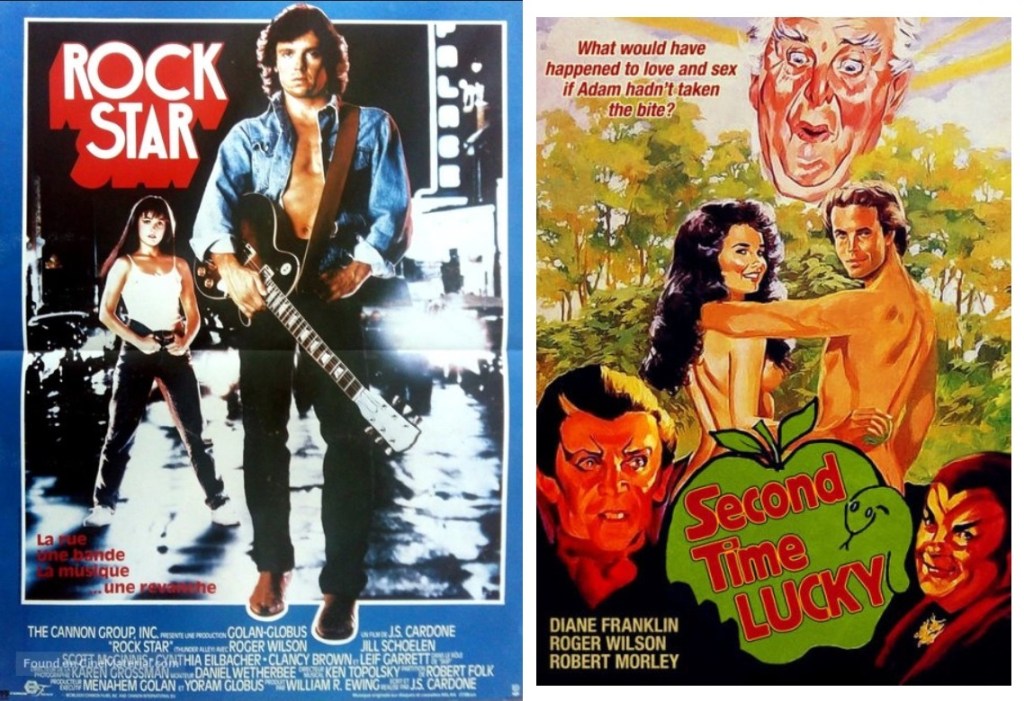
And the subject of this Scarecrow Challenge review, Roger Wilson, hit casting gold by being cast with both of them in Thunder Alley and Second Time Lucky. It’s been many, many years Roger, and we, the now low testosterone, hair-thinned curmudgeons of the VHS and vinyl epoch, continue to worship you in a Wayne Campbell and Garth Algar-tribute. We bow to you before the altar of the stage of The Palace, the faux-Phoenix, Arizona, rock club where you showed the world your rock ‘n’ roll “balbricks.” You are worthy, for you rawketh our analog, teenaged memories.
The overseas theatrical-versions of Thunder Alley and Second Time Lucky.
Roger Wilson: A Life on Record and Film
Born in New Orleans, on October 8, 1956, actor Wilson came to notice at the age of 25 in his first starring role as “Mickey” in the hugely successful Animal House-inspired comedies Porky’s (1981) and Porky’s II: The Next Day (1983).
As with Lane Caudell (with his own rock flick, Hanging on a Star), Kim Milford (with his rock flick, Song of the Succubus), and Rick Springfield (a rock star in the bomb Hard to Hold) before him, Wilson was an aspiring and accomplished rock ‘n’ roller who fronted a band called Num for several years. It was through his acting endeavors that Wilson was able to get two of his written/performed songs, “This Time” and “Radioactive Tears,” on the soundtrack for the obscure and rare New Zealand-shot Second Time Lucky (1984), an “Adam and Eve” rock musical-comedy in which he co-starred with our teenaged dream queen—Diane Franklin. Then writer-director J.S Cardone gave Roger’s musical skills a spotlight in Thunder Alley, which co-starred the soon-to-be girlfriend of Brad Pitt: Jill Schoelen. (Pitt and Schoelen became engaged after meeting on the set of a pre-stardom Pitt flick, the 1989 slasher romp, Cutting Class. The story of how Jill and Brad split before getting married is epic.)
A reformed rock ‘n’ roller who spent several years touring with rock bands in the early ‘70s, Cardone made a huge splash on the burgeoning home video market with his debut film, the 1982 slasher “video nasty” The Slayer—a film so “nasty” that it was banned from distribution in the land that loves-to-ban anything entertaining: the United Kingdom (see it on B&S Movies Exploring: Video Nasties Section 2 List). Cardone then hit his career peak in the early ‘90s through his association with Charles Band’s Full Moon Pictures. For us reformed teen denizens stumbling through our twenties in the pre-dawn years of the grunge era, we rented everything with a Full Moon logo on it—and with J.S Cardone’s name front and center on Shadowzone and Crash and Burn (both 1990), it was a no brainer: there was entertainment to be had.
After Cardone made a bloody splash in the post-Halloween slasher market and proved he could turn out economical, quality product, he was able to secure financing for his second film—a personal pet-project that drew from his early ‘70s band experiences.
So, in the glut of rock ‘n’ roll films permeating the cable transmission waves and video store shelves, with the likes of such rock ‘n’ roll classics as Eddie & the Cruisers (1980), Ladies and Gentleman: The Fabulous Stains (1981) and Streets of Fire (1984) (a “punk rock” Diane Lane two-fer?!), and Scenes from the Goldmine (1987; Catherine Mary Stewart from Night of the Comet!), there was Cardone’s 1985 rock ‘n’ roll love letter: Thunder Alley. And he cast Roger Wilson as; it seems, to be the onscreen pseudo-version of his younger Cardone-rock ‘n’ roll self.
Sadly, there’s no DVD version of Thunder Alley with an audio commentary to learn the backstory of Cardone’s hungry rock ‘n’ roll years. This writer ventures that Cardone made connections during those times and knew Surgical Steel’s Jim Keeler and Jeff Martin, Canadian hitmaker Gary O’Conner, and Shooting Star’s Gary West and Van McLain—and brought them onto the project to craft the music for the film’s faux band fronted by Roger Wilson: Magic.
Phoenix, Arizona’s Surgical Steel—where the film was shot (using some of the same locations as The Wraith and Harley Davidson and the Marlboro Man)—appear in the film as themselves, as the “biggest band in town” and Magic’s main competition. In real life, they were; but as with their critically acclaimed, hometown brethren, Icon, a Quiet Riot rise-to-stardom wasn’t meant to be for the ‘Steel. The film spotlighted their songs “Surrender” and “Gimme Back My Heart.”
In addition to casting Roger Wilson, Cardone provided ex-bubblegum teen-idol Leif Garrett with his first gritty “adult” roll as the egotistical-insecure “Skip” (we wonder who Cardone’s “model” was). Garrett not only turns in a wonderful performance as an actor—but does a stellar job on lead vocals singing “Do You Feel Alright,” which previously appear on Shooting Star’s third album, III Wishes (July 1982). Other songs expertly done by Garrett (take the overly critical bubblegum out of your ears, Garrett really can sing) are “Just Another Pretty Boy,” written by Gary O’Connor (who provided “Back Where You Belong” to 38 Special), and “Danger, Danger” by Frankie Miller (revered British singer from Jude with Robin Trower).
However, the real star of this show was Roger Wilson. Although Roger is an accomplished guitarist in his own right, and proves those skills with his spot-on playing, he’s actually doubled by Scott Shelly—one of Shelly’s most prominent students was Quiet Riot and Ozzy Osbourne’s Randy Rhoads. There’s no doubt Cardone believed in Roger; to promote Wilson’s career, Cardone released a promotional 7” 45-rpm that was given away in record stores and movie theatres. It seemed Wilson’s dream to make it as a musician was happening.
A Falling Star
Then as quickly as his star rose, it came crashing down in a blaze of thunder, oddly enough, in an alley.
The story starts with Academy Award-winning actor Leonardo DiCaprio when, fresh from his breakout roll in Titanic, partied with friends in the “Wolf Pack,” which is alleged to be a post-stardom euphemism for the group’s original, more nasty (and allegedly a press-generated) moniker of “The Pussy Posse.” The wolf-posse included an HBO-esque Entourage that included magician David Blaine and actors Kevin Connolly (ironically, later a star of Entourage; directed the John Travolta box-office bomb, Gotti), Jay Ferguson (“Stan Rizzo” of Mad Men), actor Lukas Haas, writer/director Harmony Korine, Tobey Maguire of Spider-Man fame, screenwriter Josh Miller (“Tim” in River’s Edge), and Ethan Suplee (TV’s My Name is Earl). Regardless of how the actor-amalgamate referred to themselves: they were notorious for their allegedly misogynistic and rebel rousing behaviors on the “upscale” New York City club scene.
One of those “incidents” that led to the wolf-posse’s ill repute involved actress Elizabeth Berkley, known for her attempt to break away from her squeaky clean teen-idol image cultivated by Saturday morning TV’s Saved by the Bell with a starring role in a “grown up part” in the critically lambasted Showgirls.
According to multiple media reports, Berkley attended the premiere of DiCaprio’s latest film, The Man in the Iron Mask—and visited the film’s VIP area, which was in full party mode courtesy of the Wolf Pack. It’s alleged that through DiCaprio’s L.A publicist, Karen Tenser, Berkley was invited by the actor and Jay Ferguson to party at the club Elaine’s after the premiere. Berkley politely declined, as she was dating Roger Wilson at the time (other media reports say Roger was there at the club by Berkley’s side when the invite was made).
Not taking a “no” for an answer, Berkley alleged that is when the “harassment” started, with an incessant barrage of invites from Tenser and Ferguson for dinners and parties. Wilson, as any chivalrous boyfriend would, intervened on one of those phone calls from actor Jay Ferguson—this time inviting Berkley to party with the pack at New York’s ritzy Asia de Cuba. Ferguson’s incensed response to Wilson’s intrusion was to invite Wilson to the club for a showdown.
Wilson accepted. And the thunder was about the roll in the alley.
Upon arrival at the club, Wilson took Ferguson’s offer to “step outside.” It’s then alleged DiCaprio (who ironically starred in Gangs of New York) interjected, “let’s go kick ass,” and led his wolf-posse into a West Side Story-styled, street-alley rumble. At that point, the recollections are hazy: a member of the posse—allegedly Ferguson—punched Wilson in the throat and damaged his larynx. Of all the body parts to suffer a blow: not his head or face, stomach or back: his throat.
Wilson’s singing career was over.
The unchecked testosterone melee resulted in a Manhattan judge tossing out Wilson’s $45 million lawsuit in 2004 against DiCaprio and “two other men” for the assault. It was determined that DiCaprio not only didn’t throw a punch, he didn’t encourage the fight—and Wilson was cast as the “aggressor.”
After the May 4, 1998, assault, Wilson’s career floundered with a series of little-seen TV movies and haphazardly distributed direct-to-video releases. Another TV series in the wake of Seven Brides for Seven Brothers wasn’t forthcoming. Meanwhile, DiCaprio moved up to the A-List and worked with Martin Scorsese.
Wilson, however, remained in the business behind the scenes. He moved into screenwriting, doing numerous uncredited rewrites (like the highly respected Carrie Fisher of Star Wars) for projects supervised by producer Steve Tisch (who produced Risky Business and Forrest Gump), Penny Marshall, and actress Sharon Stone. After teaching screenwriting at the college level, Roger Wilson forged a career in real estate development, which he still pursues today.
The bottom line, Roger: We love your work then and will love your work now. So clear out the vaults and upload your old material (especially from the hard-to-find Second Time Lucky)—and newer tunes—to a Spotify account for all of us Roger Wilson and Thunder Alley fans to enjoy. For in our analog-beating hearts sustained on digital life support, you are still a rock star. We want to rock with you again. You, my friend, are worthy to rock Thunder Alley.
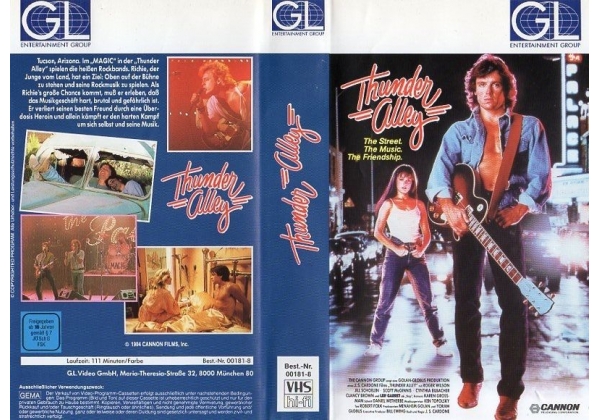
Overseas “Big Box” VHS Sleeve.
More Roger Wilson?
A “Music of Roger Wilson and Thunder Alley” YouTube Playlist features the studio and video versions of all the songs from Thunder Alley with Roger Wilson and Leif Garrett, along with music by Gary O (and 38 Special), Frankie Miller (and Nazareth), Surgical Steel and Shooting Star. The playlist also includes the trailers and full films for Second Time Lucky and Thunder Alley.
Update, May 18, 2021: We, unfortunately, didn’t delve into the Judas Priest connection sidebar to Thunder Alley, since this film review — and my previous Medium article — was all about showing Roger Wilson the love. But you know the connection now, courtesy of the fine folks at Global Web News for pinging back in our comments section (below) about this incredible article (published May 17) regarding Judas Priests’ Rob Halford’s connection to Phoenix, Arizona’s Surgical Steel — written by Cherry Bomb in the digital pages of Metal Injection.
So there you go! All the Roger Wilson and Surgical Steel ephemera you can handle, and then some.
About the Author: You can read the music and film reviews of R.D Francis on Medium and learn about his work on Facebook. He also writes for B&S Movies.
During the Blood Cult media frenzy splashed across the trash cinema, monster, and underground movie magazines of my youth — such as my cherished issues of Famous Monsters and Fangoria — I can’t recall if the Hollywood movie and rock ‘n’ roll royalty lineage of director Christopher Lewis was reported on, and, if it was, that it meant anything to anyone at the time.
Christopher Lewis one-stop three-in-one shopping.
I doubt it: I was too busy jamming Slayer’s new album, Hell Awaits, and saving my slave wages to see Iron Maiden. I was pissed off I wasted money on tickets to specifically see Saxon open for Triumph — only for Saxon to pull out at the last minute. And I was trying to retrieve my cherished April Wine concert t-shirt from my psycho ex-girlfriend (my nutty, late-cousin, Johnny, made up a parody tribute to her insanity: “Psycho Robyn” — appropriately enough, within the context of this film review — based on the Talking Heads’ hit “Psycho Killer”: Psycho Robyn /She’s a bitch /a ba-ba-ba, ba-ba-ba bi-i-i-tich).
Anyway, it turns out, Christopher’s dad, Tom Lewis, was a noted film and television producer; his mother an award-winning Emmy and Oscar-caliber actress, Loretta Young. His stepdad was Clark Gable of Gone with the Wind (1936) fame. His uncles were Ricardo Montalban (Star Trek II:The Wrath of Kahn) and director Norman Foster (of the “Charlie Chan” series of movies). His rock ‘n’ roll connection came courtesy of his little brother, Peter, who co-founded seminal San Franciscan rockers, Moby Grape. His cousin was noted lap-steel guitarist David Lindley who, in addition to fronting his own psych-rock band, Kaleidoscope, joined the bands of Jackson Brown, Warren Zevon, and Linda Ronstadt (remember his FM “Top 40” hit, “Mercury Blues” from the MTV ’80s?).
Meanwhile . . . cuzzin’ Chris spearheaded the ‘80s SOV home video distribution boom.
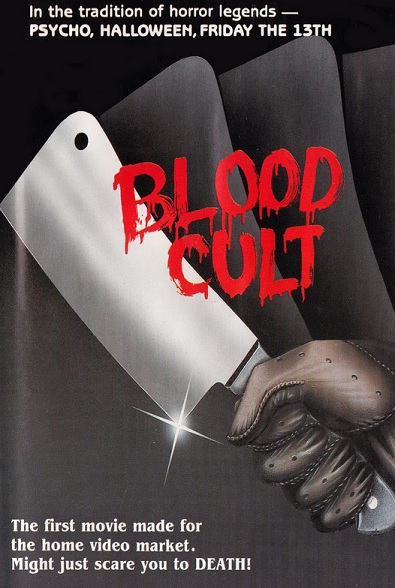
In the lost kingdom of ‘80s Big Box VHS/SOV horror (sigh . . . just look at Blood Cult’s beautiful, soft-pak clamshell with the artwork insert), Christopher Lewis was the king of the video fringe that we all survey with his exclusively distributed-by-video store, blockbuster triple threat of Blood Cult, The Ripper (1985), and Revenge (1986; aka Blood Cult 2). For those two gloriously bloody years, you couldn’t open a genre magazine and not see an interview, a film review, or an ad adulating his SOV oeuvre.
Sure the Big Box/SOV horrors Boardinghouse(1982) and Sledgehammer (1983), along with Blődaren (1983), Copperhead (1983), and Black Devil Doll from Hell (1984) — and not taking into account the video-shot-for-television movies canons of the prolific Dan Curtis (‘70s TV Movies!!!!) — were the first of the low-budget, VHS-only issued films. Inspired by the blockbuster success of John Carpenter’s Halloween and Sean S. Cunningham’s Friday the 13th, SOV horror films took advantage of JVC’s VHS tape-format and the cost-effectiveness of shooting with 3/4-inch U-Matic tape via broadcast ENG and Ikegami cameras. But those films, while groundbreaking, were mail-order distributed, with a few gaining convention-based screenings at comic-cons and horror-fests.
So while Blood Cult isn’t the “first” shot-on-video horror film, it is the first SOV to bypass con-fest screenings and Grindhouse theatres and Drive-Ins in one-off showings to be distributed exclusively on the new “screens” created by the home video market. Filmed in nine days on a paltry $27,000 budget that wouldn’t cover the cost of a Roger Corman Philippines-shot schlock fest (we love you, Cirio H. Santiago!!!!), Christopher Lewis revolutionized the video store industry. Courtesy of his success, all other SOVs in his bloody wake spilled upon the retail-rental altars of the brick-and-mortar afterworld.
Courtesy of my craving-nostalgia fueled by the glorious results of my misspent youth, I give Blood Cult a Gene Siskel and Robert Ebert “Two Thumbs Up,” a Time Magazine “5 out of 5 Stars,” and the Rotten Tomatoes couldn’t be juicer and plumper; however, I am not going to sugarcoat. The damsels in Blood Cult, with their unconvincing caterwauling under the threat of rubbery blade makes the sundress-clad and high heels-running from Templar-zombie babes on the Italian and Spanish Gialli fringes (can you hear the Panic Beats?) look like Oscar and Emmy winners. If you’re looking for novelty special effects of the Spirit Halloween or Party City variety — this is your movie. If you don’t want be shocked — as the Big Box claims: “In the tradition of horror legends Psycho, Halloween, and Friday the 13th” — then this is your movie. While Blood Cult is no Necropolis (and what SOV is, thank god), the body-part cult shenanigans are more of the Rocktober Blood variety than any of those films.
You have to give Blood Cult credit though: it wastes no time in getting a kill on the TV screen. As soon as the VHS tape rolls — WACK! — a nubile sorority shower bunny loses an arm. Then, on no — it’s a “tell, don’t show” prologue alert: We’re in a bogus crime story documentary about a serial killer collecting body parts in a small Oklahoma college town. The only clues, beside the lost limbs, are some gumball-machine golden amulets left on the bodies. I guess they couldn’t afford any grey velvet or flies, or Donald Duck heads, or lizard skins. Or call F.B.I agent Jake Malloy from D-Tox.
We are, of course, supposed to care for the cadaverous sheriff (that makes horror icon John Carradine look moist) who, in a modus operandi typical of a politician, is more concerned with his jeopardized run for state senate as result of all the limbless woman piling up around him.
Luckily, his resourceful student-librarian daughter, Tina (local Okie actress Juli Andelman of the Cameron Mitchell slasher, The Silent Scream), picks through some books and discovers the shiny trinkets are the symbol of a Salem Witch Trials-era cult bent on avenging the death of 19 witches. To return balance to the afterworld, they must create a complete body—one body part at a time (“my ears, my nose, and mouth . . . head, shoulders, knees and toes, knees and toes” come on, sing it with me)—and have a midnight body barbeque to celebrate.
Uh-oh. Here comes The Wicker Man. All the major political power players in Hicksville, USA are the cult and want Sheriff Cadaverous out of the senate race; so they spike his coffee and ready him for dismemberment and burning . . . and here go again with the was-it-a-dream-or-was-it-real double-plot twist.
Regardless of its SOV shortcoming and, like with John Howard’s Spine, Christopher Lewis knew what he was doing behind the camera; Blood Cult isn’t a Plan 9-Ed Wood boondoggle. Chris capitalized on its blockbuster rental status with Revenge, which picks up where Blood Cult left off.
Ah, the original VHS cover that feels like home.
In the grand tradition of notable-successful actors hitting hard times and slumming in an SOV romp to pay the rent (and for a producer to get a marketable name on the Big Box), such as Michael J. Pollard in Sleepaway Camp III: Teenage Wasteland (1989), adult-film star Amber Lynn in Things (1989), and Janus Blythe of The Hills Have Eyes in Spine (1986), Revenge stars John Wayne’s son, Patrick — the star of the huge (in our hearts!!!!) mid-‘70s drive-In hits The People That Time Forget and Sinbad and the Eye of the Tiger.
Exhibiting still cheesy, but vastly improved technical skills in front of and behind the camera, star Wayne returns home to investigate the death of his brother from the first film. Rut-ro, Shaggy! He runs afoul of a dog-god cult with a body-part fetish overseen by cadaverous horror icon John Carradine who, even with the dreck he’s been in, deserves better than ending his career with an SOV appearance.
In between those body-part cult romps, Christopher Lewis teamed with famed special effects artist and horror icon Tom Savini on The Ripper (because of Tom, everyone rented it). Starring as Jack the Ripper, Tom (who’s very good) comes to possess a college professor and recreate The White Chapel Murders, courtesy of an antique ring.
As with the “video nasty” status of Spine, here we are, 30 years later, able to type “Blood Cult 1985” into Google and take our pick of Best Buy and Walmart, Amazon or eBay to buy our copies. Blood Cult made its DVD debut via VCI Video (2001) as a standalone disc and as part of its three-disc “The Ripper Blood Pack” featuring The Ripper and Revenge (2006). Mill Creek issued Blood Cult on its 12-disc “Decrepit Crypt of Nightmares: 50 Movie Pack” (2007), and as a double feature “Scream Theatre: Volume 5” with its sequel, Revenge (2012).
You can learn more about the making of Blood Cult and the world of SOV filmmaking with a two-part documentary uploaded to the You Tube page of Christopher Lewis: Part 1 and Part 2. While there’s no VHS or DVD rip online for Blood Cult, you can watch Revenge and The Ripper on You Tube.
About the Author:You can read the music and film reviews of R.D Francis on Medium and B&S Movies, and learn more about his work on Facebook.



 B&S About Movies
You must be logged in to post a comment.