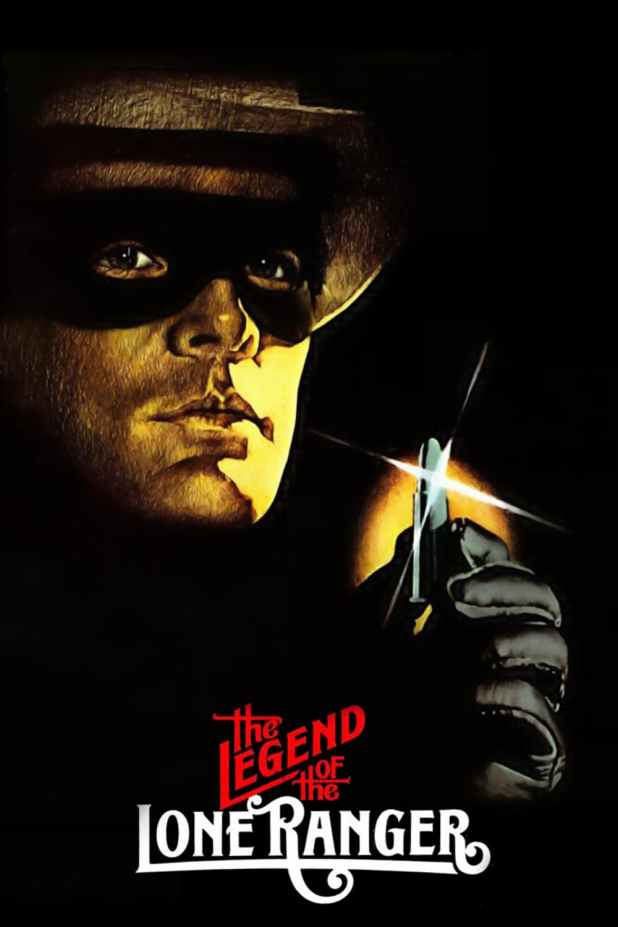
APRIL MOVIE THON DAY 3: The Legend of the Lone Ranger (1981)

Klinton Spilsbury came from Mormon settlers in Mexico and spent much of his childhood in Arizona, before his family moved back to Mexico, settling in Colonia Juárez. He briefly attended Brigham Young University before trying to break into Hollywood as Max Keller.

Once he took on the name Klinton Spilsbury — he was born Glenn Klinton Spilsbury — and he was picked for the major role of the Lone Ranger in a time when superhero and movies of past culture seemed like sure bets. To get there, they often erased the past when now the stars we love at least get cameos.

For example, Clayton Moore, star of the popular 1950s Lone Ranger TV series, was a beloved pop culture icon who had been allowed to wear a mask for personal appearances. Jack Wrather, who owned the Lone Ranger character, obtained a court order prohibiting the 65-year-old actor from making future appearances as the Lone Ranger, as believed Moore’s public appearances in character would undercut the value of the movie.

Moore often was quoted as saying he had “fallen in love with the Lone Ranger character” and strove in his personal life to take the Lone Ranger Creed to heart. Which is:

  • That to have a friend, a man must be one.
  • That all men are created equal and that everyone has within himself the power to make this a better world.
  • That God put the firewood there but that every man must gather and light it himself.
  • In being prepared physically, mentally, and morally to fight when necessary for that which is right.
  • That a man should make the most of what equipment he has.
  • That “This government, of the people, by the people and for the people” shall live always.
  • That men should live by the rule of what is best for the greatest number.
  • That sooner or later…somewhere…somehow…we must settle with the world and make payment for what we have taken.
  • That all things change but truth, and that truth alone, lives on forever.
  • In my Creator, my country, my fellow man.

Moore was so identified with the role he played that he is the only person on the Hollywood Walk of Fame to have his character’s name along with his on the star.

Wrather’s lawsuit wasn’t just bad PR. It killed this movie.

Moore responded by filing a countersuit and then slightly changed his costume, replacing the domino mask with a pair of Foster Grant wraparound sunglasses as part of that company’s “Who’s that behind those Foster Grants?” ad campaign.
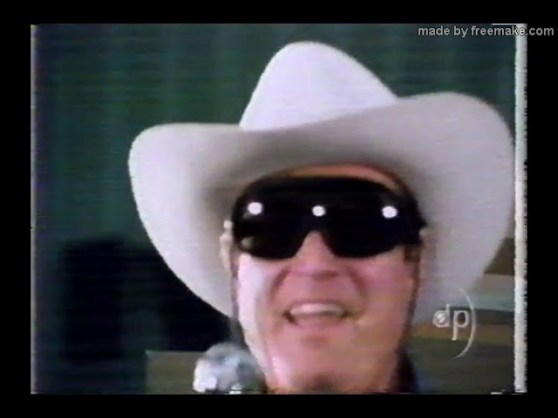
Christopher Lloyd, whose role of Butch Cavendish is one of the few bright spots in this movie, said: “I thought that was really kind of nasty and unnecessary. Nothing Moore was doing was really interfering with the film. I thought that was kind of terrible.”

Meanwhile, Andy Warhol interviewed Spilsbury during the promotion for the movie, during which the actor went off the rails claiming that before making the movie, he had been an art student married to a rich woman and that they had a baby together. He went on to state she had left him because he needed too much time with his own thoughts, as well as the fact that he had fallen in love with actors Dennis Christopher and Bud Cort. Warhol described Spilsbury as “very drunk” and that post-interview, “he’d been picked up by Halston and woke up in bed with Halston.”

Spilsbury demanded script changes as he had trouble delivering his lines, which ended up being dubbed by James Keach. He also demanded that this movie be shot in sequential order so that he could better portray his character’s dramatic arc.

He hasn’t acted in a movie since.

Speaking of Butch, the movie begins with his gang of outlaws are chasing two young boys, one a Comanche and another white, who narrowly miss their villages being attacked. The Comanche grows up to be Tonto (Michael Horse, Deputy Tommy “Hawk” Hill from Twin Peaks) and the white boy is, of course, John Reid (Spilsbury). Later, the same gang kills several Texas rangers, which include Ranger Captain Dan Reid (Matt Perry’s dad John Bennett Perry) before Tonto again saves him. Cavendish then abducts President Ulysses S. Grant(Jason Robards) and tries to start his own country.

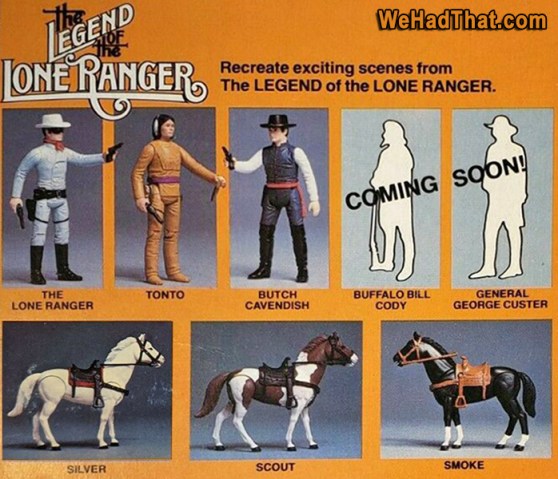
With Richard Farnsworth as Wild Bill Hickok, Ted Flicker as Buffalo Bill Cody, Lincoln Tate as General Custer and an appearance by Billy Jack himself, Tom Laughlin, this movie was trying to get audiences to care about westerns in 1981.

They didn’t.

As for Grade, this was just one of his many film failures, including Saturn 3 and Raise the Titanic.

Two of the movie’s four screenwriters, Ivan Goff and Ben Roberts, had previously created the hit TV series Charlie’s Angels. That didn’t help the film, nor did the direction by William Fraker, who was the cinematographer on two other huge bombs that I love, 1941 and Exorcist II: The Heretic.

Nor does Merle Haggard’s Dukes of Hazzard-style narration.

In his 1992 autobiography Still Dancing: My Story, Grade said he thought that the problem was that it took an hour and ten minutes before the Ranger first pulled on his mask.

There were a ton of problems beyond that.

That said, the movie gave us a great toy line by Gabriel and a newspaper strip that had gorgeous Russ Heath art. I was so excited for this movie as a nine-year-old geek and I remember asking my dad, “Why is this so boring?”
PS: Gavan O’Herlihy auditioned and almost got the role of the Lone Ranger. Although he lost out to Klinton Spilsbury, O’Herlihy made a great impression on director William Fraker and the two remained good friends. When O’Herlihy was cast in Death Wish 3, he had his character renamed after Fraker.

You can watch this on Tubi.
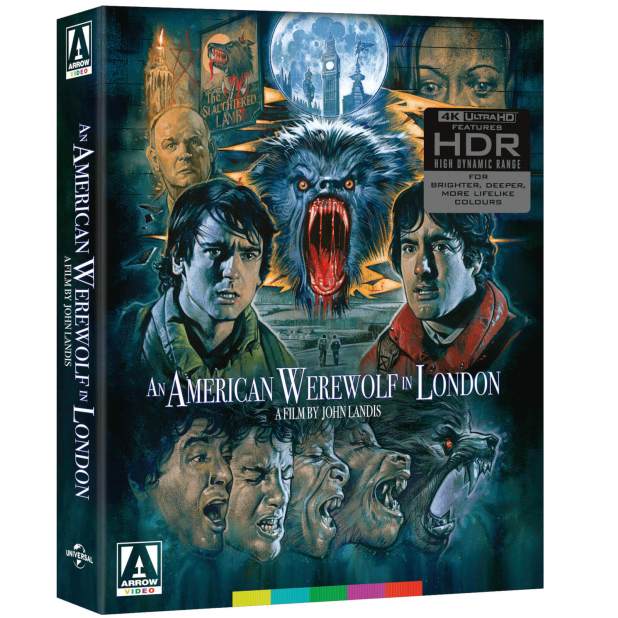
ARROW VIDEO UHD RELEASE: An American Werewolf In London (1981)

EDITOR’S NOTE: We originally shared this review back on October 10, 2019 when Arrow Video released this movie on blu ray. Now there’s a new version on UHD with literally tons of extras. 

It starts with a brand new 4K restoration by Arrow Video from the original camera negative which has two audio commentary tracks, one by Beware the Moon filmmaker Paul Davis and the second by David Naughton and Griffin Dunne. There’s also Mark of The Beast: The Legacy of the Universal Werewolf, a feature-length documentary by filmmaker Daniel Griffith, featuring interviews with John Landis, David Naughton, Joe Dante and more; An American Filmmaker in London, an interview with John Landis in which he reflects on British cinema and his time working in Britain; I Think He’s a Jew: The Werewolf’s Secret, a video essay by filmmaker Jon Spira (Elstree 1976) about how Landis’ film explores Jewish identity; The Werewolf’s Call, in which Corin Hardy, director of The Hallow and The Nun, chats with writer Simon Ward about their formative experiences with Landis’ film; Wares of the Wolf, a featurette in which SFX artist Dan Martin and Tim Lawes of Prop Store look at some of the original costumes and special effects artifacts from the film; Beware the Moon, Paul Davis’ acclaimed, feature-length exploration of Landis’ film which boasts extensive cast and crew interviews; two 2008 features by Paul Davis (An American Werewolf in Bob’s Basement and Causing a Disturbance: Piccadilly Revisited); Making An American Werewolf in London; interviews with Rick Baker, John Landis, footage of Baker’s workshop, outtakes, storyboards, trailers, TV ads, radio ads, a huge image gallery, a double-sided poster, a reversible sleeve featuring original poster art and artwork by Graham Humphreys; six double-sided, postcard-sized lobby card reproductions and a limited edition 60-page, a perfect-bound book featuring new writing by Craig Ian Mann and Simon Ward, archival articles and original reviews.

It comes out on March 15, 2022 and you can order it directly from Arrow Video.

There must have been something in the waters of the Los Angeles River in 1981, as The HowlingWolfenFull Moon High and this film all came out in those same twelve months. While all three are interesting films for different reasons, An American Werewolf In London astounded audiences with its special effects.

Rick Baker’s vision was to have the main transformation — set to Sam Cookie’s “Blue Moon” — happen in real-time, with no cutaways or dissolves. Director John Landis compounded the difficulty of this sequence by insisting that it be shot in bright light. This all led to six ten-hour days of prosthetic make-up, but the results were an Oscar — the first of its kind — for special effects make-up and Baker became a household name. Well, in the house of kids who subscribed to Fangoria.

While he was a production assistant in Yugoslavia on the film Kelly’s Heroes, he witnessed an elaborate gypsy funeral where a criminal was wrapped in garlic and buried feet first in the middle of a crossroads so that he would never rise again. This moment of real-life horror stayed with him for over a decade as he built his career in Hollywood.

The money people thought that this movie was too funny to be scary and too frightening to be hilarious. Time has proven them wrong.

David Kessler and Jack Goodman (David Naughton from March Madness and Griffin Dunne from After Hours) are backpacking through Europe. As they make their way across the moors, they stop at a local club called the Slaughtered Lamb. In the midst of all the fun they’re having, they innocently inquire about the star on the wall and are asked to leave. Seriously — the bar just shuts down and forces them into the night, knowing that they’ll die out there.

Look for Rik Mayall in this scene, playing chess with former pro wrestler Brian Glover. Adrian Edmonson had been invited to be at the shoot but blew it off.

As they walk into the night, the pub owners can only say, “Keep to the road, stay clear of the moors and beware of the full moon.” Of course, that means that our heroes wander off the path and are surrounded by a creature that howls at the full moon. Jack is milled and David barely survives when the pub’s patrons come out to save him. As he passes out, he sees that it wasn’t an animal that attacked, but a nude man.

Three weeks later, David wakes up in a hospital where Inspector Villiers tells him that he and his friend were attacked by a lunatic, while our hero insists that it was a wolf. That’s when things get even weirder — Jack appears, even though he’s dead, and demands that David kill himself before the next full moon. As long as the bloodline of the werewolf continues, Jack will be undead, forced to haunt the world.

As David heals up, he moves in with Alex Price (Jenny Agutter, Logan’s Run), a nurse who helped him get back on his feet. Instead of being able to celebrate young love, Jack’s warnings — and decay — grow more insistent as we get closer to that epic transformation scene.

The rest of the film is a rollercoaster of werewolf attacks and David trying to reason with Jack, who is joined by all of David’s victims inside an adult movie theater. Finally, the police — and Alex — close in.

Today, Landis regrets some of his choices as he made the film, such as cutting certain sequences to earn an R rating. For example, the sex scene when Alex and David finally consummate their relationship was a lot more explicit and there was an action sequence where David as a werewolf would wipe out the homeless along the Thames.  The director also felt that he spent too much time on the transformation scene sequence because he was so fascinated by Baker’s effects.

That said, Landis and Baker were never on the same terms after this film. It took eight years to make the movie and Baker decided to use all of the work he’d created so far for The Howling. Right around the same time, Landis finally got the movie greenlit and called Baker, who had to tell him he was already lining up a werewolf project. After getting screamed at over the phone, Baker left the project in the hands of his assistant Rob Bottin and only consulted on that film.

Special effects would never be the same after this film. Today, the entire transformation would be computer rendered, with those amazing monsters only truly existing on the screen. This film’s effects were so upsetting to even the actors that it caused depression when they first saw how damaged their faces were.

PS — Please, by all means, avoid An American Werewolf In Paris (starring Tom Everett Scott of Tom Hank’s That Thing You Do!), a movie made by none of these people that has extreme bungie jumping in it. That’s probably the only reason to watch it, actually.

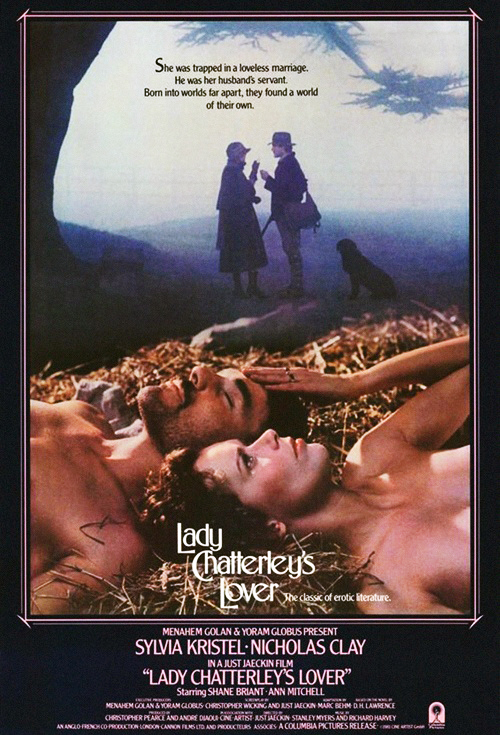
CANNON MONTH: Lady Chatterley’s Lover (1981)

“We are not making an X-rated picture,” said executive producer and Cannon co-master of madness Yoram Globus. “This will be a cult film. Nudity depends on how you shoot it.”

Star Sylvia Kristel said, “Just Jaeckin and I have been persecuted by this sort porn criticism. I don’t want to go through the same nightmare as I did after Emmanuelle.”

And yeah. Why else would you make Lady Chatterley’s Lover?

Sure, this bombed in theaters, but it would go on to a video and cable life that didn’t seem like it would ever end. I can remember all through school, the whisper of Lady Chatterley’s Lover inspired nervous laughter and knowing glances and blushing. It was literally shorthand for sex.

And Kristel became important for young boys who weren’t interested in the teen stars we were told to like. Or am I just talking about me?

As for the movie, look, it’s a mannered book and a somewhat mannered take on the material and it’s nowhere near what we thought it was going to be. That would be Young Lady Chatterley 2.

Sir Clifford Chatterley (Shane Briant, who was in Hammer’s Demons of the Mind, Straight on Till Morning, Captain Kronos – Vampire Hunter and Frankenstein and the Monster from Hell) has been injured in the war to end all wars, leaving him crippled and — even worse — unable to perform for his wife. He permits her — and maybe even encourages her — to have numerous affairs to produce him an heir. Yet he has an issue when the man she falls for is their groundskeeper Oliver Mellors (Nicholas Clay from Excalibur), a commoner, and that’s when this situation goes wrong due to classism.

With production design by Anton Furst (the man who designed Gotham for Tim Burton); a script by Jaeckin, Marc Behm (who somehow wrote both Help! and Hospital Massacre) and Christopher Wicking (who was behind Scream and Scream AgainCry of the Banshee and Dream Demon) and the strange idea that this was almost directed by Ken Russell and this is a Cinemax After Dark movie that you can return to and still see something of value in it.

Who am I kidding? I love everything that ever aired after 1:05 AM on Cinemax.

Also: people have sex in a filthy chicken coop that had to have smelled bad, but I guess if you get a shot at Sylvia Kristel, you don’t worry about catching bird flu.

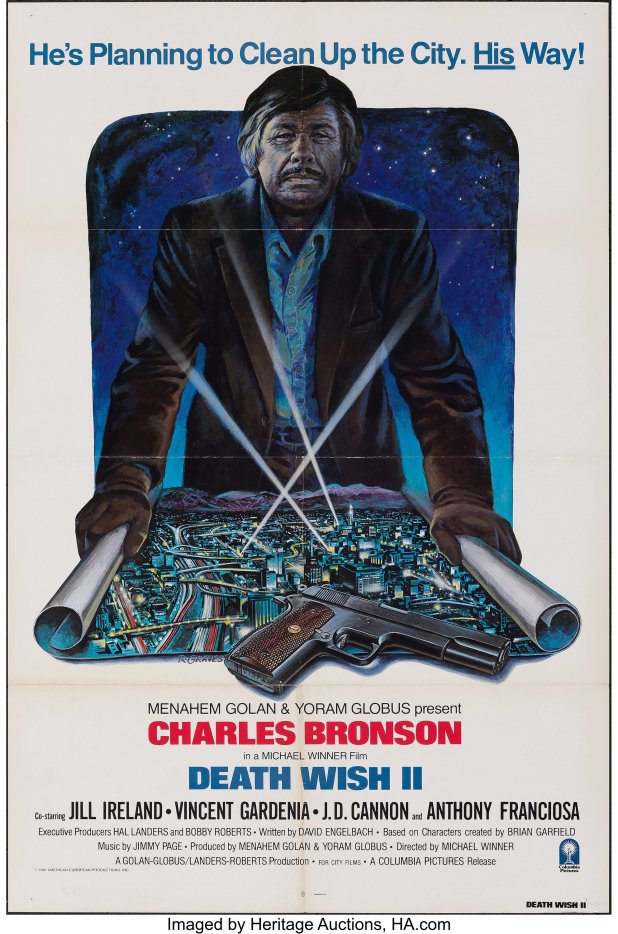
CANNON MONTH: Death Wish 2 (1981)

EDITOR’S NOTE: Death Wish 2 is when Cannon seemed to finally start figuring it out. The public still wanted Bronson, they loved the original film and the Reagan 80s demanded blood for blood. Here’s how the sequel to a movie that probably didn’t need a sequel turned out.

Paul Kersey can’t catch a break. Seriously, in this sequel, he goes through the Trials of Job all over again. You think he went through some bad stuff in the first movie? Michael Winner is just getting started putting our vigilante hero through hell on earth.

Paul has taken his daughter Jordan and moved to Los Angeles, where he’s found love again with radio reporter Geri Nichols (Bronson’s wife, Jill Ireland). However, horror and pain is never far from Kersey, so one day at a fair, some punks steal his wallet. He chases one of them down named Jiver down and teaches him a lesson. The gang — Nirvana, Punkcut, Stomper and Cutter (Laurence Fishburne) — find his address in his wallet and pay a visit to his house. They rape his housekeeper Rosario, beat Paul into la la land and steal his daughter (this time played by Robin Sherwood from Tourist Trap). After raping her, she goes even deeper into her depression and jumps out a window, falling to her death and getting impaled like she’s Nikos Karamanlis or Niko Tanopoulos.

Of course, Paul doesn’t need help from the cops. He only needs one thing: to give in to the rage within, to become the vigilante once more. Det. Frank Ochoa is back to chase him one more time, as he’s the only one who can track him.

Soon, Paul is wiping out the gang one by one, his own personal safety and relationship with Geri be damned. This is the first time we discover that Kersey is able to do magical things like make fake IDs with just a Xerox machine and talk his way into anywhere and out of anything. By the end of this film, he’s gone from a man whose life has been destroyed to a walking angel of death willing to do whatever it takes to kill everyone that’s crossed him.

To be as authentic as possible, this movie was shot in the sleaziest parts of Los Angeles, such as the abandoned and crumbling Hollywood Hotel location. Many of the film’s extras were local color who were either hired to play a bit part or just walked over to the set, such as drug addicts, drag queens, Hare Krishnas and bikers. Even crazier, Bronson’s alcoholic brother was a frequent set visitor, constantly asking for money. Bronson wanted to be careful not to give him too much cash so that he wouldn’t be mugged, but that brother was soon found dead, stabbed in the ass.

My favorite part of this was the score, composed by Jimmy Page in his first post-Led Zeppelin musical appearance here by creating the film’s soundtrack. It’s almost surreal to hear his signature guitar tone over Bronson killing rapists.

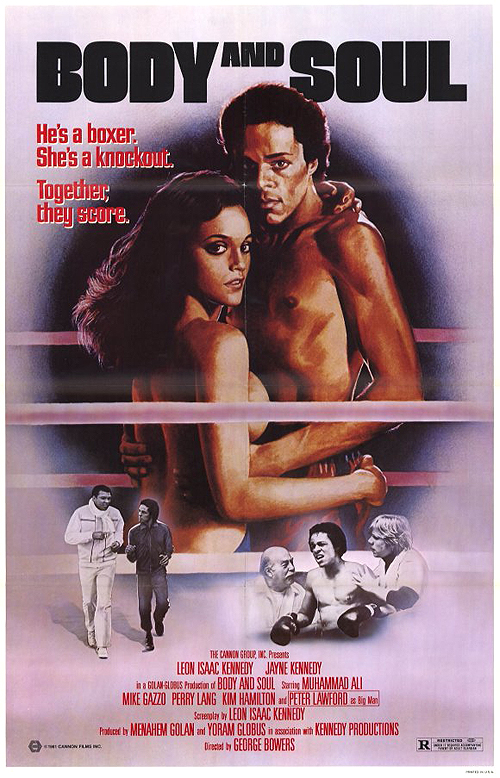
CANNON MONTH: Body and Soul (1981)

All the way back in his teens, Leon Issac Kennedy was a DJ in Cleveland, a job that took him to Los Angeles and finally into two films with Fred Williamson, Hammer and Mean Johnny Barrows. By this point in his career, he’d already become a star as Martel “Too Sweet” Gordone in Jamaa Fanaka’s Penitentiary and had married Jayne Kennedy, the former Miss Ohio USA and NFL broadcaster. Sadly, they’d break up just as this movie was being released and as part of their divorce case, a sex tape — decades before this became something that anyone knew of — that EBONY Magazine claimed that Kennedy had released. He later sued for a million dollars.

But back before all that ugliness, the Kennedys appeared in this remake* of Robert Rossen’s 1947 boxing move of the same name. Supposedly, Menahem Golan and Yoram Globus – those who are all things Cannon — studied marketing research and discovered that Americans wanted to see one thing more than anything else: Leon Isaac Kennedy beating people up.

Leon is Leon “The Lover” Johnson, a boxer who we first meet dancing around an opponent and then getting a few more rounds in with a woman who caught his eye in the crowd. In a public bathroom, no less.

Despite the unclean nature of where Leon chooses to do his loving, he’s actually a somewhat decent man who only became a boxer because it can pay for the medical care of his sister Kelly (Nikki Swasey Seaton). To get to the top, he has to deal with a fight promoter named Big Man (Peter Lawford) and get trained by Muhammed Ali, which seems to be the right person to train you and wow, seeing The Greatest up close in the ring sparring reminds you of just how amazing he was, even this late in his career.

He also falls for Julie Winters (Mrs. Kennedy, of course) who ends up leaving him after all his groupie-loving shenanigans, telling him “I just wish you were double-jointed so you could turn around and kiss your own ass.”

Can he get it all together, get the girl, win the big fight and keep his sister as healthy as possible? I mean, have you ever seen a boxing movie before?

That said, this is like no other boxing movie you’ve seen, as Kennedy does near pro wrestling moves as he boxes, like windmill punches, multiple punches to the face piston style and even runs up the ropes to deliver a big punch near the end. Plus, his nemesis has a very pro wrestling name — the St. Louis Assassin — and is played by former WBC Light Heavyweight Champion J. B. Williamson in a role that demands that he grimace, destroy people and throw babies. Yes, he really tosses a baby in one scene.

Body and Soul was directed by My Tutor and Private Resort’s George Bowers, who edited GalaxinaThe StepfatherThe Adventures of Buckaroo Banzai Across the 8th DimensionSleeping with the Enemy and A League of Their Own.

This is pretty much a perfect cable Sunday do-nothing movie. You know the kind — it comes on WTBS and you have no plans other than getting over that hangover and just watch how it all comes out. That’s high praise for a film, actually, as movies can be the balm that soothes your soul.

*Maybe I should say loose remake.

You can watch this on Tubi.
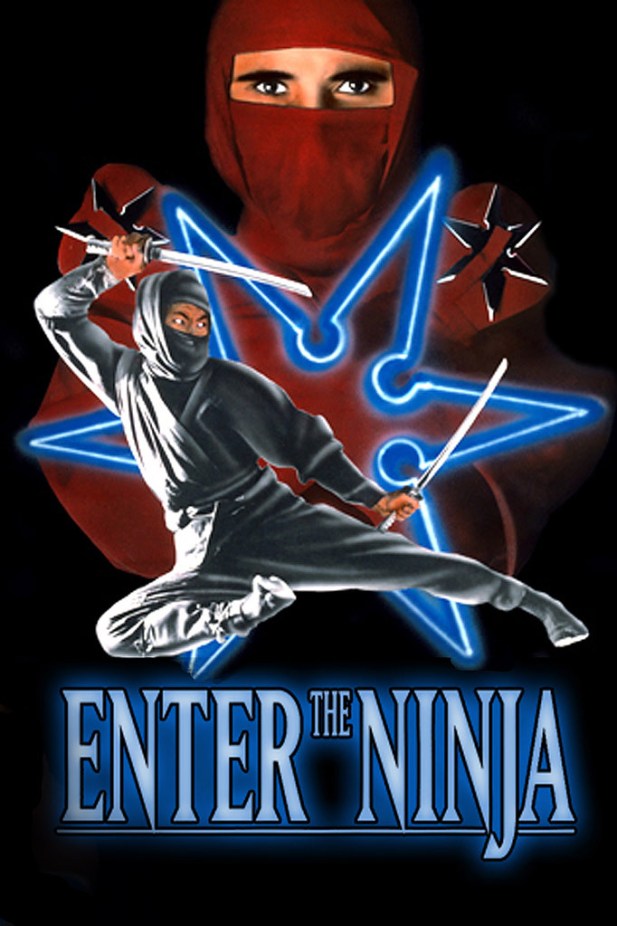
CANNON MONTH: Enter the Ninja (1981)

EDITOR’S NOTE: Back during Junesploitation, we watched this on June 16, 2021. Our plans for a Cannon month started right then and there. This movie is everything great about the madness that is Cannon Films. 

Cannon Films need to be on our site more often, but that’s because I want to make sure that I have the time and energy to properly focus on this astounding company. But hey — let’s get things started by talking about Enter the Ninja, a movie written by the man who stole Priscilla from Elvis, Mike Stone, and nearly starred in it before his acting ability supposedly wasn’t good enough for a ninja movie Luckily, Franco Nero was in the Philippines and Stone was nice enough to remain on set as the fight double for Nero and the fight/stunt coordinator.

That’s right — Django as a ninja. Make that a ninja that cucks his best friend and arrdvarking his wife Susan George and then fighting Sho Kosugi.

If you were wondering why I loved Cannon Films so much, just read that last sentence again.

Cole (Nero) is a soldier who has become a ninja — much like Snake-Eyes in the Marvel comics — before he visits his war buddy Frank Landers and his new wife Mary Ann (Ms. George) who own a giant farm in the Philippines that is threatened by Charles Venarius (Christopher George), whose Venarius Industries wants the oil that’s on their land.

After said cuckolding — Frank had already drunkenly confessed to our hero that he couldn’t life his own katana, so to speak — Venarius’ henchmen kill Frank and kidnap Mary Ann. That means that Cole has to battle his way through all of the many soldiers in his way before battling his old sword brother Hasegawa (Sho Kosugi).

Directed by Menahem Golan, who also gave us The Apple, this is actually the exact kind of movie that I want it to be. Golan said, “It started when Chinese karate films became popular. I looked for something new in Asian martial arts and found information about the ninja culture in an encyclopedia. The ninja were middle-class people in Japan — lawyers, government clerks, etc. It was a secret organization that helped the feudal government. It actually preceded the Chinese karate battles. They used very special methods, developing their sixth sense. That fascinated me and I said I could write story ideas out of it, so we made Enter the Ninja and American Warrior later on. Many imitations followed.”

Actually, Emmett Alston was supposed to be the film’s original director. Supposedly Charles Bronson refused to allow Golan to direct Death Wish II. Alston directed Force of the Ninja and Nine Deaths of the Ninja, which is somehow even better than this.

Also, I know that we got a whole bunch of Kosugi ninja movies, which I love, but man, why did we not get another Franco Nero in karate PJs movie?

You can listen to The Cannon Canon episode where they discuss this movie here.

CANNON MONTH: Deathhouse (Silent Night, Bloody Night) (1981)

EDITOR’S NOTE: Yes, I realize that Silent Night, Deadly Night originally came out the whole way back in 1972. But nearly nine years after it first played theaters, Cannon released it as Deathhouse on May 8, 1981. If it makes no sense to release a holiday movie in May, well — don’t worry about it. It’s Cannontown.

Christmas Eve, 1950: Wilfred Butler runs from his home, on fire, and supposedly dies in the snow.

Christmas Eve, 1970: John Carter (Patrick O’Neal, The Stepford Wives, The Stuff) and his assistant Ingrid arrive in a small Massachusetts town. He meets with the town’s mayor, sheriff and major citizens like Tess Howard and Charlie Towman (John Carradine!), who may have lost his voice to a tracheotomy but not his need to smoke, about selling the Butler mansion as soon as possible. While staying overnight with Ingrid, who is also his mistress, they are both killed by an axe. The killer calls the police and says that they are Marianne.

Tess, the town’s telephone operator, hears the call and drives to the mansion, where she is greeted by Marianne Butler before she is hit in the head with a candle holder. Meanwhile, Sheriff Mason finds that Wilfred’s grave is empty. He is killed and thrown into the empty hole.

Mayor Adams is asked to go to the Butler mansion but leaves his daughter, Diane (Mary Woronov, Death Race 2000Chelsea Girls) at home. She meets up with a man who claims to be Jeffrey Butler, who has taken the sheriff’s abandoned car. Together, they search for the lawman but can’t find him.

After taking Towman to the mansion, Jeffrey goes back to get Diane. On their way to the mansion, Towman stumbles blindly in front of them and is hit and killed. His eyes had been stabbed out and Diane grows worried about Jeffrey.

Well, fuck me, this movie is also about incest! A diary found at the house reveals that Jeffrey is the son of Wilfred and his daughter, Marianne. Afterward, Wilfred turned the house into an asylum and admitted his own daughter. However, on Christmas Eve 1935, he turned all of the inmates loose. They killed every doctor as well as his daughter. Of note here is that many of the inmates in the flashback are played by former stars of Warhol’s factory, like Ondine, Tally Brown, Kristen Steen and Lewis Love, as well as Flaming Creatures auteur Jack Smith, artist George Trakas and his wife at the time, Susan Rothenberg. Warhol superstar Candy Darling also shows up in the film as a party guest.

Well, it turns out that some of the inmates of the insane asylum ended up being important parts of the town — that’s right, all of the important people John met with in the beginning!

Mayor Adams arrives at the mansion and he and Jeffrey face off, guns drawn, each believing the other is the killer. They kill one another as Marianne shows up, but she is really Wilfred, who is alive. He went after the inmates for their role in the death of his daughter and used his grandson/son/secret shame Jeffrey as a patsy. Diane gets the gun and kills the old man. One year later, the mansion is demolished as she watches.

Director Theodore Gershuny worked on plenty of episodes of Monsters and Tales from the Darkside after this film. He was also married to Woronov. The original title for the film was Night Of The Dark Full Moon and it was also nearly called Zora, which makes little to no sense.

There are some really interesting techniques here, especially in the flashback sequences, which feel like tinted photographs come to life with the saddest version of “Silent Night” ever playing behind the action. I love how experimental and dark these sequences look — they remind me a little of the film Begotten.

This is a dark film for your holiday viewing, so if you want to chase away the family for awhile, this is the one to do it.

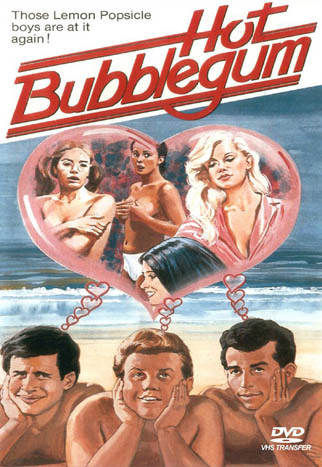
CANNON MONTH: Hot Bubblegum (1981)

You know, I keep finding more of these Lemon Popsicle sequels and every time they come on, I just try and close my eyes and ride them out, like nausea that you get from a rollercoaster. I’m kidding — they aren’t that bad — but if it weren’t for my mission to watch every single Cannon movie ever, there’s no way that I would have watched one — much less every single installment — of these movies.

Another Boaz Davidson film, this one has German co-producers and starts with the kind of quality humor that you depend on from this series, as a child pisses in a grown man’s face to start off the funny.

Benzi (Yftach Katzur) is dating nice girl Sally (Ariella Rabinovich), but then he wants Nikki (Orna Dagan), who ends up being more than he can handle so he goes back with his more chaste love interest. And somehow, Benny has become more of a jerk in these movies, so much so that his friend Bobby has to explain to him that Sally is the kind of girl you should be with. 

This raises the issue that the guys in these movies can sleep around with prostitutes, all have sex with the same married woman in the same night and be continually ready to bed anyone they even get the slightest interest from, yet when Nikki wants to own her sexuality, she’s instantly a fallen harlot who must be avoided.

For some reason, every time Frieda appears — she’s played by Sibylle Rauch, who was also in plenty of adult movies in the years after this — dudes completely lose their minds. It’s like they’ve never seen a 5′ 10″ platinum sex bomb up close before or something.

I realize that I have to watch so many more of these movies and hopefully, together we can find something worthwhile in them.

JESS FRANCO MONTH: White Cannibal Queen (1980), Cannibal Terror (1981), Devil Hunter (1980)

EDITOR’S NOTE: You can read the music and film reviews of R.D Francis on Medium and learn more about his work on Facebook. This article originally ran on September 24, 2021.

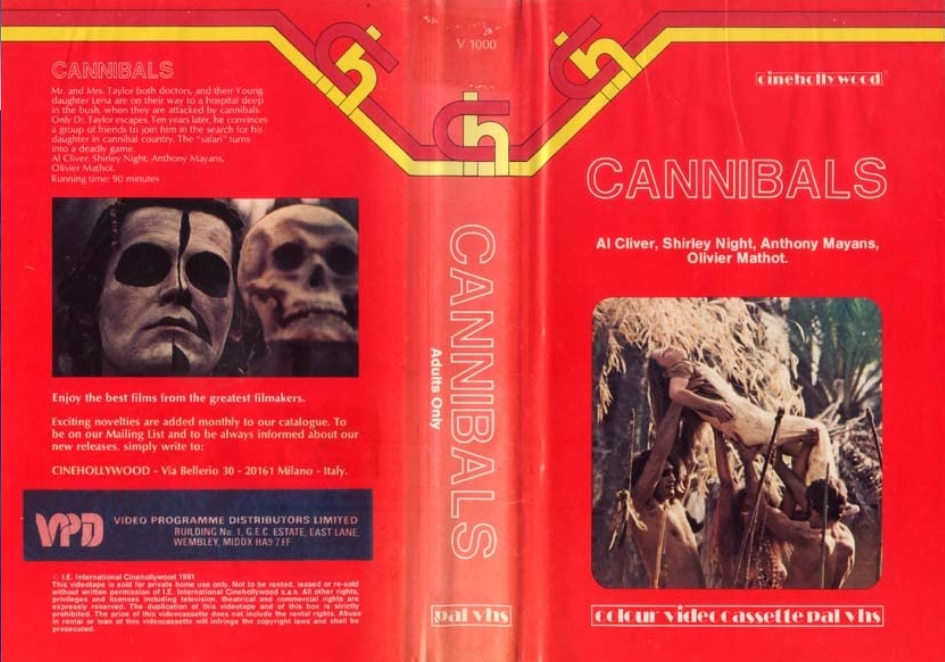
Oh, call it what you will, you ol’ ’80s “Midnight Movie” and VHS-renting road dogs: Mondo CannibaleCannibal World, Cannibals, White Cannibal Queen, A Woman for the Cannibals, or Barbarian Goddess. All we known is that, once again, Jess Franco, casts himself as the patron saint of the video nasty, as he sticks his hands into the boiling native vats and fucks up a genre. While shooting, this soon-to-be U.K.-banned ditty was titled Rio Salvaje, aka Wild River, probably as an ersatz sequel to Umberto Lenzi’s 1972 progenitor, Man from Deep River. As if we’d be duped by a Franco joint.

White Cannibal Queen

Ah, the VHS clamshell sleeve I remember. Heaven.

On the plus side: Franco gives us the always welcomed Al Cliver (The Beyond) and Sabrina Siani (Conquest and The Throne of Fire). According to Franco, he did this movie and fellow cannibal romp Devil Hunter (1980) for the money and had no idea why anyone would enjoy these films. (Is it just me, or does Franco have a lot of those type of films in his career? He said the same thing about his NaziZom rip, Zombie Lake.) Franco also went on record that Sabrina Siani was the worst actress he ever worked with and that her only good quality was her “delectable derrière.”

Whatever, Jess. Pedophilic Pig.

However, to Franco’s credit, he does change it up a bit: Instead of looking for the usual lost tribes or oil, or whatever vegetable or mineral MacGuffin we need to steal from a peaceful native tribe to make a better life for the white man, our civilized man — with one arm, who lost it during the first expedition — returns to the jungle where he lost his family to rescue his now teenage daughter — who’s become the blonde white cannibal queen of the tribe.

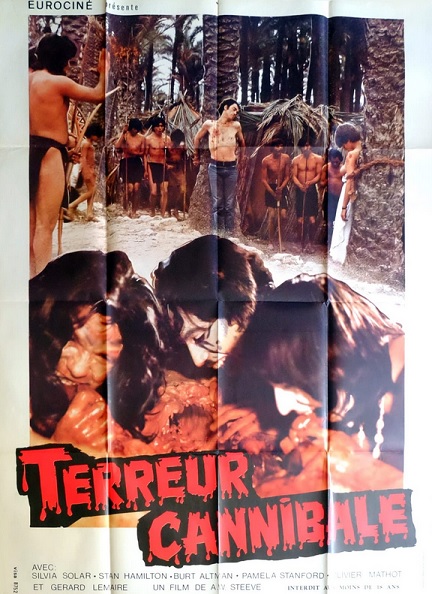
Cannibal Terror

It’s another Jess Franco joint: it’s different, but the same.

Now, don’t let Jess Franco bamboozle you with Cannibal Terror, aka Terreur Cannibale (1981). While Franco penned the script, it’s actually a way-too-late French entry into the genre directed by Alaine Deruelle, and not a repack of White Cannibal Queen, aka Mondo Cannibale. But it does raid that Franco film for stock footage. As result, we see Sabrina Siani, the White Cannibal Queen, while not starring in the film, appearing in a bar scene (oops); several shots of the dancing cannibals from Franco’s film are redux, here; a background actor (said to have a distinctive, Mick Jagger-type face) appears in three roles, here: as two cannibals, a border guard, and a third cannibal eating Al Cliver’s wife; the guitar player at the bar, here, found Al Cliver after he had his arm cut off in White Cannibal Queen (oops).

White Cannibal Queen and Cannibal Terror also share actors Olivier Mathot and Antonio Mayans, both whom have starring roles, as well as porn actress Pamela Stanford, who has a major role in Cannibal Terror, but a support role in White Cannibal Queen by way of stock pillaging. The leading woman change up is Silvia Solar from Umberto Lenzi’s Eyeball (1975).

As far as the “plot” goes in the French remake/ripoff: Two criminals take their kidnapping victim to their partner’s jungle hideaway. The local cannibal tribe hunts them down one by one.

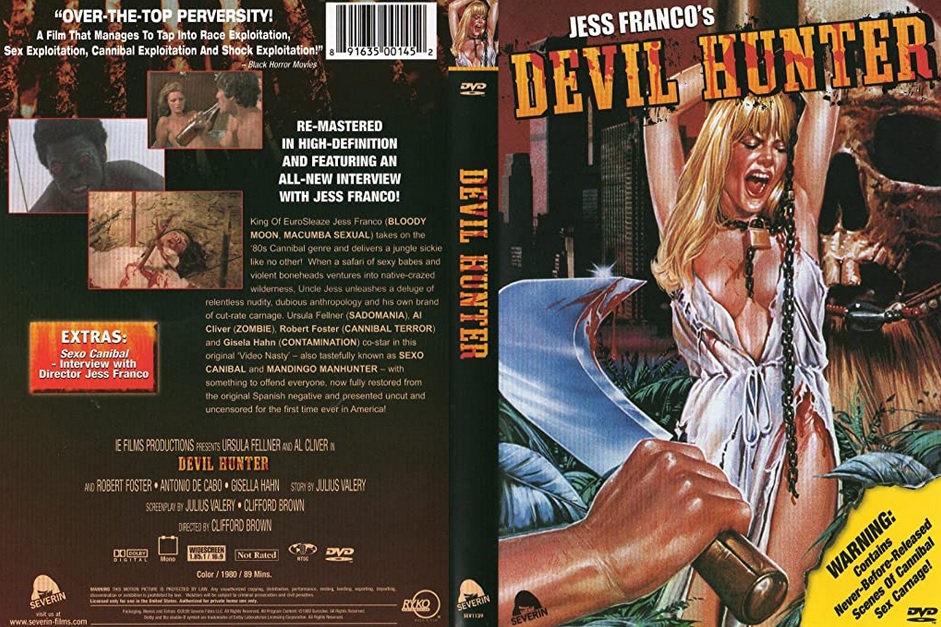
Devil Hunter

Where I have I seen you before? Oy! Another Jess Franco cannibal joint!

And don’t let Jess Franco hornswoggle you with Devil Hunter (1980), aka, Sexo Canibal, The Man Hunter, and Mandingo Manhunter, for he is director Clifford Brown and writer Julius Valery, incognito; his second wife, Lina Romay, co-directed, while his first wife, Nicole Guettard, edited.

And since Devil Hunter was shot back-to-back with White Cannibal Queen, Al Cliver returns in the leading hero role. And Antonio Mayans, from it’s-not-Franco’s-film-but-it-is Cannibal Terror, returns as Cliver’s co-star. The change up, here, is that Ursula Buchfellner, a German model who became Playboymagazine’s “Playmate of the Month” in October 1979, stars as our resident damsel-in-distress. Did you see the Euro-adult comedies Popcorn and Icecream (1979), Cola, Candy, Chololate (1979), and Hot Dogs in Ibiza (1979), and Jess Franco’s women-in-prison romp Hellhole Women, aka Sadomania (1981)? Well, now you know four more Ursula Buchfellner’s films than most (normal) people. Do you feel blessed by B&S?

As far as the “plot” goes, well, it’s pretty much a retread of Cannibal Terror: After the kidnapping by white bandits of a top model/actress (Buchfellner) on a jungle shoot/location scouting trip, an ex-Vietnam vet (Cliver) and his mercenary pal (Mayans) head into the deep jungle of the island nation to rescue her, not only from the kidnappers, but from cannibals who worship a “Devil God.” And (snickering) the “God” is a tall African dude with ping-pong eyes falling out of his head.

And get this: Jess Franco claims the makers of Predator stole their idea from this movie.

Whatever, Mr. Franco. Ye who commits celluloid theft, himself.

Needless to say: All of the stock footage padding from White Cannibal Queen and Cannibal Terror, along with the expected Franco-sleaze, and awful dubbing, is back — to lesser . . . and lesser effect. Wow, Jess, thanks for making White Cannibal Queen look even better than it’s allowed to be. But it does “splatter” nicely to make the U.K.’s “Video Nasties” list, which is the whole reason we’re reviewing this film this week for our “Video Nasties Week.”

So, there you go. Now you’re an educated Euro-cannibal flick consumer in-the-know that Cannibal Terror and Devil Hunter aren’t alternate titles to White Cannibal Queen, but three distinct — as distinct as a Franco joint can be — separate films . . . that are different, but the same. Sorta. Kinda. Oh, Franco!

But you know Franco: He’s a magnificent, maniacal bastard and we love him for it. What would our youth have been without Franco flicks and Venom tunes?

We did a whole week of cannibal films with our “Mangiati Vivi Week” tribute back in February 2018. You can also learn more about the genre with our review of the documentary Me Me Lai Bites Back (2021). And there’s more “nasties” to be found with our “Section 1,” “Section 2,” and “Section 3” explorations.

You can purchase White Cannibal Queen from Blue Underground or watch it as a free-with-ads-stream on Tubi.

You can purchase Cannibal Terror from 88 Films or watch it as a VOD on Amazon Prime.

You can purchase Devil Hunter from Severin Films or watch it as as free-with-ads-stream on Daily Motion.

JESS FRANCO MONTH: The Story of Linda (1981)

Betsy Norman (Ursula Buchfellner, Sadomania) works at a Spanish hotel that’s really a brothel that draws in raincoaters worldwide for their BDSM shows. Shiela (Raquel Evans) and Ron (Antonio Mayans) have made a place where fantasies are catered to and its where Linda (Katja Bienert, who was in quite a few of Franco’s movies of this time) is tempted by this word of sin.

Known in Germany as Die Nackten Superhexen vom Rio Amore (The Naked Superwitches from Rio Amore), this movie has a wild disco soundtrack and a juxtaposition of summer vacation first love with enforced servitude, which is my shorthand for telling you that it’s a Jess Franco movie.

Made right after Bloody Moon, this is more one for the meal than one for the reel for Franco, but his obsessions come through. A warning though, that Bienert was underage while making  this movie, just as she was in several other movies she made with Franco such as Diamonds of KilimandjaroLilian (la virgen pervertida)El lago de las vírgenes and Wicked Memories of Eugenie.