EDITOR’S NOTE: Red Flag: The Ultimate Game was on the CBS Late Movie on November 2, 1984.
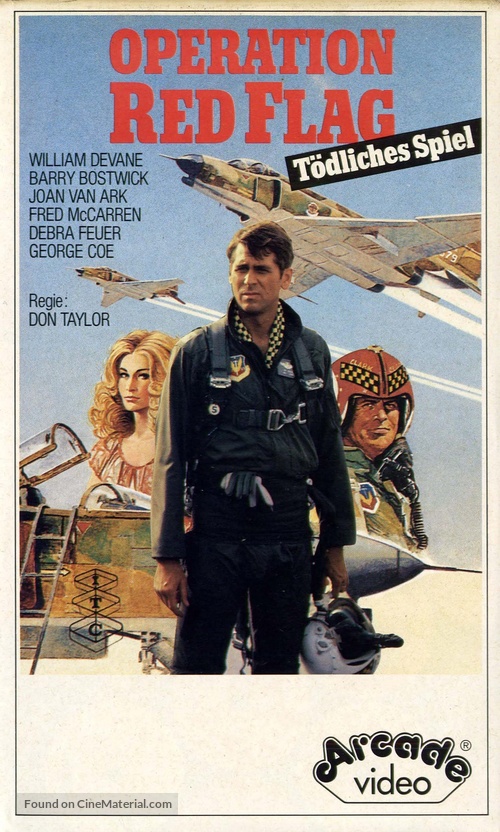
Major Phil Clark (William Devane) and Major Jay Rivers (Barry Bostwick) share a unique bond. Having flown together in Vietnam, they were later assigned to the elite Red Flag Air Force Fighter Weapons School at Nellis AFB, Nevada. Clark, with his loud and self-confident demeanor, is a stark contrast to the quiet Rivers. Their friendship, however, is strong. But when Rivers begins to outshine his mentor, Clark, the dynamics of their relationship are put to the test. Can they maintain their friendship?
Chuck Yeager was the advisor on this, and you get some great F-4 Phantoms in flight. However, a substantial part of the film delves into the on-the-ground relationship drama between Rivers and his wife Marie, played by Joan Van Ark. This aspect of the film adds emotional depth and character development, making it more than just a military action movie.
The IMDB trivia page for this and the goofs are filled with deep military knowledge, so if you want to know what medals Devane has or why some parts are wrong, well, some servicemen are happy to help.
Red Flag: The Ultimate Game was directed by Don Taylor, a seasoned filmmaker known for his work on Stalag 17, Ride the Wild Surf, Escape from the Planet of the Apes, The Final Countdown, The Island of Dr. Moreau and Damian: Omen II. The script was written by T.S. Cook, who also penned the screenplay for the acclaimed film The China Syndrome. With such a talented creative team, you can expect a compelling and well-crafted film.
Christopher Gans has made some great movies and gets little credit. His better-than-the-game Silent Hill, Crying Freeman, his segments in Necronomicon and the incredible Brotherhood of the Wolf are among his many accomplishments.
As a student, he made this film, which pays tribute to Bava, complete with a dedication at the end. And you know, in just around 15 minutes, Gans gets it. He understands how giallo works, and instead of making the kind of modern Giallo that everyone tries these days, he crafts a film that looks bad with love and then goes forward, taking what works and creating a near-lunatic energy that feels like where you’d hoped Argento would have kept going after Tenebre and Opera.
Only two actors are credited: Aissa Djabri as Le témoin (the witness) and Isabelle Wendling as La victim (the victim). Like all Giallo directors of ill repute, one must assume that Gans is the killer or at least their hands.
Phillipe Gans and Jean-François Torrès created the music for this, and much like the visuals, it takes the sound of the form and makes it more hard-driving and powerful, while Jérôme Robert has gone on to plenty of work in the French film industry.
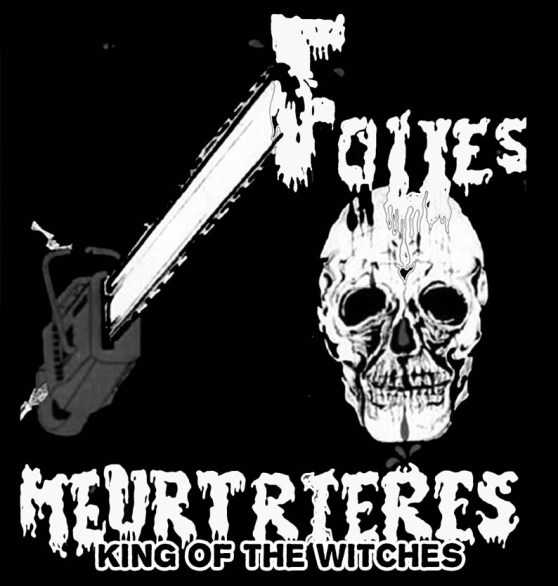
Folies Meurtrières (Killing Spree) (1984): Shot on Super 8 at some time in the early 80s in France, this film is 52 minutes of a killer aimlessly killing, killing and killing some more while a fuzzed-out synth soundtrack plays, the kind of music that those that say their films are “inspired by John Carpenter” but just have a neon color palette and a few keyboard songs on the soundtrack dream and wish and hope and pray that they could achieve.
Then everything changes.
And by changes, I mean the end of Maniac gets ripped off.
Look, I get it, this is a cheap knockoff of a slasher that may be bright enough to make fun of the things we accept in these films. But man, I love these lo-fi movies that want nothing more than to make their own effects and do their best to entertain you. They’re not significant movies — they were never intended to be — but they were a lot of fun to make.
I’ve heard that this movie is in the genre Murderdrone, in which “90% of the movie is people wandering around and getting murdered set to shitty lo-fi bedroom synths, and it’s increasingly hard to pay attention, but you can’t look away, and you’re stuck in a murdertrance.” This Letterboxd list has some more of those…
As for the man who made this, Antoine Pellissier, he’s a doctor now.
Possibly In Michigan (1983): Made with funding from the National Endowment for the Arts and the Ohio Arts Council, video artist Cecelia Condit’s nightmarish short has had many lives: as an art project to help her heal from her past, as a scare tactic shown on the 700 Club and as a viral video that got shared without context and was rumored to be a cursed film.
Starting with her film Beneath the Skin, Condit uses her video work to attempt to deal with the cycles of violence that she felt were all around her and so close to her. That’s because, for a year, she dated Ira Einhorn, the Unicorn Killer, who was also one reason we had Earth Day. The entire time that they dated, the rotting body of his ex-girlfriend, Holly Maddux, was in a trunk. A trunk that Condit constantly walked past, one assumes.
It made it onto religious television because, in addition to examiningt the self-destructive behaviors of men toward women, it alsoexaminest female friendships and love.The lead characters, Sharon and Janice, may be a couple, or they may just be supportive women. Or both. Who are we to put any bounds on their relationship?
It’s become a viral sensation several times, as teens try to copy its strange musical numbers and send it to one another as a curse straight out of The Ring.
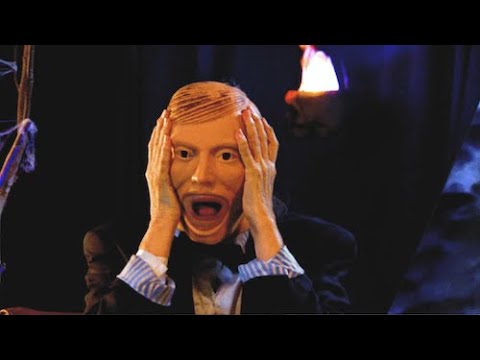
Our ladies are just trying to shop for perfume — this was shot at Beachwood Place in Beachwood, Ohio, where Condit sat outside the building manager’s office until she was allowed to shoot there; she was given twenty-minute blocks of time, which was a challenge — when Arthur begins to stalk them, a man whose face changes with a series of latex masks.
Arthur is the kind of Prince Charming who shows his love to women by hacking them to pieces; his always-changing face is a way of showing the roles that abusive men have taken in their relationships. We also discover that Sharon is attracted to violent men but also likes making them think that violence is their idea. Regardless, love should never cost an arm and a leg.
The songs, written and performed by Karen Skladany (who also plays Janice), are insidious in the way that they worm their way into your brain. This is the kind of weirdness that is completely authentic in a way that today’s manufactured social media creepypasta weirdness cannot even hope to be a faint echo of.
As frightening as this can be, it’s also a film about absorbing — eating a cannibal is one way, right? — and getting past the worst moments of life without being destroyed by them. This also lives up to so much of what I love about SOV in that while we’ve been taught that the 80s looked neon and sounded like a Carpenter movie, the truth is that the entire decade was beige and sounded like the demo on a Casio keyboard. This doesn’t nail an aesthetic as much as document the actual 1983 that I lived within, minus the shape-changing cannibal and singsong happy tale of a dog in the microwave.
Consider this absolutely essential and one of the most critical SOV movies ever.
The Chattanooga Film Festival is happening now through June 29. To get your in-person or virtual badge to see any of these movies, click here. For more information, visit chattfilmfest.org and follow us on Facebook,Twitterand Instagram.
EDITOR’S NOTE: This was originally on the site on April 26, 2023.
Neo-noir. Hitchcock influenced. Mystery thriller.
Or just call it a giallo.
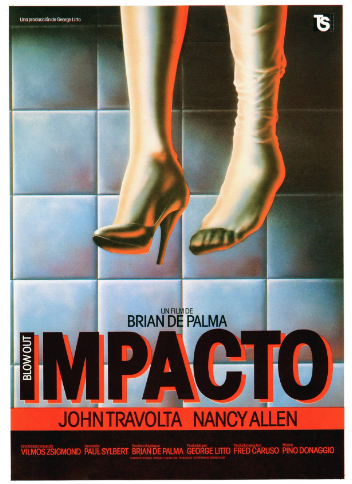
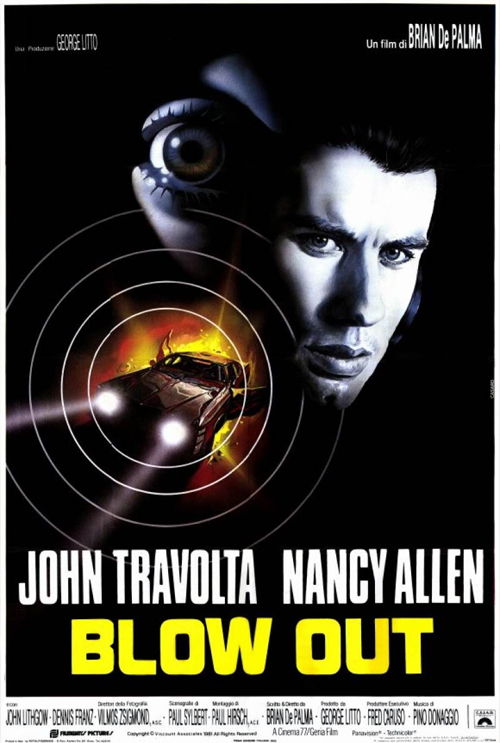
Blow Out is even based on an Italian film — Michelangelo Antonioni’s Blowup — but switches photography for audio recording and trades future giallo star David Hemmings for John Travolta, a man who follows the path of many a giallo hero. Once he believes that he has recorded the sounds of a killing, he must become a detective as his need to know is too much.
In post-production on the low-budget slasher film Co-ed Frenzy, sound technician Jack Terry (Travolta) is searching for better wind effects and the perfect scream. As he takes his equipment into a park late at night, he watches a car fly off the road and with no hesitation, dives into the water to save Sally Bedina (Nancy Allen). As he sits with her in the hospital, he asks her to get a drink and is asked by associates of the man killed in the car — Presidential candidate Governor George McRyan — to get her out of the hospital.
Sally has used her feminine wiles to ruin men before, working with Manny Karp (Dennis Franz), a man who just so happened to film the accident. Jack wants Sally to work with him to solve the murder, but he’s blinded to her because, well, she’s gorgeous and he’s the hero, a man who left behind a government commission to stop police corruption after an exposed wire caused the death of an undercover cop named Freddie Corso.
This is the kind of conspiracy where you think there is one because there is one. Sally and Karp were just pawns in the schemes of Burke (John Lithgow), who wanted to go beyond just getting photos of the politician with a sex worker and blew out his tire with a bullet. But now that he’s ruined that, he has to clear up loose ends and is killing any hooker who looks like Sally as the Liberty Bell Strangler.
He eventually lures Sally to meet him and we learn that Jack is the hero, but not a perfect one. He’s able to stop Burke but not before Sally dies. All he has left of her is her final scream, recorded as he tried to find her, and that’s what lives forever, or as long as Co-Ed Frenzy plays grindhouses. He covers his ears because he’s reduced someone he grew close to into just another piece of sound in just another movie.
I literally yelled at the screen.
Working again with Travolta and Allen, De Palma also gathered others he’d made movies with before. In this, he is different than Argento — an artist I often compare him to, as they have so many similarities such as the same age, following Hitchcock, marrying and divorcing their leading lady, having a middle-age career decline — who seemingly switched up crews between films. Here he’s working with De Palma filled the film’s cast and crew with a number of his frequent collaborators: Dennis Franz (Dressed to Kill, Body Double), John Lithgow (who was in the Tenebre ripoff shot in Raising Cain) cinematographers Vilmos Zsigmond (Obsession) and Lazlo Kovacs (who came in when the parade scene footage was lost), composer Pino Donaggio (who also scored modern giallo Nothing Underneath) and editor Paul Hirsch (who worked on another giallo-tinged De Palma film, Sisters).
Pauline Kael said that this movie was one “where genre is transcended and what we’re moved by is an artist’s vision…it’s a great movie. Travolta and Allen are radiant performers.” Roger Ebert said that it was “inhabited by a real cinematic intelligence.” It sits with Rio Bravo and Taxi Driver as Tarantino’s top three movies. And yet it failed with the public. Today, however, it’s seen in a much warmer light.
I have no idea why I waited so long to watch this movie. It’s perfect — a film about making films, a movie where movies don’t play out like movies and a thrilling exploration of how De Palma can guide you through a film and into places you had no idea you would go.
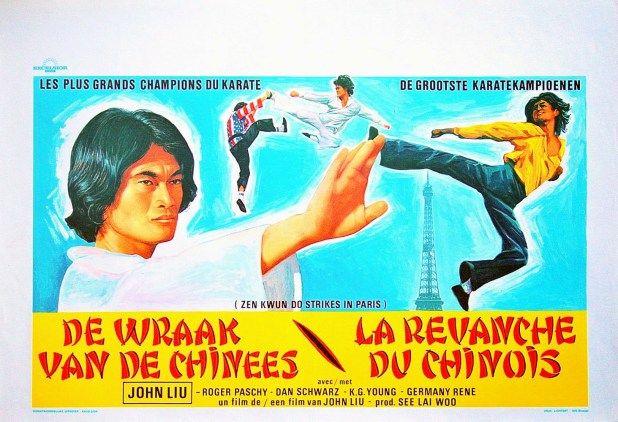
I’m kind of obsessed with John Liu. If all he did was New York Ninja or Ninja In the Claws of the CIA, I’d still be into him. But I keep finding his movies and they’re all as strange as the next. What a shame that there’s only one more that he made, Dragon Blood, for me to check out.
And yes, this also goes by a ninja title.
Avenging Ninja.
Beyond being the founder of the Zwen Kwan Do fighting system, Liu also directed and wrote this movie. And stars in it as himself.
Now you see why I’m so fascinated.
Liu was once a martial arts teacher but now he’s part of the Hong Kong film world. Well, for now. Because his father, an American aerospace scientist, has just been kidnapped and now he has to go to Paris, as the title promises us. What it delivers is a plot that literally confounds all attempts to explain it.
Let me try.
Liu had a romantic scandal that rocked the world of Zen Kwan Do. He fell for a wealthy woman named Catherine and her father came after him, which left one lover dead, another as a nun and Liu’s daughter somewhere out there, out where dreams come true like Fievel. But not in America.
Instead of finding his father, John fights goons. And fights a guy in an American flag gi. And fights more henchmen. He even fights when he goes to put flowers on Catherine’s grave. And then he meets two girls who are pretty much going down on an ice cream sundae and he follows them onto a little yacht, gets knocked out and has to fight again, this time Roger Paschy, the same guy he’s fought numerous times in this movie but never on a little boat before.
He mentions that he still has to find his daughter, but then the movie ends. What about his dad? Maybe he had another fight to get ready for.
Living up to the spirit of all martial arts movie that I love, this uses “My Way” and “Live and Let Die” with absolutely no concern for copyright. It also uses music from Lipstick— the disco music, not the baffling audio soundscapes that Chris Sarandon will sexually assault you to — and that really freaks me out in the best of all ways possible.
Honorable fighting, yes. Music rights, no.
There’s nothing like a martial arts vanity project. I have no questions in my mind that the real John Liu also impregnated every woman in this movie and they all ended up in French convents too. Then he flashed that smile, titled down his sunglasses and screamed, “The Budokan spirit will never die!”
VIDEO ARCHIVES NOTES: This movie was discussed on the May 9, 2023 episode of the Video Archives podcast and can be found on their site here.
Making a Planet of the Apes TV series was a plan by its producer Arthur P. Jacobs as early as 1971, but because the movies were still doing well at the box office, development was put on hold until Battle for the Planet of the Apes was complete in 1973.
Sadly, Jacobs died within days of that film being released and his production company sold the rights to 20th Century Fox, who sold the first three Apes movies to CBS. When they aired in September of that year, they did big ratings and that’s when the network got excited about the potential of a series. They even turned down other series in development, like Gene Roddenberry’s Genesis II, instead making that as a series of TV movies while Apes was greenlit for 14 episodes.
Made for $250,000 an episode (around $1.5 million today), the show aired from September 13 to December 27, 1974 before ratings didn’t live up to expectations. The show had a whole new cast of humans to worry about. Colonel Alan Virdon (Ron Harper) and Major Peter J. Burke (James Naughton) are astronauts who — just like Taylor — have crashed landed on the future world of the apes. They become friends with Galen (Roddy McDowall, who had already played Cornelius and Caesar), a chimpanzee who has been tasked with their care. The rest of the apes see him as their master; they certainly don’t feel that way. Their main nemesis would be the brutal Security Chief Urko (Mark Lenard, Spock’s father), who defies Dr. Zaius (Booth Colman, taking over for Maurice Evans, but even wearing the same costume) by wanting to kill the humans instead of bringing them back to be studied.
Yes, this is in the same universe as the films — well, until the planet gets blown up, so maybe a side universe — as Zaius mentions that human astronauts landed a decade before. Or maybe not, as in Planet of the Apes as American Myth: Race and Politics in the Films and Television Series, Eric Greene theorized that the show takes place in the year 3085, which is 900 years before Taylor’s crash in the original film and 400 years after the Lawgiver’s sermon in Battle. As the show has a society where apes are in control of humans, the Lawgiver’s message of equality between man and ape has failed. Maybe the end of Battle had it right all along.
The good news is that the show looks amazing. They had a great set — it was mostly shot in what is now Malibu Creek State Parks — and after five movies, creating the ape makeup had become an art form.
Where the show suffers is, well, no one cares about the humans. By the last of the movies, the story had moved from Taylor and Brent to Cornelius, Zaius and their son Caesar as the true heroes. Going back to the original idea of humans on the run felt like a step backward, even if the show is really well done. Yet that look cost a ton, so the show had to do way better than it did. It was developed for television by Anthony Wilson, a story consultant on Lancer, the creator of Future Cop and Banacek and the man who wrote Look What’s Happened to Rosemary’s Baby). Even wilder, the story consultants were Joe Ruby and Ken Spears, who went on to make so many show that I also grew up with, including creating Scooby-Doo, as well as Bigfoot and Wildboy, and producing cartoons like Chuck Norris: Karate Kommandos, Rambo, Turbo Teen, Rubik the Amazing Cube and perhaps most importantly, the post-apocalyptic Jack Kirby-driven series Thundarr the Barbarian.
A year after this show ended, NBC aired thirteen episodes of Return to the Planet of the Apes, an animated series in which three more astronauts — Bill Hudson (Tom Williams), Jeff Allen (Austin Stoker, who was MacDonald in Battle) and Judy Franklin (Claudette Nevins) — who try to navigate a world divided between the apes, regressed humans and the advanced mutants. Creative director Doug Wildey, who also was the creative force behind Johnny Quest, had only seen the first two films, so that’s what you get in this show. But hey — General Urko, Zira, Cornelius, Dr. Zaius and Nova are all in it.
After that show only lasted a season, it seemed like no one wanted to watch the apes any longer. Then, something funny happened.
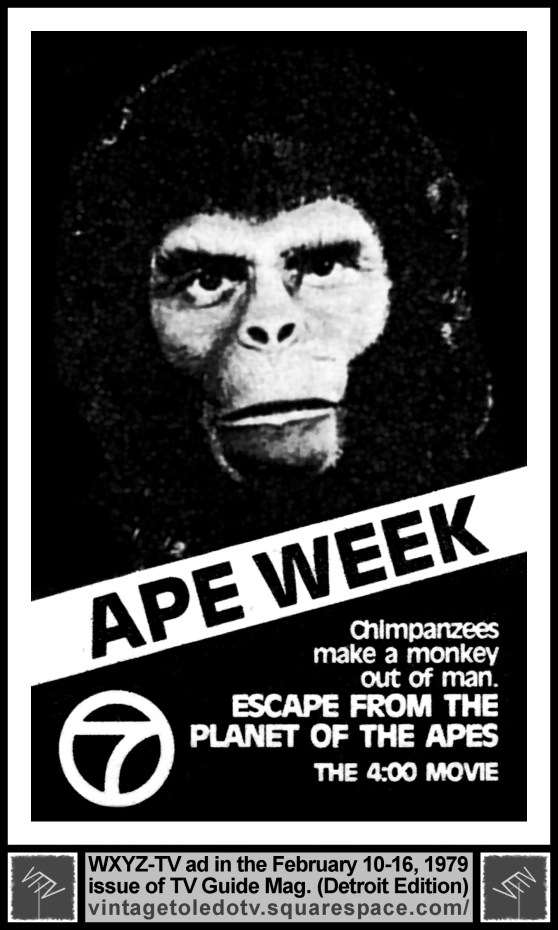
UHF stations started getting the rights to show the films and would air them in Ape Weeks that did big local ratings. But after a few years, there weren’t any more ape movies to show, right?
Wrong.
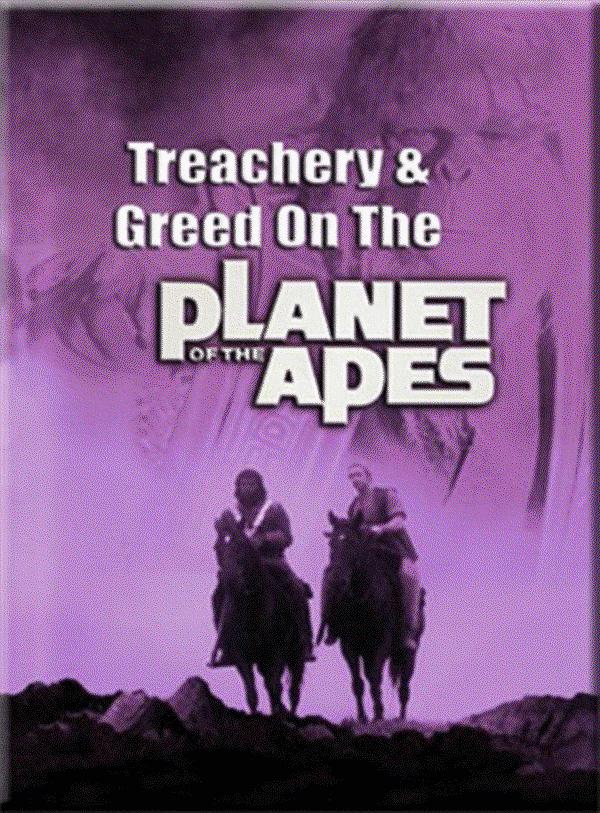
In the early 80s, Fox reedited ten of the episodes into five television films. Each film combined two episodes and they even shot new prologues and epilogues with McDowall as an aged Galen. The films were titled with some of the wildest names in the series: Back to the Planet of the Apes,Forgotten City of the Planet of the Apes, Life, Liberty and Pursuit on the Planet of the Apes, Farewell to the Planet of the Apes and — the film we’re here to really discuss — Treachery and Greed on the Planet of the Apes.
Made up of two episodes, “Horse Race” and “The Tyrant,” this film combines what are really episodes nine and eleven of the show, so they don’t go together at all. Trust me, if you were a big Apes fan like my brother and I were — actually was, his house is filled with Ape memorabilia including a neon smoking ape sign — you were beyond excited for more.
In “The Horse Race” segment, a human blacksmith named Damon (Russ Martin) and his son Gregor (Meegan King) get involved in the adventures of Virdon, Burke and Galen. When a scorpion stings Galen, Gregor saves his life by riding a horse to get the antidote. Despite saving an ape’s life, Gregor finds himself up for execution because, after all, ape law says that humans are not allowed to ride horses. To win back the blacksmith’s son’s life, Virdon agrees to put his life up against chimpanzee ruler Barlow’s (John Hoyt) best rider. And that ends up being, of course, Urko.
Directed by Jack Starrett (Run, Angel, Run!; Cleopatra Jones; Race With theDevil), this episode is filled with action. It was written by David P. Lewis (Death Ship) and Booker Bradshaw (who in addition to being a writer was also an actor; he’s in Coffy, Skullduggery and is one of the voices in the American dub of Galaxy Express 999). Lenard said that Starrett was “a funny sort of Western director; he brought humor into it, lots of fun and a kind of carnival atmosphere with horse racing.”
In a funny story — as told to future X-Men writer Chris Claremont in a UK issue of the Marvel Planet of the Apes comic book — Lenard said that Starrett had no idea who he was out of makeup. “I’d done several days of shooting and had a late call, so I went out to the Fox Ranch early and said hello to him. He got a funny look on his face, and I said, “You don’t remember me, do you?” And he said, “Well, I’ve seen you somewhere; I’ve seen your face somewhere.” And I told him I was Urko. He turned crimson, blushed, and got embarrassed.”
The action is probably why this was Harper’s favorite episode. In an interview in the book I Talked with a Zombie: Interviews With 23 Veterans of Horror and Sci-Fi by Tom Weaver, he said “I knew how to ride pretty well because, years earlier, I’d worked on a ranch out in South Dakota for one summer. The other ape was played by a stuntman — Wesley Fuller — a guy who had been a regular, and he really could ride. I said, “Jesus, where’d you learn to ride like that?” and he said, “That’s my bag, baby!” I don’t know if he was a jockey or not, but he was an excellent horsemen. There’s one scene where you can see that I’m riding full-out and he’s riding next to me, and he starts hitting me with his whip, and then I grab the whip — it’s an old, standard thing in Westerns, where you take the whip out of the other rider’s hand and smack him back with it. He worked with me on that, and we were even able to keep the horses going at a pretty good clip as we carried this off. And the stuntmen hated horses. They said, “They’re dumb animals, and they’re heavy, and you can’t predict them and you can’t really control them!” So they hated horses! I had three stuntmen working on that episode, doubling me. Two of them broke a leg, and one wrenched his ankle or his knee so badly he was incapacitated for the rest of the shoot. All three injuries involved the horses.”
This episode was also turned into a book, Journey Into Terror.
The second part of the film is “The Tyrant” episode, which was directed by Ralph Senensky (a TV career that goes from The Twilight Zone and The Fugitive all the way up to Star Trek, Night Gallery, The Wild Wild West, the TV movie Death Cruise, Hart to Hart, the Casablanca TV series and so much more) and written by Walter Black (tons of TV, including The Flintstones, Bonanza, The High Chaparral and S.W.A.T.).
Our heroes must stop the plans of a corrupt gorilla official named Aboro (Percy Rodrigues), who is using the huge taxes he throws at humans to fund the bribery he’s using to stay in power. Galen disguises himself as Octavio, Zaius’ assistant, and turns Aboro against Urko. In fact, he goes so far that he tries to have the ape general murdered. Burke is conflicted but ends up — for not the first time in the series — working with his enemy.
Senensky has an amazing site where he breaks down everything he directed, including this episode. He got the basics of the show and what made it work right away: ” recognized back then that the series was a reenactment of early America’s history with slavery, with the humans being the enslaved. What I didn’t recognize, but do now, is how much the format of Planet of the Apes bore a very strong resemblance to that of The Fugitive. The two astronauts and Galen, like Kimble, under constant pursuit by the law, would become emotionally involved each week with some person or persons, and the following story would proceed from there.”
He also had the same experience that Starrett had with Lenard: “I never saw the real Roddy McDowall; I never met Roddy out of make-up.”
Senesky has a really well-considered appraisal of the show, saying that fourteen episodes weren’t enough for it to find its footing or its audience. His work on Star Trek showed him that science fiction series needed time to find their way.
He also spoke of the TV movies: “Since fourteen segments was not enough to send the show into syndication, ten of the shows were selected and paired off in twos to create five television movies. “The Tyrant” was combined with “The Horse Race”, retitled Treachery and Greed On the Planet of the Apes and today still plays occasionally on the Fox Movie Channel. Thirty-eight years later I still receive residuals for the endeavor. They’re not large, but they are cashable. The most amusing check I received was for an amount less than the forty-four cents the Director’s Guild had to pay to send it to me. The net amount on the check? Thirty-seven cents.”
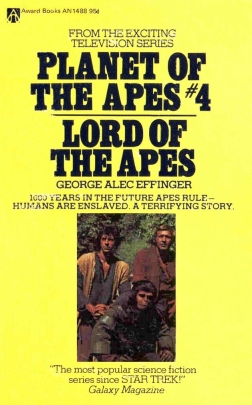
This episode is one of the stories in the fourth Apes TV tie-in book, Lord of the Apes.
If you want to hear what it was like to be part of the Planet of the Apes TV series, director of photography Gerald Perry Finnerman (Brother John, Sssssss, Nightmares, Moonlighting, Devil Dog and the sole survivor of a plane crash while scouting locations, which led to him wearing a metal full body brace for six years while still working) sums it up by saying, “It was a tough show. When it was canceled, I wasn’t sorry.”
Virginia “Ginny” Wainwright (Melissa Sue Anderson, TV’s Little House on the Prarie) is popular, rich and pretty. She’s a member of the biggest clique at the fancy pants Crawford Academy — the Top Ten. These snobbish, rich and rude assholes rule the school and — if you’re anything like me — you’ll celebrate their brutal deaths. Just look at how they act at their local pub, the Silent Woman. Total dicks.
One night, Top Ten member Bernadette (Canadian scream queen Lesleh Donaldson, who has been in several films we’ve featured recently) is attacked in her car by someone without a face. She plays dead, then finds someone she knows. As she explains what has just happened, the real killer slices her throat.
The rest of the gang? They could give a shit. They’re all at the bar, putting mice into old men’s beer. It’s enough to make you want to be the killer and wipe them out. But it gets worse. They play chicken on a drawbridge and are all nearly killed. Ginny even yells “mother!” as the car goes over the opening bridge. Everyone survives, but Ginny runs away, all the way to the cemetery where she tells her mother that she’s been accepted by all of the rich kids.
When she gets home, her father yells about how she’s out past curfew. And while that’s happening, Etienne, one of the Top Ten, sneaks out a pair of her underwear.
The next day, Ginny and Ann arrive late to class, leading principal Mrs. Patterson to put the entire Top Ten on notice, threatening a ban on their favorite bar. Soon, a frog dissection leads to Ginny having flashbacks that she shares with Dr. David Faraday (Glenn Ford, slumming it after a career in films like Superman, Gilda and Pocketful of Miracles), her psychiatrist.
This is where Happy Birthday to Me pulls the rug out from under us — thirty minutes or more into the film. After the accident at the drawbridge, she underwent an experimental medical procedure to restore her brain tissue.
Meanwhile, the Top Ten are thankfully getting bumped off, one by one. Etienne dies like Isadora Duncan, his scarf caught in the wheels of his motorcycle. Greg gets killed lifting weights. Here’s where the film has a bit of a giallo feel — all of the murders are done by black-gloved hands, until Alfred (Jack Blum, Meatballs) follows Ginny to her mother’s grave, only for our heroine to stab him with garden shears. What?!?
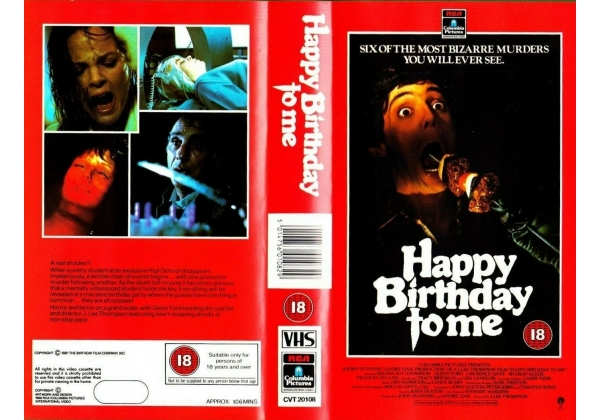
During Ginny’s 18th birthday weekend, her father leaves town, so she goes to a school dance. There, she invites Steve (Matt Craven, Meatballs) home to smoke weed, drink wine and eat kabobs, as you do. However, while feeding Steve, she stabs him in the mouth, a murder so memorable it ended up on the poster and box cover.
The next morning, Ann comes over while Ginny takes a shower and has a major flashback. Four years ago, she was having a birthday party but none of the Top Ten would come. Her mother flipped out, got drunk and tried to take her to Ann’s competing party, where a groundskeeper told her that she would never be anything more than the town whore. Her mother gets drunker and drives off the bridge from earlier in the film, where she drowns and Ginny barely survives.
Ginny begins to think that she has killed all of her friends, including Ann who she finds in the tub. Dr. Faraday has no answers, so she kills him with a fireplace poker.
Whew! What happens next? Well, Ginny’s dad gets home and sees blood all over the place, as well as Amelia (Lisa Langlois, Phobia, The Nest) outside in shock. Running to the cemetery, he sees his wife’s grave has been opened and Dr. Faraday’s body is in it. Then, entering the guest quarters, every one of the Top Ten members’ bodies are arranged around a table, celebrating a birthday.
Ginny arrives with a cake, singing to herself, when she slices her father’s throat. He never sees that his daughter is really there, the only living guest at the party. The second Ginny, the killer, screams about having done all of this for Ginny, but it turns out that she is Ann! The girls are half-sisters, sharing a father! What?!?
Ginny escapes and stabs Ann, just as the police arrive to ask, “What have you done?” The film fades to black — never letting us know if Ginny will be jailed or proven innocent. Then the film closes with a goofy — yet awesome — closing song by Stevie Wonder’s ex-wife Syreeta.
Columbia Pictures went full William Castle promoting this movie, suggesting theaters re-create the film’s closing scene in their lobby, inviting people to celebrate their birthday party while watching the movie, preventing anyone from entering the film during its last ten minutes and also conducting a scream contest for radio stations.
Happy Birthday to Me arrived in theaters at the height of the slasher boom, but it defies expectations. At times, it’s a giallo. At other times, it’s supernatural. And others, it’s a teen comedy. It’s also crazy that such a directorial talent made it — albeit one who was rumored to spray blood all over the set to make the film even gorier — and that Glenn Ford is in a slasher!
VIDEO ARCHIVES NOTES: This movie was discussed on the August 30, 2022 episode of the Video Archives podcast and can be found on their site here.
My wife wants to go away on a fancy vacation. While horror films have forever enriched my life, they’ve also damaged her chances of going anywhere. The tropics? Have you seen Zombi? A resort like Sandals? I assume that Laura Gemser will show up and I’ll be boiled in a pot. And now, thanks to this movie, we can also cross Mexico off the list.
As much as horror may have curtailed my partner’s opportunity to globetrot, it’s also imparted several important lessons to me. To wit: if your mine is over a Satanic temple where left hands were severed to honor demons and every single worker refuses to go any deeper, perhaps it’s time to find a new mine. And if by chance you discover a miniature coffin with a hand inside it, just leave it where you found it. Don’t take it back to your hotel room. This is why I’ve made it forty-six years on this Earth without being possessed or dealing with a face-melting cult in the desert.
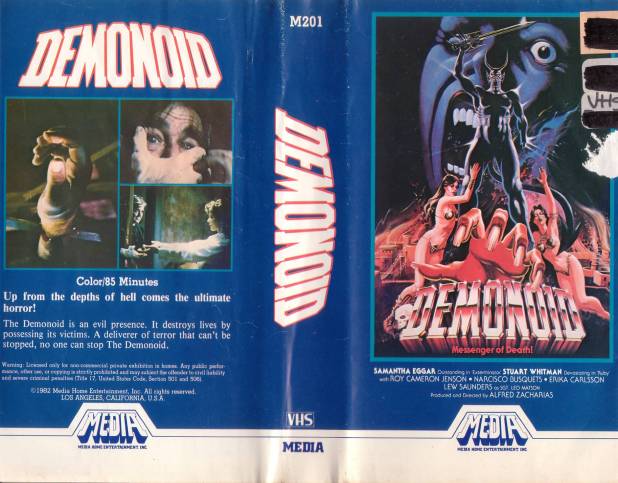
My true joy in the movie Demonoid comes from reading the review that it received when it was released in 1981 and laughing in their prose faces. How can anyone dislike a movie where a possessed man decides that old school Las Vegas is the best place to hide out? Who can dismiss a film where Samantha Eggar obviously dressed herself in some of the most astounding fashions that the early 80s could unleash? The woman wears an ascot and oversized orange counter to explore a mine (let’s be fair, every outfit she wears in this movie are a paradox, somehow both gorgeous and ridiculous at the same time). And damn anyone who speaks ill of Stuart Whitman! This former boxer and soldier had already played Jim Jones — I’m sorry, James Johnson — in Guyana: Crime of the Century, released less than a year after that tragedy? Here, he plays a battling Catholic priest who we just know could win over Ms. Eggar if he didn’t have that pesky collar and angel on his shoulder to worry about.
Maybe they weren’t watching the Mexican cut (Macabra!), which has more dialogue, more death and a different ending? Look, you can’t please all of the people all of the time. And most of those critics, they never got pleased all that much anyways. Demonoid is worth the whole lot of them. Would they dare to feature an ending so downbeat after 98 minutes of rooting for our British heroine? I dare say no. They’d be afraid to insert so many flashing shots of a demon raising his fist, they’d be too concerned about a soundtrack that practically screams in your face and they’d sooner hide behind their film theory books than make a movie in 1981 that feels like it came from 1974.
Demonoid is why I watch movies. Samantha Eggar screaming at the top of her lungs while a mine explodes all around her? There. An appearance by Haji, she of Faster, Pussycat! Kill! Kill!, Bigfoot, Supervixens and the wonderfully titled Wam Bam Thank You Spaceman(whose real name Barbarella Catton wasn’t sexy enough for a stage name)? You got me. Overacting in nearly every scene? I’m riveted. A poster that promised nubile ladies reclining for a fallen angel carrying a gigantic sword? I might have piddled a little.
Keep your Oscar picks and guilty pleasures. I have no such taste or qualms. Give me Demonoid or give me a severed left hand!
This article originally appeared in Drive-In Asylum #13, which you can get right here!
VIDEO ARCHIVES NOTES: This movie was discussed on the September 13, 2022 episode of the Video Archives podcast and can be found on their site here.
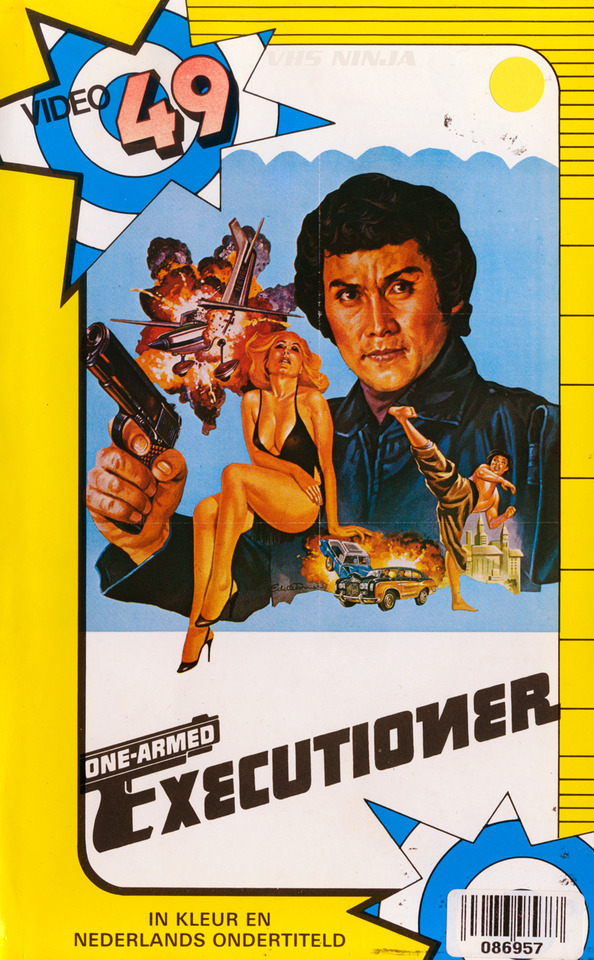
Interpol agent Ramon Ortega (Franco Guerrero) and his new blonde American children’s book author wife Ann (Jody Kay, Death Screams) are back in the Philippines after a honeymoon in San Francisco. Within minutes, the drug dealer that our hero is after — Edwards (Christopher Mitchum) — has sent his men to kill Ann and chopped off his arm. And in case you’re wondering if the drug dealer is evil, he has an evil Axis symbol on the side of his boat.
He spirals into depression and drinking, just trying to live out the rest of his life in pain when a new master named Wo Chen appears and teaches him how to fight with one hand and how to do gun fu, if you will, in which they have a gigantic training device with numbers. The master calls out the targets and Ortega gets better with each shot.
You feel for Ortega, as he found the right kind of woman, the one who sleeps with baby dolls and has sex in the shower with her shower cap on, the height of eroticism. But seriously, he really does hit rock bottom but this film pulls him up and gives him the chance to get revenge. This movie is an absolute blast from the beginning until the end, delivering the kind of weirdness and magical action that could only come from the Philippines and a master director like Bobby A. Suarez, who also directed American Commandos, The Bionic Boy, Cleopatra Wong and Warriors of the Apocalypse.
April 26: American Giallo — Make the case for a movie that you believe is an American giallo.
Neo-noir. Hitchcock influenced. Mystery thriller.
Or just call it a giallo.
Blow Out is even based on an Italian film — Michelangelo Antonioni’s Blowup — but switches photography for audio recording and trades future giallo star David Hemmings for John Travolta, a man who follows the path of many a giallo hero. Once he believes that he has recorded the sounds of a killing, he must become a detective as his need to know is too much.
In post-production on the low-budget slasher film Co-ed Frenzy, sound technician Jack Terry (Travolta) is searching for better wind effects and the perfect scream. As he takes his equipment into a park late at night, he watches a car fly off the road and with no hesitation, dives into the water to save Sally Bedina (Nancy Allen). As he sits with her in the hospital, he asks her to get a drink and is asked by associates of the man killed in the car — Presidential candidate Governor George McRyan — to get her out of the hospital.
Sally has used her feminine wiles to ruin men before, working with Manny Karp (Dennis Franz), a man who just so happened to film the accident. Jack wants Sally to work with him to solve the murder, but he’s blinded to her because, well, she’s gorgeous and he’s the hero, a man who left behind a government commission to stop police corruption after an exposed wire caused the death of an undercover cop named Freddie Corso.
This is the kind of conspiracy where you think there is one because there is one. Sally and Karp were just pawns in the schemes of Burke (John Lithgow), who wanted to go beyond just getting photos of the politician with a sex worker and blew out his tire with a bullet. But now that he’s ruined that, he has to clear up loose ends and is killing any hooker who looks like Sally as the Liberty Bell Strangler.
He eventually lures Sally to meet him and we learn that Jack is the hero, but not a perfect one. He’s able to stop Burke but not before Sally dies. All he has left of her is her final scream, recorded as he tried to find her, and that’s what lives forever, or as long as Co-Ed Frenzy plays grindhouses. He covers his ears because he’s reduced someone he grew close to into just another piece of sound in just another movie.
I literally yelled at the screen.
Working again with Travolta and Allen, De Palma also gathered others he’d made movies with before. In this, he is different than Argento — an artist I often compare him to, as they have so many similarities such as the same age, following Hitchcock, marrying and divorcing their leading lady, having a middle-age career decline — who seemingly switched up crews between films. Here he’s working with De Palma filled the film’s cast and crew with a number of his frequent collaborators: Dennis Franz (Dressed to Kill, Body Double), John Lithgow (who was in the Tenebre ripoff shot in Raising Cain) cinematographers Vilmos Zsigmond (Obsession) and Lazlo Kovacs (who came in when the parade scene footage was lost), composer Pino Donaggio (who also scored modern giallo Nothing Underneath) and editor Paul Hirsch (who worked on another giallo-tinged De Palma film, Sisters).
Pauline Kael said that this movie was one “where genre is transcended and what we’re moved by is an artist’s vision…it’s a great movie. Travolta and Allen are radiant performers.” Roger Ebert said that it was “inhabited by a real cinematic intelligence.” It sits with Rio Bravo and Taxi Driver as Tarantino’s top three movies. And yet it failed with the public. Today, however, it’s seen in a much warmer light.
I have no idea why I waited so long to watch this movie. It’s perfect — a film about making films, a movie where movies don’t play out like movies and a thrilling exploration of how De Palma can guide you through a film and into places you had no idea you would go.
April 25: Bava Forever — Bava died on this day 43 years ago. Let’s watch his movies.
In 1981, RAI-TV in Italy showed six hour-long films based on stories by 19th century horror/fantasy authors that were directed by several Italian genre talents, including Marcello Aliprand (the writer of L’arma, l’ora, il movent), Giulio Questi (Django Kill…If You Live, Shoot!, Death Laid an Egg, Arcana), Giovanna Gagliardo, Piero Nelli, Tomaso Sherman and, most essentially to this article, Mario Bava.
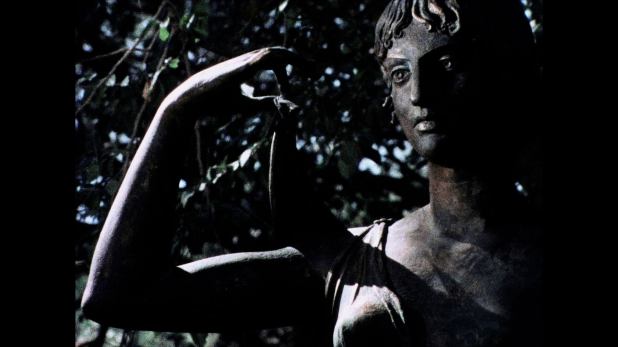
“La Venere Dille” (“The Venus of Ille”) would be the final filmed work that Bava would create and it was written and co-directed by his son Lamberto. Adapted from Prosper Merimee’s story, it starts when a bronze statue of Venus is uncovered. Originally a source of celebration and wonder to the rich and powerful, the workers of the small village see the female carved form as a cursed objet d’art that can move on its own and take on the form of others. Certainly, that’s what happens when Clara’s (Dario Nicolodi, who was also in Bava’s Shock amongst her many, many contributions to cinema) fiancee Alfonso (Fausto Di Bella) places her ring upon its finger while drunk one rainy night.
Meanwhile, an antiques expert and artist named Matthew (Marc Porel, The Sister of Ursula) has been summoned by Alfonso’s father Mr. de Peyrehorade (Fausto Di Bella) to assess the value of the statue. He’s been sketching it for some days before he realizes that he’s been drawing Clara. Or is the statue becoming her?
Shot in 1979 and not aired until after Bava’s death in 1981 (and after Lamberto started making his own movies, including Macabre), this was shot on film and therefore seems of much higher quality than just a TV series. It serves as both a fitting close to Mario’s career and a wonderful gift to his son, as well as an opportunity for the two to work together on a piece of art.
The whole affair looks gorgeous with one moment of rain across the face of the statue and another where Matthew is drawing near it but obviously already obsessed with Clara, the soon-to-be wife of a friend who doesn’t seem to be all that great of a person. The story doesn’t suffer at all from being a TV episode, as at a bit over seventy minutes it has time to stretch out and engage you.







 B&S About Movies
You must be logged in to post a comment.