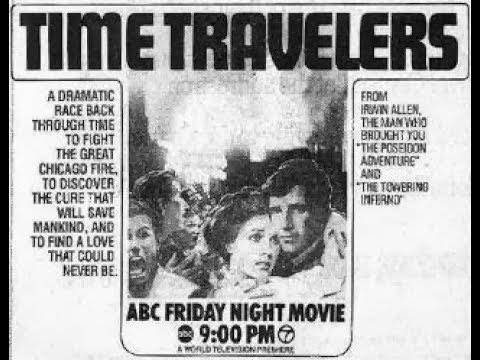
Junesploitation 2021: La Pretora (1976)

June 17: Junesploitation’s topic of the day — as suggested by F This Movie — is Lucio Fulci.

Lucio Fulci was born in Trastavere, Rome 94 years ago today. The son of a single mother from a Sicilian anti-fascist family, he was raised by her and a female housekeeper who encouraged him to be a lawyer, but he ended up going to medical school. After dropping out, he worked as an art critic before apprenticing at the Centro Sperimentale.

While he’s become known as the Godfather of Gore, Fulci didn’t start making his most famous horror work until 1979, a full 21 years after he wrote his first script, Toto in the Moon. He worked with the famous Italian director Steno on several of Toto’s films before directing the films of Franco Franchi and Ciccio Ingrassia (How We Robbed the Bank of ItalyThe Swindlers).

His career covers nearly every genre. Westerns (Massacre TimeSilver SaddleThe Four of the Apocalypse), giallo, both before and after Argento (Perversion StoryDon’t Torture a DucklingThe PsychicA Lizard In a Woman’s Skin), poliziotteschi (Contraband), post-apocalyptic science fiction (Warriors of the Year 2072), peplum by of Conan (Conquest) and even family fare (White FangWhite Fang to the Rescue).

So while Fulci may be known for his eye-popping horrors — and rightfully so — I wanted to celebrate his birthday by checking out another genre he covered, the commedia sexy all’italiana.

If you’re making one of those movies, you need an attractive female lead. And this movie boats perhaps the finest example of an actress in the genre, the French-born Edwige Fenech, who like Fulci also had a Sicilian mother. While she’s known for her work in giallo such as The Strange Vice of Mrs. Wardh, Your Vice Is a Locked Room and Only I Have the Key, All the Colors of the Dark, The Case of the Bloody Iris and Strip Nude for Your Killer, Fenech also found her greatest  box office success in this very Italian sex comedy genre, making appearances in movies like Ubalda, All Naked and WarmGiovannona Long-ThighPoker In BedConfessions of a Lady CopThe Schoolteacher and many more.

La Pretora, which translates as My Sister In Law, stars Fenech in two roles. She’s Judge Viola Orlando, a tough arbiter of the law who is feared in the Veneto regions (which includes Venice, in case you wonder where this takes place). She’s made plenty of enemies, who soon learn that her sister Rosa is a woman of loose morals who appears in adult magazines. They hope to confuse her images and reputation with that of our protagonist.

Beyond dealing with an outraged populace who can’t believe that a judge could appear nude in a magazine, Viola is also dealing with her love life — or lack thereof — with her fiancee, who wishes that she was as open as her bad seed sister.

Working from a script by husband and wife Franco Marotta and Laura Toscano(, who also wrote the original Inglorious Bastards, this movie finds Fulci not working with an unfamiliar crew, such as cinematographer Luciano Trasatti, who was the director of photography on And God Said to Cain.

However, Fulci had plenty of experience with editor Ornella Micheli (Dracula in the Provinces, Operation St. Peter’sDon’t Torture a Duckling) and would work with assistant director Roberto Giandalia on The PsychicZombiContrabandCity of the Living DeadThe Black CatThe BeyondHouse by the CemeteryThe New York RipperManhattan Baby and Murder Rock.

I understand that these movies were made so that guys could ogle Edwige Fenech — seriously, there’s a moment in this movie where men literally become Tex Avery wolves with their eyes bugging out so much that Fulci had to just be dying inside with the need to smash or pierce them — many don’t take the time to notice just how good she is in these films, able to master comedy that transcends the time and language barrier.

As for Fulci’s work here, the movie looks great, but if only knew him from his 1979 and beyond — pun unintended — films, you may never guess that this was him. He also made another sex comedy, The Eroticist, that I want to check out. And it’s pretty amazing when you think about the fact that more than a quarter of his films were comedies.

Colt 38 Special Squad (1976)

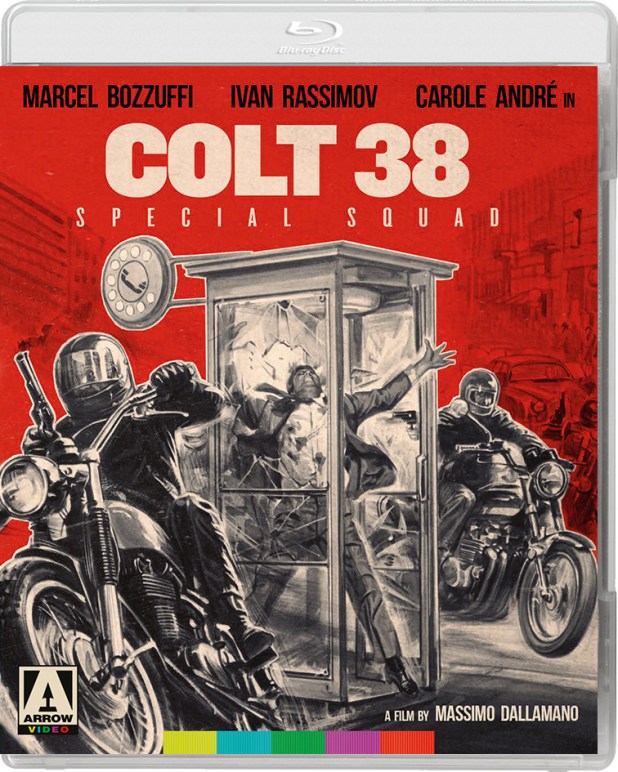
Il Marsigliese “The Black Angel” has been killing people left and right in Turin. One cop, Inspector Vanni (Marcel Bozzuffi, The French ConnectionContraband) has had enough. Instead of going by the book, the death of his wife leads Vanni to give out unlicensed .38 Colt Diamondback revolvers to a select group of officers that he trusts, making them the Colt 38 Special Squad.

What makes it even better is that “The Black Angel” is one of the best Italian movie villains of all time, the dashing and yet oh so reprehensible Ivan Rassimov. Vanni killed his brother, so he hunted down Vanni’s wife and killed her in front of their son. Making this villain even more insidious is the fact that his gang goes beyond simple murder to becoming near supervillains, planting bombs all over the city.

This is a movie filled with stunts that look beyond dangerous, probably because they were filmed with no permits and one shot at glory. Vanni and “The Black Angel” are two sides of the same rage-filled soul and only one of them will escape this film alive. Vanni’s gun jammed the last time they met and he blames himself for everything that follows; that .38 Colt Diamondback is the only thing left he can rely on.

Perhaps most importantly, your eyes are not deceiving you. That’s Grace Jones singing in the nightclub scenes. Her being in this movie is alone worth the price of owning it.

Sadly, this would be the last film of Massimo Dallamano, who was the cinematographer on Leone’s A Fistful of Dollars and For a Few Dollars More before making one of the best giallo ever, What Have You Done to Solange? (and the cinematographer on that was Aristide Massaccesi, of course), as well as A Black Veil for LisaWhat Have They Done to Your Daughters? and The Night Child. He died in a car accident soon after this movie finished production.

Savage Three is one of five movies on Arrow Video’s Years of Lead: Five Classic Italian Crime Thrillers 1973-1977. These films are great examples of the Italian poliziotteschi genre and the set includes high def versions of this movie, Savage Three, Highway RacerLike Rabid Dogs and No, the Case Is Happily Resolved. This version of this film is a brand new 2K restoration exclusive to this release and it comes with an interview and introduction by composer Stelvio Cipriani and an interview with editor Antonio Siciliano. You can get it from MVD.

Like Rabid Dogs (1976)

In two days in September 1975, three men — architecture student Gianni Guido, medical student Angelo Izzo and Andrea Ghira, the son of the building contractor and former Olympic water polo champion Aldo Ghira — invited Donatella Colasanti and Rosaria Lopez to a party at Ghirain’s family home. The trio had been in trouble before, as Ghira and Izzo had served twenty months for an armed robbery charge and Izzo and two other friends had assaulted two women, a crime he never served time for. He also proclaimed that he admired the Clan of Marseillais, which used drug trafficking and kidnappings, making crime into an actual industry.

The three men and two women spent some time together and there was no incident or warning of what would happen next until Guido and Izzo made sexual advances. When turned down, they pulled guns and claimed they were kidnapping the women for the boss of the Clan, Jacques Berenguer.

For the next day and a night, the two girls were taken on a tour of hell that only ended when Lopez was drowned in a bathtub and Colasanti was strangled with a belt and hit with an iron bar. Pretending to be dead, she laid in the trunk of Guido’s father’s FIAT 127 while the trio drove to Rome to dispose of the bodies, laughing and listening to music.

Instead, the three men decided to have dinner, during which they got in a brawl with some young communists. That meant that they left the car unattended, during which Colasanti began screaming and striking the walls of the trunk. A security guard actually thought it was the sound of a cat trapped inside the car.

The media was there as she was removed from the car. Colasanti never truly recovered from the mental trauma of the evening. Izzo and Guido were arrested several hours later while Ghira was tipped off and ran, even sending a letter to his friends where he told them they’d soon be released, as well as threatening to kill Colasanti if she testified.

Izzo and Guido had hung a large stadium-sized banner that said “Corso Trieste 1972 – La Vecchia Guardia” in their cell. They also tried to escape in 1977, but by 1980, Guido had his sentence reduced by declaring that he was sorry, which was accepted by Lopez’s family. That really wasn’t true, as he escaped in 1981 and fled to Buenos Aires before he was caught. He escaped again in 1985 and spent nearly a decade before he was caught in Panama, where he was working as a car dealer.  He was finally released from prison in 2008. When Izzo was released from jail in 2004, he was already back to assault and murder within a year. He remains imprisoned.

As for Ghira, he fled to Spain and adopted the name of Massimo Testa de Andres and enlisted in the Spanish foreign legion. He was expelled for drug abuse in 1994 and supposedly died of a drug overdose that year, a fact that was only learned in 2005 when a body was exhumed and identified with DNA. However, many did not believe that report, as Ghira had been seen in Rome, Brazil, Kenya and South Africa in the years since he was supposedly dead.

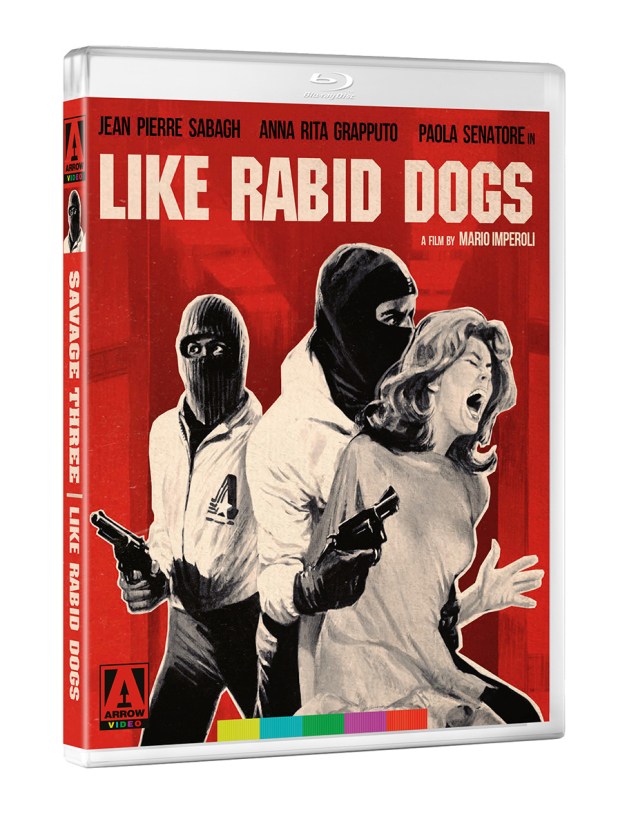
Written and directed by Mario Imperoli, Come Cani Arrabbiati tells the story of rich kid Tony Ardenghi. His double life consists of being a student by day and by night, acting as the killer of prostitutes. Along with his friends Rico and Sylvia, they go from simple violence at soccer matches — a theme of these youth gone wild films — to drowning women in bathtubs in an echo of the real-life murder discussed above.

Inspector Paolo Muzi then gets an idea, assigning his lover Germana (Paola Senatore, Eaten Alive!Emanuelle in America) undercover, but he soon learns that the rich kids station in life prevents him from getting the justice that only a group of socialist protestors can.

Sadly, Imperoli — who was mainly known for sex comedies like Blue Jeans and Monika — died a year after this movie at the way too young age of 46. I would have loved to have seen where else his career would have gone.

This is a brutal and dark movie made about brutal and dark times. And it’s one I recommend that you see.

Savage Three is one of five movies on Arrow Video’s Years of Lead: Five Classic Italian Crime Thrillers 1973-1977. These films are great examples of the Italian poliziotteschi genre and the set includes high def versions of this movie, Savage Three, Highway Racer, Colt 38 Special Squad and No, the Case Is Happily Resolved. This disc has interviews with cinematographer Romano Albani, historian Fabio Melelli on Like Rabid Dogs and assistant director Claudio Bernabei. You can get it from MVD.

Junesploitation 2021: The Astrologer (1976)

June 6: Junesploitation’s topic of the day — as suggested by F This Movie— is free!

I’m always chasing the dragon, so to speak, when it comes to weird movies and no high has eluded me more often than 1975’s borderline insane vanity project The Astrologer.

Trying to find it led me to discover the other 1975 movie with the same title, which is also known as Suicide Cult. That film, in which a government agent tries to use biorhythms to find the Antichrist, may be the strangest movie I’ve ever seen.

And then I watched this.

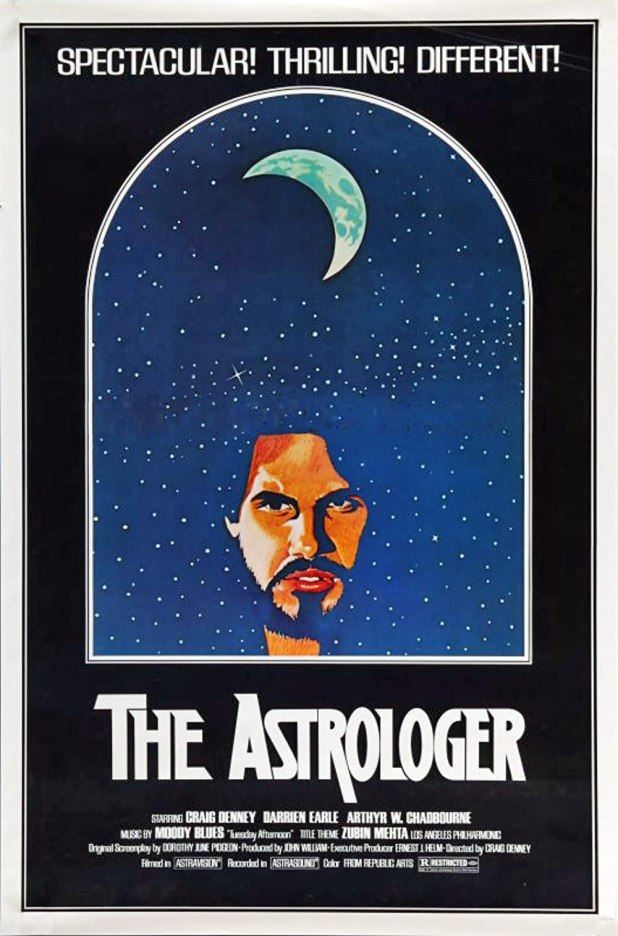
The Astrologer is the very definition of a lost film, one that went away forty years ago and only was discovered again when a 35mm print was amongst a thousand pornographic movies that were donated to the American Genre Film Archive (AGFA). I can’t even imagine what it was like to be in the first few screenings of this movie, which starts somewhat normally and then suddenly lurches into heights of psychotronic madness the likes of which I have never seen before.

Trust me. I’ve been caught in hype for movies before, but this time, the time and energy and sheer waiting that this movie engendered all paid off. If anything, The Astrologer is even better than I thought it would be. Imagine if Miami Connection was not about how martial arts can save the world, make better friendships and repair families, but instead that auteur madness drove one man to make a movie about a carnival con man who learns that he really does have psychic powers when he isn’t becoming the President’s fortuneteller, a diamond smuggler, a movie star, a producer and a murderer.

According to Matchbook Cine Club, the man behind all of this, Craig Denney grew up rich in Canada — maybe — and was such a devotee to numerology that he refused to ever reveal his birthdate*. He was kicked out of every school he attended and fired from every radio station he worked at as a top 40 DJ, then went into the “astrological charts business” with his company Moonhouse. Working for individuals and corporations, Denney would use computers to create detailed astrological charts that portended to their future. By 1975, he’d made $31 million and became one of the youngest studio heads in Hollywood history.

The Astrologer seems to have gotten its start as an eight-episode TV miniseries — in a time before that became a normal thing — while Denney would also appear in a reality show called Craig Denney’s World of Astrology. Shooting started on the former in places as diverse as Tahiti, Africa and France.

Somehow, this film also sought to transform Republic Arts Pictures, which used a bald eagle as its mascot, into a phoenix. From 1935 through 1959, the studio released mostly westerns, serials and b-movies like The Quiet Man and Johnny Guitar. After they ceased making movies, Republic was bought by Victor M. Carter, a turnaround specialist, who transformed Republic into a business that encompassed plastics and appliances in addition to its film library and studio rental business. Within eight years, he’d increased the value of the company by 400%, then sold his interest to CBS**.

Meanwhile, Republic sold its library of films to National Telefilm Associates (NTA), which did so well with these films at the dawn of cable that it changed its name to Republic Pictures Corporation. From the 90s to the next century, Republic was part of the ever-growing world of multimedia mergers, becoming part of Spelling Entertainment, which was controlled by Blockbuster, which then became part of Viacom and then Paramount. Meanwhile, Lionsgate continued to license the Republic name. Today, the company is part of Melange Pictures, LLC, established by Viacom as a holding company for the Republic library, which the films sold to various media by Olive Films and Kino Lorber; the name remains licensed from Viacom/CBS.

But I digress.

In June of 1976, The Astrologer was reported as being the first of ten films from the newly revitalized Republic Arts Pictures. Funds were to come from Moonhouse and three French banks, as well as oil tycoon Ernest J. Helm Jr., who was the main money man for the movie that we should really be discussing instead of the intricacies of multi-media mergers.

Supposedly, the making of this movie was even more intricate, based on the aforementioned numerology, with even the numbers on cabs, how many people appear in scenes and even the length of cuts all based on important numerological concepts. Also, there was no script, other than the story that was credited to Dorothy June Pidgeon, but instead, horoscopes that were scried each day would determine what was filmed.

So what’s it all about?

Well, Denney plays Craig Marcus Alexander, who we first meet as a helicopter flies above a carnival, where we learn that he’s gone from picking purses to fleecing people via fake psychic shows to getting married to Darrien (Darrien Earle, who was Denney’s cousin and a restaurant owner who was married at one point to Lee Iaccoca****) to being told about stealing diamonds to being in jail for the second time for jewel theft. If it seems like we’ve missed big moments in time and that things have escalated quickly, just hold on. This rollercoaster is only going to get faster. And stranger***.

While in Kenya, Alexander takes the gems that will bankroll his empire, defeating corrupt cops, quicksand and cobras to sail to America — always sailing, a movie more obsessed with sailing than Christoper Cross in 1980 — to start his new career becoming the world’s most famous astrologer. He does this by allowing a woman to drown in said quicksand and selling another for a boat, which we watch sail endlessly as ripped calendar pages fly at us while listening to the Moody Blues “Tuesday Afternoon.” Keep in mind the music in this movie, as we’ll get to it in a bit.

At this point, you may think that you have watched five movies worth of material. Well, hold on.

When he isn’t conducting secret missions for the Navy, Alexander has become a multi-media mogul, making the movie of his life within, well, the movie of the life of the real Denney. To make sure that his money is safe, our psychic protagonist hires his friend Arthyr***** to be in charge of his cash, which is weird because the man has a tenth-grade education, but Alexander remarks that there’s no difference between ten bucks and ten million dollars, which is the most false statement that nearly anyone has ever uttered ever.

Meanwhile, being a star leads our hero to rescue Darrien, who is now a prostitute, her room filled with rats, graffiti and, oddly, Milk of Magnesia. He decides to make her the star of all his movies, learning nothing from William Randolph Hearst nor his fictional analogs.

At some point, Florence Marly — the Queen of Blood herself — shows up.

Of course, all good things must end. Alexander gets overextended and the love of his life ends up hating him, summed up in an astounding montage of dinners that goes from romantic to face splashing horror. You really need to witness it for yourself. It’s set to Procol Harum’s “Grand Hotel” and literally is a music video — made in 1975 — that follows the exact words of the lyrics.

The moment that blows my mind the most in this movie is when our hero is meeting with his financial analyst in the middle of his gigantic new home and shows off his galactic mirror. Yes, he has a window into the galaxy itself that shows the stars as if you are standing next to him and this revelation is brushed off within seconds, while extended sleeping in a bed and eating sequences seem to last for hours.

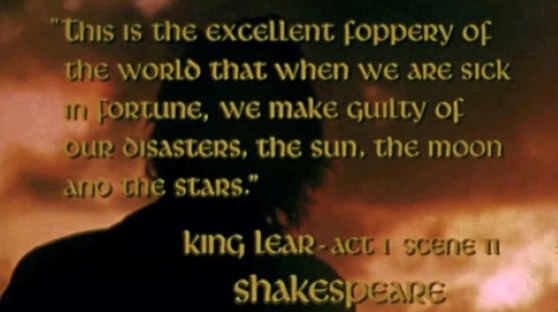
Soon after, with his business manager screaming at him, “You’re not an astrologer, you’re an asshole!” after he murders his wife’s lover, Alexander can only stare into the sun — hey, it’s a star too — as he contemplates his life as a quote from King Lear fills the screen.
This movie cost $4 million dollars, which is about $19.5 million in today’s money, and nothing in this film looks cheap. It has crane shots, helicopter shots, underwater photography and so much more. And as for the music, well, the movie has the aforementioned Moody Blues and Procol Harum on the soundtrack, as well as Tommy Edwards, Conway Twitty and Gustav Holst’s “The Planets Suite” performed by The Los Angeles Philharmonic Orchestra. Beyond the fact that none of these artists were paid for their music, Denney went the extra mile of trying to get paid for using their songs.
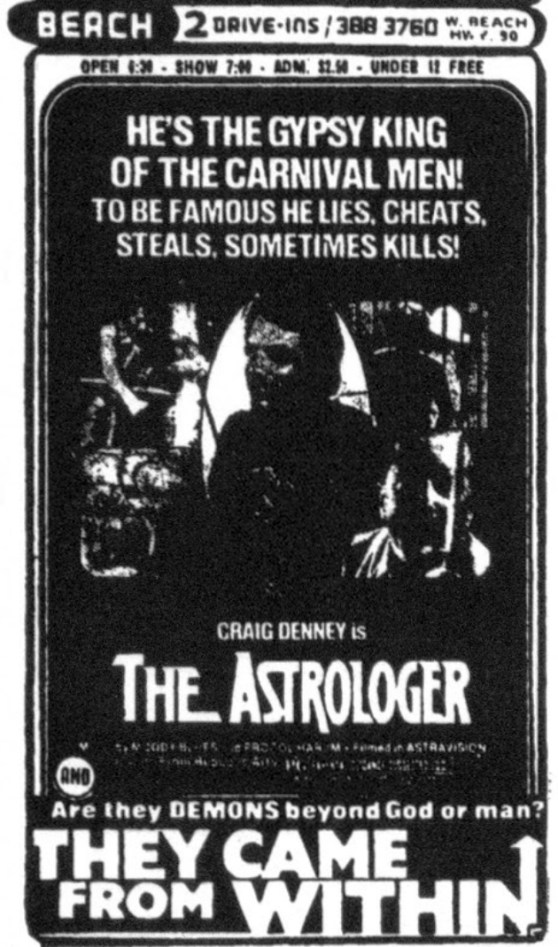
Showings of The Astrologer were sparse, but it did play theaters. There was also a rumored airing on the CBS Late Night Movie that has to be an urban legend. So what happened to Denney after this movie pretty much disappeared?

According to that amazing Matchbox Cine Club article, Denney continually referred to himself as 31 years old and continued making money under the Republic banner. Four of the films that are known that were to be made include Attack at Shark’s ReefDeath Rays from the SkyDeath Star and The Lucifer Project, which became Barracuda, which also had Denney and Ernest J. Helm Jr.’s names attached to its original promotional materials.

Denney also got married around this time to Donna Sue Whisman, who joined his company as a nutritionist and became the president of the motion picture division, not unlike the character of Darrien (who was played by his cousin who is also a restaurant manager, which is what Whisman went to school for; maybe Denney really was psychic as this turn of events also mirrors the way his character in the movie gives his wife a job she is not able to do).

The follow-up to The Astrologer was a movie called  Oceanic Opera, A Sea Odyssey. It would have starred no actors or actresses, but an all-nature cast and would have a traveling orchestra play during screenings of the film. It was supposedly nearly done when it all fell apart. According to an article in Variety, Denney and his wife had shot “sunken Japanese ships, undersea Greek temples, submerged Wells Fargo stagecoaches, hard hat divers and all forms of marine life from Alaska to Australia.”

The real end of that movie was when Denney and Republic Pictures Industries filed a $50 million suit against DeLuxe General Inc for “alleged unauthorized release of his film negatives from its vaults.” This is because Denney said that cinematographer Chuck Keen was given the film he shot. Around this time, Denney supposedly died in Ohio.

Guess what. Even that is disputed.

According to Young Hollywood, Denney told Chadbourne that he “was very interested in escaping the FBI and IRS by faking his own death.” Later, when he stopped to visit his old friend, he was told that he was dead and his sister said, “We’re all very upset,” in a way that indicated that no one was really that devastated.

Can there be any more?

Sure there can.

Beyond the fact that Denney convinced people to pay him to be in this movie, that mob money was used to potentially film it and that an IMDB poster hinted that Denney was his neighbor and “was really cool in many ways that I cannot divulge since I was a minor but a lot of fun to be around******,” this film has been impossible to see, something of an anomaly in today’s always-connected, everything is always available way of life.

When this movie leaked to YouTube******* this year — it was down in a few weeks. Going back to that multi-media merger we hinted at before, there’s now a black screen that says, “This video contains content from Paramount Pictures, who has blocked it in your country on copyright grounds.”

There aren’t many movies left that need to be hunted down. This is one that is so worth it. I watched it at least three times in the last 24 hours, often rewinding things back and pausing them so I could discuss what I just watched with my wife. All of the time that I spend obsessing, waiting and thinking about The Astrologer paid off. I can only imagine that Denney is still alive, hilariously happy that the movie that he created decades ago that went nowhere somehow has become such a quest for so many.

Immortality is something we all seek as human beings. Who knew that Denney’s quest for fame would end with a movie that so few could see, even today, but that nearly everyone who discovers it can’t wait to watch?

*One would assume that he was involved in some shady circles like in the movie Pi and needed to make sure that the other occult mathematicians would have magick power over him if they knew what day he was born.

**The former Republic studio lot is now CBS Studio Center.

***My theory is that the entire ten-episode TV series was actually filmed and what we are seeing is the edited down version, like how canceled TV shows would air in Europe as theatrical movies or, inversely, how Yor Hunter from the Future went from four eighty-minute episodes to one nearly incomprehensibly awesome 98-minute film.

****Honestly, when you learn that Le Iacocca’s Cordon Bleu-educated ex-wife and relative of the film’s auteur is in this movie and it’s the least surprising thing, you’re truly watching a movie packed with weirdness.

*****Arthyr Chadbourne, a real-life astrologer who still has a website where he discusses the fact that he “was astrological director as well as the star in the motion picture, The Astrologer. He has also worked as an executive producer for the independent television series Meet The Astrologer.” Notably, he does not mention Denney, but does say that he worked in early Star Trek productions and designed watch faces for Paramount’s Dark Shadows, whatever that means.

****** That IMDB commentator was tracked down by Paste and interviewed and…yeah, the story is just as wild as you’d imagine.

*******It’s on the Internet Archive now, but who knows for how long?
Howard Avedis Week: Scorchy (1976)

Editor’s Note: This review ran on October 30, 2020. We’re bringing it back for our “Hikmet ‘Howard’ Avedis Week” of reviews.

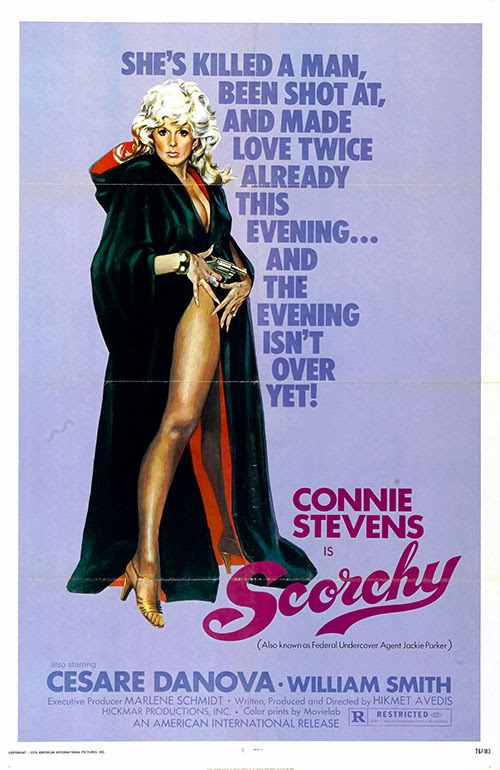
“She’s killed a man, been shot at, and made love twice already this evening…and the evening isn’t over yet!”

I mean, how am I not going to watch this movie after all that?

Man, American-International kept putting out awesome movies late into the 1970’s, with this Howard Avedis written, produced and directed caper (made back when he was still Hikmet Avedis). If you’re looking for more Avedis goodness (Goovedis?), I’d recommend The TeacherDr. MinxThe Fifth Floor, They’re Playing With Fire and the awesome Mortuary.

Jackie Parker (Connie Stevens!) is a cop by day and a drug smuggler by night, when she isn’t hooking up with Greg Evigan. She’s after drug dealer Philip Bianco (Ceaser Danova) and has to deal with the awesome William Smith as Carl, one of the henchmen, who leads her on a chase through the streets of Seattle that involves a dune buggy, a vehicle which seems quite out of place in the City of Flowers.

At some point in the 1980’s when this was released on VHS, the original Igor Kantor-supervised soundtrack was replaced with a Miami Vice inspired score, which is completely out of this world great.

Stevens had a clean image before this movie, so it must have been shocking to see her bed guys and suggest that her elder boss get some fellatio to improve his mood. It’s like this movie has the dialogue of an adult film without any of the actual penetration!

Actually, the only penetration is when Carl attacks Scorchy while she’s scoring with a guy, entering her Lake City home to shoot the guy in the ass cheek with a harpoon as if this was an Emerald City version of A Bay of Blood.

Man, I live in Pittsburgh and the movies that the world knows my hometown for all involve zombies, which is certainly an awesome thing, but if I were from Seattle, I would be quite honestly inordinately proud of having Scorchy made there. It’s a near-perfect drive-in movie and ends James Bond style with a barrage of cops descending on the drug dealer’s house and people being shotgun blasted left and right.

I wish Avendis made twenty sequels to this movie.

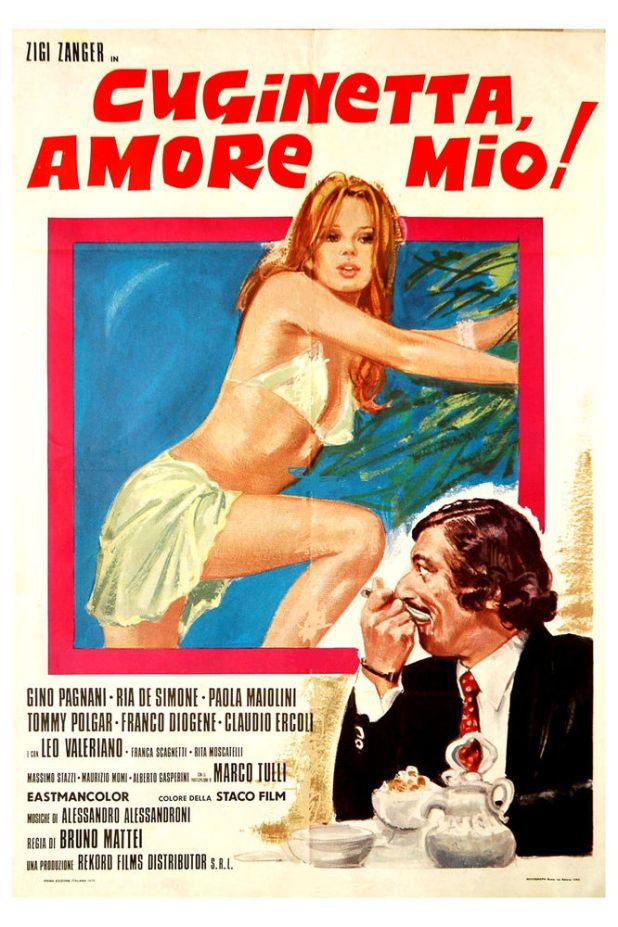
BRUNO MATTEI WEEK: Cuginetta, amore mio! (1976)

When you have a career the length of Bruno Mattei’s, the genres you work in constantly shift, bringing in everything from cannibal and zombie films to westerns, women in prison epics, peblum and the very Italian form of the sex comedy, which is what Cuginetta, amore mio! (Little Cousin, My Love!) or Love Sacrifice is all about.

Leonida (Gino Pagnani, Live Like a Cop, Die Like a Man) is employed by his rich uncle Count Aristid at least the old man until dies in the Biblical company of a maid named Ornella (Paola Maiolini, Emanuelle Around the WorldConvoy Busters). Thinking that he’ll inherit the estate, Leonida has already moved his family in, but they all learn that everything will go to Marco, the master’s secret son.

However, Leonida has a plan. He wants his daughter Nicoletta (Ziggy Zanger, Black Emmanuelle, White Emmanuelle) to marry the newly rich Marco with the help of his wife Elvira (Ria De Simone, Mattei’s Women’s Camp 119), who may have designs on the young man for herself.

Mattei wrote this script along with Private House of the SS writer Giacinto Bonacquisti and Luigi Montefiori, who we all know and love much better as George Eastman.

Your mileage on Italian sex comedies may vary, but it’s still astounding to me how many genres Mattei found the time — and backing — to be part of.

You can watch this on YouTube.

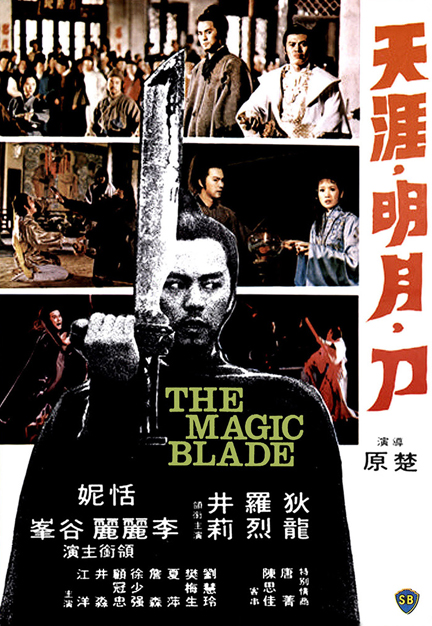
The Magic Blade (1976)

ABOUT THE AUTHOR: Jennifer Upton is an American (non-werewolf) writer/editor in London. She currently works as a ghostwriter of personal memoirs for Story Terrace London and writes for several blogs on topics as diverse as film history, punk rock, women’s issues, and international politics. For links to her work, please visit https://www.jennuptonwriter.com or send her a Tweet @Jennxldn

The Magic Blade is a Wuxia tale starring Ti Lung as Fu Hung Hsueh and Lo Lieh as Yen Nan-Fei. Fu is a stoic and extremely skilled wandering swordsman. The story (based on the novel by Gu Lung) opens with Fu engaged in a showdown with Yen over a previously unresolved dispute. The two men put their rivalry aside when an unseen evil sorcerer named Yu sends warriors to attack Yen. Fu saves Yen’s life and the two join forces against Master Yu in a race to find the ultimate weapon – the exploding peacock dart! If Yu gets it first, he will rule the underworld. 

After fighting more henchmen in a wonderful scene set up like a game of Chess, Fu and Yen procure the peacock dart from its keeper. Along with the beautiful pure-hearted Chiu Yu-Cheng (Cheng Lee) the two men set off to find the elusive Yu. Eventually Fu and Chiu are separated from Yen, leaving Fu to carry the rest of the film on his broad shoulders.

Fu and Chiu fall in love and meet many people along their journey to find Yu – all of whom also want the dart. The story is filled with as many plot twists as wire-flips, and Fu gets through it all by his wits as much as his swordsman prowess.

The end battle with the as-yet-unseen Yu in Tien Wai mansion is a real showstopper. Ti Lung proves once and for all that although they were a great on-screen pair, he never really needed David Chiang as a co-lead. His physicality and acting are in top form here.

Director Chor Yuen wisely made sure there was something for everyone in this film. Compared to other Shaw Bros. classics, The Magic Blade contains more splatter and nudity than its predecessors, and there’s even a quick lesbian scene at Yu’s mansion.

While this production isn’t as grand as some of the older Shaw Bros. pictures, it appears to have had a somewhat significant budget. The sets, costumes, choreography and supporting actors are top notch. As with many Shaw titles, the filmmakers lifted much of the music from other sources, including several famous cues from the original Planet of the Apes. The result is very enjoyable regardless. The weapons are some of the most creative in the genre, with the best being Ti Lung’s sword – a very effective combination of a nightstick plus spinning machete. In our hero’s hands, it is definitely a “magic blade.”

Check out this great scene on the Shaw Brothers Paradise Facebook Page.

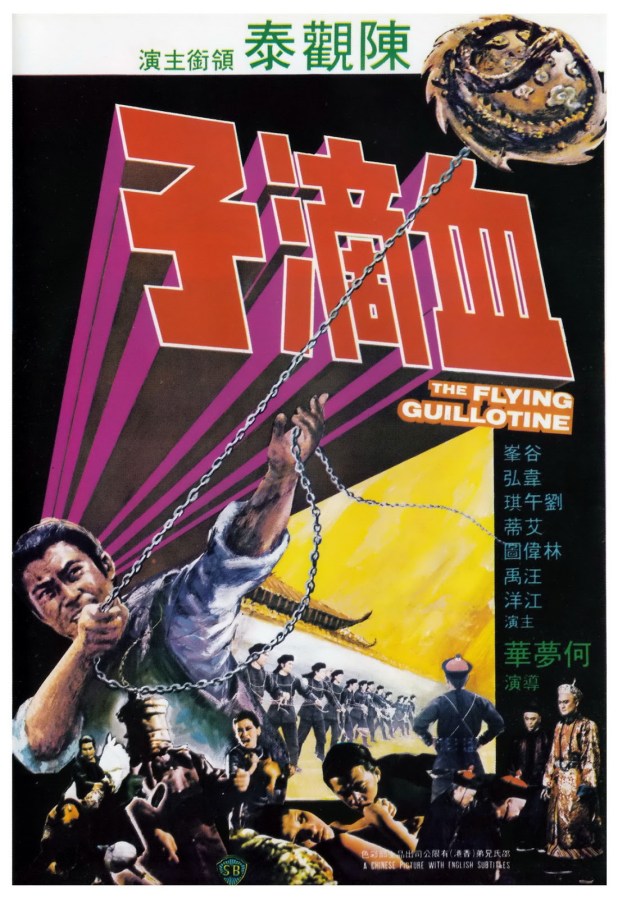
Master of the Flying Guillotine (1976)

You may wonder why this movie is also called One-Armed Boxer 2 and The One Armed Boxer vs. the Flying Guillotine. That’s because it’s pretty much a sequel to One-Armed Boxer, but man, the name Master of the Flying Guillotine was just too awesome not to use.

It’s also one of the few martial arts movies that for some reason has a nearly all Krautrock soundtrack, with “Super” and “Super 16” from Neu!’s second studio album, Neu! 2 played as the opening theme and Master Fung’s theme; “Rubycon, Part One” from Tangerine Dream’s sixth studio album Rubycon used as The One-Armed Boxer’s theme; and three songs from Kraftwerk’s fourth album Autobahn — “Mitternacht,” “Morgenspaziergang” and “Kometenmelodie 2” — appearing.

If you can’t guess already, this movie is straight-out incredible.

Yu Tien Lung, the One-Armed Boxer, is stalked by the blind Fung Sheng Wu Chui who was the master of the two Tibetan lama he killed in the first movie. Unlike those men, this villain has the flying guillotine, a bladed hat on a chain that can take its victim’s head completely off their body.

Before the battle you’ve been waiting for, our protagonist must battle a Thai boxer, a yoga master and a kobojutsu — the martial arts of Okinawa — master. And yes, you get a satisfying battle between the enemies by the end.

With a tagline that claimed, “It’s A Mean Machine – Cuts Your Head Off Clean!” this film lives up to everything you dreamed that it would be. Jimmy Wang Wu wrote, directed and stars in this. He made The Chinese Boxer, a movie that moved martial arts away from weapons and into the bare-handed combat that Bruce Lee and so many others would make into a worldwide phenomenon.

Obviously, so much of Kill Bill — and even the video game Street Fighter — owe a debt to this movie. You should check it out.

You can watch this on YouTube.

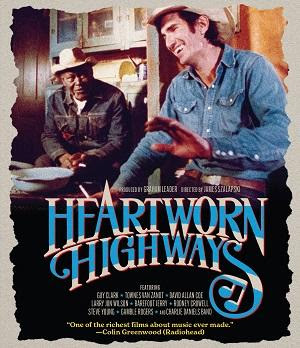
Heartworn Highways (1976)

Screenwriter, cinematographer, producer, and director James Szalapski may be best known for the Alien teaser trailer, but this nearly lost country music documentary should be what people remember him for.

Guy Clark, Townes Van Zandt, Steve Earle, David Allan Coe, Rodney Crowell, Gamble Rogers, Steve Young and The Charlie Daniels Band are the subjects of this piece, young men who looked to the past of country rather than what was popular at the time.

This film takes a sprawling narrative flow, basically following them as they record, drink, play shows and party some more. There are tons of astounding performances, but perhaps none better than Van Zandt singing “Waitin’ Around to Die” in his kitchen.

Kino Lorber has been releasing so many blu rays this year that are must owns. Consider this one of them. You can get it directly from them.

Time Travelers (1976)

Time Travelers was scripted by Jackson Gillis (whose career stretched back to radio) from a story by Rod Serling (which led to a lawsuit, as Charles Willard Byrd claimed that this movie was taken from an unpublished 1959 book A Time To Live. Byrd and the producers reached a monetary settlement that allowed Byrd to claim the original story as his work). It was developed by Irwin Allen in the hopes that he could relaunch his series The Time Tunnel, but the litigation kept the show from being bought and it ended up running as an ABC Movie of the Week on March 19, 1976.

Dr. Clint Earnshaw (Sam Groom, Deadly Eyes) and Jeff Adams are trying to cure the XD virus that has been slowly wiping out humanity. When they discover that a similar disease had been seemingly cured around the time of the Chicago fire, they head back in time to see if they can learn anything from Dr. Joshua Henderson (Richard Basehart!) Jeff ends up falling for Henderson’s niece Jane (Trish Stewart, who played Basehart’s daughter in Mansion of the Doomed) and nearly stays behind. However, the timeline must be protected and our heroes end up saving the day, if not every person.

Director Alex Singer went to the Bronx’s William Howard Taft High School with Stanley Kubrick and one of his first jobs was as the cinematographer on Kubrick’s short Day of the Fight. He also made the films A Cold Wind in AugustGlass Houses and Captain Apache*, but the majority of his credits were in television.

*Written by Night Train to Terror impressario Philip Yordan!

You can watch this on YouTube.