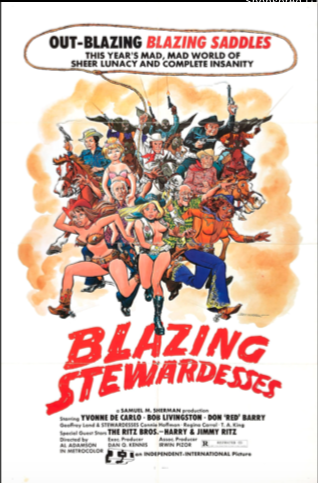
The sequel to The Naughty Stewardesses, this was supposed to be a 1940s throwback, which is why the Ritz Brothers — well, Harry and Jimmy as Alan had died — as well as Yvonne De Carlo, Don “Red” Barry and Robert Livingston are all in the cast. It was supposed to star the Three Stooges — which would have been Moe Howard, Joe DeRita and Emil Sitka — but Moe was too sick to be able to be in it.
It was going to be called The Jet Set before Blazing Saddles came out and the film became a Western, even if it’s also been released under the titles Cathouse Cowgirls,Texas Layover and The Great Truck Robbery.
At least the girls from the first movie — Debbie (Connie Hoffman), Barbara (Marilyn Joii) and Lori (Regina Carroll) — are back. They take a vacation at the Lucky Dollar Ranch, which is run by Brewster (Livingston), who is also playing the role he had in The Naughty Stewardesses. Masked riders soon appear and attack. There’s also a brothel that’s owned by Honey Morgan (De Carlo).
Would you enjoy watching the Ritz Brothers eat a really big sandwich from an entire movie? Then this is for you. That said, they were really influential among comedians if not successes in Hollywood. They also are in Won Ton Ton, the Dog Who Saved Hollywood.
EDITOR’S NOTE: Today’s movie is brought to you by AC Nicholas, who has graciously become a Big B&S’er, a monthly supporter of the site and got to pick an entire week of movies. Would you like to have me write about the movies of your choice? It’s simple!
Go to our Ko-Fi site and donate. There’s no set amount and I won’t tell you what to do. In fact, if you just keep reading for free, we can still be friends.
Join as a monthly member for just $1. That makes you a Little B&S’er.
As a Medium B&S’er at just $3 a month, if you pick a movie or a director, I’ll write about them for you. In fact, I’ll do one for each month you subscribe and even dedicate the post to you.
For $5 a month, you basically get some major power. As a Big B&S’er, I’ll write an entire week on any subject you’d like. How awesome would that be? In fact, I’ll do it for every month you’re a member. Do you think any of your other movie sites will do that for you?
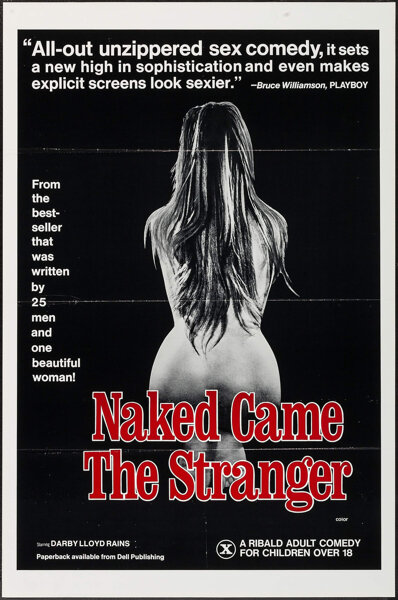
Naked Came the Stranger is based on a hoax.
Mike McGrady was convinced that books had become so dirty — just read Harold Robbins and Jacqueline Susann — that any book could be a best seller if it had sex in it. He recruited nineteen men and five women from Newsday including 1965 Pulitzer Prize winner Gene Goltz, 1970 Pulitzer Prize winner Robert W. Greene and journalist Marilyn Berge. The book, which he edited with Harvey Aronson to ensure that it was not well-written in the least, was written by Penelope Ashe, who would be played by McGrady’s sister-in-law Billie Young.
After selling 20,000 copies, McGrady went on The David Frost Show and told America that it was all a lie. It sold 70,000 more copies after that.
According to The Washington Post, “Mr. McGrady and the other writers had nothing to do with the hardcore film with the same title. They did, however, see the movie at a Times Square theater. During one vivid scene, Aronson told The Charlotte Observer, someone shouted “Author, author! Seventeen of us stood up.”
Working under his Henry Paris name for directing (his middle name and favorite city) and Jake Barnes (the narrator of Hemmingway’s The Sun Also Rises) for writing, Radley Metzger created this adult adaption of the book. Gilly (Darby Lloyd Rains) and Billy (Levi Richards) host a morning show. He’s always been able to sleep around in the marriage — she catches him with their assistant Phyllis (Mary Stuart) — but something has always held her back. This will be the day in which she unleashes herself, even if it keeps ending up in failure.
When she finally gets it together, she has a memorable moment with Marvin (Alan Marlow) in the second floor of a bus in a daring scene shot with no permits, obviously. She also gets Phyllis for herself and even has a classy silent movie black and white love scene with Teddy (Grant Taylor).
If the movie they’re watching in the beginning seems familiar, it’s British freakout Bizarre AKA Secrets of Sex.
EDITOR’S NOTE: Today’s movie is brought to you by AC Nicholas, who has graciously become a Big B&S’er, a monthly supporter of the site and got to pick an entire week of movies. Would you like to have me write about the movies of your choice? It’s simple!
Go to our Ko-Fi site and donate. There’s no set amount and I won’t tell you what to do. In fact, if you just keep reading for free, we can still be friends.
Join as a monthly member for just $1. That makes you a Little B&S’er.
As a Medium B&S’er at just $3 a month, if you pick a movie or a director, I’ll write about them for you. In fact, I’ll do one for each month you subscribe and even dedicate the post to you.
For $5 a month, you basically get some major power. As a Big B&S’er, I’ll write an entire week on any subject you’d like. How awesome would that be? In fact, I’ll do it for every month you’re a member. Do you think any of your other movie sites will do that for you?
The Image AKA The Punishment of Anne was based on L’Image, a high class dirty book if there ever was one. According to the Rialto Report, it was written by “Jean de Berg, later to be revealed as the pseudonym of Catherine Robbe-Grillet, a mysterious French writer, photographer, and actress of Armenian descent, who was also married to the French writer and filmmaker Alain Robbe-Grillet.”
Broken up into ten chapters, this is the story of Jean (Carl Parker), an older writer who has come to Paris and who soon meets an old friend by the name of Claire (Marilyn Roberts). He’s soon part of her world of BDSM along with her younger partner Anne (Mary Mendum, Metzger’s girlfriend at the time, she would also appear in several Joe Sarno movies).
What’s really interesting in the above-mentioned Rialto Report article is that beyond the interiors being shot in a property owned by Roy Cohn was that none of the leads believe they performed any of the sex in director Radley Metzer’s first hardcore film.
This was way rougher than many were ready for, even in the Golden Age, but it retains its classy feel despite of that. Just like The Score, Metzger shows a side of the bedroom that many even today don’t want to see or even discuss.
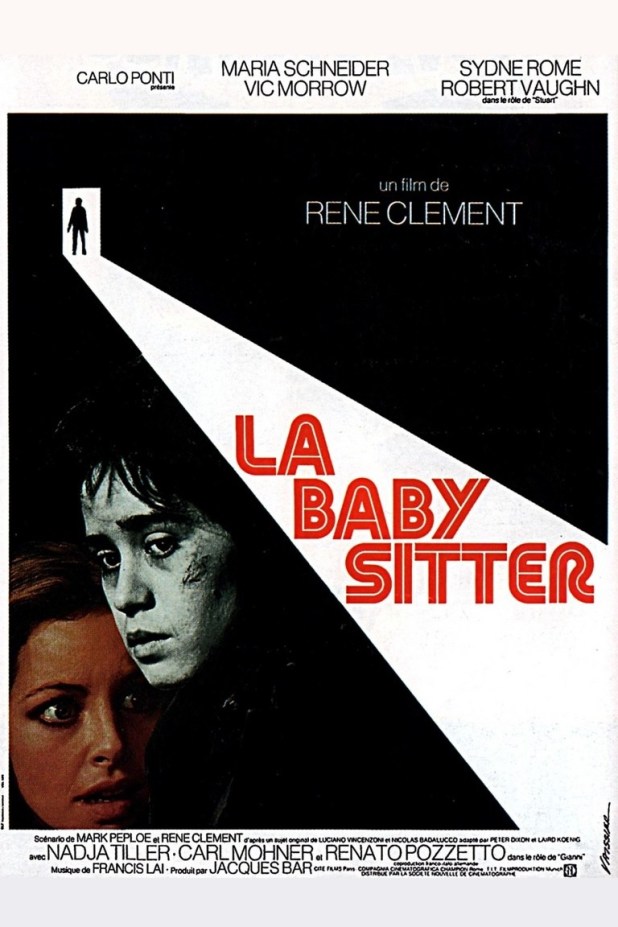
Ann (Sydne Rome, the daughter of an Akron, Ohio plastics manufacturer who went to Europe and became a star in movies like Some Girls Do and Sex With a Smile; she also dated David Bowie for a year, became the face of aerobics in Europe by the 80s and recorded several songs) is an actress having an affair with a wealthy food mogul (Carl Mohner) . He gets rid of her, she stumbles into the street and gets hit by a car.* When she gets back to acting, well, she can’t do nude scenes any more — a fact that enrages actor Stuart Chase (Robert Vaughn) — because the accident so ruined her breasts that she won’t show them.
She and her roommate Michelle (Maria Schneider, yes, the star of Last Tango In Paris) are out of money, so Ann dresses like Michelle to get a job babysitting the son of that very same wealthy food mogul. Then, she, Chase and Vic (Vic Morrow), an ex-stuntman unleash the next part of their plan, where a woman named Lotte (Nadja Tiller) hires Michelle to watch the boy — Boots (John Whittington) — while getting the money. The kid thinks that the brutal Ann is watching him, so he’ll stay quiet, and Michelle has no idea what’s happening.
The plan is, well, kind of dumb but it gets worse when Morrow can’t be controlled and he kills everyone he can while screaming every single line. The ending is confusing, but hey, if you like Rome, Schneider and Morrow, there’s a bit of fun to be had here.
Also known as Scar Tissue and The Raw Edge, this was the last movie that René Clément (The Deadly Trap) would direct. He wrote it with Nicola Badalucco (The Damned), Mark Peploe (The Last Emperor) and Luciano Vincenzoni (For A Few Dollars More).
Don’t have the box set? You can watch this on Tubi.
*Oddly enough, Rome was disfigured in a car crash in 2009 that paralyzed the right side of her face.
Stephen Boyd only lived to see 45, but the guy had the kind of life that could fill several others, what with starring in epics like Ben-Hur, nearly drowned in the Ardèche river and shared a camp with cannibals for the movie The Big Gamble, was censored for his near-nudity in GIna Lollobigida’s dream project Imperial Venus and traveled the world to be in movies like Genghis Khan (Yugoslavia), The Bible(Egypt), Assignment K (Germany), Shalako (Spain), Slaves (the supposedly haunted Buena Vista plantation near Shreveport, Louisiana), The Hands of Cormac Joyce (Australia) and The Manipulator (South Africa). He was also in wild movies like The Oscar and Fantastic Voyage; was one of the first celebrities to be involved in Scientology with a status of OT 6, a position above that of Clear; was spoken of by many to be incredibly friendly and spent much of his time on sets with the crew and oh yeah, he was so close with Brigitte Bardot that one of her husbands left her. He was also married in a gypsy blood ritual to Marisa Mell, a relationship so intense that they had an exorcism to stop their passion. Boyd was also the only actor to have a relationship on set with Dolores Hart before she became a nun; they remained in contact for the rest of his life. He finally married Elizabeth Mills, who had been his personal assistant for over twenty years, in 1974. Sadly, he died of a heart attack in 1977 while golfing with his wife. He would have been in The Wild Geese had he lived.
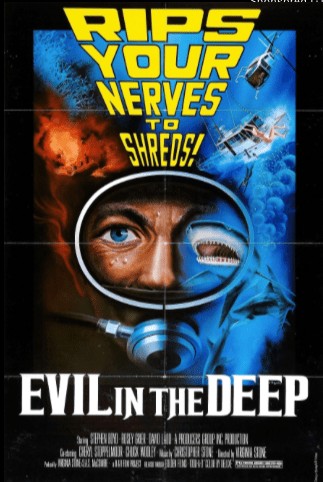
Stephen Boyd stars in this movie as Hugo Graham, who is asked by Zappy (she’s in the credits as Cheryl Stoppelmoor, but the world would soon know her as Cheryl Ladd) to join her and her friend Victor Spivak (Chuck Woolery, before he hosted game shows) to explore a wrecked ship. She even has a boat, captained by Asper (Roosevelt “Rosey” Grier).
Ladd married her husband David — also in this movie — before it was released in the U.S. And yes, that is Darby Hinton in there. And Commandant Mauser himself, Art Metrano.
This was directed by Virginia Lively Stone and written by John Walker and J.A.S. McCrombie, who also wrote Stone’s other two movies, Money to Burn and Run If You Can.
Twelve months later, Jawswas a big deal. So the filmmakers brought back Boyd, added some gore, some skin and a new title, Evil In the Deep. They took what was a G-rated movie and made it R-rated and I love them for it.
Don’t have the box set? You can watch this on YouTube.
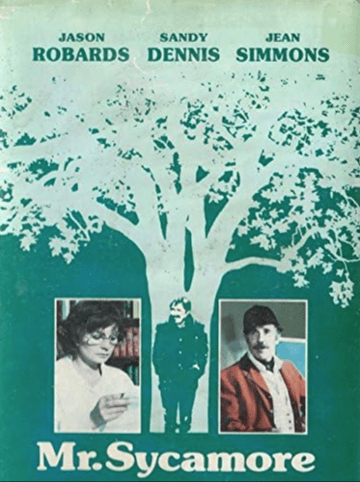
From a story by Robert Ayre and a play by Ketti Frings, this is the tale of John Gwilt (Jason Robards), a postman who decides that he wants to become a tree. He plants himself in his back yard and waits for it to happen while his wife Jane (Sandy Dennis) tries everything she knows to get him to be normal. At the same time, John finds a sympathetic figure in librarian Estelle Benbow (Jean Simmons).
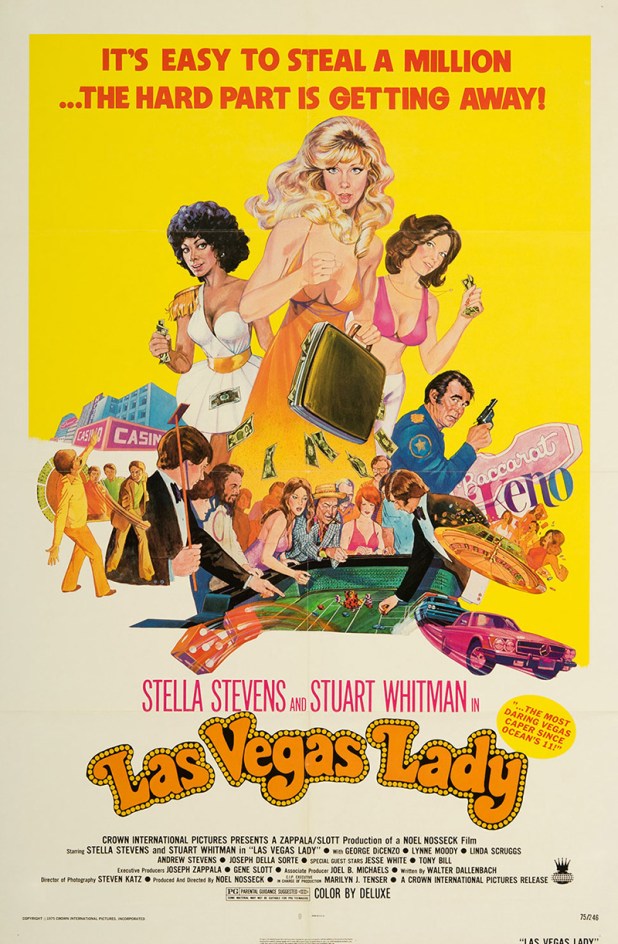
Crown International Pictures serving up that sweet, sweet movie sugar that I love so much, with Stella Stevens (The Silencers) and Stuart Whitman (Demonoid) as a Vegas couple looking to get out by pulling a scam.
Stevens is Lucky, who is being ordered by a man in the shadows to use two of her friends, Carol (Lynne Moody, Nightmare in Badham County), who is in debt, and Lisa (Linda Scruggs), a trapeze artist with vertigo, to rob Circus Circus of $500,000.
Frank Bonner (Herb Tarlek!) is in this, as is George DiCenzo, who was the voice of Hordak.
You know who else got a role? Stella’s son* Andrew, who may have failed to win the role of Luke Skywalker, but got to simulate arrdvarking Shannon Tweed in four movies. Of course, those would be the seminal Night Eyes II,Night Eyes Three, Scorned and Illicit Dreams.
This was directed by Noel Nosseck and is not the first movie I’ve watched from him. Yes, he also directed Best Friends and No One Would Tell— where Candance Cameron is trying to love a steroid addicted Fred Savage! — amongst many more efforts.
My favorite part of this movie is when Stella’s character sings “Happy Birthday” — did they pay for the rights? — to Whitman’s and he answers, “Is it February 1st?” That’s his real birthday. Obviously — as you can tell by reading the above deep dive into all things Las Vegas Lady — I know way too much about these movies.
*Stella and Andrew also appeared together in Down the Drain, The Terror Within II and Illicit Dreams.
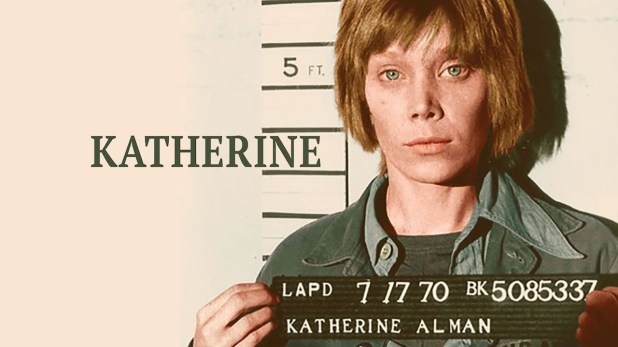
Katherine is based on Diana Oughton of the Weather Underground, a radical who died in 1970 when a bomb she was building accidentally exploded and Patty Hearst, who was kidnapped by and then joined the Symbionese Liberation Army the same year this movie aired on ABC.
Director and writer Jeremy Kagan also made Conspiracy: The Trial of the Chicago 8, The Journey of Natty Gann and Big Man on Campus. He also directed Roswell: The UFO Conspiracy, a TV movie about the people that were near the crash.
Katherine is filled with actors who weren’t stars yet. Sissy Spacek was a year away from Carrie, Henry Winkler was not yet the Fonz and Julie Kavner was years from being Marge Simpson (although she was on Rhoda).
Katherine (Spacek) falls in love with Bob Kline (Winkler) and runs from the upper class life her parents Emily (Jane Wyatt) and Thornton (Art Carney) live in and becomes part of the Weathermen wing of Students for a Democratic Society. So much of the story is told by Katherine facing the camera and talking directly to the camera. It’s pretty interesting how that makes you feel for her as this movie never makes her seem misguided which is a pretty brave idea for a TV movie in 1975 much less something made these days.
Don’t have the box set? You can watch this on Tubi.
ABOUT THE AUTHOR: Jennifer Upton is an American (non-werewolf) writer/editor in London. She currently works as a freelance ghostwriter of personal memoirs and writes for several blogs on topics as diverse as film history, punk rock, women’s issues, and international politics. For links to her work, please visit https://www.jennuptonwriter.com or send her a Tweet @Jennxldn
Chances are if a ‘70s movie was shot in any of The Boroughs of New York City during the 1970s, it will remain relevant and engaging today, if only because it represents a time in the city’s history when the grit, grime, spit and piss on the pavement was matched only by the interesting people standing on it in porn theater doorways and alleys leading to Heaven and Hell .
Hustling (1975) has more going for it than that, but it also contains a few baffling moments. Especially viewing it for the first time in 2023, when there are entire YouTube channels showcasing candid interviews with actual sex workers and pimps.
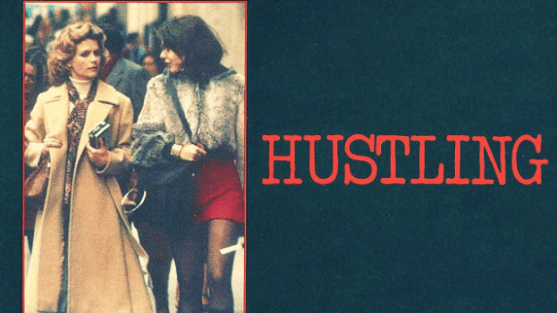
The made-for-TV movie, based on the book by Gail Sheehy, for whom Lee Remick’s character Fran Morrison acts as the author’s avatar, tells the story of a journalist covering the story of several sex workers in midtown Manhattan. In real life, Sheehy wrote the piece for The New Yorker. Here, it’s called New York Magazine. That piece was expanded into book form and the book was adapted for television.
Jill Clayburgh, in her breakout role, plays Wanda, a sex worker with a Brooklyn accent despite having grown up in Cleveland, Ohio. We follow her and her friend Dee Dee (Melanie Mayron) in their day-to-day existence, earning large amounts of cash they willingly hand over to their pimps lest they suffer the physical consequences. The women spend a lot of time in and out of jail. That’s where Fran meets Wanda, who at first refuses to speak with her on the record, and later changes her mind for $50 per hour. A tidy sum even today.
As Fran grows more attached to her subjects, she begins to feel pangs of guilt for exploiting them for content, but she never crosses the line into developing a full-blown savior complex. A refreshingly honest portrayal of parasitic journalists like Gail Sheehy, who earned a ton of money and won awards for the project while the subjects’ lives remained unchanged. Misery porn has always sold well with the bourgeoisie and sadly, continues to do so today.
Hustling portrays Sheehy as a typical example of a writer, who, regardless of their sex, lived such a privileged life that she misses the desperation that drove these women to sex work in the first place. Then, in turn, the two female screenwriters created street characters that are well-fed, free of drug and alcohol addictions and “bravely” living the lives that bored suburban stay-at-home parent of the day fantasized about.
It’s a good script overall, but some of the dialogue was way off base for the female experience, even in ’75 when the script was still so new it still smelled of typewriter ink. Take, for example, Fran’s bold statement, “There isn’t a woman alive who hasn’t had the fantasy of going into a room with a stranger and selling herself for money…or the nightmare.” Holy shit.
Because it’s a TV movie, it only shows a small portion of the spit, piss and grit of ‘70s. I’d love to see a harder-hitting theatrical adaptation of this book. One that allows audiences to smell the scenes as well as feel them. A movie that shows Dee Dee pissing in alleyways with her baby screaming in hunger in its stroller next to her. One that shows and the track marks on Wanda’s arms and that doesn’t wimp out on showing her getting beaten up by her pimp. One where the characters discuss their genital herpes and follows one of the main characters to a trick an hour after an abortion high on Ketamine.
Instead, we get a romanticized scene where Morrison looks on in amazement as Wanda berates the younger Dee Dee after social services take Dee Dee’s baby away and then pivots to cheering her up by making her dance to a song on the jukebox. Remick plays the scene well with eyes full of wonder, but I wonder…did Sheehy really need to get close to real life sex workers to fully grasp their humanity? Did she think they were animals before?
The success of this movie lies in the performances. Remick and Clayburgh excel. They filled the supporting cast with recognizable working actors from the day including Alex Rocco (The Godfather) and Jeffrey Kramer (Jaws, Halloween II) playing jaded cops and a pre-Rocky Burt Young as a sleazebag hotel proprietor who steals a stolen ring from Dee Dee.
The scenes at the police station are among the grittiest and best in the film, with the hopelessness of cleaning up the city’s corruption on full display. Of course there are untouchable politicians and businessmen bankrolling the sex trade and it’s the women made to suffer! Another big shock for Fran that further explores her naivety.
In the end, none of the powerful guys are held accountable, of course. Wanda goes back to her hometown to live with her brother but it’s not clear at all that she will succeed. For ‘70s New York City, nothing changes and the world rolls on.
Overall, it’s a good movie, but it’s also infuriating. It’s a view of street life as interpreted through the eyes of a journalist with a kink for what she thinks is a “brave” lifestyle but has no fucking clue the level of desperation required to enter the sex trade and the ferociousness required to survive it.
The film is available from Mill Creek or on YouTube here:
Vic Morano (Jack Palance) owns the speakeasy nightclub The Four Deuces while also being in the middle of a war with rival businessman Chico Hamilton (Warren Berlinger). The Four Deuces are his soldiers Chip Morono (Giani Russo), Mickey Navarro (Hard Boiled Haggerty) Ben Arlen (Johnny Hamer) and Smokey Ross (Martin Kove).
This has a lot of comic book in it, from the look of the opening introductions to Vic reading a Batman comic book years before Palance would play Carl Grissom.
This was produced by Menahem Golan and Yoram Globus after they made Lepke. Sam Firstenberg was a set decorator. Nick Dimitri, Gianni Russo, Vincent Di Paolo, Lany Gustavson and Warren Berlinger were part of both movies and this was a production of both Cannon Pictures and Golan-Globus Productions.
Director William H. Bushnell also made Prisoners and writer Don Martin had been writing since 1947’s Lighthouse. C. Lester Franklin, the other writer, only worked on this movie.
Carol Lynley is Vic’s lover Wendy Rittenhouse and Adam Rourke is reporter Russ Timmons, who becomes part of Vic’s gang and also Wendy’s lover. It’s strange movie because it feels like a comic strip in look only, as the story itself doesn’t feel like it matches the visual of the movie.
It also tries to be a comedy with sped-up slapstick scenes that also don’t feel like they should be in the same movie. But it is one of Carl Weathers’ first movies and the only theatrical movie that Palance appeared in with his daughter Brooke.




 B&S About Movies
You must be logged in to post a comment.