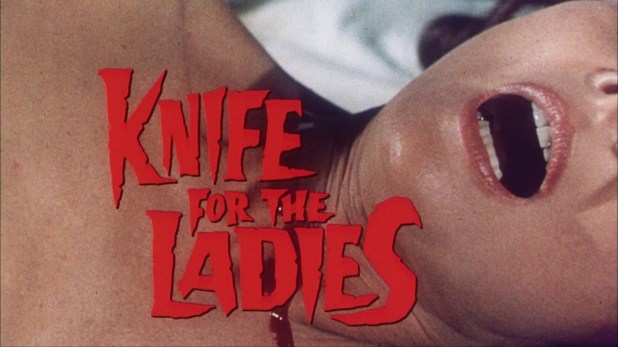
What if Jack the Ripper escaped and made it to the Wild West? Well, a knife-wielding killer has been slicing his way through the small desert town of Mescal. And while most of the victims have been prostitutes, the first was Travis Mescal, the only son of the town’s richest family. The sheriff hasn’t been able to solve matters, so the town’s leaders bring in an investigator to get the job done.
Directed by Larry G. Spangler, who also produced and directed The Life and Times of the Happy Hooker, this is a rare horror Western.
It’s got a great start and plenty of filler until the end. At least Jack Elam is in it as the sheriff. And Ruth Roman, who lights up The Baby. She’s in this, too.
The hero detective — played by Jeff Cooper — has a 1970’s haircut, which really makes no sense. Neither does this movie, which is unsure if it wants to be horror, proto-slasher, a Western or a giallo. It fails equally at each, providing only boredom.
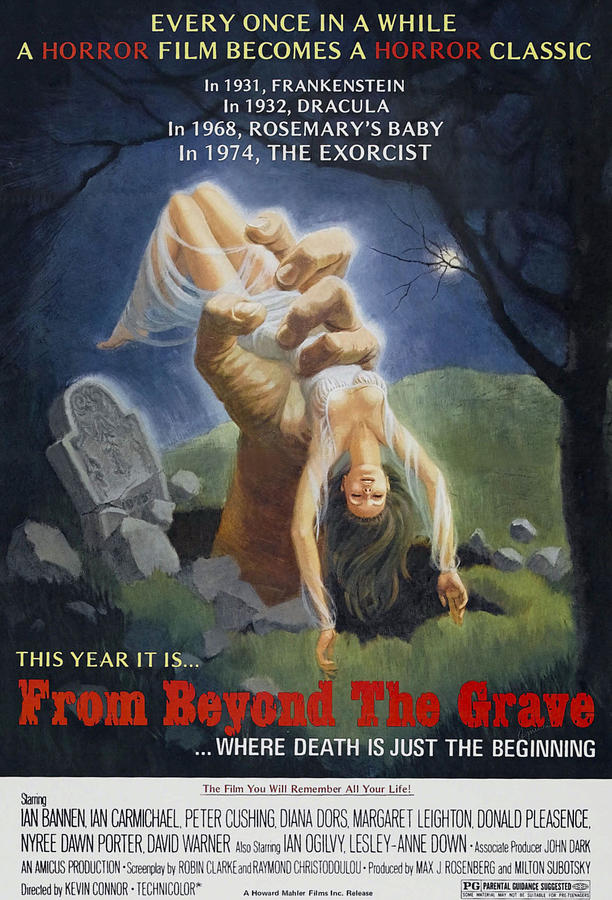
The poster for this movie states, “Every once in a while, a horror film becomes a horror classic. In 1931, Frankenstein. In 1932, Dracula. In 1968, Rosemary’s Baby. In 1974, The Exorcist. This year it is…From Beyond the Grave…where death is just the beginning!” Man, talk about hyperbole! Sure, this Amicus portmanteau is good, but it went right for the balls there, right?
17 years before Stephen King wrote Needful Things, this movie presents Temptations Limited, an antique store with the motto “Offers You Cannot Resist” and a frightening owner played by Peter Cushing.
In the Gatecrasher, Edward Charlton (David Warner!) thinks he’s conned Cushing into selling him a mirror for an incredibly inexpensive price. The thing is, that mirror is haunted by a ghost that feeds on murder and suicide. And the cycle of the mirror may go on and on, as we soon learn.
The second story, An Act of Kindness, is all about Christopher Lowe (Ian Bannen), a man trapped in a loveless marriage (Diana Dors, who plays his wife, has one hell of a real-life story that you can learn about in our review of one of her other movies, Craze). He feels no love from her or their son, so he stays out late and avoids going home.
Soon, he’s met an old soldier barely scraping by played by Donald Pleasence. He tells the old man that he was a soldier and purchases a Distinguished Service Order medal from Cushing to back up his yarns. Before you know it, he’s been seduced by the man’s daughter (who is plated by Pleasence’s real-life daughter Angela), who uses magic to kill his wife and set up a marriage between them. However, things can only get worse for Lowe.
In The Elemental, a demon inside a snuff box haunts a man, his dog and his wife.
Finally, in The Door, William Seaton (Ian Ogilvy, Witchfinder General) wants a fancy door from the shop but can’t afford it. Cushing offers him a deal and soon, it’s in his house and creating a gateway to a mysterious blue room where evil occultist Sir Michael Sinclair menaces our hero and his wife (Lesley-Anne Down, Death Wish 5: The Face of Death). This is the best of the bunch, with a genuinely creepy feel and a horrifying villain. It’s also the only story that ends well for its protagonists.
After all that, Cushing deals with a thief in his shop by locking him into an iron maiden and speaking directly to the viewer. All Amicus movies must end this way, which was probably some kind of British law.
This is the last of the Amicus portmanteau films and while not as powerful or frightening as their earlier efforts, it’s still plenty of frightening fun.
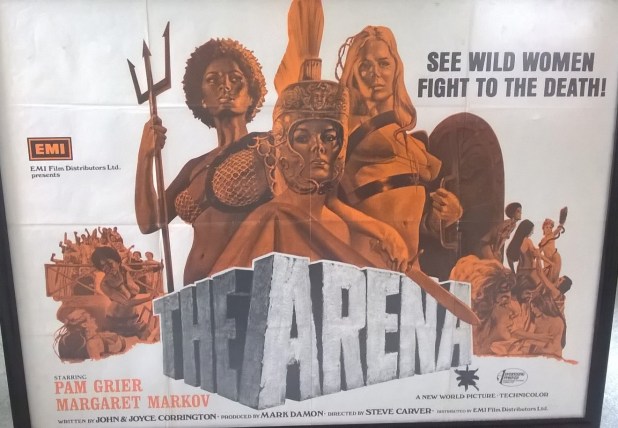
The assistant director of Johnny Got His Gun, as well as the director of Big Bad Mama, Lone Wolf McQuaid and Eye for an Eye, Steve Carver directed this exploitation roughie, where slave girls become gladiators and rise against their masters. But hey — it has Pam Grier in it! And you know why it’s probably so sleazy? I blame the director of cinematography — Joe D’Amato!
In the time after Spartacus, in the ancient Roman town of Brundusium, a group of slave girls are sold to Timarchus (Daniele Vargas, Eyeball), a promoter who puts together the fights in the colosseum. After the girls engage in a fight, she gets a big idea: make them fight to the death.
That’s when Mamawi (Pam Grier) and Bodicia (Margaret Markov) — who had just teamed up in Black Mama, White Mama — decide to team up and get out alive. Rosalba Neri (Lady Frankensteinherself!, as well as Lucifera: Demon Lover and Amuck!) is in this too!
Markov met her husband, producer Mark Damon, while making this movie, but couldn’t date until production was over, as director Steve Carver had made a rule regarding cast and crew intermingling.
Your enjoyment of this will depend on how much you enjoy watching women battle as gladiators and get treated as slaves. Go in wisely, dear reader.
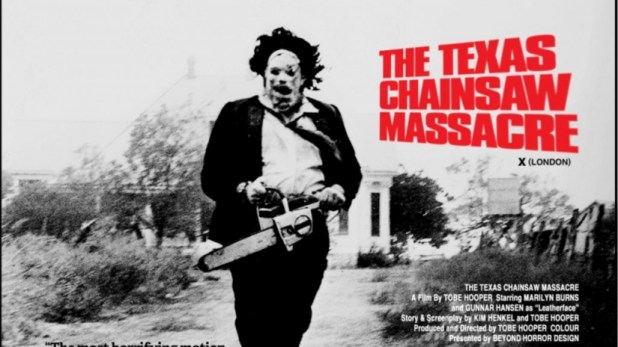
The Texas Chainsaw Massacre is not a movie. It is a force of nature. Where Night of the Living Dead took 1960’s horror past giant monsters and gothic monsters into modern concerns within the conceit of zombies. This film doesn’t need to exist within the supernatural. In fact, it’s so outside the realm of the unreal that so many people think it’s based on a real story. Or even is a real film, years before movies like The Blair Witch Project tried to pull stunts like that.
The real stunt of this movie is that it was made in the first place. Filmed in an early 1900s farmhouse in Round Rock, Texas on a small budget, the crew shot the film seven days a week, 16 hours a day, with temperatures that reached 110° F. Gunnar Hansen, who played Leatherface, was really a poet. A poet wearing a dead skin mask for 16 hours a day for over twenty-five days straight.
The house was filled with real animal remains, animal blood from a local slaughterhouse and furniture made from animal bones. As you can imagine, keeping all these dead things trapped within a poorly ventilated house led to conditions which were anything but fair to the actors.
Director Tobe Hooper envisioned this film as a PG related film, so he made each cut work so that you never see any of the actual carnage. But it backfired — as a result, the film’s entire feel is one of brutality. It’s actually hard to watch unless you properly prepare yourself for it.
“The film which you are about to see is an account of the tragedy which befell a group of five youths, in particular, Sally Hardesty and her invalid brother, Franklin.” That opening dialogue, by future sitcom actor John Larroquette for the price of a joint, suggests that the film you are about to watch is true. While it has some basis in the stories of Ed Gein and Elmer Wayne Henley, there never really was a Texas Chainsaw Massacre. It was invented by Hooper and writer Kim Henkel. Yet there’s always someone willing to convince you that there was.
It’s actually a pretty simple film. A vanful of hippies comes face to face with a cannibal clan who are being forced out of their way of life by industrialized improvements to the meat processing industry. Despite their astrology, peace and love, they are utterly annihilated and even the strongest of them is driven insane by the end.
The Texas Chainsaw Massacre is a film that ignores the rules of the hero’s journey and characters needing to undergo some personal growth. Everyone is lucky if they survive and even the villains and heroes that do won’t make it for long. Modern highways will push their way into the backwoods. Police procedures will improve. And the only work this clan will have is just trying to keep their way of life alive.
You can see the bloody influence of this film on nearly every horror film that came in its wake. Hell, Rob Zombie has made an entire career out of trying to remake something a tenth this good. This is a film that oozes malevolence and ill will from the very moment it begins to play.
I’m always struck by the fact that hardly anyone involved ever made their money back. The film’s original distributor was Bryanston Distribution Company, which turned out to be a Mafia front operated by Louis “Butchie” Peraino, who used Chainsaw to launder money that he had made from Deep Throat. The investors did make their money back, but the crew only made $405 each, scant pay for the hell on Earth they went through (Edwin Neal, the Hitchhiker, claimed that this film was more miserable than being in Vietnam and he’d wanted to kill Hooper for some time). After an arrest for obscenity, the cast and crew filed suit against Peraino and were awarded $25,000 each, which came from new owners New Line Cinema.
There’s a sequel to this film which exists in its own universe. I love that it’s everything that this movie isn’t. It’s a middle finger to expectations and ends with a final shot that is at least the equal of this film.
You can watch this on Shudder with and without commentary from Joe Bob Briggs.
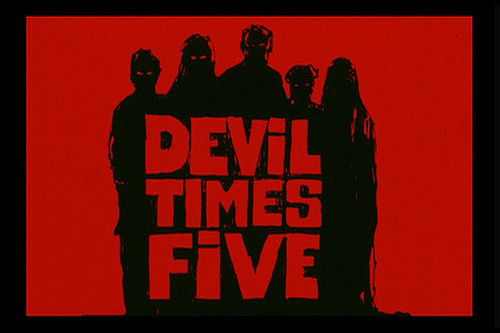
I’ve been obsessed for years with the trailer and artwork for this movie. Throw in the fact that it has 70’s teen idol Leif Garrett amongst its cast of pint-sized psychopaths and it seems like a recipe for my kind of movie insanity. However, I just never found the time to sit down and watch it. With so many movies on our shelves and streaming online, my to watch list is constantly bulging with films all screaming to be enjoyed. Thanks to Chilling Classics Month, I finally got the chance to spend some time with this film and it lives up to what I hoped it would be.
Five children have survived a van accident on a snowy road and unbeknownst to everyone they encounter for the rest of the film, they were on their way to a mental institution for criminally insane young folks. They make their way to the secluded mountain home of Papa Doc, a rich businessman, who has all manner of guests staying with him, like his sex-starved wife Lovely (Carolyn Stellar, who beyond being Leif Garrett and Dawn Lynn’s mother, would go on to design the costumes for the 1978’s utterly brutal Sgt. Pepper’s Lonely Heart’s Club Band), his daughter and her boyfriend, plus Dr. Harvey Beckman (Sorrell Booke, Boss Hogg from TV’s The Dukes of Hazzard) and his wife, Ruth (Shelley Morrison, Rosario from TV’s Will and Grace). Oh yeah, there’s also the dim witted handyman, Ralph (original screenwriter John Durren).
Soon, the power is out, the phones are cut and the kids are killing people left and right. Little actor and budding crossdresser David (Garrett), army lover Brian, Susan the pyro, Moe (Dawn Lynn, who played Dawna in the Walking Tall films) with her plush fish and usage of piranha and last but not least, albino nun Sister Hannah will find their way into your heart, then cut it out and show it to you. Imagine The Bad Seed times five, with none of the great story or acting.
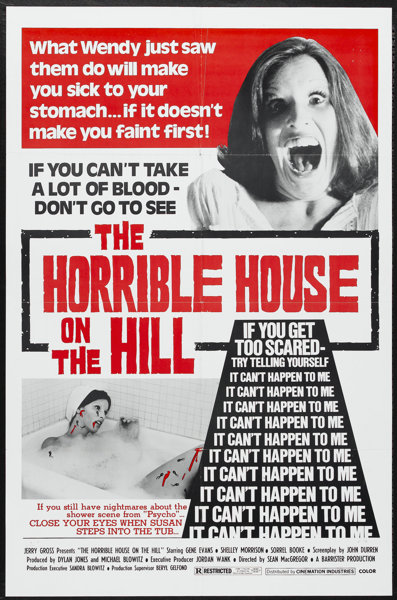
This movie is also known as Peopletoys, Tantrums and The Horrible House on the Hill. Of course, that last title has a Last House on the Left ripoff poster to go along with the similar title.
Devil Times Five was distributed by Jerry Gross’ Cinemation Industries, which also brought Son of Dracula, Teenage Mother (“She’s nine months of trouble!”), The Black Six and Idaho Transfer to audiences that had to be absolutely bewildered by their level of pure strangeness.
Original director Sean MacGregor was fired from the production after his footage was unusable and David Sheldon finished the film (you can tell that they switched interior locations because there’s no continuity in the backgrounds). By the time those reshoots happened, Leif Garrett had cut his hair, so he wears a wig that you can easily point out several times.
Even stranger, MacGregor was in a psychiatric ward after leaving this movie and also was dating Gail Smale, who played Sister Hannah. That last bit doesn’t seem all that interesting, until you realize that she was underage and that she was given a nun costume and rose-colored glasses to hide the fact that she was so young and a legitimate albino.
Seriously — how crazy is a movie where Leif Garrett watches as his real-life mom is nude and being murdered by carnivorous fish in the bathtub? This had to be a strange thing for people to watch, as Garrett was already well-known as Oscar’s son on TV’s Odd Couple and his sister was on My Three Sons.
If you’re looking for a movie where children annihilate adults that isn’t The Chlldren, Village of the Damned or Who Can Kill a Child?, then I guess you should watch Devil Times Five. Actually, I kid. This is a goofy little film that is pretty much the horror version of Home Alone. I enjoyed it, but you know, I also have no taste whatsoever.
You can find this on the Chilling Classics set — obviously! — and you can also watch it on Amazon Prime. Want a much better looking version Code Red.
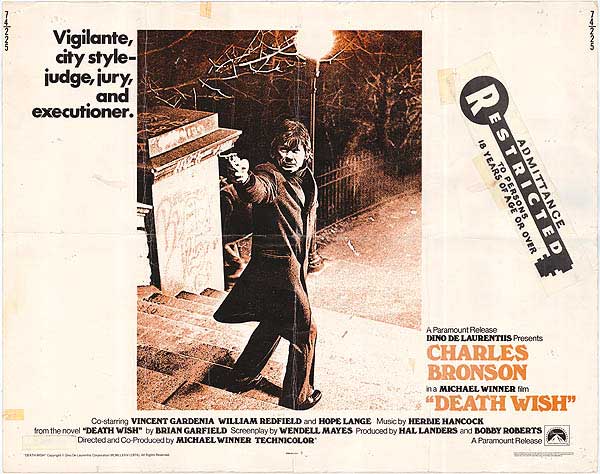
New York City in 1974 must have felt like the end of the world. Based on the 1972 novel by Brian Garfield, Death Wish was the answer. In fact, in many theaters, the audience stood up and cheered as Paul Kersey got his bloody revenge for the crims visited upon him and his family.
The film we’re about to discuss went through many twists and turns as it made its way to the screen. Originally, it ended with the vigilante hero confronting the thugs who attacked his family and them killing him, police detective Ochoa discovering his weapon and deciding to follow in his footsteps. And get this — the first choice to play the lead was Jack Lemmon, with Henry Fonda as Ochoa and Sidney Lumet directing.
Finally, United Artists picked the gritty action veteran Michael Winner to direct. Several studios rejected the film due to its subject matter and the difficulty of casting the lead. Winner wanted Bronson, who he’d worked with in the past, but the actor’s agent hated the message of the film and Bronson felt that the book was about a weak man, someone he would not be playing on film.
Death Wish turned Bronson, who was 53 at the time of its release, into a major star known worldwide. It’s a movie made exactly for its time. Despite its lurid subject matter and dangerous acceptance of its hero’s actions, it’s still a great exploitation film that actually explores the why behind its hero’s actions instead of just setting him loose upon people.
Paul Kersey (Bronson) starts the movie in Hawaii with his wife Joanna. When they return home to the squalid streets of New York City, it’s only days before three thugs — including Jeff Goldblum! — invade their apartment, raping their daughter Carol and bearing Joanna so badly that she dies. Beyond Goldblum in this early role, keep an eye open for Christopher Guest and Olympia Dukakis as cops, as well as Sonia Manzano (Maria from Sesame Street, who was dating director Winner at the time and suggested that Herbie Hancock do the score) and Lawrence Hilton-Jacobs (Freddie “Boom Boom” Washington from TV’s Welcome Back, Kotter) in supporting roles.
As he recovers from his wife’s death, Paul is mugged. He fights back and chases off his attacker and finds new strength from the battle. An architect by trade, Paul heads to Tucson where he helps Ames Jainchill with his residential development project. After work one night, he goes to a gun club with Ames, where we learn how good of a shot Paul is. Turns out he was a conscientious objector and combat medic who was taught marksmanship by his father, but promised his mother he’d never pick up another gun after his dad was killed in a hunting accident. On the way back home, Paul discovers that Ames has given him a gun as a gift.
Now back home, Paul learns from his son-in-law that his daughter is still catatonic and would be better off in a mental hospital. That night, when walking, Paul is mugged again but he has the gun with him. He fights back and kills the mugger, but even that action causes him to grow physically sick. But soon, he’s prowling the mean streets and looking for a fight.
Before long, NYPD detective Lt. Frank Ochoa (Vincent Gardenia) begins investigating the vigilante killings and quickly narrows down his suspect list to Paul. As the manhunt gets closer and closer, Paul finally is caught after passing out from blood loss after a shootout. Instead of arresting him, the NYPD wants the case quietly solved, so they send him off to Chicago. The minute he arrives, he helps a woman who was almost mugged and stares at the criminals with a smile, his fingers in the shape of a gun.
There’s a story which may be apocryphal, but when Michael Winner told Bronson what this film would be about — a man who goes out and shoots muggers — Bronson replied, “I’d like to do that.” Winner said, “The film?” And Bronson replied, “No. Shoot muggers.”
After viewing the film, author Brian Garfield hated how the film advocated vigilantism, so he wrote a sequel called Death Sentence that was made into a movie in 2007 starring Kevin Bacon. No word on whether or not he hated that movie too, as it only keeps a little of the book.
Compared to the heights of mayhem that this series will descend to, this is a retrained meditation of a man facing an increasingly violent world. Stay tuned. Paul Kersey is just getting started.
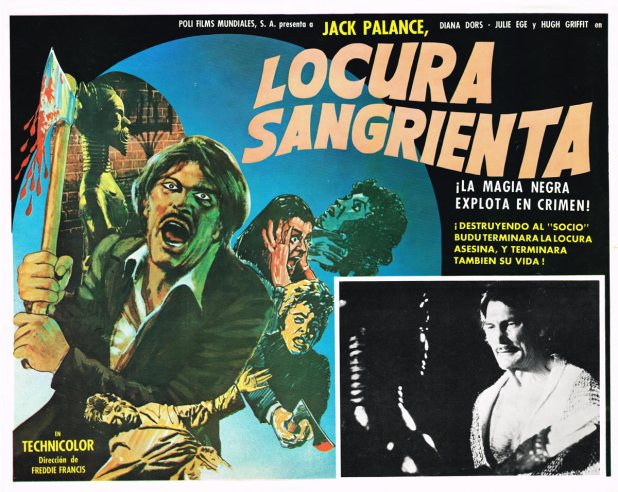
Thanks to his work on Amicus films, Freddie Francis will always get a pass. And Jack Palance has made some of the worst movies I’ve ever seen so much better. Therefore, I wanted to like Craze way more than I ended up enjoying it.
Palance stars as antique shop owner by day, cultist by night Neal Mottram. The film starts with him sacrificing a nude woman to the African god Chuku, whom he believes will reward him with both wealth and power. Its movies like this that make being a devil worshipper seem rough and pointless. Every single turn, you have to hunt someone down, kill them, get an alibi and run from the cops. It’s a lot of work and when it’s over, you still lose your soul.
Diana Dors is in it and her life story is way more interesting than the film. She gained her first fame as a Monroe-esque blonde bombshell promoted by her first husband, Dennis Hamilton. After a career of sex comedies and Page 3-style modeling, it turned out that her husband was defrauding her. Still after that, she made further headlines by holding parties where she supplied hot young starlets and plenty of drugs to a large number of celebrities. The real stinger was that she had cameras all over the house to capture the action. The Archbishop of Canterbury even publically denounced her!
Supposedly, Dors left over 2 million pounds to her son in her will. It could be unlocked via a secret code in the possession of her third husband, actor Alan Lake, but he killed himself soon after she died from cancer. Despite the best efforts of codebreakers and even a TV special, the money has never been found.
Anyways — Craze. There are plenty of British starlets in this, too. Juli Ege from On Her Majesty’s Secret Service to name one. I chose to watch this because Suzy Kendall from Torso and The Bird with the Crystal Plumage was in it. And Marianna Stone from Whoever Slew Auntie Roo? shows up as well.
It’s not horrible, but it’s very slow. Palance is great — of course he is — but even he has a lot to contend with here. You can watch it for yourself on Amazon Prime and see what you think.
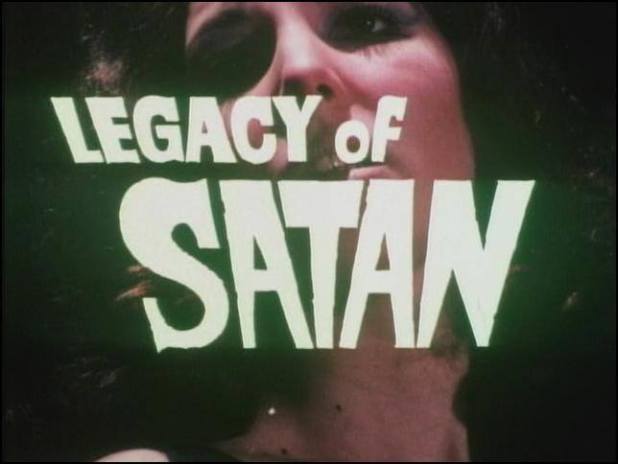
Day 6 of the Scarecrow Psychotronic Challenge is here. The theme? 666. El Dia De La Bestia: The more Satanic, the better. Well, this one is a Satanic movie made by a pornographer, so why not pile all of our sins in at once?
That pornographer is writer and director Gerard Damiano (Deep Throat). This film was originally intended to be a hardcore movie, but he saw it as a mainstream opportunity and decided to turn the film into a straight-up horror film. That said, that opportunity may have been suggested by producer Lou Parish, better known as Louis “Butchie” Peraino, a member of the Colombo crime family.
Shot on a tight budget and starring unknown actors, the film briefly ran in theaters before becoming part of a grindhouse double bill with The Texas Chainsaw Massacreand Blood (one assumes that Bryanston Distributing Company, which had rumored mob ties, had something to do with that).
Other than Sarah Peabody from Last House on the Left, who plays a cult member, there’s nobody recognizable in this tale of Maya, a young woman who a Satanic cult has picked to be their new leader. Fantasies overtake her daily existence, synthesizers play at the right time and everyone wears some wonderful 70’s clothes.
There are dream sequences, photos are burned between a woman’s thighs, a glowing sword appears, we witness a black mass, there are portentous (and pretentious) speeches and lots of gorgeous colors. But it’s all a mess. While filmed in 1972, it wasn’t released until much later. And Damiano would bring another better and more Satanic film — The Devil in Ms. Jones — to raincoaters soon.
Despite the budget, this movie looks way better than it should. There are a lot of gorgeous people on display but they really don’t do much for the hour plus running time.
If you want to watch it for yourself, it’s free with your Amazon Prime membership. You can find it right here.
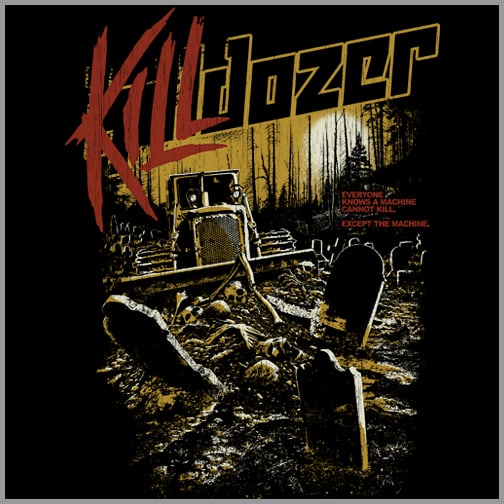
Originally airing on February 2, 1974, on ABC, this Theodore Spurgeon adaptation presents a unique premise that answers the question we’ve all been asking: “Who would win in a fight to the death—a man or a bulldozer?” Sure, a mysterious meteorite is behind it all, but this one is all about machine-on-man violence.
This one boasts a stellar cast including Clint Walker (The Phynx, as well as TV movies like Snowbeast and Scream of the Wolf), James Wainwright (TV’s Beyond Westworld), Carl Betz (Donna Reed’s TV husband), Neville Brand (Eyes of the Night and Without Warning), James A. Watson Jr. and Vega$ star Robert Urich. They all face off against an alien aura-possessed Caterpillar D9 bulldozer that takes them out individually.
The story and movie were so popular that Marvel Comics published an adaptation in Worlds Unknown #6, which was released the same year as the film.
Thanks to Conan O’Brien, this film has become a punchline and the name of a somewhat famous band. But beyond these pop culture references, Killdozer is a product of its time—a 1970s TV movie on a low budget—that has managed to entertain and intrigue audiences, earning it a place in the pantheon of cult classics.
UPDATE: This cult classic is now available on Blu-ray and DVD from Kino Lorber, offering a new generation of viewers the chance to experience it in high definition.
We’re on day 2 of the Scarecrow Video Psychotronic Challenge! The rules for today? DAY 2: SHE BITES: Scientists should not fool with mother nature but they do and bad things happen.
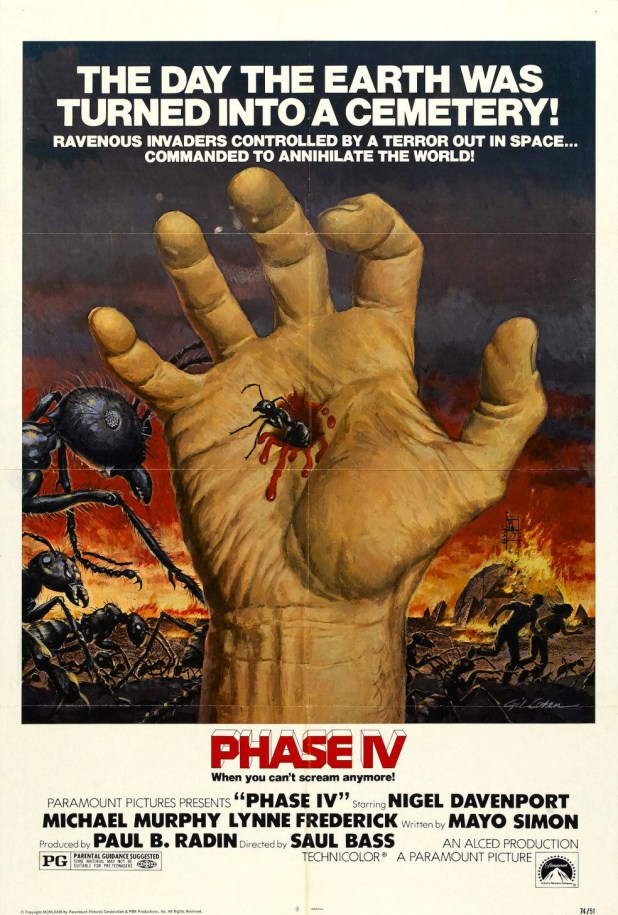
I’ve always wanted to watch Phase IV, the lone directorial effort of famed graphic designer and Academy Award-winning filmmaker Saul Bass. Bass was best known for his title sequences, including the animated cut-outs Otto Preminger’s The Man with the Golden Arm and his groundbreaking graphic design work on Hitchcock’s North by Northwest and Psycho. He also designed some of the most iconic logos in history, including AT&T, Warner Brothers and United Airlines.
Starting in the 1960’s, Bass moved beyond creating title sequences for films to visualizing, storyboarding and even directing key scenes and sequences. He’d get a strange credit for this: visual or pictorial consultant. On some films (like Spartacus, where he designed the gladiator school and storyboarded the final battle) he simply set things up for the director. On others, like West Side Story, where he filmed the prologue, storyboarded the opening dance and created the end titles, he set up the full direction the film would take. And on Psycho, Bass was integrally involved in that films shower murder sequence, going so far to create the boards and test footage that convinced Hitchcock how the scene should be shot.
This leads us to the only movie that Bass would direct on his own, 1974’s Phase IV. A failure upon release, it finally found an audience via television and video. It’s also the first film to depict a geometric crop circle, predating the first crop circles that were found in the UK.
A cosmic event has caused ants to undergo rapid evolution and a hive mind that scientists are struggling to investigate. Within the desert, those ants have created large towers and geometrically perfect designs that force the locals to abandon the area, except for one family.
Scientists James Lesko (frequent Robert Altman actor Michael Murphy) and Ernest Hubbs (Nigel Davenport, the original voice of HAL in 2001: A Space Odyssey) have set up a sealed dome to study the ants, as well as house the aforementioned family that has not left. Soon, they are at war with the much more organized and effective ants.
After the ants invade the lab, one of the townspeople, Kendra (Peter Sellers’ widow Lynne Frederick, who also appears in Schizo and Four of the Apocalypse) becomes convinced that the ants are angry at her. Bass was obsessed with ensuring that Frederick had no trace of her British accent in this film, making her run her lines over and over again. She also had to wear a tight corset so that she could appear sixteen years old instead of her real age, twenty. Also of note, Linda Blair was almost cast in the film but the budget couldn’t afford her.
Kendra abandons the lab, sacrificing herself to save everyone else as Hubbs and Lesko argue over how to best deal with the ants. Lesko wants to communicate with them while Hubbs wants to destroy them before being stung to death and falling into a hole. Lesko decides to follow Hubbs plan and destroy the queen, but instead, he finds Kendra alive. He decides that the ants don’t want to destroy the human race, but instead make their two worlds work together.
Originally, Bass filmed a four-minute long montage sequence that ended the film, showing what life on new Earth would be like and how evolution would change Lesko and Kendra. This was cut by the distributor and would not be seen until 2012.
This is the kind of movie that could only be made in 1974. This is a pre-blockbuster big movie unafraid to suddenly have long moments of gorgeous music and long elegiac shots of insects going about their daily lives. The moments of human interaction feel boring by comparison. From the posters for the film, audiences were probably expecting a Bert I. Gordon style film and were rewarded with a trippy meditation about mankind’s place in the cosmic consciousness.
Obviously, this film is a major influence on Panos Cosmatos’ first film, Beyond the Black Rainbow. It was also one of the first movies featured on Mystery Science Theater 3000 during the KTMA era.
 B&S About Movies
You must be logged in to post a comment.