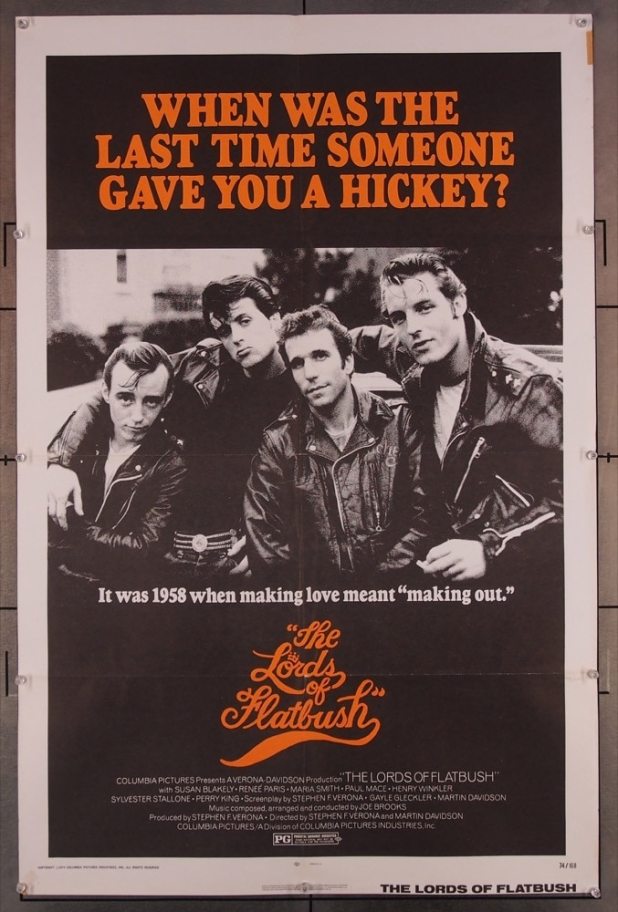
The Lords of Flatbush (1974)

Martin Davidson made his directorial debut with this film. You may know him better from Eddie and the Cruisers. You may not know him from the John Ritter vehicle Hero at Large. It was written and co-directed by Stephen Verona, who years later would direct the astounding exercise video Angela Lansbury’s Positive Moves.

This movie is one of the first that introduced both Sylvester Stallone and Henry Winkler to a wide audience, as well as the debut film role for Armand Assante.

The four Lords — Chico Tyrell (Perry King), Stanley Rosiello (Stallone), Butchey Weinstein (Winkler) and Wimpy Murgalo (Paul Mace, Rat from Paradise Alley) — chase girls, shoot pool, loiter at the malt shop and steal cars together.

This film is an episodic look at their lives. Chico just wants to win the heart of Jane (Susan Blakely, Capone, The Concorde … Airport ’79, Over the Top and Dream A Little Dream), who seemingly wants nothing to do with him. Stanley gets pressured into marrying his girlfiend Frannie (Maria Smith, Concepcion from The Incredible Shrinking Woman) despite the fact that she may have lied about being pregnant. And Butchey may be smart enough to escape Flatbush, but he hides his intelligence behind his leather jacket.

Funny enough, both Winkler and King were Yale graduates playing Brooklyn tough guys. For his part, King decided to follow Method acting: “Stephen Verona would never have cast a Yale graduate to play Chico, so I stayed in character, and halfway through the film I told him (in thick Brooklyn drawl): “Hey Steven, you realize you cast two Yale graduates as your hoods?” He thought I was kidding!”

He wasn’t the first choice for the role. Richard Gere was supposed to play the character, but he and Stallone didn’t get along. That’s an understatement, as Stallone would tell Ain’t It Cool News: “We never hit it off. He would strut around in his oversized motorcycle jacket like he was the baddest knight at the round table. One day, during an improv, he grabbed me (we were simulating a fight scene) and got a little carried away. I told him in a gentle fashion to lighten up, but he was completely in character and impossible to deal with. Then we were rehearsing at Coney Island and it was lunchtime, so we decided to take a break, and the only place that was warm was in the backseat of a Toyota. I was eating a hotdog and he climbs in with a half a chicken covered in mustard with grease nearly dripping out of the aluminum wrapper. I said, “That thing is going to drip all over the place.” He said, “Don’t worry about it.” I said, ‘”f it gets on my pants you’re gonna know about it.” He proceeds to bite into the chicken and a small, greasy river of mustard lands on my thigh. I elbowed him in the side of the head and basically pushed him out of the car. The director had to make a choice: one of us had to go, one of us had to stay. Richard was given his walking papers and to this day seriously dislikes me. He even thinks I’m the individual responsible for the gerbil rumor. Not true… but that’s the rumor.”

For what it’s worth, Winkler claims that he based The Fonz — the role that for some time made him quite possibly the most famous man in America — on Stallone’s acting in this film.
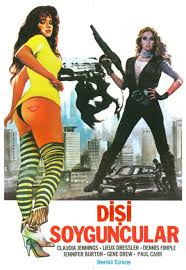
Truck Stop Women (1974)

Why would I be awake at 2:51 AM on a school night watching a movie called Truck Stop Women — as well as Road Angels — when I could just as easily be in bed? Well, some would say it’s a devotion to our readers who demand to know more about mid-70’s truck driving action films. But we all. know it’s because this movie has Claudia Jennings in it and that name is enough to make me say, “Well, I’ll at least watch this for a few minutes.” Before you know it, the sun is coming up and I’ve spent all of my beauty sleep hours watching the dearly departed Ms. Jennings skate roller derby or fight the syndicate or play post-apocalyptic games with David Carradine. Tonight is no different.

What can you say about a movie that starts with two gangsters assassinating a naked couple in a bathtub? You roped me in again, Mark Lester, director of CommandoFirestarterClass of 1984Bobbi Joe and the OutlawRoller Boogie and so many other movies that have also kept me awake late into the small hours.

Anna (Lieux Dressler, Grave of the Vampire) runs a brothel for truckers — yes, there was once a thing and I bet there probably still is — in New Mexico. He daughter Rose (Jennings) is one of her girls (so is Uschi Digard!) but she’s tired of her mom running her life and dreams of more money, so she starts working with the Eastern Mafia — led by Smith (John Martino, Paulie Gatto from The Godfather) and Rusty (Speed Stearns, Eat My Dust!)  — to take over the racket.

Oddly enough, $15,000 of this film’s budget came from politician Phil Gramm. There were some articles that made a big stink about it being an adult film, but it’s honestly softcore at best.

Look, any movie where Claudia Jennings yells, “Would Jackie Onassis eat chicken fried steak!?” is going to be one that I end up watching. Whether or not you have the same bad taste as me will determine whether or not you should watch this movie.

Does it help if I tell you that the entire movie stops dead for a montage of an 18 wheeler going across the entire country to the tune of “I’m a Truck,” sung from the POV of the truck itself? Because wow, that totally happens. Hey — Dennis Fimple is in it, so maybe you really should stay up all night. I know that I did.

You can watch this on Tubi and Amazon Prime.

Big Bad Mama (1974)

Steve Carver originally intended to be get invovled in the worlds of cartooning, commercial art and animation before becoming a cameraman for ABC’s Wide World of Sports, shooting St. Louis Cardinals baseball games before he made thirty documentaries while teaching college at the same time.

One of those documentaries got him into the American Film Institute, where he studied under George Stevens, Alfred Hitchcock, Charlton Heston and Gregory Peck, as wel as the opportunity to be the assistant director on Dalton Trumbo’s Johnny Got His Gun.

Carver’s final AFI project was a short based on Poe’s The Tell-Tale Heart, which brought him to the attention of Roger Corman. He edited 150 trailers for the producer and directed The Arena — which has Joe D’Amoto as director of cinematography — before this film. He’d go on to make two Chuck Norris films, Lone Wolf McQuade and An Eye for An Eye before leaving film for the world of photography, pining for the more fun days of working with Corman.

Texas, 1932. Wilma McClatchie (Angie Dickinson) has taken over her dead man’s bootlegging still, but gets caught by the law. Forced to hand over all her money and even her wedding ring to the sheriff, she decides that she and her daughters Polly (Robbie Lee, Lace from Switchblade Sisters and eventually the voice of Twink on Rainbow Brite; she’s also the goddaughter of Roy Rogers and Dale Evans) and Billy Jean (Susan Sennett, The Candy Snatchers and wife of Graham Nash) are going to live a life of crime. 

While Wilma is at a bank trying to pass a fake check, the girls end up helping Fred Diller (Tom Skerritt) as he knocks over the joint. He and Wilma soon become lovers, but that doesn’t last long before she’s bedding gambler William J. Baxter (William Shatner) and he starts sleeping with both of her daughters, sometimes at the same time because Roger Corman produced this. 

After kidnapping and ransoming the daughter of a millionaire, federal agents and the police finally track down the gang. Baxter gets cuffed and the girls escape while Diller defends them with a hail of Thompson submachine gun fire. But as they drive away, Wilma dies, her bloody arm dragging against the left side of the car as it speeds away. 

Well, or so you’d think, as there was a sequel. And of course, we’ll be covering that soon.

I learned so much about so-called bad movies from the Medved brothers. In their 1986 tome Son of the Golden Turkey Awards, they nominated Dickinson’s role in this film as “The Most Embarrassing Nude Scene in Hollywood History.” Now that I’m older and wiser, I can say that these guys must have been embarrassed themselves as they actually enjoyed this trash. I hate the idea of guilty pleasures; just like what you like.

Oddly enough, Jerry Garcia performed most of the guitar and banjo music in the movie. And if you’re looking for fun actors, Sally Kirkland, Dick Miller and Royal Dano all show up. It’s not the best movie you’ve ever seen, but it’s filled with sin, skin and bullets. What else were you hoping for?

You can watch this on Tubi and Amazon Prime.

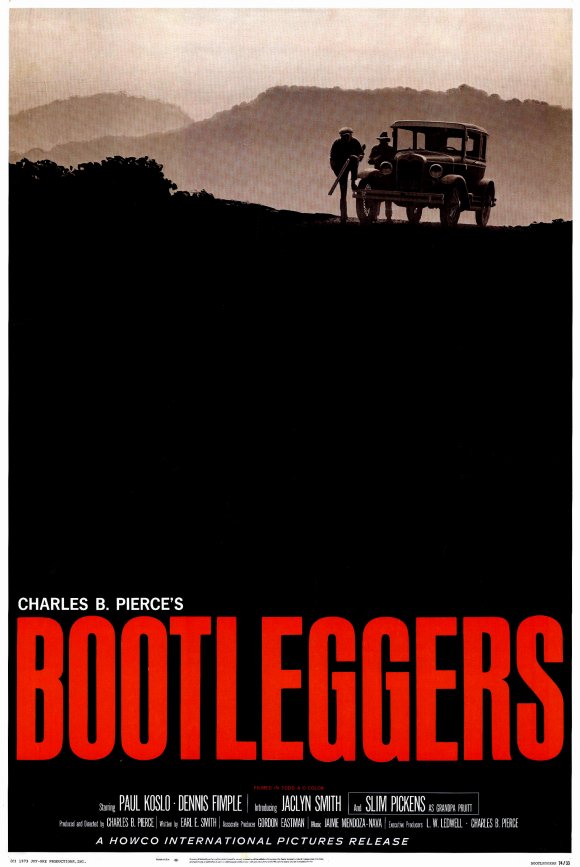
The Bootleggers (1974)

If there’s a redneck movie hall of fame, let me nominate Charles B. Pierce. If all he did was create The Town That Dreaded Sundown and The Legend of Boggy Creek, he’d make it. But he was also quite possibly the writer of Dirty Harry’s “Go ahead, make my day.” He also directed The Norseman, a movie that improbably placed Lee Majors into Viking gear. It’s as amazing as it sounds.

Here, he tackles a really familiar redneck movie trope: bootlegging. Did you think it’d be about something different from the title?

The movie starts in 1921, where 10-year-old Othar Pruitt watches as his dad is murdered by a rival family. Twelve years later, Othar (Paul Koslo, who was as redneck as an actor from Germany can get) and Dewey Crenshaw (Dennis Fimple, a redneck actor if there ever was one) are running hooch across statelines.

When Other’s Grandpa Pruitt (Slim Pickens) is murdered by the Woodall clan, Othar and Dewey go to war. Along the way, Jaclyn Smith shows up in one of her first roles.

Unlike Pierce’s other — and perhaps better — films, this one isn’t celebrated and won’t be getting a 4K reissue. But you can watch it on Amazon Prime. Drink up while you do.

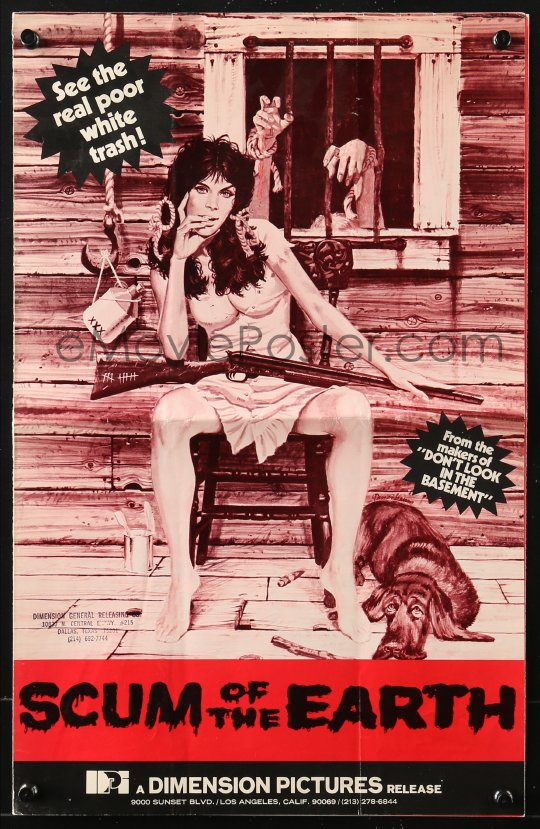
Poor White Trash II aka Scum of the Earth (1974)

Originally known as Death is a Family Affair and perhaps better known as Poor White Trash Part II, this S.F. Brownrigg movie belongs squarely within the genre of hicksploitation or redneck films. After Don’t Look In the Basement, where else can he go? Downward, it seems, as this movie is awash in, well, scum while still finding some compassion for even its most depraved characters.

Helen and her new husband Paul have barely unpacked at the cottage where they’ll spend their honeymoon when he’s killed with an axe to the chest. She runs through the woods looking for help, she runs into Odis Pickett, whose dismal shack is the only shelter for miles.

Somehow, Odis convinces Helen to stay for the night, promising that he has a phone. Soon, she’s in the middle of his family, which includes his mentally challenged son Bo, his pregnant wife Emmy and his daughter Sarah. And of course, that killer isn’t going to be happy with just one murder.

The Texas Film Commission somehow gave this production $200 a week to get made. Who knows what they thought when they say this sweaty, seamy deep Southern fried movie made by and for maniacs.

This is the kind of movie that you feel like you have to take a shower after you watch it. It feels like you are there, in the dank woods, dealing with this backwoods family, who may be more dangerous to themselves and our heroine than the murderer wandering outside their door. It also proves that the city folks are just are mentally deranged and can have just as confusing relationships as their country relatives. They just hide it much better.

I don’t even know what to classify this movie as. It’s not horror, but it has those elements. It’s also kind of like a stage play, with everyone confined in one room and slowly driving one another insane. It feels like someone could snap and either fight or fuck everything around them. For a movie that promises such sex from the poster, it only pays you back in complete contempt for your prurient needs. A masterpiece.

The Black Godfather (1974)

J.J. is a young African American male who goes from nobody to street boss after being taken under the wing of the “Black Godfather” Nate Williams. After a robbery attempt on a drug dealing goes bad and J.J. loses his best friend, Williams helps him survive and gives him the cash to get started. Nate is that most perfect of all movie creations, the older street boss who takes care of his community without exploiting them. J.J. learns from him and takes on a mission — rules the streets without letting the white drug dealers in.

Those white dealers are led by mafia leader Tony Burton, who kills J.J.’s mentor and kidnaps his woman, aided and abetted by crooked white cop — is there any kind in these films? — Joe Sterling.

This film was written and directed by John Evans, who also created 1978’s Blackjack. It’s an example of black artists creating movies starring their own people, instead of waiting for white Hollywood to put them on the screen. This isn’t the best film I’ve seen in the genre, nor does it really play much off its title mimicking the biggest film of 1972, The Godfather. But there’s some charm to Rod Perry here, as he’s also probably the best part of another film of this era, The Black Gestapo.

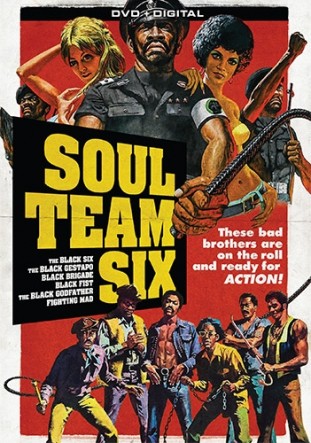
You can get The Black Godfather on Mill Creek’s new Soul Team Six DVD collection, along with five other films. It’s also on Tubi, Amazon Prime and the Internet Archive for free.

DISCLAIMER: Mill Creek sent us this set, but we were planning on buying it anyway. It has no bearing on this review.

Black Fist (1974)

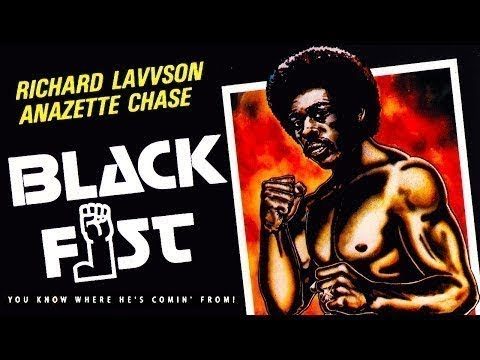
Black Fist is — like Spookies — really two movies in one. It’s a combination of the films Bogard — originally rated X for some steamy sex scenes that were chopped out here — and another called Get Fisk. The Greek producers of the former movie had illegally financed the film, so producers William Larrabure and Richard Kaye did some surgery and ended up with a film that’s kind of all over the place but still has some interesting moments. I can also add to the confusion by sharing the fact that New Line re-released this movie as The Black Streetfighter.

Leroy Fisk (Richard Lawson, Poltergeist) is a fighter for mob boss Logan (Robert Burr), enduring that man’s racism while providing for his family. Heineken (Dabney Coleman!) is a racist cop who demands that Leroy cut him in on his action. Our hero just wants to earn money for a club and provide for his family.

Even when he’s a success, training to become a better fighter and beating the hell out of his opponent (Hard Boiled Haggerty) and throwing Logan onto the man’s bloody body, the white men won’t let him get away with it. A car bomb is meant for our hero, but kills his wife and brother-in-law. Of course, he’s going to get revenge.

Look for Edward James Olmos in his first role, a quick cameo as a junkie, and Phillip-Michael Thomas playing two different pimp characters (one assumes that the blending of the two movies led to this occurrence).

You can get Black Fist on Mill Creek’s new Soul Team Six DVD collection, along with five other films.

DISCLAIMER: Mill Creek sent us this set, but we were planning on buying it anyway. It has no bearing on this review.

Born Innocent (1974)

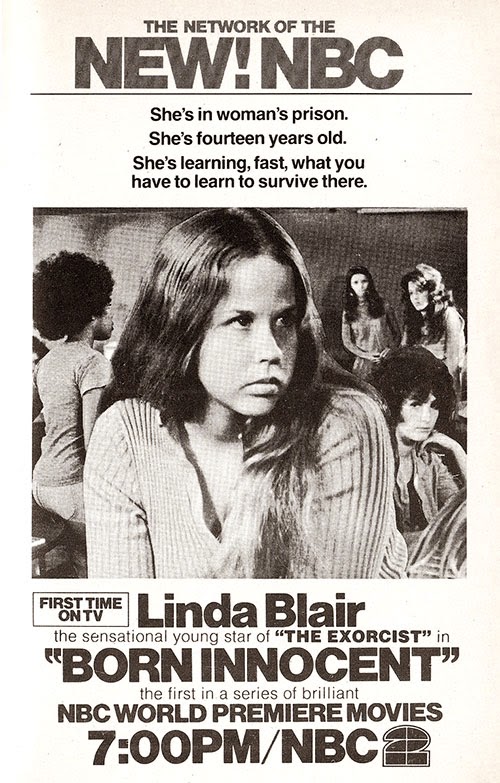
For years, Bill Van Ryn from Groovy Doom has told me how disturbing this made for TV movie is and I kept thinking, someday, I’ll do an entire week of Linda Blair movies and make sure to include it. Now I’m hitting myself for waiting so long.

Blair plays a runaway who ends up trapped between her abusive family, an uncaring system and even more horrifying children, with only one care worker on her side. Highly publicized and incredibly controversial due to its graphic content, Born Innocent was the highest-rated television movie to air in the United States in 1974.

Christine “Chris” Parker (Blair) is fourteen and has been arrested so many times that she’s ended up in reform school. Her abusive home may be the cause, as her father (Richard Jaeckel, Chosen Survivors) beat her so much that she ran away from home, with her mother (Kim Hunter, Dr. Zire from Planet of the Apes) watches on, unfeeling and unable to stop it from happening. Only her older brother knows the truth, but he has his own life now.

The system blames Christine for her behavior and only a counselor named Barbara (Joanna Miles, The Dark Secret of Harvest Home) tries to save her from the apathetic system that allows for a destructive system within the reform school, including a gang that brutally assaults Chris in a scene involving a toilet plunger that was censored from future broadcasts.

After a pregnant girl miscarries due to staff abuse, Chris starts a riot. As the film closes, Barbara realizes that she has lost her, as Chris has gone from a smart and innocent girl with morals to someone who is manipulative and feels no remorse. Once an adult, she’ll basically go from this system to the prison system with no hope for being saved.

As stated before, the original cut of Born Innocent contains a scene where Blair’s character is attacked in the shower by several girls. This controversial scene led to the Family Viewing Hour, which became briefly mandatory for the networks in the late 1970s.

Born Innocent was criticized by the National Organization for Women, the New York Rape Coalition, and numerous gay and lesbian rights organizations for its depiction of female-on-female sexual abuse. In fact, the Lesbian Feminist Liberation considered the movie propaganda against lesbians, claiming that “Men rape, women don’t.” There was even a lawsuit over a copycat crime that was eventually dismissed.

Whew — this is one downbeat, brutal slice of 1970’s dread.

Phantom of the Paradise (1974)

I have no one to blame but myself for this movie taking this long to make it on to this site.

Seriously, this is in my top ten films of all time and I could never find a good time to share it. Without further ado, if you know this movie, let’s discuss it. And if you’ve never seen it, get ready to have your mind blown.

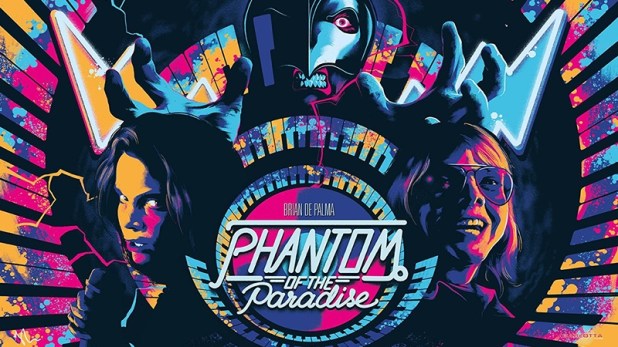
After Sister and before Carrie, Brian DePalma wrote and directed this musical take on The Phantom of the Opera by way of Faust and The Portrait of Dorian Gray. That’s a simplification of this astounding movie, which wows me every single time I watch it.

Singer-songwriter Winslow Leach (William Finley with Paul Williams singing) plays his music for the sinister record producer Swan (also Williams). It’s the perfect music to open The Paraside, Swan’s new concert hall. Instead of paying Leach for his music, Swan steals it with the help of his strong arm henchman Arnold Philbin.

Months later and Winslow sneaks into Swan’s Death Records (it was originally filmed as Swan Song, but Led Zeppelin sued and every single mention had to be changed at great expense, but a few sneak through) and watches women rehearse his music for their audition. He falls for one of them, Phoenix (Jessica Harper, Suspiria) who he thinks has the perfect voice.

Leach tries to sneak in one more time, dressed in drag, but he’s beaten and framed for drug dealing, then jailed and his teeth replaced with metal fangs. Six months later and The Juicy Fruits have taken one of his songs to number one. He flips out and tries to destroy the records as they’re being made. The recording press accidentally catches him and his face is crushed and burned, along with his vocal cords being destroyed. He falls into the river and is presumed dead.

Now, Winslow is gone and all the remains in the Phantom, clad all in black and wearing a silver owl mask. He haunts and attacks Swan and any musicians who sing his music, but the evil music producer cons him into composing the ultimate album for him, even giving him a special recording studio and electronic voice box that allows him to sing again. Working on his new project, Faust, the Phantom throws himself into his work. But the music was never intended for his beloved Phoenix. No, Beef (Gerrit Graham) will be singing his music and the contract has been written in blood.

Throughout the film, the backing band switches identities, from the 1950’s doo-wop of The Juicy Fruits to the surf rock Beach Bums to the shock rock band The Undeads. As Beef sings “Life At Last,” The Phantom dispatches him with a neon lightning bolt. He tries to tell Phoenix who he is and begs her to leave.

That night, he watches through a skylight as Swan and Phoenix embrace. The moment destroys him so he stabs himself in the heart, but he can’t die until Swan does, thanks to their contract. And he can’t kill his enemy with a knife, because he’s under contract too to someone much more sinister.

Following the first performance of Faust, Swan and Phoenix will be married. The Phantom then finds the videotaped contract between Swan and the Devil, as well as the contracts that he made with the producer and a new one with Phoenix. Even worse, he learns that his love will be killed during the wedding ceremony.

Right before that happens, The Phantom swings out and saves Phoenix, then reveals that Swan is a monster. Like literally a monster. As they battle to the death, both of their wounds take their lives while Phoenix finally embraces The Phantom and recognizes him.

I love that Rod Serling is the intro voice here. To tell you the truth, I adore every moment of this movie, which is DePalma going completely wild with split screens and camera tricks to tell this bonkers tale. There’s an amazing lift of a scene from Orson Welles’ Touch of Evil as The Phantom places a bomb in the trunk of The Juicy Fruits’ car.

Two of the stars of Carrie assisted on this film and you’ll never see them. First, Betty Buckley who plays Miss Collins in that film, provided all of the singing and character ADR work for the audition and orgy scene. And Sissy Spacek assisted her boyfriend Jack Fisk, who was the film’s production designer, as a set dresser.

As with almost every other musical I’ve covered this week, this movie flopped badly. Everywhere, that is, except Winnipeg, where it played for over a year and sold 20,000 copies of its soundtrack. It even came back to play theaters in the 1990’s and 2000’s there. The city even held an annual Phantompalooza convention.

It also was a big hit with two French teenagers, Thomas Bangalter and Guy-Manuel De Homem-Christo. You might know them better as Daft Punk. Thomas claimed that the movie is, “our favorite film, the foundation for a lot of what we’re about artistically.” It’s no coincidence that they’ve worked with Paul Williams or that the metallic helmet and jumpsuit of The Phantom inspired their onstage personas.

I recommend that you get the Shout Factory blu ray of this movie. It should be in every movie lovers collection.

Plus, Paul Williams did “The Hell of It” on The Brady Bunch Variety Hour, a fact that still blows my mind when you listen to the lyrics.

UPDATE: This is on Shudder!

Lady Snowblood 2: Love Song of Vengeance (1974)

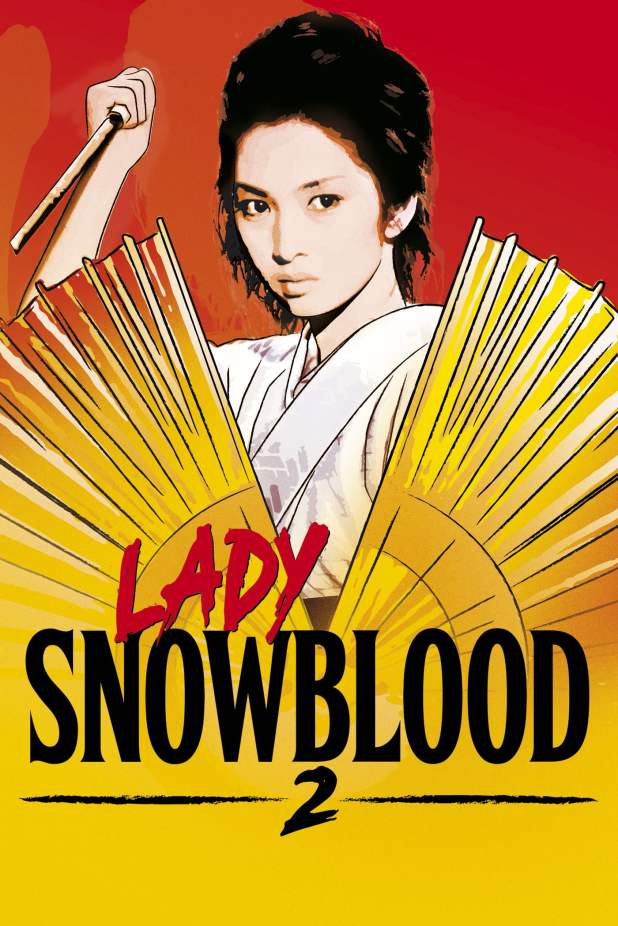
When we’d last seen Meiko Kaji’s Lady Snowblood, she was passed out face down in the snow at the end of a climactic battle. Any worries or reports of her demise have been greatly exaggerated, as this film starts off with her already in the midst of a battle, as she walks toward the camera cooly dispatching one enemy after another.

It turns out that she’s in a pitched battle with the police, who soon prove to be too much for her. She’s arrested, tried and sentenced to hang. However, she’s rescued by the head of the Secret Police, Seishiro Kikui (Shin Kishida, who is kind of like the Japanese Christopher Lee, as he appeared in the Hammer-inspired Chi o Suu vampire movies).

He wants her to spy on the anarchist Ransui Tokunaga, who owns a document. that is crucial to the government’s stability.  If Lady Snowblood can deliver that document, she’ll be given full immunity and allowed to disappear.

Snowblood acts as a maid, infiltrating the home of Ransui and looking for that document. However, she begins to question why she’s there. It also turns out that her target knows who she is and still trusts her, asking if she will deliver that crucial document to his brother Shusuke (Yoshio Harada, Stray Cat Rock: Beat ’71).

Despite being shot numerous times by the police and falling off a bridge, Snowblood survives to bring that document — which details how the Secret Police and the government rose to power based on lies — to Shusuke.

Ransui is captured and tortured by the police as Snowblood heals from her wounds in the slums of Samegabashi, a lawless land where the police refuse to venture. She asks Shusuke why he doesn’t save her brother, just as his wife comes and begs for help. Yet he still refuses.

Even healing from her wounds, Snowblood remains deadly. With one throw of a knife, she chases off a spy that had been watching her every move. Meanwhile, Shusuke explains how he is different from his brother. While Ransui wanted to change the world with the document, he’ll only use it to gain wealth and power.

While the spy soon escapes, despite being tortured, Ransui isn’t so lucky. He barely makes it back to Samegabashi, more dead than alive. That’s because the Secret Police injected him with the plague, using him as a weapon against the slum and anyone in it. Shusuke nails his brother into a building to die, warning Snowblood to not try to save him.

The police and Ransui’s wife takes one of their eyes before being killed. Her body is set ablaze and sent out to see as we see the need for revenge growing within Snowblood all over again.

The Japanese dialogue refers to Lady Snowblood as an asura, a Buddhist demigod who becomes obsessed with its desires, whether that be for wealth, knowledge or — in the case of our heroine — bloody violence. Its thirst for whatever it craves can only be slaked by death. As Snowblood stands on the gallows earlier in this film, she’s already accepted death: after all, the only reason she was only born was to serve as the instrument that would finally gain her mother’s revenge.

Seeing as how the original film really was to end with her death, this second film feels superfluous. It’s less about the action and more about political intrigue, though there are some great battles at the start and end of the film. And I love the visual of the man Lady Snowblood kills at the beginning, as he falls into the water and stains it with his neon blood as she kneels and drinks.

Back to the plot — it’s revealed that Shusuke once dated Ransui’s wife and she was the only thing that kept him alive in the midst of war. When he made it home, his brother had married her, so he cut himself off.

Snowblood goes directly into the lair of the Secret Police and tries to make a deal, which they laugh at. However, she uses her only iron will and the threat of the plague to turn the tables. But they still intend to burn the slums to erase their enemies and the document.

The police make their move on Snowblood, who quickly rises back to her deadly promise, wiping them out one by one. She finds Shusuke, who tells her that everyone in the village has been burned to ashes.

The remaining Secret Police, mostly just Seishiro Kikui, are confronted by a half-dead Shusuke and Snowblood, who appears to rise like a vengeful demon behind him. She quickly slices the arm off the first person who attacks them and as the rest of the police battle up the steps, she descends, tearing them to pieces, just as she did the men at the start of the film.

The battle through the Shinto shrine is exactly what I wanted to see from the very start of this movie. Despite Kikui shooting them numerous times, he’s impaled and a bloody Snowblood soon slices him, sending arcing sprays of blood everywhere.

Somehow, she can shrug off being shot, but Shusuke isn’t as lucky. He begs for her to kill him, which she does with little show of emotion. Water flows from the cut of her sword as he dies. Snowblood is framed by the flags of Japan and the bodies of her enemies as the film closes.

While this isn’t anywhere near the delirious violence of the original, it’s not a bad film. It just will never compare, but that’s an impossible task.

You can get this movie on the Criterion set of both Lady Snowblood films from Diabolik DVD.