Bucheon International Fantastic Film Festival: Flesh for Frankenstein (1973)

Joe Dallesandro is one of those nexus points for so many movies and parts of culture that I love. Born to a Navy man and a mother who was serving fifteen years in a federal pen for auto theft by the time he was five, Joe went from foster homes to knocking out his high school principal and stealing cars just like his mom. He got shot in the leg, and when his dad took him to the hospital, the cops arrested the fifteen-year-old and sent him to the Catskills, specifically the Camp Cass Rehabilitation Center. He escaped within a few months and made it back to New York City, where he went from nude modeling to being the star of Warhol’s films.

After roles in Lonesome Cowboys, Trash, Heat and Warhol’s two monster films, Joe decided to stay in Europe, where he made all sorts of movies in all the types of genres that I love. Yeah, there’s the American The Gardener, Serge Gainsbourg’s Je t’aime moi non plusSavage Three, Killer NunMadnessLe Marge with Sylvia Kristel and many more. He even shows up somehow in Theodore Rex. Yes, the same man whose bulge is on the front of the Rolling Stones’ Sticky Fingers, and the cover of The Smiths’ first album was in a movie about dinosaur cops.

This is the movie that Joe, who never once gave it away, came to Italy to make with Paul Morrissey.

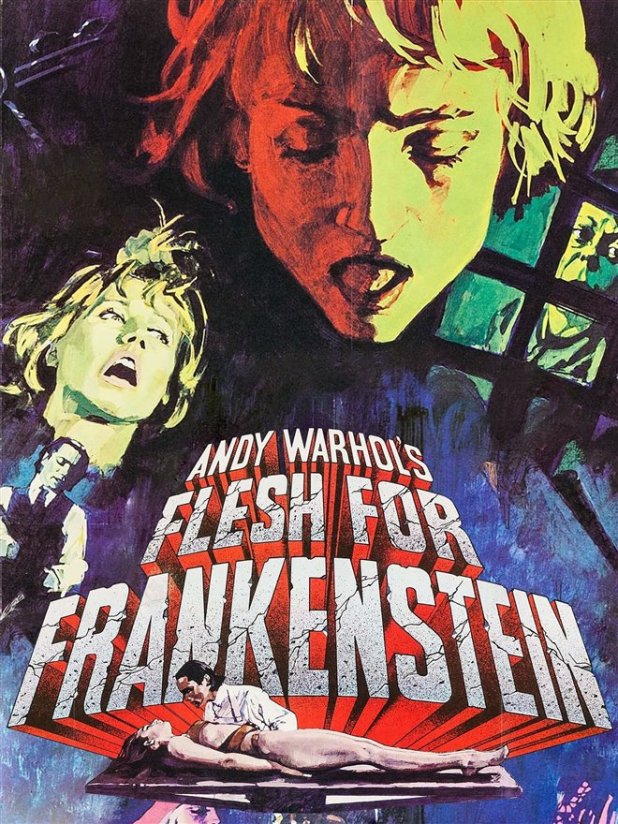
Baron von Frankenstein (Udo Kier) has made his sister Katrin his wife, yet ignores her as he works to create the perfect human being, going through corpses of men and women to craft his Serbian ideal. You know, when he isn’t literally having sex with the body parts of dead women while shouting, “To know death, Otto, you have to fuck life… in the gall bladder!”

He wants Nicholas (Dallesandro) to be the body of his creature, but he escapes and makes his way to the castle, where he begins to satisfy the Baroness. Once she reveals the fact that she only cares about herself, she betrays him and, in return, is given what she really wants: The opportunity to have sex with the Baron’s creation, who responds by loving her to death. Another even more graphic scene happens when lab assistant Otto literally screws the guts out of the female monster (Dalila Di Lazzaro, Phenomena), causing the angry Dr. Frankenstein to kill him.

I kind of dig that the end of this film echoes both A Bay of Blood and Manson’s quote about “These children that come at you with knives — they are your children” by having the Frankenstein children holding scalpels that they will either use to help or to hurt. The movie doesn’t tell you what happens next.

That A Bay of Blood comparison is easier to make when you realize that one of the kids is played by one of the adorable and murderous kids from that movie, Nicoletta Elmi. In the 70s, if you wanted a frightening Italian red-headed child, you went with Nicoletta, who also appeared in Baron BloodWho Saw Her Die?Deep Red and many more. She also played the red-head usher in Demons when she grew up.

Despite his name appearing on this film, Andy Warhol’s contributions were minimal. He may have visited the set once and briefly examined the editing. Perhaps a more involved talent was Antonio Margheriti—Anthony Dawson—who claimed to have directed some of the film. He may have just been there so that the film could claim to be Italian, as it would need a director from the country to obtain Italian nationality for the producers.

I watched this film as part of The Bucheon International Fantastic Film Festival (BIFAN). You can learn more at their official site.
Bucheon International Fantastic Film Festival: The Wicker Man (1973)

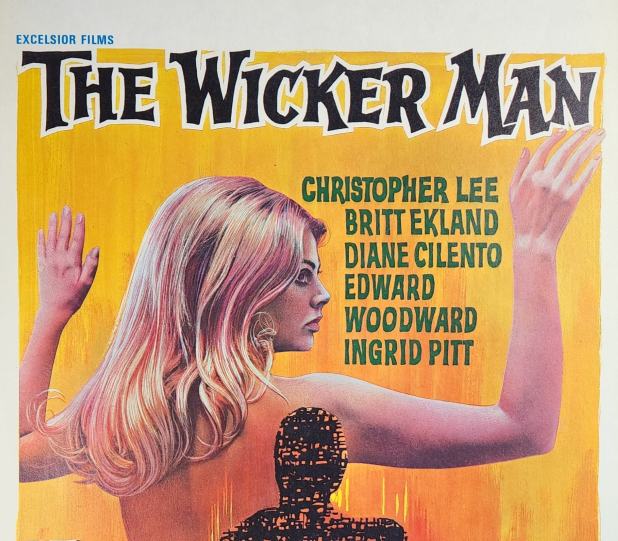
The Wicker Man begins with Christopher Lee, a Hammer star, talking to writer Anthony Shaffer about more interesting roles. Shaffer had read the David Pinner novel Ritual — which had first been written as a script for Michael Winner, and I can’t even imagine what he would have done — and turned that inspiration into his own story.

Shaffer’s vision for the film was unique. The story delves into the intersection of modern religion and ancient pagan practices. It departs from the typical blood and gore of horror, opting instead for a creeping, unknown terror that lurks in the shadows. This unique approach is what we now refer to as folk horror.

The Wicker Man stands at the crossroads of art and horror, somewhere between movies like Performance and The Devil Rides Out, but with a twist, as the traditional rules of horror no longer apply. The concepts of good and evil, as defined by Judeo-Christian beliefs, are absent in this story. Instead, it’s a journey into the unknown, exploring ancient ways that have existed long before the modern era.

Christian Sergeant Neil Howie (Edward Woodward) is initially presented as the virtuous hero. He is on the island of Summerisle investigating Rowan Morrison’s disappearance, yet the villagers refuse to admit that she ever existed.

He’s shocked at these people’s ways, which include putting frogs in their mouths to cure illness and dancing around phallic maypoles. He finds images of past May Queens. He meets Lord Summerisle (Lee), who leads this village. And he sees the answers that he seeks, despite perhaps not liking them.

There’s also tempted by Willow MacGregor (Britt Ekland, who was three months pregnant; she was dubbed by Annie Ross, and her body double was dancer Rachel Verney), and there’s a scene where she dances with a wall between her and Howie that is volcanic. It has no nudity, but it’s filled with sensual energy.

Director Robin Hardy also made The Fantasist and The Wicker Tree, a very loose sequel to the original movie. Hardy first published the sequel as a novel, Cowboys for Christ, about American Christian evangelists who travel to Scotland and end up in a similar situation. Lee plays the Old Gentleman, who is either Summerisle or not.

Shaffer also wrote The Loathsome Lambton Worm, a direct sequel that begins immediately after the ending of The Wicker Man. In it, Howie is saved by his fellow police officers. The movie features a fire-breathing dragon and is much more fantastic than the first one.

I watched this film as part of The Bucheon International Fantastic Film Festival (BIFAN), along with the Folk Horror: Lands of Cruelty, Beliefs of Terror program. It includes films like Valerie and Her Week of WondersEyes of Fire, Kill List, the 2019 French version of la LloronaWoodlands Dark and Days BewitchedBldg. NIn My Mother’s Skin and To Fire You Come at Last. You can learn more at their official site.
Junesploitation: Sex and Fury (1973)

June 22: Junesploitation’s topic of the day — as suggested by F This Movie— is Revenge! We’re excited to tackle a different genre every day, so check back and see what’s next.

Norifumi Suzuki is probably best known for the ten-movie Torakku Yarō series in which Momojiro Hoshi and Kinya Aikawa race around Japan in dekotora or highly decorated trucks. Suzuki also wrote Red Peony Gambler, which became an eight-film series. He also made School of the Holy Beast.

Christina Lindberg, the star of Thriller, was on a plane to Stockholm when she was approached by two Japanese men who asked if she’d like to be in a movie. That sounds like the plot of a TV movie, but she said, “Why not?” and in a few weeks was making this movie and Sadao Nakajima’s Porno Queen: Japan Sex Tour for Toei.

The star of the show, though, is Reiko Ike. She first appeared in Toei’s Hot Springs Mimizu Geisha just a year before and claimed that she was only sixteen when she was nude in that movie. The scandal made it one of Toei’s biggest movies and her a star. One of the icons of Japanese Pinky violence films, Ike is on the same level as a Pam Grier or Tura Satana here in America. She’s in all four Terror Female High School movies, as well as one of the Battles Without Honor or Humanity sequels and The Street Fighter’s Last Revenge. She even released an album, Kōkotsu No Sekai (World of Ecstasy) AKA You, Baby before she was busted for drugs and then illegal gambling before her retirement.

Look out Donna Summer, because the entire album is basically spy lounge with Ike orgasming over it. It’s also beyond incredible.

Ike plays Ocho Inoshika in this, a young girl living the life of a small-time criminal in 1920s Tokyo. While all she does is gamble and occasionally steal from people, she’s also seeking the men who killed her detective father when he learned too much about the wrong powerful people.

After watching a young anarchist get killed, she listens to the young man’s dying request. He asks Ocho to take all of his money and free his sister Yuki from a life of prostitution. When she meets the brothel owner, he demands that Ocho play against female gambler Christina (Lindberg) for Yuki’s ownership. During this game, we see flashbacks to the lives of both women. And Christina is here for a reason, as she’s tracking down the anarchists to keep the local government running or so she says, because she’s really here because a young Japanese anarchist made love to her like no one before or since. He also has made a slave of Ocho’s mother, so as you can imagine, everyone is going to die.

Ocho is getting closer to those who killed her father — they have the tattoos of a deer, a butterfly and a boar on their backs — and that means plenty of bloody sword battles, including one where she emerges from a tub fully nude and battles into the snow. As she kills everyone in her path, limbs fly through the air, blood sprays like it’s being shot out of a cannon and her nude form is covered in plasma. It’s one of the most incredible scenes that you will see in any movie ever.

There’s also a battle in front of a stained glass window of Jesus, a whipping scene that aspires to become anything but exploitation junk and an ending in which our heroine emerges triumph amongst a snow of falling playing cards.

Any time people get all high and mighty about films and act like scholars, I’m reminded that I’ll never get there because this is the kind of movie that I prefer. I would have it no other way.

This has a sequel as well, Female Yakuza Tale: Inquisition and Torture.

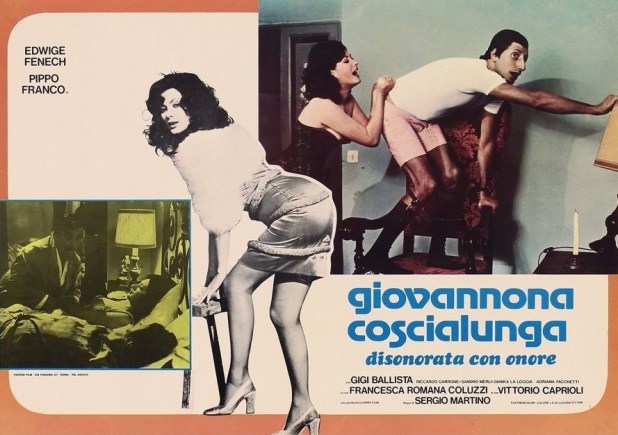
Giovannona Long-Thigh (1973)

Edwige Fenech — who was only just a giallo queen but a star of commedia sexy all’italiana movies — and Pippo Franco had been a success in 1972 in Mariano Laurenti’s Quel gran pezzo dell’Ubalda tutta nuda e tutta calda which was released around the world as Ubalda, All Naked and Warm.

Franco is Ragionier Mario Albertini who has been asked by his boss Commendatore La Noce (Gigi Ballista) to find him a fake wife so that he can get the philandering judge who closed the cheese factory to get in a scandal and reverse his decision. Albertini hires Giovannona “Cocò” Coscialunga (Fenech), a prostitute who looks pure but has the filthiest of mouths.

Directed by Sergio Martino, this was written by Franco Mercuri, Francesco Milizia and Carlo Veo from a story by Tito Carpi and Sergio’s brother Luciano, who was married to Fenech for a time. The cinematographer was Stelvio Massi, who went on to direct Arabella the Black Angel and Convoy Busters.

Italian sex comedies don’t always translate all that well, especially because so many of them are fifty years old. But you know, you get to look at Edwige Fenech for the entire movie. It can’t be that bad.

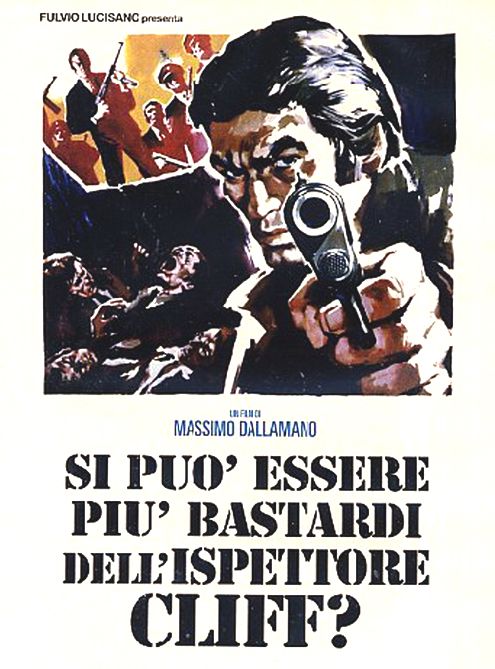
Junesploitation: Si può essere più bastardi dell’ispettore Cliff? (1973)

June 3: Junesploitation’s topic of the day — as suggested by F This Movie— is Poliziotteschi! We’re excited to tackle a different genre every day, so check back and see what’s next.

They tried other titles for this movie — Mafia JunctionSuper Bitch, Blue Movie Blackmail (in the UK, where Stephanie Beacham’s nude scenes were the selling point) — but there may have never been a film with a better name than Can Anyone Be More of a Bastard than Inspector Cliff?

Also: No. There cannot.

Inspector Cliff Hoyst (Ivan Rassimov, as always, a sinister and suave man) is an undercover cop who spends as much time committing his own crimes as he does stopping drug smugglers like Mama the Turk (Patricia Hayes). Meanwhile, Beacham plays Joanne, a sex worker who gets rich men on camera and then blackmails them. Cliff may or may not love her, but he knows that he can take her away from all this if they can put Mama’s gang up against the gang that Joanna works for, run by Morrell (Ettore Manni).

Then, they can get that statue filled with heroin.

Between killers who sing while doing their jobs, Rassimov laughing that sinister laugh and comedy actress Hayes seemingly having a blast playing a gangster, this movie is all about swinging London and the fact that for everyone here, death is around every corner.

Massimo Dallamano was the cinematographer on A Fistful of Dollars, so you know he knows his double crosses. He was also smart enough to get a swinging score from Riz Ortolani that was so good, it was used in the movie he would have directed had he not died, Red Rings of Fear.

There’s also an old rich politician who likes to dress up like a rabbit. I could watch Rassimov read a newspaper, so I was thrilled by having him as the hero — well, not really, more like villain who runs the story, I guess — and there’s so much strange stuff in here that it’s worth sitting down with.

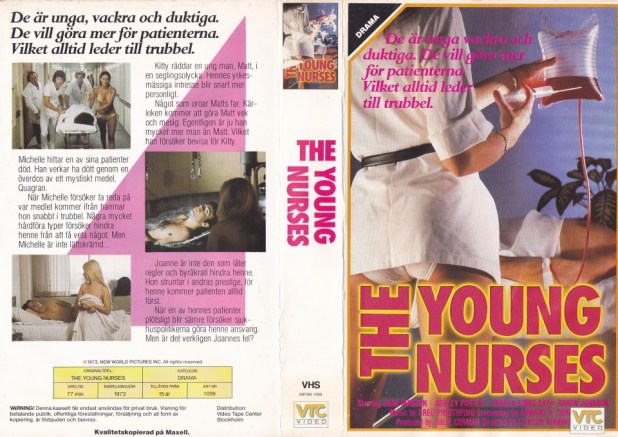
VIDEO ARCHIVES WEEK: The Young Nurses (1973)

VIDEO ARCHIVES NOTES: This movie was discussed on the January 31, 2023 episode of the Video Archives podcast and can be found on their site here.

The fourth of the five movie New World Pictures nurse cycle — preceded by The Student NursesPrivate Duty Nurses and Night Call Nurses and followed by Candy Stripe Nurses — this was directed by Clint Kimbrough, who played Dr. Bramlett in Night Call Nurses, and written by Howard R. Cohen, whose awesome output includes Unholy RollersCover Girl ModelsVampire HookersFighting MadSaturday the 14thSpace RaidersStrykerDeathstalkerBarbarian Queen, Deathstalker and the Warriors from HellBarbarian Queen 2Deathstalker IV and Lords of the Deep. He also directed Saturday the 14th, Space RaidersSaturday the 14th Strikes BackTime TrackersDeathstalker IV and Space Case.

As usual, there are three nurses: Kitty (Jeane Manson, Terror Circus10 to Midnight), Joanne (Ashley Porter, who other than an uncredited role in The Student Nurses was never in another movie) and Michelle (Angela Elayne Gibbs, Cleopatra JonesParty Line).

They all have their own storylines. Kitty falls in love with a boat racer named Donahue (Zach Taylor), even though there’s never a moment where he seems charming or even likable. Plus, his father who pushes him to be a sailing man seems like too much to deal with. Joanne is sick of the doctors failing at their jobs and hurting patients, so she starts to do their work for them. And Michelle discovers that patients are overdosing on bad drugs and investigates for herself.

Beyond these dramatic moments, this film is filled with cameos, with Sally Kirkland, Dick Miller, Mantan Moreland and Samuel Fuller all showing up.

My favorite part of this entire movie is when Joanne is dealing with probably losing her job as a nurse by tearing her clothes off on a beach and diving into the ocean. It’s just so out of nowhere and an excuse to get a gorgeous young actress nude, which you know, is kind of everything Roger Corman was about.

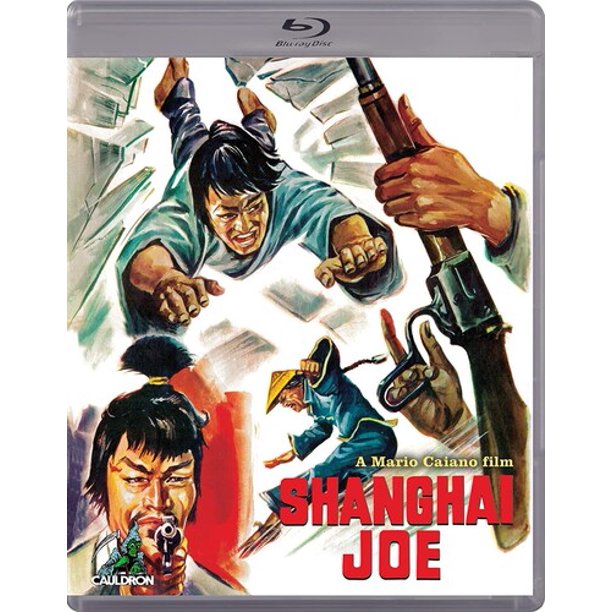
CAULDRON FILMS BLU RAY RELEASE: Shanghai Joe (1973)

EDITOR’S NOTE: This was originally on the site on December 27, 2022. It’s back because Cauldron has re-released — this is the mass market version without slipcase — an absolutely stunning version of it on blu ray featuring a 2K restoration from the negative, both English and Italian audio options, CD soundtrack with music from Bruno Nicolai, and brand new extras including an interview with Master Katsutoshi Mikuriya, a visual essay by film historian Eric Zaldivar, commentary with film historian Mike Hauss from The Spaghetti Western Digest, a trailer, poster and high-quality slipcase. You get buy it from MVD.

According to the Spaghetti Western Database, lead actor Chen Lee may have been a Japanese karate instructor, but according to director Mario Caiano (Eye In the Labyrinth), he worked in a laundry, not in a dojo, and was picked because he looked like a young Dustin Hoffman. Some think his real name was Mioshini Hayakawa, which is Japanese, not Chinese. That said, if that being racist — not knowing the difference between two countries nearly 1,900 miles away from one another — then this movie is not for you.

Seriously, nearly every race gets denigrated in this movie audibly and physically. Luckily, Shanghai Joe ends up killing every single offender.

Also — the Bruno Nicolai music — recycled from Have a Good Funeral, My Friend… Sartana Will Pay — is so good you’ll want to stick around for the whole movie.

Shanghai — or Chin Hao — has come to this country and instead of finding whatever it is he’s looking for — he has tattoos much like Kwai Chang Caine — he’s found that aforementioned racism and a love interest in Cristina (Carla Romanelli, Fenomenal and the Treasure of TutankamenThe Lonely Lady).

Our hero’s skills as a fighting man make their way to cattle rancher Stanley Spencer (Piero Lulli, Kill, Baby…Kill!), who is really enslaving Mexicans to do his work. That means that the bad guys decide to kill him, but none of them can get it done.

Spencer ends up hiring four different killers, much like video game bosses, to do his work for him. There’s Tricky the Gambler (Giacomo Rossi Stuart, The Night Evelyn Came Out of the Grave), Pedro the Cannibal (Robert Hundar, Sabata), Buryin’ Sam (Gordon Mitchell, who improvised and sang the song “Chin-Chin Chinaman” while carrying a shovel to try to kill Shanghai) and Scalper Jack (an astonishing Klaus Kinski, who is obsessed with hair and you genuinely fear for the life of Romanelli in their scene).

Finally, Mikuja, the only person who has the same martial arts technique and tattoo as our hero, is hired to kill him. Their battle may not be a fight on the order of a Shaw Brothers technical battle, but it’s still fun.

This movie is incredibly strange, because every time I thought it was going to be normal, it would go from slapstick to our hero plucking out a bad guy’s eye and blood spraying all over the place. It’s closer to a horror film set in the West with martial arts than a straight-up Italian Western, but it’s better for that difference.

Totally recommended.

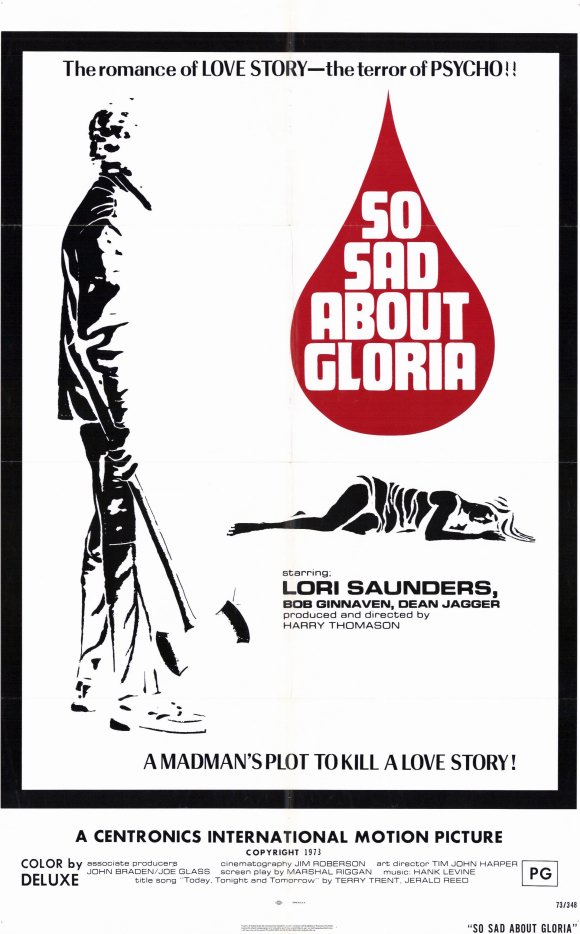
APRIL MOVIE THON 2: So Sad About Gloria (1973)

April 23: Regional Horror — A regional horror movie. Here’s a list if you need an idea.

Back before he and his wife Linda made Designing Women and were a major part of the Clinton political machine, Harry Thomason was just a high school science teacher and football coach who started making movies.

His first movie that got noticed was Encounter with the Unknown, an uneven — and I like the movie, so keep that in mind — anthology film that combines horror with urban legend before people really discussed what urban legend was. He also made The Great Lester BoggsRevenge of Bigfoot and The Day It Cane to Earth. And oh yeah — this movie.

It starts with Frederick (Dean Jagger, whose career started in 1929 with The Woman from Hell and ended in 1987 with Evil Town) picking up his niece Gloria (Lori Saunders, Bobbie Jo Bradley from Petticoat Junction; she also made Frasier, the Sensuous Lion the same year) from a sanitarium. She’s been there since watching her father die. Now, she’s ready to assume his estate and become a pampered rich girl just in time to quickly meet, marry and move into a mansion with Chris (Robert Ginnaven, White Lightning), a writer who doesn’t seem to care that this place once housed a series of axe murders nor that his young wife has tripped out reveries where she is haunted by something. You know, the rich.

Written by Marshall Riggen (who was also the writer of the bizarre Six Hundred and Sixty-Six and Cry for Poor Wally) from a story by Thomson, producer Joe Glass and Mike Varner, this was shot at the same time as Encounter with the Unknown with much of the same crew and was originally called Visions of Evil and Visions of Doom. It was this vibe that fits into a lot of early 70s exploitation cinema, movies in which young women come of sexual age while also experiencing trauma or believing they that they are a murderer. Like, well, Axe, a film this feels so much like, but that has to be an accident, because Axe is one of many pieces and parts edited into a film, a miracle that barely happened. And, well, this. came out a year before and that was made in California and this in the Ozark Mountain region of Arkansas, so the collective unconsciousness connected two disparate film productions in the wilds of regional exploitation.

This was sold with the tagline of “The romance of Love Story — the terror of Psycho!” and you know how much I simply am obsessed with movies referencing other movies in their ads. When it played around Little Rock, it had a local phone number you could call on the ads and when the phone picked up, all you heard was Gloria screaming and then the line went dead. Again, I am all for that.

A killer in a Tor Johnson mask, strange repressed memories and not just one but two twist endings — along with long stretches of nothing happening and extended cute dating montages (oh yeah, that Love Story reference) — make this a movie that may test those that don’t partake of the deep well of regional filmmaking. But for those that get high off this supply, drink deep.

You can watch this on YouTube.

10TH ANNUAL OLD SCHOOL KUNG FU FEST: The Fate of Lee Khan (1973)

Break this movie in half with one part being the set-up, as rebels, spies and government officials in disguise all meet at the Spring Inn searching for a battle map. Then, tear it all to pieces, as secret identities are uncovered and all hell breaks loose. All of this filtered through the genius of director King Hu with action put together by Sammo Hung, then brought to life by five actresses who are as strong — or perhaps stronger — than any man, Hu Chin, Helen Ma, Angela Mao, Hsu Feng and Li Li-hua

On one side, Mongo general Lee Khan (Tien Feng) and his sister Lee Wan-erh (Hsu Feng). On the opposite, inn keeper Madam Wan (Li-hua) and several undercover fighters for the resistance who are acting as her waitresses: Hai Mu-tan (Angela Mao, who also made the astounding Hapkido and Lady Whirlwind), Shui Mi-tao (Hu Chin Hu) and Yeh Li-hsiang (Helea Ma).

All made in the time before A Touch of Zen was seen as pure genius and King Hu would work with Golden Harvest, the rivals to Shaw Brothers, making almost another version of his movie Dragon Inn. But that’s too simple, as this movie subverts expectation and gives every woman a strong role. Shot at the same time as The Valiant Ones, this has hand to hand combat that fits into the direction of martial arts cinema at the time while presenting tension as the two groups get closer to their inevitable conclusion, like The Hateful Eight but in another time and place, all with the gorgeous look that you expect from the films of Hu.

Want to see it for yourself?

You can watch The Fate of Lee Khan on Saturday, April 29 at 4:30 PM in Theater 1 and Sunday, April 30 at 4:30 PM in Theater 1 at Metrograph and Subway Cinema in New York City. It’s part of the 10th Old School Kung Fu Fest: Sword Fighting Heroes Edition from April 21-30, 2023!

Tickets are on sale right here!

APRIL MOVIE THON 2: Beyond Atlantis (1973)

April 19: Weird Wednesday — Write about a movie that played on a Weird Wednesday, as collected in the book Warped & Faded: Weird Wednesday and the Birth of the American Genre Film Archive. Here’s a list.

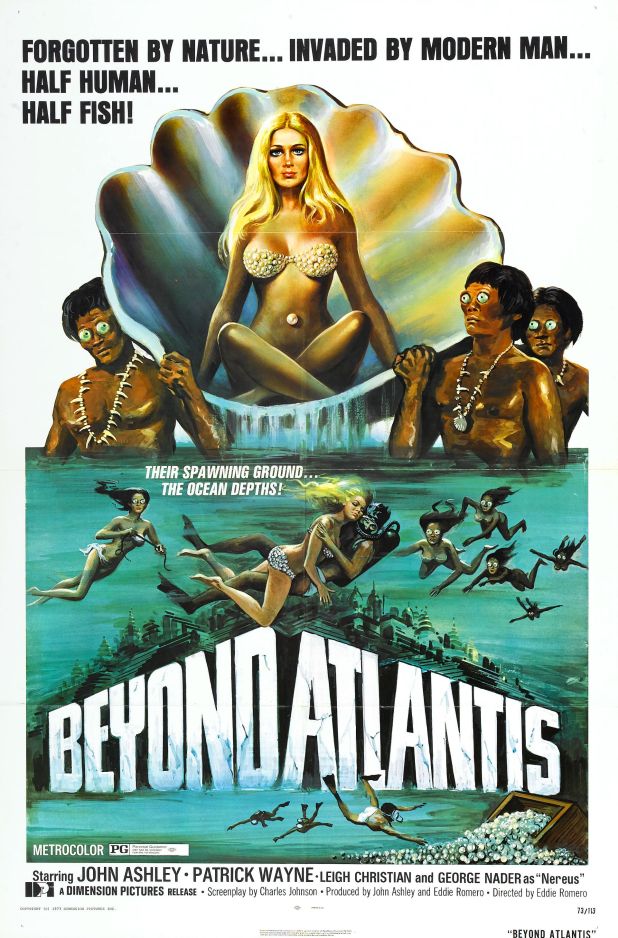
I was loud while watching this movie that my wife had to come to check on me. The sheer delight had overtaken me when East Eddie (Sid Haig) appeared in a movie where gigantic-eyed Atlantean people attempted to keep their undersea world alive thanks to a new queen named Syrene (Leigh Christian), who must constantly sire new children, as decreed by her adopted father Nereus (George Nader).

Eddie is part of a group trying to farm pearls for money which includes what could be the exploitation movies made in the Philippines version of The Avengers: Manuel the Barracuda (Vic Díaz), Logan (John Ashley) and Vic Mathias (Patrick Wayne).

Producer Ashley had the idea that this would be a science fiction version of The Treasure of the Sierra Madre, which is a big idea, while Wayne would only be in the film if it was a family-friendly movie, but it’s also about rebuilding the DNA of a dying world of interbred bug-eyed merpeople, which is a fun juxtaposition.

The underwater scenes are gorgeous and this has way better production values than many movies made in the Philippines. Yet if it had more exploitation — a fact that Ashley believed — I think it would be a more exciting movie.

You can watch this on Tubi.