VIDEO ARCHIVES SEASON 2: The Thomas Crown Affair (1968)

VIDEO ARCHIVES NOTES: This movie was discussed on the December 10, 2024 episode of the Video Archives podcast. 

Millionaire Thomas Crown (Steve McQueen) needs a new fix. He’s moved on from fast cars and boardroom deals to putting together a bank robbery just because, well, he needs adrenaline.

Investigator Vicki Anderson (Faye Dunaway) is promised 10% of the stolen money by the bank if she can get it back and learn who stole it. She quickly decides that Crown is the only person who could have pulled off this job. Along with detective Eddy Malone (Paul Burke), she closes in, but starts to be enticed by the roguish Crown.

It’s literally — and in a scene, actually — a game of chess.

Sean Connery and Johnny Carson both turned down the lead but only McQueen could pull this off. I’m not certain that audiences today can estimate his level of cool or the breakthrough moments of this movie, like how Vicky drives one of ten Ferrari 275 GTB/4S NART Spiders ever made, has 29 costume changes or that director Norman Jewison made one of the first mainstream uses of Christopher Chapman’s multi-dynamic image technique to show multiple screens of the robbery happening all at once.

Still, Roger Ebert said that this movie was “possibly the most under-plotted, underwritten, over-photographed film of the year. Which is not to say it isn’t great to look at. It is.”

I love the poster line: “McQueen, together with this Bonnie and Clyde Gal…and the slickest gang that ever robbed a bank!”

You can watch this on Tubi.

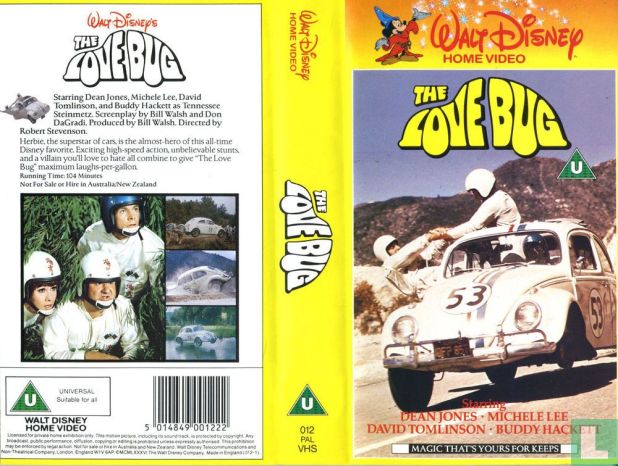
VIDEO ARCHIVES SEASON 2: The Love Bug (1968)

VIDEO ARCHIVES NOTES: This movie was discussed on the November 12, 2024 episode of the Video Archives podcast. 

Based on the 1961 book Car, Boy, Girl by Gordon Buford, this was the first of many movies that would feature Herbie the Love Bug, who is driven by Jim Douglas (Dean Jones) and worked on by Tennessee Steinmetz (Buddy Hackett), a mechanic who transforms used car parts into art.

Jones claimed that this film was so good with the fact that it was made when Walt Disney was still invovled with his films. It was released just two years after Walt’s death. I would also say that having Robert Stevenson as director — he also made Mary PoppinsThat Darn Cat and Old Yeller — helped.

Douglas has big dreams of racing, but all he gets to do is compete in demolition derbies. After racing and crashing another car — an Edsel, no less — our protagonist comes across a car dealer named Peter Thorndyke (David Tomlinson, Mary Poppins) abusing a Volkswagen Beetle. The next morning, the car just so happens to show up at Douglas’ house and he’s nearly arrested until Thorndyke’s sales assistant and mechanic Carole Bennett (Michele Lee) convinces her boss to sell the car.

Herbie — so named by Tennessee — seems to have a mind of his own, but he’s able to help Douglas win several big races, to the continual chagrin of his former owner. Much like nearly every Dean Jones character, Douglas is a jerk and just wants a Lamborghini 400GT instead of the heroic little VW Bug. Herbie responds by running away, damaging big stretches of Chinatown and nearly driving himself off the Golden Gate Bridge in his depression. Yes, back in the day, live action Disney got dark.

Of course, not so dark that a small Volkswagen can’t win a race against cars with much more horsepower, like Thorndike’s Apollo GT (the avergae VW bug had 40 hp while the Apollo GT had 225 hp).

MOVIES THAT PLAYED SCALA: Witchfinder General (1968)

Thanks to the British Film Institute, there’s a list of films that played Scala. To celebrate the release of Severin’s new documentary, I’ll share a few of these movies every day. You can see the whole list on Letterboxd.

Based on Ronald Bassett’s — a man who was primarily known for his medical and pharmaceutical work — novel about Matthew Hopkins, a notorious 17th-century witch-hunter, this 1968 film was a co-production of Tigon British Film Productions and American-International Pictures (who retitled the film The Conqueror Worm to link it to their series of Edgar Allan Poe movies).

Movie posters used to be awesome.

Michael Reeves was 24 and only three films* into his career when he made this film, the tale of Hopkins (Price), a lawyer who has opportunistically become a witchhunter with no morality whatsoever, blackmailing and killing his way through the world. This film is pure nihilism and makes the statement that when the world goes to hell, there is no way to be an angel.

Reeves saw Donald Pleasence as Price, but AIP only saw Vincent Price as the lead. Reeves had refused the courtesy of meeting Price at Heathrow Airport which was a “deliberate snub calculated to offend both Price and AIP” according to Benjamin Halligan’s book Michael Reeves. When they met for the first time, Reeves said, “I didn’t want you, and I still don’t want you, but I’m stuck with you!”

According to Kim Newman in Nightmare Movies, Reeves and Price argued over the actor’s propensity to chew the scenery and Price supposedly said, “Young man, I have made eighty-four films. What have you done?”

Reeves replied, “I’ve made three good ones.”

And that’s how Reeves pushed Price into delivering the performance in this film. In the book Faster and Furiouser: The Revised and Fattened Fable of American International Pictures, Price said that he wrote the director a ten-page letter after he saw the film, praising the director’s work.

Reeves wrote back, “I knew you would think so.”

After Reeves’s death, Price would think back and say, “I realised what he wanted was a low-key, very laid-back, menacing performance. He did get it, but I was fighting him almost every step of the way. Had I known what he wanted, I would have cooperated.”

That said — Reeves was notoriously poor with actors, mainly concentrating on what the visual look of the film leaving the acting direction — outside of his playing with Price — to the actors.

The poster tagline — “Leave the realized at home…and if you are squeamish stay home with them!” — isn’t a lie. This is a film packed with some of the most intense torture and violence you’ll see. It was heavily censored in England** — yet still upset people — and played uncut in the U.S.

Hopkins is using the English Civil War and the destruction of social order to brutally abuse and torture those he deems witches throughout East Anglia. Then, he and his assistant John Stearne charge the local government for their work and move on.

Richard Marshall (Ian Ogilvy, who was in several of Reeves’ teenage short films and appeared in his movies The She Beast and The Sorcerers) is a young soldier returning home from the war, asking John Lowes (Rupert Davies) if he may marry his niece Sara (Hilary Dwyer, The Oblong Box, Scream of the Banshee). The old man confides that they are concerned for their safety and feel as if the village has turned on them as Marshall gives his word to protect them. As he leaves their town, he gives the witchfinder directions to get there.

Hopkins and Stearne enter town and instantly go to work taking out witches, including using rats and hot needles to find the Devil’s Mark inside Lowes. Sara offers sexual favors to protect her uncle and as soon as Hopkins leaves town, his partner assaults her.

When Marshall returns, he marries Sara in his own ceremony and vows to kill the two men, nearly beating Stearnes to death. Yet the tables are turned and the hero must watch as his love is tortured before him. That’s not the end, but I’d like you to see this for yourself.

AIP originally made this movie as a tax write-off, but was surprised by the quality of the film. Samuel Z. Arkoff said, “Michael Reeves brought out some elements in Vincent that hadn’t been seen in a long time. Vincent was more savage in the picture. Michael really brought out the balls in him. I was surprised how terrifying Vincent was in that. I hadn’t expected it.”

This film led to the second wave of AIP Poe films like The Oblong Box (originally scheduled to be directed by Reeves, but handed over to Hessler after Reeves fell ill during pre-production), Murders in the Rue Morgue and Cry of the Banshee, which reteamed Price and Dwyer.

It also inspired several inquisitonploitation*** films such as Mark of the Devil and The Bloody Judge, as well as leading the way for religious horror such as The Devils and the folk horror of The Blood on Satan’s Claw.

It also influenced metal, as the band Cathedral has a song “Hopkins (Witchfinder General)” and the band Witchfinder General outright took the name. Like all great NWOBHM bands, they have a self-titled song.

There was even a BBC4 radio play, Vincent Price and the Horror of the English Blood Beast, which tells the story of the relationship between Price and Reeves.

Sadly, a few months after this movie was released, director Reeves died in London at the age of 25 from an accidental alcohol and barbiturate overdose. What an incredible blow to the world of film, as obviously he was going to be a director whose work could only have gotten better.

*Castle of the Living DeadThe She Beast and The Sorcerers.

**Even the script provoked this reply from censors: “A study in sadism in which every detail of cruelty and suffering is lovingly dwelt on…a film which followed the script at all closely would run into endless censorship trouble.”

***Yes, an invented term.

SEVERIN BLU RAY RELEASE: Scala!!! shorts disc one (1968. 1971, 1978, 1984, 1986, 1989, 1991)

On the bonus discs of Severin’s new Scala!!! Or, the Incredibly Strange Rise and Fall of the World’s Wildest Cinema and How It Influenced a Mixed-up Generation of Weirdos and Misfits release, you’ll find examples of several shorts that played at the theater. You can buy this from Severin.

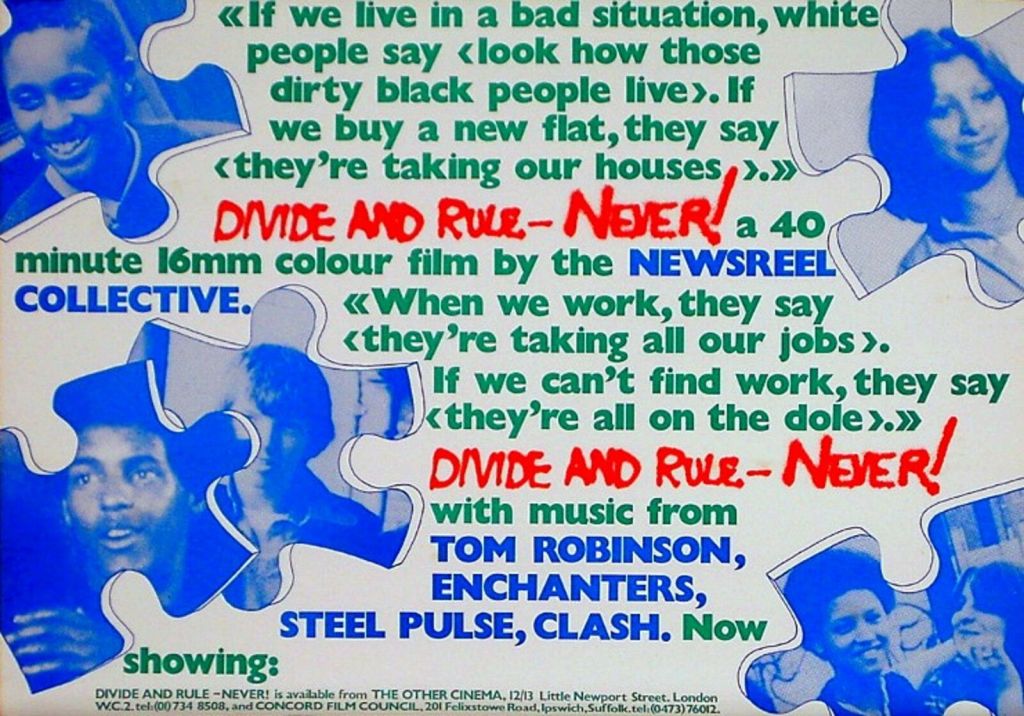
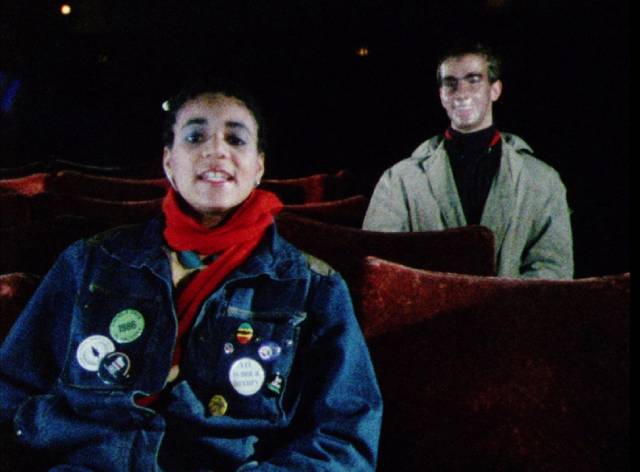
Divide and Rule – Never! (1978): Made for and by young people, this forty-minute or so film looks at race and how it is viewed in school, at work and by the law. There are also some historic sequences of British imperialism and a discussion of how Germany got to the point that it was pre-World War II, plus plenty of punk rock and reggae. This has many sides represented, from Black and Asian immigrants to ex-National Front members.

Divide and Rule — Never! was distributed by The Other Cinema, a non-profit-making, independent film distribution company in London.

Sadly, so much of this movie — made 45 years ago — are just as relevant today in America. This is movie that doesn’t shy away from incendiary material, but that’s what makes it so powerful. In addition to the interviews, it has some interesting animation and a soundtrack with Steel Pulse, TRB, X-Ray Specs and The Clash.

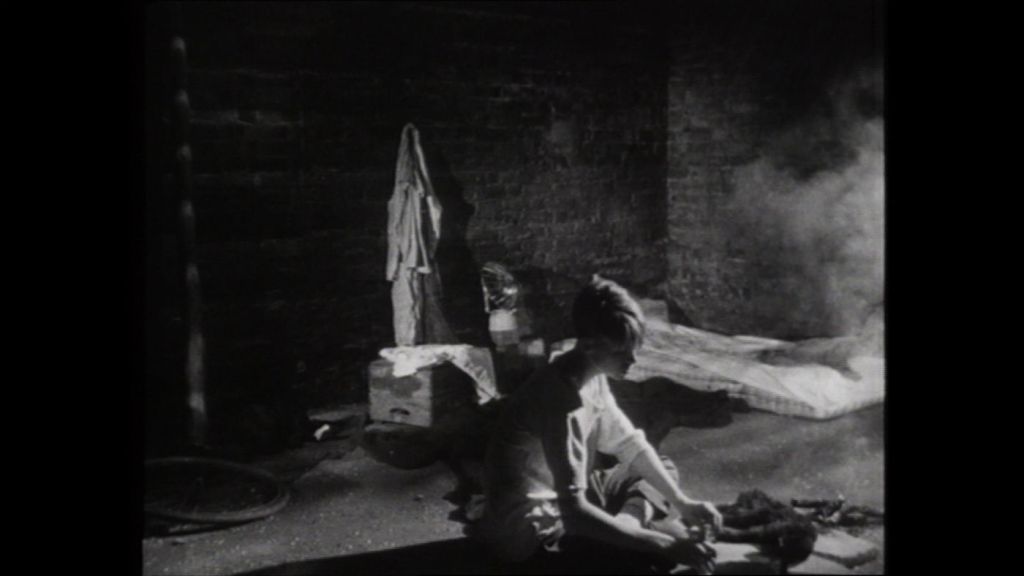
Dead Cat (1989): Directed and written by Davis Lewis, this has Genesis P-Orridge in the cast and a soundtrack by Psychic TV, which has been released as Kondole/Dead Cat.

A boy (Nick Patrick) has a cat that dies and his grief deposits him into a psychosexual nightmare, including a medicine man (Derek Jarman) and several unhoused people (P-Orridge, Andrew Tiernan).

This was shown at only a few theaters the year it was release — including Scala Cinema — before fading away and almost being lost before Lewis found it. In the program for this film, Scala said “The torture that occurs at the transition of sexuality.” If you liked videos for bands liek Skinny Puppy and Nine Inch Nails, this feels like the inspiration.

The Mark of Lilith (1986): Directed by Bruna Fionda, Polly Gladwin and Zachary Nataf as a project at The London College of Printing, this is all about Zena (Pamela Lofton), who is researching monstrous women. She meets Lillia (Susan Franklyn) a vampire, at a horror movie and the two start a relationship. 

Liliana, trapped with an abusive male partner by the name of Luke (Jeremy Peters) who is what vampires probably would be, scavengers who feed on the weak, dreams of movies in which she is the victim of just such a vampire. She’s often fed on human beings, but has been careful not to be caught or make a mess, unlike her partner. As for Zena, she’s been studying how female gods were once worshipped but now only appear in horror fiction as monstrous creatures.

So much of this movie is as right on now as when it was made, like the speech that Zena gives when Liliana tracks her down: “Have you noticed that horror can be the most progressive popular genre? It brings up everything that our society represses, how the oppressed are turned into a source of fear and anxiety. The horror genre dramatizes the repressed as “the other” in the figure of the monster and normal life is threatened by the monster, by the return of the repressed consciously perceived as ugly, terrible, obscene.”

Her argument is that we can subvert the very notions of horror, making the monsters into heroes that destroy the rules that hold us down.

However, this being a student film, it’s very overly earnest and instead of working these ideas into the narrative as subtext, they take over the entire movie. If you’re willing to overlook this, it’s a pretty fascinating effort.

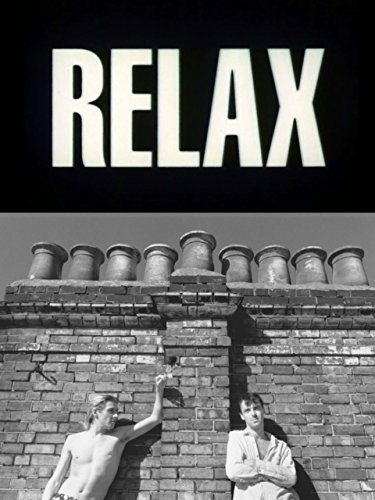
Relax (1991):  Steve (Philip Rosch) lives with his lover Ned (Grant Oatley), but as he starts to engage in a more domestic relationship, he starts to worry about all of the partners he’s had. After all, the AIDS crisis is happening and he’s never been tested. Ned tells him to relax, but there’s no way that he can.

The wait for the test is just five days but it may as well be forever. This also makes a tie between sex and death, as Steve strips for both Ned and his doctor. And in the middle of this endless period of limbo, he dreams of death and fights with Ned, who just smiles and keeps telling him to relax. But how could anyone during the time of AIDS?

I remember my first blood test and the doctor lecturing me after he gave it, telling me that I should have been a virgin until I married and whatever happened, I brought it on myself. The funny thing was, I had been a virgin, I thought I was getting married and I had no knowledge that my fiance was unfaithful to a level you only see in films. That night, my parents came to visit, leaving their small town to come to the big city and my mother asked, “What is that bandage on your arm?” I could have lied, but I told her it was for a blood test, and I dealt with yet someone else upset with me. My problems were miniscule in the face of the recriminations that gay people had to deal with, a time of Silence=Death, a place seemingly forgotten today other than by the ones who fought the war.

Directed and written by Chris Newby, this is a stark reminder of that time.

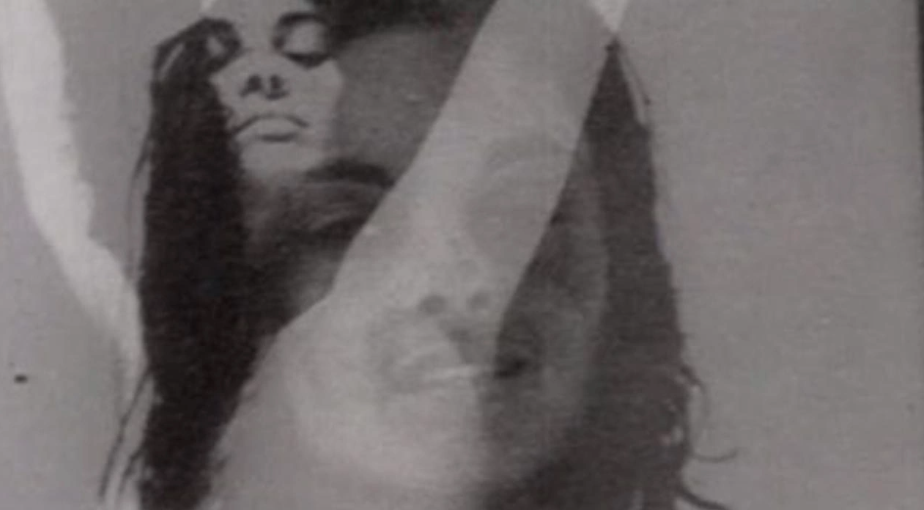
Boobs a Lot (1968): Directed by Aggy Read, this is quite simple: many shots of female breasts, all set to The Fugs’ song of the same name. Banned in Australia, this has around three thousand sets of mammaries all in three minutes, the male gaze presented over and over and, yes, over again until it goes past just being sophomoric and becomes mesmerizing in the way that breasts are when you’re starting puberty. I’m ascribing artistic meaning to this but really, at the end of the day, it’s just a lot of sweater meat. Fun bags. Cans, dirty pillows, babylons, what have you. My wife is always amazed at how many dumb names I can come up with for anatomy and I blame years of John Waters and reading Hustler as a kid and yeah, I’m not as proud of the latter than the former. That said, there are a lot of headlights in this one.

Kama Sutra Rides Again (1971): Stanley (Bob Godfrey, who also directed and write this) and Ethel are a married couple looking to keep their love life interesting, so they have been trying out new positions. Things start somewhat simple, but by the end, Ethel is being dropped through trap doors and out of an airplane onto her husband. A trapeze love making attempt ends in injury, leading Ethel to chase Stanley while all wrapped up.

Stanley Kubrick personally selected this film to play before A Clockwork Orange in theaters in the UK. I wonder if this played at Scala before the screening that shut down the theater. More than just a dirty cartoon, this was nominated for an Oscar. Despite being about lovemaking, it’s all rather innocent and remains funny years after it was made.

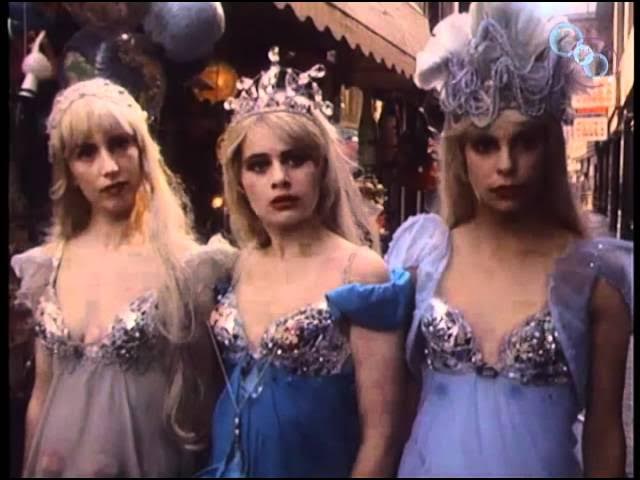
Coping With Cupid (1991): Directed and co-written by former Slits guitarist Viv Albertine, this finds three blonde alien women — played by Yolande Brener, Fiona Dennison and Melissa Milo — who have come to Earth to learn what love is, under the command of Captain Trulove (the voice of Lorelei King). They meet a man named Peter (Sean Pertwee), who hasn’t found anyone, as well as interview people on the street to try and learn exactly how one person can become enamored of another.

Richard Jobson from Skids and Don Letts from Big Audio Dynamite appear, as does feminist sexologist Shere Hite, at least on a TV set. I love that the three aliens are the ideal of male perfection yet they are lonely, trying to figure out what it takes to make the heart beat. It’s kind of like so many other films that I adore where space women try to understand men, a genre that really needs a better title. See Cat-Women of the Moon, Missile to the Moon, Queen of Outer Space, Fire Maidens from Outer SpaceAmazon Women On the Moon, Abbott and Costello Go to Mars, El Planeta De Las Mujeres Invasoras and Uçan Daireler Istanbulda.

On Guard (1984): Sydney: Four women — Diana (Jan Cornall), Amelia (Liddy Clark),  Adrienne (Kerry Dwyer) and Georgia (Mystery Carnage) — juggle their lives, careers and even families to destroy the research of the company Utero, who are creating new ways of reproductive engineering. Or, as the sales material says, “Not only are the protagonists politically active women, but the frank depiction of their sexual and emotional lives and the complexity of their domestic responsibilities add new dimensions to the thriller format. The film also raises as a central issue the ethical debate over biotechnology as a potential threat to women and their rights to self-determination.”

One of the women loses the diary that has all of the information on their mission, which leads to everyone getting tense over what they’re about to do. Directed by Susan Lambert, who wrote it with Sarah Gibson, this allows the women to be heroes and not someone to be saved. I like that the advertising promised that this was “A Girls’ Own Adventure” and a heist film, hiding the fact that it has plenty of big ideas inside it.

Today, in vitro fertilisation (IVF) is an accepted way of having children, yet here, it’s presented as something that will take away one of the primary roles of women. Juxtapose that with IVF being one of the women-centric voting topics of the last U.S. election.

MOVIES THAT PLAYED SCALA: Head (1968)

Thanks to the British Film Institute, there’s a list of films that played Scala. To celebrate the release of Severin’s new documentary, I’ll share a few of these movies every day. You can see the whole list on Letterboxd

Despite breaking up in 1971, The Monkees remained in syndication throughout the decade, and that’s when I discovered them. Despite being a band created for a TV show—a burst of comedy, silliness and catchy songs—The Monkees instantly appealed to me.

Initially formed in Los Angeles in 1965 by Bob Rafelson and Bert Schneider, the band was Micky Dolenz, Michael Nesmith, Peter Tork and Davy Jones. Producer Don Kirshner initially supervised the band’s music, with songs written by the songwriting duo of Tommy Boyce and Bobby Hart. The four band members were on set filming for nearly twelve hours a day, so session musicians originally played most of their tunes (that said, Nesmith did compose and produce some songs, with Tork playing guitar and all four contributing vocals).

By the TV show’s second season, The Monkees had won the right to create their own music, marking a significant shift in their artistic journey. They effectively became musicians, singers, songwriters, and producers. This growth was further evident in their fourth album, Pisces, Aquarius, Capricorn & Jones Ltd., where the band collaborated with respected session and star talents like the Wrecking Crew, Glen Campbell, members of the Byrds and the Association, drummer ‘Fast’ Eddie Hoh, Stephen Stills and Neil Young. This artistic growth is a testament to their determination and talent.

However, the Monkees continually battled against the notion that they were a manufactured band. Sure, that’s how things started, but they weren’t that way anymore. While their TV show remained successful, they were bored with its conventional format. They proposed making the show a variety program, a format that would allow them to showcase their musical talents and experiment with different styles and genres. But NBC objected, and by then, most of the band wasn’t getting along anyway.

The film’s title, Head, is a nod to the band’s desire to break free from their manufactured image and the constraints of their success. It’s a reference to the phrase ‘to get your head ‘, meaning to understand or grasp something, which reflects the band’s journey of self-discovery and artistic expression. After The Monkees was canceled in February 1968, Rafelson co-wrote and directed this film with Schneider as executive producer. Jack Nicholson, the other writer — a virtual unknown at the time — worked with the band and Rafelson in a jam session weekend with plenty of weed on hand. Later, under the influence of LSD, Nicholson would rewrite the stream-of-consciousness tapes into the script.

When the band learned they would not be allowed to direct themselves or receive screenwriting credit, every Monkee except Peter Tork had a one-day walkout. The studio agreed to a larger share of the film’s profits if the band returned, which ended the professional relationship between the band and their creators.

The filming of Head resulted in a movie that completely alienated their fanbase. Both Nesmith and Tork felt that this movie was a betrayal, a murder of the band by its creators, who seemed to have their eyes on bigger goals. This sense of disillusionment is palpable in their reactions, adding a layer of disappointment to the narrative.

At the dedication of the Gerald Desmond Bridge, an old man politician struggles with his speech. Suddenly, The Monkees appear, racing through the officials and creating chaos. Micky jumps off the bridge to the water below as we hear the words of “Porpoise Song. ” The lyrics intone, “A face, a voice, an overdub has no choice, an image cannot rejoice.” He floats under the waves until mermaids find him and bring him back to life.

After a kissing contest with all four Monkees being called “even” by Lady Pleasure (Mireille Machu, Nicholson’s girlfriend at the time), they launch into a distorted version of the TV show’s theme song:

“Hey, hey, we are The Monkees

You know we love to please

A manufactured image

With no philosophies.

You say we’re manufactured.

To that, we all agree.

So make your choice, and we’ll rejoice

in never being free!

Hey, hey, we are The Monkees

We’ve said it all before

The money’s in, we’re made of tin

We’re here to give you more!

The money’s in, we’re made of tin

We’re here to give you…”

BAM! A gunshot interrupts the proceedings, with the famous footage of the execution of Viet Cong operative Nguyen Van Lem by Chief of National Police Nguyen Ngoc Loan being shown. Head has no interest in being subtle.

From here, the movie becomes a kaleidoscope of ideas and pastiches as each Monkee gains a moment in the spotlight, yet none of them are thrilled with their situation, and each feels trapped. Any escape attempt — whether it’s through dance (Davy has a great scene with Toni Basil, who choreographed Head more than a decade before her hit song “Mickey”), punching waitresses, blowing up Coke machines with tanks, attending a strange birthday party (shot on one of the sets of Rosemary’s Baby, which was under production at the same time), a swami who claims to have the answer and even a rampage through the movie set itself, the boys can’t escape their prison, which is a large black box.

That box could symbolize the lounge area built for the band during the filming of their television show. When they first started filming, the band would wander the set between takes, bored by the filming speed. They’d often get lost, so Screen Gems built a special room where they were forced to remain, smoking cigarettes, playing music and studying their scripts. Whenever a band member was needed on the stage, a colored light corresponding to that member would inform them.

Throughout the film, the band runs into a massive cast of characters, with everyone from Mickey Mouse Club star Annette Funicello, Carol Doda (considered the first public topless dancer), Sonny Liston, Frank Zappa, Teri Garr, Victor Mature and Dennis Hopper.

After evading the box and all of their enemies in the desert, The Monkees run back to the film’s beginning and all leap from the bridge, this time to the triumphant return of “Porpoise Song.” But it’s all another sham: as they swim away, we see that they’re stuck in an aquarium, another big box, and taken away on a truck.

Unyielding sadness. It seems a far cry from “Hey, hey we’re The Monkees and people say we monkey around.”

Head bombed hard on release, bringing back only $16,000 on its $750,000 budget. It may be the ad campaign. While trailers say the “most extraordinary adventure, western, comedy, love story, mystery, drama, musical, documentary satire ever made (And that’s putting it mildly),” none of the band would appear in the ads.

The Monkees were trapped by another fact: younger and more mainstream audiences rejected the more serious side of the band, along with their new sound. While critics agreed that this was the band’s best music ever recorded — Carole King and Harry Nilsson co-wrote much of the music — serious hippies wanted nothing to do with a band they perceived as plastic and pre-manufactured.

Nesmith said, “By the time Head came out, The Monkees were a pariah. There was no confusion about this. We were on the cosine of the line of approbation, from acceptance to rejection…and it was over. Head was a swan song.”

At the end of the film, a still shot of a stylized Columbia Pictures logo appears before the movie skips frames, gets tangled and melts as we hear the soundtrack continue and the laugh of Lady Pleasure. Maybe some joy has escaped the box that The Monkees are trapped in. I want to think so, as Head may have been a failure upon release, but when viewed more than fifty years later, it transcends the divide between real and fake, manufactured and created, commerce and art.

MOVIES THAT PLAYED SCALA: Barbarella (1968)

Thanks to the British Film Institute, there’s a list of films that played Scala. To celebrate the release of Severin’s new documentary, I’ll share a few of these movies every day. You can see the whole list on Letterboxd.

Shot directly after Mario Bava’s Danger: Diabolik, this Roger Vadim-directed movie is based on the comic book of the same name by Jean-Claude Forest. The film stars Vadim’s then-wife Jane Fonda as Barbarella, a United Earth agent sent to find scientist Durand Durand, who has created a weapon that could destroy humanity.

Vadim was hired to direct this film after producer Dino De Laurentiis purchased the rights. This led to Vadim looking to cast several actresses in the title role, including Virna Lisi, Brigitte Bardot (that’s who the character was originally based on) and Sophia Loren before ending up picking his wife.

In case you’re wondering why this movie is such a mess, Charles B. Griffith was the last writer to work on it, saying that he had done uncredited work on the script after fifteen other writers — including Terry Southern — worked on the movie.

This film is packed with fashion, amazing sets — you can credit Bava’s film for some of that, and great characters, like John Phillip Law (who used the break in shooting to be in the aforementioned Danger: Diabolik) as Pygar the angel, Anita Pallenberg (Performance) as the Black Queen, Milo O’Shea as Durand-Durand, Marcel Marceau in a rare speaking role as Professor Ping, David Hemmings (Deep Red) as Dildano and even cameos from Fabio Testi and Antonio Sabato (who was originally to play the role that Hemmings ended up doing).

So yeah. This is a gorgeous film that makes no sense whatsoever. Is that such a bad thing? I first watched this as a child on HBO and I think when the part came in which the birds tear apart Barbarella’s clothes, my parents decided that it was time for me to go to bed. I was hooked on movies that were seen as being wrong for me to watch and Italian-shot films.

A sequel was planned with producer Robert Evans called Barbarella Goes Down, but it never happened. Nor did a 1990 remake, a Robert Rodriguez idea or a potential project with Nicolas Winding Refn, who moved on to other projects, saying, “…certain things are better left untouched. You don’t need to remake everything.”

RETURN OF KAIJU DAY: Goke, Body Snatcher from Hell (1968)

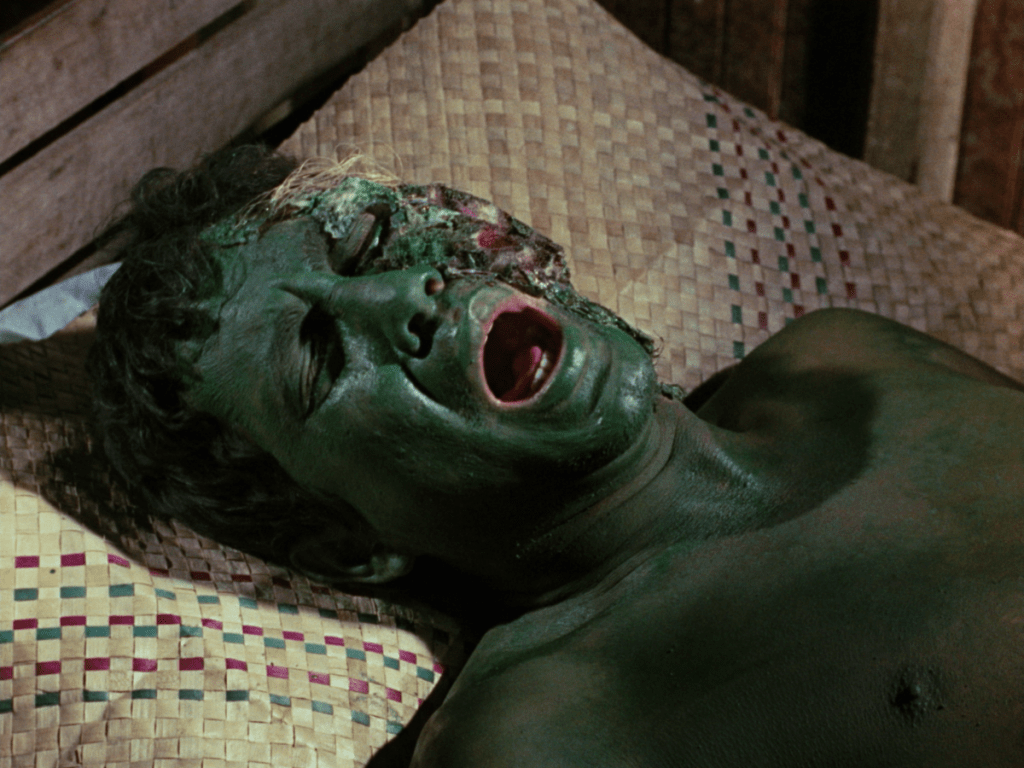
This begins with a bomb threat on an airplane, which is soon hijacked, with pilot Ei Sugisaka (Teruo Yoshida) and stewardess Kuzumi Asakura (Tomomi Sato) held at gunpoint. As the plane changes course to Okinawa, a UFO smacks into their flight path and causes them to crash, killing everyone except Mrs. Neal (Kathy Horan), Senator Mano (Eizo Kitamura), weapons dealer Hirofumi Tokiyasu (Hideo Ko) and his wife Noriko (Yuko Kusunoki), space biologist Professor Saga (Masaya Takahashi), psychiatrist Dr. Momotake (Nobuo Kaneko), the boy who called in the bomb threat and the hijacker, who takes Kuzumi and makes his way toward the UFO, which splits his head open and sends a blob into his body.

Dr. Momotake is attacked by the teenager and knocked off a cliff, where he finds the hijacker, who drains the blood from his body. It soon kills Tokiyasu and possesses Noriko, speaking with the voice of an alien race through her body. The Gokemidoro have invaded Earth and no human will survive. She falls off a cliff and instantly turns into a corpse.

The survivors lock themselves in what’s left of the plane, but the teenager explodes his bomb, allowing the hijacker to kill Mrs. Neal. Mano locks all of them out of the plane as they set the hijacker on fire, but even that won’t stop the alien, which kills everyone but Sugisaka and Kuzumi, who find every car empty on a highway and every human dead.

Nearly every character — other than the survivors — is a horrible person and does just as much to kill people as the aliens. As it is, even when the two characters survive, they only will live long enough to see the invasion begin, unless a miracle occurs after the credits.

If you ever wondered why the sky is so red when the Bride lands in Japan during Kill Bill Volume 1, this movie is the reason. Quentin Tarantino is a huge fan of it.

Directed by Hajime Satô, who also used the Westernized name Terence Ford and also  directed The Golden Bat, this was based on the tokusatsu series Gokemidoro. This feels like The Blob meets The Thing and then space vampires in a world where everything is neon and even birds realize that things are hopeless and commit suicide. 1960s Japanese science fiction horror made by people that know that mankind is hopeless because while other filmmakers made movies about the horrors of nuclear war, they had already survived it and knew everything was darkness.

You can watch this on YouTube.

SEVERIN BOX SET RELEASE: All the Haunts Be Ours: A Compendium Of Folk Horror Vol. 2: Bakeneko: A Vengeful Spirit (1968)

Also known as Ghost Cat of the Cursed Pond, this explains what happens when Nabeshima Naoshige murders Ryuzoji Takafusa in an attempt to get his land, his power and his wife Lady Takafusa, who would rather drown herself and her cat familiar in a swamp than suffer underneath this man. Also: Takafusa is killed by being sealed up in clay.

Years later, Naoshige has learned nothing and tries to assault another woman, Yukiji (Kyoko Mikage), then claims that he will behead her entire family if she doesn’t leave her fiancee Yuki Jonosuke (Kotaro Satomi) for him. The young lovers are faced with a horrible choice before they find Lady Takafusa’s cat mud-caked cat on the shore. It has not forgotten the past and is thirsty for blood and ready to take revenge for the lives stolen by the rich and powerful. You get what you ask for when you anger the spirits of the swamp during the festival meant to appease them. As Yukiji and Yuki die in the swamp, the cat drinks deep of their plasma and sets into motion its horrific reprisal.

Soon, one of the many wives of Naoshige, Lady Hyuga (Machiko Yashiro) has clawed hands — yes, like a cat — and is feasting on the many severed arms of her victims.

Director and writer Yoshihiro Ishikawa covers this film in inky darkness and by the end, unleashes severed arms crawling for the dead, beheadings, psychotic freakouts and the entire family of Noashige paying for his behavior. Ishikawa also directed The Ghost Cat of Otama Pond and wrote Mansion of the Ghost Cat if you need more Kaibyo — ghost cat — films. There’s also KuronekoBlind Woman’s Curse and Hausu.

This one has a truly hateable villain, doomed heroines and that ghost cat whose eyes cast a shadow across everything in this film. This is a magical exploration of myth and cinema.

Bakeneko: A Vengeful Spirit is part of the new Severin box set, All the Haunts Be Ours Volume 2. It has extras including commentary by Jasper Sharp, author of Behind the Pink Curtain: The Complete History of Japanese Sex Cinema; a video essay Scratched – A History Of The Japanese Ghost Cat; the classic folk tale The Vampire Cat read by Tomoko Komura with original music by Timothy Fife and a trailer.

You can order this set from Severin.

RADIANCE FILMS BOX SET RELEASE: Daiei Gothic: Japanese Ghost Stories: The Bride from Hades (1968)

Also known as Peony Lantern and by its Japanese title, Botan doroThe Bride from Hades starts at the Obon lantern festival, which is when spirits return to visit their relatives and the newly dead go to the afterlife. A man named Shinzaburo (Kojiro Hongo) meets a gorgeous woman there, Otsuyu (Miyoko Akaza), as well as her maid Oyone (Michiko Otsuka).

After the death of her samurai father, Otsuyu has had to become a sex worker to pay off the debts of her family. Shinzaburo falls in love with her, even though he has an arranged marriage planned by his family. Before she goes into the brothel for life, she wants to lose her virginity to him and does, yet his servant Banzo (Ko Nishimura) notes that she has no feet and therefore, must be a ghost. He uses symbols to close the home from the undead, but when his wife begs him to take the money they have offered, the spirit returns for one more night, taking his master to the grave.

The truth is that unless Otsuya makes love on this night, she will be alone for eternity. While a ghost story, this is just as much as romantic film. Director Satsuo Yamamoto makes this a serious film, more than the 1972 remake Hellish Love, which was part of Nikkatsu’s Roman Porno series and concentrates more on the sex than the ghosts. In this take, love seems to triumph even when an entire village shows up to chant a specter out of having sex with you.

Past of the Daiei Gothic: Japanese Ghost Stories set from Radiance Films, The Bride from Hades has the following extras: an audio commentary by author Jasper Sharp, a new interview with filmmaker Hiroshi Takahashi, a trailer and a reversible sleeve featuring original and newly commissioned artwork by Filippo Di Battista.

You can purchase this set from MVD.

RADIANCE FILMS BOX SET RELEASE: Daiei Gothic: Japanese Ghost Stories: The Snow Woman (1968)

An expanded adaptation of the Yuki-onna short story from the 1904 collection Kwaidan: Stories and Studies of Strange Things by Lafcadio Hearn, The Snow Woman was released in the U.S. — with subtitles — in 1969 under the title Snow Ghost. A similar story also is in the movie Kwaidan.

Director Tokuzo Tanaka directed many of Zatochi movies for Daiei, as well as the films Bad Reputation, The Haunted Castle and the incredible Killer Whale.  The script was by Fuji Yahiro.

An old sculptor and his student Yosaku (Akira Ishihama) are carving a statue of a goddess and looking for the perfect tree. As they shelter themselves from the snow, they meet a woman in white who freezes the master but allows his apprentice to live, as long as he never reveals that he saw her. If he does tell anyone about her, she will return to kill him.

Later, Yuki (Shiho Fujimura) comes to live near the apprentice, who waits five years for the tree to dry so that he may sculpt it. He’s dealing with a bailiff who kills the wife of the master sculptor, who reveals that her dying wish is that Yuki marries the young sculptor. The bailiff tries to make Yuki his concubine but she freezes him and all of his men, revealing herself, as the sculptor speaks of the night he met her. She leaves, rather than fulfill her oath to kill him, as she can’t leave their son an orphan.

This story had to have inspired the final story in Tales from the Darkside: The Movie. My favorite part of this movie is how any time the snow woman appears, the movie make an obvious removal from reality in color and brightness. What a gorgeous story.

Past of the Daiei Gothic: Japanese Ghost Stories set from Radiance Films, The Snow Woman has the following extras: a new interview with filmmaker Masayuki Ochiai, a visual essay on writer Lafcadio Hearn by Paul Murray, a trailer and a reversible sleeve featuring original and newly commissioned artwork by Filippo Di Battista.

You can purchase this set from MVD.