ARROW BOX SET RELEASE: Gothic Fantastico: The Witch (1966)

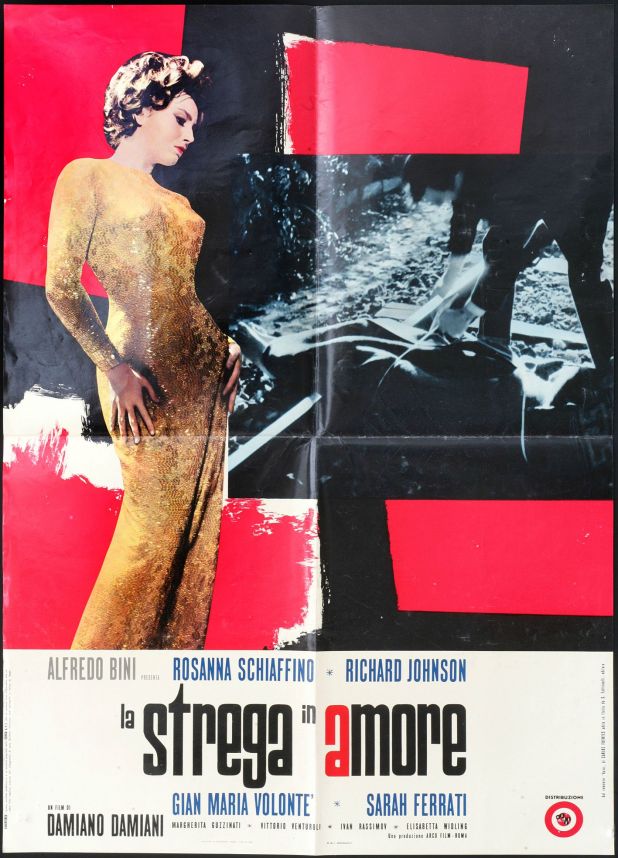
Damiano Damiani is a name held in high regard if only for one film, the most Italian movie ever made by a major U.S. studio, Amityville II: The Possession. Based on the book Aura by Carlos Fuentes, Damiani wrote the script with Ugo Liberatore.

Sergio Logan (Richard Johnson) is a womanizing cad who notices an old woman (Sarah Ferranti) following him everywhere. When he finally confronts her, she offers him a job: catalogue her vast library of erotica. That seems like the right job, but it gets better when he meets her gorgeous daughter Aura (Rosanna Schiaffino). As you can imagine, the library is filled with occult and sex magic energy. They claim the books are the works of their long-dead master, but the truth is that women can use their wiles to destroy men, especially ones who think they’re the so-called stronger sex.

Sergio is not alone. He also has another librarian, Fabrizio (Gian Maria Volonte), as competition, as well as the remains of the master of the house behind a glass case. It’s funny that this has always been amongst horror films. Sure, it’s in the genre, but it’s also just as much art as it is fright.

Along with a new video introduction by Italian film devotee Mark Thompson Ashworth, a limited edition 80-page book featuring new writing by Roberto Curti, Rob Talbot, Jerome Reuter, Rod Barnett and Kimberly Lindbergs, a fold-out double-sided poster and limited edition packaging with reversible sleeves featuring original and newly commissioned artwork by Colin Murdoch, The Witch has new commentary by author and producer Kat Ellinger, a new video essay by author and academic Miranda Corcoran and a new video interview with author and filmmaker Antonio Tentori.

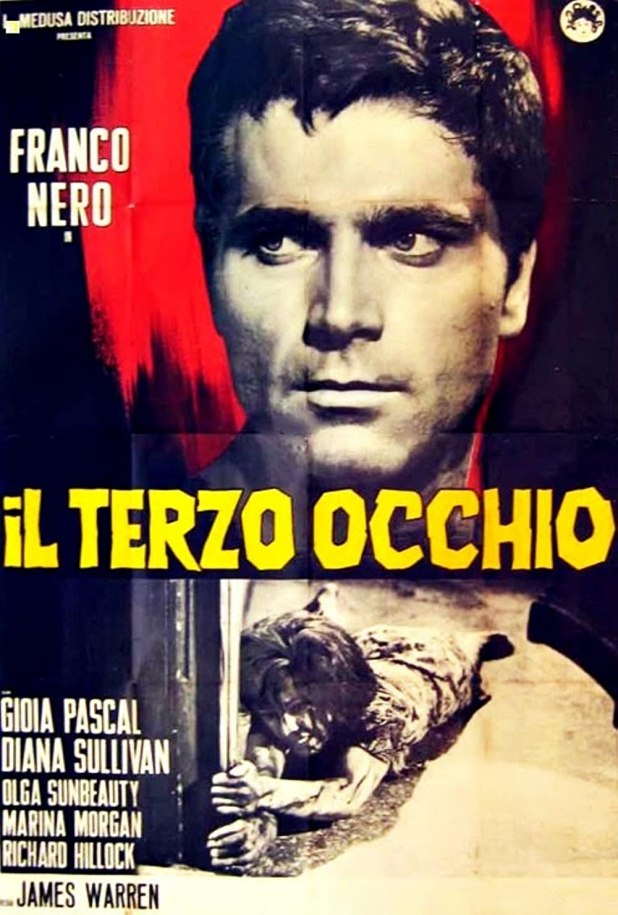
ARROW BOX SET RELEASE: Gothic Fantastico: The Third Eye (1966)

Mino (Franco Nero) is a wealthy nobleman and oddly enough taxidermist living under the domineering rule of his mother (Olga Solbelli) who decides to escape by marrying his fiancée Laura (Erika Blanc, pretty much the queen of Italian gothic horror). This also upsets his maid Marta (Gioia Pascal), who cuts the brakes on Mino’s car. She dies in a crash yet Mino saves her body, stuffing her and placing her body in his bed. While he’s preoccupied with that, Marta — why is the name Marta or Martha always filled with dread in Italian movies? — shoves his mom down the steps.

In his grief, Mino starts having sex with ladies of the evening in the same bed as his stuffed wife. When these girls find out that they’re part of a necrophilic threeway, he strangles them and Marta puts them in an acid bath. He agrees to marry her and make her a countess, but then Laura’s twin Daniela shows up and ruins her plan. When she tries to kill his love come back from the dead, Mino flips and repeatedly stabs his maid turned wife, then kidnaps Daniela and leads the police on a manhunt.

Italian censors were bewildered by this movie, saying “In addition many scenes of almost full female nudity and excessively graphic intercourses, the film features episodes of necrophilia, close-ups of horrific scenes with blood and brutal violence, presented with real sadism and a protracted insistence which conveys a sense of complacency by part of the makers.”

Imagine how they felt when Joe D’Amato remade it thirteen years later as Buio Omega, a movie that outdoes the depravity of this film on nearly every level.

Directed by Mino Guerrini from a script by Piero Regnoli based on a story by Gilles De Reys, this is one dark movie and you know, I love it. It’s wild to see Nero play such the villain.

Along with a new video introduction by Italian film devotee Mark Thompson Ashworth, a limited edition 80-page book featuring new writing by Roberto Curti, Rob Talbot, Jerome Reuter, Rod Barnett and Kimberly Lindbergs, a fold-out double-sided poster and limited edition packaging with reversible sleeves featuring original and newly commissioned artwork by Colin Murdoch, The Third Eye also has new commentary by author and critic Rachael Nisbet, a new video essay by author and filmmaker Lindsay Hallam and a newly edited video interview with actress Erika Blanc.

You can get this set from MVD.

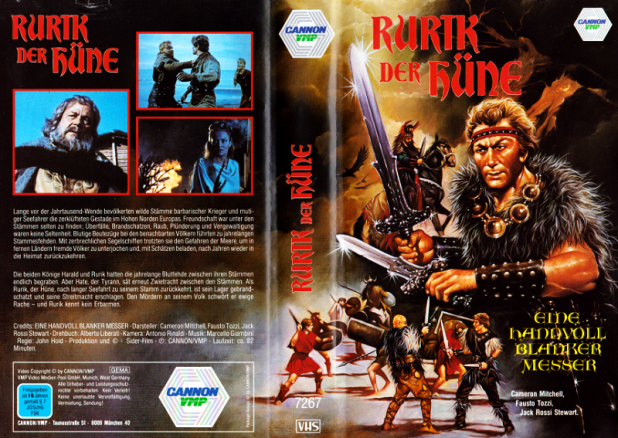
CANNON MONTH 2: Knives of the Avenger (1966)

EDITOR’S NOTE: This article was first on the site on December 5, 2020Knives of the Avenger was obviously not produced by Cannon, but they did release it in Germany on the Cannon/VMP label in 1985. 

You can’t really judge Mario Bava’s work on this film, as he entered a troubled production and rewrote and reshot it in just six days.

After the apparent death of her husband King Arald (Giacomo Rossi Stuart, Crimes of the Black Cat, here called Frank Stewart), Karin (Elissa Pichelli, using the Americanized name Lisa Wagner) has run from the murderous Hagen (Fausto Tozzi, billed as Frank Ross). Now, Rurik, a knife-throwing stranger (Cameron Mitchell, using the name…well…Cameron Mitchell) has rode into town like a Roman Shane and is defending her and her son Moki. Of course, Moki may also have been his son and he could very well have aassaultedKarin in the past, but I guess him learning how to throw knives — and aiming them at the right people — is some kind of redemption?

This is much closer to a western than a peblum, but when you think that Bava pretty much fixed this movie — or at least got it done — in less than a week, you have to admire his talent. That said, this is not one of his best.

This played on double bills with Gamera the Invincible, which seems like a pairing I’d never put together.

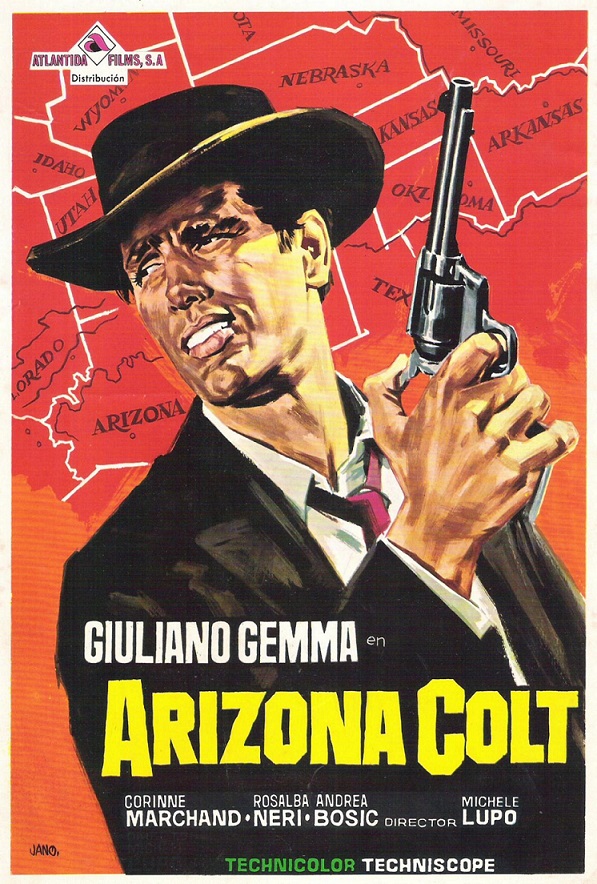
Arizona Colt (1966)

Known in Italy as Il pistolero di Arizona (The Arizona Gunslinger) and L’uomo venuto dal nulla (The Man from Nowhere), this film has quite a setup in the soundtrack: “He came out of nowhere, with no one beside him. He rode out of the sunrise all alone. A man out of nowhere, with no one to love him. His one faithful companion was his gun. No one could say, just where he came from. No one could say, where he was going. Was he a man without a heart, a man with a heart made of stone…”

Torrez Gordon Watch (Fernando Sancho) is breaking prisoners out of jail and telling them to join his Sidewinder Gang or die. Somehow, Arizona Colt (Giuliano Gemma) gets out alive. He gets involved with the gang again when a member named Clay Clay (Giovanni Pazzafini) murders a girl named Dolores (Rosalba Neri) who recognizes him. After the gang robs another bank, her father — the banker — realizes that the criminal that stole all the money in town is also the man who killed his daughter. He hires Arizona to stop the gang and get revenge for the low price of $500 and his other daughter’s vow of marriage.

If you enjoyed Giuliano Gemma as Ringo, you’ll really like this. He’s totally sarcastic, plays jokes on the gang and then gets deadly serious when it’s time to kill them off. He even orders a glass of milk at the bar, just like Ringo! Of course, he’s told they only have beer, so he grabs a mug. There’s also a lot of similarity to Django, as Colt’s hands and leg are injured and he must relearn how to be a gunfighter.

Director Michele Lupo also made The Weekend Murders. This was written by the master of all Italian film writers, Ernesto Gastaldi, along with Luciano Martino, who produced so many films with his brother Sergio, helped write Your Vice Is a Locked Room and Only I Have the Key amongst many other films and romanced Wandisa Guida, Edwige Fenech and Olga Bisera.

You can watch this on Tubi.

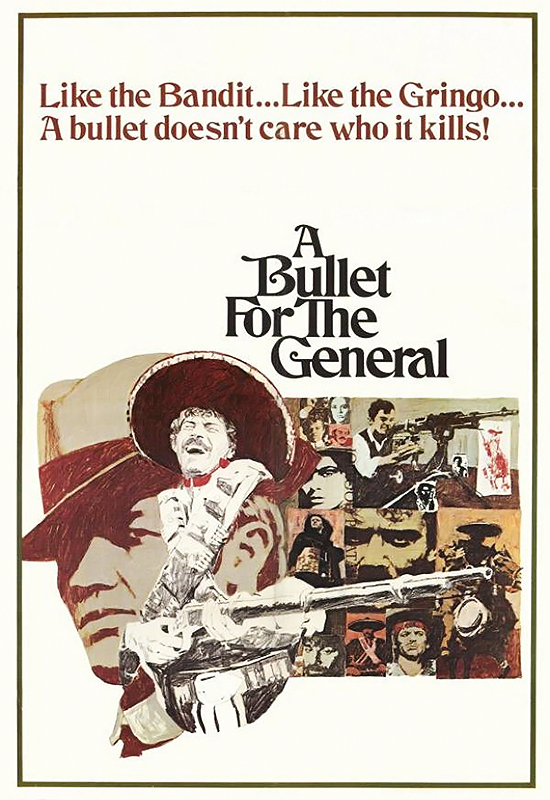
Quién sabe? (1966)

With a title that translates as Who Knows?, this was renamed A Bullet for the General when it was released in the U.S. It’s the first Italian western to seriously deal with the Mexican revolution, which is credited to screenwriter Franco Solinas, a confirmed Marxist, who shared screenplay duties with Salvatore Laurani. It was directed by Damiano Damiani, who was no stranger to movies with political commentary, except for the movie he’s best known for in the U.S., Amityville II: The Possession.

Gian Maria Volonté plays El Chuncho Muños, who is considered the hero — I guess — of this film, who attacks a train and adds American Bill “Niño” Tate (played by Lou Castel with William Berger providing his voice). The foreigner manipulates Chuncho throughout and is present for the deaths of nearly all of his men as well as the death of his brother El Santo (Klaus Kinski, not the masked luchador, but man, Klaus Kinski and Santo in a movie is something I want to see).

It has Martine Beswick in the cast, an actress whose career ranges from Thunderball and Dr. Jekyll and Sister Hyde to The Happy Hooker Goes HollywoodTrancers II and so much more.

There’s also an urban legend that Damiani got so fed up with the hijinks of Gian Maria Volontè and Kinski that he beat them and whipped them on the set until they finally behaved.

The first Zapata western — one that deals with the Mexican revolution — this movie ends with money being thrown and the poor being told to buy dynamite instead of bread. The idealism of revolution is forever co-opted by greed and this movie shoves your face in it and laughs, because even a movie made nearly sixty years ago understands the same issues we’re dealing with today, ones that will never go away. Friendship means nothing, ideals mean nothing, only gold. Anyone, everyone will be sold out and left for dead.

You can watch this on Tubi.

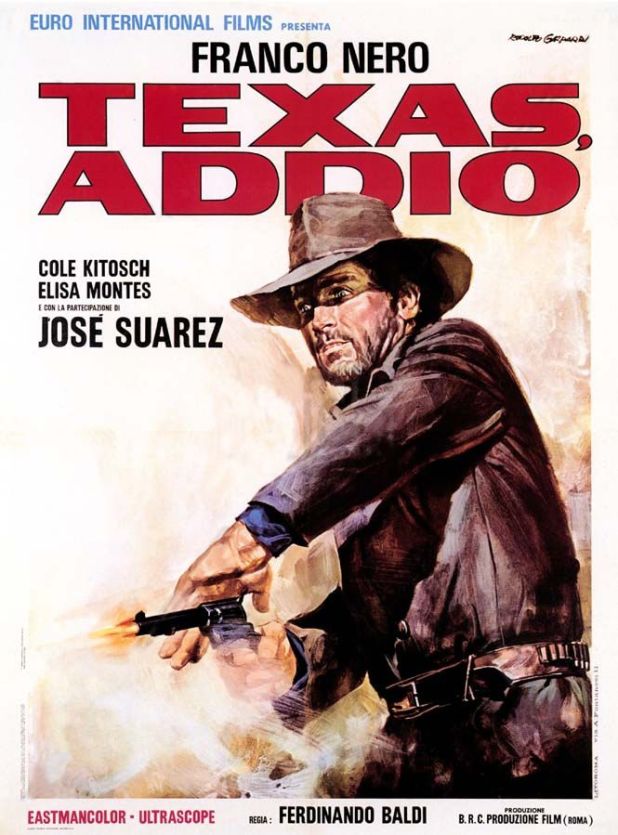
Texas Adios (1966)

Franco Nero may play Texas sheriff Burt Sullivan in this movie, but that didn’t stop it from being called Django 2 in some countries. Then again, there are so many Django movies that don’t have Nero in them and have absolutely nothing to do with that movie.

Shot in the Spanish province of Almería at exactly the same time Sergio Leone was making The Good, The Bad and The UglyTexas Adios finds Nero’s sheriff heading across the border with his younger brother Jim (Alberto Dell’Acqua) to get revenge against the man who killed their father, Cisco (José Suárez). The twist is that Cisco ends up being Jim’s real father.

Directed by Ferdinando Baldi, who would go on to make much better movies like Comin’ at Ya!Treasure of the Four CrownsGet Mean and two Mark Gregory movies, Just a Damn Solder and Tan Zan Ultimate Mission. In fact, he also made a Django movie, Django, Prepare a Coffin, which originally was going to star Nero and ended up having Terence Hill play the lead.

Baldi wrote the story for this with the script written by Django writer Franco Rossetti.

It’s not the best western. It’s not even the best Franco Nero western. But at least there’s a great bar room brawl.

You can watch this on Tubi

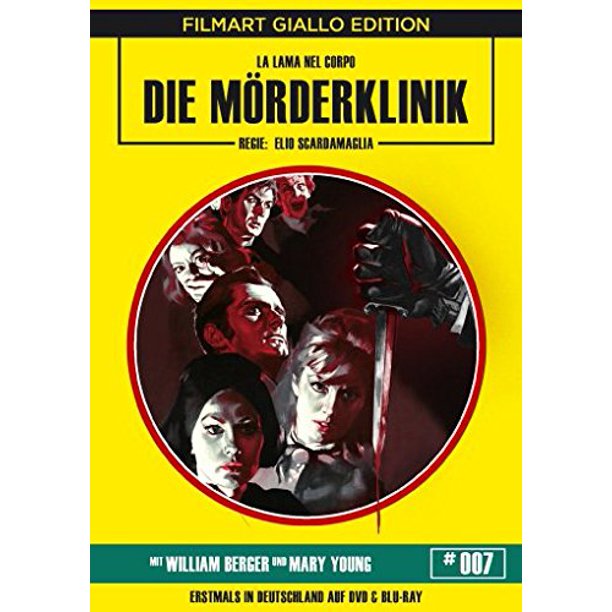
La lama nel corpo (1966)

The Murder Clinic predates the Argento era of giallo, coming around the same time as the Bava instigation with The Girl Who Knew Too Much and the krimi films. Known in its native Italy as La lama nel corpo (The Knife in the Body), it was written by Luciano Martino (brother of Sergio and writer of Delirium and The Whip and the Body) and Ernesto Gastaldi (The Sweet Body of Deborah, All the Colors of the DarkThe Case of the Bloody Iris and so many more) with direction coming from Elio Scardamaglia (this is the only film he’d direct as he usually produced movies) and Lionello De Felice. It’s based on the book The Knife In The Body by Robert Williams, a former Tuskegee Airman who became an actor. He also wrote Turkey Shoot, which really means that his work was produced all over the world.

The story takes place in 1870s England, so this movie can also be considered a gothic horror film. Dr. Vance, the director of a mental hospital (Wiliam Berger) is restoring his sister’s face using patients as raw material, all while a masked killer uses the giallo weapon of choice, a strait razor, to kill other people within the hospital.

This isstoryould replay itself across many films — Slaughter HotelFacelessMansion of the Doomed (well, that owes a debt to Eyes Without a Face) — while the first scene, with a young woman being chased by a killer in the woods at night a, and scene where the killer stalks his prey in a room full of hanging sheets f, eel like they inspired Suspiria.

The Murder Clinic itself feels indebted to Bava, really taking to heart the color strategies of Blood and Black Lace.

This is a movie with an interesting release history. After Berger spent some time in an Italian prison — he had been wrongly accused of possessing hashish and cocaine — this was re-released with a line on the poster that said “William Berger, guilty or innocent?”

In the U.S., it was renamed to cash in on Romero’s zombie film. It played triple features with Curse of the Living Dead (Kill, Baby, Kill!) and Fangs of the Living Dead (Malenka) in the 70s as the Orgy of the Living Dead.

With a great location -— Villa Parisi, home of Blood for Dracula and Patrick Still Lives -— and appearances by Françoise Prévost (The Return of the Exorcist), Mary Young (who only appeared in this movie and Secret Agent 777) and Barbara Wilson (her only film and she really should have done more), The Murder Clinic is an early giallo worthy of being enshrined in your collection.

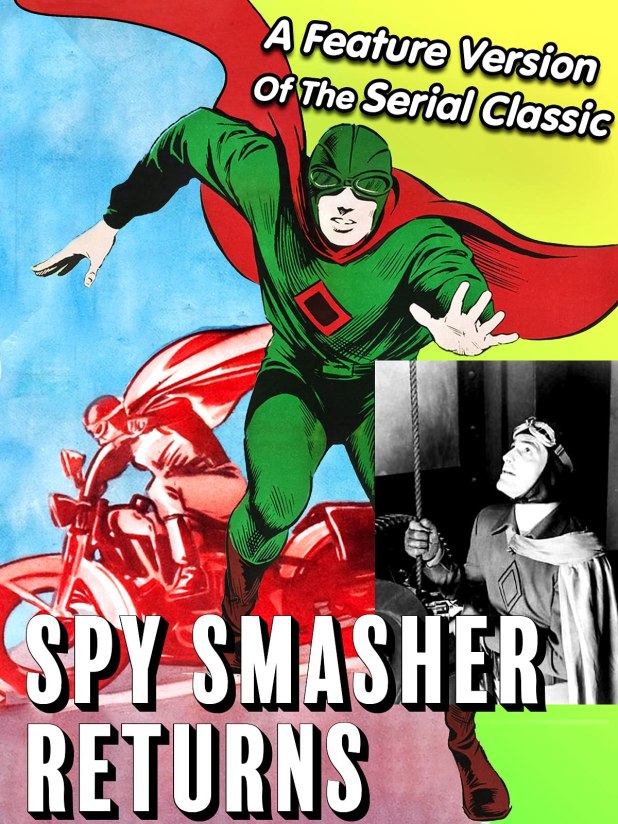
Spy Smasher Returns (1942, 1966)

Created by Bill Parker and C. C. Beck, Spy Smasher was introduced in Whiz Comics #2 and was the second most popular Fawcett Comics hero behind Captain Marvel. Alan Armstrong was a millonaire inventor who decided to use his intelligence to protect America during the war. By the 50s, there was no need for that, so he became Crime Smasher for one issue before disappearing until he made appearances in Crisis on Infinite Earths and The Power of Shazam after DC bought the characters of their former rival.

In the serial, both Alan and Jack Armstrong (both brothers are played by Kane Richmond) are on the wrong side of The Mask (Hans Schumm), including — spoiler warning — a chapter ending that does not end happily, as unlike every serial, one of them is killed.

While the twin idea was invented for the series, The Mask, Admiral Corby (Sam Flint) and his daughter Eve (Marguerite Chapman) are all directly from the comics.

In their book The Great Movie Serials: Their Sound and Fury Jim Harmon and Donald F. Glut claimed that this was ” the foremost cliffhanger example of a whole school of Hollywood film-making in the 40s that gloried in matchless pure entertainment.”

At the end of Kill Bill volume 1, there are RIP notices for Charles Bronson, Lucio Fulci, Sergio Leone, Shaw Brothers regulars Cheng Cheh and Lo Lieh, Django director Sergio Corbucci, Lee Van Cleef and the director of this serial, Willian Witney, who Quentin Tarantino has said is a lost master. Witney popularized shooting fight scenes in small bursts, allowing stuntmen to keep high energy throughout the scene. Some of his best regarded movies are The Crimson GhostAdventures of Captain MarvelMaster of the World and the very late in his career Darktown Strutters.

Spy Smasher was one of 26 Republic serials re-edited and re-released as a Century 66 film on television in 1966, in the midst of Bat-mania, and titled Spy Smasher Returns. Other films in this series include — thanks to ugglewuggle on the Movie Serial Message Boards — the following (the in parentesis title is the re-edited Century 66 title):

Darkest Africa (Batmen of Africa)
Undersea Kingdom (Sharad of Atlantis)
Robinson Crusoe of (Robinson Crusoe of)
Clipper Island (Mystery Island)
The Fighting Devil Dogs (Torpedo of Doom)
Hawk of the Wilderness (Lost Island of Kioga)
Mysterious Doctor Satan (Doctor Satan’s Robot)
Spy Smasher (Spy Smasher Returns)
Perils of Nyoka (Nyoka and the Lost Secrets of Hippocrates)
G-Men Vs. the Black Dragon (Black Dragon of Manzanar)
Secret Service in Darkest Africa (The Baron’s African War)
The Masked Marvel (Sakima and The Masked Marvel)
Tiger Woman (Jungle Gold)
Manhunt of Mystery Island (Captain Mephisto and the Transformation Machine)
Federal Operator 99 (FBI-99)
The Purple Monster Strikes (D-Day on Mars)
The Crimson Ghost (Cyclotrode “X”)
The Black Widow (Sombra, The Spider Woman)
G-Men Never Forget (Code 645)
Dangers of the Canadian Mounties (R.C.M.P. & the Treasure of Genghis Khan)
Federal Agents Vs. Underworld, Inc. (Golden Hands of Kurigal)
The Invisible Monster (Slaves of the Invisible Monster)
Radar Men from the Moon (Retik the Moon Menace)
Jungle Drums of Africa (U-238 and the Witch Doctor)
Canadian Mounties Vs. (Missile Base at Taniak)
Atomic Invaders (Atomic Invaders)
Trader Tom of the China Seas (Target: Sea of China)
Panther Girl of the Kongo (The Claw Monsters)

You can watch this on Tubi.
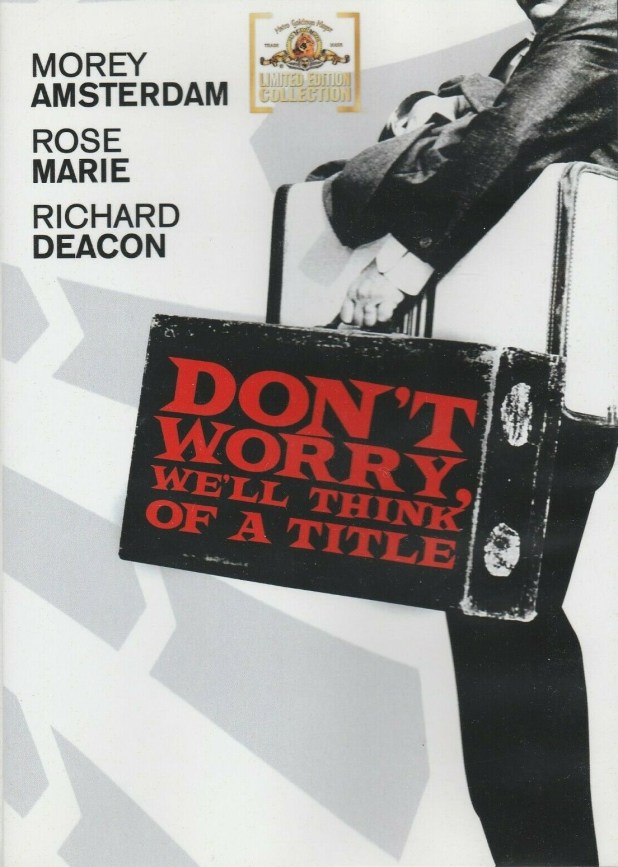
APRIL MOVIE THON DAY 17: Don’t Worry, We’ll Think of a Title (1966)

While not strictly a movie made from a TV show, Don’t Worry, We’ll Think of a Title is packed with TV stars either in lead roles or in cameos and that’s always been my jam. In fact, this movie is meta before we even knew what that meant.

Charlie Yuckapuck (Morey Amsterdam) and Annie (Rose Marie) work =at the diner run by Mr. Travis (Richard Deacon), making this nearly a The Dick Van Dyke Show reunion, just as that show was in its last month of first-run episodes. It’s a busy place, so busy that people like Danny Thomas and Forrest Tucker just drop by.

Then, one day, Crumworth Raines (Moe Howard!) comes in to inform waitress Magda Anders (January Jones) that she has inherited a bookstore at Updike University. She hires Charlie and Annie and all manner of hijinks ensue, as Charlie looks just like a defecting cosmonaut named Yasha Nudnik, which brings in spies out of the cold, as it were, such as government agent Jim Holliston (Michael Ford), Comrade Olga (Carmen Phillips) and KEB agents played by Peggy Mondo, Cliff Arquette and Nick Adams.

The bookstore gets even more cameos, including Milton Berle, Steve Allen and Carl Reiner. But perhaps the one that put this on the site was that Irene Ryan plays Granny from The Beverly Hillbillies and is completely in character, giving the protagonists a ride and driving back off to her show. In 1966, movie theaters and movies were battling for audiences, so it’s just crazy to see her show up and literally everyone knows who she is.

Director Harmon Jones made some wild movies like The Beast of BudapestGorilla At Large and Bloodhounds of Broadway. Here, he’s working from a script by Amsterdam, John Davis Hart (who wrote the English dialogue for Any Gun Can PlayThe Great SilenceArgoman the Fantastic Superman and Kill, Baby…Kill!) and William Marks (War Party, episodes of Bonanza and The Wild Wild West. 

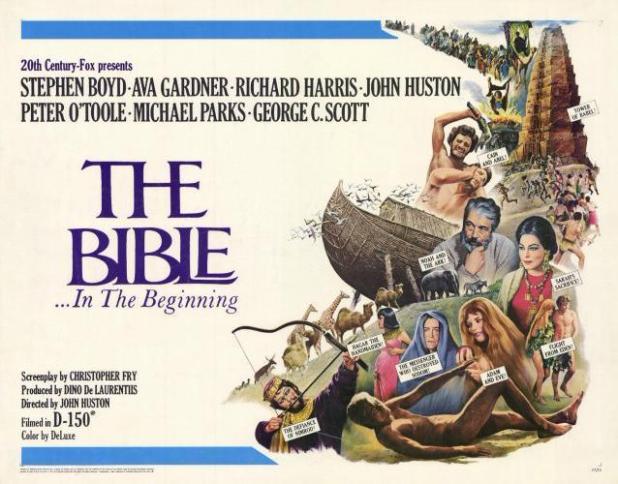
APRIL MOVIE THON DAY 15: The Bible: In the Beginning… (1966)

As movies battles television for the entertainmenty audience, theaters started showing movies so big that they couldn’t play the same on the small screen. Produced by Dino De Laurentiis and directed by John Huston, this was quite the project: make a movie of the first 22 chapters of the Biblical Book of Genesis from The Creation (of everything) and Adam and Eve to the binding of Isaac. It was written by Christopher Fry with contributions by Ivo Perilli, Jonathan Griffin, Mario Soldati, Vittorio Bonicelli and Orson Welles.

What got me watching this? Michael Parks is Adam! Who is the Creator, Tarantino? Anyways, his bride, Eve, is played by Ulla Bergryd, a Swedish anthropology student living who was discovered by a talent scout and on set in a few days. She was only in one other movie before leaving acting for a life in academics.

I mean, this movie is packed with people I love playing roles from the best selling book of all time. Richard Harris is Cain! Franco Nero, who was a still photographer on the set and had never acted before, is Abel! George C. Scott is Abraham, nearly sacrificing his children! Ava Garden was Sarah and she said, “It’s the only time in my life I actually enjoyed working — making that picture.” Stephen Boyd is Nimrod, great-grandson of Noah and not an X-Men villain! Peter O’Toole is an angel? Anna Orso from Day of Anger and Exterminators of the Year 3000 is Shem’s wife! Hagar is played by Zoe Sallis, who was Zoe Ishmail, until Huston decided that she should change her name because of its similarity to the name of Ishmael, her character’s son. Oh well, she was his wife. 1966 everyone. She’s also Angelica’s mother. Anyways, back to the people. Gabriele Ferzetti (On Her Majesty’s Secret ServiceThe Psychic) is Lot! As the Garden of Eden, a botanical garden…

That said, they spend $3 million ($26 million today) on the five sets that make up the Ark. And who will play Noah? Well, after Alec Guinness and Charlie Chaplin turned him down, director John Huston did it. And he was an atheist.

Anyways, I gained new respect for O’Toole when I learned that he was arrested while making this movie. He was on a night out with Barbara Steele and punched a paparazzi.

They planned a whole bunch of these movies and even though it was a big movie in theaters, it cost so much that it still lost $1.5 million.