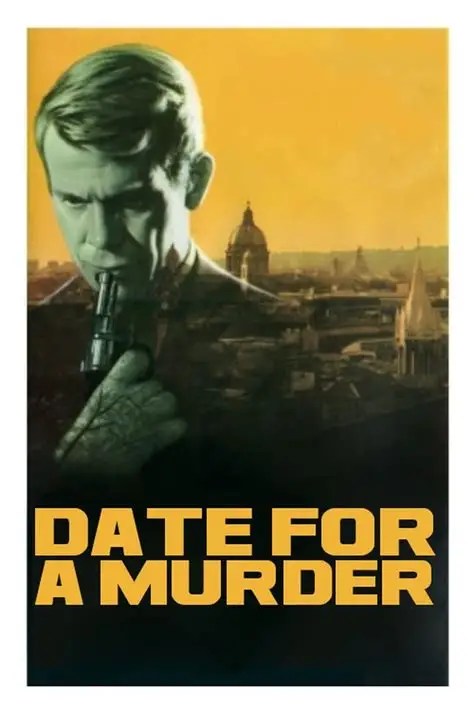
Directed by Mino Guerrini, who wrote it with Fernando Di Leo based on “Tempo di massacro” by Franco Enna, this has an American detective, Vince Dreyser (George Ardisson), as its hero. He meets up with an old friend, Walter Dempsey (Hans von Borsody), who soon goes missing. This feels as much Eurospy as giallo, but Guerrini helped script what many consider the first film in the genre, Evil Eye. Bava’s influence is on this movie, thanks to handheld cameras and a long dummy drop that follows the body as it descends into the pavement.
Also known as Agent 3S3 setzt alles auf eine Karte (Agent 3S3 Bets it all on One Card),* Omicidio per appuntamento (Murder by Appointment) and Rendezvous met de dood (Rendezvous with the Dead), this has our hero get another job guarding the daughter of a rich man, Fidelia (Halina Zalewska, An Angel for Satan and the half-sister of Ely Galleani from Emanuelle In Bangkok), who ends up being a lot to deal with. She also has some baffling hairstyles in this, ones that would cause Princess Leia to say, “Really?” I love her.
While not a full giallo, this does have a wild club where everyone dresses up, drinks and races slot cars. Were slot cars a hot night out in Rome in 1966?
*Ardisson played Walter Ross, Agent 3S3, in two movies: Massacre In the Sun and Passport to Hell.
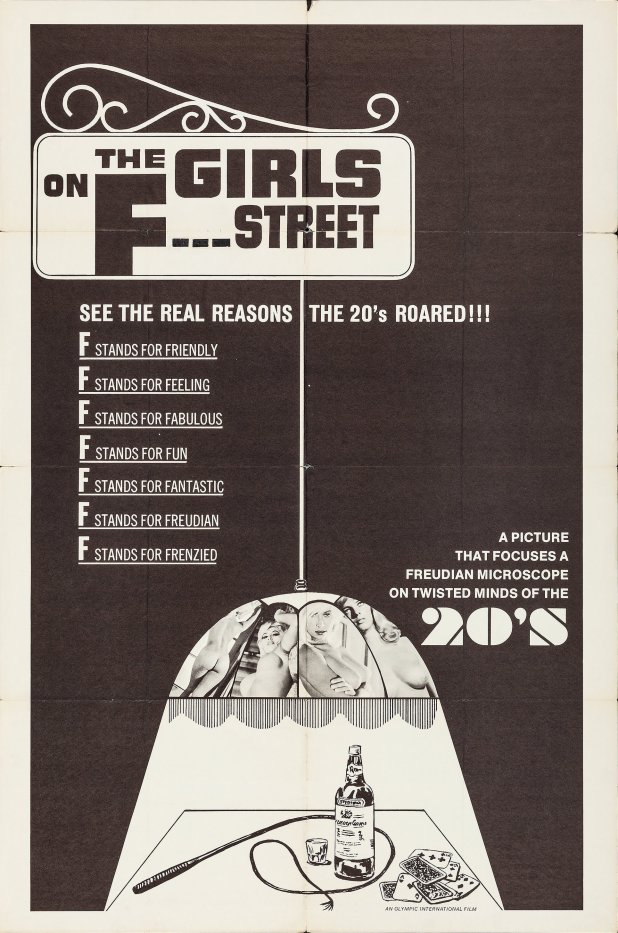
Saul Resnick only directed this movie, but he was part of the late 60s sexploitation film scene, serving as cinematographer on Broadway Jungle and shooting Mondo Bizarro and Everybody Loves It.
Also known as Maidens of Fetish Street, this is about Nick (Ken McCormick), who goes to a club to watch girls dance, which causes him to meditate on people’s sex lives. This is less a nudie or roughie and more softcore noir; it feels gross in the best way, sleazy and leering, dirty without penetration, just the way it’s made.
Every man in this, including Nick, is a loser. Women obsess overthem and are upset and confused by them. All is, well, lost. Sometimes, like when one guy gets what he wants, they just cry. And this is way ahead of other films of the era, as women of every size and shape are included, as long as they have the most enormous breasts you’ve ever seen.
Speaking of that crying guy, he’s in love with a sex worker. He’s been in love with her for years. He tells her a few stories, and she barely listens; time is money, and she’s already got his cash. She then tells him every filthy tale about her life, all the men she has on a daily basis, and all he can do is weep as he sprawls on top of her, just another number and not the white knight he was hoping to be.
Then, a nude model is the fantasy object for a female sculptor. This sequence feels like raw eroticism compared to the first, as the black and white film makes the clay look like flesh. Is this art?
Imagine: a movie set in 20s Los Angeles, shot like a film noir with distorted sound and non-synched voiced, like Carnival of Souls (copyright to Sakana1 on Letterboxd for that amazing connect the dots) but if Candace Hilligoss pulled her car over in the salt flats and suddenly decided that she wanted to give you the kind of lap dance that gives you blue balls for the rest of all eternity. Supposedly, this was based on a play called The Degenerates. Gentry Austin, also on Letterboxd, reminds us that Andy Milligan had a lost film of the same name; one can hope it had the same inspiration (and that Severin gets it out on Blu-ray ASAP).
It ends with Nick giving a black woman a bath alongside his much older wife, then falling for a gorgeous blonde, only to wake up to his wife whipping them both before he’s locked inside an adult bookstore as the night goes on without him.
The cast includes Althea Currier (Mr. Tease and His Playthings, Lorna, Surfside 77, the writer of the Ask Althea column in Adam magazine), Barbara Nordin (Orgy of the Dead), Kellie Everts (whose adult career goes from this movie all the way to Full Service Butler in 1989, a film she also directed; her stage dancing career lasted from March 1966 to August 1987. She then quit to become a producer of dancing and female domination videos, making enough money to purchase a large property with an island in Upstate New York in 1989, where she has lived ever since. Interestingly enough, she was known as a “stripper for God,” often preaching before she took her clothes off, starting her first spiritual talk at the Melody Theater in Times Square. If that’s not enough, she was also one of teh first female bodybuilders, which led to her winning Miss Nude Universe in July 1967, second place in Miss Americana nd Best Body in 1972, second place for Miss Body Beautiful in 1973, Miss Body Beautiful U.S.A. first place in 1974, and second place for Miss Americana and Best Body in 1974, which found her on the same stage as Arnold Schwarzenegger. Now, she has her own religion and her followers believe that she’s an “incarnation of God, much like Ramakrishna.” Wow.) and Margo Lynn Sweet (who is also in The Beach Girls and the Monster).
David Hewitt started his career as an illusionist for a traveling spook show called Dr. Jekyll’s Strange Show before Forrest J. Ackerman helped him get into movies by having his script Journey Into the Unknown made into The Time Travellers. His directing debut was 1965’s Monsters Crash the Pajama Party, a movie in which actors ran into the audience to enhance the film’s antics.
He also directed Dr. Terror’s Gallery of Horrors, which had a title way too close to Amicus’ Dr. Terror’s House of Horrors, so it also ran as Return from the Past, The Blood Suckers, Alien Massacre, The Witch’s Clock and Gallery of Horror. He also directed Hell’s Chosen Few, The Mighty Gorga(he’s also Gorga, the giant ape) and The Tormentors. Later in his career, he moved into optical effects, working on films as varied as Inspector Gadget 2, Willow and The Quiet American.
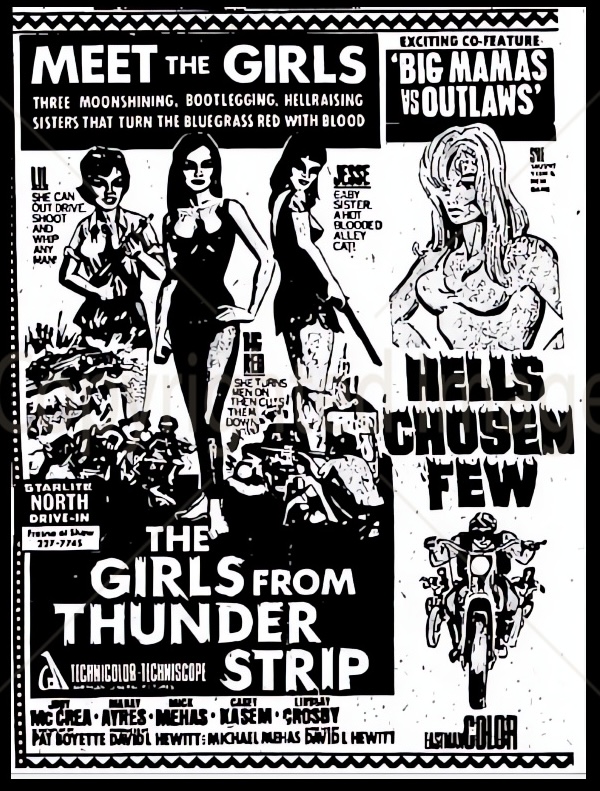
Today, we’re here to talk about bikers vs. moonshiners vs. the syndicate vs. the government in the exploitation film The Girls From Sunset Strip.
The screenplay for this film came from Pat Boyette, a news anchor in San Antonio, Texas, who went on to become the producer of a daytime talk show, a puppet show and TV commercials. Turning to comics, Boyette worked mainly for Charlton Comics, where his character the Peacemaker — he loves peace so much he’ll kill for it — became the inspiration for the Comedian in Watchmen. He wrote and drew hundreds of comics for Charlton, including Ghost Manor, Ghostly Tales, Space Adventures, The Many Ghosts of Doctor Graves, Cheyenne Kid, Korg: 70,000 B.C., Flash Gordon, Peter Cannon: Thunderbolt, The Phantom and The Six Million Dollar Man. He was also responsible for writing and directing films such as No Man’s Land, The Dungeon of Harrow and The Weird Ones.
Three hillbilly girls — Red, Jessie and Lil — take on three bikers, led by Teach (Gary Kent, The Black Klansman) and aided by Animal and Todd. Of all people, Casey Kasem plays the government man, Conrad, while Jack Starrett (Race with the Devil, Cleopatra Jones) is the sheriff. The hero is Pike, who is played by Jody McCrea. He was in a ton of beach movies, including Operation Bikini, Beach Blanket Bingo and How to Stuff a Wild Bikini. Interestingly, he was the only American International Pictures actor who could surf. And oh yeah — Bing Crosby’s son Lindsay is in this.
But we’re here to talk about the girls, because this movie isn’t called The Boys From Thunder Strip. Red is played by Maray Ayres, who is also in The Cycle Savages and looks a lot like Mary Woronov. Jessie is Megan Timothy, who appeared in three of Hewitt’s films, as well as in Al Damanson and Bud Cardos’ The Female Bunch, and in Russ Meyer’s Good Morning… and Goodbye! Lil is Melinda MacHarg, who really didn’t do much other than this film.
The film starts with one of the girls being assaulted by one of the boys, but honestly, stuff just happens after that. I mean it — sides are constantly switched, cops are brought in and turned on in moments, and Pike keeps getting beaten up.
It was shot on Spahn Ranch, a 500-acre property located in Chatsworth, California. Perhaps you’ve heard of it. In Brian Albright’s Wild Beyond Belief!: Interviews with Exploitation Filmmakers of the 1960s, Gary Kent said that members of Manson’s Family would often visit craft services and beg for food.
The Girls From Thunder Strip was shot by cinematographer Gary Graver, who was, of course, Orson Welles’s preferred cameraman. Honestly, the behind-the-scenes stories of this movie are probably way more interesting than what was filmed.
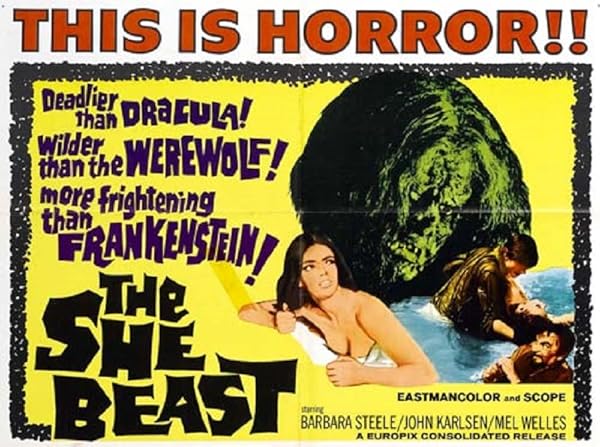
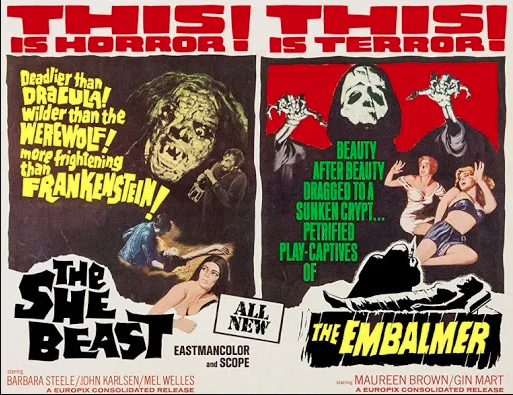
Michael Reeves only directed three movies: this film, The Sorcerers and Witchfinder General. He also had something to do with Castle of the Living Dead* and assisted Don Siegel, worked for Jack Cardiff on The Long Ships and for Henry Levin on his movie Genghis Khan.
Made in 21 days for hardly any money — even when Barbara Steele made $1,000 for one day of work, that day was 18 hours long — and most of the crew is in the movie. Reeves also wrote the script, along with F. Amos Powell and Mel Welles (the director of Lady Frankenstein), under the name Michael Byron.
Two hundred years ago in Transylvania, a witch named Vardella was burned at the stake, but not before threatening to come back for revenge. This would end up ruining the honeymoon of Philip (Ian Ogilvy) and Veronica (Barbara Steele) and that’s not even counting the squalid hotel owned by Ladislav Groper (Welles).
As they enjoy breakfast, Count Von Helsing (John Karlsen) delights in sharing the legend of Dracula and the story Vardella. Well, those foreigners have no interest in this weird old man and blow him off. That night, Phillip catches Groper peeping on his wife and beats him into oblivion. If that doesn’t make this a rough wedding getaway, he wrecks their car into a lake and when they pull out his new bride, it’s the dead body of the witch instead of the gorgeous Steele.
Now, Phillip has to make nice with Von Helsing and be part of his plan to take this dead body, drug it and perform an exorcism to get his wife back. It seems like a lot of work, but I’ve done so much more for women who couldn’t stand in the brightness of Steele’s flawless alabaster skin.
How do you kill a witch? You drown it. That’s also how you find out if someone is a witch.
This played double features in America — distributed by American-International Pictures — with The Embalmer.
*Depending on who is asked, Reeves either did minor second unit work, a polish on the script’s dwarf character, a complete takeover of the movie or nothing at all.
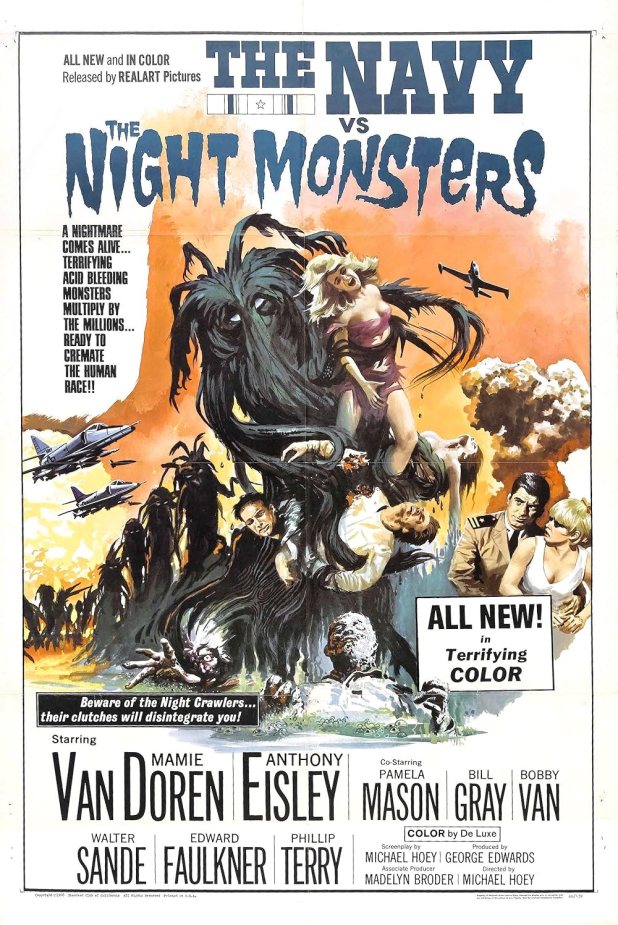
EDITOR’S NOTE: The Navy vs. the Night Monsters was on Chiller Theater on Saturday, November 15, 1969 at 1:00 a.m.; Saturday, February 6, 1971 at 11:30 p.m.; Saturday, May 5, 1973 at 1:00 a.m.; Saturday, May 11, 1974 at 11:30 p.m. and Saturday, July 5, 1980 at 1:00 a.m.
Directed and written by Michael A. Hoey, along with help from Jon Hall, this starts with a plane crashing into the small American Navy weather station based on Gow Island. Lieutenant Charles Brown (Anthony Eisley, admirably heroic despite so many minor roles), nurse Nora Hall (Mamie Van Doren) and biologist Arthur Beecham (Walter Sande) reach the wreck and find no survivors. No bodies, to be exact.
There’s only a freaked-out pilot and prehistoric trees, which get replanted and, yes, come to life.
Do you know how to defeat evil trees? Molotov cocktails and napalm. Never overlook the American military-industrial complex’s ability to blow things up real good. Now, Eisley and Van Doren’s characters can get it on without the specter of walking murderous trees.
Based on The Monster from Earth’s End by Murray Leinster, this film features James Mason’s first wife, Pamela — who thought the film was beneath her — and two members of Elvis Presley’s Memphis Mafia, Sonny West and Red West.
The original cut was 78 minutes, and this is where Hall came in, shooting new scenes to pad the film. Eisley said, “The producer totally recut the picture after it was made and totally destroyed any validity it might have had.”
When Anthony Eisley says bad things about your movie, you may want to reconsider your choices.
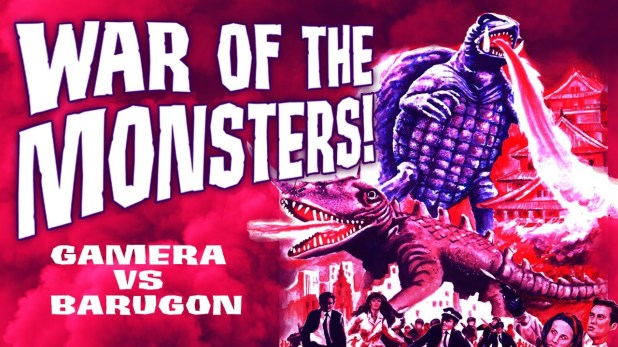
EDITOR’S NOTE: Gamera vs. Barugon was on Chiller Theater on Saturday, April 13, 1968, at 11:20 p.m.; Saturday, March 1, 1969 at 1:00 a.m.; Saturday, June 12, 1971 at 1:00 a.m. and Saturday, April 1, 1972 at 1:00 a.m. as War of the Monsters, the title that American-International Television used when they re-edited it.
The second Gamera film has twice the budget of the first and realizes what they should have known all along: Gamera isn’t the villain. He’s the good guy and ready to defend children against more dangerous kaiju.
Those dumb scientists and their Z Plan rocket didn’t count on a meteorite letting Gamera escape and come back to Earth. Meanwhile, three ex-soldiers invade a cave — a scorpion kills one and treachery another — before bringing an opal to the surface. And that jewel? It’s an egg. And it’s hatching.
It becomes a lizard called Barugon, which can breathe freezing gas and launch rainbow rays from the seven spines on its back. These are all weapons that can do great damage to our turtle protector.
How do you defeat an undefeatable monster that freezes our hero again? Mirrors and drowning. Yes, Gamera straight up holds Barugon’s head under the waters of Lake Biwa.
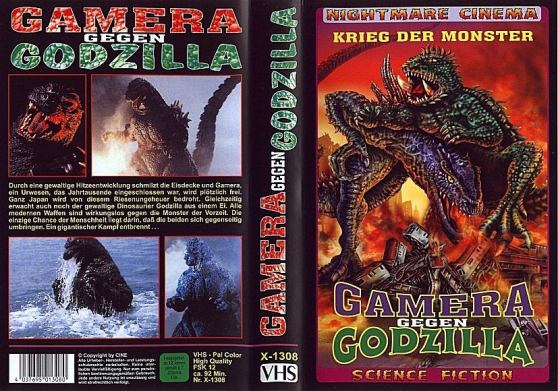
In Germany, they screwed up the translation and call Gamera Barugon and Barugon Godzilla. Those versions are titled Godzilla, der Drache aus dem Dschungel (Godzilla, the Dragon from the Jungle), Godzilla, Monster des Grauens (Godzilla, the Monster of Horror) and Gamera vs. Godzilla.
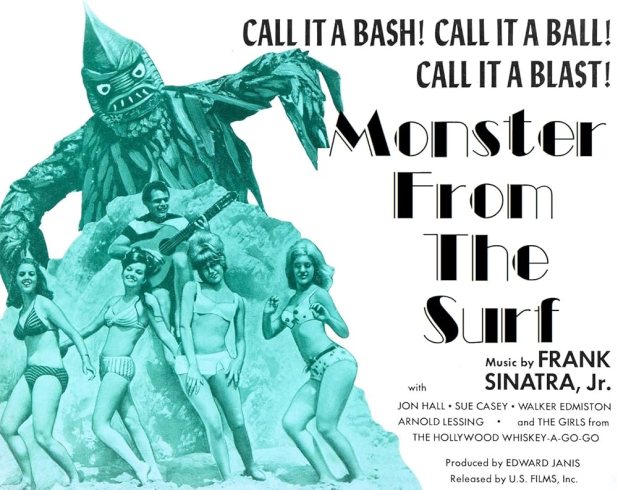
EDITOR’S NOTE: The Beach Girls and the Monster was on Chiller Theater on Saturday, June 29, 1968 at 11:20 p.m. It played as Monster from the Surf.
Directed, shot by and edited by Jon Hall, who also plays Dr. Otto Lindsay, The Beach Girls and the Monster is the kind of strange movie that I love so much. The surf footage was shot by Dale Davis — who also is in this as Tom — and he also made the surf documentaries Walk on the Wet Side, Strictly Hot and The Golden Breed. Even better, it has sculptures, the monster’s head,and the Kingsley the Lion, which were all created by Walker Edmiston — who plays Mark — who had a kid’s show in Los Angeles and went on to be the voice of Ernie the Keebler Elf, several characters on Lidsville, Sigmund from Sigmund and the Sea Monster, the Zuni Fetish Doll in Trilogy of Terror and Magneto on the 1980s Spider-Man, as well as playing Professor Crandall on The Dukes of Hazzard.
Can it get even better than that?
Let me introduce you to the The Watusi Dancing Girls from Hollywood’s Whisky a Go Go club on Sunset Boulevard. And how about that soundtrack with appearances by The Hustlers and the theme song “Dance Baby Dance” by Frank Sinatra Jr. and Joan Janis.
Bunny (Gloria Neil, Sarah in The Man from U.N.C.L.E.) is found dead after being attacked by a seawood covered lizard creature. No, not Slithis. Or Zaat. Or one of the Humanoids from the Deep. This, according to Dr. Lindsay, is a fantigua fish that has grown large enough to exist out of the ocean. Did it grow lungs? What kind of scientist is he? And why does he call the kids loafers and little tramps?
Maybe he’s mad that his son Richard Lindsay (Arnold Lessing) is a beach bum, that his best friend Mark (Edmiston) has moved in and sculpts, and that his wife Vicky (Sue Casey, Evilspeak) drinks and flirts all the time, seeming like the kind of woman that John Ashley would certainly sleep with and cuck him were this Blood Island and not Santa Monica. Richard was there when Bunny died, so all he cares about now is his girlfriend Jane (Elaine DuPont) and living life for fun instead of doing research with his old man.
In case you can’t guess, there’s no such thing as the monster. Yes, the doctor is dressing up, all to make his son more serious by killing everyone that he is friends with as well as getting rid of his second wife.
Also known as Monster from the Surf and Surf Terror, this movie is totally The Horror of Party Beach but I don’t care. It’s like a sitcom or Scooby-Doo episode except that all sorts of people die and it ends with a misunderstood father, who is dressed as an undersea monster, driving his car off a cliff and blowing up real good.
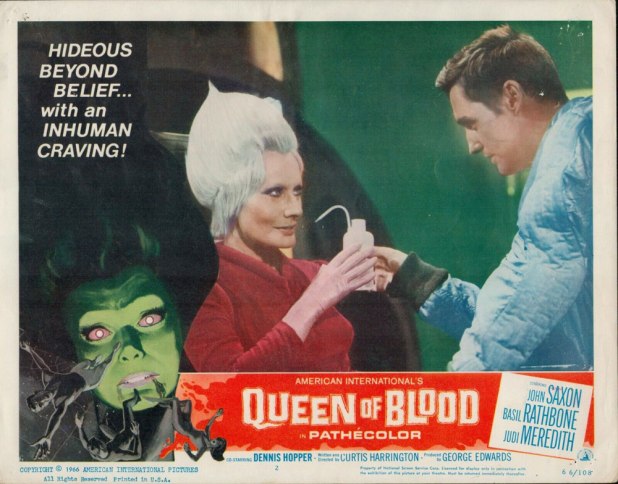
EDITOR’S NOTE: Queen of Blood was on Chiller Theater on Saturday, December 17, 1966 at 11:20 p.m. and Saturday, May 17, 1969 at 11:30 p.m.
Based on the screenplay for the Russian movie Mechte Navstrechu (A Dream Come True) and utilizing the special effects footage from that film and Nebo Zovyot (Battle Beyond the Sun), this American-International Pictures release, directed by Curtis Harrington, likely had some influence on Alien.
Harrington agreed, saying that Ridley Scott’s movie was a “greatly enhanced, expensive and elaborate” take on Queen of Blood.
This movie believed, and it made sense at the time, that by 1990, humans would be traveling in space and have united to form the International Institute of Space Technology. Astronaut Laura James (Judi Meredith) hears strange signals from space, messages that Dr. Farraday (Basil Rathbone) believes are from an alien race sending an ambassador to Earth, yet the ship has crashed on Mars.
The ship Oceano is sent to rescue the ambassador, but only one dead alien is aboard. They decide that a rescue ship must have picked up the crew, but when they follow what they think is the rescue ship, they find only one being on board, a green-skinned alien (Florence Marly, who made a short sequel to this movie called Space Boy! and is also in The Astrologer) and several eggs.
She refuses to eat food, won’t let them take a blood sample and when left alone with an astronaut named Paul (Dennis Hopper), she hypnotizes him and drains his blood. Soon, she takes over most of the male crew members and plans on making her way to our planet, with only Laura and Allan Brenner (John Saxon) left to oppose her.
This would be the first movie that Harrington would work with George Edwards (as a line producer for this movie). They met when Edwards produced a stage production of Tennessee Williams’ The Glass Menagerie, and this movie impressed Universal enough that they hired Harrington and Edwards to make Games.
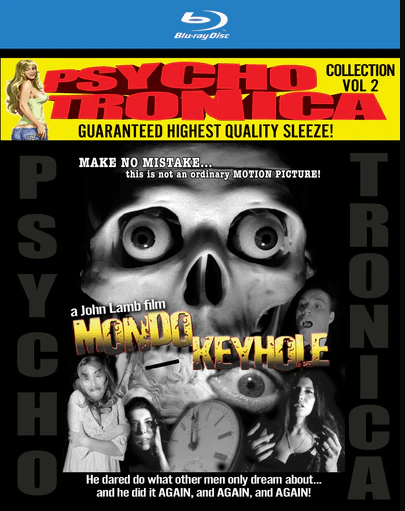
Howard Thorne (Nick Moriarty) stalks and assaults women on a regular basis. Or maybe he’s just dreaming of it. He wants nothing to do with his junkie wife Vicki (Adele Rein, The Girl With the Hungry Eyes). When they go to a costume party together, she learns who he really is while he learns what it’s like to be a victim. Then, they both go to Hell.
Like many films of this time and genre, there were many prints of this, some with more filthy scenes that could have just been spliced in. The Something Weird VHS of this supposedly had more of the later nightmare footage.
Made for John Lamb (Sexual Freedom In Denmark, The Raw Ones, Sexual Liberty Now, possibly the director of Zodiac Killer) by Jack Hill, this is a drugged and fuzzed-out roughie that’s more art than nearly any other movie in the genre and one that actually is sexy. Credit for that goes to not just Hill, but Rein, who has a volcanic scene with herself in a mirror. There’s also Cathy Crowfoot (who would go on to shoot and produce The Boy With the Hungry Eyes) as The Crow, a martial arts-using vengeance-seeking former victim out to destroy Howard. Also: A Dracula-voiced host, played by Ron Gans, the voice of New World Pictures trailers and the Halloweenradio commercial.
You can also see Carol Baughman (My Tale Is Hot), Rene De Beau (Orgy of the Dead), Gaby Martone(Mermaids of Tiburon) and Luana Anders (who convinced Jack Nicholson to join her improv class) show up.
This VCI Blu-ray release has two commentary tracks: one by noted film historian, podcaster and artist Rob Kelly and the other by Jack Hill. There’s also a photo and poster gallery. You can get it from MVD.
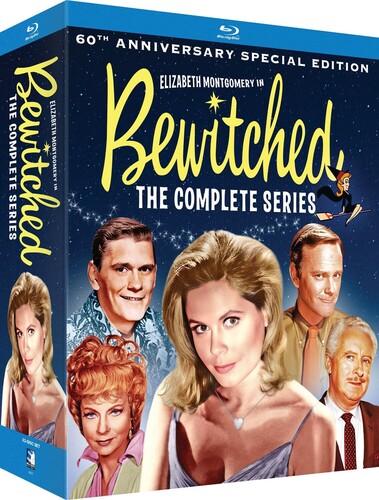
Bewitched aired throughout the most tumultuous time in modern history — hyperbole, that could also be today, but true, as rehearsals for this show’s first episode were on the day Kennedy was shot and the episode “I Confess” was interuppted by Martin Luther King Jr.’s death — from September 17, 1964, to March 25, 1972. The #2 show in the country for its first season and remaining in the top ten until its fifth season, it presents a sanitized and fictional world that at the time may have seemed contrary and fake to the simmering 60s, but today feels like the balm I need and an escape.
Within the home on 1164 Morning Glory Circle, Samantha (Elizabeth Montgomery) and Darrin Stephens (Dick York, later Dick Sargent) have just had a whirlwind romance and ended up as husband and wife. At some point, she had to tell him that she was a witch, a fact that he disapproved of, and that she should be a normal housewife instead of using her powers. Yet she often must solve their problems — usually caused by her family, such as her mother Endora (Agnes Moorehead) — with a twitch of her nose.
Creator Sol Saks was inspired by I Married a Witch and Bell, Book and Candle, which luckily were owned by Columbia, the same studio that owned Screen Gems, which produced this show. You could use either of those movies as a prologue for this, which starts in media res — I like that I can use such a highbrow term to talk of sitcoms — with our loving couple already settling into the suburbs.
Author Walter Metz claims in his book Bewitched that the first episode, narrated by José Ferrer, is about “the occult destabilization of the conformist life of an upwardly mobile advertising man.” As someone who has spent most of his life in marketing, maybe I should look deeply into the TV I watched as a child. Bewitched was there all the time in my life, wallpaper that I perhaps never considered.
Head writer Danny Arnold, who led the show for its first season, considered the show about a mixed marriage. Gradually, as director and producer William Asher (also Montgomery’s husband at the time) took more control of the show, the magical elements became more prevalent. What I also find intriguing is that with the length of this show’s run, it had to deal with the deaths of its actors and York’s increasing back issues, which finally forced him to leave the show and another Dick, Dick Sargent, stepping in as Darren, a fact that we were to just accept.
That long run, the end of Montgomery and Asher’s marriage and slipping ratings led to the end of the show, despite ABC saying they would do two more seasons. Instead, Asher produced The Paul Lynde Show, using the sets and much of the supporting cast of this show. He also produced Temperatures Rising, which was the last show on his ABC contract, which ended in 1974.
Feminist Betty Friedan’s two-part essay “Television and the Feminine Mystique” for TV Guide asked why so many sitcoms presented insecure women as the heads of households. None of this has changed much, as the majority of sitcoms typically feature attractive women and funny but large husbands, a theme created by The Honeymooners, and the battles between spouses. I always think of I Dream of Jeannie, a show where a powerful magical being is subservient to, well, a jerk. At least on Bewitched, Samantha is a powerful, in-control woman with a mother who critiques the housewife paradigm.
Plus, unlike so many other couples on TV at the time, they slept in the same bed.
Bewitched‘s influence stretched beyond the movie remake. The show has had local versions in Japan, Russia, India, Argentina and the UK, while daughter Tabitha had a spin-off. There was even a Flintstones crossover episode!
Plus, WandaVision takes its central conceit — a witch hiding in the suburbs — from this show. And Dr. Bombay was on Passions!
This is the kind of show that has always been — and will always be — in our lives. Despite my dislike of Darren’s wedding vows of no magic, there’s still, well, some magic in this show. Just look at how late in its run it went on location to Salem for a multi-episode arc, something unthought of in other sitcoms.
You can watch this just for the show itself, to see the differences between the two Darrens and when Dick York had to film episodes in special chairs because of his back pain, when the show did tricks like have Montgomery (using the name Pandora Spocks) playing Samantha’s cousin Serena to do episodes without York or just imagine that the world was changing outside. Yet, magic and laughter were always there on the show, throughout the lives, divorces and deaths of its principals and supporting cast.
The Mill Creek box set is an excellent, high-quality way to just sit back, twitch your nose and get away from it all. This 22-disc set has everything you’d want on Bewitched, including extras like Bewitched: Behind the Magic, an all-new documentary about the making of Bewitched, featuring special guest appearances by actor David Mandel (Adam Stephens), Steve Olim (who worked in the make-up department at Columbia), Bewitched historian Herbie J Pilato, film and television historian Robert S. Ray, Bewitched guest star Eric Scott (later of The Waltons) and Chris York, son of D. York (the first Darrin). There are also sixteen new episodic audio commentaries, moderated by Herbie J Pilato that include behind-the-scenes conversations with Peter Ackerman (son of Bewitched executive producer Harry Ackerman), David Mandel, Bewitched guest star Janee Michelle (from “Sisters at Heart”), Steve Olim, Robert S. Ray, former child TV actors and Bewitched guest stars Ricky Powell (The Smith Family), Eric Scott (The Waltons), and Johnny Whitaker (Family Affair and Sigmund and the Sea Monsters) and Chris York (son of D. York). There’s also an exclusive 36-page booklet featuring pieces by Bewitched historian Herbie J. Pilato, as well as an episode guide. You can order it from Deep Discount.
 B&S About Movies
You must be logged in to post a comment.