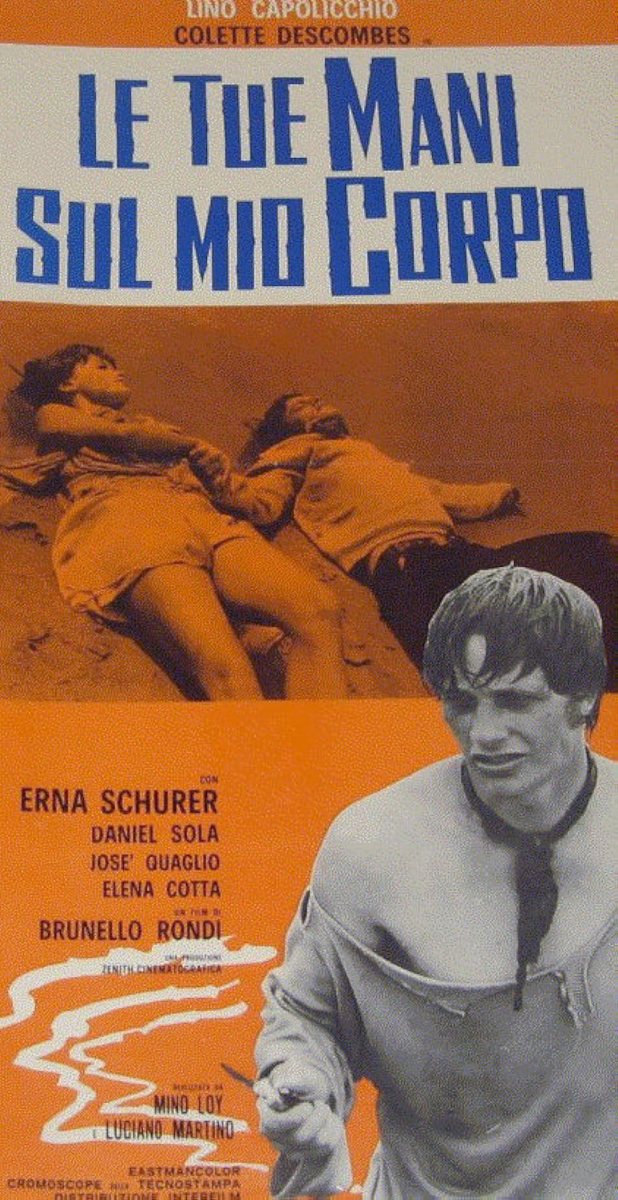
Le tue mani sul mio corpo (1970)

Directed by Brunello Rondi (Run. Psycho, Run), who wrote the story with Luciano Martino and Francesco Scardamaglia, this is about Andrea (Lino Capolicchio), the son of a rich publisher. He rebels by living a life of excess as a way of dealing with the death of his mother when he was a very young man. Beyond sleeping with anyone and everyone, he really wants to cuck his father and to have sex with his stepmother Mireille (Erna Schürer, Strip Nude for Your Killer) and her gal pal Carole (Colette Descombes, Orgasmo).

A giallo with no murder, this is about one man trying to ruin everyone through his desires — and need to film all of his fantasies — as well as him learning what happened to his mother, who he only sees in glimpses wearing white.

Also known as Schocking, there’s a scene where Andrea dresses a black girl in a Klan hood to, well, shock you. Aren’t you scandalized? There’s no real hero or heroine here, unless you like the spoiled rich man who loves to use his camera to film women make love to other men, then burn the film while they watch.

It looks nice, though, and the Giorgio Gaslini score is solid. He also did the music for So Sweet, So DeadFive Women for the Killer and was the original composer for Deep Red. When Argento didn’t like the music, he contacted Goblin, although some of the original music is in the movie.

You can watch this on YouTube.
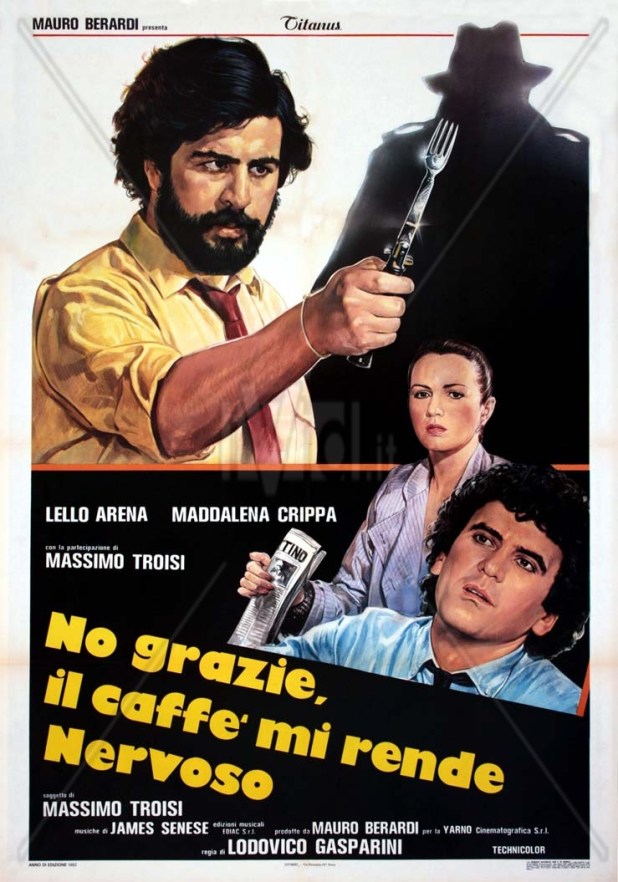
No grazie, il caffè mi rende nervoso (1982)

A festival in Naples is in trouble. The scaffolding outside the theater has crashed down, then a postcard arrives and says that anyone involved will be killed. Journalists Michele Giuffrida (Lello Arena) and Lisa Sole (Maddalena Crippa) start to track down who sent that warning.

Whoever that killer is, they have it out for Italian saxophone player James Senese, who plays himself, and actor Massimo Troisi, who also wrote the script, also playing himself. How dare they appear in the Nuova Napoli festival?

You don’t see many movies where people playing themselves get killed, but that’s what happens as Senese is hit by a car and Troisi is strangled and has a pizza jammed into his mouth. As to who is behind it all, it’s the person you would least expect, which is how so many giallo movies operate. The killer is also stuck on the song “Funiculi, Funicula” which was written in 1880 by Luigi Denza and Peppino Turco to celebrate the first funicular railway on Mount Vesuvius.

No Thanks, Coffee Makes Me Nervous is about a time when Naples was becoming known for new things and changing, which is something the killer is against. The first movie of director Lodovico Gasparini, it was written by Michael Pergolani and Troisi.

You can watch this on YouTube.

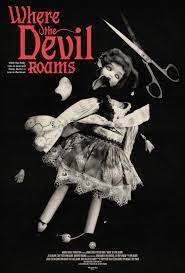
TUBI ORIGINAL: Where The Devil Roams (2023)

Zelda Adams, Lula Adams, John Adams and Toby Poser — known as the Adams Family — have made several films: RumblestripsThe HatredHalfway to ZenKnuckle JackThe Shoot, The Deeper You Dig and Hellbender. Together, the family has directed and written this tale, which is the story of a family of murderous sideshow performers.

The sideshow that travels the country is filled with strangeness. There’s Mr. Tipps (Sam Rodd), who has made a deal with a demon for a heart that he uses in his act. And that act? He cuts off his own fingers and then Eve Axon (Zelda Adams) sews them back on. She never speaks, only sings, and is the near-silent witness to the madness of her parents, Seven (John Adams) and Maggie (Tobey Poser) who have war and childhood trauma-caused PTSD that fuels them as they murder their way across the gray backroads of an anachronistic Depression-era setting that still has modern tattoos and fashions.

As Maggie murders, Eve films the madness while Seven blindfolds himself. Shot in their neighborhood — Lulu shows up as an axe girl — this feels bleached out and fuzzy, with a soundtrack by the Adams’ band H6LLB6END6R. The Axon Family is on their way to a Buffalo horror show and things get darker as they go.

Any movie that starts with a legless man nearly dragging himself across the stage to read a poem about the demon Abaddon is going to get your attention. I’m excited that this movie is on Tubi — previous Adams Family films were on Shudder — as it allows them to reach a big audience with this color-shifting road movie. While there are some similarities to what has come before, this feels new and strange. In their notes for the film, the family said, “Creating our own supernatural mythologies is important and joyful for us – here shifting the biblical story of the fallen angel, Abaddon, into a love story that devolves into a family story (always and also built on love, in all its frailties), but refracted through the muddy, bloodied, cracked lens of personal traumas, unfortunate compulsions, and bitter victories.”

Some of the CGI is a bit off, the juxtaposition between soundtrack and film may put some off, but by the end of this, you’ll be captivated by something truly different. I can’t wait to see what this family does next.

You can watch this on Tubi.

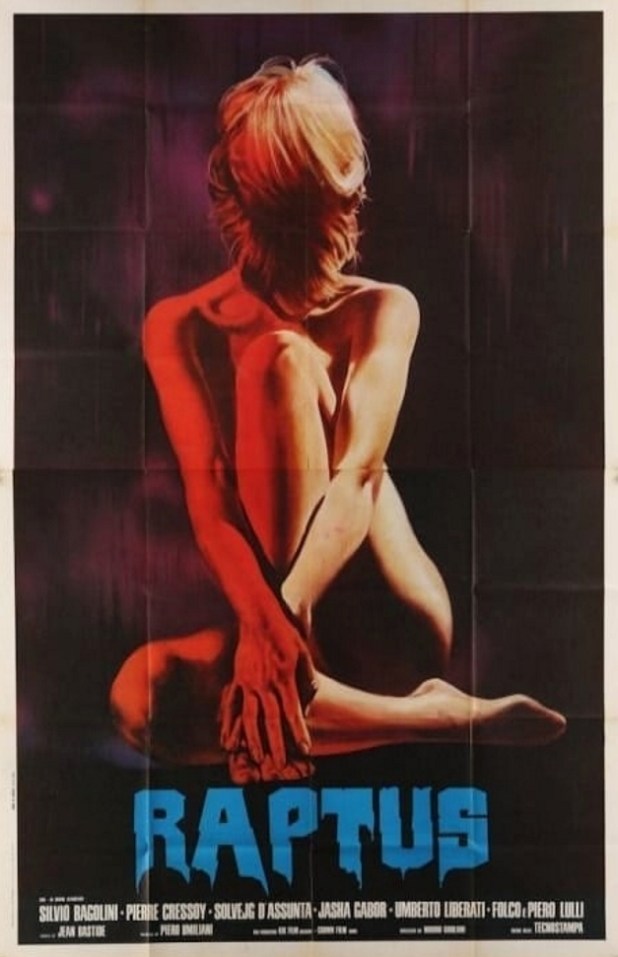
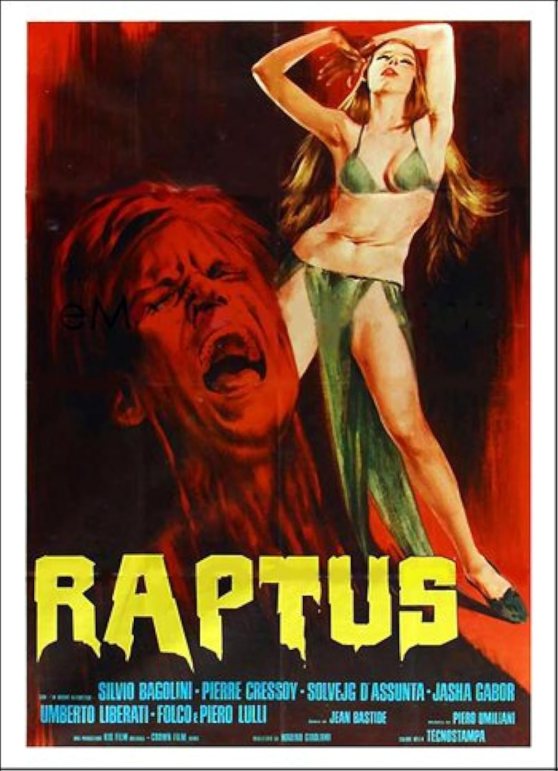
Raptus (1969)

When this was submitted to censors as Eros e Thanatos, censors wouldn’t let it play. Director and writer Marino Girolami (the director of My Friend, Dr. Jekyll; he used many names over the years. As Frank Martin he directed Zombie Holocaust and as Franco Martinelli he made Special Cop in Action and Violent Rome. He used the name Dario Silvestri to direct God Was in the West, Too, at One Time.) cut the film down, including a scene where the killer caressed the body of a victim. All of that showed up in the fumetti release. This film was consider lost for some time, as it wasn’t even released during the boom of VHS releases.

Franco Adami (Umberto Liberati) is charged with murder after a prostitute that he’s seen shows up dead, her body nude and strung up. Defense attorney and alcoholic Montani (Folco Lulli) tries to argue his case with Adami claiming that flashbacks to animal violence let to him killing the lady of the evening. Montani needs some evidence that this is possible, so he meets with the director of an asylum (Daniele Vargas) and meets two patients with similar cases.

Usai (Silvio Bagolini) was a man obsessed with a young girl named Francesca (Caterina Barbero, who was 18 when this was made, which is I guess a little bit less upsetting but still, this has upskirts and full frontal nudity of a teenager shown) who he gets to tutor. Because of his childhood — he had a doll and his father didn’t want his male son to have baby dolls, so he beat him — he can’t stop his thoughts, which end with him killing her and her parents finding her nude and dead by his side just like a human version of a doll.

Gilberto (Piero Lulli) took the sermons he listened to in church — plus the abuse from other students and the priests — and started to kill sex workers to punish them for their immoral acts. He’s Donny Kohler ten years early, using fire to murder women who he believes are sinners.

Montani presents this evidence and not only does it end with Franco going to a mental home instead of prison, he’s able to convince the editor of the paper to take back the things they said about his client. That’s when we learn that Montani is a drunk because his son killed a boy his age and then committed suicide in jail, so he understands the place that Adami was in.

You can watch this on YouTube.

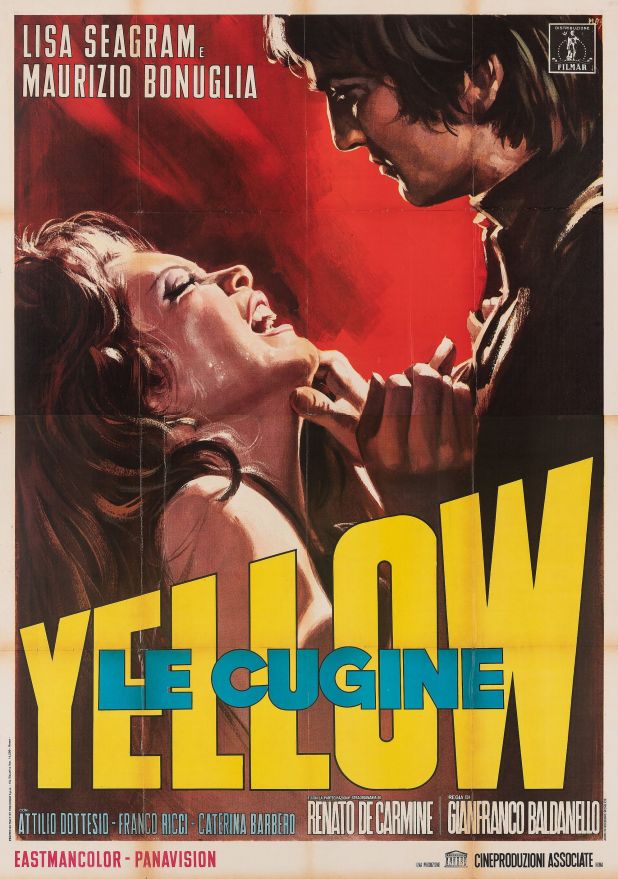
Yellow: le cugine (1969)

Following the death of her grandfather, Valentina Garbini (Caterina Barbero) and her husband Pierre (Maurizio Bonuglia) have settled into the old family home, sharing it with her cousin Marta (Lisa Seagram, who mostly did TV in America, including three episodes of Beverly Hillbillies as Edythe Brewster, the new wife of the oil man who helped Jed Clampett get rich. They stay in the cabin that has been relocated to the side of the mansion for their honeymoon. She was also Lila, who poisoned Batman and Robin on their TV show with lilacs, and later ran an acting school in Hawaii, Actors 2000). The cousins are oppposites, as Valentina is free with her body while Marta is virginal. The one time that Marta tried to lose her innocence to a local man, her grandfather beat her with a whip.

This changes when Valentina dies. Pierre is fingered by the police, but Marta hides the murder weapon to keep her cousin’s husband by her side, as the suspicion now is on Valentina’s friends. Now, Marta can get what she wants — a man — and the entire mansion. Things don’t end up working out for her, but that’s the morality coming in, I guess.

Also known as The Mill of the Virgins, this was directed by Gianfranco Baldanello (The Uranium ConspiracyVery Close Encounters of the Fourth KindDanger!! Death Ray) and written by Augusto Finocchi and Vittorio Metz. It was edited by Bruno Mattei.

You can watch this on YouTube.

Che fine ha fatto Totò baby? (1964)

An Italian comedy giallo parody of What Ever Happened to Baby Jane? How did I never know about this?

Directed by Ottavio Alessi, who wrote Emanuelle In Bangkok and Emanuelle In America and made Top Sensation, which dares to have a love scene between Edwige Fenech and Rosalba Neri, then ends with a Bible verse, this stars Toto, whose real name was Antonio Griffo Focas Flavio Ducas Komnenos Gagliardi de Curtis of Byzantium, His Imperial Highness, Palatine Count, Knight of the Holy Roman Empire, Exarch of Ravenna, Duke of Macedonia and Illyria, Prince of Constantinople, Cilicia, Thessaly, Pontus, Moldavia, Dardania, Peloponnesus, Count of Cyprus and Epirus, Count and Duke of Drivasto and Durazzo. “The Prince of Laughter” had a career marked by tragedy, like spurned lovers committing suicide, the loss of a son at a young age and even an eye infection that could have been stopped had he cancelled a show and disappointed his fans. Instead, he went on and lost a percentage of his site for the rest of his life. When he died, there were no less than three funerals, including one given by a local organized crime leader where an empty casket was carried along the packed streets of the small town where he was born.

Step brothers Totò Baby and Pietro (Pietro De Vico) steal suitcases at the train station. One day, they find that one of their stolen cases has a dead body in it. They switch that with two German women, Inga and Helga (Ivy Holzer and Edy Biagetti), but that’s only the beginning of their problems. The women are having an affair with Baron Mischa (Mischa Auer, a Russian-born actor who was a famous silent movie actor in Hollywood before continuing his career in France and Italy), who finds out that our protagonists had the body and blackmails them into murdering his wife (Gina Mascetti).

When they attempt to kill her, she dies of fright instead, but Totò Baby begins to eat salads with marijuana instead of lettuce and becomes a serial killer. His step brother attempts to escape him, but is finally dragged to the brach — yes, like Baby Jane as he’s also put in a wheelchair and served a frog — the police catch them. Totò Baby is committed where he writes the story of his life on an invisible typewriter. After all, his father was a criminal, so he was evil from birth.

If you recognize the home of the Baron, it’s Casale di Santa Maria Nova in Rome, which is where Blood and Black Lace was made.

You can watch this on YouTube.
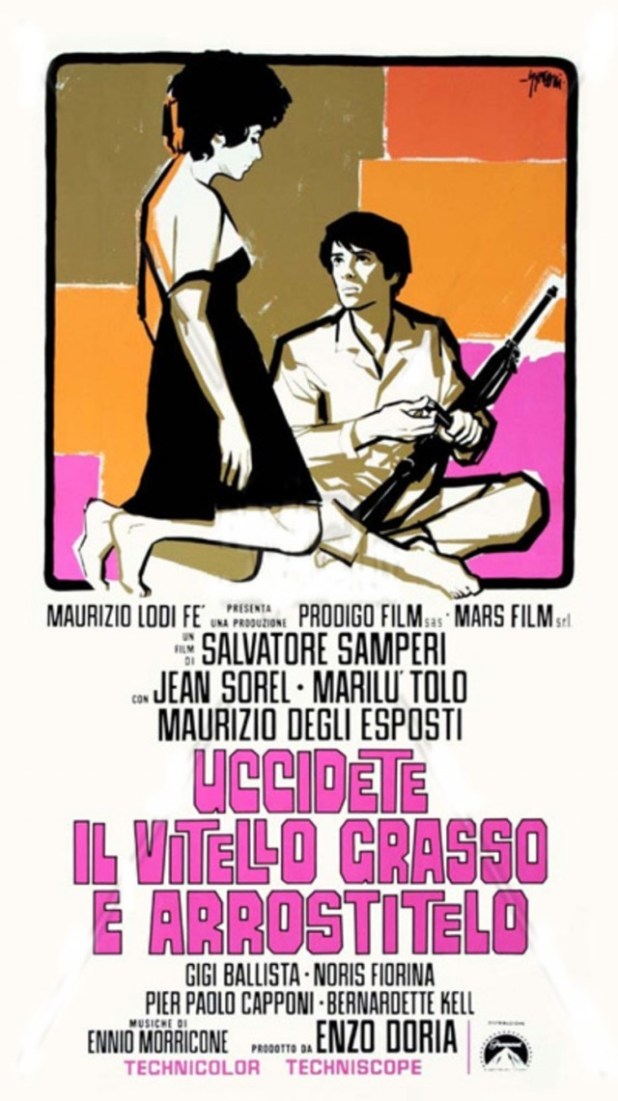
Uccidete il Vitello Grasso e Arrostitelo (1970)

Directed by Salvatore Samperi, who wrote the story with Dacia Maraini, Kill the Fatted Calf and Roast It is about a cursed family. Maurizio Degli Esposti plays Enrico, who has left his Swiss boarding school to come home for his father’s funeral. That’s when he remembers just how strange his family is and starts to wonder if his dad’s death really was an accident or if his older brother Cesare (Jean Sorel) did it — he did watch him and his cousin Verde (Marilù Tolo) inject it — and if his family really is doomed.

All of the family’s servants had been let go before the father’s demise and the most faithful of them, Talia (Aleka Paizi) has been put into a mental home. This is the same place where Enrico’s mother was committed in the past and where she presumably killed herself. Even though that happened in his childhood, Enrico feels a closeness to her and constantly listens to tapes of her voice. This is all the evidence that Cesare needs to try and put Enrico into that same clinic. Our protagonist’s mistake is being in love with Verde, who could be just as bad as his brother, and who he feels a love beyond family — yes, the incestual love that Italian horror seems to flirt so much with — and it’s even odder because she reminds him of his mother, so it’s like double family obsession. When he gets pneumonia, she should be taking care of him, but she may also have her own sinister plan.

After Arcana, this is the second movie I’ve watched where Maurizio Degli Esposti is in love — really in love — with his mother. To give you another reason to watch this strange giallo, the Ennio Morricone soundtrack is great.

You can watch this on YouTube.
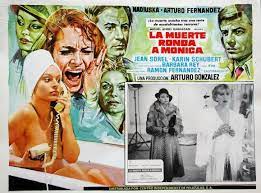
La muerte ronda a Mónica (1977)

Directed by Ramón Fernández and written by Juan José Alonso Millán, Death Haunts Monica* might seem like a soap opera, but hold out. It’s also a giallo.

Frederico (Jean Sorel, Perversion Story) isn’t living the high life. His real estate firm Eurozone? A mess with business partners cutting him out. A friend from his smuggling days, Diego (Damián Velasco), is extorting him. And his wife Monica (Nadiuska, yes, just one name; she’s in Guyana: Cult of the Damned and played Conan‘s mom) has just learned that he’s having an affair with Eva (Bárbara Rey, The Night of the Sorcerers).

As if things couldn’t get worse for Frederico — and Monica — someone breaks into their house when she’s home all alone. She shoots whoever it is; they stand right back up and knock her out. Diego’s body is left, so the police assume he’s who broke in. This eliminates him from the blackmail scheme, except that’s when the phone calls start and Monica gets framed for murder. Then there’s Elena (Karin Schubert, Emanuelle Around the World), who is trying to play everyone against one another. That’s easy when the other partner, Arturo (Arturo Fernández), used to date Monica.

Man, was Jean Sorel typecast in giallo as a man who has no idea how cunning women can be?

Thanks to The Giallo Files for informing me that Il Buio Intorno a Monica translates as Darkness Surrounds Monica.

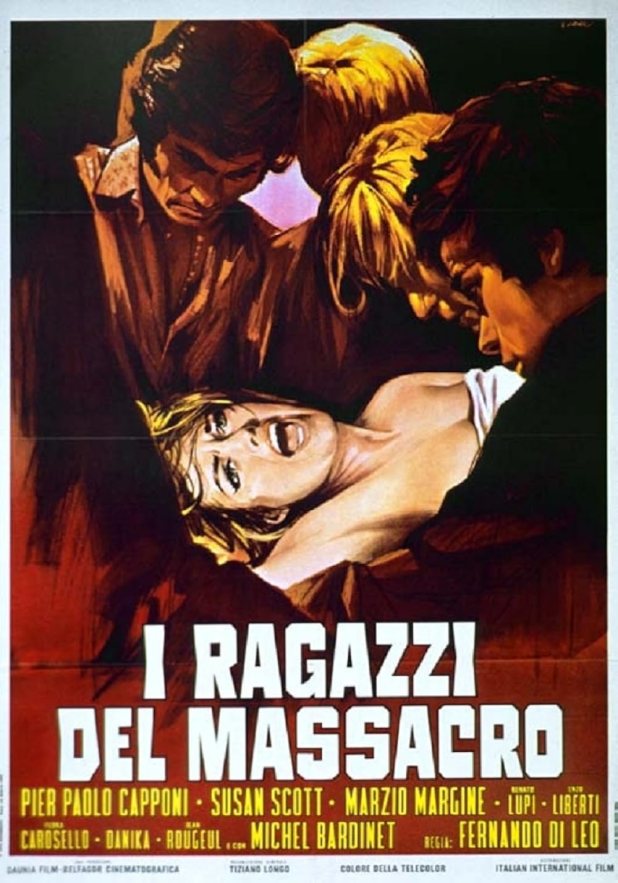
I ragazzi del massacro (1969)

A group of eleven street criminals between the ages of thirteen and twenty have raped and killed a teacher. There’s no evidence or even enough information to determine why they did it or if they had a motive. The judge wants the case closed, but Chief Luigi Càrrua (Enzo Liberti) knows that only Commissioner Lamberti (Pier Paolo Capponi) can solve it. He’s brutal on the boys, while social worker Livia Ussaro (Nieves Navarro) tries to understand how they could be this way. Once the main witness is killed, the rough cop discovers that this case may be more difficult to figure out than he thought it would be.

Based on the book by Giorgio Scerbanenco, director and co-writer Fernando Di Leo cut down the story and concentrated on the boys who have actually committed the crime.

He would also adapt two other books by the author, Caliber 9 and The Italian Connection. Scerbanenco’s books were popular stories to turn into movies, as Yves Boisset made Safety Catch from Venere privata (A Private Venus), Duccio Tessari directed La morte risale a ieri sera (Death Occurred Last Night) from the book Milanesi Ammazzano al Sabato (The Milanese Kill on Saturdays), Luigi Cozzi directed The Killer Must Kill Again from Al mare con la ragazza (By the Sea With the Girl), Carlos Saura directed ¡Dispara!, Romolo Guerrieri made Young, Violent, Dangerous from two short stories “Bravi ragazzi bang bang and “In pineta si uccide meglio,” plus TV movies include the Alberto Siron, Gian Pietro Calasso and Vittorio Melloni-directed  Quattro delitti, the Daniele D’Anza directed La ragazza dell’addio, Bruno Mattei’s Appuntamento a TriesteL’uomo che non voleva morire by Lamberto Bava and Occhio di falco by Vittorio De Sisti.

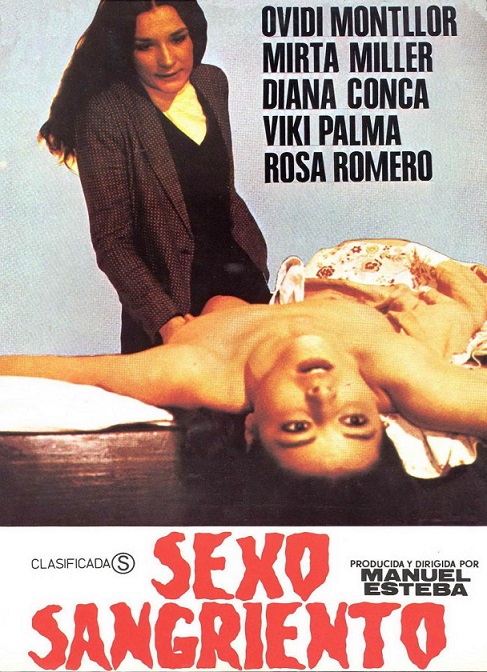
Sexo sangriento (1981)

Directed by Manuel Esteba (El E.T.E. y el Oto), who wrote the story with Xavier Flores, Sexo Sangriento is about the home of María Domènech (Mirta Miller), a place where she lives with her strange son (Ovidi Montllor). Psychology student Norma (Rosa Romero) convinces her friends Laura (Diana Conca) and Andrea (Viki Palma) to go to that house, thinking that it has been empty since the end of the Second World War. They have the plan to do a seance there before breaking down — bad omen — and having María, a painter, offer to host them in her ancient manor — even worse omen — for the evening.

Shot mostly handheld, this feels a bit Italian gothic as well as giallo what with the ghost in the basement. Then again, it also has someone wandering around before death with a knife stuck in their stomach, strange bloody paintings and a tomb beneath it all. This has the reputation for being sleazy but it’s actually a decent movie. Maybe because it has a lead lesbian couple? Then again, one of the murders does get rather rough.

A lot of the music in Bloody Sex comes from the CAM Music Library, selecting some of the same songs that are in Pieces and Ring of Darkness. And you’ll recognize Goblin’s “L’alba dei morti vivirti” from Dawn of the Dead/Zombi, which Mattei reused for Virus – l’inferno dei morti viventi.