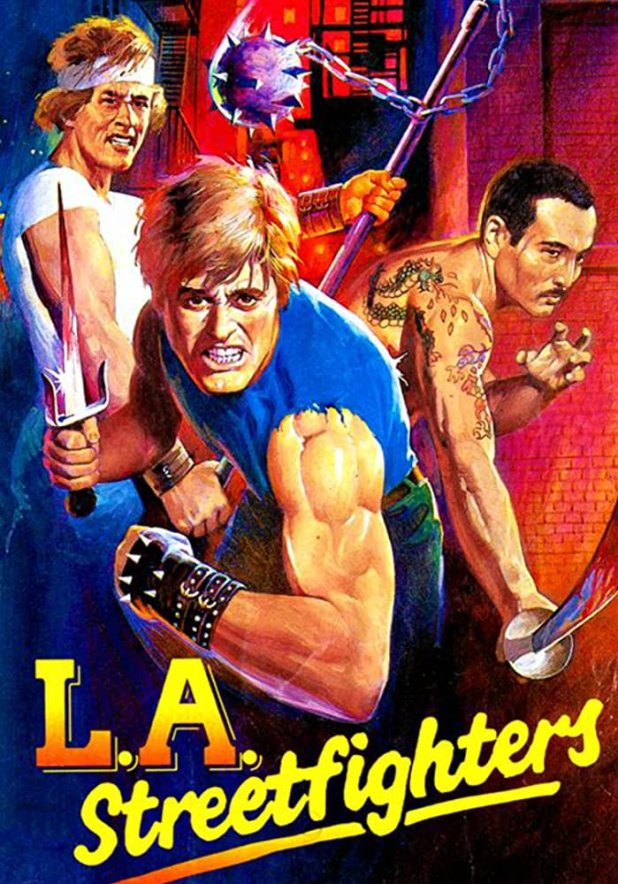
WEIRD WEDNESDAY: L.A. Streetfighters (1985)

Also known as Ninja Turf, this was directed by Woo-sang Park, who, as we all know, directed Miami Connection. It’s about new kid at school Tony (Phillip Rhee, who created and starred in the Best of the Best series of movies) and how he instantly vibes with a gang leader named Young (Jun Chong, whose company Action Brothers Productions made this movie happen; he’s a celebrity martial arts trainer who taught Sam J. Jones, Lorenzo Lamas and Phillip Rhee). Their friendship is enough to get him threatened by another gangster, Chan (James Lew). In the middle of Young saving Tony, they get offered a job as security guards. Yes, that can happen.

In between their security gigs, they rumble with the Blades and Spike’s Gang, which has Biff Tannen as a member. It is genuinely jarring to see Thomas F. Wilson (credited as Tom Wilson) playing a member of Spike’s Gang. Released the same year as Back to the Future, this film shows a version of Wilson that is arguably meaner than Biff. In Ninja Turf, he isn’t a cartoonish bully getting hit with manure; he’s part of a legitimate urban threat. Seeing him in a world where people actually get stabbed creates a strange cinematic cognitive dissonance.

But when they’re not fighting, Tony hooks up with Chan’s sister Lily. This enrages his enemy and his friend, too, as all Young can think about is feeling alone. And oh yeah, his mom, who lives to drink and sleep with men.

Young has some issues. He also screws up when those issues get to him, as he and Tony do security for a mob boss, and he steals a briefcase filled with money from a drug deal. That boss sends a swordsman named Yoshida (Ken Nagayama) and a fighter called Kruger (Bill “Superfoot” Wallace). They meet up with Chan, who eagerly tells them where to find his enemies, and they even torture a whole bunch of Tony and Young’s school buddies. They catch up with Young, who kills Yoshida and breaks Kruger’s knee, all while Tony is studying.

On the way to the hospital with his injured friends, Young is stopped by Chan and his entire gang. His mother comes out into the street and tells him that she’s sorry for everything she’s ever done, and, wow, Chan beats her into oblivion while her son watches. Then, the gang brutalizes him, and Tony gets there too late. Grabbing his friend’s wooden sword, he chases away the gang and probably kills Chan. 

The death of Young is one of the meanest pivots in 80s action. Usually, the best friend dies to give the hero a reason to win a tournament. Here, Young dies because of a series of desperate, human mistakes—stealing money to escape a life that was already suffocating him. When Tony holds him at the end, it’s not just a friendship moment. Instead, this is the immigrant promise croaking out a death rattle. They came for a better life and found James Lew and a briefcase of death instead.

Jaime Mendoza-Nava, who wrote this movie with Ji-woon Hong, was mostly known for composing music for films and TV shows. Some of the 300 works he contributed to include music for The WitchmakerThe StewardessesDream No EvilGrave of the VampireThe Town That Dreaded SundownMausoleum and Death Wish Club, which is really “The Case of Gretta Connors” from Night Train to Terror.

This isn’t as amazing as Miami Connection, but it’s the dark, opposite-coast version of friendship amid street fights. It’s a lot of fun, even if the ending is nihilistic pain.

You can watch this on Tubi.

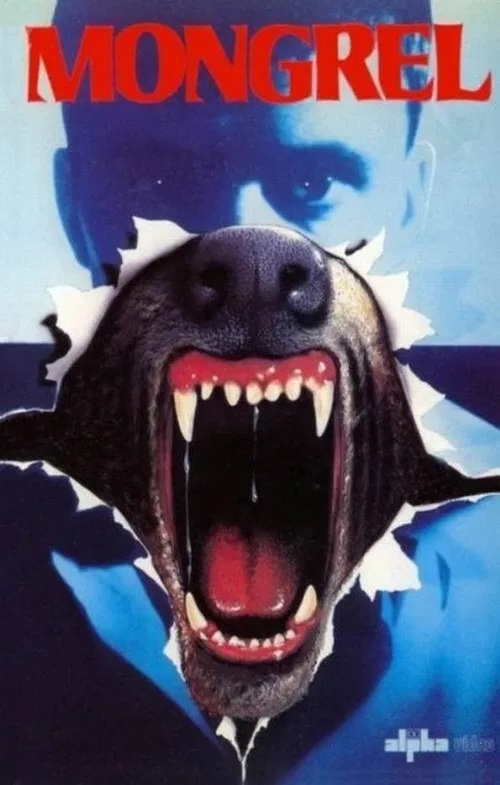
APRIL MOVIE THON DAY 8: Mongrel (1982)

ABOUT THE AUTHOR: Jennifer Upton is an American (non-werewolf) writer/editor in London. You can listen to her podcast at https://thecinemajunction.com

Her latest book is Japanese Cult Cinema: Best of the Second Golden Age. She writes for Horror & Sons and Drive-in Asylum. She has also appeared on the podcasts Japan on Film, Making Tarantino, Making Scorsese, The Rad Revivalhouse and contributes to Cinemaforce. For links to her work, please visit https://www.jennuptonwriter.com or follow her on Instagram @jennxlondon

April 8: Zoo Lover’s Day — You know what that means. Animal attack films!

The artwork on the VHS cover for this hard-to-find early ‘80s thriller promises a vicious ghost monster dog. First, we get a better-than-average look at the horrors of renting a room in a shared house in the middle of the woods in Texas. 

The movie begins with the handsome Ken moving into the old stone manor and getting to know the other six tenants. Mitch Pileggi (The X-Files) plays Woody, the roommate from Hell. A “macho” guy in the attic room who delights in bullying the others and playing practical jokes. What an asshole. I would most definitely put cayenne pepper on his doorknob if I lived in this house. 

Then there’s Eisenhower or “Ike.” A war-obsessed whiny postal worker with a vicious dog who looks like a young Howard Stern. Ike is carrying a torch for Sharon – one of two unfortunate women who live in the house. We also have Jerry. A nice, young guy who indexes books for a living. The most horrifying job in all of publishing.  Jerry is terrified of dogs, having been bit by one as a child. He’s nervous and prone to nightmares so naturally, he’s the first character to sense when something supernatural is going on. Of course, no one believes him. 

Woody shoots Ike’s dog when it bites someone. He later digs it up and puts in Ken’s bed as a practical joke when Sharon starts giving Ken attention. 

The joke goes awry and Ken is accidentally electrocuted by an old lamp introduced as a clear health and safety violation in the first scene. 

The next night, Woody’s new puppy is disemboweled by an invisible growling entity. It also kills Ike. 

When a detective comes to take statements, Landlord Aldo Ray bursts through the door in all his Aldo glory demanding to know “What have these people done this time?” Ray’s commitment to playing his character with utter contempt toward his tenants is part of the reason why I enjoyed this movie immensely. 

We’ve all had a slumlord like this, right? The kind that doesn’t replace faulty lamps and then gets pissed off when people get electrocuted because, “It’ll give me a bad name!” Later, he bursts out of the bushes with a flashlight under his face at 4:30 am and summarily evicts everyone with no paperwork. No notice? “My shotgun’s all the notice I need!” I seriously love watching older actors portraying grumpy characters later in their careers. Ray Milland, are you listening? Aldo is giving you a run for your money in this film. 

The finale features a nice twist ending where there’s no ghost dog at all. It’s Jerry who turns out to be the worst kind of roommate a person can possibly have. He’s not a werewolf. He’s a feral maniac. Aldo dispatches Jerry with his boomstick, saves Sharon and the credits roll. Landlord Aldo was right. All he needed was his shotgun. We should have listened. 

There’s very little gore here. The movie functions best when it’s simply showing us the characters interact. All the actors are fully onboard with this movie. It’s a shame Robert A. Burns didn’t write or direct another feature-length project. Its dark, dry humor struck the perfect tone. Fingers crossed a boutique label puts this one out someday! 

You can watch it here, complete with a set of great trailers from the original VHS: https://www.facebook.com/TCSMFilmLocations/videos/robert-a-burns-mongrel-1982/1647824725372338/

WEIRD WEDNESDAY: The Loreley’s Grasp (1973)

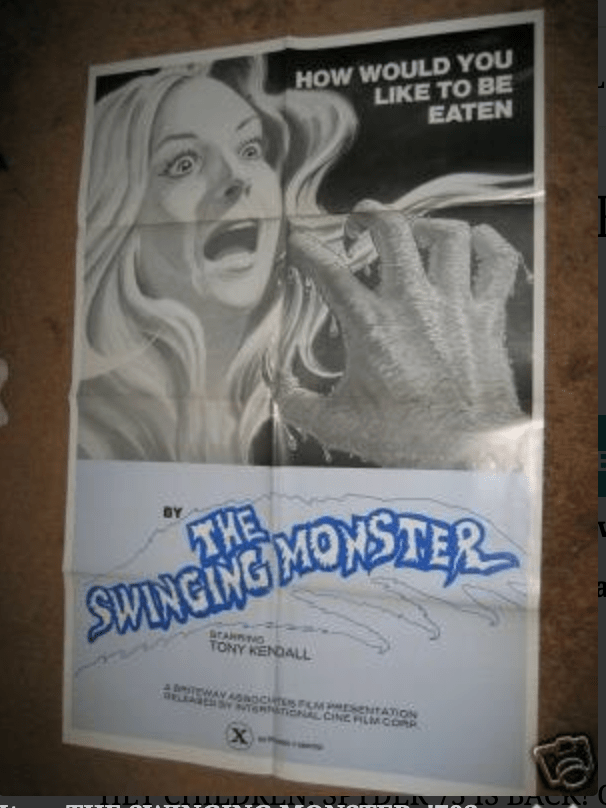
As you know, I do love alternate titles. This was known in the U.S. as When the Screaming Stops and even better, The Swinging Monster, both titles that make no sense, what with this being set in an indeterminate time and the only swinging coming from how many gorgeous women are in it. That said, the first other title got a gimmick from distributor Independent Artists, who added Shock Notice, turning the screen red with flashing lights before each murder.

This was more than just a creative flourish. It was a desperate marketing ploy by Independent Artists to compete. Similar to William Castle’s Percepto”or the Bell System”in other films, the red-tinted screen served as a psychological trigger. It essentially told the audience, “Put down your popcorn and look up, something expensive and messy is about to happen.” It turned a standard creature feature into a sensory assault, bridging the gap between a gothic fairy tale and a proto-slasher.

Directed and written by Amando de Ossorio, this is about a German boarding school for girls — parents, don’t send your babies to German boarding schools — where the young ladies are getting murdered in such bloody and horrifying ways during every full moon. This leads the teacher, Elke Ackerman (Silvia Tortosa, Horror Express), to hire a hunter named Sigurd (Tony Kendall, The Whip and the Body) to protect her pupils. Ossorio juxtaposes the sterile, buttoned-up environment of the boarding school with the wet, neon-lit grime of Loreley’s grotto. It’s a visual representation of the 1970s struggle between traditional morality and the burgeoning sexual revolution.

Each night, Sigurd patrols the school grounds — noticing the many gorgeous students under his protection, naturally — before he meets Sigurd a cloaked woman (Helga Liné) that he keeps missing despite chasing her. He also meets Professor Von Lander (Ángel Menéndez), who has made a dagger that can transform the creature the Loreley back to her human form. And as you can imagine, he’s already fallen for her, despite his job and the fact that she’s killed numerous people.

Sigurd is also in love with Elke — maybe he’s The Swinging Monster — and Loreley has already gone after her while restraining him in the undersea cave where she lives with an army of feral women. It’s an entire world removed from our own, like another time and place, which our somewhat modern man destroys with bombs before leaving behind the monstrous world and embracing a love of reason. I’m not so sure I’d make the same choice.

I’ve read a lot of reviews that make fun of this movie, that say it has bad effects, that it’s kind of stupid. Those people are small-minded, sad folks who can’t embrace the world of Eurohorror, where every man looks like a superhero, and every young girl’s bodice is practically either ripped open or covered in blood. A world where gorgeous women lie in wait inside lagoon caves, ready to transform and destroy.

Critics who pan this for bad acting or an illogical plot are missing the point. This isn’t a movie you watch for a tight script; it’s a movie you experience for the Technicolor blood, the insane creature design and the sheer audacity of a plot that treats a lizard-woman heart-thief as a legitimate romantic rival.

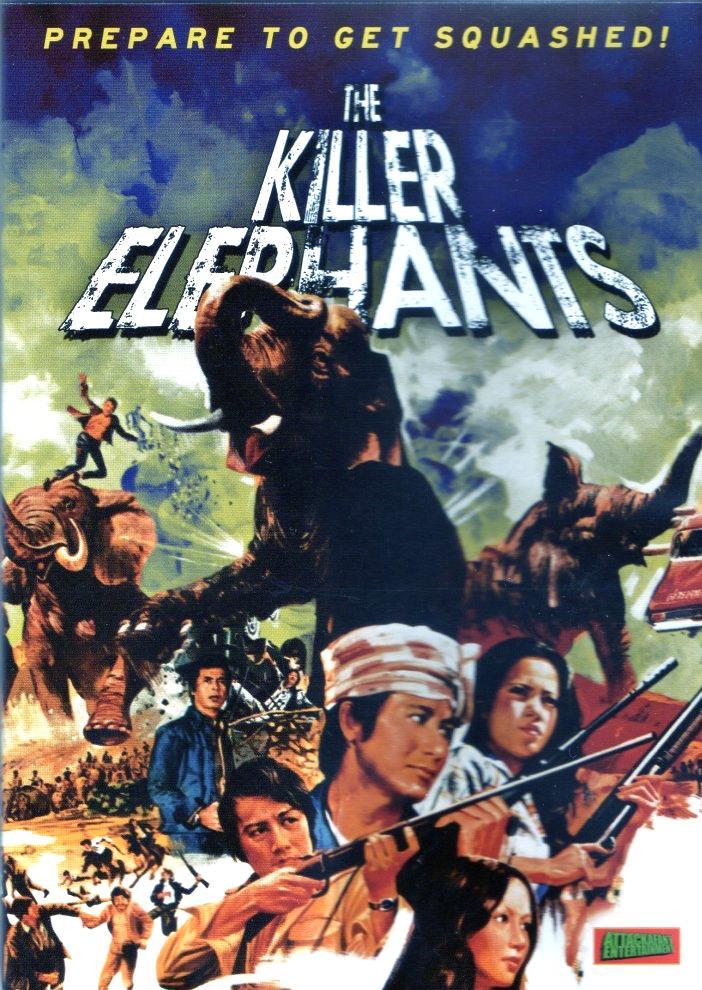
APRIL MOVIE THON: The Killer Elephants (1976)

April 8: Zoo Lover’s Day — You know what that means. Animal attack films!

Mai (Sombat Metanee) was once on the side of the law but is now a mercenary and the leader of a gang that uses rampaging elephants to get their way. But when his pregnant wife Shu (Aranya Namwong) is taken by an even more evil criminal (keep in mind they have stolen her back and forth throughout this movie), he must work with corrupt cop Ching Ming (Yodchai Meksuwan) to rescue her.

This is kind of a Western. While most Westerns give you horse chases, this movie gives you elephants flipping cars like they’re made of cardboard and stomping goons into the dirt. In the most did I really just see that moment of the film, one unlucky stuntman gets slapped across the face with — and there’s no polite way to put this — elephant cock. It’s the kind of practical effect you just don’t get in Hollywood.

I usually associate huts exploding with the Filipino action boom of the 80s, but Thailand was light-years ahead in the blowing up grass-roofed real estate department, if this movie is to be believed. 

The version floating around on Tubi is dubbed by a single voice actor who sounds like he’s reading a grocery list while recovering from a mild sedative. He provides the voices for the hero, the villain and possibly the elephants. He was likely dubbing five other features that afternoon and had a bus to catch, so we have to cut him some slack.

Also known as Rumbling the Elephant and Kill for the Truth, this has proved what I have always believed. Elephants make everything better. Whether they are being used as tactical assault vehicles, just hanging out in the background of a shootout or just standing still while a man runs face-first into their veiny pricks, they bring a dignity to the screen that the human actors just can’t match.

You can watch this on Tubi.
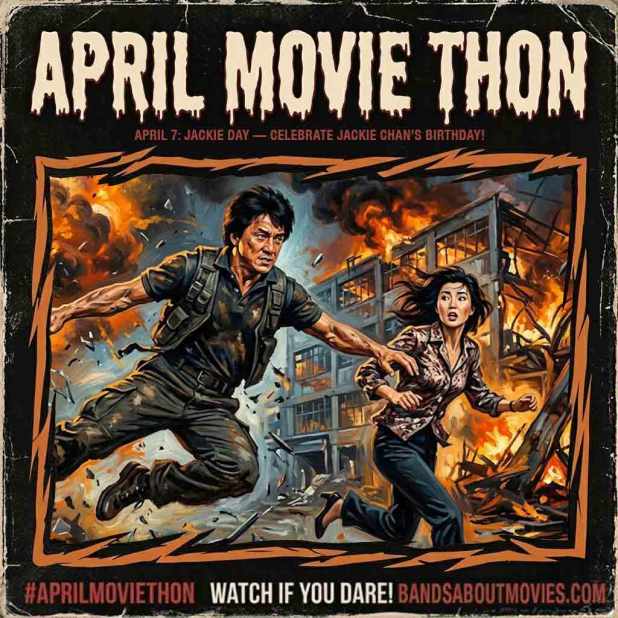
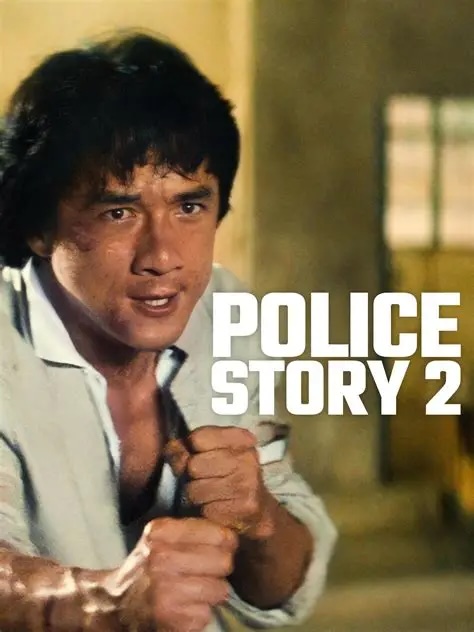
APRIL MOVIE THON DAY 7: Police Story 2 (1988)

April 7: Jackie Day — Celebrate Jackie Chan’s birthday!

While the world celebrates the man, the myth, and the jumping-off-buildings legend, there’s no better way to honor Jackie Chan than by revisiting the high-octane, bone-crunching sequel that defined his Golden Era: Police Story 2.

If the first film was a lightning bolt, the sequel is a sustained thunderstorm of choreography and pyrotechnics. Here is a deeper look into the chaos, the comedy, and the literal blood, sweat, and tears that went into this masterpiece.

Chan Ka-kui (Jackie) is back in a film directed and co-written by Jackie. After Police Story, he’s been demoted to highway patrol, a change that delights his girlfriend May (Maggie Cheung), who is thrilled. No more death-defying stunts, just speeding tickets. But peace is short-lived. The man he arrested, Chu Tu (Chor Yuen) and his henchman John Ko (Charlie Cho) have already been released from prison, as Chu Tu claims that he only has months to live. During that time, he plans to ruin Chan Ka-Kui’s life.

After they keep trying to get him to snap, he finally does once John Ko and some bad guys beat up May and her aunt (Lisa Chiao Chiao). He finds them in a restaurant and gets revenge, but is so embarrassed that he resigns from the police. He and May plan a vacation, but he can’t even go to a travel agency without a bomb threat calling him back to duty, just in time for the mall to blow up. At least he’s seen as a hero and welcomed back to the Royal Hong Kong police.

Now he has four new enemies —  Tall Pau Hung (Ben Lam), Ken (Yun-Kin Chow) and two bomb experts, one who is both deaf and mute (Benny Lai) — and by the end of the movie, they’ve kidnapped May and forced Jackie to wear a vest covered with explosives. 

Jackie learned to put bloopers at the end of the movie after making Cannonball Run. He didn’t really understand that these bloopers shouldn’t be life-threatening. In a terrifying sequence involving falling metal frames, a stunt went sideways. Maggie Cheung suffered a massive scalp laceration. The injury was so severe that she couldn’t finish filming her close-ups, which is why, in the final act, May is often seen from behind or with her face obscured. That’s actually Crystal Kwok filling in.

Jackie himself didn’t escape unscathed. During a stunt in which he was supposed to jump through a pane of glass, he accidentally aimed for the wrong one. Unlike the sugar glass used in Hollywood, this was real, thick glass, resulting in severe cuts across his body.

While Jackie is the face of the franchise, the Jackie Chan Stunt Team is the backbone. Mars (Cheung Wing-fat), Jackie’s long-time friend and stunt double, is the MVP here. Not only does he play a fellow officer, but he also stepped in for some of the most dangerous physical impacts. That iconic, wince-inducing moment where a character is kicked through a bus windshield? That’s all Mars.

Man, they could have made twenty of these movies and I would have seen every one of them. Police Story 2 perfectly balances Jackie’s signature slapstick with stakes humor and some of the most intricate playground-style fighting ever put to film (the playground fight itself is a masterclass in using the environment as a weapon).

It’s a reminder that back in the late 80s, Jackie Chan wasn’t just making movies. He was barely surviving them. Happy birthday, Jackie!

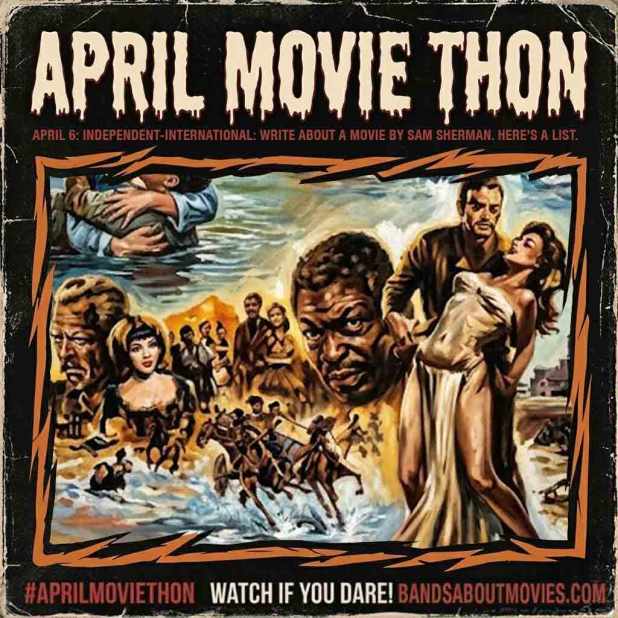
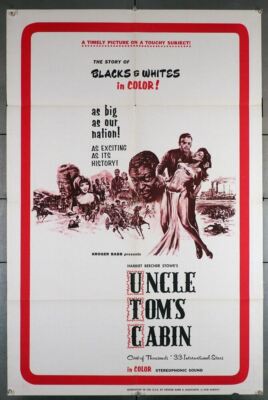
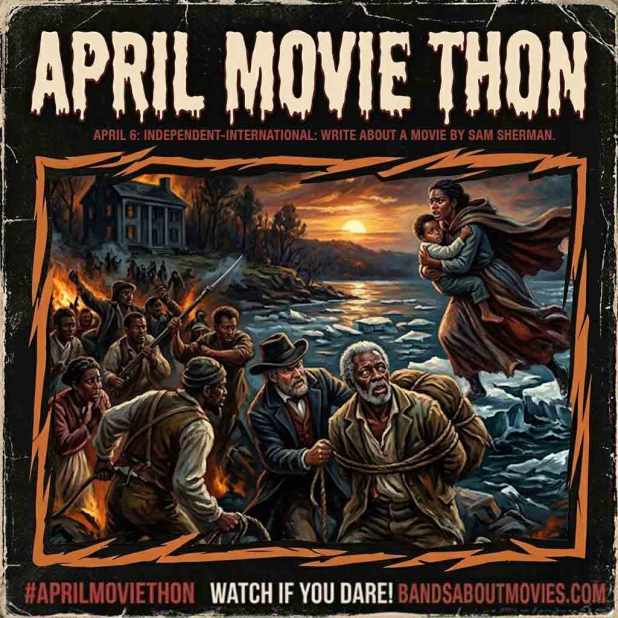
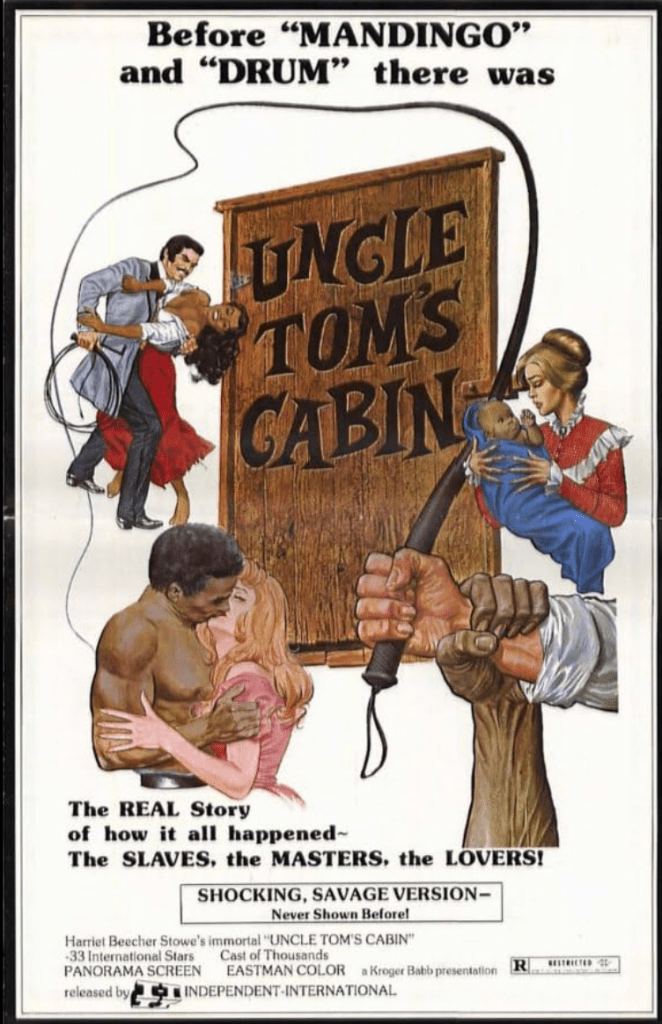
APRIL MOVIE THON DAY 6: Uncle Tom’s Cabin (1977)

April 6: Independent-International: Write about a movie by Sam Sherman. Here’s a list.

ABOUT THE AUTHOR: Adam Hursey is a pharmacist specializing in health informatics by day, but his true passion is cinema. His current favorite films are Back to the Future, Stop Making Sense, and In the Mood for Love. He has written articles for Film East and The Physical Media Advocate, primarily examining older films through the lens of contemporary perspectives. He is usually found on Letterboxd, where he mainly writes about horror and exploitation films. You can follow him on Letterboxd or Instagram at ashursey. His April Movie Thon list is here.

EDITOR’S NOTE: I love that Adam did the same movie as me!

Why make an entirely new film when you can just add some sleaze to an existing one?

This philosophy was one avenue Independent-International Pictures travelled when releasing motion pictures in the 1960s and 70s. Led by director Al Adamson and producer Sam Sherman, the production company released many profitable films to the drive-in circuit. One method the duo used would be to acquire European films that perhaps did not provide financial success upon initial release and shoot some additional footage that could be inserted into it for a more sensational experience.

Case in point: Uncle Tom’s Cabin. In 1965, German director Gèza von Radvànyi adapted Harriet Beecher Stowe’s iconic novel of American slavery, turning it into a 170 minute epic that did not catch on with audiences, despite premiering at the Cannes Film Festival. Rights to the film were sold to Kroger Babb, one of the most famous exploitation producers who might be best known for his “sex hygiene” film Mom and Dad. Babb cut the film down to 110 minutes and released it in 1975 under the title Cassy (a minor yet important character in the film), but the movie again failed to attract an audience. By the time Sam Sherman and Al Adamson got involved, the year was 1977, and “slavesploitation” was suddenly a hot commodity thanks to Mandingo and Roots. But the content would need to be beefed up for tickets to be sold. No problem. Adamson shot some scenes of rape, interracial love, and torture, and these scenes were (pretty seamlessly) added into the original picture.

I would love to set my eyes on Radvànyi’s original film. Starring Herbert Lom as slave trader Simon Legree, Uncle Tom’s Cabin pulls no punches in showing the struggles of individuals at the hands of such a merciless individual. Uncle Tom, along with other slaves, is sold to Legree to help settle some debts of his owner. Legree is a memorable villain, and Lom’s performance, behind his scarred face, is just the type of person viewers would love to hate. 

Is it possible that the exploitative scenes added by Adamson and Sherman actually do improve the film? Perhaps. There is no doubt as to which scenes were added. And these scenes definitely made me sit up in my chair a bit straighter. As someone who has never read the novel, the film made me research the differences between Stowe’s tome and adaptations over the years. In this version, after attempting to flood the cotton crop, the runaway slaves run into the welcoming arms of the saintly men of a Catholic mission. This ending might have been added to cater to European sensibilities.

But what about the stereotype of the Uncle Tom character himself? In this film, Uncle Tom lays down his life protecting others, a far cry from how Uncle Tom is discussed today as a man who would do anything to please his masters for self-preservation. Turns out the character in this film is closer to the one created by Stowe. Uncle Tom is a Christ-like figure, intentionally written this way to appeal to Christian readers in an attempt to convert them to the abolitionist cause. It worked. As the film announces via a title card at the beginning of the picture, Uncle Tom’s Cabin helped propel Abraham Lincoln’s desire to end the practice of slavery in the United States.

It is amazing to think that an exploitation version of a German film about America’s darkest period in history can actually educate. Will I now read the book I’ve put off reading for so long? Maybe. Of course, I have too many movies to watch to actually read a novel. And many more Al Adamson films to see–Uncle Tom’s Cabin is only the second of his films I’ve seen. I have so much work to do.

APRIL MOVIE THON DAY 6: Uncle Tom’s Cabin (1977)

April 6: Independent-International: Write about a movie by Sam Sherman. Here’s a list.

The source material for this movie is Géza von Radványi’s 1965 epic, a massive, $5 million European co-production that featured Herbert Lom (yes, Chief Inspector Dreyfus himself) and Gert Fröbe (Goldfinger!). It was meant to be a prestigious, sweeping adaptation of the Stowe classic.

It had already been released by none other than Kroger Babb in 1969 (thanks, Good Efficient Butchery) with an hour chopped off. He re-released it under the name Cassy, and it bombed again.

Enter Sam Sherman. He looked at this three-hour prestige piece and saw a void where the commercial elements should be.

Needing money, Babb sold it to him, and Sherman had Al Adamson cut forty more minutes off the already-trimmed-down Babb cut. When Napoleon (Aziz Saad) is killed by an alligator, he cut that part and has an entirely different actor, Prentiss Moulden, take over. Napoleon makes it to a plantation where the widow Melissa (Mary Ann Jenson) is, well, inserted into the Herman Lom villain-led film. As she nurses him back to health, she also ends up asking him to hold her, and then that gives us a whole bunch of lovemaking, which only ends when three bounty hunters catch him, sexually assault him and then pour burning oil all over him while we watch. Marilyn Joi also shows up as a runaway slave who also gets raped, because that’s what audiences were looking for in 1977, said no one other than raincoaters.

In the original, Uncle Tom (John Kitzmiller) dies and forgives the whites for how they treated his people. In this one, well, everyone who had been impacted by the slavers gets some revenge, including castration. We close on the bad guys getting lynched, which is exactly the kind of revenge Southern whites feared. 

This was re-released yet again three years later as White Trash Woman. RIP Sam Sherman. I can only assume that they cremated you, because after watching this, I have no idea what size coffin could contain balls as big as yours.

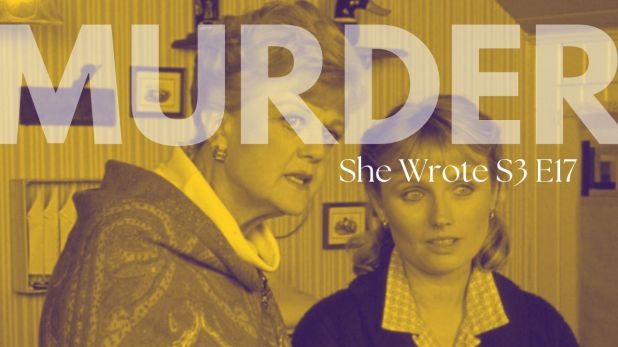
Murder, She Wrote S3 E17: Simon Says, Color Me Dead (1987)

Jessica investigates when an artist is murdered and his prized painting is missing.

Season 3, Episode 17: Simon Says, Color Me Dead (March 1, 1987)

Simon Thane is a celebrated artist living in Cabot Cove. For the last several years, Thane has jealously guarded his favorite painting, which he has never allowed to be seen publicly. Jessica becomes involved in the story when Thane is murdered and his prized painting stolen, leading our heroine to conclude that the mysterious work of art may contain a clue as to the killer’s identity.

Who’s in it, outside of Angela Lansbury?

As always, Tom Bosley as Sheriff Amos Tupper and William Windom as Dr. Seth Hazlitt are here.

Diane Baker (The HauntedThe Old Man Who Cried Wolf) is Eleanor Thane.

Comedian Foster Brooks plays Simon Thane.

Ann Dusenberry, Tina from Jaws 2, is Carol Selby.

Leonard Frey is Felix Casslaw.

Tess Harper (Tender Mercies) is Irene Rutledge.

Steve Inwood (Cruising) is Cash Logan.

Dick Sargent (Bewitched) is George Selby.

Chris Hebert (Invaders from Mars) is Tommy Rutledge.

In smaller roles, Phillip Clark is Deputy Collins and Daryl Lynn Wood is Martha Sommers.

What happens?

Simon and Eleanor Thane have been staying in Cabot Cove, but haven’t even tried to spend time with J.B. She’s busy being, well, Jessica. Ever the mediator, she steps in when Martha Sommers accuses young Tommy Rutledge of bike theft. Jessica’s solution is to gift Tommy a bike once owned by her late husband, Frank. This highlights her maternal warmth, contrasting sharply with the cold, pretentious salon hosted by the Thanes later that evening, which they at least remember to invite her to.

Yes, Simon Thane isn’t just a celebrated artist. He’s a man who thrives on being the smartest and most elusive person in the room. Living in Cabot Cove for the quiet atmosphere, he has spent his final years obsessively guarding a secret masterpiece.

Man, the guest list is a powder keg. Felix Casslaw is a gallery owner smelling a massive payday; Carol and George Selby seem to have a deep, albeit strained connection to Simon and Eleanor, Simon’s wife, who has spent years in the shadow of his genius and his moods.

Hours after everyone leaves, young Tommy wakes up to a bloody Irene who tells him to go back to bed. Everyone else wakes up to a dead Simon and a missing painting. Irene swears she didn’t kill him, but Amos is convinced that it’s a crime of passion, remarking that “Just because there’s snow on the roof doesn’t mean there’s not fire in the hearth.”

Is he projecting his cop boner onto his favorite mystery writer?

Now, Carol believes that Cabot Cove should have a Simon Thane exhibition and it seems like everyone wants to get richer off his death. Irene claims that before Eleanor went to bed, she went to see Simon to get the money he owed her, but he was already dead. Somehow, in the middle of all of this, we learn that Irene isn’t Tommy’s real mom. An awful lot happens in Cabot Cove.

Anyway, we got a dead artist, and this is why Simon and Eleanor were not talking to J.N. Simon had to die to learn that lesson.

Who did it?

Jessica realizes that the painting wasn’t stolen just for its monetary value. It was stolen because it was a confession in oil. The painting revealed Simon’s true obsession with Carol Selby, but it also captured a truth about their relationship that Carol couldn’t allow to become public. Simon was in love with her; she just would cock tease him by letting him paint her, but the truth is that she never loved him.

Who made it?

Kevin G. Cremin, who was an assistant director on several other episodes, directed. It was written Robert E. Swanson, one of 87 episodes he told the story of.

Does Jessica dress up and act stupid? Does she get some?

No. I say it’s high time we get that.

Was it any good?

Haven’t we already had another artist die on this show? Yes. Many more will die before we’re done.

Any trivia?

Diane Baker and Steve Inwood would be in three more episodes as different characters.

Give me a reasonable quote:

Jessica Fletcher: I wouldn’t be a bit surprised if they started seeing quite a lot of each other. How about some more coffee, Amos? And I will tell you something else to put into your amnesia file.

What’s next?

Jessica investigates when an artist is murdered, and his prized painting is missing.

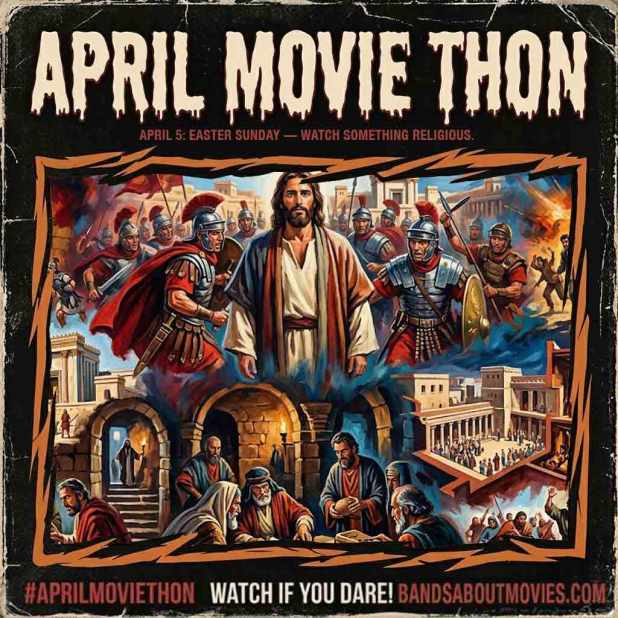
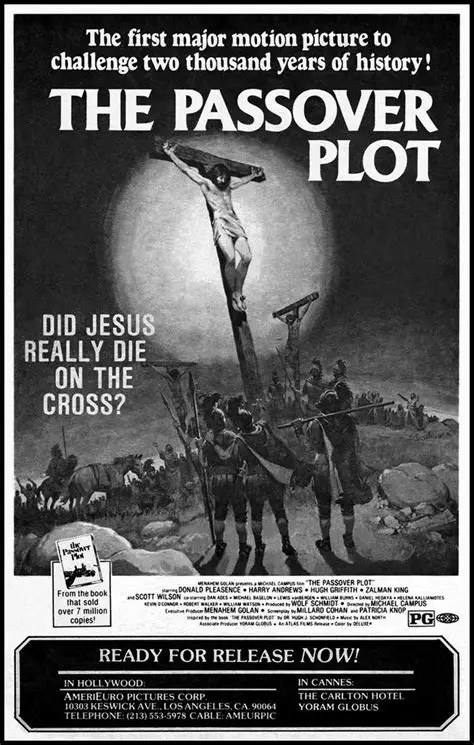
APRIL MOVIE THON DAY 5: The Passover Plot (1976)

ABOUT THE AUTHOR: Adam Hursey is a pharmacist specializing in health informatics by day, but his true passion is cinema. His current favorite films are Back to the Future, Stop Making Sense, and In the Mood for Love. He has written articles for Film East and The Physical Media Advocate, primarily examining older films through the lens of contemporary perspectives. He is usually found on Letterboxd, where he mainly writes about horror and exploitation films. You can follow him on Letterboxd or Instagram at ashursey. His April Movie Thon list is here.

April 5: Easter Sunday — Watch something religious.

Faith should be strong enough to withstand doubt, perhaps even strengthened by it. There is a theological belief I’ve heard many times in Christian sermons–”The Bible said it. That settles it”. This definitive statement leaves no room for mistranslations or potential bias as the Scriptures were compiled by human men. While they might be divinely inspired, there should be room for questioning.

Biblical scholar Hugh J. Schonfield took his doubts public in 1965 with his book The Passover Plot. After researching non-biblical historical documents, as well as the Gospels, Schonfield reached the conclusion that Jesus was not the Messiah and instead had determined that he should self-manifest himself as the Son of God in order to be elevated to the status of king during a time when Rome occupied Israel.

Jesus had the lineage as a Son of David (his bloodline could be traced back to the former king of Israel, and it had been prophesied that the Messiah would come from his descendants). Israel was experiencing a time of great persecution by Rome. The people were looking for someone who would conquer the Romans and restore sovereignty to the nation. Why couldn’t it be Him?

According to Schonfield, Jesus shrewdly planned the details of His crucifixion. Knowing that His body would need to be removed from the cross prior to the Sabbath, He only needed to survive a few hours. He also conspired to have a medication given to Him while on the cross to slow his heart rate enough to appear dead to the Romans. Unfortunately, the plan backfired when Jesus’ side was pierced with a spear by a Roman soldier (as was common practice during a crucifixion to ensure the person had indeed perished). Jesus died from that wound and would not be able to assert His place as king while on Earth. 

Ten years prior, Greek author Nikos Kazantzakis wrote his own controversial novel, The Last Temptation of Christ. While not basing his story on historical documents, Kazantzakis instead hypothesises Christ’s final temptation–coming down off of the cross and living life as a mortal man. Jesus experiences a normal life, but one that would be ultimately meaningless. He rejects this final temptation and fulfills God’s plan of salvation for humanity.

As one might expect, both of these novels and the films on which they are based became magnets for controversy. The Last Temptation of Christ might be more famous due to being relatively more recent as well as the presence of Martin Scorsese as director. But the cinematic version of The Passover Plot experienced its own boycotts and outrage. Singer Pat Boone went as far as purchasing airtime on syndicated television stations to convince people not to watch The Passover Plot. Did he watch the film before calling for a boycott? The answer to that question is not clear.

I cannot imagine that he actually watched the film and was terribly offended by what transpired. Unfortunately, The Passover Plot is a pretty bland retelling the last days of Christ. Nothing new is really offered despite the promise of blasphemy. We have seen it all before. John baptized Christ in the River Jordan. The Pharisees and Sadducees disturbed by the cult of personality that formed around Christ. Pontius Pilate (here played by a surprisingly subdued Donald Pleasence) complaining about his inability to not offend the Jewish citizens he governs. The brutality of the crucifixion. In fact, if you blink, you might miss the whole conspiracy angle. It is not made clear until the very end, and even then, it is a light vague. 

Honestly, the entire production is brought down by Jesus himself, played by Zalman King, an actor I typically find void of charisma. If nothing else, Jesus has to be charismatic in order to attract followers (although there is also a surprising lack of followers shown here–it is typically just Jesus and his disciples. In the Gospels, Jesus is always surrounded by an ever growing crowd of people clamoring for at least a glimpse if not a full out miracle). If you have ever watched Blue Sunshine, you know that King has an intense stare that comprises around 90 percent of his acting chops. Not much else. Maybe he was holding back, saving all of his, how shall I say, vitality for Red Shoe Diaries.

I’m happy to report that The Passover Plot did not rattle my faith. It did not challenge it either though. And that lukewarm result might be the worst outcome. By being neither hot nor cold, the film quickly becomes forgettable. I haven’t watched The Last Temptation of Christ in maybe 20 or 25 years, but scenes from that film are indelibly etched into my mind. My faith was strengthened by the knowing that Jesus could have let that cup pass by him and led an ordinary life. There is nothing in The Passover Plot (at least the cinematic version) that gives me anything with which to grapple, which might be the ultimate unforgivable sin.

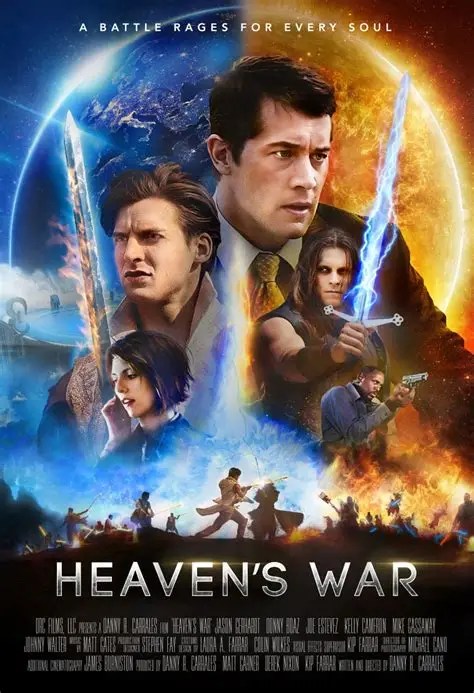
APRIL MOVIE THON DAY 5: Heaven’s War (2018)

April 5: Easter Sunday — Watch something religious.

Listen, you think your local politics are a mess? Try being Jonah Thomas. He’s a U.S. Senator who finds himself trapped in the ultimate filibuster, where the lobbyists are literal demons, and the swing votes are decided by the Heavenly Host.

Director Danny Carrales, a man who spends his days teaching the craft at Liberty University and his nights chronicling the invisible war for our souls, dropped Heaven’s War on me like a prophetic ton of bricks. This is the kind of movie that feels like it was found in a time capsule buried beneath a Christian bookstore that went out of business in 1996, yet it’s talking about things that make today’s headlines look like yesterday’s news.

Thomas told The Worldwide Threat,Heaven’s War is about spiritual warfare and I believe that spiritual warfare, at least from, I think the heat of the battle is probably taking place in DC. I think that’s where a lot of spiritual battles are taking place, and I thought what would be a cool way to represent people’s lives in danger, everyday walks of life, that the powers that be in DC can have a major push towards God or away from God. In this case, I thought,Let’s go ahead and have some bad guys that are senators that are trying to put together this vaccine that will hopefully stop cancer, stop the pain that people go through in that cancer world.”

I thought,What if the vaccine wasn’t actually what they said it would do? It would heal some people, but there’d be a small percentage, which turns out to be a larger percentage of people that would suffer because they took the vaccine.I thought that would be a really cool idea to implement, explaining why there’s such a spiritual battle to stop this vaccine from happening. Little did I know that COVID would come right down the road following the making of this film.”

Yes, the bad guys are trying to cure cancer. And yes, one of them is Joe Estevez. You know the rule: if a movie features a member of the Sheen/Estevez dynasty and involves a government conspiracy, you’re watching Tubi.

Anyways…

Senator Jonah Thomas (Jason Gerhardt) wants to be a good politician, but is there such a thing? He’s been overlooking what’s really important — his family — and worrying about his future. If this movie has any say, he doesn’t have one. Terrorists blow up all the bad guys and try to flip him to their side, but everything is viewed through a lens of supernatural high-stakes poker.

But who is good? Who or what is evil? Why do the lightsabers in this invert the good-guy/bad-guy paradigm of Star Wars, so the heels get blue and the faces get red (thanks for noticing, Logan Harrington on Letterboxd)?

Why do American politics and flags, so many flags, matter to the spiritual world? Why is there so much dialogue? Why does God need a starship? I have so many questions, and this movie just hit me with a wall of flashbacks so dense I felt like I was undergoing a neurological exam. I tried, I really did, but I started to get lost in the temporal slipstream. At least the Senator gets the best help, because when you have Gabriel (Danny Boaz), well, I don’t know how you can do better than have the Angel of Revelation.

There’s also the whole debate over why God lets bad things happen. I think when you’re in the middle of battling actual demons with an angel, the point of all this is moot because you now know God exists, so your faith has been rewarded or your lack of faith has been shown. It feels like a very shooting fish in a holy water barrel situation.

Many of the IMDb reviews are punching down on this or over-praising it, saying things like,…if you are a person of faith, you will enjoy it. If you don’t consider this a love story on several different levels. If you are trying to get into the business, watch and learn how to put all the pieces together to create a great story with conflict that has emotional impact.”

I don’t know about love story, unless you mean the love between a director and his green screen, but Heaven’s War is definitely a trip.

You can watch this on Tubi.