THE MOVIES OF AL ADAMSON: The Fiend With the Synthetic Brain (1967)

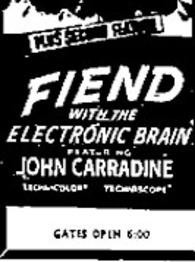
The Fiend with the Electronic Brain is — sort of — Al Adamson’s 1965 movie Psycho-A-Go-Go which is also — sort of — Blood of Ghastly Horror.

Psycho A-Go-Go is all about Joe Corey taking part in a diamond heist with the stolen contraband hidden inside a little girl’s doll when it isn’t about Tacey Robbins singing.

This remix has Joe Corey’s madness explained as he is an injured Vietnam vet who is experimented on by Dr. Vanard (John Carradine). Everything that happened in the first version also happens here but Joe is off the hook, I guess, because of the surgery on his mind.

Venard wanted to heal the soldier’s shrapnel injuries with electric shock therapy, but he turned Joe into a woman-killing monster who is now hunting him down. He straps Dr. Vanard to his own lab equipment and electrocutes him before we somehow find ourselves back in that jewel robbery, the diamonds in the doll and the forest haunting of the woman and her daughter, all before Joe gets shot and falls off a cliff.

Beyond also being Bloof of Ghastly Horror and also The Man with the Synthetic Brain, a Sam Sherman retitling for TV. You could see this movie four times and be taken every time as you’re seeing the same story with little tweaks along the way with footage being Xeroxed over and over and over.

I get upset when Spielberg or Lucas comes back and meddles with their movies but I am in no way upset that Al Adamson just kept trying to make this movie better. Arguably, he didn’t. He tried and you have to give it to him for that.

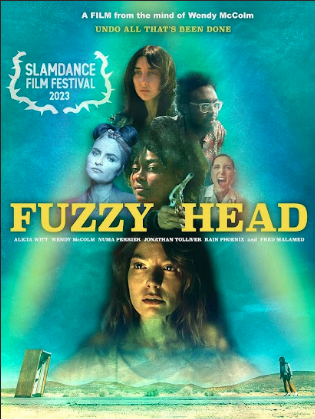
Fuzzy Head (2023)

ABOUT THE AUTHOR: Joseph Perry writes for the film websites Gruesome Magazine, The Scariest Things, Horror Fuel and Diabolique Magazine; for the film magazines Phantom of the Movies’ VideoScope and Drive-In Asylum; and for the pop culture websites When It Was Cool and Uphill Both Ways. He is also one of the hosts of When It Was Cool’s exclusive Uphill Both Ways podcast and can occasionally be heard as a cohost on Gruesome Magazine’s Decades of Horror: The Classic Era podcast.

A film with a perfectly fitting title, writer/director/star Wendy McColm’s Fuzzy Head is a surreal genre-film meditation on lifelong trauma that began with childhood abuse. 

Insomniac Marla (McColm) may or may not be interacting with others, viewers may or may not be witnessing actual events or imagined ones from her life, and the nonlinear framework of the film makes things even less clear as the young woman tries to piece together whether she murdered her mother, who once made her walk on broken glass as a childhood punishment. But if things were clear to us, we couldn’t sympathize with Marla’s plight as much as we do — and hers is the type of character, thanks to McColm’s work behind the camera and in front of it, that we ultimately want to see come out of everything okay.

McColm is great in the role, with her character going through the wringer, and her supporting cast — particularly Alicia Witt as Marla’s mother — is solid throughout. If you enjoy symbolism and dream interpretation in your cinematic choices, Fuzzy Head should keep you busy. There’s more than a little David Lynch influence at play here, along with influences from other filmmakers, but McColm’s film is its own unique work, boasting plenty of oddness and intriguing visuals.

Fuzzy Head is a heavy, heady, often uncanny character study with thriller elements that should leave viewers with plenty to chew on long after the ending credits roll.

Fuzzy Head, from Gravitas Ventures, is currently available as a streaming release. 

THE MOVIES OF AL ADAMSON: Psycho-A-Go-Go (1965)

Al Adamson was the son of silent film stars Denver Dixon and Dolores Booth. After working on some of his father’s later films, he started his own production company with Sam Sherman called Independent-International Pictures.

From tinting a Filipino horror movie neon hues and releasing it as a movie shot in Spectrum X — Horror of the Blood Monsters — to filming two movies at Spahn Ranch and making two softcore stewardess movies in one year (1975’s The Naughty Stewardesses and Blazing Stewardesses, which actually had parts written by the elderly Three Stooges who were unable to appear), Adamson’s movies are all over the map. His films Dracula vs. Frankenstein and Carnival Magic are both shockingly inept and amazingly transcendent, sometimes at the very same time. Yeah, I get the incongruity of this statement.

This movie was to be a straight action picture, back when it had the title Echo of Terror. But soon, it turned into a vehicle for Adamson to promote Tacey Robbins’ singing amidst a plot where a murderous jewel thief stalks a woman and her child after jewels are hidden inside the girl’s Christie Minstrel doll. Yes, a singing black baby doll that sings old slave songs, 1965 grindhouse fare ain’t the place to find woke storylines. I’d imagine that this plot point was cribbed from The Night of the Hunter.

Amazingly, Adamson would resurrect this movie numerous times over the next several years, turning it into a veritable zombie of a film. In 1969, it was completely re-edited, with John Carradine as a mad scientist added after the fact, and re-released as The Fiend with the Electronic Brain.

Two years after that, Adamson added even more footage to the film, including scenes with his wife Regina Carrol, and created an entirely new version called Blood of Ghastly Horror. The fact that three different movies are vying for one coherent narrative probably didn’t matter to Adamson. All of this was released one more time as a fourth version of the film, The Man With the Synthetic Brain. I can only imagine the confusion of some viewers who had to be sure they’d seen this movie before, as the main villain’s motivations go from being simply villainous to being experimented on by an evil doctor to dying early in the third and fourth versions of the film before his father brings a zombie to gain revenge on the family of the evil doctor. Imagine a movie being a sequel to itself but never telling you! Talk about confusing!

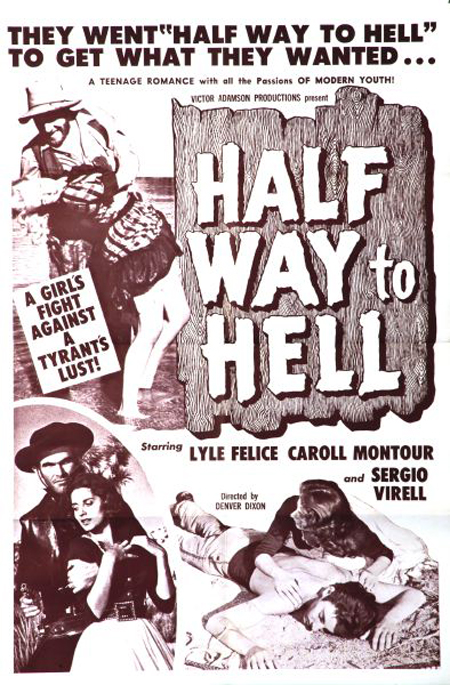
THE MOVIES OF AL ADAMSON: Halfway to Hell (1960)

Al Adamson directed his first movie with his father, Victor, and wrote the script with Alan Greedy. His father was also the cowboy actor Denver Dixon.

In the days before the Mexican Revolution, the daughter of a wealthy landowner named Maria San Carlos (Caroll Montour) is set to take part in an arranged marriage with Escobar (Al Adamson using the name Lyle Felice). Not in love, she and Joanne (Shirley Tegge) run away with Escobar’s mercenaries after them. Her servant Manuel (Sergio Virel) and another team of henchmen are also sent.

The high point of this — I don’t have the box set, so I’ve been hunting a copy — is that there’s a duel with bullwhips.

The interesting thing is that this is all told from a female POV — novel for 1960 and a Western — and gets pretty rough with Mariah nearly being raped. It’s 67 minutes long and would start the foundation for the movies that Adamson would make.

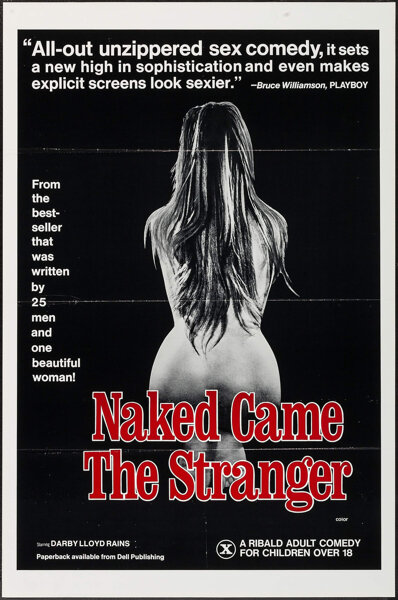
SUPPORTER DAY: Naked Came the Stranger (1975)

EDITOR’S NOTE: Today’s movie is brought to you by AC Nicholas, who has graciously become a Big B&S’er, a monthly supporter of the site and got to pick an entire week of movies. Would you like to have me write about the movies of your choice? It’s simple!

  1. Go to our Ko-Fi site and donate. There’s no set amount and I won’t tell you what to do. In fact, if you just keep reading for free, we can still be friends.
  2. Join as a monthly member for just $1. That makes you a Little B&S’er.
  3. As a Medium B&S’er at just $3 a month, if you pick a movie or a director, I’ll write about them for you. In fact, I’ll do one for each month you subscribe and even dedicate the post to you.
  4. For $5 a month, you basically get some major power. As a Big B&S’er, I’ll write an entire week on any subject you’d like. How awesome would that be? In fact, I’ll do it for every month you’re a member. Do you think any of your other movie sites will do that for you?

Naked Came the Stranger is based on a hoax.

Mike McGrady was convinced that books had become so dirty — just read Harold Robbins and Jacqueline Susann — that any book could be a best seller if it had sex in it. He recruited nineteen men and five women from Newsday including 1965 Pulitzer Prize winner Gene Goltz, 1970 Pulitzer Prize winner Robert W. Greene and journalist Marilyn Berge. The book, which he edited with Harvey Aronson to ensure that it was not well-written in the least, was written by Penelope Ashe, who would be played by McGrady’s sister-in-law Billie Young.

After selling 20,000 copies, McGrady went on The David Frost Show and told America that it was all a lie. It sold 70,000 more copies after that.

According to The Washington Post, “Mr. McGrady and the other writers had nothing to do with the hardcore film with the same title. They did, however, see the movie at a Times Square theater. During one vivid scene, Aronson told The Charlotte Observer, someone shouted “Author, author! Seventeen of us stood up.”

Working under his Henry Paris name for directing (his middle name and favorite city) and Jake Barnes (the narrator of Hemmingway’s The Sun Also Rises) for writing, Radley Metzger created this adult adaption of the book. Gilly (Darby Lloyd Rains) and Billy (Levi Richards) host a morning show. He’s always been able to sleep around in the marriage — she catches him with their assistant Phyllis (Mary Stuart) — but something has always held her back. This will be the day in which she unleashes herself, even if it keeps ending up in failure.

When she finally gets it together, she has a memorable moment with Marvin (Alan Marlow) in the second floor of a bus in a daring scene shot with no permits, obviously. She also gets Phyllis for herself and even has a classy silent movie black and white love scene with Teddy (Grant Taylor).

If the movie they’re watching in the beginning seems familiar, it’s British freakout Bizarre AKA Secrets of Sex.

SUPPORTER DAY: The Tale of Tiffany Lust (1981)

EDITOR’S NOTE: Today’s movie is brought to you by AC Nicholas, who has graciously become a Big B&S’er, a monthly supporter of the site and got to pick an entire week of movies. Would you like to have me write about the movies of your choice? It’s simple!

  1. Go to our Ko-Fi site and donate. There’s no set amount and I won’t tell you what to do. In fact, if you just keep reading for free, we can still be friends.
  2. Join as a monthly member for just $1. That makes you a Little B&S’er.
  3. As a Medium B&S’er at just $3 a month, if you pick a movie or a director, I’ll write about them for you. In fact, I’ll do one for each month you subscribe and even dedicate the post to you.
  4. For $5 a month, you basically get some major power. As a Big B&S’er, I’ll write an entire week on any subject you’d like. How awesome would that be? In fact, I’ll do it for every month you’re a member. Do you think any of your other movie sites will do that for you?

Directed by Gérard Kikoïne and Radley Metzger and shot at the same time as Aphrodesia’s Diary, this finds Betty (Veronica Hart) suggesting that her friend Tiffany (Dominique Saint Claire using the name Arlene Manhattan) that she attend a taping of the talk show of Florence Nightingale (Vanessa Del Rio). Within the audience, people are encouraged to live out their fantasies.

Some of those people acting on them are a very young Ron Jeremy, Desiree Cousteau, Samantha Fox and Candida Royalle. When she gets home, Tiffany discovers that her husband (George Payne) has been cheating on her with Misty Regan.

Metzger had hoped that his film The Cat and the Canary would be a mainstream success which is why Kikoïne is the only director in the credits.

This was the first release of Mélusine, Vinegar Syndrome’s adult label.

SUPPORTER DAY: Aphrodesia’s Diary (1983)

Shot in 1979 but not released until 1983, this was directed by Gérard Kikoïne but had Radley Metzger as an advisor. It was filmed at the same time as Metzger’s 1979 movie The Tale of Tiffany Lust, which also had French actresses Dominique Saint Claire and Morgane in the cast and uses cinematographer Gérard Loubeau.

Adrianne (Dominique Saint Claire) finds herself working as a non-performer in adult movies and somehow gets a ticket to New York. There she meets a gambler who introduces her to sexual freedom, as if she were Emanuele, but not Black Emanuelle. Of course, with those risks comes danger, as always lurks in these golden age movies which were less about the act and more of the reasons before.

Vanessa Del Rio is in this as a therapist and Désirée Cousteau as Cassandra, an erotic spirit who guides our heroine through her adventures, which at the end take her back home to a committed relationship, which is an odd close for a Radley Metzger movie, but who am I to judge?

Gérard Kikoïne also made Dragonard and Master of Dragonard Hill for Cannon, as well as Edge of Sanity and Buried Alive, the 1990 one with Donald Pleasence, John Carradine, Robert Vaughn and Ginger Lynn.

SUPPORTER DAY: The Private Afternoons of Pamela Mann (1974)

EDITOR’S NOTE: Today’s movie is brought to you by AC Nicholas, who has graciously become a Big B&S’er, a monthly supporter of the site and got to pick an entire week of movies. Would you like to have me write about the movies of your choice? It’s simple!

  1. Go to our Ko-Fi site and donate. There’s no set amount and I won’t tell you what to do. In fact, if you just keep reading for free, we can still be friends.
  2. Join as a monthly member for just $1. That makes you a Little B&S’er.
  3. As a Medium B&S’er at just $3 a month, if you pick a movie or a director, I’ll write about them for you. In fact, I’ll do one for each month you subscribe and even dedicate the post to you.
  4. For $5 a month, you basically get some major power. As a Big B&S’er, I’ll write an entire week on any subject you’d like. How awesome would that be? In fact, I’ll do it for every month you’re a member. Do you think any of your other movie sites will do that for you?

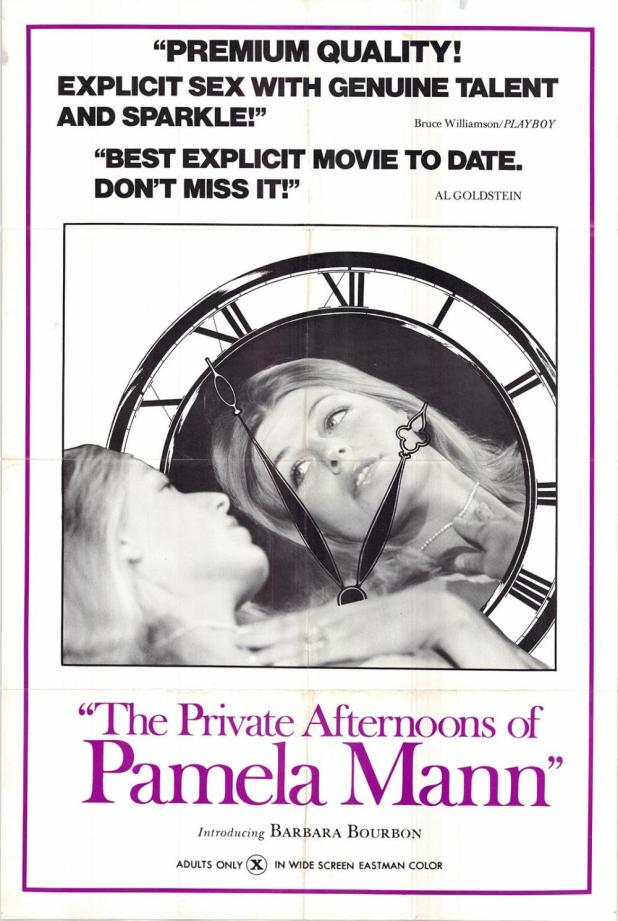
Bill Margold said, “The Private Afternoons of Pamela Mann signals an end to the all-balling, no purpose, disposable mastur-movies that go into one orifice and out another.”

There are no movies made like it today.

Pamela Mann (Barbara Bourbon) is a married psychotherapist in Manhattan. Throughout the day, we watch as she has several encounters with everyone from one of her female patients to a group of radicals — one of whom takes the time to recite the Supreme Court decision on pornography while Pamela is being taken — and even a man who is just sitting on a park bench. All while Frank (Eric Edwards), a detective, films every single second. By the end of the film, we learn that unlike most of the detective stories that we’re used to, Pamela is watching the movies herself. With her husband. In bed. The sexual revolution — until a few years and AIDS — has been won.

Based on the life of the real Pamela Mann, who was in The Seduction of Inga, Side Street GirlsKeyholes Are for Peeping and Dungeon of Pain, this found Radley Metzger recovering from the bad box office of The Score and embracing hardcore, but not before taking his middle name and favorite town to become Henry Paris. And yes, that politician that she sleeps with is Sonny Landham, who would someday be in Predator.

Throughout the movie, a woman keeps asking questions of the characters after they finish making love. “Do you think the welfare state is still viable considering the inability up to the present of the system to reconcile the isolation of the poor with the assimilation into the system of relatively well-to-do hierarchy of government, administrators, corporate functionaries and executives and the other white color elite who are the necessary benefactors of these poor?” seems like a strange thing to bring up after we’ve seen so much on camera that was once kept from public eyes.

At the end, when they ask her why she’s so inquisitive, she replies, “I’m here to give the film socially redeeming values.”

It also has Georgina Spelvin as a sex worker named Klute and a moment that is just as incendiary and flat-out shocking as it was when this was released, as Darby Lloyd Raines and Jamie Gillis assault Mrs. Mann at gunpoint. I was completely unprepared for this moment and it’s kind of astounding that in the middle of a movie that has cute winks at the camera that all this open sex can be so dangerous.
SUPPORTER DAY: Opening of Misty Beethoven (1976)

EDITOR’S NOTE: Today’s movie is brought to you by AC Nicholas, who has graciously become a Big B&S’er, a monthly supporter of the site and got to pick an entire week of movies. Would you like to have me write about the movies of your choice? It’s simple!

  1. Go to our Ko-Fi site and donate. There’s no set amount and I won’t tell you what to do. In fact, if you just keep reading for free, we can still be friends.
  2. Join as a monthly member for just $1. That makes you a Little B&S’er.
  3. As a Medium B&S’er at just $3 a month, if you pick a movie or a director, I’ll write about them for you. In fact, I’ll do one for each month you subscribe and even dedicate the post to you.
  4. For $5 a month, you basically get some major power. As a Big B&S’er, I’ll write an entire week on any subject you’d like. How awesome would that be? In fact, I’ll do it for every month you’re a member. Do you think any of your other movie sites will do that for you?

Adult films probably never had as big of a budget or as rich of a look as this movie, which was shot in New York City, Rome and Paris.

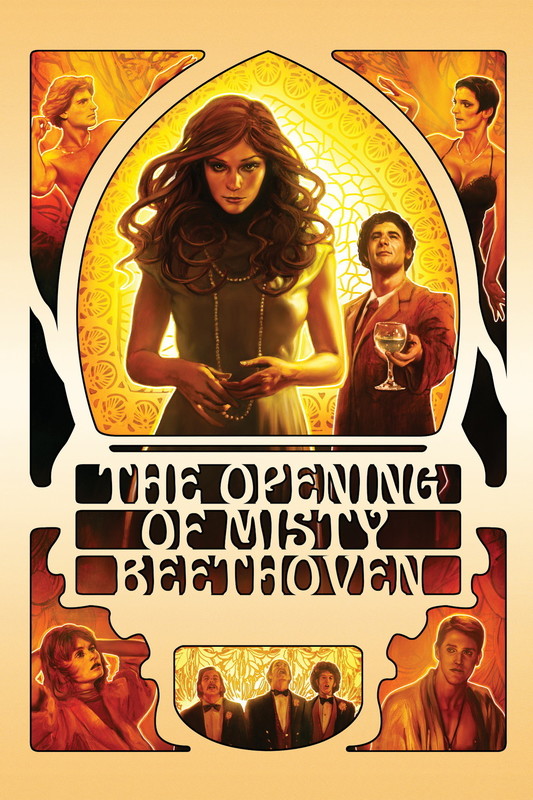
Dr. Seymour Love (Jamie Gillis) is our Dr. Henry Higgins because this is Pygmalion or My Fair Lady. He is transforming common streetwalker Dolores “Misty” Beethoven (Constance Money), a woman whom Love believes he can make into an elite and elevated lady who will impress Geraldine Rich (Jacqueline Beudant), the Colonel Pickering of this movie.

The goal will be that by the time of a party thrown by magazine publisher Lawrence Layman (Ras Kean) and his wife Barbara (Gloria Leonard), Misty will be the most wanted woman in the world. That’s not Kean in the threeway scene that follows. Instead, the female on male penetration has the stunt body of Casey Donovan. He’s also the homosexual art dealer who Misty seduces.

This was shot by cinematographer Paul Glickman, who used the name Robert Rochester. He was also the cinematographer for The Stuff and God Told Me To, as well as the director of photography for Al Adamson’s Dracula vs. Frankenstein. He was also nominated for the Best Animated Short Film Oscar for Calypso Singer and El Salon Mexico.

SUPPORTER DAY: The Princess and the Call Girl (1984)

EDITOR’S NOTE: Today’s movie is brought to you by AC Nicholas, who has graciously become a Big B&S’er, a monthly supporter of the site and got to pick an entire week of movies. Would you like to have me write about the movies of your choice? It’s simple!

  1. Go to our Ko-Fi site and donate. There’s no set amount and I won’t tell you what to do. In fact, if you just keep reading for free, we can still be friends.
  2. Join as a monthly member for just $1. That makes you a Little B&S’er.
  3. As a Medium B&S’er at just $3 a month, if you pick a movie or a director, I’ll write about them for you. In fact, I’ll do one for each month you subscribe and even dedicate the post to you.
  4. For $5 a month, you basically get some major power. As a Big B&S’er, I’ll write an entire week on any subject you’d like. How awesome would that be? In fact, I’ll do it for every month you’re a member. Do you think any of your other movie sites will do that for you?

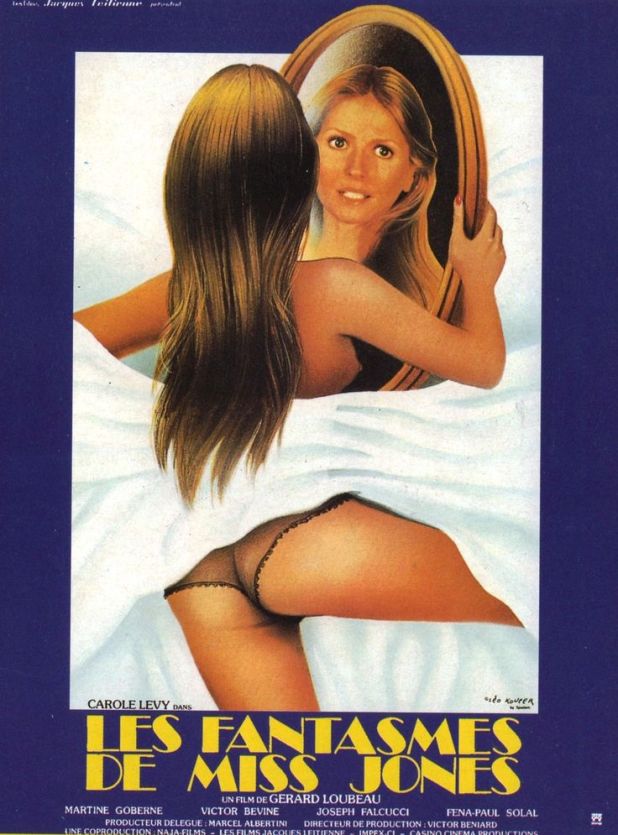
For his last movie, Radley Metzger — Gérard Loubeau is credited — chose to adapt the French story Frontispiece by Pierre Serbie, which is a lot like Mark Twain’s The Prince and the Pauper. Carol Levy (Alone In the Dark) plays the twin roles of Audrey Swallow and Lucy Darling, two women who are as different as they look alike.

One of them is a virginal girl about to married and in need of experience; the other is a high class call girl. As you can imagine, everyone gets what they want, even if getting back to switch places in time proves somewhat of a difficult proposition.

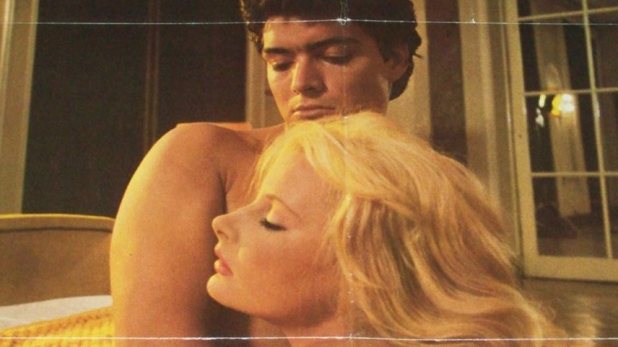
Originally playing on The Playboy Channel, this is a return to the softcore films that Metzger was known for and not his Henry Paris films in the 70s and early 80s. You may also find it as The Fantasies of Ms. Jones.