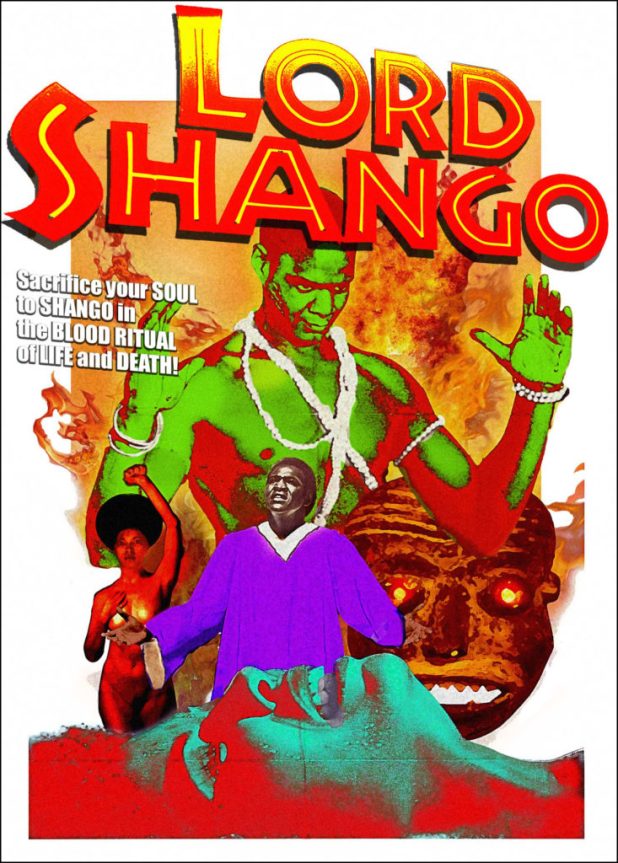
UNSUNG HORRORS HORROR GIVES BACK 2025: Lord Shango (1975)

Each October, the Unsung Horrors podcast does a month of themed movies. This year, they will once again be setting up a fundraiser to benefit Best Friends, which works to save the lives of cats and dogs across America, giving pets second chances and providing them with happy homes.

Today’s theme: Birth Year (1975)

ABOUT THE AUTHOR: Adam Hursey is a pharmacist specializing in health informatics by day, but his true passion is cinema. His current favorite films are Back to the FutureStop Making Sense, and In the Mood for Love. He has written articles for Film East and The Physical Media Advocate, primarily examining older films through the lens of contemporary perspectives. He is usually found on Letterboxd, where he mainly writes about horror and exploitation films. You can follow him on Letterboxd or Instagram at ashursey.

Jenny (Marlene Clark from Ganja and Hess) wants to have a baby with boyfriend Memphis (Wally Taylor), so she does what any reasonable woman does when she has reached a point of desperation—she goes to get baptized, turning to God to hopefully fulfill her wish. And just to be extra sure, she takes her grown daughter Billie (Avis McCarther) down to the river to get dunked as well. But Billie’s boyfriend Femi (Bill Overton) follows a different deity, Shango. When Femi prevents Billie’s baptism, the deacons take matters into their own hands, drowning Femi while the congregation watches in horror.

From here, things get even stranger as Billie mourns Femi so hard that she thinks Memphis is Femi back from the dead, and getting pregnant by Memphis, which of course infuriates Jenny (this melodramatic soap opera histrionics is what I love to see in my horror movie). Billie runs away and Jenny turns to the cult of Shango for assistance (you know, since the Christianity experiment did not turn out so well). The battle for Billie’s soul becomes a spiritual conflict that would rival any wizard battle found in a Shaw Brothers film.

Lord Shango might be lacking in traditional horror elements, but supernatural forces are definitely at play here. And there is an interesting look into religion. It might be easy to believe that Jenny turns her back on God after the incident at the baptism, but the truth is Jenny had never actually accepted Christ into her heart. It was all a show in an attempt to manipulate God into giving her what she wanted. It did not work, because Christianity does not work that way. It is not a genie in a bottle. But by embracing a Yoruba, perhaps even a voodoo, religion, you might see some quicker results, albeit not necessarily the results you hoped for or expected. Jenny might get more than she bargained for, but she does not seem to mind.

I’ve seen Lord Shango described as Blaxsploitation. Here is yet another example of a film with an all black cast categorized as such. I love Blaxsploitation films, but Lord Shango does not belong next to Truck Turner. There are really no exploitation themes found here. Just simply a supernatural horror/drama that deserves to be seen by more people. I just would not want viewers to be disappointed if they were expecting something else. It really is closer to Ganja and Hess. A great, if not emotionally draining, potential double feature.
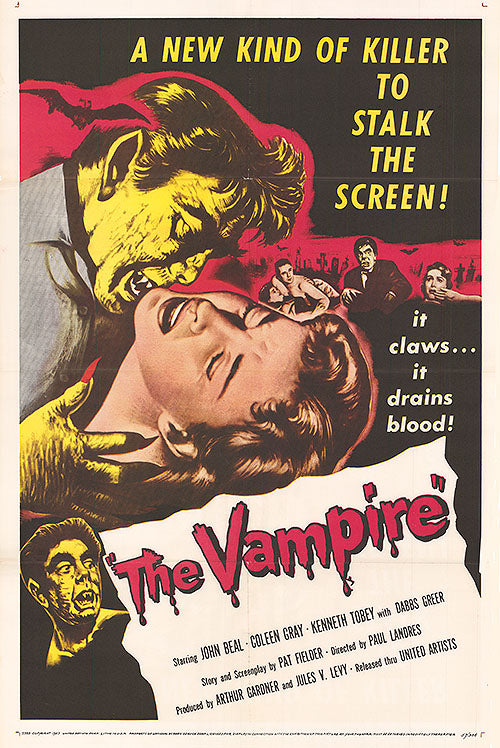
CHILLER THEATER MONTH: The Vampire (1957)

EDITOR’S NOTE: The Vampire was on Chiller Theater on Saturday. December 28, 1968 at 1:00 a.m.

Directed by Paul Landres and written by Pat Fielder, who also collaborated on Return of Dracula, this film was also shown on TV as Mark of the Vampire. Dr. Paul Beecher (John Beel) gets his migraine meds screwed up with vampire pills. Yes, really, it’s his daughter Betsy’s (Lydia Reed) fault. His colleague, Dr. Campbell, had been trying to reverse the evolution of animals, and these pills are the result. In just a few hours, the doctor’s patients start to fear him, and some die, showing small holes in their necks.

So yes, according to this belief about scientific vampires, the doctor was “regressing animals’ minds to a primitive state, then reversing the process as a step toward advancing the intellect from its normal state.” He goes full vampire at one point and kills his college buddy, Dr. Will Beaumont (Dabbs Greer), and throws him in an incinerator. The cops listen to an audio recording of this and go to arrest him, but cops being cops, they shoot and kill him. Yes, you can shoot a vampire to death. A science vampire, at least, if this movie is to be believed.

It’s way better than you’d think, moddy and dark, a vampire addicted to pills, which is a very modern take on the monster that still resonates today.

Supposedly, this is where Roy Thomas got the idea for Morbius the Living Vampire.

You can watch this on Tubi.

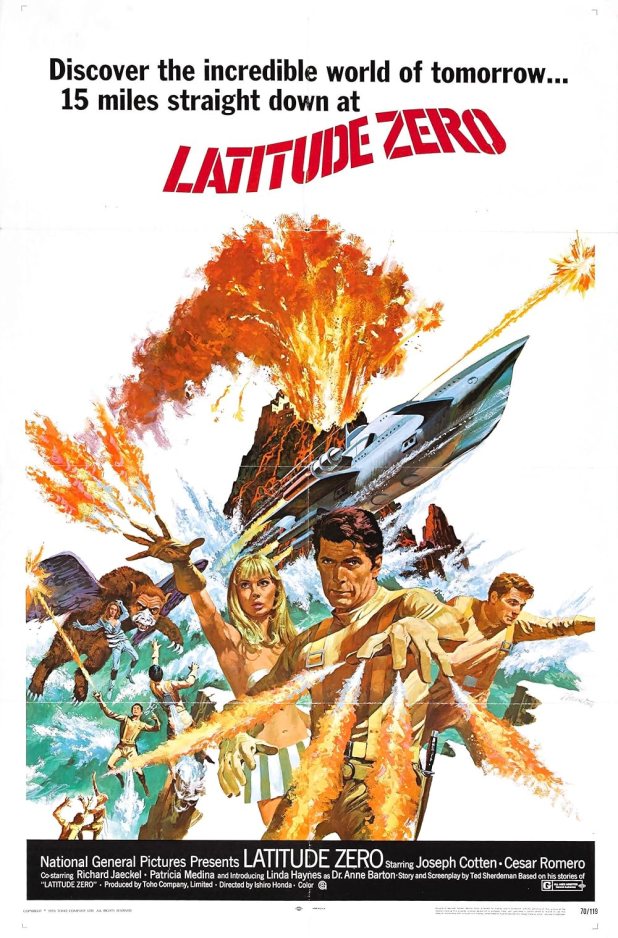
THE IMPORTANT CINEMA CLUB’S SUPER SCARY MOVIE CHALLENGE DAY 16: Latitude Zero (1969)

16. A Tokusatsu Horror Film

Latitude Zero is a futuristic utopia that lies hidden fifteen miles below sea level at the intersection of the Equator and the International Date Line. There, people from all over the world — many of whom were reported missing at sea and have now aged — have lived since the 19th century, assisting humanity in their development. Their lead vehicle, Alpha, is commanded by Captain Craig McKenzie (Joseph Cotten). He rescues three scientists, Dr. Ken Tashiro (Akira Takarada), Dr. Jules Masson (Masumi Okada) and journalist Perry Lawton (Richard Jaeckel) from a bathysphere accident, narrowly avoiding the henchmen of Latitude Zero’s enemy, Dr. Malic (Cesar Romero).

Alright, I already love this movie two minutes in.

Malic has kidnapped Dr. Okada (Tetsu Nakamura) and his daughter Tsuruko (Mari Nakamura), using them to create new monsters to attack his enemies. One of these is a lion with condor wings, into which he has placed the brain of the disgraced henchman Kuroiga (Hikaru Kuroki). Or human bats and kaiju rats.

Along with Latitude Zero scientist Dr. Anne Barton (Linda Haynes), the crew attacks the evil base of Blood Rock as this movie goes from giant monsters to Eurospy. By the end, everyone has joined the crew, except Lawton, who soon finds that any memories he has of this adventure are fading away. At the last moment, he charts a course back to Latitude Zero.

Based on the NBC radio serial Latitude Zero, which only had seventeen episodes, this was directed by Ishirô Honda and filmed in English. It was a co-production between Toho and the American television production company Four Star Productions. After having flown out the American cast to Japan, Four Star’s owner, Don Sharp, declared bankruptcy and pulled out of the contract. Toho made the movie anyway and ensured that everyone was paid.

I wish they made ten of these. Seriously, what a wild, strange and wonderful movie.

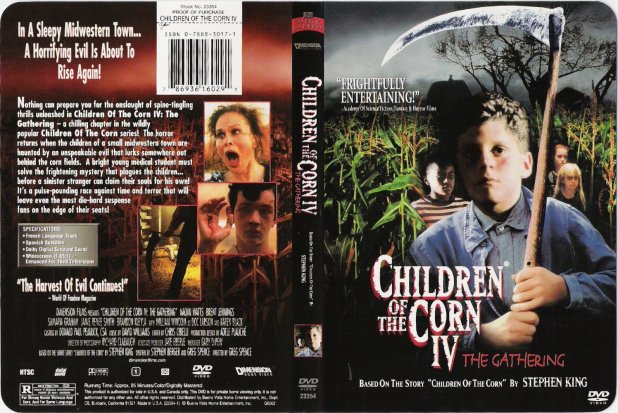
2025 Scarecrow Psychotronic Challenge Day 16: Children of the Corn IV: The Gathering (1996)

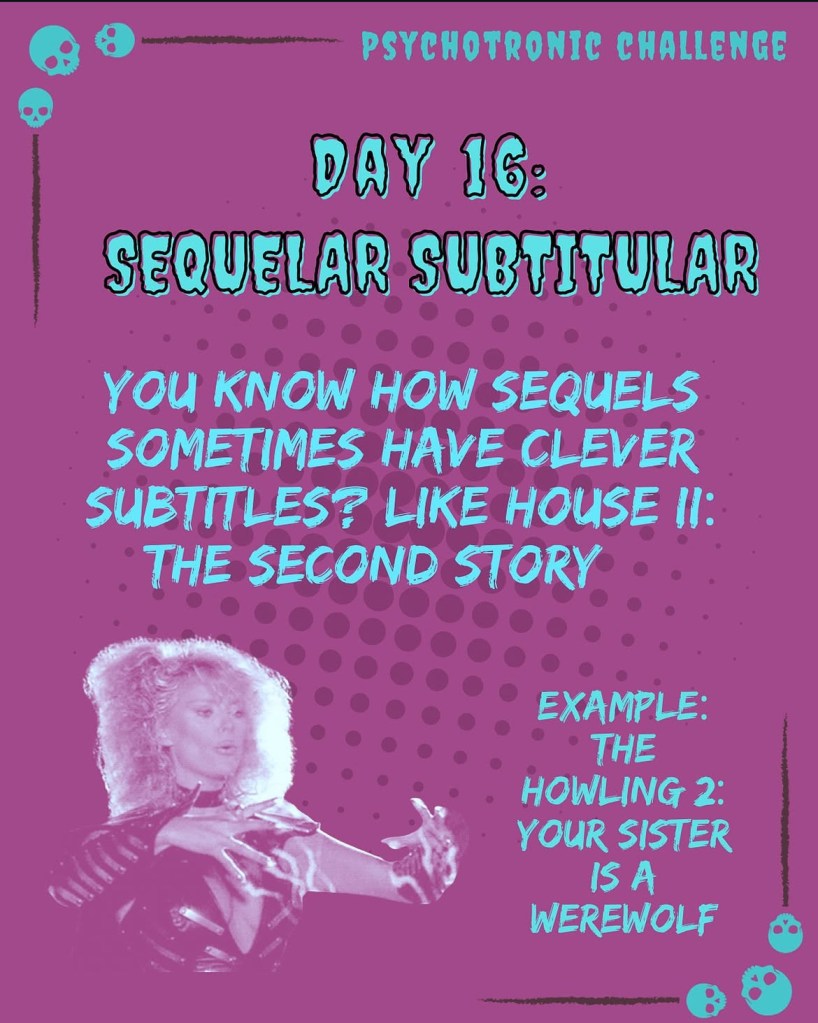
16. SEQUELAR SUBTITULAR: You know how sequels sometimes have clever subtitles? Like House II: The Second Story

Someone tell medical student Grace Rhodes (Naomi Watts) that you should never go home again. Yet she has to take care of her agoraphobic mother, June (Karen Black), who keeps dreaming of being hurt by children. She gets her old job back with Dr. Larson (William Windom) and starts to take care of her much younger siblings, Margaret (Jamie Renée Smith) and James (Mark Sailing).

When every kid in town gets a fever, just like in June’s dreams, and you realize this is set in Grand Island, Nebraska, the birthplace of Dick Cavett, you know something evil is up.

Donald (Brent Jennings) and Sandra (Toni Marsh) Atkins have one of those feverish kids, Marcus (Lewis Flanagan III). Josiah, Brandon Kleyla, a child preacher, gets him to murder his own mother, sending the police after the father, whom they blame. Oh man, Josiah. The dude was like Marjoe Gortne, and as he started to grow, the priests he was with tried to stop his aging. They abandoned him at one point, so he killed them, then the people of Grand Island burned him alive and sealed his remains in a well. So, you know, it’s totally normal that he’s back and giving the kids the names of dead children from a past century.

Somehow, his weakness is mercury, and somehow, this small-town medical student learns how to make mercury bullets. I love it. In a deleted scene, the two old ladies tell Grace and Donald that the children called Josiah “He Who Walks Behind The Rows.” Yeah, we didn’t have continuity, and only nerds cared back then.

U of M grad Steve King said he “could have done without all of the Children of the Corn sequels.” Well, did you say no to the money? Oh, Steve.

As for me, I’m sad when William Windom — Dr. Seth! — gets killed by a strange operating table with a blade on it. Oh yeah, spoiler.

Director Greg Spence also made The Prophecy II.

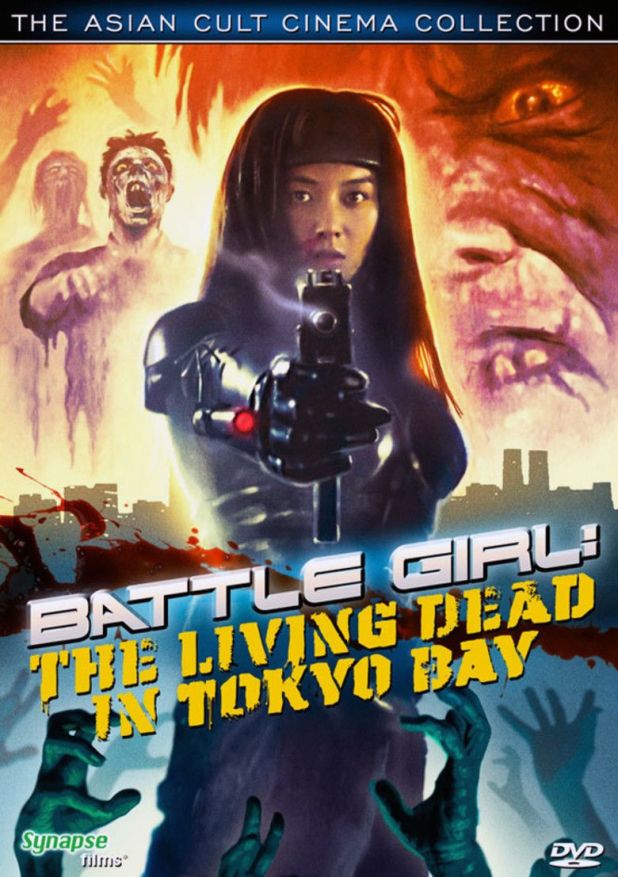
UNSUNG HORRORS HORROR GIVES BACK 2025: Battle Girl: The Living Dead in Tokyo Bay (1991)

Each October, the Unsung Horrors podcast does a month of themed movies. This year, they will once again be setting up a fundraiser to benefit Best Friends, which works to save the lives of cats and dogs across America, giving pets second chances and happy homes.

Today’s theme: 1990s

After a meteor crashes into Japan, unleashing a drug called cosmo-amphetamine on the country, which means that most of Tokyo goes all Romero and starts eating human flesh. Only Keiko (Cutey Suzuki) can save those who are left from the punk gangs and Captain Fujioka, who is using this accident to create his own zombie army.

It’s Batoru Garu: Tokyo Crisis Wars!

Directed by Kazuo Komizu (Guzoo: The Thing Forsaken by God: Part I) and written by Daisuke Serizawa, this has a pro wrestling star in the lead. Suzuki was so popular that she had her own video game, Cutie Suzuki no Ringside Angel, and appears in this film and the Go Nagai movie The Ninja Dragon. She was also a gravure model. This refers to how  Japanese magazines used to have a front page known as the gravure page on the inside front cover. This page often featured gorgeous women in seductive poses. According to Gravure Kid, “While gravure and gravure idols specifically have found their origin in Japan, the overall concept can be likened to pin-up models or bikini idols overseas. Unlike mainstream pop idols, gravure idols are known for their more innocent and sensual image that emphasizes glamor, beauty, and sensuality without explicit nudity or sexual acts.”

In addition to Suzuki, her enemies Devil Masami, Shinobu Kandori and Eagle Sawai all appear as the human hunters, tracking down survivors for the army. This allows for fight scenes between women who were used to battling each other.

Is it great? Nope. Does it have attractive Japanese warrior women dressed post-apocalyptically and beating one another up? Yes. Therefore, it is better than great.

You can watch this on YouTube.

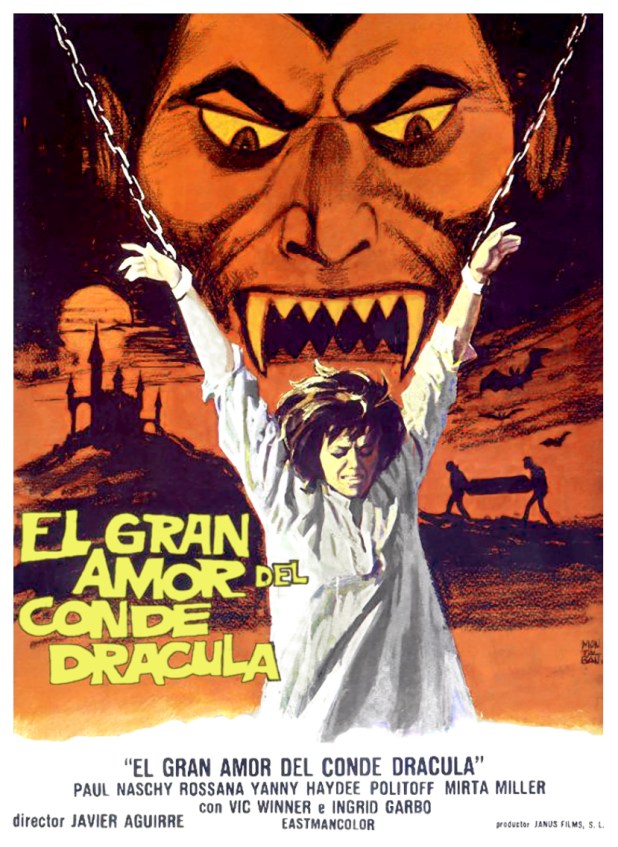
CHILLER THEATER MONTH: Count Dracula’s Great Love (1974)

EDITOR’S NOTE: Count Dracula’s Great Love was on Chiller Theater on Saturday. October 14, 1978 at 11:30 p.m., Saturday. May 3, 1980, at 1:00 a.m. and Saturday, June 26, 1982, at 1:00 a.m.

Call it El Gran Amor del Conde Dracula. Call it Cemetery Girls. Or Dracula’s Great Love — the title I saw the film under — or Dracula’s Virgin Lovers or The Great Love of Count Dracula. Whatever title you prefer, you’re about to savor a nonsensical odyssey through Spanish vampire madness, a world where someone can fall down the steps for what seems like hours, all women dress like Disney princesses, and a girl can step on a bear trap and only get a small scratch.

We start in an old sanatorium, deep in the Carpathian Mountains. A large, heavy, man-shaped crate arrives. Of course, you know that that crate has Doctor Wendell Marlow (Naschy) inside it. But right now, this scene is all about these movers casing the joint and trying to steal something, only for one to get hit with an axe and the other to get his throat ripped out and sent tumbling over and over and well, over.

Then, a stagecoach with four women — Karen, Marlene, Senta and Elke — breaks down and forces the girls to stay at Marlowe’s mansion. One by one, the girls are bitten and become part of Dracula’s army of the undead, all with the goal of the head vamp resurrecting his daughter Radna and convincing a virgin — hi Karen — to love him forever before he sacrifices her.

By the end, Dracula has had enough of this lifestyle and decides to kill his brides with sunlight. Then, he realizes that he loves Karen and can’t use her to further his monstrous aims, so he kills himself with a stake.

If you’re a fan of female vampires being female vampires — which mostly means them licking blood off of one another and whipping — then Naschy has exactly what you’re craving here. There was a one version of the film that has the actresses remaining modest, while the international cuts of the film feature abundant full monty shots of the brides. And there’s also fifteen minutes of footage that no one can locate that supposedly goes even further!

Amazingly, Naschy made this movie, Hunchback of the Morgue, Curse of the Devil, Horror Rises from the Tomb and Vengeance of the Zombies all in the same year.

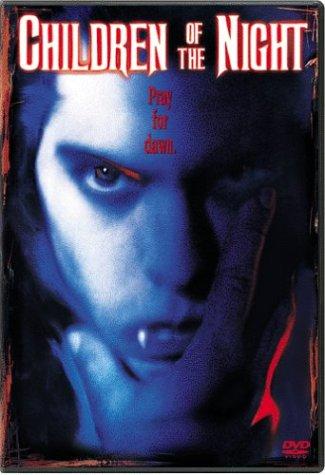
UNSUNG HORRORS HORROR GIVES BACK 2025: Children of the Night (1991)

Each October, the Unsung Horrors podcast does a month of themed movies. This year, they will once again be setting up a fundraiser to benefit Best Friends, which works to save the lives of cats and dogs across America, giving pets second chances and providing them with happy homes.

Today’s theme: 1990s

ABOUT THE AUTHOR: John Connelly is a lifelong genre film fan living in New Jersey. His Letterboxd profile is https://letterboxd.com/johnconn/

In 1990, Fangoria Entertainment launched Fangoria Films, a short-lived production company. Founded in 1979 as a spinoff of science fiction film magazine Starlog, Fangoria is a brand deeply associated with a certain kind of Gen-X horror fandom. What Famous Monsters of Filmland was a generation earlier, Fangoria became for a generation raised on slasher films and Tom Savini effects.

Fangoria Films would produce three features between 1990 and 1992. The first of these efforts, Mindwarp, is a post-apocalyptic mutant thriller starring genre heavyweights Bruce Campbell and Angus Scrimm. The third would be Severed Ties, a creature feature starring a later-career Oliver Reed. The second is the focus of this piece, 1991’s Children of Night.

Children of the Night feels in certain ways like an adaptation of Stephen King’s Salem’s Lot. Or, perhaps, of John Farris or Charles L Grant, the kind of writers you might find in Paperbacks from Hell. The story begins with two teenage girls, eager to escape their small town. Together, they engage in a local tradition: symbolically washing the “dirt of this town” off of them by swimming together in a flooded church crypt. When one of the girls, Lucy, drops her crucifix, the pair accidentally awaken Czakyr, an ancient vampire with a penchant for virgin blood. Teacher Mark Gardner (played by Stargate SG-1’s Peter Deluise) and his friend, the local priest, must lead an effort to save the town from being overrun by the restless dead.

Children of the Night is directed by Tony Randel. Randel’s other credits include the only good Hellraiser sequel, Hellraiser 2 and Amityville: It’s About Time, the second-best Amityville sequel. The cast includes Karen Black — star of such horror classics as Burnt Offerings and Tobe Hooper’s remake of Invaders from Mars, but perhaps best known to this readership for Trilogy of Terror. The film also features a memorable turn by Juilliard-educated SNL alumnus Garrett Morris. Industry legends KNB Effects provided makeup effects for the movie’s bloodsuckers. There are many reasons why it is surprising this film is not a cult classic. If it were more widely available, I believe it would be. The first time I saw this film was on a bad VHS rip with Russian subtitles. The second time was on Tubi, where it is not currently available.

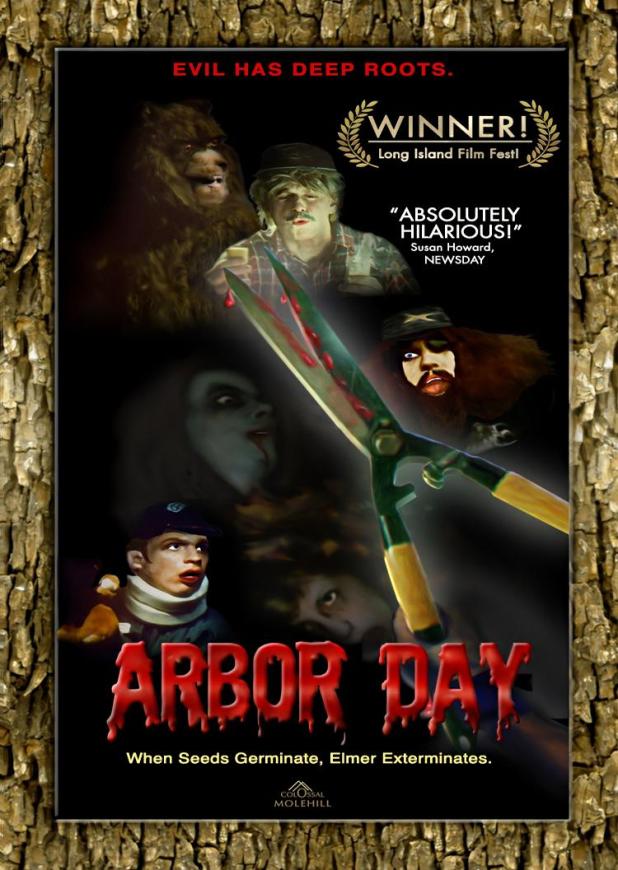
UNSUNG HORRORS HORROR GIVES BACK 2025: Arbor Day (1990)

Each October, the Unsung Horrors podcast does a month of themed movies. This year, they will once again be setting up a fundraiser to benefit Best Friends, which works to save the lives of cats and dogs across America, giving pets second chances and providing them with happy homes.

Today’s theme: 1990s

ABOUT THE AUTHOR: Adam Hursey is a pharmacist specializing in health informatics by day, but his true passion is cinema. His current favorite films are Back to the FutureStop Making Sense, and In the Mood for Love. He has written articles for Film East and The Physical Media Advocate, primarily examining older films through the lens of contemporary perspectives. He is usually found on Letterboxd, where he mainly writes about horror and exploitation films. You can follow him on Letterboxd or Instagram at ashursey.

I typically shy away from horror comedies. Or really comedies in general. I find that films as a medium generally have a hard time maintaining enough momentum for a theatrical run time. I much prefer the length of a sitcom. Sometimes, even 22 minutes is a stretch, though. I love a good skit. Best of all, a good Vine (RIP). You got six seconds to make me laugh.

But when I do find a comedy I enjoy, it is usually in the form of a spoof. Not even a satire. Just a good old-fashioned silly spoof. Airplane is probably my favorite straight-up cinematic comedy of all time. Amazon Women on the Moon would be up there. These films just make me laugh, no matter how many times I watch them.

Mixing horror and comedy is a combination that I do not seek out. I appreciate it more if the film is funny without necessarily being a comedy. Something like Return of the Living Dead comes to mind. Again, I do like a parody. I found Alfred Sole’s Pandemonium to be a pleasant surprise. And now Arbor Day, Joseph Sikorski’s take on a slasher set on a holiday.

Honestly, I’m not totally sure I knew this film was a comedy going into it. I had absolutely no expectations. But this disc was part of my Terror Vision subscription, so I figured I should give it a try. I’m glad that I did. Starting with a send-up of Citizen Kane, the film hooked me right away. There was no hiding the purpose of the film was to try to provide a goofy good time. 

It’s Arbor Day, apparently the most celebrated and highest of holy days in this film’s universe, and Elmer (Elm for short) and his parents are looking for that perfect spot to plant a sapling. However, disaster strikes when a grizzly bear decapitates Elmer’s father and…violates his mother (also killing her). Twenty years later, Elmer remains catatonic in a facility, only showing brief bursts of activity each Arbor Day. This year, Elmer escapes, returning home (as one does in a horror movie) for…revenge maybe. His motivation is not exactly clear. As fate would have it, a bunch of teenagers are using Elmer’s childhood home for their Arbor Day party. There will be blood this Arbor Day. And viscera. Lots of viscera.

Even at a relatively short running time of 80 minutes, the film almost overstays its welcome. It was a little touch-and-go. But, for me, it was able to hold it together just enough to get it over the finish line. I did laugh out loud a few times. Particularly at one scene where Elmer thinks about what could be if he and a potential victim got together, settled down, had a little sprout of their own. Nah, he says. LOL by me. 

I’d watch this one again. And that might be the biggest compliment I could give a horror comedy. I ain’t watching Repossessed again, that’s for sure. Usually once is more than enough. But I could easily make this one an Arbor Day tradition.

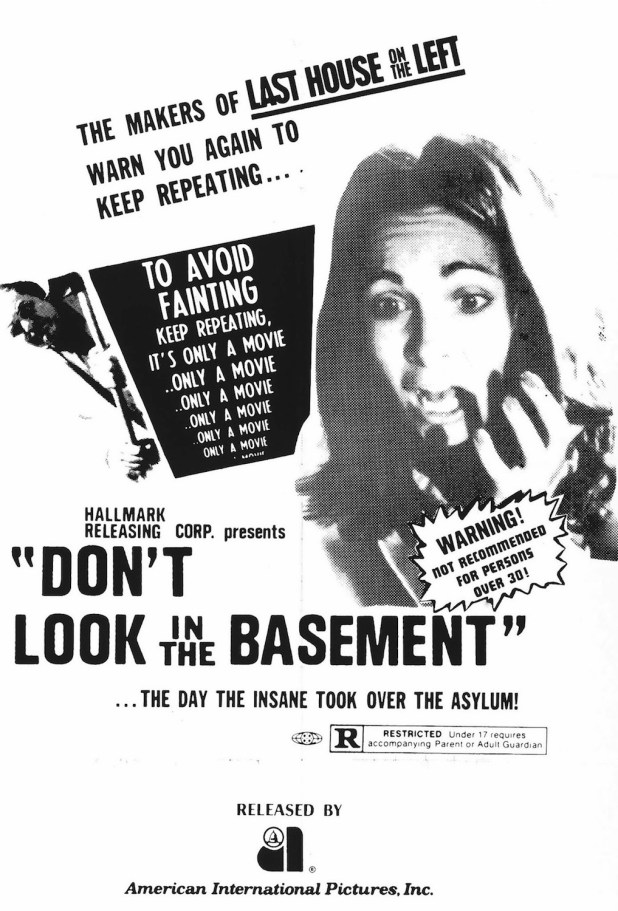
CHILLER THEATER MONTH: Don’t Look In the Basement (1973)

EDITOR’S NOTE: Don’t Look In the Basement was on Chiller Theater on Saturday. March 3, 1979 at 1:00 a.m. and Saturday. December 11, 1982 at 1:00 a.m.

We often refer to movies as “Brownriggian” when we watch films all night on Saturday nights with the Drive-In Asylum Double Feature on Facebook Live. There’s no better example of what this word means than S. F. Brownrigg’s 1973 shocker Don’t Look in the Basement AKA The Forgotten AKA Death Ward #13.

Dr. Stephens, the primary doctor at Stephens Sanitarium, has a theory that patients should be able to freely act out their insanities in the hopes that someday they will snap back to reality. You know, if I’ve learned one thing about asylum doctors from, well, Asylum and Alone in the Dark, it’s that they’re all just as insane as their charges.

Before one of the older nurses can retire, we have the Judge (Gene Ross) chopping the doctor with an axe and Harriet (Camilla Carr) smashing the nurse’s head inside a suitcase. So when Charlotte Beale (Rosie Holotik, the cover girl of the April 1972 Playboy, as well as appearances in Horror High and the ghostly hitchhiker in Encounter with the Unknown) shows up for a new job and things seem weird. Or Brownriggian. In short, everything feels off. Hallways and stairwells seem like passageways to other dimensions, and sweaty horror lurks, sleeping like some kind of Southern gothic force of dread and menace.

This is a place filled with human children, killer women obsessed with sex, an elderly woman who thinks that flowers are her kids, a military man who lost his platoon in Vietnam and more. Even the sane are driven mad just by being in their presence.

There are plenty of people who decry Brownrigg’s movies, but I’m certainly not one of them. They invite you to worlds that are not our own and seem to come from a dimension far from here. For that and the vacation to the psychotronic that they offer, we should celebrate them.

For an added treat, check out JH Rood’s journey to the set locations, which you can download from the Internet Archive.

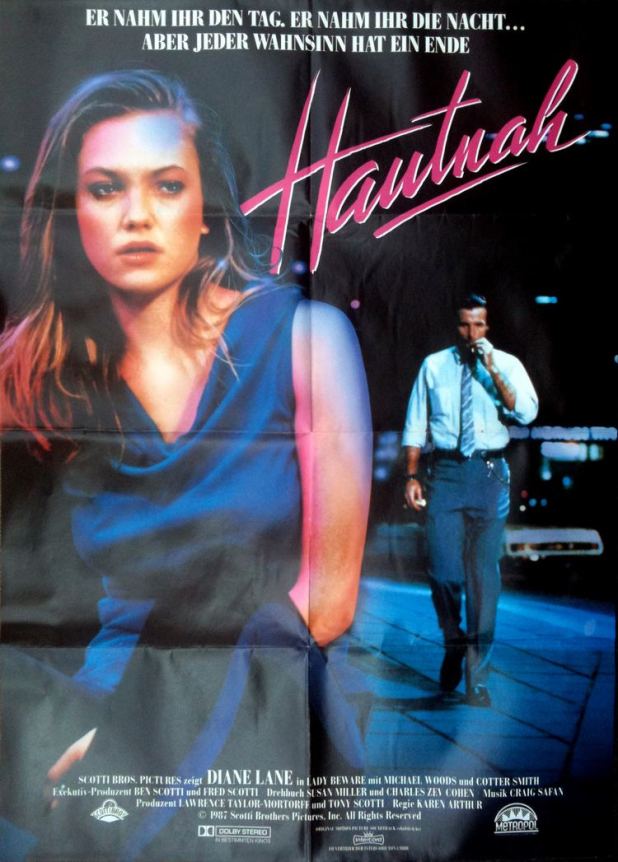
UNSUNG HORRORS HORROR GIVES BACK 2025: Lady Beware (1987)

Each October, the Unsung Horrors podcast does a month of themed movies. This year, they will once again be setting up a fundraiser to benefit Best Friends, which works to save the lives of cats and dogs across America, giving pets second chances and providing them with happy homes.

Today’s theme: Unsung Horrors Rule (under 1000 logged views on Letterboxd)

ABOUT THE AUTHOR: Adam Hursey is a pharmacist specializing in health informatics by day, but his true passion is cinema. His current favorite films are Back to the FutureStop Making Sense, and In the Mood for Love. He has written articles for Film East and The Physical Media Advocate, primarily examining older films through the lens of contemporary perspectives. He is usually found on Letterboxd, where he mainly writes about horror and exploitation films. You can follow him on Letterboxd or Instagram at ashursey.

After watching this film, I feel like I need to take a bath in Diane Lane’s open-air bathtub, but for much different reasons than her stalker did.

The year 2025 will go down for many things, some good, some bad, but as far as my Letterboxd stats go, it will be the year I discovered Karen Arthur.

The Mafu Cage, a twisted tale of two sisters starring Lee Grant and Carol Kane, completely blew my mind. Director Karen Arthur really knows how to ratchet up the claustrophobia, leading to some anxiety-inducing scenes. She also knows how to make the small feel big. The Mafu Cage was adapted from a stage play, but Arthur is able to downplay any restrictions found in a play. After watching The Mafu Cage, I had to seek out her debut film, Legacy, an adaptation of a one-woman show depicting a woman’s descent into madness. Talk about unsung, it only has 45 logged views on Letterboxd. 

After these first two films, Arthur became primarily a television director, which had a stigma about it in the 1970s and 80s. If you couldn’t cut it as a film film director, you were shuffled over to television, the perceived inferior media. If television was seen as less than, it surely did not stop her from producing the highest of quality. The Rape of Richard Beck turns the tables on the traditional rape-revenge film, with Richard Crenna earning an Emmy award along the way for his portrayal of a cop who does not play by the rules (or, actually, literally plays by his own set of rules), but finds himself in the wrong place at the wrong time. Speaking of the Emmys, Arthur became the first female to win a Best Director award for an episode of Cagney and Lacey. While television work fills most of her resume, Arthur did have one other feature film in her, the erotic thriller Lady Beware.

Released about a month before the mother of all erotic thrillers, Fatal Attraction, Lady Beware tells the story of Katya (Lane), an ambitious young woman who does not take no for an answer, nearly demanding a place as the window dresser for a Pittsburgh department store. Katya’s displays prove to be controversial and provocative, but one person whose attention she receives is Jack, a married X-ray technician who begins an unhealthy obsession with Katya, quickly escalating from obscene phone calls to breaking and entering.

Unfortunately, the finished project did not get the approval of Arthur herself. The producers attempted to amp up the exploitative side of the film, including nude scenes of Lane that Arthur says she would not have included. She stated that she considered removing her name from the film (would that have made it a film by Alice Smithee?), but would not because the actors cannot remove their names.

Still, despite being a bit of a mess (side characters are introduced, only to be abandoned, no doubt most of their performance ending up on the cutting room floor), Lady Beware is a very interesting watch. It could have been the performance that elevated Lane from child star to adult actress. She would have to wait almost 15 years for Unfaithful to bring her the attention she deserved all along. 

Lady Beware is currently stuck on VHS, desperately needing restoration from one of these boutique physical media labels. Paging Cinematographe! I think this film would fit perfectly in that collection.