SEVERIN BOX SET RELEASE: All the Haunts Be Ours: A Compendium Of Folk Horror Vol. 2: The City of the Dead (1960)

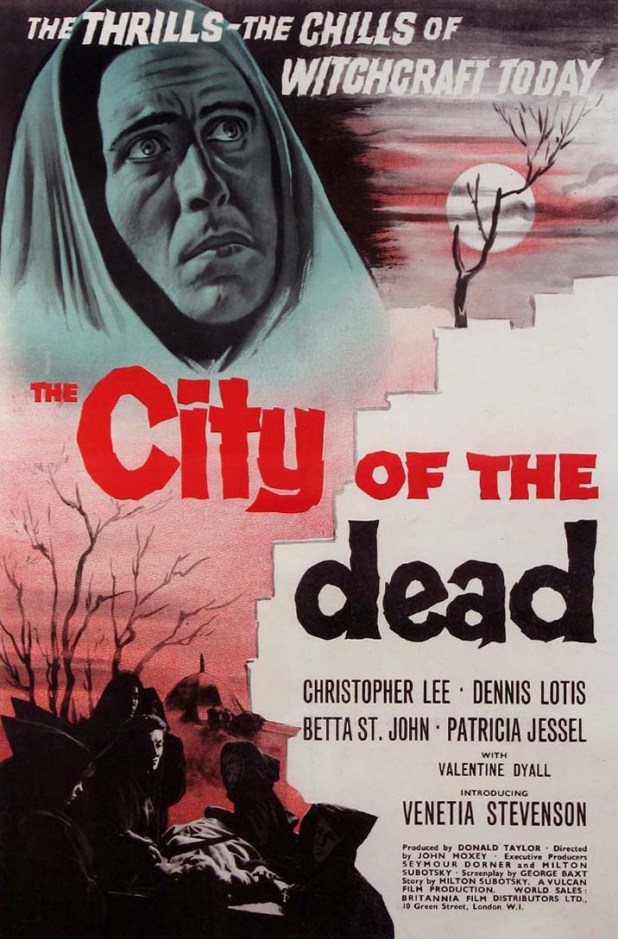
Also known as Horror Hotel, this movie was the first film that John Llewellyn Moxey directed. It was also made in the UK but set in the U.S., so everyone is doing their best American accent.

Back in In 1692 in Whitewood, Massachusetts, Elizabeth Selwyn (Patricia Jessel) and Jethrow Keane (Valentine Dyall) sold their souls to the Devil for eternal life and revenge on everyone if they just sacrifice one virgin during Candlemas Eve and another during the Witches’ Sabbath. That said, Elizabeth is soon tried for being a witch and burned alive.

History professor Alan Driscoll (Christopher Lee) tells Nan Barlow (Venetia Stevenson) that if she wants to learn about Whitewood, she should go there. She visits the town, staying at the Raven’s Inn, which is owned by Mrs. Newless and soon meets the only normal person in town — so she thinks — Patricia Russel (Betta St. John), who gives her a book on witchcraft. She learns that it’s Candlemas Eve just in time to be sacrificed on an altar.

Bill Maitland (Tom Naylor), her fiancee, brings her brother Richard (Dennis Lotis) to town, along with Patricia, who wonders where her friend has gone. You can imagine what happens next, but this is still fun.

This was written by George Baxt as a pilot for a television series that would have starred Boris Karloff. Producer Milton Subotsky rewrote it to be longer, including a romantic subplot about the boyfriend who goes looking for Nan. Produced by Vulcan Productions, it was made by Subotsky and Max Rosenberg, making this the first Amicus movie.

The big difference between City of the Living Dead and the American Horror Hotel cut? Elizabeth Selwyn, before being burned at the stake, says the following before she’s burned alive: “I have made my pact with thee O Lucifer! Hear me, hear me! I will do thy bidding for all eternity. For all eternity shall I practice the ritual of Black Mass. For all eternity shall I sacrifice unto thee. I give thee my soul, take me into thy service.” Jethro Keane adds, “O Lucifer, listen to thy servant, grant her this pact for all eternity and I with her, and if we fail thee but once, you may do with our souls what you will.” Elizabeth Selwyn: “Make this city an example of thy vengeance. Curse it, curse it for all eternity! Let me be the instrument of thy curse. Hear me O Lucifer, hear me!”

In 2011, Evil Calls: The Raven came out with a very similar plot and even lifted footage directly from this movie. But I didn’t complain when Iron Maiden’s “Bring Your Daughter to the Slaughter” and King Diamond’s “Sleepless Nights” videos did. This movie played enough UHF TV that The Misfits even wrote a song about it.

The City of the Dead is part of the new Severin box set, All the Haunts Be Ours Volume 2. It has extras including an introduction by Kay Lynch, director of the Salem Horror Fest; four different commentaries, one with Kim Newman And Barry Forshaw, another with Jonathan Rigby, a third with Christopher Lee and a fourth with John Llewellyn Moxey; a remembrance of the film by Sir Christopher Lee; archival interviews with John Llewellyn Moxey and Venetia Stevenson; the video essay Burn Witch, Burn! A Tribute To John Llewellyn Moxey by Amanda Reyes and Chris O’Neill and a trailer.

You can order this set from Severin.
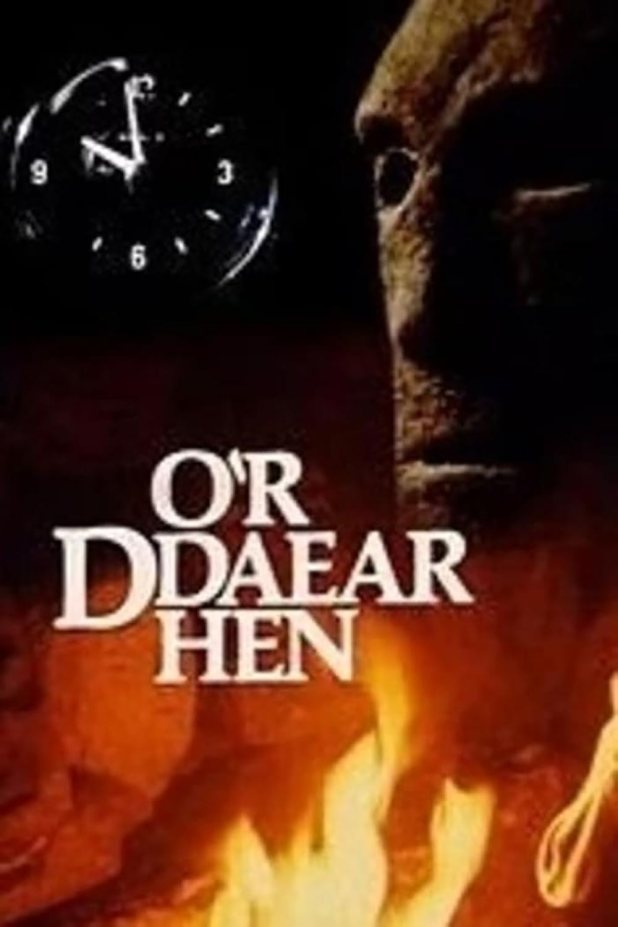
SEVERIN BOX SET RELEASE: All the Haunts Be Ours: A Compendium Of Folk Horror Vol. 2: From the Old Earth (1981)

Directed by Wil Aaron and written by Gwyn Thomas, this film was played in primary schools thanks to Bwrdd Ffilmiau Cymraeg, the Welsh Film Board, who produced it. While it seems odd and a bit scary to us as adults, imagine watching this if you were under ten years old and a captive grade school audience. One of the extras for this film, in the Severin All the Haunts Be Ours Volume 2 set, has Aaron discussing how the movie was made and how he learned years later, through Facebook, how many Welsh children were absolutely destroyed by his movie.

In its native tongue, this is called O’r Ddaear Hen. A man named William Jones (Charles Williams) is toiling in his garden when he discovers a stone head. It’s so frightening to his wife that it causes her nightmares and she forces him to give the head to a female archaeologist at a local university. An expert on the Celts, she brings it back to her own home, where it starts to infect her family with fear, including a monstrous animal that keeps showing up. It all leads to a car wreck that seems beyond the budget of this feature.

O’r Ddaear Hen has led to childhood traumas, such as this quote I found from Mari Williams, who watched it when she was a student: “Whose opinion was that this was a film for children? It has created hours of lost sleep, years and trauma, and close to an accident a few times – you turn around to see if there is a man with horns in the back of the car, while driving – not to be advised.”

It’s films like this that are the reason why this box set exists. It’s just such a singular and strange film, one that created a stir in a country you may never get to and soon, you learn so much that you never expected to know.

From the Old Earth is part of the new Severin box set, All the Haunts Be Ours Volume 2. It has extras including an introduction by musician Gruff Rhys, an interview with director Wil Aaron and featurettes on Welsh folklore and Welsh Film scholar Dr. Kate Woodward on the Welsh Film Board. There are also two shorts, Blood On the Stars, that has an introduction by Gruff Rhys and a cast reunion, and The Wyrm of Bwlch Pen Barra.

You can order this set from Severin.

SEVERIN BOX SET RELEASE: All the Haunts Be Ours: A Compendium Of Folk Horror Vol. 2: Akelarre (1984)

Garazi (Sílvia Munt) is the granddaughter of a woman burned as a witch who finds herself battling the Catholic Church just like her ancestor. The name of this film means “witches’ sabbath” in English and this goes into the witch trials against women of San Juan de Araiz, which is part of Navarre in northern Spain.

This trial found 27 people arrested, with 11 women and two men accused of witchcraft. They were executed in the name of Catholicism with the rest later dying from their mistreatment. This Inquisition came from a church that was more about men and their desires than serving the Lord. That doesn’t sound like that history is repeating at all, does it?

Director Pedro Olea said of the actor who portrayed Acevedo, the lead Inquisitor, “What better inquisitor than López Vázquez? He accepted the role and turned it into another character that was amazing: a religious sadist, cruel and libidinous. Simply, his way of brushing Silvia Munt’s chest with his fingers when removing a medal, of directing another torture session with her naked and then flagellating himself in his cell, demonstrates a perfect interpretive treatment of the repression suffered by the sinister friar.”

This was filmed on location, using the caves of Zugarramurdi, which are known as the “Cathedral of the Devil.” This same area figures into the plot of La brujas de Zugarramurdi (Witching and Bitching).

Akelarre is part of the new Severin box set, All the Haunts Be Ours Volume 2. It has extras including interviews with director Pedro Olea and actors and Iñaki Miramón, as well as a featurette, Invoking The Akelarre, which has Dr. Antonio Lázaro-Reboll, author of Spanish Horror Film discussing the Basque Witch Trials.

You can order this set from Severin.
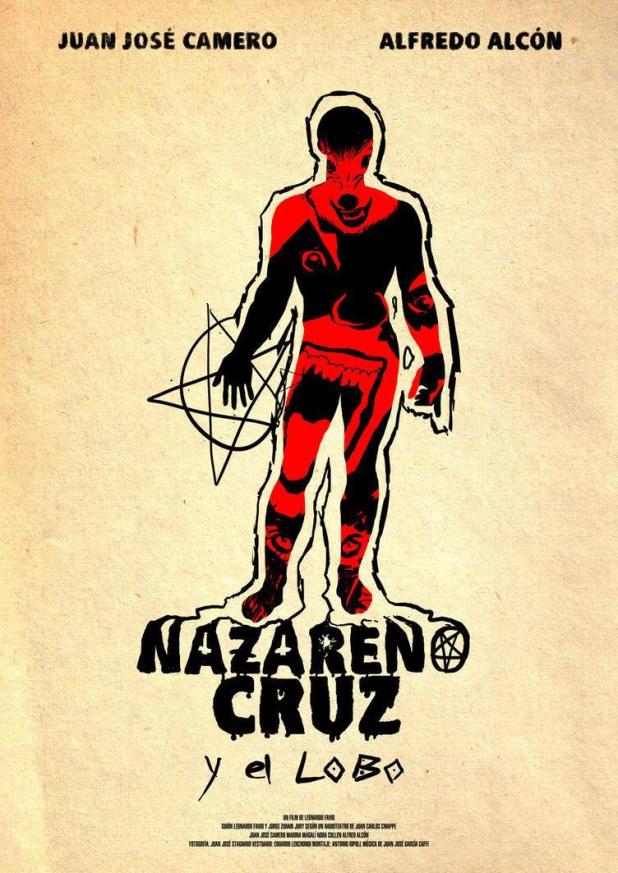
SEVERIN BOX SET RELEASE: All the Haunts Be Ours: A Compendium Of Folk Horror Vol. 2: Nazareno Cruz and the Wolf (1975)

Directed by Leonardo Favio, who wrote it with his brother Jorge Zuhair Jury, this was based on the radio show Nazareno Cruz y el lobo by Juan Carlos Chiappe.

Nazareno Cruz (Juan José Camero) is the seventh son of the now dead Jeremias, born when his mother Damiana (Elcira Olivera Garcés) wanted a son to replace the six that she lost along with her husband. Despite people thinking that he was born with the curse of lycanthropy, Nazareno grows into a happy life. Perhaps that’s because his godmother witch Lechiguana (Nora Cullen) gave him his name, which means the Nazarene Cross. Everyone in the village seems to love him and there’s been no sign of a wolf. Yet.

He’s already found true love in Griselda (Marina Magali), who stands out amongst the women due to her blonde hair. His mother and godmother try to keep him from falling in love, but once he does, he starts to transform. That’s when Mandinga (Alfredo Alcón), the devil, comes to him to promise a life of riches and never becoming a wolf. All he has to do is refuse being in love. Nazareno can’t do that and the problems begin.

One of the most successful movies ever made in Argentina, this was the official submission for the country in the Best Foreign Language Film category at the 1976 Academy Awards. In 2022, as part of the Mar del Plata International Film Festival, the magazines La vida útil, Taipei and La tierra quema selected it as the 17th best movie in the history of the country.

This is a ravishing film, one that uses the beauty of nature to its fullest. Where else will you see a dog play a werewolf or a wolf-boy discover that Satan is just misunderstood?

Nazareno Cruz and the Wolf is part of the new Severin box set, All the Haunts Be Ours Volume 2. It has extras including commentary by Adrian Garcia Bogliano, director Of Here Comes the Devil and Nicanor Loreti, director Of Punto Rojo and a short film, Love for Mother Only, as well as commentary on that short by director Dennison Ramalho.

You can order this set from Severin.
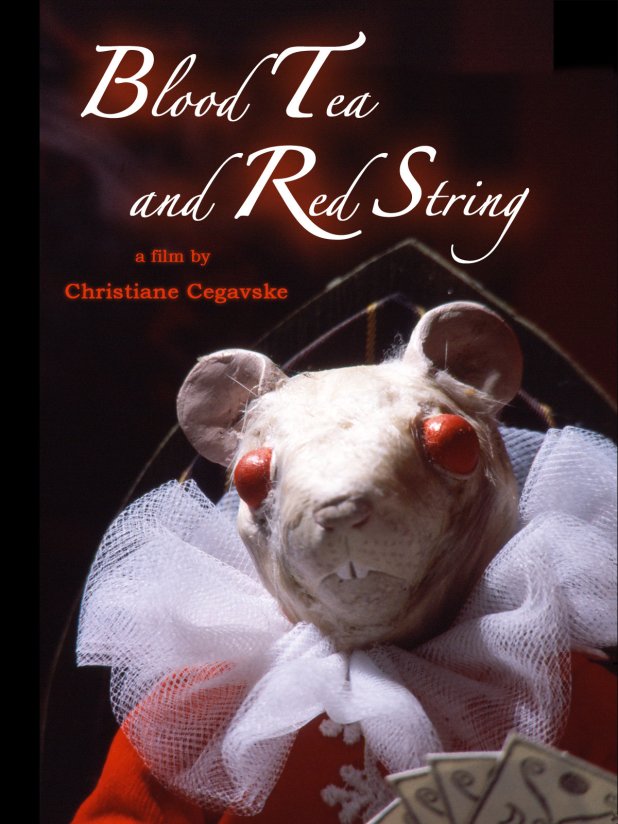
SEVERIN BOX SET RELEASE: All the Haunts Be Ours: A Compendium Of Folk Horror Vol. 2: Blood Tea and Red String (2006)

This film took 13 years for Christiane Cegavske to make and it was worth every second.

The White Mice have commissioned a doll from the Creatures Who Dwell Under the Oak, but once she is created, the artists have fallen in love with her. They place an egg inside her body and have put her into a place of worship. The mice return and steal her away, sending the creatures on a journey to get her back.

Excited at having the doll, the mice become besotted on blood tea. The egg hatches and a bird with the face of the doll emerges, flying away but soon becoming trapped in a web and dying. The artist dwellers take her back and rebuild the dead body, but it’s stolen again by the mice. The battle between them causes it to be torn to pieces, which leads to the creatures giving the mice the doll parts and sending the body of the bird downstream.

Shot on 16mm in stop motion style that had to take forever — or 13 years, but it had to feel like forever to create — the description above will not prepare you for what you are about to experience. With no dialogue, you are free to imagine who these characters are and what they represent. I can’t even explain the vibe of this, as it looks like something for children while feeling occult and forbidden. A must see.

Blood Tea and Red String is part of the new Severin box set, All the Haunts Be Ours Volume 2. It has extras including an introduction director Christiane Cegavske, a Q & A with Cegavske, production stills, concept illustrations, a trailer and a trailer for Seed In the Sand, Cegavske’s work-in-progress.

You can order this set from Severin.
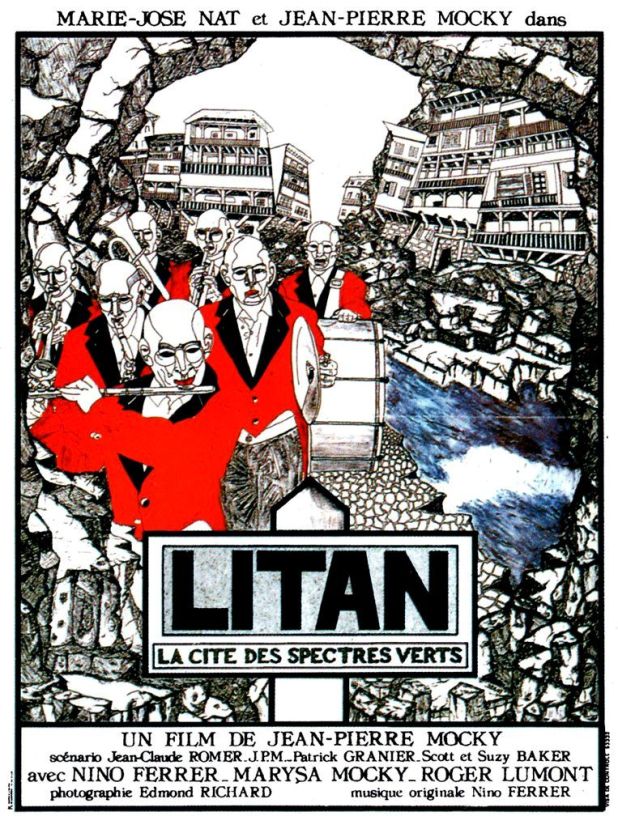
SEVERIN BOX SET RELEASE: All the Haunts Be Ours: A Compendium Of Folk Horror Vol. 2: Litan (1982)

This may not be the type of movie that will thrill an audience with jump scares or play well at a Halloween party. It is, however, a movie that has some frightening moments within it and images that have stayed with me longer than the latest elevated horror movie that I have been promised will keep me awake at night and dominate my thoughts. That never happens with those movies. It has with Litan.

This is a movie that depends on what you see more than what the film tells you. In that you will be the judge if what you see is in the minds of the characters, if the magic is real, and if these moments are happening. Even the title takes a bit of thought, as a litany is a form of prayer, usually spoken by a priest, in which the celebrant makes spoken petitions to a higher being and the followers answer with a fixed response. If you’ve been to a Catholic Church, there are six approved litanies, and most are answered with “Lord have mercy on us.”

Your enjoyment of this film will also depend on your willingness to accept things like faith and that there could be something beyond all this, even if some of the characters directly state that they have no belief. This film is at once a fantastique – the intrusion of supernatural phenomena into an otherwise realist narrative – and a juxtaposition of that concept.

But, hey – let’s stop using college words and talk about the movie.

Nora (Marie-José Nat) has a premonition that shocks her out of her ordinary life and sends her into the streets of Litan, a village amid a Festival of the Dead. Yet, this isn’t a co-opted Pagan rite-turned-commercial. Things just feel off. Way off. As she seeks her husband, Jock  (director and writer Jean-Pierre Mocky), she encounters people dressed as clowns and animals, all as silver masked men who look like Fantomas by way of Destro keep on playing music.

Jock is in this town to excavate something. The kind of something that unleashes lightning snakes that make their way into the water supply, causing some to fade away literally and others to become catatonic. Others just start killing everyone else.

Nora keeps searching for him through cobblestone alleys and narrow hallways and everywhere she goes, that dream is still calling to her.

As for those electrical beings, Dr. Steve Julien (Nino Ferrer) seems to know what they are, and he isn’t telling anyone.

It all feels like The Prisoner trapped in the mountains of the religious backwoods of Don’t Torture A Duckling by way of Valerie and Her Week of Wonders and a hospital that is very Let Sleeping Corpses Lie – if his temperament is any indication, Commissioner Bolek (Roger Lumont) must have gone to police academy with Arthur Kennedy’s character – but these are only touchstones that I’ve put along the way for myself because this is so much its own trip that you need something to guide you back.

There are many kinds of movie lovers, but for the sake of this argument, there are two. In the oddest moments of Inferno, when Argento seems to be making it all up literally as he’s filming or perhaps is capturing another reality that he barely comprehends, some people grow frustrated by the utter lack of story and the constant shifts. And some grow excited by it.

If you are the latter – I hope you are – you’re the right person to come to Litan.

Also: if you believe in lucid dreaming, yet also understand that dreams are like rapids that we can’t ford across in our boats of limited human understanding, you will also find something here.

Also also: If you are on the right side of the “artist versus hack” arguments regarding the works of Jean Rollin and Jess Franco, you’ll also feel that warm blanket feeling of droning doom here.

Why does Nora see Jock covered in blood as coffins float down rivers and bodies fall from the sky?

What happened to Eric (Terence Montagne) and why is he hooked up to the machines of Dr. Julien? Eric also unleashes perhaps the most ferocious dialogue in the film, telling us, “We’re dreaming your life and when the dream stops, you die.”

Why is the score – by Ferrer, yes, the same person playing the doctor – shift from 80s Eurohorror ala Goblin to synth to whatever those metal-faced people are playing, which is the music of Russian composer Dmitri Shostakovich?

Jock asks Nora at one point, “If God exists, what difference does it make if you’re alive or dead?” In the middle of a festival celebrating death, two people are trying to get out of town alive. But they’re not real, they’re just characters in a film, but even so, can we learn from them? Shouldn’t we try to get out alive and stop obsessing about death, which looms in every frame of this as skulls appear every few seconds just at the edges of the frame?

I read one breakdown of this movie that claims that its wild swings emulate old movie serials, where each episode ended in the sure death of its protagonists only for it to all be solved the next week. There’s that. There are echoes of Jodorowsky, of when Fulci stops caring about the plot and gets absolute and when the drugs kick in too.

What does it all mean?

Does it have to mean anything?

Seeing as how this is running in the month of Halloween, I have to confess that this movie won’t be spooky for everyone. Yet, I’ve been obsessed by age as of late, by life change, by legacy. I don’t know if it even matters sometimes. What matters? I’m not sure. I just know that movies make me feel things, deep and meaningful things, and this movie brought me a flood of joy and as there’s a dearth of that in this current timeline, I wanted to share it with you.

Litan is part of the new Severin box set, All the Haunts Be Ours Volume 2. It has extras including commentary byFrank Lafond, an archival making of feature and “Jean-Pierre Mocky, Un Drôle D’Oiseau”, an episode of the TV show Temps X. You can order this set from Severin.

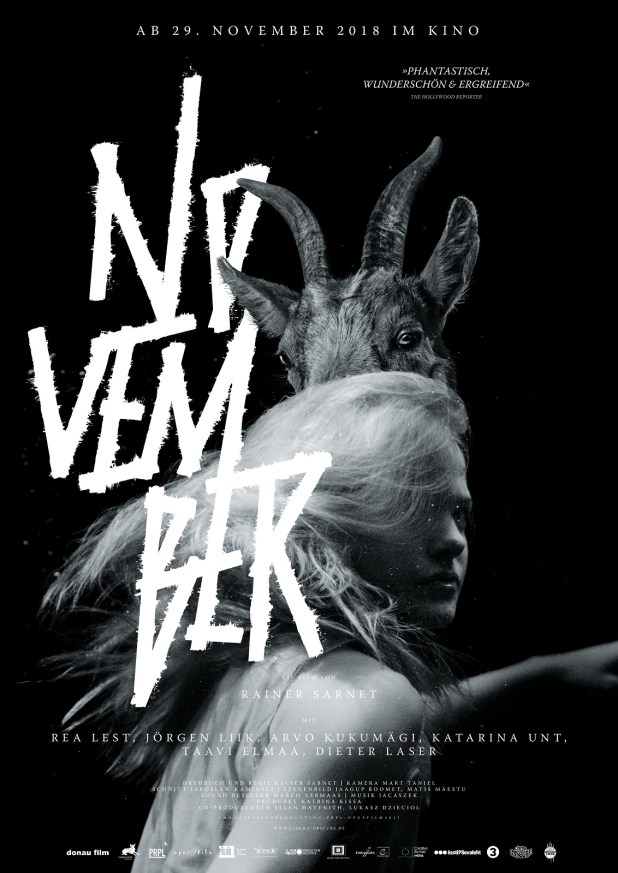
SEVERIN BOX SET RELEASE: All the Haunts Be Ours: A Compendium Of Folk Horror Vol. 2: November (2017)

Based on Andrus Kivirähk’s novel Rehepapp ehk November (Old Barny aka November), November takes place in 19th century Estonia. It begins with a kratt appearing. The kratt is kind of like the Warbound in D&D, as its a collection of hay and old household implements powered by the Devil (Jaan Tooming) and three drops of blood. The kratt steals a cow for a villager named Raak (Arvo Kukumägi), who has tricked Satan by giving him three drops of dark berries instead of the blood that is part of his soul.

There’s so much going on in this village, like the Plague descending as a young woman and then a pig, who makes a deal with Sander, an elder, to allow Liina (Rea Lest-Liik) and Hans (Jörgen Liik) to live. But then the pig is killed while swearing on a Bible. Liina is in love with Hans but has basically been sold in a drunken deal with the pig farmer Edsel, while Hans is obsessed with a sleepwalking Baroness (Jette Loona Hermanis). Liina — also a werewolf — gets a magical arrow from a witch, as she wants to kill the rich girl to win over Hans, but can’t bring herself to do it.

The supernatural becomes a way for nearly everyone to attempt to find their doomed love and make it true. Hans sells his soul for a kratt that regales him with stories of love before melting down into the snow, leaving behind a ring that he uses to propose to the Baroness, who turns out to be Liina in disguise. As for the Baroness, she’s sleepwalked to her death. As the kratt melts away, the Devil returns to snap Hans’ neck. Now, two funeral processions make their way through the village.

Liina drowns herself in the river, bringing gold to all of the villagers, who leave her a necklace, the perfect gift for a virgin bride. Before she passes on, she kisses Hans one more time and says, “Oh, yes. Just what a virgin bride dreams of.”

Director and writer Rainer Sarnet has created a black and white world where the rich mock the poor with their manor homes and gold altars, as the put upon hire a witch (Klara Eighorn) to do their bidding. The villagers are able to trick the devils that befoul them once or twice — like wearing their pants on their heads — but the next time, the next person, well they’re not so lucky. No one wants to work and their kratts fulfill their labors, but they’re secretly deadly or unlucky to everyone.

Even though this is a magical realism film set in another world, I couldn’t help but see so much of real life here.

Novemberis part of the new Severin box set, All the Haunts Be Ours Volume 2. It has extras including a video essay by John DeFore Kratt, test footage, a trailer and the short films BoundaryJourney Through Setomaa and Midvinterblot.

You can order this set from Severin.

SEVERIN BOX SET RELEASE: All the Haunts Be Ours: A Compendium Of Folk Horror Vol. 2: Demon (2015)

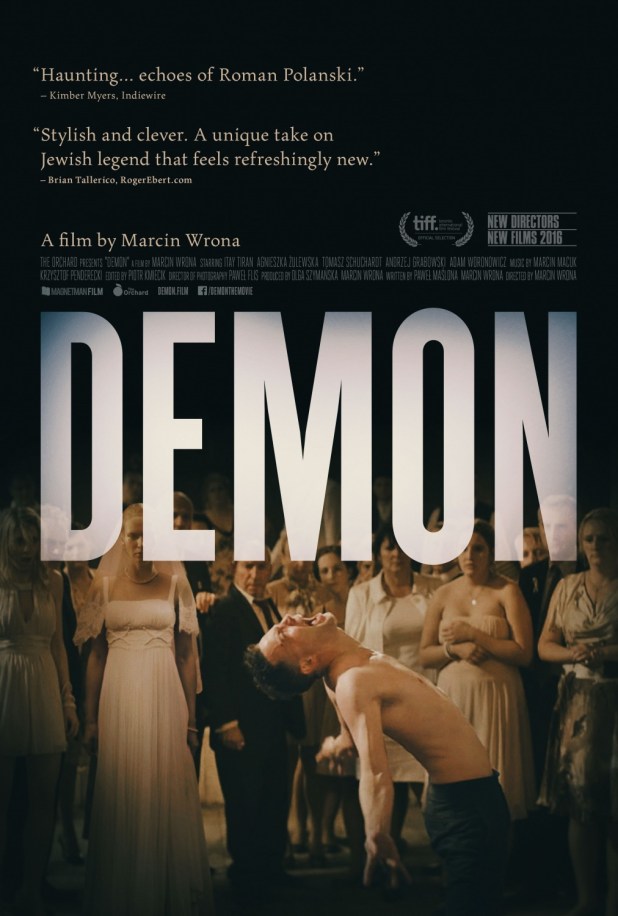
Piotr (Itay Tiran) and Żaneta (Agnieszka Żulewska) met over the web and are about to be married. He barely speaks Polish, having lived in England for several years. As he comes back to the country for their wedding, he moves into an old home that was owned by her grandfather. However, as he works in the yard, he unearths a skeleton and starts to have visions of a dead bride, Hana, who slowly possesses him during the reception.

As Żaneta is from a rich family, they want to hide this from their friends, so they ply them with food and drink as a doctor and a priest examine Piotr. Only a teacher (Wlodzimierz Press), who is the last surviving Jewish person in the town, recognizes that the possessed man is speaking Yiddish and has the voice of Hana.

Directed by Marcin Wrona, who wrote the story with Pawel Maslona which was based on Piotr Rowicki’s play AdherenceDemon is a new way of looking at the Dybbuk myth but infused through marriage. In the act of being wed, we move past our previous selves and become someone new, someone united not only with a new person, but an entirely different family. Żaneta’s relatives may have profited from World War II and the extermination of the Jewish people, so their sins have come to infect the person who is joining them.

As the guests drunkenly become debauched and the winds and rain howl with fury outside, the groom is in the basement losing his sanity.

Sadly, Wrona committed suicide in his hotel room during the Gdynia Polish Film Festival where this movie was being shown. Beyond this tragic loss of life, this act ends the art that could have been created. What a loss.

Demon is part of the new Severin box set, All the Haunts Be Ours Volume 2. It has extras including an introduction by Slavic horror scholar Dr. Agnieszka Jeżyk, commentary with film historian Daniel Bird and film critic/actress Manuela Lazić, a video essay by Peter Bebergal, author Oo Strange Frequencies: The Extraordinary Story Of The Technological Quest For The Supernatural and filmmaker Stephen Broomer, a trailer and the short film Dibbuk.

You can order this set from Severin.
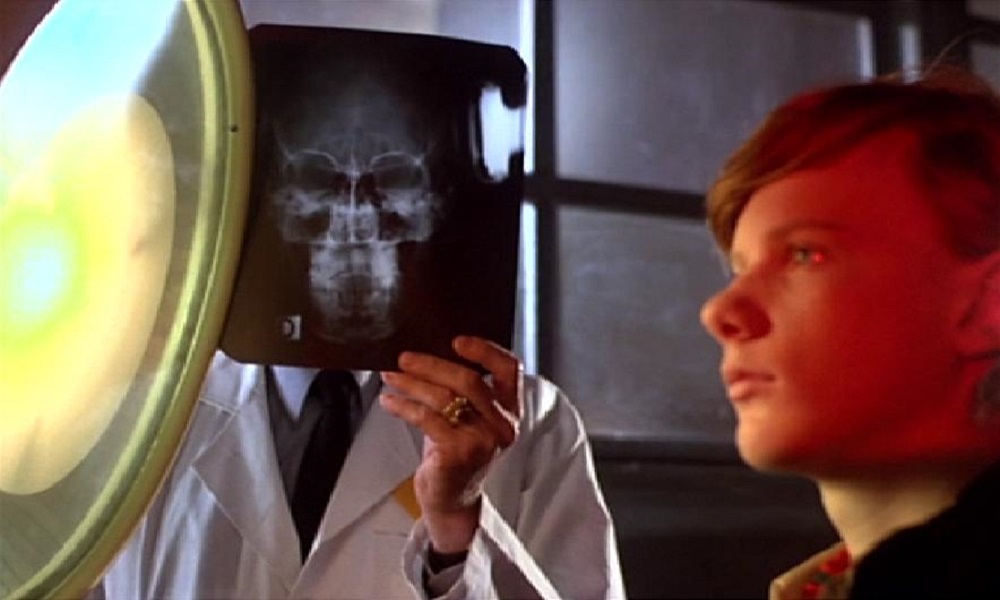
SEVERIN BOX SET RELEASE: All the Haunts Be Ours: A Compendium Of Folk Horror Vol. 2: The Ninth Heart (1979)

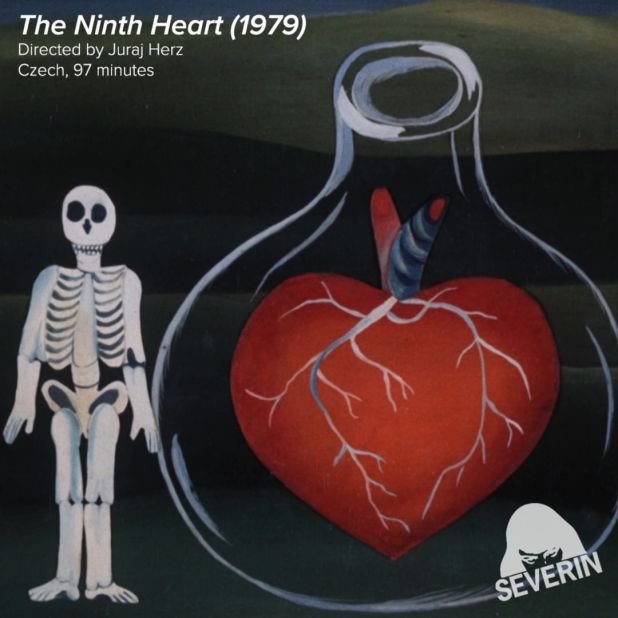
Deváté srdce is about a student named Martin who has volunteered to seek out the cure for Princess Adriana, who has been knocked down and out by a mysterious illness. But the truth is that it’s no sickness. Instead, the magician Andlobrandini has enchanted her as part of his plan which involves creating a magic potion to return his youth from the blood of nine children’s hearts.

Directed by Juraj Herz, who wrote the story with Josef Hanzlík, everything in this feels handmade, down to the poster by surrealist painter, writer and ceramicist Eva Švankmajerová. This was shot at the same time as Herz’s Beauty and the Beast in an attempt to save on costs and is a fairy tale created in modern times that in no way feels unlike the tales we were told at bedtime.

By literally capturing the young hearts of the young men who have come to save Adrianna, Andlobrandini  seeks to take their vitality and become hale and hearty anew. Unlike them, Martin has no love for the princess. Instead, the Grand Duke (Premysi Koci) allows him to take on this mission instead of sending him and the street circus people he has fallen in with to jail, most especially Toncka (Anna Malova), the daughter of a puppeteer.

Joined by the Grand Duke’s jester (František Filipovský) and wearing a cloak of invisibility, the two men go across the River Styx to the Grand Duke’s former alchemist’s — yes, Andlobrandini — dark and foreboding castle, a place filled with corpses, innumerable candles, a swinging sun and danger around every turn. It’s gorgeous and perhaps the greatest love within this film is for the art of moviemaking itself.

The Ninth Heart is part of the new Severin box set, All the Haunts Be Ours Volume 2. It has extras including commentary by Kat Ellinger, author of Daughters Of Darkness; the featurette The Uncanny Valley Of The Dolls – The History and Liminality of Dolls, Puppets and Mannequins and the video essay The Curious Case Of Juraj Herz and the Švankmajers.

You can order this set from Severin.
SEVERIN BOX SET RELEASE: All the Haunts Be Ours: A Compendium Of Folk Horror Vol. 2: Beauty and the Beast (1978)

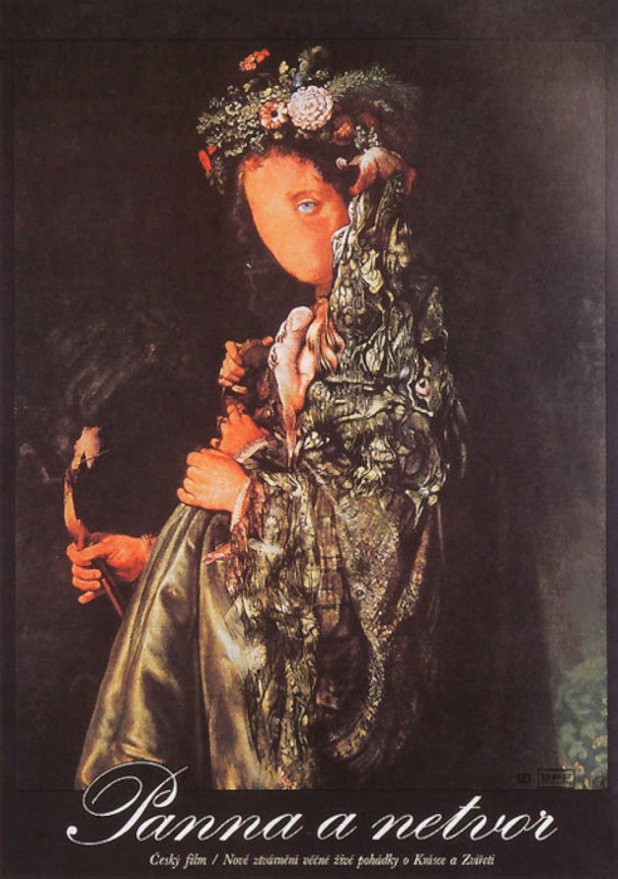
Known in its native Czech language as Panna a netvor (The Virgin and the Monster), this was directed by Juraj Herz, who also made The Cremator, Morgiana, The Ninth Heart and Ferat Vampire.

Julie (Zdena Studenková) is the youngest of three daughters born to a widower (Václav Voska). Riding by horseback and looking for a flower for her, he falls asleep and awakens in front of the horrific castle of Netvor (Vlastimil Harapes), a half-man, half-falcon creature that condemns him to death for picking one of his flowers unless one of his daughter’s sacrifices herself to live forever with him. He should be worried. After all, his horse has already died, forcing him to walk and he’s also found the body of a dead woman. So when he asks his daughters to save him, the already married and wealthy Gábinka (Jana Brejchová) and Málinka (Zuzana Kocúriková) refuse, but Julie saves her father just as her beauty will soon rescue the beast.

Yes, just like a Disney film, this is based on La Belle et la Bête by Jeanne-Marie Leprince de Beaumont. Unlike that animated tale, this has no dancing table service. Instead, it’s a gothic and frightening movie, a film that Herz didn’t want to make as he saw the Jean Cocteau film as unapproachable in its perfection. Yet he does the same here, turning nearly every frame into a painting and having an otherworldly beast that is at once terrifying and sexual, with human eyes calling out from behind a bird’s face.

Beauty and the Beast is part of the new Severin box set, All the Haunts Be Ours Volume 2. It has extras including commentary with film historian Michael Brooke, archival interviews with director Juraj Herz and actors Vlastimil Harapes And Zdena Studenková and a short film, František Hrubín.

You can order this set from Severin.