Santa (Pierse Stevens) has had it, so he’s blowing off steam by telling a young boy by the name of Peter (Jude Forsey) four holiday horror stories. Perhaps, just maybe, he’s also a killer. Actually, he’s totally a killer, a former mall Santa who has had enough.
In the first, Toby and Chloe’s Christmas Nightmare,” three killers dressed as an elf, Santa and a snowman — named like a Tarantino gang with pseudonyms like Mr. Red (Tony Fadil), Mr. Green (Sonny Denham) and Mr. White (Jeff Kristian) — pull off a home invasion and murder an entire house before adopting a girl named Chloe (Eloise Henwood) and teacher her how to be a killer.
“The Ventriloquist Who Stole Christmas” has Henry (Mark Beauchamp) and his snowman dummy Mr. White getting over life’s hardships through being a serial killer, just like his father. I mean, you fail an audition, you get beat up and your wife Jade (Bibi Lucille) leaves you, you have to start murdering.
“Merry Krampus” has, you guessed it Krampus coming to Louise (Lucy Pinder) and her son Luke (Rafi Wilder) being visited by Krampus after he blames himself for her latest boyfriend leaving.
“The 12 Kills of Christmas” is about Father McShane (Jeff Kristian), who has dementia, but can barely remember all of his sins like molesting the boys in the choir. As his daughter Maria (Olivia Hespe) takes care of him, a ghost of the past makes sure that he does.
Directed and written by James Crow, this is over two hours long and has no reason to be that way. It feels like the Mr. White segment was going to be a full-length film, as it’s 50-minutes long, but it ended up being part of this. I wish that it all flowed together better, but if you’re looking for something mean spirited and cruel this holiday season, you’ll probably enjoy this and you’re not concerned with being on the nice list.
Thanks to the British Film Institute, there’s a list of films that played Scala. To celebrate the release of Severin’s new documentary, I’ll share a few of these movies every day. You can see the whole list on Letterboxd.
Nathan Juran came to America from Romania. His brother became quality control master Joseph M. Juran. As for Nathan, he went from art directing The Razor’s Edge to directing movies like 20 Million Miles to Earth, Jack the Giant Killer, The 7th Voyage of Sinbadand this movie, which was written by Mark Hanna.
Nancy Archer (Allison Hayes) has some problems. Her husband Harry (William Hudson) is sleeping with every woman in town but her. She has mental health issues that have been going on for some time. And she likes to throw drinking and driving on top of that cocktail. One night, driving drunk from an angry evening at a bar, she runs into a flying saucer whose pilot gets out and grabs her.
Somehow, she gets away and no one believes her. After all, she just got out of a mental institution and in 1958 — well, 2024 as well — no one believes women. As for her husband, he’s just with her because she’s worth $50 million and is more interested in Honey Parker (Yvette Vickers, Playboy Playmate of the Month July 1959; her centerfold was shot by Russ Meyer). Nancy begs him to search for the UFO with her and as they drive through the desert — she has agreed to be hospitalized again — they find the alien. Harry runs and Nancy wakes up irradiated in her pool house.
Honey convinces Harry to shoot up his wife and kill her off. He walks into her room and only finds a giant hand as his wife starts to grow in size and anger. Dr. Isaac Cushing (Roy Gordon) and Dr. Heinrich Von Loeb (Otto Waldis) try to keep her sedated and the butler (Ken Terrell) finds the UFO, which is being powered by Nancy’s diamond necklace, which has the largest diamond in the world on it. Yes, the richest woman in the world who has the largest piece of jewelry is trapped in a loveless desert marriage that is fought out in dive bars.
Nancy heads back to the bar and tears the roof off, killing Honey before grabbing her husband. As she walks through bullets, one lawman fires at the power lines and kills her, but at least her husband dies too.
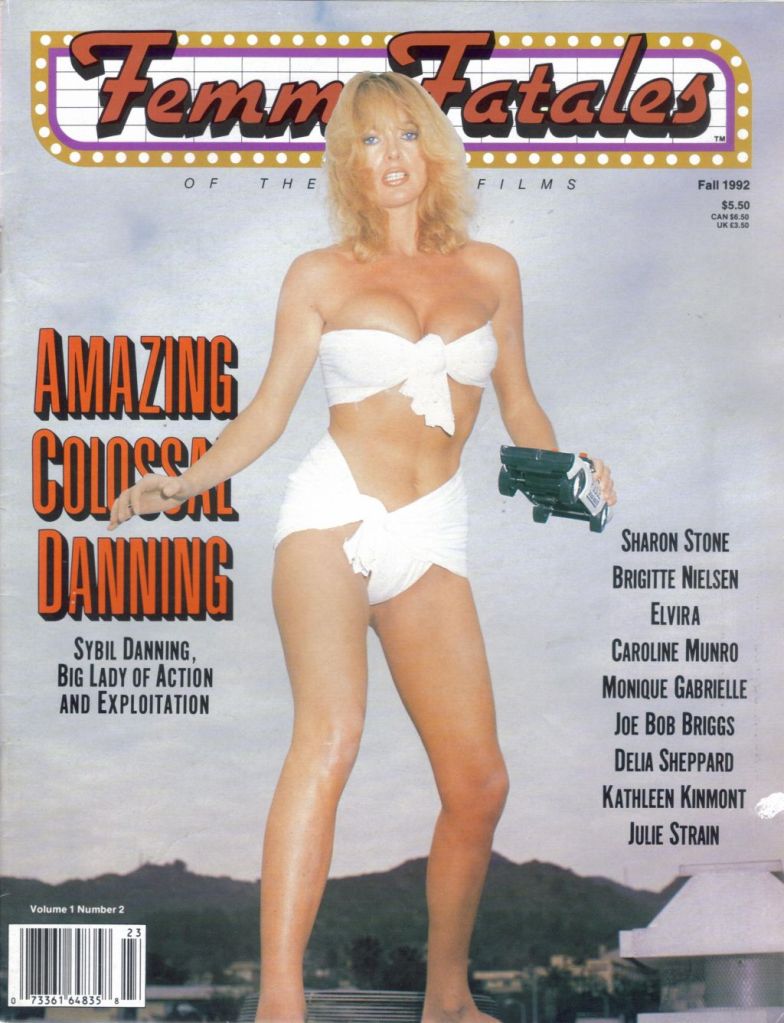
They almost made a sequel to this and Dimension Pictures was going to have Paul Morrissey remake it, then Jim Wynorski said he would with Sybil Danning. Christopher Guest then remade it with Daryl Hannah as an HBO movie. Now, Tim Burton and Gillian Flynn have said that they are making a new one, so we’ll see.
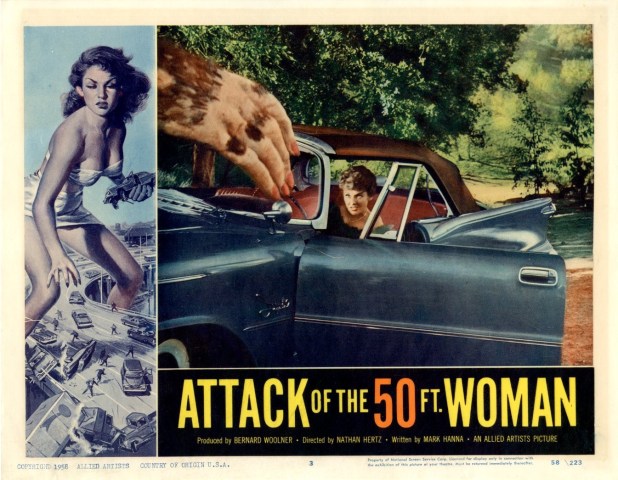
Roger Corman designed the poster for this movie. Nothing in the art happens in the movie, but who cares? It’s the most perfect idea of what we want to see.
Thanks to the British Film Institute, there’s a list of films that played Scala. To celebrate the release of Severin’s new documentary, I’ll share a few of these movies every day. You can see the whole list on Letterboxd.
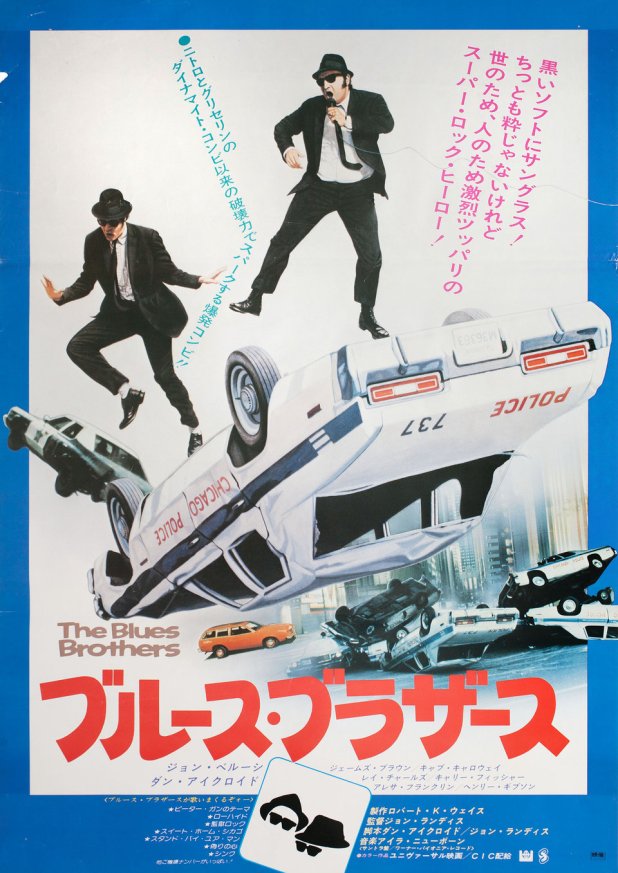
Jake and Elwood Blues (John Belushi and Dan Aykroyd) went from a musical comedy sketch on Saturday Night Live to a $30 million budget mission from God as they careers of the Not Ready for Prime Players left New York City and set out for Hollywood.
There was a bidding war for this movie. After all, SNL, Animal House and The Blues Brothers album were all huge. Belushi was suddenly the star of the week’s top-grossing film, top-rated television show and singing on the number-one album all at the same time.
Universal won and what they got was a new writer in Aykroyd who wrote a long script that director John Landis was still writing and didn’t have a final budget until well after shooting started, at which point Belushi was already going wild in Chicago, drinking and drugging up a storm while cars were crashed everywhere and money was pretty much set ablaze.
It doesn’t matter. This movie is still remembered long after its star and all that money have gone away.
Raised in an orphanage and taught the blues by Curtis (Cab Calloway), the brothers became blood when they cut their middle fingers with a guitar string from Elmore James, the King of the Slide Guitar.
The past is important in this film, as Aykroyd demanded Calloway, James Brown, Ray Charles and Aretha Franklin to be cast and get musical numbers. Universal wanted younger acts and disco stars. They lost.
The story is simple. The brothers want to raise money to save their orphanage. That’s it. That’s the story. The rest is a road movie full of comedic scenes that you can basically come into any time that you want.
They could have filmed what happened during the making of the film and had just as great of a film. For example, there was an entire bar on set, The Blues Bar, staffed with drug dealers. And on one night shoot, Belushi disappeared. Aykroyd looked around and saw a single house with its lights on. He walked over and the owner of the house said, “You’re here for John Belushi, aren’t you?” He had walked into their home, asked if milk and a sandwich, and went to sleep. This is why he was nicknamed “America’s Guest.” Belushi was also called “The Black Hole” because he would lose his sunglasses after nearly every scene.
Beyond Paul Reubens, Steven Spielberg and Carrie Fisher, there’s a secret Colleen Camp cameo. Look for her Playboy poster in Ellwood’s cell.
I remember this movie running so many times on HBO in my youth and watching it nearly every time. I could watch it right now, even after watching it to write this.
Thanks to the British Film Institute, there’s a list of films that played Scala. To celebrate the release of Severin’s new documentary, I’ll share a few of these movies every day. You can see the whole list on Letterboxd.
Donald Cammell was raised in a home “filled with magicians, metaphysicians, spiritualists and demons” and spent his childhood bouncing on the knee of “the wickedest man in the world” Aleister Crowley. Originally a painter, he became a screenwriter before meeting the Rolling Stones through Anita Pallenberg.
Performance was supposed to be a light-hearted swinging ’60s romp, but it ended up being what John Simon of New York Magazine called “the most vile film ever made.” It’s the story of two men*, Chas (James Fox), a brutal street thug, and Turner (Mick Jagger), a rock star who has gone into hiding.
Chas was a member of an East London gang, a man of violence who is prized for his ability to get money for his employer Harry Flowers. However, his complicated past with another gangster and that man’s murder has ostracized him from the gang and put him on the run and into the orbit of Turner and his two women, Pherber (Pallenberg) and Lucy (Michèle Breton).
By the end of the film, fuelled by drugs, cross-cutting techniques, a disjointed narrative and no small amount of magic, the two men have switched identities, with Chas displaying Turner’s face and Turner, well, not having a face any longer.
Warner Brothers thought that with Jagger in the movie they getting a Rolling Stones movie that young people could go see. Instead, they got a movie filled with drugs, sex, violence and ideas about cross-dressing and sex transforming identity that would still be dangerous half a century later.
The behind the scenes events — the house in Lowndes Square used in the film was investigated for drugs, Keith Richards was outside in a car fuming because Jagger and Anita were really having sex, Fox stopped acting for fifteen years to become an evangelical Christian — are just as interesting as the film, but the movie itself is astounding.
It was almost unreleased, as a Warner exec would complain, “Even the bathwater was dirty” and the wife of one of them would throw up at the premiere. Ken Hyman, the leader of Warner Brothers, decided that “no amount of editing, re-looping or re-scheduling would cover up the fact that the picture ultimately made no sense.” The film was shelved for two years until Hyman left and even then, the movie was re-edited and the Cockney accents were redubbed.
Time has been kind to Performance, a movie that points out the juxtaposition between the violent lives of East End with the rock and roll world of London. “A Memo to Turner” predates music videos. Bands from Coil to Big Audio Dynamite and Happy Mondays all referenced or sampled the movie while it’s been an influence on so many directors.
As for Cammell, he struggled against the mainstream after this movie — and with Marlon Brando, who kept asking him to write films and then deciding not to make them — before making Demon Seed, a film that deals with transformative sexuality, just like Performance. He’d make White of the Eye and Wild Side before killing himself with a shotgun. Kevin Macdonald (co-director of the story of his life, Donald Cammell: The Ultimate Performance), said “He didn’t kill himself because of years of failure. He killed himself because he had always wanted to kill himself.”
I held back watching this for years, because I wanted to make sure that I was ready for it. I needed to be prepared for this film, to not use it as wallpaper or background noise. It deserved more than that. And I’m glad I waited. It was worth it.
*It’s directed by two men as well, Cammell and Nicolas Roeg, who would go on to make Don’t Look Now, The Man Who Fell to Earth and The Witches.
Thanks to the British Film Institute, there’s a list of films that played Scala. To celebrate the release of Severin’s new documentary, I’ll share a few of these movies every day. You can see the whole list on Letterboxd.
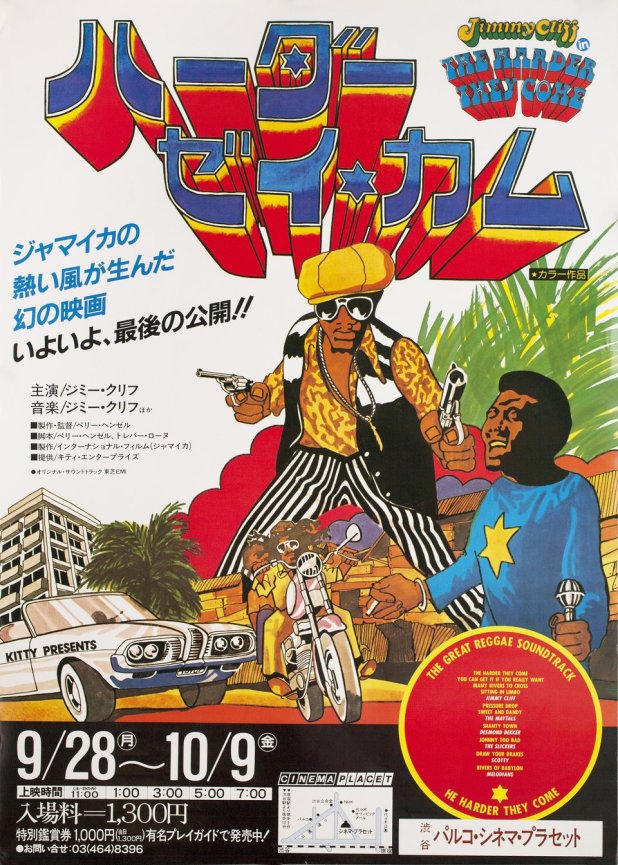
Reggae singer Jimmy Cliff plays Ivanhoe Martin, who was based on the real-life Jamaican criminal Rhyging, who may not have been a musician or a drug dealer but was the “original rude boy” and a folk hero in that country. Cliff said, “Rhygin was very much on the side of the people; he was a kind of Robin Hood, I guess you could call him.”
Director Perry Henzell believed that this movie was a success in Jamaica because people there had never seen themselves on the screen nor heard their native dialect, which may be English but still needs subtitles.
Cliff’s character moves to the big city, where he’s wowed by a screening of Django and just wants to make music, like the song which gives this movie its name. But the record producer he records it for controls the world of Jamaica’s music and even if it is a hit, he’ll probably never see the money. After falling into a life of crime, he becomes the kind of Hollywood gangster of his young dreams, sending photos to the press holding machine guns like some kind of Jamaican Dillinger. He’s doomed to die in the streets, riddled with bullets, but he’s going to grab every moment of glory that he can before the inevitable strikes him down.
New Line released this in February 1973 in the U.S. but it took over a year before midnight showings started building an audience. The soundtrack would introduce reggae to American listeners while Ivan was referenced in The Clash’s “Guns of Brixton” with the lyrics, “You see he feels like Ivan, born under the Brixton sun. His game is called surviving, at the end of The Harder They Come.”
Note: Obviously, I liked this enough to watch and review it twice.
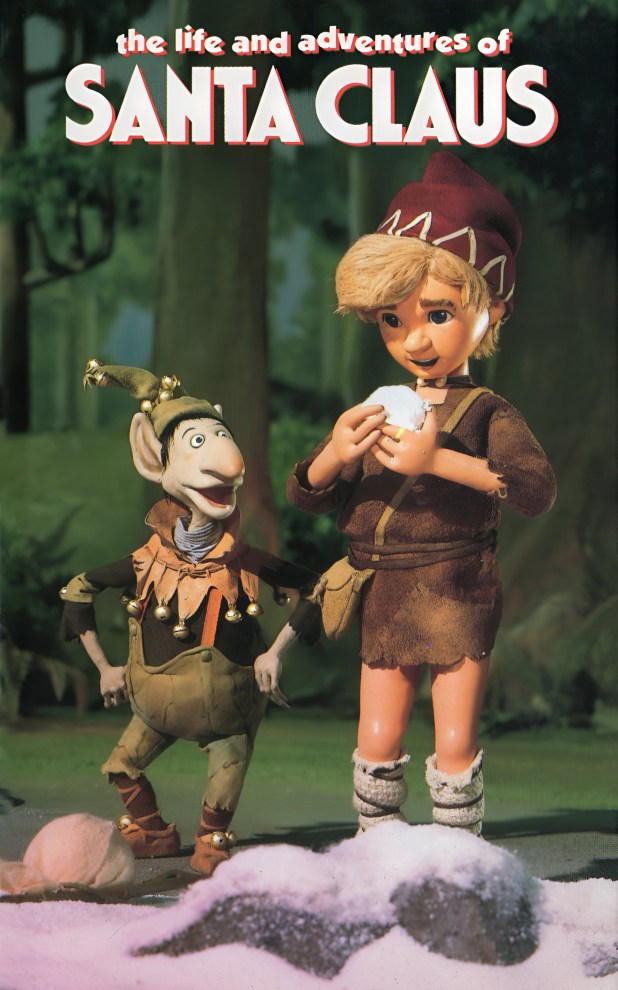
We all know and love Rankin/Bass Productions from our childhoods, but have we ever stopped to consider the nightmare world of bureaucracy that their Santa Claus operates? That he enables the abuse of Rudolph, even after the movie in the sequel, learning nothing? That he sends toys to basically die on an island and punishes elves who may dream of another career path? Is he the Santa that we wrote to in our youth or some Old Testament version?
This special is based on The Life and Adventures of Santa Claus by L. Frank Baum, the writer of The Wonderful Wizard of Oz, and it goes even beyond that, asking us to imagine a Santa that comes from the world of Ronnie James Dio album covers.
The final Animagic special from Rankin/Bass, this first aired on December 17, 1985. It’s not in Rankin?Bass continuity and yes, that is a real idea.*
Long ago in the Forest of Burzee, the Great Ak tells the story of Santa Claus to all of the other Immortals in the hopes that the man who is Santa can join them. Ak found him as a baby sixty years ago, abandoned in the snow, and Santa was raised by a lioness before being stolen by a wood nymph. Oh, your parents didn’t teach you that about Santa? Or that the Great Ak allowed a lioness and a wood nymph to co-parent a human child?
Assisted by the many magical races of the forest, Santa starts making gifts for children. This alerts the Awgwas to him, as they want children to be bad and basically act like organized crime — the magical creature community would like me to inform you that there is no such thing as the mafia, despite what you may have seen in the media — and keep stopping children from getting gifts. How do you stop the Angwas? The Immortals, led by the Great Ak, go to war with them and later tell Santa that all of them have perished. That’s right. Santa started a war over gifts and had a better equipped army, kind of like how he was a banana republic working with the CIA, and the balance of power against Communism needed better toys.
Santa then dies, telling his friends to decorate a tree every year to remember him. Luckily, he has fought orcs and slayed a dragon with a laser axe, so the Immortals allow him to deliver gifts forever. The Angwa are maybe not orcs but instead gorillas with fangs and horns. This was made at the same time as Thundercats, so if you wonder why Santa sounds like Mumm-Ra (and Vultureman, Captain Cracker and Jaga) and Mon-Star from Silverhawks, that’s because it’s Earl Hammond. Earle Hymon, who is the voice of King Angwa, was Panthro and Russell Huxtable, Bill Cosby’s TV dad). The Commander of the Wind is Larry Kenney, who was Lion-O and Bluegrass on Silverhawks. Lynne Lipton, the voice of Cheetara and Wilykit, is Queen Zurline. Peter Knook, one of the characters that aids Santa, is Peter Newman, who was Tigra, Wilykat, Tigra’s brother Bengali, Monkinian and many other Thundercats characters. Bob McFadden, the Tingler in this, was Snarf, as well as Commander Stargazer and Steelwill on Silverhawks.
*Oz and Santa are in the same shared L. Frank Baum universe with Santa being the ambassador for the North Pole to Oz.
Thanks to the British Film Institute, there’s a list of films that played Scala. To celebrate the release of Severin’s new documentary, I’ll share a few of these movies every day. You can see the whole list on Letterboxd.
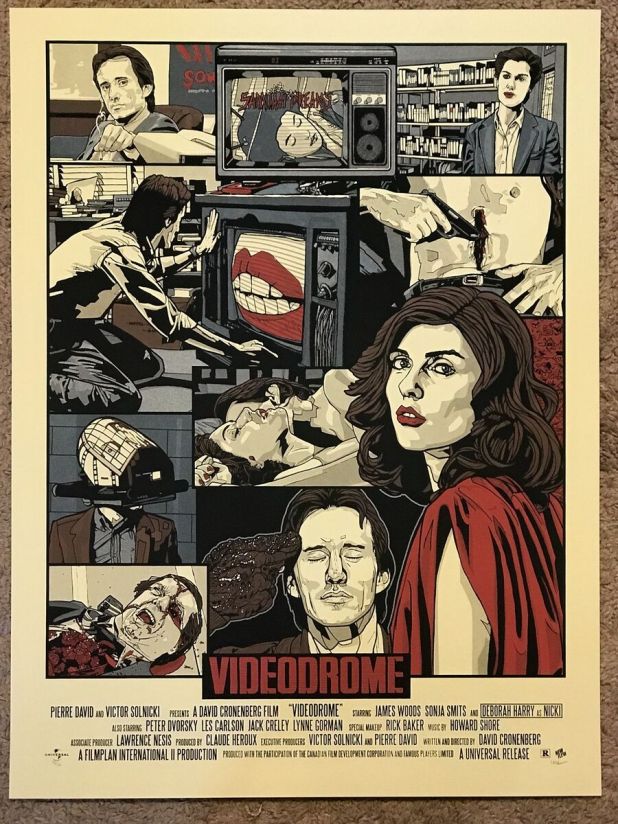
“The battle for the mind of North America will be fought in the video arena: the Videodrome. The television screen is the retina of the mind’s eye. Therefore, the television screen is part of the physical structure of the brain. Therefore, whatever appears on the television screen emerges as raw experience for those who watch it. Therefore, television is reality, and reality is less than television.”
As a kid, David Cronenberg used to pick up American television from across the border and worried that he’d see something he wasn’t supposed to see. Videodrome’s CIVIC-TV was based on the Canadian television network Citytv, which had a show called The Baby Blue Movie that played stuff like Camille 2000 and Wild Honey. There’s also an urban legend that Cronenberg saw Emanuelle In America and wondered how anyone could enjoy a movie that combined sexuality with snuff footage. I don’t know — or care — if that story is true. I’d like to just have complete faith in it.
The director was between Scannersand The Dead Zone and got a bigger budget on this movie than he never had before. Of course, it barely made its money back yet became a classic film, which is usually the way of the world.
Max Renn (James Woods) is the president of CIVIC-TV, a Toronto UHF television station that shows footage on the absolute limit of what is allowed to be shown on TV. One of the satellite dish operators shows Max Videodrome, which is either coming from Malaysia or Pittsburgh — as a lifelong resident, I am pretty pleased with that — that shows people being tortured and murdered with no storyline to get in the way.
Max’s lover, Nikki Brand (Debbie Harry) is so turned on by Videodrome that she goes to try out and never returns. Max is now obsessed and learns that the channel is so much more than just a video show. It may also be the voice of a political movement.
Media theorist Brian O’Blivion is the only person who can guide Max further down the tunnel. At the homeless shelter where O’Blivion’s daughter Bianca (Sonja Smits, The Pit) conducts marathon TV watching experiments. He soon learns that O’Blivion was killed by his partners who created Videodrome but lives on in the hours of video footage he created. Oh yeah — Videodrome also creates brain tumors and hallucinations which are both the symptom and the cause.
Videodrome is really part of an ideological war between its sex and violence-obsessed viewers and Barry Convex (Leslie Carlson, Black Christmas) and the Spectacular Optical Corporation, a combination ophthalmology and arms company. They program Max — via videotapes inserted into a vaginal opening in his chest that causes his body to transform and even grow a gun in his hand — to murder anyone that gets in their way, which may or may not all be hallucinations, until Bianca reprograms him to start killing for her father’s cause, shouting “Death to Videodrome. Long live the new flesh.”
That new flesh means ascending outside of the bonds of our normal form, which for Max means suicide. Or does it? There were plenty of endings made for this movie, including one where Max, Bianca and Nicki appear on the set of Videodrome, all with slits in their chests filled with sex organs. As an atheist, Cronenberg cut this ending, as he felt it may make people think he believed in Heaven. He was also forced to cut all manner of berserk things from the script, like Max having a grenade for a hand, as well as him melting into Nicki as they kissed and a total of five more characters dying of cancer.
This sequence sums up why I love this movie so much:
Max Renn: Why do it for real? It’s easier and safer to fake it.
Masha: Because it has something that you don’t have, Max. It has a philosophy. And that is what makes it dangerous.
You can hear dialogue from this movie in tons of songs, including “Microphone Test” by Meat Beat Manifesto, “Master Hit” by Front 242, “Children” by EMF, “Draining Faces” by Skinny Puppy, “Scared to Live” by Psychic TV and so many more.
For a movie made in 1983, it really could have been made today. There’s so much to experience here and I will be going back for another experience. See you in Pittsburgh.
Thanks to the British Film Institute, there’s a list of films that played Scala. To celebrate the release of Severin’s new documentary, I’ll share a few of these movies every day. You can see the whole list on Letterboxd.
Based on Ronald Bassett’s — a man who was primarily known for his medical and pharmaceutical work — novel about Matthew Hopkins, a notorious 17th-century witch-hunter, this 1968 film was a co-production of Tigon British Film Productions and American-International Pictures (who retitled the film The Conqueror Worm to link it to their series of Edgar Allan Poe movies).
Movie posters used to be awesome.
Michael Reeves was 24 and only three films* into his career when he made this film, the tale of Hopkins (Price), a lawyer who has opportunistically become a witchhunter with no morality whatsoever, blackmailing and killing his way through the world. This film is pure nihilism and makes the statement that when the world goes to hell, there is no way to be an angel.
Reeves saw Donald Pleasence as Price, but AIP only saw Vincent Price as the lead. Reeves had refused the courtesy of meeting Price at Heathrow Airport which was a “deliberate snub calculated to offend both Price and AIP” according to Benjamin Halligan’s book Michael Reeves. When they met for the first time, Reeves said, “I didn’t want you, and I still don’t want you, but I’m stuck with you!”
According to Kim Newman in Nightmare Movies, Reeves and Price argued over the actor’s propensity to chew the scenery and Price supposedly said, “Young man, I have made eighty-four films. What have you done?”
Reeves replied, “I’ve made three good ones.”
And that’s how Reeves pushed Price into delivering the performance in this film. In the book Faster and Furiouser: The Revised and Fattened Fable of American InternationalPictures, Price said that he wrote the director a ten-page letter after he saw the film, praising the director’s work.
Reeves wrote back, “I knew you would think so.”
After Reeves’s death, Price would think back and say, “I realised what he wanted was a low-key, very laid-back, menacing performance. He did get it, but I was fighting him almost every step of the way. Had I known what he wanted, I would have cooperated.”
That said — Reeves was notoriously poor with actors, mainly concentrating on what the visual look of the film leaving the acting direction — outside of his playing with Price — to the actors.
The poster tagline — “Leave the realized at home…and if you are squeamish stay home with them!” — isn’t a lie. This is a film packed with some of the most intense torture and violence you’ll see. It was heavily censored in England** — yet still upset people — and played uncut in the U.S.
Hopkins is using the English Civil War and the destruction of social order to brutally abuse and torture those he deems witches throughout East Anglia. Then, he and his assistant John Stearne charge the local government for their work and move on.
Richard Marshall (Ian Ogilvy, who was in several of Reeves’ teenage short films and appeared in his movies The She Beast and The Sorcerers) is a young soldier returning home from the war, asking John Lowes (Rupert Davies) if he may marry his niece Sara (Hilary Dwyer, The Oblong Box, Scream of the Banshee). The old man confides that they are concerned for their safety and feel as if the village has turned on them as Marshall gives his word to protect them. As he leaves their town, he gives the witchfinder directions to get there.
Hopkins and Stearne enter town and instantly go to work taking out witches, including using rats and hot needles to find the Devil’s Mark inside Lowes. Sara offers sexual favors to protect her uncle and as soon as Hopkins leaves town, his partner assaults her.
When Marshall returns, he marries Sara in his own ceremony and vows to kill the two men, nearly beating Stearnes to death. Yet the tables are turned and the hero must watch as his love is tortured before him. That’s not the end, but I’d like you to see this for yourself.
AIP originally made this movie as a tax write-off, but was surprised by the quality of the film. Samuel Z. Arkoff said, “Michael Reeves brought out some elements in Vincent that hadn’t been seen in a long time. Vincent was more savage in the picture. Michael really brought out the balls in him. I was surprised how terrifying Vincent was in that. I hadn’t expected it.”
This film led to the second wave of AIP Poe films like The Oblong Box (originally scheduled to be directed by Reeves, but handed over to Hessler after Reeves fell ill during pre-production), Murders in the Rue Morgue and Cry of the Banshee, which reteamed Price and Dwyer.
It also inspired several inquisitonploitation*** films such as Mark of the Devil and The Bloody Judge, as well as leading the way for religious horror such as The Devils and the folk horror of The Blood on Satan’s Claw.
It also influenced metal, as the band Cathedral has a song “Hopkins (Witchfinder General)” and the band Witchfinder General outright took the name. Like all great NWOBHM bands, they have a self-titled song.
There was even a BBC4 radio play, Vincent Price and the Horror of the English BloodBeast, which tells the story of the relationship between Price and Reeves.
Sadly, a few months after this movie was released, director Reeves died in London at the age of 25 from an accidental alcohol and barbiturate overdose. What an incredible blow to the world of film, as obviously he was going to be a director whose work could only have gotten better.
**Even the script provoked this reply from censors: “A study in sadism in which every detail of cruelty and suffering is lovingly dwelt on…a film which followed the script at all closely would run into endless censorship trouble.”
Thanks to the British Film Institute, there’s a list of films that played Scala. To celebrate the release of Severin’s new documentary, I’ll share a few of these movies every day. You can see the whole list on Letterboxd.
James Shelby Downard once said, “Never allow anyone the luxury of assuming that because the dead and deadening scenery of the American city-of-dreadful-night is so utterly devoid of mystery, so thoroughly flat-footed, sterile and infantile, so burdened with the illusory gloss of “baseball-hot dogs-apple-pie-and-Chevrolet” that it is somehow outside the psycho-sexual domain. The eternal pagan psychodrama is escalated under these “modern” conditions precisely because sorcery is not what 20th century man can accept as real.”
I’d like to think that Downard saw this movie, shook his head a bit and thought, “Well, they got some of it right.”
The Church of Satan film list says of Blue Velvet, “This neo-noir film by David Lynch is meant to be felt and experienced more than understood, Blue Velvet is about the hidden and unknown. It’s both terrifying and erotic simultaneously. The innocent outlook on life is stripped away to stark reality where predator and prey intermingle.
The Satanic qualities presented are the exploration of the darker side of Human Nature, Lust, Fetishism, the Dominant and the Submissive, the Law of the Forbidden, Self Preservation, and Justice.”
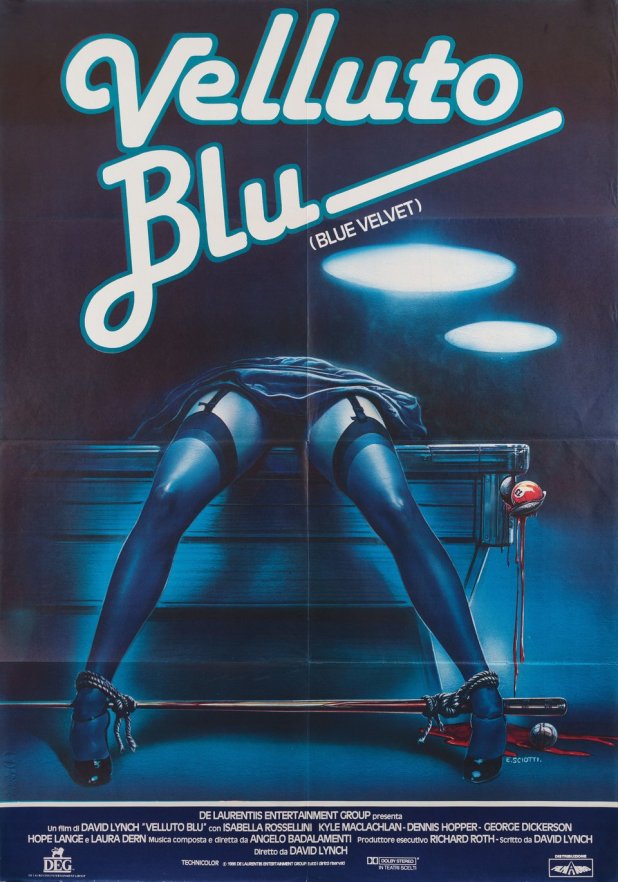
Jeffrey Beaumont (Kyle MacLachlan) has come home to Lumberton, North Carolina — a town that has a radio station with the call letters WOOD and seems so normal that something has to be wrong — a place named after lumber on the Lumber River. He’s home because his father has had a seizure and on the way home from the hospital, Jeffrey finds a severed ear. He does what any normal boy would do: he takes it to a cop, Detective John Williams (George Dickerson). This allows him to meet the perfect girl next door, the man’s daughter Sandy (Laura Dern). She might always have the perfect boyfriend, football player Mike Shaw (Ken Stovitz), but Jeffrey is able to get into Sandy’s world by being dangerous and investigating someone connected to that ear: lounge singer Dorothy Vallens (Isabella Rossellini, who would appear in the perhaps just as strange Tough Guys Don’t Dance after this). He sneaks into her apartment appearing to be an exterminator, except she catches him and easily overpowers him thanks to her feminine power. As she’s on the verge of assaulting him, Frank Booth (Dennis Hopper) arrives, sending Jeffrey into a closet and Dorothy to the floor as Frank alternatively cries, screams, huffs gas and beats her into a submissive sexual state.
Yeah, this isn’t working out like Jeffrey planned.
Jeffrey still sees things like either a child or a character in a detective novel, giving people names like the well-dressed man or the Yellow Man. He becomes obsessed with Dorothy while still courting Sandy. He thinks he can save Dorothy’s husband and son Don and Don, but once he gives in to Dorothy’s pleas to hit her while they lie in bed, he’s lost. He’s in over his head. His fantasies that he’d write to True Detective — instead of Penthouse Forum — are consuming. Deadly, too. This isn’t some kind of jerk off dream that barely comes true. This is violent and bloody fucking that winds up with you trapped in a car with maniacs like Booth, visiting suave lounge singers like Ben (Dean Stockwell) and wondering if everyone in the world is against you and probably being right. It’s the kind of fantasy that gets you kissed all over by a lunatic and waking up almost dead in a field far from home.
Normal humanity didn’t react well to this movie. For example, the agency representing Rossellini immediately dropped her as a client after the test screenings and the nuns at the school that she went to in Rome called to say they were praying for her.
Hopper wasn’t cast originally, as Frank was written for Michael Ironside. The Last Movie director called Lynch and screamed, “I’ve got to play Frank! I am Frank!” Lynch also wanted Frank to inhale helium, but Hopper wanted it to be amyl nitrate. Lynch said that Hopper told him, “David, I know what’s in these different canisters.” And I said, “Thank God, Dennis, that you know that!” And he named all the gases!”
In Satan Speaks, Anton LaVey wrote about songs like “Telstar” and “Yes, We Have No Bananas” as Satanic songs.
“The word ‘occult’ simply means hidden or secret,” he says. “Go to the record store, to the corner where no one else is, where everything is dusty and nobody ever goes. Mussorgsky’s “Night on Bald Mountain” is mystical music, dramatic, Gothic, satanically programmed music. But it’s not occult music. “Yes, We Have No Bananas” would be an occult tune.
It’s occult because when you put that record on the turntable, it’s a lead-pipe cinch that there is not another person in the entire world who is listening to that record at that time. If there’s anything, any frequency, any power that exists anywhere in this cosmos, in this universe, you’re gonna stand out like a beacon! It truly makes you elite.”
Lynch understands that by using Roy Orbison’s “In Dreams” and Bobby Vinton’s “Blue Velvet” — he almost used “Song to the Siren” by This Mortal Coil, a song that was first played on the last episode of The Monkees by its writer Tom Buckley — in Blue Velvet. Orbison has always seemed like an alien to me, perhaps because of his look, his voice or because he voided the verse-chorus-verse-bridge-chorus structure. His songs feel like being in, well, a dream.
Frank finds great magic in the words “candy-colored clown” and it feels like Ben is about to break down when he sings “In dreams, you’re mine all of the time. We’re together in dreams, in dreams.” A lot of Roy Orbison made me feel like that when I was a child, like future nostalgia, the same feeling that made me listen to breakup songs over and over crying before I had ever had my heart broken, as if I were saving up for a time when I would finally be unrequited.
Thanks to the British Film Institute, there’s a list of films that played Scala. To celebrate the release of Severin’s new documentary, I’ll share a few of these movies every day. You can see the whole list on Letterboxd.
The Wild Angels earned $7 million on a budget of $360,000, making it the highest-grossing low-budget film of its era. Not bad for a movie that had script issues between Roger Corman and Charles B. Griffith, as well as numerous re-writes by Peter Bogdanovich. Plus, the US State Department tried to prevent the film from being shown in Venice on the grounds that it “did not show America the way it is.”
And yet the Hells Angels brought a $5 million defamation lawsuit against Corman for how they were portrayed in this movie, which really makes me want to be a biker. Maybe they didn’t notice while they were acting as extras, each getting paid $35 per day for their cooperation and $20 per day for their motorcycles.
It’s also the first movie that Peter Fonda would be associated with the counter-culture and motorcycles. While promoting The Trip and autographing astill from this movie showing he and Bruce Dern on one motorcycle, the actor came up with the concept for Easy Rider.
It’s also a movie packed with taglines that shove you into the theater like “Their credo is violence…their God is hate…and they call themselves The Wild Angels” and “The most terrifying film of your time!”
Heavenly Blues (Fonda) shouts, “We wanna be free! We wanna be free to do what we wanna do. We wanna be free to ride! We wanna be free to ride our machines without being hassled by The Man. And we wanna get loaded. And we wanna have a good time. And that’s what we’re gonna do. We are gonna have a good time. We are gonna have a party.” That opening is at the beginning of Primal Scream’s “Loaded,” which informs so much of Edgar Wright’s The World’s End.
This episodic film moves from trying to find Joe “Loser” Kearns’ (Dern) stolen motorcycle to the gang evading the police to plan the Loser’s funeral and how Blues, Loser’s girl Gayesh (Diane Ladd) and Blues’ lover Mike (Nancy Sinatra) are pulled along as the gang disintegrates as a final party descends into madness.
The close of this movie, as Blues shovels dirt onto the grave of his best friend and says, “There’s nowhere to go,” is exactly why I keep coming back to Corman movies, which have such a heart and something to say in the midst of the mayhem and carny edge that get you into the theater.
We also have this movie to thank for Laura Dern, as the daughter of Dern and Ladd was conceived while this movie was being made.





 B&S About Movies
You must be logged in to post a comment.