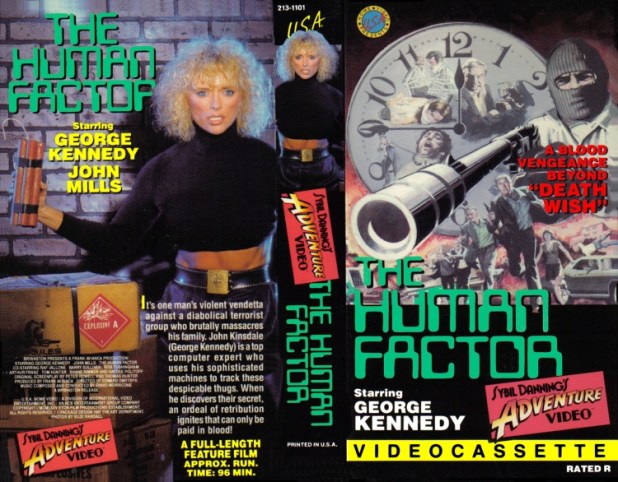
VIDEO ARCHIVES SEASON 2: The Human Factor (1975)

VIDEO ARCHIVES NOTES: This movie was discussed on the Patreon for the Video Archives podcast. You can hear a preview here.

Edward Dmytryk may be best known for his film noir efforts like CrossfireCornered and Murder, My Sweet. In 1947, he was named as one of the Hollywood Ten, blacklisted professionals who refused to testify to the House Un-American Activities Committee (HUAC), serving time in prison for contempt of court. However, in 1951, to save his career, he named names to the HUAC, which destroyed several careers. He went on to direct The Caine MutinyBroken LanceThe End of the AffairThe Carpetbaggers and Bluebeard amongst many other movies. The Human Factor is his last theatrically released film; he taught film school, did lectures and wrote books, including Odd Man Out: A Memoir of the Hollywood Ten.

John Kinsdale (George Kennedy) is an American NATO computer specialist with two kids in Naples, Italy. He’s easy going — he likes to play video games at work — and has a good relationship with his wife, who is looking for a new housekeeper. That night, when he gets home from home and expects to go to a birthday party. he finds his entire family killed. He nearly kills himself until he sees a story about his family on TV.

Now he wants revenge.

After the funeral, Kinsdale meets with Inspector Lupo (Raf Vallone), who is investigating the murders. U.S. State Department officers Janice Tilman (Rita Tushingham) and Mike McAllister (John Mills) are also part of the case and they have two suspects: Andrew Taylor (Tim Hunter) and Eddy Fonseca (Mark Lowell). Kinsdale steals U.S. Embassy credentials and tracks down Fonseca, learning that he’s a tourist. He uses those credentials to meet another agent, George Edmonds (Barry Sullivan), who tells him that terrorists have demanded the release of prisoners and $10 million dollars or they’ll kill an American family every three days.

Taylor and Kamal Hamshari (Frank Avianca) are the ones behind it and the government has run a computer simulation that says that Kinsdale has an 8% chance of succeeding in killing him.

Kinsdale does some detective work and discovers that the housekeeper ad in the paper bring Ms. Pidgeon (Haydee Politoff, Queens of Evil) and the killers into the homes of these families. He hides in one family’s house and is there to shoot back when a van filled with murderers arrives. He then follows clues he finds in the fake maid’s purse and tracks down Taylor, shrugging off being stabbed and using a chain to choke the man into oblivion.

Now, clutching his daughter’s doll and driven by rage, he tracks the killers down to a U.S. Embassy grocery store where he engages in a shootout with them, including a moment where an unmasked Ms. Pidgeon spits in his face. He responds by shooting her in the face and continually gunning down people, bleeding all over the place, until he finally kills Kamal and just keeps firing his gun until its empty, filling the dead man with bullets.

Peter Powell and Thomas Hunter only wrote one other movie, The Final Countdown.

I loved this, because I love George Kennedy. If you only know him as Frank Drebin’s partner Ed Hocken, this is a revelation, as he goes Bronson by the end, killing everyone that has done him wrong. Bonus points for the VHS re-release on the Sybil Danning’s Adventure Video label, as we get a great photo of her holding TNT on the back cover.

You can watch this on Tubi.

VIDEO ARCHIVES SEASON 2: Narrow Margin (1990)

VIDEO ARCHIVES NOTES: This movie was discussed on the Patreon for the Video Archives podcast. You can hear a preview here.

Based on the 1952 film The Narrow Margin, this movie is the first of two RKO reimaginings by Peter Hyams. He also made 2009’s Beyond a Reasonable Doubt.

Carol Hunnicut (Anne Archer) is on a blind date at a hotel restaurant with lawyer Michael Tarlow (J.T. Walsh) when a waiter tells him he needs to call a client. He goes to his suite and brings Carol with him. As she hides, she watches crime boss Leo Watts (Harris Yulin) and henchman Jack Wooten (Nigel Bennett) accuse Tarlow of stealing from them, then killing him.

Watching TV that evening, she realizes that she’s about to be killed, as she’s in the middle of a mob case. She sends her ex-husband and child into hiding and makes her way to a cabin in the Canadian Rockies. Somehow, she’s found by Det. Sgt. Dominick Benti (M. Emmet Walsh) and deputy district attorney Robert Caulfield (Gene Hackman). As they try to get her to testify, a helicopter flies by and shoots hundreds of bullets into the secluded hideout, killing Benti and the pilot that got Caulfield there.

They sneak their way on a train and learn that nearly every cop is dirty and that they have to watch out for everyone. Everyone is a crook, pretty much, even the seemingly innocent woman who tries to romance Caulfield.

There’s not much left of the original film other than the idea that everyone is trapped on a train. But it works, a solid action film that has two great actors in the lead.

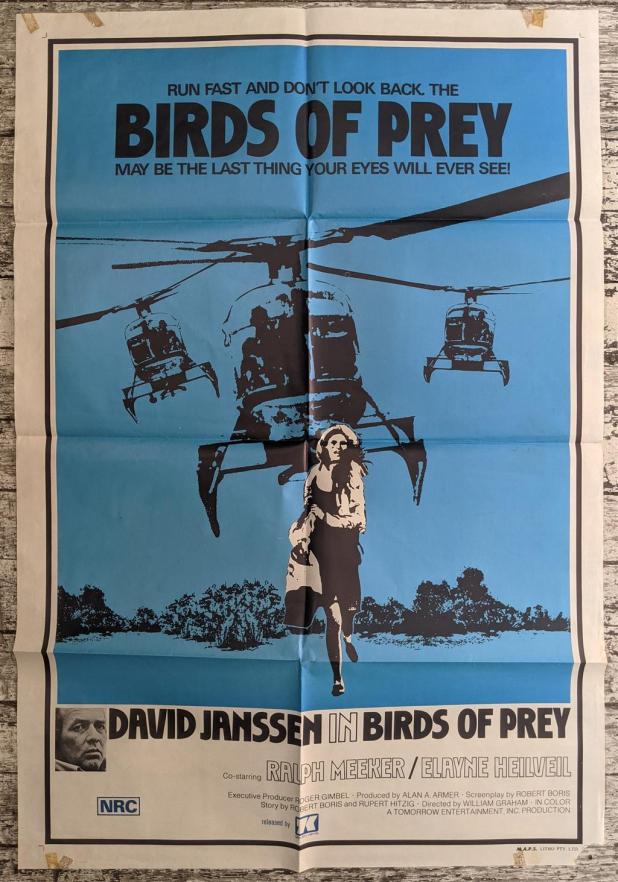
VIDEO ARCHIVES SEASON 2: Birds of Prey (1973)

VIDEO ARCHIVES NOTES: This movie was discussed on the November 12, 2024 episode of the Video Archives podcast. 

Directed by William Graham (Change of HabitCalendar Girl Murders) and written by Robert Boris (Steele JusticeSome Kind of HeroElectra Glide in BlueDoctor Detroit), Birds of Prey debuted on January 30, 1973 on CBS.

Harry Walker (David Janssen) is a war vet who is now flying a helicopter for the news, checking in on traffic. He finally gets the action he missed when he sees a bank robbery and learns from his former commander, McAndrew (Ralph Meeker), that the criminals — former Vietnam vets — have kidnapped teller Teresa Janice “T.J.” Shaw (Elayne Heilveil), who is due to be married in a few days.

Pilot Jim Gavin told Flying Magazine,  “Birds was a ground-breaking project. We took the helicopter out of its normal environment, put it in the city streets and did all the work with Janssen in flight for real. In fact, since he was a pilot Janssen did a lot of the flying, and I’d sit opposite him.”

If you watch this and wonder why Janssen is singing along to songs and his lyrics don’t match the songs, that’s because copyright issues caused the removal of the jazz standards that were originally in this movie.

As you can imagine, the IMDB trivia section for this movie is filled with deep cut helicopter facts.

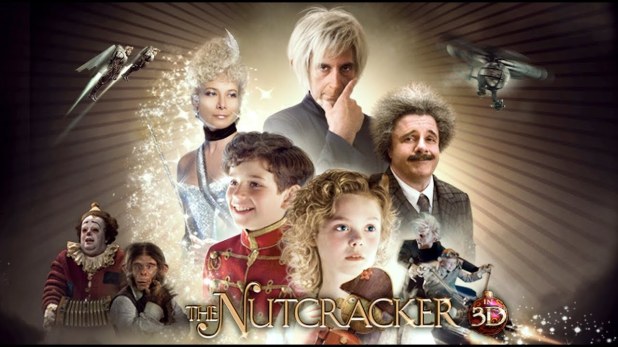
25 DAYS OF CHRISTMAS CHALLENGE: The Nutcracker in 3D (2010)

Andrei Konchalovsky made a Christmas movie.

The same Andrei Konchalovsky who made Maria’s LoversShy People, Runaway Train and, oddly, Tango & Cash.

This was his passion project for twenty years.

It is not good.

He was inspired to adapt it into 3D as he thought it “would be useful in conveying the fantastical nature of the material, capturing the emotions of CGI characters, and appealing to a family audience.

He also made The Nutcracker, a ballet, with no ballet sequences because, because he believed “ballet cannot work in cinema very well.”

It was primarily financed by VEB.RF, a Russian state development corporation chaired by Vladimir Putin, and at the time was the most expensive Russian film ever.

In 1920s Vienna, Mary (Elle Fanning) and her brother Max (Aaron Michael Drozin) are being babysat by their Uncle Albert (Nathan Lane) while her parents Joseph (Richard E. Grant) and Louise (Yulia Vysotskaya) go to a Christmas Eve party.

That’s Uncle Albert Einstein.

Einstein gives the kids a dollhouse and a nutcracker by the name of NC (Charlie Rowe, voiced by Shirley Henderson) who soon comes to life and introduces her to his friends Gielgud (Peter Elliott and Daniel Peacock, voiced by Alan Cox), Sticks (Africa Nile) and Tinker (Hugh Sachs). They climb to the top of the Christmas tree and meet the Snow Fairy (also Vysotskaya), who informs the children that NC is really Prince Nicholas Charles, who has been deposed by The Rat King (John Turturro) and his mother, The Rat Queen (Frances de la Tour) and turned from a boy into a nutcracker. He’s a real boy again, but not for long, because when he comes back home, he’s transformed and we learn that the rats are, well, all Nazis.

Look at that line again. A kid movie with Nazi rats — like Art Spiegelman’s Maus — that’s an adaption of the Nutcracker with no dancing and lyrics by Tim Rice that was funded by Vladimir Putin and it’s in 3D.

Roger Ebert said it best: “From what dark night of the soul emerged the wretched idea for The Nutcracker in 3D? Who considered it even remotely a plausible idea for a movie? It begins with an awkward approximation of the story behind the Tchaikovsky ballet, and then turns it into a war by the Nutcracker Prince against the Holocaust.”

Roger Ebert, suffering from cancer, had to spent time in his slowly dwindling life watching this movie.

A Nazi movie, yes, but set in 1920. This movie has destroyed my mind.

Let me just get this all out of my head.

The Rat King says that he will create an empire that will last a thousand years, as well as a scene where he electrocutes his pet shark. In a movie for children. For Christmas. About The Nutcracker. Yet also the rat people are also shown as being persecuted. Why am I wondering so much about the politics of a 3D CGI rat movie? Should I leave the house and finish my Christmas shopping?

VIDEO ARCHIVES SEASON 2: The Amsterdam Kill (1977)

VIDEO ARCHIVES NOTES: This movie was discussed on the November 12, 2024 episode of the Video Archives podcast. 

One of the things I’ve picked up from Video Archives is that Quentin Tarantino is from the era when Robert Mitchum was considered an action hero.

This was called “the meanest Mitchum movie yet” and has him playing former DEA Agent Quinlan, who was kicked off the force for stealing confiscated drug money. Now he’s using drug dealer Chung Wei’s (Keye Luke) tips to tell the DEA where to bust people. At least that was the plan but there’s a leak somewhere in the DEA.

Mitchum works with agents Howard Odums (Bradford Dillman, who only made this movie so he could take his wife Suzy Parker on a trip), Ridgeway (Richard Egan) and Riley Knight (Leslie Nielsen). Yuen Wah and Yuen Biao also show up.

Man, Robert Clouse made all over the place movies. Whether it’s Enter the DragonGolden NeedlesGame of DeathThe Big BrawlDeadly EyesGymkata or the two China O’Brien movies, he knew how to entertain. This was a Golden Harvest production and supposedly a remake of Jumping Ash. Editor Allan Holtzman would go on to direct Forbidden World and Steven Spielberg’s Survivors of the Holocaust.

You can watch this on Tubi.

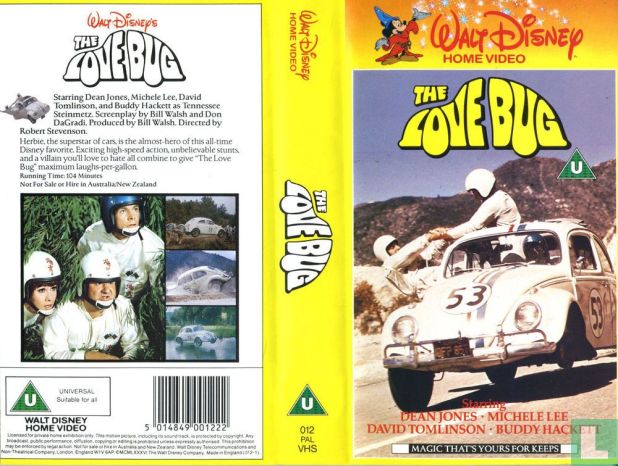
VIDEO ARCHIVES SEASON 2: The Love Bug (1968)

VIDEO ARCHIVES NOTES: This movie was discussed on the November 12, 2024 episode of the Video Archives podcast. 

Based on the 1961 book Car, Boy, Girl by Gordon Buford, this was the first of many movies that would feature Herbie the Love Bug, who is driven by Jim Douglas (Dean Jones) and worked on by Tennessee Steinmetz (Buddy Hackett), a mechanic who transforms used car parts into art.

Jones claimed that this film was so good with the fact that it was made when Walt Disney was still invovled with his films. It was released just two years after Walt’s death. I would also say that having Robert Stevenson as director — he also made Mary PoppinsThat Darn Cat and Old Yeller — helped.

Douglas has big dreams of racing, but all he gets to do is compete in demolition derbies. After racing and crashing another car — an Edsel, no less — our protagonist comes across a car dealer named Peter Thorndyke (David Tomlinson, Mary Poppins) abusing a Volkswagen Beetle. The next morning, the car just so happens to show up at Douglas’ house and he’s nearly arrested until Thorndyke’s sales assistant and mechanic Carole Bennett (Michele Lee) convinces her boss to sell the car.

Herbie — so named by Tennessee — seems to have a mind of his own, but he’s able to help Douglas win several big races, to the continual chagrin of his former owner. Much like nearly every Dean Jones character, Douglas is a jerk and just wants a Lamborghini 400GT instead of the heroic little VW Bug. Herbie responds by running away, damaging big stretches of Chinatown and nearly driving himself off the Golden Gate Bridge in his depression. Yes, back in the day, live action Disney got dark.

Of course, not so dark that a small Volkswagen can’t win a race against cars with much more horsepower, like Thorndike’s Apollo GT (the avergae VW bug had 40 hp while the Apollo GT had 225 hp).

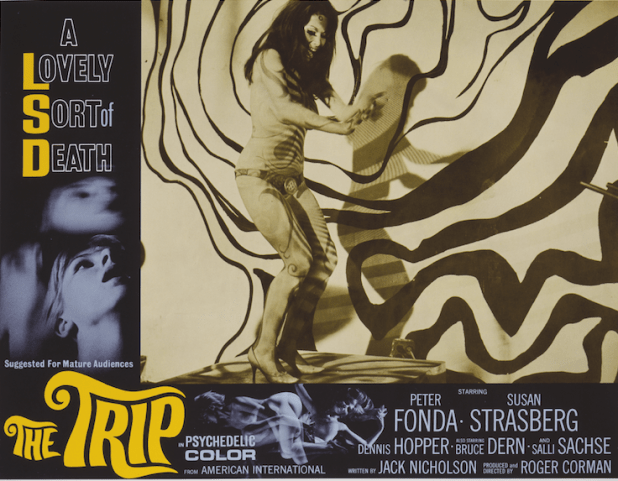
MOVIES THAT PLAYED SCALA: The Trip (1967)

Thanks to the British Film Institute, there’s a list of films that played Scala. To celebrate the release of Severin’s new documentary, I’ll share a few of these movies every day. You can see the whole list on Letterboxd.

Directed by Roger Corman, written by Jack Nicholson and released by American-International Pictures, The Trip cost $100,000 to make and brought in $6 million dollars. Hollywood was listening, because within the next year, movies for the love generation were all over the place*.

In fact, seven years after this movie, AIP’s Samuel Z. Arkoff said, “Everybody else picked it up; and as late as last year they were still coming out with dope pictures. And there isn’t one single company that made a buck on dope pictures. The young people had turned off.”

You know what makes Paul Groves (Peter Fonda) try LSD? He gets his heart broken by his wife (Susan Strasberg) and joins John (Bruce Dern) to take his first trip. He runs in fear from John as the trip over takes him, wandering through a nightmare world of sex, death, commercialism and mental transformation.

Corman took LSD himself to understand what it should look like on film, which ends up being quick edits, paint on nude women and small people trying to frighten the viewer.

While you can see the International Submarine Band, with Gram Parsons on vocals, the music in the movie comes from The Electric Flag. Music is a big part of this movie, as Dern’s line “Turn off your mind, relax, and float downstream” comes directly from The Beatles “Tomorrow Never Knows.”

Other folks to look out for include Salli Sachse (How to Stuff a Wild BikiniWild in the Streets), Judy Lang (Count Yorga), Luana Anders (The Pit and the Pendulum), Dick Miller (I mean, it is a Corman movie after all), Michael Nader (so many beach movies), Michael Blodgett (Lance Rock from Beyond the Valley of the Dolls), Sunset Strip tastemake and KROQ DJ Rodney Bingenheimer, Peter Bogdanovich, Randee Lynne Jensen (so many bikers movies), Joyce Mandel (Return of the Ultra Vixens) and Angelo Rossitto (everything from Freaks to playing The Master in Mad Max Beyond Thunderdome).

The Trip attempts to film the unfilmable and for that, we should celebrate it.

*For example, the next year, Peter Fonda, Dennis Hopper, Jack Nicholson and Luana Anders would all appear in Easy Rider.

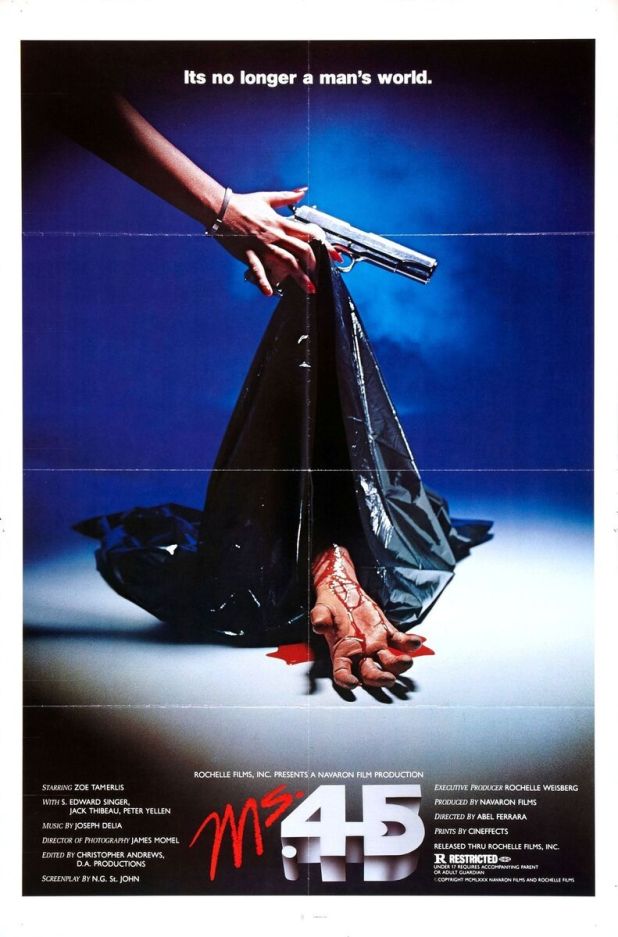
MOVIES THAT PLAYED SCALA: Ms .45 (1981)

Thanks to the British Film Institute, there’s a list of films that played Scala. To celebrate the release of Severin’s new documentary, I’ll share a few of these movies every day. You can see the whole list on Letterboxd.

Thana (Zoë Tamerlis, who also wrote director Abe Ferrara’s Bad Lieutenant, is a mute seamstress working in New York City’s Garment District.

After she’s assaulted twice — once at gunpoint in an alley by a masked man and then again in her own apartment by a burglar — Thana lives up to her name, which is inspired by Thanatos the Greek god of death. She attacks the second man with a glass red apple and then beats him to death with an iron and leaves him in her tub. After dealing with her horrible work situation, she cuts her rapist apart and dumps him all over the city.

She keeps the man’s gun and soon uses it on another man who corners her, then runs up her steps and throws up in an echo of Paul Kersey’s first night of vigilantism in Death Wish.

Soon, she’s a literal Angel of Vengeance, which was the film’s other title. She targets a series of men who have treated women wrong and even causes one of them to kill himself when her gun jams. Finally, her vengeance reaches the point where she unleashes her full fury on her horrible boss and every man who attends her party as she whirls around, full action heroine, repeatedly shooting everyone while dressed as a nun.

Ms. 45 is better regarded than I Spit On Your Grave, perhaps because it doesn’t dwell in its rape scenes or have them take up much of the movie’s running time. Or maybe, just maybe, because it’s a much better movie.

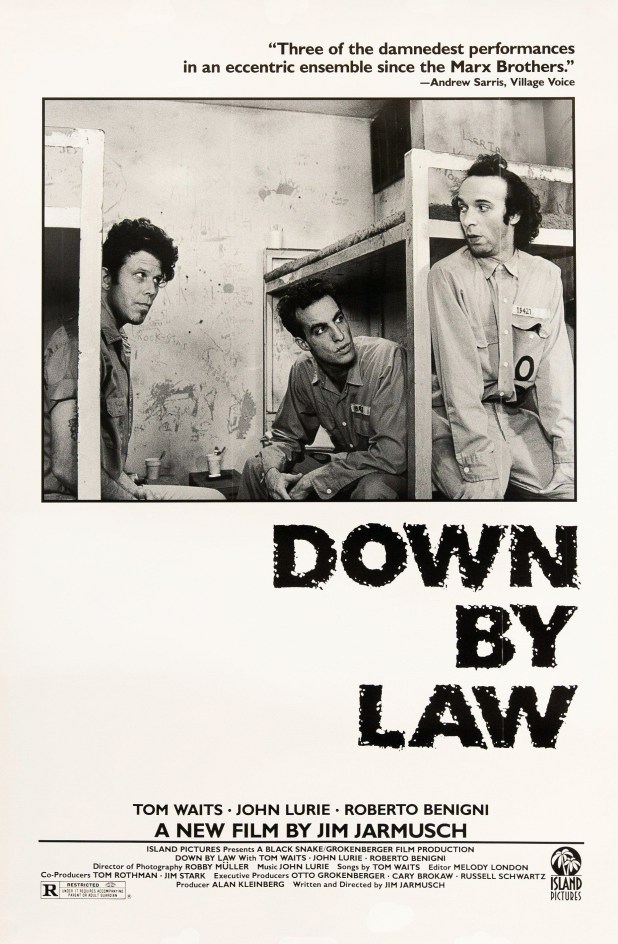
MOVIES THAT PLAYED SCALA: Down by Law (1986)

Thanks to the British Film Institute, there’s a list of films that played Scala. To celebrate the release of Severin’s new documentary, I’ll share a few of these movies every day. You can see the whole list on Letterboxd.

Zack (Tom Waits) and Jack (John Lurie) have been set up and landed in jail, where they’re doing time alongside Bob (Roberto Benigni) an Italian tourist who barely understands English and is in jail for accidental manslaughter. Zack and Jack want to fight almost immediately, but when Bob is able to break out — the movie is more about these men than how they jailbreak, the mechanics aren’t important — they stay with the foreigner because he can always find food.

Waits calls this “a Russian neo-fugitive episode of The Honeymooners.” Jarmusch listened to Waits’ songs and based a lot of the film on how they made him feel, yet Lurie and his band The Lounge Lizards recorded the soundtrack.

Bob, as an innocent, is able to take these broken and fighting men to the promised land, where he stays with Nicoletta (Nicoletta Braschi, who would later marry Benigni). As for Zack and Jack, they go their separate ways.

I love that this movie’s most heartfelt line, “It’s a sad and beautiful world,” was misspoken by Benigni.

MOVIES THAT PLAYED SCALA: A Place in the Sun (1951)

Thanks to the British Film Institute, there’s a list of films that played Scala. To celebrate the release of Severin’s new documentary, I’ll share a few of these movies every day. You can see the whole list on Letterboxd.

Inspired by the real-life murder of Grace Brown by Chester Gillette in 1906, which was followed by Gillette’s execution by electric chair in 1908 as well as the book An American Tragedy by Theodore Dreiser, this is one of the best American movies of all time, winning six Academy Awards and the first-ever Golden Globe Award for Best Motion Picture – Drama.

George Eastman (Montgomery Clift) has come to work in his uncle Charles’ (Herbert Heyes) factory. Co-worker Alice Tripp (Shelley Winters) romances him in the hopes that Eastman’s last name will get her ahead in life. But George has also met socialite Angela Vickers (Elizabeth Taylor) and falls in love. But he’s already gotten Alice pregnant, so he can’t forget his past and can’t truly be part of Angela’s world.

George and Alice go to get married, but the Justice of the Peace is closed. Instead, he plans on drowning her and takes her out on a boat, but he decides to let her live. At that moment, she stands up and the boat capsizes. She drowns as he swims to safety. In truth, he killed her, as he never tried to save her and saw this as a way of getting the life he wanted. He’s charged with murder just as he’s been accepted into Angela’s family and ends up going to the electric chair.

Directed by George Stevens and written by Michael Wilson and Harry Brown, this may be too slow and melodramatic for modern audiences, this movie had an impact on fashion, as Taylor’s white lilac gown inspired prom and wedding dresses for a decade.

Stevens spent $2.3 million on this movie and shot more than 400,000 feet of film. It took over a year to edit it. In case you think you’ve seen the Eastwood mansion before, it’s a recycled set from Sunset Boulevard.