EDITOR’S NOTE: This episode of Kolchak: The Night Stalker was on the CBS Late Movie on November 9, 1979, August 21, 1981, and December 11, 1987.
Directed by Bruce Kessler and written by Steve Fisher and David Chase, “Chopper” is the kind of Kolchak episode that I love, one where The Bishops biker gang member Harold “The Swordsman” Baker, was decapitated by a rival gang, The Jokers, who were dumb enough to ride around with his head until “The Swordsman’s” ghost came to chop his head off. The gang finally stopped him by putting his head inside his coffin, and everything was normal until a construction project somehow got his head separated from his body.
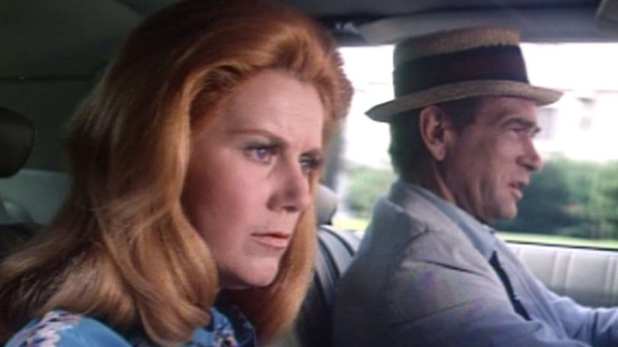
The old Jokers like Henry “Studs” Spake (Art Metrano) have to look over their shoulders before they lose their heads. Kolchak has to discover the truth, deal with another lousy cop (Captain Jonas, played by Larry Linville from M*A*S*H*) and get out with his head on his shoulders.
Speaking of shoulders, the headless motorcycle rider has shoulders that are a foot above normal. How else would you affect this budget?
Sharon Farrell, who would later be Lone Wolf McQuade‘s wife, as well as Lenore in It’s Alive, Mrs. Mancini in Can’t Buy Me Love and Regina and Samantha’s stepmother in Night of the Comet, is in this episode as is Jim Backus in a cameo as a motorcycle dealer.
EDITOR’S NOTE: Bud and Lou was on the CBS Late Movie on December 25, 1984 (Merry Christmas!) and June 3, 1987.
This movie crushed me as a child. I had always loved Bud Abbott and Lou Costello, watching their thirty-six films on Sunday mornings, right after Ma and Pa Kettle films. Seriously, weekends in Pittsburgh in the 70s and 80s were amazing. You stayed up all night watching Chiller Theater and then woke up late and took in some Abbott and Costello. Ah, memories.
That said, when this aired on November 15, 1978, I excitedly watched it from my parent’s black and white kitchen TV, ready to have fun reliving my favorite memories of the comedy duo. I wasn’t ready to learn how much they hated one another and their foibles. Cut me some slack — I was six.
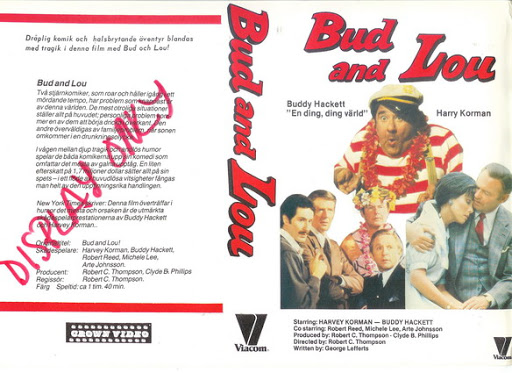
Abbott and Costello are played by Buddy Hackett and Harvey Korman. Interestingly, Hackett and Hugh O’Brian replaced the team when Costello’s health forced them to drop out of 1954’s Fireman Save My Child.
The team came together when Abbott’s original partner was ill and it gelled pretty quickly. The film hints that Bud used to date Lou’s wife — this is unproven — but as we’ve learned from tabloid-style films, facts are rarely important. For example, while they did debut on The Kate Smith Hour on February 3, 1938, they didn’t do the “Who’s On First?” routine until a month later and they had developed their distinctive voices (audiences initially thought they sounded alike until Costello came up with his high-pitched, childish affect).
They debuted their own show, The Abbott and Costello Show, as Fred Allen’s summer replacement in 1940 before joining Edgar Bergen and Charlie McCarthy on The Chase and Sanborn Hour in 1941. That was also the year that their first two films — Buck Privates and Hold That Ghost — debuted (they made their actual first film appearance in 1940’s One Night in the Tropics, essentially playing their greatest hits from burlesque on screen).
By 1942, they were the top box office stars in the country, earning over $789,000 ($12 million in today’s money) that year alone. To show how big of stars they were, a 35-day War Bonds tour in the summer of 1942 earned $85 million dollars ($1,299,767,105 today!) in war bonds purchases. This is important — because soon, the government would come calling for this money and forget all about this. That’s a major part of the film.
Here come the bad parts. Abbott had epilepsy, which in the film just means you have to sit down every once in a while, as well as drink way too much. Costello got rheumatic fever from a military base tour and was bedridden for the rest of 1942 and into ’43, when he returned to radio after a year layoff. That very same day, his infant son drowned in the family’s pool and the comedian was never the same. He was quick to anger and constantly vindictive to the point that a major rift happened when In 1945 a rift developed when Abbott hired a servant who Costello had fired. That led to Costello refusing to speak to his partner except when performing. From them on, they would play separate characters in films, rather than be a team. This led to their loss in popularity when faced with other teams like Martin and Lewis.
Abbott resolved the rift when he suggested naming Costello’s charity the “Lou Costello Jr. Youth Foundation.” Finally some good news — this charity still helps underprivileged youth in the Boyle Heights district of Los Angeles.
Despite their dip in popularity, they still starred in several films with the Universal monsters and hosted The Colgate Comedy Hour. From 1952 to 54, Costello created, owned and syndicated The Abbott and Costello Show, paying Abbott a salary, a point this movie hammers home as proof that any reconciliation was only on one man’s part. That said, the movie totally ignores that this show was a success and aired in reruns for a long time.
The film never gets into the point that the duo was overexposed and worried about creating new material, which is one of the reasons why Universal couldn’t reach a contract with them. They were forced to sell all of their assets to the IRS to pay taxes, a point the movie definitely makes.
After one last film, Dance with Me, Henry and Lou appearing on This Is Your Life, the duo split for good in 1957. Errol Flynn claimed in his autobiography that he was the reason. At a party he had invited Bud, Lou and their families to, he showed hardcore pornography and Bud and Lou both blamed the other. This is skipped by the movie, because how would you explain that on TV in 1978?
The movie makes it seem that Costello died quickly after the pair split, but he lived until 1959, after ten appearances on The Steve Allen Show doing old routines without his partner. He died shortly after finishing his last film, The 30 Foot Bride of Candy Rock.
In 1960, Abbott formed a team with Candy Candido, a voice actor in Disney films. He also did his own voice for the Hanna-Barbera Abbott and Costello cartoons. He died of cancer in 1974.
Let’s go back to me being a kid. I always thought that Lou was the nice one, with Bud being the mean adult, always grumpy with him. Little did I know the truth — or what passes for it in this movie. I remember crying my eyes out during the last scene where Lou dies.
This whole movie is based on the book by Hollywood correspondent Bob Thomas and trust me, it’s as over the top and ridiculous as you hope it is. It’s been said that Thomas got most of his gossip from Eddie Sherman, Abbott and Costello’s longtime manager who had been fired by the duo, so obviously there was a reason why it’s so venomous. It’s also remarkably unfunny in the comedy segments, which is weird when you consider who is starring in it. Arte Johnson and Robert Reed also show up, just to remind you this is a made for TV movie.
Both the book and movie upset Lou’s daughter Chris so much that she wrote the book Lou’s on First to refute many of its claims.
I’m not the only one obsessed by this film. On his podcast, Gilbert Gottfried has brought the death scene at the end up several times. I wasn’t the only one shattered by it, I guess.
I guess if you want to catch up on memories, you should skip TV movies and go right back to the real movies. But as you may have learned by now, I love junk.
EDITOR’S NOTE: Bud and Lou was on the CBS Late Movie on December 25, 1984 (Merry Christmas!) and June 3, 1987.
This movie crushed me as a child. I had always loved Bud Abbott and Lou Costello, watching their thirty-six films on Sunday mornings after Ma and Pa Kettle films. Seriously, weekends in Pittsburgh in the 70s and 80s were amazing. You stayed up all Night watching Chiller Theater, then woke up late and took in some Abbott and Costello. Ah, memories.
That said, when this aired on November 15, 1978, I excitedly watched it from my parent’s black and white kitchen TV, ready to have fun reliving my favorite memories of the comedy duo. I wasn’t prepared to learn how much they hated one another and their foibles. Cut me some slack — I was six.
Buddy Hackett and Harvey Korman play Abbott and Costello. Interestingly, Hackett and Hugh O’Brian replaced the team when Costello’s health forced them to drop out of 1954’s Fireman Save My Child.
The team came together when Abbott’s original partner was ill, and it gelled pretty quickly. The film hints that Bud used to date Lou’s wife — this is unproven — but as we’ve learned from tabloid-style films, facts are rarely necessary. For example, while they did debut on The Kate Smith Hour on February 3, 1938, they didn’t do the “Who’s On First?” routine until a month later, and they had developed their distinctive voices (audiences initially thought they sounded alike until Costello came up with his high-pitched, childish effect).
They debuted The Abbott and Costello Show as Fred Allen’s summer replacement in 1940 before joining Edgar Bergen and Charlie McCarthy on The Chase and Sanborn Hour in 1941. That was also the year that their first two films — Buck Privates and Hold That Ghost — debuted (they made their first film appearance in 1940’s One Night in the Tropics, essentially playing their greatest hits from burlesque on screen).
By 1942, they were the top box office stars in the country, earning over $789,000 ($12 million in today’s money) that year alone. A 35-day War Bonds tour in the summer of 1942 earned $85 million ($1,299,767,105 today!) in war bond purchases to show how big of a star they were. This is important because the government would soon call for this money and forget all about it. That’s a significant part of the film.
Here come the bad parts. Abbott had epilepsy, which in the film means you have to sit down every once in a while, as well as drink way too much. Costello got rheumatic fever from a military base tour and was bedridden for the rest of 1942 and into ’43 when he returned to radio after a year layoff. That very same day, his infant son drowned in the family’s pool, and the comedian was never the same. He was quick to anger and constantly vindictive to the point that a significant rift happened.
In 1945, Abbott hired a servant whom Costello had fired. That led to Costello refusing to speak to his partner except when performing. Then, they would play separate characters in films rather than work together, which led to their loss of popularity when faced with other teams like Martin and Lewis.
Abbott resolved the rift by suggesting naming Costello’s charity the Lou Costello Jr. Youth Foundation. Finally, some good news: this charity still helps underprivileged youth in the Boyle Heights district of Los Angeles.
Despite their dip in popularity, they still starred in several films with the Universal Monsters and hosted The Colgate Comedy Hour. From 1952 to 54, Costello created, owned and syndicated The Abbott and Costello Show, paying Abbott a salary, a point this movie hammers home as proof that any reconciliation was only on one man’s part. That said, the film ignores that this show was successful and aired in reruns for a long time.
The film never gets to the point that the duo is overexposed and worried about creating new material, which is one reason Universal couldn’t reach a contract with them. The movie definitely makes the point that they were forced to sell all their assets to the IRS to pay taxes.
After one last film, Dance with Me, Henry, and Lou appeared on This Is Your Life, the duo split for good in 1957. Errol Flynn claimed in his autobiography that he was the reason. At a party he had invited Bud, Lou and their families to, he showed hardcore pornography and Bud and Lou both blamed the other. The movie skipped this because how would you explain that on TV in 1978?
The movie makes it seem that Costello died quickly after the pair split, but he lived until 1959 after ten appearances on The Steve Allen Show doing old routines without his partner. He died shortly after finishing his last film, The 30-Foot Bride of Candy Rock.
In 1960, Abbott formed a team with Candy Candido, a voice actor in Disney films. He also did his voice for the Hanna-Barbera Abbott and Costello cartoons. He died of cancer in 1974.
Let’s go back to when I was a kid. I always thought Lou was the nice one, and Bud was the mean adult who was always grumpy with him. Little did I know the truth—or what passes for it in this movie. I remember crying my eyes out during the last scene when Lou dies.
This movie is based on the book by Hollywood correspondent Bob Thomas, and trust me, it’s as over the top and ridiculous as you hope it is. It’s been said that Thomas got most of his gossip from Eddie Sherman, Abbott and Costello’s longtime manager, who the duo had fired, so obviously, there was a reason why it’s so venomous. It’s also remarkably unfunny in the comedy segments, which is weird when considering who is starring. Arte Johnson and Robert Reed also showed up; to remind you, this is a made-for-TV movie.
The book and movie upset Lou’s daughter, Chris, so much that she wrote Lou’s On First to refute many of its claims.
I’m not the only one obsessed with this film. Gilbert Gottfried repeatedly mentions the death scene at the end of his podcast, and I wasn’t the only one shattered by it.
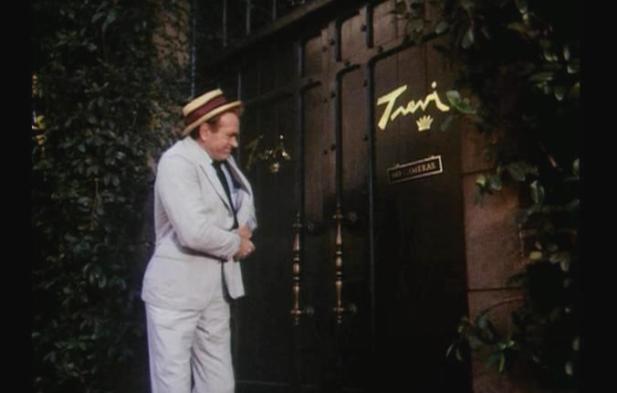
Directed by Don Weis (Beyond Westworld, The Munster’s Revenge) and one of several episodes written by Rudolph Borchert, “The Trevi Collection” has Carl Kolchak find out that fashion model Madeline Parker (Lara Parker, Angelique from Dark Shadows) is an actual witch. On the excellent blog It Couldn’t Happen Here, she told writer Mark Dawidziak that star Darren McGavin gave her some advice: “Nobody really understands the style of this thing. It has to be played seriously, and then the horror will come out naturally.”
She’d already been doing that for years in Collinsport.
She told The Night Stalker Companion, “He kept trying to tell me how to play a witch. It was a fun part, but, to be honest, it wasn’t the most fun acting experience I ever had.”
This episode was made when they were halfway through the season, and one assumes nerves were already shot, what with the long hours and low budgets. At least this episode has a fluffy white cat maul and a model named Ariel (Diane Quick). Another, Melody Sedgwick (Beverly Gill), is killed by a shower that gets way too hot.
The one interesting part is that Carl goes from Madeline helping him to her being the villain. This is a different approach to the show’s formula, and while it’s not an episode I enjoy as much as some of the others, I’ll take any Kolchak over most shows.
EDITOR’S NOTE: Copacabana was on the CBS Late Movie on March 16 and August 1, 1988.
“Her name was Lola; she was a showgirl
With yellow feathers in her hair and a dress cut down to there
She would merengue and do the cha-cha
And while she tried to be a star
Tony always tended bar
Across the crowded floor, they worked from eight til four
They were young and they had each other
Who could ask for more?”
The third single from Barry Manilow’s fifth album, Even Now, “Copacabana (At the Copa),” was written because Mannilow was a regular at the club and asked co-writer Bruce Sussman if anyone had ever written a song about the club. Working with Jack Feldman, Sussman did the words, and Manilow did the music. The result? Mannilow’s first gold record for a song he wrote and his only Grammy, as he won the Best Male Pop Vocal Performance. It peaked at #8 in the U.S. but was a hit worldwide.
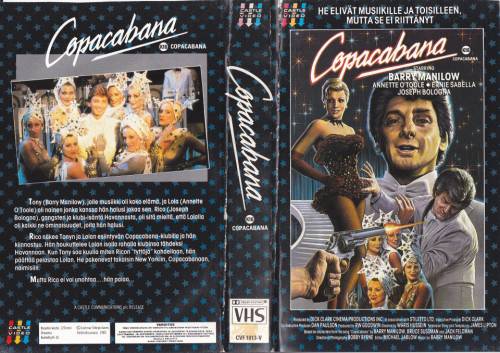
Dick Clark asked Manilow to make the movie, which was directed by Waris Hussein and written by James Lipton. Yes, the very same James Lipton you’re thinking of.
Manilow is Tony Starr, a bartender and aspiring musician who works with Lola Lamar (Annette O’Toole), who becomes a star in Havana working for Rico Castelli (Joseph Bologna). At the same time, Tony gets big at the Copa. The song plays out, and you learn “who shot who,” as the movie ends with an older Lola sitting on a bar stool, drunk and lamenting the loss of Tony and not seeing disco, but instead her dancing with him.
This movie upset my family to the worst of degrees, depressing everyone by the end. I don’t know what we expected, as the song is a downer. But we hoped things would be changed for the movie.
Sadly the last episode with Gordon “Gordy the Ghoul” Spangler (John Fiedler) and nemesis Ron Updike (Jack Grinnage) — the show was already canceled — “The Youth Killer” has great casting for its femme fatale. Cathy Lee Crosby is Helen Surtees, a woman using Max Match, the computer dating company she owns, to find men and then sacrificing them to Hecate so that she can remain eternally gorgeous and young. One of those men is Reb Brown, who just a few years later would play Captain America, a fun bit of trivia as Crosby had played Wonder Woman in a TV movie just a year before.
The authority figures in the way of our reporter hero are Sergeant Orkin — that’s Dwayne Hickman, the grown-up Dobey Gillis — and a cop named Kaz, who is played by someone named Demosthenes. That’s the middle name of George Savalas, Telly’s brother.
Carl, as always, goes up against the supernatural menace all by himself and barely survives, leaving behind a statue of Helen and no way to prove any of it. Sadly, this would be the next to last episode.
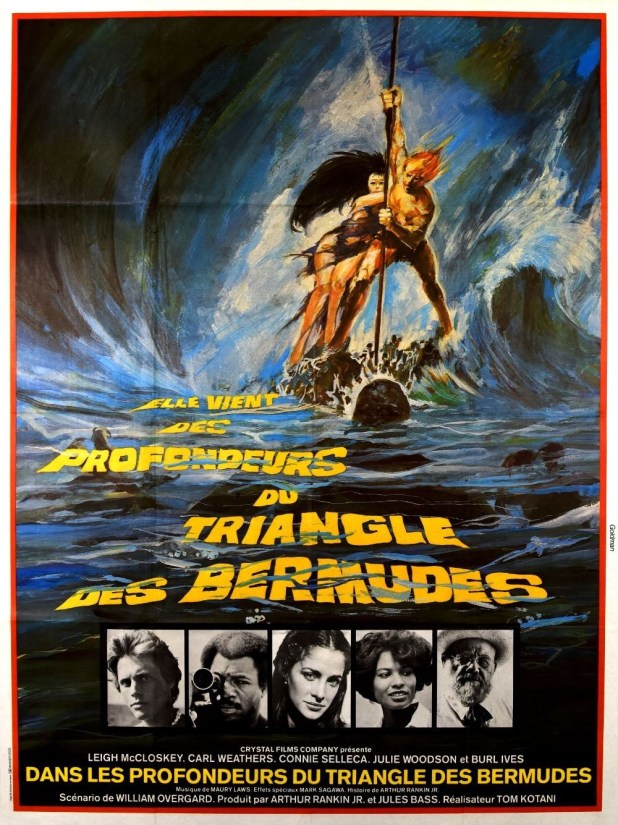
EDITOR’S NOTE: The Bermuda Depths was on the CBS Late Movie on October 7, 1983, May 30, 1984 and April 18 and July 11, 1985.
When Rankin/Bass and Tsuburaya Productions, two powerhouses in the film industry, join forces, they create something truly unique. Their collaborations are always a bit off the beaten path, but none are quite as intriguing as this one. This film, with its ghost girl, childhood trauma, and the iconic kaiju turtle, is a testament to their innovative spirit.
It was written by William Overgard, who created the comic strips Steve Roper and Mike Nomad and Rudy and wrote scripts for several collaborative films like The Last Dinosaur, The Ivory Ape and The Bushido Blade. He also wrote episodes of ThunderCats and Silver Hawks. He also worked with Arthur Rankin Jr.* on this story.
Directed by Tsugunobu “Tom” Kotani, the mastermind behind all these bizarre American/Japanese films, this one takes the cake in terms of its outlandishness. When I say weird, I mean it’s the kind of film that will leave you scratching your head, but in the best possible way.
Magnus Dens (Leigh McCloskey, who was in Inferno and now paints art based on occult, alchemical and esoteric themes) is asleep on an island when he is woken up by Jennie (Connie Sellecca) who claims to know him. He’s been dreaming of his childhood and she may be the girl he remembers from it, the love of his life who watched a turtle hatch on the beach with him and craved J+M into its shell before she rode that giant turtle into the sea and disappeared forever. This happened on the very same night that a monster emerged from the cave beneath his house and killed his father!
Our hero also has a job working alongside another childhood friend, Eric (Carl Weathers), for marine biologist Dr. Paulis (Burl Ives!). Paulis informs him that Jennie doesn’t exist and is the name of a legend in which a beautiful but vain woman was saved from a storm by a mysterious god and given eternal life at the cost of never again being able to live on land.
With a harpoon-shooting bazooka known as Horror, women with glowing green eyes, the mid-movie appearance of a giant turtle wiping out most of the cast, and a total downer ending, this movie was made for me. The ending alone is enough to make you wonder how it all wraps up. I can’t even imagine what people thought of it when it ran on ABC on January 27, 1978.
*Rankin loved Bermuda so much that he moved there after making this.
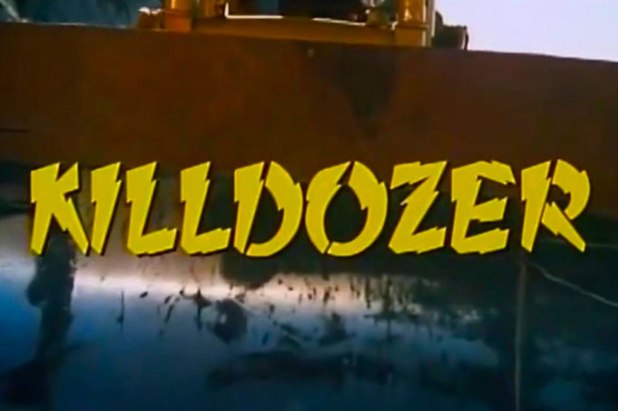
EDITOR’S NOTE: Killdozer was on the CBS Late Movie on January 13, 1976; March 17, 1977 and January 19, 1978.
Originally airing on February 2, 1974, on ABC, this Theodore Spurgeon adaptation presents a unique premise that answers the question we’ve all been asking: “Who would win in a fight to the death—a man or a bulldozer?” Sure, a mysterious meteorite is behind it all, but this one is all about machine-on-man violence.
This one boasts a stellar cast including Clint Walker (The Phynx, as well as TV movies like Snowbeast and Scream of the Wolf), James Wainwright (TV’s Beyond Westworld), Carl Betz (Donna Reed’s TV husband), Neville Brand (Eyes of the Night and Without Warning), James A. Watson Jr. and Vega$ star Robert Urich. They all face off against an alien aura-possessed Caterpillar D9 bulldozer that takes them out individually.
The story and movie were so popular that Marvel Comics published an adaptation in Worlds Unknown #6, which was released the same year as the film.
Thanks to Conan O’Brien, this film has become a punchline and the name of a somewhat famous band. But beyond these pop culture references, Killdozer is a product of its time—a 1970s TV movie on a low budget—that has managed to entertain and intrigue audiences, earning it a place in the pantheon of cult classics.
UPDATE: This cult classic is now available on Blu-ray and DVD from Kino Lorber, offering a new generation of viewers the chance to experience it in high definition.
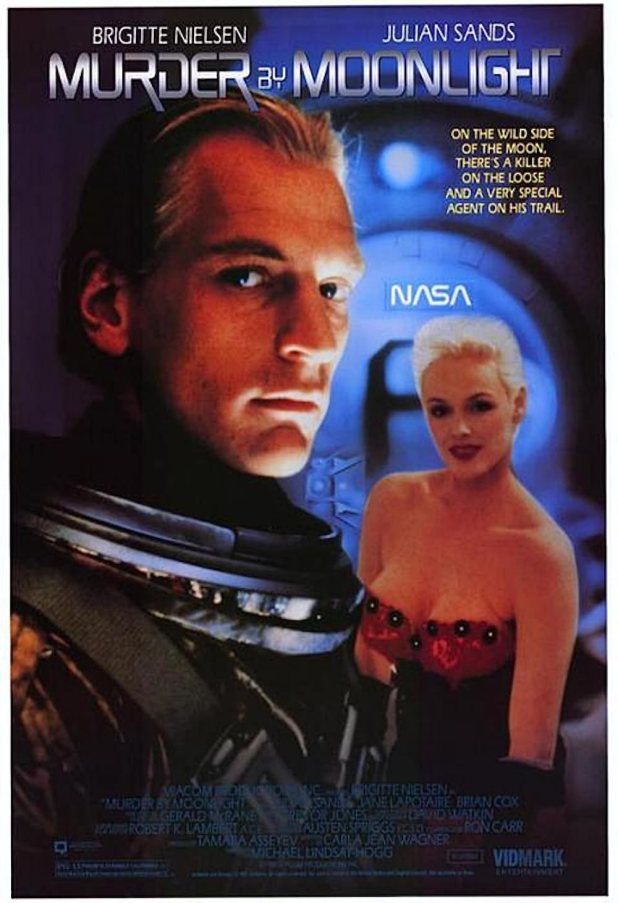
EDITOR’S NOTE: Murder On the Moon was on the CBS Late Movie on June 29, 1990.
Directed by Michael Lindsay-Hogg and written by Carla Jean Wagner, this is also known as Murder By Moonlight.
After nearly launching a nuclear war, America and Russia decided to work together to colonize the moon. But when several NASA astronauts are found dead, Dennis Huff (Gerald McRaney!) sends Lieutenant Maggie Bartok (Brigitte Nielsen) while Russian drafts Major Sorokin Kirilenko (Julian Sands) to figure out who the killer is.
Can these mismatched space detectives solve the case, compare haircuts and fall in love?
Michael Lindsay-Hogg had a wild career and life. His wife hinted when he was old enough to understand that his father may have been Orson Welles. A DNA test was inconclusive, but Gloria Vanderbilt confirmed the fact for him. He was a director on the British music show Ready Steady Go!, which led to him making clips that later would be known as music videos for the Beatles (“Paperback Writer,” “Hey Jude,” “Revolution,” and “Rain”) and the Rolling Stones (“2000 Light Years from Home,” “Jumpin’ Jack Flash” and “Child of the Moon). He also directed The Rolling Stones’ Rock and Roll Circus and The Beatles’ Get Back, where the Apple rooftop performance comes from and the footage Peter Jackson used for his documentary.
In the 70s, he had great success with Brideshead Revisited and Nasty Habits. In the 80s, he made Simon and Garfunkel’s The Concert in Central Park, Neil Young’s Neil Young in Berlin and Graceland: The African Concert with Paul Simon. And as the 90s came, he made TV movies like Ivana Trump’s For Love Alone.
This has an interesting cast, including Brian Cox, David Yip (Wu Han from Indiana Jones and the Temple of Doom) and Ricco Ross (Private Frost from Aliens). There’s also a completely out-of-left-field trans element that is just as wild in 2023 as it had to be back in 1989.
EDITOR’S NOTE: This episode of Kolchak: The Night Stalker was on the CBS Late Movie on September 28, 1979, November 13, 1987 and March 25, 1988.
Experimental biologist Jules Copenik is killed by something so savage that it rips his arm out of the socket. As he worked for the Oceanic International Oil Corporation, that’s big news and draws in Carl Kolchak. This time, he’s fighting with authority again — Captain Maurice Molnar (John Marley) — but that doesn’t stop Carl from meeting PR hack Thomas J. Kitzmiller (Pat Harrington Jr.) and learning more about the research that Copenik was involved with.
Copenik and his co-worker, Doctor Helen Lynch (Katherine Woodville), have been studying Arctic samples that have trapped and preserved single-cell life forms. Carl asks to speak to her, but he is told she was in a car accident and couldn’t speak to anyone.
A photographer named Ron Gurney (Craig R. Baxley) is killed by an ape-like creature currently kept captive. Carl learns the news from his enemy, Ron Updyke (Jack Grinnage) and wonders if he’s part of the conspiracy that permanently destroys his stories. Then the monster escapes, and Carl gets a photo, just in time for Molnar to smash his camera. The ape-man also murders Jeannie Bell from The Muthers and TNT Jackson!
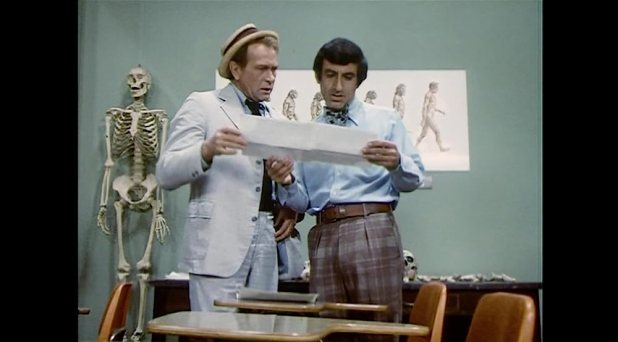
Carl turns to a high school biology teacher, Jack Burton (Jamie Farr), who claims he’s never seen a print like the one Kolchak has of the creature. That means Carl will have to find the beast deep below what was once Chicago Stadium.
One of the victims, William Pratt, is named after Boris Karloff. It’s Karloff’s real name. One wonders, between the DNA being brought back from the Arctic and a character named Jack Burton, if John Carpenter saw this episode.
Director Robert Scheerer also made Ants! while writer David Chase would go on to create the Sopranos, and Bill S. Ballinger wrote the “Firefall” episode of Kolchak and “The Ghost of Potter’s Field” for Ghost Story.
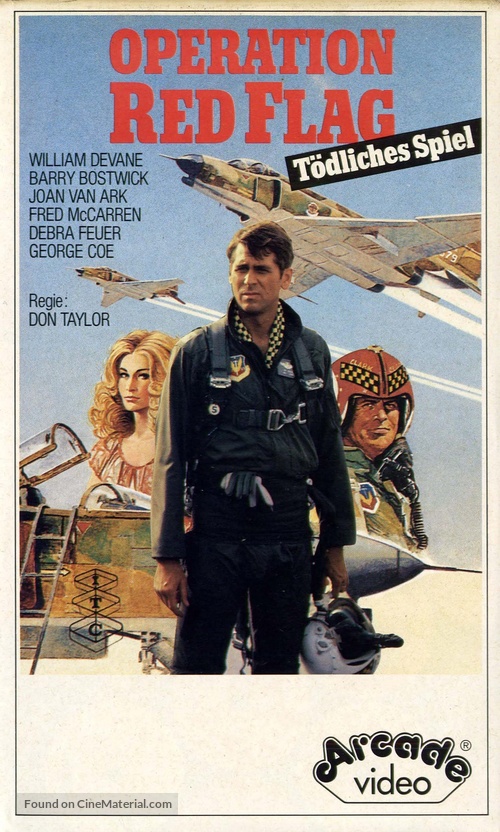
EDITOR’S NOTE: Red Flag: The Ultimate Game was on the CBS Late Movie on November 2, 1984.
Major Phil Clark (William Devane) and Major Jay Rivers (Barry Bostwick) share a unique bond. Having flown together in Vietnam, they were later assigned to the elite Red Flag Air Force Fighter Weapons School at Nellis AFB, Nevada. Clark, with his loud and self-confident demeanor, is a stark contrast to the quiet Rivers. Their friendship, however, is strong. But when Rivers begins to outshine his mentor, Clark, the dynamics of their relationship are put to the test. Can they maintain their friendship?
Chuck Yeager was the advisor on this, and you get some great F-4 Phantoms in flight. However, a substantial part of the film delves into the on-the-ground relationship drama between Rivers and his wife Marie, played by Joan Van Ark. This aspect of the film adds emotional depth and character development, making it more than just a military action movie.
The IMDB trivia page for this and the goofs are filled with deep military knowledge, so if you want to know what medals Devane has or why some parts are wrong, well, some servicemen are happy to help.
Red Flag: The Ultimate Game was directed by Don Taylor, a seasoned filmmaker known for his work on Stalag 17, Ride the Wild Surf, Escape from the Planet of the Apes, The Final Countdown, The Island of Dr. Moreau and Damian: Omen II. The script was written by T.S. Cook, who also penned the screenplay for the acclaimed film The China Syndrome. With such a talented creative team, you can expect a compelling and well-crafted film.

 B&S About Movies