Oh Harry Novak just seeing your name makes me realize that I am about to see something incredibly scum-sodden. You have such a fancy signature and make movies filled with such pulchritude. Let’s all have a moment to think of all Mr. Novak has done for us.
Like this movie, which is exactly what I was looking for when I started this week of drug movies.
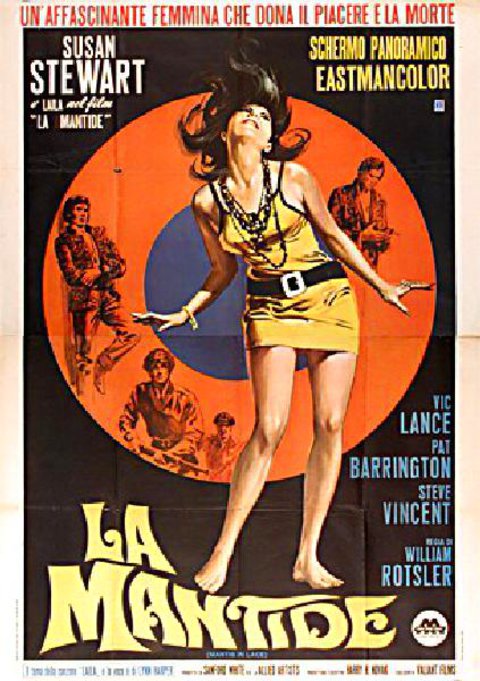
Lila (Susan Stewart, The First Nudie Musical and credits for additional voices on Scooby-Doo, which really could be the best IMDB credits listing ever) is a go-go dancer who gets turned into a literal mankiller thanks to C20H25N3O. All she wants to do is make it with the men she picks up on the Sunset Strip, but once they get back to her pad, she hears her theme song and sees an old man with a huge stack of money and a handful of bananas. That’s when she must kill them with garden tools and then she imagines that she is chopping up fruit while she’s really dismembering their bodies to dump off into cardboard boxes. I kid you not!
Then, we get lots of drug use, topless dancing and strobing and zooming camerawork. I’m in. I’m all the way in. And hey look — it’s Pat Barrington from Orgy of the Dead! Yay!
Speaking of Pat, she dated Melvin Rees at the time that he was arrested for mass murder. She was working as Vivian Storm in mob-owned go go clubs and he was a jazz musician. Pat’s life really could have been made into a movie, as she kept on dancing until the mid 1990’s when she was in her fifties. Rees? Well, he was arrested for at least five murders and numerous other crimes.
As for Mantis In Lace, it’s a film awash in sin and debauchery. They don’t, can’t, won’t and maybe even shouldn’t make them like this anymore.
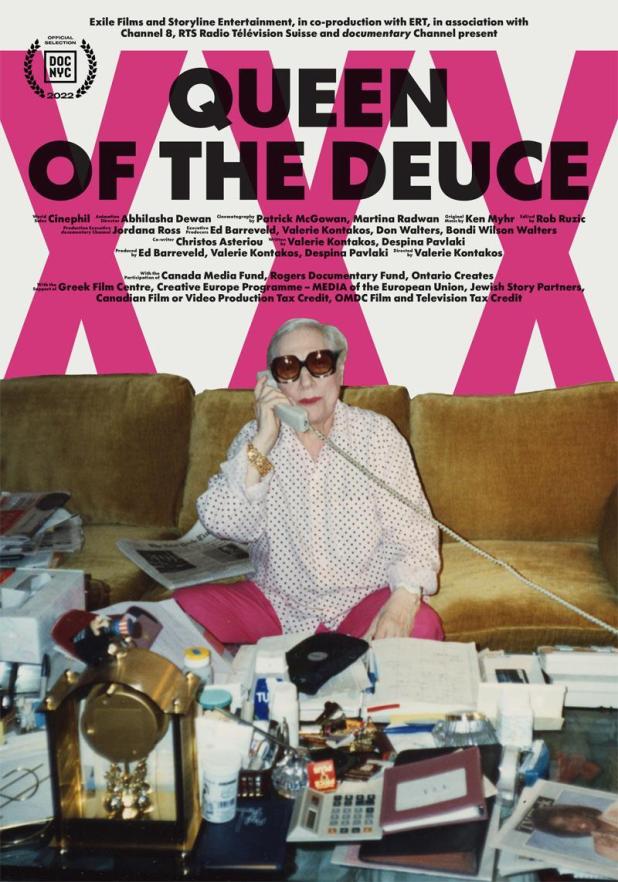
An engaging documentary focused on the remarkable life of maverick theater owner Chelly Wilson in the heyday of cinematic porn as well as a valentine to the era of grindhouses on New York City’s 42nd Street, director Valerie Kontakos’s Queen of the Deuce is a fascinating watch.
There’s no question that Wilson lived a life, and Kontakos explores it wonderfully, from Wilson’s childhood in Greece to her move to America with only $5 to her name, to becoming the the owner of several highly profitable gay porno theaters in the 1970s and a highly respected center of attention to those who knew her. Believe me, there are so many details in this documentary, from heartbreaking to hilarious, about Wilson — an openly gay woman who married men, a Jewish woman who enjoyed celebrating Christmas, a wealthy woman who chose to live above one of her theaters rather than in a more expensive abode — that there aren’t room for in this review.
Archival audio and video footage of Wilson shares screen time with interviews with some of her relatives and colleagues, all of whom have remarkable stories about her. Speaking of archival footage, scenes of 42nd Street from the seventies should bring lumps to the throats of many a grindhouse theater fan.
Queen of the Deuce is a superb documentary about Chelly Wilson’s jaw-dropping life story, not only in breaking the glass ceiling in the adult film industry but as a younger, free-spirited woman in Greece, and the many fully lived years in between and after. Kontakos’s terrific film comes highly recommended to anyone who enjoys an unusual life story of someone battling the odds and coming out on top.
Queen of the Deuce screened as part of the 2024 edition of Make Believe Seattle, which runs March 21–26. For more information, visit https://www.makebelieveseattle.com/.
What if he starred in it — using his real name and not Cash Flagg — as private eye Charlie Smith?
And what if he were hired by Big Mack, who is played by Bernard Fein who created Hogan’s Heroes, to find a heroin-stealing cat burglar named Carrie Erskine who is, of course, played by Carolyn Brandt, Steckler’s wife?
Also known as Deadlocked and Super Cool, this has all of the Steckler players in it, like Gary Kent, Joseph Brado, Herb Robins and Ron Haydock. But I loved seeing Steckler acting like a tough guy and getting all sorts of women when he’s not fighting various bad guys. It was almost called The Last Original “B” Movie which is a funny name but Body Fever seemed to stick.
Oh yes, that is Coleman Francis, the director of The Beast of Yucca Flats, The Skydivers and Red Zone Cuba. Steckler had just completed filming the last scene and when walking to his car, he saw Francis drunk and lying in the gutter. Steckler felt so bad about Francis’s condition that, even though he had finished work on the movie, he offered Francis a role. Steckler added some scenes just to give Francis some work and money, which he gave to him in advance. Steckler and his crew were astonished when Francis showed up for work the next day sober, clean-shaven and nicely attired. Steckler had wanted him to play the part of a disheveled bum, but Francis had used the advance pay to buy a decent second-hand suit, a shave and a haircut.
Kevin Murphy of Mystery Science Theater 3000 said of his movie, “Coleman Francis uses edits like blunt instruments. He uses blunt instruments like blunt instruments. His major themes are death, hatefulness, death, pain, and death. He looks like Curly Howard possessed by demons from Hell. He tried to pass off Lake Mead as the Caribbean Sea. His films have the moral compass of David Berkowitz.”
He plays the only person Charlie trusts, a laundromat owner who went out of business when his customers kept using wooden change to get free washes. If you think that’s weird, well, Steckler wears a Gilligan hat through most of this movie.
A sequel called Bloody Jack was filmed in 1972 starring Steckler, Brandt and Robbins with Charlie discovering that all of the girls he’s dated are being killed, It was shot but never edited or scored.
Also known as Sea Killer — the name it was originally released in the U.S. — Mein Freund, der Hai (My Friend, the Shark); Peripeteies ston okeano (Adventures In the Ocean); Manidù – Uno squalo ribelle, un indigeno selvaggio, un fiore di ragazza (Oh Italy; this means Manidu – A Rebellious Shark, a Wild Native, A Flower of a Girl); Shark Boy of Bora Bora and The Hero King, Beyond the Reef often has posters that make it seem like it’s going to be sharksploitation.
Shot at the same time as the remake of The Hurricane with the same cast and crew minus Mia Farrow, this was produced Raffaella De Laurentiis, whose father Dino thought Dayton Ka’ne was going to be a star.
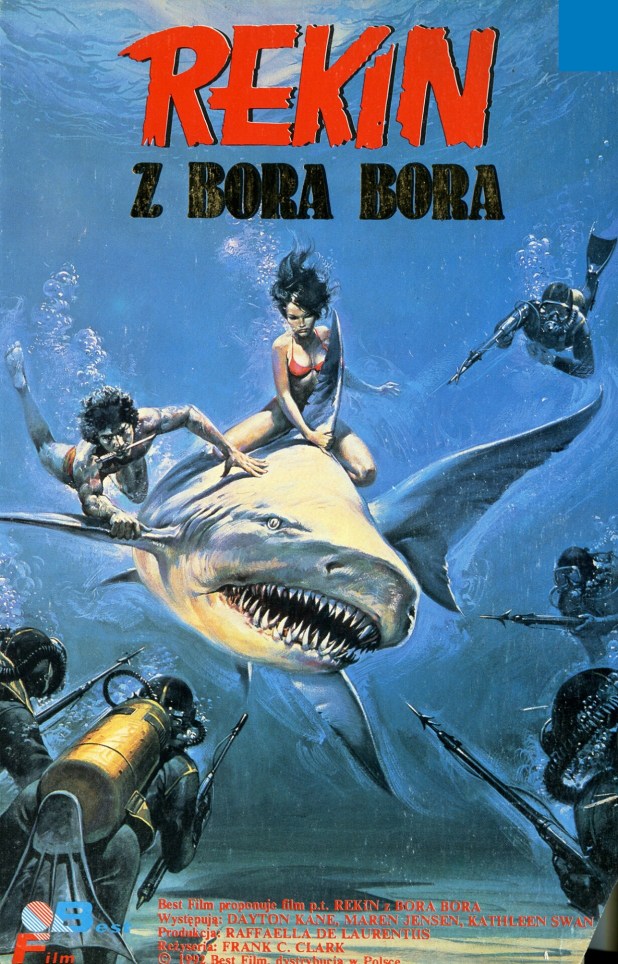
Beyond the Reef is a movie about a 16-foot tiger shark named Manidu, which has been named for the old man (Oliverio Maciel Diaz) who introduced him to Tikoyo (Ka’ne) when the shark was only a foot long and the boy was young. He also had a friend, Diana (Maren Jensen), who goes off to America and forgets all about him. Meanwhile, the boy grows into a man and can mentally speak to his shark, like a friendlier version of Mako: The Jaws of Death except when the shark has to protect Tokoyo or Diana, which strangely has her brother Jeff (Keahi Farden) being evil and seeking a cave of black pearls.
All of the underwater footage has been shot by Ramon Bravo, who was a real renaissance man. He was a swimmer who competed in the 1948 Summer Olympics, then learned how to shoot cameras underwater and discovered the phenomena of sharks sleeping on the ocean floor. He also wrote the novel that Tintorera is based on and is also the zombie that fights the shark in Zombi. When he died, a collection of luminaries, including Jean-Michael Costeau, placed a memorial to him in the ocean that said “Ramón Bravo, protector of the sea and the ocean, sleeps forever next to his sharks in this cave. Isla Mujeres 02–28–98.”
Based on the novel Tikoyo and His Shark by Clement Richer, this was directed by Fred C. Clarke (his only movie) and written by Louis LaRusso II (The Closer) and James Carabatsos (Hamburger Hill). The novel was also made in 1962 as the Italian/French film Ti-Koyo e il suo pescecane.
If you thought it was strange that sharks can roar, this one purrs. Also, this movie has toplessness, which is kind of shocking with how charming it is. It kind of comes out of nowhere.
I love having people over to our house to watch movies. However, some folks don’t get to watch the really strange films in our collection. They have to make it through a test to see if they can hang. I’ve had the misfortune of trying to explain Beyond the Valley of the Dolls to people and get angry, then sad, then angry again when they just don’t get it. If you make it through my cinematic ring of fire, the journey through excess and madness and horror, then and only then are you greeted by the final challenge: 1973’s epic freakout The Baby.
This isn’t a movie that I’ve known about forever. Quite to the contrary — I discovered it two years ago when the trailer played during one of the all-night drive-in events at the Riverside Drive-In. The blast of strangeness in that trailer was enough to get Becca and I repeating the dialogue for weeks: “What have you done with my Baby?”
Luckily, Bill from Groovy Doom/Drive-In Asylum had a copy that he was only too happy to bring to our house. Too often these days, we’re greeted with too much hype for movies, with statements like, “If you don’t love this movie, you don’t understand cinema!” and “This movie shook me to my very core!” Well, I can honestly say that The Baby has destroyed my mind in a way that no film made before or since ever has.
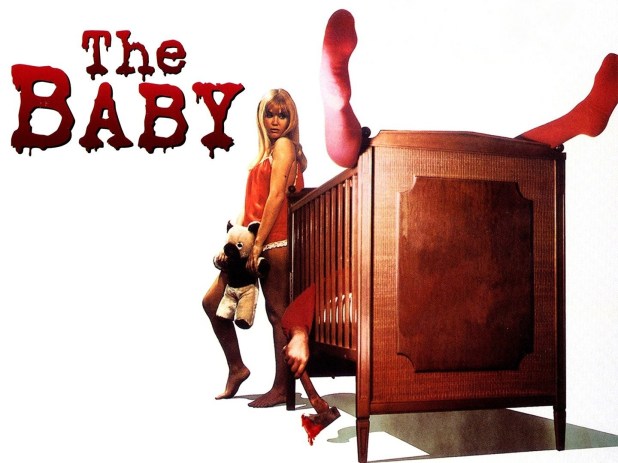
Ann Gentry (Anjanette Comer, The Loved One) is a social worker who has just been assigned to the incredibly strange Wadsworth family. There’s Mrs. Wadsworth (Ruth Roman, who not only starred in Strangers on a Train, but survived the sinking of the Andrea Doria), the strong-willed mother. Her daughters Alba (Susanne Zenor, who was the original Samantha in the pilot of TV’s Three’s Company before Suzanne Somers took over the role), who teaches tennis, and Germaine (the transcendent Marianna Hill, Messiah of Evil, Schizoid, BloodBeach), who occasionally acts in TV commercials when she’s not looking like a maniac. And finally, there’s Baby (David Manzy), a twentysomething man who doesn’t walk or talk and who has been raised as an infantilized adult.
You just read that right. This is a movie about a grown-up baby that sits in a crib and cries, but not just as cries. The original track containing baby sounds that Manzy worked so hard to craft during the filming was lost, so the voice of an actual baby was used. It’s disconcerting to say the very least. Add in that the actor completely shaved his body for the role and you have the foundations for a movie that’s more than a little left of center.
Ann is driven to improve the lives of her cases, but Baby is a special case. Perhaps too special to Ann, as she’s recently recovering from a severe auto accident that had a serious effect on her husband. The Wadsworth family totally depends on Baby for most of their income and as a result, won’t allow him to grow into an adult. And it seems like Ann could change all that, as she discovers that Baby’s current state is the result of neglect.
“Baby doesn’t talk. Baby doesn’t walk.” Baby also isn’t allowed to do things by himself, either being beaten, cattle prodded or restrained when he does anything against the rules. Even when Ann shows the family that Baby has the capacity for growth, she’s instantly rebuffed.
If all of the above was all that this movie would be about, it would still rank amongst the oddest ever made. But it gets much stranger. You see, nearly every woman who meets Baby wants to possess him. And some often want to have sex with him, like the sitter who gets into his crib and allows him to nurse from her. The Wadsworths come back home to this scene and proceed to annihilate the young girl and beat Baby into further submission. And even Baby’s sisters may love him a little more than siblings should.
Finally, the simmering discord between Ann and Baby’s family comes to a head on the night of Baby’s birthday party — which is the strangest one committed to film since perhaps Jessabelle the cat’s celebration in The Sentinel. That said, any party that has Michael Pataki as a guest is one that I want to be at!
After escaping the murderous intent of the Wadsworths, Ann finally succeeds in taking Baby away. Rather than turning him over to an institution, she keeps him at her house and then sends his family photos of their manchild doing adult things like standing up straight.
This sends the Wadsworth clan into a murderous tailspin, as they head for Ann’s house with killing in mind. However, she and her mother-in-law aren’t willing to give up their new guest without a fight.
Even though this film was made over forty years ago, I’m not giving you the ending here. I want you to see it for yourself with no preparation whatsoever.
Now, after reading all of the above, you have to be thinking — surely The Baby is an unrated affair or at worst it got an R, right? Nope. This is a PG movie. The 1970’s did not care at all about children, blasting them with both barrels of bonkers with movies like this, The Little Girl Who Lives Down the Lane and It’s Alive all getting just a simple Parental Guidance suggested label.
Here’s the next surprise: The Baby wasn’t an underground film. Nope, it was a mainstream release directed by Ted Post, who directed numerous TV series like Gunsmoke, The Twilight Zone and 178 episodes of Peyton Place, as well as Hang ‘Em High, Magnum Force, Beneath the Planet of the Apes and the TV movies Do Not Fold, Spindle, or Mutilateand Cagney and Lacey, which led to the series. The dark nature of this film kept Post away for a year before writer Abe Polsky was able to talk him into getting behind the lens.
The Severin blu ray of this film was a great package, complete with informative interviews with Post and Manzy. Arrow Video is releasing a new version this week with even more extras, including newly commissioned artwork by The Twins of Evil, deep commentary by Travis Crawford, interviews with Marianna Hill and one of the set painters and a discussion with film professor Rebekah McKendry on the influence of the film. It’s a great package that truly does this movie justice.
Back to the hype engine that sours so many on so many movies. Often, you’ll read things about how movies have permanently changed lives and scoff. I’m telling you that the way that I view movies and live has been forever altered by this movie. It’s hard for me to find another film that can match it for sheer audacity and bizarre subject matter. However, no words that I write can do it justice. You must watch it for yourself and be changed by the act of viewing it.
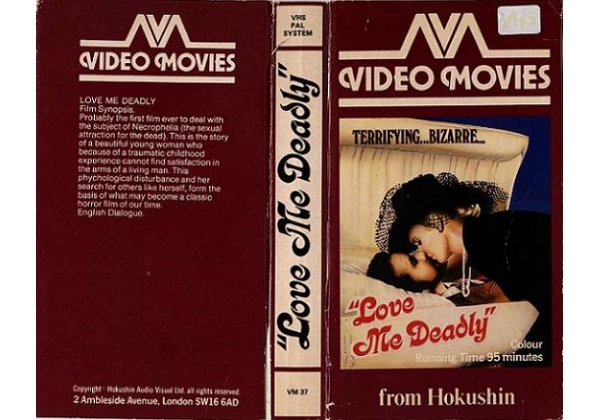
Lindsay Finch (Mary Charlotte Wilcox, The Beast of the Yellow Nightand Psychic Killer) loves to go to funerals, where she mourns and then kisses the dead men passionately after everyone else leaves. Throw in a theme song that sounds like it comes out of James Bond while we see flashbacks of her relationship with her dead father and visiting his grave and pigtails and I’m all in.
She has swinging hippie parties at her pad and her friend Wade (Christopher Stone, the late husband of Dee Wallace who appeared with her in Cujo and The Howling) tries to get with her. Just when it seems she’s giving in to his makeout moves, she screams at him to stop and he calls her a bitch, because this is 1973. She dreams of her father in yellow hued flashbacks and hugs a stuffed animal.
Later, she goes through the funeral notices to find the services for young men. We then meet Fred McSweeney, a mortician, as he picks up a male prostitute. That job is just a cover for his true love — a Satanic coven that meets at night, inside the mortuary, where they have orgies with dead bodies. McSweeney takes the young man to his workplace where he pumps the manwhore full of embalming fluid while he’s still alive, all while Lindsay goes to another funeral where she tries to make out with Bobby. She’s surprised by Alex (Lyle Waggoner, TV’s The Carol Burnett Show and Wonder Woman, as well as the honor of being the first nude centerfold in Playgirl and the appointed mayor of Encino, California), the man’s brother.
Speaking of that embalming scene, it goes on and on and on, with the young man screaming, “I’m blind!” over and over. It’s nearly campy instead of frightening. To say this film has an issue with tone is an understatement.
Lindsay sneaks out to Bobby’s funeral, where she starts to associate Alex with her father. He’s a rich gallery owner and they begin a romance — one she refuses to consummate, even after they are eventually married. Every time she sees him, we get yellow hued flashbacks with a music box soundtrack of her playing with her father. But more about that in a little, OK?
McSweeney speaks to Lindsay after he catches her at a funeral, telling her that he has a group that she should join. Yet she tries to remain normal, even going on a date with Wade that fails. That’s when she decides to see what McSweeney’s group is all about.
She walks into an orgy with the dead, which freaks her out enough to go back home. Then she and Alex fall in love with no dialogue, just a montage. It’s a strange part of an incredibly strange film, with this happy go lucky relationship coming out of nowhere in a film otherwise about sex with dead people.
Lindsay keeps talking to the cult and ends up getting a dead body of her very own. But Wade follows her and is killed by McSweeney. She screams in horror. This scene wasn’t n the original script, nor was the Satanic group in the one that follows, but were used to pad out the film and add more horror elements so that it would potentially play drive-ins better.
Again — tone being all over the place — we’re treated to a nude cult disrobing Wade’s corpse and having their way with it before Lindsay awakes screaming. But the marriage isn’t working out well, with Alex following her all over town and their maid — complete with the most stereotypical Irish accent ever — telling him that his wife spends her days at her father’s grave, wearing pigtails and dressed like a little girl. You should see the look on Alex’s face when he catches her as she yells, “This is not your place, go away!”
Alex tries to get Lindsay to go on a holiday to visit his mother, but he discovers a registered letter from McSweeney to his wife for a meeting at 10 PM. He follows her to the mortuary where he discovers his wife surrounded by nude devil worshippers as she makes love to a dead body. She looks frightened and then McSweeney murders Alex, which calms her.
McSweeney drugs her as she lies in her bed, then brings in her husband, now embalmed so he can last forever, finally a man who she can be attracted to: the combination of her father — who we see in flashback being shot accidentally by her — and the man she fell in love with. The editing here — combined with dissonant instruments and a remix of the title theme — is crazy, like this film has suddenly become Beyond the Valley of the Dolls.
We see intercut shots of Lindsay getting under the covers with her dead husband and her getting in the coffin with her father as everything goes sepia tone and the theme song returns.
Love Me Deadly isn’t for everyone. It’s one of those films that I hesitate to recommend to normal folks. But it is the kind of movie I text people about in the middle of the night.
Code Red has released this film on DVD, but it’s still rather hard to find. It’s up on YouTube, where I found it. It’s…well, it’s something. If you enjoyed The Baby, well, then you’re on the right wavelength of this one.
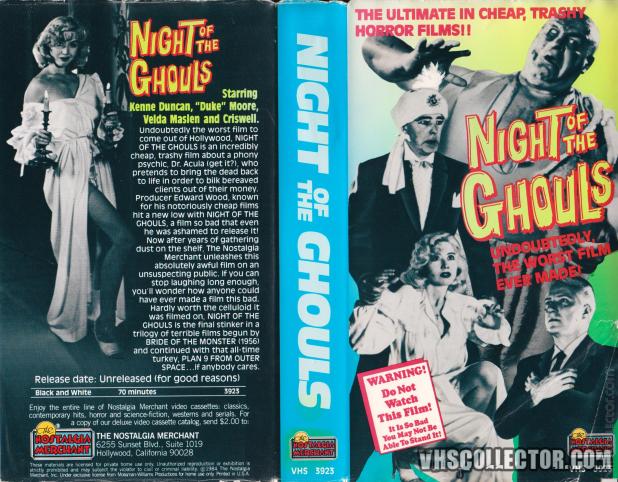
You bring back Tor Johnson as Lobo and Paul Marco as Kelton the cop from Bride of the Monster, you get Criswell to do another framing story and get the character of Captain Robbins to return as well, even if Johnny Carpenter takes over the role from Harvey B. Dunn, who does play a frightened driver in this.
Originally called Revenge of the Dead, this sat on the shelf for years after its premiere. Wood had intended to make changes but couldn’t afford the post-production work. The film laboratory opted to keep the negative footage and for years, people thought that this wasn’t a real movie or a lost one. Film archivist Wade Williams managed to locate the film with the help of Wood’s widow Kathy.
It’s also a lot like The Unearthly. The writer of that movie is supposedly the director’s wife, but I’ve also heard it was Ed Wood. The plot is the same — there’s an isolated setting, a supernatural carny and undercover cops. Tor Johnson also plays Lobo in both movies, which were both shot in 1957. It also has a lot of stuff taken from the movie Sucker Money.
Criswell starts us off by pronouncing “How many of you know the horror, the terror I will now reveal to you?” Oh Criswell. We’re ready. Maybe not for you to talk about juvenile delinquents and drunk driving, but whatever you want to discuss.
Then we watch as a couple fight when the man gets too aggressive. They are soon killed by a Black Ghost. That’s when Kelton comes on board to investigate, saying “Monsters! Space people! Mad doctors! They didn’t teach me about such things in the police academy! And yet that’s all I’ve been assigned to since I became on active duty! Why do I always get picked for these screwy details all the time? I resign.”
Are we in the Ed Wood Cinematic Universe? Yes.
There’s also a White Ghost who is really an actress named Sheila (Valda Hansen), a Dr. Acula (played by “The Meanest Man In the Movies” Kenne Duncan; as for the name Dr. Acula, does anyone still fall for that?), a seance at a table filled with skeletons, the Black Ghost (Jeannie Stevens) being revealed as a real undead creature and Criswell bidding us farewell from inside a coffin, telling us we’ll all be dead someday. Thanks Criswell.
Sometimes, Jeannie Stevens wasn’t there for her scenes. So when you see that, you’re seeing Ed Wood as her. I wonder if he wore his angora sweater under the costume.
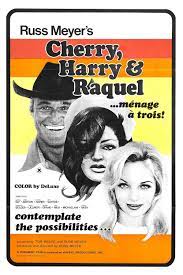
This is the first appearance in a Russ Meyer movie of Charles Napier. He plays Harry Thompson, a California border sheriff and marijuana smuggler who also somehow — spoiler warning — comes back from the dead to die again in Supervixens.
But as for this movie, it starts with a narration that blames marijuana for so many evils in society. Harry has ignored all that as he Harry works his sheriff job in between illegal activity. He lives at the site of a close silver mine with his English nurse girlfriend Cherry (Linda Ashton). As for Raquel (Larissa Ely), she’s a writer who has an interest in sexually pleasuring men. The two women learn of one another but Harry doesn’t want them to make love for some reason. When we first see Raquel, she’s in bed with Harry’s partner Enrique (Bert Santos). The two men work for Mr. Franklin (Frank Bolger), the town’s main politician, to move drugs. One of their other associates, the Apache (John Milo) is screwing everyone over. Franklin asks for him to be killed, but he gets away and steals Harry’s Jeep.
Now, Enrique knows too much and he must be killed. But the Apache gets to him — and Mr. Franklin — first. Raquel finds his body and is so upset, she must be hospitalized. Good news. Her nurse is Cherry and they finally get together to make love, all while Harry and the Apache do the exact opposite and kill one another.
But ah — it was all a story that Raquel was writing. This strange ending may be because a lot of the film’s footage was accidentally ruined by the color lab. Roger Ebert said, “The result is that audiences don’t even realize anything is missing; a close analysis might reveal some cavernous gaps in the plot, and it is a little hard to figure out exactly how (or if) all the characters know each other, but Meyer’s subjective scenes are so inventive and his editing so confident that he simply sweeps the audience right along with him. Cherry, Harry and Raquel! is possibly the only narrative film ever made without a narrative.” Uschi Digard, the lover of the Apache, was also added Linda Ashton quit and you have to admit that she adds a lot to the film. Meyer claims the other actress quit over her pomeranians ruining the carpets of the motel they were staying in and the owner getting upset.
He also said, “The picture is the most successful film I have on cable television-or hotel-vision-because you never have to come in at the beginning. It doesn’t matter. It could be a loop.”
It also has one of the first instances of mainstream full frontal male nudity, which made it a controversial movie all the way back in 1969.
“Two Much For One Man…Russ Meyer’s Busty Buxotic Beauties … Titilating … Torrid … Untopable … Too Much For One Man!”
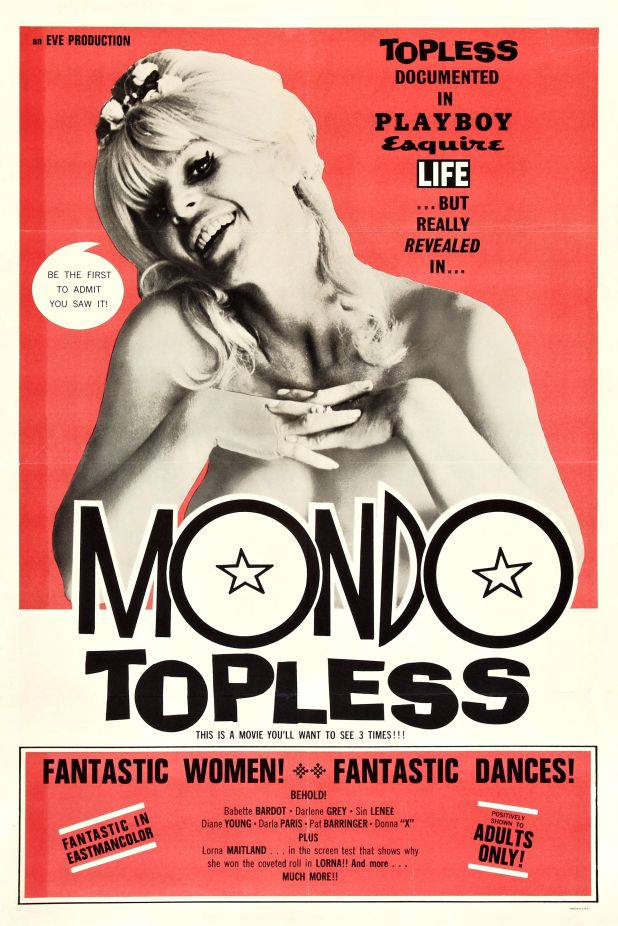
After going from nudies to roughies, Russ Meyer made this mondo film that explores San Francisco as well as the women who dance there in one of the first cities that permitted them to dance topless. As they show themselves to the camera, there’s a non-stop barrage of a narrator speaking, the girls being interviewed and distorted guitars.
The women who appear include Bouncy, who is Babette “44-24-38 World’s Most Sensational Exotic Entertainer” Bardot, who also appeared in Meyer’s Common Law Cabin; Pat Barrington, who was in Mantis In Lace and dated jazz musician and serial killer Melvin Rees; Lucious (Sin Lenee); Buxotic (Darlene Gray); Yummy (Diane Young); Delicious (Darla Paris); Xciting (Donna X) and footage from Europe in the Raw of Veronique Gabriel, Greta Thorwald, Denice Duval, Abundavita, Heide Richter, Gigi La Touche and Yvette Le Grand. There’s also screentest footage from Lornaof Lorna Maitland.
Pat Barrington says in this “All you’re doing is a dance – it has no meaning whatsoever” and she’s right. This is an hour and fifty-five minutes of women dancing nude in front of radios. What must a girl possess to measure up as a topless dancer? She must have a body well above the average in physical beauty – unblemished by an uneven suntan!” This is as pure a journey into what Euss Meyer wanted to see — well, he called it “crud” and made it just to make money — if he were the paying customer. I kind of enjoyed Abundavita, who has antenna of some sort. Also, Yvette LeGrand dances at the Crazy Horse and that reminds me that as dumb as Motley Crue was, they wrote “Girl, Girls, Girls” and that ensured they’d get free lap dances at every bar they mentioned (those would be the now closed Dollhouse in Ft. Lauderdale, Tattletails in Atlanta, the Seventh Veil on the Sunset Strip, Crazy Horse in Paris, the Body Shop in Hollywood, the closed Tropicana in Los Angeles and the closed Marble Arch in Vancouver).
This movie has no redeeming value unless you like to watch naked women dance next to trains. Maybe I do, you know?


 B&S About Movies
You must be logged in to post a comment.