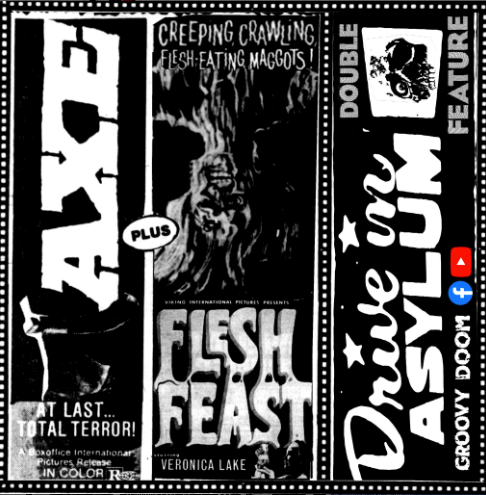
REGIONAL MADNESS ON THE DIA DOUBLE FEATURE!

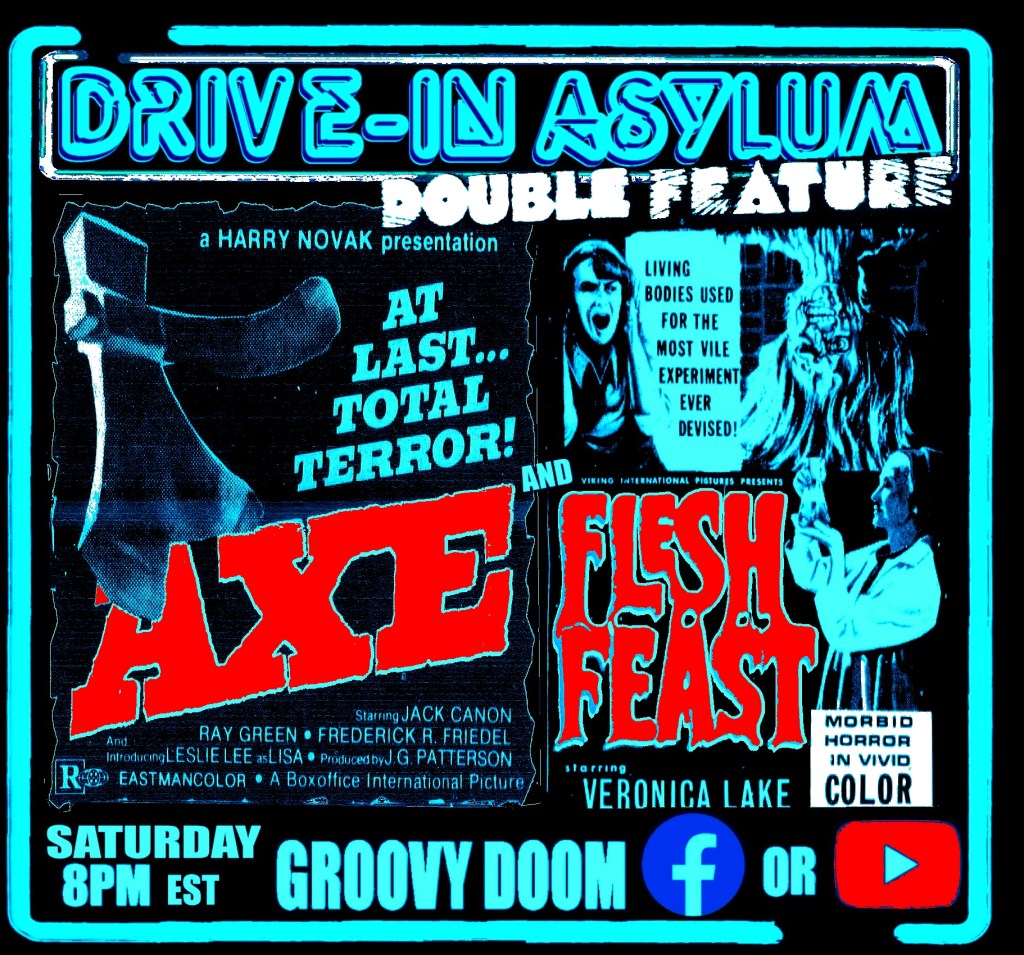
Join us at 8 PM EDT on the Groovy Doom Facebook or YouTube channels for two grimy journeys into the heart of darkness that lies within regional horror films!

First, we’ll take a trip to Charlotte, North Carolina for a 67-minute video nasty once known as Lisa, Lisa and renamed Axe by Harry Novak. You can watch it on YouTube.

Every week, we discuss the movies we love with our hyper-knowledgeable chat room, show ad campaigns and make a drink that goes with each movie. Here’s this week’s first recipe:

Lisa, Lisa

  • 1 oz. vodka
  • 1 oz. peach schnapps
  • 4 oz. sweet tea
  • .5 oz. lime juice
  • .25 oz. honey
  1. Pour all ingredients into a glass filled with ice.
  2. Stir, sit back and enjoy.

Our second movie brings us to Florida, where Old Hollywood royalty Veronica Lake would make her last film surrounded by flesh-eating maggots in Flesh Feast. You can watch it on YouTube.

Here’s the second recipe:

Maggots 

  • 1/2 oz. vodka
  • 1/2 oz. peach schnapps
  • 1/2 oz. Bailey’s Irish Cream
  • 1/2 oz. Kaluha
  1. Pour all of the ingredients in the order they are listed. Don’t mix them.
  2. Slightly shake the glass to have maggots appear.

See you Saturday.

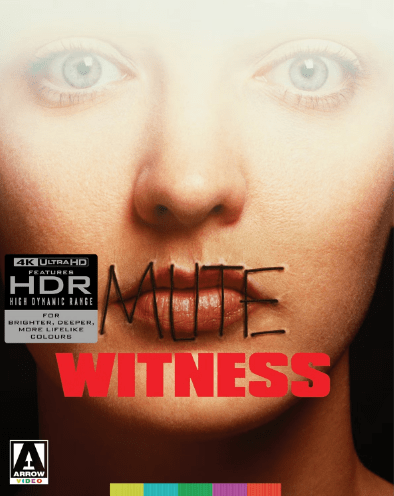
ARROW 4K UHD RELEASE: Mute Witness (1995)

The debut movie of Anthony Waller, who would go on to make An American Werewolf In Paris, Mute Witness is the story of Billy Hughes (Marina Zudina), a make-up artist working on a slasher movie in Moscow that is directed by Andy Clark (Evan Richards). She knows him, as he’s the boyfriend of her sister Karen (Fay Ripley).

What she does not know is that there’s also an adult movie being shot on the same set at night and it’s not just a pornographic film, it’s also a snuff movie.

She’s chased by the killer, Arkadi (Igor Volkov) and the director, Lyosha (Sergei Karlenkov), forcing her to jump out a window. Her sister arrives to save her and Lyosha acts like he happened on this accident.

After the police arrive, Billy is able to communicate that she’s seen a killing. They use her special effects to tell the authorities that it was all for a movie. Meanwhile, Arkadi is disposing of the woman’s body in an incinerator and a man known only as The Reaper (referred to as a special guest, we’ll get to that soon) shows up to make sure everything has proceeded properly.

Luckily for Billy, she’s protected by Detective Aleksander Larsen (Oleg Yankovsky), a Moscow cop who has been after this snuff film crew. Not that Billy can’t protect herself, as she throws a hairdryer into a bathtub to take out the director. But can Larsen be trusted? And why does The reaper think she has a disk that has all the information the police need to stop him?

Roger Ebert compared this movie to Halloween and Blood Simple. That’s how good it is. I wish it’s director didn’t get stuck with such a bad movie to make once he got to Hollywood.

As for The Reaper, that’s Alec Guinness. His cameo was filmed nearly a decade before this movie, as Waller worked with him on a commercial. The actor asked for no money, which ended up being one of his final roles. All that he asked was that he not be credited in the film and there be no press surrounding his involvement in it. That’s why The Reaper is played by Mystery Guest Star.


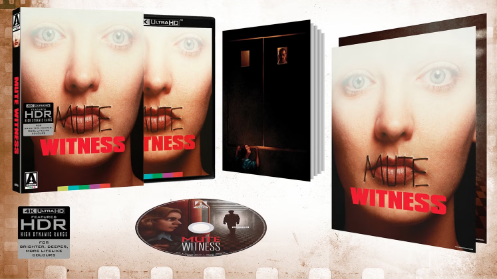
The Arrow Video 4K UHD release of this movie has a 4K restoration approved by director Anthony Waller, who also has a commentary track. There’s a second commentary with production designer Matthias Kammermeier and composer Wilbert Hirsch, moderated by critic Lee Gambin. Plus, there’s visual essays by Alexandra Heller-Nicholas and Chris Alexander; the Snuff Movie presentation used to get investors; original location scouting footage; original footage with Alec Guinness, filmed a decade earlier than the rest of the movie; a teaser trailer; a trailer; an image gallery; a reversible sleeve featuring original and newly commissioned artwork by Adam Rabalais; a double-sided fold-out poster featuring original and newly commissioned artwork by Adam Rabalais and an illustrated collector’s booklet featuring new writing on the film by Michelle Kisner.

You can order this from MVD.

RADIANCE FILMS BLU RAY RELEASE: Dogra Magra (1988)

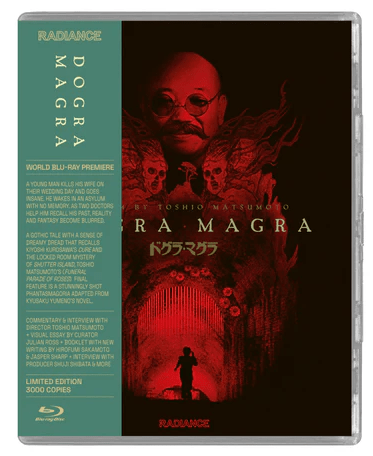
A man named Kure Ichiro (Yoji Matsuda) wakes in an asylum with no memory and is told by Dr. Wakabayashi (Hideo Murota) and Dr. Masaki (Shijaku Katsura) that he’s blocking the past as he killed his bride on his wedding day. However, his treatment begins to confuse fantasy and reality, especially a manuscript called Dogra Magra.

Based on the novel by Kyusaku Yumeno and the last film of director Toshio Matsumoto, Dogra Magra is a movie that features a hospital filled with pickled punk babies in jars, doctors who try and convince a man that he’s a character in a novel, rotten corpses and a reality that may or may not be true. One of the doctors might now even be alive.

This is a film with no easy answers and maybe the best way to watch it is just to let it wash over you and try to figure it all out on the tenth rewatch.

Presented on blu ray for the first time outside of Japan, this Radiance Films release has a digital transfer supervised by director of photography Tatsuo Suzuki and producer Shuji Shibata. It also has commentary and an interview with director Toshio Matsumoto; a visual essay by programmer and curator Julian Ross; information on the Ahodara Sutra chant by legendary street performer Hiroshi Sakano; a trailer; a reversible sleeve featuring original and newly commissioned artwork by Time Tomorrow; a limited edition booklet featuring new writing by Hirofumi Sakamoto, president of the Postwar Japan Moving Image Archive and author Jasper Sharp on screenwriter Atsushi Yamatoya, an interview with producer Shuji Shibata and Matsumoto’s director’s statement; and it’s all in a limited edition of 3000 copies, presented in full-height Scanavo packaging with removable OBI strip leaving packaging free of certificates and markings.

You can order this movie from MVD.

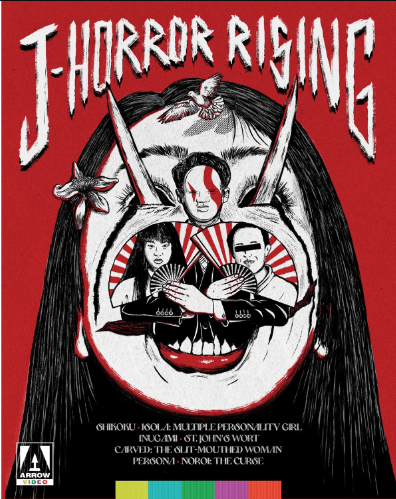
ARROW VIDEO BOX SET RELEASE: J-Horror Rising

J-Horror gets its start in the Japanese horror films of the 1980s. There were definitely Japanese horror films before, but the country seemed to find some unique influences from this point on that influenced other nations — particularly America — to be influenced by them instead of the other way around. As J-Horror pushed the horror form away from gore, it created atmospheric films of dread.

These haunted house-style films can be traced to several places. Certainly, Hausu is an early take on the haunted house genre, as is Sweet Home, which went on to form the basis of the Resident Evil video games.

In Colette Balmain’s Introduction to Japanese Horror Film, the idea of the family being destroyed is horrifying. That’s why so many of these films explore the breakup of the family unit and mothers often become monstrous specters of metaphysical death and destruction.

To get the whole story of J-Horror, I turned to someone who knows way more about it than me, Jennifer Upton, the author of Japanese Cult Cinema: Films From the Second Golden Age Selected Essays & Review. You can get it an Amazon.

Here’s what she had to say:

Although the first Japanese horror film is widely acknowledged as Onibaba, the term J-Horror did not become popular until the ‘90s and aughts when films like Ringu and Ju-On The Grudge became international sensations.

Unlike a Universal monster film or an ‘80s slasher, when you watch a J-Horror movie, you are watching Japan’s history going back all the way to the Edo Period unfold before your eyes. The stories are often thematically similar or an outright re-telling of ancient tales featuring ghosts, yokai or oni, originally made popular in the Noh and Kabuki plays of Japan’s past.

Like their theatrical forefathers, these films offer a slower pace than western audiences are accustomed to, relying instead on quietly disturbing sequences dripping with atmosphere achieved through lighting and sound design.

The major difference between western horror and J-Horror is in the films’ sense of sadness, loss and inevitability. In J-Horror, even a happy ending isn’t really all that happy. Although a ghost or vengeful spirit may be temporarily sated, the trauma left behind is almost always intergenerational and self-perpetuating. It’s precisely because the films in this set didn’t enjoy the global success of its contemporaries that we J-horror fans must gorge upon it like fresh sushi. To the rarely seen Noroi in particular, I say, “Get in my belly!”

Thanks Jenn!

Now, Arrow Video has released a box set of seven movies that are example of this the horror films that emerged in Japan at the turn of the millennium.
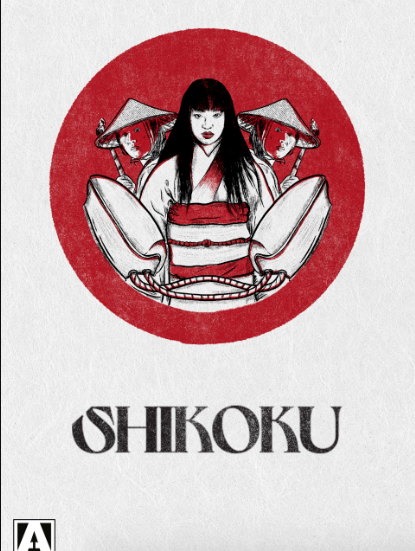
Shikoku: A young woman returns after many years to her rural birthplace, only to find her best friend from childhood has died by drowning when just sixteen. The dead girl’s mother, the local Shintoist priestess, has embarked on the region’s famous pilgrimage – but why is she walking backwards?
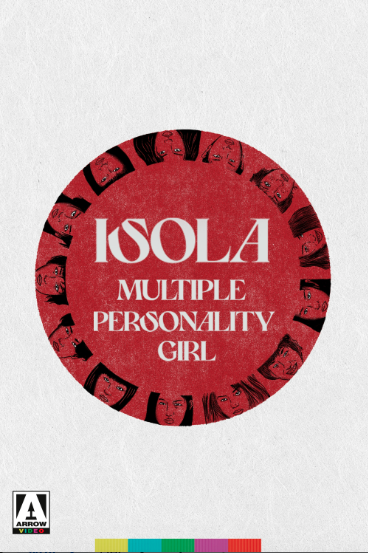
Isola: Multiple Personality GirlThe aftermath of the devastating Kobe Earthquake of 1995 creates fissures in the already fractured mind of a high-school girl, allowing an unwelcome intruder to set up home in her head and leaving a volunteer worker with psychic powers to determine which of her personas is the fake one.
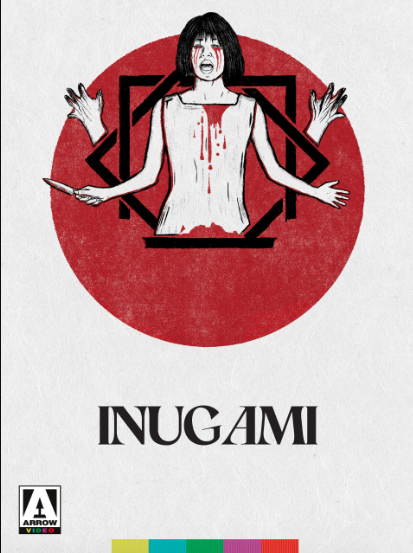
Inugami: A teacher from Tokyo finds himself drawn to a local papermaker, only to find himself the subject of some hostility from her extended family, who have long ties to the region and are rumored to be the descendants of the guardians of ancient evil canine spirits.
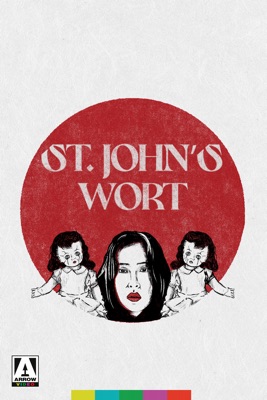
St. John’s WortThe art designer for a horror-themed videogame is forced to confront her childhood traumas when her colleagues ask her to gather visual materials from the creepy gothic mansion she has inherited from her estranged artist father.
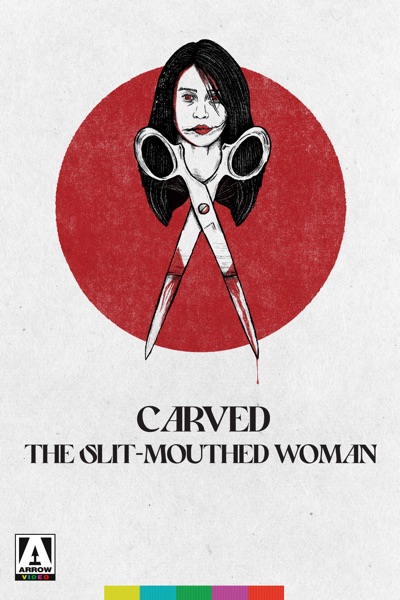
Carved: The Slit-Mouthed WomanHome isn’t the safest place for the potential child victims of the slit-mouthed mother and killer in this disturbing supernatural horror.

Persona: A new craze for wearing ceramic masks sweeps the students of a high school, unleashing a wave of anonymous juvenile delinquency.
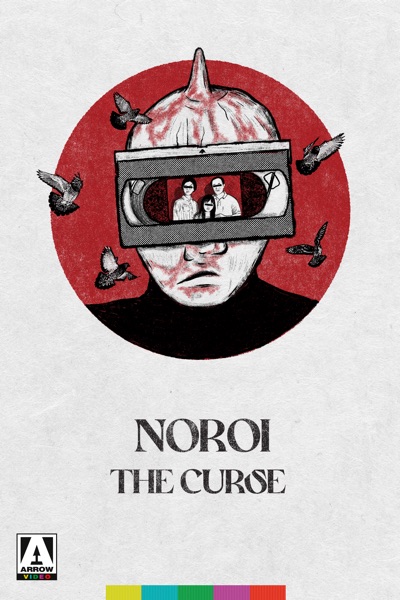
Noroi: The Curse: An investigative reporter into paranormal phenomena is forced to confront horrors beyond his wildest imagination after learning about an ancient folkloric demon.

This set includes an illustrated collector’s booklet featuring new writing by Eugene Thacker, Jasper Sharp, Anton Bitel, Amber T., Mark Player, Jim Harper and Sarah Appleton; a double-sided foldout poster featuring newly commissioned artwork by John Conlon and packaging with newly commissioned artwork by John Conlon.

You can get it from MVD.
Tales from the Crypt S5 E6: Two for the Show (1993)

Andy (David Paymer) and Emma (Traci Lords) are having the same dinner and the same conversation about work and finally, Emma has enough and tells her husband she wants passion, so she’s running away. He chokes her and as she tries to fight back, he stabs her, leaving her for dead.

“I tell you, ladies and germs, that ghoul-friend of mine makes me so crazy. She told me she thought she’d look good in something long and flowing, so I threw her in the Mississippi! Hmm. And how about that Ernest Hemingway, always shooting his mouth Oh. Hello? Anybody? I know you’re out there, folks. I can hear you bleeding! Is this on? Hmm. I know what this crowd wants. A little slay on words! Maybe a couple of nasty fright gags? Something along the lines of tonight’s nasty nugget? It’s a little tale about marriage, or if you prefer, about wife and death. I call it: “Two for the Show.””

He’s soon being questioned by Officer Fine (Vincent Spano) about what has happened to Emma. Afterward, as he loads a box with her body in it on a train for Chicago, Andy has to get on board, as Office Fine asks what’s in the trunk. He says that he’s going to meet his wife, which means he must take the train and sit next to the cop, who keeps asking him about killing his wife. After all, Fine has a wife he’d like to murder.

What would the odds be if their wives were having an affair with one another?

Directed by Kevin Hooks (Passenger 57) and written by Gilbert Adler and AL Katz, this has some good twists and turns. And you knew I’d like it just because Traci Lords is in the cast.

“Two for the Show” is based on a story in Crime SuspenStories #17 that was written by Al Feldstein and William Gaines and drawn by Jack Kamen. Actually, that story works alongside another story in the same issue, “One for the Money,” as the corpse in that story pays off this one.

ARROW BLU RAY RELEASE: J-Horror Rising: St. John’s Wort (2001)

Otogirisō wasn’t marketed as a video game but instead a sound novel, today called a visual novel. Koichi Nakamura conceived the title after showing his work on the Dragon Quest games to a girl he was dating. She didn’t understand the game or why people would want to play it, so he decided to make a video game “for people who haven’t played games before.”

Obviously, his work was inspired by another video game that led to a series of better-known games (and movies), Sweet Home. Nakamura said, “The thing that was really interesting about Sweet Home was that it so scary that you didn’t want to continue playing. I wanted to create an experience where the user would be too afraid to press the button to continue the story, too.”

It’s less of a game and more of a Choose Your Own Adventure novel where you make choices at different point as you and your girlfriend Nami survive a car accident and arrive at a mansion. Nobody answers when they ring the bell, so of course they go inside.

If you play emulated games, you can try it out here in English.

Nami Kaizawa (Megumi Okina) has inherited her family’s money and gigantic home, which holds bad memories as her father, who abandoned her. Deciding that she should explore it, she takes her ex-boyfriend Kohei Matsudaira (Yoichiro Saito), who is a fan of her father’s sinister paintings. He has already decided that the house would be perfect for a new video game that he is working on with Nami, so he brings a web camera and sends back footage to his friends and fellow designers Toko Ozeki (Reiko Matsuo) and Soichi Kaizawa (Reiko Matsuo).

The film is not just a video game movie, but literally like a Twitch channel, as we see the designers drawing maps of the house as Nami and Kohei make their way through the secret rooms and keys that you would expect to look for in a game just like this.

Directed by Shimoyama Ten, this has strange multihued visuals that are very 2001, but that’s the joy of it to me. It plays with the idea of what is real and what is the game — like eXistenZ — and has creepy dolls, a frightening caretaker, a heroine with memory lapses and plenty of gore. As I got into other reviews, I couldn’t believe so many people didn’t like it as much as me. Maybe I watching other people enjoy games?

St. John’s Wort is one of the films on Arrow’s new J-Horror Rising set. It has extras including commentary by Japanese cinema expert Amber T.; a making of feature; interviews with actors Megumi Okina, Koichiro Saito, Reiko Matsuo and Koji Okura; trailers; TV commercials and an image gallery.

You can buy it from MVD.

ARROW BLU RAY RELEASE: J-Horror Rising: Inugami (2001)

Akira Nutahara (Atsuro Watabe) has arrived on Shikoku island to be a schoolteacher. He has fallen in love with Miki (Yûki Amami), an older woman and paper maker who cares for an urn that is said to carry Inugami, a forest wolf spirit. Her family is set to commemorate the 900 Year Rites in which they will celebrate the forest and their past connection to it, as well as the fact that they still own much of the land.

Miki’s family has also guarded these spirits and kept the village safe from nightmares, but with the arrival of Akira, supernatural events have been occurring. After she and Akira have a romantic cave moment, she begins to grow younger and tells the spirit of her mother that she no longer wants the responsibility of keeping the spirits and wants to leave the island with Akira.

It also turns out that due to the curse placed upon the family, they have become intermarried or have to find men that have no idea of what the family must endure. No woman can leave the island and even if they try, they always return. The family patriarch Takanao (Kazuhiro Yamaji) keeps TV and radio away from his family and he is the only person connected to the outside world.

The rest of the village grows angry that there have been several accidents and deaths, which they blame on the family, and prepare to kill them, starting by destroying the studio in which Miki creates her intricate art.

Director Masato Harada has created a gorgeous movie that may not always be horror, but looks at how Japan’s past and superstitions still exist, as well as how family secrets never seem to go away. It’s a slow moving film that demands that you stay with it, but when you get to the scenes where the family goes into the forest and it becomes black and white, your patience will be rewarded.

Inugami is one of the films on Arrow’s new J-Horror Rising set. It has extras including audio commentary by Japanese cinema expert Jonathan Clements, an interview with director Masato Harada and an image gallery.

You can buy it from MVD.

ARROW BLU RAY RELEASE: J-Horror Rising: Noroi: The Curse (2005)

As he worked on a documentary he called The Curse, paranormal expert Masafumi Kobayashi (Jin Muraki) disappeared, leaving behind his burned home and his dead wife Keiko (Miyako Hanai). All that is left is the movie he was making.

The Curse concerns Junko Ishii (Tomono Kuga), a woman whose apartment created sounds of crying children. After she moves, Kobayashi and his cameraman break in to find dead birds just as the neighbor and her daughter die in a car crash. Another person has gone missing, a psychic girl by the name of Kana Yano (Rio Kanno) who was taken away by electroplasmic worms, according to another psychic, Mitsuo Hori (Satoru Jitsunashi).

The truth is that Ishii was the daughter of a priest who performed a ritual in 1978 to rid a village of a demon named Kagutaba. Ishii was possessed and has been stealing babies and performing abortions in the years since, as the demon infiltrates the minds of people like actress Marika Matsumoto and making people hang themselves.

If that’s not enough, Ishii tries to take the psychic girl and feed her abortions to summon the demon, which ends up with her hung, the girl dead and Ishii’s son alive. He’s adopted by Kobayashi but we learn — spoilers — in the end credits scene that Hori has escaped from an institution and beats the boy with a rock, believing that he is the demon. Kana’s ghost arrives and Kobayashi’s wife sets herself on fire and the apartment burns as the videotape ends.

I usually hate found footage, but director and writer Koji Shiraishi has such a talent that he makes it work for this film. I loved his movie A Slit-Mouthed Woman and the weirdness of this feels real, like going through the channels late at night and ending up on something that keeps you awake for the entire night.

Noroi: The Curse is one of the films on Arrow’s new J-Horror Rising set. It has extras including new audio commentary by film critic Julian Singleton, new interviews with director Koji Shiraishi and producer Taka Ichise, video essays by Japanese horror specialist Lindsay Nelson and Japanese cinema expert Amber T, and featurettes including How to Protect Yourself Against Curses and the Urgent report! Pursuing the Truth about Kagutaba!! TV Special. You also get half an hour of deleted scenes, trailers, TV ads and an image gallery.

You can buy it from MVD.