An After Hours-type comedy of misfortunes for the mid-2020s, writer/director Brandon Daley’s $POSITIONS finds less-than-lovable loser Mike (Michael Kunicki in an all-in performance) quitting his longtime factory job when his cryptocurrency hits in the $30,000s. Naturally, those figures don’t last for long, and neither does the newfound popularity that he found with his sudden wealth.
To add insult to injury, his girlfriend Charlene (Kaylyn Carter) gets the better end of the deal when he suggests an open relationship — just ask new flame Lorenzo (Jeffrey A. Hunter). As caretaker for his brother Vinny (Vinny Kress), Mike tries desperately to reaccumulate crypto wealth, even though the brothers’ newly Christian, recovering addict cousin Travis (Trevor Dawkins in a strong supporting role), recently released from prison, tries to convince him that cryptocurrency is a scam.
$POSITIONS is the type of feel-bad comedy in which the protagonist is hard to root for and in which you know matters will only get continuously worse. Daley certainly heaps the challenges onto Mike.
Daley keeps the proceedings going at a frenetic clip, though the suspense is often tied to shots of the crypto going up or down on Mike’s phone app, with the action doing what it needs to accordingly. If schadenfreude humor is your cup of bitter tea, $POSITIONS is certainly worth a watch.
$POSITIONS screens as part of the 2025 Calgary Underground Film Festival, which runs April 17–27. For more information, visit https://www.calgaryundergroundfilm.org/.
April 19: Record Store Day — Write about a movie starring a musician.
Ah, 1993.
The first movie of Ted Demme (The Ref, Beautiful Girls, Blow), Who’s the Man? unites Yo! MTV Raps hosts Doctor Dré and Ed Lover as barber shop employees turned cops, working for Sergeant Cooper (Dennis Leary, amazing). While they try and become actually decent police officers, their former barbershop boss Nick (Jim Moody) is killed by a developer named Demetrius (Richard Bright) and they get on the case.
If you were a hip hop artist in 1993, chances are you are in this. Guru, Ice-T, B-Real, Apache (“Gangsta Bitch,” anyone?), Ashanti, Bushwhick Bill (“My hands were all bloody from punchin’ on the concrete”), Busta Rhymes (who somehow was in a Halloween movie and said, “Looking a little crispy over there, Mikey, like a fried chicken motherfucker. May he never, ever rest in peace.”), Del the Funkee Homosapien, DJ Lethal, Eric B., Everlast, Fab 5 Freddy, Flavor Flav, Heavy D, House of Pain, Humpty Hump (“Like Anita, I’m givin’ you the best that I’ve got”), Kid Capri, Kriss Kross, Kool G Rap, Melle Mel, Pete Rock, Phife Dawg, Queen Latifah, Run D.M.C., Yo-Yo and even Kurt Loder and Karen Duffy from MTV as a hitman and a cop.
Plus, the soundtrack has “Party and Bullshit” by Notorious B.I.G. on it — his first single — and “Hittin’ Switches”by Erick Sermon.
There are sadly few rapper movies these days. Between this and Tougher Than Leather— plus the movies of the Fat Boys and Kid ‘n Play — times were different once.
April 19: Record Store Day — Write about a movie starring a musician.
ABOUT THE AUTHOR: Jennifer Upton is an American (non-werewolf) writer/editor in London. She currently works as a freelance ghostwriter of personal memoirs and writes for several blogs on topics as diverse as film history, punk rock, women’s issues, and international politics. For links to her work, please visit https://www.jennuptonwriter.com or send her a Tweet @Jennxldn
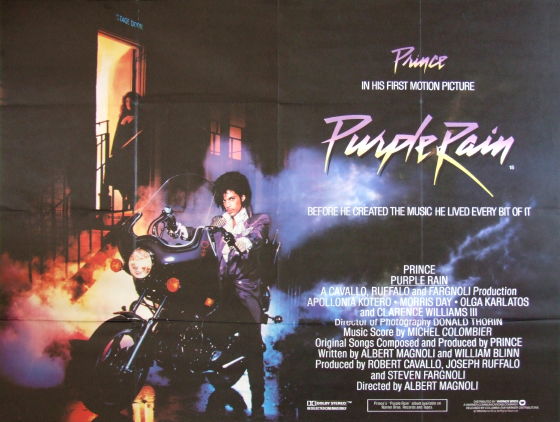
In late summer, 1984, Purple Rain was the number one film at the American box office. Its soundtrack was the number one album that spawned two number one hit singles on the Billboard Hot 100 chart. The following year, Prince won 4 Grammys, an Oscar and two American Music Awards.
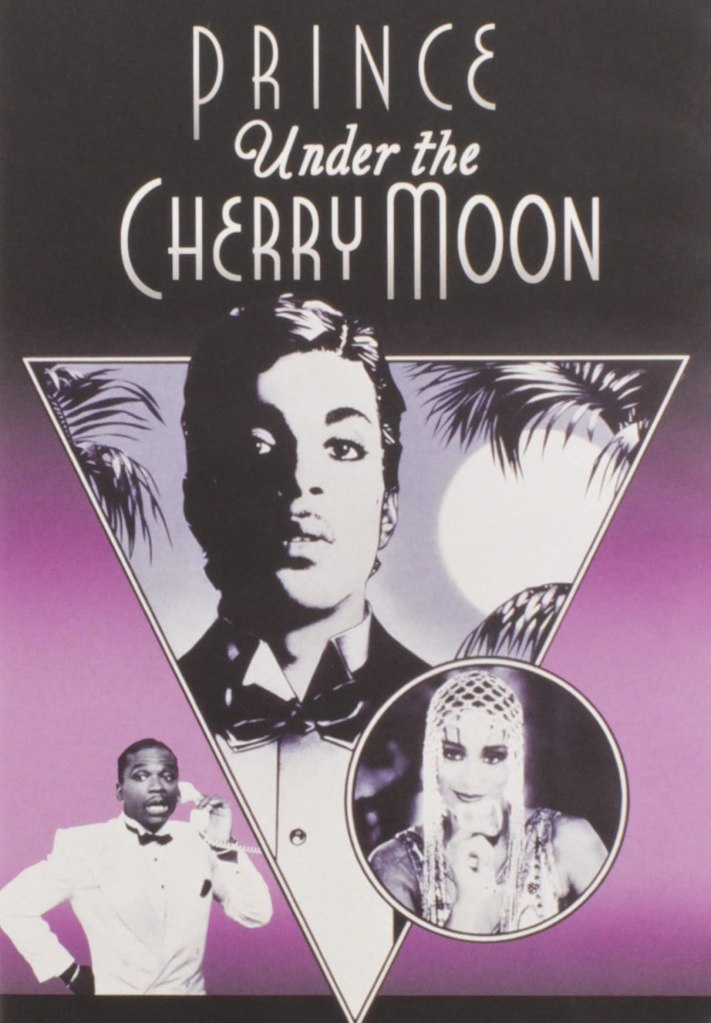
Following the massively lucrative Purple Rain tour in 1985, Warner Brothers let Prince do whatever Prince wanted. He began construction on his Paisley Park studios and quickly began working on a script for another movie. One reflective of his love for old films and his good mood at the time. The result is a black-and-white comedy called Under the Cherry Moon. A film that harkens back the classic screwball comedies from Hollywood’s golden era like Bringing Up Baby and The Philadelphia Story.
Early on, there was chatter that Martin Scorsese would direct the film, but Warner Bros. hired Mary Lambert. A few weeks into production, Prince fired her and took over the helm himself, retaining legendary Michael Ballhaus (Raging Bull) as cinematographer. The film was shot in color, but Prince, being the creative alien he was, insisted all release prints be struck in black-and-white. An unusual choice for 1986.
Prince’s second feature film is about an American pianist/gigolo named Christopher Tracy (Prince) and his best friend Tricky (Jerome Benton.) They live and work in the south of France during the mysterious time in history where people dressed like it’s the 1920s but they have modern computers, boom boxes and speak 1980s modern lingo.
After reading about her in the paper, which is in English, in France. Christopher and Tricky set their sights on heiress Mary Sharon for their next big financial scam to get a hold of some of that sweet paper that Mary will inherit on her 21st birthday from her greedy, philandering father Isaac Sharon played by Steven Berkoff and her long-suffering mother Mrs. Sharon (Alexandra Stewart).
Prince is essentially playing the Morris Day character from Purple Rain. He even stole Jerome Benton for his sidekick. And it kind of works. Sometimes. Jerome plays…well, Jerome. Again. I particularly enjoy the scene where the two friends argue over Mary. Tricky gets drunk and stomps around in a white cowboy hat, declaring to the sky, “It’s a full moon and the werewolf can KISS. MY. ASS.”
Despite their different backgrounds and class distinctions, it isn’t long before Christopher starts wooing Mary, who eventually hooks up with him despite being in an arranged engagement to a tightass named Jonathan. She hates Jonathan and confides in her mother, who herself longs for true love, fun and freedom but is too stodgy to do anything about it.
Mary and Christopher sneak off to have sex in a few different places including a phone booth, a racetrack, and a grotto on the coast where they argue constantly about their class difference and how uptight she is. To complicate things, Christopher is also boinking Isaac’s mistress Mrs. Wellington played by Francesa Annis from David Lynch’s Dune. This really pisses Isaac off. He decides enough is enough and sends his minions out to kill Christopher.
Meanwhile, Mary finds out about Christopher’s original scheme with Tricky to use her for her money and breaks up with him. The chase is on. Can Christopher get to Mary in time to tell her he truly loves her before the bad guys get to him? Nope. Isaac’s minions shoot and kill Christopher, who dies in Mary’s arms over the song “Sometimes it Snows in April”, one of the few songs Prince wrote about death.
Did I say this is supposed to be a comedy? That’s the main problem with this film. It’s uneven tone. Some things, like the cinematography, the gorgeous French Riviera locations, wardrobe and soundtrack work well while some, like the script and acting, don’t. If you watch the trailer, it’s clear that even the studio didn’t know how to market this movie.
Ultimately, it’s all about Prince preening around in awesome outfits being goofy. At one point, he even takes a bath in front of Tricky. In this unforgettable scene, Prince’s character plays with a rubber duckie in the bath while wearing a huge, black sombrero. Before a smattering of dialogue, he growls, “fascist” as he drowns the unlucky duckie in soapy bathwater. Depending on your attachment level to Prince, this scene will either make you laugh or freak you out completely.
Then there’s a cutsie subplot revolving around their inexplicably young, hot French landlady Katy (Emmanuelle Sallet) who hooks up with Tricky in lieu of rent and calls people “Cousin” like she’s from Uptown, Minneapolis.
About a year or so after Christopher’s murder, Mary writes Tricky, now back in Miami, an expository letter to fill in the audience on what happened to her. She is living on her own, grieving for Christopher. She has separated from her family completely, broken her engagement to Jonathan and launched a lucrative transatlantic real estate venture with Tricky and Katy. Mary is cautious at the prospect of finding true love again someday. Because you can’t really do any better than learning what it is to be loved by a male prostitute she knew for a week.
There is never any mention of anyone being arrested for Christopher’s murder or any comeuppance for Isaac Sharon. The film ends with Tricky chasing Katy up a flight of stairs in their new building, demanding the rent. Then, over the credits, we see the music video of Prince and The Revolution playing the song “Mountains” amongst heavenly clouds. The best scene in the film.
Along with this song, the film’s soundtrack, titled Parade, also featured the number one hit single “Kiss” although its music video in no way connects the film, instead showcasing Wendy Melvoin. This album was by far the most experimental released by Prince during his time with The Revolution, who by then had expanded in the number of touring musicians and became known as “The Counterrevolution.”
I love Clare Fischer’s orchestral arrangements on the soundtrack, the best of which is “Mia Bocca”, given to Jill Jones and released separately on her self-titled solo album. Prince and Fischer collaborated by sending tapes through the mail for decades and never actually met.
The film remains an oddity. Beloved by diehard Prince fans and abhorred by just about everybody else. A commercial and critical failure, it stands as an example of what not to do as a follow-up to a hit movie.
The album, however, remains one of my favorites in the Prince back catalogue. While Purple Rain’s music propelled the film’s story and expressed the emotions of its character, the music and the movie for Under the Cherry Moon don’t enjoy the same cohesion. “Girls and Boys” is a real banger of a funk pop tune, but we only get to hear a snippet in the film. “Kiss” was a huge hit, but the make out scene it accompanies is downright awkward compared to the smoke and fire on display in Purple Rain’s sex scenes.
The contributions of Wendy and Lisa on this record cannot be understated nor can the inspiration provided by Wendy’s twin sister Susannah Melvoin.
Susannah was not only engaged to Prince at the time, but she was also meant to play Mary Sharon. The wrecka stow scene? Yeah, that really happened with Susannah. The funniest scene in the film.
To ease her disappointment when the studio rejected her, Prince declared to her at sunrise in a hotel room in Paris, “I don’t want you to be in the movie. I want you to be my wife.” The relationship, like this film, didn’t work out quite the way anyone thought and ultimately led to the demise of the greatest band Prince ever had.
I was lucky enough to see Prince and Revolution on the Parade tour in the summer of 1986 just a month or so before he broke them up. It was the biggest mistake he ever made. They were fantastic. No other band, no matter how great, meshed quite like this one.
Prince died on April 21st 2016. The same day he recorded “Sometimes it Snows in April” in 1985. A few days later, a light snow fell from the sky above Paisley Park.
Note 1. In 2009, Prince watched Kristin Scott Thomas in one of her recent films. He was so taken by her beauty after more than 20 years, that he composed the song, “Better with Time” for her.
April 19: Record Store Day — Write about a movie starring a musician.
ABOUT THE AUTHOR: Jennifer Upton is an American (non-werewolf) writer/editor in London. She currently works as a freelance ghostwriter of personal memoirs and writes for several blogs on topics as diverse as film history, punk rock, women’s issues, and international politics. For links to her work, please visit https://www.jennuptonwriter.com or send her a Tweet @Jennxldn
I was 12 in 1984, living in a small town in upstate NY with very little to do in terms of entertainment.
That summer, I was utterly obsessed with the movie Ghostbusters. I had the T-shirt and thee soundtrack and collected every issue of every magazine that wrote about it.
That August, the film got knocked out of a stellar hold-over run at our tiny local theatre for something called Purple Rain. I remember vividly riding by with my mom and voicing my frustration that my favorite film had been usurped. I noticed the line of teenagers and young adults wrapped around the corner and filed it into the back of my mind. It played for a solid month.
The following March of 1985, Prince and the Revolution brought the Purple Rain tour to Syracuse. I didn’t attend, but my friends who did wouldn’t shut up about it for weeks.
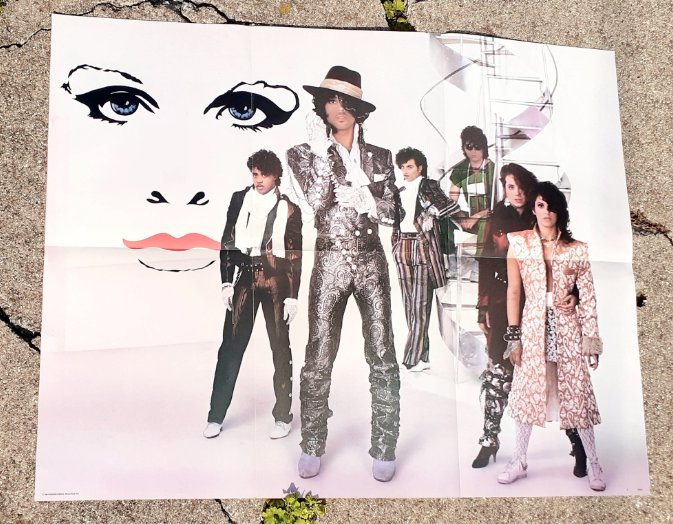
Prince was everywhere, and I just didn’t get it. Until I saw the video for “Little Red Corvette” on Friday Night Videos that April. When he broke into that split during the guitar solo, something in my soul (and my nipples) woke up and said, “Hello!” I immediately went out and bought the only Prince record my local store had in stock. Purple Rain. The album blew my mind. It was rock-funk fusion perfection. The album came with a poster of his band, The Revolution. As I hung it upon my bare wall, I wondered, “Who are these female musicians, and the guy dressed like a doctor?”
My family had no VCR at that time, so I saved my babysitting money and rented one. The first film I rented was, of course, Purple Rain. Soon after, I rented a second machine and made a dub of the original so that when the inevitable day came for us to finally get our own VCR, I’d be able to watch this movie ad infinitum. Which I did.
Through the film, I discovered the identities of the people on the poster. Revolution members included r. Fink on keyboards, Bobby Z. on drums, Brown Mark on bass, and most importantly, real-life couple Wendy Melvoin on guitar and the classically trained Lisa Coleman on keyboards. I also discovered that as impressive as the album was, the band’s live performances were outstanding.
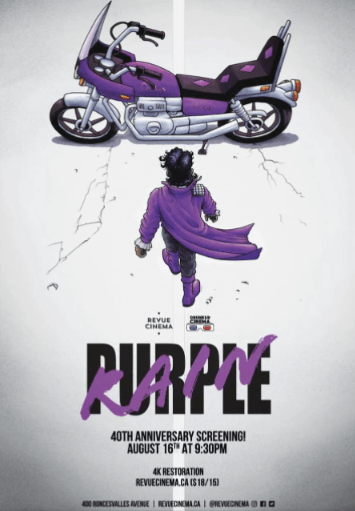
Flash forward to 2025. Prince is gone, having passed away alone in an elevator in 2016. The estate re-released the film for one night only all over the globe in 4K with a new Dolby mix for the soundtrack. I was in the second row, with a glass of wine and a good friend, cheering all the way for The Kid, Prince’s semi-autobiographical character created for the film. He’s a dick. But that’s the point.
The Kid comes from a dysfunctional family with an alcoholic, abusive, failed musician father, Francis L. (Clarence Williams III, and his long-suffering mother (Olga Karlatos) whose singing career was ruined by said father.
The Kid is a control-freak misogynist just like his dad. His bandmates struggle with his their lack of creative input – something true to life where publishing rights and royalties were concerned.
The band’s regular gig at First Avenue is under threat from another regular band at the club. The Time (another Prince creation), whose comical leader, Morris Day would love to push out The Revolution in favor of his new girl group, Apollonia 6, featuring The Kid’s new love interest Apollonia (Patricia Kotero) a beautiful, young singer/dancer who has just rolled into town to try her luck at First Avenue.
The Kid has a choice. He can either follow the path of his father, beat his girlfriend and ruin his career, or he can mellow out, trust his bandmates to write good songs and stop being a dick to women. The whole thing comes to a head when he plays the now legendary title song, composed in the film by Wendy and Lisa.
In real life, Prince brought the basic chords of “Purple Rain” to the band at their warehouse rehearsal space in 1983. While Wendy and Lisa did not compose the song, they certainly helped. Wendy reworked the simple chords Prince had brought into the iconic opening chords as we know them today. Nobody plays those chords the same way Wendy does, and it never sounds as good. She took Prince’s original, basic chords, inverted them, stretched out that third chord like a boss, and made history.
The entire band spent the next few days working the song out together as a group. At one point, during a break, Lisa Coleman saw a homeless man, who had been outside listening to the song, crying because it was so beautiful. She knew them; they had something special.
The success of the film and the album wasn’t because of the storyline or the romance, although it should be noted that it was the first film in history to land in the Box Office Top 10 whose leads were people of color. The film succeeds because of the musical sequences. It’s basically one long music video with a dramatic storyline woven throughout, and it still works after all these years.
The opening sequence of “Let’s Go Crazy” is visual storytelling at its finest. It introduces the setting and all the major characters strictly through editing with minimal dialogue.
During the scene where The Kid sings “The Beautiful Ones “to Apollonia, who is on a date with Morris at First Avenue, I turned briefly to observe the audience’s reaction. Some were shaking their heads in disbelief, mouths agape at the genius screaming into the mic on screen. Others were smiling from ear to ear. I leaned over and whispered to my friend, “Imagine being that good at anything at the age of 24.”
Is anyone in this film a great actor? No. But the cast is charismatic, and they all hold their own in the dramatic scenes. Morris’s “What’s the password?” comedy scene, a re-creation of the Abbott & Costello “Who’s on First” skit with counterpart Jerome Benton, still elicits chuckles.
One person walked out of the special screening during a scene depicting a violent fight under a railroad bridge between Apollonia and The Kid. There’s no point in sugar-coating it. The film is filled with misogyny. People like this existed in 1984, and they still exist today. The point was and is that The Kid had a choice.
Following the attempted suicide of Francis L., The Kid finds redemption through musical collaboration with the female members of his band. He saves his regular gig at the club and announces his forthcoming stardom by ending the film with Baby, I’m a Star. If you didn’t know it before seeing the movie, you knew it when the credits rolled.
Given that this was Prince’s most productive period musically, it’s safe to say that in real life, he found redemption through The Revolution as a band more than any other lineup of the New Power Generation who came after them. This was the last true band he was ever in. The rest were simply hired hands. Great musicians, all of them, but not collaborative in the truest sense of the word. If you don’t believe me, listen to the track below:
It must be noted that the song “Purple Rain,” as well as the tracks “I Would Die 4 U” and “Baby, I’m a Star,” were recorded live at First Avenue in August 1983, before the film was shot. It was the debut gig of Wendy Melvoin, who was just 19.
Engineer Susan Rogers, who manned the van on the day of the recoding, added a few overdubs for these tracks in the studio, but otherwise, what you’re hearing in the film and on the album is one of the tightest live bands to ever exist. Prince’s sound during this period was informed by this group of people, all hand-picked by to bring his vision to life.
Yes, the dialogue can be corny at times, and yes, Jerome does throw a girl into a dumpster under Morris Day’s instruction, but the musical sequences are the reason Purple Rain the movie stands the test of time. And it’s the reason it will endure into the future.
Note 1. – I still have hair envy for Apollonia’s do after 31 years.
Note 2. – Wendy Melvoin’s father was musician Mike Melvoin, who composed the funky theme for the TV series Bigfoot and Wildboy. The kind of trivia I live for.
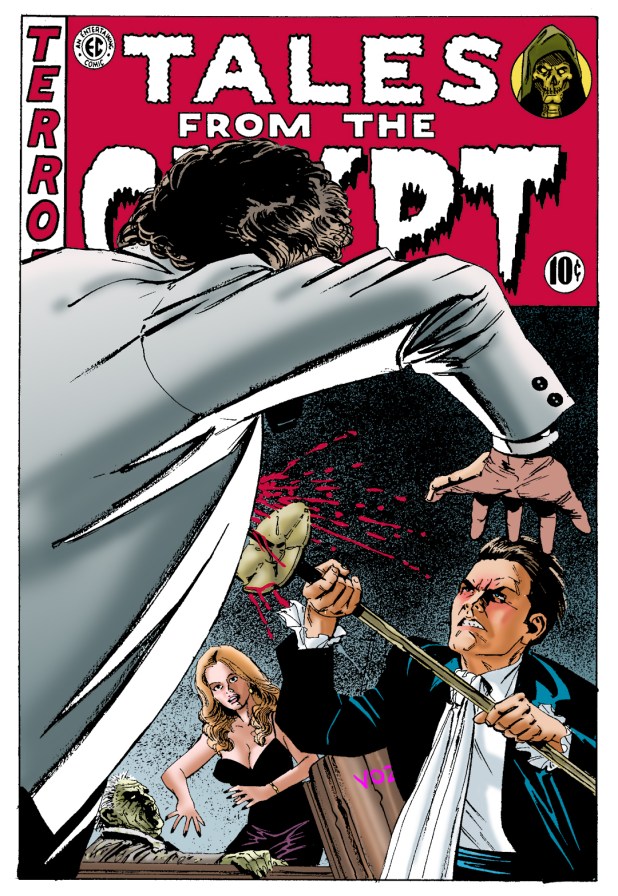
There are just thirteen episodes left of this show. Here’s the first episode of season 7.
“Fatal Caper” was directed by and stars Bob Hoskins, who I miss. He was a fantastic actor, and this is an entertaining episode. It was written by regulars, Steven Dodd and A.L. Katz.
“Greetings, travel fiends! It’s so exciting being here in London. I’m already feeling right at tomb. Care to join me for a little fright-seeing? Or maybe we could find a nice pub and tuck into some authentic flesh and chips. Or we could go check out my English scare-itage. I bet you didn’t know your pal, the Crypt Keeper, was one of the crowned ghouls, did you creeps? I’ve got all kinds of skeletons in my closet, which is kind of like the family in tonight’s tale. You could call it, ‘Father Knows Beast,’ but I prefer “Fatal Caper.””
Mycroft Amberson (Leslie Phillips) is dying and his money will go to one of his two sons, Justin (Greg Wise) or Evelyn (James), until his will is changed by executor Fiona (Natasha Richardson). There’s a third son, Frank, whom he never acknowledged. If the brothers can find him in six months, they will get to split the money.
Of course, Fiona offers to help both brothers take out the other, depending on who pays her more. But hey — spoilers — Tales from the Crypt was ahead of its time, as Fiona is really Frank and wants all the money.
Most of this season was filmed in England, starting with this story, except for the last episode, which was animated in Canada by Nelvana.
This takes its title from “A Fatal Caper!” from Tales from the Crypt #20, which was written by Al Feldstein and William Gaines and drawn by Jack Kamen. That story is totally different, as teenagers remove a body from a casket to play a prank and all get leprosy.
April 18: Heavy Metal Movies: Pick a movie from Mike McPadden’s great book. RIP. List here.
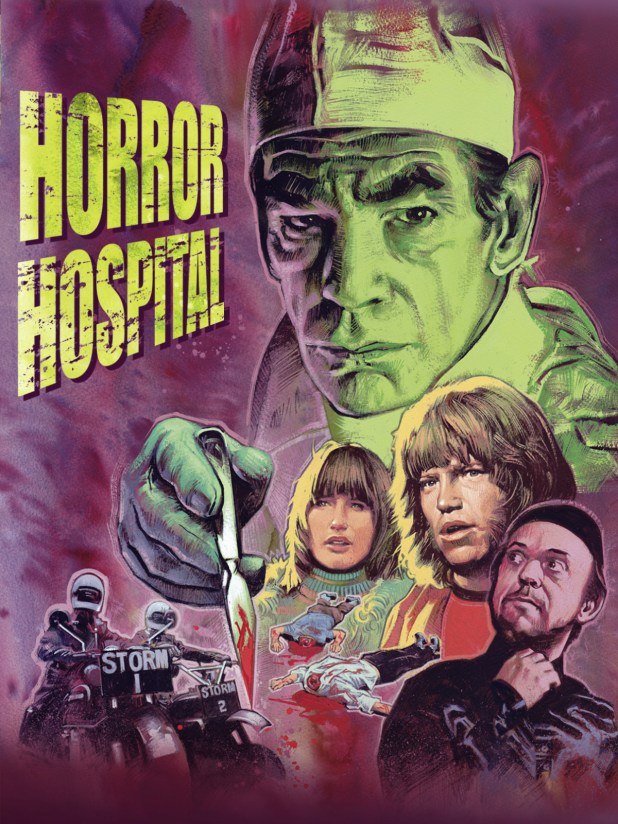
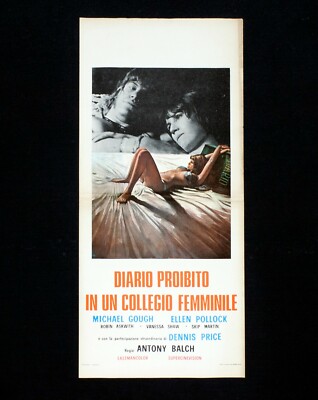
Jason Jones (Robin Askwith from the Confessions Of… movies) is a burned-out would-be rock star on his way to Brittlehurst Manor, a health escape that has also drawn in Judy Peters (Vanessa Shaw), who is looking for her aunt.
It’s no surprise or spoiler that this is really a…Horror Hospital!
Yes, Dr. Christian Storm (Michael Gough), Judy’s aunt (Ellen Pollock) and evil dwarf Frederick (Skip Martin) have been drawing hippies her and either turning them into brainwashed, motorcycle-helmet wearing zombies or outright killing them.
There’s even a band, Mystic, who play the movie’s theme “Mark of Death!” Their members are James IV Boris, Alan “The River” Hudson and Simon Lust. Those are some great stage names! The cross-dresser who is singing for them is co-writer Alan Watson. And Mystic is really the psychedelic group Tangerine Peel, who at one point had songwriter/producer Mike Chapman, who promised Blondie that he would make Parallel Lines into their biggest album. It includes “Heart of Glass” and he said of the album to Rolling Stone, “There’s loads of hits, it’s a great album, but who gives a fuck. It’s easy, you see. When we go into the studio, we go in and make hit records, and it just happens. We don’t think about it. If you’re going to be in the music business, you gotta make hit records. If you can’t make hit records, you should fuck off and go chop meat somewhere.” He also produced albums for The Knack, Suzi Quatro, Toni Basil, Pat Benatar, and more.
Vanessa Shaw is really Phoebe Shaw, who was mainly in commercials and dated Askwith after this. She also dosed the entire cast and crew at the wrap party with the cake she made. Ah, 1973!
This was directed and written by Antony Balch, who in addition to bringing all sorts of incredible movies to England — Don’t Deliver Us from Evil, Supervixens, Truck Stop Women — also directed one of my favorite movies ever, the mummy starring Secrets of Sex AKA Bizarre.
This movie is a total mess. Who cares? I loved it.
In Italy, this was known as Diario proibito di un collegio femminile, which means Forbidden Diary of a Girls’ Boarding School. That’s the type of title that gets you into the theater.
April 17: Bat Appreciation Day –Watch a movie with a fake bat in it.
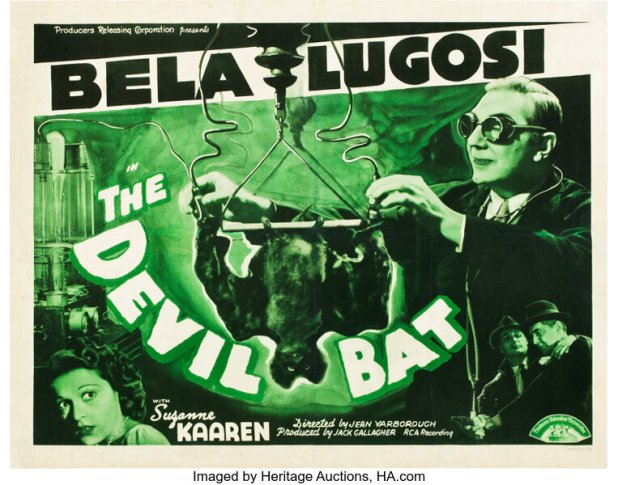
The work of Dr. Paul Carruthers (Bela Lugosi) has earned his company millions and all they give him is $5,000. But didn’t he take a buyout early instead of being a partner? Isn’t that the way corporations work?
So why wouldn’t he grow giant bats and have them kill anyone who wears a new aftershave he’s created? He’s destroying the CEO class, the elite, well, really everyone. He’s got Devil Bats — big, bad rubber bats that scream right at the camera — he leads the first horror film from the poverty row Producers Releasing Corporation studio, a movie that played along with Man Made Monster.
Carrruthers destroys everyone that owned the company other than Mary Heath (Suzanne Kaaren), the daughter, who is saved by Chicago Register reporter Johnny Layton (Dave O’Brien) and the aftershave lotion gets dumped all over Carruthers, his bats attacking their master, following the way that he killed those who held him in chains.
Or maybe not, as he speaks from the shadows in the non-horror sequel, Devil Bat’s Daughter. There was also a 2015 movie, Revenge of the Devil Bat, with Lynn Lowrey in the cast. Another PRC movie, The Flying Serpent, is almost the same movie.
Director Jean Yarbrough’s career went all the way into the days of television. He also directed one of my favorite movies, Hillbillys In a Haunted House, as well as Footsteps In the Night, She-Wolf of London and The Creeper. Based on a story by John T. Neville, the script came from George Bricker, who also wrote an early wrestling movie, Bodyhold.
More movies should have fake bats in them. I recommend A Lizard In a Woman’s Skin, as man, that bat attack was so good it ended up on the U.S. poster.
April 16: Filmirage — Give in to the sleaze and write about a Joe D’Amato produced movie. There’s a list here.
This is the last Filmirage movie on my list. Now, I’ve seen all of them and part of me is sad yet part of me feels good that I did it.
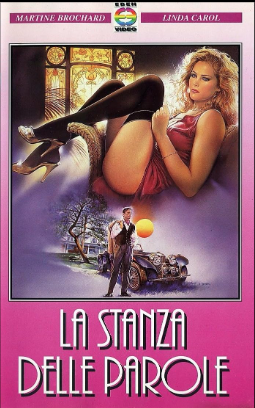
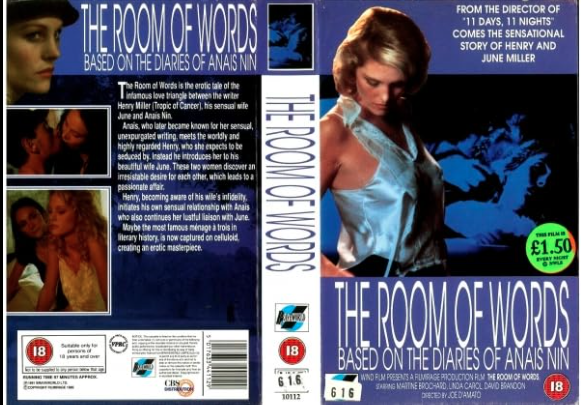
What if Filmirage made Henry & June? THEY DID. Well, a rip-off, at least.
I love that this was their chance to do a high-end period picture! Black Emanuelle — Laura Gemser — made the costumes! Peter from Stage Fright is Henry Miller! Martine Brochard from Eyeball is Anais! Her husband Franco Molé (who was in Notturno con grida) directed it! A Gabrielle Tinti cameo! Shot by Giancarlo Ferrando who did Troll 2, Devil Fish and Torso!
This is the only movie that Gianni Silano ever scored and wow, it sounds like the old organ store at the mall. Maybe that makes you remember the past, but it sure is weird music for what is supposed to be a sophisticated sex movie.






 B&S About Movies
You must be logged in to post a comment.